Article

Time-Budget of Housed Goats Reared for Meat Production: Effects of Stocking Density on Natural Behaviour Expression and Welfare

1
Zhanjiang Experimental Station, Chinese Academy of Tropical Agricultural Sciences, Zhanjiang 524013, China
2
Agricultural Machinery Research Institute, Chinese Academy of Tropical Agricultural Sciences, Zhanjiang 524013, China
3
South China Sea Fisheries Research Institute, Chinese Academy of Fishery Sciences, Guangzhou 510300, China
4
College of Veterinary Medicine, China Agricultural University, Beijing 100193, China
*
Author to whom correspondence should be addressed.
These authors contributed equally to this work.
Agriculture 2026, 16(1), 43; https://doi.org/10.3390/agriculture16010043 (registering DOI)
Submission received: 1 December 2025 / Revised: 17 December 2025 / Accepted: 21 December 2025 / Published: 24 December 2025
(This article belongs to the Section Farm Animal Production)

Abstract

In intensive breeding systems, goats reared for meat production are often housed in group pens at high stocking densities. This study aimed to investigate the correlation between expressed behaviours and stocking density, and to compare the time budget of these confined goats with that of pasture-based goats. A detailed ethogram of 19 mutually exclusive behavioural activities was developed. Behavioural observations were conducted continuously over 72 h on group pens selected for their variation in stocking density and homogeneity in breed, age, body condition and acclimation period since arrival. Using the scan-sampling method (96 scans per goat daily), data were collected from 42 goats. The time budget, expressed as the mean frequency (%) ± standard deviation for each behavioural activity, was calculated. The associations between time budget and stocking density were assessed via bivariate analysis, with the strength and direction of relationships quantified using Pearson’s correlation coefficient (r). Results indicated that self-grooming and Bipedal stance/Climbing were positively correlated with increased space allowance (i.e., lower stocking density), suggesting their potential utility as positive welfare indicators for housed fattening goats in group pens. Furthermore, the time budget differed notably from pasture-based patterns, primarily characterized by resting (53.09% ± 2.72%), eating (16.05% ± 2.88%), and moving (2.30% ± 0.75%).

1. Introduction

Goats, among the earliest domesticated animals, represent vital agricultural resources worldwide owing to their remarkable adaptability, broad distribution [1], and capacity to efficiently valorize low-quality feed resources [2,3]. They provide humans with a variety of products, including meat, milk, and hides, and have long played a key role in agricultural systems and socioeconomic development [4,5]. China ranks among the world’s leading producers of goat meat, contributes 33.5% of the world’s total with an annual output of approximately 2.5 million tons, which also represents 43.8% of the Asian production [6]. The Leizhou Black Goat (LZBG, henceforth called Leizhou goat) is a principal meat breed in the tropical and subtropical regions of China [7]. Traditionally raised under extensive grazing systems, this breed has faced constraints in productivity, which have limited its ability to meet rising consumer demand [8,9]. Consequently, there has been a gradual shift in recent years toward large-scale, intensive rearing systems for this breed.
The stocking density (SD), defined as the number of animals raised per unit area, is a critical management factor in animal production. Overcrowding and high stocking density represent prevalent challenges in intensive livestock production systems, and their detrimental effects on animal welfare are garnering increasing concern [10,11]. Although goats are widely recognized for their remarkable environmental adaptability [12], under high-density housing conditions, their freedom of movement is often severely restricted [13]. Including positive social interactions (e.g., allogrooming), exploratory activities, and voluntary movements associated with foraging [11]. Diversified behavior is considered an indicator of enhanced animal welfare. Studies of pigs [14], broilers [15], horses [16], and cattle [17] show that reducing stocking density, which increases individual space, promotes broader behavioral expression in farm animals. The Leizhou goat is undergoing a transition from traditional grazing to intensive farming systems, and although this breed possesses distinct adaptability, there remains a significant lack of in-depth understanding regarding its welfare needs related to space and behavioral budgets under confined conditions.
Behavioral expression serves as one of the most sensitive and direct indicators of an individual’s welfare status and adaptive capacity, providing a real-time reflection of the dynamic interaction between an animal and its environment [18,19]. Consequently, the systematic assessment of behavioral patterns not only reveals the welfare status of livestock but also provides a critical foundation for health management and production optimization [20,21,22]. In the realm of social behavior research, although the domestic goat (Capra hircus) exhibits considerable diversity, scientific understanding of its social dynamics remains comparatively limited. This is particularly notable among small ruminants, where research has predominantly focused on sheep (Ovis aries) [23,24]. However, marked ethological differences exist between these species: goats typically demonstrate higher reactivity, aggressiveness, and a greater propensity for exploration, whereas sheep are generally more fear-prone, with-drawn, and exhibit lower overall activity levels [10,11,25]. This species-specific variation underscores the need for targeted research on goat behavioral responses to stocking density and space allowance—especially for regional breeds like Leizhou goats.
Current research on Leizhou goats predominantly focuses on economically pivotal traits, such as reproductive performance [8], meat quality [26,27], and nutritional metabolism [28]. In contrast, there is a conspicuous lack of systematic studies addressing the welfare challenges arising from intensive production practices. In modern intensive systems, the expression of specific social behaviors is often severely constrained by housing conditions and management practices [29]. Based on the theoretical framework concerning the impact of spatial constraints on natural behavior expression [11,13,29], we proposed two hypotheses. H1: that increased space allowance would correlate positively with active and exploratory behaviors in goats; and (H2) that it would correlate negatively with the frequency of aggressive behaviors. Although it may also be influenced by other factors such as group composition, sex, and social hierarchy. It should be noted that the present study primarily focused on the effect of space allowance.
This study was designed with two primary objectives: first, to quantify the behavioral time budget of goats under intensive housing systems and second, to assess whether the behavioral activities of goats raised for meat production are affected by the stocking density of the raised goats. By comparing these findings with data from free-grazing goats in the literature, to evaluate the impact of feeding systems on the behavioral ecology of goats.

2. Materials and Methods

All animal experiments conducted in this study were reviewed and approved by the Animal Ethics Committee of the Zhanjiang Experiment Station (ZES), Chinese Academy of Tropical Agricultural Sciences (Approval No. ZES 202500011). The study was designed and carried out in strict adherence to the fundamental principles of animal welfare ethics and the “3R” principles (Replacement, Reduction, and Refinement), thereby minimizing the number of animals used and alleviating potential suffering.

2.1. Animals and Animal Husbandry

This study was conducted at the Leizhou goat breeding base of the Zhanjiang Experiment Station (ZES), Chinese Academy of Tropical Agricultural Sciences, located in Zhanjiang City, Guangdong Province, China (21°16′12″ N, 110°21′27″ E). The breeding base specializes in research on housing systems and intelligent breeding technologies for Leizhou goats, focusing on the transition from traditional grazing to modern intensive production. The experimental herd consisted of approximately 150 goats, with an average age of 2 years per production cycle. The animals were managed under a controlled breeding system aimed at achieving two kidding seasons annually. Following weaning at two months of age, all young goats were separated from their dams and co-reared in a large pen under uniform intensive housing conditions. The pen floors were elevated approximately 1 m above the ground and constructed with horizontal metal railings and bamboo slats, which allowed feces and urine to pass through the gaps. An automated manure removal system operated once daily each morning prior to eating.
To meet the nutritional requirements, freshly chopped forage grass was provided at a rate of 1 kg/goat/day, divided into two equal feedings at 08:00 and 16:30 via a eating passage. Additionally, a grain concentrate pellet supplement was provided at 200 g/goat/day. The concentrate contained 18% crude protein (CP) and 2.6 Mcal of metabolizable energy (ME) per kg of dry matter (DM). The herd had free access to clean drinking water and mineral lick blocks (Huaxu brand, China). According to the manufacturer’s specifications, the guaranteed analysis per 5 kg block indicated minimum elemental content of: 17% P (phosphorus), 3% Mg (magnesium), 5% Ca (calcium), and 75% Na (sodium, primarily supplied in the form of sodium chloride and sodium bicarbonate).

2.2. Experimental Grouping

A total of 42 healthy, Leizhou goats (aged 4 months, 21 males and 21 females) in the fattening phase and with similar body condition were selected for this study. The goats were, with a balanced sex ratio (1:1), randomly allocated to one of three pens (each measuring 2.5 m × 5 m). All pens were identical in structure and orientation. The feeding channel is located on the 5 m side, featuring an uninterrupted, integrated feed trough. The trough’s length is calculated according to a design standard of 0.21 m/goat. Environmental monitoring confirmed comparable average temperature and humidity levels across the three pens. Additionally, each pen was equipped with an automated ventilation system operating on an identical schedule.
Stocking density was defined as the available space per animal and expressed as square meters per head (m2/head). Appropriate stocking densities vary with factors such as age, breed, and production type. For indoor-reared growing goats, a density of approximately 1.5 m2/head is often recommended [11,30]. The three pens were assigned to the following stocking density treatments (Table 1): low-density (LD, 6 goats, 2.0 m2/head), medium-density (MD, 12 goats, 1.0 m2/head), and high-density (HD, 24 goats, 0.5 m2/head). Prior to the formal experiment, a 15-day adaptation period was implemented to allow the goats to acclimate to their respective group and density conditions.

2.3. Behavioral Recording

Behavioral data were collected via continuous video recording over the entire experimental period. A dedicated high-performance infrared network camera (Model: 360IP 8.0 Megapixel 4K Pan-Tilt Network Camera, 360 8 Pro Series, Chengdu Panoramic Intelligent Technology Co., Ltd., Dongguan, China) was mounted directly above each pen to ensure 24 h, comprehensive coverage of all experimental goats. The formal behavioral recording comprised a continuous 72 h observation period from 26 August to 28 August 2025. The ambient temperature and relative humidity in the pens were 27.80 ± 2.05 °C and 78.62 ± 5.56%, respectively, resulting in the average temperature-humidity index (THI) of 78.07 during the trial period [31]. The behavioral time budgets reported herein should be interpreted as a detailed snapshot under these specific seasonal and managerial conditions.
All video recordings were analyzed by a single trained observer to minimize inter-observer variability. The observer utilized a pre-designed ethogram [32]. This ethogram was developed by integrating established terminology systems [33,34] and was adaptively modified to capture the specific behaviors of Leizhou goats, among which sexual behavior was not observed, and to align with the study objectives [35]. Detailed definitions are provided in Table 2. The final ethogram categorized behavior into 21 mutually exclusive activities. Prior to data analysis, the observer completed a calibration training to ensure consistent behavioral interpretation and data reliability. Intra-observer reliability was quantified using Cohen’s kappa coefficient [36].
Behavioral observation employed the scan sampling method. Throughout the 72 h period, the behavior of every goat in all pens was instantaneously scanned and recorded at 15 min intervals [37]. These reported values should be interpreted as conservative estimates, representing the lower bounds of the actual frequencies. The 15 min interval was selected to balance the need to capture potential behavioral changes with observational feasibility [37,38,39], thereby efficiently characterizing the primary behavioral dynamics.

2.4. Data and Statistical Analysis

All statistical analyses were conducted using IBM SPSS Statistics software (version 27; IBM Corp., Armonk, NY, USA).
Each pen was defined as the experimental unit for all analyses. To quantify the temporal patterns of behavior, data are expressed as the proportion of time spent on each activity, presented as a percentage of the total observation time (time budget, %). Data are presented as the mean ± standard deviation. For each behavior, the daily time budget was calculated and then aggregated across days for the following three time periods:
The 24 h period (%/24 h);
12 daylight hours (08:00 to 20:00) (%/daylight hours);
12 night hours (20:00 to 08:00) (%/night hours).

2.4.1. Descriptive Analysis of Associations Between Behavior and Stocking Density

Due to the limited number of pen replicates (n = 3), formal statistical testing for correlation was not robust [40]. Therefore, the associations between stocking density and behavioral time-budgets are presented descriptively, with Pearson’s correlation coefficient (r) used solely as an indicator of the strength and direction of linear trends, and p-values interpreted with extreme caution [41].
As the stocking density treatment was applied at the pen level with three distinct levels (0.5, 1.0, and 2.0 m2/goat), a bivariate correlation analysis was employed to assess the linear relationship between the assigned density and the mean behavioral time budget (expressed as %/24 h, %/daylight h, and %/night h) of each pen. The strength and direction of the linear relationship between variables were assessed using the Pearson correlation coefficient (r), which ranges from −1 (perfect negative correlation) to +1 (perfect positive correlation) [40,41]. The magnitude of the correlation coefficient was interpreted based on established criteria: |0.90–1.00| as very strong, |0.70–0.89| as strong, |0.40–0.69| as moderate, |0.20–0.39| as weak, and |0.00–0.19| as negligible or very weak [42]. The statistical significance of the correlation coefficients was determined by calculating the p-value. A p-value ≤ 0.05 was considered statistically significant, indicating evidence of a linear association.

2.4.2. Overall Time Budget and Time Interval Comparison

To characterize the overall behavioral patterns, data from all 42 goats across the continuous 72 h observation period were aggregated, and the mean proportion of time spent on each activity (overall time budget) was calculated. To analyze diurnal variations, the 24 h cycle was divided into six consecutive 4 h intervals (00:00–04:00, 04:00–08:00, 08:00–12:00, 12:00–16:00, 16:00–20:00, 20:00–24:00) for detailed analysis. This approach integrated data from both the 12 h daylight and 12 h night periods.
This study furthermore aims to compare the behavioral activities between intensively reared meat goats and pasture-based goats. To this end, it utilizes a dataset from Wang et al., 1992 [43], which comprises time-allocation data for major behavioral categories (feeding, recumbency, standing, locomotion, and rumination) in 2- to 3-year-old Tibetan goats. The comparison is qualitative and contextual in nature, aiming to illustrate fundamental differences in behavioral patterns between intensive housing and traditional grazing systems, rather than to serve as a basis for direct statistical comparisons.

3. Results

The scan sampling method was employed to record the behavioral patterns of goats subjected to different stocking densities. Behavioral scans were performed at 15 min intervals [37,38,39], yielding 96 scans per goat daily. In total, 12,096 valid behavioral observations were obtained from all 42 goats over the 72 h observation period.
The scanning protocol employed may miss or underestimate brief, event-specific behaviors such as agonistic interactions (e.g., butting). Therefore, in this section, all aggression data are explicitly presented as the “observed incidence within scans” rather than as true rates or frequencies.
The inter-observer reliability, assessed using Cohen’s kappa coefficient for all behavioral classifications, showed an almost perfect agreement (κ = 0.94, 95% CI: 0.91–0.97) [36].

3.1. Overall Time Budget and Time Frame

Analysis of the overall time budget revealed a strong bias toward inactive behaviors in housed Leizhou goats (Figure 1). Resting accounted for the majority of time (53.09% ± 2.72%), followed by substantially lower proportions allocated to eating (16.05% ± 2.88%) and standing (13.60% ± 3.73%). This was followed by self-grooming (6.36% ± 1.98%), pen exploration (2.36% ± 1.02%), and moving (2.30% ± 0.75%). Among the remaining behaviors (each constituting < 2% of the time budget), stereotypic behavior was the most notable, with a prevalence of 1.79% ± 0.91%.
The diurnal distribution of behavioral activities was analyzed across six consecutive 4 h intervals (00:00–04:00, 04:00–08:00, 08:00–12:00, 12:00–16:00, 16:00–20:00, 20:00–24:00). As detailed in Table 3, resting predominated during the 00:00–04:00 interval, comprising 73.00% ± 6.22% of the time, followed by standing (11.34% ± 4.76%), self-grooming (6.51% ± 2.09%), and moving (2.20% ± 2.43%). A similar pattern was observed between 04:00 and 08:00, with resting remaining primary (70.98% ± 6.78%), followed by standing (12.56% ± 6.00%), self-grooming (5.12% ± 1.88%), and eating (3.76% ± 3.04%).
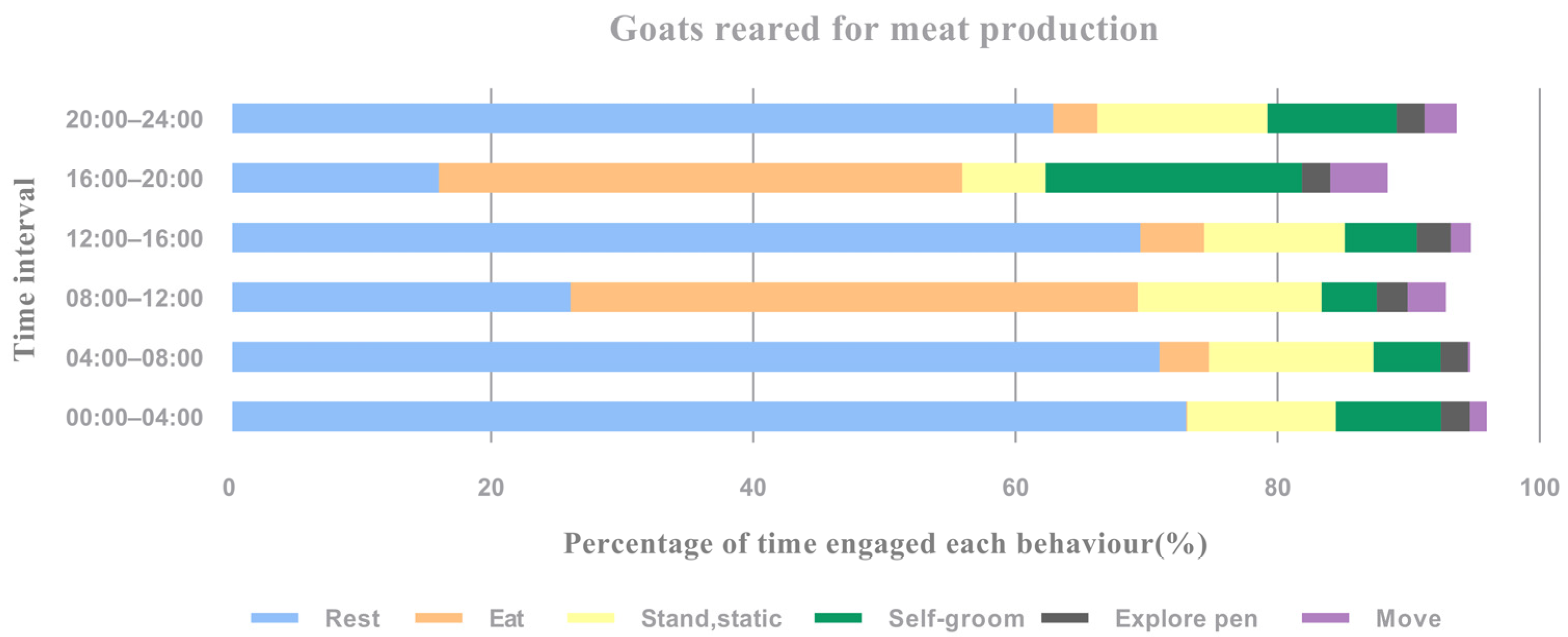
A distinct behavioral shift occurred between 08:00 and 12:00, when eating became the dominant activity (43.26% ± 9.06%). This was followed by resting (26.07% ± 10.05%), standing (14.00% ± 5.50%), and self-grooming (4.22% ± 2.14%). From 12:00 to 16:00, resting re-emerged as the primary behavior (69.53% ± 5.72%), with standing (10.71% ± 2.70%), self-grooming (5.50% ± 2.71%), and eating (4.86% ± 3.15%) as subsequent activities. Eating peaked again between 16:00 and 20:00 (39.90% ± 9.25%), with resting (19.59% ± 8.25%), standing (16.00% ± 5.20%), and self-grooming (6.34% ± 2.65%) being the other main activities. Finally, during the 20:00–24:00 interval, resting was again dominant (62.88% ± 5.70%), followed by standing (12.96% ± 7.60%), self-grooming (9.87% ± 3.67%), and eating (3.36% ± 4.16%).
Notably, stereotypic behavior was observed in all intervals, with the highest frequencies occurring between 16:00 and 20:00 (3.56% ± 3.16%) and 20:00–24:00 (3.04% ± 2.02%).
The preceding results characterize the overall behavioral patterns of Leizhou goats under confined housing conditions. Subsequently, this study investigates the influence of a key management factor—stocking density—on these behavioral expressions.

3.2. Correlation Between Time Budget Within Group Pens and Stocking Density

A reduction in stocking density (i.e., increasing space allowance from 0.5 m2 to 2 m2 per goat) was positively correlated with self-grooming (r = 0.93, p < 0.001) and climbing behavior (r = 0.71, p = 0.003). The data obtained revealed that the reduction in stocking density correlated with a higher frequency in the expression of these activities by goats. Standing behavior showed a negative correlation with the reduction in stocking density during the daytime (r = −0.73, p = 0.025), night time (r = −0.87, p = 0.003), and the full 24 h period (r = −0.91, p = 0.001). Several behaviors demonstrated distinct diurnal patterns in their correlation with stocking density. Resting (r = 0.68, p = 0.046) and self-grooming (r = 0.88, p = 0.002) behaviors showed positive correlations with reduced stocking density exclusively during nocturnal hours, whereas pushing behavior (r = 0.68, p = 0.044) exhibited a positive correlation specifically during daytime hours. Conversely, salt-licking (r = −0.80, p = 0.010) and confrontational behavior (r = −0.71, p = 0.033) demonstrated significantly negative correlations during the night period, with no correlations observed during daytime hours.
These results, as summarized in Table 4, collectively indicate that the influence of stocking density on goat behavior is time-dependent. Increased space allowance had a more pronounced effect on maintenance behaviors (e.g., resting, self-grooming) during the night, whereas certain social behaviors (e.g., pushing, confrontation) were more influenced during daylight hours.
As a descriptive visualization, Figure 2 illustrates the temporal pattern of the temporal distribution of principal behaviors in intensively housed meat-type goats across six 4 h intervals. Resting was the dominant activity, with peak levels observed during nocturnal and early morning periods (20:00–08:00), consistent with natural ruminant physiological rhythms [44]. In contrast, eating activity exhibited distinct peaks that aligned with scheduled provision times (08:00–12:00 and 16:00–20:00), underscoring the influence of management practices on behavioral patterning. Other active behaviors—including standing, self-grooming, exploration, and moving—collectively accounted for less than 30% of the time budget. Although these behaviors were relatively evenly distributed overall, they occurred more frequently during daylight hours (08:00–20:00).
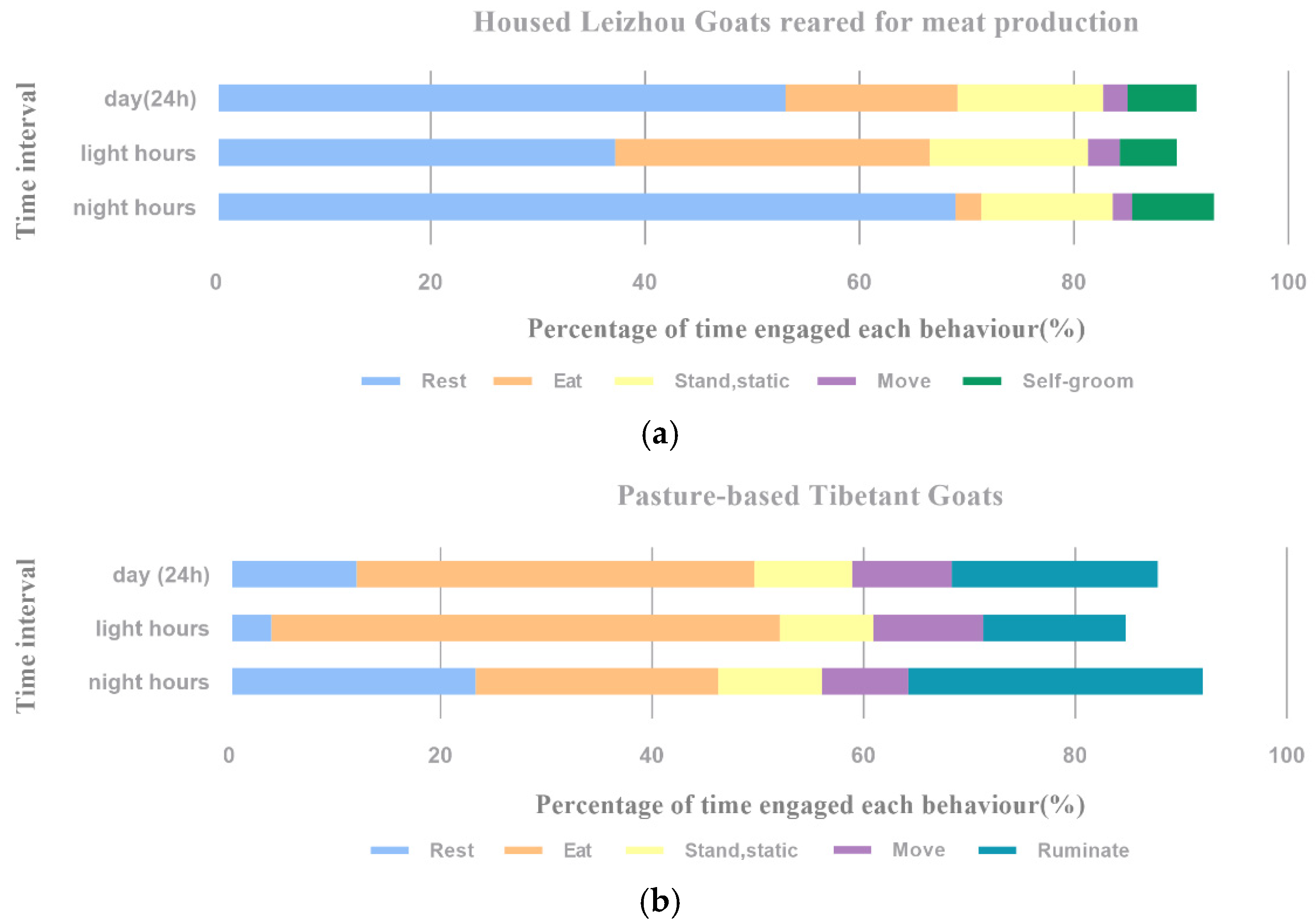
As a qualitative comparison of time budgets (Figure 3), housed Leizhou goats raised for meat production exhibited a rest-dominant behavioral profile, spending the majority of their time (53.09%) resting across the 24 h cycle, with considerably lower proportions allocated to eating (16.05%) and moving (2.30%). In stark contrast, pasture-based Tibetan goats displayed a eating-dominant pattern, dedicating most of their activity to eating (37.60%), supported by substantially higher moving (9.45%) consistent with their grazing lifestyle. Both groups exhibited similar diurnal rhythms, concentrating eating during daylight hours and resting at night. These results highlight the significant impact of housing conditions on shaping behavioral patterns, where spatial and environmental constraints in intensive systems appear to restrict the expression of natural, active behaviors observed in grazing goats (data adapted from Wang et al., 1992 [43]).

4. Discussion

It should be specifically noted that the average THI during the experimental period of this study was 78.07. Generally, a THI ranging from 75 to 78 is considered the thermoneutral zone for goats. However, studies by Aleena et al., 2018 [45] and Younis et al., 2018 [46] have indicated that different goat breeds exhibit varying capabilities in coping with elevated temperatures, suggesting that the optimal thermal zones may differ among breeds. Under heat stress conditions, goats display specific behavioral adaptation mechanisms to regulate their body temperature [47,48]. Behaviors such as standing, lying down, and reduced feeding are essentially strategies to decrease muscular activity and slow basal metabolism [49,50,51], thereby preventing additional metabolic heat production [51]. On the contrary, our results demonstrated that a reduction in stocking density was correlated with an increase in the expression of exploratory and active behaviors in goats, such as bipedal standing/climbing (r = 0.71, p = 0.035) during the full 24 h period. Thus, the core objective of this research is to shed light on how stocking density influences the natural behavior and welfare of Leizhou goats under a defined thermal environment.

4.1. Contrasting Behavioral Patterns in Goats Under Intensive and Pasture-Based Systems

The comparative analysis of behavior across different systems, as advocated by Mench et al., 1998 [52], serves as a critical method for recognizing environmentally restrictive behaviors. The behavioral time budget of the intensively housed goats in this study was characterized by a high proportion of resting, with eating and standing being the next most frequent activities. When interpreted with caution and as a broad contextual contrast, this pattern diverges from that reported for free-grazing goats in studies such as Wang et al. [43].
Leizhou goats under intensive housing conditions allocated the majority of their daily time budget to resting (53.09% ± 2.72%), eating (16.05% ± 2.88%), and standing (13.60% ± 3.73%). Moving accounted for only 2.30% ± 0.75% of the time budget. Fully grazing Tibetan goats exhibit a different behavioral pattern [43]. Grazing Tibetan goats spent 37.60% ± 6.51% of their time eating, 12.04% ± 3.19% resting, 9.26% ± 4.36% standing, and 9.45% ± 4.36% on moving. Similarly, Wan et al., 2018 [53], reported that free-grazing Yunling black goats dedicated at least 59.00% of their daily time to eating, while resting and moving each constituted only about 3.00% of the time budget, with seasonal variations. These findings collectively indicate that in free-range systems, eating is the primary behavior, followed by resting and moving. The differences observed may reflect the influence of environmental conditions in intensive systems, such as limited space and reduced environmental complexity. However, it is important to note that direct comparisons are constrained by differences in breed, age, and management systems between studies. This comparison highlights a marked qualitative difference without implying statistical significance.

4.2. Eating Behavior Assessment

The eating time of housed goats recorded in this study (16.05% ± 1.98%) was substantially shorter than that under grazing conditions, a finding consistent with previously reported ranges (17–20%) for confined goats [54,55]. This reduction is likely attributable to the twice-daily eating regimen, which limited opportunities for prolonged foraging and promoted a concentrated eating pattern. This pattern is further supported by studies on sheep under confinement, showing eating times ranging from 13% to 25% [54,55]. Collectively, these findings suggest that in confined environments, ruminant eating behavior is governed more by internal physiological rhythms than by the immediate availability of external feed resources.
This stands in sharp contrast to grazing systems. For instance, Wan et al.,2018 [53], reported that grazing goats allocated 59–66% of their time to eating from July to September, increasing markedly to 85% in October. Similarly, Animut et al., 2005 [56], documented an 8.3% increase in eating time for goats on heavily grazed pastures versus those on lightly grazed pastures, highlighting the impact of forage availability. In grazing systems, eating behavior is modulated by a complex interplay of environmental factors, including seasonal variations, vegetation type, and forage quality [35,43,53]. Consequently, extended eating times are often necessary to meet nutritional requirements—a challenge largely absent in confined systems.
Returning to the confined system, although the feeder space for all the groups was below the recommended 40 cm per goat [30], no correlation was found between eating time and stocking density. Therefore, under the present conditions, feeder space was likely not the primary factor limiting eating behavior. Instead, feeding management strategies, particularly frequency and timing, appear to have been more influential.

4.3. Standing and Resting Behavior Analysis

For standing behavior, the time budget of housed goats (13.60% ± 3.73%) was comparable to that of grazing goats (9.26% ± 4.36%). A negative correlation was observed between reduced stocking density and standing behavior at night (r = −0.91). This suggests that in more spacious environments, goats exhibit a preference for lying down over standing during nocturnal hours, which may be indicative of improved welfare. In contrast, the resting time of housed Leizhou goats (53.09% ± 2.72%) was substantially higher than that reported for grazing goats [43,53]. Although moving showed no strong correlation with stocking density, the behavioral time budget revealed a prominent behavioral shift, with resting becoming a more dominant state as density increased. Suitable pasture environments facilitate the expression of natural behaviors in ruminants, whereas confined settings often suppress them [57,58]. Similar phenomena have been reported in non-ruminants; for example, stabled weaned foals exhibit increased recumbency attributed to environmental monotony and limited behavioral choices, potentially may reflect environmental monotony [59]. Therefore, the high incidence of resting behavior documented in this study appears to originate from the restricted behavioral repertoire imposed by the intensive housing environment. As an exploratory finding, resting behavior emerges as a significant indicator, establishing a clear direction for subsequent studies to systematically investigate its role as an adaptive response to spatial constraints.

4.4. Increased Space Allowance Facilitates Natural Grooming Behaviors

Self-grooming is widely recognized as a potential positive welfare indicator in various livestock species, including horses [16,60], calves [61,62], and pigs [63]. The results of this study are consistent with previous research [64,65], demonstrating that increased space allowance significantly promotes self-grooming in goats, thereby reinforcing its value as a favorable welfare indicator. Beyond self-grooming, goats engage in object-grooming by rubbing against external surfaces to groom hard-to-reach areas such as the neck, cheeks, and head [66]. In grazing systems, this behavior is expressed by rubbing against bushes, shrubs, or rocks [67]. In the confined environment of this study, goats frequently rubbed against pen structures, suggesting an alternative expression of this natural grooming behavior under restricted conditions. Another crucial social behavior is allogrooming, which involves mutual licking or gentle nibbling between individuals [68]. This behavior not only maintains hygiene but also serves as an affiliative interaction that enhances group cohesion, strengthens social bonds, and reduces aggressive conflicts [68]. Therefore, promoting the expression of such social behaviors is essential for enhancing the welfare of confined goats.

4.5. Bipedal Stance and Behavioral Needs

Goats retain several species-specific behaviors from their wild ancestors, such as the bipedal stance. This posture facilitates a wider visual range and environmental assessment, which may serve as indicators of forage availability and habitat suitability [67]. In kids, a bipedal stance may suggest a state of alertness and exploratory behavior, or it can serve as a response to isolation (e.g., visually seeking conspecifics). This behavior potentially reflects underlying exploratory and social traits [69]. This may be related to a more proactive response to management changes, as individuals less suited to the commercial environment are more likely to experience poorer welfare [70]. Overall, the increased expression of climbing and standing in young goats suggests a need for greater environmental enrichment [71]. Therefore, the increased frequency of the bipedal stance observed with greater space availability serves as a positive welfare indicator for growing goats [71]. Encouraging the expression of natural behaviors—such as self-grooming, the bipedal stance, and allogrooming—is beneficial for overall welfare. Consequently, future intensive goat production systems should incorporate sufficient space and tailored environmental enrichment to support the expression of these natural behaviors, thereby promoting animal welfare and production sustainability.

4.6. Effects of Space Availability on Eating and Social Behavior

In our study, an increase in the individual space allowance per animal was correlated with a reduction in the expression of aggressive behaviors (Confrontational butting followed by a static push; refer to Table 2). This finding aligns with numerous reports documenting the adverse effects of high-density housing on social behavior in livestock [64,65]. Notably, a nuanced relationship was observed: while increased space availability was negatively correlated with overtly confrontational behaviors (e.g., butting), it showed a positive correlation with pushing behavior during daylight hours. Detailed behavioral observations confirmed that pushing interactions predominantly occurred during eating periods. Furthermore, the space behind the goat when facing the feeder increased proportionally with the overall pen space allowance. This behavioral flexibility likely stems from the goats’ evolutionary adaptation to exploit patchily distributed food resources in their natural environment [71,72,73]. We hypothesize that the increased availability of both general pen space and specific feeder clearance space promotes the manifestation of goats’ innate foraging strategies. Within this context, pushing behavior may represent an active behavioral adjustment rather than mere aggression. This adjustment could allow a goat to voluntarily vacate its current eating position and explore alternative spots at the feeder, potentially to access preferred or higher-quality food resources [73].

4.7. Stereotypic Behaviors as Early Warning Indicators

Non-primary behaviors (i.e., those other than resting, eating, and standing) collectively accounted for less than 7.52% of the total daily time budget. Among these, stereotypic behaviors (SBs) were observed at a low frequency, constituting only 1.79% of the total observation time. In ungulates, oral stereotypic behaviors are the most commonly observed form. As observed in this study, goats exhibited frequent abnormal oral behaviors directed toward pen bars and walls. The incidence of stereotypic behaviors increased significantly during specific periods—particularly after the evening feeding (16:00–20:00) and in the late night (20:00–24:00)—with frequencies reaching 3.56% ± 3.16% and 3.04% ± 2.02%, respectively. This elevated level is potentially associated with anticipatory behavior prior to scheduled events [74], or it may reflect frustration and chronic stress resulting from a highly predictable routine and an environment lacking adequate stimulation [75]. The oral stereotypic behaviors observed after feeding are consistent with the known pattern of oral behaviors induced by dietary deficiencies in young goats [76]. Although SBs are frequently associated with chronic stress or compromised welfare [77], some may arise independently, potentially reflecting changes in the animal’s internal state [78]. As noted by Battini et al., 2014 [79], the performance of non-species-specific behaviors or behaviors at abnormal frequencies under non-natural conditions, along with the inability to express a full behavioral repertoire, can signal negative affective states; for instance, competition over limited feed resources is likely to elicit frustration. This pattern of increased restlessness and agonistic interactions around feeding troughs prior to scheduled feeding times, as observed in our study, is a commonly reported phenomenon in the literature on confined animals [80,81]. Low-ranking goats suffered more from competition and aggression behaviors [82], which were often observed obtaining poorer quality feed or being displaced, may have experienced negative affective states analogous to those observed during eating anticipation [83]. These observations, such as the anticipatory pacing and increased vigilance in lower-ranking individuals, strengthen the link between environmental restrictions and compromised welfare [78].
Methodological challenges in the study of SBs include the considerable time investment required for direct observation and the necessity for precise behavioral sampling timing (e.g., pre-eating periods). Future research should prioritize elucidating the underlying mechanisms and welfare implications of low-frequency SB expression. Furthermore, research aimed at optimizing welfare in meat goats is essential, not only for potential production benefits but, more importantly, for enhancing their overall quality of life.

4.8. Limitations and Future Perspectives

This study has several limitations that warrant careful interpretation of the results. First, we acknowledge that the use of goats from groups of differing sizes may constrain the interpretation and generalizability of our findings, particularly given that social interactions in goats are highly group-dependent. While Van et al., 2007 [84] reported a significant effect of group size on the frequency of aggressive behaviors, their study compared two distinct breeds—Bach Thao and F1 (Bach Thao × Barbari). In contrast, Beker et al., 2009 [85] found no significant influence of group size on behaviors such as lying, standing, walking, distance traveled, and resting in Spanish and Boer goats. These results suggest that, within a given breed, group size may not markedly affect the frequency of behavioral expression; instead, behavioral differences between groups may reflect environmental variations rather than group size per se [86]. In fact, goats inherently exhibit complex social structures, characterized by dynamic group formation and dissolution, with social hierarchies maintained through both agonistic and affiliative behaviors [87]. In a study on Norwegian dairy goats, Andersen et al., 2011 [88] examined the impact of group size (6, 12, or 24) on behavior. Their results indicated a decline in the frequency of both positive and negative social interactions with increasing group size. Thus, the specific reactions of different breeds are not yet fully understood; these variations may be attributed to selective breeding for particular behavioral traits or underlying genetic effects [12]. We recommend that future research investigate how different group sizes influence the social relationships and hierarchy formation of Leizhou goats under confined conditions. Such work is essential for determining how this breed responds to management practices at varying densities.
Furthermore, the small sample size and limited number of pen replicates may restrict the statistical power and generalizability of the findings. Although Pearson correlation analysis was employed to explore relationships between stocking density and behavioral patterns, this method is sensitive to outliers and assumes linearity, which may not fully capture complex non-linear interactions inherent in animal behavior data. As a descriptive study, it identifies associations but does not establish causality. Future research with larger-scale designs, controlled social groupings, and multivariate analyses (e.g., mixed-effects models) is needed to validate these preliminary observations.
Additionally, We acknowledge that brief, event-based behaviors, such as agonistic interactions (e.g., butting, threats), may have been missed or underestimated with the present scanning protocol. Given that behavioral scans were conducted at 15 min intervals, the reported frequencies should be interpreted as lower-bound estimates of their actual occurrence. To more accurately quantify and understand stereotypic or other transient behaviors, future studies should prioritize methodological approaches better suited to capturing brief events, such as continuous recording or shorter sampling intervals (e.g., 1–5 min).
Finally, this study is based on behavioral data collected over three consecutive days in late August (late summer to early autumn), which presents limitations regarding temporal heterogeneity. First, behavioral patterns are subject to seasonal variation [89,90,91]. For instance, colder winter temperatures may increase huddling and resting behaviors for thermoregulation while reducing general activity and exploration [92,93]. Consequently, the effects of stocking density on behavior may differ substantially from the patterns observed in this study under different seasonal conditions. Second, behavioral dynamics over extended management cycles remain unexamined. Consequently, the conclusions of this study on the impact of stocking density on Leizhou goat behavior are limited to the early fattening phase under late summer/early autumn conditions. Future research should include long-term, multi-seasonal observations to better understand temporal variations in these behaviors. To build upon these findings, longitudinal studies tracking behavioral time budgets across different seasons (e.g., hot-humid summer vs. mild-cool winter) and throughout the entire fattening period are critically needed. Such research will elucidate the interaction between seasonal environmental factors, management practices, and stocking density, ultimately leading to the development of dynamic, evidence-based management strategies that optimize goat welfare year-round.

5. Conclusions

This study provides a preliminary exploration of the time budgets of Leizhou goats during the fattening period under specific conditions. Correlation analysis indicated that the observed behavioral patterns, such as increased self-grooming, bipedal stance, and climbing, were associated with lower stocking density. These behaviors are proposed as potential positive indicators for assessing the welfare of young goats under intensive housing systems. Compared to the feeding-dominated behavioral profile of grazing goats, the animals in this confined system demonstrated a distinct time budget, characterized significantly by more time spent resting and less time on feeding activities.
It is important to emphasize that these findings are derived from a study with a limited sample size and a small number of pen replicates. The primary methodological constraints restrict the strength of the conclusions, and the results, primarily based on correlation analysis, should not be interpreted as establishing causality. Future research should build upon these initial observations by employing larger-scale designs with increased pen replication to enhance statistical power and generalizability, utilizing multivariate analytical approaches (e.g., mixed-effects models) to better control for confounding variables and elucidate complex interactions, and validating the proposed behavioral indicators across different breeds and production systems to test their broader applicability.
The value of this research lies in offering descriptive insights and generating hypotheses for subsequent studies. Understanding the relationship between management practices, such as stocking density, and goat behavior is crucial for guiding the industry toward improved welfare outcomes.

Author Contributions

Conceptualization, M.Z., B.Y., H.L., H.Z. and K.W.; methodology, M.Z., B.Y. and Q.W.; software, M.Z., B.Y. and K.W.; validation, Y.Y., W.P., H.L. and C.J.; investigation, M.Z., B.Y., Q.W. and X.Z.; writing—original draft preparation, M.Z., B.Y., C.J. and H.L.; writing—review and editing, K.W., Y.Y., J.H. and H.Z.; formal analysis, M.Z., B.Y., W.P., H.L. and X.Z.; visualization, Q.W. and Y.Y.; supervision, K.W., Q.W. and W.P.; project administration, Y.Y. and W.P.; funding acquisition, J.H. and H.Z. All authors have read and agreed to the published version of the manuscript.

Funding

This research was funded by the Hainan Province’s Key Research and Development Project (Grant No. ZDYF2024KJTPY034), and Chinese Academy of Tropical Agricultural Sciences for Science and Technology Innovation Team of National Tropical Agricultural Science Center (Grant No. CATASCXTD202530).

Institutional Review Board Statement

The animal study protocol was approved by the Animal Ethics Committee of the Zhanjiang Experiment Station (ZES), Chinese Academy of Tropical Agricultural Sciences (protocol code CATAS-202500011ZES and date of approval 10 July 2025).

Data Availability Statement

The data reported in this study are contained within the article.

Acknowledgments

We would like to express our gratitude to our supervisor for their project funding support and guidance on this paper, as well as to our fellow researchers for their help and support.

Conflicts of Interest

The authors declare no conflicts of interest.

References

  1. Zeder, M.A.; Hesse, B. The initial domestication of goats (Capra hircus) in the Zagros Mountains 10,000 years ago. Sci. (Am. Assoc. Adv. Sci.) 2000, 287, 2254–2257. [Google Scholar] [CrossRef]
  2. Al Rharad, A.; El Aayadi, S.; Avril, C.; Souradjou, A.; Sow, F.; Camara, Y.; Hornick, J.; Boukrouh, S. Meta-analysis of dietary tannins in small ruminant diets: Effects on growth performance, serum metabolites, antioxidant status, ruminal fermentation, meat quality, and fatty acid profile. Animals 2025, 15, 596. [Google Scholar] [CrossRef] [PubMed]
  3. Lakram, N.; Mercha, I.; El Maadoudi, E.H.; Kabbour, R.; Douaik, A.; El Housni, A.; Naciri, M. Incorporating detoxified Argania spinosa press cake into the diet of Alpine goats affects the antioxidant activity and levels of polyphenol compounds in their milk. Int. J. Environ. Stud. 2019, 76, 815–826. [Google Scholar] [CrossRef]
  4. Boukrouh, S.; Noutfia, A.; Moula, N.; Avril, C.; Hornick, J.; Chentouf, M.; Cabaraux, J. Effects of Sulla flexuosa hay as alternative feed resource on goat’s milk production and quality. Animals 2023, 13, 709. [Google Scholar] [CrossRef]
  5. Alders, R.G.; Campbell, A.; Costa, R.; Guèye, E.F.; Ahasanul Hoque, M.; Perezgrovas-Garza, R.; Rota, A.; Wingett, K. Livestock across the world: Diverse animal species with complex roles in human societies and ecosystem services. Anim. Front. 2021, 11, 20–29. [Google Scholar] [CrossRef] [PubMed]
  6. FAO. Crops and Livestock Products. 2025. Available online: https://www.fao.org/faostat/en/#data/QCL (accessed on 26 November 2025).
  7. Du, L.; Li, J.; Ma, N.; Ma, Y.; Wang, J.; Yin, C.; Luo, J.; Liu, N.; Jia, Z.; Fu, C. Animal genetic resources in China: Sheep and goats. In China National Commission of Animal Genetic Resources; Cambridge University Press: Cambridge, UK, 2012; Volume 51, p. 151. ISBN 978-7-109-15881-8. [Google Scholar]
  8. Liu, J.; Dong, S.; Lv, J.; Li, Y.; Sun, B.; Guo, Y.; Deng, M.; Liu, D.; Liu, G. Screening of SNP loci related to leg length trait in Leizhou goats based on whole-genome resequencing. Int. J. Mol. Sci. 2024, 25, 12450. [Google Scholar] [CrossRef]
  9. Feng, H.; Shi, H.; Yang, F.; Yun, Y.; Wang, X. Impact of anthocyanins derived from Dioscorea alata L. on growth performance, carcass characteristics, antioxidant capacity, and immune function of Hainan black goats. Front. Vet. Sci. 2023, 10, 1283947. [Google Scholar] [CrossRef]
  10. Johnston, C.H.; Richardson, V.L.; Whittaker, A.L. How well does Australian animal welfare policy reflect scientific evidence: A case study approach based on lamb marking. Animals 2023, 13, 1358. [Google Scholar] [CrossRef] [PubMed]
  11. Miranda-De La Lama, G.C.; Mattiello, S. The importance of social behaviour for goat welfare in livestock farming. Small Rumin. Res. 2010, 90, 1–10. [Google Scholar] [CrossRef]
  12. El Sabry, M.I.; Almasri, O. Stocking density, ambient temperature, and group size affect social behavior, productivity and reproductivity of goats—A review. Trop. Anim. Health Prod. 2023, 55, 181. [Google Scholar] [CrossRef]
  13. Mayes, B.T.; Taylor, P.S.; Cowley, F.C.; Gaughan, J.B.; Morton, J.M.; Doyle, B.P.; Tait, L.A. The effects of stocking density on behavior and biological functioning of penned sheep under continuous heat load conditions. J. Anim. Sci. 2023, 101, skad223. [Google Scholar] [CrossRef] [PubMed]
  14. Zeng, Y.; Wang, H.; Ruan, R.; Li, Y.; Liu, Z.; Wang, C.; Liu, A. Effect of stocking density on behavior and pen cleanliness of grouped growing pigs. Agriculture 2022, 12, 418. [Google Scholar] [CrossRef]
  15. Janicka, K.; Drabik, K.; Wengerska, K.; Rozempolska-Rucińska, I. Effect of stocking density on behavioural and physiological traits of laying hens. Animals 2025, 15, 604. [Google Scholar] [CrossRef] [PubMed]
  16. Raspa, F.; Tarantola, M.; Bergero, D.; Nery, J.; Visconti, A.; Mastrazzo, C.M.; Cavallini, D.; Valvassori, E.; Valle, E. Time-budget of horses reared for meat production: Influence of stocking density on behavioural activities and subsequent welfare. Animals 2020, 10, 1334. [Google Scholar] [CrossRef]
  17. Wang, F.X.; Shao, D.F.; Li, S.L.; Wang, Y.J.; Azarfar, A.; Cao, Z.J. Effects of stocking density on behavior, productivity, and comfort indices of lactating dairy cows. J. Dairy Sci. 2016, 99, 3709–3717. [Google Scholar] [CrossRef]
  18. Weary, D.M.; Huzzey, J.M.; von Keyserlingk, M.A.G. Board-invited review: Using behavior to predict and identify ill health in animals. J. Anim. Sci. 2009, 87, 770–777. [Google Scholar] [CrossRef]
  19. Danieli, B.; de Vitt, M.G.; Schogor, A.L.B.; Zotti, M.L.A.N.; Ferraz, P.F.P.; Zampar, A. Effect of grazing on the welfare of dairy cows raised under different housing conditions in compost barns. Animals 2024, 14, 3350. [Google Scholar] [CrossRef]
  20. Carroll, G.A.; Groarke, J.M. The importance of the social sciences in reducing tail biting prevalence in pigs. Animals 2019, 9, 591. [Google Scholar] [CrossRef]
  21. Nawroth, C.; Langbein, J.; Coulon, M.; Gabor, V.; Oesterwind, S.; Benz-Schwarzburg, J.; von Borell, E. Farm animal cognition—Linking behavior, welfare and ethics. Front. Vet. Sci. 2019, 6, 24. [Google Scholar] [CrossRef]
  22. Gaillard, C.; Durand, M.; Largouët, C.; Dourmad, J.; Tallet, C. Effects of the environment and animal behavior on nutrient requirements for gestating sows: Future improvements in precision feeding. Anim. Feed Sci. Technol. 2021, 279, 115017–115034. [Google Scholar] [CrossRef]
  23. Navarro, G.; Col, R.; Phillips, C.J.C. Effects of doubling the standard space allowance on behavioural and physiological responses of sheep experiencing regular and irregular floor motion during simulated sea transport. Animals 2020, 10, 476. [Google Scholar] [CrossRef]
  24. Ozella, L.; Price, E.; Langford, J.; Lewis, K.E.; Cattuto, C.; Croft, D.P. Association networks and social temporal dynamics in ewes and lambs. Appl. Anim. Behav. Sci. 2022, 246, 105515. [Google Scholar] [CrossRef]
  25. Houpt, K.A. Domestic Animal Behavior for Veterinarians and Animal Scientists; Wiley-Blackwell: Ames, IA, USA, 2024; ISBN 978-1-119-86113-3. [Google Scholar]
  26. Zhao, X.; Ye, J.; Lin, X.; Xue, H.; Zou, X.; Liu, G.; Deng, M.; Sun, B.; Guo, Y.; Liu, D.; et al. Identification of key functional genes and lncrnas influencing muscle growth and development in Leizhou black goats. Genes 2023, 14, 881. [Google Scholar] [CrossRef]
  27. Ye, J.; Zhao, X.; Xue, H.; Zou, X.; Liu, G.; Deng, M.; Sun, B.; Guo, Y.; Liu, D.; Li, Y. RNA-seq reveals miRNA and mRNA co-regulate muscle differentiation in fetal Leizhou goats. Front. Vet. Sci. 2022, 9, 829769. [Google Scholar] [CrossRef]
  28. Liu, H.; Peng, W.; Mao, K.; Yang, Y.; Wu, Q.; Wang, K.; Zeng, M.; Han, X.; Han, J.; Zhou, H. The changes in fecal bacterial communities in goats offered rumen-protected fat. Microorganisms 2024, 12, 822. [Google Scholar] [CrossRef]
  29. Minnig, A.; Zufferey, R.; Thomann, B.; Zwygart, S.; Keil, N.; Schüpbach-Regula, G.; Miserez, R.; Stucki, D.; Zanolari, P. Animal-based indicators for on-farm welfare assessment in goats. Animals 2021, 11, 3138. [Google Scholar] [CrossRef]
  30. Jansen, J.; Moggy, M.; Spooner, J. P-056 updating a 20-year-old code of practice for the care and handling of goats. Anim. Sci. Proc. 2023, 14, 249. [Google Scholar] [CrossRef]
  31. Srivastava, A.; Yadav, P.; Mahajan, A.; Anand, M.; Yadav, S.; Madan, A.K.; Yadav, B. Appropriate THI model and its threshold for goats in semi-arid regions of India. J. Therm. Biol. 2021, 96, 102845. [Google Scholar] [CrossRef]
  32. Altmann, J. Observational study of behavior: Sampling methods. Behaviour 1974, 49, 227–266. [Google Scholar] [CrossRef] [PubMed]
  33. Akbaş, A.A.; Elmaz, Ö.; Saatci, M. Comparative investigation of some behavior traits of Honamlı, Hair, and Saanen goats in a Mediterranean maquis Area. Turk. J. Vet. Anim. Sci. 2017, 41, 705–712. [Google Scholar] [CrossRef]
  34. Averós, X.; Lorea, A.; de Heredia, I.B.; Ruiz, R.; Marchewka, J.; Arranz, J.; Estevez, I. The behaviour of gestating dairy ewes under different space allowances. Appl. Anim. Behav. Sci. 2014, 150, 17–26. [Google Scholar] [CrossRef]
  35. Torres-Fajardo, R.A.; Ortíz-Domínguez, G.; González-Pech, P.G.; Sandoval-Castro, C.A.; Torres-Acosta, J.F.D.J. The complexity of goats’ feeding behaviour: An overview of the research in the tropical low deciduous forest. Small Rumin. Res. 2024, 231, 107199. [Google Scholar] [CrossRef]
  36. Landis, J.R.; Koch, G.G. The measurement of observer agreement for categorical data. Biometrics 1977, 33, 159–174. [Google Scholar] [CrossRef]
  37. Papadaki, K.; Samaras, A.; Pavlidis, M.; Bizelis, I.; Laliotis, G.P. Social behaviour in lambs (Ovis aries) reared under an intensive system during the prepuberty period. Agriculture 2024, 14, 1089. [Google Scholar] [CrossRef]
  38. Ghassemi, N.J.; Sung, K.I. Behavioral and physiological changes during heat stress in Corriedale ewes exposed to water deprivation. J. Anim. Sci. Technol. 2017, 59, 13. [Google Scholar] [CrossRef]
  39. Freitas-De-Melo, A.; Ungerfeld, R.; Orihuela, A. Behavioral and physiological responses to early weaning in ewes and their single or twin lambs. Trop. Anim. Health Prod. 2021, 53, 150. [Google Scholar] [CrossRef]
  40. Puth, M.; Neuhäuser, M.; Ruxton, G.D. Effective use of Pearson’s product–moment correlation coefficient. Anim. Behav. 2014, 93, 183–189. [Google Scholar] [CrossRef]
  41. Humphreys, R.K.; Puth, M.; Neuhäuser, M.; Ruxton, G.D. Underestimation of Pearson’s product moment correlation statistic. Oecologia 2019, 189, 1–7. [Google Scholar] [CrossRef] [PubMed]
  42. Prion, S.; Haerling, K.A. Making sense of methods and measurement: Pearson product-moment correlation coefficient. Clin. Simul. Nurs. 2014, 10, 587–588. [Google Scholar] [CrossRef]
  43. Jie, W.; Yong, W.; Xi, O.Y. Observation studies of several behaviors of Tibetan goats. Ecol. Domest. Anim. 1992, 13, 1–8. [Google Scholar]
  44. Nikkhah, A. Chronophysiology of ruminant feeding behavior and metabolism: An evolutionary review. Biol. Rhythm Res. 2013, 44, 197–218. [Google Scholar] [CrossRef]
  45. Aleena, J.; Sejian, V.; Bagath, M.; Krishnan, G.; Beena, V.; Bhatta, R. Resilience of three indigenous goat breeds to heat stress based on phenotypic traits and pbmc hsp70 expression. Int. J. Biometeorol. 2018, 62, 1995–2005. [Google Scholar] [CrossRef]
  46. Younis, F.E.; Basyony, M.A.; Abouelezz, S.S.; El-Bolkiny, Y.E.; Elshehry, S.T. Comparative study of heat stress effect on thermoregulatory and physiological responses of Baladi and Shami goats in Egypt. J. Anim. Poult. Prod. 2018, 9, 271–275. [Google Scholar] [CrossRef]
  47. Koluman Darcan, N.; Silanikove, N. The advantages of goats for future adaptation to climate change: A conceptual overview. Small Rumin. Res. 2018, 163, 34–38. [Google Scholar] [CrossRef]
  48. Shilja, S.; Sejian, V.; Bagath, M.; Mech, A.; David, C.G.; Kurien, E.K.; Varma, G.; Bhatta, R. Adaptive capability as indicated by behavioral and physiological responses, plasma HSP70 level, and PBMC HSP70 mRNA expression in Osmanabadi goats subjected to combined (heat and nutritional) stressors. Int. J. Biometeorol. 2016, 60, 1311–1323. [Google Scholar] [CrossRef] [PubMed]
  49. Darcan, N.; Cedden, F.; Cankaya, S. Spraying effects on some physiological and behavioural traits of goats in a subtropical climate. Ital. J. Anim. Sci. 2008, 7, 77–85. [Google Scholar] [CrossRef]
  50. Provolo, G.; Riva, E. One year study of lying and standing behaviour of dairy cows in a frestall barn in Italy. J. Agric. Eng. 2009, 40, 27–34. [Google Scholar] [CrossRef]
  51. Mcmanus, C.; Paludo, G.R.; Louvandini, H.; Gugel, R.; Sasaki, L.C.B.; Paiva, S.R. Heat tolerance in Brazilian sheep: Physiological and blood parameters. Trop. Anim. Health Prod. 2009, 41, 95–101. [Google Scholar] [CrossRef]
  52. Mench, M.M.; Kuo, K.K.; Yeh, C.L.; Lu, Y.C. Comparison of thermal behavior of regular and ultra-fine aluminum powders (alex) made from plasma explosion process. Combust. Sci. Technol. 1998, 135, 269–292. [Google Scholar] [CrossRef]
  53. Wan, L.Q.; Liu, K.S.; Wu, W.; Li, J.S.; Zhao, T.C.; Shao, X.Q.; He, F.; Lv, H.; Li, X.L. Effect of stocking rate on grazing behaviour and diet selection of goats on cultivated pasture. J. Agric. Sci. 2018, 156, 914–921. [Google Scholar] [CrossRef]
  54. Moyo, M.; Adebayo, R.A.; Nsahlai, I.V. Effects of diet and roughage quality, and period of the day on diurnal feeding behaviour patterns of sheep and goats under subtropical conditions. Anim. Biosci. 2019, 32, 675–690. [Google Scholar] [CrossRef]
  55. Minervino, A.H.H.; Kaminishikawahara, C.M.; Soares, F.B.; Araújo, C.A.S.C.; Reis, L.F.; Rodrigues, F.A.M.L.; Vechiato, T.A.F.; Ferreira, R.N.F.; Barrêto-Júnior, R.A.; Mori, C.S.; et al. Behaviour of confined sheep fed with different concentrate sources. Arq. Bras. Med. Vet. Zoo. 2014, 66, 1163–1170. [Google Scholar] [CrossRef]
  56. Animut, G.; Goetsch, A.L.; Aiken, G.E.; Puchala, R.; Detweiler, G.; Krehbiel, C.R.; Merkel, R.C.; Sahlu, T.; Dawson, L.J.; Johnson, Z.B.; et al. Grazing behavior and energy expenditure by sheep and goats co-grazing grass/forb pastures at three stocking rates. Small Rumin. Res. 2005, 59, 191–201. [Google Scholar] [CrossRef]
  57. Braghieri, A.; Pacelli, C.; Girolami, A.; Napolitano, F. Time budget, social and ingestive behaviours expressed by native beef cows in mediterranean conditions. Livest. Sci. 2011, 141, 47–52. [Google Scholar] [CrossRef]
  58. Dwyer, C.M. Farming sheep and goats. In Routledge Handbook of Animal Welfare, 1st ed.; Routledge: Abingdon, UK, 2022; Chapter 8; pp. 89–102. [Google Scholar]
  59. Heleski, C.R.; Shelle, A.C.; Nielsen, B.D.; Zanella, A.J. Influence of housing on weanling horse behavior and subsequent welfare. Appl. Anim. Behav. Sci. 2002, 78, 291–302. [Google Scholar] [CrossRef]
  60. Goodwin, D. Horse behaviour: Evolution, domestication and feralization. In The Welfare of Horses; Waran, N., Ed.; Springer: Dordrecht, The Netherlands, 2007; Volume 1, pp. 1–18. [Google Scholar] [CrossRef]
  61. Riley, B.B.; Duthie, C.; Corbishley, A.; Mason, C.; Bowen, J.M.; Bell, D.J.; Haskell, M.J. Intrinsic calf factors associated with the behavior of healthy pre-weaned group-housed dairy-bred calves. Front. Vet. Sci. 2023, 10, 1204580. [Google Scholar] [CrossRef] [PubMed]
  62. Napolitano, F.; Knierim, U.; Grass, F.; De Rosa, G. Positive indicators of cattle welfare and their applicability to on-farm protocols. Ital. J. Anim. Sci. 2009, 8, 355–365. [Google Scholar] [CrossRef]
  63. Cornale, P.; Macchi, E.; Miretti, S.; Renna, M.; Lussiana, C.; Perona, G.; Mimosi, A. Effects of stocking density and environmental enrichment on behavior and fecal corticosteroid levels of pigs under commercial farm conditions. J. Vet. Behav. 2015, 10, 569–576. [Google Scholar] [CrossRef]
  64. Thakur, A.; Malik, D.S.; Kaswan, S.; Saini, A.L. Effect of different floor space allowances on the performance and behavior of Beetal kids under stall-fed conditions. Indian J. Anim. Res. 2017, 51, 776–780. [Google Scholar] [CrossRef]
  65. Mohammed, H.H. Effect of some managerial practices on behaviour and performance of Egyptian Balady goats. Glob. Vet. 2014, 13, 237–243. [Google Scholar]
  66. Bojkovski, D.; Atuhec, I.; Kompan, D.; Zupan, M. The behavior of sheep and goats co-grazing on pasture with different types of vegetation in the karst region. J. Anim. Sci. 2014, 92, 2752. [Google Scholar] [CrossRef] [PubMed]
  67. Thakur, A.; Kamboj, M.L.; Vanita, B.; Raza, M. Behavioral adaptations of gaddi goats: Validation of seasonal resource utilization in transhumant pastoralism of the north-western Himalayan region. J. Vet. Behav. 2025, 79, 25–34. [Google Scholar] [CrossRef]
  68. Ehrlenbruch, R.; Jørgensen, G.H.M.; Andersen, I.L.; Bøe, K.E. Provision of additional walls in the resting area—The effects on resting behaviour and social interactions in goats. Appl. Anim. Behav. Sci. 2010, 122, 35–40. [Google Scholar] [CrossRef]
  69. Nawroth, C.; Prentice, P.M.; Mcelligott, A.G. Individual personality differences in goats predict their performance in visual learning and non-associative cognitive tasks. Behav. Process. 2017, 134, 43–53. [Google Scholar] [CrossRef]
  70. Vickery, H.M.; Johansen, F.P.; Meagher, R.K. Evaluating the consistency of dairy goat kids’ responses to two methods of assessing fearfulness. Appl. Anim. Behav. Sci. 2024, 272, 106209. [Google Scholar] [CrossRef]
  71. Keramati, M.; Dezfouli, A.; Piray, P. Speed/accuracy trade-off between the habitual and the goal-directed processes. PLoS Comput. Biol. 2011, 7, e1002055. [Google Scholar] [CrossRef] [PubMed]
  72. Finkemeier, M.; Oesterwind, S.; Nürnberg, G.; Puppe, B.; Langbein, J. Assessment of personality types in Nigerian dwarf goats (Capra hircus) and cross-context correlations to behavioural and physiological responses. Appl. Anim. Behav. Sci. 2019, 217, 28–35. [Google Scholar] [CrossRef]
  73. Raoult, C.M.C.; Osthaus, B.; Hildebrand, A.C.G.; Mcelligott, A.G.; Nawroth, C. Goats show higher behavioural flexibility than sheep in a spatial detour task. R. Soc. Open Sci. 2021, 8, 201627. [Google Scholar] [CrossRef]
  74. Tölü, C. Effects of forage-to-concentrate ratio on abnormal stereotypic behavior in lambs and goat kids. Animals 2025, 15, 963. [Google Scholar] [CrossRef]
  75. Gomes, K.A.R.; Valentim, J.K.; Lemke, S.S.R.; Dallago, G.M.; Vargas, R.C.; Paiva, A.L.D.C. Behavior of Saanen dairy goats in an enriched environment. Acta Sci.-Anim. Sci. 2018, 40, e42454. [Google Scholar] [CrossRef]
  76. Anzuino, K.; Bell, N.J.; Bazeley, K.J.; Nicol, C.J. Assessment of welfare on 24 commercial UK dairy goat farms based on direct observations. Vet. Rec. 2010, 167, 774–780. [Google Scholar] [CrossRef]
  77. Mason, G.J.; Latham, N.R. Can’t stop, won’t stop: Is stereotypy a reliable animal welfare indicator? Anim. Welf. 2004, 13, S57–S69. [Google Scholar] [CrossRef]
  78. Mason, G.; Rushen, J. (Eds.) Stereotypic Animal Behaviour: Fundamentals and Applications to Welfare and Beyond; CAB International: Wallingford, UK, 2006; pp. 325–356. ISBN 978-1-84593-465.
  79. Battini, M.; Vieira, A.; Barbieri, S.; Ajuda, I.; Stilwell, G.; Mattiello, S. Invited review: Animal-based indicators for on-farm welfare assessment for dairy goats. J. Dairy Sci. 2014, 97, 6625. [Google Scholar] [CrossRef]
  80. Zupan, M.; Atuhec, I.; Jordan, D. The effect of an irregular feeding schedule on equine behavior. J. Appl. Anim. Welf. Sci. 2020, 23, 156–163. [Google Scholar] [CrossRef]
  81. Boumans, I.J.M.M.; de Boer, I.J.M.; Hofstede, G.J.; Bokkers, E.A.M. How social factors and behavioural strategies affect feeding and social interaction patterns in pigs. Physiol. Behav. 2018, 194, 23–40. [Google Scholar] [CrossRef]
  82. Yıldırır, M.; Daş, G.; Lambertz, C.; Gauly, M. Feeding, resting and agonistic behavior of pregnant Boer goats in relation to feeding space allowance. Ann. Anim. Sci. 2019, 19, 1133–1142. [Google Scholar] [CrossRef]
  83. Carbonaro, D.A.; Friend, T.H.; Dellmeier, G.R.; Nuti, L.C. Behavioral and physiological responses of dairy goats to food thwarting. Physiol. Behav. 1992, 51, 303. [Google Scholar] [CrossRef] [PubMed]
  84. Van, D.T.T.; Mui, N.T.; Ledin, I. Effect of group size on feed intake, aggressive behaviour and growth rate in goat kids and lambs. Small Rumin. Res. 2007, 72, 187–196. [Google Scholar] [CrossRef]
  85. Beker, A.; Gipson, T.A.; Puchala, R.; Askar, A.R.; Tesfai, K.; Detweiler, G.D.; Asmare, A.; Goetsch, A.L. Effects of stocking rate, breed and stage of production on energy expenditure and activity of meat goat does on pasture. J. Appl. Anim. Res. 2009, 36, 159–174. [Google Scholar] [CrossRef]
  86. Gogarten, J.F.; Bonnell, T.R.; Brown, L.M.; Campenni, M.; Wasserman, M.D.; Chapman, C.A. Increasing group size alters behavior of a folivorous primate. Int. J. Primatol. 2014, 35, 590–608. [Google Scholar] [CrossRef]
  87. Sevi, A.; Casamassima, D.; Pulina, G.; Pazzona, A. Factors of welfare reduction in dairy sheep and goats. Ital. J. Anim. Sci. 2009, 8, 81–101. [Google Scholar] [CrossRef]
  88. Andersen, I.L.; Tønnesen, H.; Estevez, I.; Cronin, G.M.; Bøe, K.E. The relevance of group size on goats’ social dynamics in a production environment. Appl. Anim. Behav. Sci. 2011, 134, 136–143. [Google Scholar] [CrossRef]
  89. Brennan, J.; Johnson, P.; Olson, K. Classifying season long livestock grazing behavior with the use of a low-cost GPS and accelerometer. Comput. Electron. Agric. 2021, 181, 105957. [Google Scholar] [CrossRef]
  90. Chebli, Y.; Otmani, S.E.; Chentouf, M.; Hornick, J.; Bindelle, J.; Cabaraux, J. Foraging behavior of goats browsing in southern mediterranean forest rangeland. Animals 2020, 10, 196. [Google Scholar] [CrossRef]
  91. Modi, R.J.; Patel, N.R.; Wadhwani, K.N. Effect of floor types and seasons on behavioural activities of surti goats. Indian J. Anim. Sci. 2021, 91, 750–753. [Google Scholar] [CrossRef]
  92. Smid, A.M.C.; Burgers, E.E.A.; Weary, D.M.; Bokkers, E.A.M.; von Keyserlingk, M.A.G. Dairy cow preference for access to an outdoor pack in summer and winter. J. Dairy Sci. 2019, 102, 1551. [Google Scholar] [CrossRef] [PubMed]
  93. de Sousa, K.T.; Deniz, M.; Vale, M.M.D.; Dittrich, J.R.; Hötzel, M.J. Influence of microclimate on dairy cows’ behavior in three pasture systems during the winter in south Brazil. J. Therm. Biol. 2021, 97, 102873. [Google Scholar] [CrossRef] [PubMed]
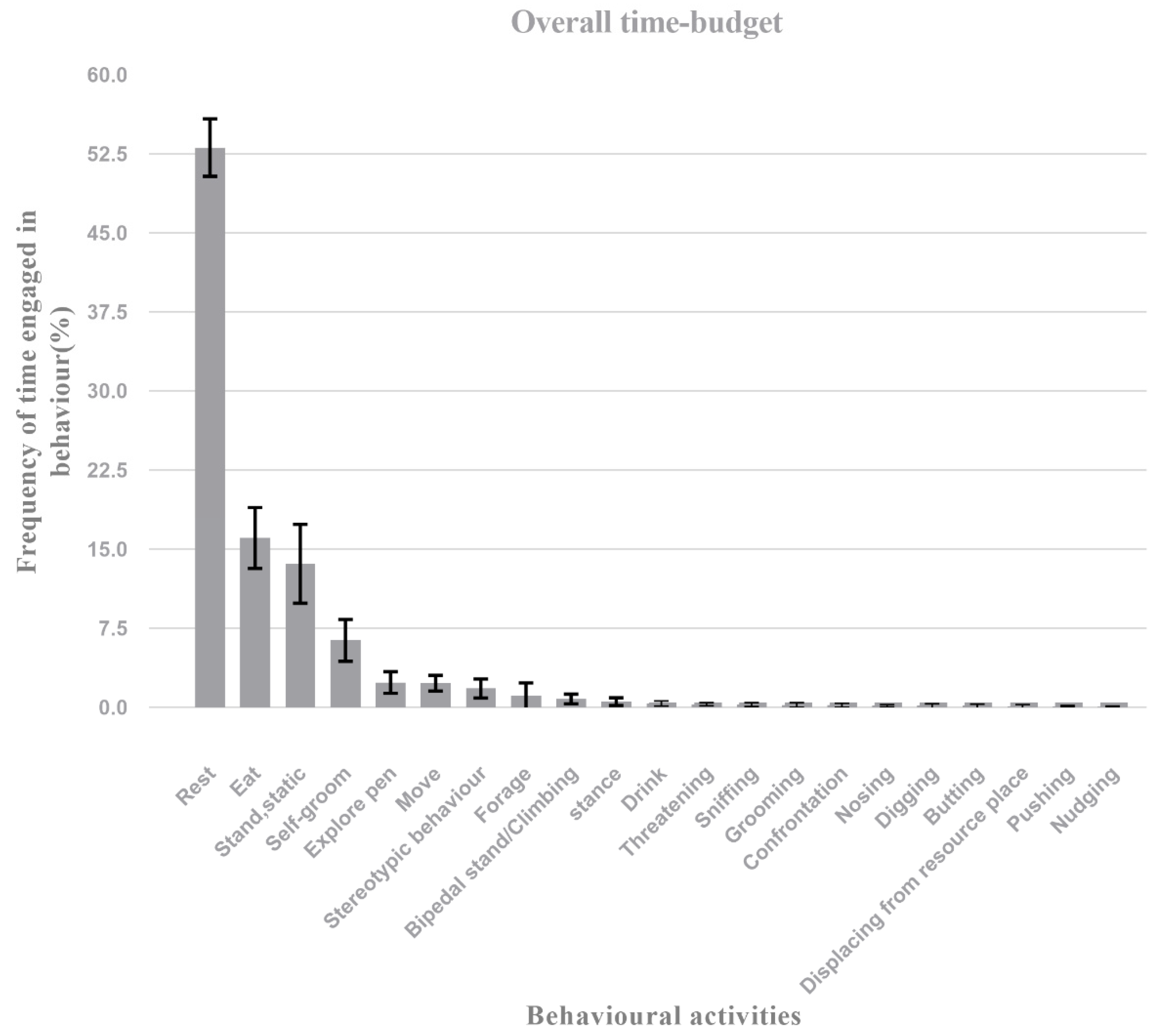
Figure 1. Frequency of time (%) spent by housed Leizhou goats in behavioural activities.
Agriculture 16 00043 g001
Figure 2. Time budgets of the main behavioural activities in housed Leizhou goats reared for meat production, across six time periods within a 24 h day. Note: This figure is intended for descriptive visualization and qualitative comparison. The data presented are means; no statistical hypothesis testing was performed between time periods or systems.
Agriculture 16 00043 g002
Figure 3. Comparison of the full 24 h cycle, the 12 h daylight period, and the 12 h night period of the main expressed behavioural activities (resting, eating, standing, moving, self-grooming/rumination) engaged in by the goats reared for meat production (a) and pasture-based management systems Tibetan goats (b) (data adapted from Wang et al., 1992 [43]). Note: This figure is intended for descriptive visualization and qualitative comparison. The data presented are means; no statistical hypothesis testing was performed between time periods or systems.
Agriculture 16 00043 g003
Table 1. The number of goats (N), pen area (m2), stocking density (m2/goat), animal body weight (kg), and feeder space per goat (m) for each experimental group.
Id PenN of GoatsPen Area (m2)Stocking Density
(m2/Goat)
Space at Feed Bunk (m/Goat)
LD612.52.00.21
MD1212.51.00.21
HD2412.50.50.21
Table 2. Description and illustrations of the selected mutually exclusive behavioural activities during the observation period.
TypeBehaviourDescriptions
StatesRestLying on the ground in a sternal position with legs bent underneath the body, or in a lateral position with legs extended.
EatStanding at the feed trough with the head completely inside one of the feeders.
Stand, staticStanding on four legs on the ground without any other movement.
Self-groomGrooming by self-licking, scratching with a hind leg, or rubbing against pen fixtures.
MoveChanging location within the pen by walking or running.
Explore penInteracting with the pen walls or other physical structures using the nose.
ForageStanding with the head down, interacting with forage.
Bipedal stance
/Climbing
Placing the front legs on the railings or the mineral block trough while the hind legs remain in contact with the ground, so that the body is no longer parallel to the ground/The act of climbing onto pen structures.
Lick mineral resourceStanding by the mineral supplement point and licking it.
DrinkStanding by the drinker and using it.
DiggingAlternating forehoof scraping of the ground (a grooming/clearing behavior).
StereotypiesPen licking,
Gnawing
Stereotypic licking or gnawing directed at pen structures or other objects.
EventsNegative social interaction
ThreateningThreatening posture by orienting the forehead towards a conspecific without physical contact.
ConfrontationConfrontational butting followed by a static push
ButtingAggressive butting (sudden, vigorous head contact).
Displacing from resourcesForcing another goat to leave a resource point (e.g., feed trough, drinker, mineral supplement block, or resting area).
PushingUsing a body part (other than the head) to push another goat.
Positive social interaction
SniffingSmelling any part of another goat’s body with the nose
NosingGently touching another goat with the nose.
AllogroomingCleaning another goat’s wool with the mouth.
NudgingGently and mildly pushing another goat.
Table 3. Overall time-budget and time frames of different behavioural activities. Frequencies (%) are presented as the mean of the three pen-level means ± SD (n = 3 pens).
Behavioural
Activities (%)
Overall Time Budget00:00–04:0004:00–08:0008:00–12:0012:00–16:0016:00–20:0020:00–24:00
Rest53.09 ± 2.7273.00 ±6.2270.98 ± 6.7826.07 ± 10.0569.53 ± 5.7216.03 ± 5.2062.88 ± 5.70
Eat16.05 ± 2.880.09 ± 0.263.76 ± 3.0443.26 ± 9.064.86 ± 3.1539.90 ± 9.253.36 ± 4.16
Stand, static13.60 ± 3.7311.34 ± 4.7612.56 ± 6.0014.00 ± 5.5010.71 ± 2.7019.59 ± 8.2512.96 ± 7.60
Self-groom6.36 ± 1.988.02 ± 3.085.12 ± 1.884.22 ± 2.145.50 ± 2.716.34 ± 2.659.87 ± 3.67
Move2.30 ± 0.752.20 ± 2.432.08 ± 1.192.37 ± 2.092.58 ± 1.762.14 ± 1.182.14 ± 1.69
Explore pen2.36 ± 1.021.30 ± 0.911.56 ± 1.612.92 ± 0.881.56 ± 1.074.40 ± 1.622.43 ± 1.38
Forage1.09 ± 1.220.46 ± 0.430.87 ± 1.301.59 ± 1.671.24 ± 2.682.17 ± 2.580.35 ± 0.45
Stereotypies1.79 ± 0.911.30 ± 0.770.98 ± 0.830.81 ± 0.641.27 ± 1.203.56 ± 3.163.04 ± 2.02
Bipedal stance/
Climbing
0.80 ± 0.460.46 ± 0.700.87 ± 0.581.01 ± 1.250.06 ± 0.171.68 ± 1.290.81 ± 0.24
Lick mineral resource0.54 ± 0.3780.17 ± 0.290.17 ± 0.231.04 ± 0.930.93 ± 0.840.64 ± 0.760.38 ± 0.47
Drink0.36 ± 0.230.03 ± 0.090.06 ± 0.350.69 ± 0.680.03 ± 0.091.22 ± 0.810.14 ± 0.26
Sniffing0.26 ± 0.190.17 ± 0.290.14 ± 0.000.23 ± 0.380.32 ± 0.480.52 ± 0.690.32 ± 0.45
Threatening0.28 ± 0.150.49 ± 0.420.17 ± 0.370.52 ± 0.770.26 ± 0.370.20 ± 0.310.12 ± 0.23
Confrontation0.20 ± 0.180.41 ± 0.630.14 ± 0.230.17 ± 0.370.43 ± 0.550.35 ± 0.580.03 ± 0.09
Allogrooming0.20 ± 0.210.06 ± 0.110.00 ± 0.000.26 ± 0.690.23 ± 0.380.23 ± 0.460.41 ± 0.43
Butting0.14 ± 0.170.17 ± 0.370.09 ± 0.180.17 ± 0.370.03 ± 0.090.26 ± 0.370.23 ± 0.53
Digging0.14 ± 0.190.17 ± 0.370.12 ± 0.350.23 ± 0.690.12 ± 0.350.06 ± 0.170.12 ± 0.35
Displacing from resources0.11 ± 0.140.029 ± 0.090.12 ± 0.350.06 ± 0.110.00 ± 0.000.38 ± 0.680.12 ± 0.35
Nosing0.15 ± 0.110.09 ± 0.180.06 ± 0.170.06 ± 0.170.14 ± 0.350.14 ± 0.350.23 ± 0.30
Pushing0.10 ± 0.070.00 ± 0.000.00 ± 0.170.23 ± 0.400.12 ± 0.350.20 ± 0.360.00 ± 0.00
Nudging0.07 ± 0.050.03 ± 0.090.14 ± 0.350.06 ± 0.170.09 ± 0.180.00 ± 0.000.09 ± 0.18
Table 4. Associations between the time-budgets (%/24 h; %/12 daylight hours; %/12 night hours) and stocking densities among the group pens.
BehaviourStocking Density
%/24 h%/12 h Daylight Hours%/12 h Night Hours
r ap-Valuer ap-Valuer ap-Value
Rest0.190.623−0.540.1370.680.046 *
Eat−0.040.9270.160.683−0.270.485
Stand, static−0.910.001 **−0.730.025 *−0.870.003 **
Self-groom0.930.000 **0.610.0800.880.002 **
Move−0.050.903−0.300.440−0.020.959
Explore pen0.340.3720.430.2510.270.483
Forage0.580.1000.550.1250.320.403
Stereotypies0.220.564−0.050.9020.630.069
Bipedal stance/Climbing0.710.033 *0.630.0680.460.207
Lick mineral
resource
−0.700.035 *−0.550.126−0.800.010 **
Drink−0.600.086−0.470.205−0.600.090
Sniffing−0.320.396−0.350.359−0.550.121
Threatening−0.400.2810.020.953−0.550.123
Confrontation−0.760.018 *−0.650.058−0.710.033 *
Allogrooming0.430.2490.560.114−0.180.650
Butting−0.300.441−0.250.523−0.310.418
Digging0.650.0600.660.0560.550.124
Displacing from resources0.560.1140.220.5650.430.250
Nosing−0.580.1030.110.780−0.400.282
Pushing0.600.0890.680.044 *.c.c
Nudging−0.150.692−0.290.4560.140.714
The primary purpose of this table is descriptive analysis. All p-values and significance markers should be interpreted as supplementary references for assessing the strength of associations: a Pearson’s correlation coefficient. * Statistical significance p < 0.05, ** Statistical significance p < 0.01. c The computation cannot be performed because at least one variable is a constant. Note: The correlation analysis was performed at the pen level, with n = 3 data points (one for each pen) for each behavior.
Disclaimer/Publisher’s Note: The statements, opinions and data contained in all publications are solely those of the individual author(s) and contributor(s) and not of MDPI and/or the editor(s). MDPI and/or the editor(s) disclaim responsibility for any injury to people or property resulting from any ideas, methods, instructions or products referred to in the content.