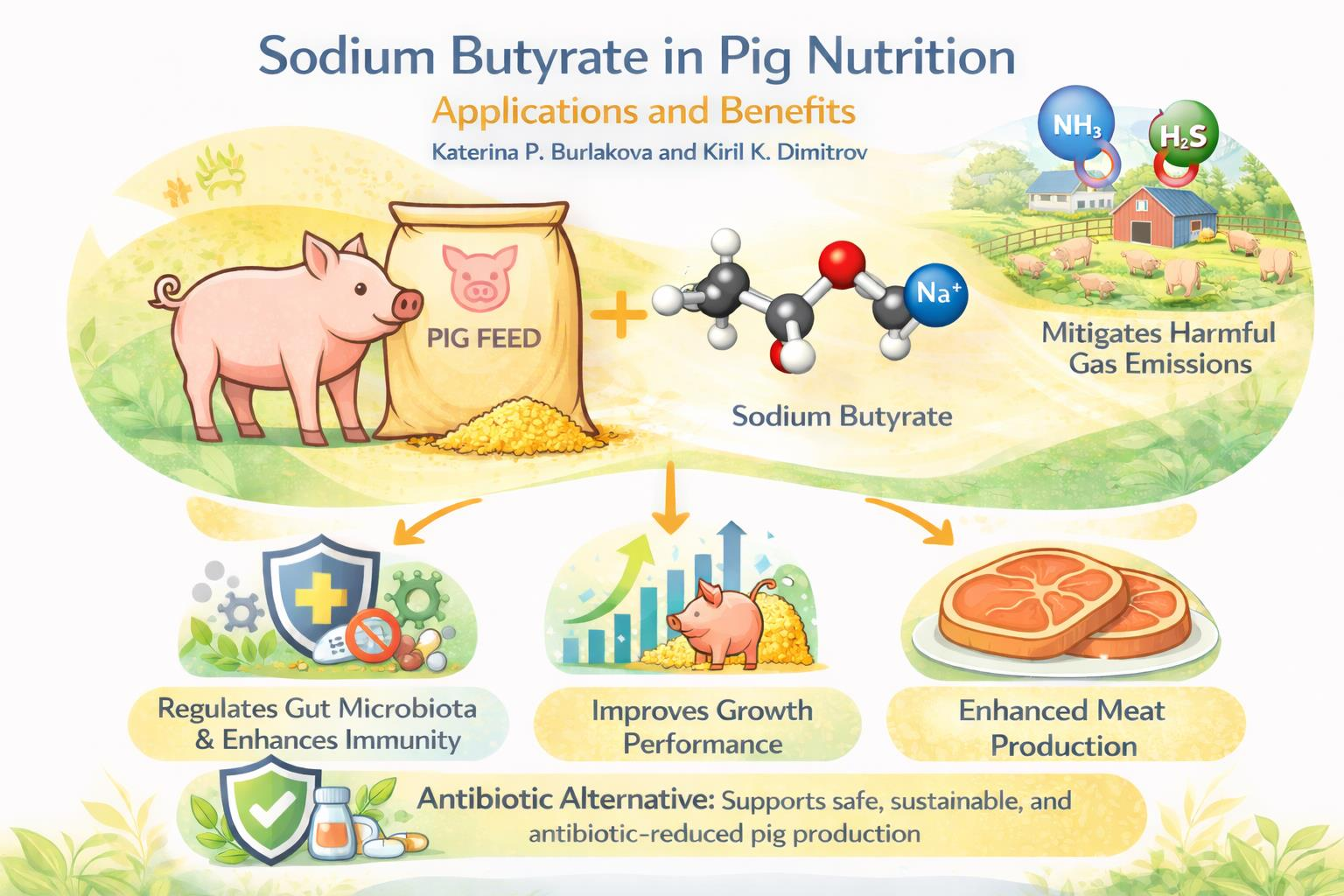
Sodium Butyrate in Pig Nutrition: Applications and Benefits


Abstract
1. Introduction
2. Materials and Methods
2.1. Literature Search Strategy
2.2. Eligibility Criteria and Study Selection
2.3. Data Extraction and Synthesis
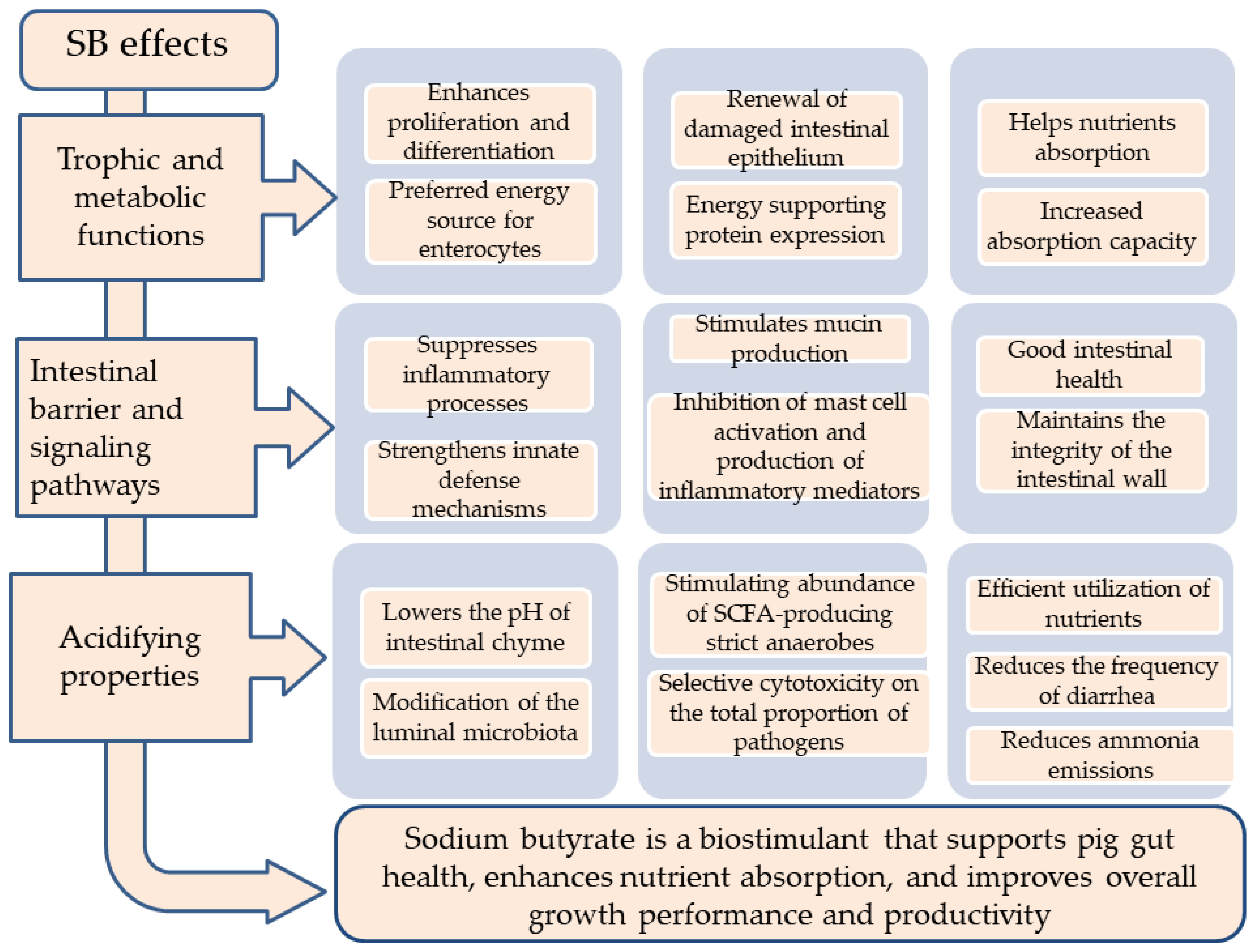
3. Sodium Butyrate as a Feed Additive in Pig Production
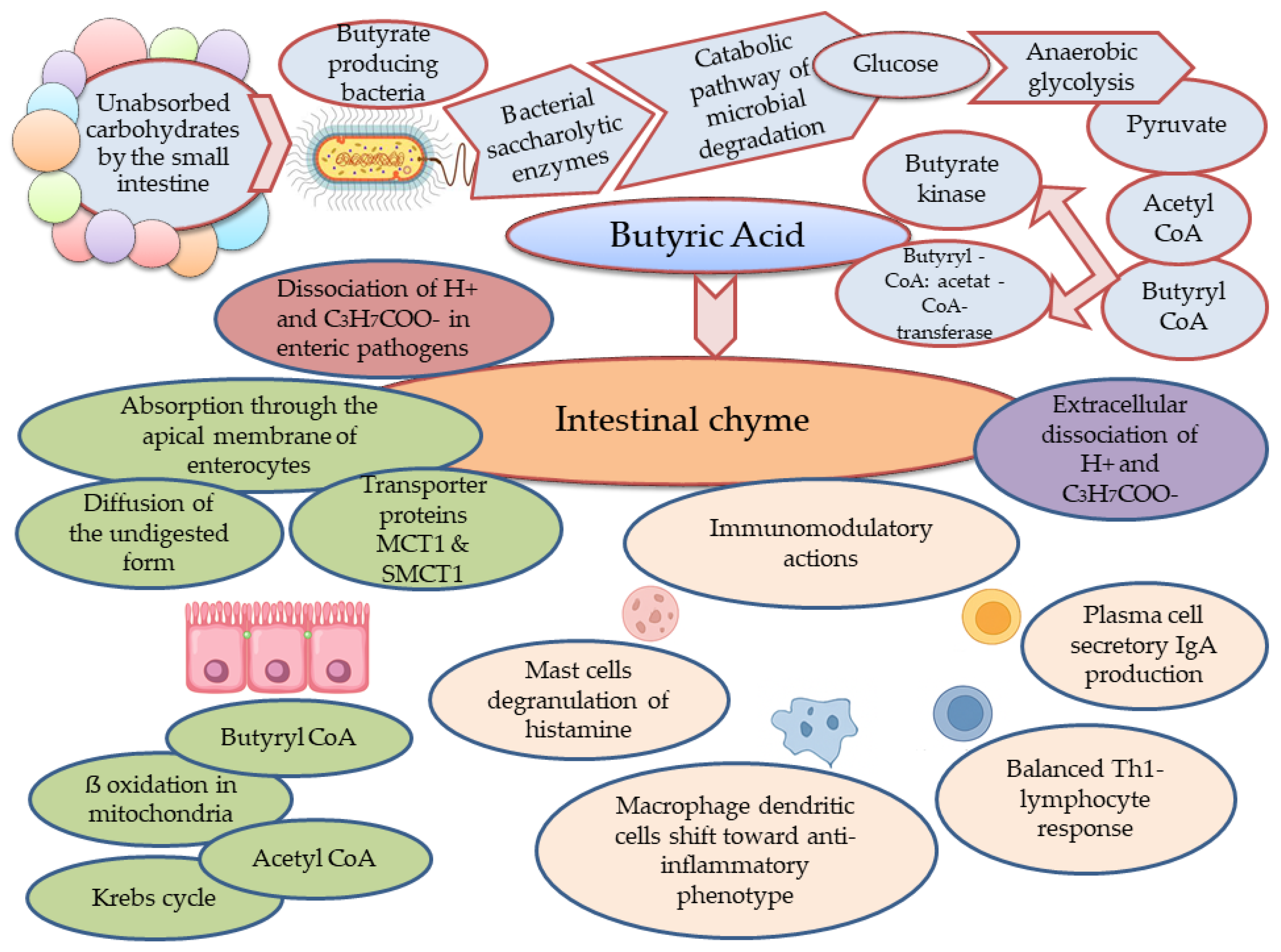
4. Effect of Sodium Butyrate on the Intestinal Microbiome
5. Effects of Sodium Butyrate on Intestinal Morphology
6. Immunomodulatory Properties of Sodium Butyrate
7. Significance of Sodium Butyrate in Nitrogen Metabolism and Excretion
8. Use of Sodium Butyrate to Mitigate Post-Weaning Stress Syndrome (PWS)
9. Effect of Sodium Butyrate Supplementation on Productive Traits in Pigs
10. Impact of SB on Pork Meat Quality
11. Cost-Effectiveness of SB Feed Additive
12. Future Research Perspectives
12.1. Optimization of Dosage, Formulation, and Inclusion Strategies
12.2. Mechanistic Insights into Gut Microbiome Modulation
12.3. Age-Dependent Responses and Immunomodulatory Effects
12.4. Mitigation of Environmental Impact
12.5. Impacts on Meat Quality and Production Efficiency
12.6. Economic Feasibility and Sustainability
13. Conclusions
Author Contributions
Funding
Data Availability Statement
Acknowledgments
Conflicts of Interest
Abbreviations
| ADFI | Average daily feed intake |
| ATP | Adenosine triphosphate |
| GIT | Gastrointestinal tract |
| N | Nitrogen |
| NH3 | Ammonia |
| PWS | Post-Weaning Stress Syndrome |
| SB | Sodium butyrate |
| SCFA | Short-chain fatty acids |
| IgA | Immunoglobulin A |
References
- European Environment Agency (EEA, 2019). Changing Menus, Changing Landscapes—Agriculture and Food in Europe. Available online: https://www.eea.europa.eu/bg/signals/signali-2019-g/statii/promyana-na-hranitelnite-navitsi-promyana (accessed on 15 November 2025).
- Maes, D.; Dewulf, J.; Pineiro, C.; Edwards, S.; Kyriazakis, I. A critical reflection on intensive pork production with an emphasis on animal health and welfare. J. Anim. Sci. 2020, 98, 15–26. [Google Scholar] [CrossRef]
- de la Casa, E.L. Intensive pig farming: Ethical considerations. Derecho Anim. Forum Anim. Law Stud. 2017, 8, 1–8. [Google Scholar] [CrossRef][Green Version]
- Delsart, M.; Pol, F.; Dufour, B.; Rose, N.; Fablet, C. Pig Farming in Alternative Systems: Strengths and Challenges in Terms of Animal Welfare, Biosecurity, Animal Health and Pork Safety. Agriculture 2020, 10, 261. [Google Scholar] [CrossRef]
- De Brito, S.A.P.; Duarte, G.D.; Sobral, F.E.d.S.; Christoffersen, M.L. Environmental Impacts of Swine Farming. Environ. Smoke 2022, 5, 1–6. [Google Scholar] [CrossRef]
- Cromwell, G.L. Why and how antibiotics are used in swine production. Anim. Biotechnol. 2002, 13, 7–27. [Google Scholar] [CrossRef]
- Bradford, H.; McKernan, C.; Elliott, C.; Dean, M. Factors influencing pig farmers’ perceptions and attitudes towards antimicrobial use and resistance. Prev. Vet. Med. 2022, 208, 105769. [Google Scholar] [CrossRef] [PubMed]
- Monger, X.C.; Gilbert, A.-A.; Saucier, L.; Vincent, A.T. Antibiotic Resistance: From Pig to Meat. Antibiotics 2021, 10, 1209. [Google Scholar] [CrossRef]
- Chen, J.; Ying, G.; Deng, W. Antibiotic Residues in Food: Extraction, Analysis, and Human Health Concerns. J. Agric. Food Chem. 2019, 67, 7569–7586. [Google Scholar] [CrossRef]
- Menkem, E.Z.; Ngangom, B.L.; Tamunjoh, S.S.A.; Boyom, F.F. Antibiotic residues in food animals: Public health concern. Acta Ecol. Sin. 2019, 39, 411–415. [Google Scholar] [CrossRef]
- Heo, J.M.; Opapeju, F.O.; Pluske, J.R.; Kim, J.C.; Hampson, D.J.; Nyachoti, C.M. Gastrointestinal health and function in weaned pigs: A review of feeding strategies to control post-weaning diarrhoea without using in-feed antimicrobial compounds. J. Anim. Physiol. Anim. Nutr. 2012, 97, 207–237. [Google Scholar] [CrossRef]
- Liu, Y.; Espinosa, C.D.; Abelilla, J.J.; Casas, G.A.; Lagos, L.V.; Lee, S.A.; Kwon, W.B.; Mathai, J.K.; Navarro, D.M.D.L.; Jaworski, N.W.; et al. Non-antibiotic feed additives in diets for pigs: A review. Anim. Nutr. 2018, 4, 113–125. [Google Scholar] [CrossRef] [PubMed]
- Ikusika, O.; Haruzivi, C.; Mpendulo, T. Chapter 4. Alternatives to the Use of Antibiotics in Animal Production. In Antibiotics and Probiotics in Animal Food—Impact and Regulation; Kamboh, A., Payan-Carreira, R., Eds.; IntechOpen Limited: London, UK, 2022. [Google Scholar] [CrossRef]
- Rojas-Downing, M.M.; Nejadhashemi, A.P.; Harrigan, T.; Woznicki, S.A. Climate change and livestock: Impacts, adaptation, and mitigation. Clim. Risk Manag. 2017, 16, 145–163. [Google Scholar] [CrossRef]
- Ball, M.E.E.; Smyth, S.; Beattie, V.E.; McCracken, K.J.; McCormack, U.; Muns, R.; Gordon, F.J.; Bradford, R.; Reid, L.A.; Magowan, E. The Environmental Impact of Lowering Dietary Crude Protein in Finishing Pig Diets—The Effect on Ammonia, Odour and Slurry Production. Sustainability 2022, 14, 12016. [Google Scholar] [CrossRef]
- Garry, B.P.; Fogarty, M.; Curran, T.P.; O’Doherty, J.V. Effect of cereal type and exogenous enzyme supplementation in pig diets on odour and ammonia emissions. Livest. Sci. 2007, 109, 212–215. [Google Scholar] [CrossRef]
- Nguyen, D.H.; Lee, S.I.; Cheong, J.Y.; Kim, I.H. Influence of low-protein diets and protease and bromelain supplementation on growth performance, nutrient digestibility, blood urine nitrogen, creatinine, and faecal noxious gas in growing–finishing pigs. Can. J. Anim. Sci. 2018, 98, 488–497. [Google Scholar] [CrossRef]
- Kim, J.-H.; Ko, G.-P.; Son, K.-H.; Ku, B.-H.; Bang, M.-A.; Kang, M.-J.; Park, H.-Y. Arazyme in combination with dietary carbohydrolases influences odor emission and gut microbiome in growing-finishing pigs. Sci. Total Environ. 2022, 848, 157735. [Google Scholar] [CrossRef]
- Aufy, A.; Zentner, E.; Steiner, T. Phytogenic Feed Additives and Ammonia Emissions—Thinking Outside the Box. 6 December 2011. The Pig Site. Available online: https://www.thepigsite.com/articles/phytogenic-feed-additives-and-ammonia-emissions-thinking-outside-the-box (accessed on 15 November 2025).
- Tufarelli, V.; Rossi, G.; Laudadio, V.; Crovace, A. Effect of a dietary probiotic blend on performance, blood characteristics, meat quality and faecal microbial shedding in growing-finishing pigs. S. Afr. J. Anim. Sci. 2017, 47, 875. [Google Scholar] [CrossRef]
- Nguyen, D.H.; Nyachoti, C.M.; Kim, I.H. Evaluation of effect of probiotics mixture supplementation on growth performance, nutrient digestibility, faecal bacterial enumeration, and noxious gas emission in weaning pigs. Ital. J. Anim. Sci. 2019, 18, 466–473. [Google Scholar] [CrossRef]
- Piva, A.; Casadei, G.; Biagi, G. An organic acid blend can modulate swine intestinal fermentation and reduce microbial proteolysis. Can. J. Anim. Sci. 2002, 82, 527–532. [Google Scholar] [CrossRef]
- Upadhaya, S.D.; Lee, K.Y.; Kim, I.H. Protected Organic Acid Blends as an Alternative to Antibiotics in Finishing Pigs. Asian-Australas. J. Anim. Sci. 2014, 27, 1600–1607. [Google Scholar] [CrossRef] [PubMed]
- Suiryanrayna, M.V.A.N.; Ramana, J.V. A review of the effects of dietary organic acids fed to swine. J. Anim. Sci. Biotechnol. 2015, 6, 45. [Google Scholar] [CrossRef]
- Tugnoli, B.; Giovagnoni, G.; Piva, A.; Grilli, E. From Acidifiers to Intestinal Health Enhancers: How Organic Acids Can Improve Growth Efficiency of Pigs. Animals 2020, 10, 134. [Google Scholar] [CrossRef]
- Mroz, Z. Organic Acids as Potential Alternatives to Antibiotic Growth Promoters for Pigs. Adv. Pork Prod. 2005, 16, 169. [Google Scholar]
- Piva, A.; Grilli, E.; Fabbri, L.; Pizzamiglio, V.; Campani, I. Free versus microencapsulated organic acids in medicated or not medicated diet for piglets. Livest. Sci. 2007, 108, 214–217. [Google Scholar] [CrossRef]
- Jia, G.C.; Yan, J.-Y.; Cai, J.-Y.; Wang, K.-N. Effects of encapsulated and non-encapsulated compound acidifiers on gastrointestinal pH and intestinal morphology and function in weaning piglets. J. Anim. Feed Sci. 2010, 19, 81–92. [Google Scholar] [CrossRef]
- Huyghebaert, G.; Ducatelle, R.; Van Immerseel, F. An update on alternatives to antimicrobial growth promoters for broilers. Vet. J. 2011, 187, 182–188. [Google Scholar] [CrossRef]
- Ozturk, E.; Temiz, U. Encapsulation Methods and Use in Animal Nutrition. Selcuk. J. Agr. Food Sci. 2018, 32, 624–631. [Google Scholar] [CrossRef]
- Giannenas, I.A. Organic acids in pig and poultry nutrition. J. Hell. Vet. Med. Soc. 2017, 57, 51–62. [Google Scholar] [CrossRef]
- Casanova-Higes, A.; Andrés-Barranco, S.; Mainar-Jaime, R.C. Short communication: Use of a new form of protected sodium butyrate to control Salmonella infection in fattening pigs. Span. J. Agric. Res. 2018, 16, e05SC02. [Google Scholar] [CrossRef]
- Zhang, L.L.; Feng, J.; Li, H.; Zeng, X.F.; Yang, C.M. Effects of plant essential oil and sodium butyrate compound preparation on growth performance, serum antioxidant indices, fecal flora and ammonia loss of weaner piglets. Chin. J. Anim. Nutr. 2018, 30, 678–684. [Google Scholar]
- Nowak, P.; Kasprowicz-Potocka, M.; Zaworska, A.; Nowak, W.; Stefańska, B.; Sip, A.; Grajek, W.; Grajek, K.; Frankiewicz, A. The Effect of Combined Feed Additives on Growing Pigs’ Performance and Digestive Tract Parameters. Ann. Anim. Sci. 2019, 19, 807–819. [Google Scholar] [CrossRef]
- Luise, D.; Correa, F.; Bosi, P.; Trevisi, P. A Review of the Effect of Formic Acid and Its Salts on the Gastrointestinal Microbiota and Performance of Pigs. Animals 2020, 10, 887. [Google Scholar] [CrossRef]
- Zeng, X.; Yang, Y.; Wang, J.; Wang, Z.; Li, J.; Yin, Y.; Yang, H. Dietary butyrate, lauric acid and stearic acid improve gut morphology and epithelial cell turnover in weaned piglets. Anim. Nutr. 2022, 11, 276–282. [Google Scholar] [CrossRef] [PubMed]
- You, C.; Xu, Q.; Chen, J.; Xu, Y.; Pang, J.; Peng, X.; Tang, Z.; Sun, W.; Sun, Z. Effects of Different Combinations of Sodium Butyrate, Medium-Chain Fatty Acids and Omega-3 Polyunsaturated Fatty Acids on the Reproductive Performance of Sows and Biochemical Parameters, Oxidative Status and Intestinal Health of Their Offspring. Animals 2023, 13, 1093. [Google Scholar] [CrossRef]
- Kasubuchi, M.; Hasegawa, S.; Hiramatsu, T.; Ichimura, A.; Kimura, I. Dietary gut microbial metabolites, short-chain fatty acids, and host metabolic regulation. Nutrients 2015, 7, 2839–2849. [Google Scholar] [CrossRef]
- Bergman, E.N. Energy contributions of volatile fatty acids from the gastrointestinal tract in various species. Physiol. Rev. 1990, 70, 567–590. [Google Scholar] [CrossRef] [PubMed]
- Goldberg, I.; Rokem, J. Organic and Fatty Acid Production, Microbial. In Encyclopedia of Microbiology; Schaechter, M., Ed.; San Diego State University: San Diego, CA, USA, 2009; pp. 421–442. [Google Scholar] [CrossRef]
- Huang, J.; Tang, W.; Zhu, S.; Du, M. Biosynthesis of butyric acid by Clostridium tyrobutyricum. Prep. Biochem. Biotechnol. 2018, 48, 427–434. [Google Scholar] [CrossRef]
- Claus, R.; Günthner, D.; Letzguss, H. Effects of feeding fat-coated butyrate on mucosal morphology and function in the small intestine of the pig. J. Anim. Physiol. Anim. Nutr. 2007, 91, 312–318. [Google Scholar] [CrossRef] [PubMed]
- Guilloteau, P.; Martin, L.; Eeckhaut, V.; Ducatelle, R.; Zabielski, R.; Van Immerseel, F. From the gut to the peripheral tissues: The multiple effects of butyrate. Nutr. Res. Rev. 2010, 23, 366–384. [Google Scholar] [CrossRef]
- He, B.; Wang, M.; Guo, H.; Jia, Y.; Yang, X.; Zhao, R. Effects of sodium butyrate supplementation on reproductive performance and colostrum composition in gilts. Animals 2016, 10, 1722–1727. [Google Scholar] [CrossRef]
- Wang, C.C.; Wu, H.; Lin, F.H.; Gong, R.; Xie, F.; Peng, Y.; Feng, J.; Hu, C.H. Sodium butyrate enhances intestinal integrity, inhibits mast cell activation, inflammatory mediator production and JNK signaling pathway in weaned pigs. Innate Immun. 2018, 24, 40–46. [Google Scholar] [CrossRef]
- Page, M.J.; McKenzie, J.E.; Bossuyt, P.M.; Boutron, I.; Hoffmann, T.C.; Mulrow, C.D.; Shamseer, L.; Tetzlaff, J.M.; Akl, E.A.; Brennan, S.E.; et al. The PRISMA 2020 statement: An updated guideline for reporting systematic reviews. Systematic Reviews 2021, 10, 89. [Google Scholar] [CrossRef]
- National Center for Biotechnology Information (NCBI, 2025). PubChem Compound Summary for CID 5222465, Sodium Butyrate. Available online: https://pubchem.ncbi.nlm.nih.gov/compound/Sodium-Butyrate (accessed on 15 November 2025).
- Leonel, A.; Alvarez-Leite, J. Butyrate: Implications for intestinal function. Curr. Opin. Clin. Nutr. Metab. Care 2012, 15, 474–479. [Google Scholar] [CrossRef]
- Hodgkinson, K.; El Abbar, F.; Dobranowski, P.; Manoogian, J.; Butcher, J.; Figeys, D.; Mack, D.; Stintzi, A. Butyrate’s role in human health and the current progress towards its clinical application to treat gastrointestinal disease. Clin. Nutr. 2023, 42, 61–75. [Google Scholar] [CrossRef] [PubMed]
- Hamer, H.M.; Jonkers, D.; Venema, K.; Vanhoutvin, S.; Troost, F.J.; Brummer, R.-J. Review article: The role of butyrate on colonic function. Aliment. Pharmacol. Ther. 2008, 27, 104–119. [Google Scholar] [CrossRef]
- Liu, H.; Wang, J.; He, T.; Becker, S.; Zhang, G.; Li, D.; Ma, X. Butyrate: A Double-Edged Sword Health? Adv. Nutr. 2018, 9, 21–29. [Google Scholar] [CrossRef] [PubMed]
- Canani, R.B.; Di Costanzo, M.; Leone, L.; Pedata, M.; Meli, R.; Calignano, A. Potential beneficial effects of butyrate in intestinal and extraintestinal diseases. World J. Gastroenterol. 2011, 17, 1519–1528. [Google Scholar] [CrossRef]
- Connolly, K.R.; Sweeney, T.; O’Doherty, J.V. Sustainable Nutritional Strategies for Gut Health in Weaned Pigs: The Role of Reduced Dietary Crude Protein, Organic Acids and Butyrate Production. Animals 2025, 15, 66. [Google Scholar] [CrossRef] [PubMed]
- Gardiner, G.E.; Metzler-Zebeli, B.U.; Lawlor, P.G. Impact of Intestinal Microbiota on Growth and Feed Efficiency in Pigs: A Review. Microorganisms 2020, 8, 1886. [Google Scholar] [CrossRef]
- Lu, J.J.; Zou, X.T.; Wang, Y.M. Effects of sodium butyrate on the growth performance, intestinal microflora and morphology of weanling pigs. J. Anim. Feed Sci. 2008, 17, 568–578. [Google Scholar] [CrossRef]
- Le Gall, M.; Gallois, M.; Sève, B.; Louveau, I.; Holst, J.J.; Oswald, I.P.; Lallès, J.-P.; Guilloteau, P. Comparative effect of orally administered sodium butyrate before or after weaning on growth and several indices of gastrointestinal biology of piglets. Br. J. Nutr. 2009, 102, 1285–1296. [Google Scholar] [CrossRef]
- Fang, C.L.; Sun, H.; Wu, J.; Niu, H.H.; Feng, J. Effects of sodium butyrate on growth performance, haematological and immunological characteristics of weanling piglets. J. Anim. Physiol. Anim. Nutr. 2014, 98, 680–685. [Google Scholar] [CrossRef]
- Jang, Y.D.; Lindemann, M.D.; Monegue, H.J.; Monegue, J.S. The effect of coated sodium butyrate supplementation in sow and nursery diets on lactation performance and nursery pig growth performance. Livest. Sci. 2017, 195, 13–20. [Google Scholar] [CrossRef]
- Roca, M.; Nofrarías, M.; Majo, N.; Pérez de Rozas, A.M.; Segalés, J.; Castillo, M.; Martín-Orúe, S.M.; Espinal, A.; Pujols, J.; Badiola, I. Changes in bacterial population of gastrointestinal tract of weaned pigs fed with different additives. Biomed. Res. Int. 2014, 2014, 269402. [Google Scholar] [CrossRef] [PubMed]
- Xu, J.; Xie, G.; Li, X.; Wen, X.; Cao, Z.; Ma, B.; Zou, Y.; Zhang, N.; Mi, J.; Wang, Y.; et al. Sodium butyrate reduce ammonia and hydrogen sulfide emissions by regulating bacterial community balance in swine cecal content in vitro. Ecotoxicol. Environ. Saf. 2021, 226, 112827. [Google Scholar] [CrossRef] [PubMed]
- Piva, A.; Morlacchini, M.; Casadei, G.; Gatta, P.P.; Biagi, G.; Prandini, A. Sodium butyrate improves growth performance of weaned piglets during the first period after weaning. Ital. J. Anim. Sci. 2002, 1, 35–41. [Google Scholar] [CrossRef]
- Gálfi, P.; Bokori, J. Feeding trial in pigs with a diet containing sodium n-butyrate. Acta Vet. Hung. 1990, 38, 3–17. [Google Scholar] [PubMed]
- Sun, W.; Sun, J.; Li, M.; Xu, Q.; Zhang, X.; Tang, Z.; Chen, J.; Zhen, J.; Sun, Z. The effects of dietary sodium butyrate supplementation on the growth performance, carcass traits and intestinal microbiota of growing-finishing pigs. J. Appl. Microbiol. 2020, 128, 1613–1623. [Google Scholar] [CrossRef]
- Zhou, N.; Tian, Y.; Liu, W.; Tu, B.; Gu, T.; Xu, W.; Zou, K.; Lu, L. Effects of quercetin and coated sodium butyrate dietary supplementation in diquat-challenged pullets. Anim. Biosci. 2022, 35, 1434–1443. [Google Scholar] [CrossRef]
- Lopez-Colom, P.; Castillejos, L.; Barba-Vidal, E.; Zhu, Y.; Puyalto, M.; Mallo, J.J.; Martín-Orúe, S.M. Response of gastrointestinal fermentative activity and colonic microbiota to protected sodium butyrate and protected sodium heptanoate in weaned piglets challenged with ETEC F4+. Arch. Anim. Nutr. 2019, 73, 339–359. [Google Scholar] [CrossRef]
- Zhong, Z.; Wang, C.; Zhang, H.; Mi, J.; Liang, J.B.; Liao, X.; Wu, Y.; Wang, Y. Sodium butyrate reduces ammonia emissions through glutamate metabolic pathways in cecal microorganisms of laying hens. Ecotoxicol. Environ. Saf. 2022, 233, 113299. [Google Scholar] [CrossRef]
- Vasquez, R.; Oh, J.K.; Song, J.H.; Kang, D.-K. Gut microbiome-produced metabolites in pigs: A review on their biological functions and the influence of probiotics. J. Anim. Sci. Technol. 2022, 64, 671–695. [Google Scholar] [CrossRef]
- Holman, D.B.C.; Brunelle, B.W.; Trachsel, J.; Allen, H.K. Meta-analysis to define a core microbiota in the Swine gut. mSystems 2017, 2, e00004-17. [Google Scholar] [CrossRef]
- Bernad-Roche, M.; Belles, A.; Grasa, L.; Casanova-Higes, A.; Mainar-Jaime, R.C. Effects of Dietary Supplementation with Protected Sodium Butyrate on Gut Microbiota in Growing-Finishing Pigs. Animals 2021, 11, 2137. [Google Scholar] [CrossRef]
- Zhang, L.; Wu, W.; Lee, Y.-K.; Xie, J.; Zhang, H. Spatial Heterogeneity and Co-occurrence of Mucosal and Luminal Microbiome across Swine Intestinal Tract. Front. Microbiol. 2018, 9, 48. [Google Scholar] [CrossRef]
- Tang, X.; Xiong, K.; Fang, R.; Li, M. Weaning stress and intestinal health of piglets: A review. Front. Immunol. 2022, 13, 1042778. [Google Scholar] [CrossRef]
- Li, Y.; Wang, X.; Wang, X.-Q.; Wang, J.; Zhao, J. Life-long dynamics of the swine gut microbiome and their implications in probiotics development and food safety. Gut Microbes 2020, 11, 1824–1832. [Google Scholar] [CrossRef] [PubMed]
- Jensen, B.B. The impact of feed additives on the microbial ecology of the gut in young pigs. J. Anim. Feed Sci. 1998, 7, 45–64. [Google Scholar] [CrossRef]
- Biagi, G.; Piva, A.; Moschini, M.; Vezzali, E.; Roth, F.X. Performance, intestinal microflora, and wall morphology of weanling pigs fed sodium butyrate. J. Anim. Sci. 2007, 85, 1184–1191. [Google Scholar] [CrossRef]
- Chiofalo, B.; Luigi, L.; Presti, V.L.; Agnello, A.S.; Montalbano, G.; Marino, A.M.F.; Chiofalo, A. Dietary Supplementation of Free or Microcapsulated Sodium Butyrate on Weaned Piglet Performances. J. Nutr. Ecol. Food Res. 2014, 2, 41–48. [Google Scholar] [CrossRef]
- Guo, P.; Zhang, K.; Ma, X.; He, P. Clostridium species as probiotics: Potentials and challenges. J. Anim. Sci. Biotechnol. 2020, 11, 24. [Google Scholar] [CrossRef] [PubMed]
- Hijova, E.; Chmelarova, A. Short chain fatty acids and colonic health. Bratisl. Lek. Listy. 2007, 108, 354–358. [Google Scholar] [PubMed]
- Pearlin, B.V.; Muthuvel, S.; Govidasamy, P.; Villavan, M.; Alagawany, M.; Farag, M.R.; Dhama, K.; Gopi, M. Role of acidifiers in livestock nutrition and health: A review. J. Anim. Physiol. Anim. Nutr. 2020, 104, 558–569. [Google Scholar] [CrossRef]
- Upadhaya, S.D.; Jiao, Y.; Kim, Y.M.; Lee, K.Y.; Kim, I.H. Coated sodium butyrate supplementation to a reduced nutrient diet enhanced the performance and positively impacted villus height and faecal and digesta bacterial composition in weaner pigs. Anim. Feed Sci. Technol. 2020, 265, 114534. [Google Scholar] [CrossRef]
- Sadurni, M.; Barroeta, A.C.; Sol, C.; Puyalto, M.; Castillejos, L. Effects of dietary crude protein level and sodium butyrate protected by medium-chain fatty acid salts on performance and gut health in weaned piglets. J. Anim. Sci. 2023, 101, skad090. [Google Scholar] [CrossRef]
- Walia, K.; Argüello, H.; Lynch, H.; Leonard, F.C.; Grant, J.; Yearsley, D.; Kelly, S.; Duffy, G.; Gardiner, G.E.; Lawlor, P.G. Effect of feeding sodium butyrate in the late finishing period on Salmonella carriage, seroprevalence, and growth of finishing pigs. Prev. Vet. Med. 2016, 131, 79–86. [Google Scholar] [CrossRef]
- Casanova-Higes, A.; Andrés-Barranco, S.; Mainar-Jaime, R.C. Effect of the addition of protected sodium butyrate to the feed on Salmonella spp. infection dynamics in fattening pigs. Anim. Feed Sci. Technol. 2017, 231, 12–18. [Google Scholar] [CrossRef]
- Lynch, H.; Leonard, F.C.; Walia, K.; Lawlor, P.G.; Duffy, G.; Fanning, S.; Markey, B.K.; Brady, C.; Gardiner, G.E.; Argüello, H. Investigation of in-feed organic acids as a low cost strategy to combat Salmonella in grower pigs. Prev. Vet. Med. 2017, 139, 50–57. [Google Scholar] [CrossRef]
- Basanta, A.; Ortiz, A.; López, A.; Carrasco, C. Effect of the addition of high doses of protected sodium butyrate in fattening pigs on Salmonella prevalence. In Proceedings of the Jornadas Sobre Producción Animal AIDA XVII, Zaragoza, Spain, 30–31 May 2017; pp. 87–89. [Google Scholar]
- Roediger, W.E. Role of Anaerobic Bacteria in the Metabolic Welfare of the Colonic Mucosa in Man. Gut 1980, 21, 793–798. [Google Scholar] [CrossRef] [PubMed]
- Mazzoni, M.L.; Le Gall, M.; De Filippi, S.; Minieri, L.; Trevisi, P.; Wolinski, J.; Lalatta-Costerbosa, G.; Lalles, J.-P.; Guilloteau, P.; Bosi, P. Supplemental Sodium Butyrate Stimulates Different Gastric Cells in Weaned Pigs. J. Nutr. 2008, 138, 1426–1431. [Google Scholar] [CrossRef]
- Morel, P.C.H.; Chidgey, K.L.; Jenkinson, C.M.C.; Lizarraga, I.; Schreurs, N.M. Effect of benzoic acid, sodium butyrate and sodium butyrate coated with benzoic acid on growth performance, digestibility, intestinal morphology and meat quality in grower-finisher pigs. Livest. Sci. 2019, 226, 107–113. [Google Scholar] [CrossRef]
- Racevičiūtė-Stupelienė, A.; Šašytė, V.; Vilienė, V.; Alijošius, S.; Slausgalvis, V.; Bauwens, S.; Klementavičiūtė, J.; Nutautaitė, M.; Buckūnienė, V.; Paleckaitis, M. The Influence of sodium butyrate and vegetable fatty acids on productivity and meat quality of fattening pigs. Vet. Zootech. 2018, 76, 91–95. [Google Scholar]
- Kotunia, A.; Woliński, J.; Laubitz, D.; Jurkowska, M.; Romé, V.; Guilloteau, P.; Zabielski, R. Effect of sodium butyrate on the small intestine development in neonatal piglets fed [correction of feed] by artificial sow. J. Physiol. Pharmacol. 2004, 55, 59–68. [Google Scholar] [PubMed]
- Lallès, J.-P.; Boudry, G.; Favier, C.; Le Floc’h, N.; Luron, I.; Montagnea, L.; Oswald, I.P.; Pié, S.; Piel, C.; Sève, B. Gut function and dysfunction in young pigs: Physiology. Anim. Res. 2024, 53, 301–316. [Google Scholar] [CrossRef]
- Patil, Y.; Gooneratne, R.; Ju, X.-H. Interactions between host and gut microbiota in domestic pigs: A review. Gut Microbes 2020, 11, 310–334. [Google Scholar] [CrossRef]
- Moeser, A.J.; Ryan, K.A.; Nighot, P.K.; Blikslager, A.T. Gastrointestinal dysfunction induced by early weaning is attenuated by delayed weaning and mast cell blockade in pigs. Am. J. Physiol. Gastrointest. Liver Physiol. 2007, 293, 413–421. [Google Scholar] [CrossRef]
- Jha, R.; Berrocoso, J.F.D. Dietary fiber and protein fermentation in the intestine of swine and their interactive effects on gut health and on the environment: A review. Anim. Feed Sci. Technol. 2016, 212, 18–26. [Google Scholar] [CrossRef]
- Rist, V.T.S.; Weiss, E.; Eklund, M.; Mosenthin, R. Impact of dietary protein on microbiota composition and activity in the gastrointestinal tract of piglets in relation to gut health: A review. Animal 2013, 7, 1067–1078. [Google Scholar] [CrossRef]
- Kempen, T. A Strategy for Reducing Ammonia in Animal Production. North Carolina State University Swine Nutrient Management Research from 2001; College of Agriculture & Life Sciences, Department of Animal Science, Annual Swine Report. 2001. Available online: https://porkgateway.org/resource/a-strategy-for-reducing-ammonia-in-animal-production/ (accessed on 16 December 2025).
- Le Dinh, P.; Van der Peet-Schwering, C.M.C.; Ogink, N.W.M.; Aarnink, A.J.A. Effect of Diet Composition on Excreta Composition and Ammonia Emissions from Growing-Finishing Pigs. Animals 2022, 12, 229. [Google Scholar] [CrossRef]
- Philippe, F.; Cabaraux, J.; Nicks, B. Ammonia emissions from pig houses: Influencing factors and mitigation techniques. Agric. Ecosyst. Environ. 2011, 141, 245–260. [Google Scholar] [CrossRef]
- Millet, S.; Aluwé, M.; Van den Broeke, A.; Leen, F.; De Boever, J.; De Campeneere, S. Review: Pork production with maximal nitrogen efficiency. Animal 2018, 12, 1060–1067. [Google Scholar] [CrossRef]
- Hansen, M.J.; Nørgaard, J.V.; Adamsen, A.P.S.; Poulsen, H.D. Effect of reduced crude protein on ammonia, methane, and chemical odorants emitted from pig houses. Livest. Sci. 2014, 169, 118–124. [Google Scholar] [CrossRef]
- Krone, J.E.C.; Agyekum, A.K.; Borgh, M.T.; Hamonic, K.; Penner, G.B.; Columbus, D.A. Characterization of urea transport mechanisms in the intestinal tract of growing pigs. Am. J. Physiol. Gastrointest. Liver Physiol. 2019, 317, 839–844. [Google Scholar] [CrossRef]
- Lu, H.; Su, S.; Ajuwom, K. Butyrate supplementation to gestating sows and piglets induces muscle and adipose tissue oxidative genes and improves growth performance. Sci. J. Anim. Sci. 2012, 90, 430–432. [Google Scholar] [CrossRef] [PubMed]
- Weber, T.E.; Kerr, B.J. Effect of sodium butyrate on growth performance and response to lipopolysaccharide in weanling pigs. J. Anim. Sci. 2008, 86, 442–450. [Google Scholar] [CrossRef] [PubMed]
- Feng, W.; Wu, Y.; Chen, G.; Fu, S.; Li, B.; Huang, B.; Wang, D.; Wang, W.; Liu, J. Weaned Piglets and Promotes Tight Junction Protein Expression in Colon in a GPR109A-Dependent Manner. Cell Physiol. Biochem. 2018, 47, 1617–1629. [Google Scholar] [CrossRef] [PubMed]
- Zhang, H.; Ren, E.; Xu, R.; Su, Y. Transcriptomic Responses Induced in Muscle and Adipose Tissues of Growing Pigs by Intravenous Infusion of Sodium Butyrate. Biology 2021, 10, 559. [Google Scholar] [CrossRef]
- Zhang, Y.; Yu, B.; Yu, J.; Zheng, P.; Huang, Z.; Luo, Y.; Luo, J.; Mao, X.; Yan, H.; He, J.; et al. Butyrate promotes slow-twitch myofiber formation and mitochondrial biogenesis in finishing pigs via inducing specific microRNAs and PGC-1α expression. J. Anim. Sci. 2019, 97, 3180–3192. [Google Scholar] [CrossRef]



| Metric | Antibiotics (AGPs) | Zinc Oxide (ZnO) | Sodium Butyrate (Coated) |
|---|---|---|---|
| Antimicrobial Activity | Direct bacteriostatic/ bactericidal [6,8] | Broad-spectrum at pharmacological doses [9,10] | Indirect via pH, membranes, microbiota [24,25,45] |
| Inflammation Control | Low [6] | Moderate [11] | High via NF-κB inhibition [45,52] |
| Gut Morphology | Improved but variable [6,11] | Improved villus height [11] | Consistent villus/crypt improvement [42,74,79] |
| Diarrhea Reduction | Strong [6,11] | Strong [11] | Moderate–strong (coated forms) [23,79] |
| Regulatory Restrictions | Severe global restrictions [7,8] | Phasing out in many regions [9,10] | Acceptable in all markets [12,13] |
| Environmental Impact | Antibiotic resistance risk [8] | Heavy metal residues [9] | Environmentally benign [60,66] |
| Performance Outcomes | Strong [6] | Strong [11] | Moderate–strong, delivery dependent [23,79] |
| Feature | Free Sodium Butyrate | Coated/Microencapsulated Sodium Butyrate |
|---|---|---|
| Odor/Palatability | Low [27,75] | High and controlled release [30,75] |
| Gastric Stability | Rapid dissociation in stomach; most butyrate absorbed early [27,42] | Protected from gastric acidity; coating resists early release [30,42] |
| Primary Release Site | Stomach and proximal duodenum [27,56] | Jejunum, ileum, and cecum depending on coating matrix |
| Bioavailability at Distal Intestine | Low [27,56] | High and controlled release [42,79] |
| Mode of Action | Mainly systemic and gastric effects [43,48] | Local action on epithelial cells, microbiota, and immune tissues [43,45] |
| Effects on Gut Morphology | Inconsistent due to limited intestinal exposure [27,56] | Consistent villus height increase and crypt-depth normalization [42,74,79] |
| Microbiota Modulation | Limited; minimal SCFA-driven shifts in distal regions | Promotes beneficial microbes, suppresses pathogens [59,69] |
| Anti-inflammatory Impact | Modest [48,51] | Strong NF-κB inhibition, cytokine regulation [45,52] |
| Commercial Application | Cost effective but less targeted [26] | Higher cost but more predictable biological outcomes [30,75] |
| Meat Quality Trait | Mechanistic Pathway Influenced by Butyrate |
|---|---|
| Fat Deposition | Upregulation of lipogenic genes (FASN, ACC, SREBP-1); HDAC inhibition alters lipid metabolism [38,104,105] |
| Tenderness | Reduced inflammatory catabolism; improved mitochondrial efficiency [43,87] |
| Water-Holding Capacity | Enhanced antioxidant activity (SOD, GPx) reduces protein oxidation; improved cellular integrity [20,88] |
| Oxidative Stability | Increased endogenous antioxidant enzymes; reduced ROS formation [36,38] |
| Color Stability | Improved mitochondrial metabolism and reduced lipid oxidation [87,88] |
Disclaimer/Publisher’s Note: The statements, opinions and data contained in all publications are solely those of the individual author(s) and contributor(s) and not of MDPI and/or the editor(s). MDPI and/or the editor(s) disclaim responsibility for any injury to people or property resulting from any ideas, methods, instructions or products referred to in the content. |
© 2025 by the authors. Licensee MDPI, Basel, Switzerland. This article is an open access article distributed under the terms and conditions of the Creative Commons Attribution (CC BY) license.
Share and Cite
Burlakova, K.P.; Dimitrov, K.K. Sodium Butyrate in Pig Nutrition: Applications and Benefits. Agriculture 2026, 16, 18. https://doi.org/10.3390/agriculture16010018
Burlakova KP, Dimitrov KK. Sodium Butyrate in Pig Nutrition: Applications and Benefits. Agriculture. 2026; 16(1):18. https://doi.org/10.3390/agriculture16010018
Chicago/Turabian StyleBurlakova, Katerina P., and Kiril K. Dimitrov. 2026. "Sodium Butyrate in Pig Nutrition: Applications and Benefits" Agriculture 16, no. 1: 18. https://doi.org/10.3390/agriculture16010018
APA StyleBurlakova, K. P., & Dimitrov, K. K. (2026). Sodium Butyrate in Pig Nutrition: Applications and Benefits. Agriculture, 16(1), 18. https://doi.org/10.3390/agriculture16010018