Next Article in Journal
An Economic Analysis of Rice Cultivation Pattern Selection
Previous Article in Journal
Development of Agriculture in Mountain Areas in Europe: Organisational and Economic Versus Environmental Aspects
error_outline You can access the new MDPI.com website here. Explore and share your feedback with us.
 
 
Article

Impacts of Organic Soil Amendments of Diverse Origins on Soil Properties, Nutrient Status, and Physiological Responses of Young Chestnut (Castanea sativa Mill.) Trees


by
Petros Anargyrou Roussos
1,*,
Maria Ligka
1,
Petros D. Katsenos
2,
Maria Zoti
3 and
Dionisios Gasparatos
2
1
Laboratory of Pomology, Agricultural University of Athens, Iera Odos 75, 118 55 Athens, Greece
2
Laboratory of Soil Science and Agricultural Chemistry, Agricultural University of Athens, Iera Odos 75, 118 55 Athens, Greece
3
General Directory of Agriculture, Ministry of Rural Development and Food, 101 76 Athens, Greece
*
Author to whom correspondence should be addressed.
Agriculture 2026, 16(1), 128; https://doi.org/10.3390/agriculture16010128

Submission received: 27 November 2025 / Revised: 28 December 2025 / Accepted: 30 December 2025 / Published: 4 January 2026
(This article belongs to the Section Agricultural Soils)

Abstract

Three organic soil amendments of different origins (chicken manure, fungal biomass obtained through biological fermentation, and a leonardite-based humic acid product) were applied to young chestnut trees, alongside mineral fertilizer, which when applied alone served as the control. During the second year, bud break pattern, photosynthetic activity, leaf carbohydrate concentrations, soil properties, and leaf nutrient content were evaluated across multiple sampling events. Sampling time significantly influenced most measured parameters. The addition of organic amendments accelerated bud break, influenced plant nutrient uptake, and modified soil properties. Notably, soil organic matter increased following chicken manure and fungal biomass applications, available phosphorus decreased under fungal biomass and leonardite-based humic acids (to 14.5 and 12.4 ppm, respectively, compared to 17.5 ppm in the mineral fertilizer control), and soil iron concentrations tripled under leonardite-based humic acids relative to the control. However, no significant effects were observed on photosynthetic performance or leaf carbohydrate concentrations. Discriminant and hierarchical cluster analyses revealed clear differences among amendments, with the humic acid-based product exerting distinct effects. As there are not many data available in the literature on the efficacy of organic amendments in chestnut cultivation, the present results underscore the importance of the site-specific selection of organic amendments, tailored to soil characteristics (in the present trial, an acidic soil) and specific nutritional objectives to optimize tree physiological performance.

1. Introduction

The European chestnut (Castanea sativa Mill.) is one of the most important nut tree species [1,2,3] widely distributed across five continents [2]. This valuable deciduous tree holds particular significance in Southern Europe, especially in the Mediterranean region [4]. Several Castanea species are cultivated worldwide [1]. Chestnut plays a key cultural, economic, and ecological role, providing nutritious nuts and high-quality timber (for furniture, stakes, and various other uses) [3,5,6,7], while also contributing to biodiversity and landscape preservation [1,8]. In Greece, as in other Mediterranean countries, chestnut cultivation has experienced a gradual revival in recent decades, following a period of decline caused by disease outbreaks and socioeconomic changes [4,9,10]. The recognition of the high nutritional value of the nuts, along with their use as a substrate for edible fungi cultivation [4], has led to a rising demand for chestnut products. Combined with efforts to promote sustainable agroforestry practices, this has renewed interest in optimizing the management of chestnut orchards [3,7,10].
Traditionally, chestnut trees were cultivated in low-input systems, often under forest-like conditions, with minimal interventions and little or no fertilization [5,6], primarily in the form of farmyard manure, where available [1,11]. In recent years, however, the shift toward more intensive and commercially oriented orchards has increased the need for balanced and efficient fertilization strategies [3,9]. Adequate nutrient supply is critical for maintaining tree vigor, ensuring consistent yields, and improving nut quality to meet the rising demand [2]. Conversely, excessive or unbalanced fertilization—particularly with synthetic inputs—can result in nutrient leaching, soil degradation, and environmental risks such as groundwater contamination and loss of soil biodiversity [12,13].
In this context, organic fertilization has attracted growing attention as a sustainable alternative or complement to mineral fertilizers [12]. Derived from natural materials such as composts, manures, or plant-based amendments, organic fertilizers can improve soil fertility, enhance microbial activity, and support long-term soil health [12,14]. Their gradual nutrient release and positive effects on soil structure make them particularly suitable for perennial crops like chestnut, which benefit from stable nutrient availability throughout the growing season [9]. Moreover, integrating organic fertilization into chestnut production aligns with agroecological principles and broader goals of reducing the environmental footprint of agriculture. At the same time, the combined use of organic amendments and mineral fertilizers is becoming increasingly popular, as it merges the advantages of both—providing sustained nutrient release while improving soil health [13,15,16].
Despite the potential benefits of organic fertilization, field-based scientific research on its effects in chestnut orchards remains scarce. It is currently unclear whether organic amendments from different sources—such as poultry manure, fungal biomass, and humic acids—exert differential effects on chestnut tree physiology, nutrition, and soil properties. A deeper understanding of how various types and combinations of fertilizers influence tree growth, nutrient status, physiological performance, and soil characteristics is essential for developing targeted nutrient management strategies in chestnut cultivation.
A variety of organic products, originating from different sources such as animal manure, seaweeds, and woodchips, are now commercially available. Products with commercial and agronomic interest are microbial fermentation products, such as Agrobiosol (AGR) (SAG Bio-Dunger GmbH, Burs, Austria), traditional animal manure formatted in pellets, sterilized and packed for easy application such as Activit (ACT)(Ferm-O-Feed, Hemlond, Netherlands), and high-purity humic acid substances such as BorreGRO® HA-1 (BR) (Borregaard, Sarpsborg, Norway), which represent three different sources and mechanisms of organic amendments.
Data on the effects of organic amendments on both soil properties and leaf physiological and nutritional parameters in chestnut cultivation are limited, representing a key knowledge gap. This is particularly relevant because chestnut trees typically thrive in acidic soils with specific characteristics, complicating the extrapolation of findings from other crops. Moreover, although all organic products are classified as amendments, their organic matter source (e.g., manure versus fungal biomass) can lead to markedly different efficacy, especially in acidic conditions.
This study addresses this gap by evaluating how three distinct organic amendments (poultry manure, fungal biomass, and humic acid) applied along with mineral fertilizers, may affect the following:
  • the properties of an acidic soil;
  • the plant nutrient status;
  • bud burst;
  • plant photosynthetic performance;
  • leaf carbohydrate production.

2. Materials and Methods

2.1. Test Site Location—Plant Material—Treatments

The trial was conducted in the Velina village, Korinthia County, Southern Greece (altitude 950 m; 37°58’59.4” N, 22°33’55.3” E) in a 0.7 ha chestnut orchard. The experiment was conducted over two consecutive growing seasons (2021 and 2022). In the first year (2021), the organic amendments and mineral fertilizer were applied as described below. In the second year (2022), following a second application of the amendments, the physiological, nutritional, and soil analyses detailed below were performed.
The cultivar used was “Kritika Maronia”, a typical Greek chestnut cultivar of the region. Trees were 6–7 years old bearing low yield, grafted on seedling rootstocks, trained to a vase system, and planted at 5.5 × 5.5 m spacing. The soil, developed on an alluvial terrace, was classified within the moderately fine textural group, exhibiting a sandy clay loam to clay loam texture. It was strongly acidic (approximate pH 4.5), with a reddish hue attributable to iron oxides formation and a cation exchange capacity (CEC) of approximately 20 meq 100 g−1, denoting a moderate fertility potential. All trees were managed according to the local cultivation practices to ensure uniform growth. Fertilization (11-15-15, N-P2O5-K2O; 2 kg per tree in early March), pruning, pesticide application (two foliar applications of deltamethrin 2.5% w/v at a dose of 10 mL per 100L against Laspeyresia splendana (Hübner) in summer in fourteen days interval), and irrigation were applied uniformly across the orchard.
Four treatments were established: a control and three organic soil amendment treatments of different origin. The control (FERT) involved only the application of mineral fertilizer (11-15-15, N-P2O5-K2O; 2 kg per tree in early March). A total of 220 g N, 300 g P2O5, and 300 g K2O were applied per tree. The remaining treatments combined the mineral fertilizer with one of the following organic amendments, each one applied at its recommended dose rate on its label:
  • Agrobiosol 6-2-4 (AGR): an organic fertilizer distributed by Biogard Greece ΕΠΕ (Athens, Greece) (former Intrachem Hellas, Athens, Greece). It is produced from fungal biomass via biological fermentation, containing up to 88% organic matter with pH 3.6. It was applied once in early March together with the mineral fertilizer, at 1 kg per tree, surface-applied approximately 50 cm from the trunk and incorporated into the soil through irrigation. A total of 280 g N, 320 g P2O5, and 340 g K2O were applied per tree by the combination of the organic amendment and the mineral fertilizer.
  • Activit 4-3-2 (ACT): an organic fertilizer distributed by Hellafarm SA (Athens, Greece), produced from chicken manure with 62% organic matter and pH 6.4. It was surface-applied once in early March with the mineral fertilizer, at 2 kg per tree, around the trunk at a 50 cm distance and incorporated by irrigation. A total of 300 g N, 360 g P2O5, and 340 g K2O were applied per tree by the combination of the organic amendment and the mineral fertilizer.
  • BorreGRO® HA-1 0.8-0-17.6 (BR): a leonardite-based humic acid product (70% w/w) distributed by Hellafarm SA (Athens, Greece). It was applied three times (7 kg/ha, equivalent to 20 g per tree), beginning in early March with the mineral fertilizer and subsequently at 20-day intervals, as a soil drench. A total of 220.48 g N, 300 g P2O5, and 310.56 g K2O were applied per tree by the combination of the organic amendment and the mineral fertilizer.
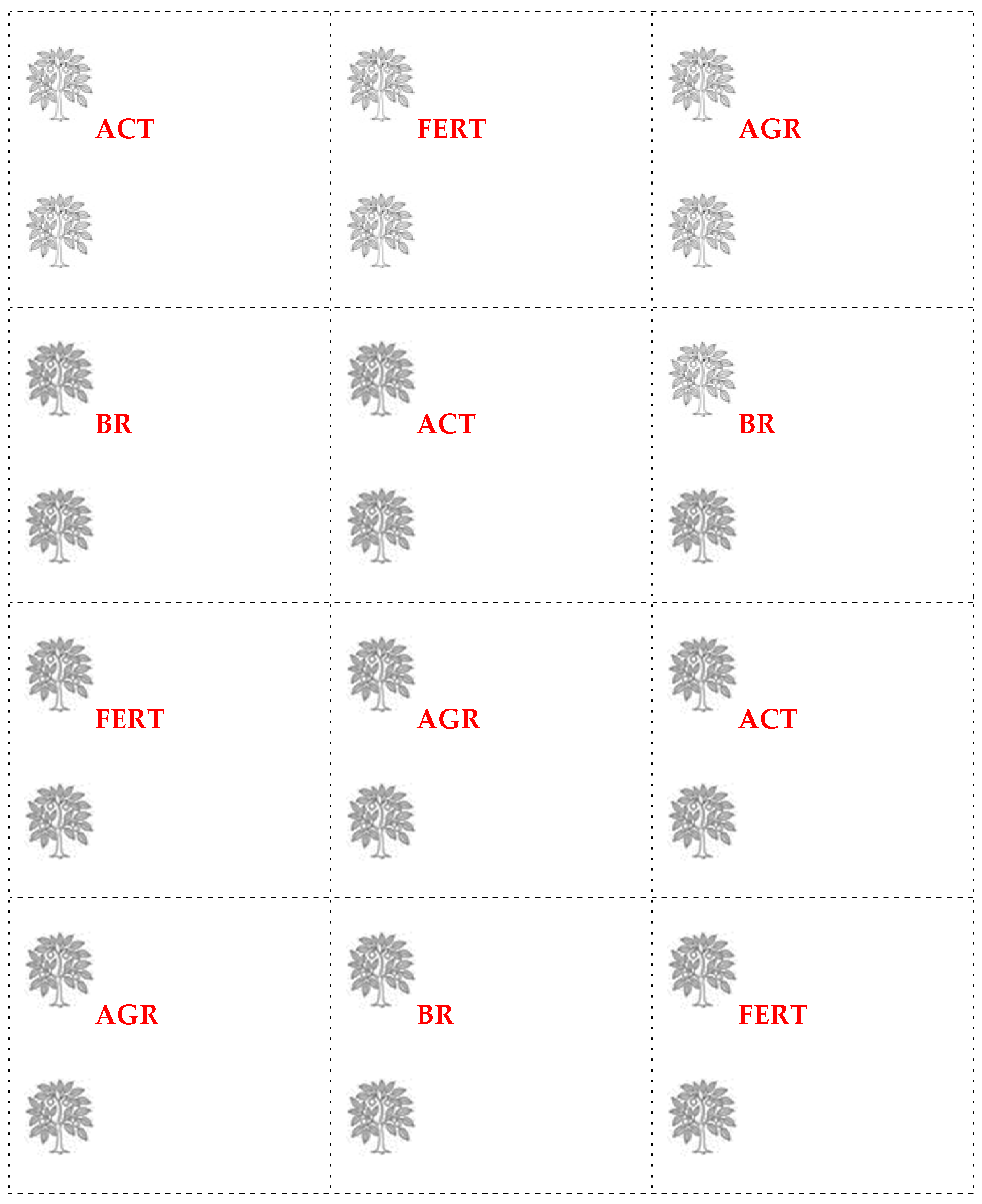
A heavy rainfall during the second year, three days after the first applications, facilitated the gradual incorporation of the products into the soil. Six trees per treatment were used, arranged in plots of two trees each (Figure 1).

2.2. Soil and Plant Tissue Analyses

Soil was sampled twice: approximately three months after product application (mid-June) and again four months later (early October). Samples were collected 50–70 cm from the trunk at a depth of 0–50 cm using a 5 cm diameter auger, after clearing the soil surface of plant debris.
Samples were air-dried and sieved (<2 mm). Particle size distribution was determined by the hydrometer method after a 2 h settling period. Soil pH and electrical conductivity (EC) were measured in a 1:1 (v/w) water–soil suspension [17]. Organic matter was determined by the Walkley–Black wet digestion method [18]. The exchangeable cations as well as the cation exchange capacity (CEC) were determined based on the ammonium acetate extraction method [19]. Soil nitrogen was determined by the Kjeldahl method, and available phosphorus according to Olsen [20]. Available micronutrients were extracted from 10 g of soil with 20 mL of 0.005 M diethylenetriaminepentaacetic acid (DTPA) at pH 7.3, shaken for 2 h [21].
Leaf sampling was performed three times (June, August, October). Approximately 40 fully expanded leaves per plot were collected and transported to the laboratory. Leaves were rinsed under running tap water, washed three times with deionized water, oven-dried at 60 °C to constant weight, milled (<1 mm), and dry-ashed at 500 °C for 5 h. The ash was dissolved in 5% HCl. Phosphorus concentration was determined by the vanado-molybdo-phosphate yellow color method, and boron by the azomethine-H method. Potassium, Na, Ca, Mg, Fe, Mn, Zn, and Cu were measured using atomic absorption spectrometry (Varian SpectrAA 240 FS, Agilent, Santa Clara, CA, USA). Nitrogen concentration was determined in wet digests using the indophenol-blue method [22].

2.3. Bud Burst—Photosynthetic Capacity—Specific Leaf Area

Bud burst was assessed in late April (20 and 27 April) and early May (5 May) using a four-point scale:
  • 0 = no burst;
  • 1 = <30% of total shoot length burst;
  • 2 = 30–60% burst;
  • 3 = >60% burst.
At least 10 shoots per tree (20 per plot) were evaluated from across the canopy.
The photosynthetic capacity of the plants along with the stomatal conductance (gs) and the intercellular CO2 concentration (Ci) were determined thrice, at the same time when leaf samples were collected (i.e., in June, in August, and in October) using a portable photosynthesis system (Li-COR 6200) (Li-Cor, Lincoln, NE, USA) during the early morning hours. The instrument operated at ambient CO2, with the PAR adjusted to 1400 µmoL m−2 s−1 (provided by LED arrays), and the chamber temperature to 26 °C. Three leaves per plant were assessed, and three consecutive measurements were taken per leaf.
Part of the sampled leaves were used for the determination of the specific leaf area, by measuring their area (using Image J 1.53 software) and their corresponding dry weight.

2.4. Carbohydrates Concentration

Part of the leaves sampled (in June, August, and October) were lyophilized and then ground into a fine powder and kept in the freezer till analysis. For the carbohydrates measurement, approximately 50 mg of freeze-dried leaf tissue was extracted twice with 2 mL of water in a microwave oven at 400 W for 1.5 min; the samples were centrifuged at 4000 g for 6 min and the supernatants collected and combined, according to Tsafouros et al. [23]. The samples were then filtered through a nylon syringe filter (0.45 μm pore size) and the carbohydrates were separated through an HPLC system equipped with a refractive index detector (Hewlett Packard HP1047A) (Agilent, Santa Clara, CA, USA). The separation was achieved through a Hamilton HC-75 cation exchange column, calcium form (Ca2+) (305 mm × 7.8 mm, 9 μm) (Hamilton, Bonaduz, Switzerland), equilibrated at 80 °C, with water as eluent at a flow rate of 0.6 mL min−1 delivered by an isocratic pump (Waters 510 pump)(Waters, Milford, MA, USA). Three carbohydrates were determined in the leaves, namely, glucose, sucrose, and fructose. Quantitative determination of carbohydrates was achieved with a five-point calibration curve of external standards.

2.5. Statistical Analysis

The trial followed the completely randomized design with three replicates of two trees each (a total of six trees per treatment). The raw data per plot were separately analyzed as a repeated ANOVA, with the factors being the treatments, the sampling time, and their interaction and time as the repeated factor. Significant differences were determined based on the Tukey HSD test, at a = 0.05 after checking the normal distribution of the raw data using standard skewness, standard kurtosis, and the homogeneity of variances. When necessary, the suitable transformation of the raw data was performed in order to achieve a normal distribution. Hierarchical cluster analysis (Ward method) of raw data of the first and third sampling (when there were both soil and leaf analyses data available) was performed to produce dense, descriptive information on the effects of the various treatments. Constellation plots were also constructed to graphically present possible similarities of the various treatments based on the measured variables. The same data were also analyzed by discriminant analysis by forward selection, in order to achieve a more comprehensive look on the possible effects and differences in the applied treatments. The statistical software JMP 13.0 (SAS Institute, Cary, NC, USA) and Statgraphics Centurion XV (Statgraphics Technologies, Inc., The Plains, VA, USA) were used for the aforementioned analyses.

3. Results

3.1. Effects of the Various Treatments on the Bud Burst

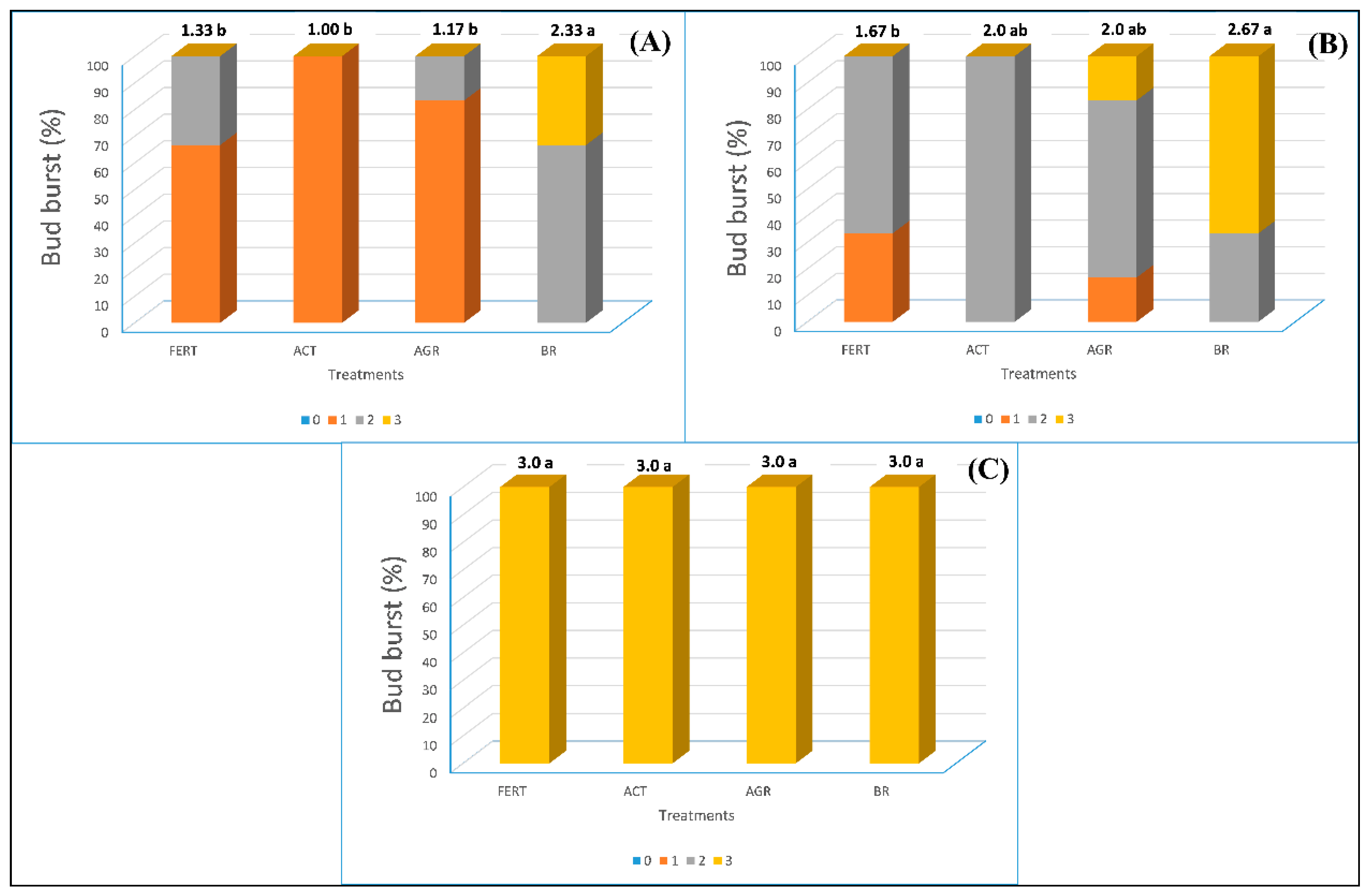
Trees treated with the BR product presented higher bud burst during the first assessment, compared to all other treatments (Figure 2A), with the majority of the shoots exhibiting an advanced bud burst (above 30 and below 60% of the buds were opened). During the second assessment, there was not any significant difference among treatments with organic amendments, while only BR-treated trees exhibited a significantly higher percentage than those of the control (FERT), with the majority of the shoots exhibiting more than 60% bud break (Figure 2B). During the third assessment, the shoots from all four treatments presented bud break more than 60%, without any significant difference among treatments (Figure 2C).

3.2. Effects of the Various Treatments on the Photosynthetic Performance and the Specific Leaf Area

Treatments did not have any significant effect on either the photosynthetic capacity (A) of the leaves, the stomatal conductance (gs), the intercellular CO2 concentration (Ci), or the specific leaf area (Table 1). On the other hand, though, the highest photosynthetic capacity was determined in June, followed by that of October and August. Similarly, the stomatal conductance was highest in June, and lowest in August, with significant differences from each other. Intercellular CO2 was highest in October and lowest in June, with significant differences. There were significant interactions concerning the photosynthetic capacity of the leaves and the stomatal conductance. Trees treated with BR presented lower leaf photosynthetic capacity compared to the control, which did not have any significant difference from that determined in ACT- and AGR-treated trees in June. The lowest photosynthetic capacity was determined in ACT-treated trees in both August and October, though without a significant difference from trees under FERT and AGR treatments at that time (August and October). The highest stomatal conductivity was determined in leaves of FERT-treated trees in June, though without any significant difference from that determined at the same time in leaves form either ACT- or AGR-treated trees. The lowest stomatal conductance was determined in August in ACT- and FERT-treated trees, with significant differences from all other treatments applied in June.

3.3. Effects of the Various Treatments on Leaf Carbohydrate Concentration

The treatments did not have any significant effect on the concentration of any of the carbohydrates detected, neither was there any significant interaction effect among treatments and time (Table 2). On the other hand, though, the time of sampling had a significant effect on carbohydrate concentration, as leaves sampled in October presented significantly higher sucrose concentration than that determined in either June or August. On the other hand, leaves sampled in August presented the lowest glucose and total carbohydrates concentrations, while fructose was lower in August compared to June only. The main carbohydrate found in chestnut leaves was fructose, followed by glucose and sucrose, in this order.

3.4. Effects of the Various Treatments on Soil Properties and Nutrient Concentration

Both ACT and AGR application resulted in increased soil organic matter (OM) percentage compared to BR, which did not differ significantly from FERT treatment (similar to both ACT and AGR) (Table 3). Nitrogen concentration was found to be highest under BR treatment, followed by that of FERT and ACT, and lastly from AGR, though without any significant difference. Phosphorus, on the other hand, was higher after the application of FERT and ACT compared to AGR and BR. Potassium was high under ACT treatment, significantly higher than that determined after the application of AGR. Iron, on the other hand, was found at a significantly higher concentration after BR treatment, compared to all the other three ones.
As time progressed, concentrations of OM, N, P, K, Ca, and Na in the soil decreased. Few significant treatment × sampling time interactions were observed. Nitrogen (N) concentration was highest in the BR treatment during the first sampling. Potassium (K) concentrations were elevated in the fertilizer, ACT, and BR treatments during the first sampling. Phosphorus (P) concentrations were highest in the FERT treatment during the first sampling and in the ACT treatment during both samplings, whereas the lowest P concentration was recorded in the BR treatment during the second sampling.

3.5. Effects of the Various Treatments on Leaf Nutrient Concentration

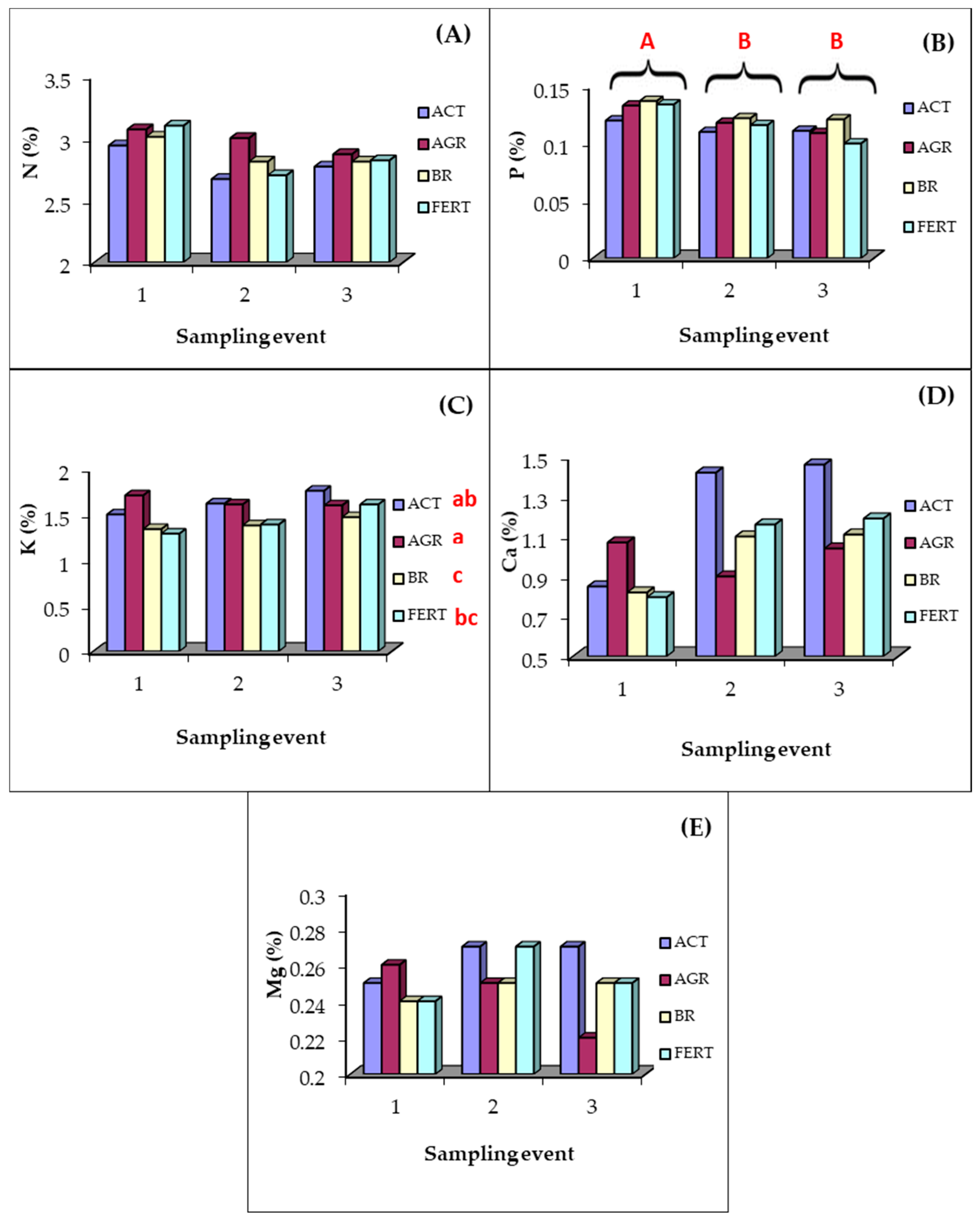
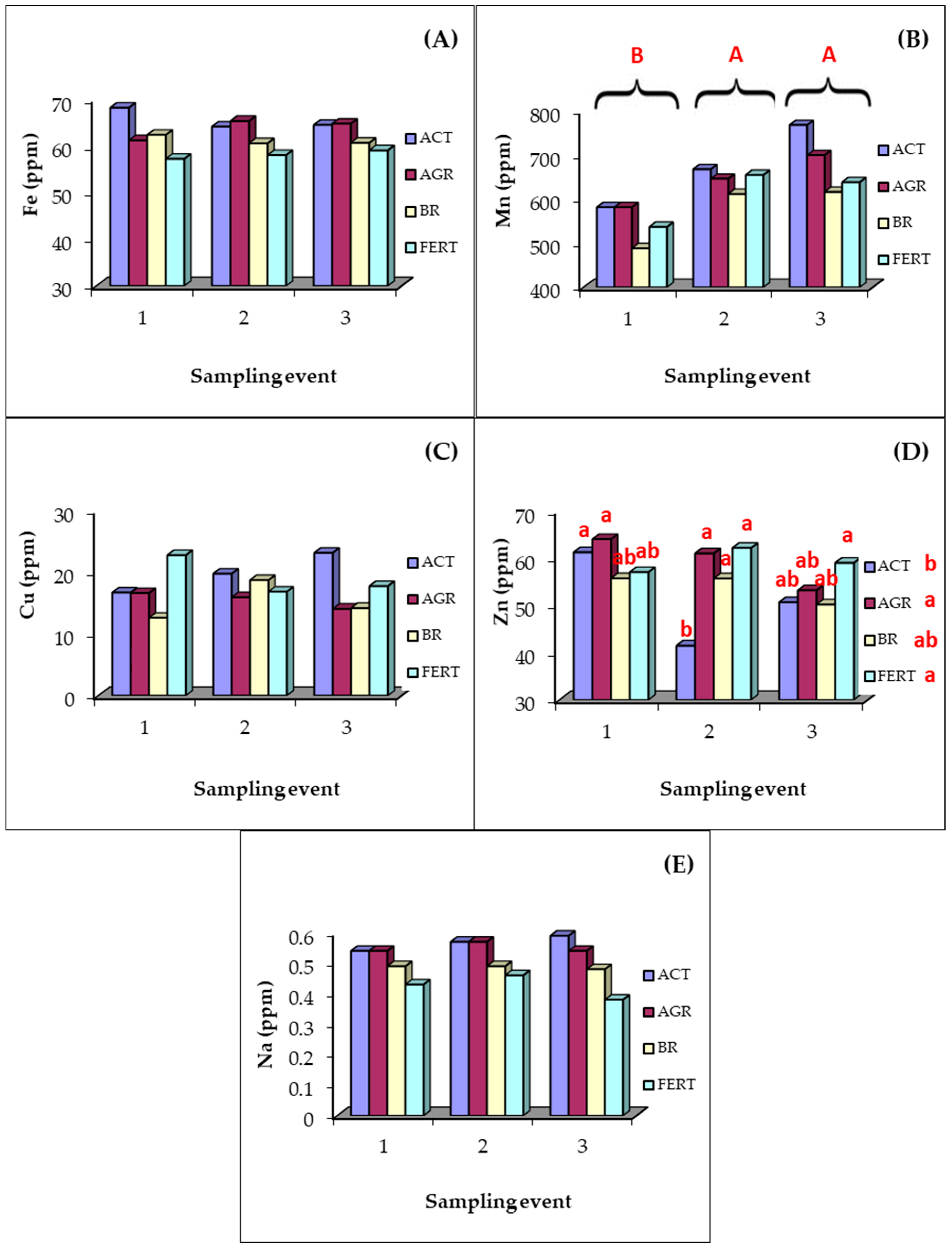
There were few significant differences among treatments in leaf nutrient concentrations (Table 4). Treatments significantly affected potassium (K) and zinc (Zn) concentrations, whereas sampling time significantly affected phosphorus (P) and manganese (Mn) concentrations. A significant treatment × sampling time interaction was observed for zinc (Zn) concentration.
Based on the above table, the following graphs (Figure 3) were produced, indicating the effects of treatments and time of sampling, as well as their interaction of the various parameters measured. More specifically, P concentration was highest in June and was reduced significantly in August and October (Figure 3B). Potassium concentration was found to be high in AGR-treated trees, without any significant difference from ACT-treated ones, while BR- and FERT-treated trees presented lower concentrations.
Leaf Mn concentration was found to be high during the third sampling event in October, followed by that of August, and lastly, with significant a difference from the first one in June (Figure 4B). AGR- and FERT-treated trees exhibited significantly higher Zn concentration than ACT-treated ones, with the lowest Zn concentration being detected under the ACT effect in the August sampling (second sampling event) (Figure 4D).

3.6. Results of the Hierarchical Cluster and Discriminant Analyses

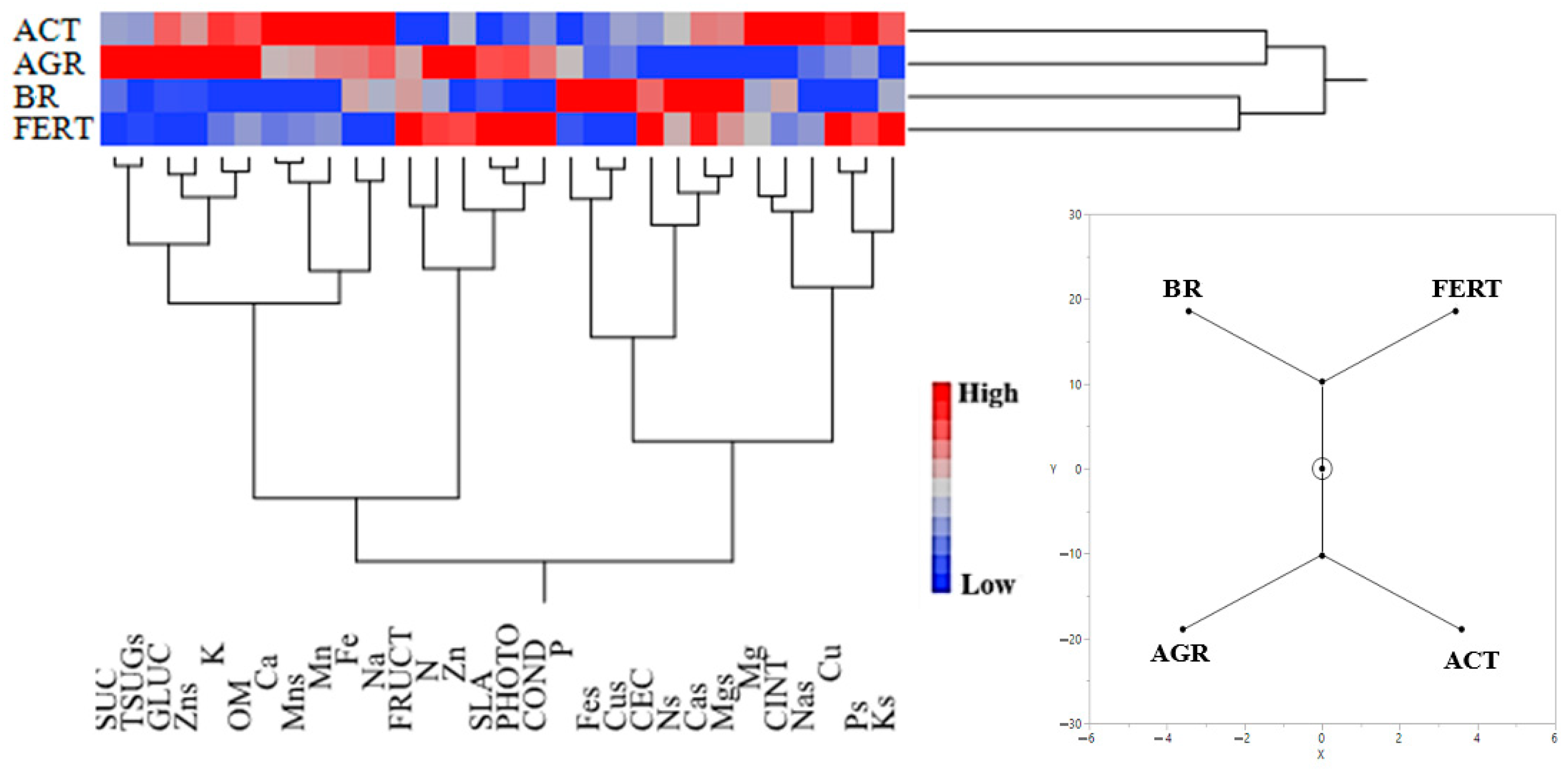
Based on the hierarchical cluster analysis, BR seems to be closely related to FERT, while ACT and AGR exhibit more common effects (Figure 5). ACT treatment resulted in high levels of Ca, Mn, Mg, and Cu in the leaves and high Mn, Na, P, and K in the soil. AGR, on the other hand, enhanced the concentration of sucrose, glucose, and total sugars in the leaves as well as that of K, N, and Zn, which was also accompanied by high Zn concentration in the soil. BR treatment was characterized by high levels of P in the leaves and Fe, Cu, Ca, and Mg in the soil. FERT, on the other hand, resulted in high leaf Cu and fructose concentration along with high photosynthesis rates and stomatal conductivity, high soil CEC, and high K and Ca concentration in the soil.
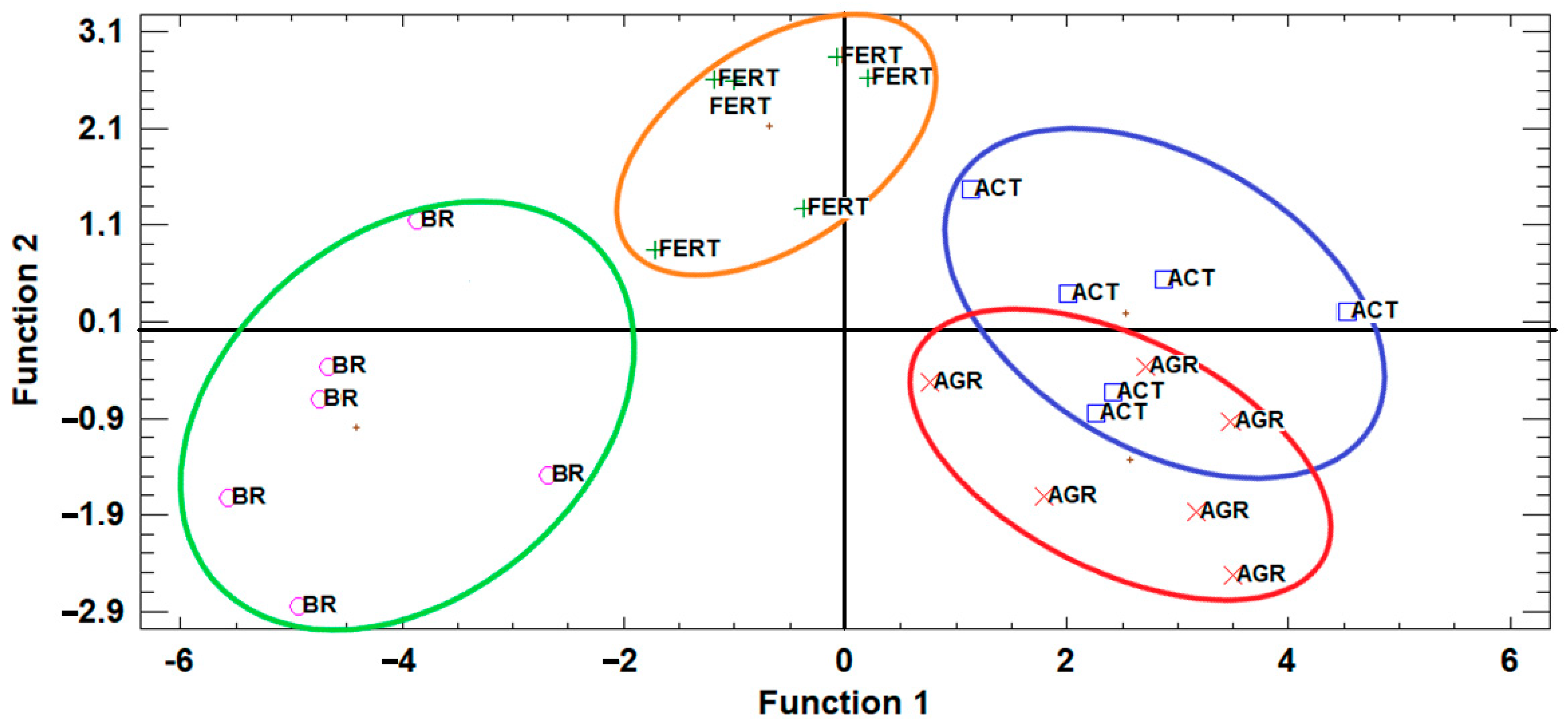
When the same data were used in a discriminant analysis, in order to try to differentiate the treatments as much as possible, based on their effects, BR treatment was clearly separated (discriminated) from the other three treatments, while FERT also presented distinctive effects (Figure 6). AGR and ACT treatments were more closely located, as indicated in the graph. Five variables were significant predictors of the discrimination among treatments, i.e., soil Fe, P, and OM concentration, as well as soil CEC and leaf Fe concentration.

4. Discussion

This study aimed to assess the impact of organic amendments from different sources on young chestnut trees. Our results demonstrate that, although these amendments did not override the dominant influence of seasonality on photosynthesis and carbohydrate metabolism, they exerted distinct and differentiated effects. Hierarchical cluster and discriminant analyses revealed that the treatments significantly influenced phenology (bud break), soil properties (organic matter, phosphorus, iron), and nutrient uptake (potassium, zinc), aligning with our objective of exploring their differential mechanisms.
The earliest indication of soil amendment effects on plant physiology was the advancement of bud burst, observed during the first two assessments. Soil properties are known to influence bud burst [24], primarily through effects on soil water content [25], nutrient availability [26], and fertilizer application [27]. Combining fertilizer with organic amendments likely provided plants with both nutrients and improved water availability compared to fertilizer alone, as organic matter enhances soil water-holding capacity [12,14,28,29,30]. Humic substances, like those in BR, which was the most effective in promoting earlier bud break, are especially efficient [14,28]. Furthermore, fertilizer application alone may exacerbate water stress by lowering soil water potential [31]. Thus, the combined use of fertilizer (for nutrient supply) and organic amendments (for increased water retention) likely enhanced nutrient flux from the bulk soil to the root surface, coupled with greater water uptake, thereby inducing the earlier bud break observed here [31,32]. The BR treatment consistently exhibited the earliest bud break during the first two assessments. This treatment also resulted in higher soil nitrogen and iron concentrations. Notably, BR had the lowest applied nitrogen dose per tree among the organic amendment treatments (220.48 g N per tree, compared to 280 g for AGR and 300 g for ACT). This suggests that BR enhanced soil N availability, likely through a combination of physicochemical and microbiological mechanisms [28,32]. Nitrogen is known to participate in reactions promoting bud break in peach [33], correlate with bud break timing in apple [34], and advance bud break when applied externally in Norway spruce [35], supporting the present findings. Additionally, iron nanoparticle application in sweet cherry has been shown to reduce abscisic acid (ABA) while increasing indole-3-acetic acid (IAA) concentrations in buds, leading to earlier dormancy release [36]; a similar mechanism may operate here.
The photosynthetic performance of chestnut leaves exhibited strong seasonal variation, with the highest rates recorded in June and markedly reduced values in August and October. This decline in net photosynthetic rate (A) from early to late season aligns with typical phenological patterns in deciduous trees, where photosynthetic activity decreases with leaf aging and increasing environmental stresses, particularly high summer temperatures [37]. Thermoinhibition of photosynthesis in chestnut leaves at elevated temperatures has been previously documented, with optimal rates at 23–28 °C and significant inhibition above 32 °C [2,38,39,40]—temperatures commonly reached in mountainous regions of Greece during summer. The values of net photosynthetic capacity measured here are in accordance with those reported earlier for chestnut leaves [40]. Stomatal conductance (gs) followed a similar seasonal trend, indicating that stomatal regulation was a major factor influencing carbon assimilation during the summer period [7,40]. The concomitant increase in intercellular CO2 concentration (Ci) in autumn further suggests reduced photosynthetic efficiency relative to CO2 availability, also revealing non-stomatal limitations.
Across treatments, the combined application of organic amendments and fertilizer did not result in statistically significant differences in photosynthetic performance compared to fertilizer alone, consistent with previous reports [3]. Nonetheless, certain trends emerged: the AGR treatment maintained relatively higher photosynthetic rates in June, whereas the BR treatment supported slightly higher photosynthetic activity in August and October relative to ACT. Similar non-significant effects of fertilization on photosynthesis have been observed in American chestnut [31]. In contrast, Mousseau [37] reported reduced photosynthetic rates in unfertilized chestnut plants, primarily attributable to nitrogen (N) deficiency. In the present study, no evidence of N deficiency was detected; therefore, N limitation of photosynthetic capacity was unlikely.
The specific leaf area (SLA) remained largely stable across treatments and sampling times, suggesting that leaf structural traits were not substantially affected by the amendments. According to Zhang et al. [2], large and thin leaves associated with a high SLA in chestnut are responsible for elevated water loss and reduced photosynthesis rates. The relatively constant SLA among treatments and through time in the present study indicates that the observed differences in gas exchange parameters were more likely related to physiological rather than morphological adjustments.
Leaf carbohydrate concentrations were unaffected by any of the applied treatments. However, they exhibited pronounced seasonal variation, reflecting metabolic dynamics and environmental influences throughout the growing period. Sucrose concentrations were lowest in August and peaked in October, consistent with its role as a primary transport carbohydrate that accumulates during later stages of leaf development and in preparation for senescence [41,42,43]. In contrast, glucose and fructose concentrations remained relatively stable across treatments, although glucose showed a mid-season decline in August, likely due to increased utilization for growth and stress responses under high summer temperatures. Total soluble sugar concentrations were lowest in August, aligning with previous reports of higher sugar levels during cooler months than in hotter periods [44,45]. This August decline coincided with the reduced photosynthetic activity described earlier, suggesting that limitations in carbon assimilation during summer directly constrained carbohydrate accumulation. The subsequent increase in October may be attributed to reduced sink demand for growth and the accumulation of assimilates prior to leaf abscission [43]. These results indicate that seasonal dynamics exert a stronger influence on soluble sugar concentrations in chestnut leaves than the applied soil amendments.
Overall, the results highlight the predominant influence of seasonal dynamics on photosynthetic activity and carbohydrate accumulation in the leaves of chestnut, while the addition of organic soil amendments did not significantly modify photosynthetic traits within the timeframe of the study.
The treatments also significantly affected soil properties. The FERT treatment was effective in maintaining high levels of phosphorus (P) and potassium (K) at the first sampling, often comparable to or exceeding those in some organic-amended plots. However, FERT showed a slightly lower overall organic matter (OM) content compared to ACT and AGR, reinforcing the established view that inorganic fertilizers alone do not consistently promote soil organic carbon accumulation [46,47]. In contrast, the ACT and AGR treatments—which combine mineral fertilizer with organic inputs—significantly increased OM content, a key indicator of soil health [46]. The BR treatment, despite being an organic amendment, did not enhance OM levels, likely due to differences in carbon stability and, primarily, the substantially lower application rate compared to the other organic amendments. Although pH and cation exchange capacity (CEC) showed no significant changes across treatments, the maintenance of a stable, slightly acidic pH is well-suited to chestnut cultivation, as this species thrives under such conditions.
Although the fertilizer-only (FERT) treatment initially provided high phosphorus (P) and potassium (K) levels, these nutrients declined significantly over time across all treatments, including FERT. This temporal decline underscores the transient availability of readily soluble nutrients in the absence of repeated applications or slow-release mechanisms, particularly during periods of active vegetative growth or fruit development. The observed pattern likely reflects substantial nutrient uptake by the growing chestnut trees and/or losses via leaching and microbial immobilization [9,30,32]. These results suggest that a single application may be insufficient to maintain optimal nutrient levels throughout the entire growing season.
The AGR treatment resulted in lower soil phosphorus (P) and potassium (K) levels compared to FERT and ACT, particularly at the second sampling. This suggests a potential antagonistic effect or insufficient macronutrient supply from this amendment over time, possibly due to slower mineralization rates or the specific nutrient composition of Agrobiosol. Additionally, the AGR treatment supplied slightly less phosphorus (320 g P2O5 per tree compared to 360 g under ACT), which may have contributed to this pattern. The distinct organic sources—chicken manure for ACT versus fermented fungal biomass for AGR—likely account for their differing properties and mineralization dynamics. Overall, these findings indicate that a single application of amendments may not adequately meet the seasonal nutrient demands of young chestnut trees, highlighting the potential need for split applications or slow-release formulations.
BR’s unique and profound effect on iron (Fe) availability sets it apart from all other treatments, indicating a specialized effect that is beneficial in potentially Fe-limited soil conditions, not primarily linked to bulk organic matter improvement. This suggests that the humic substances within BorreGRO® HA-1 possess potent chelating properties, effectively mobilizing and maintaining Fe in a plant-available form [28,32], which could be highly beneficial for chestnut trees in potentially Fe-limited acidic environments.
Regarding the nutritional status of chestnut trees, the present study demonstrated that combining different organic amendments with mineral fertilization had limited overall impact. The leaf nutrient concentrations reported here generally fall within ranges previously documented for chestnut [3,7,48,49]. Among the assessed nutrients, only potassium (K) and zinc (Zn) concentrations in leaves were significantly affected by the treatments. The AGR treatment resulted in consistently higher leaf K concentrations compared to BR and FERT, suggesting enhanced K uptake from the soil. This is supported by the lower soil K levels observed under AGR relative to the other treatments, indicating greater translocation to the leaves. However, these differences may also be attributable, at least in part, to the higher potassium application rate in AGR (340 g K2O per tree) compared to BR (310.56 g K2O per tree) and FERT (300 g K2O per tree). This explanation is strengthened by the comparable leaf K concentrations under ACT, which received the same K2O rate as AGR (340 g per tree).
Zinc (Zn) concentrations in leaves were also higher under the AGR treatment, suggesting that the fermented fungal mycelium product may have enhanced Zn availability in the soil solution compared to the other amendments. An opposite trend was observed between leaf Zn and manganese (Mn) concentrations, consistent with the findings of Chatzistathis et al. [7], who attributed this pattern to antagonism between these micronutrients during uptake. According to some authors, humic acids can form strong complexes with metals such as Zn and Mn, thereby reducing their plant availability [28]. This mechanism may partly explain the lower (though non-significant) Zn and Mn concentrations observed under the BR treatment. Similar differential effects of organic amendments on micronutrient uptake have been reported across various plant species [28,50], with outcomes varying depending on species-specific responses and soil or substrate properties. These findings underscore the complexity of interactions among organic amendments, soil, and plants.
Temporal trends across sampling dates also provided valuable insights into leaf nutrient dynamics. Phosphorus and, to a lesser extent, N concentrations declined over time, most likely due to a dilution effect during leaf expansion—a pattern commonly observed in deciduous fruit trees [48,49]. Conversely, elements with limited mobility within plant tissues, such as Mn and, to a lesser extent, Ca, exhibited increasing concentrations in later samplings, consistent with their progressive accumulation in maturing leaves [48]. These results highlight the importance of multiple sampling events throughout the growing season to accurately assess the nutritional status and dynamics of chestnut trees.
The varied responses underscore that not all “organic amendments” function identically; their specific compositions and active ingredients dictate their precise impacts on soil chemistry and plant nutrition [50]. Furthermore, it is proved that organic material of diverse origin and composition differentially influence soil microbial diversity [51,52], which has a severe impact on soil organic matter cycling, pH, enzyme activities, nutrient mineralization and immobilization, and overall the stabilization of agricultural systems [12]. An integrated approach combining the immediate nutrient availability provided by inorganic fertilizers with the long-term soil-improving properties of suitable organic amendments appears to offer the most balanced and sustainable benefits for soil health in chestnut cultivation [15,32]. Collectively, these findings underscore the diverse mechanisms through which different amendments influence soil chemistry, highlighting that their effectiveness is strongly influenced by specific composition and temporal nutrient dynamics. Furthermore, the performance of organic amendments is modulated by local pedoclimatic conditions, including soil temperature, pH, bulk density, water-holding capacity, porosity, initial nutrient status, air temperature, and the amount and distribution of rainfall [12]. These multiple interacting factors further complicate efforts to generalize the effects of organic amendments on soil properties and plant physiological responses.
Although the seasonal effect on physiological and nutritional parameters was clearly evident in this study, the influence of organic amendments was comparatively subtle. The chestnut trees were still young and carried a low fruit load, resulting in limited nutrient and carbohydrate demand [53]. Consequently, their nutritional requirements may not have reached a threshold at which organic amendments would elicit pronounced benefits. Furthermore, the experiment spanned only two years, and the long-term impacts of organic amendments on soil health and plant physiology may not yet have fully manifested. This underscores the need for extended, long-term monitoring to better elucidate these effects.

5. Conclusions

Although all applied organic products qualify as organic amendments, their source of organic matter clearly plays a pivotal role in determining their efficacy. The original hypothesis—that organic amendments of different origins would differentially affect soil properties and elicit distinct plant responses—is supported by the results of this study. Integrating selected soil amendments into fertilization programs influenced chestnut physiology by advancing bud break and altering nutrient uptake, while also modifying key soil properties. This differential performance among amendments underscores the importance of site-specific selection tailored to local soil conditions (in this case, a strongly acidic soil) and specific nutritional objectives. In mountainous, acidic soils prone to iron deficiency, humic acid-rich amendments such as BR appear particularly effective as a corrective strategy. In contrast, amendments providing higher inputs of bulk organic matter, such as ACT and AGR, rapidly increased soil organic matter content. Implementing such targeted strategies, particularly within long-term studies, could enhance tree vigor, optimize physiological performance, and ultimately promote sustainable chestnut production under diverse environmental conditions.

Author Contributions

Conceptualization, P.A.R.; methodology, P.A.R. and D.G.; software, P.D.K., M.Z. and D.G.; validation, P.A.R.; formal analysis, P.A.R., M.L., P.D.K., M.Z. and D.G.; investigation, P.A.R., M.L., P.D.K., M.Z. and D.G.; resources, P.A.R. and D.G.; data curation, P.A.R., M.L., P.D.K. and D.G.; writing—original draft preparation, P.A.R.; writing—review and editing, P.A.R. and D.G.; visualization, P.A.R. and M.Z.; supervision, P.A.R. and D.G.; project administration, P.A.R. and D.G.; funding acquisition, P.A.R. and D.G. All authors have read and agreed to the published version of the manuscript.

Funding

This research received no external funding.

Institutional Review Board Statement

Not applicable.

Informed Consent Statement

Not applicable.

Data Availability Statement

Data are available upon request to the corresponding author.

Acknowledgments

We would like to thank the companies for providing us with the products, Biogard Greece ΕΠΕ (former Intrachem Hellas) and Hellafarm SA as well as Takis D. for the access to the orchard.

Conflicts of Interest

The authors declare no conflicts of interest.

References

  1. Toprak, S.; Ateş, Ö.; Yalçin, G.; Taşpinar, K. How Does N:P:K Fertilizer Applications in Different Levels Affect The Nutrition of Anatolian Chestnut (Castanea sativa Mill.). Uluslararası Anadolu Ziraat Mühendisliği Bilim. Derg. 2021, 3, 1–9. [Google Scholar] [CrossRef]
  2. Zhang, C.; Moutinho-Pereira, J.M.; Correia, C.; Coutinho, J.; Gonçalves, A.; Guedes, A.; Gomes-Laranjo, J. Foliar application of Sili-K® increases chestnut (Castanea spp.) growth and photosynthesis, simultaneously increasing susceptibility to water deficit. Plant Soil 2013, 365, 211–225. [Google Scholar] [CrossRef]
  3. Papaioannou, E.; Gasparatos, D.; Stefanou, S.; Chatzistathis, T.; Karamanoli, K.; Matziris, E. Effect of Soil Mixtures Based on a Gneiss-Derived Soil and Two Forest Floor Types on Growth and Nutritional Status of Castanea sativa Mill. Seedlings. J. Soil Sci. Plant Nutr. 2023, 23, 1339–1350. [Google Scholar] [CrossRef]
  4. Fuertes-Mendizábal, T.; Huérfano, X.; Ortega, U.; González-Murua, C.; Estavillo, J.M.; Salcedo, I.; Duñabeitia, M.K. Compost and PGP-Based Biostimulant as Alternative to Peat and NPK Fertilization in Chestnut (Castanea sativa Mill.) Nursery Production. Forests 2021, 12, 850. [Google Scholar] [CrossRef]
  5. Arrobas, M.; Afonso, S.; Rodrigues, M.Â. Diagnosing the nutritional condition of chestnut groves by soil and leaf analyses. Sci. Hortic. 2018, 228, 113–121. [Google Scholar] [CrossRef]
  6. Papaioannou, E.; Kostopoulou, S.; Stefanou, S. The effect of the conversion of chestnut (Castanea sativa Mill.) forests to orchards on soil fertility and nutrient content in leaves. CATENA 2022, 211, 105948. [Google Scholar] [CrossRef]
  7. Chatzistathis, T.; Papaioannou, E.; Giannakoula, A.; Papadakis, I.E. Zeolite and Vermiculite as Inorganic Soil Amendments Modify Shoot-Root Allocation, Mineral Nutrition, Photosystem II Activity and Gas Exchange Parameters of Chestnut (Castanea sativa Mill) Plants. Agronomy 2021, 11, 109. [Google Scholar] [CrossRef]
  8. Freitas, T.R.; Santos, J.A.; Silva, A.P.; Fraga, H. Influence of Climate Change on Chestnut Trees: A Review. Plants 2021, 10, 1463. [Google Scholar] [CrossRef]
  9. Rodrigues, M.Â.; Grade, V.; Barroso, V.; Pereira, A.; Cassol, L.C.; Arrobas, M. Chestnut Response to Organo-mineral and Controlled-Release Fertilizers in Rainfed Growing Conditions. J. Soil Sci. Plant Nutr. 2020, 20, 380–391. [Google Scholar] [CrossRef]
  10. Rodrigues, M.Â.; Raimundo, S.; Pereira, A.; Arrobas, M. Large Chestnut Trees (Castanea sativa) Respond Poorly to Liming and Fertilizer Application. J. Soil Sci. Plant Nutr. 2020, 20, 1261–1270. [Google Scholar] [CrossRef]
  11. Arrobas, M.; Afonso, S.; Ferreira, I.; Moutinho Pereira, J.; Correia, C.; Rodrigues, M. Liming and application of nitrogen, phosphorus, potassium, and boron on a young plantation of chestnut. Turk. J. Agric. For. 2017, 41, 441–451. [Google Scholar] [CrossRef]
  12. Garbowski, T.; Bar-Michalczyk, D.; Charazińska, S.; Grabowska-Polanowska, B.; Kowalczyk, A.; Lochyński, P. An overview of natural soil amendments in agriculture. Soil Tillage Res. 2023, 225, 105462. [Google Scholar] [CrossRef]
  13. Akimbekov, N.S.; Digel, I.; Tastambek, K.T.; Sherelkhan, D.K.; Jussupova, D.B.; Altynbay, N.P. Low-Rank Coal as a Source of Humic Substances for Soil Amendment and Fertility Management. Agriculture 2021, 11, 1261. [Google Scholar] [CrossRef]
  14. Kandra, B.; Tall, A.; Vitková, J.; Procházka, M.; Šurda, P. Effect of Humic Amendment on Selected Hydrophysical Properties of Sandy and Clayey Soils. Water 2024, 16, 1338. [Google Scholar] [CrossRef]
  15. Głąb, T.; Gondek, K.; Marcińska-Mazur, L.; Jarosz, R.; Mierzwa–Hersztek, M. Effect of organic/inorganic composites as soil amendments on the biomass productivity and root architecture of spring wheat and rapeseed. J. Environ. Manag. 2023, 344, 118628. [Google Scholar] [CrossRef]
  16. Cesarano, G.; De Filippis, F.; La Storia, A.; Scala, F.; Bonanomi, G. Organic amendment type and application frequency affect crop yields, soil fertility and microbiome composition. Appl. Soil Ecol. 2017, 120, 254–264. [Google Scholar] [CrossRef]
  17. McLean, E. Soil pH and lime requirement. In Methods of Soil Analysis: Part 2 Chemical and Microbiological Properties; American Society of Agronomy: Madison, WI, USA, 1982; Volume 9, pp. 199–224. [Google Scholar]
  18. Nelson, D.W.; Sommers, L.E. Total carbon, organic carbon, and organic matter. In Methods of Soil Analysis: Part 2 Chemical and Microbiological Properties; American Society of Agronomy: Madison, WI, USA, 1982; Volume 9, pp. 539–579. [Google Scholar]
  19. Thomas, G.W. Exchangeable cations. In Methods of Soil Analysis: Part 2 Chemical and Microbiological Properties; American Society of Agronomy: Madison, WI, USA, 1982; Volume 9, pp. 159–165. [Google Scholar]
  20. Olsen, S.R. Estimation of Available Phosphorus in Soils by Extraction with Sodium Bicarbonate; US Department of Agriculture: Washington, DC, USA, 1954. [Google Scholar]
  21. Lindsay, W.L.; Norvell, W. Development of a DTPA soil test for zinc, iron, manganese, and copper. Soil Sci. Soc. Am. J. 1978, 42, 421–428. [Google Scholar] [CrossRef]
  22. Ntanos, E.; Kekelis, P.; Assimakopoulou, A.; Gasparatos, D.; Denaxa, N.-K.; Tsafouros, A.; Roussos, P.A. Amelioration Effects against Salinity Stress in Strawberry by Bentonite–Zeolite Mixture, Glycine Betaine, and Bacillus amyloliquefaciens in Terms of Plant Growth, Nutrient Content, Soil Properties, Yield, and Fruit Quality Characteristics. Appl. Sci. 2021, 11, 8796. [Google Scholar] [CrossRef]
  23. Tsafouros, A.; Frantzeskaki, A.; Assimakopoulou, A.; Roussos, P.A. Spatial and temporal changes of mineral nutrients and carbohydrates in cuttings of four stone fruit rootstocks and their contribution to rooting potential. Sci. Hortic. 2019, 253, 227–240. [Google Scholar] [CrossRef]
  24. Li, T.; Hao, X.; Kang, S. Spatial Variability of Grapevine Bud Burst Percentage and Its Association with Soil Properties at Field Scale. PLoS ONE 2016, 11, e0165738. [Google Scholar] [CrossRef]
  25. Signorelli, S.; Dewi, J.R.; Considine, M.J. Soil Water Content Directly Affects Bud Burst Rate in Single-Node Cuttings of Perennial Plants. Agronomy 2022, 12, 360. [Google Scholar] [CrossRef]
  26. Otero, V.; Barreal, M.E.; Martínez-Núñez, L.; Gallego, P.P. Nutritional status of kiwifruit in organic and conventional farming systems. Acta Hortic. 2008, 868, 155–160. [Google Scholar] [CrossRef]
  27. Zelleke, A.; Kliewer, W.M. Effect of root temperature, rootstock and fertilization on bud-break, shoot growth and composition of ‘Cabernet Sauvignon’grapevines. Sci. Hortic. 1980, 13, 339–347. [Google Scholar] [CrossRef]
  28. Ampong, K.; Thilakaranthna, M.S.; Gorim, L.Y. Understanding the Role of Humic Acids on Crop Performance and Soil Health. Front. Agron. 2022, 4, 848621. [Google Scholar] [CrossRef]
  29. Ding, Y.; Gao, X.; Shu, D.; Siddique, K.H.M.; Song, X.; Wu, P.; Li, C.; Zhao, X. Enhancing soil health and nutrient cycling through soil amendments: Improving the synergy of bacteria and fungi. Sci. Total Environ. 2024, 923, 171332. [Google Scholar] [CrossRef] [PubMed]
  30. McGeehan, S.L. Impact of Waste Materials and Organic Amendments on Soil Properties and Vegetative Performance. Appl. Environ. Soil Sci. 2012, 2012, 907831. [Google Scholar] [CrossRef]
  31. Miller, C.; Franklin, J.; Buckley, D. Effects of soil amendment treatments on American chestnut performance and physiology on an east Tennessee surface mine. In Proceedings of the 28th Annual Meeting of the American Society of Mining and Reclamation, Bismarck, ND, USA, 11–16 June 2011; pp. 419–437. [Google Scholar] [CrossRef]
  32. Farid, I.M.; A. El-Ghozoli, M.; H. H. Abbas, M.; S. El-Atrony, D.; Abbas, H.H.; Elsadek, M.; A. Saad, H.; El Nahhas, N.; Mohamed, I. Organic Materials and Their Chemically Extracted Humic and Fulvic Acids as Potential Soil Amendments for Faba Bean Cultivation in Soils with Varying CaCO3 Contents. Horticulturae 2021, 7, 205. [Google Scholar] [CrossRef]
  33. Ferreira, R.B.; Leonel, S.; Lima, G.P.P.; Leonel, M.; Minatel, I.O.; Souza, J.M.A.; Monteiro, G.C.; Silva, M.S. Contents of nitrogen compounds during bud break and peach tree performance in response to budburst-inducing products. Sci. Hortic. 2022, 305, 111388. [Google Scholar] [CrossRef]
  34. Seif El-Yazal, M.A.; Rady, M.M. Changes in nitrogen and polyamines during breaking bud dormancy in “Anna” apple trees with foliar application of some compounds. Sci. Hortic. 2012, 136, 75–80. [Google Scholar] [CrossRef]
  35. Fløistad, I.S.; Kohmann, K. Influence of nutrient supply on spring frost hardiness and time of bud break in Norway spruce (Picea abies (L.) Karst.) seedlings. New For. 2004, 27, 1–11. [Google Scholar] [CrossRef]
  36. Sabir, I.A.; Manzoor, M.A.; Shah, I.H.; Ahmad, Z.; Liu, X.; Alam, P.; Wang, Y.; Sun, W.; Wang, J.; Liu, R.; et al. Unveiling the effect of gibberellin-induced iron oxide nanoparticles on bud dormancy release in sweet cherry (Prunus avium L.). Plant Physiol. Biochem. 2024, 206, 108222. [Google Scholar] [CrossRef] [PubMed]
  37. Mousseau, M. Effects of elevated CO2 on growth, photosynthesis and respiration of sweet chestnut (Castanea sativa Mill.). Vegetatio 1993, 104, 413–419. [Google Scholar] [CrossRef]
  38. Gomes-Laranjo, J.; Coutinho, J.P.; Galhano, V.; Ferreira-Cardoso, J.V. Differences in photosynthetic apparatus of leaves from different sides of the chestnut canopy. Photosynthetica 2008, 46, 63–72. [Google Scholar] [CrossRef]
  39. Gomes-Laranjo, J.; Peixoto, F.; Wong Fong Sang, H.W.; Torres-Pereira, J. Study of the temperature effect in three chestnut (Castanea sativa Mill.) cultivars’ behaviour. J. Plant Physiol. 2006, 163, 945–955. [Google Scholar] [CrossRef]
  40. Gomes-Laranjo, J.; Dinis, L.-T.; Martins, L.; Portela, E.; Pinto, T.; Ara, M.C.; Feito, I.; Majada, J.; Peixoto, F.; Pereira, S.; et al. Characterization of Chestnut Behavior with Photosynthetic Traits. In Applied Photosynthesis; Najafpour, M.M., Ed.; IntechOpen: London, UK, 2012; pp. 47–80. [Google Scholar] [CrossRef]
  41. Both, H.; Brüggemann, W. Photosynthesis studies on European evergreen and deciduous oaks grown under Central European climate conditions. I: A case study of leaf development and seasonal variation of photosynthetic capacity in Quercus robur (L.), Q. ilex (L.) and their semideciduous hybrid, Q. × turneri (Willd.). Trees 2009, 23, 1081–1090. [Google Scholar] [CrossRef]
  42. Wojciechowska, N.; Marzec-Schmidt, K.; Kalemba, E.M.; Ludwików, A.; Bagniewska-Zadworna, A. Seasonal senescence of leaves and roots of Populus trichocarpa—Is the scenario the same or different? Tree Physiol. 2020, 40, 987–1000. [Google Scholar] [CrossRef]
  43. Wingler, A.; Purdy, S.; MacLean, J.A.; Pourtau, N. The role of sugars in integrating environmental signals during the regulation of leaf senescence. J. Exp. Bot. 2006, 57, 391–399. [Google Scholar] [CrossRef]
  44. Proietti, P.; Palliotti, A.; Famiani, F.; Antognozzi, E.; Ferranti, F.; Andreutti, R.; Frenguelli, G. Influence of leaf position, fruit and light availability on photosynthesis of two chestnut genotypes. Sci. Hortic. 2000, 85, 63–73. [Google Scholar] [CrossRef]
  45. El Kohen, A.; Mousseau, M. Interactive effects of elevated CO2 and mineral nutrition on growth and CO2 exchange of sweet chestnut seedlings (Castanea sativa). Tree Physiol 1994, 14, 679–690. [Google Scholar] [CrossRef]
  46. Lopes, J.I.; Gonçalves, A.; Brito, C.; Martins, S.; Pinto, L.; Moutinho-Pereira, J.; Raimundo, S.; Arrobas, M.; Rodrigues, M.Â.; Correia, C.M. Inorganic Fertilization at High N Rate Increased Olive Yield of a Rainfed Orchard but Reduced Soil Organic Matter in Comparison to Three Organic Amendments. Agronomy 2021, 11, 2172. [Google Scholar] [CrossRef]
  47. Hernandez, T.; Berlanga, J.G.; Tormos, I.; Garcia, C. Organic versus inorganic fertilizers: Response of soil properties and crop yield. AIMS Geosci. 2021, 7, 415–439. [Google Scholar] [CrossRef]
  48. Toprak, S.; Geçit, S.; Tarımsal, K.; Enstitüsü, A.; Bitki, T.; Bölümü, B.; Adnan, T.; Üniversitesi, M.; Fakültesi, Z. The Seasonal Changes of Nutritional Elements of Chestnut (Castanea sativa) Plant and Determination of Leaf Sampling Times. Am. J. Res. Commun. 2013, 1, 1–8. [Google Scholar]
  49. Rodriguez, I. Foliar nutrient dynamics and nutrient-use efficiency in Castanea sativa coppice stands of southern Europe. Forestry 2001, 74, 1–10. [Google Scholar] [CrossRef]
  50. Roussos, P.A.; Triantafillidis, A.; Kepolas, E.; Peppas, P.; Piou, A.; Zoti, M.; Gasparatos, D. Effects of Integrated and Organic Management on Strawberry (cv. Camarosa) Plant Growth, Nutrition, Fruit Yield, Quality, Nutraceutical Characteristics, and Soil Fertility Status. Horticulturae 2022, 8, 184. [Google Scholar] [CrossRef]
  51. Goyer, C.; Neupane, S.; Zebarth, B.J.; Burton, D.L.; Wilson, C.; Sennett, L. Diverse compost products influence soil bacterial and fungal community diversity in a potato crop production system. Appl. Soil Ecol. 2022, 169, 104247. [Google Scholar] [CrossRef]
  52. Lazcano, C.; Zhu-Barker, X.; Decock, C. Effects of Organic Fertilizers on the Soil Microorganisms Responsible for N2O Emissions: A Review. Microorganisms 2021, 9, 983. [Google Scholar] [CrossRef]
  53. Drossopoulos, B.; Kouchaji, G.G.; Bouranis, D.L. Seasonal dynamics of mineral nutrients and carbohydrates by walnut tree leaves. J. Plant Nutr. 1996, 19, 493–516. [Google Scholar] [CrossRef]
Figure 1. Plot layout of the treatments.
Agriculture 16 00128 g001
Figure 2. Shoot’s bud burst percentage induced by the various treatments during the first (A) (20th of April), second (B) (27th of April), and third (C) (5th of May) assessment. Abbreviations: FERT, control treatment where only mineral fertilizer was applied, ACT, Activit plus fertilizer application, AGR, Agrobiosol plus fertilizer application, BR, BorreGRO® HA-1 plus fertilizer application. Zero (0) represents zero bud burst, 1 bud burst below 30%, 2 bud burst between 30 and 60%, and 3 bud burst above 60%. Different letters following the numbers above each bar, within each graph, indicate significant differences among treatments concerning the mean bud burst stage, based on Tukey HSD test at α = 0.05.
Agriculture 16 00128 g002
Figure 3. Effect of the various treatments (mineral fertilizer and the three organic amendments combined with the mineral fertilizer) and time of sampling on leaf macronutrient concentrations (nitrogen (A), phosphorus (B), potassium (C), calcium (D) and magnesium (E). The first sampling event took place in June, the second in August, and the third in October. Different lower-case red letters indicate significant differences among treatments based on Tukey HSD test at α = 0.05. Different capital red letters above each brace indicate significant differences among time of samplings based on Tukey HSD test at α = 0.05. The absence of any lettering indicate non-significant differences. Abbreviations: FERT, application of only mineral fertilizer, ACT, application of Activit plus the mineral fertilizer, AGR, application of Agrobiosol plus the mineral fertilizer, BR, application of BorreGRO® HA-1 plus the mineral fertilizer.
Agriculture 16 00128 g003
Figure 4. Effect of the various treatments (mineral fertilizer and the three organic amendments combined with the mineral fertilizer) and time of sampling on leaf micronutrient concentrations (iron (A), manganese (B), copper (C), zinc (D) and sodium (E). The first sampling event took place in June, the second in August, and the third in October. Different lower-case red letters at the right side of the treatments indicate significant differences among treatments based on Tukey HSD test at α = 0.05. Different capital red letters above each brace indicate significant differences among time of samplings based on Tukey HSD test at α = 0.05. Different lower-case red letters above the bars indicate significant differences in interactions based on Tukey HSD test at α = 0.05. The absence of any lettering indicate non-significant differences. Abbreviations: FERT, application of only mineral fertilizer, ACT, application of Activit plus the mineral fertilizer, AGR, application of Agrobiosol plus the mineral fertilizer, BR, application of BorreGRO® HA-1 plus the mineral fertilizer.
Agriculture 16 00128 g004
Figure 5. Hierarchical cluster analysis and constellation plot of the data derived from the first (June) and third (October) sampling events. Abbreviations: SUC, sucrose, TSUGs, total sugars, GLUC, glucose, Zns, soil Zn, OM, organic matter, Mns, soil Mn, FRUCT, fructose, SLA, specific leaf area, PHOTO, photosynthesis, COND, stomatal conductance, Fes, soil Fe, Cus, soil Cu, CEC, cation exchange capacity, Ns, soil N, Cas, soil Ca, Mgs, soil mg, CINT, intercellular CO2, Nas, soil Na, Ps, soil P, Ks, soil K, FERT, application of only mineral fertilizer, ACT, application of Activit plus the mineral fertilizer, AGR, application of Agrobiosol plus the mineral fertilizer, BR, application of BorreGRO® HA-1 plus the mineral fertilizer.
Agriculture 16 00128 g005
Figure 6. Plot of discriminant functions based on the data derived from the first (June) and third (October) sampling events. Abbreviations: FERT, application of only mineral fertilizer, ACT, application of Activit plus the mineral fertilizer, AGR, application of Agrobiosol plus the mineral fertilizer, BR, application of BorreGRO® HA-1 plus the mineral fertilizer.
Agriculture 16 00128 g006
Table 1. Effect of the various treatments (mineral fertilizer and the three organic amendments combined with the mineral fertilizer) on the photosynthetic performance of chestnut leaves and the specific leaf area during the trial period.
AgsCiSLA
Treatments
FERT8.12 a0.096 a149.37 a104.97 a
ACT5.98 a0.078 a160.16 a102.80 a
AGR8.13 a0.093 a144.58 a103.53 a
BR6.08 a0.074 a146.17 a103.00 a
Time
June (J)13.77 a0.144 a109.56 c105.42 a
August (A)3.19 b0.039 c149.80 b99.65 a
October (O)4.28 b0.075 b190.84 a105.64 a
Treatments x Time
FERT x J16.91 a0.176 a107.40 a102.00 a
FERT x A2.62 d0.033 d157.82 a97.71 a
FERT x O4.84 cd0.080 cd182.90 a115.19 a
ACT x J 12.21 ab0.14 ab118.87 a108.05 a
ACT x A 2.75 d0.036 d156.37 a102.88 a
ACT x O2.99 d0.060 cd205.25 a97.46 a
AGR x J16.10 ab0.160 a95.68 a105.86 a
AGR x A3.64 cd0.043 cd151.38 a95.27 a
AGR x O4.65 cd0.076 cd186.61 a109.46 a
BR x J9.86 bc0.100 bc116.29 a105.78 a
BR x A3.77 bc0.043 cd133.64 a102.74 a
BR x O4.62 bc0.080 cd188.58 a100.49 a
Means within the same column followed by same letter do not differ significantly based on Tukey HSD test at α = 0.05. Abbreviations: FERT, application of only mineral fertilizer, ACT, application of Activit plus the mineral fertilizer, AGR, application of Agrobiosol plus the mineral fertilizer, BR, application of BorreGRO® HA-1 plus the mineral fertilizer, A, photosynthetic capacity (μmol m−2,s−1), gs, stomatal conductance (mol m−2, s−1), Ci, intercellular CO2 (μmol mol−1), SLA, specific leaf area (cm2 g−1).
Table 2. Effect of the various treatments (mineral fertilizer and the three organic amendments combined with the mineral fertilizer) on the carbohydrate concentration (mg g−1) of chestnut leaves during the trial period.
SucroseGlucoseFructoseTotal Sugars
Treatments
FERT15.55 a32.25 a41.00 a94.00 a
ACT15.85 a32.87 a39.51 a93.52 a
AGR16.81 a33.80 a41.05 a97.27 a
BR15.49 a31.38 a40.24 a92.29 a
Time
June (J)14.74 b40.19 a42.61 a12.45 a
August (A)6.84 c19.44 b36.89 b65.45 b
October (O)26.20 a38.11 a41.85 ab114.90 a
Treatments x Time
FERT x J12.16 a41.81 a47.83 a105.87 a
FERT x A7.97 a22.01 a36.28 a68.93 a
FERT x O26.54 a32.93 a38.88 a107.20 a
ACT x J 14.73 a42.57 a38.97 a101.19 a
ACT x A 7.28 a17.77 a37.36 a64.85 a
ACT x O25.53 a38.20 a42.19 a114.52 a
AGR x J16.50 a41.41 a41.46 a104.86 a
AGR x A5.03 a18.96 a38.24 a63.92 a
AGR x O28.89 a41.03 a43.47 a123.04 a
BR x J15.56 a34.96 a42.20 a97.91 a
BR x A7.08 a19.01 a35.66 a64.13 a
BR x O23.84 a40.19 a42.86 a114.85 a
Means within the same column followed by same letter do not differ significantly based on Tukey HSD test at α = 0.05. Abbreviations: FERT, application of only mineral fertilizer, ACT, application of Activit plus the mineral fertilizer, AGR, application of Agrobiosol plus the mineral fertilizer, BR, application of BorreGRO® HA-1 plus the mineral fertilizer.
Table 3. Effect of the various treatments (mineral fertilizer and the three organic amendments combined with the mineral fertilizer) on soil properties during the sampling events (1st sampling took place in mid- June and the second sampling in early October).
pHEC
(μmhos
cm−1)
OMCECNPKCaMgNaFeZnCuMn
(%)(meq 100g−1)(%)(ppm)(meq 100g−1)ppm
Treatments
FERT4.45 a1900.0 a3.04 ab22.47 a0.055 a17.5 a1.26 a1.10 a0.34 a0.13 a33.99 b0.81 a1.96 a 18.24 a
ACT4.57 a1850.0 a3.56 a18.60 a0.057 a18.3 a1.34 ab1.05 a0.35 a0.15 a42.28 b0.98 a2.36 a21.86 a
AGR4.48 a1850.0 a3.71 a16.85 a0.040 a14.5 b0.96 b0.76 a0.24 a0.13 a41.05 b1.10 a2.21 a19.68 a
BR4.35 a1958.3 a2.69 b21.32 a0.050 a12.4 b1.22 ab1.11 a0.37 a0.13 a121.65 a0.82 a3.63 a17.31 a
Time
1st sampling (1S)4.54 a1879.2 a3.46 a21.64 a0.068 a17.1 a1.69 a1.22 a0.35 a0.15 a67.20 a0.96 a2.37 a19.01 a
2nd sampling (2S)4.38 a1900.0 a3.04 b17.98 a0.043 b14.3 b0.70 b0.79 b0.31 a0.12 b52.27 a0.90 a2.71 a19.53 a
Treatments x Time
FERT x 1S4.74 a1933.3 a3.37 a25.19 a0.069 a18.4 a1.94 a1.45 a0.44 a0.15 a30.50 a0.82 a2.29 a17.07 a
FERT x 2S4.16 a1866.7 a2.72 a19.76 a0.042 a16.6 ab0.59 c0.75 a0.25 a0.12 a37.43 a0.81 a1.62 a19.40 a
ACT x 1S4.69 a1800.0 a3.48 a18.37 a0.029 a17.7 a1.88 a1.27 a0.39 a0.15 a43.16 a1.05 a1.98 a25.40 a
ACT x 2S 4.46 a1900.0 a3.64 a18.84 a0.045 a18.8 a0.81 bc0.84 a0.30 a0.14 a41.40 a0.91 a2.74 a18.32 a
AGR x 1S4.47 a1833.3 a4.02 a17.76 a0.029 a16.0 ab1.19 b0.84 a0.22 q0.15 a45.43 a1.02 a1.77 a18.91 a
AGR x 2S4.49 a1816.6 a3.39 a15.94 a0.052 a13.0 b0.73 bc0.68 a0.26 a0.11 a36.67 a1.1 a2.64 a20.46 a
BR x 1S4.28 a1900.0 a2.97 a25.24 a0.065 a16.2 ab1.78 a1.35 a0.33 a0.15 a149.70 a0.96 a3.44 a14.68 a
BR x 2S4.41 a2016.7 a2.72 a19.76 a0.034 a8.60 c0.65 c0.88 a0.42 a0.12 a93.60 a0.68 a3.81 a19.94 a
Means within the same column followed by same letter do not differ significantly based on Tukey HSD test at α = 0.05. Abbreviations: FERT, application of only mineral fertilizer, ACT, application of Activit plus the mineral fertilizer, AGR, application of Agrobiosol plus the mineral fertilizer, BR, application of BorreGRO® HA-1 plus the mineral fertilizer, EC, electrical conductivity, OM, organic matter, CEC, cation exchange capacity.
Table 4. Significance of effects of treatments (mineral fertilizer and the three organic amendments combined with the mineral fertilizer) and time of leaf sample collection (three sampling events in June, August, and October) as well as of their interaction on the leaf mineral nutrients.
MineralsTreatmentsTimeTreatments x Time
Nnsnsns
Pns***ns
K***nsns
Cansnsns
Mgnsnsns
Fensnsns
Mnns**ns
Cunsnsns
Zn*ns*
Nansnsns
Abbreviations: ns, not significant, *, p < 0.05, **, p < 0.01 and ***, p < 0.001.
Disclaimer/Publisher’s Note: The statements, opinions and data contained in all publications are solely those of the individual author(s) and contributor(s) and not of MDPI and/or the editor(s). MDPI and/or the editor(s) disclaim responsibility for any injury to people or property resulting from any ideas, methods, instructions or products referred to in the content.