Article

Factors Influencing Commercial Feed Buying Behaviour and Productivity of Small-Scale Dairy Farmers in Sululta, Ethiopia


by
Kinfemichael Nigussie
1,* and
Katalin Szendrő
2
1
Department of Economic and Regional Sciences, Hungarian University of Agriculture and Life, H-7400 Kaposvár, Hungary
2
Department of Agricultural Logistics, Hungarian University of Agriculture and Life, H-7400 Kaposvár, Hungary
*
Author to whom correspondence should be addressed.
Agriculture 2026, 16(1), 109; https://doi.org/10.3390/agriculture16010109
Submission received: 2 December 2025 / Revised: 26 December 2025 / Accepted: 29 December 2025 / Published: 31 December 2025
(This article belongs to the Section Agricultural Economics, Policies and Rural Management)

Abstract

The milk productivity of Ethiopian smallholder farmers is greatly influenced by the use of commercial feed. Despite its potential to increase milk production, commercial feed is still not widely used. The study examined the factors influencing the commercial feed purchasing behaviour of small-scale dairy farmers in the Sululta peri-urban area of Ethiopia. Using a quantitative, cross-sectional design, data were collected from 348 farmers and analysed using the PLS-SEM (Partial Least Squares Structural Model). The model examined the interaction of six latent variables: socio-economic factors (SEF), market factors (MF), perceptions (PER), Resource Management and Constraints (RMC), commercial feed purchasing behavior (CFB) and productivity and profitability (DPP). The results showed that, although socio-economic and market factors strongly supported positive perceptions of farmers (β = 0.112, β = 0.044 and p = 0.001, respectively), these attitudes were not translated into actual purchasing behaviour. Notably, the behaviour of the commercial buyers had a significant negative impact on profitability (β = −0.465, p < 0.001), indicating a serious imbalance between costs and benefits. To facilitate sustainable production, it is essential to move beyond perception-based interventions to structural economic reforms, including targeted micro-credit, stabilizing feed price volatility and reduce high transport costs.

1. Introduction

Ethiopia is one of the biggest livestock-producing nations in Africa, and its economy is based primarily on livestock production [1]. The livestock industry accounts for a sizeable share of household income and agricultural GDP, and it contributes significantly to the country’s GDP, employment creation, and foreign exchange earnings [2]. Despite its potential, the industry continues to struggle with maximising livestock productivity, mostly because of poor nutrition and ongoing feed shortages [3,4]. These limitations are made worse by the availability and rising costs of commercial feeds, which significantly lower the sustainability and profitability of livestock businesses [3]. In peri-urban dairy production systems, like those in Sululta, which have developed to satisfy the rising demand for milk and dairy products in neighbouring urban centres, these difficulties are especially noticeable. To maintain production, these systems mainly rely on purchased feed inputs [4]. Nevertheless, growing feed expenses and the lack of a regulated market with uniform pricing and quality standards [1] have made it more challenging for smallholder dairy farmers to obtain sufficient feed. Research has shown that using concentrate feeds can greatly increase milk productivity [5], but the market price, availability, and quality of commercial feeds have a significant impact on whether such supplementation is economically feasible [6]. According to empirical research, Ethiopian livestock productivity is primarily hampered by a lack of feed, both in terms of quantity and quality, which is made worse by dwindling pastureland and growing costs for concentrates and roughages. Farmers are becoming more and more reliant on outside feed sources, which frequently differ in terms of both availability and quality, as grazing lands continue to shrink—mostly as a result of pastures being converted into croplands. Existing studies on the productivity of livestock in Ethiopia focus mainly on technical limitations such as feed composition, rationing and biological performance. Despite the increasing importance of commercial feed in peri-urban milk production, the factors influencing farmers’ buying behaviour in this sector remain poorly investigated in the Sululta area. Much less attention is paid to the buying behavioural dimension of commercial feed, in particular, the decision-making processes that shape the buying behaviour of farmers in conditions of imperfect markets and scarce resources. Where farmer perceptions are examined, they are often treated in isolation, without a systematic consideration of how socio-economic characteristics, market dynamics and resource and management constraints all combine to influence purchasing decisions. As a result, current empirical research does not adequately explain why awareness of the benefits of commercial feed does not consistently translate into sustainable buying behaviour, particularly in peri-urban dairy farms. Moreover, there is a significant lack of integrated analytical frameworks that assess both the direct and indirect effects of socio-economic factors, market conditions, perceptions and resource constraints on the buying behaviour of commercial feed and the resulting productivity. In the specific context of Sululta, despite the area’s high reliance on purchased feed and its strategic importance in supplying the urban dairy market, empirical evidence remains particularly limited. This study examines the factors influencing of commercial feed buying behaviour of small-scale dairy farmers in the province of Sululta using the partial least squares structural modelling approach (PLS-SEM). The study aims to answer the following research questions. How do socio-economic characteristics and market forces shape the perception of commercial feed among farmers? To what extent do these perceptions, combined with the constraints of resources and management, affect the actual buying behaviour of feed suppliers? And how, under current market conditions, does the commercial feed buying affect dairy farm productivity and profitability? Finally, it seeks to make policy recommendations to improve access to affordable, high-quality commercial feed and to increase the sustainability of small-scale dairy farming in the region.

2. Literature Review and Hypothesis Development

2.1. Theory of Planned Behaviour (TPB)

The theory of planned behavior assumes that an individual’s intention to perform a behavior, such as purchasing commercial feed, is the most direct factor in determining that behavior, with the intention itself being influenced by attitudes towards the behavior, personal norms, and perceived behavioral control [7]. This framework is particularly relevant for understanding how smallholder dairy farmers evaluate and decide on the adoption of commercial feed, as their intentions are shaped by their personal beliefs, social influences, and the ease or difficulty of accessing and using such feed [8]. The behavioural framework provides a flexible research design that integrates attitudes, subjective norms, and perceived behavioural control as key variables influencing behavioural intention and, consequently, actual behavior, providing a powerful perspective for analyzing complex agricultural decisions [9]. It has been widely applied in agricultural research to explain farmers’ decision-making processes, particularly about the adoption of sustainable practices and new technologies.1 This theory has been used effectively in diverse agricultural contexts to explain farmers’ adoption or non-adoption of specific practices, even in cases involving multiple innovations [10]. Specifically, it has been instrumental in understanding why farmers are reluctant to adopt well-established technologies and in identifying psychological concepts that are often overlooked in adoption studies [7]. However, it is important to recognize that despite the TPB’s strength in predicting intentions, it has been criticized for assuming rational behavior and possibly overlooking non-rational determinants, particularly in contexts where farmers may have less cognitive capacity or face significant socio-economic constraints [11]. Nevertheless, TPB provides a robust framework for assessing the impact of cognitive constructs such as attitudes, self-efficacy, and perceived behavioural control on farmers’ intentions and subsequent adoption behaviors [12]. Attitudes, as a key component in the study of consumer behavior (TPB), reflect a farmer’s positive or negative evaluation of purchasing commercial feed, which directly influences their purchase intentions and subsequent actions [9]. Consumer behavior studies indicate that behavioral intention (purchase of feed) is influenced by attitudes (perceptions), self-efficacy (market environment), and perceived control (resources, socio-economic conditions). In agricultural contexts, attitude represents a farmer’s overall evaluation of the use of commercial feed, including their beliefs about its benefits and drawbacks for their dairy operations [13]. This includes their positive or negative assessment of the use of these products [14]. For example, a positive attitude towards commercial feed increases the likelihood that a farmer will purchase it [9].

2.2. Utility Theory

A negative attitude, resulting from high costs or perceived limited benefits, would reduce this intention [7]. This theoretical approach assumes that farmers are rational actors who make decisions by weighing the potential utility or satisfaction derived from different options against the associated costs and risks [15]. Utility theory suggests that farmers maximize returns under constraints; thus, they purchase feed if the expected benefits (productivity and profitability) exceed the costs. However, this economic rationality is often intertwined with subjective assessments and perceptions of risk, which can significantly alter the perceived utility of commercial feed. Nevertheless, the classical economic approach to utility theory has been criticized for being overly reductive, often ignoring the psychological and cultural dimensions that significantly influence farmers’ decisions, as individuals often act on subjective and emotional principles rather than purely economic interests [16]. Understanding farmers’ behavior, therefore, requires going beyond simplistic economic models to include social and psychological factors, such as core values, beliefs, and motivations [17]. Therefore, integrating insights from theories such as planned behavior theory with utility theory can provide a more comprehensive understanding of smallholder dairy farmers’ decisions regarding commercial feed [10,12].

2.3. Socio-Economic Factors (SEF)

This factor assumes that different socio-economic factors have a direct impact on the decisions and behaviour of farmers when purchasing commercial feed products [18]. These factors include demographic characteristics, farm-specific characteristics, access to information and resources, and the wider economic environment, all of which interact to shape purchasing behaviour [19]. For example, the size and composition of households and the age and educational level of farmers can have a significant impact on demand for commercial feed, as these factors are often linked to labour availability, technical knowledge, and overall agricultural management strategies. These factors include income, educational level, size of the herd, access to credit, and experience with the agricultural sector. Farmers with higher incomes, larger herds or better access to credit tend to buy commercial feed on a regular basis. Education and experience increase the knowledge of the benefits of feed. On the other hand, limited financial resources and lack of awareness of the benefits of commercial feed may be an obstacle to their acceptance by small-scale dairy farmers [19]. This suggests that targeted financial support and training programs should be considered for interventions to promote the uptake of commercial feed [20].
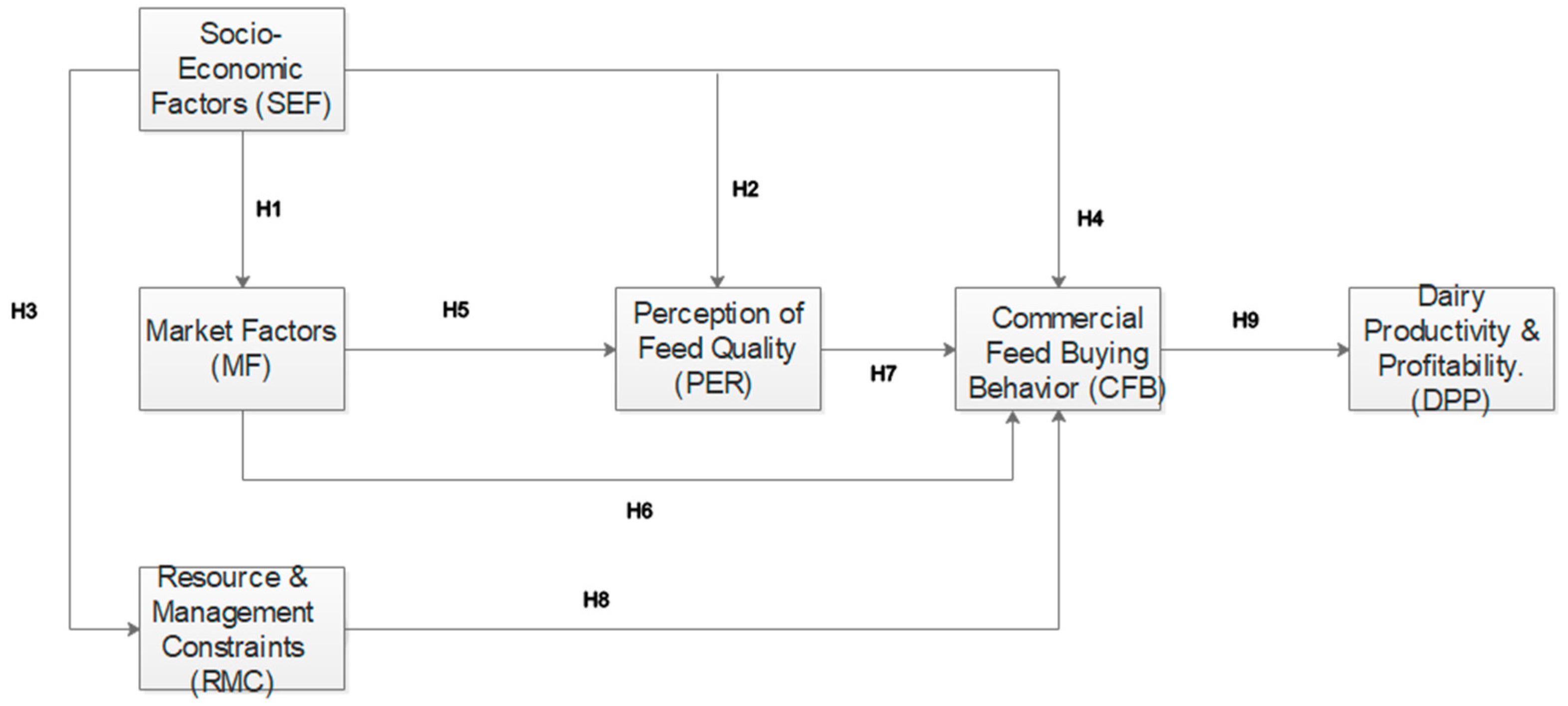
H1. 
Socio-Economic Factors influence Market Factors.
H2. 
Socio-Economic Factors influence the Perception of Feed Quality.
H3. 
Socio-Economic Factors influence Resource & Management Constraints.
H4. 
Socio-Economic Factors influence Commercial Feed Buying Behavior.

2.4. Market Factors (MF)

This factor looks at how farmers’ perceptions of feed quality and, consequently, their purchasing decisions are influenced by market dynamics, such as feed availability, price structures, and regulatory frameworks. Positive perceptions are reinforced, for instance, by dependable supply chains and consistent product quality, while market flaws like inadequate infrastructure and restricted access to a variety of feed technologies can raise doubts about the products’ effectiveness and worth. Furthermore, farmers’ willingness to invest in commercial feed products may be influenced by the presence of trustworthy certification and inspection organizations [21]. Conversely, the absence of such oversight may lead to mistrust and encourage farmers to use cheaper and possibly inferior feed, underlining the need for comprehensive market regulation to ensure quality and to increase the confidence of farmers [19]. The perceived quality, which includes balanced nutritional content, uniform composition, and high-quality raw materials, is a key consideration for farmers in the selection of commercial feed [22]. This perception is further strengthened by the visibility of direct benefits such as increased milk production and better animal welfare, directly attributable to the quality of the farmer’s feed [23]. Market-related variables include feed costs, availability, distance from suppliers, and quality information. When farmers have access to fair prices, stable supplies, and reliable market information, they develop a positive impression of the commercial feed they are using. This positive association stresses the importance of market transparency and access to reliable information to increase farmer confidence and facilitate the take-up of commercial feed products [24]. On the other hand, inconsistent quality, price volatility, and limited access to reliable supply chains often lead farmers to rely on informal networks and information exchange between them to assess the quality of their feed, especially where formal quality assurance mechanisms are weak or non-existent [25].
H5. 
Market Factors influence the Perception of Feed Quality.
H6. 
Market Factors influence Commercial Feed Buying Behavior.

2.5. Perception of Feed Quality (PER)

This factor examines how farmers’ subjective assessments of the characteristics of commercial feed, based on a variety of subjective and external indicators, directly influence their purchasing decisions [26]. In particular, factors such as palatability, freshness and being free from contaminants [27]. Moreover, perceived quality, whether assessed based on direct experience or through external indicators, influences purchasing behaviour, particularly for trustworthy goods where it is difficult to ascertain the quality of the product before or after the purchase [26]. Farmers’ positive perception of the quality of commercial feed, often influenced by a marked improvement in health and productivity, may lead to their willingness to pay higher prices, which underlines the economic impact of the perceived value [22]. In addition, the consistent performance of products and the transparency of information are key factors in increasing the uptake of the product, building confidence and product reliability in agricultural markets [19]. Conversely, negative perceptions of feed quality, often due to inconsistent results or animal health problems, may prevent acceptance even in favorable market conditions. In fact, inadequate feed, often due to poor quality feed, can lead to significant economic losses through poor animal health, inefficient feed conversion and reduced production of animal products [28]. This perception reflects farmers’ confidence in feed quality, nutritional value and cost-efficiency. Positive perceptions encourage farmers to buy more feed and rely more on commercial sources. This positive relationship underlines the crucial role of building and maintaining the farmer’s confidence in feed products by ensuring that they are of uniform quality and deliver tangible benefits. Conversely, negative perceptions of the quality of feed due to visual indicators such as color or adulteration may significantly reduce the willingness to buy [29].
H7. 
Perception of Feed Quality influences Commercial Feed Buying Behavior.

2.6. Resource & Management Constraints (RMC)

This factor explains how smallholder dairy farmers’ adoption and sustainable use of commercial feeds are greatly impacted by limited resources and management capacities, such as budgetary limitations, labour shortages, and ignorance of contemporary feeding techniques. The continuous use of premium feeds is hampered by these limitations, which frequently necessitate a trade-off between short-term demands and long-term investments in animal nutrition [30]. For instance, a lack of capital frequently compels farmers to priorities less expensive, inferior substitutes or to cut back on total feed amounts, which results in subpar animal performance. Additionally, these limitations may be made worse by the lack of sound contractual agreements and efficient financial management procedures, which would restrict farmers’ capacity to make investments in premium feed options [31]. Additionally, inefficient use can result from a lack of knowledge about the advantages of balanced nutrition or appropriate feed storage, which lowers the perceived value of commercial feeds even though they can increase productivity [28]. Farmers in upland areas are forced to buy supplemental feeds like hay, straw, and oilseed cakes due to the declining trend in grazing land and the high cost of roughage and concentrate feed, which further reduces livestock productivity [6]. Additionally, limited access to credit facilities makes it more difficult for farmers to buy essential inputs like commercial feed, which impedes increases in livestock productivity [32]. Land availability, grazing space, feed storage capacity, and conservation techniques are all included in this. Farmers with enough land may make their own feed, but those with less storage or grazing space are more likely to rely on purchased feed. Additionally, a greater reliance on purchased feed is required due to the diminishing availability of communal grazing land, especially in agricultural areas with dense populations [6]. This change highlights the significance of effective feed utilization techniques, like feed processing and preservation, to maximize nutritional value and minimize waste, especially in situations where feed scarcity is prevalent [2]. Because local markets frequently offer erratic supplies of balanced rations, this reliance on purchased feed is further complicated by issues with feed quality and availability. This discrepancy is combined with ignorance of proper feed.
H8. 
Resource & Management Constraints influence Commercial Feed Buying Behavior.

2.7. Commercial Feed Buying Behavior (CFB), Productivity, and Profitability (DPP)

Increased use of commercial feed, if properly managed, is associated with improvements in milk productivity indicators such as milk production and quality, which improves the profitability of small-scale dairy farms [20]. This is mainly due to the increased nutritional intake from the balanced commercial feed, leading to improved health of the animals, faster growth and increased milk production per animal [28]. In addition, nutrient consistency in commercial feed can lead to more predictable production cycles and reduce the occurrence of metabolic diseases, which will further contribute to the health and longevity of the herd. In addition, intensification of livestock production by the use of commercial feed can transform livestock production by increasing individual animal performance and the overall productivity of the herd, thus meeting the increasing demands of the market [33]. This increased productivity and efficiency translate into higher economic returns for farmers, which can be reinvested in improving the farm and contribute to sustainable livelihoods [34]. This positive feedback loop between the uptake of commercial feed and profitability can increase market participation, as higher yields allow farmers to invest more in quality inputs and expand their business [35]. This is particularly true in regions with increasing demand for animal proteins, where high-quality feed can significantly increase the output of the production [28]. However, the high costs and irregular delivery of commercial feed in regions such as Ethiopia pose a major challenge to the maintenance of this productivity growth and may reduce the long-term profitability of small-scale dairy farmers [3]. This call underlines the need for local, cost-effective alternatives to feed and for strong supply chains to ensure that small producers can access them [1]. Economic analysis also shows that, while milk prices have a positive impact on farm profits and economic value, feed prices have an inverse relationship, with a 20 per cent change in feed prices resulting in a ±12.31 per cent change in farm profits and a ±7 per cent change in the economic value of milk production [5]. This underlines the critical sensitivity of dairy profitability to feed costs, which requires strategic management and purchasing of feed [5]. Understanding the factors that influence the purchasing behaviour of smallholder dairy farmers for commercial feed is therefore crucial to designing effective interventions and policies to promote the sustainable development of dairy products.
H9. 
Commercial Feed Buying Behaviour Influences Dairy Productivity & Profitability.
The fundamental elements of the conceptual framework are depicted in Figure 1, a flow diagram that illustrates how farmers’ perceptions of feed quality, commercial feed purchasing behavior, and ultimately dairy productivity and profitability are influenced by socioeconomic factors, market factors, and resource and management constraints. Also illustrating the hypothesised relationships (H1–H9)

3. Methodology

This study adopts a quantitative, cross-sectional research approach to investigate the factors influencing the purchasing behavior of small-scale dairy farmers in the Sululta region of Ethiopia. The quantitative approach allows a systematic analysis of the relationship between the variables and makes it easier to identify the main factors influencing farmers’ purchasing decisions. Primary data were collected by a structured questionnaire to a representative sample of small dairy farmers in the study area. The survey gathered information on the socio-economic characteristics of farmers, farming and herd management practices, market factors, perceptions of commercial feed and purchasing behaviour. The questionnaire was designed based on relevant literature to ensure the validity of the content and the relevance to the context. The data analysis has been performed using the partial linear scale structural equation model (PLS-SEM), which is well suited for the analysis of complex relationships between observed and latent constructs, especially in the context of exploratory and predictive research [36]. This strict quantitative methodological approach ensures consistency between the design of the study, the data collection and the analytical methods and the results presented, thus enhancing the validity and reliability of the study findings. PLS-SEM allows for a simultaneous assessment of the measurement model and the structural model, which makes it possible to identify the underlying factors and causal pathways influencing the commercial purchasing behaviour of dairy farmers.

3.1. Study Area

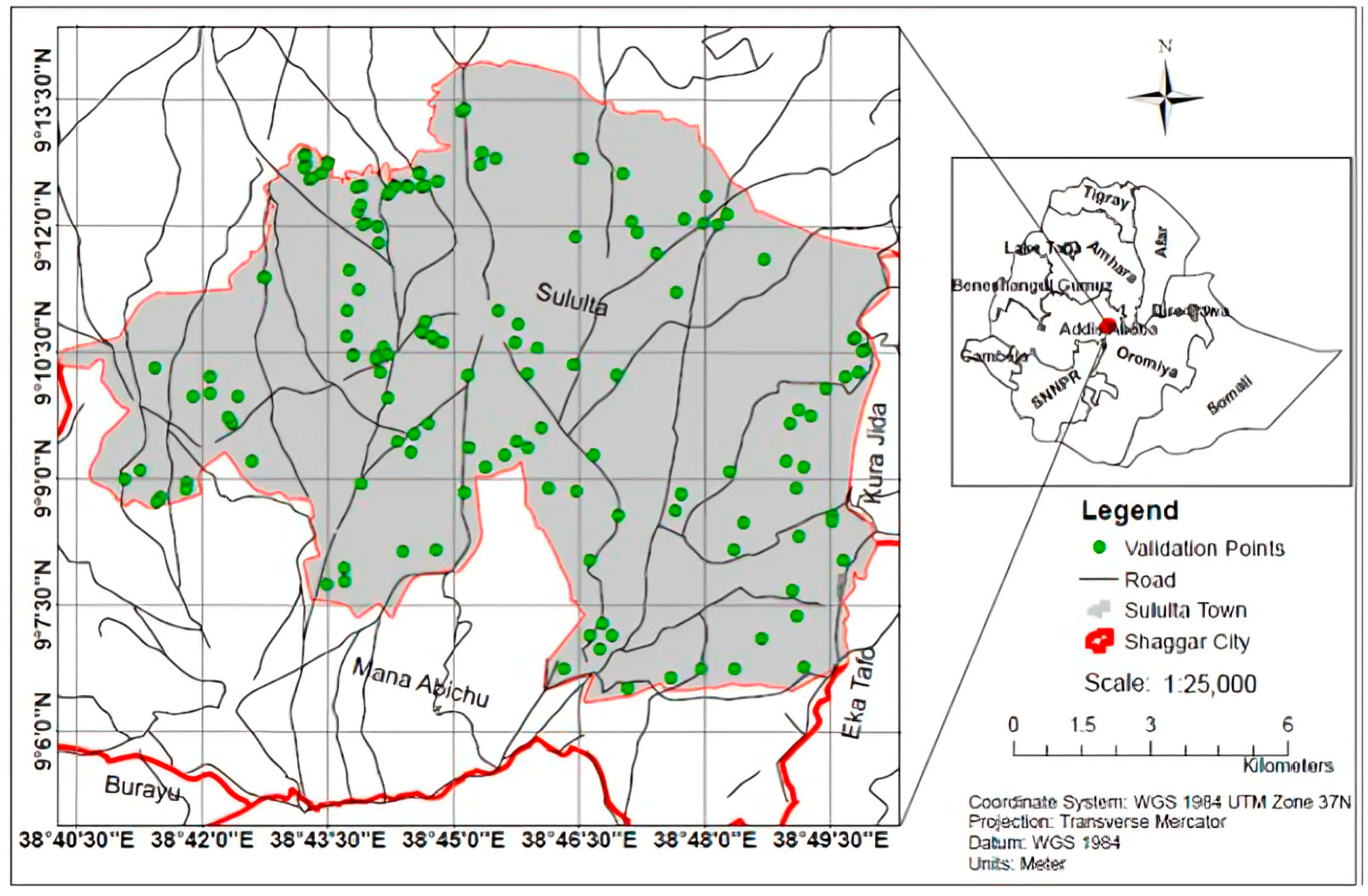
The study was carried out in Sululta, a major milk producing area in Ethiopia’s central highlands, situated in the Horn of Africa on the east of the continent. Ethiopia is one of the largest livestock-producing countries in Africa and Sululta is a strategically important peri-urban milk producing area in the Oromia Region (Oromia Special Zone around Finfinne and Addis Ababa). Sululta is located approximately 9.18 degrees north of Addis Ababa and 38.76 degrees east of the latitude and longitude (Figure 2). As part of the peri-urban ring of the capital city, Sululta is strongly influenced by the dynamics of the urban market, while maintaining traditional farming practices. Sululta is located on the Sululta Plateau, in the central Ethiopian highlands, at an altitude of between 2300 and 2800 m above sea level, with a temperate climate. Rapid urbanization, the cultivation of flowers and other commercial land use have reduced grazing areas and increased the dependence of farmers on purchased feed inputs. Peri-urban milk production is widespread in Sululta, with small-scale and artisanal producers supplying the city of Addis Ababa and the surrounding cities. Previous surveys and field observations consistently identify the scarcity of feed and the high commercial cost of feed as the main constraints. These characteristics make Sululta an appropriate and relevant case to examine the commercial purchasing behaviour of small dairy farmers in relation to commercial feed.

3.2. Population, Sample, and Sampling Procedure

The target population for this study is all small-scale dairy farmers operating in the Sululta region of Ethiopia, due to their key role in local agricultural production and milk supply. Due to the geographical diversity and the different dairy farming practices in Sulula, stratified random sampling was used to ensure that different categories of farmers were represented. The final sample size of 348 households was determined by applying the Cochran formula, which takes into account the required level of confidence, acceptable margins of error and estimated population size [37]. This approach is in line with the methodology used in agricultural research carried out in Ethiopia [38].

3.3. Data Collection and Analyses

Data were collected between June and August 2025 using a quantitative, cross-sectional, and exploratory design to investigate the determinants of the commercial feed purchasing behaviour of small-scale dairy farmers in the Sululta region of Ethiopia. Primary data were collected through a structured questionnaire on the perception of the quality, efficiency and economic viability of commercial feed by farmers (a representative sample of 348 farmers) and on the basis of a number of variables, including socio-economic characteristics (age, education, household size and income), farming practices, the availability of feed, the availability of feed, the reliability of suppliers, and the market [38,39]. The questionnaire was systematically coded, cleaned and validated before analysis to ensure data accuracy and consistency. The data analysis was conducted using Partial Least Squares Structural Equation Modelling (PLS-SEM) applied through the R package to simultaneously estimate the measurement and the structural models and to explore the relationship between socio-economic factors, market factors, resource and management constraints, and the purchasing behaviour of dairy products. PLS-SEM was selected in preference to covariance-based SEM (CB-SEM) for several methodological and contextual reasons. First, the primary objective of this study is exploratory and predictive, focusing on identifying key drivers of farmers’ purchasing behaviour rather than on theory confirmation, which aligns with the strengths of PLS-SEM. Second, the model incorporates multiple latent constructs and complex causal pathways, including formative and reflective indicators, which are handled more flexibly by PLS-SEM than by CB-SEM. Third, PLS-SEM is robust to non-normal data distributions, which are common in socio-economic and smallholder farm survey data. Finally, PLS-SEM performs reliably with moderate sample sizes, making it particularly suitable for agricultural and smallholder research contexts where large samples are difficult to obtain [40,41]. The final analytical model consisted of six latent structures measured against 28 observable variables. The sample size met the recommended 10-fold rule, which exceeds the minimum ratio between the number of observations and the maximum number of structural paths per structure, thus ensuring the adequacy and reliability of the model estimates.

4. Results

The demographic, socio-economic, market, perception and production characteristics of smallholder milk producers in Sululta district, Oromia, Ethiopia, are summarized in the descriptive statistics. The variables of the PLS-SEM model are summarized by construct in Table 1. After cleaning the data, the dataset contained 348 valid observations. Most farmers were middle-aged, had medium-sized herds, little education and little access to financial and market services. The diverse socio-economic and production environment is reflected in the considerable variation in average scores and ranges between respondents. 1. Socio-economic factors (SEF: A1–A8): the average age of respondents was 39.3 years (SD = 9.4), indicating that most of the milk producers were adults with an economic activity. Farmers had on average 2.4 years of formal education (A2), which indicates a low level of educational attainment, which may limit the uptake of new technologies. Only 34 per cent of the respondents were male (A3 = 0.34). The average size of the household (A5) was 5.8 persons (SD = 3.4), and the average length of agricultural experience (A4) was 6.1 years (SD = 2.7). The average number of cows in the herd (A6) was 6.7 cows (SD = 3.2). Although it varied considerably, from 150 to 41,160 ETBs, the average annual income (A7) was 5328 ETBs. Formal credit was available to around 37 per cent of the farmers (A8 = 0.37). These metrics show that farmers in the research area have low financial capital and moderate socio-economic capacity. 2. Market factors (MF: B1-B5) the five-point Likert scale (1 = strongly disagree; 5 = strongly agree) was used to measure market-related perceptions. Most farmers receive little information on feed prices and suppliers, as illustrated by the average score of 2.21 (SD = 1.11) for access to market information (B1). Average availability of feed (B2) was 2.87 (SD = 1.08), indicating a moderate level of access to feed. The affordability of feed (B3) was 2.11 (SD = 1.05), indicating that many farmers are constrained by the cost of feed. Transport costs (B5) were relatively high (3.57, SD = 1.01), indicating logistical problems in the distribution of the Sululta feed, whereas the reliability of suppliers (B4) was on average 2.95 (SD = 1.00). 3. Perception (PER: C1–C4) A five-point Likert scale was also used to gauge the farmer’s perception of commercial feed. The mean C1 (confidence in feed efficiency) was 2.56 (SD = 1.11), indicating a moderate level of confidence in the benefits of feed. C2 (quality perception) was 3.29 (SD = 1.01), suggesting that many farmers consider that feed on the market is of good quality. While C4 (conversion rate) was at 2.13 (SD = 0.98), indicating that many farmers are cautious about the regular use of purchased feed, C3 (confidence in suppliers) was at 2.40 (SD = 1.03), indicating a lack of confidence. 4. Resource constraints (RMC: D1–D4). One of the main barriers to adoption was resource scarcity.
In order to ensure the robustness of the empirical findings, the validity and reliability of the measurement tools were evaluated before the structural model was interpreted. Table 2 shows the standardized load of indicators (λ), Cronbach’s alpha (alpha), Rho-A, composite reliability (CR) and average deviation from the standard (AVE) for each of the six latent constructs: socio-economic factors (SEF), market factors (MF), perceptions of feed quality (PER), resource and management constraints (RMC), commercial purchasing behaviour (CPR) and milk productivity and yield (DPP). Following the recommendations of [40,41], for the confirmatory models, threshold values of: (a) 0.70, (b) 0.70, (c) 0.70, (c) 0.50 are usually used. However, in exploratory research and context-specific socio-economic studies—especially in smallholder farming—these criteria can be relaxed if the models are theoretical and indicators capture the behaviour of a heterogeneous farmer [40]. In order to address the reproducibility concerns, each indicator was measured using clearly defined survey questions and measures. Socio-economic indicators (SEI) were measured using objective numerical and binary variables (e.g., age, income, size of herd, access to credit) and were modeled in a form that reflected household capacity rather than internal consistency. All other constructs were measured retrospectively using a five-point Likert scale (1 = strongly disagree, 5 = strongly agree) except for the theoretical requirement of numerical production indicators (milk yield, income). The reliability of internal consistency varied between constructs. Market factors (MF) showed high reliability (AA = 0.77; CR = 0.86) above the recommended thresholds and indicated a consistent farmer response to feed availability, affordability, competition among suppliers and market information. This confirms that MF is the most reliable model construct, with the exception of other constructs such as PER (α = 0.20; CR = 0.58), RMC (α = 0.39; CR = 0.73), CFB (α = 0.45; CR = 0.77), and DPP (α = 0.35; CR = 0.79). This result reflects the heterogeneous and context-dependent nature of smallholder farming decisions, where perceptions, constraints and productivity outcomes vary considerably from household to household. Similar patterns of low reliability were observed in the exploratory PLS-SEM studies for MF, RMC and CFB, which supported their retention in the exploratory modelling [40]. Only the Market Factors construct achieved an AVE above the recommended threshold (AVE = 0.54), which suggests that it accounts for over 50 per cent of the variability of its indicators. Other constructs had lower AVE values (from 0.12 to 0.44), indicating that a significant part of the variability of the indicator can be attributed to measurement errors or contextual differences. Despite these lower AVE values, the models were maintained because of their strong theoretical and empirical relevance in explaining the behaviour of small dairy farmers in purchasing feed [40]. Note that AVE values below 0.50 may be acceptable in early stage or exploratory research if the CR is reasonable and the construct is of central importance for the research. At indicator level, several items showed high and in theory, uniform loads. For example, household income (A5) and annual income (A7) were the main contributors to the SES construct, whereas the MFA construct was strongly defined by the availability of food (B1), affordability (B2), and competition from suppliers (B3). Under PER, perceived improvements in milk quality (C2), reliability (C3) and economic benefits (C4) were the most meaningful indicators, while perceived improvements in yield (C1) showed a low level, reflecting farmer uncertainty about direct increases in productivity. Similarly, the scarcity of pasture land (D2) was the most significant RMC indicator, while the frequency of purchases (E1) was the most significant CFB indicator. In the case of DPP, the objective measures of production and income showed a high degree of variability, which explains the lower internal consistency of the model. The discriminatory validity was assessed by applying the Fornell-Larcker test and cross-loading. Indicators correlated more strongly with the intended construct than with other constructors, and the square roots of the AVE values exceeded the correlations between constructors. These results indicate sufficient discriminant validity to indicate that each construct captures a different dimension of the farmer’s decision-making. Overall, the measurement model shows acceptable psychometric properties for the exploratory analysis of the PLS-SEM in the context of smallholder dairy farming. Although only the Market Factors construct fully meets all conventional reliability and validity thresholds, the other constructs provide a useful explanatory power and theoretical insight into the commercial purchasing behaviour of farmers. These findings highlight the complexity and diversity of farmer decision-making and justify the use of PLS-SEM as a flexible and predictive approach. Therefore, the results should be interpreted as exploratory rather than confirmatory and provide a basis for further refinement of the survey tools and testing in larger samples.
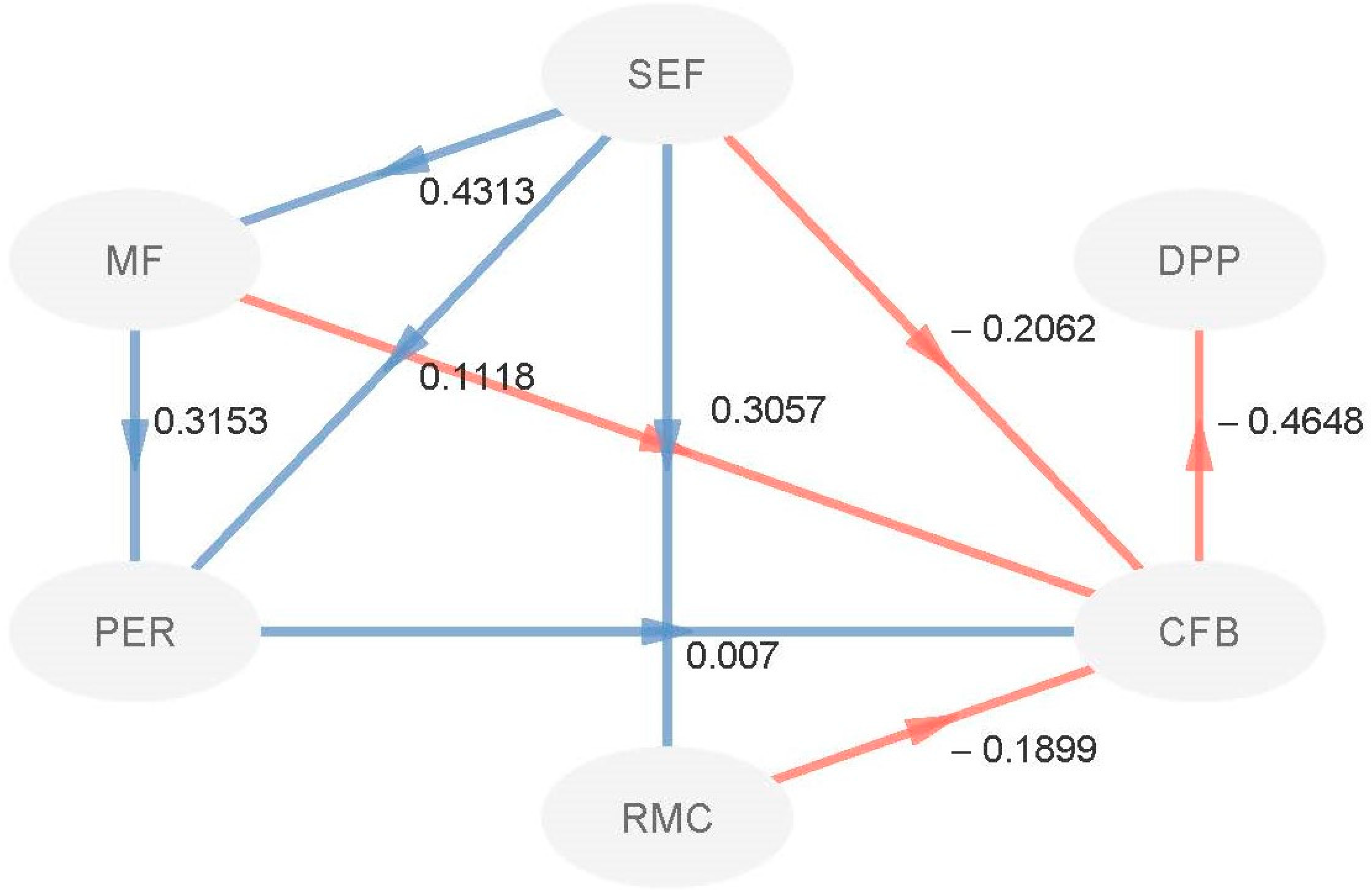
The structural model was evaluated after the measurement model was validated. The path coefficients (β), levels of significance (R) and determinants (R2) are given in Table 3. This model is an exploratory behavioural framework to explain the commercial feed purchasing behaviour and the results of these behaviour by small dairy farmers in Sulula. The explanatory power of the model is modest and uneven across endogenous constructs. Market factors (MF) had a R2 of 0.186, meaning that socio-economic factors (SEF) explained 18.6 percent of the variation in the access of farmers to and their involvement in the commercial feed markets. Perception (PER) recorded R2 of 0.143, which was explained jointly by socio-economic and market factors. Resource and management constraints (RMC) had a R2 of 0.174, while productivity and profitability (DPP) had a R2 of 0.213, reflecting the behaviour of the commercial feed buying behavour (CFB). Although these R2 values are relatively low, they are within the acceptable range for PLS-SEM exploratory models in socio-economic and behavioural research, especially in smallholder farming systems characterized by high heterogeneity, informal markets, and unobservable institutional bottlenecks [40]. The model captures statistically significant structural relationships with a moderate level of explanatory power. Market factors (SEF → MF: β = 0.431, p < 0.001), perceptions (SEF → PER: β = 0.112, p = 0.044), and resource and management conditions (SEF → RMC: β = 0.306, p < 0.001) were all positively impacted by socioeconomic factors. Perceptions were positively impacted by market factors (MF → PER: β = 0.315, p < 0.001). Commercial feed purchasing behavior was significantly impacted negatively by socioeconomic factors (SEF → CFB: β = −0.206, p < 0.001), market factors (MF → CFB: β = −0.165, p = 0.005), and resource and management constraints (RMC → CFB: β = −0.190, p < 0.001). We rejected the hypothesis because there was no significant correlation between perception and feed purchasing behavior (PER → CFB: β = 0.007, p = 0.895). Dairy productivity and profitability were negatively correlated with commercial feed purchasing behavior (CFB → DPP: β = −0.465, p < 0.001). Figure 3 illustrates the structural model results, showing the standardized path coefficients among socio-economic factors, market factors, perception of feed quality, resource and management constraints, commercial feed buying behavior, and dairy productivity and profitability.

5. Discussion

This study provides evidence that the buying behaviour of commercial feed by peri-urban dairy farmers in Sululta, Ethiopia, is mainly driven by structural and economic constraints rather than by behavioural factors. The descriptive statistics presented in Table 1 provide an important context for the structural relationships identified by the PLS-SEM. The relatively low average household income, the small size of the herd and the limited access to credit highlight the financial vulnerability of the peri-urban dairy farmers in Sulula, which limits their ability to absorb the high and variable costs of commercial feed. Market indicators, particularly high transport costs and low feed availability, indicate that even where feed markets are available, availability remains a key constraint. These conditions help to explain the negative structural relationship between market factors and the commercial purchasing behaviour of feed in the model. At the same time, farmers reported a slightly positive perception of feed quality and productivity benefits, indicating that they are aware of the technical advantages of commercial feed. However, descriptive evidence shows that these positive perceptions are combined with low purchasing power and modest productivity performance. This mismatch reinforces the finding that positive perceptions alone are not sufficient to induce buying behaviour in conditions of liquidity constraints and high risks to production. In addition, the productivity and profitability indicators in Table 1 reveal significant variability between farms, reflecting the heterogeneous nature of peri-urban milk production systems and supporting the modest explanatory power (R2) of the model. Farmers generally recognise the quality and productivity benefits of commercial feed, but this perception does not translate into purchasing behaviour in conditions of high costs and limited profitability. A non-significant relationship between perception and purchasing behaviour (PER → CFC: β = 0.007, p = 0.895) suggests that positive perceptions alone are not sufficient to induce purchasing behaviour. Although market and socio-economic factors improve farmers’ perception of the quality and reliability of feed, these cognitive assessments are overwhelmed by liquidity constraints and investment risks. Market factors have a positive effect on perceptions (MF → PER: β = 0.315, p < 0.001) but a negative effect on purchasing behaviour (MF → CFC: β = −0.165, p < 0.005). This reflects a market environment characterised by high transport costs and limited local availability, where a functioning supply chain does not guarantee affordability. Farmers may therefore perceive feed markets as reliable, but still refrain from buying because of the negative cost-to-income ratio. Socioeconomic factors follow a similar pattern. While better-off farmers are more integrated in the market (SEF → MF: β = 0.431, p < 0.001), they are less likely to buy commercial feed (SEF → CFB: β = −0.206, p < 0.001). This suggests a substitution effect, with wealthier farmers relying on their own feed and grazing resources instead of buying concentrated feed, thus limiting exposure to volatile markets. By contrast, resource-poor farmers seem to be more dependent on commercial feed, despite its economic ineffectiveness. Resource and management constraints have a significant impact on purchasing behaviour (RMC → CFB: β = −0.190, p < 0.001), with access to water and availability of land being the key constraints. These restrictions limit the ability of farmers to use commercial feed efficiently, irrespective of market access or perception. The most striking result is the negative correlation between feed purchase behavior, productivity, and profitability (CFB to DPP: β = −0.465, p < 0.001). This shows a clear cost–benefit imbalance: increased expenditure on commercial feed does not lead to a corresponding increase in revenue. High feed prices, transport costs and the volatility of milk prices seem to undermine potential productivity gains, confirming that the use of commercial feed under current market conditions can reduce the profitability of farms. Overall, the modest explanatory power of the model (R2 = 0.09–0.22) is in line with exploratory behavioural research in complex smallholder dairy farming systems [40]. The findings underscore that improving adoption outcomes requires structural interventions—including feed price stabilization, improved local supply chains, and enhanced access to water and land—rather than awareness-based strategies alone.

6. Limitations

Several limitations of this study should be acknowledged. First, the relatively low internal consistency observed for some constructs—particularly dairy productivity and profitability—reflects the high heterogeneity inherent in small-scale dairy systems, where production outcomes are influenced by numerous unobserved environmental, biological, and managerial factors. Future research would benefit from longitudinal data to better capture seasonal fluctuations in milk yields, feed prices, and profitability. Second, the exploratory nature of the PLS-SEM approach implies that the reported R2 values, while acceptable for behavioral and socio-economic models, leave a substantial share of variance unexplained. This suggests that additional explanatory variables—such as social networks, cooperative membership, risk preferences, or proximity to milk collection and processing centers—could improve model performance. Finally, the study is geographically confined to Sululta’s peri-urban dairy system, which is characterized by acute land pressure, market dependence, and rising input costs. Consequently, the findings may not be directly generalizable to more remote rural areas where grazing-based systems dominate and market exposure is lower. Replication across diverse production systems would strengthen the external validity of the conclusions

7. Conclusions

This study examined the factors influencing commercial feed purchasing behavior among peri-urban dairy farmers in Sululta, Ethiopia, to understand how socio-economic conditions, market dynamics, perceptions, and resource constraints jointly shape buying decisions and farm performance. The findings demonstrate that commercial feed use in the study area is constrained by a feed purchasing represents a financial burden rather than a productivity-enhancing investment.
Although farmers are generally aware of the quality and technical benefits of commercial feed, unfavorable market conditions—characterized by high prices, transport costs, and limited local availability—undermine its economic viability. As a result, feed purchasing behavior is shaped more by resource constraints and risk management strategies than by positive perceptions or knowledge. The findings highlight that better-resourced farmers tend to reduce reliance on commercial feed by substituting toward self-produced fodder, while resource-constrained farmers remain exposed to inefficient market purchases that erode profitability in the Sululta area. This dynamic reinforces unequal outcomes and limits the effectiveness of intensification strategies based solely on input adoption. From a policy perspective, the results indicate that awareness-raising alone is insufficient to improve adoption outcomes in the study area. Instead, targeted structural interventions are required. First, financial mechanisms, such as dairy-specific micro-credit schemes aligned with milk sales cycles, could ease liquidity constraints, and reduce short-term investment risk. Second, market regulation is essential for stabilizing feed prices and enforcing quality standards, thereby protecting farmers from volatility and adulteration. Third, the extension system should shift from a narrow focus on feed promotion toward comprehensive nutrition management, emphasizing balanced rations, and the integration of locally available feed resources to improve cost efficiency. Finally, infrastructure investments, particularly the decentralization of feed storage and processing facilities, could substantially reduce transport costs and improve market accessibility. Overall, improving the sustainability of peri-urban dairy production in Sululta requires coordinated policy action that addresses market inefficiencies, financial constraints, and physical resource limitations. Without such reforms, the adoption of commercial feed is unlikely to deliver the intended productivity and income gains for small-scale dairy farmers.

Author Contributions

Conceptualization, K.N. and K.S.; methodology, K.N.; software, K.N.; validation, K.N. and K.S.; formal analysis, K.N.; investigation, K.N. and K.S.; resources, K.N. and K.S.; data curation, K.N.; writing—original draft preparation, K.N.; writing—review and editing, K.N., and K.S.; visualization, K.N.; supervision, K.S.; project administration, K.N. and K.S. All authors have read and agreed to the published version of the manuscript.

Funding

This research received no external funding.

Institutional Review Board Statement

The study did not require ethical approval.

Data Availability Statement

The data presented in this study are available on reasonable request from the corresponding author. The data is not publicly available due to privacy and confidentiality.

Conflicts of Interest

The authors declare no conflicts of interest.

References

  1. Melesse, A.; Bezabih, M.; Adie, A.; Asmare, Y.; Prasad, K.V.; Devulapalli, R. Price-quality relationships for livestock feed types in Ethiopian feed markets. Front. Anim. Sci. 2023, 4, 1194974. [Google Scholar] [CrossRef]
  2. Duguma, B. Farmers’ perceptions of major challenges to smallholder dairy farming in Jimma Zone, Oromia. Heliyon 2022, 8, e09581. [Google Scholar] [CrossRef]
  3. Negash, D. Compound animal feed demand and animal products supply, price, and marketing in Ethiopia. Biomed. J. Sci. Tech. Res. 2022, 41, 32808–32817. [Google Scholar] [CrossRef]
  4. Asres, T. Dairy Cattle Feed Resources and Milk Handling Practices in Ada’a District, East Shoa Zone, Oromia Regional State, Ethiopia. Master’s Thesis, Addis Ababa University, Addis Ababa, Ethiopia, 2014. Available online: https://etd.aau.edu.et/items/a94d4582-4f55-44fc-9833-baef2fd1122d (accessed on 30 November 2025).
  5. Demisse, D.H.; Tadesse, Y.; Tadesse, M.; Biratu, K.; Shumiye, M.; Yadesa, E. Economic values of important traits for smallholder dairy production in Central Ethiopia. Res. Sq. 2023. [Google Scholar] [CrossRef]
  6. Mesfin, R.; Tesfaye, A. Marketing situations of livestock feeds in Welmera and Dendi Wereda, West Shoa Zone, Ethiopia. Online J. Anim. Feed. Res. 2012, 2, 277–282. [Google Scholar]
  7. Hyland, J.J.; Jones, D.L.; Parkhill, K.A.; Barnes, A.P.; Williams, A.P. Farmers’ perceptions of climate change: Identifying types of belief and their implications for adaptation. Clim. Change 2018, 146, 227–242. [Google Scholar]
  8. Tapsoba, P.K.; Aoudji, A.K.; Ouédraogo, F.; Dassekpo, I.S.; Kestemont, M.P.; Konkobo, M.K.; Achigan-Dako, E.G. Understanding the behavioral drivers of smallholder agro-ecological practice adoption in Benin and Burkina Faso. Farming Syst. 2023, 1, 100023. [Google Scholar] [CrossRef]
  9. Schrieks, T.; Botzen, W.W.; Wens, M.; Haer, T.; Aerts, J.C. Integrating Behavioral Theories in Agent-Based Models for Agricultural Drought Risk Assessments. Front. Water 2021, 3, 686329. [Google Scholar] [CrossRef]
  10. Wuepper, D.; Bukchin-Peles, S.; Just, D.; Zilberman, D. Behavioral agricultural economics. Appl. Econ. Perspect. Policy 2023, 45, 2094–2105. [Google Scholar] [CrossRef]
  11. Sun, Y.; Wang, S.; Zhang, X. Limitations of rational choice models in explaining farmers’ technology adoption. Sustainability 2022, 14, 11492. [Google Scholar]
  12. Ahmed, M.H.; Mesfin, H.M.; Hassen, T.B. Behavioral intention and adoption of agricultural innovations: Evidence from smallholder farmers. Heliyon 2023, 9, e15022. [Google Scholar]
  13. Tsai, Y.; Lin, C.; Hsu, S. Attitude formation and behavioral intention in agri-food consumption. Br. Food J. 2019, 121, 1531–1546. [Google Scholar]
  14. Opdink, P.; Hanson, J. Consumer attitudes and behavioral responses toward agri-input innovations. J. Consum. Behav. 2022, 21, 489–503. [Google Scholar]
  15. Joao, E.; McIntyre, S.; Shucksmith, M. Utility maximization and decision-making under agricultural risk. Ecol. Econ. 2015, 110, 28–36. [Google Scholar]
  16. Bottazzi, P.; Dangles, O.; Murgue, C. Beyond rational choice: Emotional and cultural drivers of farmer behavior. World Dev. 2023, 165, 106191. [Google Scholar]
  17. Denver, S.; Christensen, T.; Jensen, J.D. Heterogeneity in farmers’ preferences and adoption decisions. Eur. Rev. Agric. Econ. 2017, 44, 319–346. [Google Scholar]
  18. Rathod, P.; Chander, M.; Bardhan, D. Concentrate feeding to dairy cattle: Adoption status and influencing factors in India. Indian J. Anim. Res. 2016, 50, 788–793. [Google Scholar]
  19. Rustam, S.; Darma, R.; Jamil, M.H.; Tenriawaru, A.; Fudjaja, L.; Akzar, R. Marketing mix strategies and personal factors influencing BISI hybrid maize seed purchases. Sustainability 2025, 17, 2800. [Google Scholar] [CrossRef]
  20. Balehegn, M.; Duncan, A.J.; Tolera, A.; Ayantunde, A.A.; Issa, S.; Karimou, M. Improving adoption of technologies and interventions for increasing the supply of quality livestock feed in LMICs. Glob. Food Secur. 2020, 26, 100372. [Google Scholar] [CrossRef]
  21. Yunus, A.W.; Lindahl, J.F.; Anwar, Z.; Ullah, A.; Ibrahim, M.N.M. Farmers’ knowledge and approaches to control aflatoxin in raw milk in Pakistan. Front. Microbiol. 2021, 13, 980105. [Google Scholar]
  22. Saputra, D.A.; Sumarsono, H.; Kristiyana, N. Drivers of consumers’ purchase of Comfeed feed: A Study in Magetan. Deleted J. 2025, 4, 315. [Google Scholar]
  23. Teufel, N.; Korir, L.; Hammond, J.; van Wijk, M.T.; Kiara, H. Farm and livelihood characteristics after ITM vaccination against East Coast Fever in Tanzania. Front. Vet. Sci. 2021, 8, 63976. [Google Scholar] [CrossRef]
  24. Moglia, M.; Alexander, K.; Thephavanh, M.; Thammavong, P.; Sodahak, V.; Khounsy, B. Bayesian network model to explore practice change by smallholder rice farmers in Lao PDR. Agric. Syst. 2018, 164, 84. [Google Scholar] [CrossRef]
  25. Nampanzira, D.K.; Kizza, D.; Okello, S.; Kayemba, V.; Awino, W.; Nabulime, M. Chicken feed ingredient handling and feed compounding in Uganda. Res. Sq. 2024. [Google Scholar] [CrossRef]
  26. Domínguez, C.; Donovan, J.; Sriniv, C.S.; Zanello, G.; Peña, M. In-store seed purchasing decisions and implications for scaling hybrid maize seed sales. Res. Sq. 2022. [Google Scholar] [CrossRef]
  27. John, M.P.; Manoj, P.K. Cattle feed market in Kerala: A study of purchasing patterns and buyer behaviour. Glob. Res. Anal. 2013, 2, 32–33. [Google Scholar]
  28. Alnafissa, M.; Alotaibi, B.A.; Aldawdahi, N.M.; Azeem, M.I.; Muddassir, M. Optimising animal care through compound feed management in Saudi Arabia. Front. Sustain. food Syst. 2024, 8, 1406715. [Google Scholar] [CrossRef]
  29. Gebremedhin, B.; Hirpa, A.; Berhe, K. Feed Marketing in Ethiopia: Results of Rapid Market Appraisal; International Livestock Research Institute: Addis Ababa, Ethiopia, 2012. [Google Scholar]
  30. Azine, P.C.; Mugumaarhahama, Y.; Mutwedu, V.B.; Baenyi, S.P.; Kunde, E.A.; Mwanga, J.C.; Bacigale, S.B.; Katcho, K.; Ayagirwe, R.B.B. Livestock feeding practices in South Kivu, Eastern DRC: Challenges and opportunities. Res. Sq. 2024. [Google Scholar] [CrossRef]
  31. Lima, P.G.L.; Bánkuti, F.I.; Damasceno, J.C.; Santos, G.T.; Borges, J.A.R.; Ferreira, F.C. Factors influencing concentrate feeding: Dairy farmers’ perceptions of production system characteristics and markets. Anim. Open Space 2023, 2, 100041. [Google Scholar] [CrossRef]
  32. Brar, T.S.; Jadoun, Y.S.; Kasrija, R.; Singh, P.; Deshmukh, B.A. Constraints perceived by dairy farmers in access and management of good dairy farming practices. Int. J. Curr. Microbiol. Appl. Sci. 2020, 9, 1600–1608. [Google Scholar] [CrossRef]
  33. Opio, P.; Makkar, M.; Tibbo, M.; Ahmed, S.; Sebsibe, A.; Osman, A.K.; Olesambu, E.; Ferrand, C.; Munyua, S. Regional Animal Feed Action Plan for East Africa: Why, what, for whom, how used and benefits. CAB Rev. Perspect. Agric. Vet. Sci. Nutr. Nat. Resour. 2020, 15, 1–16. [Google Scholar] [CrossRef]
  34. Chirinda, N.; Murungweni, C.; Waniwa, A.; Nyamangara, J.; Tangi, A.; Peters, M. Reducing the national milk deficit and accelerating sustainable dairy value chains in Zimbabwe. Front. Sustain. Food Syst. 2021, 5, 726482. [Google Scholar] [CrossRef]
  35. Mumba, C.; Kasanga, B.; Mwamba, C.T.; Sichilima, T.; Siankwilimba, E.; Sitali, D. Factors influencing small-scale cattle farmers’ participation in livestock markets: Western Zambia. Front. Vet. Sci. 2024, 11, 1397000. [Google Scholar] [CrossRef]
  36. Piras, S.; Barlagne, C.; Clement, J.; Mokhtari, N.; Thabet, C.; Tura, M. Health-Related Information and Willingness to Pay for Olive Oil: Lab Experiment in Morocco and Tunisia; SIDEA: Bologna, Italy, 2023. [Google Scholar]
  37. Okello, D.; Owuor, G.; Larochelle, C.; Gathungu, E.; Mshenga, P. Determinants of utilisation of agricultural technologies among smallholder dairy farmers in Kenya. J. Agric. Food Res. 2021, 6, 100213. [Google Scholar]
  38. Adane, Z.; Hidosa, D. Cattle marketing system in Bena-Tsemay District of South Omo, South-Western Ethiopia. Res. World Agric. Econ. 2022, 3, 59–71. [Google Scholar] [CrossRef]
  39. Okello, A.O.; Nzuma, J.M.; Otieno, D.J.; Kidoido, M.; Tanga, C.M. Farmers’ perceptions of commercial insect-based feed for sustainable livestock in Kenya. Sustainability 2021, 13, 5359. [Google Scholar] [CrossRef]
  40. Hair, J.F.; Hult, G.T.M.; Ringle, C.M.; Sarstedt, M.; Danks, N.P.; Ray, S. Partial Least Squares Structural Equation Modelling (PLS-SEM) Using R; Springer: Berlin/Heidelberg, Germany, 2021. [Google Scholar]
  41. Chin, W.W. How to Write Up and Report PLS Analyses. In Handbook of Partial Least Squares: Concepts, Methods and Applications; Esposito Vinzi, V., Chin, W.W., Henseler, J., Wang, H., Eds.; Springer: Heidelberg, Germany, 2010; pp. 655–690. [Google Scholar]
Figure 1. Conceptual Framework.
Agriculture 16 00109 g001
Figure 2. Map of Sululta, Ethiopia.
Agriculture 16 00109 g002
Figure 3. Model Path diagram. Red negative relation, Blue positive relationship.
Agriculture 16 00109 g003
Table 1. Descriptive analysis.
ConstructCodeVariable DescriptionMeanSD
Socioeconomic (SEF)A1Age of farmer (years)39.329.41
A2Education (years of schooling)2.381.2
A3Gender (1 = Male, 0 = Female)0.340.47
A4Farming experience (years)6.112.73
A5Household size (members)5.793.4
A6Herd size (number of cows)6.733.15
A7Annual income (ETB)53287830
A8Access to credit (1 = Yes, 0 = No)0.370.48
Market factors (MF)B1Access to market info (1–5)2.211.11
B2Feed availability (1–5)2.871.08
B3Feed affordability (1–5)2.111.05
B4Supplier reliability (1–5)2.951
B5Transport cost (1–5)3.571.01
Perception (PER)C1Belief in feed effectiveness (1–5)2.561.11
C2Feed quality perception (1–5)3.291.01
C3Trust in supplier (1–5)2.41.03
C4Attitude toward regular use (1–5)2.130.98
Resource constraints (RMC)D1Land availability (1–5)2.241.18
D2Access to water (1–5)1.410.88
D3Feed storage capacity (1–5)2.121.09
D4Labor availability (1–5)2.581.04
Buying behaviour (CFB)E1Frequency of feed purchase (1–5)1.981.08
E2Quantity purchased (1–5)2.31.09
E3Willingness to buy regularly (1–5)2.491.05
Productivity & profitability (DPP)F1Milk yield (litres/day)17.1614.2
F2Annual dairy income (ETB)32797230
F3Perceived profit margin (1–5)2.61.03
F4Satisfaction with profitability (1–5)2.830.91
Table 2. Standardized factor loading, Cronbach’s alpha, Rho_A, composite reliability (CR), and average variance extracted (AVE) of constructs.
Construct & IndicatorsSurvey QuestionMeasurement ScaleLoading (λ)αCRAVE
Socio-Economic (SEF) 00.450.118
A1: AgeWhat is your age (years)?Numeric (years)−0.407
A2: EducationWhat is your highest level of education completed?1–5 Scale−0.05
A3: GenderHow many years of experience do you have in dairy farming?Binary (0/1)0.044
A4: ExperienceWhat is your household size?Numeric (years)0.024
A5: Household sizeWhat is your average monthly household income (ETB)?Numeric0.772
A6: Herd sizeHow many dairy cows do you currently own?Numeric0.053
A7: Annual incomeDo you have access to credit for dairy production?Numeric (ETB)0.412
A8: Credit accessDo you receive extension or advisory services?Binary (0/1)−0.074
Market Factors (MF) 0.7650.860.535
B1: Market infoCommercial feed is easily available in my area.Likert (1–5)0.797
B2: AvailabilityCommercial feed prices are affordable for my farm.Likert (1–5)0.819
B3: AffordabilityThere are enough feed suppliers to choose from.Likert (1–5)0.807
B4: ReliabilityTransportation cost affects my ability to purchase feed.Likert (1–5)0.763
B5: Transport costMarket information on feed prices is accessible.Likert (1–5)0.365
Perception (PER) 0.2010.580.317
C1: EffectivenessCommercial feed improves milk yield.Likert (1–5)−0.09
C2: QualityCommercial feed improves milk quality.Likert (1–5)0.7
C3: TrustCommercial feed is reliable in quality.Likert (1–5)0.617
C4: AttitudeUsing commercial feed is economically beneficial.Likert (1–5)0.625
Resource (RMC) 0.3940.730.288
D1: LandLimited grazing land affects my use of commercial feed.Likert (1–5)0.413
D2: Water accessShortage of grazing land affects feed use.Likert (1–5)0.891
D3: StorageLack of feed storage limits feed purchase.Likert (1–5)0.245
D4: LaborWater availability affects feed utilization.Likert (1–5)−0.359
Buying Behavior (CFB) 0.4450.770.441
E1: FrequencyI regularly purchase commercial feed.Likert (1–5)0.769
E2: QuantityI spend a large share of my budget on commercial feed.Likert (1–5)0.533
E3: Future plansI plan to continue using commercial feed in the future.Likert (1–5)0.67
Productivity (DPP) 00.350.292
F1: Milk yieldAverage daily milk yield per cow (liters).Numeric (liters)0.432
F2: Annual incomeMonthly income from milk sales (ETB).Numeric (ETB)0.471
F3: Profit marginCommercial feed improves farm profitability.Likert (1–5)−0.87
F4: SatisfactionOverall farm performance has improved.Binary (0/1)0.028
Table 3. Structural Model Results.
Path RelationshipHypothesisPath Coefficient (β)t-Valuep-ValueSupportedR2 (Endogenous Variable)
SEF → MFH10.4318.89<0.001SupportedMF = 0.186
SEF → PERH20.1122.020.044SupportedPER = 0.142
MF → PERH50.3155.71<0.001Supported
SEF → RMCH30.3065.97<0.001SupportedRMC = 0.093
SEF → CFBH4−0.2063.67<0.001Supported (Negative)CFB = 0.174
MF → CFBH6−0.1652.860.005Supported (Negative)
PER → CFBH70.0070.130.895Not Supported
RMC → CFBH8−0.1903.63<0.001Supported (Negative)
CFB → DPPH9−0.4659.76<0.001Supported (Negative)DPP = 0.216
Disclaimer/Publisher’s Note: The statements, opinions and data contained in all publications are solely those of the individual author(s) and contributor(s) and not of MDPI and/or the editor(s). MDPI and/or the editor(s) disclaim responsibility for any injury to people or property resulting from any ideas, methods, instructions or products referred to in the content.