Article

Metabolomics Combined with Transcriptomics Reveals the Formation Mechanism of Different Colored Flowers of Cosmos bipinnata Cav.


1
Jiangsu Engineering and Technology Centre for Ecological and Environmental Protection in Urban and Rural Water Environment Management and Low Carbon Development, College of Environmental Ecology, Jiangsu Open University, Nanjing 210095, China
2
State Key Laboratory of Crop Genetics & Germplasm Enhancment and Utilization, Key Laboratory of Landscaping, Ministry of Agriculture and Rural Affairs, Key Laboratory of State Forestry and Grassland Administration on Biology of Ornamental Plants in East China, College of Horticulture, Nanjing Agricultural University, Nanjing 210095, China
3
Zhongshan Biological Breeding Laboratory, No. 50 Zhongling Street, Nanjing 210014, China
*
Author to whom correspondence should be addressed.
Agriculture 2025, 15(3), 255; https://doi.org/10.3390/agriculture15030255

Submission received: 3 December 2024 / Revised: 16 January 2025 / Accepted: 22 January 2025 / Published: 24 January 2025
(This article belongs to the Special Issue Genetics, Breeding and Transcriptomic Analysis of Chrysanthemum)

Abstract

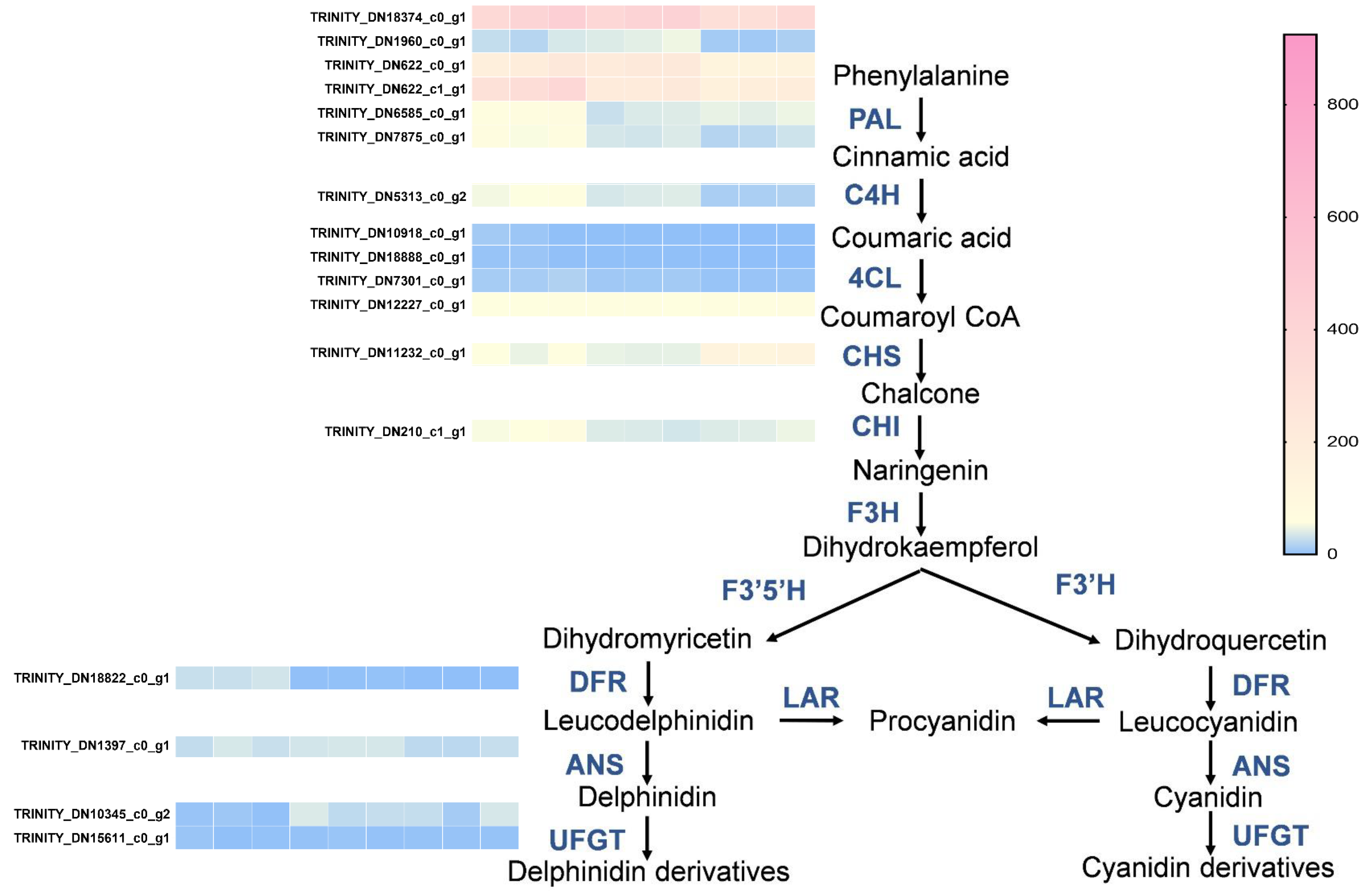
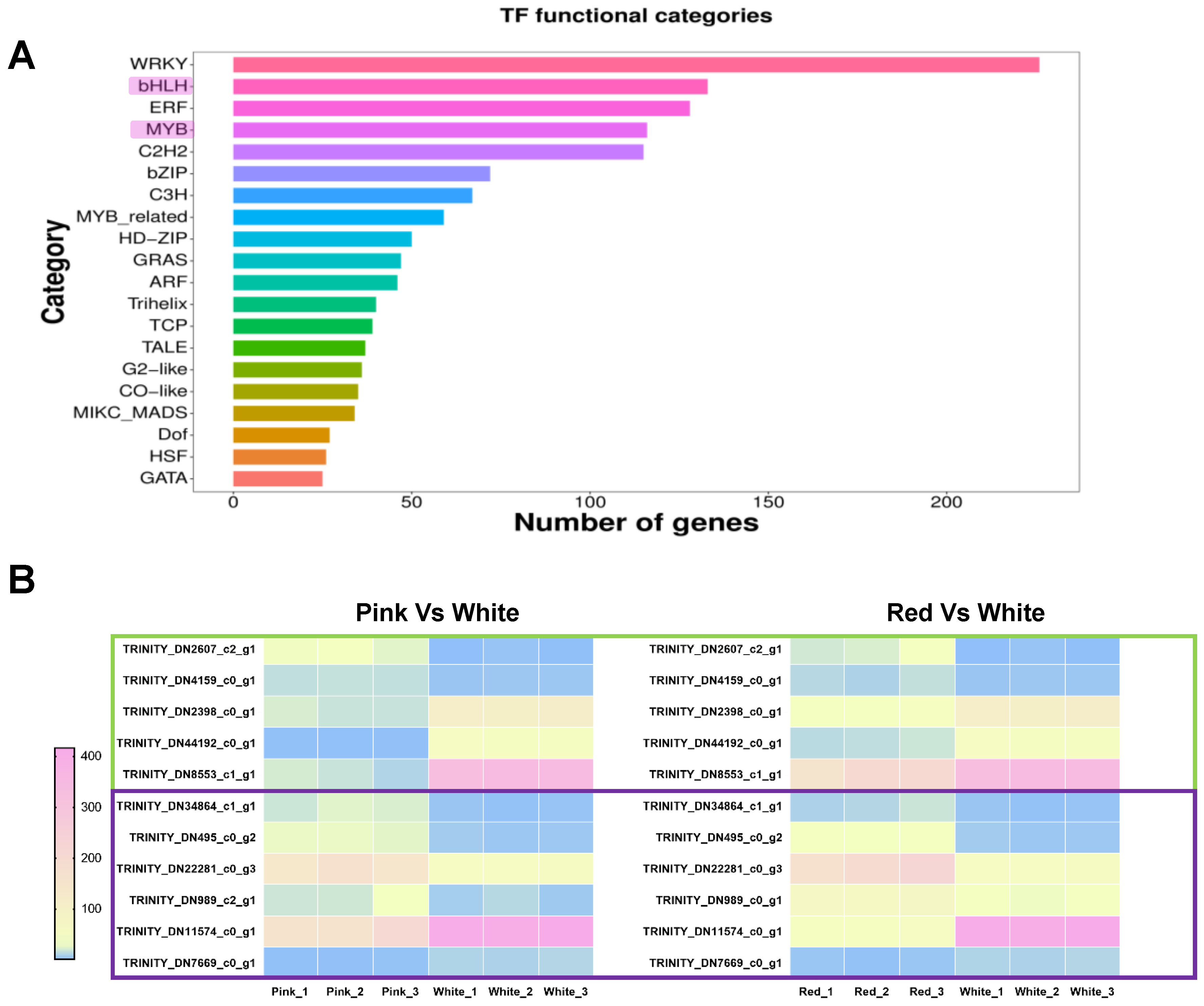
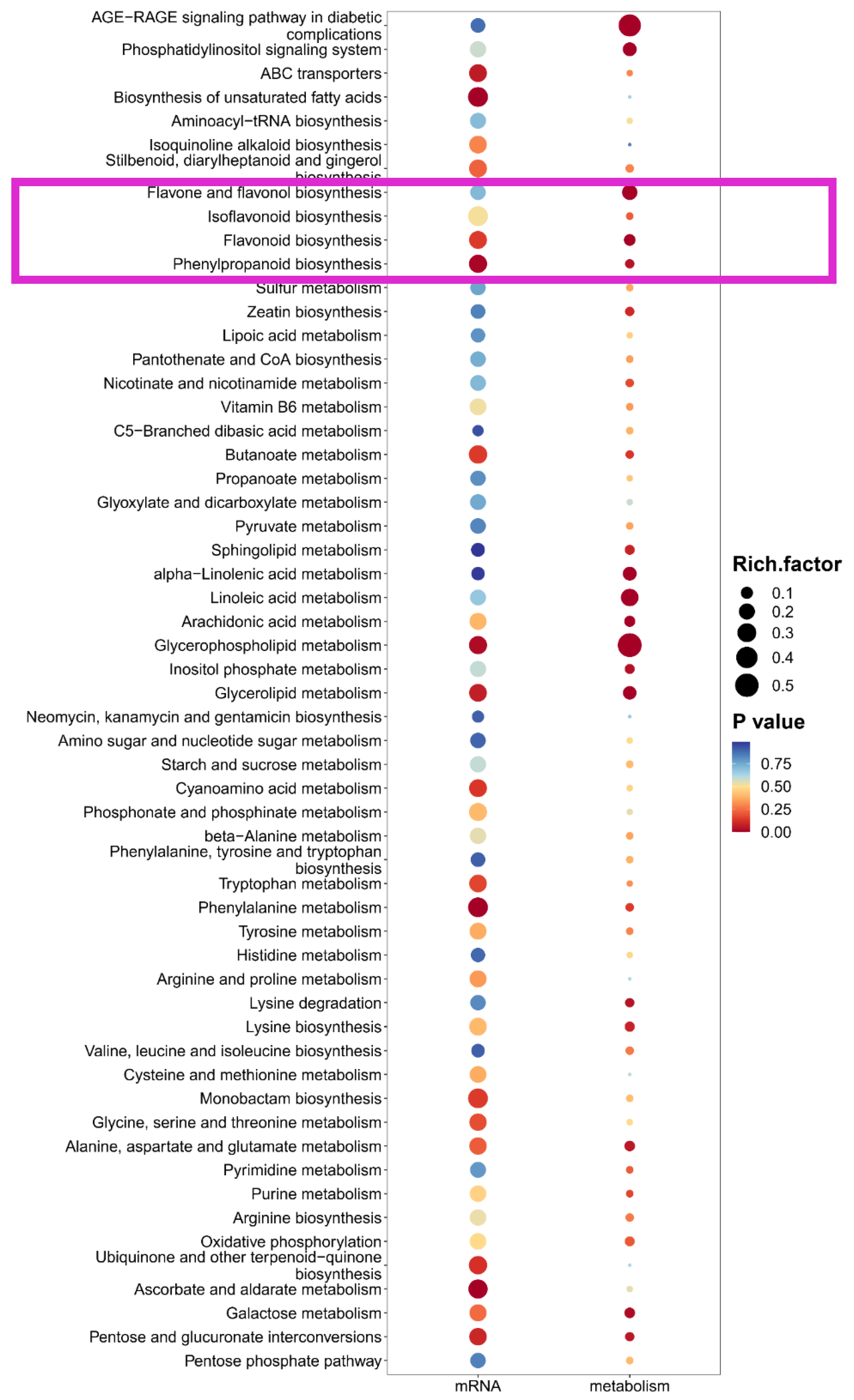
In nature, plants have rich and vivid colors. Flower color can confer economic and ornamental value to ornamental plants, and is one of the target traits for current directed breeding. Therefore, it is essential to understand the molecular regulatory mechanisms behind flower color formation in ornamental plants. However, in Cosmos bipinnata Cav., one of the most important ornamental plants, the metabolic pathways and molecular regulatory mechanisms underlying the formation of different flower colors are not yet clear, which greatly restricts the molecular breeding of flower color varieties. We selected three varieties of Cosmos bipinnata Cav. with white, pink, and red flowers as research materials, and identified significantly different metabolites among them through ultra performance liquid chromatography mass spectrometry (UPLC-MS/MS) analysis and principal component analysis (PCA). Then, Kyoto Encyclopedia of Genes and Genomes (KEGG) enrichment analysis and transcriptome sequencing analysis in different colors flowers were used to reveal that the differential metabolites were enriched in flavonoid metabolic pathways and related structural genes were differentially expressed. Furthermore, we identified differentially expressed members of the MYB and bHLH transcription factor families, which play key roles in regulating the anthocyanin biosynthesis. By constructing a phylogenetic tree and performing a joint analysis of transcriptome and metabolome data, we further elucidated the molecular regulatory network underlying the formation of flower colors in Cosmos bipinnata Cav. This study not only provides a theoretical basis and gene resources for color-oriented breeding and the creation of new color varieties, but also offers new insights into the molecular mechanisms of flower color formation in plants.
Keywords: multi-omics analysis; Cosmos bipinnata Cav.; anthocyanin biosynthesis; molecular mechanism multi-omics analysis; Cosmos bipinnata Cav.; anthocyanin biosynthesis; molecular mechanism