Article

Chlorogenic Acid Protects Intestinal Barrier via Enhancing Antioxidative Capacity and Altering Intestinal Microbiota in Heat-Stressed Meat Rabbits


1
Key Laboratory of Efficient Utilization of Non-Grain Feed Resources (Co-Construction by Ministry and Province), Ministry of Agriculture and Rural Affairs, Department of Animal Science and Technology, Shandong Agricultural University, Panhe Street 7, Tai’an 271017, China
2
Shandong Provincial Key Laboratory of Animal Nutrition and Efficient Feeding, Department of Animal Science and Technology, Shandong Agricultural University, Panhe Street 7, Tai’an 271017, China
*
Author to whom correspondence should be addressed.
Agriculture 2025, 15(24), 2540; https://doi.org/10.3390/agriculture15242540
Submission received: 12 November 2025 / Revised: 30 November 2025 / Accepted: 5 December 2025 / Published: 7 December 2025

Abstract

The effects of chlorogenic acid (CGA) on intestinal histomorphology, barrier integrity, antioxidant parameters, and gut microbiota in heat-stressed rabbits were assessed in this study. One hundred and twenty weaned New Zealand rabbits were assigned to three groups: control (CON) at 25 ± 1 °C, heat stress (HS) at 35 ± 1 °C, and HS with CGA supplementation (HS + CGA) at 35 ± 1 °C. Rabbits in the CON and HS groups were fed a basic diet, while those in the HS + CGA group receive the basic diet added with 800 mg/kg CGA. HS induced intestinal oxidative stress, impaired intestinal morphology and barrier function, and altered the gut microbiota. CGA supplementation mitigated HS-induced increases in serum diamine oxidase and D-lactate levels, and intestinal malondialdehyde content (p < 0.05), and countered HS-induced reductions in intestinal superoxide dismutase activity, villus height/crypt depth ratio, and claudin-1 and ZO-1 mRNA expressions (p < 0.05). In addition, HS decreased the abundances of Akkermansia and uncultured_bacterium_g__Akkermansia and increased the Firmicutes/Bacteroidota ratio and uncultured_bacterium_g__unclassified_o_Clostridia_UCG-014 abundance as well as the abundance of bacterial functions related to animal_parasites_or_symbionts and human_pathogens_all. HS-induced gut microbiota dysbiosis was significantly restored by CGA supplementation. The findings indicated that dietary 800 mg/kg CGA supplementation effectively safeguarded intestinal health in rabbits under high temperatures.

1. Introduction

In recent years, exacerbated global warming has resulted in an increasing frequency of extreme heat events exceeding 40 °C during summer, which poses significant challenges to animal production [1]. Heat stress (HS) is a common issue under ambient temperatures exceeds animals’ tolerance, leading to reduced feed intake, low production quality, metabolism dysbiosis, tissue damage, and even death [2]. Rabbits are susceptible to temperature fluctuations owing to their dense fur, which limits heat dissipation [3]. Their thermoneutral zone ranges from 15 °C to 25 °C, with HS occurring above 30 °C. Exposure to ambient temperatures exceeding 35 °C for prolonged periods impairs rabbits’ ability to maintain normal body temperature, potentially leading to heat-related physiological failure [3]. Beyond its primary role in digestion, the intestine functions as a critical barrier, preventing bacterial translocation and the entry of toxins into the body [4]. Under HS conditions, reactive oxygen species (ROS) are generated excessively in the intestinal tract, which may lead to redox imbalance, intestinal villus atrophy, disruption of intestinal integrity, and dysbiosis of the gut microbiota [5,6]. Therefore, maintaining intestinal health under high ambient temperatures is essential for maintaining physiological functions and production of rabbits.
Chlorogenic acid (CGA), a phenolic compound present in a wide range of plants, including artichoke leaves, Eucommia, honeysuckle flowers, and coffee beans, is known for its diverse beneficial properties such as antioxidant, anti-inflammatory, and anti-bacterial activities [7,8,9]. In addition to its physiological benefits under normal conditions, CGA also exerts protective effects on animal health across multiple species under HS conditions. Shaukat et al. [10] demonstrated that dietary supplementation of 600 mg/kg CGA could alleviate the adverse effects of HS on intestines of broilers by enhancing antioxidant capacity and immune function, thereby supporting the maintenance of intestinal barrier integrity. Chen et al. [9] also showed that young hens receiving a basal diet supplemented with 600 mg/kg CGA ameliorated acute HS injury via improving antioxidant capacity, inhibiting inflammation, and altering cecal microbiota composition. Zhang et al. [11] also found that CGA protected heat-challenged porcine Sertoli cells by reducing ROS and caspase-3 levels and inhibiting the decline in mitochondrial membrane potential and antioxidant enzyme activity in vitro. Our previous studies demonstrated that dietary CGA addition improved intestinal integrity, enhanced digestive function, and modulated gut microbiota in weaned rabbits [7] and also protected rabbits from HS-induced liver injury [12]. However, whether and how CGA can attenuate intestinal injury induced by HS remains unclear in weaned rabbits.
Therefore, this study sought to establish an HS model in rabbits to evaluate the effects of CGA supplementation on key indicators of intestinal health, including barrier function, antioxidant status, and cecal microbiota composition, thereby providing a theoretical basis for CGA in alleviating heat stress in rabbits.

2. Materials and Methods

2.1. Animal Management

This trial was conducted between July and August 2023 at the Research Farm of Shandong Agricultural University, Tai’an, China. One hundred and twenty weaned New Zealand rabbits (60 males and 60 females) with an average body weight (BW) of 1.04 ± 0.11 kg, were randomly allocated into three treatment groups, each with 20 replicates of two rabbits housed per cage. Rabbits in the control group (CON) and HS group were fed a basal diet, while those in the HS + CGA group received a basal diet supplemented with 800 mg/kg CGA (50% purity, provided by Chengdu Hengfeng Tiancheng Technology, Chengdu, China) according to our previous study [7]. The diet formulation (Table 1) followed the Nutritional Requirements of Meat Rabbits (NY/T 4049-2021) issued by the Ministry of Agriculture and Rural Affairs of China, ensuring that the nutritional needs of the rabbits were met. Rabbits in the CON groups were maintained at 25 ± 1 °C with a relative humidity of 34 ± 1.5%, while those in the HS and HS + CGA group were exposed to 35 ± 1 °C with a relative humidity of 44 ± 1.9%. Temperature and humidity were regulated by an automatic environmental control system. The experiment lasted for 28 days, following a 7-day acclimation phase that allowed rabbits to adapt to the housing conditions. Feed and water were supplied without restriction during the entire experiment.

2.2. Sample Collection

At the end of the trial, eight male rabbits with the average BW of each group were selected for sample collection. Blood samples were collected from the ear edge vein, following centrifugation at 3000× g for 10 min at 4 °C to obtain serum samples, and stored at −20 °C for further analysis. Subsequently, cervical dislocation was used to euthanize the rabbits, followed by dissection of the abdominal cavity. Two segments (about 3 cm) of the middle jejunum were quickly isolated and rinsed with ice-cold saline solution. One segment was fixed in 4% paraformaldehyde solution for histological analyses; another segment was divided into several portions. Cecal chyme samples were collected into sterile tubes. Then, jejunal and cecal samples were snap-frozen in liquid nitrogen and then stored at −80 °C for further analysis.

2.3. Serum Permeability Parameters Measurement

Serum diamine oxidase (DAO) content was determined using commercial kits purchased from Nanjing Jiancheng Bioengineering Institute (Nanjing, China), while commercial ELISA kits from Jiangsu Meimian Industrial Co., Ltd. (Yancheng, China) were employed to determine serum endotoxin and D-lactate concentrations.

2.4. Jejunum Antioxidant Indicators Measurement

Commercial assay kits (Nanjing Jiancheng Bioengineering Institute, Nanjing, China) were used to assess oxidative status related parameters in the jejunum, including antioxidant enzymes [superoxide dismutase (SOD), glutathione peroxidase (GSH-Px), and catalase (CAT)], total antioxidant capacity (T-AOC), and malondialdehyde (MDA) content. Jejunal samples were first homogenized in saline at a ratio of 1:9 (w/v), and the supernatant were obtained by centrifuging the homogenates at 12,000× g for 5 min for further analysis. The results were normalized as content of per milligram of protein.

2.5. Histological Analysis of the Jejunum

The procedures were conducted in alignment with our previous study [7]. After being fixed in 4% paraformaldehyde for 24 h, jejunal tissues were trimmed into approximately 5 mm thick sections. The samples were rinsed under running water to remove fixative residues, followed by dehydration through a graded series of ethanol solutions. Sections embedded in paraffin were cut into 5 μm slices and air-dried, followed by hematoxylin and eosin staining. The slides were observed and imaged under an optical microscope (Nikon Corporation, Tokyo, Japan). Following random selection of 12 to 20 intact and well-oriented crypt/villus units per sample, villus height was measured along its longitudinal axis from the tip to the base, and crypt depth was quantified from the base of the villus to the base of the crypt using ImageJ software (version 1.8.0, Bethesda, MD, USA). The villus/crypt ratio was then calculated.

2.6. Intestinal Barrier-Related Gene Determination

To assess intestinal barrier integrity, the expression of intestinal barrier-related genes [occludin, claudin-1, junctional adhesion molecule 2 (JAM2) and zonula occludens-1 (ZO-1)] in the jejunum were determined. Total RNA was extracted according to the manufacturer’s instructions using Trizol (Accurate Biotechnology Co., Ltd., Changsha, China). NanoDrop spectrophotometer (Thermo Fisher Scientific, Waltham, MA, USA) was used to examine RNA purity and concentration, and cDNA was synthesized using the All-One First-Strand Synthesis MasterMix with dsDNase kit (BestEnzymes Biotech Co., Ltd., Lianyungang, China) following the manufacturer’s protocol. Quantitative real-time PCR (qPCR) was performed using SYBR Green qPCR kits (Yeasen Biotechnology Co., Ltd., Shanghai, China) on an ABI 7500 Real-Time PCR System (Applied Biosystems, Foster City, CA, USA). The primer sequences used are listed in Table 2.

2.7. Cecal Microbiota Analysis

Total DNA of rabbits’ chyme microbiota was extracted using the E.Z.N.A.® stool DNA Kit (Omega Bio-tek, Norcross, GA, USA) according to the manufacturer’s instructions. DNA quality was analyzed by electrophoresis on 1% agarose gels, and NanoDrop 2000 from Thermo Fisher Scientific (Waltham, MA, USA) was used to quantify DNA concentration. Specific primers targeting the full-length 16S rRNA gene were used to amplify DNA fragments from rabbit cecal samples [13]. PCR products were purified with a PCR Clean-Up Kit (Yuhua, China), followed by library preparation using the NEXTFLEX® Rapid DNA-Seq Kit (Revvity, Waltham, MA, USA). The qualified libraries were then subjected to paired-end sequencing on an Illumina NextSeq 2000 platform (Shanghai Majorbio Biopharmaceutical Technology Co., Ltd., Shanghai, China). After quality control of the raw reads and gene alignment, sequences were clustered into operational taxonomic units (OTUs) at 97% similarity using UPARSE (v7.1), and taxonomic assignment was performed based on the Silva database (v138). Alpha diversity was calculated with mothur (v1.47.0) [14]. To evaluate beta diversity, Bray–Curtis distances were calculated and visualized through principal coordinates analysis (PCoA). Microbial functional predictions were conducted using PICRUSt2 (v2.2.0) [15]. The graphs were generated using R software (v4.3.2).

2.8. Statistical Analysis

The individual rabbits were considered as the experimental unit. Prior to analysis, the normality of the data was assessed using the Shapiro–Wilk test (W > 0.05). For data that did not conform to a normal distribution, appropriate transformations were applied. One-way analysis of variance (ANOVA) was performed in SAS 9.4 to assess differences among groups. Duncan’s multiple range test was used to compare differences between groups. Data are presented as mean values with corresponding standard errors (SEM) while p values below 0.05 are considered indicative of statistical significance.

3. Results

3.1. Serum Permeability Parameters

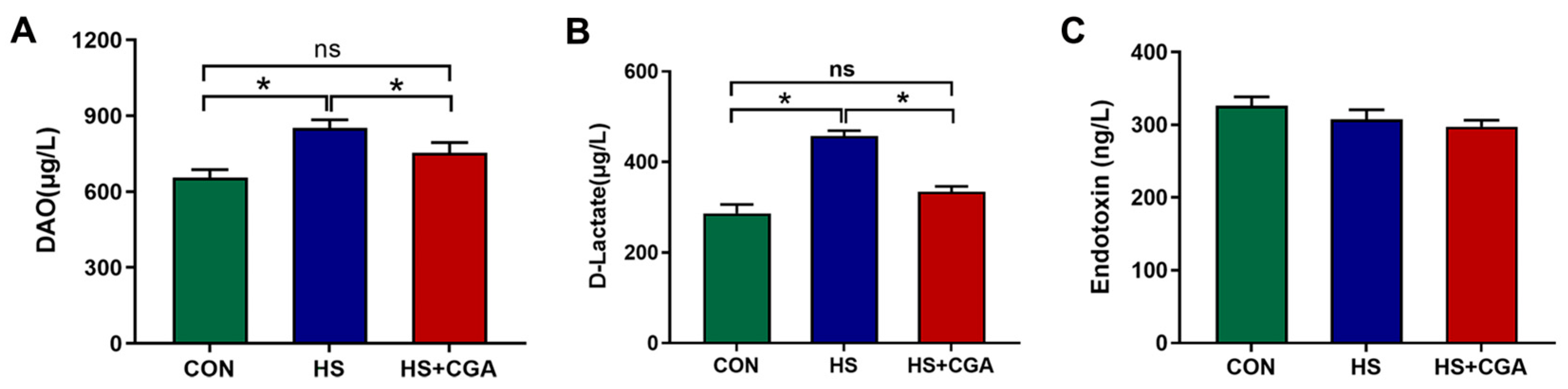
As shown in Figure 1, HS treatment significantly increased serum DAO and D-lactate levels compared with the CON group (p < 0.05). In contrast, HS + CGA significantly decreased DAO and D-lactate levels compared with the HS group (p < 0.05) and did not significantly differ from the CON group (p > 0.05). No significant differences in serum endotoxin were observed among the three groups (p > 0.05).

3.2. Jejunum Antioxidant Status

The effects of CGA on antioxidant status in the jejunum of HS-challenged rabbits are shown in Table 3. HS treatment significantly increased MDA concentration and decreased SOD activity compared with the CON group (p < 0.05). Conversely, CGA supplementation attenuated these adverse effects (p < 0.05). However, no significant differences were observed in the levels of jejunal T-AOC, GSH-Px, and CAT (p > 0.05).

3.3. Intestine Histology

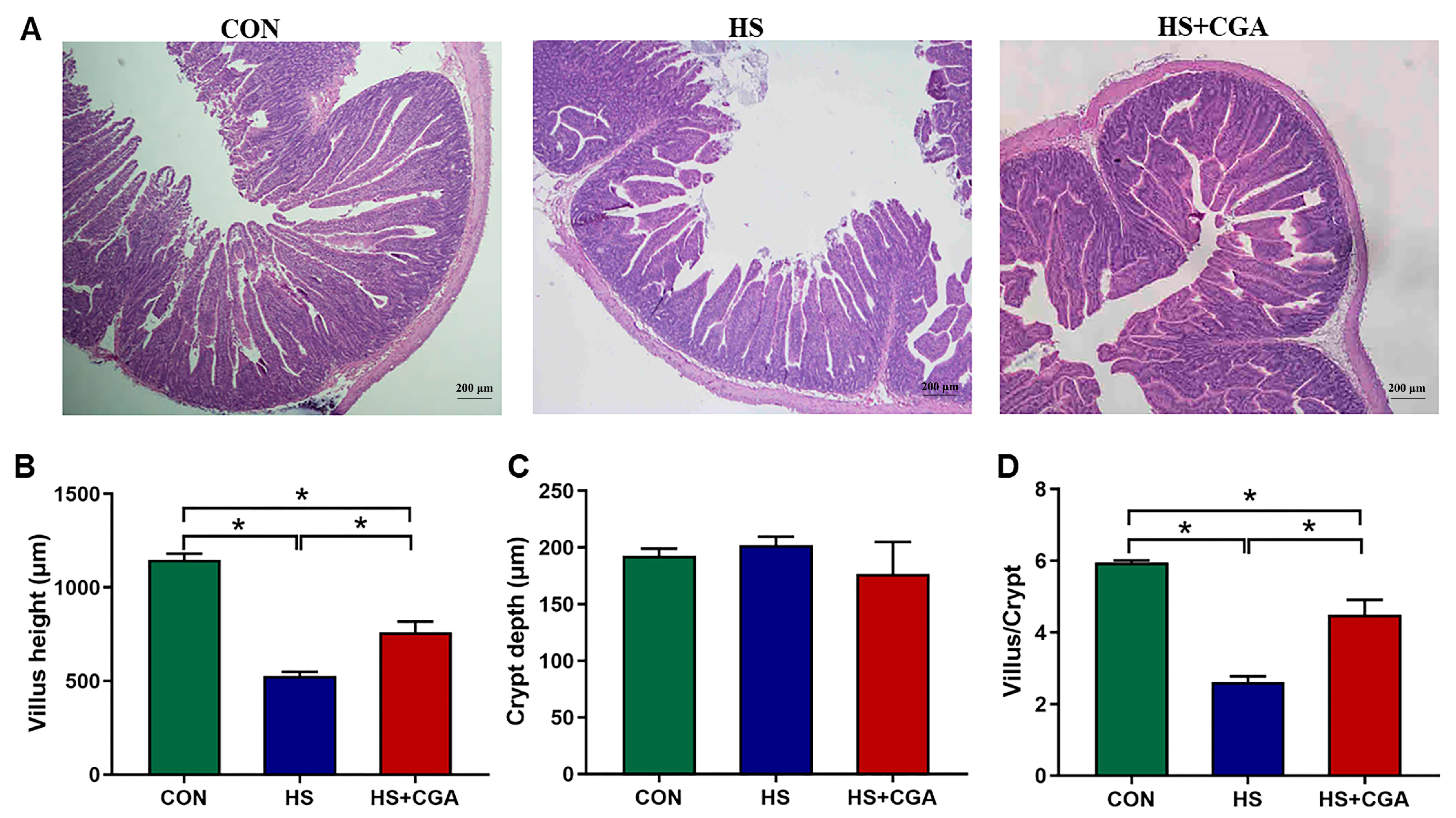
The morphology of the jejunum among the three groups and the corresponding statistical data are shown in Figure 2. Exposure to HS induced significant villi shortening, characterized by blunting and atrophy. Conversely, CGA supplementation alleviated this effect and promoted villus elongation (Figure 1A). Consistent with the morphological observations, the HS group exhibited significantly lower jejunal villus height and villus height/crypt depth ratio than both the CON and HS + CGA groups (p < 0.05). In addition, both parameters in the HS + CGA group remained lower than in the CON group (p < 0.05). No significant differences in crypt depth were observed among the three groups (p > 0.05).

3.4. Intestinal Barrier-Related Gene Expression

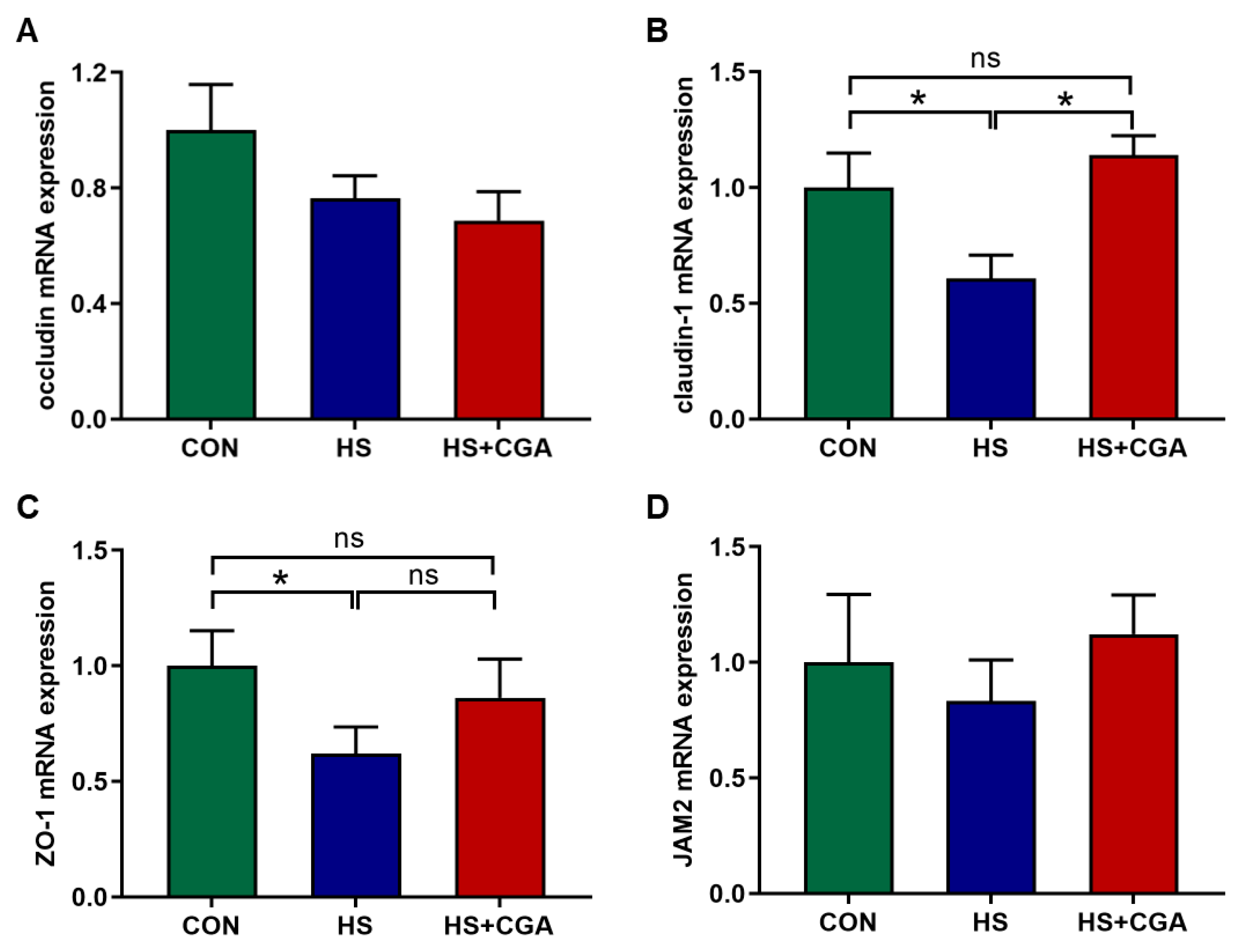
As shown in Figure 3, HS exposure significantly decreased the mRNA levels of claudin-1 (Figure 3B) and ZO-1 (Figure 3C) in rabbit jejunum compared with the CON group (p < 0.05). Supplementation with CGA under HS conditions significantly increased claudin-1 expression (p < 0.05) and alleviated the HS-induced decrease in ZO-1 mRNA expression to the level observed in the CON group (p > 0.05). The expressions of occludin (Figure 3A) and JAM2 (Figure 3D) did not differ significantly between CON and HS + CGA groups (p > 0.05).

3.5. Cecal Microbiota

3.5.1. OTU Composition and Diversity

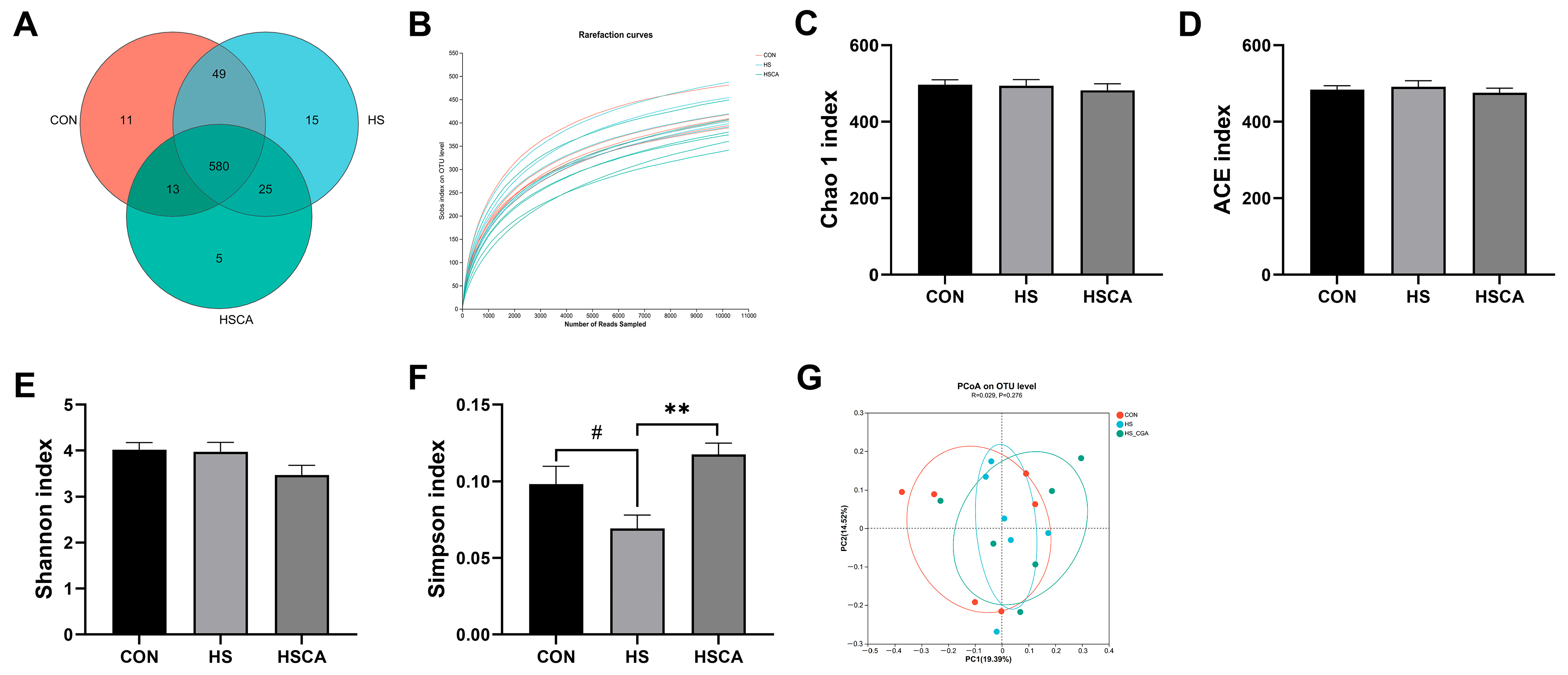
The Venn diagram (Figure 4A) indicates that a total of 580 OTUs were shared by the three treatments, with the CON, HS, and HS + CGA groups having 11, 15, and 5 unique OUTs, respectively. Rarefaction curves for all 18 samples reached a plateau with increasing sequencing depth, suggesting adequate coverage of the microbial community (Figure 4B). However, there were no significant differences (p > 0.05) among the three treatments in terms of the Chao 1 index (Figure 4C), ACE index (Figure 4D), Shannon index (Figure 4E), and Simpson index (Figure 4F). The PCoA plot (Figure 4G) showed that the microbial structures of the three groups clustered closely, without clear separation.

3.5.2. Bacterial Composition at the Phylum Level

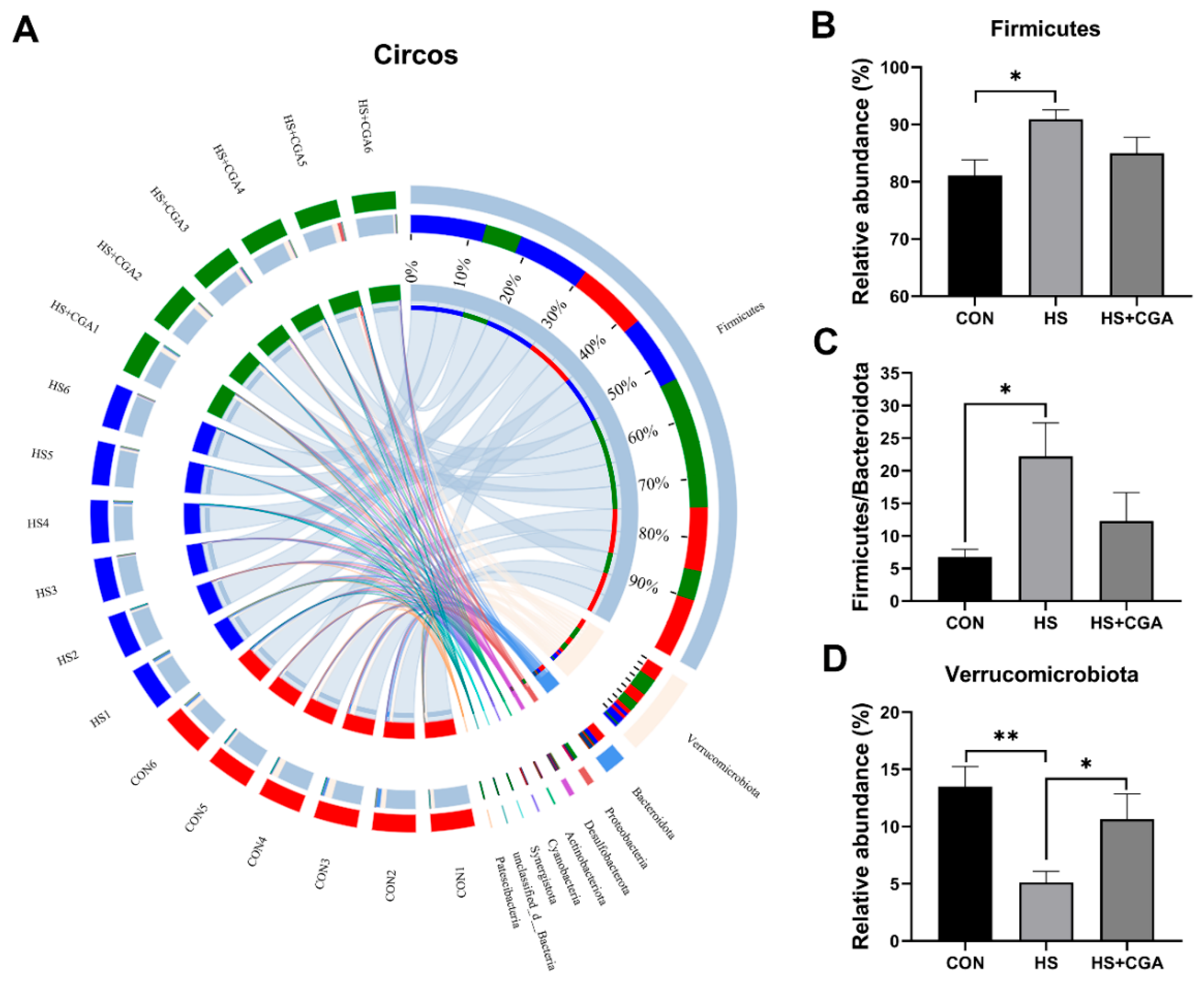
The effects of CGA supplementation in the feed on the relative abundance of the top 10 phyla in the cecal microbiota of HS meat rabbits are shown in Figure 5. As shown in Figure 5A, the dominant phyla of the cecal microbiota in the CON and HS + CGA groups were Firmicutes and Verrucomicrobiota, while the dominant phylum in the HS group was Firmicutes. Additionally, HS significantly increased cecal relative abundance of Firmicutes (Figure 5B) and the Firmicutes/Bacteroidota ratio (Figure 5C), while significantly decreasing the relative abundance of Verrucomicrobiota (Figure 5D) in the cecum compared with the CON group (p < 0.05). CGA supplementation significantly alleviated the decrease in the relative abundance of Verrucomicrobiota caused by HS (p < 0.05), and no significant differences (p > 0.05) were observed in the relative abundances of Firmicutes and Verrucomicrobiota in the cecum between the CON and HS + CGA groups.

3.5.3. Bacterial Composition at the Genus Level

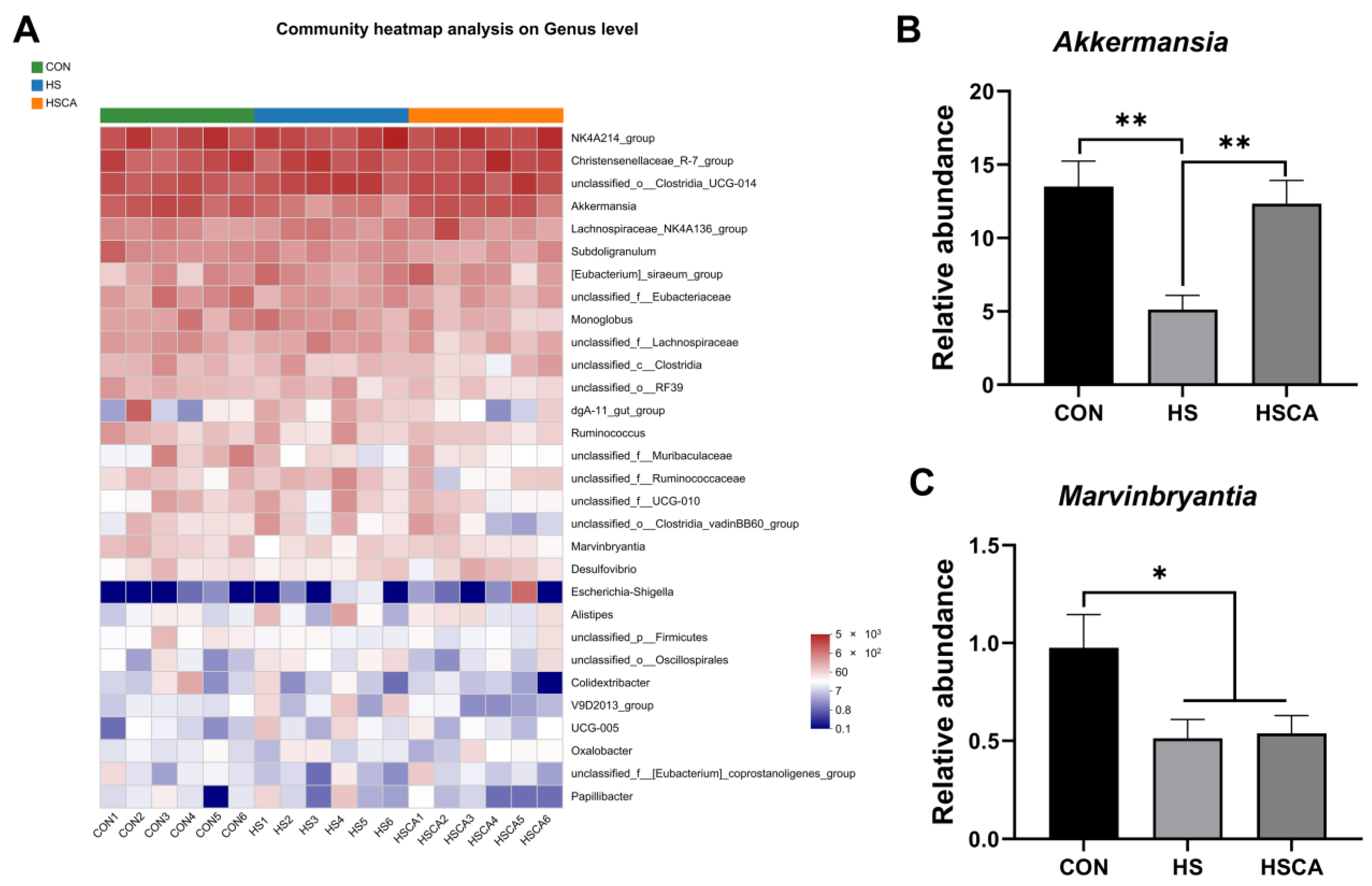
The heatmap exhibits the abundances of the top 35 genera across all samples (Figure 6A). The dominant genera of the cecal microbiota in the CON and HS + CGA groups of meat rabbits were NK4A214_group, Christensenellaceae_R-7_group, Clostridia_UCG-014, and Akkermansia, while the dominant genera in the HS group were NK4A214_group, Christensenellaceae_R-7_group, and Clostridia_UCG-014. Compared to the CON group, HS significantly decreased the relative abundance of Akkermansia (Figure 6B) and Marvinbryantia (Figure 6C) in the cecum of meat rabbits (p < 0.05). However, CGA supplementation significantly increased Akkermansia relative abundance in the cecum of HS-challenged meat rabbits (p < 0.05), and no significant difference was observed in the relative abundance of Akkermansia between CON and HS + CGA groups (p > 0.05).

3.5.4. Bacterial Composition at the Species Level

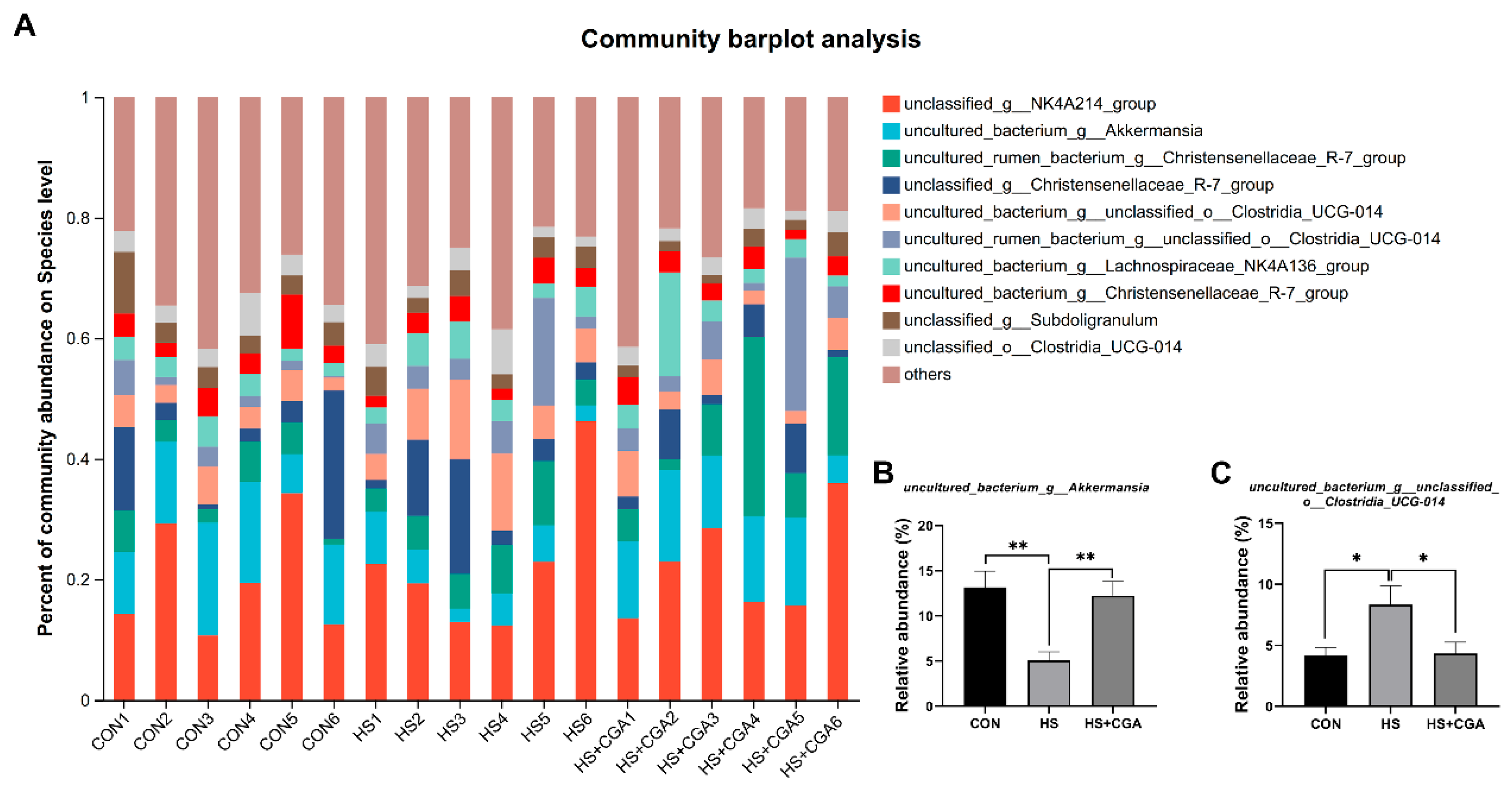
As shown in Figure 7A, the dominant bacterial species in the cecal microbiota of CON group were unclassified_g__NK4A214_group and uncultured_bacterium_g__Akkermansia, while the dominant species in the HS group were unclassified_g__NK4A214_group. In the HS + CGA group, the dominant species were unclassified_g__NK4A214_group, uncultured_bacterium_g__Akkermansia, and uncultured_rumen_bacterium_g__Christensenellaceae_R-7_group. Compared to the CON group, HS significantly decreased the relative abundance of uncultured_bacterium_g__Akkermansia (Figure 7B) in the cecum of rabbits (p < 0.05) and significantly increased the relative abundance of uncultured_bacterium_g__unclassified_o__Clostridia_UCG-014 (Figure 7C). However, CGA supplementation significantly increased the relative abundance of uncultured_bacterium_g__Akkermansia in the cecum of HS-challenged rabbits (p < 0.05) and significantly decreased the relative abundance of uncultured_bacterium_g__unclassified_o__Clostridia_UCG-014 (p < 0.05). No significant differences were observed between CON and HS + CGA groups in the relative abundances of uncultured_bacterium_g__unclassified_o__Clostridia_UCG-014 and uncultured_bacterium_g__Akkermansia (p > 0.05).

3.5.5. Functional Prediction

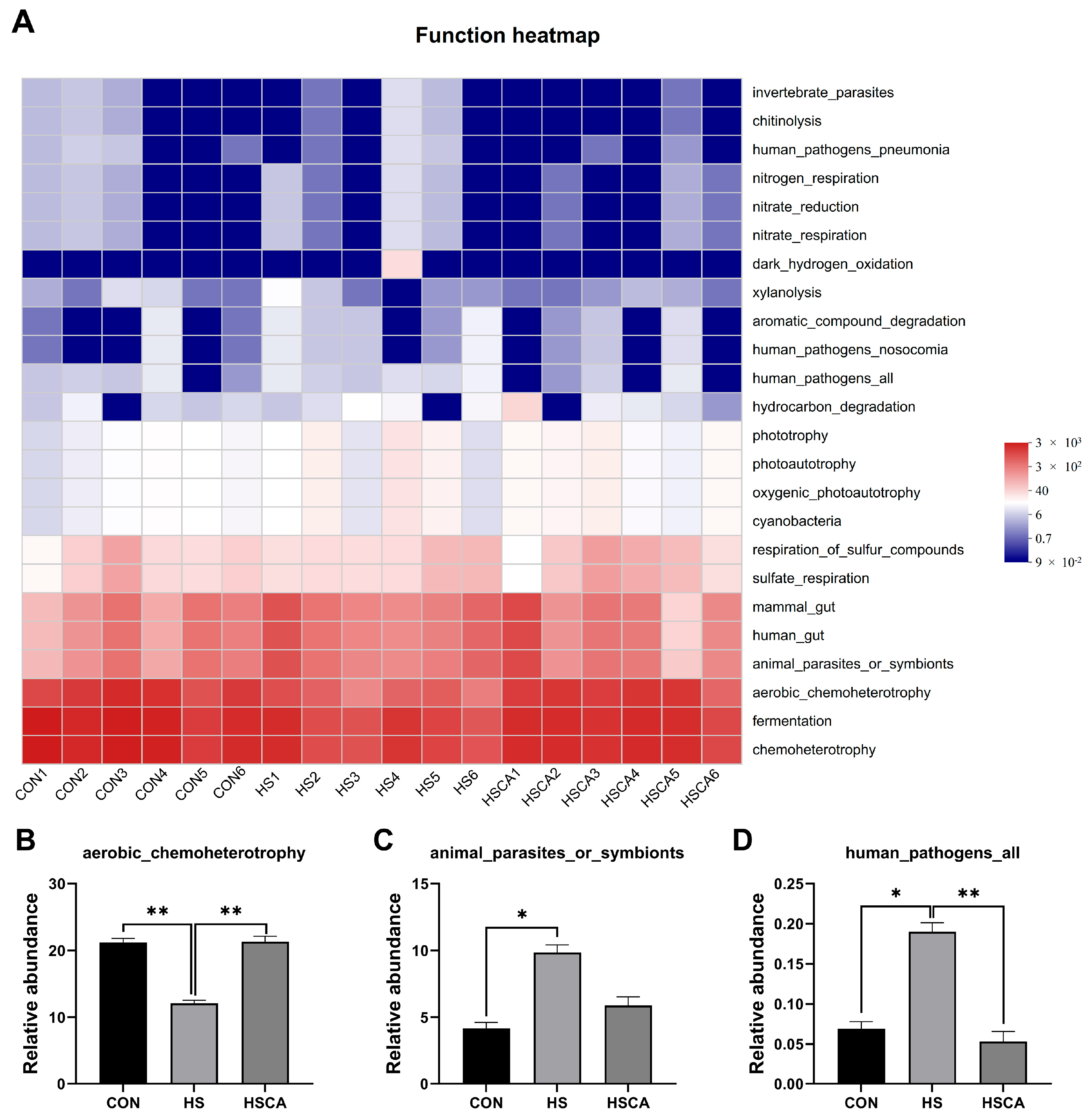
Predicted bacterial functions based on PICRUSt2 analysis are shown in Figure 8. The heatmap displays the top 30 functions of the microbiota in the rabbit cecum across 18 samples (Figure 8A). HS treatment significantly decreased the relative abundance of microbiota involved in aerobic_chemoheterotrophy (Figure 8B) and increased those with animal_parasites_or_symbionts (Figure 8C) and human_pathogens_all (Figure 8D) function compared to the CON group (p < 0.05). CGA supplementation significantly increased the abundance of microbiota involved in aerobic_chemoheterotrophy and decreased the abundance of microbiota involved in human_pathogens_all relative to the HS group (p < 0.05). No significant differences between HS + CGA and CON groups on bacteria functioning aerobic_chemoheterotrophy, animal_parasites_or_symbionts, and human_pathogens_all were observed (p > 0.05).

4. Discussion

HS has been shown to impair intestinal morphology and barrier integrity [16]. Consistently, in the present study, HS decreased villus height and the villus/crypt ratio in New Zealand rabbits. The intestines are a major site for nutrient absorption, where villus height and crypt depth serve as key parameters reflecting intestinal structure and development. Generally, higher villi are associated with a larger absorptive surface, while shallower crypts indicate faster epithelial cell renewal [7]. The ratio of villi to crypt reflects absorption function and mucosal health [17]. Li et al. [18] reported that supplementation with CGA improved villus height and villus/crypt ratio, mitigating intestinal stress caused by high-density farming in broilers. Ruan et al. [19] also demonstrated that CGA alleviated lipopolysaccharide-induced oxidative illum injury of mice by restoring villus structure. In the present study, dietary CGA supplementation partially alleviated HS-induced decreases in villus height and villus/crypt ratio, suggesting a beneficial role of CGA in supporting intestinal development of HS-challenged rabbits. In addition, HS increased serum DAO and D-lactate levels in rabbits. Previous studies showed that exposure to high temperatures significantly increased serum DAO and D-lactate concentrations in pigs and broilers than at thermoneutral conditions [20,21]. DAO is an intracellular enzyme located in the cytoplasm of intestinal epithelial cells, and its release into the bloodstream indicates intestinal mucosal structure damage [20]. D-lactate, a metabolic product of intestinal bacteria, is mainly present in the gastrointestinal lumen but is released into the circulation when gut mucosa is injured [22]. Thus, DAO and D-lactate were regarded as indicators of intestinal barrier integrity. Chen et al. [23] indicated that dietary 1 g/kg CGA addition decreased the serum DAO and D-lactate concentration in the piglets challenged with diquat. Similar results were also found in coccidia-infected broilers by Liu et al. [24]. Our previous research on rabbits reported that CGA reduced serum DAO and D-lactate levels [7], reflecting enhanced integrity of the intestinal epithelium. Consistently, the present results further support that CGA helps sustain epithelial maturity and barrier function under HS treatment. Taken together, dietary CGA may offer protective benefits against HS-induced intestinal mucosal impairment.
Tight junction proteins form the fundamental structure of the intestinal barrier [25]. Claudins form the structural backbone of tight junctions and strengthen intercellular adhesion, whereas ZO-1 functions as a cytoplasmic scaffold protein that anchors transmembrane tight junction proteins to the actin cytoskeleton, thereby stabilizing junctional structure [26,27]. The results of this study showed that HS downregulated claudin-1 and ZO-1 expressions, suggesting that HS damaged the tight junction structure and intestinal barrier. Shaukat et al. [10] reported that dietary 600 mg/kg CGA supplementation could increase ZO-1 and claudin-1 expressions at mRNA and protein levels of in broilers under chronic HS. Moreover, claudin-3, mucins-2, trefoil factor-2 and ZO-1 expressions were also increased by CGA in broilers challenged by Clostridium perfringens type A, enhancing intestinal integrity [28]. Similarly, supplementation with 800 mg/kg CGA upregulated claudin-1 expression compared with the HS group, while ZO-1 expression showed no significant difference between the CON and HS + CGA groups, suggesting a more stable intestinal epithelial structure. Collectively, CGA increased tight junction protein gene expression and maintained intestinal barrier integrity.
Oxidative stress is a key contributor to intestinal barrier dysfunction [29]. During HS, blood is redirected from visceral organs to the periphery, resulting in intestinal hypoxia [29]. Hypoxia, in turn, triggers excessive ROS (including O2) production through disturbing mitochondrial electron transport and other cellular oxidative pathways [30]. Accumulated ROS disrupts redox homeostasis and causes oxidative damage to intestinal cells [31]. MDA is a key product of lipid peroxidation induced by ROS and is widely used to evaluate oxidative stress status and association with cellular injury [10]. SOD, a core antioxidant enzyme, catalyzes the conversion of O2 into oxygen and H2O2, a less reactive molecule, thereby mitigating oxidative cellular and tissue damage [32]. As a bioactive compound, CGA can directly scavenge free radicals, owing to its polyhydroxyl structure, and also modulate antioxidant-related pathways [8]. Previous studies have reported that CGA enhanced SOD and CAT activities while decreasing MDA content, attenuating oxidative stress in broilers under HS [10]. Gu et al. [33] further demonstrated CGA function at the cellular level, showing that 20 μmol/L CGA reduced ROS levels and elevated activities of SOD, CAT, and GSH-Px in macrophages through the CD36/AMPK/PGC-1α signaling pathway. In the present study, CGA supplementation alleviated jejunal oxidative stress induced by HS, as evidenced by increased SOD activity and decreased MDA levels, despite showing no significant effects on T-AOC, GSH-Px, or CAT. Therefore, our results demonstrated that CGA could protect the intestinal barrier from oxidative damage induced by HS in rabbits through enhancing antioxidant enzyme activities.
An intact and mature intestinal barrier prevents pathogen invasion, and its integrity is supported and regulated by the gut microbiota [18]. High-throughput sequencing analysis of cecal microbiota in meat rabbits revealed that neither HS nor CGA addition significantly affected alpha diversity or microbial community structure, which aligns with Liu et al. [34]. It may be attributed to the stability of gut microbiota when exposed to short-time HS. Nevertheless, HS increased Firmicutes level and Firmicutes/Bacteroidota ratio, while decreasing Verrucomicrobiota abundance. Bai et al. [35] also reported similar results in the feces of HS-challenged rabbits. Notably, elevated Firmicutes abundance and Firmicutes/Bacteroidota ratio have been associated with intestinal diseases such as inflammation [14,36], whereas Verrucomicrobiota is recognized as a biomarker of reduced intestinal inflammation [37]. CGA supplementation increased Verrucomicrobiota abundance, and showed no significant differences in Firmicutes and Firmicutes/Bacteroidota ratio compared with the CON group, indicating an anti-inflammatory effect through microbiota regulation. In addition to that, CGA supplementation elevated abundance of Akkermansia at the genus level and uncultured_bacterium_g__Akkermansia at the species level. Consistently, Tian et al. [14] reported that CGA elevated Akkermansia levels in cisplatin-challenged mice. As the only known cultured representatives of Verrucomicrobiota from the gastrointestinal tract, Akkermansia supports degrading intestinal mucus, produces short-chain fatty acids, and upregulates defense-related genes through interaction with other gut microbes through metabolic cross-feeding or nutrient competition [38]. A study on mice infected with Salmonella Typhimurium SL1344 demonstrated that Akkermansia muciniphila functions to attenuate inflammatory responses and promote restoration of the mucosa and epithelium as well as stabilize tight junctions [39]. Additionally, CGA decreased the relative abundance of uncultured_bacterium_g__unclassified_o__Clostridia_UCG-014, as well as bacteria associated with animal_parasites_or_symbionts and human_pathogens_all functions. Members of Clostridia_UCG-014 can have pathogenic and commensal roles [40,41]. A study in broilers showed that CGA increased the relative abundance of beneficial bacteria producing short-chain fatty acids while suppressing inflammation-associated harmful bacteria, indicating the microbiome regulation function of CGA [42]. Although the intestinal tract is predominantly anaerobic, the observed decrease in bacteria capable of aerobic_chemoheterotrophy under HS likely reflected HS-induced intestinal hypoxia [27], whereas CGA might promote the recovery of the microbiota by alleviating HS-induced hypoxia through modulation of mitochondrial dynamics [43]. A previous study in rats showed that CGA could enhance the activity of respiratory complexes, ameliorating intestinal mitochondrial injury induced by H2O2 [44]. Similarly, Wang et al. [45] also demonstrated that CGA promoted mitochondrial fatty acid oxidation and oxidative phosphorylation in mitochondria via improving mitochondrial biogenesis and function. To summarize, dietary CGA enhanced abundances of beneficial bacteria and inhibited the proliferation of potentially harmful microbes, contributing to maintaining a healthy intestinal barrier.

5. Conclusions

In conclusion, HS impaired intestinal morphology and mucosal barrier integrity in rabbits by inducing oxidative stress and altering gut microbiota composition. Dietary supplementation with 800 mg/kg CGA enhanced antioxidant defenses and promoted the proliferation of beneficial bacteria, thereby preserving intestinal barrier function under HS. These findings suggest that CGA is a promising nutritional strategy for maintaining gut health and barrier integrity in rabbits exposed to HS.

Author Contributions

Conceptualization, J.C. and F.L.; Data Curation, J.C. and R.J.; Formal Analysis, J.C. and R.J.; Funding Acquisition, F.L. and L.L.; Investigation, R.J.; Methodology, J.C. and F.L.; Project Administration, J.C. and R.J.; Resources, F.L. and L.L.; Software, R.J.; Supervision, L.L.; Validation, L.L.; Visualization, R.J.; Writing—Original Draft, J.C.; Writing—Review and Editing, L.L. All authors have read and agreed to the published version of the manuscript.

Funding

This research was funded by the Key R&D Program of Shandong Province, China (2025LZGC045), the China Agriculture Research System of MOF and MARA (CARS-43-B-1), and Special Economic Animal Industry Technology System of Shandong Province (SDAIT-21-16).

Institutional Review Board Statement

The animal study protocol was approved by the Experimental Animal Welfare and Ethical Committee of Shandong Agricultural University (protocol code SDAUA-2021-050 on 1 March 2021).

Data Availability Statement

The original data presented in the study are openly available in NCBI Sequence Read Archive (SRA) at https://www.ncbi.nlm.nih.gov/sra/PRJNA1359539 accessed on 12 November 2025, accession number PRJNA1359539.

Conflicts of Interest

The authors declare no conflicts of interest.

Abbreviations

The following abbreviations are used in this manuscript:
CGAChlorogenic acid
HSHeat stress
ROSReactive oxygen species
DAODiamine oxidase
MDAMalondialdehyde
T-AOCTotal antioxidant capacity
GSH-PxGlutathione peroxidase
ZO-1Zonula occludens-1
JAM2Junctional adhesion molecule 2
CATCatalase
SODSuperoxide dismutase

References

  1. Wang, X.; Zhang, R.; Zhang, K.; Shao, L.; Xu, T.; Shi, X.; Li, D.; Zhang, J.; Xia, Y. Development of a Multi-Criteria Decision-Making Approach for Evaluating the Comprehensive Application of Herbaceous Peony at Low Latitudes. Int. J. Mol. Sci. 2022, 23, 14342. [Google Scholar] [CrossRef]
  2. Gonzalez-Rivas, P.A.; Chauhan, S.S.; Ha, M.; Fegan, N.; Dunshea, F.R.; Warner, R.D. Effects of Heat Stress on Animal Physiology, Metabolism, and Meat Quality: A Review. Meat Sci. 2020, 162, 108025. [Google Scholar] [CrossRef] [PubMed]
  3. Liang, Z.-L.; Chen, F.; Park, S.; Balasubramanian, B.; Liu, W.-C. Impacts of Heat Stress on Rabbit Immune Function, Endocrine, Blood Biochemical Changes, Antioxidant Capacity and Production Performance, and the Potential Mitigation Strategies of Nutritional Intervention. Front. Vet. Sci. 2022, 9, 906084. [Google Scholar] [CrossRef] [PubMed]
  4. Halpern, M.D.; Denning, P.W. The Role of Intestinal Epithelial Barrier Function in the Development of NEC. Tissue Barriers 2015, 3, e1000707. [Google Scholar] [CrossRef] [PubMed]
  5. Thanan, R.; Oikawa, S.; Hiraku, Y.; Ohnishi, S.; Ma, N.; Pinlaor, S.; Yongvanit, P.; Kawanishi, S.; Murata, M. Oxidative Stress and Its Significant Roles in Neurodegenerative Diseases and Cancer. Int. J. Mol. Sci. 2015, 16, 193–217. [Google Scholar] [CrossRef]
  6. Khalid, A.R.; Yasoob, T.B.; Zhang, Z.; Yu, D.; Feng, J.; Zhu, X.; Hang, S. Supplementation of Moringa oleifera Leaf Powder Orally Improved Productive Performance by Enhancing the Intestinal Health in Rabbits under Chronic Heat Stress. J. Therm. Biol. 2020, 93, 102680. [Google Scholar] [CrossRef]
  7. Chen, J.; Song, Z.; Ji, R.; Liu, Y.; Zhao, H.; Liu, L.; Li, F. Chlorogenic acid improves growth performance of weaned rabbits via modulating the intestinal epithelium functions and intestinal microbiota. Front. Microbiol. 2022, 13, 1027101. [Google Scholar]
  8. Wang, L.; Pan, X.; Jiang, L.; Chu, Y.; Gao, S.; Jiang, X.; Zhang, Y.; Chen, Y.; Luo, S.; Peng, C. The Biological Activity Mechanism of Chlorogenic Acid and Its Applications in Food Industry: A Review. Front. Nutr. 2022, 9, 943911. [Google Scholar] [CrossRef]
  9. Chen, F.; Zhang, H.; Zhao, N.; Yang, X.; Du, E.; Huang, S.; Guo, W.; Zhang, W.; Wei, J. Effect of Chlorogenic Acid on Intestinal Inflammation, Antioxidant Status, and Microbial Community of Young Hens Challenged with Acute Heat Stress. Anim. Sci. J. 2021, 92, e13619. [Google Scholar] [CrossRef]
  10. Shaukat, A.; Hanif, S.; Shukat, R.; Aleem, M.T.; Shaukat, I.; Almutairi, M.H.; Almutairi, B.O.; Hassan, M.; Rajput, S.A.; Huang, S.; et al. Immunological Role of Chlorogenic Acid in Broiler Intestinal Health under Chronic Heat Stress. Poult. Sci. 2025, 104, 105300. [Google Scholar] [CrossRef]
  11. Zhang, S.-X.; Wang, D.-L.; Qi, J.-J.; Yang, Y.-W.; Sun, H.; Sun, B.-X.; Liang, S. Chlorogenic Acid Ameliorates the Heat Stress-Induced Impairment of Porcine Sertoli Cells by Suppressing Oxidative Stress and Apoptosis. Theriogenology 2024, 214, 148–156. [Google Scholar] [CrossRef]
  12. Ji, R.; Chen, J.; Xu, J.; Zhang, L.; Liu, L.; Li, F. Protective Effect of Chlorogenic Acid on Liver Injury in Heat-stressed Meat Rabbits. J. Anim. Physiol. Anim. Nutr. 2024, 108, 1203–1213. [Google Scholar] [CrossRef]
  13. Wang, J.; Xia, S.; Fan, H.; Shao, J.; Tang, T.; Yang, L.; Sun, W.; Jia, X.; Chen, S.; Lai, S. Microbiomics Revealed the Disturbance of Intestinal Balance in Rabbits with Diarrhea Caused by Stopping the Use of an Antibiotic Diet. Microorganisms 2022, 10, 841. [Google Scholar] [CrossRef]
  14. Tian, R.; Ding, Y.; Zhang, S.; Li, M.; Wang, Y.; Wu, Q.; Ding, H.; Song, C.; Shi, C.; Xue, M. Chlorogenic Acid Alleviates the Intestinal Barrier Dysfunction and Intestinal Microbiota Disorder Induced by Cisplatin. Front. Microbiol. 2025, 16, 1508891. [Google Scholar] [CrossRef]
  15. Douglas, G.M.; Maffei, V.J.; Zaneveld, J.R.; Yurgel, S.N.; Brown, J.R.; Taylor, C.M.; Huttenhower, C.; Langille, M.G.I. PICRUSt2 for Prediction of Metagenome Functions. Nat. Biotechnol. 2020, 38, 685–688. [Google Scholar] [CrossRef]
  16. Attia, Y.A.; Hassan, R.A.; Addeo, N.F.; Bovera, F.; Alhotan, R.A.; Al-qurashi, A.D.; Al-Baadani, H.H.; Al-Banoby, M.A.; Khafaga, A.F.; Eisenreich, W.; et al. Effects of Spirulina Platensis and/or Allium Sativum on Antioxidant Status, Immune Response, Gut Morphology, and Intestinal Lactobacilli and Coliforms of Heat-Stressed Broiler Chicken. Vet. Sci. 2023, 10, 678. [Google Scholar] [CrossRef] [PubMed]
  17. Tang, X.; Xiong, K.; Fang, R.; Li, M. Weaning Stress and Intestinal Health of Piglets: A Review. Front. Immunol. 2022, 13, 1042778. [Google Scholar] [CrossRef] [PubMed]
  18. Li, Y.-Q.; Zhang, Y.; Bai, D.-Y.; Liu, Y.-H.; He, X.-L.; Ito, K.; Liu, K.-X.; Tan, H.-Q.; Zhen, W.-R.; Zhang, C.; et al. Effects of Dietary Chlorogenic Acid on Ileal Intestinal Morphology, Barrier Function, Immune Factors and Gut Microbiota of Broilers under High Stocking Density Stress. Front. Physiol. 2023, 14, 1169375. [Google Scholar] [CrossRef] [PubMed]
  19. Ruan, Z.; Liu, S.; Zhou, Y.; Mi, S.; Liu, G.; Wu, X.; Yao, K.; Assaad, H.; Deng, Z.; Hou, Y.; et al. Chlorogenic Acid Decreases Intestinal Permeability and Increases Expression of Intestinal Tight Junction Proteins in Weaned Rats Challenged with LPS. PLoS ONE 2014, 9, e97815. [Google Scholar] [CrossRef]
  20. Xia, B.; Wu, W.; Fang, W.; Wen, X.; Xie, J.; Zhang, H. Heat Stress-Induced Mucosal Barrier Dysfunction Is Potentially Associated with Gut Microbiota Dysbiosis in Pigs. Anim. Nutr. 2022, 8, 289–299. [Google Scholar] [CrossRef]
  21. Lan, R.; Li, Y.; Chang, Q.; Zhao, Z. Dietary Chitosan Oligosaccharides Alleviate Heat Stress–Induced Intestinal Oxidative Stress and Inflammatory Response in Yellow-Feather Broilers. Poult. Sci. 2020, 99, 6745–6752. [Google Scholar] [CrossRef]
  22. Cai, J.; Chen, H.; Weng, M.; Jiang, S.; Gao, J. Diagnostic and Clinical Significance of Serum Levels of D-Lactate and Diamine Oxidase in Patients with Crohn’s Disease. Gastroenterol. Res. Pract. 2019, 2019, 8536952. [Google Scholar] [CrossRef]
  23. Chen, J.; Chen, D.; Yu, B.; Luo, Y.; Zheng, P.; Mao, X.; Yu, J.; Luo, J.; Huang, Z.; Yan, H.; et al. Chlorogenic Acid Attenuates Oxidative Stress-Induced Intestinal Mucosa Disruption in Weaned Pigs. Front. Vet. Sci. 2022, 9, 806253. [Google Scholar] [CrossRef]
  24. Liu, H.; Chen, P.; Lv, X.; Zhou, Y.; Li, X.; Ma, S.; Zhao, J. Effects of Chlorogenic Acid on Performance, Anticoccidial Indicators, Immunity, Antioxidant Status, and Intestinal Barrier Function in Coccidia-Infected Broilers. Animals 2022, 12, 963. [Google Scholar] [CrossRef] [PubMed]
  25. Ge, C.; Luo, X.; Wu, L.; Lv, Y.; Hu, Z.; Yu, D.; Liu, B. Plant Essential Oils Improve Growth Performance by Increasing Antioxidative Capacity, Enhancing Intestinal Barrier Function, and Modulating Gut Microbiota in Muscovy Ducks. Poult. Sci. 2023, 102, 102813. [Google Scholar] [CrossRef]
  26. Zolotova, N.; Silina, M.; Dzhalilova, D.; Tsvetkov, I.; Fokichev, N.; Makarova, O. Influence of Microplastics on Manifestations of Experimental Chronic Colitis. Toxics 2025, 13, 701. [Google Scholar] [CrossRef]
  27. Ju, W.; Lu, W.; Ding, L.; Bao, Y.; Hong, F.; Chen, Y.; Gao, H.; Xu, X.; Wang, G.; Wang, W.; et al. PEDF Promotes the Repair of Bone Marrow Endothelial Cell Injury and Accelerates Hematopoietic Reconstruction after Bone Marrow Transplantation. J. Biomed. Sci. 2020, 27, 91. [Google Scholar] [CrossRef]
  28. Zhang, X.; Zhao, Q.; Ci, X.; Chen, S.; Xie, Z.; Li, H.; Zhang, H.; Chen, F.; Xie, Q. Evaluation of the Efficacy of Chlorogenic Acid in Reducing Small Intestine Injury, Oxidative Stress, and Inflammation in Chickens Challenged with Clostridium perfringens Type, A. Poult. Sci. 2020, 99, 6606–6618. [Google Scholar] [CrossRef] [PubMed]
  29. Lian, P.; Braber, S.; Garssen, J.; Wichers, H.J.; Folkerts, G.; Fink-Gremmels, J.; Varasteh, S. Beyond Heat Stress: Intestinal Integrity Disruption and Mechanism-Based Intervention Strategies. Nutrients 2020, 12, 734. [Google Scholar] [CrossRef] [PubMed]
  30. Gaur, P.; Prasad, S.; Kumar, B.; Sharma, S.K.; Vats, P. High-Altitude Hypoxia Induced Reactive Oxygen Species Generation, Signaling, and Mitigation Approaches. Int. J. Biometeorol. 2021, 65, 601–615. [Google Scholar] [CrossRef]
  31. Li, L.; Tan, H.; Zou, Z.; Gong, J.; Zhou, J.; Peng, N.; Su, L.; Maegele, M.; Cai, D.; Gu, Z. Preventing Necroptosis by Scavenging ROS Production Alleviates Heat Stress-Induced Intestinal Injury. Int. J. Hyperth. 2020, 37, 517–530. [Google Scholar] [CrossRef]
  32. Anwar, S.; Sarwar, T.; Khan, A.A.; Rahmani, A.H. Therapeutic Applications and Mechanisms of Superoxide Dismutase (SOD) in Different Pathogenesis. Biomolecules 2025, 15, 1130. [Google Scholar] [CrossRef]
  33. Gu, T.; Zhang, Z.; Liu, J.; Chen, L.; Tian, Y.; Xu, W.; Zeng, T.; Wu, W.; Lu, L. Chlorogenic Acid Alleviates LPS-Induced Inflammation and Oxidative Stress by Modulating CD36/AMPK/PGC-1α in RAW264.7 Macrophages. Int. J. Mol. Sci. 2023, 24, 13516. [Google Scholar] [CrossRef]
  34. Liu, W.-C.; Huang, M.-Y.; Balasubramanian, B.; Jha, R. Heat Stress Affects Jejunal Immunity of Yellow-Feathered Broilers and Is Potentially Mediated by the Microbiome. Front. Physiol. 2022, 13, 913696. [Google Scholar] [CrossRef] [PubMed]
  35. Bai, X.; Shi, Y.; Tang, L.; Chen, L.; Fan, H.; Wang, H.; Wang, J.; Jia, X.; Chen, S.; Lai, S. Heat Stress Affects Faecal Microbial and Metabolic Alterations of Rabbits. Front. Microbiol. 2022, 12, 817615. [Google Scholar] [CrossRef] [PubMed]
  36. Li, H.; Wei, Y.; Li, X.; Zhang, S.; Zhang, R.; Li, J.; Ma, B.; Shao, S.; Lv, Z.; Ruan, H.; et al. Diosmetin Has Therapeutic Efficacy in Colitis Regulating Gut Microbiota, Inflammation, and Oxidative Stress via the Circ-Sirt1/Sirt1 Axis. Acta Pharmacol. Sin. 2022, 43, 919–932. [Google Scholar] [CrossRef]
  37. Liu, J.; Fang, H.; Hong, N.; Lv, C.; Zhu, Q.; Feng, Y.; Wang, B.; Tian, J.; Yu, Y. Gut Microbiome and Metabonomic Profile Predict Early Remission to Anti-Integrin Therapy in Patients with Moderate to Severe Ulcerative Colitis. Microbiol. Spectr. 2023, 11, e01457-23. [Google Scholar] [CrossRef]
  38. Hughes, E.R.; Panzetta, M.E.; Sharma, A.; Valdivia, R.H. The Biology of Akkermansia. Annu. Rev. Microbiol. 2025, 79, 287–310. [Google Scholar] [CrossRef]
  39. Liu, J.; Liu, H.; Liu, H.; Teng, Y.; Qin, N.; Ren, X.; Xia, X. Live and Pasteurized Akkermansia muciniphila Decrease Susceptibility to Salmonella Typhimurium Infection in Mice. J. Adv. Res. 2023, 52, 89–102. [Google Scholar] [CrossRef]
  40. Ameer, A.; Cheng, Y.; Saleem, F.; Uzma; McKenna, A.; Richmond, A.; Gundogdu, O.; Sloan, W.T.; Javed, S.; Ijaz, U.Z. Temporal Stability and Community Assembly Mechanisms in Healthy Broiler Cecum. Front. Microbiol. 2023, 14, 1197838. [Google Scholar] [CrossRef] [PubMed]
  41. Kim, M.J.; Kim, J.M.; Lee, H.L.; Heo, H.J. Ethyl Acetate Fraction from Eucommia Ulmoides Ameliorates Particulate Matter (PM)2.5-Induced Intestinal Damage by Restoring Barrier Integrity and Regulating Inflammatory Responses. J. Microbiol. Biotechnol. 2025, 35, e2504002. [Google Scholar] [CrossRef]
  42. Hu, X.; Zhen, W.; Bai, D.; Zhong, J.; Zhang, R.; Zhang, H.; Zhang, Y.; Ito, K.; Zhang, B.; Ma, Y. Effects of Dietary Chlorogenic Acid on Cecal Microbiota and Metabolites in Broilers during Lipopolysaccharide-Induced Immune Stress. Front. Microbiol. 2024, 15, 1347053. [Google Scholar] [CrossRef]
  43. Cheng, K.; Yao, J.; Song, Z.; Zhao, H.; Zhao, Y.; Huang, J.; Wang, J.; Zhang, Y. Chlorogenic Acid Alleviates Intrauterine Growth Retardation–Induced Intestinal Damage in Piglets. Nutrition 2025, 138, 112810. [Google Scholar] [CrossRef] [PubMed]
  44. Zhou, Y.; Zhou, L.; Ruan, Z.; Mi, S.; Jiang, M.; Li, X.; Wu, X.; Deng, Z.; Yin, Y. Chlorogenic acid ameliorates intestinal mitochondrial injury by increasing antioxidant effects and activity of respiratory complexes. Biosci. Biotech. Bioch. 2016, 80, 962–971. [Google Scholar] [CrossRef] [PubMed]
  45. Wang, Y.; Sun, J.; Xue, L.; Sun, Y.; Zhang, K.; Fan, M.; Qian, H.; Li, Y.; Wang, L. Chlorogenic Acid Improves High-Fat Diet-Induced Skeletal Muscle Metabolic Disorders by Regulating Mitochondrial Function and Lactate Metabolism. J. Agric. Food Chem. 2025, 73, 10347–10357. [Google Scholar] [CrossRef] [PubMed]
Figure 1. Effects of CGA on serum parameters in heat stress-challenged rabbits. (A) Diamine oxidase (DAO); (B) D-lactate; (C) endotoxin. CON, thermoneutral temperature (25 ± 1 °C) + basic diet; HS, high ambient (35 ± 1 °C) + basic diet; HS + CGA, high ambient (35 ± 1 °C) + basic diet + 800 mg/kg CGA. Values are presented with means ± SEM. An asterisk (*) indicates a statistically significant difference (p < 0.05) between the indicated groups, while ‘ns’ denotes non-significant differences (p > 0.05). n = 8.
Agriculture 15 02540 g001
Figure 2. Effects of CGA on jejunum mucosa histology in heat stress-challenged rabbits. (A) Representative hematoxylin and eosin-stained rabbit jejunum sections observed under a light microscope; (B) villus height; (C) crypt depth; (D) villus height/crypt ratio. CON, thermoneutral temperature (25 ± 1 °C) + basic diet; HS, high ambient (35 ± 1 °C) + basic diet; HS + CGA, high ambient (35 ± 1 °C) + basic diet + 800 mg/kg CGA. Values are presented with means ± SEM. An asterisk (*) indicates a statistically significant difference (p < 0.05) between the indicated group. n = 8.
Agriculture 15 02540 g002
Figure 3. Effects of CGA supplementation on jejunal barrier-related gene levels in heat stress-challenged rabbits. Relative mRNA levels of occludin (A), claudin-1 (B), zonula occludens-1 (ZO-1; (C)), and junctional adhesion molecule 2 (JAM2; (D)). CON, thermoneutral temperature (25 ± 1 °C) + basic diet; HS, high ambient (35 ± 1 °C) + basic diet; HS + CGA, high ambient (35 ± 1 °C) + basic diet + 800 mg/kg CGA. Values are presented with means ± SEM. An asterisk (*) indicates a statistically significant difference (p < 0.05) between the indicated groups, while ‘ns’ denotes non-significant differences (p > 0.05). n = 8.
Agriculture 15 02540 g003
Figure 4. Cecal microbial diversity in cecum of rabbits. (A) Venn diagram; (B) rarefaction curve at OUT level; alpha diversity indices, including Chao 1 index (C), ACE index (D), Shannon index (E), and Simpson index (F). (G) Principal coordinates analysis (PCoA) plot showing gut microbial community structure based on Bray–Curtis dissimilarity. R and p values shown in the figure indicate the significance of differences between groups with 0 < R < 1 and p < 0.05. CON, thermoneutral temperature (25 ± 1 °C) + basic diet, HS, high ambient (35 ± 1 °C) + basic diet; HS + CGA, high ambient (35 ± 1 °C) + basic diet + 800 mg/kg CGA. Values are presented with means ± SEM. Double asterisks (**) indicate significant difference between two groups (p < 0.01), while ‘#’ denotes significant trend. n = 6.
Agriculture 15 02540 g004
Figure 5. Effects of CGA on phylum-level composition and differences in cecal microbiota in rabbits. (A) Circos plot showing the top 10 phyla in the cecal microbiota; (B) relative abundance of Firmicutes; (C) Firmicutes to Bacteroidota ratio; (D) relative abundance of Verrumicrobiota. CON, thermoneutral temperature (25 ± 1 °C) + basic diet; HS, high ambient (35 ± 1 °C) + basic diet; HS + CGA, high ambient (35 ± 1 °C) + basic diet + 800 mg/kg CGA. Values are presented with means ± SEM. An asterisk (*) indicates a significant difference between two groups (p < 0.05), while double asterisks (**) indicate differences at p < 0.01. n = 6.
Agriculture 15 02540 g005
Figure 6. Effects of CGA on genus-level composition and differences in cecal microbiota in rabbits. (A) Heatmap showing the top 30 genera in the cecal microbiota; (B) relative abundance of Akkermansia; (C) relative abundance of Marbinbryantia. CON, thermoneutral temperature (25 ± 1 °C) + basic diet; HS, high ambient (35 ± 1 °C) + basic diet; HS + CGA, high ambient (35 ± 1 °C) + basic diet + 800 mg/kg CGA. Values are presented with means ± SEM. An asterisk (*) indicates a significant difference between two groups (p < 0.05), while double asterisks (**) indicate differences at p < 0.01. n = 6.
Agriculture 15 02540 g006
Figure 7. Effects of CGA on species-level composition and differences in cecal microbiota in rabbits. (A) Bar plot showing the top 10 species in the cecal microbiota; (B) relative abundance of uncultured_bacterium_g__Akkermansia; (C) relative abundance of uncultured_bacterium_g__unclassified_o__Clostridia_UCG-014. CON, thermoneutral temperature (25 ± 1 °C) + basic diet; HS, high ambient (35 ± 1 °C) + basic diet; HS + CGA, high ambient (35 ± 1 °C) + basic diet + 800 mg/kg CGA. Values are presented with means ± SEM. An asterisk (*) indicates a significant difference between two groups (p < 0.05), while double asterisks (**) indicate differences at p < 0.01. n = 6.
Agriculture 15 02540 g007
Figure 8. Functional prediction of cecal microbiota using PICRUSt2. (A) Heatmap displaying the top 10 predicted bacterial functions; (B) relative abundance of bacteria functioning aerobic_chemoheterotrophy; (C) relative abundance of bacteria functioning animal_parasites_or_symbionts; (D) relative abundance of bacteria functioning human_pathogens_all. CON, rabbits housed at 25 ± 1 °C and fed a basal diet; HS, rabbits housed at 35 ± 1 °C and fed a basal diet; HS + CGA, rabbits housed at 35 ± 1 °C and fed a basal diet supplemented with 800 mg/kg CGA. Values are presented with means ± SEM. An asterisk (*) indicates a significant difference between two groups (p < 0.05), while double asterisks (**) indicate differences at p < 0.01. n = 6.
Agriculture 15 02540 g008
Table 1. Composition and analysis of the basal diet.
ItemsContent (%)
Ingredients
Corn17.00
Peanut seedling17.00
Alfalfa meal25.40
Beanstalk5.00
Soybean oil0.60
Soybean meal17.00
Wheat bran14.00
Premix 14.00
Total100
Calculated nutrient levels
Digestive energy (MJ/kg)9.73
Crude protein15.69
Ether extract3.19
Crude fiber17.12
1 Premix provides per kg of the basal diet: Vitamin A, 6000 IU, Vitamin D3, 2000 IU, Vitamin E, 22.5 mg, Vitamin K, 15 mg, Vitamin B1, 15 mg, Vitamin B2, 45 mg, Vitamin B3, 375 mg, Vitamin B5, 375 mg, Vitamin B6, 15 mg, Vitamin B7, 1.5 mg, Vitamin B12, 0.15 mg, choline, 625 mg, iron, 100 mg, selenium, 0.05 mg, iodine, 0.6 mg, zinc, 50 mg, methionine, 1500 mg, lysine, 1500 mg.
Table 2. Primer of intestinal barrier related genes.
GeneGenebankPrimers Sequences (5′-3′)Length (bp)
OccludinXM_008262318.3F:CTTGCCTGGGACAGAACCTA
R:AGCCATAACCGTAGCCGTAA
121
Claudin-1NM_001089316.1F:GGAGCAAAAGATGCGGATGG
R:AATTGACAGGGGTCAAAGGGT
93
ZO-1XM_008269782.1F:GACTGATGCGAAGACGTTGA
R:GCAGAATGGATGCTGTCAGA
117
JAM-2XM_051819205.1F:TTCCTGTGAAGCCCGAAATTCTGTC
R:CTGAGCATAGCACACGCCAAGG
151
GAPDHNM_001082253.1F:TGCCACCCACTCCTCTACCTTCG
R:CCGGTGGTTTGAGGGCTCTTACT
163
Table 3. Effects of CGA on jejunum antioxidant indicators in HS-challenged rabbits.
ItemsCONHSHS + CGASEMp Values
MDA (nmol/mgprot)0.30 b0.65 a0.42 b0.040.016
T-AOC (U/mgprot)0.190.150.190.010.321
GSH-Px (U/mgprot)41.9537.8534.861.610.190
CAT (U/mgprot)18.6323.4624.111.450.333
SOD (U/mgprot)2.61 a1.30 b2.80 a0.160.001
CON: Thermoneutral temperature (25 ± 1 °C) + basic diet; HS: high ambient (35 ± 1 °C) + basic diet; HS + CGA: high ambient (35 ± 1 °C) + basic diet + 800 mg/kg CGA. a,b Means in the same line marked with different superscript letters differ significantly (p < 0.05). n = 8.
Disclaimer/Publisher’s Note: The statements, opinions and data contained in all publications are solely those of the individual author(s) and contributor(s) and not of MDPI and/or the editor(s). MDPI and/or the editor(s) disclaim responsibility for any injury to people or property resulting from any ideas, methods, instructions or products referred to in the content.