Article

Assessment of Competitiveness and Complementarity in Agri-Food Trade Between the European Union and Mercosur Countries

by
Małgorzata Bułkowska
* and
Łukasz Ambroziak
Department of Agribusiness and Bioeconomy, Institute of Agricultural and Food Economics—National Research Institute, 00-002 Warsaw, Poland
*
Author to whom correspondence should be addressed.
Agriculture 2025, 15(23), 2504; https://doi.org/10.3390/agriculture15232504 (registering DOI)
Submission received: 4 November 2025 / Revised: 25 November 2025 / Accepted: 28 November 2025 / Published: 1 December 2025

Abstract

The EU–Mercosur agri-food trade is characterized by strong asymmetries reflecting long-standing structural differences between the two blocs. With the EU–Mercosur Agreement moving toward ratification, assessing these long-term trade patterns is essential for anticipating how liberalization may reshape comparative advantages and adjustment pressures in agri-food sectors. The analysis applies four quantitative indicators: the Revealed Comparative Advantage index (RCA), the Trade Complementarity Index (TCI), the Trade Intensity Index (TII), and the Export Similarity Index (ESI). Mercosur shows strong comparative advantages in raw and semi-processed commodities such as soybeans, meat, sugar and maize, while the EU specializes in higher value-added processed foods. High TCI values indicate strong alignment between Mercosur’s export structure and EU import demand, while low ESI values reveal limited direct competition. Low TII values suggest unrealized cooperation potential. Findings highlight both opportunities and vulnerabilities for agri-food sectors under future trade liberalization.

1. Introduction

Contemporary international trade constitutes one of the key factors shaping the dynamics of the global economy, influencing both economic growth and social equilibrium, as well as food security [1,2]. In this context, trade in agri-food products occupies a special position, as it combines economic, social, and environmental aspects. Its importance has grown in recent decades as a result of globalization, regional integration, and supply chain transformation [3,4]. Food trade is now not only a source of economic growth but also a tool for strengthening economic interdependence and building resilience to global crises such as the COVID-19 pandemic, geopolitical conflicts, or climate change [5].
Trade relations between the European Union (EU) and Mercosur countries (Argentina, Brazil, Paraguay, and Uruguay) represent one of the most important directions of interregional cooperation in the agri-food sector [6]. Both blocs are among the world’s largest food exporters, yet their production and trade structures differ, creating both opportunities and challenges for mutual exchange [7,8,9,10]. Mercosur, often referred to as the ‘breadbasket of the world’, bases its export potential mainly on agricultural raw materials and semi-processed products—such as soybeans, beef, sugar, or maize [11,12,13]—whereas the European Union specializes in highly processed products with high added value, such as dairy, wine, confectionery, or cereal-based goods products [14,15,16]. This trade structure indicates the existence of both functional complementarity and sectoral rivalry, especially in industries with similar production profiles and exports to third markets [17,18,19].
The EU–Mercosur free trade agreement, signed on 6 December 2024, marks a new stage of economic cooperation between these regions. It provides for the gradual elimination of tariff and non-tariff barriers and introduces mechanisms promoting sustainable development and technological cooperation [20,21,22]. At the same time, it sparks a broad debate about the potential effects of trade liberalization—both for the competitiveness of agricultural sectors and for environmental protection [23,24]. As noted by Bureau and Jean [8], trade liberalization in EU–Mercosur relations may generate substantial economic benefits but simultaneously requires the implementation of mechanisms to balance competition and adjust quality and environmental standards. Despite its political significance, by mid-November 2025 the EU–Mercosur Agreement had not yet entered into force, as it had not been fully ratified by all member states of both blocs. As a “mixed agreement,” it must undergo the full procedure laid down in Article 218 of the TFEU, and only upon completion of this process can it enter into force.
In view of the above, the purpose of this article is to assess the level and evolution of competitiveness and complementarity in agri-food trade between the EU and Mercosur countries during 2004–2024. This study applies a set of four quantitative indicators widely used in international trade analyses: the Revealed Comparative Advantage Index (RCA), the Trade Complementarity Index (TCI), the Trade Intensity Index (TII), and the Export Similarity Index (ESI) [25,26]. This approach allows for the identification of sectors with the greatest cooperation potential and areas where liberalization may intensify competition. The findings will serve as a basis for policy recommendations in shaping trade and agricultural policies in the context of implementing the EU–Mercosur free trade agreement, with particular emphasis on sustainable development, competitiveness, and regional integration [27,28].
Despite the extensive literature on the EU–Mercosur trade [29,30,31], a clear research gap remains in studies that jointly assess competitiveness and complementarity within a single, coherent analytical framework. This study fills that gap by applying an integrated set of four indicators (RCA, TCI, TII, ESI) to the entire agri-food sector over 2004–2024, rather than focusing on selected products or unilateral perspectives [18]. By using the most recent data and situating the analysis in the context of the EU–Mercosur agreement, it provides one of the first comprehensive ex post evaluations that can serve as a baseline for future impact assessments. This multidimensional approach captures the mutual structural interdependencies between the two regions, which have been largely overlooked in prior research.

2. Literature Review

The analysis of competitiveness and complementarity in international agri-food trade refers to both classical and contemporary economic concepts. David Ricardo’s theory of comparative advantage (1817) [32] assumes that countries benefit from trade by specializing in the production of goods that have relatively lower production costs. The Heckscher–Ohlin approach (1933) [32] extends this concept, indicating that the structure of trade is determined by differences in factor endowments—labor, land, and capital—which is particularly relevant for agriculture [32]. Modern approaches, such as Paul Krugman’s new trade theory [1,33], emphasize economies of scale, product differentiation, and consumer preferences as drivers of trade among countries with similar development levels [33]. Meanwhile, Porter’s [2] “diamond of competitiveness” highlights the role of institutions, innovation, infrastructure, and competitive pressure as determinants of national advantage—factors crucial to the EU agri-food sector. Within this theoretical framework, trade complementarity reflects the degree of alignment between one country’s export structure and another’s import demand, indicating potential gains arising from structural differences rather than direct competition [7,32]. In modern approaches, including new trade theory, complementarity is also associated with vertical specialization and differentiated production structures, which support mutually beneficial exchange [1,33].
Empirical studies increasingly rely on quantitative indicators to capture trade structure, specialization and interregional integration potential [34,35,36,37]. Commonly used metrics include Balassa’s Revealed Comparative Advantage Index (RCA), the Finger–Kreinin Export Similarity Index (ESI) by (1979) [26], the Trade Complementarity Index (TCI) [7,17], and the Trade Intensity Index (TII) [38]). Together, these indicators allow researchers to evaluate both the degree of market alignment and the competitive position of sectors within bilateral trade relations [39]. Their combined application in this study provides a comprehensive framework for assessing the nature and direction of EU–Mercosur agri-food exchange.
Sectoral analyses consistently show structural asymmetries between the two blocs. Mercosur is a major exporter of agricultural raw materials and primary products—such as beef, soybeans, and sugar–while the European Union focuses on processed products with higher added value and quality standards [13,14]. This trade structure favors functional complementarity but also reveals competition in certain segments, including meat, sugar, ethanol, and cereals [8,27]. As tariff barriers decline, the literature notes a shift in competitive advantage toward non-price factors, such as sanitary and phytosanitary regulations, environmental standards, animal welfare and traceability—determinants increasingly shaping agri-food competitiveness [28].
Sustainable development aspects are playing an increasingly important role in trade analyses. FAO and UNCTAD studies [3,5] indicate that the growing importance of environmental standards, certification, and a low carbon footprint is shifting advantages towards producers capable of meeting high environmental standards. For Mercosur countries, this means the need to adapt production and export systems to EU requirements, particularly regarding emissions, deforestation, and pesticide use [27]. Conversely, the rising stringency of EU environmental and social requirements may act as a non-tariff barrier, constraining the full benefits of liberalization [40].
The political dimension further shapes the prospects of bilateral trade. The EU–Mercosur free trade agreement, announced on 6 December 2024, is expected to significantly influence trade flows between the regions [20]. According to OECD [4] and FAO [3] analyses, trade liberalization will likely enhance trade in the complementary sector but strengthen competition in sensitive industries. Bureau and Jean [8] emphasize that the benefits of liberalization will depend on the scale and pace of the implementation of provisions on environmental protection, food security, and animal welfare. For the EU, this means the need to maintain a balance between market openness and protecting family farming and high production standards.

3. Method and Data Sources

The study analyses the agri-food trade between European Union and the Mercosur bloc over the period 2004–2024. The dataset includes export and import values in nominal terms (in USDD) as well as commodity structures by product group. Agri-food products were classified in accordance with the Harmonized System (HS) nomenclature, covering categories 01–24 (Table 1). In this study, all trade data were compiled using the HS 2002 classification, which ensures full comparability across the entire 2004–2024 period. Because the HS structure changed in the subsequent HS 2007, HS 2012, and HS 2017 revisions, maintaining HS 2002 as the reference system allowed us to avoid artificial breaks in time series.
The territorial scope of the analysis comprises the European Union, treated as an integrated economic entity (aggregated data for the EU-27), and Mercosur countries: Argentina, Brazil, Paraguay, and Uruguay (Table 2). These four countries constitute Mercosur’s core members, while Venezuela and Bolivia hold special statuses within the bloc. Venezuela became a full member in 2012, but its membership has been suspended since 2016, meaning it does not participate in the customs union or common trade policy and is excluded from empirical analyses. Bolivia signed its Accession Protocol in 2015 and was admitted as a full member in 2024; it is currently in a transition period, during which it gradually adopts the Mercosur rules. For this reason, this study focuses on the four fully active members that form the operational customs union and jointly negotiate external trade commitments, including the EU–Mercosur Agreement.
The indicator analysis is based on trade data obtained from the WITS-Comtrade database. The assessment of the level and changes in the competitiveness and complementarity of agri-food trade between the EU-27 and Mercosur blocs was carried out using four different analytical methods. The indicators were calculated at the four-digit HS code level, enabling a detailed examination of the structural aspects of international exchange while avoiding excessive simplification or data dispersion, and reducing the sensitivity of indicators to the level of data aggregation.

3.1. Method 1

The RCA (Revealed Comparative Advantage) index is one of the fundamental tools for analyzing international export competitiveness. Based on David Ricardo’s theory of comparative advantages, it was introduced into empirical analysis by Béla Balassa in 1965 [25,42]. Its construction enables the determination of whether a given country possesses a revealed comparative advantage in the export of a particular product relative to the global market. In essence, it compares the share of a given product in a country’s exports with its share in world exports:
R C A i j = X k i X i : X k w X w
where
  • X k i —exports of product k by country i;
  • X i —total exports of country i;
  • X k w —exports of product k worldwide;
  • X w —total world exports.
In practice, an RCA value greater than 1 indicates comparative advantages, whereas an RCA value lower than 1 denotes its absence, and thus a weaker competitive position in a given segment.
Based on RCA indices calculated for the European Union and Mercosur countries, agri-food products were divided into four groups (Figure 1):
  • Group A—products in which both the EU and Mercosur possess comparative advantages in export ( R C A E U > 1, R C A M C S > 1);
  • Group B—products in which the EU has advantages, but Mercosur does not ( R C A E U > 1, R C A M C S < 1);
  • Group C—products in which Mercosur has advantages, whereas the EU does not ( R C A E U < 1, R C A M C S > 1);
  • Group D—products for which neither side demonstrates comparative advantages ( R C A E U < 1, R C A M C S < 1).
Such a division allows for an assessment of the degree of competitiveness in individual sectors and the identification of products particularly sensitive to trade liberalization.

3.2. Method 2

The Trade Complementarity Index (TCI) is a tool used to assess the compatibility of trade structures between two economic partners. Proposed by Drysdale [7], the index makes it possible to determine the extent to which the export structure of one country corresponds to the import structure of another, thereby allowing for the identification of potential areas of cooperation and the prediction of the effects of trade liberalization. The TCI is calculated using the following formula:
T C I i j k = R C A i k x R C A j k m
R C A i k x = X k i X i : X k w X w
R C A j k m = M k j M j : M k w M w
where
  • R C A i k x —index of comparative advantages in the exports of product k from country i;
  • R C A j k m —index of comparative advantages in the imports of product k by country j;
  • M k j —imports of product k by country j;
  • M i —total imports of country j;
  • M k w —world imports of product k;
  • M w —total world imports.
A high TCI value indicates that one country exports goods that correspond to the import demand of the other country. Consequently, this reflects a high potential for the development of bilateral trade with a limited risk of competitive conflicts. Conversely, low TCI values indicate a lack of convergence in trade structures, which hinders the intensification of economic cooperation. TCI ≥ 1 are interpreted as evidence of strong complementarity, whereas TCI < 1 indicate a low level of compatibility in trade profiles.

3.3. Method 3

The Trade Intensity Index (TII) is a measure used to analyze bilateral trade flows, allowing for the assessment of whether trade relations between two countries or economic blocs are stronger or weaker than would be expected based on their share in global trade. The index was introduced by Kojima [38] and further developed by Drysdale [6]. Its construction enables a comparison of the actual intensity of trade with the expected value, based on the respective participants’ shares in global exports and imports. The formula is as follows:
T I I = ( x i j / X i t ) / ( x w j / X w t )
where
  • x i j —value of exports from country i to country j;
  • X i t   —total export value of country I;
  • x w j —total import value of country j;
  • X w t   —total value of world imports.
The TII takes positive values, and its interpretation is as follows:
TII > 1—indicates that trade between the analyzed partners is more intensive than would be expected based on their share in global trade, reflecting strong economic relations.
TII < 1—indicates weaker trade relations than expected, suggesting limited trade integration between the countries.
This index is frequently used in economic integration analyses, particularly in assessing the effectiveness of free trade agreements and the geographical orientation of foreign trade.

3.4. Method 4

To assess the degree of similarity between the export structures of the European Union (EU) and Mercosur countries, the Finger–Kreinin Index (Export Similarity Index, ESI), developed in 1979, was applied [26]. This index measures how similar the export specializations of two countries or economic blocks are—specifically, whether they export similar groups of products in comparable proportions.
E S I i j = k m i n ( X i k , X j k )
where
  • X i k —share of product k in the total exports of country I;
  • X j k —share of product k in the total exports of country j.
The ESI is based on comparing the shares of individual commodity groups in the exports of both trade partners. The value of the index ranges from 0 to 1:
  • ESI = 1 indicates a complete similarity of export structures, reflecting a high level of competition in external markets (countries export the same products in similar proportions).
  • ESI = 0 indicates a complete lack of similarity, i.e., complementarity of export structures, characteristic of trade based on comparative differences (export structures are entirely distinct).
A high ESI value denotes significant similarity in export structures, and thus a greater potential for competition between the economies analyzed. Conversely, low ESI values indicate differentiated export structures, which favor trade based on comparative advantages.
The selection of the four trade indicators—RCA, TCI, TII and ESI—reflects their complementary ability to capture different dimensions of bilateral trade relations. Used together, these indicators form an integrated analytical framework that enables a multidimensional assessment of competitiveness, complementarity, and unrealized trade potential—directly addressing the research objectives of this study.

4. Results

The European Union and Mercosur countries are among the most important participants in global agri-food trade. In 2024, both ranked among the world’s leading exporters—the EU (extra) accounted for 12.8% of world agri-food exports, while Mercosur represented 9.6%. At the same time, the EU was also a major importer, with an 11.6% share of global agri-food imports, whereas Mercosur’s share amounted to 1.2% [43]. It is worth noting that the combined intra- and extra-EU trade accounted for as much as 39.8% of global agri-food exports and 37.7% of imports in this product group, confirming the EU’s dominant position in the global agri-food trade system [44].
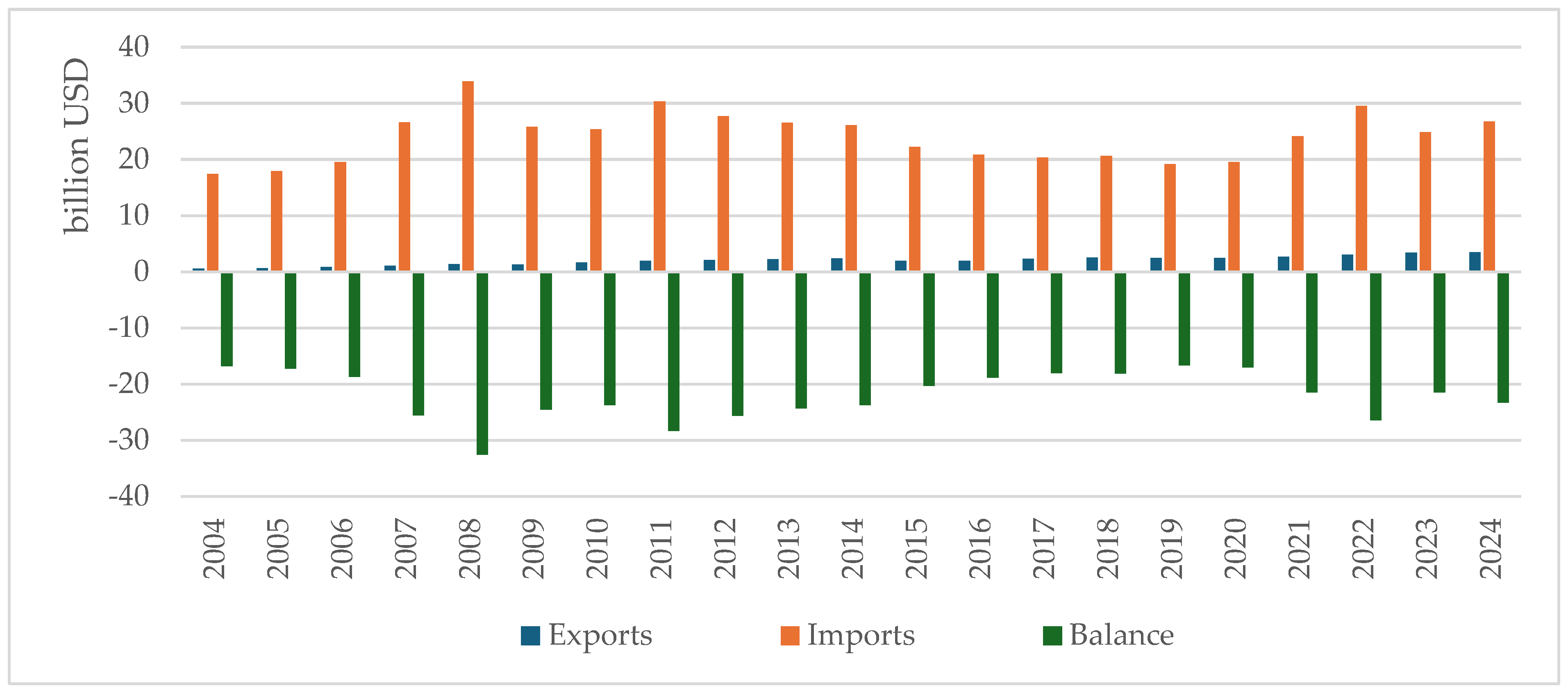
Trade between the European Union and Mercosur countries is characterized by a distinct asymmetry (Figure 2). The EU remains a net importer of agri-food products from this region. Despite the dynamic development of trade in recent years, the mutual significance of the partners has gradually declined. Although the European Union still constitutes an important export market for Mercosur countries (approximately 13% of their exports are destined for the EU market), recent years have seen a noticeable decline in its relative significance, particularly against the backdrop of the rapid increase in Mercosur exports to other regions of the world—most notably to Asia.
Between 2004 and 2024, the share of the EU as a destination for Mercosur’s agri-food exports decreased by more than half—from 29.4% to 13.3%—while the importance of EU countries as sources of supply for Mercosur showed a slight increase (from 12.4% to 13.6%). These figures indicate a gradual transformation in global agri-food trade patterns and the growing competitiveness of Mercosur countries in world markets.
At the same time, the importance of Mercosur as a supplier of agri-food products to the EU has declined (its share in EU imports fell from 6.2% to 3.9%), whereas its role as a market for EU exports has shown a slight upward trend (from 0.2% to 0.4%), though it remains marginal (Table 3).
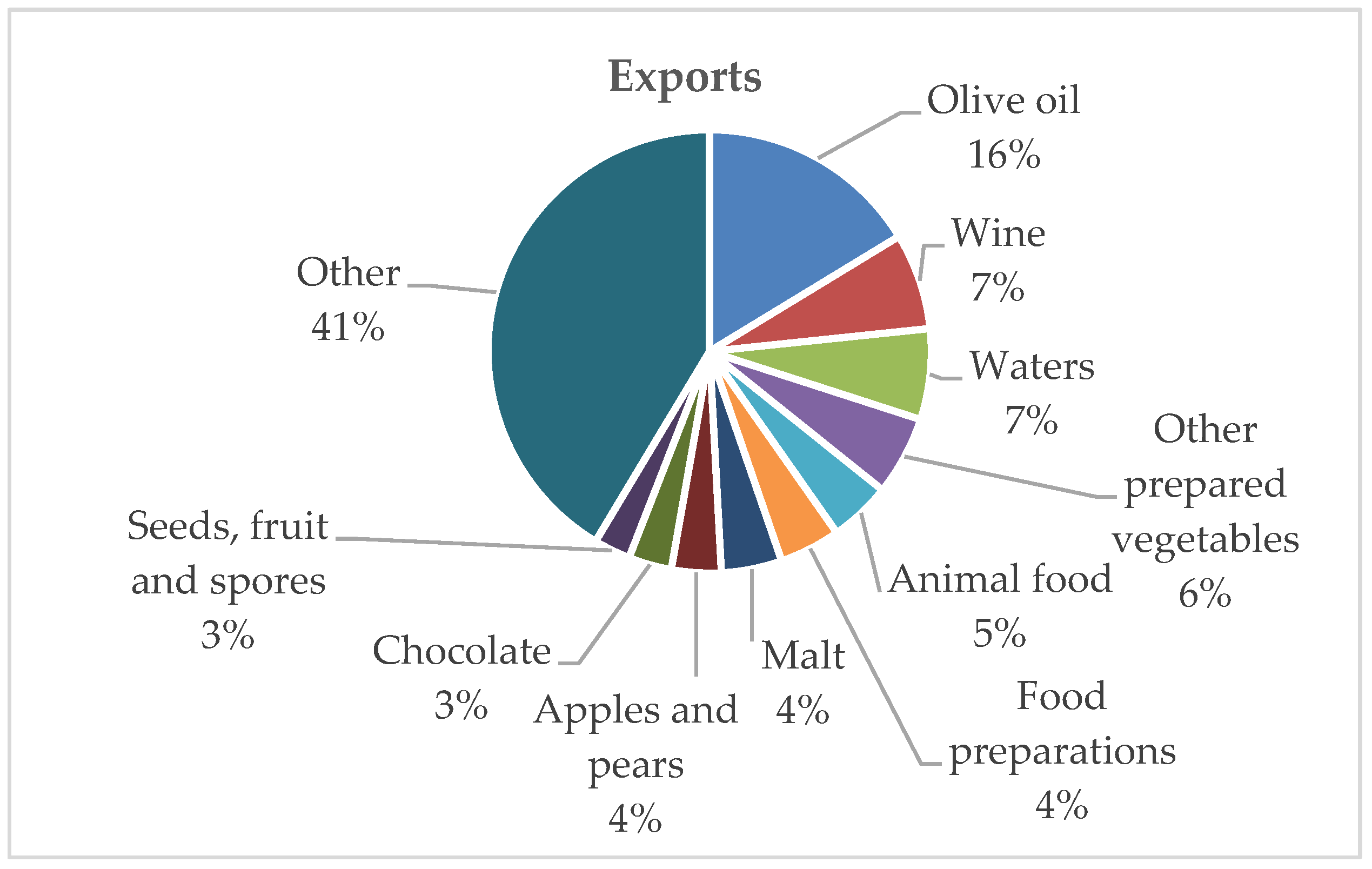
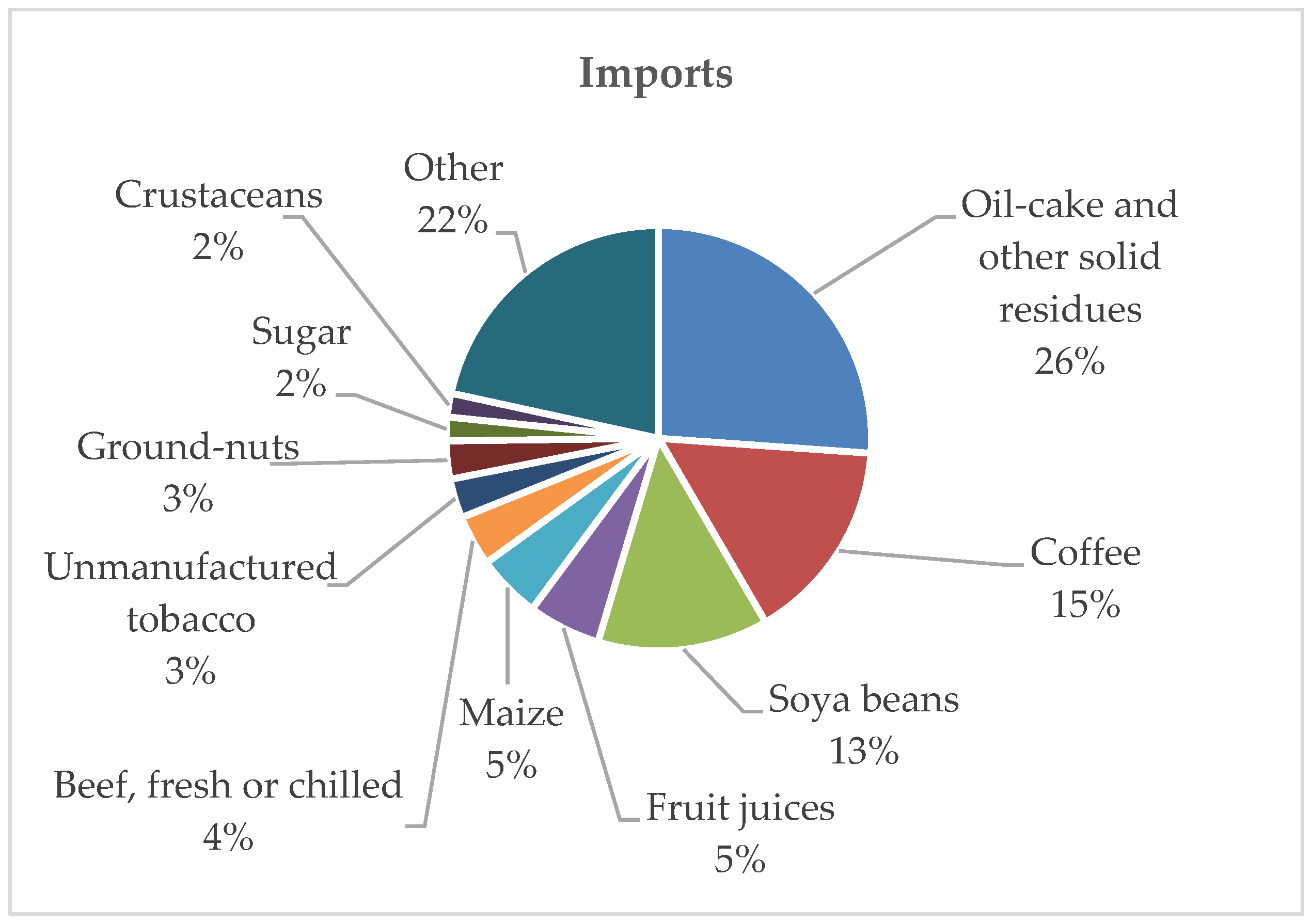
The commodity structure of agri-food trade between the two regions differs significantly. The most important products exported from the European Union to Mercosur countries include olive oil, wine, non-alcoholic beverages, frozen vegetables, and animal feed (Figure 3). In contrast, imports from South American countries are dominated by soy cakes, coffee, soybeans, fruit juices, maize, and fresh and chilled beef (Figure 4). This trade structure reflects a high degree of specialization in the economies of both blocs, with Mercosur remaining a supplier of raw materials and the EU an exporter of higher value-added products.
The largest EU importers of agri-food products from Mercosur countries are Germany, the Netherlands, and Spain, owing to the high absorptive capacity of their domestic markets and their extensive logistical infrastructure. Meanwhile, the leading exporters to Mercosur are Portugal, Italy, and the Netherlands, which have long-standing trade traditions with South America and strong cultural ties, especially in the case of Portugal and Brazil.
Brazil remains the European Union’s most important trading partner within Mercosur, accounting for 84.2% of EU exports to the region and 70.9% of imports. Argentina also plays a significant, though much smaller, role, with a share of 25.6% in imports to the EU, while Paraguay and Uruguay are of marginal significance. Looking to the future, the conclusion and implementation of a free trade agreement (FTA) between the European Union and Mercosur countries could contribute to the intensification of trade in the agri-food sector, fostering deeper economic integration between the two regions.

4.1. Analysis of RCA Indicators

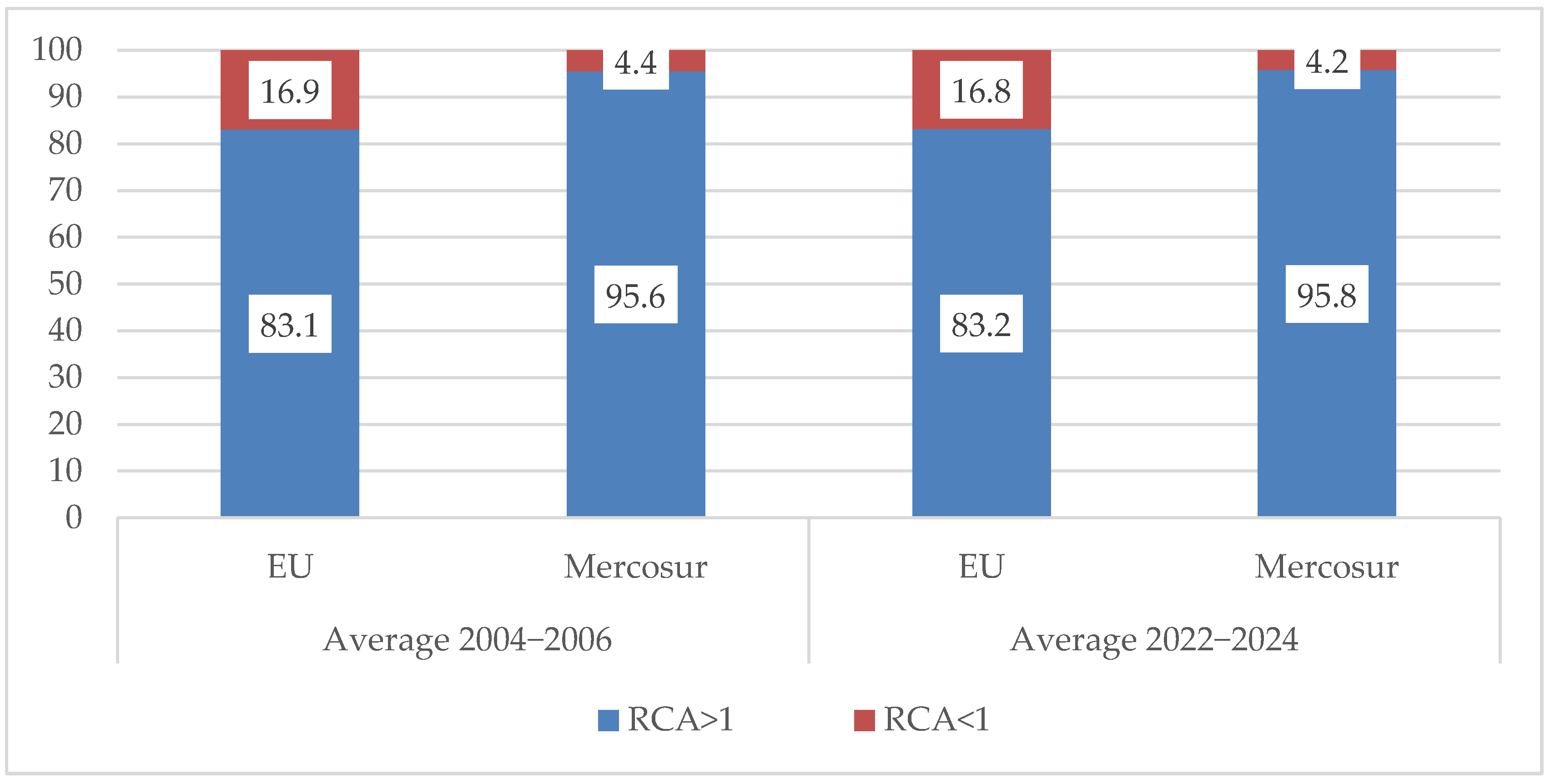
Both the EU and Mercosur exported products for which they possessed comparative advantages; however, the share of such products was higher in Mercosur’s exports (95.8%) than in those of the EU (83.2%), indicating a greater degree of specialization of South American economies in the agri-food production sector (Figure 5).
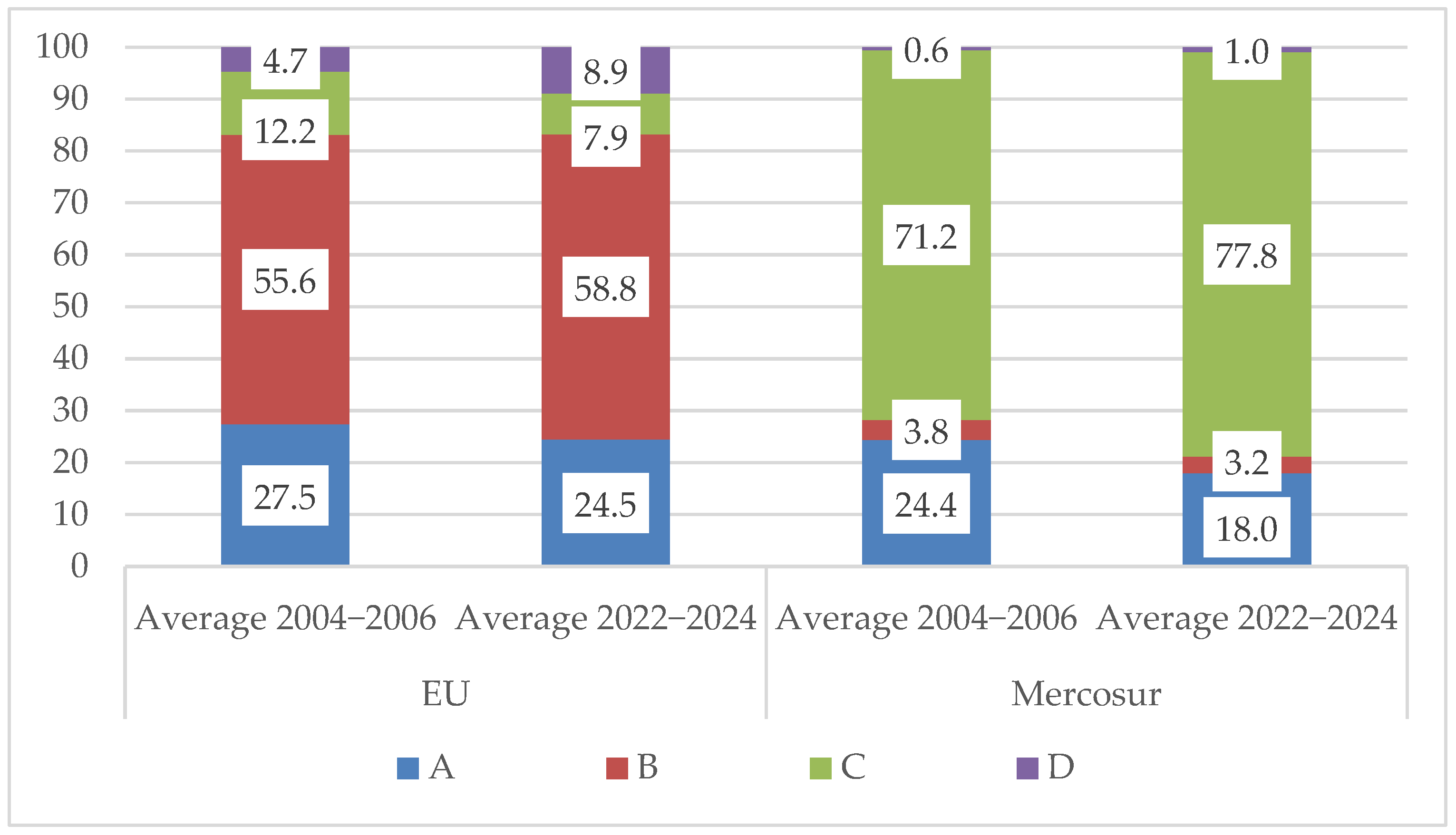
The largest share of the EU’s exports accounted for products from Group B (58.7%), that is, those in which the EU has comparative advantages, while Mercosur does not (Figure 6). This group includes, among others, cheese, wine, animal feed, and confectionery. Conversely, in Mercosur’s exports, Group C dominated (77.8%)—products in which Mercosur has comparative advantages, but the EU does not (Figure 6). Key products in this group include soybeans, soya cakes, maize, sugar, and frozen beef.
Group A, including the most sensitive products, constituted 24.5% of EU exports and 18% of Mercosur exports. Within this group, EU exports were dominated by pork, wheat, poultry meat, fresh or chilled beef, frozen vegetables, fruit juices, and citrus fruit, while Mercosur’s exports mainly consisted of fresh or chilled beef, poultry meat, wheat, fruit juices, and pork (see Table 4 and Table A1 in Appendix A).
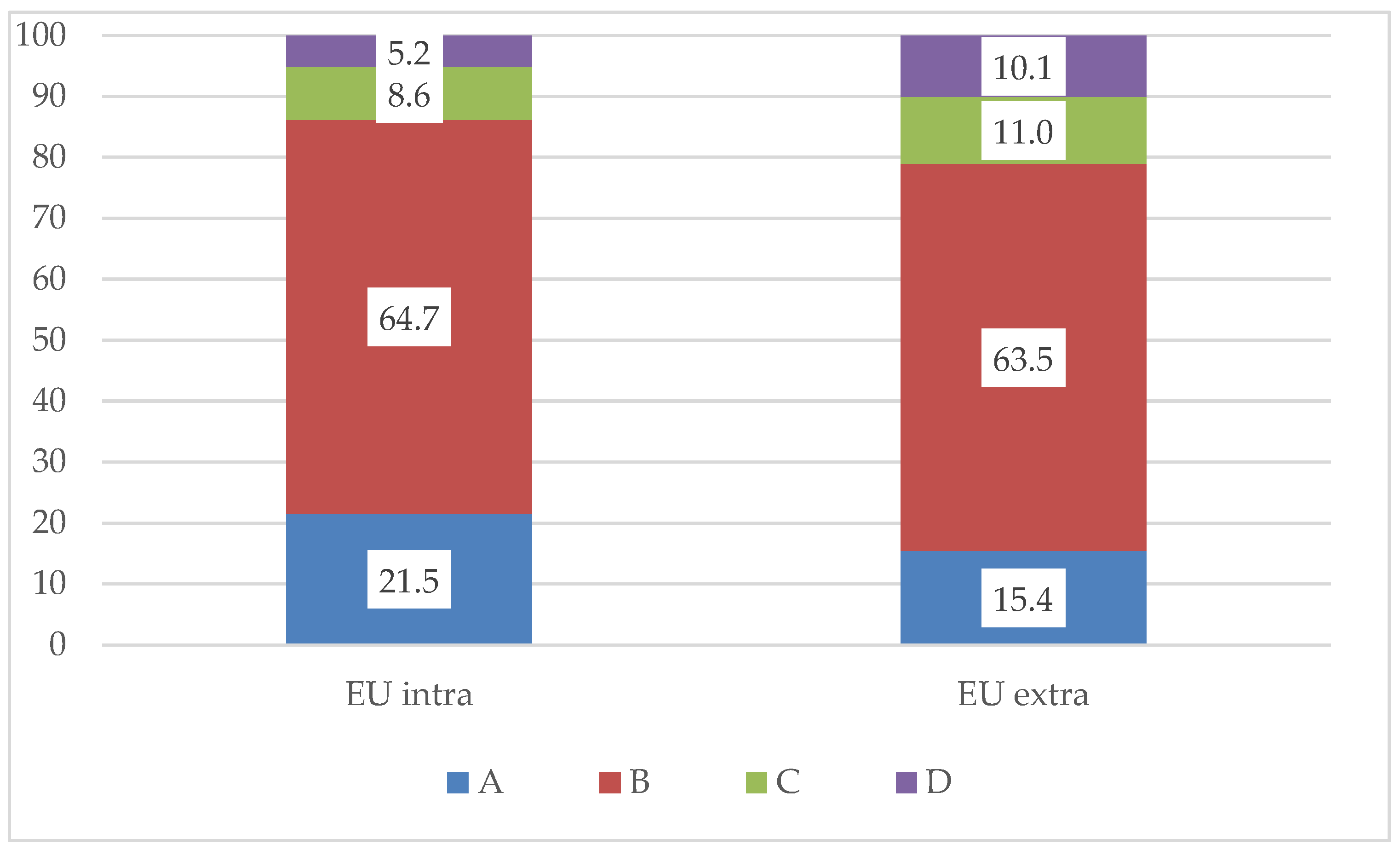
It is noteworthy that, for the European Union, the share of Group A products was significantly higher in intra-EU trade than in trade with other countries (extra-EU) (Figure 7). This indicates stronger competition between EU Member States and Mercosur countries within EU markets than outside them. This phenomenon was particularly evident in products such as beef, fruit juices, citrus fruit, coffee, sunflower oil, ethyl alcohol, and natural honey (see Table A1 in Appendix A). These products represent a segment in which Mercosur countries show sustained comparative advantages, whereas the European Union achieves such advantages mainly within the internal market, without maintaining a comparable competitive position in third-country markets. This suggests that the EU’s comparative advantages are largely conditioned by the integration of the single market, where common quality, regulatory, and sanitary standards apply, rather than by global competitiveness in international trade.
The smallest share was observed for Group D products, which do not constitute comparative advantages for either bloc. For the EU, their share was 8.9%, while for Mercosur it was just 1%. Among the products for which neither the EU nor Mercosur possesses comparative advantages, EU exports were dominated by fish filets, processed fish, and fresh or processed fruit, while in Mercosur countries, the main items were frozen fish, fish filets, and fruit.

4.2. Results of the TCI Analysis

The analysis of TCI indicators for Mercosur countries in relation to the European Union indicates a very high level of complementarity in selected commodity groups (see Table A2 in Appendix A). The highest TCI values in 2022–2024 were recorded for:
  • Soybean meal (TCI = 36.2);
  • Coffee (TCI = 18.7);
  • Poultry meat (TCI = 16.7);
  • Sugar (TCI = 14.7);
  • Maize (TCI = 13.7);
  • Fruit juices (TCI = 12.8).
These are products that occupy a dominant position in Mercosur’s export structure and at the same time constitute key items in EU agri-food imports. High TCI values confirm that Mercosur mainly exports goods for which import demand is particularly significant in the economies of the EU Member States.
Additionally, relatively high TCI values were noted for products such as fresh or chilled beef (7.5), ethyl alcohol (10.8), and sunflower oil (4.0), which points to wide opportunities for the expansion of these exports to the EU in the context of potential trade liberalization. It should be noted that the products showing the highest complementarity—soya, beef, maize, and sugar—are among the main pillars of the agricultural economies of Mercosur countries, particularly Brazil and Argentina, which together account for more than 90% of the bloc’s agri-food exports.
Trade complementarity indicators (TCI) were higher for Mercosur than for the EU, meaning that Mercosur’s exports correspond more closely to the EU’s import needs than vice versa, which is conducive to trade development. This means that Mercosur exports what the EU needs (agricultural products, raw materials). A higher level of complementarity is particularly beneficial when concluding trade agreements.
In the years 2022–2024, the highest TCI values for the European Union were recorded for the following products (see Table A3 in Appendix A):
  • Malt (TCI = 18.6);
  • Olive oil (TCI = 8.6);
  • Frozen vegetables (TCI = 4.1);
  • Apples and pears (TCI = 3.0);
  • Barley (TCI = 2.4);
  • Milk powder (TCI = 2.3);
  • Wine (TCI = 2.2).
These products constitute an important segment of EU exports to Mercosur countries and at the same time correspond to the structure of their imports. High complementarity in these groups indicates substantial potential for further economic cooperation, especially in the context of future trade liberalization under the EU–Mercosur agreement.
The most significant items in EU exports to Mercosur countries were highly processed products characterized by added value, such as dairy products, fruit and vegetable preserves, wine, or cereal products. It is noteworthy that TCI values have increased compared with 2004–2006, indicating a gradual adjustment of the EU’s export structure to the needs of South American markets.
A comparative analysis of TCI for the EU and Mercosur demonstrates that the level of trade complementarity is clearly higher in the case of Mercosur, meaning that the bloc’s exports better correspond to the EU’s import structure than vice versa. This results from natural structural complementarity between the economies—Mercosur is an exporter of agricultural raw materials and semi-processed products, while the EU specializes in processed and industrial products. Mercosur demonstrates a higher level of alignment of its exports with the EU’s import needs, confirming its strategic role as a supplier of agricultural raw materials essential for the EU processing and feed sectors. The European Union achieves the highest complementarity in the export of highly processed products that corresponds to the growing demand of Mercosur countries.

4.3. Results of the TII Analysis

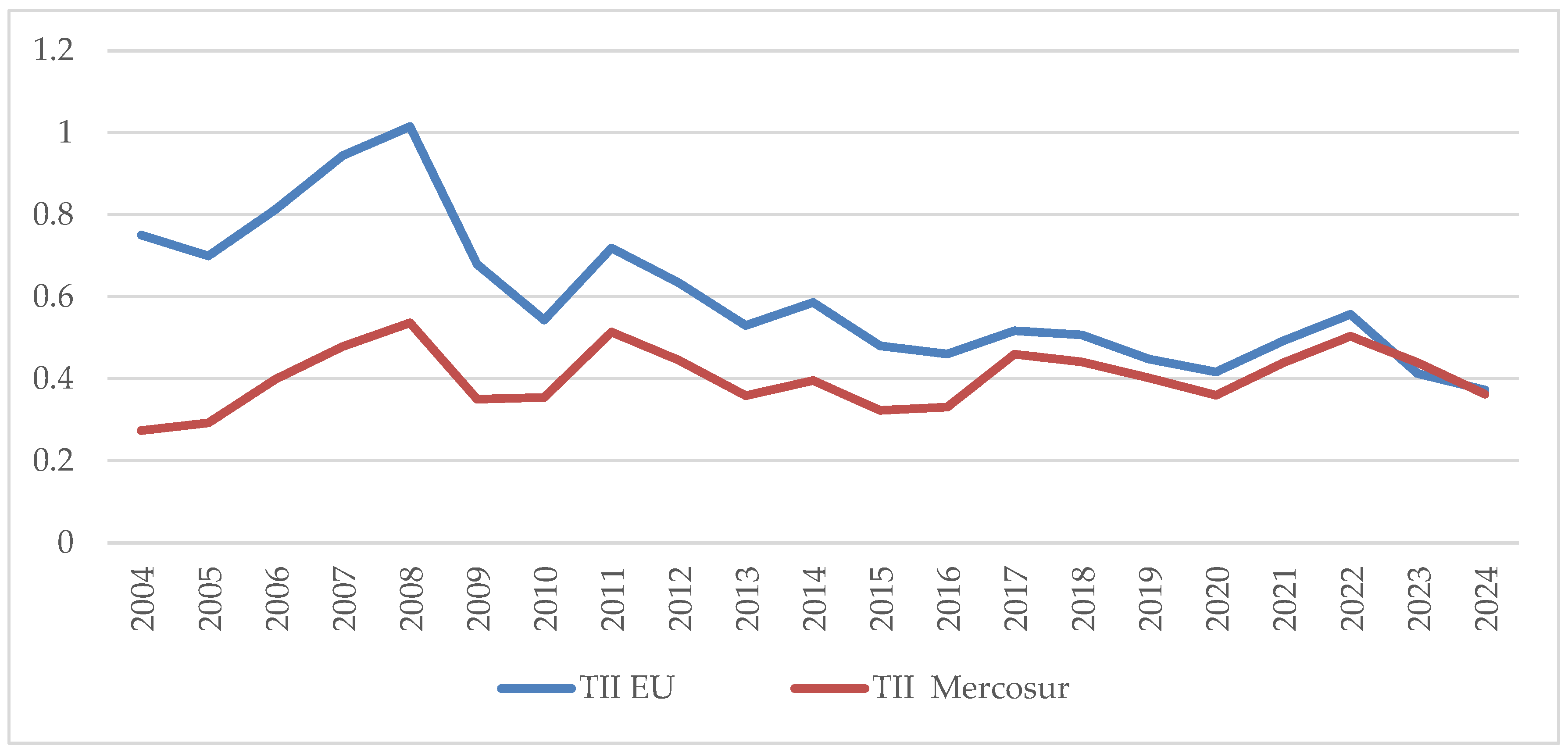
During the period analyzed, the TII values for the European Union (EU) and Mercosur countries remained below 1, indicating that the actual intensity of trade between these blocs is lower than would be expected based on their significance in global trade. In other words, the potential for trade cooperation between the EU and Mercosur is not fully realized (Figure 8). Although both blocs are among the largest exporters of agri-food products in the world, their mutual trade relations do not match the potential that could be expected from the scale of their economies.
However, it should be noted that the direction of change in the index differed between the two blocs. For Mercosur, TII values showed a slight upward trend, suggesting a gradual strengthening of trade relations with the European Union. This trend can be linked to the growing importance of exports of agricultural products and raw materials to EU countries, especially in the soya, meat, and maize sectors. For the European Union, however, a downward trend in the TII was recorded, reflecting the declining importance of Mercosur markets in EU exports.
On the other hand, the moderate trade intensity that persists, and its slight increase in recent years on the part of Mercosur, indicate that the potential for growth in trade relations remains high. In particular, the liberalization of trade under the planned EU–Mercosur Free Trade Agreement could contribute to an increase in TII for both groupings.
Low TII values, combined with high TCI values, confirm that cooperation between the EU and Mercosur is characterized by unrealized potential—there is a match in the commodity structure, but trade relations have not yet developed sufficiently. Liberalization of trade under the EU–Mercosur FTA could significantly increase the intensity of commodity exchange, contributing to deeper economic integration between the two regions.

4.4. Results of the ESI Analysis

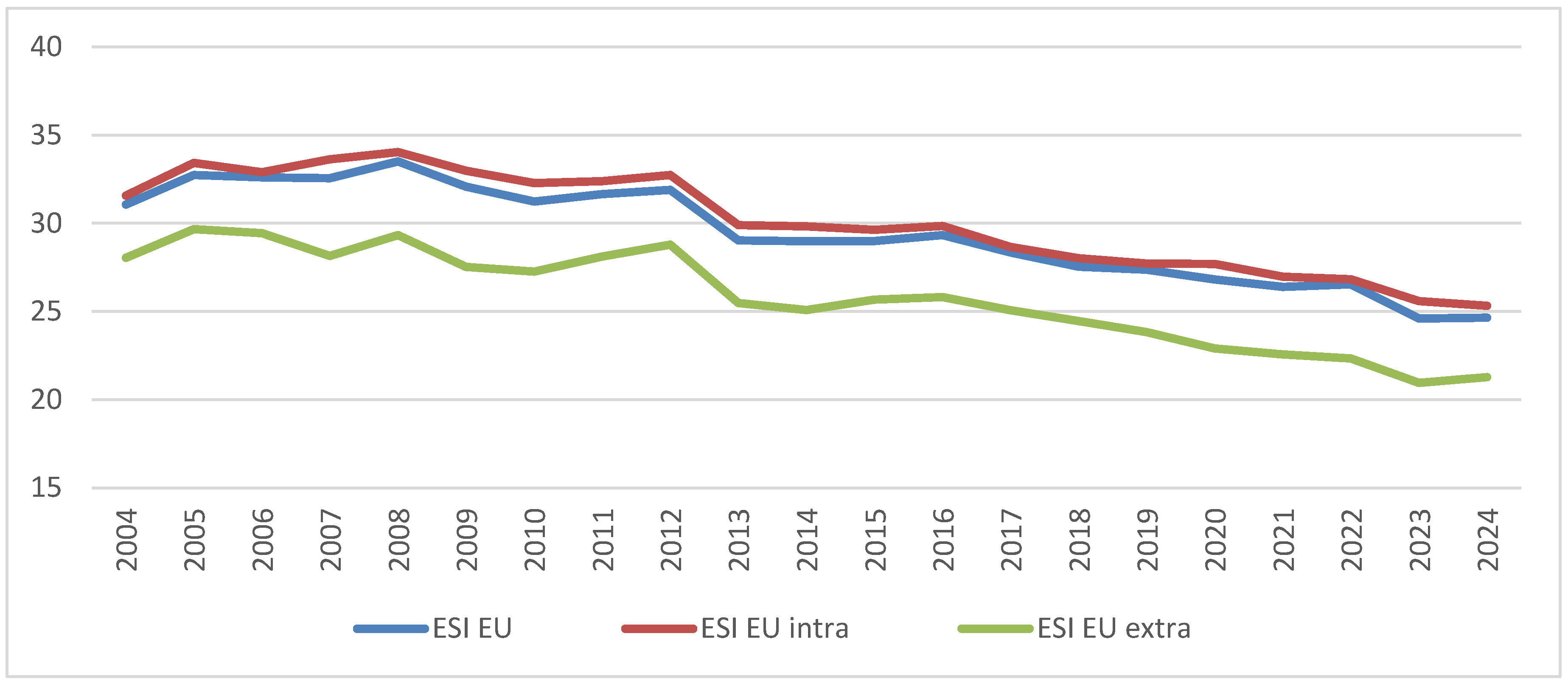
In the period 2022–2024, the average value of the ESI was approximately 0.25, meaning that only about 25% of the commodity structure of agri-food exports of the EU and Mercosur is similar (Figure 9). In other words, only one quarter of the export product groups of both blocs overlap structurally and in terms of export shares. Compared with previous years (2004–2006), a downward trend in the ESI is evident, indicating a gradual divergence in the export structures of the EU and Mercosur. This phenomenon confirms that both groupings are developing their comparative advantages in different market segments. The declining trend in ESI values in 2004–2024 suggests increasing diversification in trade directions and specializations.
A low ESI value confirms that the European Union and Mercosur do not compete directly in the majority of agri-food product categories. The export structures of both blocs are largely complementary. The European Union specializes in the export of highly processed products, such as wine, cheese, dairy products, confectionery, or cereal products. Mercosur, on the other hand, focuses on the export of agricultural raw materials and low-processed products, such as soya beans, soybean meal, maize, sugar, or beef.
Such structural differentiation means that direct rivalry between the EU and Mercosur in global markets is limited and occurs only in selected segments, such as meat, dairy, or certain fruit. At the same time, a low ESI fosters the development of trade cooperation, since exchange can be based on the complementarity of comparative advantages, rather than competition in the same products. Low structural competition creates favorable conditions for trade cooperation and economic integration under the planned Free Trade Agreement (FTA). The results confirm that trade liberalization between the EU and Mercosur could bring mutual benefits, provided a balance of interests is maintained and sensitive sectors on both sides are protected. A low ESI supports trade based on comparative differences (the EU exports highly processed goods; Mercosur exports raw materials and agricultural products). This creates potential for trade exchange between different sectors.
Such an arrangement is conducive to the development of trade based on comparative advantages—Mercosur countries supply agricultural raw materials used by the EU processing industry, while the Union exports higher value-added goods to meet the needs of South American consumers. From the perspective of the EU–Mercosur Free Trade Agreement, low ESI values can be interpreted as a positive factor. They mean that trade structures are largely complementary, reducing the risk of direct competition and conflicts of interest when the agreement enters into force. It should be noted, however, that ESI indices are higher for intra-EU than extra-EU trade, which means that a higher level of mutual competition between EU countries and Mercosur is observed within the EU market than outside it.

5. Discussion

The results of the analysis confirm the coexistence of both complementarity and competition in agri-food trade between the European Union and Mercosur countries. The trade structure remains asymmetric—Mercosur dominates in the export of agricultural raw materials such as soya, maize, sugar, or beef, whereas the European Union specializes in processed products with higher added value, including the dairy, wine, and fruit and vegetable processing sectors [8,27]. These patterns can be interpreted in light of classical trade theories; however, the references to Ricardo’s and Heckscher–Ohlin’s frameworks are intended only as conceptual lenses for understanding structural differences in EU–Mercosur trade, rather than as evidence of a direct factor-endowment analysis. A detailed empirical assessment of natural and technological resources lies beyond the scope of this study.
The high values of the trade complementarity index (TCI) for Mercosur countries indicate a strong match between their exports and the EU import structure. This means that Mercosur products fill the raw material gap in the European food industry, fostering the development of vertical value chains [7,17]. At the same time, low values of the export similarity index (ESI) indicate limited direct competition, suggesting that trade liberalization under the EU–Mercosur agreement is unlikely to result in mutual market displacement. However, the meat, sugar, ethanol, and dairy sectors remain particularly vulnerable to increased competitive pressure [3,4,23].
On the other hand, low values of the trade intensity index (TII) reveal untapped potential for economic cooperation. Limited trade integration between the EU and Mercosur may result from non-tariff barriers, differences in sanitary and environmental standards (SPS/TBT), and high logistical costs [28,39]. Tariff liberalization under the Free Trade Agreement may contribute to greater integration, but its effectiveness will depend on the regulatory harmonization and adaptation of production standards to EU requirements regarding sustainable agriculture and climate protection [45,46].
Beyond the structural findings, the results have important policy implications for both regions, particularly in sectors where liberalization is expected to intensify competitive pressures. In product groups where Mercosur maintains strong comparative advantages—such as beef, poultry, sugar, or ethanol—EU agricultural producers may face increasing price competition [8,27]. In these sectors, adaptation strategies may include greater product differentiation, investments in higher-quality and origin-linked certification (e.g., PDO, PGI, organic), and the adoption of more sustainable production practices aligned with EU environmental standards [3,5].
At the policy level, several measures can help balance the effects of liberalization with the need for sectoral adaptation. These include targeted adjustment assistance for the most vulnerable sectors [8], support for compliance with sanitary, phytosanitary and environmental requirements [28], and incentives for technological upgrading and digitalization in the agri-food sector [10,15]. Phased tariff reduction schedules, safeguard mechanisms, and transitional compensation schemes can further mitigate the short-term shocks arising from increased import competition [4].
Despite the broad scope of analytical tools used (RCA, TCI, TII, ESI), this study is exploratory and involves certain limitations. Firstly, all indicators are ex post in nature, meaning they reflect revealed comparative advantages based on historical data and do not fully predict the effects of implementing the free trade agreement. They also do not account for dynamic factors such as technological change, evolution of consumer preferences, or the impacts of climate change.
Secondly, the analysis was conducted at the four-digit HS code aggregation level, which limits the possibility of identifying qualitative differences between products and accounting for non-price determinants of competitiveness, such as quality certifications, sanitary standards, animal welfare, and environmental requirements [3,28]. Many agri-food products that differ significantly in quality, processing level, production standards, or certification schemes (e.g., PDO, organic) are grouped into the same HS category. Thus, while the analysis identifies broad structural patterns, it may underestimate product-level competitiveness and the diversity of trade flows. Moreover, this study adopts the bloc-level perspective, as the EU collectively negotiates and implements external trade policy, making an aggregated approach appropriate for analyzing the structural foundations of the EU–Mercosur relationship. At the same time, treating the EU as a single bloc may mask notable cross-country differences.
Thirdly, non-tariff barriers (NTBs) remain one of the most significant constraints shaping trade. For Mercosur exporters, compliance with EU requirements concerning traceability, pesticide residues, animal welfare, and environmental sustainability entails high adaptation costs. Overall, NTBs reduce trade intensity by limiting market entry, raising operational costs, and lowering the predictability of trade flows. Even with tariff reductions under the EU–Mercosur agreement, the persistence of NTBs may weaken the expected gains from liberalization.
Fourth, the analysis does not cover the social and ecological aspects of trade liberalization, such as the impact on greenhouse gas emissions, deforestation, or the energy transition in agriculture. As noted by Gómez, Piñeiro i Pereda [27], a full assessment of the effects of the EU–Mercosur agreement requires an interdisciplinary approach combining economics, ecology, and social sciences. Future research should employ gravity models and dynamic analyses to assess the long-term effects of liberalization and better quantify the role of NTBs in shaping trade patterns across differentiated product groups.
Several ‘unexpected’ patterns also emerged from the analysis. In some product groups, relatively high structural complementarity did not translate into high trade intensity, suggesting that non-tariff barriers, sanitary and phytosanitary requirements, or logistical constraints may have limited the realization of trade potential. Conversely, certain categories exhibited rising trade intensity despite low or declining competitiveness, which may reflect short-term supply shocks or temporary price advantages. These atypical results indicate that bilateral trade dynamics cannot be explained solely by structural indicators and must also be interpreted in the context of market adjustments, regulatory conditions, and broader geopolitical and economic developments.

6. Conclusions

This study offers an integrated, long-term assessment of competitiveness and complementarity in EU–Mercosur agri-food trade, contributing to both global and regional knowledge. By combining RCA, TCI, TII, and ESI within a unified analytical framework, the research reveals clear structural asymmetries: Mercosur remains competitive in raw and semi-processed agricultural goods, while the EU specializes in higher value-added processed products. High complementarity alongside low trade intensity indicates substantial unrealized trade potential, shaped not only by structural patterns but also by regulatory, logistical, and geopolitical constraints.
From a policy perspective, the findings highlight sectors where trade liberalization could generate mutual benefits and areas where additional safeguards or support—particularly for EU producers—may be necessary. Strengthening cooperation in complementary sectors and reducing non-tariff barriers could enhance the effectiveness of the EU–Mercosur Agreement, promote export diversification in Mercosur, and improve supply security and competitiveness in the EU. The effects of the agreement will be highly sector-specific, and potential gains and losses may differ across countries and industries within both blocs.
The findings also have implications for sustainable development. Strengthening agri-food cooperation can contribute to enhancing the stability and diversification of food supplies, encouraging technological upgrading and investment, enhancing institutional cooperation, and supporting sustainable, rules-based trade. Greater complementarity and more efficient trade relations may also reinforce the resilience of food systems and increase both regions’ participation in global value chains.
Overall, the study demonstrates that long-term competitiveness and complementarity between the EU and Mercosur are shaped not only by structural trade relations but also by wider regulatory, market, and geopolitical factors. Fully realizing the potential of the EU–Mercosur partnership will require both further liberalization and common efforts to improve the quality, resilience, and sustainability of trade. Future research should deepen the analysis at the bilateral and sectoral levels, explore firm-level dynamics and value-chain interactions, and consider environmental and social sustainability indicators. Future research should also examine country-level patterns within the EU to capture the full diversity of competitive positions and potential distributional effects of trade liberalization. We now emphasize this point as a key limitation and direction for further research.

Author Contributions

Conceptualization, Ł.A. and M.B.; methodology, M.B. and Ł.A.; software, M.B.; validation, M.B. and Ł.A.; formal analysis, M.B. and Ł.A.; investigation, M.B. and Ł.A.; resources, M.B.; data curation, M.B.; writing—original draft preparation, M.B.; writing—review and editing, Ł.A. and M.B.; visualization, M.B.; supervision, Ł.A.; project administration, M.B. and Ł.A.; funding acquisition, M.B. and Ł.A. All authors have read and agreed to the published version of the manuscript.

Funding

The article processing charge (APC) was funded by the National Support Centre for Agriculture (KOWR) under contract No. CEN.BDG.WP.6515.2.2025.EJ.57.

Institutional Review Board Statement

Not applicable.

Data Availability Statement

Data available in a publicly accessible repository that does not issue DOIs Publicly available datasets were analyzed in this study. This data can be found here: https://wits.worldbank.org/ (accessed on 22 September 2025).

Acknowledgments

The study is the result of cooperation between researchers from the Institute of Agricultural and Food Economics—National Research Institute, Warsaw, Poland.

Conflicts of Interest

The authors declare no conflicts of interest.

Appendix A

Table A1. RCA indices in agri-food exports for the EU and Mercosur.
HS4NameRCA
Intra-EU
RCA
Extra-EU
RCA
Mercosur
Share in Agri-Food Exports
on Average in 2022–2024
2004–
2006
2022–
2024
2004–
2006
2022–
2024
2004–
2006
2022–
2024
Intra-EUExtra-EUMercosurIntra and
Extra EU
0203Meat of swine2.12.21.31.63.23.92.92.91.42.9
0207Meat of poultry1.31.71.10.815.813.72.21.44.82.0
0201Meat of bovine
animals,
fresh or chilled
2.32.00.50.56.65.22.30.81.61.8
0901Coffee0.81.20.50.612.711.81.81.24.71.6
1602Preserved meat1.32.11.31.07.93.11.61.10.61.5
2004Vegetable mixes1.81.81.32.41.01.00.91.70.11.2
0402Milk powder1.11.01.41.53.72.30.91.70.51.1
2009Fruit juices1.71.50.80.910.29.01.00.81.60.9
0805Citrus fruit2.11.80.70.53.01.21.00.40.20.8
1512Sunflower seed oil1.31.60.80.817.83.30.90.60.50.8
2207Ethyl alcohol0.92.00.30.322.46.41.00.20.80.7
1601Sausages2.53.11.51.61.71.60.80.60.10.7
0102Bovine animals;
live
2.62.00.31.00.63.30.70.50.30.6
1003Barley1.81.50.91.50.95.40.50.70.50.6
0210Meat and edible
meat offal
1.92.72.92.20.34.30.50.60.20.6
2101Extracts, essences
of coffee, tea
1.31.31.21.36.34.10.50.70.40.6
1804Cocoa butter1.72.51.11.03.51.20.60.40.10.5
1517Margarine1.82.11.10.93.31.20.60.40.10.5
0808Apples, pears
and quinces
1.61.31.11.13.81.60.50.50.20.5
0407Birds’ eggs2.32.41.01.20.71.20.50.30.10.4
1107Malt, whether
or not roasted
1.21.22.52.64.65.90.20.60.30.4
0703Onions, garlic1.11.00.70.92.61.10.30.40.10.3
0105Poultry; live2.43.30.90.70.41.50.40.10.10.3
1108Starches0.81.11.61.31.01.10.20.40.10.3
1805Cocoa; powder1.61.42.32.62.61.60.20.50.10.3
0807Melons (including
watermelons)
1.61.90.50.53.73.60.30.10.20.2
1101Wheat flour0.81.21.50.40.51.60.30.10.10.2
0504Guts, bladders,
and stomachs
of animals
1.21.30.71.14.24.50.20.30.20.2
0511Animal products
not elsewhere
specified or included
1.31.90.80.92.44.20.20.20.10.2
2102Yeasts, baking
powders
1.11.31.11.23.03.40.10.20.10.2
1104Cereal grains,
ground
1.11.60.40.70.31.80.10.10.00.1
2302Bran, sharps1.81.70.60.47.29.70.10.00.20.1
0409Honey, natural1.21.30.50.613.97.20.10.10.20.1
Note: The table includes products with the largest share in EU exports as well as RCA indices for Mercosur exports and RCA for EU intra- and/or EU extra-exports. Source: own elaboration based on [40].
Table A2. The TCI indicators for Mercosur.
HS4NameTCI for MercosurEU Imports
Average in 2022–2024
Share of
EU-Extra
in EU Imports
Share of
Mercosur
in EU Extra
Imports
2004–
2006
2022–
2024
USD Thousand%
0901Coffee18.518.720,978,5353.060.133.1
2309Petfood0.91.219,681,7132.918.20.7
0203Meat of swine4.35.514,995,7162.22.00.0
0201Meat of bovine animals,
fresh or chilled
10.57.512,627,3221.815.353.9
2204Wine 0.91.112,137,7881.815.56.1
1005Maize (corn)5.513.712,034,0841.747.523.0
0207Meat of poultry16.616.711,356,0921.78.127.3
1001Wheat 3.72.311,233,8501.626.90.0
2304Soybean meal57.236.211,187,5921.673.685.6
1201Soya beans20.79.78,362,4651.291.046.0
1205Rape or colza seeds 0.11.08,011,1301.250.42.1
1602Preserved meat8.74.27,908,9391.115.324.4
2009Fruit juices 15.012.87,339,7721.138.053.6
0805Citrus fruit4.61.97,209,6531.035.212.5
1512Sunflower seed oil23.54.07,046,6561.041.31.0
2207Ethyl alcohol 20.710.86,763,8071.024.415.2
0804Dates, figs, pineapples,
avocados
2.21.46,506,2480.972.48.4
1701Sugar 15.314.75,958,2760.927.130.2
1804Cocoa; butter, fat, and oil5.32.54,918,8700.736.11.2
Source: own elaboration based on [40].
Table A3. The TCI for EU-27.
HS4NameTCI for EU-27Mercosur Imports
Average in 2022–2024
Share of Mercosur
in EU Extra Exports
2004–20062022–2024USD Thousand%
1001Wheat3.32.11,828,3157.60.0
1107Malt, whether
or not roasted
18.318.6881,7003.79.4
0302Fish, fresh or chilled0.72.4857,7203.60.2
1509Olive oil4.28.6661,1622.811.6
0402Milk powder1.02.3626,7622.60.0
2309Petfood1.71.6588,7242.51.8
2204Wine1.02.2565,6532.41.3
2004Frozen vegetables2.74.1468,2562.04.7
1513Coconut oil0.91.2380,9081.60.4
0808Apples, pears,
and quinces
2.03.0370,4981.59.1
2202Non-alcoholic
beverages
0.61.2287,0261.23.9
0406Cheese and curd0.31.0278,5611.20.2
1003Barley1.12.4278,2021.20.2
1806Chocolate0.81.0269,8811.11.2
0703Onions, garlic, leeks3.42.1254,6761.11.2
Source: own elaboration based on [40].

References

  1. Krugman, P. Increasing Returns, Monopolistic Competition, and International Trade. J. Int. Econ. 1979, 9, 469–479. [Google Scholar] [CrossRef]
  2. Porter, M.E. The Competitive Advantage of Nations; Free Press: New York, NY, USA, 1990. [Google Scholar]
  3. FAO. Agricultural Trade and Food Security Outlook; Food and Agriculture Organization of the United Nations: Rome, Italy, 2021. [Google Scholar]
  4. OECD. Agricultural Outlook 2023–2032; OECD Publishing: Paris, France, 2023. [Google Scholar]
  5. UNCTAD. Key Statistics and Trends in International Trade; United Nations Conference on Trade and Development: Geneva, Switzerland, 2021. [Google Scholar]
  6. Balogh, J.M.; Borges Aguiar, G.M. Determinants of Latin American and the Caribbean Agricultural Trade: A Gravity Model Approach. Agric. Econ. Czech 2022, 68, 127–136. [Google Scholar] [CrossRef]
  7. Drysdale, P. Japan and Australia: The Prospect for Closer Economic Integration. Econ. Pap. 1969, 1, 12–28. [Google Scholar] [CrossRef]
  8. Bureau, J.-C.; Jean, S. The Impact of the EU–Mercosur Agreement on Agricultural Trade and the Environment; OECD Trade Policy Papers No. 145; OECD Publishing: Paris, France, 2013. [Google Scholar]
  9. Bułkowska, M. Potencjalne skutki utworzenia strefy wolnego handlu UE–MERCOSUR dla handlu rolno-spożywczego Polski (Potential effects of the creation of the EU–Mercosur free trade area for polish agri-food trade). Stud. I Pr. Wydziału Nauk Ekon. I Zarz. Uniw. Szczec. 2018, 53, 143–155. [Google Scholar] [CrossRef]
  10. Bułkowska, M. Umowa o wolnym handlu—UE–Mercosur—Szansa czy zagrożenie? (EU–Mercosur Free Trade Agreement—Opportunities or Threats?). Przem. Spoż./Food Ind. 2020, 74, 4–7. [Google Scholar] [CrossRef]
  11. Sarker, R.; Ratnasena, S. Revealed Comparative Advantage and Half-a-Century Competitiveness of Canadian Agriculture: A Case Study of Wheat, Beef, and Pork Sectors. Can. J. Agric. Econ. 2014, 62, 519–544. [Google Scholar] [CrossRef]
  12. zu Ermgassen, E.K.H.J.; Godar, J.; Lathuillière, M.J.; Löfgren, P.; Gardner, T.; Vasconcelos, A.; Meyfroidt, P. The origin, supply chain, and deforestation risk of Brazil’s beef exports. Proc. Natl. Acad. Sci. USA 2020, 117, 31770–31779. [Google Scholar] [CrossRef]
  13. Nunes, C.L.d.C.; Pflanzer, S.B.; Rezende-de-Souza, J.H.; Chizzotti, M.L. Beef production and carcass evaluation in Brazil. Anim. Front. 2024, 14, 15–20. [Google Scholar] [CrossRef]
  14. Bożek, A. Konkurencyjność Sektora Rolno-Spożywczego w Polsce w Kontekście Integracji Europejskiej (Competitiveness of the Agri-Food Sector in Poland in the Context of European Integration); IERiGŻ-PIB: Warszawa, Poland, 2015. [Google Scholar]
  15. Nowak, K. Konkurencyjność Eksportu Produktów Rolno-Spożywczych UE na Rynkach Światowych (Competitiveness of EU Agri-Food Exports on World Markets); Uniwersytet Ekonomiczny w Poznaniu: Poznań, Poland, 2019. [Google Scholar]
  16. Buczinski, B.; Chotteau, P.; Duflot, B.; Rosa, A. The EU-Mercosur Free Trade Agreement, Its impacts on Agriculture; Institut de l’Elevage: Paris, France, 2023. [Google Scholar]
  17. Michaely, M. Trade Preferential Agreements in Latin America: An Ex-Ante Assessment; World Bank Policy Research Working Paper No. 1583; World Bank: Washington, DC, USA, 1996. [Google Scholar]
  18. Pawlak, K.; Sapa, A. Potencjalne skutki utworzenia strefy wolnego handlu UE-MERCOSUR dla handlu rolno-żywnościowego UE. Zesz. Nauk. SGGW-Probl. Rol. Swiat. 2016, 16, 199–210. [Google Scholar] [CrossRef]
  19. Zdráhal, I.; Hrabálek, M.; Becvárová, V. Assessing the agricultural trade complementarity of Mercosur and the European Union. In Agrarian Perspectives XXIX: Trends and Challenges of Agrarian Sector; Tomsik, K., Ed.; Czech University of Life Sciences: Prague, Czech Republic, 2020; pp. 418–425. Available online: https://ap.pef.czu.cz/dl/88730?lang=en (accessed on 25 September 2025).
  20. European Commission. EU–Mercosur Trade Agreement: Political Agreement Summary; DG Trade: Brussels, Belgium, 2024. [Google Scholar]
  21. European Commission. EU–Mercosur Trade Agreement: Proposal for Signature and Conclusion; European Commission: Brussels, Belgium, 2025; Available online: https://policy.trade.ec.europa.eu (accessed on 5 October 2025).
  22. Dupré, M.; Kpenou, S. Key Insights into the Final EU–Mercosur Agreement; Veblen Institute: Paris, France, 2024; Available online: https://www.veblen-institute.org/Key-Insights-into-the-Final-EU-Mercosur-Agreement.html (accessed on 4 October 2025).
  23. Gohin, A.; Matthews, A. The European Union–Mercosur Association Agreement: Implications for the EU Livestock Sector. J. Agric. Econ. 2025, 1–11. [Google Scholar] [CrossRef]
  24. Hagemejer, J.; Stoll, P.-T.; Rudloff, B.; Mensah, K. An Update on the Economic, Sustainability and Regulatory Effects of the Trade Part of the EU-Mercosur Partnership Agreement; European Parliament: Brussels, Belgium, 2025; Available online: https://www.europarl.europa.eu/RegData/etudes/STUD/2025/754476/EXPO_STU%282025%29754476_EN.pdf (accessed on 7 October 2025).
  25. Balassa, B. Trade Liberalisation and “Revealed” Comparative Advantage. Manch. Sch. 1965, 33, 99–123. [Google Scholar] [CrossRef]
  26. Finger, J.M.; Kreinin, M.E. A Measure of ‘Export Similarity’ and Its Possible Uses. Econ. J. 1979, 89, 905–912. [Google Scholar] [CrossRef]
  27. Gómez, S.; Piñeiro, V.; Pereda, P. Agricultural Trade and Sustainability: The EU–Mercosur Perspective; FAO Discussion Paper; Food and Agriculture Organization of the United Nations: Rome, Italy, 2022. [Google Scholar]
  28. WTO. The WTO SPS Agreement: Texts, Cases and Practices; World Trade Organization: Geneva, Switzerland, 2020. [Google Scholar]
  29. Hagemejer, J.; Maurer, A.; Rudloff, B.; Stoll, P.-T.; Woolcock, S.; Costa Vieira, A.; Mensah, K.; Sidło, K. Trade Aspects of the EU–Mercosur Association Agreement; Policy Department for External Relations, Directorate-General for External Policies, European Parliament: Brussels, Belgium, 2021; Available online: https://www.europarl.europa.eu/RegData/etudes/STUD/2021/653650/EXPO_STU(2021)653650_EN.pdf (accessed on 10 October 2025).
  30. Pelikan, J.; Döbeling, T. Update: EU–Mercosur Agreement—Implications for the Agri-Food Sector; Thünen Institute of Market Analysis: Braunschweig, Germany, 2025; Available online: https://literatur.thuenen.de/digbib_extern/dn069863.pdf (accessed on 10 October 2025).
  31. European Commission. EU Agri-Food Trade Statistical Factsheet: EU27 Agri-Food Trade with Mercosur 4 (Argentina, Brazil, Paraguay, Uruguay); Directorate-General for Agriculture and Rural Development: Brussels, Belgium, 2025; Available online: https://agriculture.ec.europa.eu/system/files/2023-05/agrifood-mercosur-4_en.pdf (accessed on 5 October 2025).
  32. Caves, R.E.; Jones, R.W.; Frankel, J.A. World Trade and Payments: An Introduction, 6th ed.; Little, Brown and Company: Boston, MA, USA, 1990. [Google Scholar]
  33. Krugman, P. Scale Economies, Product Differentiation, and the Pattern of Trade. Am. Econ. Rev. 1980, 70, 950–959. [Google Scholar]
  34. Wang, X.; Shi, J.; Li, J.; Chen, Y.; Liu, J.; Sriboonchitta, S. Analysis on Trade Competition and Complementarity of High-Quality Agricultural Products in Countries along the Belt and Road Initiative. Sustainability 2023, 15, 6671. [Google Scholar] [CrossRef]
  35. Tao, Z. Competitiveness and complementarity of agricultural products between Thailand and China on a short-term basis. Probl. Perspect. Manag. 2022, 20, 425–436. [Google Scholar] [CrossRef]
  36. Peng, H.; Yang, F. Research on the Competitiveness and Complementarity of Agricultural Trade between China and the Association of Southeast Asian Nations. Sustainability 2024, 16, 7046. [Google Scholar] [CrossRef]
  37. Tao, Z.; Ramasamy, S.S.; Naktnasukanjn, N.; Ying, F. Assessing competitiveness and complementarity in agricultural trade between China and Cambodia pre-pandemic and post-pandemic. PLoS ONE 2025, 20, e0321081. [Google Scholar] [CrossRef]
  38. Kojima, K. The Pattern of International Trade among Advanced Countries. Hitotsubashi J. Econ. 1964, 5, 16–36. Available online: https://www.jstor.org/stable/43295433 (accessed on 10 October 2025).
  39. UNCTAD. Key Statistics and Trends in International Trade; United Nations Conference on Trade and Development: Geneva, Switzerland, 2015. [Google Scholar]
  40. Echaide, J. Environmental Impacts of the Agreement Between the European Union and Mercosur. J. Law Stud. 2022, 27, 166–188. [Google Scholar] [CrossRef]
  41. World Customs Organization. Available online: https://www.wcoomd.org/-/media/wco/public/global/pdf/topics/nomenclature/instruments-and-tools/hs-nomenclature-2022/2022/table-of-contents_2022e_rev.pdf?la=en (accessed on 7 October 2025).
  42. Balassa, B. ‘Revealed’ Comparative Advantage Revisited: An Analysis of Relative Export Shares of the Industrial Countries, 1953–1971. Manch. Sch. 1977, 45, 327–344. [Google Scholar] [CrossRef]
  43. WITS-Comtrade Database. Available online: https://wits.worldbank.org/ (accessed on 8 October 2025).
  44. Ferrari, E.; Elleby, C.; De Jong, B.; M’barek, R.; Dominguez, I.P. Cumulative Economic Impact of Upcoming Trade Agreements on EU Agriculture: Update 2024; Publications Office of the European Union: Luxembourg, 2024. [Google Scholar] [CrossRef]
  45. Palmieri, R.; Amice, C.; Amato, M.; Verneau, F. Beyond the Finish Line: Sustainability Hurdles in the EU–Mercosur Free Trade Agreement. Soc. Sci. 2024, 13, 362. [Google Scholar] [CrossRef]
  46. de Oliveira, S.E.M.C.; Visentin, J.C.; Pavani, B.F.; Branco, P.D.; de Maria, M.; Loyola, R. The European Union-Mercosur Free Trade Agreement as a tool for environmentally sustainable land use governance. Environ. Sci. Policy 2024, 161, 103875. [Google Scholar] [CrossRef]
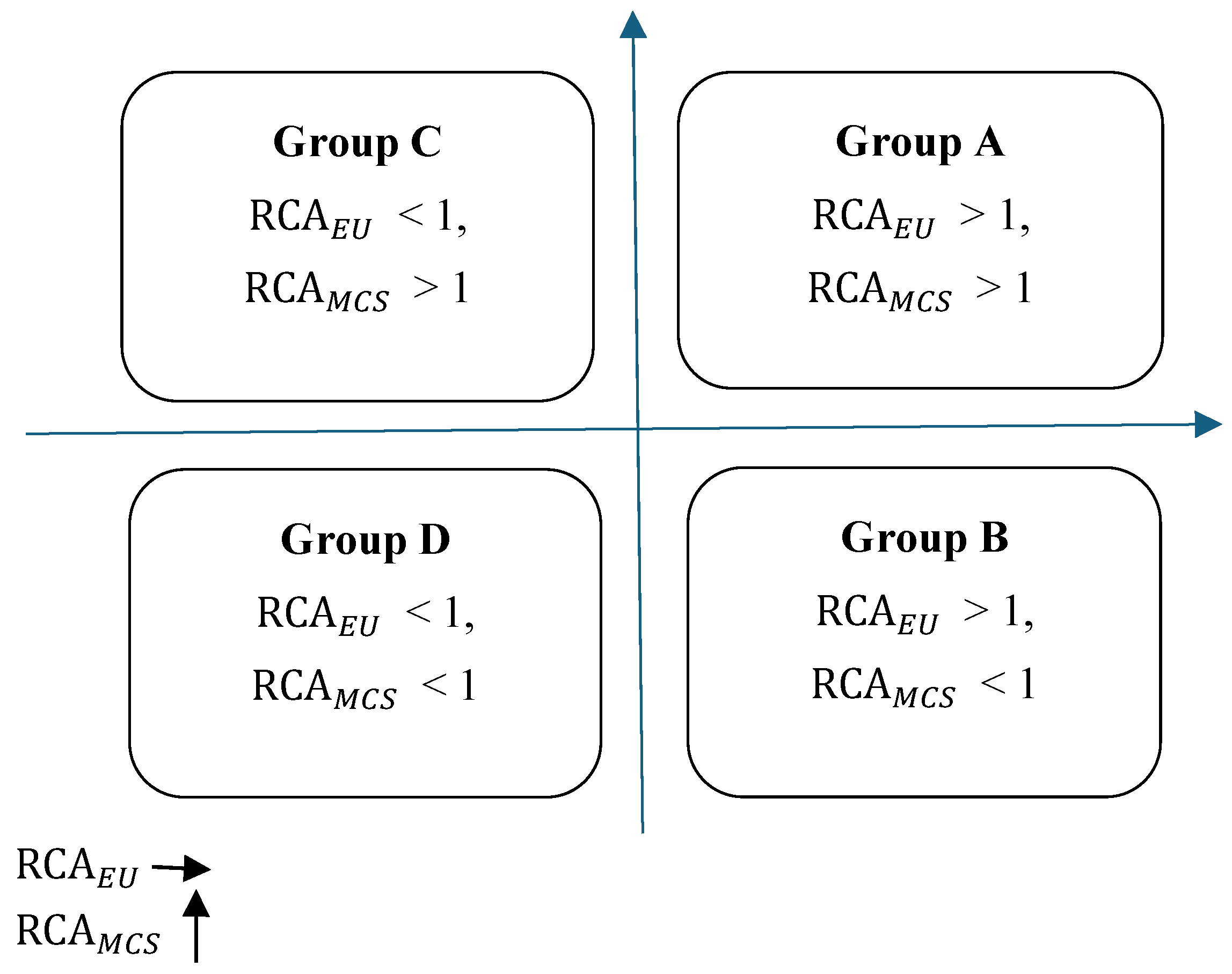
Figure 1. Product classification according to the level of comparative advantages in exports of the European Union and Mercosur. Source: own elaboration.
Agriculture 15 02504 g001
Figure 2. Foreign trade in agri-food products between the EU and Mercosur, in billion USD. Source: own elaboration based on [43].
Agriculture 15 02504 g002
Figure 3. Commodity structure of EU agri-food exports to Mercosur in 2022–2024. Source: own elaboration based on [43].
Agriculture 15 02504 g003
Figure 4. Commodity structure of EU agri-food imports from Mercosur in 2022–2024. Source: own elaboration based on [43].
Agriculture 15 02504 g004
Figure 5. Structure of agri-food exports of the European Union and Mercosur by level of comparative advantages (RCA), in %. Source: own elaboration based on [43].
Agriculture 15 02504 g005
Figure 6. Structure of agri-food exports of the European Union and Mercosur by sensitivity level, in %. Source: own elaboration based on Figure 1 and [43].
Agriculture 15 02504 g006
Figure 7. Structure of agri-food exports of the European Union (intra- and extra-) by sensitivity level in 2022–2024, in %. Source: own elaboration based on Figure 1 and [43].
Agriculture 15 02504 g007
Figure 8. Trade Intensity Index (TII) for the EU and Mercosur. Source: own elaboration based on and [43].
Agriculture 15 02504 g008
Figure 9. ESI indices for the EU and Mercosur in 2004–2024. Source: own elaboration based on and [40].
Agriculture 15 02504 g009
Table 1. HS classification of agricultural products.
SectionHS CodeCommodities
I. Animal and animal products01Live animals
02Meat and meat offal
03Fish and seafood
04Dairy products, eggs and honey
05Other products of animal origin
II. Vegetable products06Live trees and other plants
07Vegetables
08Fruit and nuts
09Coffee, tea, spices
10Cereals
11Milling products
12Oil seed and oleaginous fruits
13Vegetable saps and extracts
14Vegetable plaiting materials
III. Fats and Oils15Animal and vegetable fats and oils
IV. Prepared Foodstuffs16Meat and fish preparations
17Sugars and sugar confectionery
18Cocoa and cocoa preparations
19Cereal preparations
20Vegetable and fruit preparations
21Miscellaneous food products
22Alcoholic and non-alcoholic beverages
23Waste and animal feed
24Tobacco and tobacco products
Source: own elaboration based on the World Customs Organization [41].
Table 2. European Union and Mercosur countries.
AreaCountries
European Union (EU-27)Bulgaria, Croatia, Cyprus, Czech Republic,
Estonia, Hungary, Latvia, Lithuania, Malta, Poland, Romania,
Slovak Republic, Slovenia, Greece, Austria, Belgium,
Denmark, Finland,
France, Germany, Ireland, Italy, Luxembourg,
Netherlands, Portugal, Spain, Sweden
Mercado Común del Sur
(Mercosur)
Argentina, Brazil, Paraguay, Uruguay
Source: own elaboration.
Table 3. Agri-food product trade flows in EU and Mercosur countries.
Specification2004200520062004–2006
Average
2022202320242022–2024
Average
USD Million%USD Million%
EU-27ExportsWorld277,352301,231330,777303,120100.0707,313750,512776,838744,887100.0
Intra-EU187,583204,730222,490204,93467.6471,637509,777527,433502,94967.5
Extra-EU89,77096,501108,28798,18632.4235,673240,733249,353241,92032.5
Mercosur5656508146760.230143383346732880.4
ImportsWorld270,276293,229320,820294,775100.0665,421699,468726,671697,187100.0
Intra-EU180,612196,252214,805197,22366.9455,490496,419503,565485,15869.6
Extra-EU89,66496,977106,01597,55233.1209,930203,048223,104212,02730.4
Mercosur17,41117,92619,51018,2826.229,50024,89626,72427,0403.9
BalanceWorld7076800299578345-41,89251,04450,16647,701-
Intra-EU6970847876857711-16,14713,35823,86817,791-
Extra-EU106−4762272634-25,74437,68526,24929,892-
Mercosur−16,845−17,276−18,697−17,606-−26,486−21,513−23,256−23,752-
MercosurExportsWorld46,99653,31860,73153,682100.0203,555196,276186,735195,522100.0
EU14,73015,56717,10615,80129.429,32324,14624,83026,10013.3
RoW32,26637,75143,62637,88170.6174,231172,130161,905169,42286.7
Mercosur30563227372933376.210,81014,24311,52212,1926.2
ImportsWorld4809517563305438100.022,99225,44923,48323,975100.0
EU54666281067312.4310533543307325513.6
RoW426345135520476587.619,88722,09520,17620,72086.4
Mercosur297931153799329860.612,31014,93812,47613,24155.2
BalanceWorld42,18748,14354,40248,244-180,562170,827163,252171,547-
EU14,18414,90416,29615,128-26,21820,79221,52422,845-
RoW28,00333,23938,10633,116-154,344150,035141,728148,702-
Mercosur77112−7040-−1500−694−954−1049-
RoW—Rest of World. Source: own elaboration based on [43].
Table 4. Main products in Group A.
HS 4DescriptionMercosurUE-27 (Intra and Extra)
Exports in mln USD (2022–2024)
0203Meat of swine264221,524
1001Wheat and meslin334517,229
0207Meat and edible offal of poultry917214,465
0201Meat of bovine animals, fresh or chilled308613,486
1602Prepared or preserved meat122910,739
2004Frozen vegetables2808626
0402Milk and cream, concentrated10308395
2009Fruit juices30876913
0805Citrus fruit3696019
1512Sunflower oil9905932
2207Ethyl alcohol16255392
1601Sausages2105353
0102Live bovine animals6164778
1003Barley9494253
0210Meat and edible offal, salted, dried, or smoked4594195
2101Extracts, essences and concentrates of coffee, tea, or maté8204073
1804Cocoa butter, fat, and oil1604065
1517Margarine1894051
0808Apples, pears, and quinces, fresh3013684
0206Edible meat offal fresh, chilled or frozen7843668
0407Birds’ eggs1293184
Source: own elaboration based on Figure 1 and [43].
Disclaimer/Publisher’s Note: The statements, opinions and data contained in all publications are solely those of the individual author(s) and contributor(s) and not of MDPI and/or the editor(s). MDPI and/or the editor(s) disclaim responsibility for any injury to people or property resulting from any ideas, methods, instructions or products referred to in the content.