Article

Drought-Induced Antioxidant and Biochemical Responses in Castanea sativa Cultivars: A Mediterranean Case Study


1
Centre for the Research and Technology of Agro-Environmental and Biological Sciences, Inov4Agro, Institute for Innovation, Capacity Building and Sustainability of Agri-Food Production, University of Trás-os-Montes e Alto Douro, Quinta de Prados, 5000-801 Vila Real, Portugal
2
School of Life and Environmental Sciences, University of Trás-os-Montes and Alto Douro, Quinta de Prados, 5000-801 Vila Real, Portugal
3
Plant Cell Biotechnology Lab, Institute of Chemical and Biological Technology António Xavier (Green-it Unit), University of Nova of Lisbon, 2780-157 Oeiras, Portugal
*
Author to whom correspondence should be addressed.
Agriculture 2025, 15(22), 2401; https://doi.org/10.3390/agriculture15222401
Submission received: 1 October 2025 / Revised: 13 November 2025 / Accepted: 17 November 2025 / Published: 20 November 2025
(This article belongs to the Section Crop Production)

Abstract

Chestnut (Castanea sativa Mill.) is a key crop in Mediterranean regions increasingly threatened by recurrent drought stress. To investigate cultivar-specific tolerance mechanisms, we evaluated four Portuguese cultivars (Longal, Judia, Martaínha, and ColUTAD®) across four orchards with contrasting water regimes. Physiological (midday stem water potential—Ψwmid, soluble sugars, electrolyte leakage and proline) and biochemical traits (phenolics, flavonoids, catalase, peroxidase, ascorbate peroxidase and ferric reducing antioxidant power) were quantified under a natural drought gradient. Results revealed that environmental factors had a stronger influence than genetic background. Longal showed robust osmotic adjustment with high proline and soluble sugar levels, alongside stable starch reserves; Judia relied on inducible antioxidant activity, particularly peroxidase and ascorbate peroxidase; and Martaínha exhibited intermediate plasticity, whereas ColUTAD® was consistently stress-sensitive, with weaker defences and greater membrane damage. Clustering analysis confirmed that location effects outweighed cultivar differences, separating orchards into conservative strategies (better water balance, higher starch, stronger peroxidase activity) and stress-adaptive strategies (enhanced enzymatic antioxidants). Overall, resilience in chestnut is not determined by a single trait but by a synergistic network of osmotic regulation, membrane protection, and antioxidant activity. Traits such as proline accumulation, starch stability, and inducible enzyme activation emerged as reliable biochemical indicators of tolerance. These findings provide a physiological basis for selecting climate-resilient cultivars and designing site-specific management strategies, thereby supporting the sustainability of chestnut production under Mediterranean climate change scenarios.

1. Introduction

Climate change is increasing the frequency and intensity of drought events in Mediterranean regions, posing a major threat to agricultural systems [1]. Chestnut (Castanea sativa Mill.), a key species in these areas, is particularly vulnerable to summer drought, which is often accompanied by high temperatures, leading to combined stress conditions [2,3].
Under drought stress, plants activate conserved signalling pathways centred on abscisic acid (ABA), which triggers stomatal closure and the expression of genes involved in osmoprotection and antioxidant defence [4,5]. A major consequence of this is the accumulation of reactive oxygen species (ROS) [6].
Plants use a complex antioxidant system to protect against oxidative damage. This system includes enzymes like catalase (CAT), peroxidase (POD), and ascorbate peroxidase (APX), as well as non-enzymatic compounds like phenolics and osmolytes (such as proline and soluble sugars) [7,8].
At the same time, heat stress causes a different but related response, which includes a rapid production of heat shock factors (HSFs) and heat shock proteins (HSPs) that act as molecular chaperones to keep proteins from denaturation [9]. Drought and heat can both damage membranes, reduce photosynthesis, and cause ROS to build up, which means that both antioxidant and protective responses are needed [6,9].
C. sativa is well-suited to temperate climates, yet it cannot thrive effectively when it lacks sufficient water. Its orchards are ecologically and economically vital in the Mediterranean, supporting rich biodiversity including endangered species [10]. Nonetheless, the antioxidant and biochemical reactions of Portuguese C. sativa cultivars to simultaneous drought and heat stress in practical field conditions are still poorly comprehended.
This research examines the physiological and biochemical adaptations of four Portuguese chestnut cultivars growing along a natural drought gradient. We aimed to (i) assess cultivar-specific strategies in water relations, osmotic adjustment, and membrane stability, and (ii) identify essential enzymatic and non-enzymatic antioxidant characteristics linked to resilience. Our results offer guidance for the selection of climate-resilient cultivars and the enhancement of chestnut orchard management in Mediterranean areas experiencing climate change.

2. Materials and Methods

2.1. Plant Material and Experimental Design

The study was conducted during the 2022 growing season across four orchards in Portugal: three non-irrigated, the three locations situated in Trás-os-Montes (Parada, Carrazedo de Montenegro, and Penela da Beira) and one irrigated, located in Portalegre (Marvão) (Table 1) [11]. Each orchard contained the four distinct genotypes under study: the three Portuguese cultivars Judia, Longal, and Martaínha, plus the hybrid ColUTAD®. All trees were 4 years old at the time of sampling. Each of these four genotypes was represented by nine individual trees, resulting in a total of 36 experimental units (4 genotypes × 9 biological replicates) per orchard. The same trees were sampled throughout the study. Soils ranged from well-drained silty textures to loamy sands.

2.2. Climatic Data

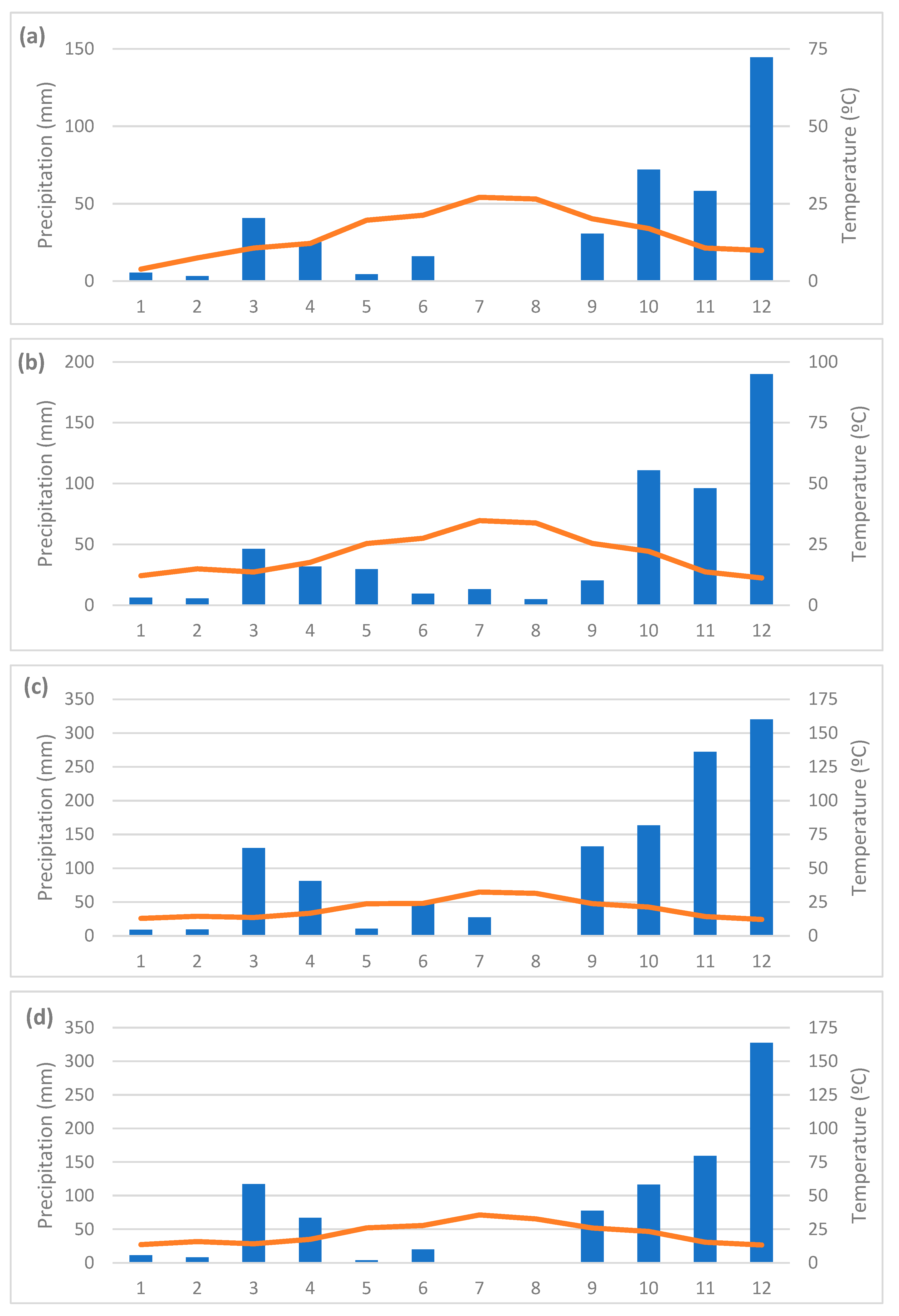
Climatic information was obtained from IPMA and SNIRH meteorological stations for 2022. Ombrothermic diagrams were constructed following Gaussen’s method (Figure 1) to characterise seasonal drought and humidity patterns across the four sites.

2.3. Leaf Sampling Protocol

To ensure standardisation, leaf samples for all biochemical analyses were collected on clear days between 10:00 and 12:00 local time. Fully expanded, sun-exposed leaves from the upper, outer canopy (northern side) were selected. For each cultivar at each location, six independent biological replicates (leaves from six different trees) were collected, immediately frozen in liquid nitrogen, and stored at −80 °C until analysis.

2.4. Stem Water Potential

Midday stem water potential (Ψwmid) was measured in August 2022 using a Scholander pressure chamber (PMS Instrument Company, Albany, NY, USA). For each cultivar and location, nine leaves (3 leaves in 3 trees) were bagged in reflective plastic for at least 20 min prior to excision to achieve equilibrium.
All spectrophotometric assays were performed with six biological replicates (n = 6), and each measurement was conducted in technical duplicate.

2.5. Determination of Total Phenolic Compounds

To assess the antioxidant potential of phenolic compounds in plants under drought stress, total phenolics were analysed using the Folin–Ciocalteu spectrophotometric method. Gallic acid served as the standard, chosen for its close structural similarity to typical phenolic substances found in plants.
Leaf samples were prepared by punching out four discs of 8 mm in diameter from each, followed by extraction in 10 mL of 80% acetone (v/v). The total phenolic content was then evaluated at 795 nm using the protocol established by [12], with a standard curve derived from gallic acid. For quantification, 5 mL of the acetone extract was used. A standard curve was constructed (concentration range: 0–100 µg/mL, R2 > 0.99). Results are expressed as mg of gallic acid equivalents (GAE) per g of dry weight (DW).

2.6. Determination of Soluble Sugars and Starch

Soluble sugars and starch were quantified to assess the plant’s carbohydrate metabolism and osmotic regulation mechanisms in response to drought stress. The determination of these parameters provides valuable information on the plant’s energy status, carbon allocation, and ability to maintain cellular turgor pressure under stress conditions.
Total soluble sugars were extracted using the colorimetric technique described by Irigoyen et al. [13] in 80% ethanol (v/v), with absorbance measured at 625 nm. The starch content was determined from the pellet obtained after soluble sugar extraction, with quantification performed spectrophotometrically at 625 nm following the method of Rose et al. [14]. Glucose was used as a standard for both soluble sugars and starch quantification.

2.7. Electrolyte Leakage

Electrolyte leakage content were analysed to evaluate cellular damage under drought stress. This parameter is widely used as indicator of membrane integrity [15].
Electrolyte leakage was determined following a modified version of the method of [16]. Leaf discs were incubated in double-distilled water at 25 °C for 24 h with continuous shaking, and conductivity was measured with a conductivity meter (Mettler Toledo AG8603 Schwerzenbach, Switzerland) before and after autoclaving. Electrolyte leakage (EL) was expressed as the ratio C1/C2, where C1 is the initial conductivity and C2 is the conductivity after autoclaving.

2.8. Quantification of Soluble Protein Content

The quantification of soluble proteins was carried out to evaluate changes in the plant proteome under drought stress conditions. Variations in soluble protein content can indicate shifts in protein synthesis, turnover, and degradation, thereby providing valuable insights into the plant’s stress adaptation strategies and metabolic adjustments.
The total soluble protein (SP) content was determined spectrophotometrically using bovine serum albumin as the standard, following the Bradford method [17].

2.9. Proline Quantification

Leaf samples from chestnut plants were collected for proline determination, which was performed according to the method of [18] with minor modifications. To prepare the acid-ninhydrin reagent, 1.25 g of ninhydrin was dissolved in 30 mL of glacial acetic acid and 20 mL of 6 M phosphoric acid by heating and stirring. When stored at 4 °C, the reagent remained stable for up to 24 h.
Briefly, leaf discs (0.5 g FW) were homogenised in 3% sulfosalicylic acid and centrifuged. The supernatant was reacted with acid-ninhydrin and glacial acetic acid at 100 °C for 1 h. The chromophore was extracted with toluene and absorbance measured at 520 nm. Purified proline (Sigma-Aldrich, Darmstadt, Germany) was used for the standard curve.

2.10. Enzymatic Activity Determination

Leaf discs (8 mm) were ground in liquid nitrogen and homogenised in 1–2 mL of 100 mM phosphate buffer (pH 7.0) containing 2% PVP. Extracts were centrifuged at 10,000× g for 10 min at 4 °C and the supernatants were kept on ice and used for CAT, POD and APX determinations.
CAT activity was analysed according to [19] with small modifications. 200 µL microplate reactions containing 100 mM phosphate buffer (pH 7.0), sample extract (10–50 µL depending on activity) and H2O2 (10–20 µL of a 10× diluted stock). After a brief 1–2 min incubation with shaking, the decrease in absorbance at 240 nm was monitored. Activity was calculated from the rate of H2O2 decomposition and expressed as U mg−1 protein. No deviations from the standard procedure were required.
POD activity was measured in [20] 200 µL reactions containing 100 mM phosphate buffer (pH 7.0), guaiacol (10 µL of a 20 mM stock), H2O2 (10 µL of a 10 mM stock) and 10–50 µL of enzyme extract. Absorbance was recorded at 336 nm and 470 nm. One unit of POD was defined as the amount increasing absorbance by 0.100 units per minute. Minor adjustments included reaction miniaturisation to microplates and optimisation of sample volume.
APX activity was determined in 150 mM sodium phosphate buffer (pH 7.5) with 0.75 mM EDTA. The 200 µL reaction contained sample extract (10–50 µL), 5 µL ascorbic acid (10 mM) and 10 µL H2O2 (10 mM). The decrease in absorbance at 290 nm was monitored and activity calculated using ε = 2.8 mM−1 cm−1. The method followed [21], with only the adaptation to microplate format.

2.11. Total Flavonoid Content

The total flavonoid content (TFC) was quantified using a colorimetric assay [22,23]. A mixture was prepared by combining diluted extracts (1 mL), bi-distilled water (4 mL), and a 5% w/v NaNO2 solution (0.3 mL). AlCl3 solution (10% w/v, 0.3 mL) was added and allowed to stand for 6 min after shaking and remaining at room temperature for 5 min. After that, 2 mL of NaOH (1 M) was introduced. Finally, volume was completed to 10 mL with bi-distilled water and thoroughly mixed. The absorbance of the pink mixture was measured at 510 nm.
Standard catechin (Sigma-Aldrich, Darmstadt, Germany) solutions (0–10 mg mL−1) were also essayed and calibration curve was obtained from the equation: y = 0.029x + 0.188; R2 = 0.993. A blank essay, using bi-distilled water, was also prepared. Total flavonoid content was expressed as milligrams of catechin equivalents per gram of dry weight (mg CAT eq. g−1 DW).

2.12. Ferric Reducing Antioxidant Power (FRAP) Activity

The FRAP assay was performed according to [24], with minor modifications for use in 96-well microplates. Fresh FRAP reagent was prepared daily by mixing sodium acetate buffer (300 mM, pH 3.6), 10 mM TPTZ solution (in 40 mM HCl), and 20 mM FeCl3 solution in a 10:1:1 (v/v/v) ratio. In each well, 25 µL of extract was added to 275 µL of FRAP reagent. The microplates were incubated at room temperature in the dark for 5 min, and absorbance was measured at 593 nm using a microplate reader. FeSO4 was used as the standard. Results are expressed as mean ± SE in µmol FeSO4 equivalents per gram of dry weight (µmol FeSO4 eq. g−1 DW).

2.13. Statistical Analysis

Statistical significance of differences among cultivars within each location was assessed using one-way ANOVA followed by Tukey’s HSD test (p < 0.05). Different letters indicate significant differences. Multivariate analysis (hierarchical clustering with Ward’s linkage and Euclidean distance) was used to group cultivars and locations based on all standardised traits.

3. Results

A one-way ANOVA revealed significant effects of cultivar on all measured physiological and biochemical traits within each location (p < 0.05). Significant differences among cultivars at each site are indicated by different letters in Table 2.
Stem water potential (Ψwmid) varied significantly among locations, ranging from −0.59 MPa (PBP) to −1.56 MPa (PB) (Table 2), indicating greater soil water retention in PBP. Across sites, COL consistently showed the lowest values, while JUD, LON, and MRT displayed increases of up to 49% (Mv) relative to COL. Cultivars grafted onto the COL rootstock generally exhibited stronger declines in water potential under drought, particularly in PB and CM, with the COL rootstock itself being the most affected. This confirms distinct, cultivar-specific responses to water stress.
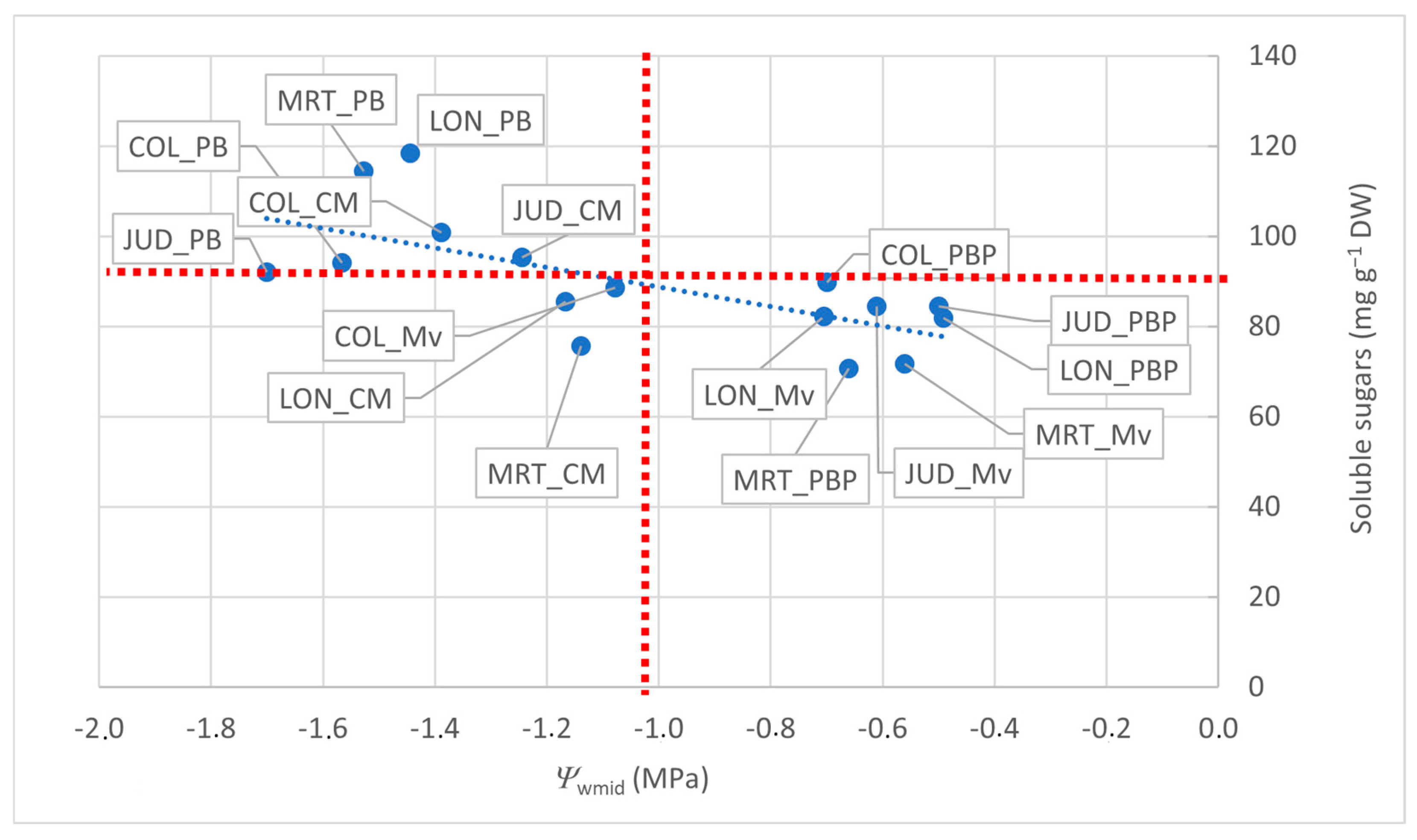
Total soluble sugars (TSS) varied significantly among locations with the highest concentration in PB (104.8 mg g−1 DW) and the lowest in PBP and Mv (81.7 mg g−1 DW) (Table 2). Among cultivars, TSS ranged from 83.2 mg g−1 DW (LON) to 93.4 mg g−1 DW (COL). A significant negative correlation was observed between TSS and stem water potential (R2 = 0.47; Figure 2). The range of TSS values among cultivars widened with decreasing Ψwmid, from 19.1 mg g−1 DW in PBP to 26.3 mg g−1 DW in PB.
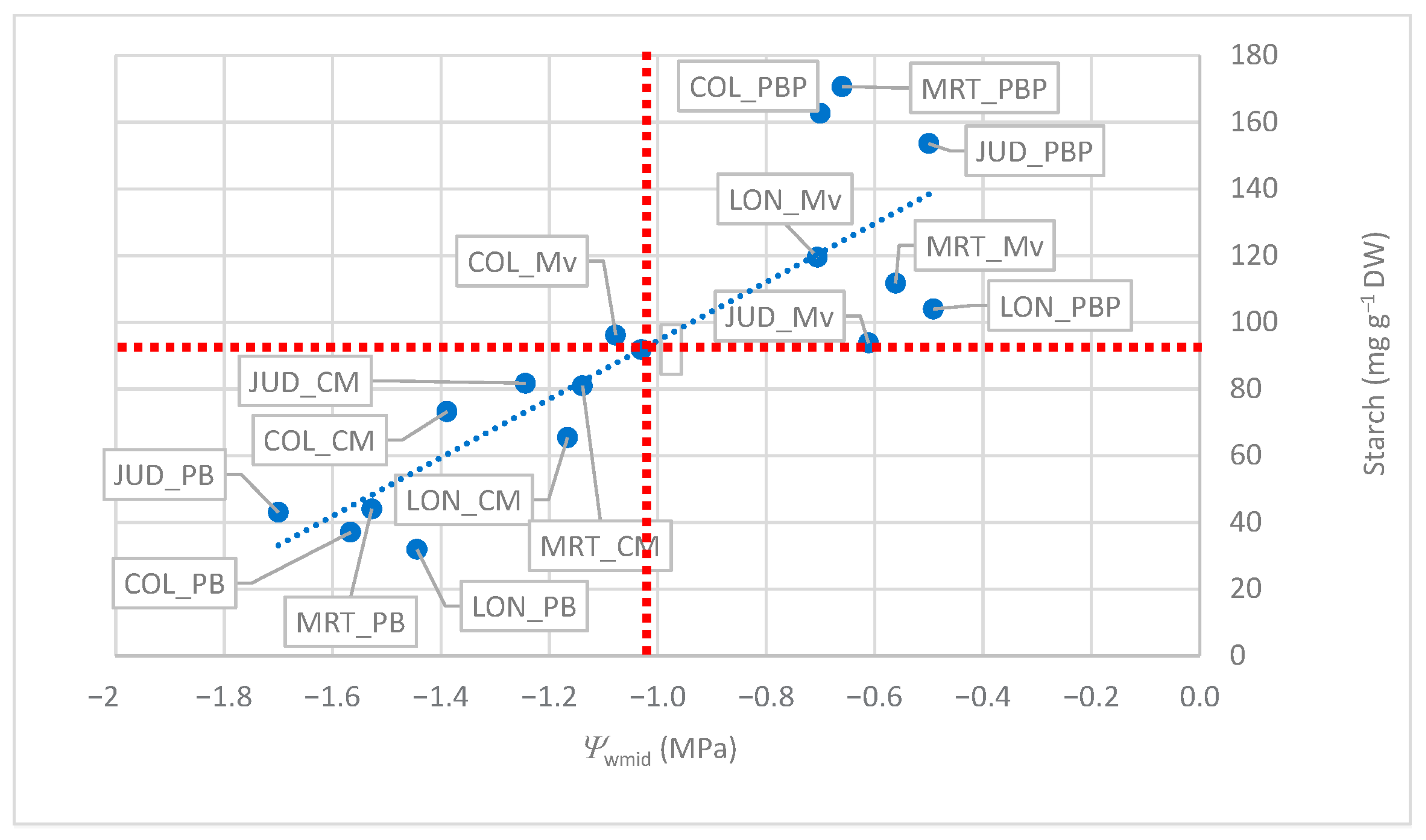
Total starch content (TSC) differed significantly among locations and cultivars (Table 2). The highest TSC was recorded in PBP (147.7 mg g−1 DW) and the lowest in PB (39.0 mg g−1 DW). Across cultivars, TSC ranged from 80.2 mg g−1 DW (LON) to 101.8 mg g−1 DW (MRT). The variation in TSC among cultivars was highest in PBP (66.6 mg g−1 DW) and decreased with drought intensity to 11.1 mg g−1 DW in PB. A positive correlation was observed between Ψwmid and TSC (R2 = 0.71; Figure 3). The range of TSC values among cultivars narrowed with decreasing Ψwmid, from 66.6 mg g−1 DW in PBP to 11.1 mg g−1 DW in PB.
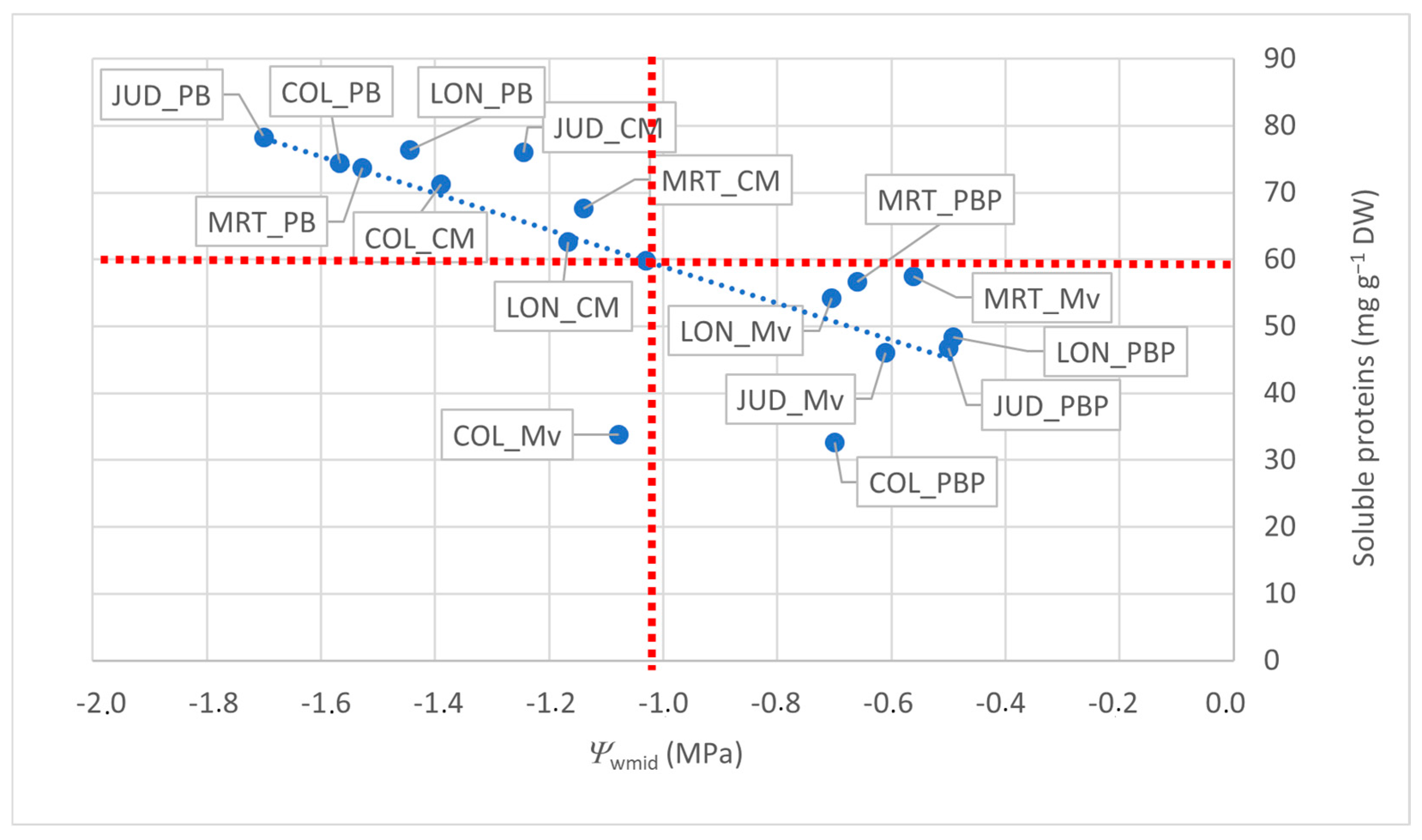
Soluble protein content (SPC) differed significantly among locations and cultivars (Table 2). The highest concentration was observed in Mv (78.3 mg g−1 DW) and the lowest in PBP (46.1 mg g−1 DW). A negative correlation was found between SPC and stem water potential (Ψwmid) (R2 = 0.59; Figure 4). Among cultivars, SPC ranged from 46.1 mg g−1 DW (COL) to 78.3 mg g−1 DW (LON). The variation in SPC among cultivars was greater at stressed sites, ranging from 8.5 mg g−1 DW in Mv to 14.7 mg g−1 DW in PB.
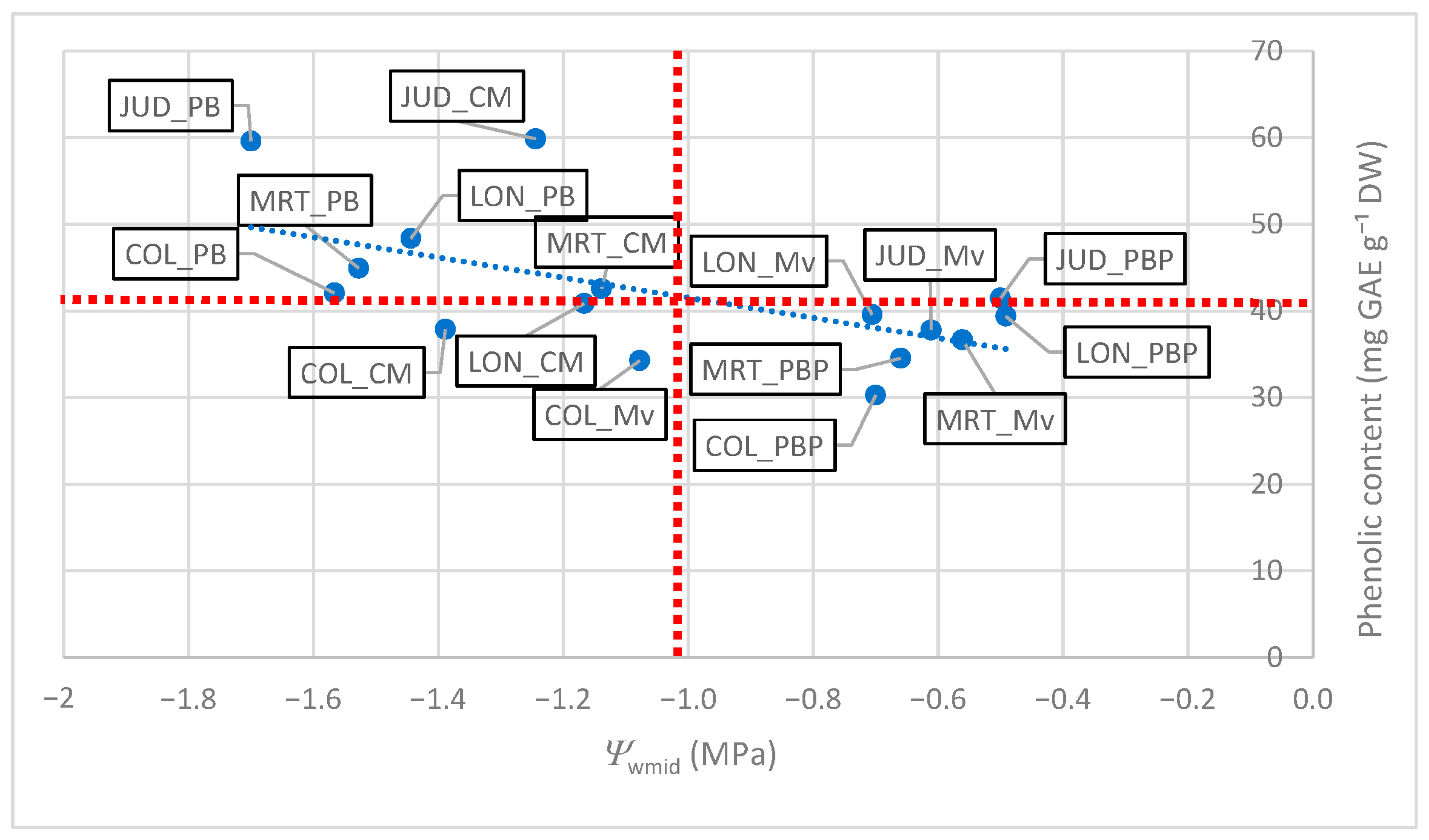
Total phenolic content (TPC) varied significantly among locations and cultivars (Table 2), with the highest level recorded in JUD_CM (59.86 mg GAE g−1 DW) and the lowest in COL_PBP (30.29 mg GAE g−1 DW). TPC showed a negative correlation with stem water potential (R2 = 0.36; Figure 5). The variation in TPC among cultivars increased under drought stress, ranging from 11.20 mg GAE g−1 DW in PBP to 21.98 mg GAE g−1 DW in CM. JUD consistently showed the highest TPC values across locations, while COL showed the lowest.
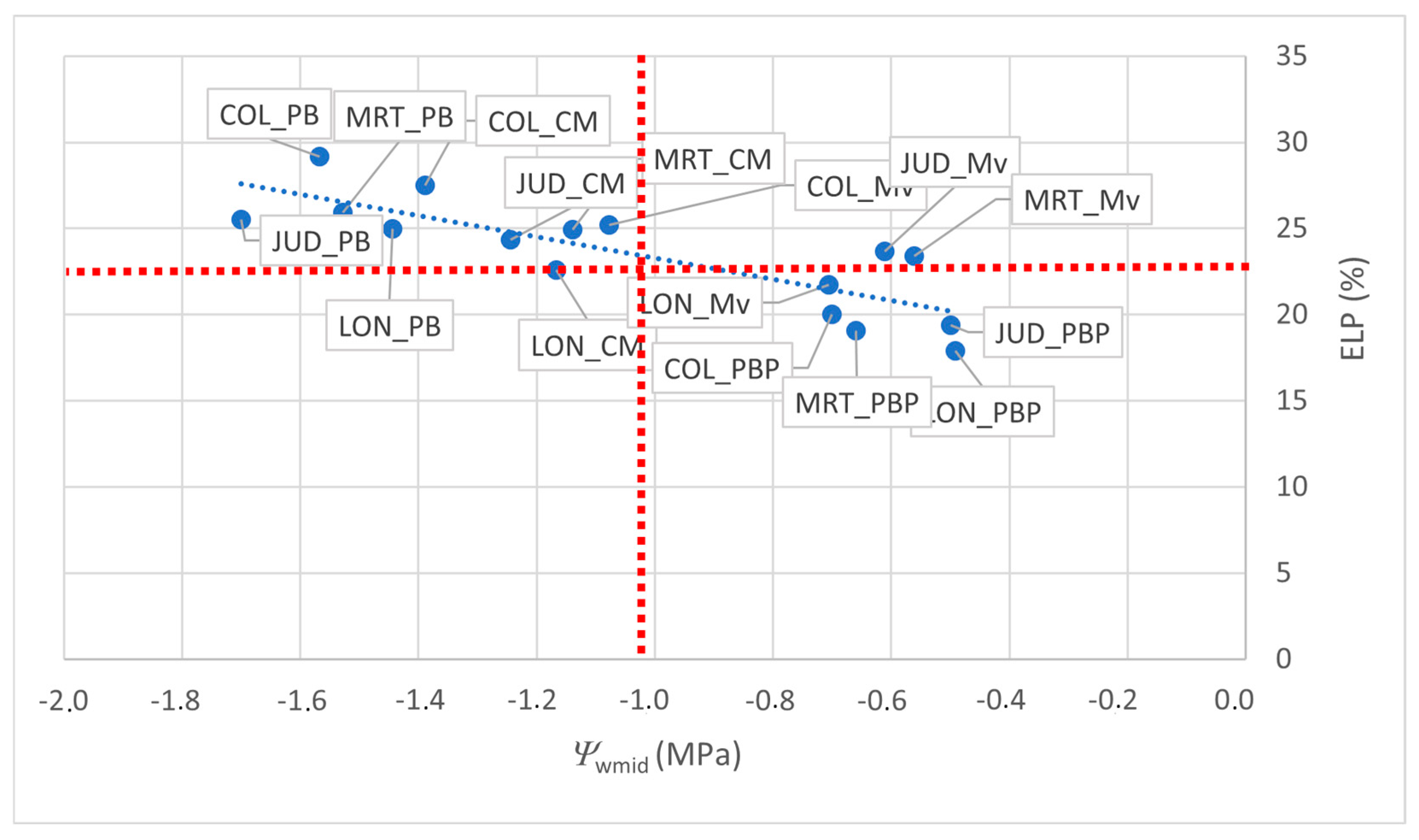
Electrolyte leakage percentage (ELP) differed significantly among locations and cultivars (Table 2). The highest ELP was recorded in PB (29.4%) and the lowest in Mv (21.1%). A strong negative correlation was observed between ELP and stem water potential (R2 = 0.68; Figure 6). Among cultivars, ELP ranged from 21.1% (LON) to 29.4% (COL). The variation in ELP among cultivars increased under drought stress, ranging from 2.2% in PBP to 3.5% in PB.
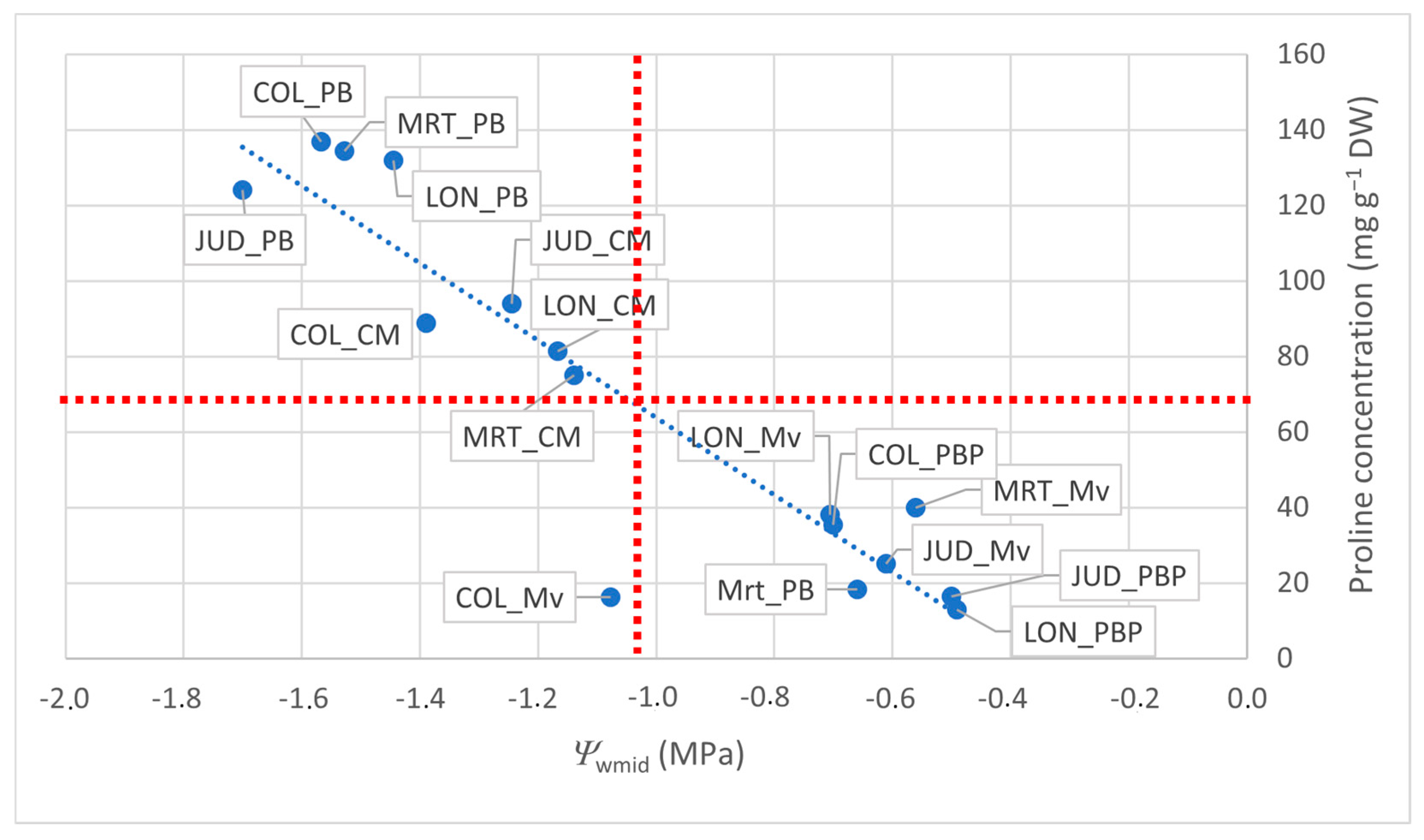
Proline content differed significantly among locations and cultivars (Table 2). The highest levels were recorded in PB (131.9 mg g−1 DW) and the lowest in PBP (16.3 mg g−1 DW). A strong negative correlation was observed between proline content and stem water potential (R2 = 0.85; Figure 7). Among cultivars, proline ranged from 16.3 mg g−1 DW (COL) to 131.9 mg g−1 DW (LON). The variation in proline content among cultivars increased under drought stress, ranging from 3.8 mg g−1 DW in PBP to 19.1 mg g−1 DW in CM.
Total flavonoid content (TFC) differed significantly among cultivars (Table 2), with the highest concentration observed in JUD (32.5 mg CAT eq. g−1 DW) and the lowest in COL (24.9 mg CAT eq. g−1 DW). A weak negative correlation was found between TFC and stem water potential (R2 = 0.23).
FRAP values differed significantly among cultivars (Table 2), with LON showing the highest values (644.4 µmol FeSO4 eq. g−1 DW) and COL the lowest (387.9 µmol FeSO4 eq. g−1 DW). No significant correlation was found between FRAP and stem water potential (R2 = 0.013).
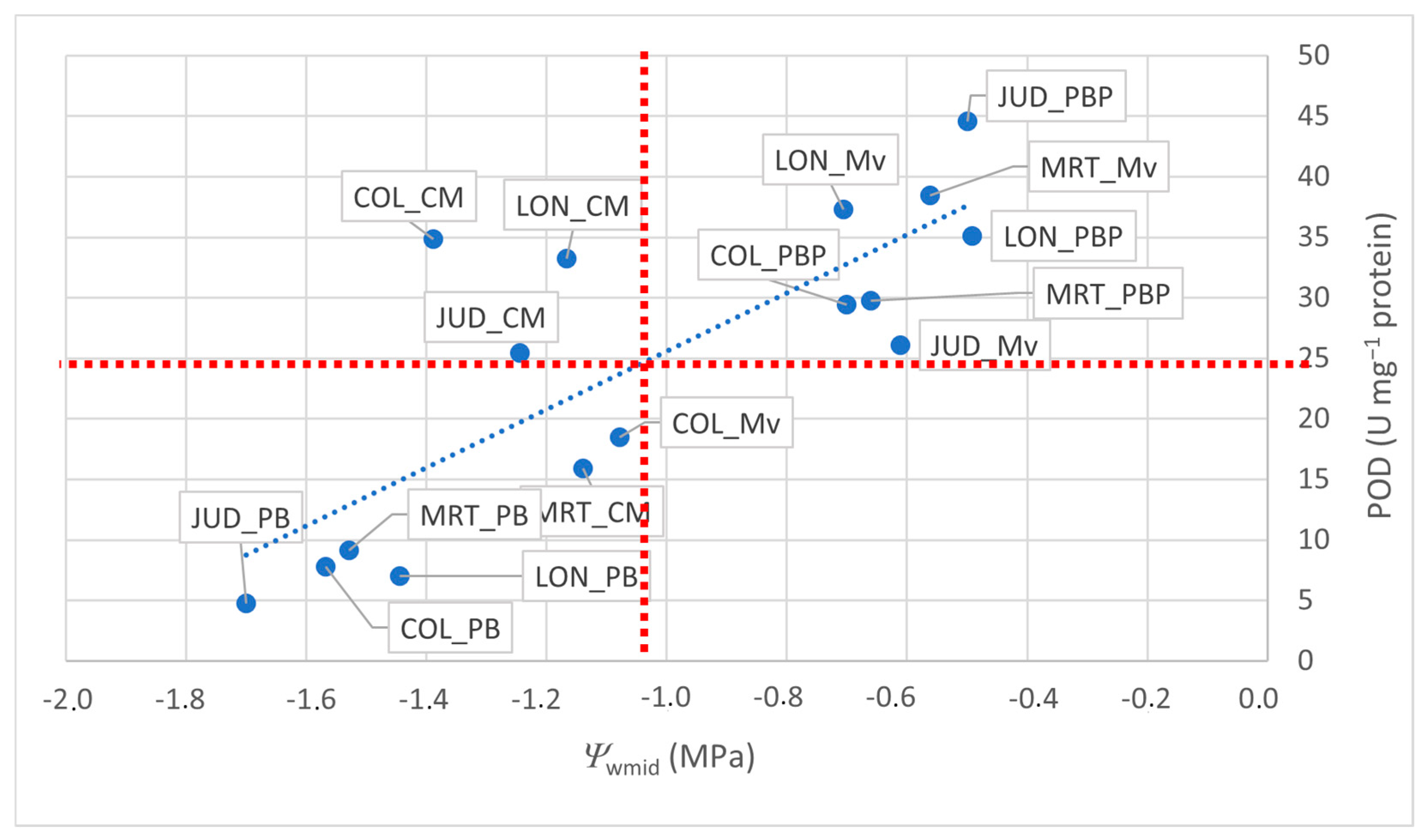
Catalase (CAT) activity varied significantly among cultivars (Table 2), with LON consistently showing the highest activity (35.8 U mg−1 protein) and COL the lowest (26.2 U mg−1 protein). A weak negative correlation was observed between CAT activity and stem water potential (R2 = 0.34). Peroxidase (POD) activity differed significantly among cultivars (Table 2), with JUD showing the highest activity (34.8 U mg−1 protein) and COL the lowest (21.2 U mg−1 protein). A positive correlation was observed between POD activity and stem water potential (R2 = 0.64; Figure 8). The variation in POD activity among cultivars was highest under moderate drought stress (13.6 U mg−1 protein in CM) compared to severe stress (5.1 U mg−1 protein in PB).
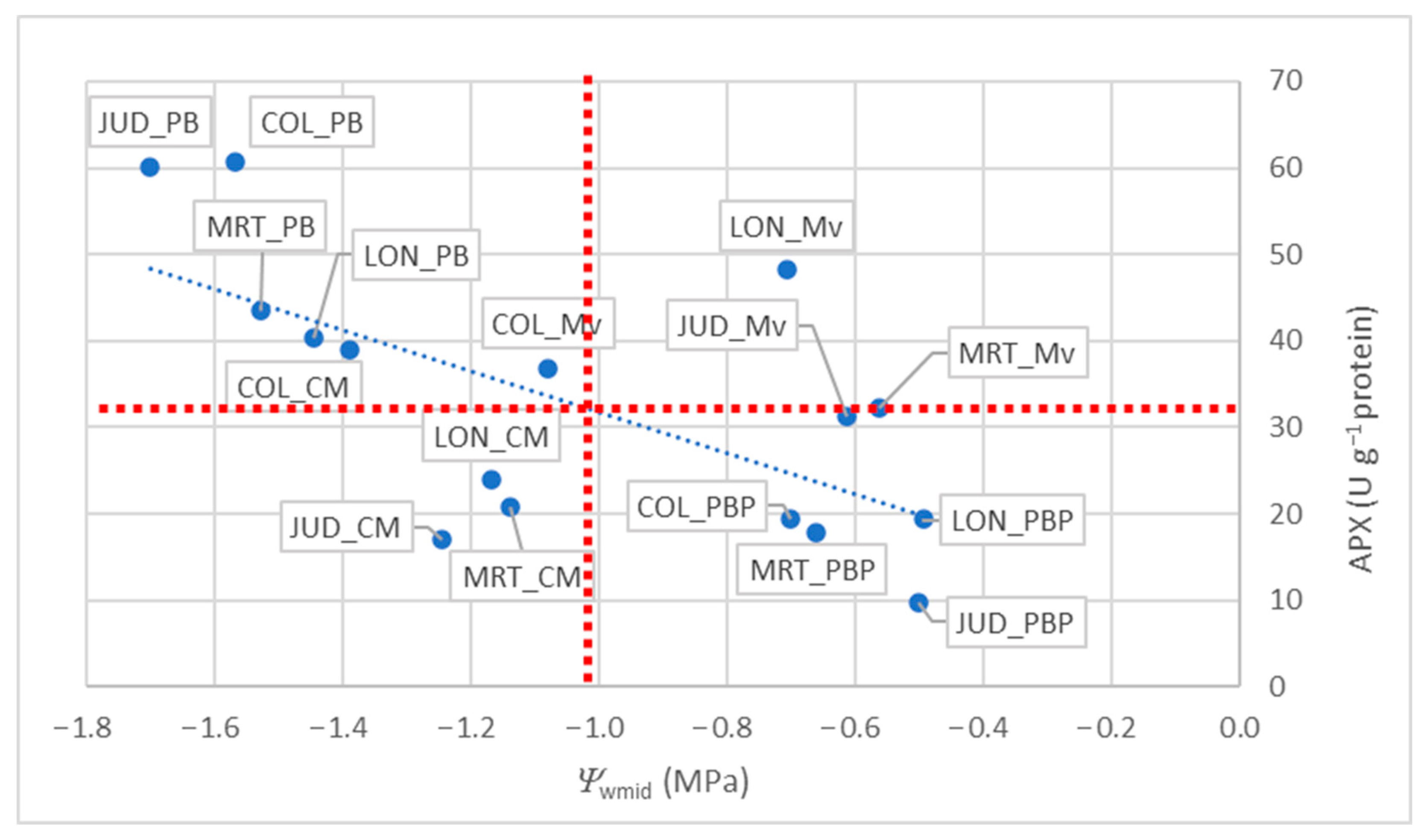
Ascorbate peroxidase (APX) activity differed significantly among cultivars (Table 2), with LON showing the highest activity (48.2 U g−1 protein) and COL the lowest (19.5 U g−1 protein). A negative correlation was observed between APX activity and stem water potential (R2 = 0.42; Figure 9). The variation in APX activity among cultivars increased with drought severity, ranging from 6.6 U g−1 protein in PBP to 8.5 U g−1 protein in CM.
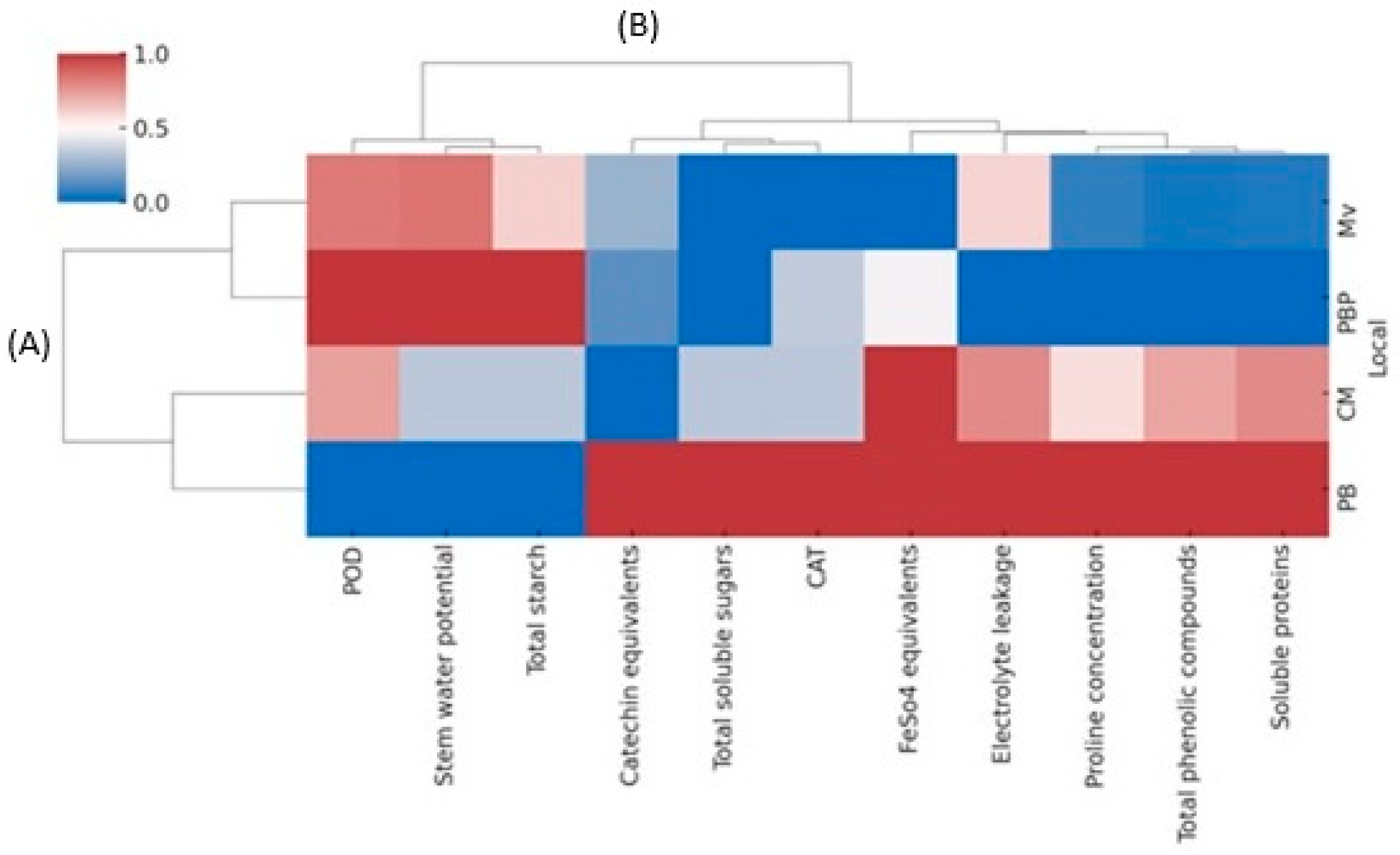
Hierarchical clustering of locations revealed two main clusters (Figure 10). Cluster 1 comprised Mv and PBP, while Cluster 2 contained CM and PB. The silhouette score was 0.52 and the centroid distance was 117.38. Clustering of parameters also formed two main groups. Group A included peroxidase activity, stem water potential, and starch content. Group B included proline, electrolyte leakage, soluble proteins, total phenolics, and FRAP.
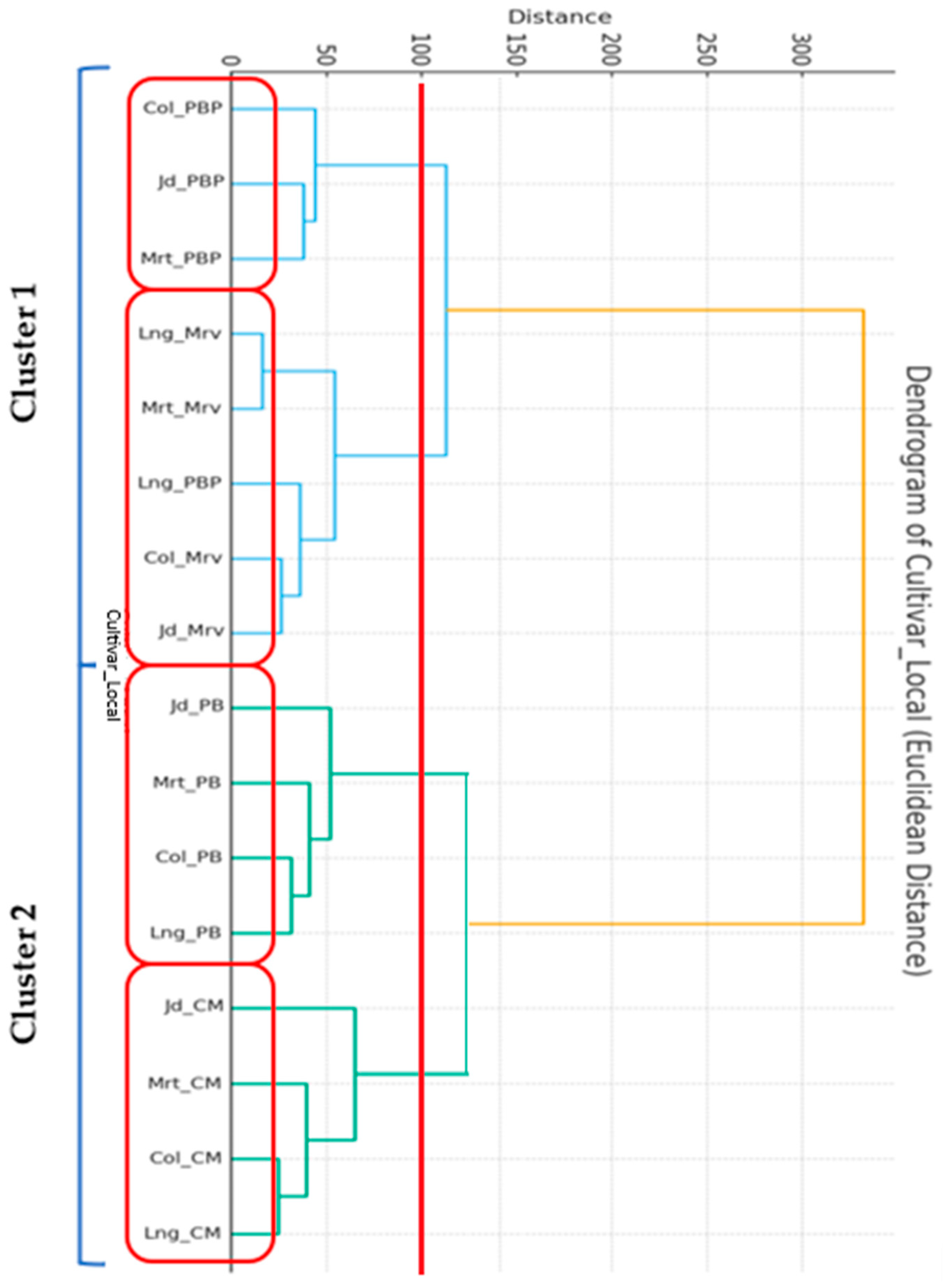
Hierarchical clustering of cultivar-location combinations revealed two main clusters (Figure 11). Cluster 1 contained all genotypes from Mv and PBP, while Cluster 2 contained all genotypes from CM and PB. Within Cluster 1, two subclusters were formed: Subcluster 1.1 (COL_PBP, JUD_PBP, MRT_PBP) and Subcluster 1.2 (COL_Mv, JUD_Mv, LON_Mv, MRT_Mv, LON_PBP). Within Cluster 2, the subclusters were Subcluster 2.1 (COL_PB, JUD_PB, LON_PB, MRT_PB) and Subcluster 2.2 (COL_CM, JUD_CM, LON_CM, MRT_CM).

4. Discussion

The four orchards successfully established a natural drought gradient, confirming midday stem water potential (Ψwmid) as a reliable indicator of site-specific water status. Environmental conditions exerted a stronger influence on physiological and biochemical profiles than genetic background, a pattern also reported in other Mediterranean tree crops such as olive [25]. Despite irrigation, Mv experienced substantial atmospheric drought and therefore clustered with the cooler, rainfed PBP as the least stressed sites, whereas PB clearly represented the most severe stress environment.
The COL rootstock emerged as the most drought-sensitive genotype, consistently showing the lowest Ψwmid, highest electrolyte leakage and the weakest antioxidant activation. This highlights the importance of scion choice, as grafted cultivars such as LON and MRT sustained superior water status—a trend consistent with reported benefits of grafting in improving drought tolerance [24,26].

4.1. Osmotic Adjustment and Carbon Metabolism

Osmotic adjustment was a keyway to protect against drought. The significant buildup of proline in LON, especially at PB, shows that it is a key osmo-protectant that can stabilise proteins and membranes and directly eliminate the production of ROS [14]. This response is part of the ABA-driven signalling pathway that causes stomata to close and increases the production of ROS in chloroplasts and mitochondria. In this context, the buildup of proline helps keep turgor and protects against redox damage [27].
Simultaneously, the drought-induced remobilisation of carbon—reflected in starch degradation and the increased accumulation of soluble sugars—is a well-known way to help maintain osmotic balance and keep energy metabolism going when photosynthesis is limited [12]. The increase in soluble proteins in JUD and MRT indicates a proteomic reconfiguration aimed at stress defence, possibly involving LEA proteins or molecular chaperones [28,29]. These responses show how tolerant cultivars manage osmolyte accumulation, carbon redistribution, and protein-level changes to keep cells stable during drought [30].

4.2. Membrane Stability and the Antioxidant System

Membrane integrity, inferred from electrolyte leakage, proved to be a strong marker of cultivar resilience. The superior ability of LON to maintain membrane stability likely results from the combined effects of osmotic adjustment and efficient antioxidant defence, thereby limiting drought-induced oxidative damage—a relationship documented in other species facing abiotic stress [31].
The antioxidant strategies of the cultivars were clearly distinct. JUD relied on a strong inducible enzymatic response, with the highest POD activity and a marked induction of APX. Given that stomatal closure under ABA signalling increases intracellular H2O2 pro-duction, the activation of APX is consistent with its essential role in detoxifying ROS in chloroplasts and the cytosol [18].
Regarding non-enzymatic antioxidants, total phenolics were very sensitive to drought, especially in JUD. On the other hand, FRAP values seemed to be mostly constant. This indicates that the overall antioxidant capacity is significantly influenced by genotype, whereas certain phenolic compounds may be preferentially synthesised in response to stress [23]. The weak response of flavonoids to water deficit alone suggests that their biosynthesis in C. sativa is probably regulated by other factors as well, like high irradiance or UV exposure [32].

4.3. Genotype-by-Environment Interaction and Resilience

The hierarchical clustering analysis helps synthesise these mechanisms. The clear separation of sites into two main groups confirms the predominance of environmental pressure (Figure 10). Trait clustering revealed two functional axes: an “energy–stress balance” group (starch, Ψwmid, POD) and a “stress-response complex” (proline, electrolyte leakage, soluble proteins, phenolics).
Cultivar clustering within these environments highlights strong genotype-by-environment interactions (Figure 11). Two strategic syndromes became evident: (i) a conservative strategy (Mv, PBP), defined by better water status, higher starch reserves and moderate antioxidant activity; (ii) a stress-responsive strategy (CM, PB), characterised by strong osmotic adjustment (proline) and activation of enzymatic antioxidants (APX).
Within these contexts, LON and JUD deployed these strategies most effectively, whereas COL consistently showed a limited capacity to mount an adequate defence [33].

5. Limitation Statement

The limitation of this study is the absence of complementary gene expression or metabolomic data, which would facilitate a more profound comprehension of the signalling pathways and molecular mechanisms driving the observed physiological responses.

6. Conclusions

This study demonstrates that drought resilience in Portuguese chestnut cultivars is governed by a synergistic network of physiological and biochemical defences rather than a single trait. To our knowledge, this provides the first integrated comparison of Portuguese cultivars under real-field drought gradients, identifying proline accumulation, starch stability, and inducible APX/POD activities as key tolerance markers.
We identified distinct, complementary resilience strategies: LON excels in osmotic adjustment, JUD in inducible antioxidant enzymes, and MRT in overall plasticity, while COL proved highly sensitive. Clustering confirmed that environment is the primary driver of physiological responses, separating orchards into conservative (Mv, PBP) and stress-adaptive (CM, PB) strategies.
These findings provide a physiological basis for selecting resilient cultivars and adapting orchard management to specific sites. Future work should focus on the molecular mechanisms underlying these traits and validate their utility in long-term breeding programmes aimed at enhancing climate resilience in Mediterranean chestnut agroecosystems.

Author Contributions

All authors contributed significantly to the writing, review, and editing. Conceptualization: T.M., A.F.-P., P.F., T.P. and J.G.-L. All authors have read and agreed to the published version of the manuscript.

Funding

This work is supported by National Funds by FCT –Portuguese Foundation for Science and Technology, under the projects UID/04033/2025: Centre for the Research and Technology of Agro-Environmental and Biological Sciences and LA/P/0126/2020 (https://doi.org/10.54499/LA/P/0126/2020).

Data Availability Statement

The original contributions presented in this study are included in the article. Further inquiries can be directed to the corresponding author.

Acknowledgments

The authors would like to thank the CITAB-Inov4Agro and FCT—Portuguese Foundation for Science and Technology, for their financial support.

Conflicts of Interest

The authors declare no conflicts of interest.

References

  1. Intergovernmental Panel on Climate Change (IPCC). Climate Change 2022—Impacts, Adaptation and Vulnerability; Cambridge University Press: Cambridge, UK, 2023. [Google Scholar] [CrossRef]
  2. Conedera, M.; Tinner, W.; Krebs, P.; De Rigo, D.; Caudullo, G. Castanea sativa in Europe: Distribution, Habitat, Usage and Threats. In European Atlas of Forest Tree Species; Publications Office of the European Union: Luxembourg, 2016; pp. 78–79. [Google Scholar]
  3. Marques, T.; Ferreira-Pinto, A.; Fevereiro, P.; Pinto, T.; Gomes-Laranjo, J. Current Biological Insights of Castanea sativa Mill. to Improve Crop Sustainability to Climate Change. Plants 2025, 14, 335. [Google Scholar] [CrossRef]
  4. Zhu, J.K. Abiotic Stress Signaling and Responses in Plants. Cell 2016, 167, 313–324. [Google Scholar] [CrossRef]
  5. Yoshida, T.; Christmann, A.; Yamaguchi-Shinozaki, K.; Grill, E.; Fernie, A.R. Revisiting the Basal Role of ABA—Roles Outside of Stress. Trends Plant Sci. 2019, 24, 625–635. [Google Scholar] [CrossRef] [PubMed]
  6. Mittler, R. ROS Are Good. Trends Plant Sci. 2017, 22, 11–19. [Google Scholar] [CrossRef] [PubMed]
  7. Vanlerberghe, G.C.; Dahal, K.; Alber, N.A.; Chadee, A. Photosynthesis, Respiration and Growth: A Carbon and Energy Balancing Act for Alternative Oxidase. Mitochondrion 2020, 52, 197–211. [Google Scholar] [CrossRef]
  8. Krasensky, J.; Jonak, C. Drought, Salt, and Temperature Stress-Induced Metabolic Rearrangements and Regulatory Networks. J. Exp. Bot. 2012, 63, 1593–1608. [Google Scholar] [CrossRef] [PubMed]
  9. Bailey-Serres, J.; Parker, J.E.; Ainsworth, E.A.; Oldroyd, G.E.D.; Schroeder, J.I. Genetic Strategies for Improving Crop Yields. Nature 2019, 575, 109–118. [Google Scholar] [CrossRef]
  10. Fernández-López, J.; Fernández-Cruz, J. Identification of Traditional Galician Sweet Chestnut Varieties Using Ethnographic and Nuclear Microsatellite Data. Tree Genet. Genomes 2015, 11, 111. [Google Scholar] [CrossRef]
  11. Marques, T.; Ferreira-Pinto, A.; Pinto, T.; Gomes-Laranjo, J. Predicting the Behavior of Chestnut Cultivars Grafted on ColUTAD under Different Edaphoclimatic Conditions. In Proceedings of the VII International Chestnut Symposium, Lugo, Spain, 26–29 June 2023; pp. 49–58. [Google Scholar] [CrossRef]
  12. Singleton, V.L.; Rossi, J.A. Colorimetry of Total Phenolics with Phosphomolybdic-Phosphotungstic Acid Reagents. Am. J. Enol. 1965, 16, 144–158. [Google Scholar] [CrossRef]
  13. Irigoyen, J.J.; Einerich, D.W.; Sánchez-Díaz, M. Water Stress Induced Changes in Concentrations of Proline and Total Soluble Sugars in Nodulated Alfalfa (Medicago sativa) Plants. Physiol. Plant. 1992, 84, 55–60. [Google Scholar] [CrossRef]
  14. Rose, R.; Rose, C.L.; Omi, S.K.; Forry, K.R.; Durall, D.M.; Bigg, W.L. Starch Determination by Perchloric Acid vs. Enzymes: Evaluating the Accuracy and Precision of Six Colorimetric Methods. J. Agric. Food Chem. 1991, 39, 2–11. [Google Scholar] [CrossRef]
  15. Sharma, P.; Jha, A.B.; Dubey, R.S. Oxidative Stress and Antioxidative Defense Systems in Plants Growing under Abiotic Stresses. In Handbook of Plant and Crop Stress; CRC Press: Boca Raton, FL, USA, 2016; pp. 89–138. [Google Scholar]
  16. Abu-Muriefah, S.S. Effects of Silicon on Membrane Characteristics, Photosynthetic Pigments, Antioxidative Ability, and Mineral Element Contents of Faba Bean (Vicia faba L.) Plants Grown under Cd and Pb Stress. Int. J. Adv. Res. Biol. Sci. 2015, 2, 1–7. [Google Scholar]
  17. Bradford, M.M. A Rapid and Sensitive Method for the Quantitation of Microgram Quantities of Protein Utilizing the Principle of Protein-Dye Binding. Anal. Biochem. 1976, 72, 248–254. [Google Scholar] [CrossRef]
  18. Bates, L.S.; Waldren, R.P.; Teare, I.D. Rapid Determination of Free Proline for Water-Stress Studies. Plant Soil 1973, 39, 205–207. [Google Scholar] [CrossRef]
  19. Aebi, H. Catalase in Vitro. Methods Enzymol. 1984, 105, 121–126. [Google Scholar] [CrossRef]
  20. Yu, J.; Jin, X.; Sun, X.; Gao, T.; Chen, X.; She, Y.; Jiang, T.; Chen, S.; Dai, S. Hydrogen Peroxide Response in Leaves of Poplar (Populus simonii × Populus nigra) Revealed from Physiological and Proteomic Analyses. Int. J. Mol. Sci 2017, 18, 2085. [Google Scholar] [CrossRef] [PubMed]
  21. Nakano, Y.; Asada, K. Hydrogen Peroxide Is Scavenged by Ascorbate-Specific Peroxidase in Spinach Chloroplasts. Plant Cell Physiol. 1981, 22, 867–880. [Google Scholar] [CrossRef]
  22. Javanmardi, J.; Stushnoff, C.; Locke, E.; Vivanco, J.M. Antioxidant Activity and Total Phenolic Content of Iranian Ocimum Accessions. Food Chem. 2003, 83, 547–550. [Google Scholar] [CrossRef]
  23. Zhishen, J.; Mengcheng, T.; Jianming, W. The Determination of Flavonoid Contents in Mulberry and Their Scavenging Effects on Superoxide Radicals. Food Chem. 1999, 64, 555–559. [Google Scholar] [CrossRef]
  24. Benzie, I.F.; Strain, J.J. The Ferric Reducing Ability of Plasma (FRAP) as a Measure of “Antioxidant Power”: The FRAP Assay. Anal. Biochem. 1996, 239, 70–76. [Google Scholar] [CrossRef] [PubMed]
  25. Trabelsi, L.; Gargouri, K.; Ben Hassena, A.; Mbadra, C.; Ghrab, M.; Ncube, B.; Van Staden, J.; Gargouri, R. Impact of Drought and Salinity on Olive Water Status and Physiological Performance in an Arid Climate. Agric. Water Manag. 2019, 213, 749–759. [Google Scholar] [CrossRef]
  26. Brito, C.; Dinis, L.T.; Moutinho-Pereira, J.; Correia, C.M. Drought Stress Effects and Olive Tree Acclimation under a Changing Climate. Plants 2019, 8, 232. [Google Scholar] [CrossRef]
  27. Bharath, P.; Gahir, S.; Raghavendra, A.S. Abscisic Acid-Induced Stomatal Closure: An Important Component of Plant Defense Against Abiotic and Biotic Stress. Front. Plant Sci. 2021, 12, 615114. [Google Scholar] [CrossRef] [PubMed]
  28. Danquah, A.; de Zelicourt, A.; Colcombet, J.; Hirt, H. The Role of ABA and MAPK Signaling Pathways in Plant Abiotic Stress Responses. Biotechnol. Adv. 2014, 32, 40–52. [Google Scholar] [CrossRef]
  29. Gambetta, G.A.; Manuck, C.M.; Drucker, S.T.; Shaghasi, T.; Fort, K.; Matthews, M.A.; Walker, M.A.; McElrone, A.J. The Relationship between Root Hydraulics and Scion Vigour across Vitis Rootstocks: What Role Do Root Aquaporins Play? J. Exp. Bot. 2012, 63, 6445–6455. [Google Scholar] [CrossRef]
  30. Haghpanah, M.; Hashemipetroudi, S.; Arzani, A.; Araniti, F. Drought Tolerance in Plants: Physiological and Molecular Responses. Plants 2024, 13, 2962. [Google Scholar] [CrossRef]
  31. Hajibarat, Z.; Saidi, A.; Zabet-Moghaddam, M.; Shahbazi, M.; Zeinalabedini, M.; Gorji, A.M.; Mirzaei, M.; Haynes, P.A.; Hosseini Salekdeh, G.; Ghaffari, M.R.; et al. Integrated Proteome and Metabolome Analysis of the Penultimate Internodes Revealing Remobilization Efficiency in Contrasting Barley Genotypes under Water Stress. Sci. Rep. 2024, 14, 28312. [Google Scholar] [CrossRef] [PubMed]
  32. Barickman, T.C.; Olorunwa, O.J.; Sehgal, A.; Walne, C.H.; Reddy, K.R.; Gao, W. Yield, Physiological Performance, and Phytochemistry of Basil (Ocimum basilicum L.) under Temperature Stress and Elevated CO2 Concentrations. Plants 2021, 10, 1072. [Google Scholar] [CrossRef]
  33. Sarkar, A.; VanLoon, G.W.; Sensarma, S.R. Sustainable Solutions for Food Security: Combating Climate Change by Adaptation. In Sustainable Solutions for Food Security: Combating Climate Change by Adaptation; Springer: Berlin/Heidelberg, Germany, 2019; pp. 1–531. [Google Scholar] [CrossRef]
Figure 1. Ombrothermic diagrams (Gaussen’s method) for the four demonstration orchards in 2022: (a) Carrazedo de Montenegro, (b) Parada, (c) Penela da Beira, (d) Porto da Espada (Marvão). The charts depict monthly precipitation (bars) and mean temperature (line). Biologically dry periods, indicative of drought stress, occur when the precipitation curve falls below twice the temperature curve (2 T).
Agriculture 15 02401 g001
Figure 2. Relationship between midday stem water potential (Ψwmid) and total soluble sugar in leaves of four chestnut cultivars (COL, JUD, LON, MRT) grown across four locations. The dashed blue line represents the linear regression for all data points combined (Equation: TSS = −21.755 Ψwmid + 66.98 (R2 = 0.47)). The dashed red line indicates the overall mean values of Ψwmid and total soluble sugar. Each data point represents the mean of six biological replicates.
Agriculture 15 02401 g002
Figure 3. Relationship between midday stem water potential (Ψwmid) and total starch content in leaves of four chestnut cultivars (COL, JUD, LON, MRT) grown across four locations. The dashed blue line represents the linear regression for all data points combined (Equation: Starch = 87.674 Ψwmid + 182.16 (R2 = 0.71)). The dashed red line indicates the overall mean values of Ψwmid and total starch content. Each data point represents the mean of six biological replicates.
Agriculture 15 02401 g003
Figure 4. Relationship between midday stem water potential (Ψwmid) and total soluble proteins in leaves of four chestnut cultivars (COL, JUD, LON, MRT) grown across four locations. The dashed blue line represents the linear regression for all data points combined (Equation: Soluble proteins = −27.391 Ψwmid + 31.537 (R2 = 0.59)). The dashed red line indicates the overall mean values of Ψwmid and total soluble proteins. Each data point represents the mean of six biological replicates.
Agriculture 15 02401 g004
Figure 5. Relationship between midday stem water potential (Ψwmid) and total phenolic content in leaves of four chestnut cultivars (COL, JUD, LON, MRT) grown across four locations. The dashed blue line represents the linear regression for all data points combined (Equation: Total phenols = −11.627 Ψwmid + 29.905 (R2 = 0.36)). The dashed red line indicates the overall mean values of Ψwmid and total phenolic content. Each data point represents the mean of six biological replicates.
Agriculture 15 02401 g005
Figure 6. Relationship between midday stem water potential (Ψwmid) and electrolyte leakage percentage in leaves of four chestnut cultivars (COL, JUD, LON, MRT) grown across four locations. The dashed blue line represents the linear regression for all data points combined (Equation: Electrolyte leakage = −6.164 Ψwmid + 17.104 (R2 = 0.68)). The dashed red line indicates the overall mean values of Ψwmid and electrolyte leakage percentage. Each data point represents the mean of six biological replicates.
Agriculture 15 02401 g006
Figure 7. Relationship between midday stem water potential (Ψwmid) and proline content in leaves of four chestnut cultivars (COL, JUD, LON, MRT) grown across four locations. The dashed blue line represents the linear regression for all data points combined (Equation: Proline = −102.32 Ψwmid − 38.625 (R2 = 0.85)). The dashed red line indicates the overall mean values of Ψwmid and proline content. Each data point represents the mean of six biological replicates.
Agriculture 15 02401 g007
Figure 8. Relationship between midday stem water potential (Ψwmid) and peroxidase activity in leaves of four chestnut cultivars (COL, JUD, LON, MRT) grown across four locations. The dashed blue line represents the linear regression for all data points combined (Equation: POD = 24.068 Ψwmid + 49.634 (R2 = 0.64)). The dashed red line indicates the overall mean values of Ψwmid and peroxidase activity. Each data point represents the mean of six biological replicates.
Agriculture 15 02401 g008
Figure 9. Relationship between midday stem water potential (Ψwmid) and ascorbate peroxidase activity in leaves of four chestnut cultivars (COL, JUD, LON, MRT) grown across four locations. The dashed blue line represents the linear regression for all data points combined (Equation: APX = −23.684 Ψwmid + 8.144 (R2 = 0.42)). The dashed red line indicates the overall mean values of Ψwmid and ascorbate peroxidase activity. Each data point represents the mean of six biological replicates.
Agriculture 15 02401 g009
Figure 10. Hierarchical clustering and heatmap analysis based on standardised physiological and biochemical traits. (A) Clustering of the four study locations (CM, Mv, PB, PBP). (B) Clustering of the measured parameters. The heatmap depicts z-scores for each parameter (red: above mean, blue: below mean). The analysis clearly separates the less stressed locations (Mv, PBP) from the more stressed ones (CM, PB), and groups parameters into an “energy-stress balance” cluster (e.g., Starch, Ψwmid) and a “stress-response” cluster (e.g., Proline, Electrolyte Leakage).
Agriculture 15 02401 g010
Figure 11. Hierarchical clustering of chestnut cultivar-location combinations based on all measured physiological and biochemical traits. The dendrogram was generated using between-groups linkage and Euclidean distance. The primary split separates all genotypes from the less stressed locations (Mv and PBP, blue branches; Cluster 1) from those in the more stressed locations (CM and PB green branches; Cluster 2), demonstrating that the environment is a stronger grouping factor than the genetic cultivar. The red boxes mark the groups defined at the Euclidean distance threshold of 100. Subclusters within these groups reflect finer-scale genotypic adaptations.
Agriculture 15 02401 g011
Table 1. Location, Protected Designation of Origin (PDO), coordinates, altitude (metres above sea level—m a.s.l.), and water regime of the four demonstration orchards (DO) used in the study.
DOPDOCoordinatesAltitude (m a.s.l.)Water Regime
Carrazedo de Montenegro (CM)Padrela41°33′41.76″ N; 7°25′51.41″ W765Non-irrigated
Parada (PB)Terra Fria41°38′12.53″ N; 6°42′42.94″ W740Non-irrigated
Penela da Beira (PBP)Soutos da Lapa41°01′38″ N; 7°26′38″ W885Non-irrigated
Porto da Espada (MRV)Marvão–Portalegre39°21′19.5″ N 7°21′40.1″ W583Irrigated
Table 2. Midday stem water potential (Ψwmid), metabolite content, oxidative stress markers, and antioxidant enzyme activities in four chestnut cultivars across four locations. Cultivar codes: COL (ColUTAD®), JUD (Judia), LON (Longal), MRT (Martaínha). Location codes: CM (Carrazedo de Montenegro), Mv (Marvão), PB (Parada), PBP (Penela da Beira). Values are means (n = 6). Different lowercase letters within a column and location indicate significant differences among cultivars (one-way ANOVA, Tukey’s HSD test, p < 0.05).
Cultivar-LocalΨwmid
(MPa)
Total
Phenolics
(mg GAE g−1 DW)
Proline
(mg g−1 DW)
Flavonoids (mg CAT eq. g−1 DW)FRAP
(µmol FeSO4 eq. g−1 DW)
Soluble
Sugars (mg g−1 DW)
Starch (mg g−1 DW)Electrolyte Leakage (%)Soluble Proteins (mg g−1 DW)CAT
(U mg−1 Protein)
POD
(U mg−1 Protein)
APX (U g−1 Protein)
COL_CM−1.39 c37.9 d88.8 b34.2 a4447.3 a100.9 a73.2 b27.5 a71.3 b26.2 b34.8 a39.0 a
JUD_CM−1.24 b59.9 a93.9 a22.2 d416.9 a95.4 ab81.7 a24.4 c76.0 a32.5 a25.5 b17.0 c
LON_CM−1.17 a40.9 c81.4 c31.0 b644.4 a85.5 b65.5 c22.6 d62.6 d35.7 a33.2 a24.0 a
MRT_CM−1.14 a42.6 b75.0 c24.9 c533.3 a75.7 c81.0 a24.9 b67.6 c17.9 c16.9 c20.8 b
Mean CM−1.2345.2984.7828.08510.4889.3875.3524.8569.3828.0827.3525.19
COL_Mv−1.08 c34.3 c16.3 c41.0 a432.4 a88.5 a96.2 c25.2 a33.8 d19.1 b18.5 c36.8 b
JUD_Mv−0.61 a37.8 b25.0 b31.8 b504.0 a84.4 b93.8 c23.7 b46.1 c4.3 c26.1 b31.3 c
LON_Mv−0.71 b39.6 a38.1 a25.6 c461.1 a82.1 b119.5 a21.7 c54.2 b21.7 a37.3 a48.2 a
MRT_Mv−0.56 a36.7 b39.9 a21.1 d424.8 a71.7 c111.7 b23.4 d57.5 a22.3 a38.5 a32.3 d
Mean Mv−0.7437.0829.8329.88455.5881.68105.3023.5047.9016.8530.1037.14
COL-PB−1.57 b42.1 c136.9 a32.5 b403.7 a94.2 c37.0 b29.2 a74.4 b36.7 c7.8 b60.8 c
JUD_PB−1.70 c59.6 a124.1 b36.6 a501.8 a92.1 c43.0 a25.5 c78.2 a44.7 b4.8 c60.2 a
LON_PB−1.44 a48.4 a131.9 ab33.0 b563.9 a118.4 a31.9 c25.0 d76.4 a46.3 b7.0 b40.3 c
MRT_PB−1.53 b44.9 b134.4 a37.7 a571.4 a114.5 b44.0 a25.9 b73.7 b74.3 a9.1 a43.6 b
Mean PB−1.5648.75131.8334.95510.20104.8038.9826.4075.6850.507.1851.2
COL_PBP−0.70 b30.3 d35.3 a35.8 a387.9 a89.8 a162.7 ab20.0 a32.6 c34.0 a29.4 c19.5 a
JUD_PBP−0.50 a41.5 a16.4 b28.9 b514.7 a84.5 ab153.6 b19.4 b46.8 b32.9 a44.6 a9.8 c
LON_PBP−0.49 a39.4 b12.9 c27.6 b559.4 a81.9 b104.0 c17.9 c48.4 b31.3 a35.1 b19.5 a
MRT_PBP−0.66 b34.5 c18.3 b23.8 c462.8 a70.7 b170.6 a19.1 b56.7 a15.6 b29.8 c18.0 b
Mean PBP−0.5936.4220.7329.03481.2081.73147.7319.1046.1328.4534.7316.66
COL−1.1836.1369.3335.88417.8393.3592.2825.4853.0329.0022.6339.01
JUD−1.0149.6864.8529.88484.3589.1093.0323.2561.7828.6025.2529.57
LON−0.9542.0566.0829.30557.2091.9880.2321.8060.4033.7528.1532.98
MRT−0.9739.6766.9026.88498.0883.15101.8323.3363.8832.5323.3328.62
Disclaimer/Publisher’s Note: The statements, opinions and data contained in all publications are solely those of the individual author(s) and contributor(s) and not of MDPI and/or the editor(s). MDPI and/or the editor(s) disclaim responsibility for any injury to people or property resulting from any ideas, methods, instructions or products referred to in the content.