Article

Impact-Induced Breakage Behavior During Grain Discharge and Modeling Framework for Discharge Impact Prediction

1
School of Mechanical Engineering, Yangzhou University, Yangzhou 225127, China
2
Jiangsu Engineering Center for Modern Agricultural Machinery and Agronomy Technology, Yangzhou 225127, China
3
College of Engineering, Northeast Agricultural University, Harbin 150030, China
*
Author to whom correspondence should be addressed.
Agriculture 2025, 15(22), 2368; https://doi.org/10.3390/agriculture15222368
Submission received: 29 October 2025 / Revised: 8 November 2025 / Accepted: 13 November 2025 / Published: 14 November 2025
(This article belongs to the Section Agricultural Technology)

Abstract

Grain breakage serves as a primary causative factor for microbial infestation and oxidative deterioration, significantly diminishing product value and resulting in substantial grain waste and economic losses. The grain discharging process represents the most extensively involved and primary breakage-inducing stage throughout harvest handling and processing operations. However, impact and impact-induced breakage behavior during grain discharge are still poorly understood. To elucidate the impact-induced breakage behavior during grain discharge, this study first employed the discrete element method (DEM) to numerically simulate the discharging process, thereby quantifying the variation patterns of grain kinematic characteristics (e.g., velocity and attitude). Building upon the simulated kinematic data, a dedicated impact testing platform was constructed to investigate single-grain breakage. This enabled the determination of critical unit mass impact energy (along 90°: 106.4 J kg−1; along 0°: 57.28 J kg−1) and critical breakage velocity (along 90°: 14.59 m s−1; along 0°: 10.70 m s−1) under two extreme impact attitude conditions. By integrating the DEM-derived kinematics with the experimentally obtained breakage thresholds, a breakage probability zoning diagram for both large-scale and small-scale discharge processes was developed. Finally, leveraging this comprehensive understanding of the flow and breakage mechanics, theoretical models were successfully established to predict key engineering design parameters, including mass flow rate, impact force, and impact pressure. All models were validated and demonstrated excellent predictive capabilities. The research result is of guiding significance for the design of relevant parameters of discharge systems to minimize grain breakage loss to the greatest extent possible.

1. Introduction

Yield enhancement and loss reduction are equally critical for ensuring food security. Impact-induced fragmentation losses constitute the primary cause of grain value depreciation during production and processing operations [1,2]. Broken grain becomes more vulnerable to mold contamination and dust generation during subsequent processing operations, significantly compromising both product safety and manufacturing security while causing substantial grain waste and economic losses [3,4,5]. It is widely recognized that grain impact-induced breakage losses predominantly originate from several critical processing stages, including cleaning [6], hulling [7], drying [8], and milling operations [9]. Nevertheless, as an essential bridging step connecting various processing stages, grain impact-induced breakage losses during discharging operations have been critically overlooked. In practice, storage and discharging systems typically constitute the initial stage of grain processing units and may persist throughout the entire production chain [10]. Consequently, any increase in breakage rates during discharging directly compromises subsequent processing characteristics, ultimately degrading end-product quality. Furthermore, in large-scale unloading systems, the impact forces generated by grain outflow constitute a primary cause of both grain splashing and breakage losses in continuously accumulated grains below the outlet. Grain outflow impact may also inflict severe damage on underlying receiving and transfer equipment, potentially resulting in production interruptions. Therefore, it is important to quantify and understand impact and breakage behavior during grain discharge, so that the geometry and mounting dimensions of the receiving and transferring devices can be designed accordingly, based on the modeling framework for discharge impact in a precisely designed manner, avoiding as much grain breakage and waste as possible.
However, grain breakage during processing typically constitutes a dynamic process. In previous studies, the majority of researchers have predominantly focused on constructing static breakage models for grain kernels. For example, in some studies, uniaxial compression tests were conducted to obtain grain strength parameters and other fragmentation-related characteristics, thereby enabling the development of predictive models for grain breakage [11,12]. Chen et al. [13] further elucidated grain breakage mechanisms through three-point bending and shear testing. Shen et al. [14] developed a compression breakage model for rice grain assemblies through confined compression testing. While these studies have established a fundamental understanding of grain fragmentation behavior, substantial evidence indicates significant differences between static and dynamic breakage modes in terms of both breakage energy and breakage patterns [15,16]. Moreover, the dynamic breakage process necessitates consideration of significantly more influencing factors compared to static breakage. In studies of static grain breakage, researchers typically focus on intrinsic grain properties as primary influencing factors, such as moisture content and starch composition [17,18]. However, investigations into dynamic grain fragmentation require additional consideration of impact-related kinematic parameters, such as relative impact collision velocity and attitude [19,20]. Current research on dynamic impact-induced grain breakage remains relatively limited. There is consequently an urgent need to incorporate additional breakage-relevant kinematic parameters to elucidate the underlying dynamic breakage mechanisms and develop predictive grain dynamic breakage models.
To incorporate more realistic kinematic parameters relevant to grain breakage under practical operating conditions, it is essential to systematically investigate the variation patterns of grain kinematic characteristics in the practical discharging process. However, although the discharging device has a simple structure, the granular material during the discharging process usually exhibits complex kinematic and dynamic behavior [21]. In contrast to conventional ordered systems, the persistent disordered state of particle systems during discharging processes makes accurate determination of their dynamic and kinematic characteristics across spatial and particle scales particularly challenging [22]. Consequently, in numerous previous studies, any changes in type factors in a granular system can cause rich and seemingly conflicting results, such as external flow fields [23], particle size [24,25,26], and outlet geometry, which makes it difficult to establish a unified physical model with consistent benchmarks. Therefore, it is difficult to provide a universally applicable description of parameters such as particle velocity and mass flow rate during the discharging process. Universally applicable physical quantity expressions capable of describing discharging processes remain highly anticipated, particularly those transcending empirical formulations.
In this paper, discrete element modeling (DEM) was employed to achieve precise control over grain discharge processes. An impact testing platform capable of analyzing dynamic grain fragmentation was constructed. The influence of particle outflow impact on grain breakage during unloading processes was systematically investigated. Based on the single-grain breakage probability model, critical unit mass impact energy and critical breakage velocity were determined under two extreme impact attitude conditions. The variation in impact force with falling height was analyzed, and theoretical prediction models for mass flow rate, impact force, and impact pressure were developed. Critical theoretical guidance for predicting grain discharge impact behavior and impact breakage is provided by this research.

2. Materials and Methods

2.1. Experiment Materials and Equipment

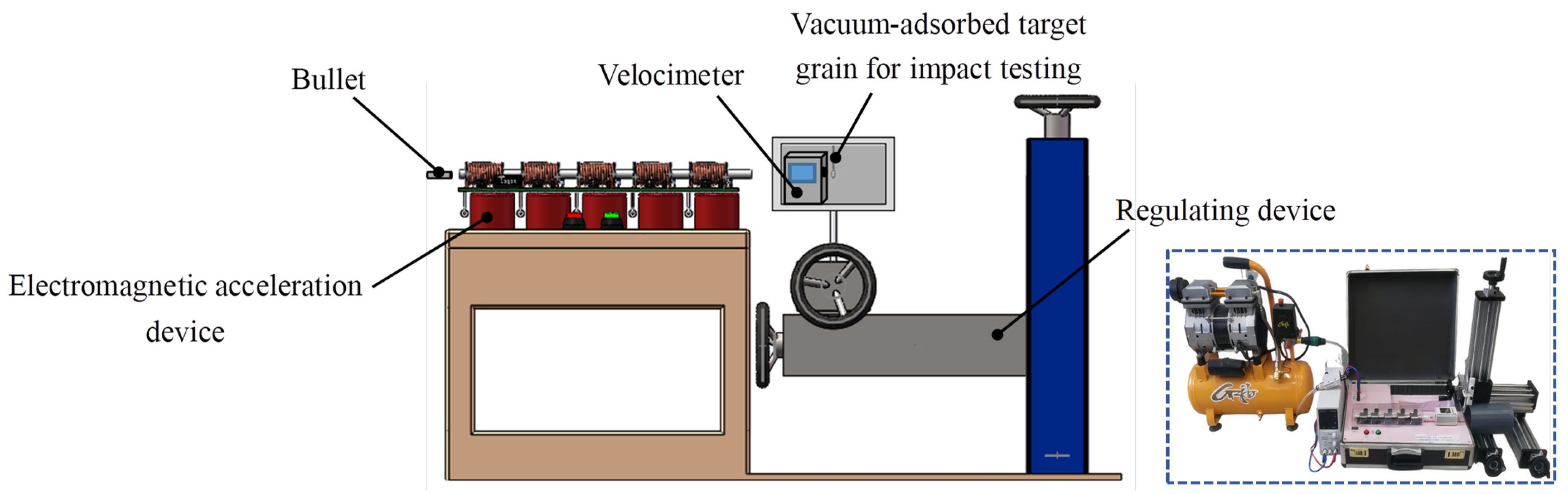
The grain impact tests conducted in this study were performed using a self-developed experimental platform, as shown in Figure 1. The self-developed grain impact testing platform primarily comprises two key subsystems: an electromagnetic acceleration device and a vacuum adsorption apparatus. The electromagnetic acceleration device propels impactors to collide with brown rice kernels at controlled velocities, while the vacuum adsorption system positions the grains in varied orientations directly ahead of the launch tube, enabling precise regulation of both impact location and direction.
The core component of the electromagnetic acceleration system is an electromagnetic accelerator powered by five chargeable capacitors (5 × 4700 μF electrolytic capacitors). Upon completion of charging, closing the discharge switch triggers the release of stored electrical energy from the capacitors, generating a pulsed current through the electromagnetic coil. This induces a transient magnetic flux that imparts Lorentz force-driven acceleration to the bullet within the coil-enclosed launch tube, propelling it toward the target grain. The bullet’s velocity can be preliminarily regulated by adjusting the capacitor’s charge level, while its precise impact velocity on grains must be accurately measured using a velocimeter (accuracy ±0.1 m/s). The bullet’s impact velocity is primarily controlled by adjusting the charging voltage of the capacitors, as the stored electrical energy is proportional to the square of the voltage. This allows for precise regulation of the initial kinetic energy imparted to the bullet. Other factors influencing the final velocity include the total capacitance, the inductance and resistance of the discharge circuit, and the mass of the bullet itself.
The vacuum adsorption system primarily consists of two key components, namely an air pump and a vacuum generator. The vacuum adsorption system operates on the principle of utilizing an air pump to compress air, generating a high-velocity jet stream within the tube. This creates an entrainment flow that continuously evacuates surrounding air from the outlet, reducing the pressure in the adsorption chamber below atmospheric level to establish a controlled vacuum. Consequently, grains can be securely adsorbed at the outlet in various orientations. Furthermore, in the absence of a precision grain orientation control module in the current system, this study selected two readily fixed configurations, vertical adsorption (along 90° impact) and transverse adsorption (along 0° impact), which represent the two extreme impact orientations during discharge processes.
Uniform and intact brown rice kernels post-hulling were selected for single-grain impact testing, with the test specimens exhibiting a moisture content of 12.51% (w. b.). The moisture content (12.51%) falls within the typical range observed in stored brown rice awaiting processing under ambient conditions [27]. The impact velocity was set within the range of 8–35 m/s. However, due to inherent variability in achieving precise velocities during actual impacts, the range was divided into nine sub-intervals, with each sub-interval containing no fewer than 100 valid impact events. During impact testing, rice kernel damage was defined as breakage occurrence. For statistical analysis, the velocity range was further subdivided into narrower intervals to quantify the correlation between impact velocity and breakage probability.

2.2. Simulation Method Description

2.2.1. Mechanical Contact Model

In DEM simulation (DEM Solutions Ltd., Edinburgh, UK), each single particle is modeled as a distinct entity, and granular materials are considered as idealized assemblies of particles [28]. This makes the discrete element method very good for investigating the kinematics and dynamics of granular flow at the meso-scale [29]. The motion of individual particles obeys Newton’s law of motion and the corresponding governing equations can be described as follows:
Translational motion
m i d v i d t = m i g + j = 1 n i F n + F n d + F t + F t d
Rotational motion
I i d w i d t = j = 1 n i T t + T r
where mi, vi, wi, and Ii are the mass, translational velocity, angular velocity, and rotary inertia of particle i; ni is the number of particle j in contact with particle i; and the normal total force is the sum of normal damping force (Fnd) and normal contact force (Fn). Similarly, the tangential total force is the sum of the tangential damping force (Ftd) and the tangential contact force (Ft). The torque includes two terms, arising from the tangential force, Tt and the rolling friction Tr.
Moreover, in this work, we adopted the no-slip soft-sphere contact model. The contact model is based on the classical Hertz’s theory in the normal direction and Mindlin’s no-slip model in the tangential direction. The detailed calculation including the normal total force, the tangential total force, the tangential torque, and the rolling friction torque have been presented in our previous work [30]. The DEM simulation of the discharging process of the ellipsoidal particle model (the model is established based on the brown rice sample) was performed with a commercial EDEM 2.7 (DEM Solutions Ltd., Edinburgh, UK) software installed on an Intel Core 2 Duo processor with 8 GB RAM and a 64-bit Windows 7 professional operating system. With the current configuration, it takes about 23.2 CPU hours to simulate 1 s of real time.

2.2.2. DEM Model of Particle and Geometry

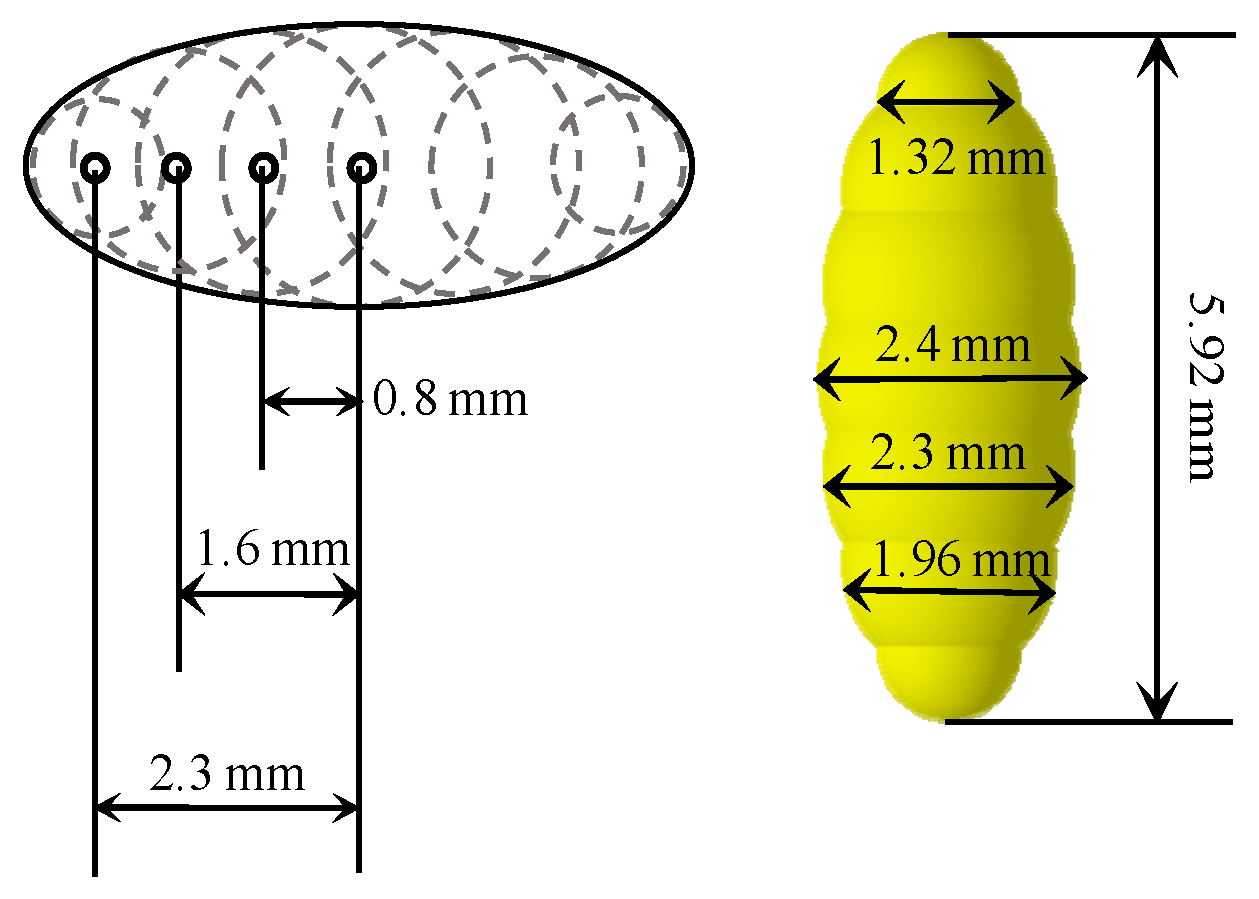
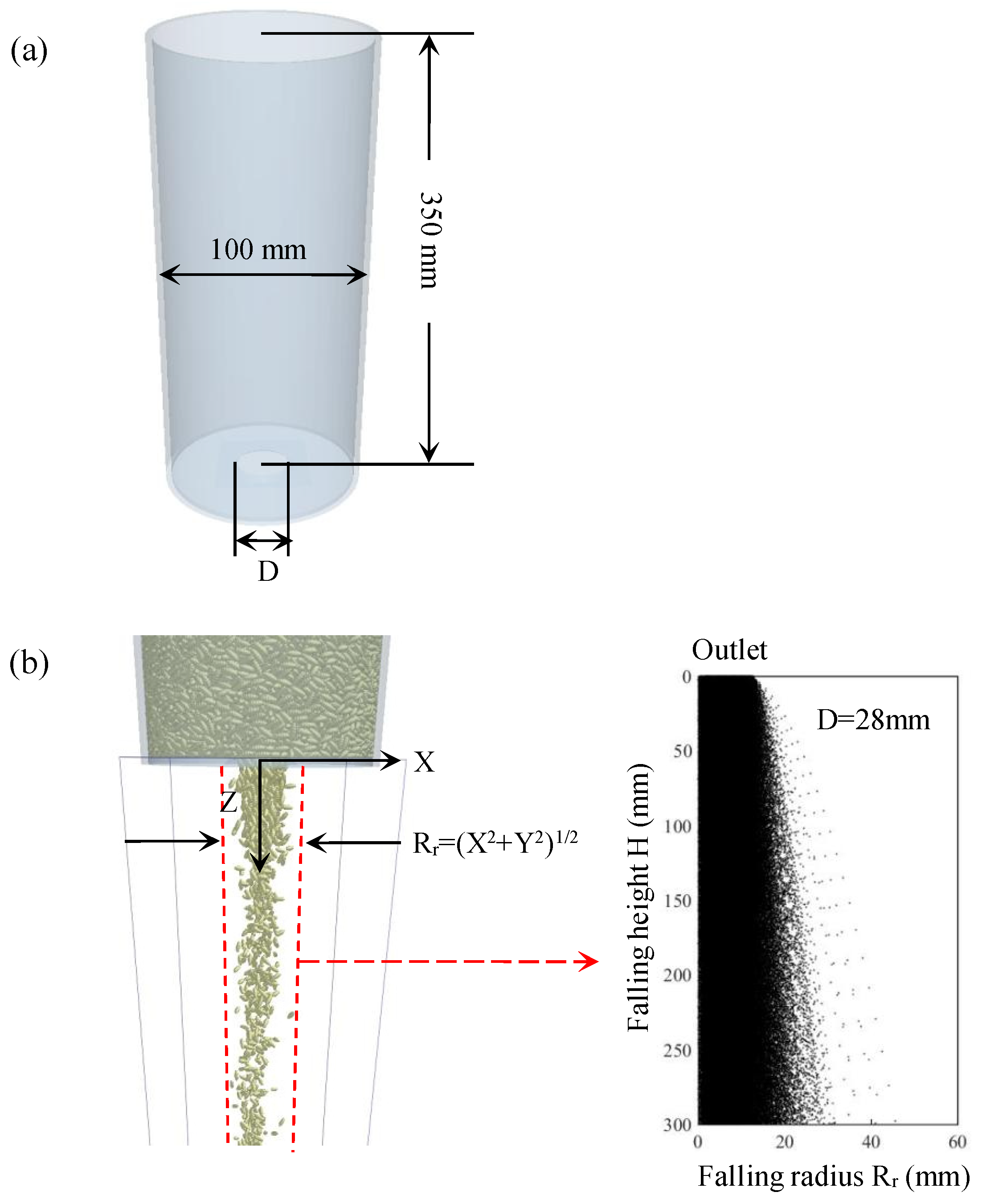
To approximate a brown rice sample within reasonable computational expenses, the brown rice particle was simplified to an ellipsoidal model composed of seven overlapping spheres in DEM simulations (as shown in Figure 2). The size and properties of the brown rice particles were measured accurately, which are listed in Table 1, but cohesion and liquid bridge were not calculated in the present paper. The geometry model was a flat bottom silo, as shown in Figure 3a, and its detailed simulation parameters are also listed in Table 1. The silo was filled to about 300 mm height and then particle generation stopped. The system settled 1 s later and the discharge began with the hopper outlet opening when all the grains were located in their stable position. The computational domain was set as a box with a width and thickness of 100 mm. Its top was placed at the XY-plane at Z = 0 and the height of the computational domain depended on the outlet sizes (as shown in the blue box in Figure 3b). The kinematics and dynamics information of granular flow, such as the position, velocity, and orientation of each particle, was automatically recorded every 0.01 s.

2.3. Validation of the Simulation Results

Validation of the simulation results against the experimental data on the average maximum discharging radius at different falling heights was carried out when the outlet radius was 28 mm. The specific experimental operations are as follows:
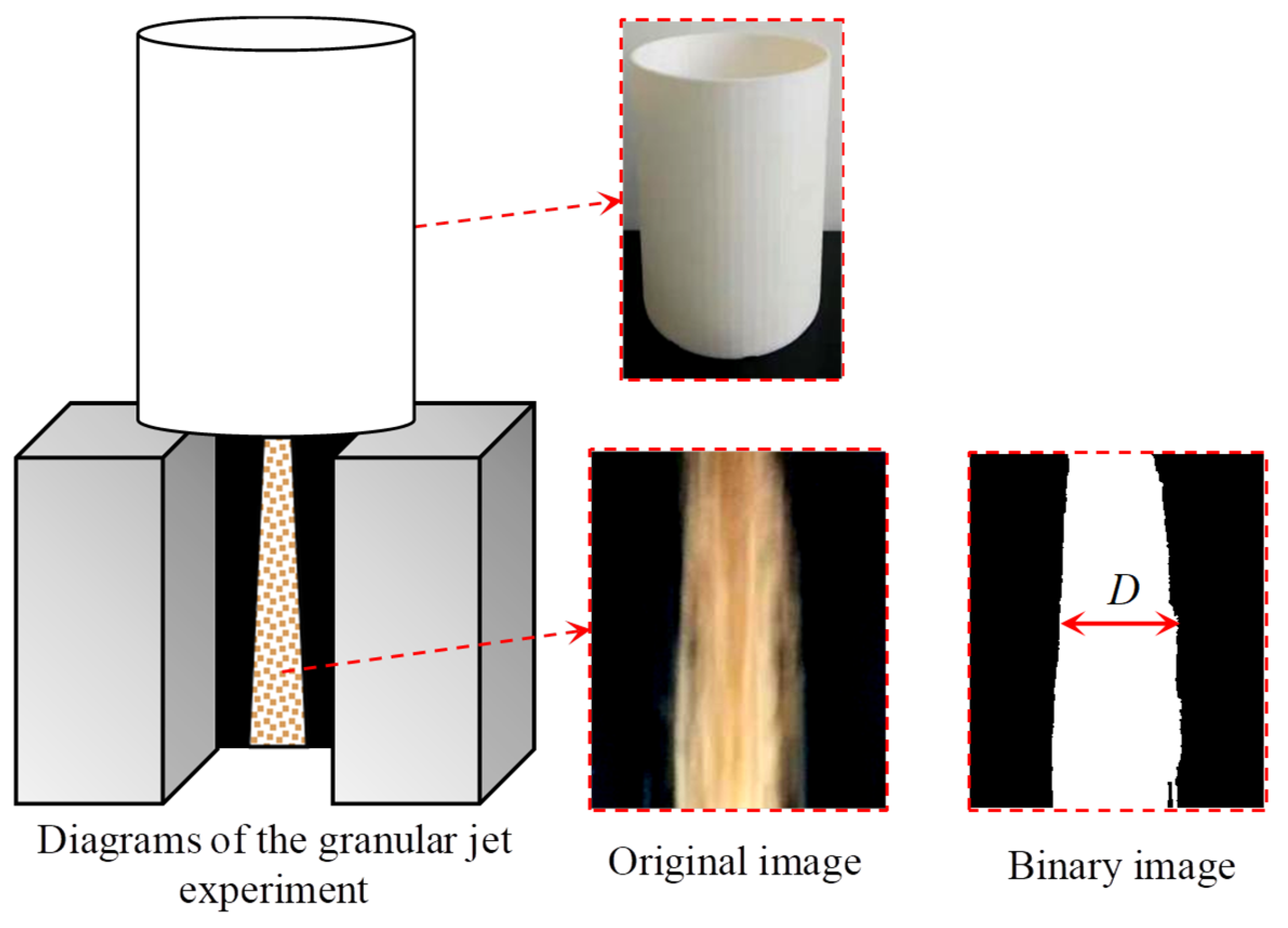
First, an experimental silo is constructed by 3D printing technology in proportion to the geometric model in the simulation. The material used for 3D printing is poly-lactic acid (PLA). The granular material is the brown rice with uniform size after screening. Secondly, in the grain discharging process, a normal digital camera is used to take photos at equal intervals. Pictures are shown in Figure 4 (see the original image). Then, the average value of the maximum discharging radius at different falling heights is calculated by a series of image processing including filtering, graying, binarization, and converting pixel length to physical length. It is worth noting that these image processing techniques have been described in detail in our previous research [31], so similar descriptions will not be repeated in this work.
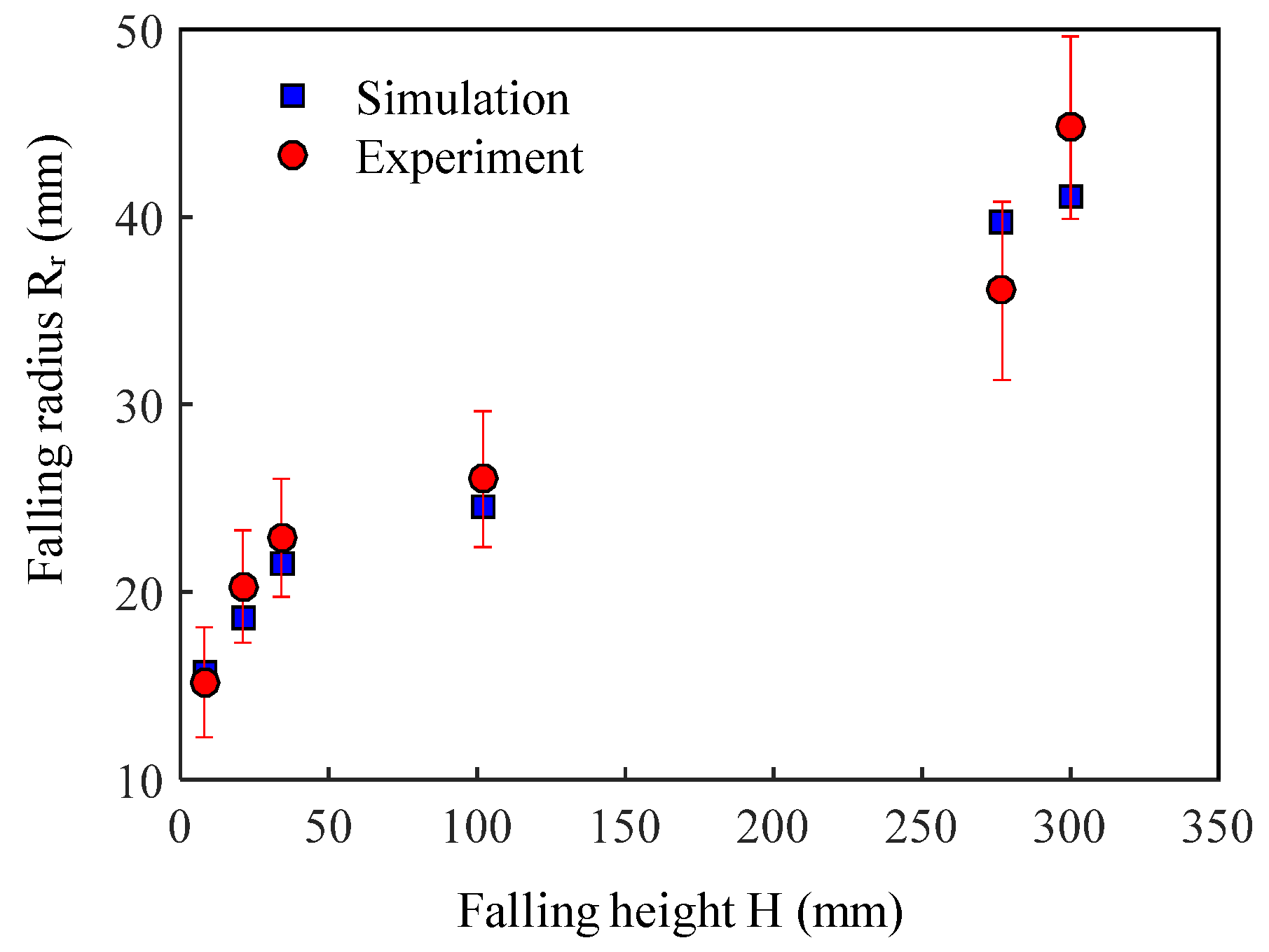
Comparisons between simulation and experiment data on the average maximum discharging radius at different falling heights are presented in Figure 5. From the comparisons, it is found that there are some differences between the simulation and experimental results. On the one hand, the error may be caused by the large fluctuation of the maximum discharging radius; on the other hand, the error may also come from an experimental measurement error or an calibration error of the material properties and simulation conditions in the simulation. Overall, grain discharging characteristics can be simulated accurately according to the simulation model established at present.

3. Results

3.1. Outflow Profile Characteristics Corresponding to Different Discharging Ranges

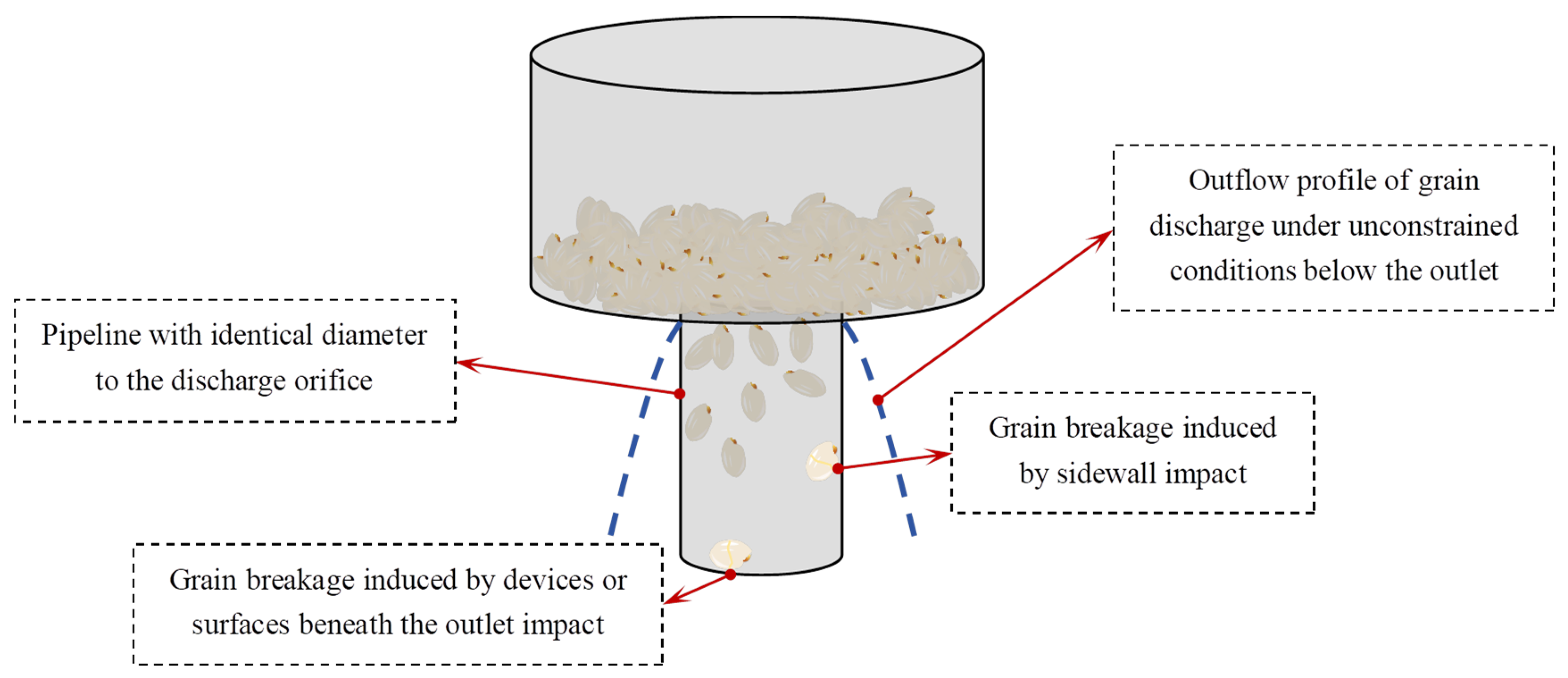
During discharge processes, grain impact breakage primarily originates from two sources: collisions between the connected conveying pipeline and equipment sidewalls below the discharge orifice, and vertical impacts against devices or surfaces beneath the outlet. Grain breakage primarily results from collisions with sidewalls or underlying equipment. The outflow profile and pipeline diameter affect the impact angle and velocity, which in turn influence breakage probability. The sidewall impact mechanics necessitate an integrated consideration of the pipeline diameter and outflow profile characteristics, incorporating the particle velocity and attitude [19,20] (as shown in Figure 6). Therefore, further investigation is required to elucidate the change rules of outflow profiles, falling velocities, and grain attitude (due to disparities between its major axis, minor axis, and internal structure, the brown rice kernel can be characterized as an anisotropic ellipsoidal particle. Research demonstrates that impact velocity and impact attitude constitute two primary governing factors influencing the fracture of such anisotropic ellipsoidal particles) during grain discharge processes.

3.1.1. Quantifying Grain Outflow Profiles

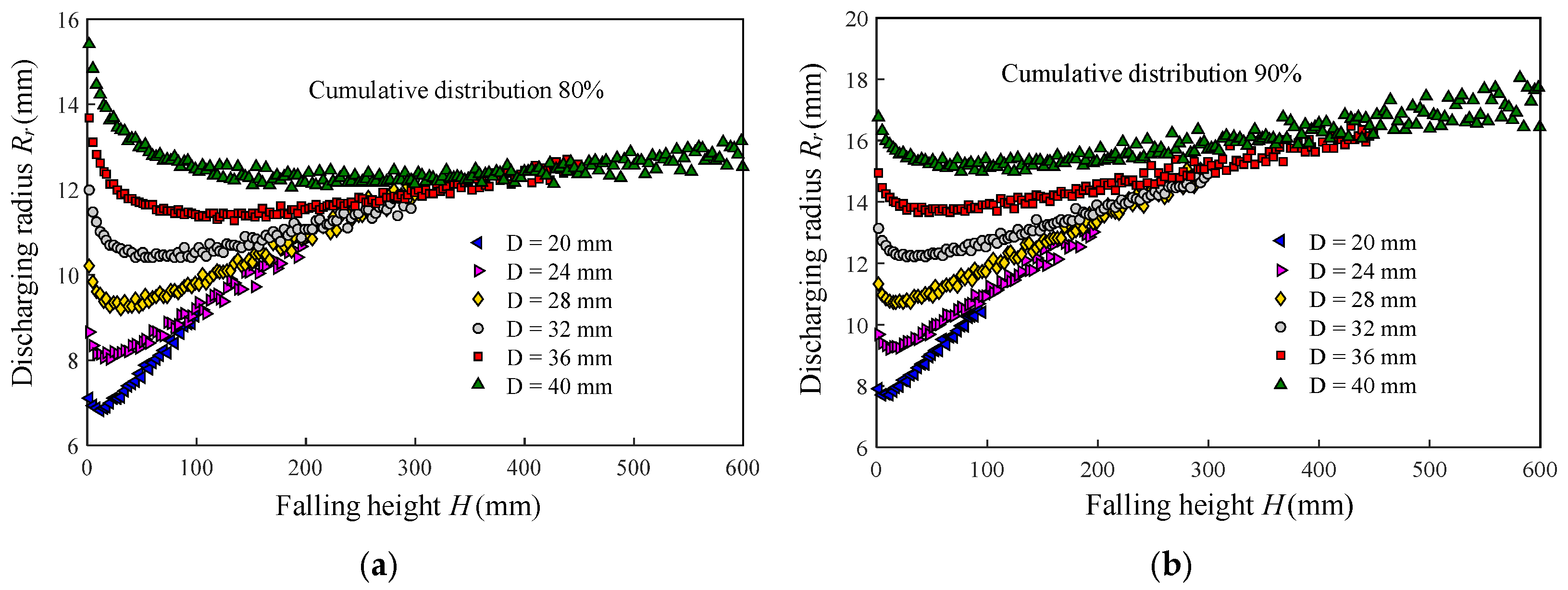
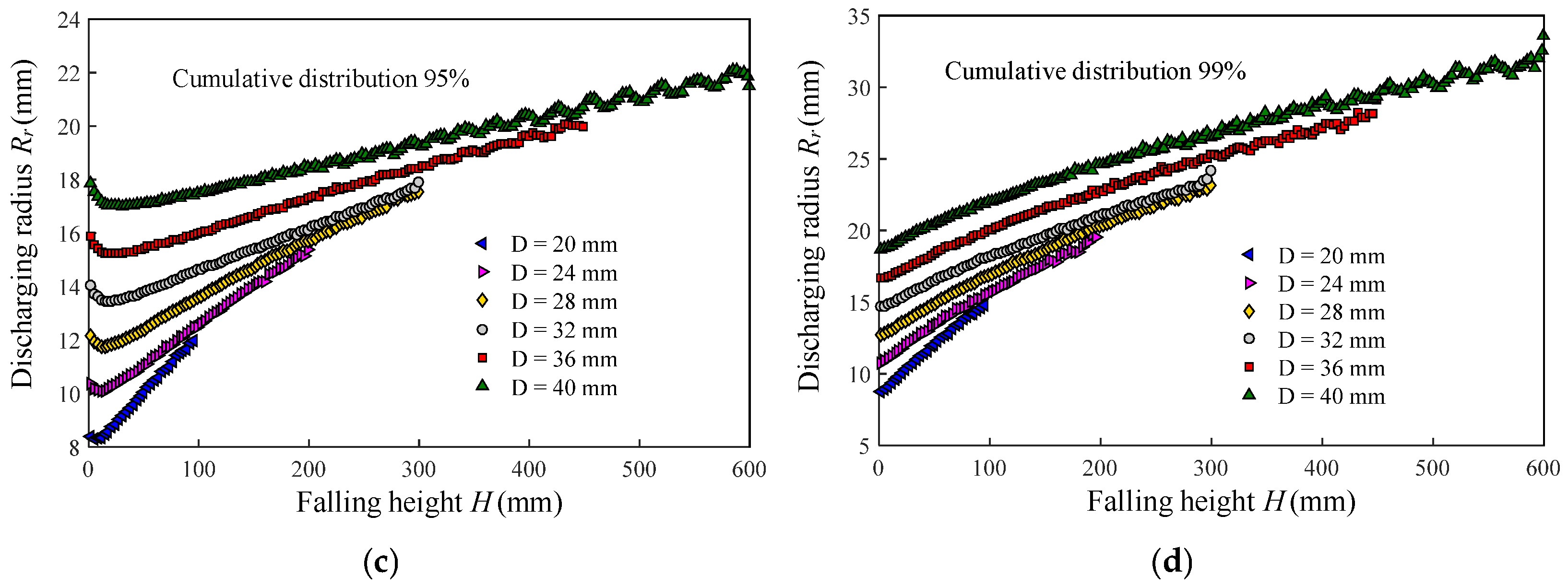
Grain outflow profiles corresponding to different cumulative fractions are shown in Figure 7. In Figure 7a–c, the grain discharging profiles are similar, showing the phenomenon of first contraction and then dispersion with the increase in falling height. However, when the cumulative fraction of the grain discharging radius reaches 99%, the phenomenon of grain discharging contraction cannot be observed, as shown in Figure 7d. These findings are consistent with those of previous studies [32], which have demonstrated that distinct discharge zones correspond to different particle outflow characteristics, conventionally termed as the core layer and boundary layer. The core layer flow profile exhibits distinct contraction followed by divergence, whereas the boundary layer profile demonstrates immediate divergence characteristics.
In practical operations, the pipeline below grain discharge orifices typically maintains an identical size to the orifice until delivering grains to the next processing unit. However, experimental results show that 99% of discharged grains initially fall within the range smaller than the orifice size, with dispersion occurring only at greater falling heights. These findings provide novel insights for pipeline design below discharge orifices. The downstream pipe can maintain a consistent diameter with the orifice within a certain height, and then gradually expand according to the grain outflow profile characteristics.

3.1.2. Grain Velocity and Orientation During Discharge Processes

As previously established, distinct discharge ranges during grain outflow correspond to differentiated outflow characteristics. Therefore, to further investigate the variations in falling velocity and attitude associated with grain breakage during discharge processes, separate analyses should be conducted for these parameters across distinct discharge ranges. It should be noted that even discharged grains with cumulative fractions below 90% may exhibit a discharging radius exceeding the orifice radius during descent, consequently resulting in collisions with the chute sidewalls. In this study, the cumulative fraction serves as the criterion for delineating discharge ranges with distinct outflow characteristics. As shown in Figure 7, the 90% cumulative fraction represents the core layer where grains exhibit contracting flow, while the 99% fraction corresponds to the boundary layer with divergent flow. Accordingly, in the following study, 90% of the cumulative distribution of falling radius at different falling heights is taken as the representative discharging range of discharging core layer, and 99% of the cumulative distribution is taken as the representative discharging range of the discharging boundary layer.
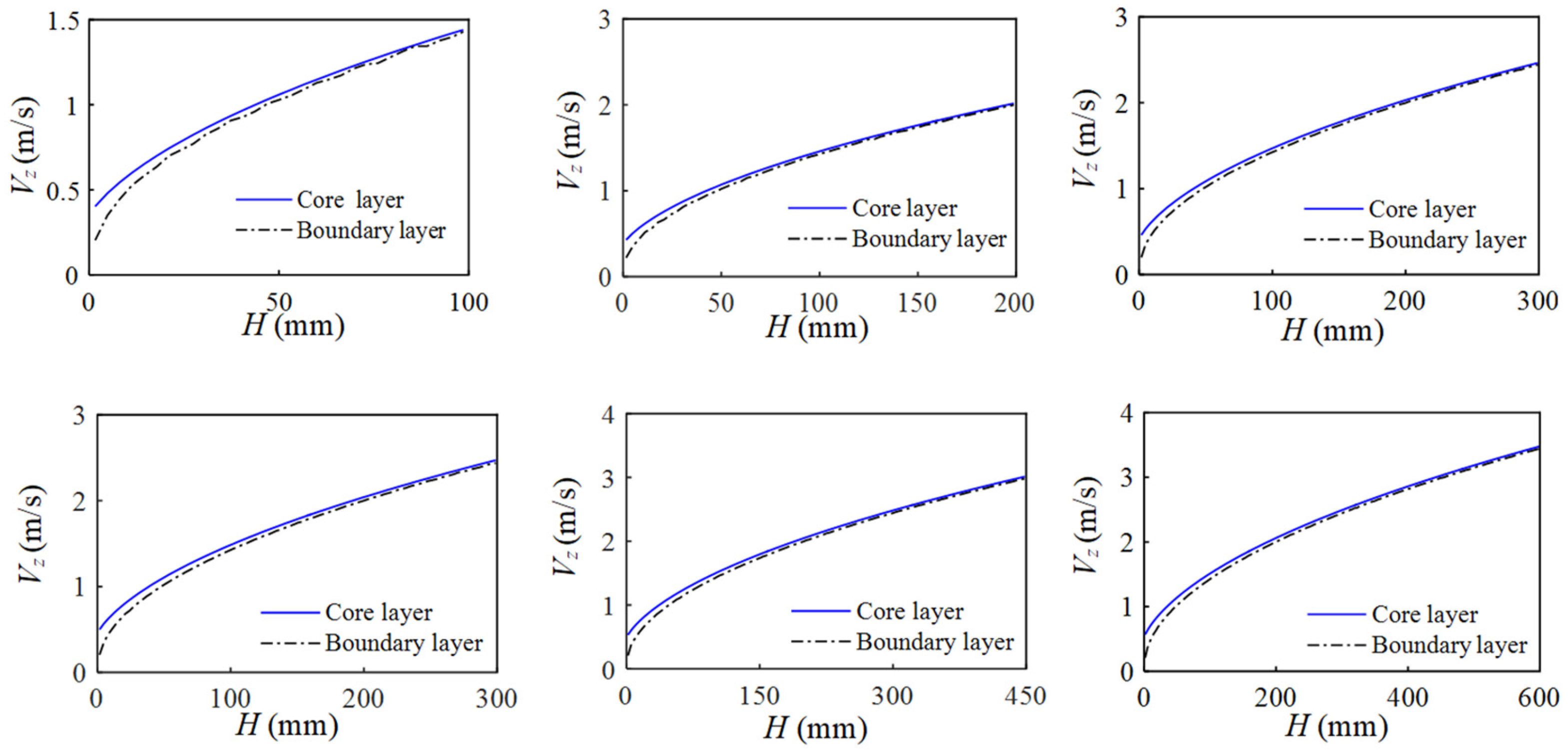
Figure 8 and Figure 9 demonstrate the variations in grain falling velocity and attitude with respect to falling height across different discharge ranges, respectively. The results indicate negligible differences in falling velocity between core and boundary layers, while the primary distinction in impact behavior across discharge ranges manifests in grain attitude upon impact (grain attitude is defined as the angle between the major axis of the grain and the Z-axis of the silo coordinate system). Significant differences exist in grain attitude between the boundary layer and core layer, particularly near the discharge orifice. Core layer grains exhibit minimal angles relative to the sidewalls while maintaining near-vertical with respect to the horizontal plane below the outlet. In contrast to the core layer, boundary layer grains exhibit smaller inclination angles relative to the horizontal plane while maintaining larger angles (approximately 60°) with respect to the sidewalls. With increasing falling height, grain attitude in both the core and boundary layers gradually converge, whereas the orifice size exhibits negligible influence on grain attitude. Although the distinction between the so-called core layer and boundary layer has been established in preceding sections, the defined core layer specifically corresponding to the discharge range is a 90% cumulative fraction. Notably, the variation patterns of grain velocity and attitude for cumulative fractions below 90% are not presented. However, based on research findings regarding grain outflow behavior, the variation patterns of velocity and attitude for grains with cumulative fractions below 90% can be analytically derived. Regarding grain falling attitude, the core layer exhibits a contracting outflow profile, causing grains to move inward radially. Consequently, within the core layer region a below 90% cumulative fraction, the impact angle between grains and vertical sidewalls will be smaller than the core layer grain angles demonstrated in Figure 9. Regarding grain falling velocity, within the core layer region below a 90% cumulative fraction, the falling velocity necessarily exceeds the values presented in Figure 8. This is attributed to the parabolic velocity distribution across radial positions at the discharge orifice, as illustrated in Figure 10, wherein centrally located grains exhibit higher falling velocities than those near the periphery.

3.1.3. Predictive Model for Grain Impact Velocity During Discharge Processes

The accurate prediction of grain falling velocities during discharge is critical, as impact velocity is the key factor for determining grain breakage. As established previously, grains at the orifice center exhibit higher falling velocities than those at peripheral regions, but Figure 10 demonstrates that this disparity is insignificant. Consequently, this study employed average velocity in different discharging ranges as grain falling velocity.
First, by analyzing inter-particle collisions below the orifice, it is demonstrated that grain particles cease to exhibit significant mutual interactions upon outflow below the discharge outlet. Furthermore, previous studies have demonstrated that particle momentum during discharge approximates 2066 times that of air at equivalent velocity under atmospheric pressure, thereby rendering gas-phase effects negligible in the discharge process [33]. In summary, grains below the discharge outlet can be modeled as undergoing gravity-driven accelerated motion. Consequently, the grain falling velocity can be expressed by the following equation:
V z h 2 V 0 2 = 2 g h
where Vz(h)2 represents the mean grains falling velocity at a given falling height (h) plane; V02 denotes the mean falling velocity at the orifice; and g is the gravitational acceleration.
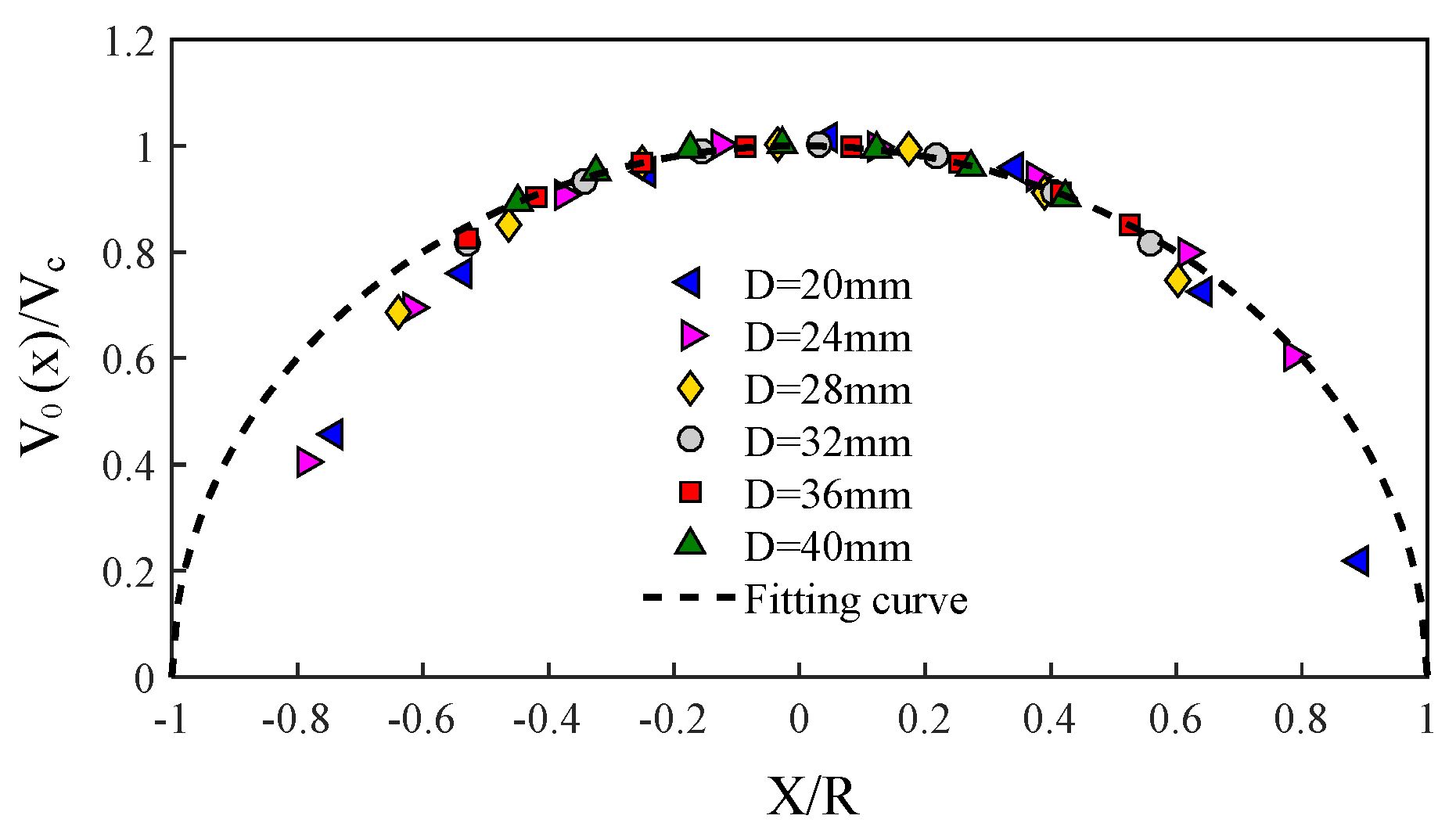
According to the above equation, predicting the impact velocity of falling grains requires calculation of the mean velocity at the orifice. Following the modeling approach developed by Janda et al. [34] for characterizing the outlet velocity field of spherical particles in quasi-two-dimensional silo discharge, we establish a velocity field model at the orifice for three-dimensional brown rice discharge in this study. As shown in Figure 10, the dimensionless rescaled velocities across radial positions at the discharge orifice can be fitted by the following equation:
V 0 x V c = 1 x / R 2
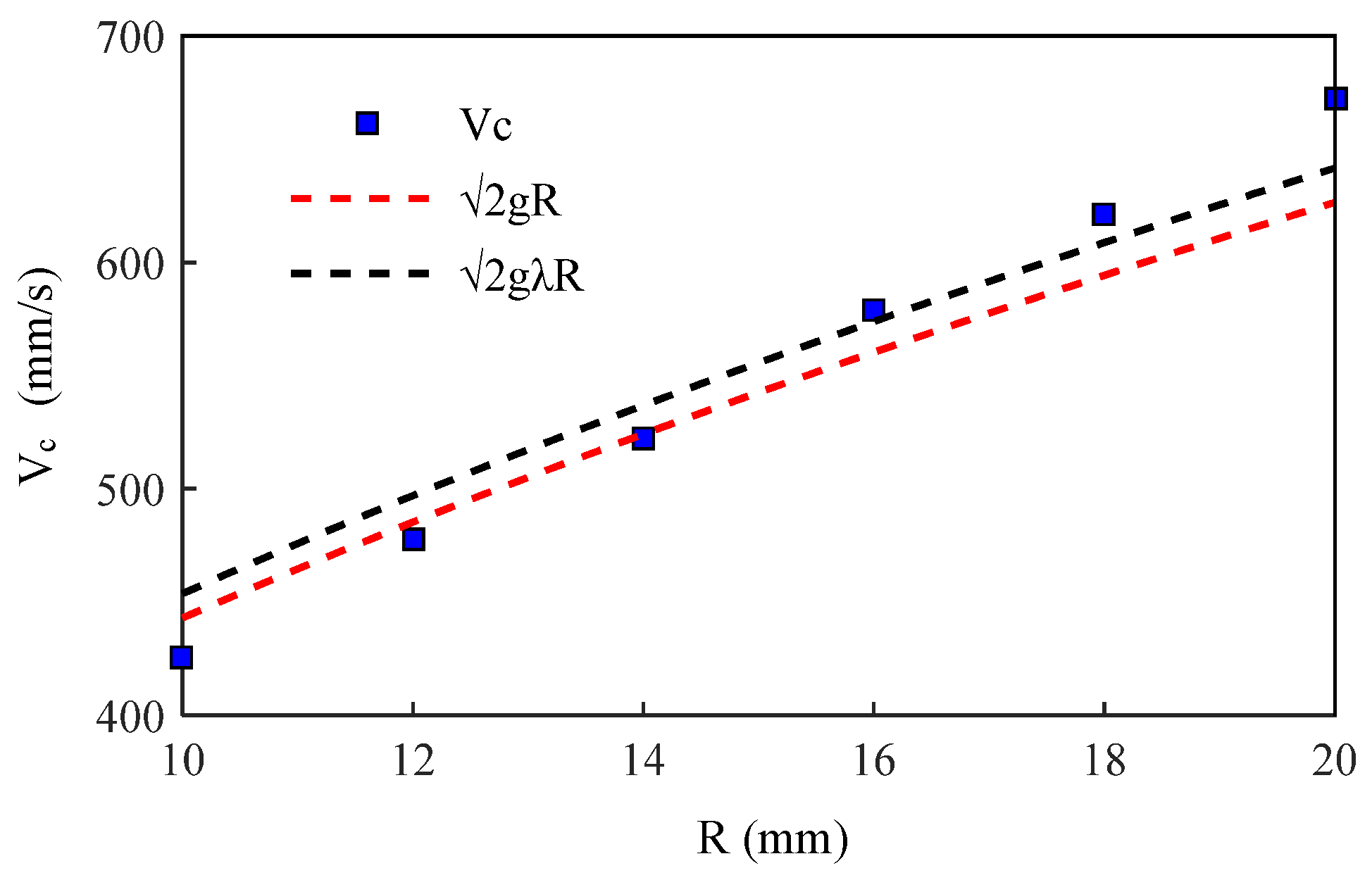
where Vc represents the falling velocity of grains at the orifice center. As shown in Figure 11, Vc can be mathematically expressed by the following equation:
V c = 2 g γ R
where coefficients of the fitted model γ = 1.049 ( γ 1 ). Consequently, the falling velocity profile across radial positions at the orifice plane can be derived by combining Equations (4) and (5) as follows:
V 0 x = 2 g R 1 x / R 2
By integrating Equation (6) over the orifice area, the mean falling velocity of grains at the orifice plane is obtained as follows:
V 0 = 1 π R 2 0 R 0 2 π 2 g R 1 x / R 2 x d φ d x V 0 = 2 3 2 g R
Substituting the integral result from Equation (7) into Equation (3) yields the expression for mean falling velocity of grains at arbitrary falling heights:
V z h = V 0 2 + 2 g h = 8 / 9 g R + 2 g h = 2 g R h / R + 4 / 9
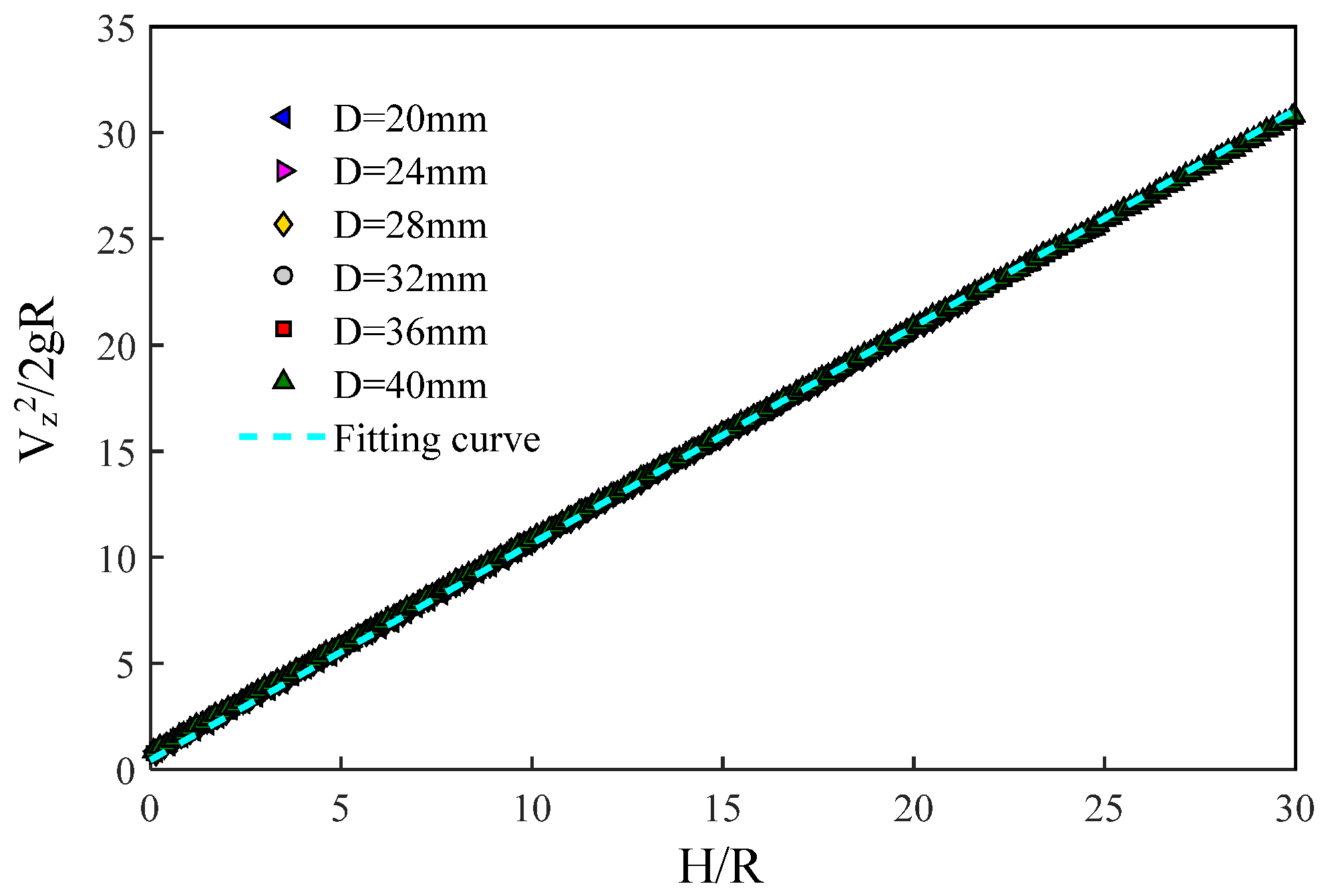
To validate the derived model, the actual mean falling velocities of grains during discharge were extracted and subsequently rescaled into dimensionless form, as shown in Figure 12. All experimental data points exhibit linear alignment, with the fitting expression given by the following:
V z 2 2 g R = 1.021 h R + 0.44
The experimental fitting results (Equation (9)) demonstrate substantial agreement with the derived expression for mean grain falling velocity (Equation (8)). In conclusion, Equation (8) constitutes the theoretical prediction model for grain impact velocity during discharging.

3.2. Effect of Grain Outflow Impact on Kernel Breakage

Critical Breakage Thresholds of Brown Rice Under Varying Impact Velocities

Through statistical analysis of numerical simulation results for brown rice discharge processes, the preceding sections have elucidated the variation patterns of grain falling velocity and attitude, and established a theoretical prediction model for grain impact velocity. Subsequent investigation is required to further explore the intrinsic breakage mechanisms of brown rice kernels. This study primarily focuses on the conditions affecting impact-induced breakage, including impact velocity and impact attitude. It is worth mentioning that DEM results show that inter-particle collisions below the outlet are minimal, and energy dissipation due to such collisions is negligible compared to impact energy. This supports the assumption of free-fall motion in the model. However, research on the breakage patterns of brown rice grains that simultaneously considers both impact velocity and impact attitude has not been reported yet. This study employs a self-developed grain impact testing platform (as shown in Figure 1. For detailed experimental setup and testing procedures, refer to Section 2.1) to investigate the influence of impact velocity and impact attitude on the breakage characteristics of brown rice particles. The primary objective of the impact test is to determine the critical conditions for brown rice breakage under different impact velocities and attitudes. However, since the breakage of brown rice grains is a probabilistic phenomenon, it is challenging to identify a definitive critical impact breakage threshold. Building upon previous studies on the minimum effective fracture energy of rice grains [19], this study introduces the particle fracture mechanics model proposed by Weichert et al. By fitting the actual breakage probability of grains during impact, the critical collision energy per unit mass was determined, thereby obtaining the critical impact velocities for brown rice breakage under different impact attitudes. The particle fracture mechanics model proposed by Weichert et al. incorporates dimensional analysis [35] and fracture theory [36] in its derivation, endowing it with enhanced universality for characterizing the breakage behavior of various materials. The expression is as follows:
P B = 1 exp [ f M a t x k E c o l E c o l , min
E c o l = 1 2 v 2
where PB: particle breakage probability; Ecol: collision energy per unit mass, J kg−1; Ecol,min: critical collision energy per unit mass, J kg−1; fMat: material breakage constant, kg J−1 m−1; x: particle diameter, m; k: number of collisions; and v: impact velocity, m s−1.
Among these, the material breakage constant (fMat) and the critical collision energy per unit mass (Ecol,min) serve as fitting parameters for the breakage probability model established through experimental data. It should be noted that, although fMat is defined as a particle breakage constant, its value is inherently dependent on the impactor material. In this study, the impactor was made of steel, a material commonly used in processing equipment.
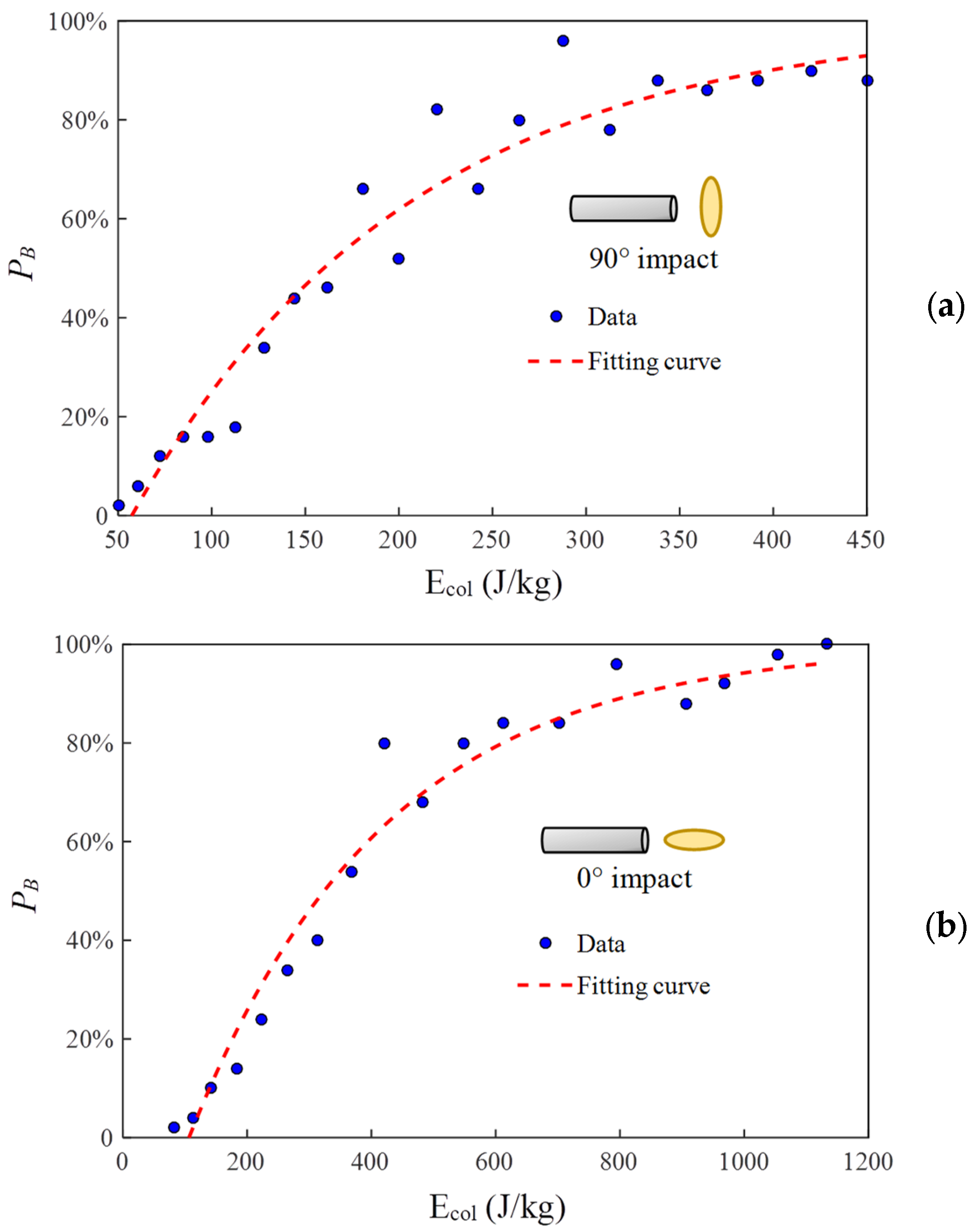
The breakage probability models for the two-grain impact attitude obtained from the impact tests are presented in Figure 13. The fitted curves in the figures correspond to the exponential function shown in Equation (10). Notably, the breakage probability models for the two-impact attitude exhibit significant differences, which are primarily manifested in their respective fitted critical collision energies per unit mass Ecol,min. For the 90° impact attitude, the critical collision energy per unit mass was determined to be Ecol,min = 57.28 J kg−1 (R2 = 0.9456). Thus, the critical impact velocity for brown rice breakage at the 90° impact attitude can be calculated vmin = 10.70 m s−1. Similarly, For the 0° impact attitude, the critical collision energy per unit mass was determined to be Ecol,min = 106.4 J kg−1 (R2 = 0.9645). Further, the critical impact velocity for brown rice breakage at the 0° impact attitude can be calculated as vmin = 14.59 m s−1.
Comprehensive analysis of grain attitude and impact velocity variation with falling height during discharge, combined with the critical collision energy per unit mass for brown rice breakage, enabled the development of a breakage probability zoning diagram for grain impact during the discharge process. As illustrated in Figure 14, the particle breakage is classified into three distinct zones based on the critical collision energy per unit mass obtained for the two-impact attitude. When the collision energy per unit mass (Ecol) is below 57.28 J kg−1, no particle breakage occurs. When the collision energy per unit mass falls within the range of 57.28~106.4 J kg−1, it is referred to as the critical breakage zone. In this regime, grain breakage primarily depends on the impact attitude. Further analysis of whether the grains are in a critical breakage state requires consideration of the grain orientation variation patterns described in Section 3.1.2. When the collision energy per unit mass exceeds 106.4 J kg−1, the grain enters the high-breakage zone, where its breakage probability can be estimated using the breakage probability model Equation (10).
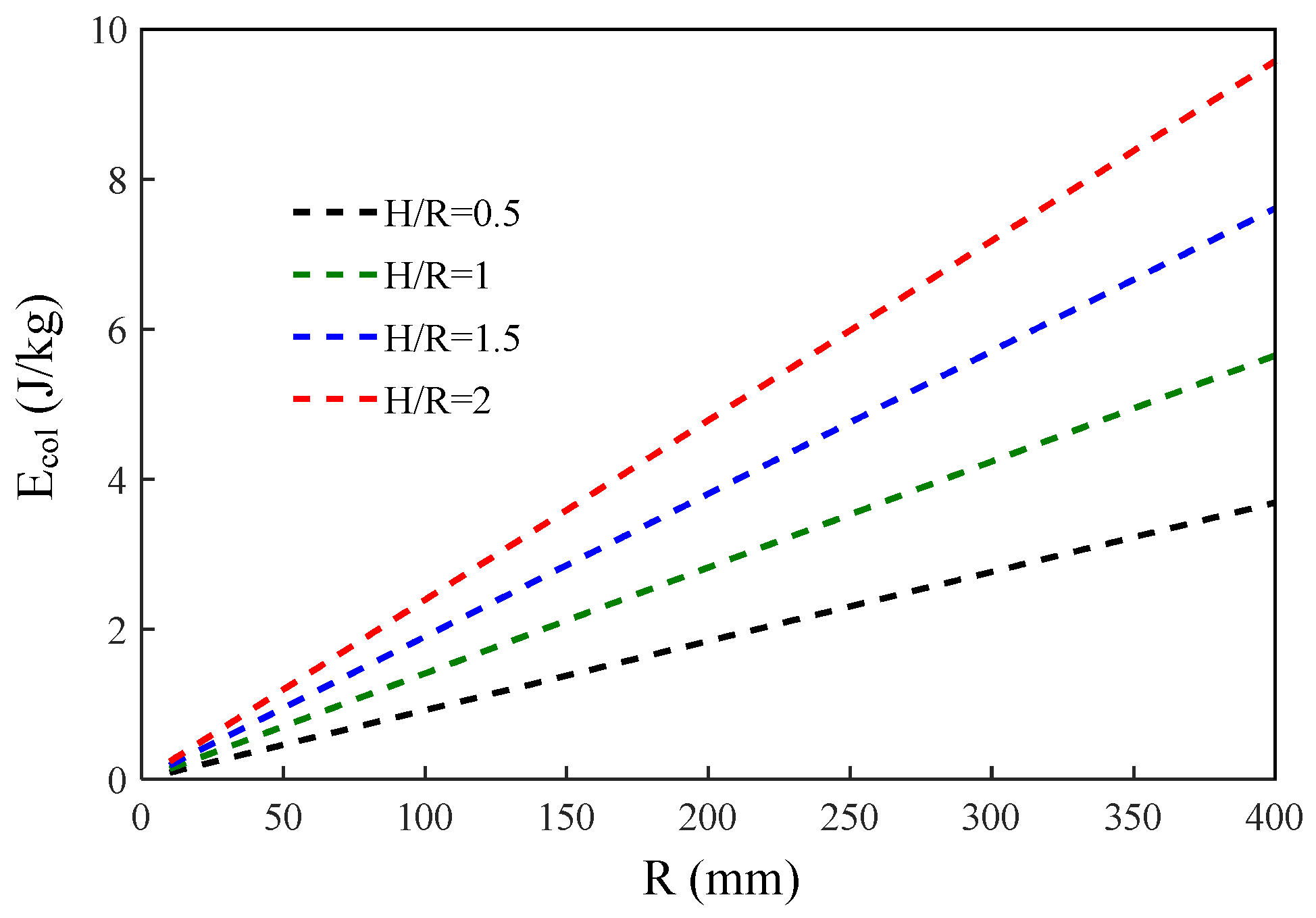
Moreover, according to Equation (8), the relationship between grain impact velocity and falling height during the discharging process can be transformed into the relationship between the unit mass collision energy of grains and the outlet radius, as shown in the following equation:
E c o l = 1 2 V 2 = g ( h / R + 4 / 9 ) R
The unit mass collision energy of grains exhibits a linear relationship with the outlet radius. Taking four different falling heights as examples, the variation curves of the unit mass collision energy with respect to the outlet radius are plotted on the grain breakage probability zoning diagram (Figure 14). Taking a silo with an outlet radius of 500 mm as an example, when the h/R ratio exceeds 20 (approximately 10 m in height), grain breakage becomes significantly noticeable, and the breakage rate increases rapidly with further elevation of the falling height. These findings align closely with empirical estimates from actual production processes. In practical industrial operations, the natural drop height in large-scale discharging systems can even reach around 30 m, which is sufficient to cause severe grain fragmentation. Therefore, the installation of flow-guiding devices can effectively mitigate grain breakage. The research findings mentioned above provide critical guidance for designing such devices. However, the issues observed in large-scale discharging systems are typically caused by natural drop height, whereas, for small-scale discharging systems, particle impact breakage may primarily result from the upward relative velocity of underlying equipment. Accordingly, this study also investigates the discharging process with smaller outlet dimensions. Taking four distinct falling heights as representative cases, we plot the variation curves of grain unit mass impact energy versus outlet radius, as shown in Figure 15. Based on the results shown in Figure 15, the maximum relative velocity of the underlying equipment below the discharge outlet can be calculated, thereby effectively reducing grain breakage rates. This research methodology is equally applicable to other granular materials, and can provide a crucial scientific basis and engineering parameters for the design of granular material unloading systems.

3.3. Prediction of Grain Outflow Impact Force and Pressure During Discharge Processes

The grain discharging process can generally be regarded as continuous outflow, characterized by high discharge flow rates and strong impact forces. These conditions typically cause significant impact damage to conveying equipment such as belts located below the discharge outlet. This study, under the assumption of continuous grain outflow, aims to develop a universal predictive model for grain outflow impact force and impact pressure through theoretical derivation.
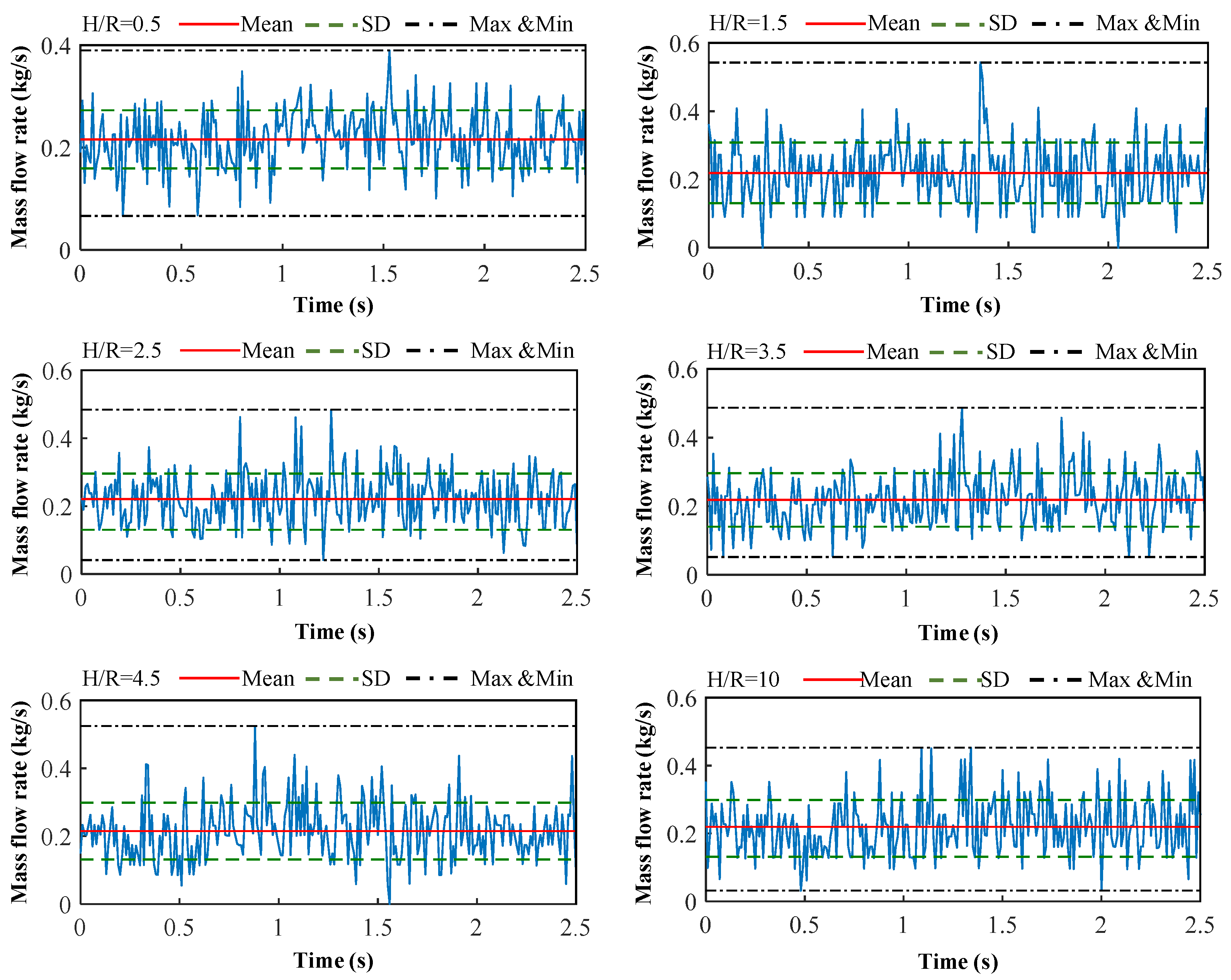
Firstly, under the continuity assumption, the mass flow rate of grain outflow should satisfy the law of mass conservation. To validate the reliability of the continuity assumption, Figure 16 shows the variation in grain mass flow rate over time at different falling heights, using a 36 mm outlet diameter as a representative case. The results demonstrate that, while the mass flow rate of grains fluctuates across all falling height planes, these variations remain stable without exhibiting sudden increases or decreases. Notably, no instances of instantaneous zero mass flow rate were observed during the entire discharging process, confirming the continuity of the grain outflow.
Based on the principles of mass conservation and Newton’s law, two fundamental theoretical formulas governing the impact effects of continuous particle flow, including both impact force and impact pressure, can be readily derived as follows:
F i m p = M × V
P = F i m p / A
where Fimp: impact force, N; P: impact pressure, Pa; M: mass flow rate, kg/s; V: impact velocity, m/s; A: contact area, m2.
According to the above equation, the impact force Fimp at each falling height plane should equal the product of the grain mass flow rate M and impact velocity V at the corresponding height plane. The conservation of mass flow rate during the discharging process has been previously demonstrated (i.e., it remains equivalent to the average mass flow rate at the outlet). Therefore, only the expression for the average mass flow rate at the outlet requires further derivation. During the discharging process, the mass flow rate at the outlet should equal the product of three parameters: the outlet’s cross-sectional area S, average flow velocity V, and particle bulk density ρb. This relationship can be expressed by the following equation:
M 0 = π R 2 V 0 ρ φ 0 S V ρ b
where M 0 : mean mass flow rate at the outlet, kg/s; V 0 : mean falling velocity at the outlet, m/s; R: outlet radius, m; ρ: particle true density, kg/m3; φ(0): particle volume fraction at the outlet.
The findings presented in Section 3.1.1 demonstrate that the particle flow near the outlet should be in a contracting state, with only a minimal number of particles exhibiting instantaneous outward splashing to form a boundary layer. When calculating the average mass flow rate across the entire outlet region, it becomes particularly challenging to accurately estimate both the actual cross-sectional area of particle outflow and the volume fraction of the particle flow at the outlet. Therefore, this study focuses on modeling the average mass flow rate corresponding to the 90% cumulative fraction at the outlet. Preliminary research has confirmed that the particle flow maintains a stable contraction profile at the 90% cumulative fraction threshold. This stability enables precise calculation of both the constant outflow profile radius and subsequently the accurate determination of the cross-sectional area and volume fraction at the specified cumulative fraction level. Furthermore, when the cumulative fraction exceeds 90%, the falling velocity of the particle flow remains essentially consistent with that observed at the 90% cumulative fraction level (see Figure 8). Consequently, Equation (7) can still be employed to represent the average grain falling velocity at the outlet for the 90% cumulative fraction case. Moreover, Since the 90% cumulative fraction represents 90% of the total particle quantity under the assumption of equal particle mass, the average mass flow rate model constructed for the 90% cumulative fraction at the outlet can be converted to the expression for the entire outlet simply by dividing by 90%. Based on these considerations, we further modify the expression of Equation (15), as follows:
M 0 = π R ξ 2 2 3 2 g R ρ φ 0 ÷ 90 %
where the ξ contraction ratio (Rr/R) at outlet for 90% cumulative fraction.
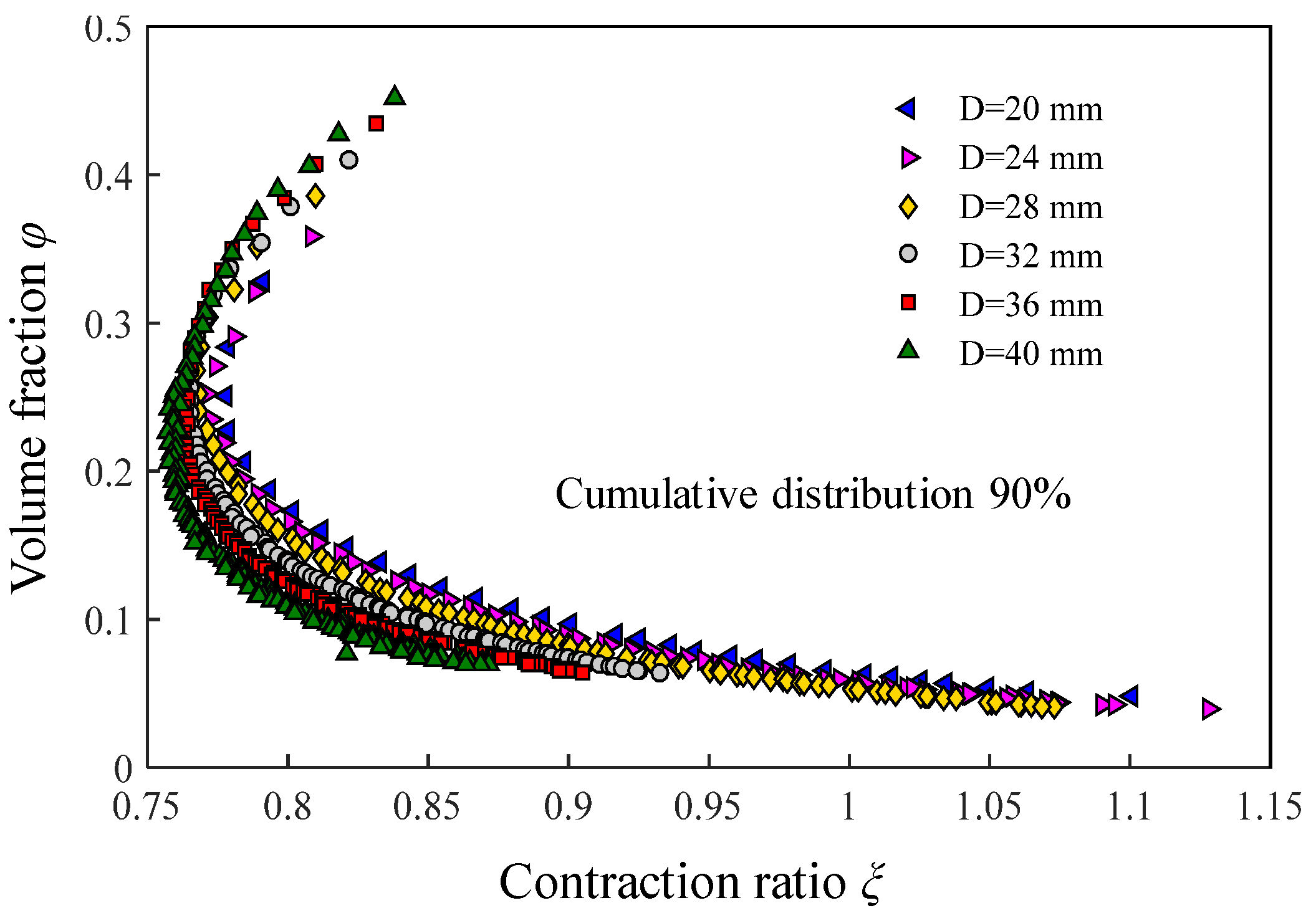
Two parameters remain to be determined in Equation (16): the contraction ratio ξ and the particle volume fraction at the outlet φ(0). To enhance the universality of the aforementioned equations, we further investigate the relationship between ξ and φ(0) at the 90% cumulative fraction, as illustrated in Figure 17. The results demonstrate that, under varying outlet dimensions, the corresponding ξ and φ(0) remain consistent within the same elevation plane. This indicates that both parameters can be treated as constants independent of outlet radius variations at the discharge outlet. In this study, ξ and φ(0) were determined to be approximately 0.83 and 0.44, respectively.
Furthermore, Equation (16) can be simplified to the following:
M 0 = C g R 3 2 ρ C = 0.3174 π
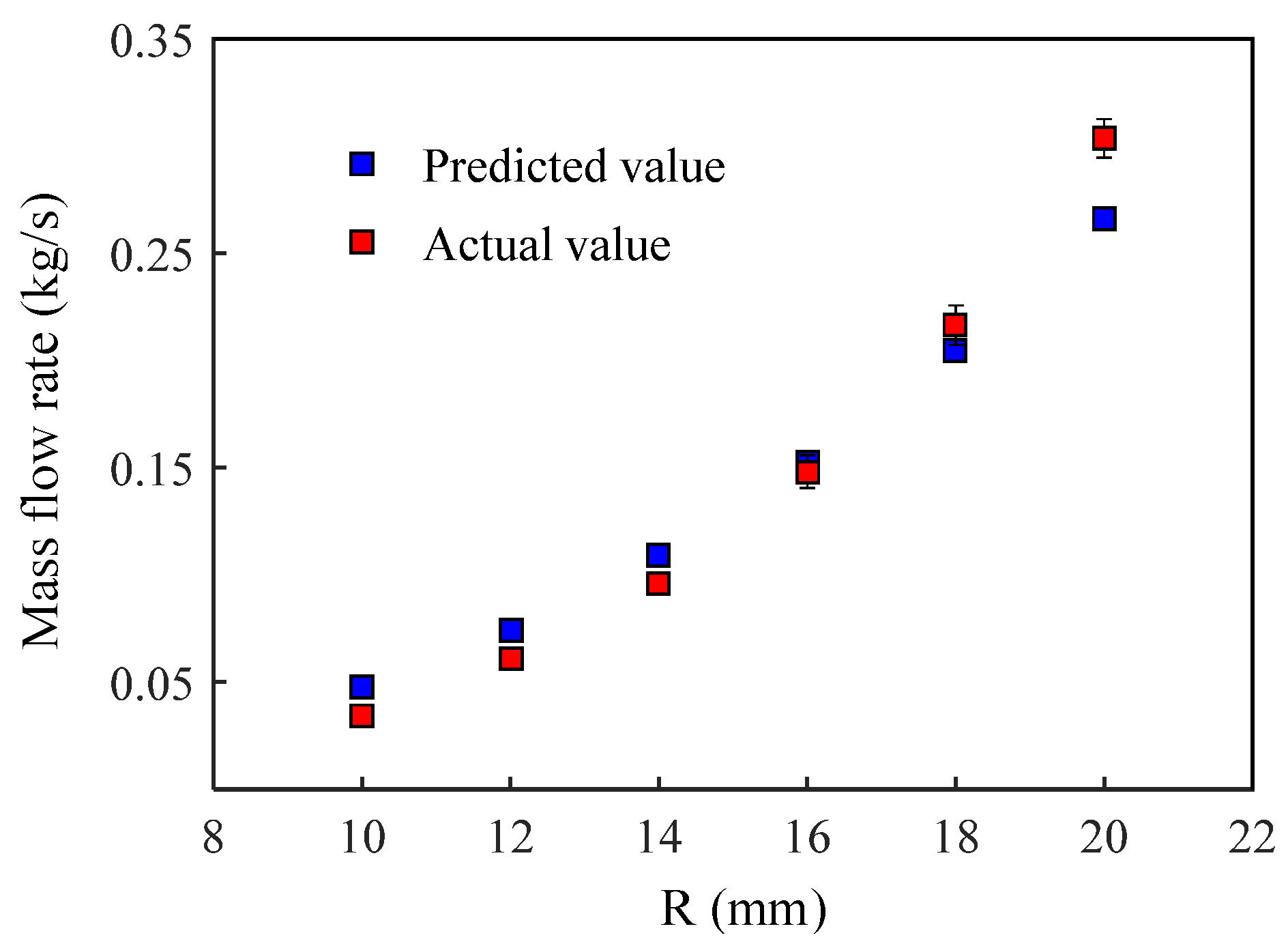
A comparative validation was performed between the experimental mass flow rates and predicted values calculated using Equation (17). As shown in Figure 18, the results demonstrate excellent agreement between predicted and experimental values, further confirming the validity and accuracy of the aforementioned average mass flow rate prediction model.
Based on Equations (8) and (17), the expression for grain outflow impact force can be derived as follows:
F i m p h = C g R 2 h / R + 4 / 9 C = 0.4489 π
However, the above equation still contains one undetermined key variable for deriving the impact pressure expression: the impact area A of the grain outflow. The impact area A should be expressed by the following equation:
A = π × r 2 × φ φ = M V ( h ) ρ π r 2 A = M V ( h ) ρ
Consequently, the impact pressure expression for grain outflow can be derived as follows:
P ( h ) = M V ( h ) / M V ( h ) ρ = 2 h + 8 9 R g ρ
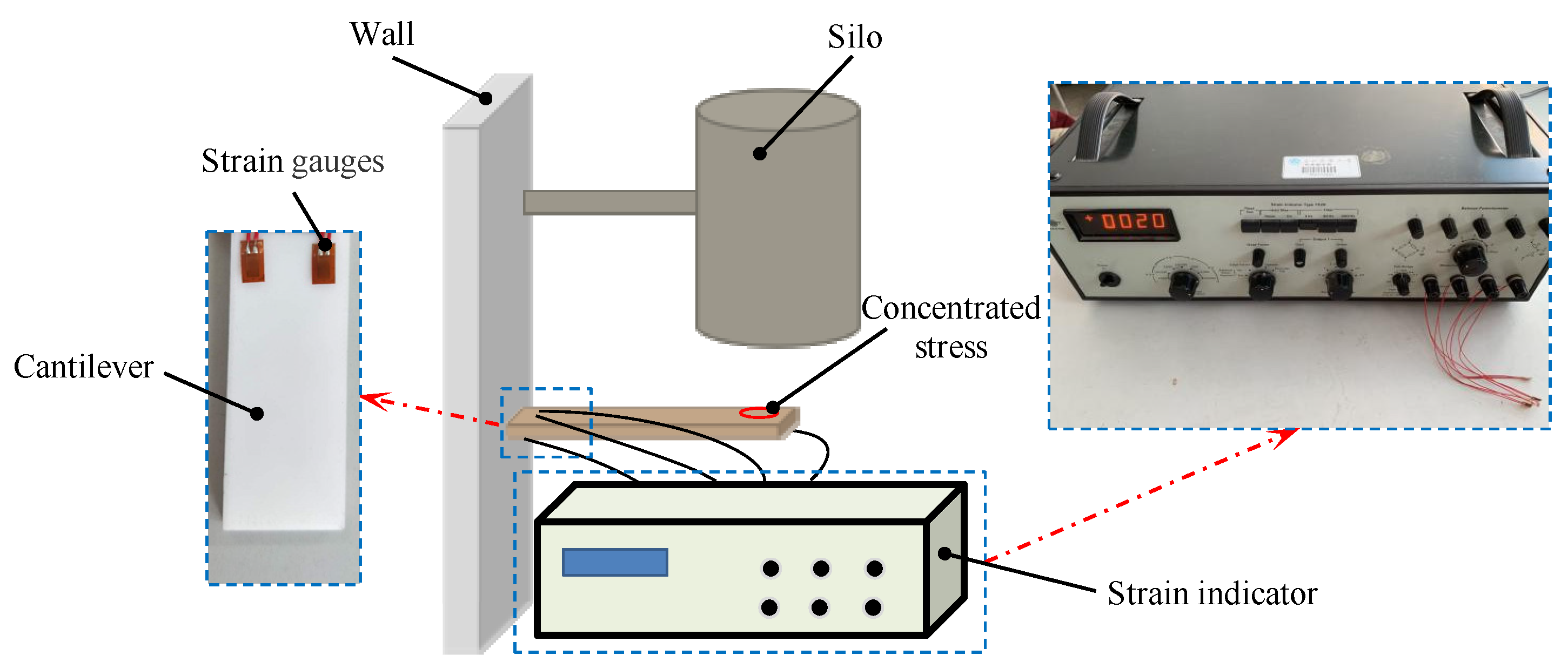
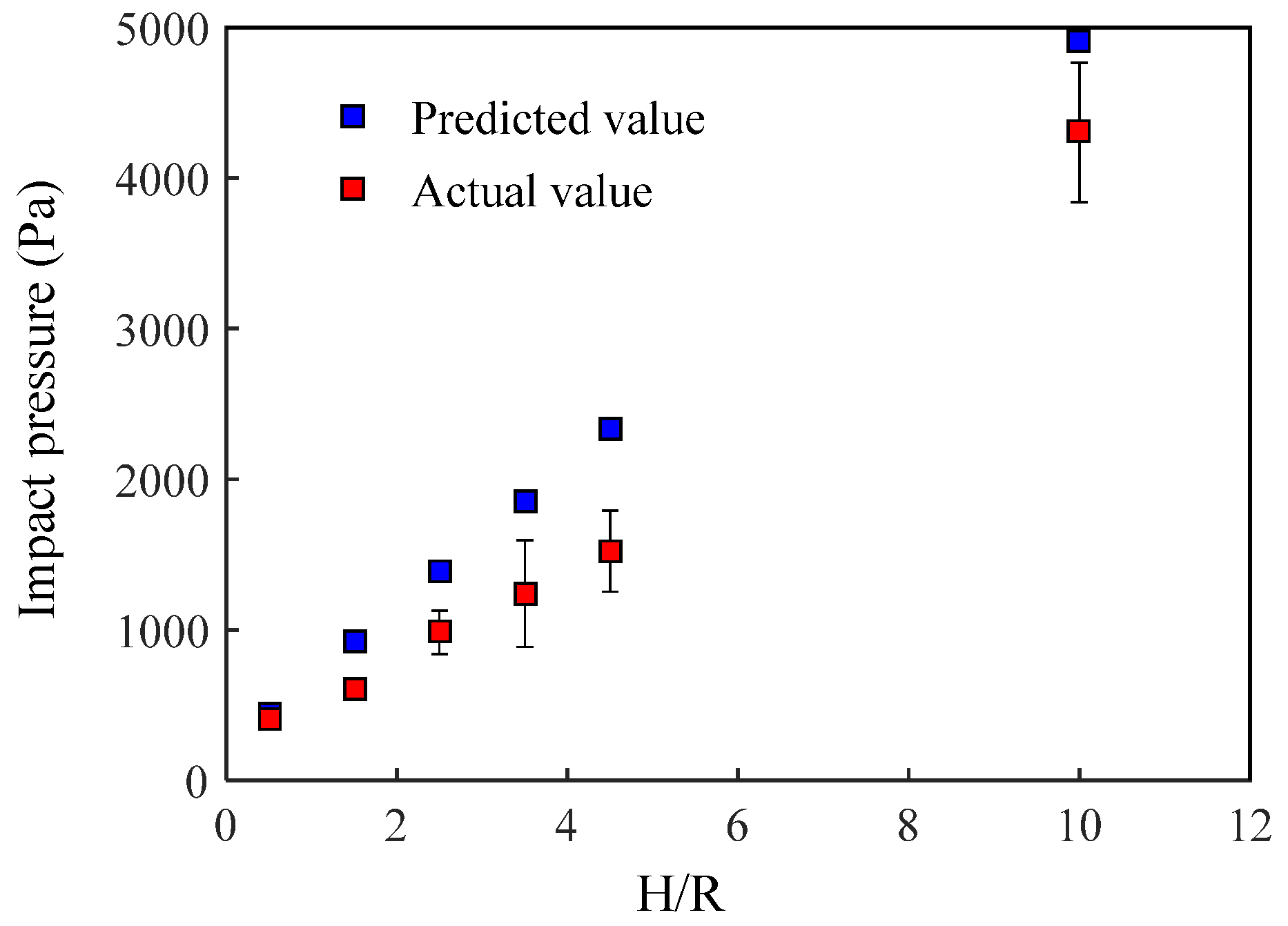
To further verify the validity of the derived theoretical expression for impact pressure, a simplified experimental setup for impact pressure measurement was constructed, as shown in Figure 19. The operational principle involves measuring transient strain generated by a wall-mounted cantilever beam under impact loading using a strain indicator, from which stress values are derived based on the beam’s dimensional and material parameters. To prevent grain accumulation on the cantilever beam that could compromise measurement accuracy, the experimental protocol requires synchronous monitoring of grain-beam contact while recording instantaneous readings from the strain indicator, with final values determined through repeated trials to obtain averaged results. It should be noted that the strain gauge mounted on the cantilever beam is a Model 120-3AA strain gauge, with the strain indicator achieving a resolution of 1 με and an accuracy of 5 με. The cantilever beam was fabricated via 3D printing using polylactic acid (PLA) material. Due to the limitations of the current pressure measurement apparatus, this study can only determine the impact pressure of particle flows with falling heights below 20 cm. A comparison between predicted and measured values is presented in Figure 20, demonstrating general agreement between the theoretical predictions and the experimental results. However, given the current experimental limitations characterized by significant data fluctuations and restricted falling distances, the accuracy and robustness of this predictive model in practical unloading systems cannot be fully assessed. Further validation studies will be required to facilitate subsequent model refinement.

4. Conclusions

This study establishes a cohesive modeling framework for predicting grain impact breakage and impact loads during discharge, which systematically links the discharge flow characteristics, single-grain breakage mechanics, and engineering-scale predictions. The main conclusions are as follows:
  • Distinct discharge ranges correspond to differential grain outflow characteristics. The variation patterns of grain falling velocity and attitude for different discharge ranges during the discharging process were analyzed. The results indicate negligible differences in falling velocity between core and boundary layers, while the primary distinction in impact behavior across discharge ranges manifests in grain attitude upon impact. Core layer grains exhibit minimal angles relative to the sidewalls while maintaining near-vertical with respect to the horizontal plane below the outlet. In contrast to the core layer, boundary layer grains exhibit smaller inclination angles relative to the horizontal plane while maintaining larger angles (approximately 60°) with respect to the sidewalls.
  • A predictive model for average grain falling velocity was developed. Based on the single-grain breakage probability model, critical unit mass impact energy (along 90°: 106.4 J kg−1; along 0°: 57.28 J kg−1) and critical breakage velocity (along 90°: 14.59 m s−1; along 0°: 10.70 m s−1) were determined under two extreme impact attitude conditions. A comprehensive analysis of grain attitude and impact velocity variation with falling height during discharge, combined with the critical collision energy per unit mass for brown rice breakage, enabled the development of a breakage probability zoning diagram for grain impact during both the large-scale and small-scale discharge processes.
  • Theoretical prediction models were successfully developed for key engineering design parameters including mass flow rate, impact force, and impact pressure during grain discharging processes. These models were subsequently validated, with the verification results demonstrating excellent predictive capabilities across all constructed models. This study can provide critical design parameters for discharge systems to prevent grain impact breakage during discharging progresses.

Author Contributions

Conceptualization, Y.X. and Y.H.; methodology, Y.X.; software, Y.X.; validation, Y.X., Y.H. and A.L.; formal analysis, Y.X.; investigation, Y.X.; resources, Y.X.; data curation, Y.X.; writing—original draft preparation, Y.X.; writing—review and editing, M.S., A.L., Y.H., Y.Z., X.X. and R.Z.; visualization, Y.X.; supervision, Y.X.; project administration, Y.X.; funding acquisition, Y.X. and Y.Z. All authors have read and agreed to the published version of the manuscript.

Funding

This research was funded by the Chinese Natural Science Foundation, grant number 52305286, Natural Science Foundation of Jiangsu Province, grant number BK20240927, and China Postdoctoral Science Foundation, grant number 2023M732989 and 2024T170753.

Data Availability Statement

All data are presented in this article in the form of figures and tables.

Conflicts of Interest

The authors declare no conflicts of interest.

References

  1. Hussain, S.; Lei, X.P.; Wu, H.Q.; Li, H.; Song, H.Y.; Zheng, D.C.; Jiawei, W.; Li, A.B.; Farid, M.U.; Ghafoor, A. Optimizing the design of a multi-stage tangential roller threshing unit using CFD modeling and experimental studies. Comput. Electron. Agric. 2024, 226, 109400. [Google Scholar] [CrossRef]
  2. Chen, J.; Lian, Y.; Zou, R.; Zhang, S.; Ning, X.B.; Han, M.N. Real-time grain breakage sensing for rice combine harvesters using machine vision technology. Int. J. Agric. Biol. Eng. 2020, 13, 194–199. [Google Scholar] [CrossRef]
  3. Zhou, Y.; Han, L.; Wang, P.; Chen, Y.N. Impact of kernel breakage and storage conditions on mildew growth in grain piles. Food Addit. Contam. Part A Chem. Anal. Control Expo. Risk Assess. 2025, 42, 786–797. [Google Scholar] [CrossRef] [PubMed]
  4. Jukic, Z.; Mason, S.; Babic, M.; Vitazek, I.; Pliestic, S.; Srecec, S.; Kovacev, I.; Habus, M. Factors influencing maize kernel breakage—A review. J. Cent. Eur. Agric. 2024, 25, 401–415. [Google Scholar] [CrossRef]
  5. Ansart, R.; de Ryck, A.; Dodds, J.A. Dust emission in powder handling: Free falling particle plume characterisation. Chem. Eng. J. 2009, 152, 415–420. [Google Scholar] [CrossRef]
  6. Li, Y.B.; Fan, H.F.; Xu, Y.; Jiang, J.J.; Cui, T.; Su, Y.; Qiao, M.M.; Han, S.Y.; Qian, J. Decreasing grain processing breakage with a novel flexible threshing system: Multivariate optimization and wear investigation. J. Food Process. Preserv. 2022, 46, e16794. [Google Scholar] [CrossRef]
  7. Prakash, K.S.; Someswararao, C.; Das, S.K. Pneumatic polishing of rice in a horizontal abrasive pipe: A new approach in rice polishing. Innov. Food Sci. Emerg. Technol. 2014, 22, 175–179. [Google Scholar] [CrossRef]
  8. Kim, T.H.; Opara, L.U.; Hampton, J.G.; Hardacre, A.K.; MacKay, B.R. PH—Postharvest Technology: The Effects of Grain Temperature on Breakage Susceptibility in Maize. Biosyst. Eng. 2002, 82, 415–421. [Google Scholar]
  9. Sun, Z.; Li, A.Q.; Ji, S.Y.; Li, H.; Li, Z.Z.; Gao, H.N.; Wang, X.L.; Li, X.L.; Han, Y.L.; Zhao, D. A method for improving milling quality based on pre-milling in the combined rice milling process. Innov. Food Sci. Emerg. Technol. 2025, 100, 103911. [Google Scholar] [CrossRef]
  10. Jian, F.J.; Narendran, R.B.; Jayas, D.S. Segregation in stored grain bulks: Kinematics, dynamics, mechanisms, and minimization—A review. J. Stored Prod. Res. 2019, 81, 11–21. [Google Scholar] [CrossRef]
  11. Xia, G.Y.; Xu, Y.; Su, Y.; Gao, X.J.; Li, Y.B.; Qiao, M.M.; Yu, Y.B. Feature selection, artificial neural network prediction and experimental testing for predicting breakage rate of maize kernels based on mechanical properties. J. Food Process Eng. 2021, 44, e13621. [Google Scholar] [CrossRef]
  12. Kruszelnicka, W.; Leda, P.; Tomporowski, A.; Ambrose, K. Breakage behavior of corn kernels subjected to repeated loadings. Powder Technol. 2024, 435, 119372. [Google Scholar] [CrossRef]
  13. Chen, P.Y.; Jia, F.G.; Zhang, J.C.; Han, Y.L.; Li, A.Q.; Wang, Y.L.; Fei, J.M.; Shen, S.H.; Feng, W.Y.; Hao, X.Z. Breakage mechanism of brown rice grain during rubber roll hulling. Biosyst. Eng. 2023, 225, 41–53. [Google Scholar] [CrossRef]
  14. Shen, S.H.; Ji, S.Y.; Zhao, D.; Han, Y.L.; Li, H.; Sun, Z.; Li, Z.Z.; Li, A.Q.; Feng, W.Y.; Fei, J.M.; et al. Simulation of rice grain breakage process based on Tavares UFRJ model. Particuology 2024, 93, 65–74. [Google Scholar] [CrossRef]
  15. Gong, D.Z.; Nadolski, S.; Sun, C.B.; Klein, B.; Kou, J. The effect of strain rate on particle breakage characteristics. Powder Technol. 2018, 339, 595–605. [Google Scholar] [CrossRef]
  16. Han, Y.L.; Zhao, D.; Chu, Y.H.; Zhen, J.X.; Li, G.R.; Zhao, H.W.; Jia, F.G. Breakage behaviour of single rice particles under compression and impact. Adv. Powder Technol. 2021, 32, 4635–4650. [Google Scholar] [CrossRef]
  17. Guo, Y.N.; Hou, L.Y.; Li, L.L.; Gao, S.; Hou, J.F.; Ming, B.; Xie, R.Z.; Xue, J.; Hou, P.; Wang, K.R.; et al. Study of corn kernel breakage susceptibility as a function of its moisture content by using a laboratory grinding method. J. Integr. Agric. 2022, 21, 70–77. [Google Scholar] [CrossRef]
  18. Martínez, R.D.; Cirilo, A.G.; Cerrudo, A.A.; Andrade, F.H.; Izquierdo, N.G. Environment affects starch composition and kernel hardness in temperate maize. J. Sci. Food Agric. 2022, 102, 5488–5494. [Google Scholar] [CrossRef]
  19. Zeng, Y.; Jia, F.G.; Xiao, Y.W.; Han, Y.L.; Meng, X.Y. Discrete element method modelling of impact breakage of ellipsoidal agglomerate. Powder Technol. 2019, 346, 57–69. [Google Scholar] [CrossRef]
  20. Xu, L.Z.; Li, Y.M.; Ma, Z.; Zhao, Z.; Wang, C.H. Theoretical analysis and finite element simulation of a rice kernel obliquely impacted by a threshing tooth. Biosyst. Eng. 2013, 114, 146–156. [Google Scholar] [CrossRef]
  21. Xiao, Y.W.; Han, Y.L.; Jia, F.G.; Liu, H.R.; Li, G.R.; Chen, P.Y.; Meng, X.Y.; Bai, S.G. Research on clogging mechanisms of bulk materials flowing trough a bottleneck. Powder Technol. 2021, 381, 381–391. [Google Scholar] [CrossRef]
  22. Bianconi, G.; Marsili, M. Clogging and self-organized criticality in complex networks. Phys. Rev. E 2004, 70, 035105. [Google Scholar] [CrossRef]
  23. Esmaili, A.A.; Donohue, T.J.; Wheeler, C.A.; McBride, W.M.; Roberts, A.W. On the analysis of a coarse particle free falling material stream. Int. J. Miner. Process 2015, 142, 82–90. [Google Scholar] [CrossRef]
  24. Zhao, Y.; Yang, S.L.; Zhang, L.Q.; Chew, J.W. DEM study on the discharge characteristics of lognormal particle size distributions from a conical hopper. Aiche J. 2018, 64, 1174–1190. [Google Scholar] [CrossRef]
  25. Zhang, T.F.; Gan, J.Q.; Yu, A.B.; Pinson, D.; Zhou, Z.Y. Segregation of granular binary mixtures with large particle size ratios during hopper discharging process. Powder Technol. 2020, 361, 435–445. [Google Scholar] [CrossRef]
  26. Shi, Y.C.; Specht, E.; Herz, F.; Knabbe, J.; Sprinz, U. Experimental investigation of the axial discharging velocity of particles from rotary kilns. Granul. Matter 2011, 13, 465–473. [Google Scholar] [CrossRef]
  27. Meng, X.Y.; Jia, F.G.; Xiao, Y.W.; Han, Y.L.; Zeng, Y.; Li, A.Q. Effect of operating parameters on milling quality and energy consumption of brown rice. J. Food Sci. Technol.-Mysore 2019, 56, 674–682. [Google Scholar] [CrossRef]
  28. Li, A.Q.; Jia, F.G.; Han, Y.L.; Chen, P.Y.; Wang, Y.L.; Zhang, J.C.; Hao, X.Z.; Fei, J.M.; Shen, S.H.; Feng, W.Y. Study on dynamic response mechanism of rice grains in friction rice mill and scale-up approach of parameter based on discrete element method. Innov. Food Sci. Emerg. Technol. 2023, 86, 103346. [Google Scholar] [CrossRef]
  29. Li, A.Q.; Jia, F.G.; Shen, S.H.; Han, Y.L.; Chen, P.Y.; Wang, Y.L.; Zhang, J.C.; Feng, W.Y.; Fei, J.M.; Hao, X.Z. Numerical simulation approach for predicting rice milling performance under different convex rib helix angle based on discrete element method. Innov. Food Sci. Emerg. Technol. 2023, 83, 103257. [Google Scholar] [CrossRef]
  30. Han, Y.L.; Jia, F.G.; Zeng, Y.; Jiang, L.W.; Zhang, Y.X.; Cao, B. DEM study of particle conveying in a feed screw section of vertical rice mill. Powder Technol. 2017, 311, 213–225. [Google Scholar] [CrossRef]
  31. Xiao, Y.W.; Han, Y.L.; Jia, F.G.; Liu, H.R.; Li, G.R.; Chen, P.Y.; Meng, X.Y.; Bai, S.G. Experimental study of granular flow transition near the outlet in a flat-bottomed silo. Biosyst. Eng. 2021, 202, 16–27. [Google Scholar] [CrossRef]
  32. Cao, W.G.; Liu, H.F.; Li, W.F.; Xu, J.L. The characteristics of the near field of the granular jet. Fuel 2014, 115, 17–23. [Google Scholar] [CrossRef]
  33. Shi, Z.H.; Li, W.F.; Wang, Y.; Liu, H.F.; Wang, F.C. DEM study of liquid-like granular film from granular jet impact. Powder Technol. 2018, 336, 199–209. [Google Scholar] [CrossRef]
  34. Janda, A.; Zuriguel, I.; Maza, D. Flow Rate of Particles through Apertures Obtained from Self-Similar Density and Velocity Profiles. Phys. Rev. Lett. 2012, 108, 248001. [Google Scholar] [CrossRef]
  35. Vogel, L.; Peukert, W. Breadage behaviour of different materials—Construction of mastercurve for the breakage probability. Powder Technol. 2003, 129, 101–110. [Google Scholar] [CrossRef]
  36. Rumpf, H. Physical aspects of comminution and new formulation of a law of comminution. Powder Technol. 1973, 7, 145–159. [Google Scholar] [CrossRef]
Figure 1. The impacting and breaking detection device of single grain.
Agriculture 15 02368 g001
Figure 2. Model of DEM simulation of a brown rice particle.
Agriculture 15 02368 g002
Figure 3. (a) The geometry model of a 3D flat silo; (b) the computational domain.
Agriculture 15 02368 g003
Figure 4. Experimental setup and image processing.
Agriculture 15 02368 g004
Figure 5. Experimental validation of the average maximum discharging radius at different falling heights.
Agriculture 15 02368 g005
Figure 6. Schematic diagram of grain breakage induced by impact during discharging process.
Agriculture 15 02368 g006
Figure 7. The granular outflow profile corresponding to different cumulative fractions: (a) 80%, (b) 90%, (c) 95%, (d) 99%.
Agriculture 15 02368 g007aAgriculture 15 02368 g007b
Figure 8. Variation in downward velocity with falling height in different discharging regions.
Agriculture 15 02368 g008
Figure 9. Variation in grains attitude with falling height in different discharging regions.
Agriculture 15 02368 g009
Figure 10. Rescaled velocity profiles for different outlet sizes.
Agriculture 15 02368 g010
Figure 11. The velocity in the center of the outlet for different outlet sizes.
Agriculture 15 02368 g011
Figure 12. The rescaled downward velocity as a function of the falling height.
Agriculture 15 02368 g012
Figure 13. Breakage probability of grains as a function of the collision energy per unit mass (a) along 90° impact; (b) along 0° impact.
Agriculture 15 02368 g013
Figure 14. Variation rules of the collision energy per unit mass with outlet sizes and falling height for a larger-scale discharging.
Agriculture 15 02368 g014
Figure 15. Variation rules of the collision energy per unit mass with outlet sizes and falling height for a smaller-scale discharging.
Agriculture 15 02368 g015
Figure 16. Fluctuation of mass flow rate at different falling heights (D = 36 mm).
Agriculture 15 02368 g016
Figure 17. The relationship between contraction ratio and volume fraction at different falling heights.
Agriculture 15 02368 g017
Figure 18. Comparison between the predicted value and actual value of mass flow rate for different outlet sizes, R2 = 0.963.
Agriculture 15 02368 g018
Figure 19. Schematic diagram of the measuring device of the grains discharging impact force.
Agriculture 15 02368 g019
Figure 20. Comparison between the predicted value and actual value of impact pressure for different falling heights (D = 36 mm), R2 = 0.902.
Agriculture 15 02368 g020
Table 1. Geometry parameters and physical parameters used in simulation.
NameParameterValue
Brown Rice ParticleDensity ρr (kg/m3)1333
Poisson ratio vr0.25
Shear modulus Gr (Pa)3.75 × 10⁸
SiloDensity ρs (kg/m3)1500
Poisson ratio vs0.4
Shear modulus Gr (Pa)1 × 10⁸
Silo diameter Ds (mm)100
Outlet diameter D (mm)20~40
Particle–ParticleRestitution coefficient eRR0.6
Coefficient of static friction μs,RR0.3
Coefficient of rolling friction μr,RR0.01
Particle–SiloRestitution coefficient eRS0.5
Coefficient of static friction μs,RS0.5
Coefficient of rolling friction μr,RS0.02
SimulationTime step Δt (s)8.52 × 10⁻⁷
Disclaimer/Publisher’s Note: The statements, opinions and data contained in all publications are solely those of the individual author(s) and contributor(s) and not of MDPI and/or the editor(s). MDPI and/or the editor(s) disclaim responsibility for any injury to people or property resulting from any ideas, methods, instructions or products referred to in the content.