You are currently viewing a new version of our website. To view the old version click .
Agriculture
  • Article
  • Open Access

11 November 2025

Facilitating Farmers’ Monitoring Access to the Hemolymph of Codling Moth Larvae Cydia pomonella (Linnaeus, 1758) for Informed Decision-Making and Control Strategies in Apple Orchards


and
Department of Agriculture, Faculty of Agricultural Sciences, University of Patras, New Buildings, 30200 Missolonghi, Greece
*
Author to whom correspondence should be addressed.
This article belongs to the Section Crop Protection, Diseases, Pests and Weeds

Abstract

The codling moth Cydia pomonella (L.) represents a substantial threat to the apple tree industry, with its cellular content being agronomically vital as it serves as the final immunological and toxicological barrier of the pest. Key hemocyte types identified in the hemolymph include plasmatocytes, granulocytes, spherulocytes, and oenocytoids. Hemolymph samples were in vitro suspended in various salt buffers (physiological saline, phosphate saline buffer (PBS) and Galleria mellonella anticoagulant buffer) to determine the most suitable one for agricultural monitoring purposes. The pH influenced the total hemocyte counts and the type of cells that adhered to the slides. PBS (pH 6.5) was found to be optimal for such studies due to its high levels of cellular attachment, cell viability, absence of melanization, and cellular degeneration effects. The supplementation of 5% CaCl2 to PBS did not enhance the functional utility of the buffer. The in vivo bacterial challenge of larval hemolymph with 4 × 10⁸ sp/mL Bacillus subtilis provided complete clearance from the microbial invader within 30 min. Hemocytes released antimicrobial lysozyme as part of their innate immune responses. Hemocytic examination of larvae as an agricultural practice is strongly recommended for baseline insecticide resistance avoidance and predictive efficiency of integrated pest management in the apple farm.

1. Introduction

Codling moth, Cydia pomonella (L.), is a significant pest of apple tree orchards worldwide. Studying its cellular immune system is directly relevant to global apple production. Larval hemocyte research is critically needed for defining the economic [1] and physiological status of the pest [2,3], the crop damage [4], and the resistance mechanisms to microbial and chemical pesticides [5]. This level of understanding is crucial for enhancing (a) biocontrol techniques, (b) pesticidal formulations that promote sustainable agriculture, (c) management strategies for climate-induced biotic changes [6], and (d) regulatory frameworks [7], ensuring that they are both reliable and precise. In vitro examination of codling moth larval hemocytes can enhance precision application strategies combining optimal control timing via field diagnostics where synergistic combinations of chemical and biological tools enhance stress indices in hemocyte function [8,9,10,11]. Hemocytes offer a symptomatic identification of control failures and/or insecticide resistance development before their occurrence [12]. This approach will provide reduced apple orchard yield losses, lower operational and control costs, and access to novel and efficient pesticidal techniques supporting innovation cycles in governmental and industrial sectors.
In orchard management, professionals are motivated by diverse factors. Scientists are primarily driven by the pursuit of knowledge, agronomist-consultants are motivated by the resolution of client-related challenges, and farmers prioritize practical and financial outcomes. Scientists are prepared to encounter experimental failures in the quest for insights, consultants endeavor to balance innovation with reliability, and farmers prefer methods that offer predictability. This comparison underscores that, despite the similarity of technical skills, the examination and valuation of codling moth larval hemocytes vary according to the professional context (Table 1).
Table 1. Scope, professional frameworks, and motivational perspectives among scientists, agronomic consultants, and farmers regarding the analysis of C. pomonella larval hemolymph properties.
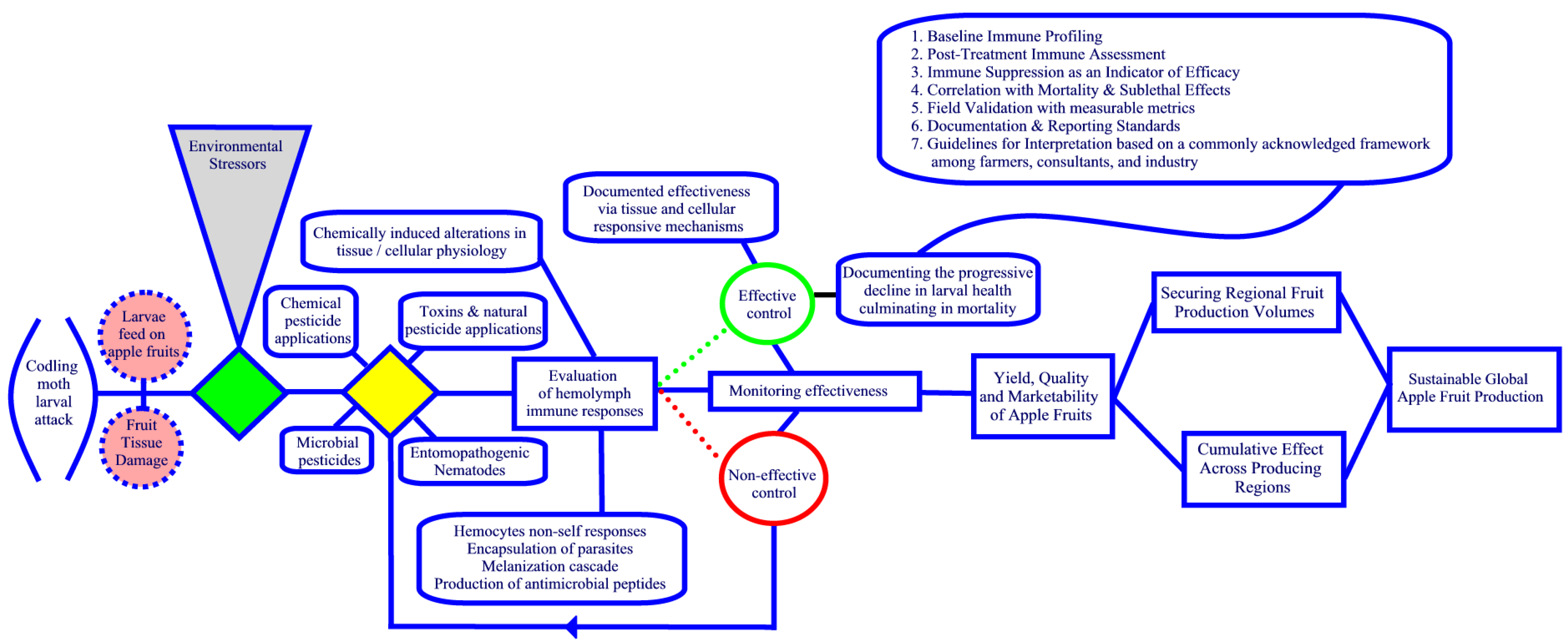
Codling moth larval hemolymph content examination for pest monitoring purposes can be prioritized in time due to (a) immediate needs (≤1–2 years) where rapid resistance detection prevents control failures in resistant populations, (b) high but not immediate priorities (2–3 years) optimizing biocontrol timing, improving biocontrol success rates, prioritizing new biorational insecticidal product development and alternative control methods for chemical-resistant populations, and (c) long-term priorities (≥5 years), forming an integrated pest management strategy [11,13,14,15,16]. Through that route, decisions at the level of apple tree orchard management (Figure 1) will reduce ineffective pesticide applications, crop losses, and the development of insecticide resistance; the farm will be able to keep standard market prices, orchard investment returns, and certified sustainable production [17,18,19].
Figure 1. Direct links of monitoring C. pomonella hemolymph innate responses to global apple fruit production. While infesting the apple tree, larvae have to compete with environmental stressors that are present in the apple orchard. Pesticides from any possible category (chemical, natural, modified toxins, microbes, and entomopathogenic nematodes) were applied to control the infestation and eliminate insect presence. Not all applicable means are effective; therefore, there should be a common basis for communicating the effects between farmers, consultants, and the pesticide industry. Insect hemolymph circulating in an open circulatory system can interact with all internal organs, physiologically controlling the whole organism. Assessing the hemolymph in terms of morphology, cell counts, and content release can prevent farmers from making erroneous pest control decisions and help maintain orchard yield through cost-effective and rapid monitoring approaches.
The immune responses of insects constitute a complex network of tissue interactions and interconnected tissue synergies. Hemolymph, in addition to its physiological roles such as carbon dioxide accumulation, the transfer of nutritive elements to cells and tissues, the provision of hydraulic support for body shape, the facilitation of wing movement, and the regulation of heat during flight, serves a protective function for the organism against wounds, microbial invaders, and parasitoids [20,21,22,23,24,25]. The coloration of hemolymph plasma can range from bright green to golden yellow and black, depending on various physiological, biochemical, and immunological factors [26,27]. The physicochemical parameters of hemolymph, such as pH, can exhibit significant variability due to factors including the physiology of the insect species, dietary influences, exposure to microorganisms, and the presence of pesticidal substrates [28,29,30,31]. The inorganic constituents of hemolymph plasma predominantly consist of ions such as sodium, potassium, calcium, chloride, magnesium, and phosphate [32].
Plasma comprises a diverse range of organic compounds, including free amino acids, organic acids, carbohydrates, peptides, proteins, enzymes, lipoproteins, hormones, and other molecules. These components play a critical role in regulating (a) the osmotic pressure affecting circulating hemocytes and (b) the immune responses to foreign invaders [33,34]. In terms of immunity, the plasma components in lepidoptera display unique immunological characteristics, evident in cell-free and hemocyte-mediated processes. These include the production of melanin through the cascade reactions of the phenoloxidase system, the release of lysozyme, and the lipoprotein shuttle for lipid and energy transfer [35,36,37]. Lepidoptera larval hemocytes are classified according to their functional roles, morphological features, ultrastructural characteristics, antigenic properties, and staining attributes [38,39,40,41,42,43]. Functional similarities of lepidopteran hemocytes with mammalian phagocytes have been reported [44].
The predominant cellular types present in the hemolymph of Lepidopteran species include (a) prohemocytes, (b) plasmatocytes, (c) granular cells, (d) spherulocytes, and (e) oenocytoids. Their immunological function, which varies according to the insect species and developmental stage, involves the recognition of foreign masses within the hemolymph, the encoding of antimicrobial peptides, and the adherence to (and/or discharge onto) antigen surfaces [45,46,47]. Hemocyte types like plasmatocytes are produced by hematopoetic organs and their dissociation and dispersion in the hemolymph begin when adhesion molecules such as integrins cover the outer membrane of hemocytes [48].
Prohemocytes are round cells, comprising approximately 5% of the total hemocyte counts in many species of lepidopteran larvae [49,50]. These cells are characterized by a large central nucleus, ribosomes, mitochondria, and a sparse endoplasmatic reticulum and are considered to be multipotent insect stem cells [51,52,53]. Prohemocytes may differentiate into plasmatocytes, granular cells, and spherulocytes [54,55]. This class of hemocytes is able to function as phagocytes for hemocyte debris [54]. In tissue culture systems, larval prohemocytes are small and resemble fibroblast-like cells [56]. In vitro, using a serum-free culture medium, 40% of fresh hemolymph lepidopteran prohemocytes continue to produce prohemocytes through cell division, which may occur partially due to the absence or interference of systemic response signaling [55].
Insects typically have plasmatocytes making up 30% to 50% of their total hemocyte counts [49]. Dipteran plasmatocytes are not equivalent to lepidopteran plasmatocytes [57,58]. Lepidopteran plasmatocytes are motile and variable in shape, ranging from ameboid to stellate forms with extremely expandable pseudopodia [59,60]. Golgi bodies, mitochondria, ribosomes, membrane-bound vesicles, phagocytic vacuoles, and smooth and rough endoplasmic reticulum comprise the synthesis of plasmatocyte cytoplasm [51]. The cellular dimensions and nuclear size of lepidopteran caterpillars are approximately 20–40 μm and 5–10 μm, respectively [61]. At least nine distinct proteins present on Lepidoptera plasmatocytes can be utilized to differentiate this class of hemocytes from others [62]. The antigenic characteristics and ploidy levels of plasmatocytes serve as criteria for differentiating this cell type from granular cells [48]. In the vast majority of insect species, plasmatocytes demonstrate the capacity to adhere to glass surfaces, phagocytose small particles, engage in nodulation, and participate in the encapsulation process of large foreign objects in vitro [63,64]. In Manduca sexta (L.), hyperphagocytic plasmatocytes represent a subpopulation that actively engulfs bacteria present in the hemolymph, although their contribution to the total hemocyte count is minimal (~1%) [65,66].
Granular cells constitute approximately 30–50% of the total hemocyte population [41]. This type of hemocytic cell exhibits a spherical morphology with a diameter ranging from 7 to 9 μm. The cytoplasm is characterized by a plethora of granules, each with a diameter of 350 to 1000 nm, a central nucleus, a Golgi apparatus, mitochondria, multivesicular bodies, and both a smooth and rough endoplasmic reticulum [51,62,67]. Seven monoclonal antibodies, which exhibit specificity for granular cells, have been identified as anti-hemocyte and are applicable in cell-sorting methodologies [62]. In the silkworm, Bombyx mori (L.), larval hemocytes have the potential to differentiate into various cell types. Specifically, granular cells are considered a transient stage between prohemocytes and spherulocytes [54,55]. Granular cells play a crucial role in the processes of the nodulation and encapsulation of foreign objects within the hemolymph, releasing adhesive materials around invading masses through degranulation [67,68,69]. Apoptosis of the granular cells, which is caused by factors released from the plasmatocytes during nodulation, limits their attack on foreign objects [68].
Spherulocytes (6–11 μm in diameter), constitute 20–30% of the total hemocyte population. These cells are characterized by large spherical inclusions that occupy a significant portion of the cytoplasm, nearly obscuring the small nucleus (3–4 μm), located centrally [41,51,70,71]. In the silkworm B. mori, these cells are derived through differentiation from prohemocytes and granulocytes [55].
Spherulocytes of lepidopteran species like Malacosoma disstria Hübner and Heliothis virescens (F.) contain heparin analogs, glycosaminoglycans with anticoagulant and wound-healing properties similar to those found in vertebrate mast cells [72,73,74,75]. Spherulocytes transport cuticular material [76,77]. The presence of parasitoids in vivo influences the population levels of spherulocytes, with the number of hemocyte types varying based on the lepidopteran host species and the specific parasitoid species involved [78]. Lepidopteran spherulocytes express antibacterial lysozyme when exposed to E. coli [79]. Studies on B. mori are not conclusive if phenoloxidase occurs in these cells [80].
Oenocytoids are spherical cells (diameter 20–35 µm) and represent 1–10% of the total hemocyte population [50,51,73]. Mitochondria, ribosomes, and an eccentric nucleus are the main parts of the subcellular anatomy [81,82]. These cells can also be identified with non-plasmatocyte-cross-reacting, anti-hemocyte, monoclonal antibodies [62]. Western blotting and indirect immunofluorescence techniques have been utilized to confirm the presence of the zymogenic component of the melanization pathway, prophenoloxidase, which is localized in the cell membrane of oenocytoids [83]. Lepidopteran oenocytoids also produce antibacterial lysozyme in response to the presence of E. coli. [79].
Typically, the innate immune mechanisms in many lepidopteran larvae include phagocytosis, nodulation, and encapsulation. These processes are driven by the interplay between cellular and humoral components [84].
The primary hemocyte types, specifically plasmatocytes and granular cells, are predominantly responsible for phagocytosis. [85]. Their involvement varies depending on the insect species and antigen type [86]. Nodulation is a biphasic response to large numbers of particulate antigens, in which the antigens adhere to proteins discharged about the granular cells forming on the antigen–coagulum complex that is walled off by the plasmatocytes [87]. Encapsulation is essentially the nodulation of foreign particles too large to be phagocytosed [88]. Mechanistic approaches to non-self, cellular adhesion to antigens are highly conserved [89].
Physiochemical properties of insect hemocytes and their environment and the antigens affect hemocyte adhesion to foreign material [34,40,90,91]. In most insect species, the adhesion of plasmatocytes and granular cells to glass is recognized as the initial phase of the encapsulation process [92]. Signal transduction components, including eicosanoids and the inactive forms of protein kinase A (PKA) and protein kinase C (PKC), serve as crucial mediators of adhesion for lepidopteran hemocytes to glass surfaces [39,92,93].
This study examines the factors influencing the adhesion of C. pomonella larval hemocytes to glass slides, with a particular focus on optimizing buffer conditions and pH levels for both in vitro and in vivo investigations. The primary objectives are (a) to advance research on the innate immunity of the larval stage of codling moth in both in vitro and in vivo contexts and (b) to streamline processes for agricultural practices, thereby facilitating more efficient pest control decision-making at the orchard level.

2. Materials and Methods

2.1. Insects

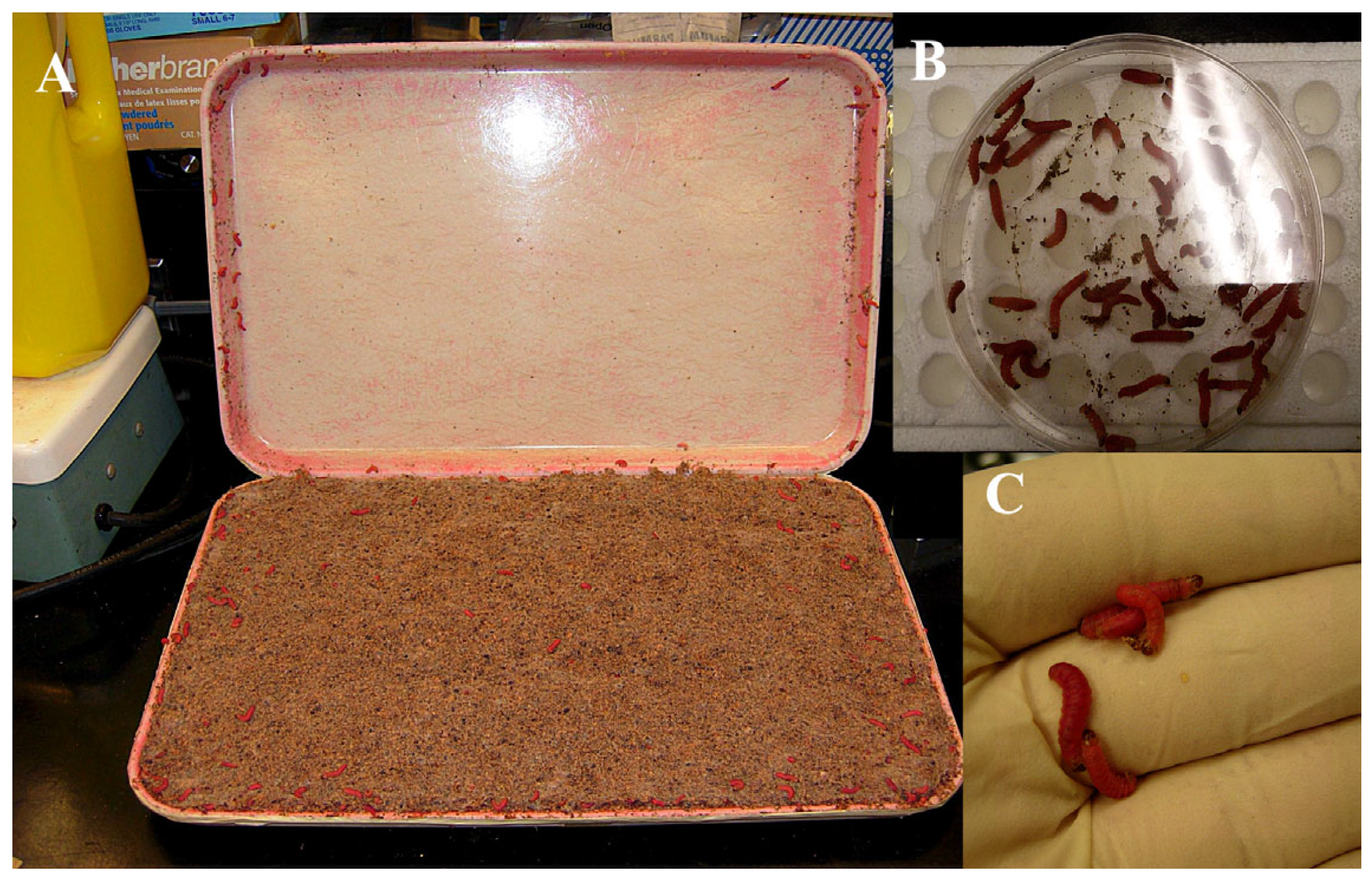
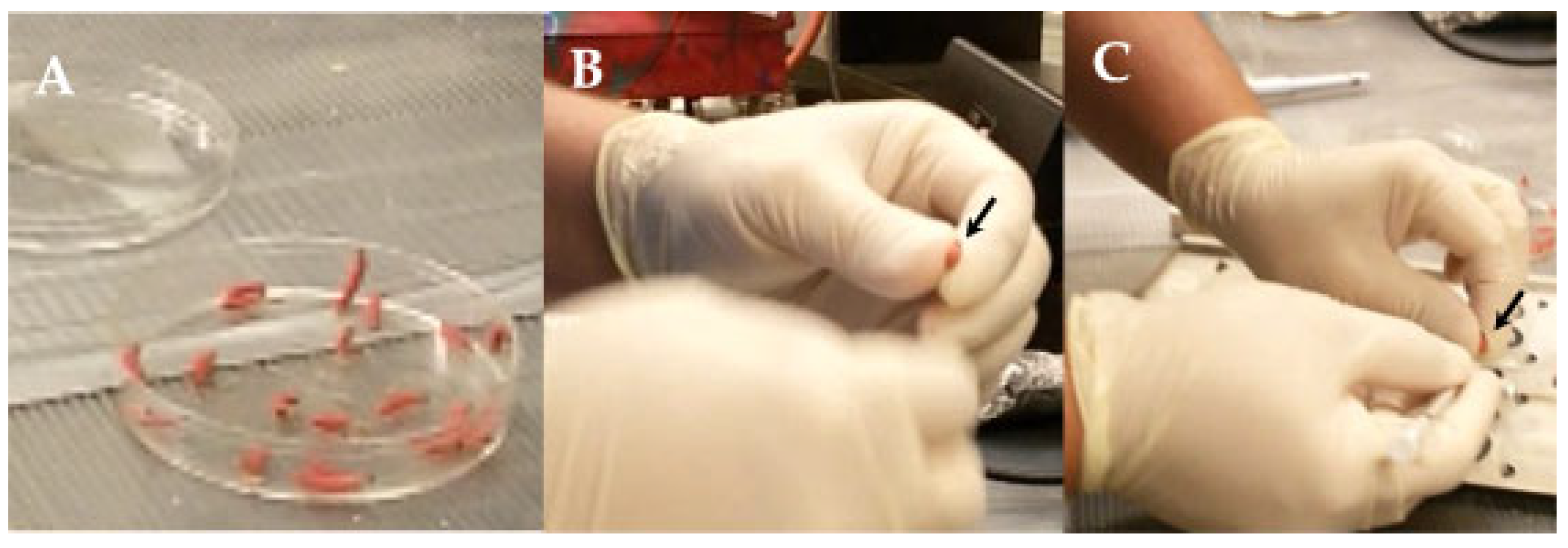
Laboratory-reared late fourth-instar C. pomonella larvae (Okanagan-Kootenay Sterile Insect Release (OKSIR) Program, Kelowna, BC, Canada) were supplied on diet trays at the Natural Resource Sciences Department of McGill University, QC, Canada (Figure 2). Samples of hemolymph were collected by wounding near the pseudopod region of the larvae (Figure 3). Individuals for experimental analysis were chosen from batches where histological and pathological examinations certified non-microbial or abiotic stress challenge status.
Figure 2. Mass-reared C. pomonella larval batch on artificial diet. Larval feeding tray (A), larvae extracted from diet (B), and selected individuals for in vitro/in vivo assessment (C).
Figure 3. Isolation hemolymph samples from C. pomonella larvae for in vitro experimentation. Tray with larvae (A); handling larvae in a U shape (arrow) so that the pseudopods region is exposed and the alimentary canal/digestive system will not be injured (B); wounding process and collection point (arrow) of hemolymph samples (C).

2.2. Hemocyte Monolayers and Buffer Suitability for In Vitro and In Vivo Studies

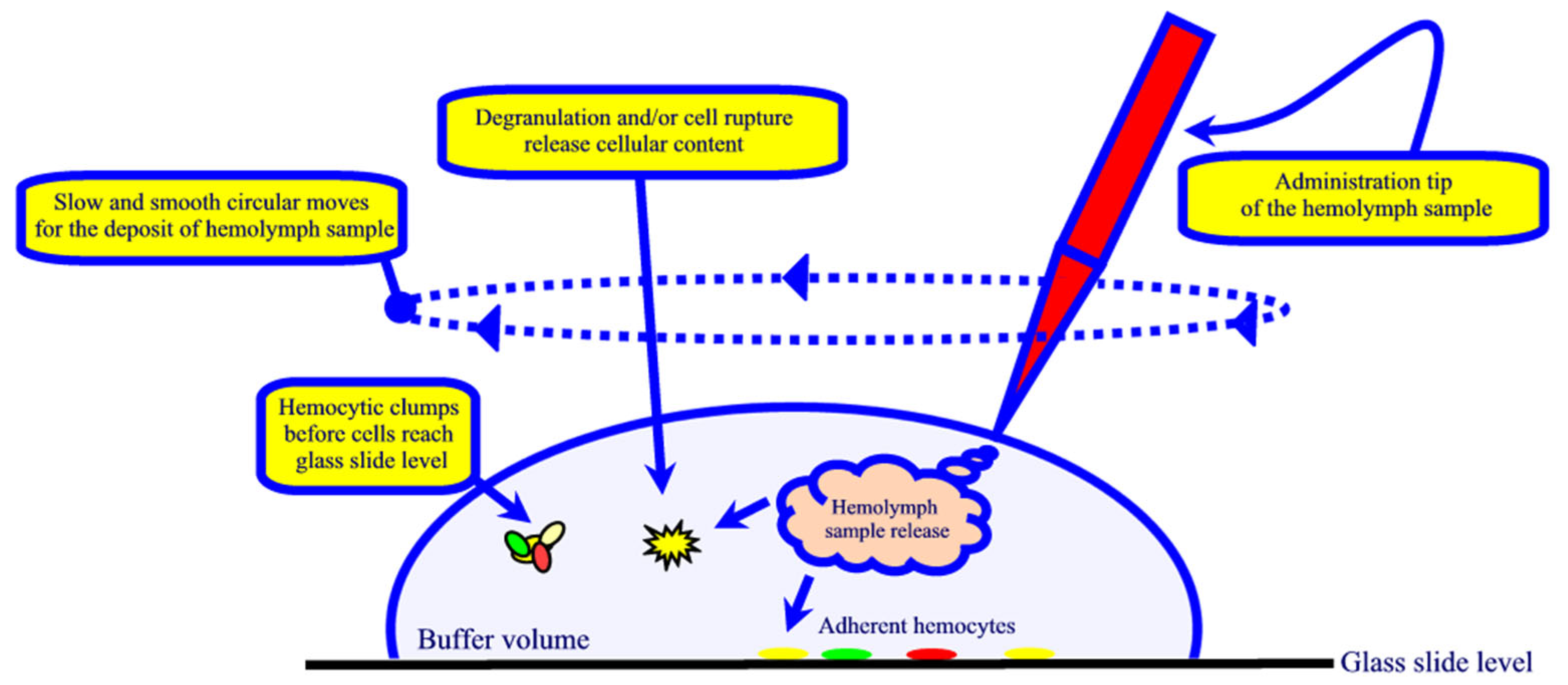
Hemocyte monolayers were prepared by applying hemolymph (20 μL) to a 1 cm2 area on glass slides, which had been previously rendered endotoxin-free by heating at 250 °C for 4 h, containing a selected buffer (100 mL) (Figure 4). The slides were incubated at 25 °C with 85% relative humidity for 40 min, after which they were rinsed with 5 mL of the corresponding buffer. The adhering hemocytes were subsequently fixed in glutaraldehyde vapor for 30 min. The total number and types of adhering hemocytes were determined using phase contrast microscopy. Hemocyte types in the monolayers and in whole fresh hemolymph were identified according to Price & Ratcliffe [94] and expressed as cells per mm.
Figure 4. Visualization of the anticipated processes occurring during the administration of larval hemolymph samples for in vitro buffer exposure. Upon the release of the sample from the administration tip, hemolymph clotting factors and other signaling molecules are able induce the formation of hemocytic clumps before the cells reach the glass slide. Degranulation and cell rupture may also be induced by chemical factors within the hemolymph and/or mechanical factors (such as cell shredding) if the buffer used is inappropriate or not properly physiochemically adjusted for the tissue under examination [24,95].
The buffers tested included physiological saline (150 mM NaCl, 5 mM KCl) [96], Galleria mellonella anticoagulant (186 mM NaCl, 13 mM KCl, 17 mM Na4EDTA, 10 mM HEPES, 1 mM NaHCO3) [97], and phosphate-buffered saline (PBS) with and without 5 mM CaCl2 at the optimum hemocyte/buffer/pH value. Buffer pH values ranged from 6.0 to 7.0, except for CaCl2 PBS-supplemented buffers, where the optimal PBS pH value was chosen to be tested due to divalent cation precipitation avoidance. Trypan blue (0.1%) assays revealed hemocyte viability.

2.3. Cellular Attachment Rates

Cellular attachment rates were calculated at 5 min intervals, based on the type (1):
C e l l u l a r   a t t a c h m e n t   r a t e   =   A 2 A 1 A 1   ×   100
where:
A2: Number of cells observed on the glass slide at the end of the time interval
A1: Number of cells observed on the glass slide at the beginning of the time interval

2.4. Bacterial Culture

Stock cultures of Bacillus subtilis (Boreal Biologicals, St Catharines, ON, Canada) were grown on Luria agar. Both bacterial species were incubated at 25 °C in darkness and subcultured biweekly. For experimental purposes, the bacteria were cultivated to the mid-exponential phase of the growth cycle (turbidity at 660 nm = 0.75) in 5 mL of Luria broth within 20 mL scintillation vials at 28 °C on a horizontal gyratory shaker (250 rpm). The bacteria were washed three times by centrifugation (12,000× g, 2 min, 25 °C) and resuspended in 5 mL of phosphate-buffered saline (PBS; pH 6.5). The bacteria were inactivated by UV irradiation (Spectroline PL-265T, Spectronics, Westbury, NY, USA) for 3 h and subsequently stored overnight at 5 °C. Bacterial death was confirmed by (a) the absence of a change in turbidity of Luria broth inoculated with UV-irradiated bacteria and incubated for 96 h and (b) the lack of discernible colony formation when the bacteria were plated on Luria agar and incubated for 96 h at 28 °C. Cultures were centrifuged and washed in PBS prior to use. Dead bacteria precluded the effects of formyl peptides [98] and other aspects of metabolism [99] influencing the results, allowing for the the direct observation of the interaction of the insect hemocytes with bacterial surfaces.

2.5. Hemocyte Discharge

The activity of lysozyme detection under optimal buffer conditions was investigated. The hemocytic discharge of lysozyme was naturally induced in serum-free monolayers by the addition of 100 μL of PBS (pH: 6.5), or 100 μL of the same buffer containing suspended dead B. subtilis (4 × 10⁸ sp/mL). For control purposes, only the buffer and/or bacteria were utilized, without any hemocytic presence. After incubating at 25 °C and 95% RH for 60 mins, 50 μL aliquots of buffer were removed for analysis. These aliquots were centrifuged (12,000× g, 3 min, 25 °C) to remove bacteria and hemocyte debris and the supernatants were assayed for lysozyme. Lysozyme activity was based on the clearing zone produced by the lysis of a suspension of Micrococcus lysodeikticus (1%, w/v) in 1.5% (w/v) agar containing PBS buffer, according to [34,100].

2.6. Innate Antibacterial Responses In Vivo

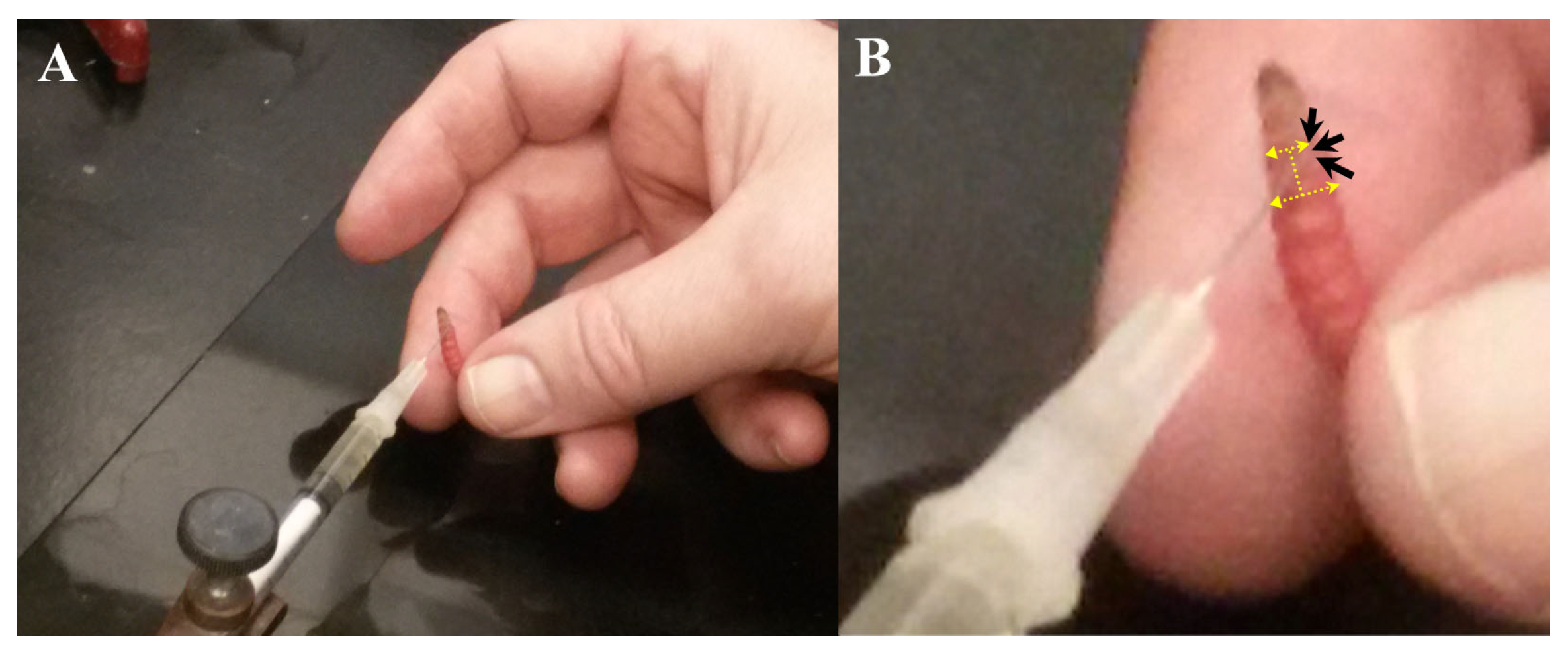
To identify the hemocytic responses of the larvae to intact dead bacteria in vivo, insects were injected with 4 × 10⁸ cells of either bacterial species in 5 μL phosphate buffer saline (pH 6.5) (Figure 5). Changes in total hemocyte counts and changes in concentrations of bacteria not attached to hemocytes were determined over time using a Neubauer hemocytometer (Marienfeld GmbH, Lauda-Königshofen, Germany) and phase contrast microscopy (Olympus BH-2, Brooklyn Park, MN, USA).
Figure 5. Utilization of a volumetric injector device for assessing the in vivo responses of C. pomonella larval hemolymph when exposed to dead B. subtilis inoculants (A). The injection site was set close to the prothoracic lateral pseudopodal region (B). The optimal lateral injection sites on the larval body are indicated (yellow arrows), while the precise position for penetration is marked (black arrows).

2.7. Statistical Analysis

Bacterial and hemocyte counts were analyzed using the 95% confidence limits overlap protocol [101]. Graphic data are presented as means ± standard error of the mean. An α level of 0.05 was chosen. A minimum of three replicates containing 10 samples were used for each value. Prism 8.0 (GraphPad, Boston, MA, USA) was used for data analysis (one-way ANOVA, followed by Tukey’s test) and graph presentation. Graphs presenting the mean (%) contribution patterns of different adherent cell type populations on a glass slide are focused on the overall pattern rather than the variance.

3. Results

3.1. Τype of Hemocytes

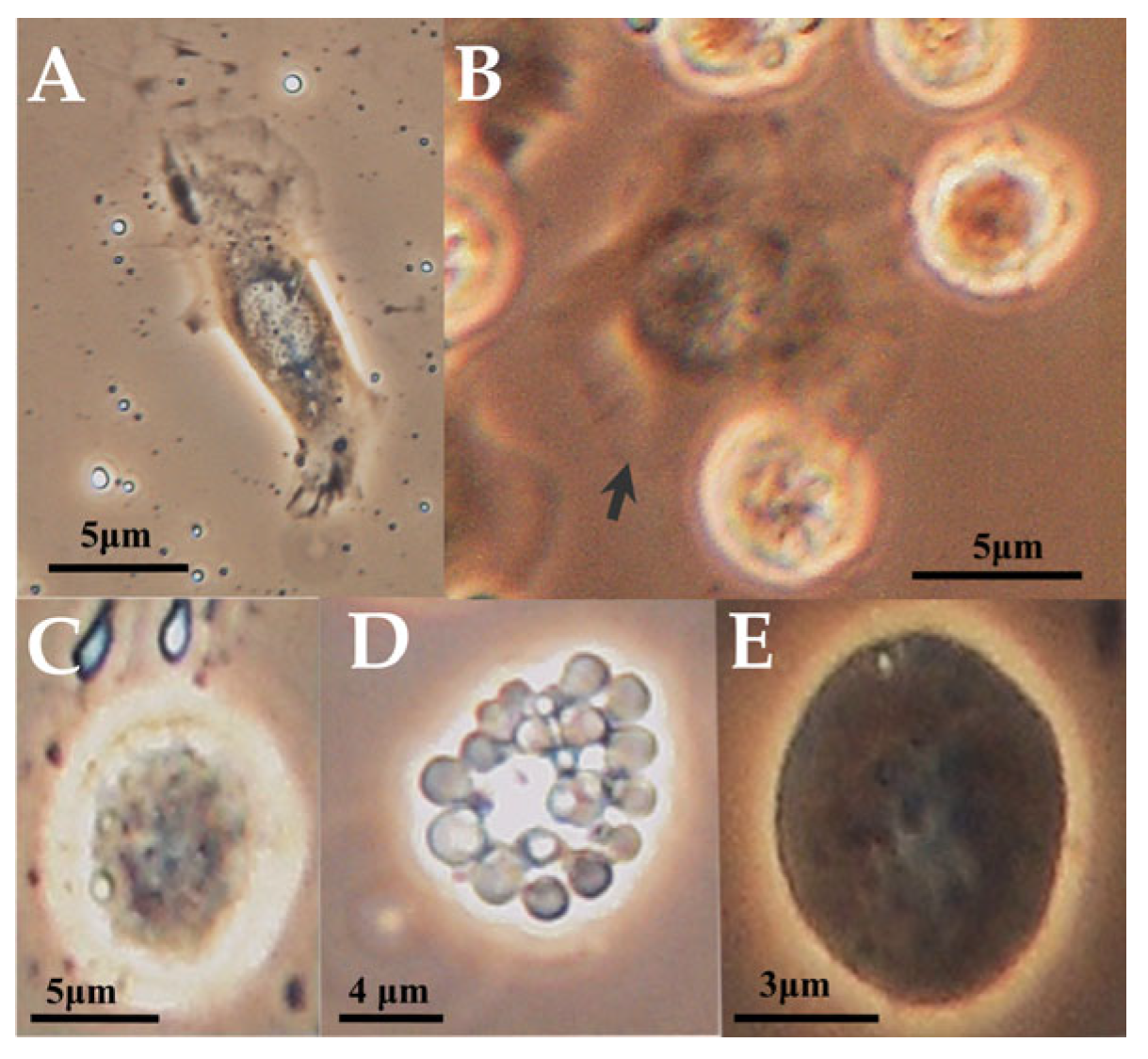
The last instar larvae of C. pomonella have total hemocyte counts in their hemolymph at the levels of 1–9 × 10⁸ cells/mL (n = 50). The major larval hemocyte types included the granular cells (60.23%, range 73–48%), plasmatocytes (20.41%, range 26–13%), spherulocytes (14.99%, range 29–7%), and oenocytoids (4.37% range 7–0%) (Figure 6). Granular cells were spherical (8–15 μm, n > 100) and phase bright. Nucleated plasmatocytes (min diameter 10–25 μm, n > 100) were seen in ameboid forms with a single fans stellate form. Intermediate forms of plasmatocytes were detected (20–30%), varying in characteristics between the amoeboid and stellate forms in clusters. The spherulocytes (diameter 8 μm, n > 100) carry a central nucleus being occluded by the spherules. Oenocytoids (diameter 10–15 μm, n > 100) have eccentric nuclei and shaped crystals in their cytoplasm.
Figure 6. Larval hemocytes of C. pomonella (×2000 magnification, phase contrast microscopy). Ameboic plasmatocyte (A), Stellate plasmatocyte (B), Granulocyte (C), Spherulocyte (D), and Oenocytoid (E).

3.2. Buffered Adhesion of Hemocytes to Glass Slides

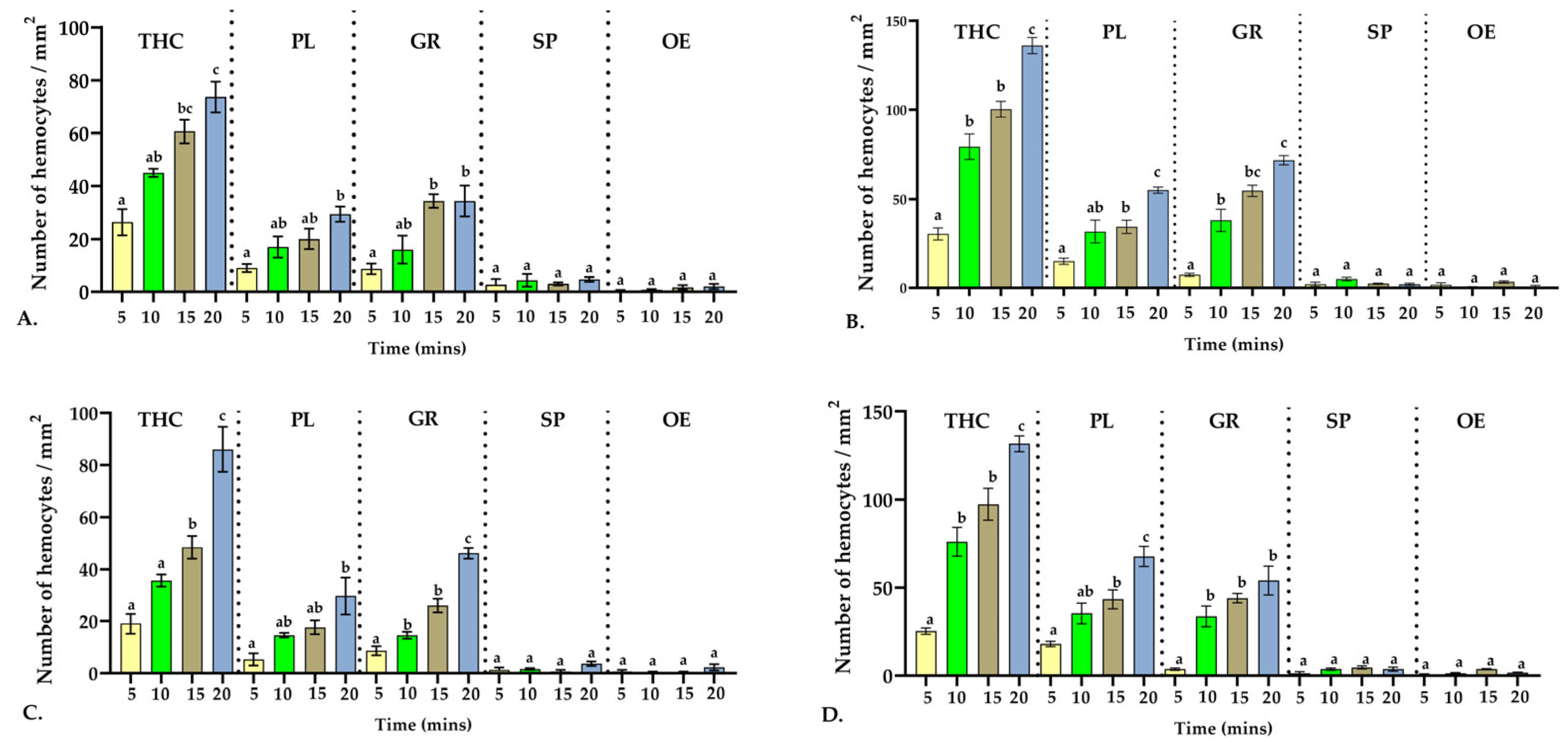
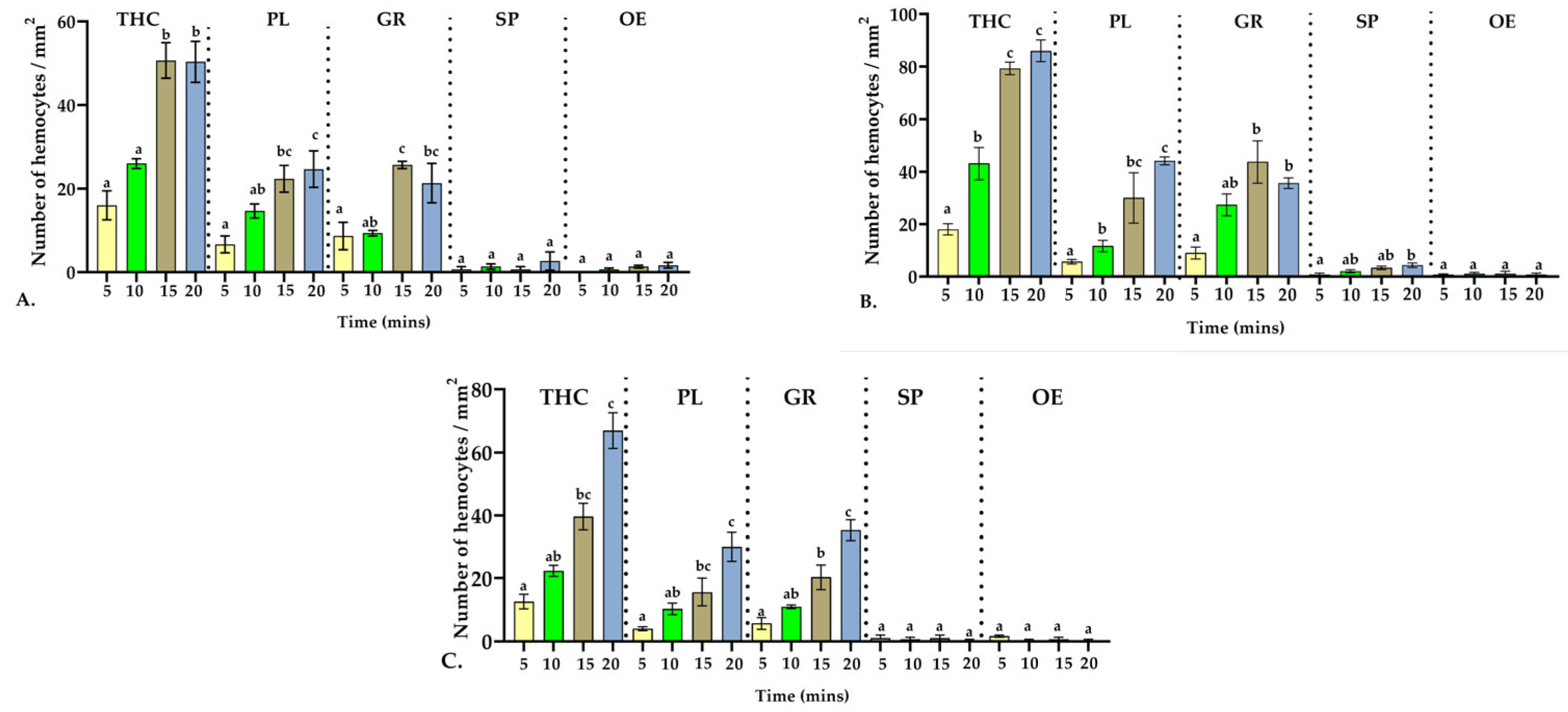
PBS at pH 6.0 demonstrated three distinct phases of cellular attachment, with statistically significant differences observed at 5, 15, and 20 min (Figure 7A). The rates of cellular attachment for each 5 min interval were as follows: 70.91% (5–10 min), 34.82% (10–15 min), and 21.43% (15–20 min). Specifically, for the two predominant cell types in the hemolymph, plasmatocytes and granulocytes, the attachment rates were recorded as follows: plasmatocytes exhibited attachment rates of 88.89% (5–10 min), 17.65% (10–15 min), and 46.65% (15–20 min); granulocytes showed rates of 84.00% (5–10 min) and 114.56% (10–15 min) and reached a plateau of 0% (15–20 min). Spherulocytes and oenocytoids did not display a gradual attachment pattern over the 5–20 min period, with the majority adhering to the glass slide within the first 5 min of the monolayer assay. Spherulocyte attachment on glass slides was successfully achieved in two distinct periods: the initial 0–5 min period, with a rate of 62.78%, and the final 15–20 min interval, where a 55.33% attachment rate was recorded. A decline in the mean population of attached spherulocytes was observed during the 10–15 min interval, with a recorded attachment rate of −30.71%. Following the establishment of monolayer assays, the mean population of attached oenocytoids on the glass slide doubled during the 5–10 min interval (100%), continued to increase in the subsequent period (10–15 min, 151.52%), and then decreased in their rate of colonization of the glass surface 5 min later (15–20 min, 20.48%).
Figure 7. Adhesion of codling moth C. pomonella larval hemocytes on glass slides in phosphate saline buffer, at pH values of 6.0 (A), 6.5 (B), 7.0 (C), and CaCl2 supplemented buffer at 6.5 at pH 6.5 (D) per time (1–20 min) (ΤHC: Total hemocyte counts, PL: Plasmatocytes, GR: Granulocytes, SP: Spherulocytes, OΕ: Oenocytoids). The different letters indicate a significant (p < 0.05) difference.
Phosphate-buffered saline at pH 6.5 facilitated the highest levels of in vitro cellular attachment for C. pomonella hemolymph (Figure 7B). Cellular attachment rates per 5 min intervals were recorded as follows: 161.56% (5–10 min), 26.43% (10–15 min), and 35.59% (15–20 min). For the two major cell types in the hemolymph, plasmatocytes and granulocytes, the attachment rates were observed as follows: plasmatocytes exhibited rates of 111.13% (5–10 min), 8.40% (10–15 min), and 60.21% (15–20 min). Granulocytes showed rates of 418.42% (5–10 min), 43.87% (10–15 min), and 31.10% (15–20 min). Spherulocyte attachment on glass slides was successfully achieved during two positive periods: the initial period of 0–5 min and the interval of 5–10 min, where rates reached 150.00%. Subsequently, attachment rates indicated a population decline (−53.40% (10–15 min)) with a recorded attempt to reinstate (−14.16% (15–20 min)) from the previous time interval. In contrast to spherulocytes, oenocytoids exhibited two distinctly different periods of positive attachment rates: the initial phase (0–5 min) and the period of 10–15 min, with an attachment rate reaching 909.09%. Periods of oenocytoid population decline were also recorded (−80.12% (5–10 min); −80.18% (15–20 min)).
Phosphate-buffered saline at pH 7.0 resulted in reduced in vitro cellular attachment for C. pomonella hemolymph (Figure 7C). The cellular attachment rates per 5 min interval were 87.74% (5–10 min), 35.49% (10–15 min), and 77.94% (15–20 min), respectively. For the two primary cell types in the hemolymph, plasmatocytes and granulocytes, the attachment rates were observed as follows: plasmatocytes exhibited rates of 175.23% (5–10 min), 20.45% (10–15 min), and 67.91% (15–20 min); granulocytes showed rates of 69.40% (5–10 min), 77.23% (10–15 min), and 76.92% (15–20 min). Spherulocytes demonstrated a biphasic attachment process, initially at the beginning of the glass slide exposure with a rate of 24.81% (5–10 min) and subsequently within the 15–20 min interval with a rate of 454.55%. During the intervening period (10–15 min), a decline in the spherulocyte population was observed, with an attachment rate of −60.24%. Oenocytoids exhibited a biphasic adhesion to glass, with two major intervals: the initial interval (0–5 min) and the final interval (15–20 min), achieving high adhesion rates in the latter (606.06%).
Phosphate-buffered saline at pH 6.5, enriched with CaCl2, exhibited similar total hemocyte counts after 20 min of monolayer exposure compared to those without supplementation (Figure 7D). Cellular attachment rates per 5 min interval were recorded as follows: 200.04% (5–10 min), 28.07% (10–15 min), and 35.31% (15–20 min). For the two predominant cell types in the hemolymph, plasmatocytes, and granulocytes, the attachment rates were observed as follows: plasmatocytes: 96.28% (5–10 min), 22.64% (10–15 min), and 56.17% (15–20 min); granulocytes: 819.95% (5–10 min), 30.68% (10–15 min), and 22.73% (15–20 min). Spherulocytes demonstrated a substantial attachment rate during the 5–10 min interval (175.19%), which subsequently decreased (27.32%), followed by a reduction in population (15–20 min, −21.46%). Oenocytoids initially exhibited a similar attachment rate trend during the 5–10 min interval (101.52%); however, this rate increased during the 10–15 min period (175.19%) and then declined to negative values (−54.64%).
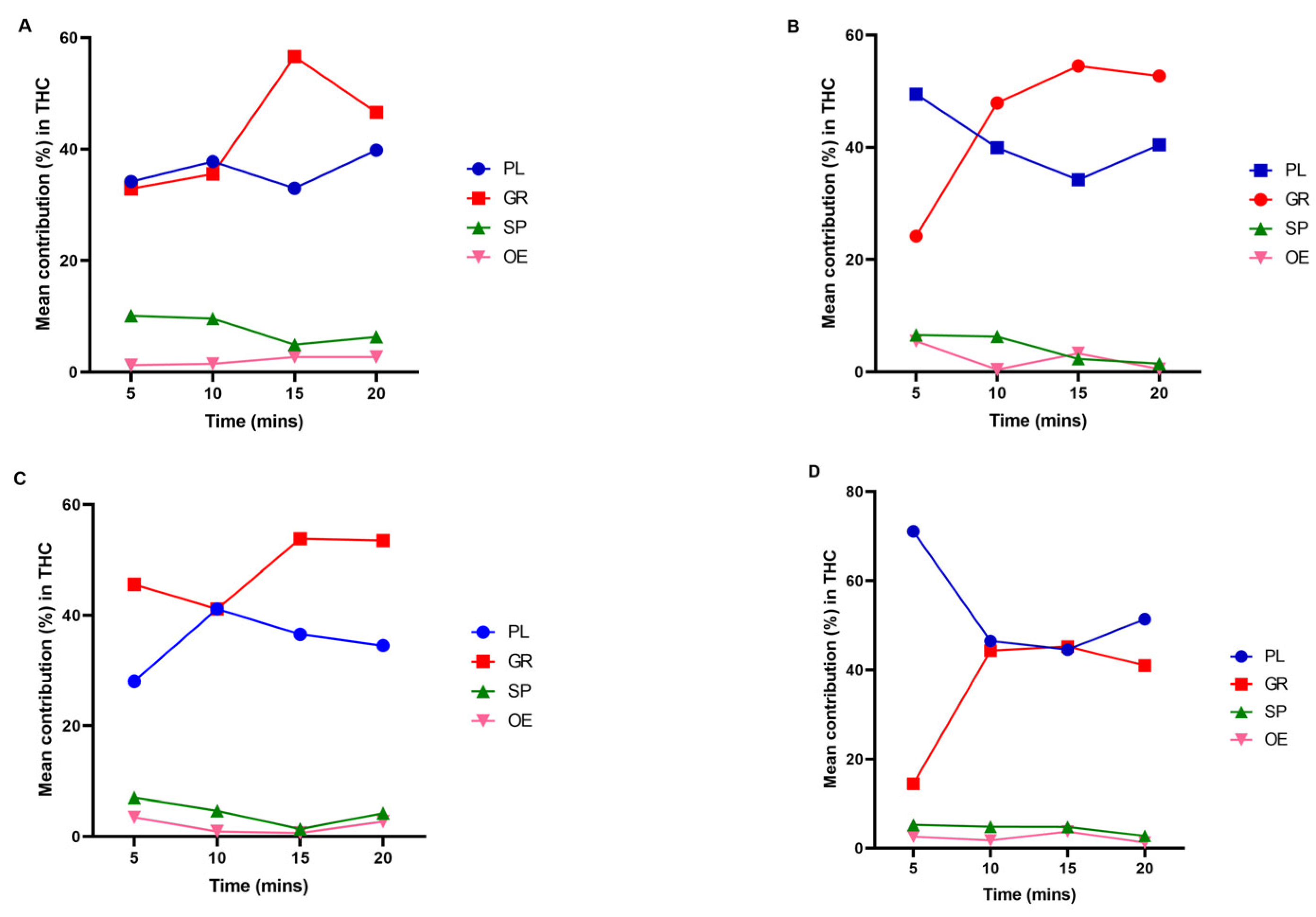
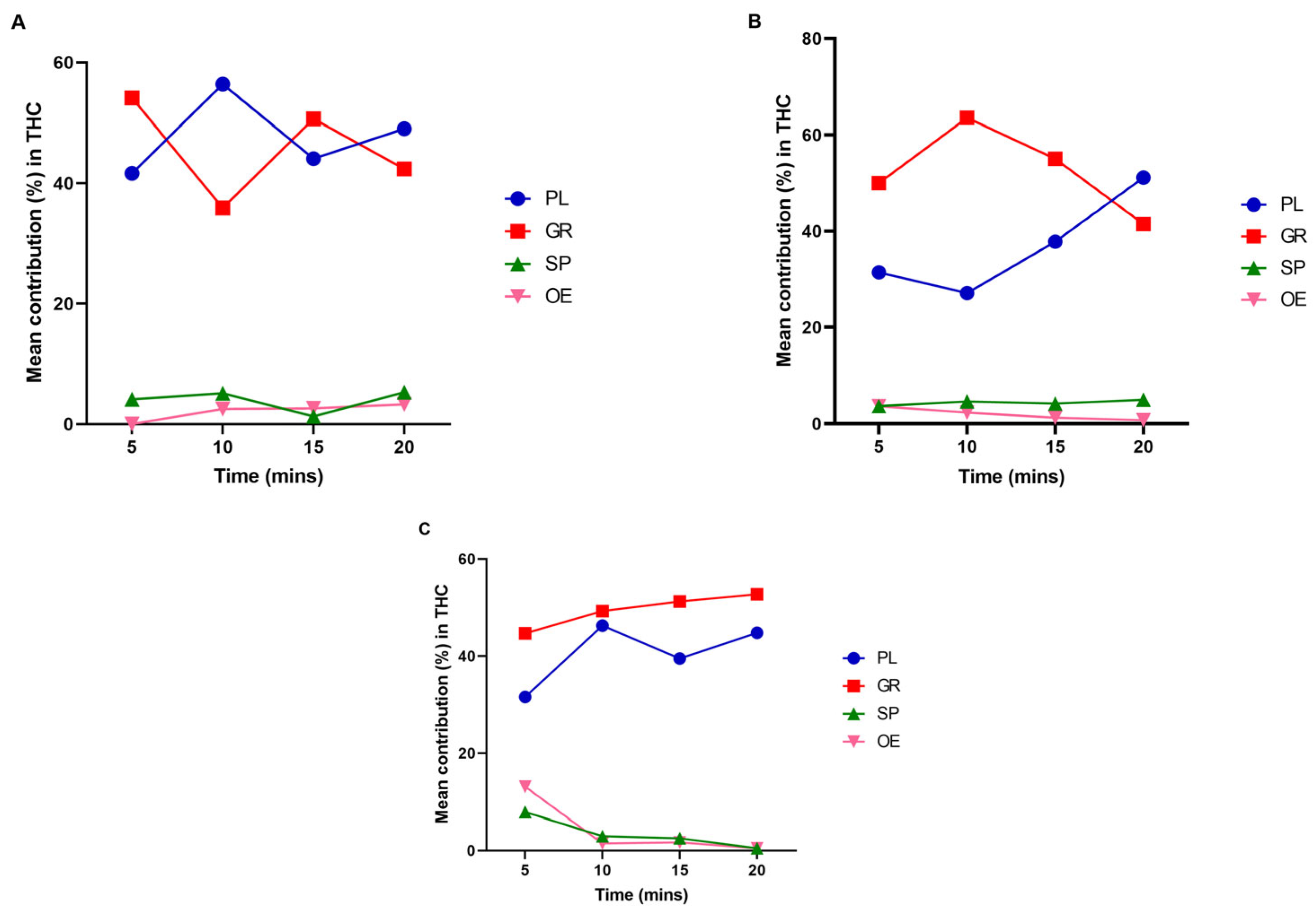
In phosphate-buffered saline (PBS) at pH 6.0, the initial 10 min observation of cellular attachment to a glass slide revealed an approximately equal distribution of plasmatocytes (34–37%) and granulocytes (32–35%) (Figure 8A). Subsequently, the proportion of plasmatocytes increased while that of granulocytes decreased, indicating a cell type-specific and varied response to the glass slide. This differential response between plasmatocytes and granulocytes during the 10–20 min interval was consistent across all other tested pH values. The pH of PBS appears to significantly influence the composition of total hemocyte counts within the first 10 min. In contrast, at pH 6.5, larval C. pomonella plasmatocytes were more prevalent than granulocytes during the initial 10 min, a trend that reversed at pH 7 (Figure 8B,C). The supplementation of 5 mM CaCl2 to PBS at pH 6.5 resulted in minimal support to granulocyte attachment during the same time frame (Figure 8D). The data pattern for PBS supplemented with CaCl2 differed from that of the non-supplemented PBS, where plasmatocytes and granulocytes exhibited similar proportional contributions on the glass slide during the 10–15 min period, leading towards a predominant presence of plasmatocytes at the conclusion of the 20 min challenge period.
Figure 8. Mean contribution (%) patterns of different adherent cell type populations in total hemocyte counts over glass slides using phosphate-buffered saline as a suspension medium, across different pH values: pH 6.0 (A); pH 6.5 (B); pH 7.0 (C); PBS with CaCl2 at pH 6.5 (D) (ΤHC: Total hemocyte counts, PL: Plasmatocytes, GR: Granulocytes, SP: Spherulocytes, OΕ: Oenocytoids).
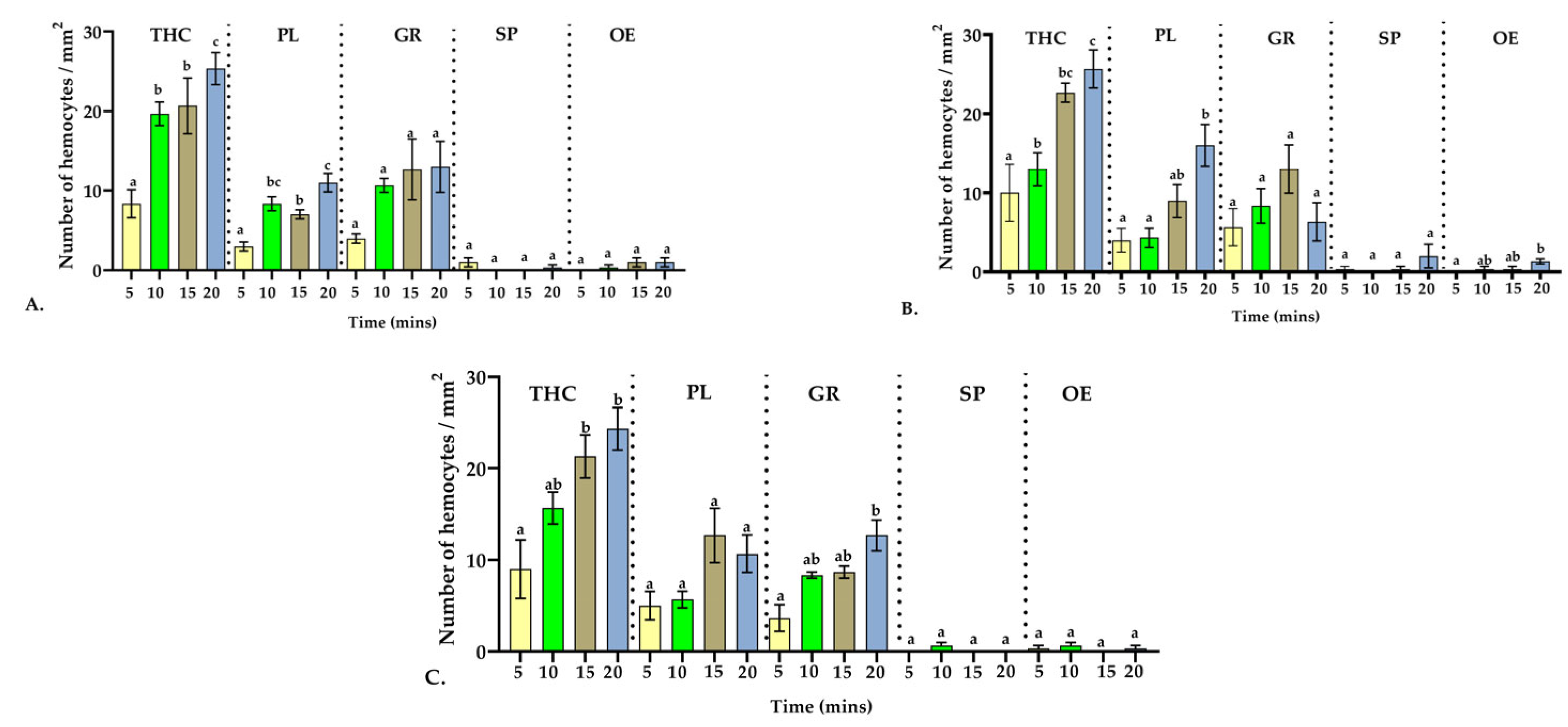
The exposure of larval hemolymph samples to physiological saline at pH 6.0 resulted in less than 50% of total hemocyte counts on the glass slide compared to PBS (Figure 9A). The total cellular attachment rates at 5 min intervals were 62.5% (5–10 min) and 94.88% (10–15 min), followed by a decline of −0.67% (15–20 min). For the two major cell types in the hemolymph, plasmatocytes and granulocytes, the attachment rates were as follows: plasmatocytes exhibited rates of 120.27% (5–10 min), 52% (10–15 min), and 10% (15–20 min); granulocytes showed rates of 7.73% (5–10 min) and 175.13% (10–15 min) and subsequently declined by −16.90% (15–20 min). Spherulocytes initially doubled their numbers on the glass slide, with an increase of 101.51% (5–10 min), followed by a decrease during 10–15 min (−50.37%) and then an arithmetic restoration to three times of the initial population (15–20 min). Oenocytoids demonstrated a gradual increase in rates from the 10–20 min period at 5 min intervals, with rates of 101.51% (10–15 min) and 24.81% (15–20 min).
Figure 9. Adhesion of codling moth C. pomonella larval hemocytes on glass slides in physiological saline buffer, at pH values 6.0 (A), 6.5 (B), and 7.0 (C) per time (1–20 min) (ΤHC: Total hemocyte counts, PL: Plasmatocytes, GR: Granulocytes, SP: Spherulocytes, OΕ: Oenocytoids). The different letters indicate a significant (p < 0.05) difference.
Physiological saline at a pH value of 6.5 showed greater total hemocyte counts on the glass slide compared to the same buffer at pH 6.0 (Figure 9B). The total cellular attachment rates per 5 min intervals were 138.89% (5–10 min), 84.49% (10–15 min), and 8.41% (15–20 min), respectively. For the two major cell types of the hemolymph plasmatocytes and granulocytes, the attachment rates were observed as follows (plasmatocytes: 106.18% (5–10 min), 157.07% (10–15 min), and 46.67% (15–20 min); granulocytes: 203.67% (5–10 min), 59.79% (10–15 min) and −18.32% (15–20 min)). Spherulocytes demonstrated an important expansive presence in this type of larval suspension (203.03% (5–10 min), 66.50% (10–15 min) and 30.03% (15–20 min)). Oenocytoids, after their initial phase of adhesion in glass slides, increased their numbers by 51.52% (5–10 min), remained stable during the period of 10–15 min, and then declined by −34% at the end (15–20 min) of the monolayer assay.
Upon increasing the pH value of physiological saline buffer at 7.0, the total cellular attachment rates per 5 min interval were 76.24% (5–10 min), 77.65% (10–15 min), and 68.89% (15–20 min), respectively (Figure 9C). For the two major cell types of the hemolymph plasmatocytes and granulocytes, attachment rates were observed as follows: plasmatocytes: 158.25% (5–10 min), 51.69% (10–15 min), and 91.45% (15–20 min); granulocytes: 94.35% (5–10 min), 84.82% (10–15 min) and 73.78% (15–20 min). Spherulocytes exhibited two major phases of adhesion: the initial one (0–5 min) and 51.52% during the interval (10–15 min). These phases of population expansion were followed by two major declines of −34% within the interval of 5–10 min and −67%, also within 15–20 min, respectively.
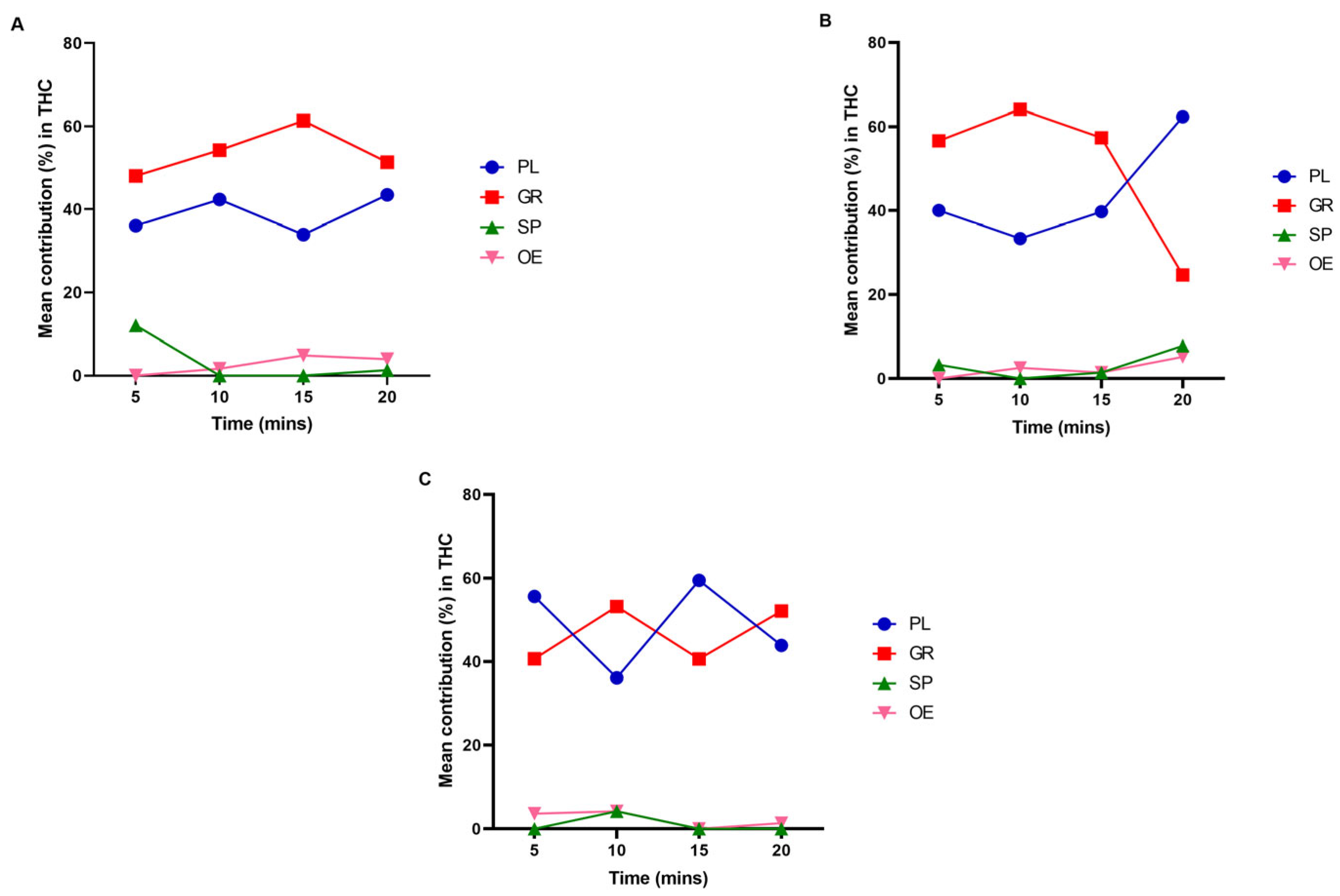
When hemolymph samples were suspended in physiological saline at pH 6.0, the predominant adherent cell type alternated over time between plasmatocytes (41–49%) and granulocytes (35–54%), with a decreasing disparity observed between these cell types (Figure 10A). At the end of the monolayer bioassay, these two different types of cellular populations appear to differ by 6.6%, while this difference at the initial stage of 5 min was 12.50%. Physiological saline at pH 6.5 provided a different pattern of dominant granulocyte populations over the glass slide for the first 17.5 min, where their growing presence over glass reached a maximum value (63.55%, 10 min); thereafter, a significant contribution decline (41.47%, 20 min) was recorded (Figure 10B). Adjusting the physiological saline buffer to 7.0 revealed the absolute population dominance of granulocytes (44.67–52.73%), followed by plasmatocytes (31.57–46.26%) (Figure 10C). The peak time of plasmatocytes and granulocytes’ maximum contributions was demonstrated at 10 and 20 min, respectively. In all cases, the mean contribution of spherulocytes and oenocytoids in total hemocyte counts was extremely low.
Figure 10. Mean contribution (%) patterns of different adherent cell type populations in total hemocyte counts over glass slides using physiological saline as a suspension medium across different pH values: pH 6.0 (A); pH 6.5 (B); pH 7.0 (C) (ΤHC: Total hemocyte counts, PL: Plasmatocytes, GR: Granulocytes, SP: Spherulocytes, OΕ: Oenocytoids).
Codling moth larval hemolymph in G. melonella anticoagulant buffer achieved lower total hemocyte counts at all time intervals than in phosphate-buffered saline at all pH values. At pH 6.0, the cellular type attachment rates per 5 min intervals were 136.13% (5–10 min), 5.08% (10–15 min), and 22.54% (15–20 min), with the first time period being crucial for massive, hemocyte adhesion phenomena (Figure 11A). For the two major cell types of the hemolymph, plasmatocytes and granulocytes, the attachment rates were as follows: plasmatocytes: 177.66% (5–10 min), −15.96% (10–15 min), and 57.14% (15–20 min); granulocytes: 166.75% (5–10 min), 18.74% (10–15 min), reaching a close-to-plateau condition 2.60% (15–20 min). Spherulocytes and oenocytoids exhibited initial attachment for the period 0–5 min, which was not thereafter maintained. Oenocytoids doubled their population on glass slides at 15 min, which was maintained until the end of the bioassay.
Figure 11. Adhesion of codling moth C. pomonella larval hemocytes on glass slides in anticoagulant buffer Galeria mellonella, at pH values of 6.0 (A), 6.5 (B), and 7.0 (C) per time (1–20 min) (ΤHC: Total hemocyte counts, PL: Plasmatocytes, GR: Granulocytes, SP: Spherulocytes, OΕ: Oenocytoids). The different letters indicate a significant (p < 0.05) difference.
The attached cellular composition of larval hemolymph, when suspended in a G. mellonella anticoagulant buffer at pH 6.5, exhibited varying adhesion rates on glass slides over time, as determined by total hemocyte counts: 30% adhesion was observed between 5 and 10 min, 74% between 10 and 15 min, and 13.23% between 15 and 20 min (Figure 11B). However, the mean adhesion values were lower than those observed with hemolymph exposure to PBS. For the two predominant cell types in the hemolymph, plasmatocytes and granulocytes, the attachment rates were as follows: plasmatocytes showed 8.25% adhesion between 5 and 10 min, 107.85% between 10 and 15 min, and 77.78% between 15 and 20 min. Granulocytes exhibited 47.17% adhesion between 5 and 10 min and 56.06% between 10 and 15 min, followed by a decline to −51.35% between 15 and 20 min. Spherulocytes demonstrated a five-fold increase in population after initial adhesion (0–5 min) at 20 min of exposure. Oenocytoids showed a three-fold increase in attachment to glass slides from the 10 to 20 min period.
When hemolymph samples were suspended in the same buffer at pH 7.0, the total cellular attachment rates on the glass slide were recorded as 74% for the 5–10 min interval, 36.12% for the 10–15 min interval, and 14.06% for the 15–20 min interval (Figure 11C). Regarding the two major cell types in the hemolymph, plasmatocytes and granulocytes, the attachment rates were as follows: plasmatocytes exhibited rates of 13.20% (5–10 min), 123% (10–15 min), and −15.79% (15–20 min); granulocytes showed rates of 127.60% (5–10 min), 3.69% (10–15 min), and 46.30% (15–20 min). Spherulocytes were minimally present 10 min after the initiation of the monolayer assay and subsequently disappeared. After their initial attachment, oenocytoids doubled their population at 10 min and then declined by half.
When the hemolymph was suspended in G. mellonella anticoagulant buffer at pH 6.0 and 6.5, granulocytes predominated over plasmatocytes in the adherent populations to glass slides (Figure 12A,B). An exception was observed during the 15–20 min interval at pH 6.5, where a proportional decline in granulocytes led to an increase in plasmatocytes. The population synthesis patterns observed at pH 6.0 and 6.5 were not replicated at pH 7.0 (Figure 12C), where both cell types exhibited fluctuating occurrences within the range of 36–59%.
Figure 12. Mean contribution (%) patterns of different adherent cell type populations in total hemocyte counts over glass slides using anticoagulant buffer Galeria mellonella as a suspension medium, across different pH values: pH 6.0 (A); pH 6.5 (B); pH 7.0 (C) (ΤHC: Total hemocyte counts, PL: Plasmatocytes, GR: Granulocytes, SP: Spherulocytes, OΕ: Oenocytoids).
During the initial five minutes, the G. mellonella anticoagulant buffer resulted in lower total hemocyte counts, independent of pH adjustment. In contrast, PBS at pH 6.5, with or without CaCl2 supplementation, exhibited the highest cell population attachment values. At pH 6.0 and 7.0, the number of attached plasmatocytes appeared unaffected by the buffer type; however, PBS at pH 6.5 facilitated higher adhesion rates for plasmatocytes. The other cell types did not exhibit variations in adhesion based on the buffer type or pH. Hemocytes suspended for five minutes in all buffers at pH 7.0 demonstrated lower total hemocyte attachment than those in PBS at pH 6.5.
At 10 min, phosphate-buffered saline (PBS) was identified as the predominant buffer, exhibiting the highest overall cellular adhesion. Hemocytes in physiological saline with a pH of 6.5 demonstrated superior performance compared to those at pH 6.0 and 7.0. During the same time period, PBS resulted in the lowest total hemocyte counts at pH 7.0. The addition of CaCl2 to PBS at pH 6.5 did not alter the total hemocyte count. Physiological saline at pH 6.5 resulted in an extremely low number of adherent plasmatocytes on glass slides. Spherulocytes exhibited enhanced adhesion in PBS at pH 6.5 compared to any other buffer and pH adjustment. Oenocytoids were present in low numbers, with no significant differences observed in their attachment to glass. Granulocytes did not display significant variations among buffers at pH 6.0; however, at pH 6.5, phosphate-buffered saline was the most effective for adhesion.
At 15 min into the monolayer bioassay, greater differentiation among buffer types and pH adjustments became apparent. The G. mellonella anticoagulant buffer was unable to support extensive cellular adhesion across all cell types, resulting in 55.86–77.39% fewer adherent cells. Physiological saline exhibited inferior performance compared to PBS across all tested pH values. High levels of adhesion for all cell types were observed exclusively with PBS and PBS supplemented with CaCl2 at pH 6.5.
The pattern of reduced hemocyte adhesion observed with G. mellonella anticoagulant buffer across all examined pH adjustments was also evident at 20 min in the monolayer assay, showing a 65.61–81.12% decrease in adhesion compared to PBS. Similarly, although to a lesser extent, hemolymph samples suspended in physiological saline did not maintain high total hemocyte counts regardless of pH adjustments, exhibiting 22.09–36.76% fewer adherent cells than PBS. The differences among the pH values and buffers for spherulocytes and oenocytoids were minimal. Average granulocytes were found to be greater than plasmatocytes in numbers over the glass slide at PBS (pH 6.5), a phenomenon that was not observed when G. mellonella anticoagulant and phosphate saline were used. Both G. mellonella anticoagulant and physiological saline buffers showed inconsistency in cell type adhesion dominance on glass slides. At pH 6.0, granulocytes were less than or equal to plasmatocytes, whereas at pH 6.5, plasmatocytes were the dominant adherent cell type, a trend that reversed at pH 7.0.
In selecting the optimal buffer, phosphate-buffered saline (PBS) at pH 6.5 was determined to be the most effective. This conclusion is based on several criteria: (a) the total number of cells adhered to the glass slide was 142 cells/mm2, (b) the percentage of viable cells exceeded 95% (Table 2), and (c) no cellular stress was observed under phase contrast microscopy. The addition of 5 mM CaCl2 to PBS did not affect the total hemocyte count. The attachment of cells to the glass slide in PBS reached a plateau at 25 min. In contrast, physiological saline and G. mellonella anticoagulant buffer resulted in lower total hemocyte counts and a reduced percentage of viable cells, with granular cells and oenocytoids exhibiting melanized content.
Table 2. Total hemocyte counts viability (%) of C. pomonella on monolayer assays at pH 6.5.

3.3. Hemocyte Discharge

Under optimal buffer conditions (PBS, pH 6.5), hemocytes adhered to glass slides and released lysozyme. The quantity of lysozyme released by the attached hemocytes in the presence of B. subtilis was eight times greater (Table 3).
Table 3. Discharge of lysozyme from C. pomonella larval hemocytes in vitro with and without microbial challenge (4 × 10⁸ sp/mL B. subtilis bacterial spores in PBS, pH 6.5).

3.4. Challenging In Vivo C. pomonella Hemolymph with Βacillus Subtilis

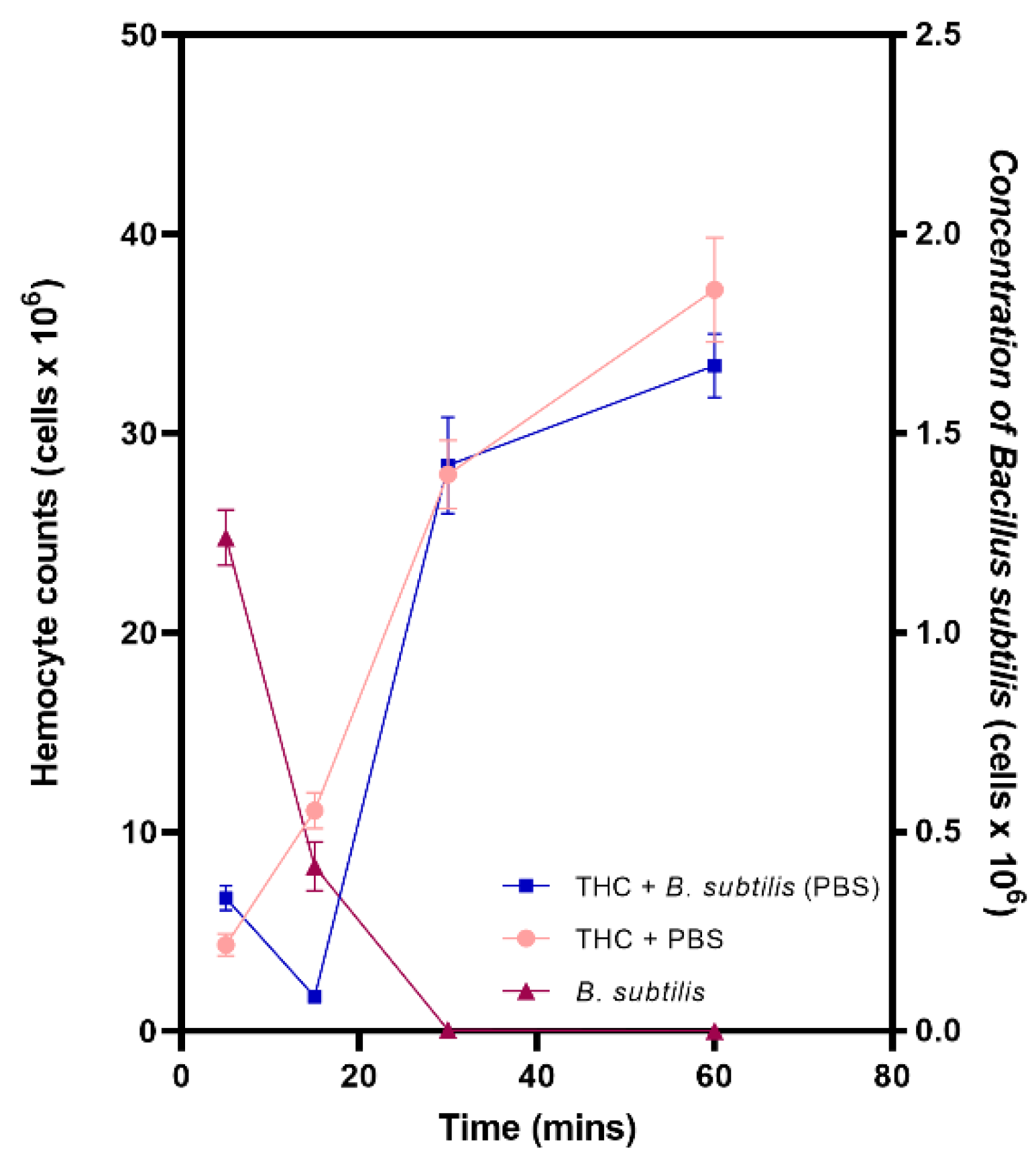
The concentration of dead B. subtilis in the hemolymph decreased rapidly following injection and became undetectable by 30 min post-injection (Figure 13). This declining trend was observed within the first 5 min after injection, with no evidence of bacterial presence in the hemolymph by 1 h post-injection. During the initial 20 min post-injection, total hemocyte counts in vivo were restored more quickly when the initial inoculum contained only PBS, without bacteria. The administration of B. subtilis suspended in PBS resulted in a decrease in total hemocyte counts 15 min after injection, attributable to (a) the microbial load and (b) the initiation of immune responses in the hemolymph to eliminate the microbial load from circulation. Fifteen minutes later (30 min in total), the total hemocyte counts returned to the levels observed in the absence of microbial challenge.
Figure 13. In vivo changes in C. pomonella larval hemolymph following bacterial injection (4 × 10⁸ sp/mL), where dead bacteria were suspended on PBS pH 6.5. (B. subtilis: B. subtilis concentration; THC: Total hemocyte counts; PBS: Phosphate Buffer Saline, pH 6.5.)

4. Discussion

Previous research on the larval stage of the codling moth has predominantly concentrated on pest control strategies. This study contributes novel insights by examining (a) the hemocytic types in the C. pomonella larval hemolymph, (b) the selection of the most suitable buffer and (c) the hemolymph’s responses to both in vitro and in vivo challenges. This aspect has not yet been explored as a monitoring system for physiological and immunological studies while also being applicable to a wide range of professionals, from scientists to farmers, regardless of their motivational perspectives.
Examining insect hemocyte cells in vitro facilitates a more profound, functional, and mechanistic comprehension of C. pomonella innate immunity, without significant systemic interference at the organismal level [102]. In vitro studies of these cells on monolayer assays using fresh samples of hemolymph are transient examination techniques between in vivo and tissue culture ex situ studies, where the latter shows no systemic interference from the body cavity that can affect hemocytes functionality [103,104,105]. All of these approaches (e.g., in vitro for tissues and in vivo for insects at the whole organism level and ex situ for insect cell lines) provide information for the immunological properties map of the cellular content of the hemolymph. The cell types identified in the hemolymph of C. pomonella are also commonly observed in other lepidopteran species [40].
Although C. pomonella hemocyte-derived cell lines were established a long time ago (such as IZD-Cp-2202), in vivo and in vitro studies with fresh hemocytes are still limited. Historically, more than 50 years ago, researchers examined codling moth larval hemocytes and reported cellular types, using an even older preexisting protocol in the groups of prohemocytes, macronucleocytes, micronucleocytes, phagocytes, aeozynophiles, and oenocytoids based on hemopoiesis studies in silkworm at that time [106,107]. According to the current standardization of terminology in insect immunity and established models of hemocyte differentiation, most of these terms serve as descriptors of cells rather than as identifiers of distinct cell types [87]. The advanced classification of hemocytes can be achieved through the application of monoclonal antibodies, nuclear staining, transmission electron microscopy, and cell sorting via flow cytometry in conjunction with other fluorescent techniques [43,62,108,109,110]. It is important to note that these methodologies generally require extensive scientific and life-science-oriented expertise, rendering them less accessible to individuals without such specialized knowledge.
None of the in vitro-tested buffers included energy supplementation beyond the pre-existing hemolymph energy reserves of the inoculated samples. The administration of sugar to the hemocyte-surrounding micro-environment could modify immunological responses and potentially inhibit or deviate innate immunity signaling [111]. The data on the innate immune response presented in this study may not be directly comparable to the findings from research on the hemocytic cell line of larval C. pomonella. This discrepancy arises because most Lepidopteran hemocyte cell lines (and in general, insect cell lines) are supplemented with fetal bovine serum. Fetal bovine serum contains growth factors that influence eukaryotic cell differentiation and proliferation, thereby influencing both overall and specific hemocyte activity [112]. Insulin-like molecules in fetal bovine serum act as a hemocyte population growth factor in the plasma of B. mori and promote mitotic division in granular cells [113,114]. Integrin β1 in fetal bovine serum could have an effect on hemocyte adhesion, interacting with protein receptors being known to participate in the plasmatocyte encapsulation of Sephadex beads [112,115]. Sugars in the medium are known to decrease lectin-mediated hemocyte coagulation [116] and opsonic phenoloxidase activity [117].
This study identified phosphate saline buffer as an appropriate medium for examining in vitro larval hemocytes, consistent with findings in other lepidopteran species, including M. disstria, Galleria mellonella (L.), and H. virescens [40,118,119]. The buffer type and pH affected the total hemocyte counts and counts of the major cellular types of hemolymph, plasmatocytes, and granulocytes. In the case of plasmatocytes, the appropriateness of the suspension solution or buffer and its pH value impact their adhesion and spreading on glass slides, cell viability, morphology, phagocytic characteristics, regulation of immune responses, and enzyme release [120,121,122,123,124]. For granulocytes, the suitability of the suspension buffer appears to exhibit varying optimal parameters in monolayer assays. This variation is attributed to the concurrent occurrence of adhesion and oxidative stress phenomena, which can lead to the discharge of cellular content [34,125]. This is particularly relevant given that glass slides are composed of non-self materials with conditionally thermodynamic equilibrium properties [126].
Spherulocytes and oenocytoids were apparent on glass slides in low numbers; oenocytoids have also been reported in the past for C. pomonella and other lepidopteran species [40,106]. Low hemocyte counts observed on glass slides should not be interpreted as indicative of diminished immunological responses. This is because the qualitative characteristics, signaling mechanisms, and chemotactic properties are not solely dependent on quantitative presence.
Structurally, oenocytoids are fragile with volume-adjustable lipid inclusions and steroid metabolism attributes functioning as a metabolic safeguard in hemolymph physiology and immunity [127]. They are susceptible to lysis through signaling cascades in response to immune challenges [128]. These cells at both the pre-opsonic and post-opsonic stages serve as the primary source of phenoloxidase, which contributes to plasma melanization and activates immune defense mechanisms in other hemolymph cellular types. The ultimate objective of this process is to induce the phenomena of encapsulation and nodulation, as observed both in vitro and in vivo [129].
The synthesis of cellular populations both in vitro and in vivo, as recorded in total hemocyte counts in lepidopteran larvae, is influenced by age/stage [130], hemopoiesis, the functional capacity of the lymph gland [131], and diet type [132]. These parameters form a delicate balance since the innate immunity pathway Toll is regulated by the Cactus gene family homologues, which are simultaneously responsible for (a) developmental dorsal-ventral patterning, (b) hemopoiesis and lymph organ formation, and (c) cellular responses to microbial challenges, as demonstrated in insect model organisms [133,134,135]. For the mass production of insects (e.g., sterile release programs) and for immunological experimentation purposes, diets must be adjusted for optimal physiological fitness [136,137]. In contrast, malnutrition and a suboptimal diet can lead to a decrease in total hemocyte counts, initiate autophagy in specific cell types, and impair the capacity to optimally induce the phenoloxidase cascade within the insect host [138,139,140].
All tested buffers contained sodium and potassium chloride salts to ensure the osmotic regulation and homeostasis of the hemocytes. The selection of these buffers was compatible with the composition of apple fruit, where sodium and potassium are integral to the fruit’s chemical synthesis. Potassium is predominant, whereas the presence of sodium decreases progressively from the skin to the seeds [141,142]. The optimal buffer was also supplemented with phosphate salts, which, while not acting as direct phosphorylation agents, serve as a significant source for ATP synthesis and function as a signaling molecule in the Ras/ERK pathway. This has been demonstrated in animal cells and developmental studies in Drosophila, indicating potential contributions to cell survival, growth, metabolism, and migration [143,144,145]. Tetrasodium EDTA, which is also a component of the G. mellonella anticoagulant buffer utilized in this study, maintains its chelating properties for extracellular metal ions, interacts with membrane phospholipids, and alters membrane affinity [146,147]. Herein, the larval C. pomonella total hemocyte counts using an EDTA-based buffer did not result in high adhesion rates compared to PBS. This observation is consistent with the findings in G. mellonella plasmatocytes, where adhesion to glass slides was similarly inhibited upon supplementation with EDTA [85].
At the ecosystem level, calcium is present but not predominant in apple fruit, which is economically parasitized by the codling moth [141]. However, in case of deficiency, fruit undergoes a physiological disorder (bitter pit) where the polyphenol content may be highly unpleasant for larval preference [148,149]. The supplementation of calcium chloride resulted in high adhesion rates of plasmocytes and a low presence of granulocytes in PBS from the beginning of monolayer cellular assays. This outcome reflects an innate immune response, which may not be ideal as a baseline for in vitro experimentation because the cells appear to be immunologically preactivated. In the presence of extracellular calcium, the preferential adhesion of plasmatocytes over granulocytes was observed, with similar effects noted in G. mellonella, M. disstria, and Agrotis segetum (Denis & Schiffermüller) [40,85,96,150]. Conversely, in M. sexta, plasmatocyte adhesion levels were low, despite calcium being a critical ion for the adhesion process [120].
Additionally, calcium has the capacity to induce conformational changes and activate integrins, facilitating cellular adhesion during immune challenges in Lepidoptera [151,152]. The adhesion of hemocytes is significantly influenced by integrin-mediated activation and subsequent clustering at the contact site. Additionally, the presence of surface glycoproteins and lectins, originating from plasma traces or degranulation during buffer inoculation in the monolayer assay, can strongly affect adhesion on glass slides [153,154]. Undoubtedly, the regulation of pH is critically important in experiments involving innate immunity, as it affects hemocyte membrane integrity, affinity, phagocytic capability, actin formation, and adhesion to glass slides [24,155,156].
Lysozyme release, both in the presence and absence of microbial agents, has been documented in other Lepidopteran species [34]. In vitro monolayer hemocyte assays, as conducted in this study, demonstrated that lysozyme release represents a net immunological contribution by hemocytes to the surrounding environment, independent of systemic contributions from the fat body, as is commonly observed [157]. The amount released by C. pomonella hemocytes constitutes 3.22–20.51% (without bacterial challenge) and 4.32–5.18% (with bacterial challenge) of the in vivo lysozyme content in B. mori larval hemolymph [158]. The units used to quantify hemocyte-released lysozyme were μg/hen lysozyme equivalents/mL; however, Lepidopteran lysozymes exhibit a broader antimicrobial spectrum when compared to hen lysozyme [159]
In order to implement a larval hemocytic monitoring strategy in apple farms, in vitro and in vivo examination of the hemolymph tissue must be coupled with technology transfer [160] and growers’ adoption of the technique as standard practice or consulting service following a series of successful pest control trials to ensure informed decision-making and effective outcomes [161]. Specific apple cultivar considerations must also be taken into account, not only as a susceptibility factor to the pest but also in terms of the fruit growth season, their organic production capacities, and their high/low market value [148]. Regional factors, such as climatic conditions and pest genetic basis, can influence the population dynamics and immunological hemocyte activity of C. pomonella [2,162,163,164]. Hemocyte examination provide the ability to form weather-adaptive protocols to suppress the population since toxicological and immunological challenges are always (and at least) temperature-dependent [165].
In the present study, larval batches of C. pomonella from a mass rearing facility, utilized for sterile release practices, were employed. The findings indicate that these larvae exhibit strong immunocompetence, as they are capable of eliminating bacteria from the hemolymph within a brief period of 30 min. This evidence, coupled with the fact that (a) the larval burrowing trail in the apple fruit does not typically lead to microbial infestation severe enough to cause the entire fruit to rot, (b) there are limited successful trials for bacterial control of the insect, with most of them being effective only by the application of bacterial toxins [166,167], and (c) viral pesticides are effective in microbially controlling the pest [168], constitutes a strong indicator of the range of viable options available to farmers for suppressing orchard infestations.
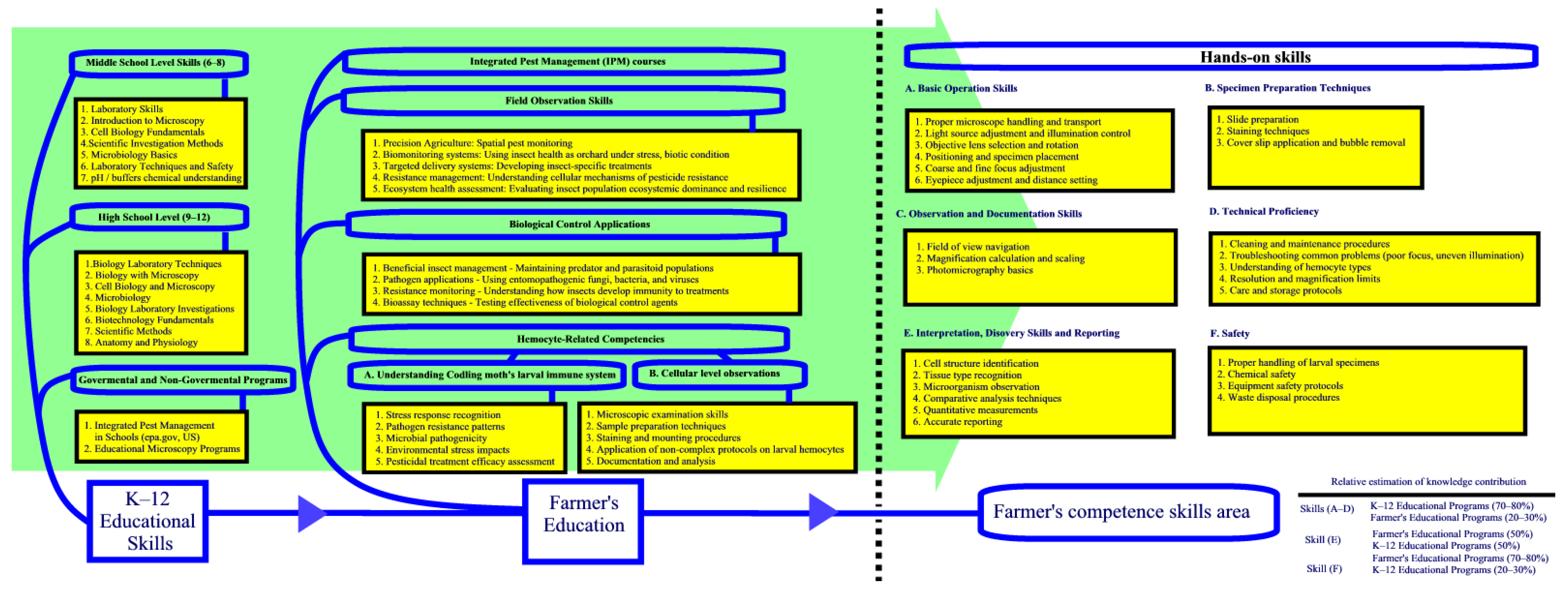
Technology integration opportunities can secure the applicability of the outcome data through a monitoring process. Technology platforms using mobile diagnostics and precision agriculture can create pesticide application maps on hemocytes mapped data; this will ensure real-time decision support, a variable rate of biorational applications, regional resistance tracking, and continuous population assessment. This approach can lead to the creation of an informative decision-making process affecting the individual grower (Figure 14), industry, and socio-environmental and government interests.
Figure 14. A comprehensive professional development framework, which sequentially integrates K-12 foundational education, professional knowledge, and guided practice to achieve competence in basic hemolymph examination assays with C. pomonella larvae. It directly benefits the farmer by sustaining the managerial role and supports the resilience of the apple farm as a commercial production unit.
By increasing restrictions on pesticide regulations coupled with high demands for stricter organic standards, export requirements, and consumer preferences, C. pomonella hemolymph examination is capable of increasing regulatory compliance, premium market access for the apple fruit, and potentially brand differentiation due to reduced chemical dependency and science-based sustainability. Pest control failure, timing errors, resistance evolution, and market rejection are zero-point tolerance for societal well-being.

5. Conclusions

The codling moth impacts apple production by directly damaging the fruit through larval tunneling, leading to fruit loss. This results in reduced yields, lower quality, and zero tolerance in export markets while also causing economic challenges due to the need for intensive spraying programs and resistance management. Examined larvae exhibited hemocyte counts at the level of 1–9 × 10⁸ cells/mL. The main hemocyte types identified in the hemolymph were granular cells, plasmatocytes, spherulocytes, and oenocytoids. Herein, we tested different salt solutions (buffers) at different pH values to suspend hemolymph from the larvae to choose the best one for in vitro and in vivo research. The findings indicate that phosphate-buffered saline at pH 6.5 was the most suitable buffer, which we employed in both (a) monolayer assays on glass slides (in vitro study) and (b) injectable bacterial suspensions (in vivo study). The addition of 5% CaCl2 during the selection buffer stage did not further optimize the use of the PBS buffer. In all instances, hemocytes secreted lysozyme, which exhibited an eightfold increase when in vitro samples were immunologically challenged with Β. subtilis. The rapid elimination of injected B. subtilis from the circulating hemolymph within 30 min may explain why viral pathogens are more effective as microbial insecticides for codling moths compared to bacterial alternatives. Despite differences in the cellular content of codling moth hemolymph compared to other lepidopteran species, larvae offer faster in vitro and in vivo innate responses. Coupling this attribute with the fact of zero to limited microbial growth in apple fruit when larvae create burrowing trails, C. pomonella has emerged as an excellent model organism for innate immunity studies. To enhance the managerial role of farmers, it is advisable to incorporate applicable techniques. We strongly advocate for the inclusion of larval hemocyte examination as a fundamental aspect of routine agricultural practices on apple farms. This practice should serve as a basis for collaboration among farmers, consultants, and scientists.

Author Contributions

Conceptualization, P.G.; methodology, P.G.; software, P.G.; validation, P.G.; formal analysis, P.G.; investigation, P.G.; resources, P.G.; data curation, P.G.; writing—original draft preparation, P.G. and H.K.; writing—review and editing, P.G. and H.K.; visualization, P.G.; supervision, P.G.; project administration P.G. All authors have read and agreed to the published version of the manuscript.

Funding

This research received no external funding.

Institutional Review Board Statement

Not applicable.

Data Availability Statement

The original contributions presented in this study are included in the article. Further inquiries can be directed to the corresponding author.

Acknowledgments

We thank OKSIR for providing the C. pomonella larvae. Sincere gratitude is expressed to Gary B. Dunphy from the Department of Natural Resource Sciences, McGill University, (QC), Canada, for granting PG laboratory access, providing valuable suggestions, and creating a stimulating environment for this work.

Conflicts of Interest

The authors declare no conflicts of interest.

References

  1. Płuciennik, Z. The Control of Codling Moth (Cydia pomonella L.) Population Using Mating Disruption Method. J. Hortic. Res. 2013, 21, 65–70. [Google Scholar] [CrossRef]
  2. Rozsypal, J.; Koštál, V.; Zahradníčková, H.; Šimek, P. Overwintering Strategy and Mechanisms of Cold Tolerance in the Codling Moth (Cydia pomonella). PLoS ONE 2013, 8, e61745. [Google Scholar] [CrossRef] [PubMed]
  3. Brown, J.J. Haemolymph Protein Reserves of Diapausing and Nondiapausing Codling Moth Larvae, Cydia pomonella (L.) (Lepidoptera: Tortricidae). J. Insect Physiol. 1980, 26, 487–491. [Google Scholar] [CrossRef]
  4. Jiang, D.; Chen, S.; Hao, M.; Fu, J.; Ding, F. Mapping the Potential Global Codling Moth (Cydia pomonella L.) Distribution Based on a Machine Learning Method. Sci. Rep. 2018, 8, 13093. [Google Scholar] [CrossRef]
  5. Ju, D.; Mota-Sanchez, D.; Fuentes-Contreras, E.; Zhang, Y.-L.; Wang, X.-Q.; Yang, X.-Q. Insecticide Resistance in the Cydia pomonella (L.): Global Status, Mechanisms, and Research Directions. Pestic. Biochem. Physiol. 2021, 178, 104925. [Google Scholar] [CrossRef]
  6. Juszczak, R.; Kuchar, L.; Leśny, J.; Olejnik, J. Climate Change Impact on Development Rates of the Codling Moth (Cydia pomonella L.) in the Wielkopolska Region, Poland. Int. J. Biometeorol. 2013, 57, 31–44. [Google Scholar] [CrossRef]
  7. Whitfield, E.C.; Fountain, M.T. Future Semiochemical Control of Codling Moth, Cydia pomonella. Front. Hortic. 2024, 3, 1446806. [Google Scholar] [CrossRef]
  8. Shayestehmehr, H.; Karimzadeh, R.; Feizizadeh, B.; Iranipour, S. Spatial Distribution of Cydia pomonella (Lepidoptera: Tortricidae) Populations and Its Relation with Topographic Variables. Appl. Entomol. Zool. 2021, 56, 187–197. [Google Scholar] [CrossRef]
  9. Iraqui, S.E.; Hmimina, M. Assessment of Control Strategies against Cydia pomonella (L.) in Morocco. J. Plant Prot. Res. 2016, 56, 82–88. [Google Scholar] [CrossRef]
  10. Pandey, J.P.; Tiwari, R.K. An Overview of Insect Hemocyte Science and Its Future Application in Applied and Biomedical Fields. Am. J. Biochem. Mol. Biol. 2012, 2, 82–105. [Google Scholar] [CrossRef][Green Version]
  11. Mirhaghparast, S.K.; Zibaee, A.; Hoda, H.; Sendi, J.J. Changes in Cellular Immune Responses of Chilo suppressalis Walker (Lepidoptera: Crambidae) Due to Pyriproxyfen Treatment. J. Plant Prot. Res. 2015, 55, 287–293. [Google Scholar] [CrossRef]
  12. Yan, D.; Xu, J.; Chen, Y.; Huang, Q. The Immunotoxicity of Ten Insecticides against Insect Hemocyte Cells In Vitro. Vitr. Cell. Dev. Biol.-Anim. 2022, 58, 912–921. [Google Scholar] [CrossRef] [PubMed]
  13. Lisi, F.; Amichot, M.; Desneux, N.; Gatti, J.-L.; Guedes, R.N.C.; Nazzi, F.; Pennacchio, F.; Russo, A.; Sánchez-Bayo, F.; Wang, X.; et al. Pesticide Immunotoxicity on Insects—Are Agroecosystems at Risk? Sci. Total Environ. 2024, 951, 175467. [Google Scholar] [CrossRef] [PubMed]
  14. Fan, J.; Wennmann, J.T.; Wang, D.; Jehle, J.A. Novel Diversity and Virulence Patterns Found in New Isolates of Cydia pomonella Granulovirus from China. Appl. Environ. Microbiol. 2020, 86, e02000-19. [Google Scholar] [CrossRef] [PubMed]
  15. Prabu, S.; Jing, D.; Jurat-Fuentes, J.L.; Wang, Z.; He, K. Hemocyte Response to Treatment of Susceptible and Resistant Asian Corn Borer (Ostrinia furnacalis) Larvae with Cry1F Toxin from Bacillus thuringiensis. Front. Immunol. 2022, 13, 1022445. [Google Scholar] [CrossRef]
  16. Chaudhary, R.; Nawaz, A.; Khattak, Z.; Butt, M.A.; Fouillaud, M.; Dufossé, L.; Munir, M.; Haq, I.U.; Mukhtar, H. Microbial Bio-Control Agents: A Comprehensive Analysis on Sustainable Pest Management in Agriculture. J. Agric. Food Res. 2024, 18, 101421. [Google Scholar] [CrossRef]
  17. Lim, H.J.; Gallardo, R.K.; Brady, M.P. Interactions Between Organic and Conventional Markets from Pest and Disease Outbreaks: The Case of the U.S. Apple Industry. J. Agric. Appl. Econ. 2023, 55, 256–282. [Google Scholar] [CrossRef]
  18. Badiu, D.; Arion, F.; Muresan, I.; Lile, R.; Mitre, V. Evaluation of Economic Efficiency of Apple Orchard Investments. Sustainability 2015, 7, 10521–10533. [Google Scholar] [CrossRef]
  19. Zhang, L.; Liu, D.; Yin, Q.; Liu, J. Organic Certification, Online Market Access, and Agricultural Product Prices: Evidence from Chinese Apple Farmers. Agriculture 2024, 14, 669. [Google Scholar] [CrossRef]
  20. Lee, D.J.; Gutbrod, M.; Ferreras, F.M.; Matthews, P.G.D. Changes in Hemolymph Total CO2 Content during the Water-to-Air Respiratory Transition of Amphibiotic Dragonflies. J. Exp. Biol. 2018, 221, jeb.181438. [Google Scholar] [CrossRef]
  21. Choi, C.; Seo, D.; Yuk, J.; Yun, C. Comparison between Hemolymph and Tissue Ferritin in Response to Heavy Metal Feeding in the Wax Moth Galleria mellonella. Entomol. Res. 2006, 36, 155–161. [Google Scholar] [CrossRef]
  22. Pendar, H.; Aviles, J.; Adjerid, K.; Schoenewald, C.; Socha, J.J. Functional Compartmentalization in the Hemocoel of Insects. Sci. Rep. 2019, 9, 6075. [Google Scholar] [CrossRef] [PubMed]
  23. Brasovs, A.; Palaoro, A.V.; Aprelev, P.; Beard, C.E.; Adler, P.H.; Kornev, K.G. Haemolymph Viscosity in Hawkmoths and Its Implications for Hovering Flight. Proc. R. Soc. B Biol. Sci. 2023, 290, 20222185. [Google Scholar] [CrossRef] [PubMed]
  24. Eleftherianos, I.; Heryanto, C.; Bassal, T.; Zhang, W.; Tettamanti, G.; Mohamed, A. Haemocyte-mediated Immunity in Insects: Cells, Processes and Associated Components in the Fight against Pathogens and Parasites. Immunology 2021, 164, 401–432. [Google Scholar] [CrossRef]
  25. Schmid, M.R.; Dziedziech, A.; Arefin, B.; Kienzle, T.; Wang, Z.; Akhter, M.; Berka, J.; Theopold, U. Insect Hemolymph Coagulation: Kinetics of Classically and Non-Classically Secreted Clotting Factors. Insect Biochem. Mol. Biol. 2019, 109, 63–71. [Google Scholar] [CrossRef]
  26. Mahamat, H.; Hassanali, A.; Munyinyi, D. Haemolymph Pigment Composition as a Chemometric Indicator of Phase in the Desert Locust, Schistocerca gregaria. Int. J. Trop. Insect Sci. 1997, 17, 199–204. [Google Scholar] [CrossRef]
  27. Clark, K.D.; Strand, M.R. Hemolymph Melanization in the Silkmoth Bombyx mori Involves Formation of a High Molecular Mass Complex That Metabolizes Tyrosine. J. Biol. Chem. 2013, 288, 14476–14487. [Google Scholar] [CrossRef]
  28. Matthews, P.G.D. Acid–Base Regulation in Insect Haemolymph. In Acid-Base Balance and Nitrogen Excretion in Invertebrates; Weihrauch, D., O’Donnell, M., Eds.; Springer International Publishing: Cham, Switzerland, 2017; pp. 219–238. ISBN 978-3-319-39615-6. [Google Scholar]
  29. Harrison, J.F.; Wong, C.J.H.; Phillips, J.E. Haemolymph Buffering in the Locust Schistocerca gregaria. J. Exp. Biol. 1990, 154, 573–580. [Google Scholar] [CrossRef]
  30. Barakat, E.; Ahmed, S.; Abokersh, M. Physical Variances in the Hemolymph of Galleria mellonella L. (Lepidoptera: Pyralidae) Following Immune Induction. Afr. J. Biol. Sci. 2018, 14, 25–37. [Google Scholar] [CrossRef]
  31. Maliszewska, J.; Wyszkowska, J.; Tęgowska, E. Hemolymph pH as a Marker of Pesticide Exposition. Folia Pomeranae Univ. Technol. Stetin. Agric. Aliment. Piscaria Zootech. 2017, 338, 101–108. [Google Scholar] [CrossRef]
  32. Sutcliffe, D.W. The Chemical Composition of Haemolymph in Insects and Some Other Arthropods, in Relation to Their Phylogeny. Comp. Biochem. Physiol. 1963, 9, 121–135. [Google Scholar] [CrossRef]
  33. Nation, J.L. Insect Physiology and Biochemistry, 4th ed.; CRC Press: Boca Raton, FL, USA, 2022; ISBN 978-1-003-27982-2. [Google Scholar]
  34. Giannoulis, P.; Brooks, C.L.; Dunphy, G.B.; Mandato, C.A.; Niven, D.F.; Zakarian, R.J. Interaction of the Bacteria Xenorhabdus nematophila (Enterobactericeae) and Bacillus subtilis (Bacillaceae) with the Hemocytes of Larval Malacosoma Disstria (Insecta: Lepidoptera: Lasiocampidae). J. Invertebr. Pathol. 2007, 94, 20–30. [Google Scholar] [CrossRef]
  35. Zdybicka-Barabas, A.; Stączek, S.; Kunat-Budzyńska, M.; Cytryńska, M. Innate Immunity in Insects: The Lights and Shadows of Phenoloxidase System Activation. Int. J. Mol. Sci. 2025, 26, 1320. [Google Scholar] [CrossRef] [PubMed]
  36. Wilson, R.; Ratcliffe, N.A. Effect of Lysozyme on the Lectin-Mediated Phagocytosis of Bacillus cereus by Haemocytes of the Cockroach, Blaberus discoidalis. J. Insect Physiol. 2000, 46, 663–670. [Google Scholar] [CrossRef] [PubMed]
  37. Qian, C.; Wang, F.; Zhu, B.-J.; Wei, G.-Q.; Li, S.; Liu, C.-L.; Wang, L. Identification and Characterization of an Apolipophorin-III Gene from Actias selene Hübner (Lepidoptera: Saturniidae). J. Asia-Pac. Entomol. 2016, 19, 103–108. [Google Scholar] [CrossRef]
  38. Eleftherianos, I.; Xu, M.; Yadi, H.; Ffrench-Constant, R.H.; Reynolds, S.E. Plasmatocyte-Spreading Peptide (PSP) Plays a Central Role in Insect Cellular Immune Defenses against Bacterial Infection. J. Exp. Biol. 2009, 212, 1840–1848. [Google Scholar] [CrossRef]
  39. Wrońska, A.K.; Kaczmarek, A.; Kazek, M.; Boguś, M.I. Infection of Galleria mellonella (Lepidoptera) Larvae With the Entomopathogenic Fungus Conidiobolus coronatus (Entomophthorales) Induces Apoptosis of Hemocytes and Affects the Concentration of Eicosanoids in the Hemolymph. Front. Physiol. 2022, 12, 774086. [Google Scholar] [CrossRef]
  40. Giannoulis, P.; Brooks, C.L.; Gulii, V.; Dunphy, G.B. Haemocytes of Larval Malacosoma disstria (Lepidoptera: Lasiocampidae) and Factors Affecting Their Adhesion to Glass Slides. Physiol. Entomol. 2005, 30, 278–286. [Google Scholar] [CrossRef]
  41. Falleiros, Â.M.F.; Bombonato, M.T.S.; Gregório, E.A. Ultrastructural and Quantitative Studies of Hemocytes in the Sugarcane Borer, Diatraea saccharalis (Lepidoptera: Pyralidae). Braz. Arch. Biol. Technol. 2003, 46, 287–294. [Google Scholar] [CrossRef]
  42. Jiang, H.; Vilcinskas, A.; Kanost, M.R. Immunity in Lepidopteran Insects. In Invertebrate Immunity; Advances in Experimental Medicine and Biology; Söderhäll, K., Ed.; Springer: Boston, MA, USA, 2010; Volume 708, pp. 181–204. ISBN 978-1-4419-8058-8. [Google Scholar]
  43. İzzetoğlu, S. A New Approach for Classification of Major Larval Hemocytes (Prohemocytes, Plasmatocytes and Granulocytes) in the Greater Wax Moth, Galleria mellonella L. (Lepidoptera: Pyralidae) by Acridine Orange Staining. Turk. J. Entomol. 2012, 36, 163–168. [Google Scholar]
  44. Browne, N.; Heelan, M.; Kavanagh, K. An Analysis of the Structural and Functional Similarities of Insect Hemocytes and Mammalian Phagocytes. Virulence 2013, 4, 597–603. [Google Scholar] [CrossRef] [PubMed]
  45. Iwański, B.; Mizerska-Kowalska, M.; Andrejko, M. Pseudomonas aeruginosa Exotoxin A Induces Apoptosis in Galleria mellonella Hemocytes. J. Invertebr. Pathol. 2023, 197, 107884. [Google Scholar] [CrossRef] [PubMed]
  46. Liu, Q.; Deng, X.; Wang, L.; Xie, W.; Zhang, H.; Li, Q.; Yang, Q.; Jiang, C. Chlorantraniliprole Enhances Cellular Immunity in Larvae of Spodoptera frugiperda (Smith) (Lepidoptera: Noctuidae). Insects 2024, 15, 586. [Google Scholar] [CrossRef] [PubMed]
  47. Zhu, Y.; Mao, Y.; Furukawa, S. Transglutaminase (TGase) Regulates Encapsulation Response of the Oriental Armyworm, Mythimna separata (Lepidoptera: Noctuidae). Insect Sci. 2025. [Google Scholar] [CrossRef]
  48. Nardi, J.B.; Pilas, B.; Ujhelyi, E.; Garsha, K.; Kanost, M.R. Hematopoietic Organs of Manduca sexta and Hemocyte Lineages. Dev. Genes Evol. 2003, 213, 477–491. [Google Scholar] [CrossRef]
  49. Chapman, R.F. The Insects: Structure and Function, 5th ed.; Simpson, S.J., Douglas, A.E., Eds.; Cambridge University Press: Cambridge, UK, 2012; pp. 107–131. ISBN 978-0-521-11389-2. [Google Scholar]
  50. Jones, J.C. Current concepts concerning insect hemocytes. Am. Zool. 1962, 2, 209–246. [Google Scholar] [CrossRef]
  51. Butt, T.M.; Shields, K.S. The Structure and Behavior of Gypsy Moth (Lymantria dispar) Hemocytes. J. Invertebr. Pathol. 1996, 68, 1–14. [Google Scholar] [CrossRef]
  52. Beaulaton, J. Hemocytes and Hemocytopoiesis in Silkworms. Biochimie 1979, 61, 157–164. [Google Scholar] [CrossRef]
  53. Corley, L.S.; Lavine, M.D. A Review of Insect Stem Cell Types. Semin. Cell Dev. Biol. 2006, 17, 510–517. [Google Scholar] [CrossRef]
  54. Ling, E.; Shirai, K.; Kanekatsu, R.; Kiguchi, K. Hemocyte Differentiation in the Hematopoietic Organs of the Silkworm, Bombyx mori: Prohemocytes Have the Function of Phagocytosis. Cell Tissue Res. 2005, 320, 535–543. [Google Scholar] [CrossRef]
  55. Yamashita, M.; Iwabuchi, K. Bombyx Mori Prohemocyte Division and Differentiation in Individual Microcultures. J. Insect Physiol. 2001, 47, 325–331. [Google Scholar] [CrossRef] [PubMed]
  56. Kurtti, T.J.; Brooks, M.A. Growth of Lepidopteran Epithelial Cells and Hemocytes in Primary Cultures. J. Invertebr. Pathol. 1970, 15, 341–350. [Google Scholar] [CrossRef]
  57. Shin, M.; Cha, N.; Koranteng, F.; Cho, B.; Shim, J. Subpopulation of Macrophage-like Plasmatocytes Attenuates Systemic Growth via JAK/STAT in the Drosophila Fat Body. Front. Immunol. 2020, 11, 63. [Google Scholar] [CrossRef] [PubMed]
  58. Ribeiro, C.; Brehélin, M. Insect Haemocytes: What Type of Cell Is That? J. Insect Physiol. 2006, 52, 417–429. [Google Scholar] [CrossRef]
  59. Arnold, J.W.; Hinks, C.F. Haemopoiesis in Lepidoptera. I. The Multiplication of Circulating Haemocytes. Can. J. Zool. 1976, 54, 1003–1012. [Google Scholar] [CrossRef]
  60. Davies, D.H.; Preston, T.M. The Behaviour of Insect Plasmatocytes In Vitro: Changes in Morphology during Settling, Spreading, and Locomotion. J. Exp. Zool. 1985, 236, 71–82. [Google Scholar] [CrossRef]
  61. Nardi, J.B.; Pilas, B.; Bee, C.M.; Zhuang, S.; Garsha, K.; Kanost, M.R. Neuroglian-Positive Plasmatocytes of Manduca sexta and the Initiation of Hemocyte Attachment to Foreign Surfaces. Dev. Comp. Immunol. 2006, 30, 447–462. [Google Scholar] [CrossRef]
  62. Gardiner, E.M.M.; Strand, M.R. Monoclonal Antibodies Bind Distinct Classes of Hemocytes in the Moth Pseudoplusia includens. J. Insect Physiol. 1999, 45, 113–126. [Google Scholar] [CrossRef]
  63. Wiesner, A. Induction of Immunity by Latex Beads and by Hemolymph Transfer in Galleria mellonella. Dev. Comp. Immunol. 1991, 15, 241–250. [Google Scholar] [CrossRef]
  64. Zakarian, R.J.; Dunphy, G.B.; Albert, P.J.; Rau, M.E. Apolipophorin-III Affects the Activity of the Haemocytes of Galleria mellonella Larvae. J. Insect Physiol. 2002, 48, 715–723. [Google Scholar] [CrossRef]
  65. Dean, P.; Potter, U.; Richards, E.H.; Edwards, J.P.; Charnley, A.K.; Reynolds, S.E. Hyperphagocytic Haemocytes in Manduca sexta. J. Insect Physiol. 2004, 50, 1027–1036. [Google Scholar] [CrossRef]
  66. Dean, P.; Richards, E.H.; Edwards, J.P.; Reynolds, S.E.; Charnley, A.K. Microbial Infection Causes the Appearance of Hemocytes with Extreme Spreading Ability in Monolayers of the Tobacco Hornworm Manduca sexta. Dev. Comp. Immunol. 2004, 28, 689–700. [Google Scholar] [CrossRef]
  67. Tanada, Y.; Kaya, H.K. Insect Pathology; Academic Press: San Diego, CA, USA, 1993; 666p, ISBN 978-0-12-683255-6. [Google Scholar]
  68. Pech, L.L.; Strand, M.R. Granular Cells Are Required for Encapsulation of Foreign Targets by Insect Haemocytes. J. Cell Sci. 1996, 109, 2053–2060. [Google Scholar] [CrossRef] [PubMed]
  69. Rowley, A.F.; Ratcliffe, N.A. The Granular Cells of Galleria mellonella during Clotting and Phagocytic Reactions In Vitro. Tissue Cell 1976, 8, 437–446. [Google Scholar] [CrossRef] [PubMed]
  70. Brehelin, M.; Zachary, D.; Hoffmann, J.A. A Comparative Ultrastructural Study of Blood Cells from Nine Insect Orders. Cell Tissue Res. 1978, 195, 45–57. [Google Scholar] [CrossRef] [PubMed]
  71. Gupta, A.P. Immunology of Insects and Other Arthropods; Comparative Arthropod Morphology, Physiology, and Development; CRC Press: Boca Raton, FL, USA, 1991; 508p, ISBN 978-0-8493-7381-7. [Google Scholar]
  72. Cook, D.; Stoltz, D.B.; Pauley, C. Purification and Preliminary Characterization of Insect Spherulocytes. Insect Biochem. 1985, 15, 419–426. [Google Scholar] [CrossRef]
  73. Neuwirth, M. The Structure of the Hemocytes of Galleria mellonella (Lepidoptera). J. Morphol. 1973, 139, 105–123. [Google Scholar] [CrossRef]
  74. Fallon, A.M.; Sun, D. Exploration of Mosquito Immunity Using Cells in Culture. Insect Biochem. Mol. Biol. 2001, 31, 263–278. [Google Scholar] [CrossRef]
  75. Scott, J.E. Histochemistry of Alcian Blue: III. The Molecular Biological Basis of Staining by Alcian Blue 8GX and Analogous Phthalocyanins. Histochemie 1972, 32, 191–212. [Google Scholar] [CrossRef]
  76. Lavine, M.D.; Strand, M.R. Insect Hemocytes and Their Role in Immunity. Insect Biochem. Mol. Biol. 2002, 32, 1295–1309. [Google Scholar] [CrossRef]
  77. Sass, M.; Kiss, A.; Locke, M. Integument and Hemocyte Peptides. J. Insect Physiol. 1994, 40, 407–421. [Google Scholar] [CrossRef]
  78. Stettler, P.; Trenczek, T.; Wyler, T.; Pfister-Wilhelm, R.; Lanzrein, B. Overview of Parasitism Associated Effects on Host Haemocytes in Larval Parasitoids and Comparison with Effects of the Egg-Larval Parasitoid Chelonus inanitus on Its Host Spodoptera littoralis. J. Insect Physiol. 1998, 44, 817–831. [Google Scholar] [CrossRef] [PubMed]
  79. Lavine, M.D.; Chen, G.; Strand, M.R. Immune Challenge Differentially Affects Transcript Abundance of Three Antimicrobial Peptides in Hemocytes from the Moth Pseudoplusia includens. Insect Biochem. Mol. Biol. 2005, 35, 1335–1346. [Google Scholar] [CrossRef] [PubMed]
  80. Ling, E.; Shirai, K.; Kanehatsu, R.; Kiguchi, K. Reexamination of Phenoloxidase in Larval Circulating Hemocytes of the Silkworm, Bombyx mori. Tissue Cell 2005, 37, 101–107. [Google Scholar] [CrossRef]
  81. Hu, J.; Zhu, X.-X.; Fu, W.-J. Passive Evasion of Encapsulation in Macrocentrus cingulum Brischke (Hymenoptera: Braconidae), a Polyembryonic Parasitoid of Ostrinia furnacalis Guenée (Lepidoptera: Pyralidae). J. Insect Physiol. 2003, 49, 367–375. [Google Scholar] [CrossRef]
  82. Martins, G.F.; Ramalho-Ortigão, J.M. Oenocytes in Insects. ISJ-Invertebr. Surviv. J. 2012, 9, 139–152. [Google Scholar]
  83. Feng, C.-J.; Fu, W.-J. Tissue Distribution and Purification of Prophenoloxidase in Larvae of Asian Corn Borer (Ostrinia furnacalis) Guenee (Lepidoptera: Pyralidae). Acta Biochim. Biophys. Sin. 2004, 36, 360–364. [Google Scholar] [CrossRef]
  84. Gillespie, J.P.; Kanost, M.R.; Trenczek, T. Biological mediators of insect immunity. Annu. Rev. Entomol. 1997, 42, 611–643. [Google Scholar] [CrossRef]
  85. Tojo, S.; Naganuma, F.; Arakawa, K.; Yokoo, S. Involvement of Both Granular Cells and Plasmatocytes in Phagocytic Reactions in the Greater Wax Moth, Galleria mellonella. J. Insect Physiol. 2000, 46, 1129–1135. [Google Scholar] [CrossRef]
  86. Howard, R.W.; Miller, J.S.; Stanley, D.W. The Influence of Bacterial Species and Intensity of Infections on Nodule Formation in Insects. J. Insect Physiol. 1998, 44, 157–164. [Google Scholar] [CrossRef]
  87. Ratcliffe, N.A.; Rowley, A.F.; Fitzgerald, S.W.; Rhodes, C.P. Invertebrate Immunity: Basic Concepts and Recent Advances. In International Review of Cytology; Elsevier: Amsterdam, The Netherlands, 1985; Volume 97, pp. 183–350. ISBN 978-0-12-364497-8. [Google Scholar]
  88. Ono, M.; Arimatsu, C.; Kakinoki, A.; Matsunaga, K.; Yoshiga, T. Comparison of Cellular Encapsulation with Nematodes in Two Lepidopteran Insects. Appl. Entomol. Zool. 2020, 55, 337–344. [Google Scholar] [CrossRef]
  89. Lu, A.; Zhang, Q.; Zhang, J.; Yang, B.; Wu, K.; Xie, W.; Luan, Y.-X.; Ling, E. Insect Prophenoloxidase: The View beyond Immunity. Front. Physiol. 2014, 5, 252. [Google Scholar] [CrossRef] [PubMed]
  90. Lackie, A.M. The Role of Substratum Surface-Charge in Adhesion and Encapsulation by Locust Hemocytes In Vivo. J. Invertebr. Pathol. 1986, 47, 377–378. [Google Scholar] [CrossRef]
  91. Lavine, M.D.; Strand, M.R. Surface Characteristics of Foreign Targets That Elicit an Encapsulation Response by the Moth Pseudoplusia includens. J. Insect Physiol. 2001, 47, 965–974. [Google Scholar] [CrossRef]
  92. Zakarian, R.J.; Dunphy, G.B.; Rau, M.E.; Albert, P.J. Kinases, Intracellular Calcium, and apolipophorin-III Influence the Adhesion of Larval Hemocytes of the Lepidopterous Insect, Galleria mellonella. Arch. Insect Biochem. Physiol. 2003, 53, 158–171. [Google Scholar] [CrossRef]
  93. Cytryńska, M.; Zdybicka-Barabas, A.; Jakubowicz, T. Protein Kinase A Activity and Protein Phosphorylation in the Haemocytes of Immune-Challenged Galleria mellonella Larvae. Comp. Biochem. Physiol. B Biochem. Mol. Biol. 2007, 148, 74–83. [Google Scholar] [CrossRef]
  94. Price, C.D.; Ratcliffe, N.A. A Reappraisal of Insect Haemocyte Classification by the Examination of Blood from Fifteen Insect Orders. Z. Für Zellforsch. Mikrosk. Anat. 1974, 147, 537–549. [Google Scholar] [CrossRef]
  95. Theopold, U.; Li, D.; Fabbri, M.; Scherfer, C.; Schmidt, O. The Coagulation of Insect Hemolymph. Cell. Mol. Life Sci. CMLS 2002, 59, 363–372. [Google Scholar] [CrossRef]
  96. Yokoo, S.; Gotz, P.; Tojo, S. Phagocytic Activities of Haemocytes Separated by Two Simple Methods from Larvae of Two Lepidopteran Species, Agrotis segetum and Galleria mellonella. Appl. Entomol. Zool. 1995, 30, 343–350. [Google Scholar] [CrossRef][Green Version]
  97. Mandato, C.A.; Diehl-Jones, W.L.; Moore, S.J.; Downer, R.G.H. The Effects of Eicosanoid Biosynthesis Inhibitors On Prophenoloxidase Activation, Phagocytosis and Cell Spreading in Galleria mellonella. J. Insect Physiol. 1997, 43, 1–8. [Google Scholar] [CrossRef]
  98. Alavo, T.B.C.; Dunphy, G.B. Bacterial Formyl Peptides Affect the Innate Cellular Antimicrobial Responses of Larval Galleria mellonella (Insecta: Lepidoptera). Can. J. Microbiol. 2004, 50, 279–289. [Google Scholar] [CrossRef] [PubMed]
  99. Park, Y.; Kim, Y. Eicosanoids Rescue Spodoptera exigua Infected with Xenorhabdus nematophilus, the Symbiotic Bacteria to the Entomopathogenic Nematode Steinernema carpocapsae. J. Insect Physiol. 2000, 46, 1469–1476. [Google Scholar] [CrossRef] [PubMed]
  100. Morishima, I. Cecropin and Lysozyme Induction by Peptidoglycan Fragments in Cultured Fat Body from Bombyx Mori. In Techniques in Insect Immunity; Weisner, A., Dunphy, G.B., Marmanas, V.J., Morishima, I., Sugumaran, M., Yamakawa, M., Eds.; SOS Publications: Fairhaven, NJ, USA, 1998; pp. 59–64. [Google Scholar]
  101. Sokal, R.R.; Rohlf, F.J. Biometry: The Principles and Practice of Statistics in Biological Research, 3rd ed.; W.H. Freeman: New York, NY, USA, 1995; 887p, ISBN 978-0-7167-2411-7. [Google Scholar]
  102. Cc, S.; Arun, D.; Divya, L. Insect In Vitro System for Toxicology Studies—Current and Future Perspectives. Front. Toxicol. 2021, 3, 671600. [Google Scholar] [CrossRef] [PubMed]
  103. Yee, C.M.; Zak, A.J.; Hill, B.D.; Wen, F. The Coming Age of Insect Cells for Manufacturing and Development of Protein Therapeutics. Ind. Eng. Chem. Res. 2018, 57, 10061–10070. [Google Scholar] [CrossRef]
  104. Lapointe, J.F.; Dunphy, G.B.; Giannoulis, P.; Mandato, C.A.; Nardi, J.B.; Gharib, O.H.; Niven, D.F. Cell Lines, Md108 and Md66, from the Hemocytes of Malacosoma disstria (Lepidoptera) Display Aspects of Plasma-Free Innate Non-Self Activities. J. Invertebr. Pathol. 2011, 108, 180–193. [Google Scholar] [CrossRef]
  105. Wright, C.L.; Kavanagh, O. Galleria mellonella as a Novel In Vivo Model to Screen Natural Product-Derived Modulators of Innate Immunity. Appl. Sci. 2022, 12, 6587. [Google Scholar] [CrossRef]
  106. Pristavko, V.P.; Dovzhenok, N.V. Ascorbic Acid Influence on Larval Blood Cell Number and Susceptibility to Bacterial and Fungal Infection in the Codling Moth, Laspeyresia pomonella (Lepidoptera: Tortricidae). J. Invertebr. Pathol. 1974, 24, 165–168. [Google Scholar] [CrossRef]
  107. Sirotina, M.I. Gemocyte Genesis in Healthy and Jaundice Diseased Oak Silkworm Larvae and Moths. Dokl VASKHNIL 1949, 4, 22–28. [Google Scholar]
  108. Von Bredow, C.R.; Trenczek, T.E. Distinguishing Manduca sexta Haemocyte Types by Cytometric Methods. Invertebr. Surviv. J. 2022, 19, 13–27. [Google Scholar] [CrossRef]
  109. Nakahara, Y.; Shimura, S.; Ueno, C.; Kanamori, Y.; Mita, K.; Kiuchi, M.; Kamimura, M. Purification and Characterization of Silkworm Hemocytes by Flow Cytometry. Dev. Comp. Immunol. 2009, 33, 439–448. [Google Scholar] [CrossRef]
  110. Wu, G.; Liu, Y.; Ding, Y.; Yi, Y. Ultrastructural and Functional Characterization of Circulating Hemocytes from Galleria mellonella Larva: Cell Types and Their Role in the Innate Immunity. Tissue Cell 2016, 48, 297–304. [Google Scholar] [CrossRef] [PubMed]
  111. Yu, S.; Zhang, G.; Jin, L.H. A High-Sugar Diet Affects Cellular and Humoral Immune Responses in Drosophila. Exp. Cell Res. 2018, 368, 215–224. [Google Scholar] [CrossRef] [PubMed]
  112. Zheng, X.; Baker, H.; Hancock, W.S.; Fawaz, F.; McCaman, M.; Pungor, E. Proteomic Analysis for the Assessment of Different Lots of Fetal Bovine Serum as a Raw Material for Cell Culture. Part IV. Application of Proteomics to the Manufacture of Biological Drugs. Biotechnol. Prog. 2006, 22, 1294–1300. [Google Scholar] [CrossRef]
  113. Nakahara, Y.; Matsumoto, H.; Kanamori, Y.; Kataoka, H.; Mizoguchi, A.; Kiuchi, M.; Kamimura, M. Insulin Signaling Is Involved in Hematopoietic Regulation in an Insect Hematopoietic Organ. J. Insect Physiol. 2006, 52, 105–111. [Google Scholar] [CrossRef] [PubMed]
  114. Saito, T.; Iwabuchi, K. Effect of Bombyxin-II, an Insulin-Related Peptide of Insects, on Bombyx mori Hemocyte Division in Single-Cell Culture. Appl. Entomol. Zool. 2003, 38, 583–588. [Google Scholar] [CrossRef]
  115. Levin, D.M.; Breuer, L.N.; Zhuang, S.; Anderson, S.A.; Nardi, J.B.; Kanost, M.R. A Hemocyte-Specific Integrin Required for Hemocytic Encapsulation in the Tobacco Hornworm, Manduca sexta. Insect Biochem. Mol. Biol. 2005, 35, 369–380. [Google Scholar] [CrossRef]
  116. Minnick, M.F.; Rupp, R.A.; Spence, K.D. A Bacterial-Induced Lectin Which Triggers Hemocyte Coagulation in Manduca sexta. Biochem. Biophys. Res. Commun. 1986, 137, 729–735. [Google Scholar] [CrossRef]
  117. Dunphy, G.B.; Chadwick, J.S. Effects of Selected Carbohydrates and the Contribution of the Prophenoloxidase Cascade System to the Adhesion of Strains of Pseudomonas Aeruginosa and Proteus Mirabilis to Hemocytes of Nonimmune Larval Galleria mellonella. Can. J. Microbiol. 1989, 35, 524–527. [Google Scholar] [CrossRef]
  118. Lapointe, J.F.; Dunphy, G.B.; Mandato, C.A. Hemocyte–Hemocyte Adhesion and Nodulation Reactions of the Greater Wax Moth, Galleria mellonella Are Influenced by Cholera Toxin and Its B-Subunit. Results Immunol. 2012, 2, 54–65. [Google Scholar] [CrossRef]
  119. Salvia, R.; Scieuzo, C.; Grimaldi, A.; Fanti, P.; Moretta, A.; Franco, A.; Varricchio, P.; Vinson, S.B.; Falabella, P. Role of Ovarian Proteins Secreted by Toxoneuron nigriceps (Viereck) (Hymenoptera, Braconidae) in the Early Suppression of Host Immune Response. Insects 2021, 12, 33. [Google Scholar] [CrossRef]
  120. Willott, E.; Hallberg, C.A.; Tran, H.Q. Influence of Calcium on Manduca sexta Plasmatocyte Spreading and Network Formation. Arch. Insect Biochem. Physiol. 2002, 49, 187–202. [Google Scholar] [CrossRef] [PubMed]
  121. Admella, J.; Torrents, E. A Straightforward Method for the Isolation and Cultivation of Galleria mellonella Hemocytes. Int. J. Mol. Sci. 2022, 23, 13483. [Google Scholar] [CrossRef] [PubMed]
  122. Huang, F.; Yang, Y.; Shi, M.; Li, J.; Chen, Z.; Chen, F.; Chen, X. Ultrastructural and Functional Characterization of Circulating Hemocytes from Plutella xylostella Larva: Cell Types and Their Role in Phagocytosis. Tissue Cell 2010, 42, 360–364. [Google Scholar] [CrossRef] [PubMed]
  123. Zibaee, A.; Malagoli, D. Immune Response of Chilo suppressalis Walker (Lepidoptera: Crambidae) Larvae to Different Entomopathogenic Fungi. Bull. Entomol. Res. 2014, 104, 155–163. [Google Scholar] [CrossRef]
  124. Yadav, M.; Gupta, J.; Chatterjee, D.; Mittal, P.; Shrivastava, A.; Agrawal, N. A High Throughput Method for Isolation of Plasmatocytes from Hemolymph of Adult Drosophila. PLoS ONE 2025, 20, e0322707. [Google Scholar] [CrossRef] [PubMed]
  125. Dubovskii, I.M.; Grizanova, E.V.; Chertkova, E.A.; Slepneva, I.A.; Komarov, D.A.; Vorontsova, Y.L.; Glupov, V.V. Generation of Reactive Oxygen Species and Activity of Antioxidants in Hemolymph of the Moth Larvae Galleria mellonella (L.) (Lepidoptera: Piralidae) at Development of the Process of Encapsulation. J. Evol. Biochem. Physiol. 2010, 46, 35–43. [Google Scholar] [CrossRef]
  126. Shirai, K. Nature of the Order Parameters of Glass. Foundations 2025, 5, 9. [Google Scholar] [CrossRef]
  127. Huang, K.; Liu, Y.; Perrimon, N. Roles of Insect Oenocytes in Physiology and Their Relevance to Human Metabolic Diseases. Front. Insect Sci. 2022, 2, 859847. [Google Scholar] [CrossRef]
  128. Shrestha, S.; Kim, Y. Oenocytoid Cell Lysis to Release Prophenoloxidase Is Induced by Eicosanoid via Protein Kinase C. J. Asia-Pac. Entomol. 2009, 12, 301–305. [Google Scholar] [CrossRef]
  129. Li, T.; Yan, D.; Wang, X.; Zhang, L.; Chen, P. Hemocyte Changes During Immune Melanization in Bombyx mori Infected with Escherichia coli. Insects 2019, 10, 301. [Google Scholar] [CrossRef]
  130. Stoepler, T.M.; Castillo, J.C.; Lill, J.T.; Eleftherianos, I. Hemocyte Density Increases with Developmental Stage in an Immune-Challenged Forest Caterpillar. PLoS ONE 2013, 8, e70978. [Google Scholar] [CrossRef][Green Version]
  131. Hultmark, D.; Andó, I. Hematopoietic Plasticity Mapped in Drosophila and Other Insects. eLife 2022, 11, e78906. [Google Scholar] [CrossRef]
  132. Vogelweith, F.; Moret, Y.; Monceau, K.; Thiéry, D.; Moreau, J. The Relative Abundance of Hemocyte Types in a Polyphagous Moth Larva Depends on Diet. J. Insect Physiol. 2016, 88, 33–39. [Google Scholar] [CrossRef]
  133. Roy, M.C.; Kim, Y. Toll Signal Pathway Activating Eicosanoid Biosynthesis Shares Its Conserved Upstream Recognition Components in a Lepidopteran Spodoptera exigua upon Infection by Metarhizium rileyi, an Entomopathogenic Fungus. J. Invertebr. Pathol. 2022, 188, 107707. [Google Scholar] [CrossRef]
  134. Roth, S. Neofunctionalization of Toll Signaling in Insects: From Immunity to Dorsoventral Patterning. Annu. Rev. Cell Dev. Biol. 2023, 39, 1–22. [Google Scholar] [CrossRef]
  135. Qiu, P.; Pan, P.C.; Govind, S. A Role for the Drosophila Toll/Cactus Pathway in Larval Hematopoiesis. Development 1998, 125, 1909–1920. [Google Scholar] [CrossRef]
  136. Mohamed, H.O.; Amro, A. Impact of Different Diets’ Nutrition on the Fitness and Hemocytic Responses of the Greater Wax Moth Larvae, Galleria mellonella (Linnaeus) (Lepidoptera: Pyralidae). J. Basic Appl. Zool. 2022, 83, 10. [Google Scholar] [CrossRef]
  137. Ghosh, S.; Prasad, A.K.; Mukhopadhyay, A. Effects of Feeding Regimes on Hemocyte Counts in Two Congeners of Hyposidra (Lepidoptera: Geometridae). Entomol. Gen. 2018, 38, 73–82. [Google Scholar] [CrossRef]
  138. Zhang, D.-W.; Xiao, Z.-J.; Zeng, B.-P.; Li, K.; Tang, Y.-L. Insect Behavior and Physiological Adaptation Mechanisms Under Starvation Stress. Front. Physiol. 2019, 10, 163. [Google Scholar] [CrossRef] [PubMed]
  139. Kwon, H.; Bang, K.; Cho, S. Characterization of the Hemocytes in Larvae of Protaetia brevitarsis seulensis: Involvement of Granulocyte-Mediated Phagocytosis. PLoS ONE 2014, 9, e103620. [Google Scholar] [CrossRef] [PubMed]
  140. Ebrahimi, M.; Ajamhassani, M. Investigating the Effect of Starvation and Various Nutritional Types on the Hemocytic Profile and Phenoloxidase Activity in the Indian Meal Moth Plodia interpunctella (Hübner) (Lepidoptera: Pyralidae). Invertebr. Surviv. J. 2020, 17, 175–185. [Google Scholar] [CrossRef]
  141. Arnold, M.; Gramza-Michalowska, A. Recent Development on the Chemical Composition and Phenolic Extraction Methods of Apple (Malus domestica)—A Review. Food Bioprocess Technol. 2024, 17, 2519–2560. [Google Scholar] [CrossRef]
  142. Perring, M.A. The Mineral Composition of Apples. V.—The Determination of Sodium and Its Distribution in the Fruit. J. Sci. Food Agric. 1967, 18, 265–268. [Google Scholar] [CrossRef]
  143. Kritmetapak, K.; Kumar, R. Phosphate as a Signaling Molecule. Calcif. Tissue Int. 2021, 108, 16–31. [Google Scholar] [CrossRef] [PubMed]
  144. Sriskanthadevan-Pirahas, S.; Deshpande, R.; Lee, B.; Grewal, S.S. Ras/ERK-Signalling Promotes tRNA Synthesis and Growth via the RNA Polymerase III Repressor Maf1 in Drosophila. PLoS Genet. 2018, 14, e1007202. [Google Scholar] [CrossRef]
  145. Lavoie, H.; Gagnon, J.; Therrien, M. ERK Signalling: A Master Regulator of Cell Behaviour, Life and Fate. Nat. Rev. Mol. Cell Biol. 2020, 21, 607–632. [Google Scholar] [CrossRef]
  146. Kovács, A.; Nemcsok, D.S.; Kocsis, T. Bonding Interactions in EDTA Complexes. J. Mol. Struct. THEOCHEM 2010, 950, 93–97. [Google Scholar] [CrossRef]
  147. Vazdar, K.; Tempra, C.; Olżyńska, A.; Biriukov, D.; Cwiklik, L.; Vazdar, M. Stealthy Player in Lipid Experiments? EDTA Binding to Phosphatidylcholine Membranes Probed by Simulations and Monolayer Experiments. J. Phys. Chem. B 2023, 127, 5462–5469. [Google Scholar] [CrossRef]
  148. Akroute, D.; Douaik, A.; Habbadi, K.; ElBakkali, A.; BenBouazza, A.; Benkirane, R.; El Iraqui El Houssaini, S. Influence of Some Fruit Traits on Codling Moth (Cydia pomonella L.) Preference among Apple Varieties in Two Contrasted Climatic Conditions. Horticulturae 2023, 9, 788. [Google Scholar] [CrossRef]
  149. Zupan, A.; Mikulic-Petkovsek, M.; Cunja, V.; Stampar, F.; Veberic, R. Comparison of Phenolic Composition of Healthy Apple Tissues and Tissues Affected by Bitter Pit. J. Agric. Food Chem. 2013, 61, 12066–12071. [Google Scholar] [CrossRef]
  150. Anggraeni, T.; Ratcliffe, N.A. Studies on Cell-Cell Co-Operation during Phagocytosis by Purified Haemocyte Populations of the Wax Moth, Galleria mellonella. J. Insect Physiol. 1991, 37, 453–460. [Google Scholar] [CrossRef]
  151. Zhang, M.-M.; Luo, L.-L.; Liu, Y.; Wang, G.-J.; Zheng, H.-H.; Liu, X.-S.; Wang, J.-L. Calcium and Integrin-Binding Protein 1-like Interacting with an Integrin α-Cytoplasmic Domain Facilitates Cellular Immunity in Helicoverpa armigera. Dev. Comp. Immunol. 2022, 131, 104379. [Google Scholar] [CrossRef]
  152. Sjaastad, M.D.; Nelson, W.J. Integrin-mediated Calcium Signaling and Regulation of Cell Adhesion by Intracellular Calcium. BioEssays 1997, 19, 47–55. [Google Scholar] [CrossRef]
  153. Nardi, J.B.; Zhuang, S.; Pilas, B.; Mark Bee, C.; Kanost, M.R. Clustering of Adhesion Receptors Following Exposure of Insect Blood Cells to Foreign Surfaces. J. Insect Physiol. 2005, 51, 555–564. [Google Scholar] [CrossRef]
  154. Kausar, S.; Abbas, M.N.; Gul, I.; Liu, Y.; Tang, B.-P.; Maqsood, I.; Liu, Q.-N.; Dai, L.-S. Integrins in the Immunity of Insects: A Review. Front. Immunol. 2022, 13, 906294. [Google Scholar] [CrossRef]
  155. Khan, F.; Tunaz, H.; Haas, E.; Kim, Y.; Stanley, D. PGE2 Binding Affinity of Hemocyte Membrane Preparations of Manduca sexta and Identification of the Receptor-Associated G Proteins in Two Lepidopteran Species. Arch. Insect Biochem. Physiol. 2024, 117, e70005. [Google Scholar] [CrossRef] [PubMed]
  156. Turnbull, M.W.; Martin, S.B.; Webb, B.A. Quantitative Analysis of Hemocyte Morphological Abnormalities Associated with Campoletis sonorensis Parasitization. J. Insect Sci. 2004, 4, 11. [Google Scholar] [CrossRef] [PubMed]
  157. Tateishi, K.; Kasahara, Y.; Watanabe, K.; Hosokawa, N.; Doi, H.; Nakajima, K.; Adachi, H.; Nomoto, A. A New Cell Line from the Fat Body of Spodoptera litura (Lepidoptera, Noctuidae) and Detection of Lysozyme Activity Release upon Immune Stimulation. Vitr. Cell. Dev. Biol.-Anim. 2015, 51, 15–18. [Google Scholar] [CrossRef] [PubMed]
  158. Shahin, R.; El-Agamy, E. Detection of Lysozyme and Antioxidant Enzymes in Normal and Immunized Haemolymph of the Silkworm, Bombyx mori during the Immature Stage. Egypt. J. Chem. 2023, 66, 487–495. [Google Scholar] [CrossRef]
  159. Yu, K.H.; Kim, K.N.; Lee, J.H.; Lee, H.S.; Kim, S.H.; Cho, K.Y.; Nam, M.H.; Lee, I.H. Comparative Study on Characteristics of Lysozymes from the Hemolymph of Three Lepidopteran Larvae, Galleria mellonella, Bombyx mori, Agrius convolvuli. Dev. Comp. Immunol. 2002, 26, 707–713. [Google Scholar] [CrossRef]
  160. Farah, S.B.; Amara, N. Lab to Farm: Mapping Knowledge Transfer Channels and Determinants from Researchers’ Perspective—A Systematic Literature Review. J. Innov. Knowl. 2025, 10, 100650. [Google Scholar] [CrossRef]
  161. Xiang, P.; Guo, J. Understanding Farmers’ Intentions to Adopt Pest and Disease Green Control Techniques: Comparison and Integration Based on Multiple Models. Sustainability 2023, 15, 10822. [Google Scholar] [CrossRef]
  162. Samietz, J.; Stoeckli, S.; Hirschi, M.; Spirig, C.; Höhn, H.; Calanca, P.; Rotach, M. Modelling the Impact of Climate Change on Sustainable Management of the Codling Moth (Cydia pomonella) As Key Pest in Apple. Acta Hortic. 2015, 35–42. [Google Scholar] [CrossRef]
  163. Jha, P.K.; Zhang, N.; Rijal, J.P.; Parker, L.E.; Ostoja, S.; Pathak, T.B. Climate Change Impacts on Insect Pests for High Value Specialty Crops in California. Sci. Total Environ. 2024, 906, 167605. [Google Scholar] [CrossRef] [PubMed]
  164. Kuyulu, A.; Genç, H. Genetic Diversity of Codling Moth Cydia pomonella L. (Lepidoptera: Tortricidae) Populations in Turkey. Turk. J. Zool. 2020, 44, 462–471. [Google Scholar] [CrossRef]
  165. Catalán, T.P.; Wozniak, A.; Niemeyer, H.M.; Kalergis, A.M.; Bozinovic, F. Interplay between Thermal and Immune Ecology: Effect of Environmental Temperature on Insect Immune Response and Energetic Costs after an Immune Challenge. J. Insect Physiol. 2012, 58, 310–317. [Google Scholar] [CrossRef]
  166. Baranek, J.; Banaszak, M.; Kaznowski, A.; Lorent, D. A Novel Bacillus thuringiensis Cry9Ea-like Protein with High Insecticidal Activity towards Cydia Pomonella Larvae. Pest Manag. Sci. 2021, 77, 1401–1408. [Google Scholar] [CrossRef]
  167. Kadoić Balaško, M.; Bažok, R.; Mikac, K.M.; Lemic, D.; Pajač Živković, I. Pest Management Challenges and Control Practices in Codling Moth: A Review. Insects 2020, 11, 38. [Google Scholar] [CrossRef]
  168. Tsygichko, A.A.; Asaturova, A.M.; Lakhova, T.N.; Klimenko, A.I.; Lashin, S.A.; Vasiliev, G.V. Biocontrol Potential of the New Codling Moth Granulovirus (CpGV) Strains. Microorganisms 2024, 12, 1991. [Google Scholar] [CrossRef]
Disclaimer/Publisher’s Note: The statements, opinions and data contained in all publications are solely those of the individual author(s) and contributor(s) and not of MDPI and/or the editor(s). MDPI and/or the editor(s) disclaim responsibility for any injury to people or property resulting from any ideas, methods, instructions or products referred to in the content.

Article Metrics

Citations

Article Access Statistics

Multiple requests from the same IP address are counted as one view.