Article

Integral Assessment of Organic Fertilization on a Camelina sativa Rotation under Mediterranean Conditions
1
Department of Land Morphology and Engineering, Universidad Politécnica de Madrid, 28040 Madrid, Spain
2
Department of Engineering, Aviation and Technology, Saint Louis University Madrid, 28003 Madrid, Spain
3
Departamento Medio Ambiente y Agronomía, Instituto Nacional de Investigación y Tecnología Agraria y Alimentaria (INIA), Ctra. de la Coruña km 7,5, 28040 Madrid, Spain
4
Centro de Estudios e Investigación para la Gestión de Riesgos Agrarios y Medioambientales (CEIGRAM-UPM), Senda del Rey 13, 28040 Madrid, Spain
5
Camelina Company S.L. Spain, Camino de la Carrera 11-11, Fuente el Saz de Jarama, 28140 Madrid, Spain
*
Author to whom correspondence should be addressed.
Agriculture 2021, 11(4), 355; https://doi.org/10.3390/agriculture11040355

Submission received: 26 March 2021 / Revised: 8 April 2021 / Accepted: 13 April 2021 / Published: 15 April 2021
(This article belongs to the Special Issue Effects of Fertilizer and Irrigation on Crop Production)

Abstract

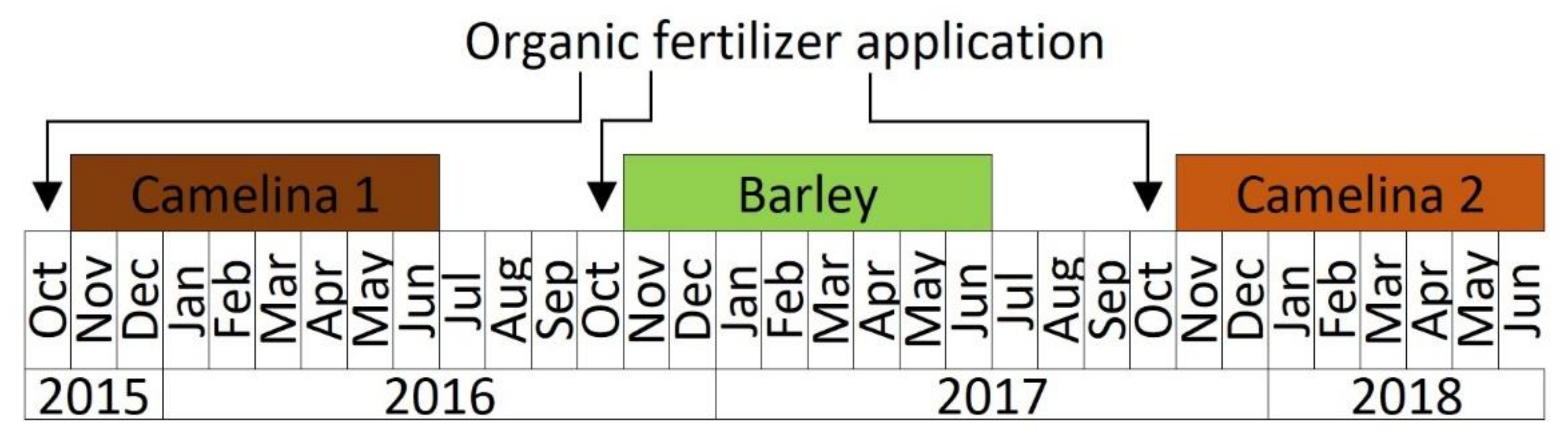
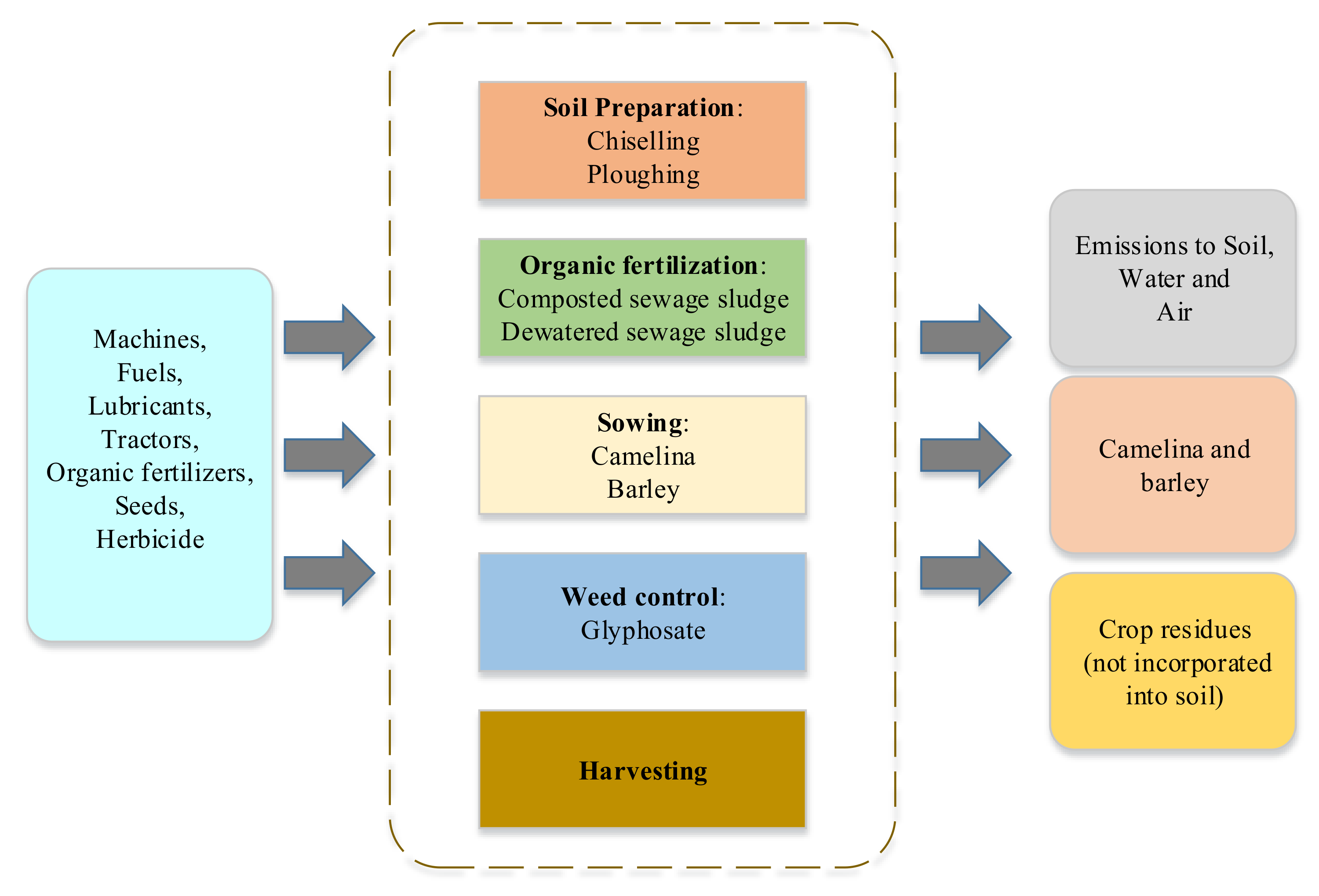
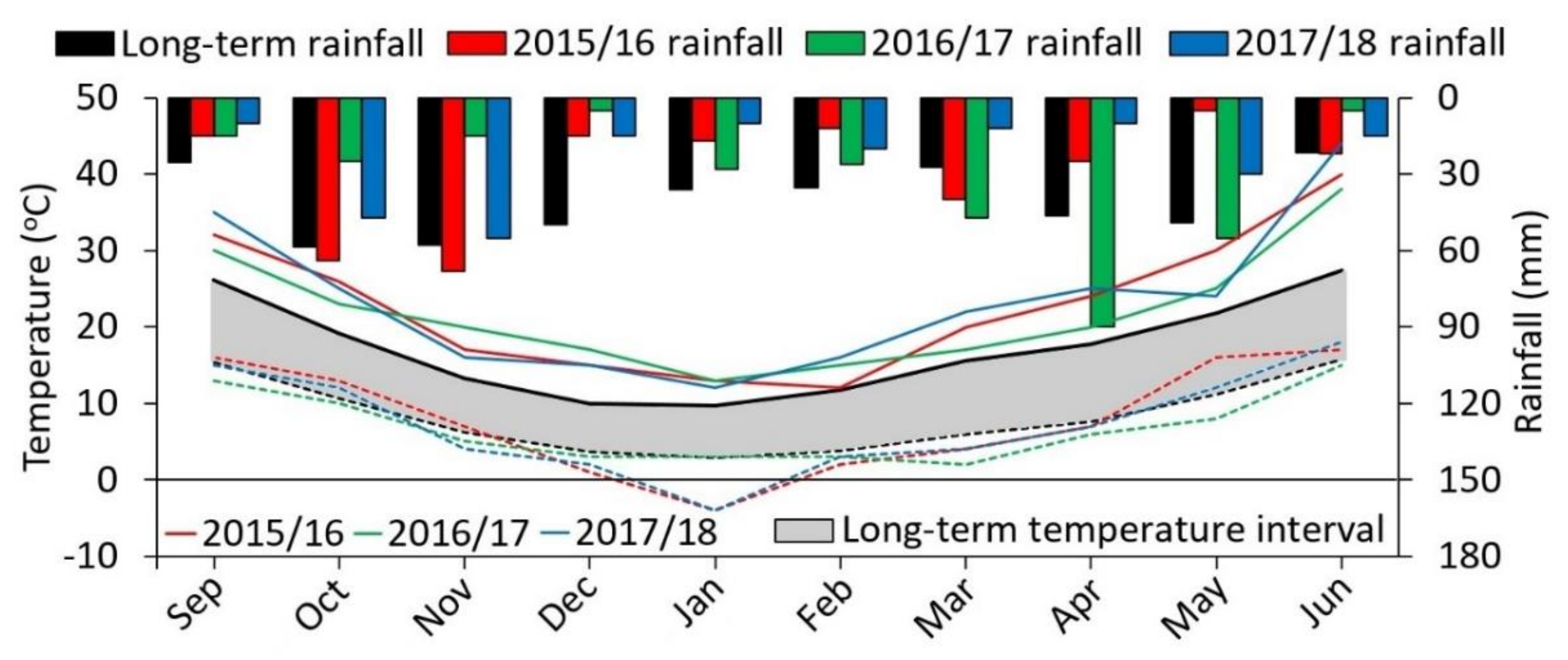
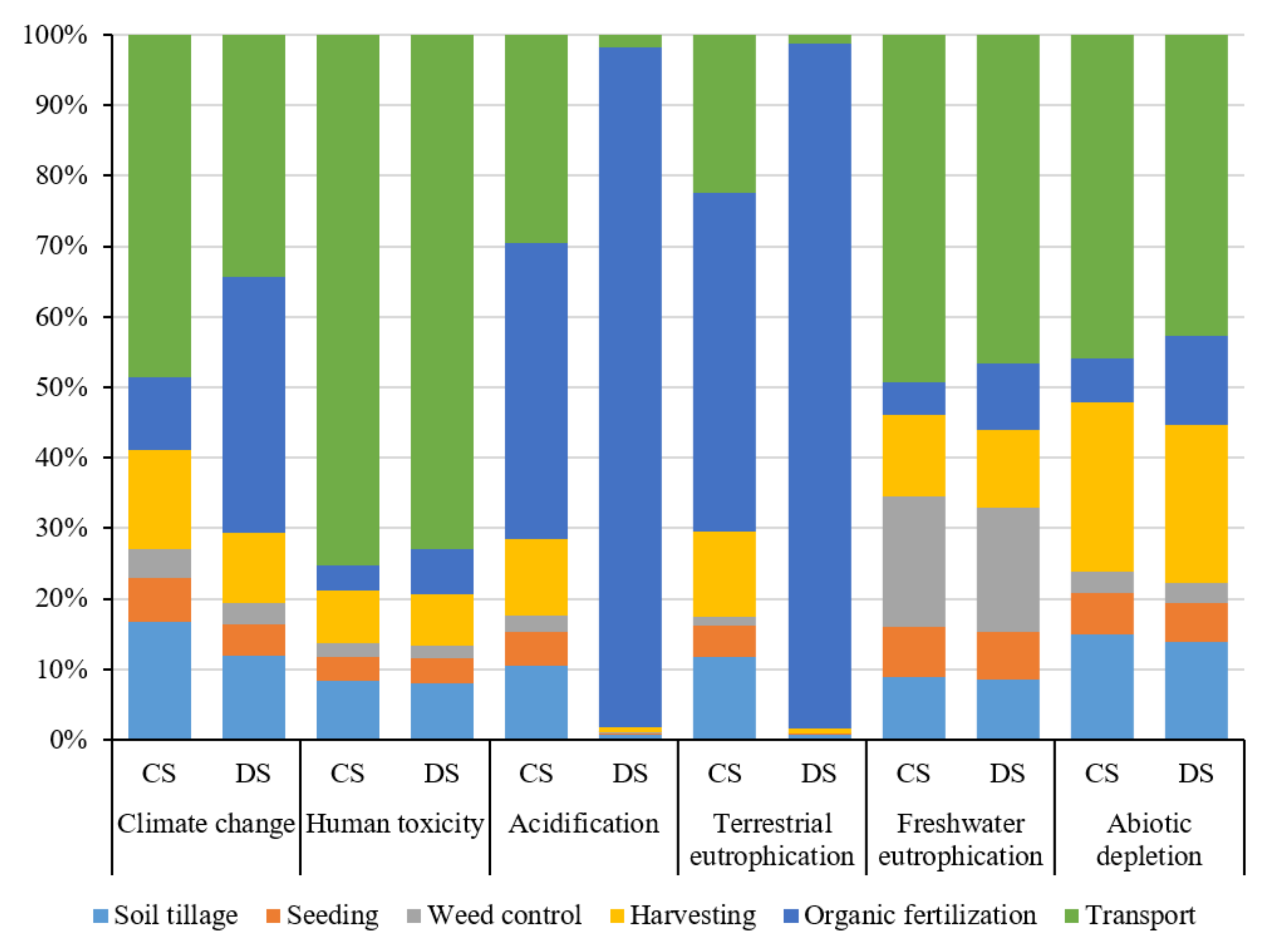
The goal of this study was to provide quantitative agronomic data and environmental performance through a life cycle assessment of camelina in a crop rotation. For this purpose, camelina [Camelina sativa (L.) Crantz] was included in a crop rotation (camelina-barley [Hordeum vulgare (L.)]-camelina) fertilized with two organic fertilizers (dewatered sludge and composted sludge) during three growing seasons (2015–2018). Three treatments were considered in this experimental study of 0.018 ha: (1) Fertilization with composted sludge (15 t ha−1), (2) fertilization with dewatered sludge (35 t ha−1), and (3) control treatment without fertilization. Results showed that camelina’s yield was affected by climatic conditions, ranging from 0.9 to 1.4 t ha−1 in the first season (2015/2016) and the third season (2017/2018 and did not present significant differences between treatments. The yield components with a positive response to organic fertilization were number of silicles, number of seeds per plant, and thousand-seed weight, with an average increase compared to the control of 23.7%, 16.5%, and 18.5%, respectively. A negative correlation was observed between organic fertilization and total fat content, contrary to the increase in protein content observed with organic fertilization. The environmental assessment of this crop rotation revealed that fertilization and transport were the main hotspots. Despite the undesirable weather limitations, this study showed a positive response of camelina’s yield components and seed quality to organic fertilization. By applying these organic fertilizers, it may be possible to obtain favorable camelina yields and promote waste valorization. To minimize the environmental impacts of this crop rotation with camelina, the main recommendations could be to reduce the distances between the dewatering and composting sites and the field and optimize fertilization rates. Further research is needed to determine the application of these organic fertilizers in the long term.
Keywords: energy crop; agronomic performance; life cycle assessment; yield; sewage sludge; compost energy crop; agronomic performance; life cycle assessment; yield; sewage sludge; compost