Article

Computational Simulation of Filters Used in the Removal of Heavy Metals Using Rice Husks
by
M. C. Barrero-Moreno
1,
C. A. Diaz-Vargas
2 and
E. Restrepo-Parra
1,*
1
Department of Physics and Chemistry, Universidad Nacional de Colombia, Research Group in Computational Applications (PCM), Manizales 170003, Colombia
2
Department of Chemical Engineering, Universidad Nacional de Colombia, Research Group in Chemical, Catalytic and Biotechnological Processes, Manizales 170003, Colombia
*
Author to whom correspondence should be addressed.
Agriculture 2021, 11(2), 146; https://doi.org/10.3390/agriculture11020146

Submission received: 24 December 2020 / Revised: 27 January 2021 / Accepted: 29 January 2021 / Published: 10 February 2021
(This article belongs to the Special Issue Challenges and Side Effects of Heavy Metals in Agriculture)

Abstract

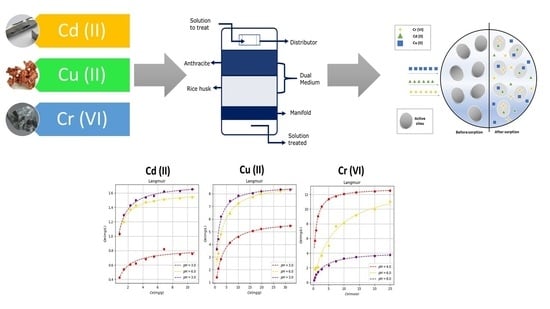
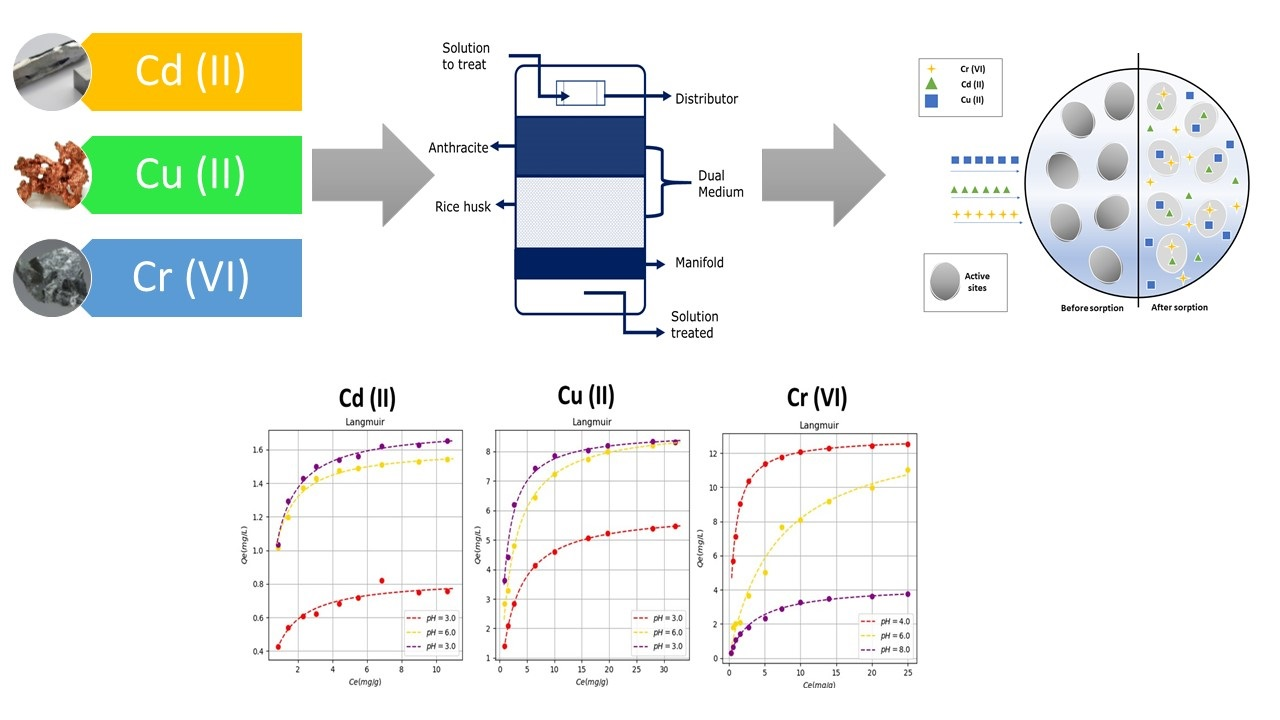
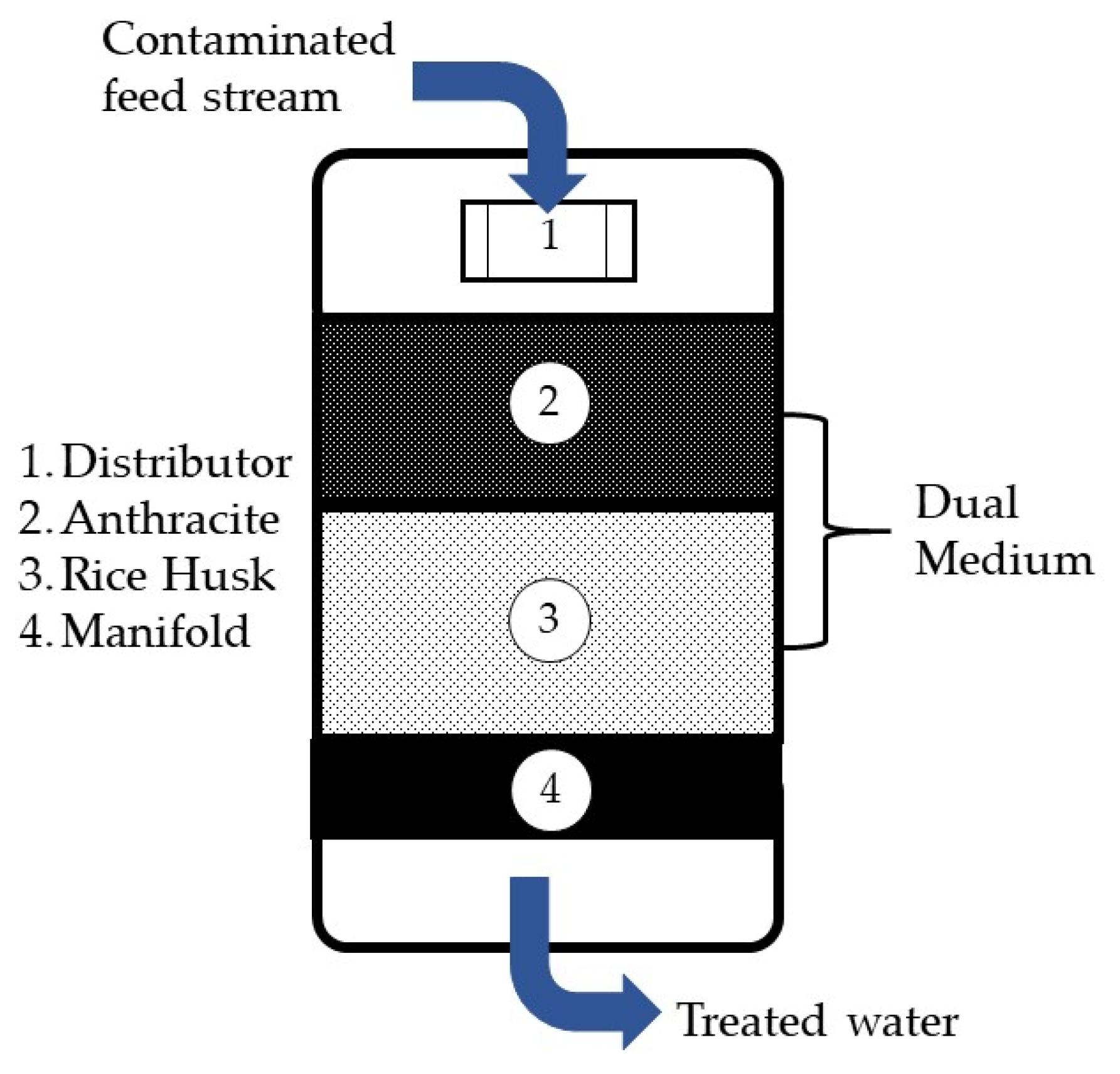
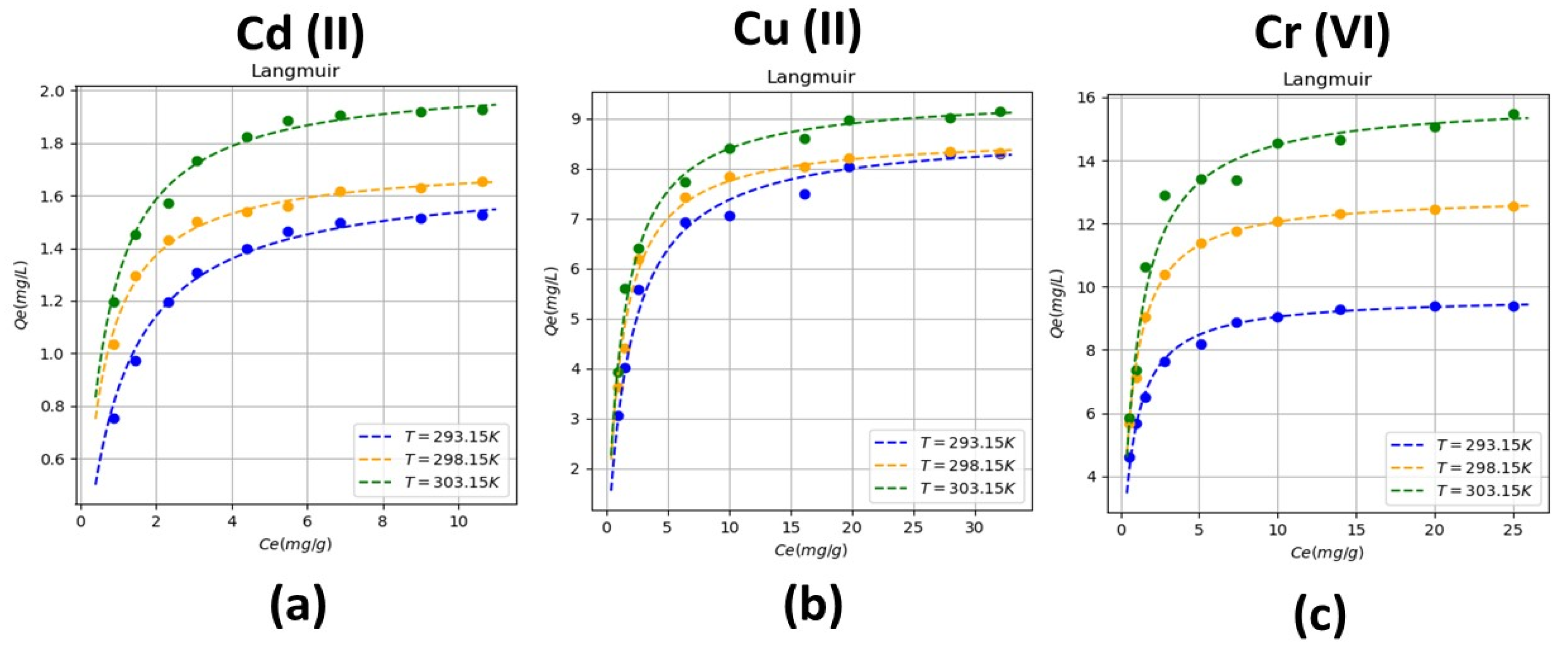
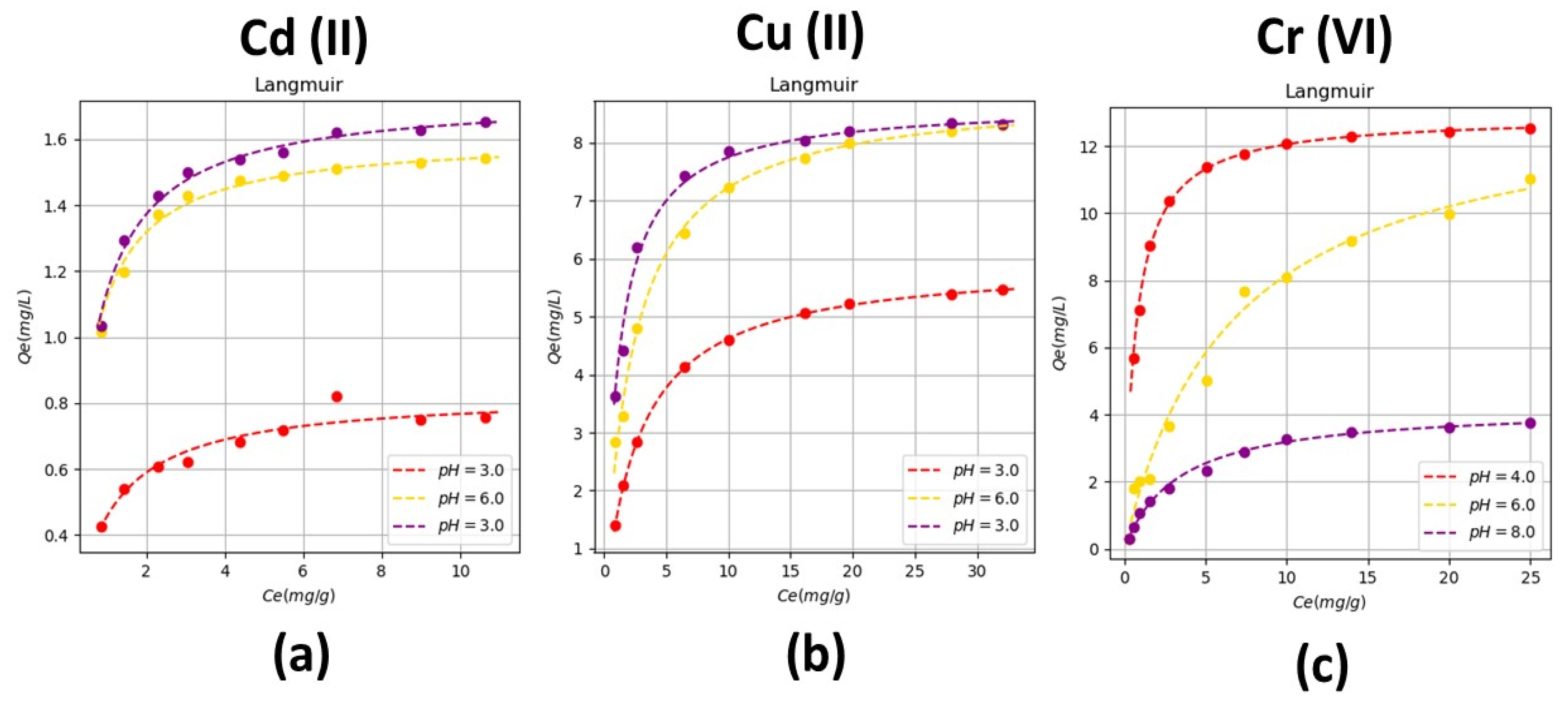
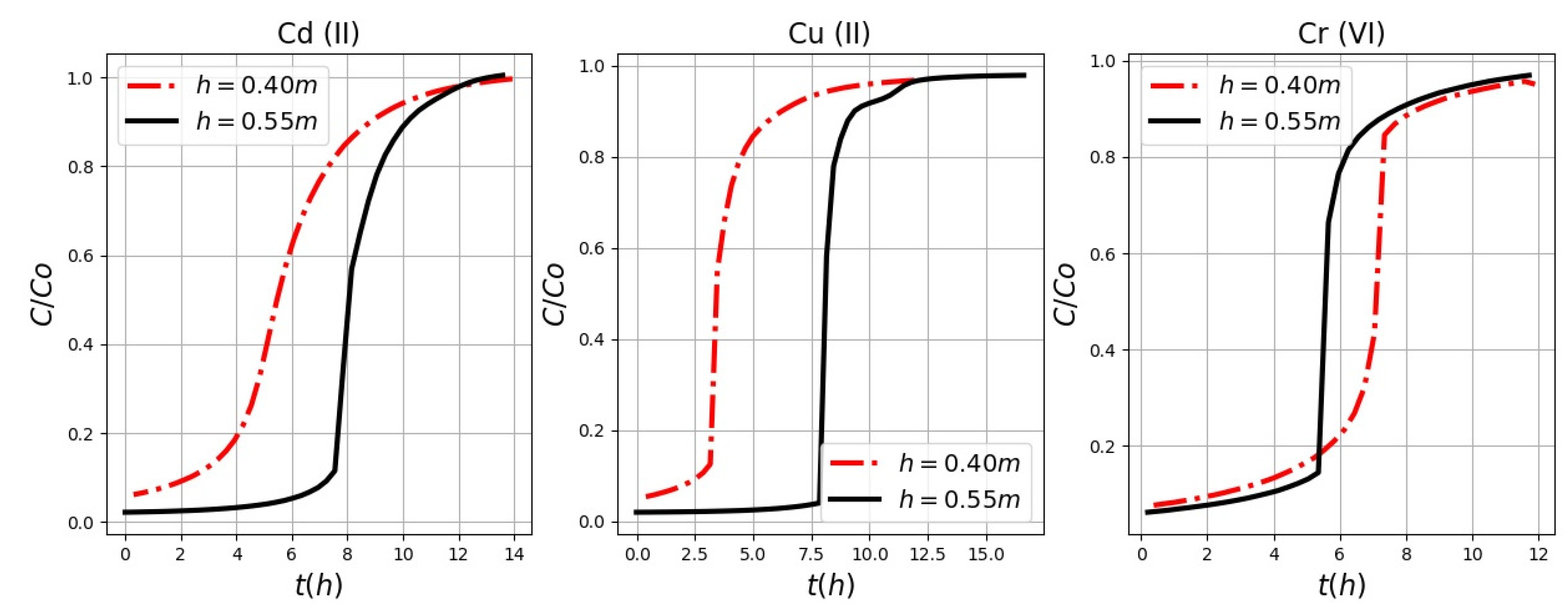
The biofiltration technique is of great importance for the removal of heavy metals. In the present work, a laboratory-scale biofilter was modeled using rice husk as a filter material. The Wolborska model was used to know the dimensions necessary for the biofilter to function. The Langmuir and Freundlich isotherms were performed to quantify the filter adsorption process, showing that the Langmuir isotherms are the ones that present the highest correlation coefficient and best represent the removal process of Cd (II), Cu (II) and Cr (VI). According to the Langmuir isotherms, the maximum operating temperature allowed for this model was chosen, which was 303.15 K, because it presents the maximum removal of heavy metals. Regarding the pH variations for Cd (II) and Cu (II), the maximum removal was presented with a pH = 9.0 and for Cr (VI) with a pH = 3.0 the maximum removal was presented. According to the rupture curves, the blocking times were obtained for each height: for Cd (II) the highest tb for h = 0.55, Cu (II) the highest tb for h = 0.40 and for Cr (VI) the highest tb for h = 0.40.
Keywords: bio filter; Wolborska; lignocellulosic material; pH; Langmuir; Freundlich bio filter; Wolborska; lignocellulosic material; pH; Langmuir; Freundlich
Graphical Abstract