Review

Nephroprotection by SGLT2 Inhibition: Back to the Future?


1
Nephrology Division, Department of Advanced Medical and Surgical Sciences, University of Campania Luigi Vanvitelli, 80138 Naples, Italy
2
Department of Medicine, VA San Diego Healthcare System, University of California at San Diego Medical School, San Diego 92103, CA, USA
*
Author to whom correspondence should be addressed.
J. Clin. Med. 2020, 9(7), 2243; https://doi.org/10.3390/jcm9072243
Submission received: 13 June 2020 / Revised: 10 July 2020 / Accepted: 13 July 2020 / Published: 15 July 2020
(This article belongs to the Special Issue Management of the Progression and Complications of CKD)

Abstract

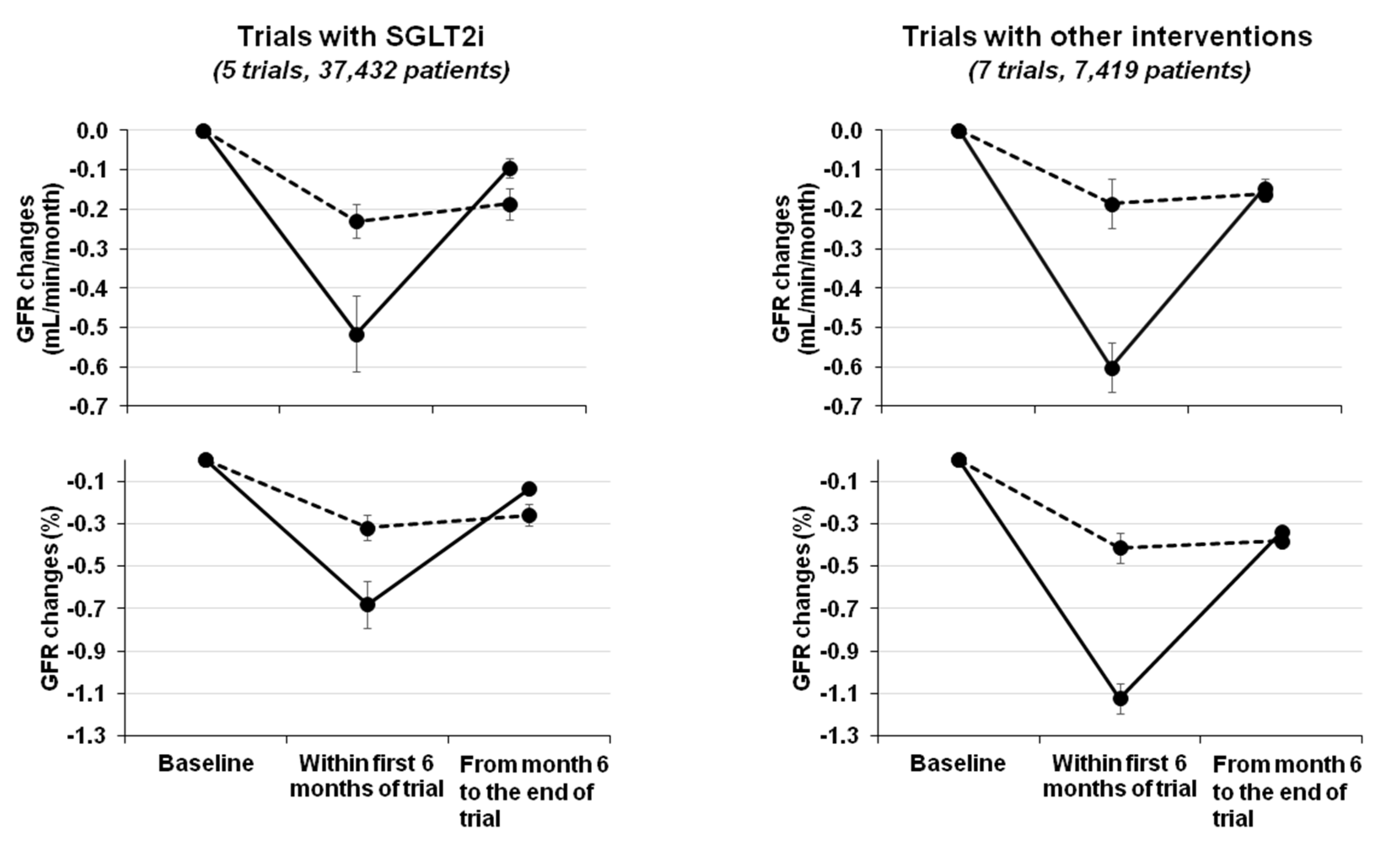
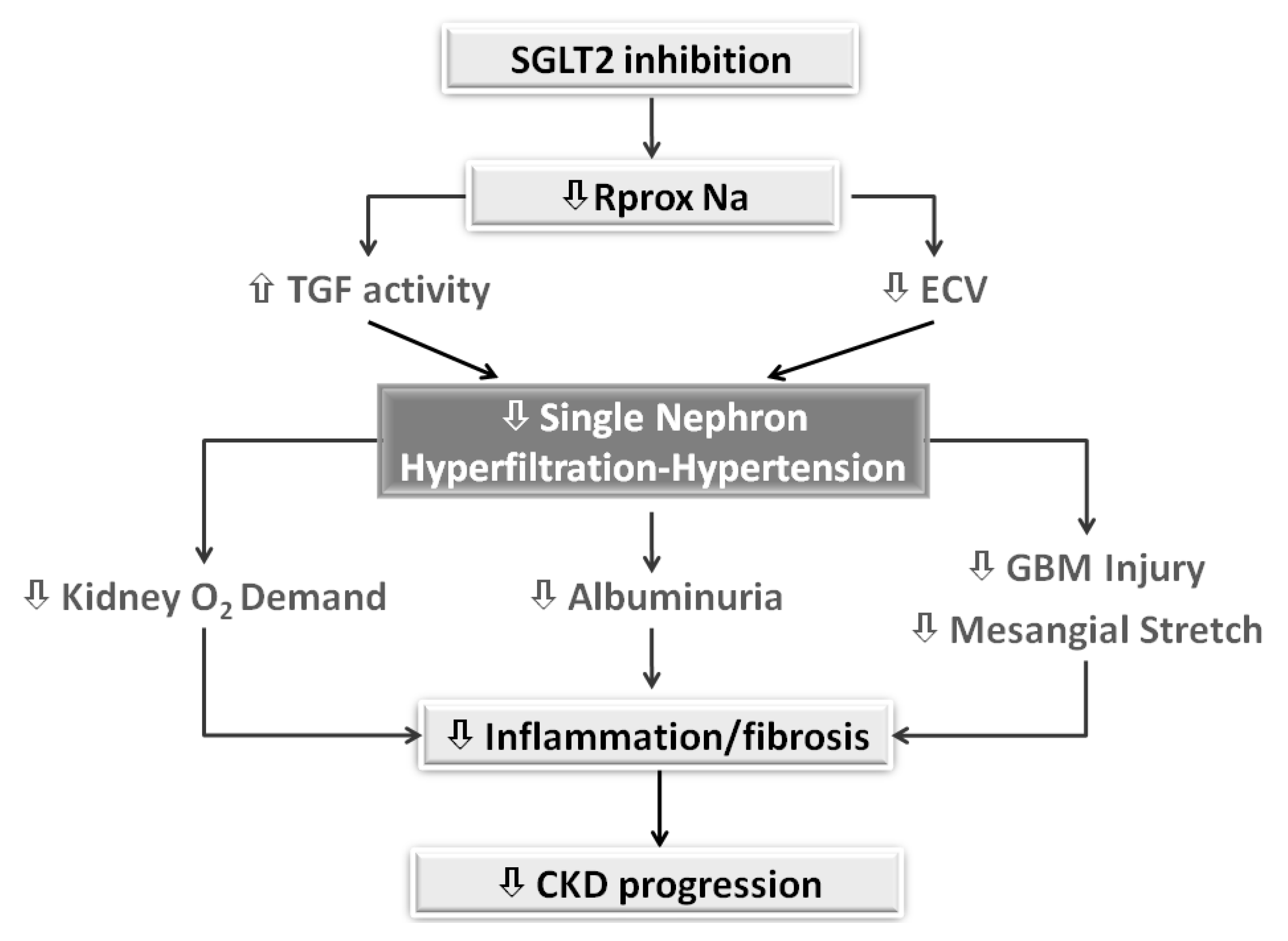
The introduction of sodium/glucose cotransporter 2 inhibitors (SGLT2i) has opened new perspectives for the management of diabetic population at risk of or with chronic kidney disease (CKD). More important, recent, large real-world studies have repositioned the nephroprotective efficacy of SGLT2i emerged from randomized trials within the frame of effectiveness. Furthermore, the salutary effects of these agents may extend to the nondiabetic population according to the positive results of current studies. Nevertheless, the clear benefits of these agents on the prevention of organ damage contrast with their unexpected, limited use in clinical practice. One potential barrier is the acute decline in glomerular filtration rate (GFR) commonly observed at the beginning of treatment. This phenomenon is reminiscent of the early response to the traditional nephroprotective interventions, namely blood pressure lowering, dietary protein and salt restriction and the inhibition of the renin–angiotensin system. Under this perspective, the “check-mark” sign observed in the GFR trajectory over the first weeks of SGT2i therapy should renew interest on the very basic goal of CKD treatment, i.e., alleviate hyperfiltration in viable nephrons in order to prolong their function.
Keywords: SGLT2-inhibition; chronic kidney disease; nephroprotection SGLT2-inhibition; chronic kidney disease; nephroprotection