

Cholangiocarcinoma as an Indication for Liver Transplantation in the Era of Transplant Oncology

 ,
,  , ,
, , 
Abstract
1. Introduction
2. Anatomo-Pathological Features of CCA
3. pCCA: Surgical Approach and LT Indications
3.1. Liver Resection
3.1.1. Staging
3.1.2. Biliary Drainage and Future Liver Remnant Quantification Before LR
3.1.3. Surgical Approach
3.2. Liver Transplantation
3.2.1. Diagnostic Accuracy
3.2.2. Prioritization to Liver Transplantation
3.2.3. Effectiveness of Neoadjuvant Therapy or Patient Selection?
3.2.4. Liver Resection or Liver Transplantation?
4. iCCA: Surgical Approach and LT Indications
4.1. Liver Resection
4.2. Liver Transplantation
5. New Frontiers of Systemic Therapies for CCA
5.1. Cytotoxic Chemotherapy
5.2. Targeted Chemotherapy
5.3. Immunotherapy
6. Conclusions
Author Contributions
Funding
Conflicts of Interest
References
- Saha, S.K.; Zhu, A.X.; Fuchs, C.S.; Brooks, G. Forty-Year Trends in Cholangiocarcinoma Incidence in the U.S.: Intrahepatic Disease on the Rise. Oncology 2016, 21, 594–599. [Google Scholar] [CrossRef] [Scilit]
- Khan, S.A.; Taylor-Robinson, S.D.; Toledano, M.B.; Beck, A.; Elliott, P.; Thomas, H.C. Changing international trends in mortality rates for liver, biliary and pancreatic tumours. J. Hepatol. 2002, 37, 806–813. [Google Scholar] [CrossRef] [Scilit]
- Taylor-Robinson, S.D.; Toledano, M.B.; Arora, S.; Keegan, T.; Hargreaves, S.; Beck, A.; Khan, S.; Elliott, P.; Thomas, H.C. Increase in mortality rates from intrahepatic cholangiocarcinoma in England and Wales 1968–1998. Gut 2001, 48, 816–820. [Google Scholar] [CrossRef] [Scilit]
- Burden, G. The Global Burden of Cancer 2013. JAMA Oncol. 2015, 1, 505–527. [Google Scholar]
- Nakeeb, A.; Pitt, H.A.; Sohn, T.A.; Coleman, J.; Abrams, R.A.; Piantadosi, S.; Hruban, R.H.; Lillemoe, K.D.; Yeo, C.J.; Cameron, J.L. Cholangiocarcinoma. A spectrum of intrahepatic, perihilar, and distal tumors. Ann. Surg. 1996, 224, 463–475. [Google Scholar] [CrossRef] [Scilit] [PubMed]
- Mazzaferro, V.; Gorgen, A.; Roayaie, S.; Busset, M.D.D.; Sapisochin, G. Liver resection and transplantation for intrahepatic cholangiocarcinoma. J. Hepatol. 2020, 72, 364–377. [Google Scholar] [CrossRef] [Scilit] [PubMed]
- Rizvi, S.; Khan, S.A.; Hallemeier, C.L.; Kelley, R.K.; Gores, G.J. Cholangiocarcinoma—Evolving concepts and therapeutic strategies. Nat. Rev. Clin. Oncol. 2017, 15, 95–111. [Google Scholar] [CrossRef] [Scilit]
- Blechacz, B.; Komuta, M.; Roskams, T.; Gores, G.J. Clinical diagnosis and staging of cholangiocarcinoma. Nat. Rev. Gastroenterol. Hepatol. 2011, 8, 512–522. [Google Scholar] [CrossRef] [Scilit]
- DeOliveira, M.L.; Cunningham, S.C.; Cameron, J.L.; Kamangar, F.; Winter, J.M.; Lillemoe, K.D.; Choti, M.C.; Yeo, C.J.; Schulick, R.D. Cholangiocarcinoma—Thirty-one-year experience with 564 patients at a single institution. Ann. Surg. 2007, 245, 755–762. [Google Scholar] [CrossRef] [Scilit]
- Nakanuma, Y.; Kakuda, Y. Pathologic classification of cholangiocarcinoma: New concepts. Best Pr. Res. Clin. Gastroenterol. 2015, 29, 277–293. [Google Scholar] [CrossRef] [Scilit]
- Kendall, T.; Verheij, J.; Gaudio, E.; Evert, M.; Guido, M.; Goeppert, B.; Carpino, G. Anatomical, histomorphological and molecular classification of cholangiocarcinoma. Liver Int. 2019, 39, 7–18. [Google Scholar] [CrossRef] [Scilit] [PubMed]
- Bañales, J.; Cardinale, V.; Carpino, G.; Marzioni, M.; Andersen, J.B.; Invernizzi, P.; Lind, G.E.; Folseraas, T.; Forbes, S.J.; Fouassier, L.; et al. Cholangiocarcinoma: Current knowledge and future perspectives consensus statement from the European Network for the Study of Cholangiocarcinoma (ENS-CCA). Nat. Rev. Gastroenterol. Hepatol. 2016, 13, 261–280. [Google Scholar] [CrossRef] [Scilit] [PubMed]
- Sia, D.; Villanueva, A.; Friedman, S.L.; Llovet, J.M. Liver Cancer Cell of Origin, Molecular Class, and Effects on Patient Prognosis. Gastroenterology 2017, 152, 745–761. [Google Scholar] [CrossRef] [Scilit] [PubMed]
- Komuta, M.; Govaere, O.; Vandecaveye, V.; Akiba, J.; Van Steenbergen, W.; Verslype, C.; Laleman, W.; Pirenne, J.; Aerts, R.; Yano, H.; et al. Histological diversity in cholangiocellular carcinoma reflects the different cholangiocyte phenotypes. Hepatology 2012, 55, 1876–1888. [Google Scholar] [CrossRef] [Scilit]
- Cardinale, V.; Wang, Y.; Carpino, G.; Reid, L.M.; Gaudio, E.; Alvaro, D. Mucin-producing cholangiocarcinoma might derive from biliary tree stem/progenitor cells located in peribiliary glands. Hepatology 2012, 55, 2041–2042. [Google Scholar] [CrossRef] [Scilit]
- Nakanuma, Y.; Xu, J.; Harada, K.; Sato, Y.; Sasaki, M.; Ikeda, H.; Kim, J.; Yu, E. Pathological spectrum of intrahepatic cholangiocarcinoma arising in non-biliary chronic advanced liver diseases. Pathol. Int. 2011, 61, 298–305. [Google Scholar] [CrossRef] [Scilit]
- Ethun, C.G.; Lopez-Aguiar, A.G.; Anderson, U.J.; Adams, A.B.; Fields, R.C.; Doyle, M.B.; Chapman, W.C.; Krasnick, B.A.; Weber, S.M.; Mezrich, J.D.; et al. Transplantation Versus Resection for Hilar Cholangiocarcinoma: An Argument for Shifting Treatment Paradigms for Resectable Disease. Ann. Surg. 2018, 267, 797–805. [Google Scholar] [CrossRef] [Scilit]
- Nagino, M. Surgical Treatment of Perihilar Cholangiocarcinoma: Resection or Transplant? Ann. Surg. 2018, 267, 806–807. [Google Scholar] [CrossRef] [Scilit]
- Rosen, C.B. Transplantation Versus Resection for Hilar Cholangiocarcinoma: An Argument for Shifting Paradigms for Resectable Disease in Annals of Surgery 2018. Ann. Surg. 2018, 267, 808–809. [Google Scholar] [CrossRef] [Scilit]
- Vibert, E.; Boleslawski, E. Transplantation Versus Resection for Hilar Cholangiocarcinoma. Ann. Surg. 2019, 269, 5–6. [Google Scholar] [CrossRef] [Scilit]
- Resch, T.; Esser, H.; Cardini, B.; Schaefer, B.; Zoller, H.; Schneeberger, S. Liver transplantation for hilar cholangiocarcinoma (h-CCA): Is it the right time? Transl. Gastroenterol. Hepatol. 2018, 3, 38. [Google Scholar] [CrossRef] [Scilit] [PubMed]
- Endo, I.; Matsuyama, R.; Taniguchi, K.; Sugita, M.; Takeda, K.; Tanaka, K.; Shimada, H. Right hepatectomy with resection of caudate lobe and extrahepatic bile duct for hilar cholangiocarcinoma. J. Hepato Biliary Pancreatic Sci. 2011, 19, 216–224. [Google Scholar] [CrossRef] [Scilit] [PubMed]
- Launois, B.; Reding, R.; Lebeau, G.; Buard, J.L. Surgery for hilar cholangiocarcinoma: French experience in a collective survey of 552 extrahepatic bile duct cancers. J. Hepato Biliary Pancreatic Surg. 2000, 7, 128–134. [Google Scholar] [CrossRef] [Scilit] [PubMed]
- Lee, S.G.; Lee, Y.J.; Park, K.-M.; Hwang, S.; Min, P.C. One hundred and eleven liver resections for hilar bile duct cancer. J. Hepato Biliary Pancreatic Surg. 2000, 7, 135–141. [Google Scholar] [CrossRef] [Scilit]
- Jarnagin, W.R.; Fong, Y.; Burke, E.C.; Bodniewicz, J.; Youssef, M.; Klimstra, D.; Blumgart, L.H.; DeMatteo, R.P.; Gönen, M. Staging, Resectability, and Outcome in 225 Patients With Hilar Cholangiocarcinoma. Ann. Surg. 2001, 234, 507–519. [Google Scholar] [CrossRef] [Scilit]
- Tsao, J.I.; Nimura, Y.; Kamiya, J.; Hayakawa, N.; Kondo, S.; Nagino, M.; Miyachi, M.; Kanai, M.; Uesaka, K.; Oda, K.; et al. Management of hilar cholangiocarcinoma—Comparison of an American and a Japanese experience. Ann. Surg. 2000, 232, 166–174. [Google Scholar] [CrossRef] [Scilit]
- Saldinger, P.F.; Blumgart, L.H. Resection of hilar cholangiocarcinoma-a European and United States experience. J. Hepato Biliary Pancreatic Surg. 2000, 7, 111–114. [Google Scholar] [CrossRef] [Scilit]
- Van Gulik, T.; Kloek, J.; Ruys, A.T.; Busch, O.; Van Tienhoven, G.; Laméris, J.S.; Rauws, E.A.J.; Gouma, D.J. Multidisciplinary management of hilar cholangiocarcinoma (Klatskin tumor): Extended resection is associated with improved survival. Eur. J. Surg. Oncol. (EJSO) 2011, 37, 65–71. [Google Scholar] [CrossRef] [Scilit]
- Seyama, Y.; Kubota, K.; Sano, K.; Noie, T.; Takayama, T.; Kosuge, T.; Makuuchi, M. Long-Term Outcome of Extended Hemihepatectomy for Hilar Bile Duct Cancer With No Mortality and High Survival Rate. Ann. Surg. 2003, 238, 73–83. [Google Scholar] [CrossRef] [Scilit]
- American Joint Committee on Cancer. AJCC: Cancer Staging Manual, 8th ed; Springer International Publishing: New York, NY, USA, 2017. [Google Scholar]
- Kimmings, A.N.; Van Deventer, S.J.; Obertop, H.; Rauws, E.A.; Gouma, D.J. Inflammatory and immunologic effects of obstructive jaundice: Pathogenesis and treatment. J. Am. Coll. Surg. 1995, 181, 567–581. [Google Scholar]
- Wronka, K.M.; Grąt, M.; Stypułkowski, J.; Bik, E.; Patkowski, W.; Krawczyk, M.; Zieniewicz, K. Relevance of Preoperative Hyperbilirubinemia in Patients Undergoing Hepatobiliary Resection for Hilar Cholangiocarcinoma. J. Clin. Med. 2019, 8, 458. [Google Scholar] [CrossRef] [Scilit] [PubMed]
- Ba, Y.; Yue, P.; Leung, J.W.; Wang, H.; Lin, Y.; Bai, B.; Zhu, X.; Zhang, L.; Zhu, K.; Wang, W.; et al. Percutaneous transhepatic biliary drainage may be the preferred preoperative drainage method in hilar cholangiocarcinoma. Endosc. Int. Open 2020, 8, 203–210. [Google Scholar] [CrossRef] [Scilit] [PubMed]
- Neuhaus, H. Preoperative biliary drainage in hilar cholangiocarcinoma: When and how? Endosc. Int. Open 2020, 8, 211–213. [Google Scholar] [CrossRef] [Scilit] [PubMed]
- Dumonceau, J.-M.; Tringali, A.; Papanikolaou, I.S.; Blero, D.; Mangiavillano, B.; Schmidt, A.; Vanbiervliet, G.; Costamagna, G.; Devière, J.; García-Cano, J.; et al. Endoscopic biliary stenting: Indications, choice of stents, and results: European Society of Gastrointestinal Endoscopy (ESGE) Clinical Guideline - Updated October 2017. Endoscopy 2018, 50, 910–930. [Google Scholar] [CrossRef] [Scilit] [PubMed]
- Kishi, Y.; Shimada, K.; Nara, S.; Esaki, M.; Kosuge, T. The type of preoperative biliary drainage predicts short-term outcome after major hepatectomy. Langenbecks Arch. Surg. 2016, 401, 503–511. [Google Scholar] [CrossRef] [Scilit]
- Coelen, R.; Roos, E.; Wiggers, J.K.; Besselink, M.G.; Buis, C.I.; Busch, O.R.; DeJong, C.H.; Van Delden, O.M.; Van Eijck, C.H.; Fockens, P.; et al. Endoscopic versus percutaneous biliary drainage in patients with resectable perihilar cholangiocarcinoma: A multicentre, randomised controlled trial. Lancet Gastroenterol. Hepatol. 2018, 3, 681–690. [Google Scholar] [CrossRef] [Scilit]
- Jo, J.H.; Chung, M.J.; Han, D.H.; Park, S.W.; Bang, S.; Song, S.Y. Best options for preoperative biliary drainage in patients with Klatskin tumors. Surg. Endosc. 2016, 31, 422–429. [Google Scholar] [CrossRef] [Scilit]
- Kubota, K.; Hasegawa, S.; Iwasaki, A.; Sato, T.; Fujita, Y.; Hosono, K.; Nakajima, A.; Mori, R.; Matsuyama, R.; Endo, I. Stent placement above the sphincter of Oddi permits implementation of neoadjuvant chemotherapy in patients with initially unresectable Klatskin tumor. Endosc. Int. Open 2016, 4, 427–433. [Google Scholar] [CrossRef] [Scilit]
- Shoup, M. Volumetric Analysis Predicts Hepatic Dysfunction in Patients Undergoing Major Liver Resection. J. Gastrointest. Surg. 2003, 7, 325–330. [Google Scholar] [CrossRef] [Scilit]
- De Graaf, W.; Van Lienden, K.P.; Van Gulik, T.; Bennink, R.J. 99mTc-Mebrofenin Hepatobiliary Scintigraphy with SPECT for the Assessment of Hepatic Function and Liver Functional Volume Before Partial Hepatectomy. J. Nucl. Med. 2010, 51, 229–236. [Google Scholar] [CrossRef] [Scilit]
- Olthof, P.B.; Aldrighetti, L.; Alikhanov, R.; Cescon, M.; Groot Koerkamp, B.; Jarnagin, W.R.; Nadalin, S.; Pratschke, J.; Schmelze, M.; Sparrelid, E.; et al. Portal Vein Embolization is Associated with Reduced Liver Failure and Mortality in High-Risk Resections for Perihilar Cholangiocarcinoma. Ann. Surg. Oncol. 2020. [Google Scholar] [CrossRef] [Scilit] [PubMed]
- Ito, F.; Agni, R.; Rettammel, R.J.; Been, M.J.; Cho, C.S.; Mahvi, D.M.; Rikkers, L.F.; Weber, S.M. Resection of hilar cholangiocarcinoma—Concomitant liver resection decreases hepatic recurrence. Ann. Surg. 2008, 248, 273–279. [Google Scholar] [CrossRef] [Scilit] [PubMed]
- Matsuo, K.; Rocha, F.G.; Ito, K.; D’Angelica, M.I.; Allen, P.J.; Fong, Y.; DeMatteo, R.P.; Gönen, M.; Endo, I.; Jarnagin, W.R. The Blumgart Preoperative Staging System for Hilar Cholangiocarcinoma: Analysis of Resectability and Outcomes in 380 Patients. J. Am. Coll. Surg. 2012, 215, 343–355. [Google Scholar] [CrossRef] [Scilit] [PubMed]
- Bird, N.; Elmasry, M.; Jones, R.; Elniel, M.; Kelly, M.; Palmer, D.; Fenwick, S.; Poston, G.; Malik, H. Role of staging laparoscopy in the stratification of patients with perihilar cholangiocarcinoma. BJS 2016, 104, 418–425. [Google Scholar] [CrossRef] [Scilit]
- Neuhaus, P.; Thelen, A.; Jonas, S.; Puhl, G.; Denecke, T.; Veltzke-Schlieker, W.; Seehofer, D. Oncological Superiority of Hilar En Bloc Resection for the Treatment of Hilar Cholangiocarcinoma. Ann. Surg. Oncol. 2011, 19, 1602–1608. [Google Scholar] [CrossRef] [Scilit]
- Nimura, Y.; Hayakawa, N.; Kamiya, J.; Kondo, S.; Shionoya, S. Hepatic segmentectomy with caudate lobe resection for bile duct carcinoma of the hepatic hilus. World J. Surg. 1990, 14, 535–543. [Google Scholar] [CrossRef] [Scilit]
- Hong, S.S.; Han, D.H.; Choi, G.H.; Choi, J.S. Comparison study for surgical outcomes of right versus left side hemihepatectomy to treat hilar cholangiocellular carcinoma. Ann. Surg. Treat. Res. 2019, 98, 15–22. [Google Scholar] [CrossRef] [Scilit]
- Nagino, M.; Ebata, T.; Yokoyama, Y.; Igami, T.; Sugawara, G.; Takahashi, Y.; Nimura, Y. Evolution of Surgical Treatment for Perihilar Cholangiocarcinoma A Single-Center 34-Year Review of 574 Consecutive Resections. Ann. Surg. 2013, 258, 129–140. [Google Scholar] [CrossRef] [Scilit]
- Meyer, C.G.; Penn, I.; James, L. Liver transplantation for cholangiocarcinoma: Results in 207 patients. Transplantation 2000, 69, 1633–1637. [Google Scholar] [CrossRef] [Scilit]
- Robles, R.; Figueras, J.; Turrión, V.S.; Margarit, C.; Moya, Á.; Varo, E.; Calleja, J.; Valdivieso, A.; Valdecasas, J.C.G.; Lopez, P.; et al. Spanish Experience in Liver Transplantation for Hilar and Peripheral Cholangiocarcinoma. Ann. Surg. 2004, 239, 265–271. [Google Scholar] [CrossRef] [Scilit]
- Seehofer, D.; Thelen, A.; Neumann, U.P.; Denecke, T.; Kamphues, C.; Pratschke, J.; Jonas, S.; Neuhaus, P.; Veltzke-Schlieker, W. Extended bile duct resection liver and transplantation in patients with hilar cholangiocarcinoma: Long-term results. Liver Transplant. 2009, 15, 1499–1507. [Google Scholar] [CrossRef] [Scilit] [PubMed]
- Heimbach, J.K.; Gores, G.J.; Haddock, M.G.; Alberts, S.R.; Nyberg, S.L.; Ishitani, M.B.; Rosen, C.B. Liver Transplantation for Unresectable Perihilar Cholangiocarcinoma. Semin. Liver Dis. 2004, 24, 201–207. [Google Scholar] [CrossRef] [Scilit] [PubMed]
- Foo, M.L.; Gunderson, L.L.; Bender, C.E.; Buskirk, S.J. External radiation therapy and transcatheter iridium in the treatment of extrahepatic bile duct carcinoma. Int. J. Radiat. Oncol. 1997, 39, 929–935. [Google Scholar] [CrossRef] [Scilit]
- Rosen, C.B.; Heimbach, J.K.; Gores, G.J. Liver transplantation for cholangiocarcinoma. Transpl. Int. 2010, 23, 692–697. [Google Scholar] [CrossRef] [Scilit]
- Murad, S.D.; Kim, W.R.; Harnois, D.M.; Douglas, D.D.; Burton, J.; Kulik, L.M.; Botha, J.F.; Mezrich, J.D.; Chapman, W.C.; Schwartz, J.J.; et al. Efficacy of neoadjuvant chemoradiation, followed by liver transplantation, for perihilar cholangiocarcinoma at 12 US centers. Gastroenterology 2012, 143, 88–98. [Google Scholar] [CrossRef] [Scilit]
- Kloek, J.J.; Van Delden, O.M.; Erdogan, D.; Kate, F.J.T.; Rauws, E.A.; Busch, O.R.; Gouma, D.J.; Van Gulik, T. Differentiation of malignant and benign proximal bile duct strictures: The diagnostic dilemma. World J. Gastroenterol. 2008, 14, 5032–5038. [Google Scholar] [CrossRef] [Scilit]
- Rosen, C.B.; Murad, S.D.; Heimbach, J.K.; Nyberg, S.L.; Nagorney, D.M.; Gores, G.J. Neoadjuvant Therapy and Liver Transplantation for Hilar Cholangiocarcinoma: Is Pretreatment Pathological Confirmation of Diagnosis Necessary? J. Am. Coll. Surg. 2012, 215, 31–38. [Google Scholar] [CrossRef] [Scilit]
- Gores, G.J.; Gish, R.; Sudan, D.L.; Rosen, C.B. MELD Exception Study Group Model for end-stage liver disease (MELD) exception for cholangiocarcinoma or biliary dysplasia. Liver Transplant. 2006, 12, 95–97. [Google Scholar] [CrossRef] [Scilit]
- Sudan, D.L.; Deroover, A.; Chinnakotla, S.; Fox, I.; Shaw, B.; McCashland, T.; Sorrell, M.; Tempero, M.; Langnas, A. Radiochemotherapy and transplantation allow long-term survival for nonresectable hilar cholangiocarcinoma. Arab. Archaeol. Epigr. 2002, 2, 774–779. [Google Scholar] [CrossRef] [Scilit]
- Mantel, H.T.J.; Westerkamp, A.C.; Adam, R.; Bennet, W.F.; Seehofer, D.; Settmacher, U.; Sanchez-Bueno, F.; Prous, J.F.; Boleslawski, E.; Friman, S.; et al. Strict Selection Alone of Patients Undergoing Liver Transplantation for Hilar Cholangiocarcinoma Is Associated with Improved Survival. PLoS ONE 2016, 11, e0156127. [Google Scholar] [CrossRef] [Scilit]
- Mansour, J.C.; Aloia, T.A.; Crane, C.H.; Heimbach, J.K.; Nagino, M.; Vauthey, J.-N. Hilar Cholangiocarcinoma: Expert consensus statement. HPB 2015, 17, 691–699. [Google Scholar] [CrossRef] [Scilit] [PubMed]
- De Jong, M.C.; Nathan, H.; Sotiropoulos, G.C.; Paul, A.; Alexandrescu, S.; Marques, H.P.; Pulitanò, C.; Barroso, E.; Clary, B.M.; Aldrighetti, L.; et al. Intrahepatic Cholangiocarcinoma: An International Multi-Institutional Analysis of Prognostic Factors and Lymph Node Assessment. J. Clin. Oncol. 2011, 29, 3140–3145. [Google Scholar] [CrossRef] [Scilit] [PubMed]
- Tan, J.C.C.; Coburn, N.G.; Baxter, N.N.; Kiss, A.; Law, C. Surgical Management of Intrahepatic Cholangiocarcinoma—A Population-Based Study. Ann. Surg. Oncol. 2007, 15, 600–608. [Google Scholar] [CrossRef] [Scilit] [PubMed]
- Sotiropoulos, G.C.; Bockhorn, M.; Sgourakis, G.; Brokalaki, E.I.; Molmenti, E.P.; Neuhäuser, M.; Radtke, A.; Wohlschlaeger, J.; Baba, H.A.; Broelsch, C.E.; et al. R0 Liver Resections for Primary Malignant Liver Tumors in the Noncirrhotic Liver: A Diagnosis-Related Analysis. Dig. Dis. Sci. 2008, 54, 887–894. [Google Scholar] [CrossRef] [Scilit]
- Endo, I.; Gonen, M.; Yopp, A.C.; Dalal, K.M.; Zhou, Q.; Klimstra, D.; Dangelica, M.; DeMatteo, R.P.; Fong, Y.; Schwartz, L.; et al. Intrahepatic cholangiocardnoma—Rising frequency, improved survival, and determinants of outcome after resection. Ann. Surg. 2008, 248, 84–96. [Google Scholar] [CrossRef] [Scilit]
- Petrowsky, H.; Hong, J. Current Surgical Management of Hilar and Intrahepatic Cholangiocarcinoma: The Role of Resection and Orthotopic Liver Transplantation. Transplant. Proc. 2009, 41, 4023–4035. [Google Scholar] [CrossRef] [Scilit]
- Yoh, T.; Cauchy, F.; Le Roy, B.; Seo, S.; Taura, K.; Hobeika, C.; Dokmak, S.; Farges, O.; Gelli, M.; Cunha, A.S.; et al. Prognostic value of lymphadenectomy for long-term outcomes in node-negative intrahepatic cholangiocarcinoma: A multicenter study. Surgery 2019, 166, 975–982. [Google Scholar] [CrossRef] [Scilit]
- Lee, G.; Gamblin, T.C.; Fong, Z.V.; Ferrone, C.R.; Goyal, L.; Lillemoe, K.D.; Blaszkowsky, L.S.; Tanabe, K.K.; Qadan, M. Facility Type is Associated with Margin Status and Overall Survival of Patients with Resected Intrahepatic Cholangiocarcinoma. Ann. Surg. Oncol. 2019, 26, 4091–4099. [Google Scholar] [CrossRef] [Scilit]
- Si, A.; Li, J.; Yang, Z.; Xia, Y.; Yang, T.; Lei, Z.; Cheng, Z.; Pawlik, T.M.; Lau, W.Y.; Shen, F. Impact of Anatomical Versus Non-anatomical Liver Resection on Short-and Long-Term Outcomes for Patients with Intrahepatic Cholangiocarcinoma. Ann. Surg. Oncol. 2019, 26, 1841–1850. [Google Scholar] [CrossRef] [Scilit]
- Lee, A.J.; Chun, Y.S. Intrahepatic cholangiocarcinoma: The AJCC/UICC 8th edition updates. Chin. Clin. Oncol. 2018, 7, 52. [Google Scholar] [CrossRef] [Scilit]
- Goere, D.; Wagholikar, G.D.; Pessaux, P.; Carrere, N.; Sibert, A.; Vilgrain, V.; Sauvanet, A.; Belghiti, J. Utility of staging laparoscopy in subsets of biliary cancers—Laparoscopy is a powerful diagnostic tool in patients with intrahepatic and gallbladder carcinoma. Surg. Endosc. 2006, 20, 721–725. [Google Scholar] [CrossRef] [Scilit] [PubMed]
- Reames, B.N.; Ejaz, A.; Koerkamp, B.G.; Alexandrescu, S.; Marques, H.P.; Aldrighetti, L.; Maithel, S.K.; Pulitanò, C.; Bauer, T.W.; Shen, F.; et al. Impact of major vascular resection on outcomes and survival in patients with intrahepatic cholangiocarcinoma: A multi-institutional analysis. J. Surg. Oncol. 2017, 116, 133–139. [Google Scholar] [CrossRef] [Scilit] [PubMed]
- Le Roy, B.; Gelli, M.; Pittau, G.; Allard, M.-A.; Pereira, B.; Serji, B.; Vibert, E.; Castaing, D.; Adam, R.; Cherqui, D.; et al. Neoadjuvant chemotherapy for initially unresectable intrahepatic cholangiocarcinoma. BJS 2017, 105, 839–847. [Google Scholar] [CrossRef] [Scilit] [PubMed]
- Wu, L.; Tsilimigras, D.I.; Paredes, A.Z.; Mehta, R.; Hyer, J.M.; Merath, K.; Sahara, K.; Bagante, F.; Beal, E.W.; Shen, F.; et al. Trends in the Incidence, Treatment and Outcomes of Patients with Intrahepatic Cholangiocarcinoma in the USA: Facility Type is Associated with Margin Status, Use of Lymphadenectomy and Overall Survival. World J. Surg. 2019, 43, 1777–1787. [Google Scholar] [CrossRef] [Scilit]
- Ratti, F.; Cipriani, F.; Ariotti, R.; Gagliano, A.; Paganelli, M.; Catena, M.; Aldrighetti, L. Safety and feasibility of laparoscopic liver resection with associated lymphadenectomy for intrahepatic cholangiocarcinoma: A propensity score-based case-matched analysis from a single institution. Surg. Endosc. 2015, 30, 1999–2010. [Google Scholar] [CrossRef] [Scilit]
- Wei, F.; Wang, G.; Ding, J.; Dou, C.; Yu, T.; Zhang, C. Is It Time to Consider Laparoscopic Hepatectomy for Intrahepatic Cholangiocarcinoma? A Meta-Analysis. J. Gastrointest. Surg. 2019, 1–7. [Google Scholar] [CrossRef] [Scilit]
- Martin, S.P.; Drake, J.; Wach, M.M.; Ruff, S.; Diggs, L.P.; Wan, J.Y.; Brown, Z.J.; Ayabe, R.I.; Glazer, E.S.; Dickson, P.V.; et al. Laparoscopic Approach to Intrahepatic Cholangiocarcinoma is Associated with an Exacerbation of Inadequate Nodal Staging. Ann. Surg. Oncol. 2019, 26, 1851–1857. [Google Scholar] [CrossRef] [Scilit]
- Kinoshita, H.; Sakai, K.; Hirohashi, K.; Igawa, S.; Yamasaki, O.; Kubo, S. Preoperative portal vein embolization for hepatocellular carcinoma. World J. Surg. 1986, 10, 803–808. [Google Scholar] [CrossRef] [Scilit]
- Clavien, P.; Petrowsky, H.; DeOliveira, M.L.; Graf, R. Strategies for safer liver surgery and partial liver transplantation. N. Engl. J. Med. 2007, 356, 1545–1559. [Google Scholar] [CrossRef] [Scilit]
- Li, J.; Moustafa, M.; Linecker, M.; Lurje, G.; Capobianco, I.; Baumgart, J.; Ratti, F.; Rauchfuss, F.; Balci, D.; Fernandes, E.; et al. ALPPS for Locally Advanced Intrahepatic Cholangiocarcinoma: Did Aggressive Surgery Lead to the Oncological Benefit? An International Multi-Center Study. Ann. Surg. Oncol. 2020, 27, 1372–1384. [Google Scholar] [CrossRef] [Scilit]
- Bednarsch, J.; Czigany, Z.; Lurje, I.; Strnad, P.; Bruners, P.; Ulmer, T.F.; Dulk, M.D.; Lurje, G.; Neumann, U.P. The role of ALPPS in intrahepatic cholangiocarcinoma. Langenbecks Arch. Surg. 2019, 404, 885–894. [Google Scholar] [CrossRef] [Scilit] [PubMed]
- Yamashita, S.; Sakamoto, Y.; Yamamoto, S.; Takemura, N.; Omichi, K.; Shinkawa, H.; Mori, K.; Kaneko, J.; Akamatsu, N.; Arita, J.; et al. Efficacy of Preoperative Portal Vein Embolization Among Patients with Hepatocellular Carcinoma, Biliary Tract Cancer, and Colorectal Liver Metastases: A Comparative Study Based on Single-Center Experience of 319 Cases. Ann. Surg. Oncol. 2017, 24, 1557–1568. [Google Scholar] [CrossRef] [Scilit] [PubMed]
- Ebata, T.; Hirano, S.; Konishi, M.; Uesaka, K.; Tsuchiya, Y.; Ohtsuka, M.; Kaneoka, Y.; Yamamoto, M.; Ambo, Y.; Shimizu, Y.; et al. Randomized clinical trial of adjuvant gemcitabine chemotherapyversusobservation in resected bile duct cancer. BJS 2018, 105, 192–202. [Google Scholar] [CrossRef] [Scilit]
- Ribero, D.; Pinna, A.D.; Guglielmi, A.; Ponti, A.; Nuzzo, G.; Giulini, S.M.; Aldrighetti, L.; Calise, F.; Gerunda, G.E.; Tomatis, M.; et al. Italian Intrahepatic, C., Surgical Approach for Long-term Survival of Patients With Intrahepatic Cholangiocarcinoma A Multi-institutional Analysis of 434 Patients. Arch. Surg 2012, 147, 1107–1113. [Google Scholar] [CrossRef] [Scilit] [PubMed]
- Goldstein, R.M.; Stone, M.; Tillery, G.W.; Senzer, N.; Levy, M.; Husberg, B.S.; Gonwa, T.; Klintmalm, G. Is liver transplantation indicated for cholangiocarcinoma? Am. J. Surg. 1993, 166, 768–772. [Google Scholar] [CrossRef] [Scilit]
- Becker, N.S.; Rodriguez, J.A.; Barshes, N.R.; O’Mahony, C.A.; Goss, J.A.; Aloia, T.A. Outcomes Analysis for 280 Patients with Cholangiocarcinoma Treated with Liver Transplantation Over an 18-year Period. J. Gastrointest. Surg. 2007, 12, 117–122. [Google Scholar] [CrossRef] [Scilit]
- Sapisochin, G.; de Lope, C.R.; Gastaca, M.; de Urbina, J.; Suarez, M.A.; Santoyo, J.; Castroagudin, J.F.; Varo, E.; Lopez-Andujar, R.; Palacios, F.; et al. “Very Early” Intrahepatic Cholangiocarcinoma in Cirrhotic Patients: Should Liver Transplantation Be Reconsidered in These Patients? Am. J. Transplant. 2014, 14, 660–667. [Google Scholar] [CrossRef] [Scilit]
- Hong, J.C.; Jones, C.M.; Duffy, J.P.; Petrowsky, H.; Farmer, D.G.; French, S.; Finn, R.; Durazo, F.; Saab, S.; Tong, M.J.; et al. Comparative Analysis of Resection and Liver Transplantation for Intrahepatic and Hilar Cholangiocarcinoma. Arch. Surg. 2011, 146, 683. [Google Scholar] [CrossRef] [Scilit]
- Sapisochin, G.; Facciuto, M.; Rubbia-Brandt, L.; Marti, J.; Mehta, N.; Yao, F.; Vibert, E.; Cherqui, D.; Grant, D.; Hernandez-Alejandro, R.; et al. Liver transplantation for “very early” intrahepatic cholangiocarcinoma: International retrospective study supporting a prospective assessment. Hepatology 2016, 64, 1178–1188. [Google Scholar] [CrossRef] [Scilit]
- E Lunsford, K.; Javle, M.; Heyne, K.; Shroff, R.T.; Abdel-Wahab, R.; Gupta, N.; Mobley, C.M.; Saharia, A.; Victor, D.W.; Nguyen, D.T.; et al. Liver transplantation for locally advanced intrahepatic cholangiocarcinoma treated with neoadjuvant therapy: A prospective case-series. Lancet Gastroenterol. Hepatol. 2018, 3, 337–348. [Google Scholar] [CrossRef] [Scilit]
- Wong, M.; Kim, J.; George, B.; Eriksen, C.; Pearson, T.; Robbins, J.; Zimmerman, M.A.; Hong, J.C. Downstaging Locally Advanced Cholangiocarcinoma Pre-Liver Transplantation: A Prospective Pilot Study. J. Surg. Res. 2019, 242, 23–30. [Google Scholar] [CrossRef] [Scilit] [PubMed]
- Braconi, C.; Roessler, S.; Kruk, B.; Lammert, F.; Krawczyk, M.; Andersen, J.B. Molecular perturbations in cholangiocarcinoma: Is it time for precision medicine? Liver Int. 2019, 39, 32–42. [Google Scholar] [CrossRef] [Scilit] [PubMed]
- Rizvi, S.; Gores, G.J. Emerging molecular therapeutic targets for cholangiocarcinoma. J. Hepatol. 2017, 67, 632–644. [Google Scholar] [CrossRef] [Scilit] [PubMed]
- Sia, D.; Hoshida, Y.; Villanueva, A.; Roayaie, S.; Ferrer-Fabrega, J.; Tabak, B.; Peix, J.; Sole, M.; Tovar, V.; Alsinet, C.; et al. Integrative molecular analysis of intrahepatic cholangiocarcinoma reveals 2 classes that have different outcomes. Gastroenterology 2013, 144, 829–840. [Google Scholar] [CrossRef] [Scilit] [PubMed]
- Andersen, J.B.; Spee, B.; Blechacz, B.R.; Avital, I.; Komuta, M.; Barbour, A.P.; Conner, E.A.; Gillen, M.C.; Roskams, T.; Roberts, L.R.; et al. Genomic and genetic characterization of cholangiocarcinoma identifies therapeutic targets for tyrosine kinase inhibitors. Gastroenterology 2011, 142, 1021–1031. [Google Scholar] [CrossRef] [Scilit] [PubMed]
- Edeline, J.; Bonnetain, F.; Phelip, J.-M.; Watelet, J.; Hammel, P.; Joly, J.-P.; Benabdelghani, M.; Fartoux, L.; Bouhier-Leporrier, K.; Jouve, J.-L.; et al. LBA29Adjuvant GEMOX for biliary tract cancer: Updated relapse-free survival and first overall survival results of the randomized PRODIGE 12-ACCORD 18 (UNICANCER GI) phase III trial. Ann. Oncol. 2017, 28. [Google Scholar] [CrossRef] [Scilit]
- Primrose, J.N.; Fox, R.; Palmer, D.H.; Prasad, R.; Mirza, D.; Anthoney, D.A.; Corrie, P.; Falk, S.; Wasan, H.S.; Ross, P.J.; et al. Adjuvant capecitabine for biliary tract cancer: The BILCAP randomized study. J. Clin. Oncol. 2017, 35, 4006. [Google Scholar] [CrossRef] [Scilit]
- Shroff, R.T.; Kennedy, E.B.; Bachini, M.; Bekaii-Saab, T.; Crane, C.; Edeline, J.; El-Khoueiry, A.; Feng, M.; Katz, M.H.; Primrose, J.N.; et al. Adjuvant Therapy for Resected Biliary Tract Cancer: ASCO Clinical Practice Guideline. J. Clin. Oncol. 2019, 37, 1015–1027. [Google Scholar] [CrossRef] [Scilit]
- Valle, J.W.; Wasan, H.; Palmer, D.H.; Cunningham, D.; Anthoney, A.; Maraveyas, A.; Madhusudan, S.; Iveson, T.; Hughes, S.; Pereira, S.P.; et al. Cisplatin plus Gemcitabine versus Gemcitabine for Biliary Tract Cancer. N. Engl. J. Med. 2010, 362, 1273–1281. [Google Scholar] [CrossRef] [Scilit]
- Okusaka, T.; Nakachi, K.; Fukutomi, A.; Mizuno, N.; Ohkawa, S.; Funakoshi, A.; Nagino, M.; Kondo, S.; Nagaoka, S.; Funai, J.; et al. Gemcitabine alone or in combination with cisplatin in patients with biliary tract cancer: A comparative multicentre study in Japan. Br. J. Cancer 2010, 103, 469–474. [Google Scholar] [CrossRef] [Scilit]
- Valle, J.W.; Furuse, J.; Jitlal, M.; Beare, S.; Mizuno, N.; Wasan, H.; Bridgewater, J.; Okusaka, T. Cisplatin and gemcitabine for advanced biliary tract cancer: A meta-analysis of two randomised trials. Ann. Oncol. 2014, 25, 391–398. [Google Scholar] [CrossRef] [Scilit] [PubMed]
- Sama, A.R.; Denlinger, C.S.; Vogel, A.; He, A.R.; Bousmans, N.; Zhang, W.; Walgren, R.A.; Valle, J.W. Gemcitabine and cisplatin plus ramucirumab or merestinib or placebo in first-line treatment for advanced or metastatic biliary tract cancer: A double-blind, randomized phase II trial. J. Clin. Oncol. 2017, 35, 509. [Google Scholar] [CrossRef] [Scilit]
- Valle, J.W.; Wasan, H.; Lopes, A.; Backen, A.C.; Palmer, D.H.; Morris, K.; Duggan, M.; Cunningham, D.; Anthoney, D.A.; Corrie, P.; et al. Cediranib or placebo in combination with cisplatin and gemcitabine chemotherapy for patients with advanced biliary tract cancer (ABC-03): A randomised phase 2 trial. Lancet Oncol. 2015, 16, 967–978. [Google Scholar] [CrossRef] [Scilit]
- Malka, D.; Cervera, P.; Foulon, S.; Trarbach, T.; De La Fouchardière, C.; Boucher, E.; Fartoux, L.; Faivre, S.; Blanc, J.-F.; Viret, F.; et al. Gemcitabine and oxaliplatin with or without cetuximab in advanced biliary-tract cancer (BINGO): A randomised, open-label, non-comparative phase 2 trial. Lancet Oncol. 2014, 15, 819–828. [Google Scholar] [CrossRef] [Scilit]
- Lamarca, A.; Hubner, R.A.; Ryder, W.D.; Valle, J.W. Second-line chemotherapy in advanced biliary cancer: A systematic review. Ann. Oncol. 2014, 25, 2328–2338. [Google Scholar] [CrossRef] [Scilit] [PubMed]
- Walter, T.; Horgan, A.M.; McNamara, M.G.; McKeever, L.; Min, T.; Hedley, D.; Serra, S.; Krzyzanowska, M.K.; Chen, E.; Mackay, H.; et al. Feasibility and benefits of second-line chemotherapy in advanced biliary tract cancer: A large retrospective study. Eur. J. Cancer 2013, 49, 329–335. [Google Scholar] [CrossRef] [Scilit] [PubMed]
- Bridgewater, J.; Palmer, D.; Cunningham, D.; Iveson, T.; Gillmore, R.; Waters, J.; Harrison, M.; Wasan, H.; Corrie, P.; Valle, J.W. Outcome of second-line chemotherapy for biliary tract cancer. Eur. J. Cancer 2012, 49, 1511. [Google Scholar] [CrossRef] [Scilit]
- Lamarca, A.; Palmer, D.H.; Wasan, H.S.; Ross, P.J.; Ma, Y.T.; Arora, A.; Falk, S.; Gillmore, R.; Wadsley, J.; Patel, K.; et al. ABC-06 vertical bar A randomised phase III, multi-centre, open-label study of active symptom control (ASC) alone or ASC with oxaliplatin / 5-FU chemotherapy (ASC plus mFOLFOX) for patients (pts) with locally advanced / metastatic biliary tract cancers (ABC) previously-treated with cisplatin/gemcitabine (CisGem) chemotherapy. J. Clin. Oncol. 2019, 37. [Google Scholar]
- Lamarca, A.; Ross, P.; Wasan, H.S.; A Hubner, R.; McNamara, M.G.; Lopes, A.; Manoharan, P.; Palmer, D.; Bridgewater, J.; Valle, J.W. Advanced intrahepatic cholangiocarcinoma: Post-hoc analysis of the ABC-01, -02 and -03 clinical trials. J. Natl. Cancer Inst. 2019, 112, 200–210. [Google Scholar] [CrossRef] [Scilit]
- Borad, M.J.; Champion, M.D.; Egan, J.B.; Liang, W.S.; Fonseca, R.; Bryce, A.H.; McCullough, A.E.; Barrett, M.T.; Hunt, K.; Patel, M.D.; et al. Integrated Genomic Characterization Reveals Novel, Therapeutically Relevant Drug Targets in FGFR and EGFR Pathways in Sporadic Intrahepatic Cholangiocarcinoma. PLoS Genet. 2014, 10, e1004135. [Google Scholar] [CrossRef] [Scilit]
- Katoh, M. Fibroblast growth factor receptors as treatment targets in clinical oncology. Nat. Rev. Clin. Oncol. 2018, 16, 105–122. [Google Scholar] [CrossRef] [Scilit] [PubMed]
- Javle, M.; Lowery, M.A.; Shroff, R.T.; Weiss, K.H.; Springfeld, C.; Borad, M.J.; Ramanathan, R.K.; Goyal, L.; Sadeghi, S.; Macarulla, T.; et al. Phase II Study of BGJ398 in Patients With FGFR-Altered Advanced Cholangiocarcinoma. J. Clin. Oncol. 2018, 36, 276–282. [Google Scholar] [CrossRef] [Scilit] [PubMed]
- Mazzaferro, V.; El-Rayes, B.F.; Busset, M.D.D.; Cotsoglou, C.; Harris, W.P.; Damjanov, N.; Masi, G.; Rimassa, L.; Personeni, N.; Braiteh, F.; et al. Derazantinib (ARQ 087) in advanced or inoperable FGFR2 gene fusion-positive intrahepatic cholangiocarcinoma. Br. J. Cancer 2018, 120, 165–171. [Google Scholar] [CrossRef] [Scilit] [PubMed]
- Abou-Alfa, G.; Sahai, V.; Hollebecque, A.; Vaccaro, G.; Melisi, D.; Al-Rajabi, R.; Paulson, A.S.; Borad, M.J.; Gallinson, D.; Murphy, A.G.; et al. Pemigatinib for Previously Treated Locally Advanced or Metastatic Cholangiocarcinoma. Lancet Oncol. 2019. [Google Scholar] [CrossRef] [Scilit]
- Goyal, L.; Saha, S.K.; Liu, L.Y.; Siravegna, G.; Leshchiner, I.; Ahronian, L.G.; Lennerz, J.K.; Vu, P.; Deshpande, V.; Kambadakone, A.; et al. Polyclonal secondary FGFR2 mutations drive acquired resistance to FGFR inhibition in patients with FGFR2 fusion-positive cholangiocarcinoma. Cancer Discov. 2016, 7, 252–263. [Google Scholar] [CrossRef] [Scilit] [PubMed]
- A Lowery, M.; A Burris, H.; Janku, F.; Shroff, R.T.; Cleary, J.M.; Azad, N.S.; Goyal, L.; A Maher, E.; Gore, L.; Hollebecque, A.; et al. Safety and activity of ivosidenib in patients with IDH1-mutant advanced cholangiocarcinoma: A phase 1 study. Lancet Gastroenterol. Hepatol. 2019, 4, 711–720. [Google Scholar] [CrossRef] [Scilit]
- Bang, Y.; Doi, T.; De Braud, F.; Piha-Paul, S.; Hollebecque, A.; Razak, A.A.; Lin, C.; Ott, P.; He, A.; Yuan, S.; et al. 525 Safety and efficacy of pembrolizumab (MK-3475) in patients (pts) with advanced biliary tract cancer: Interim results of KEYNOTE-028. Eur. J. Cancer 2015, 51, S112. [Google Scholar] [CrossRef] [Scilit]
- Bang, Y.-J.; Ueno, M.; Malka, D.; Chung, H.C.; Nagrial, A.; Kelley, R.K.; Piha-Paul, S.A.; Ros, W.; Italiano, A.; Nakagawa, K.; et al. Pembrolizumab (pembro) for advanced biliary adenocarcinoma: Results from the KEYNOTE-028 (KN028) and KEYNOTE-158 (KN158) basket studies. J. Clin. Oncol. 2019, 37, 4079. [Google Scholar] [CrossRef] [Scilit]
- Le, D.T.; Durham, J.N.; Smith, K.N.; Wang, H.; Bartlett, B.R.; Aulakh, L.K.; Lu, S.; Kemberling, H.; Wilt, C.; Luber, B.S.; et al. Mismatch repair deficiency predicts response of solid tumors to PD-1 blockade. Science 2017, 357, 409–413. [Google Scholar] [CrossRef] [Scilit]
- Ikeda, M.; Ueno, M.; Morizane, C.; Kobayashi, S.; Ohno, I.; Kondo, S.; Okano, N.; Kimura, K.; Asada, S.; Namba, Y.; et al. A multicenter, open-label, phase I study of nivolumab alone or in combination with gemcitabine plus cisplatin in patients with unresectable or recurrent biliary tract cancer. J. Clin. Oncol. 2019, 37, 306. [Google Scholar] [CrossRef] [Scilit]
- Arkenau, H.-T.; Martin-Liberal, J.; Calvo, E.; Penel, N.; Krebs, M.G.; Herbst, R.S.; Walgren, R.A.; Widau, R.C.; Mi, G.; Jin, J.; et al. Ramucirumab Plus Pembrolizumab in Patients with Previously Treated Advanced or Metastatic Biliary Tract Cancer: Nonrandomized, Open-Label, Phase I Trial (JVDF). Oncology 2018, 23, 1407–e136. [Google Scholar] [CrossRef] [Scilit] [PubMed]
- Ioka, T.; Ueno, M.; Oh, D.-Y.; Fujiwara, Y.; Chen, J.-S.; Doki, Y.; Mizuno, N.; Park, K.; Asagi, A.; Hayama, M.; et al. Evaluation of safety and tolerability of durvalumab (D) with or without tremelimumab (T) in patients (pts) with biliary tract cancer (BTC). J. Clin. Oncol. 2019, 37, 387. [Google Scholar] [CrossRef] [Scilit]
- Macias, R.I.; Kornek, M.; Rodrigues, P.M.; Paiva, N.; Castro, R.E.; Urban, S.; Pereira, S.P.; Cadamuro, M.; Rupp, C.; Loosen, S.H.; et al. Diagnostic and prognostic biomarkers in cholangiocarcinoma. Liver Int. 2019, 39, 108–122. [Google Scholar] [CrossRef] [Scilit] [PubMed]
- Fridman, W.H.; Pagès, F.; Sautès-Fridman, C.; Galon, J. The immune contexture in human tumours: Impact on clinical outcome. Nat. Rev. Cancer 2012, 12, 298–306. [Google Scholar] [CrossRef] [Scilit]
- Macias, R.I.; Bañales, J.; Sangro, B.; Muntané, J.; A Avila, M.; Lozano, E.; Perugorria, M.J.; Padillo, F.J.; Bujanda, L.; Marin, J.J. The search for novel diagnostic and prognostic biomarkers in cholangiocarcinoma. Biochim. Biophys. Acta Mol. Basis Dis. 2018, 1864, 1468–1477. [Google Scholar] [CrossRef] [Scilit]
- Crespo, G.; Trota, N.; Londoño, M.-C.; Mauro, E.; Baliellas, C.; Castells, L.; Castellote, J.; Tort, J.; Forns, X.; Navasa, M. The efficacy of direct anti-HCV drugs improves early post-liver transplant survival and induces significant changes in waiting list composition. J. Hepatol. 2018, 69, 11–17. [Google Scholar] [CrossRef] [Scilit]
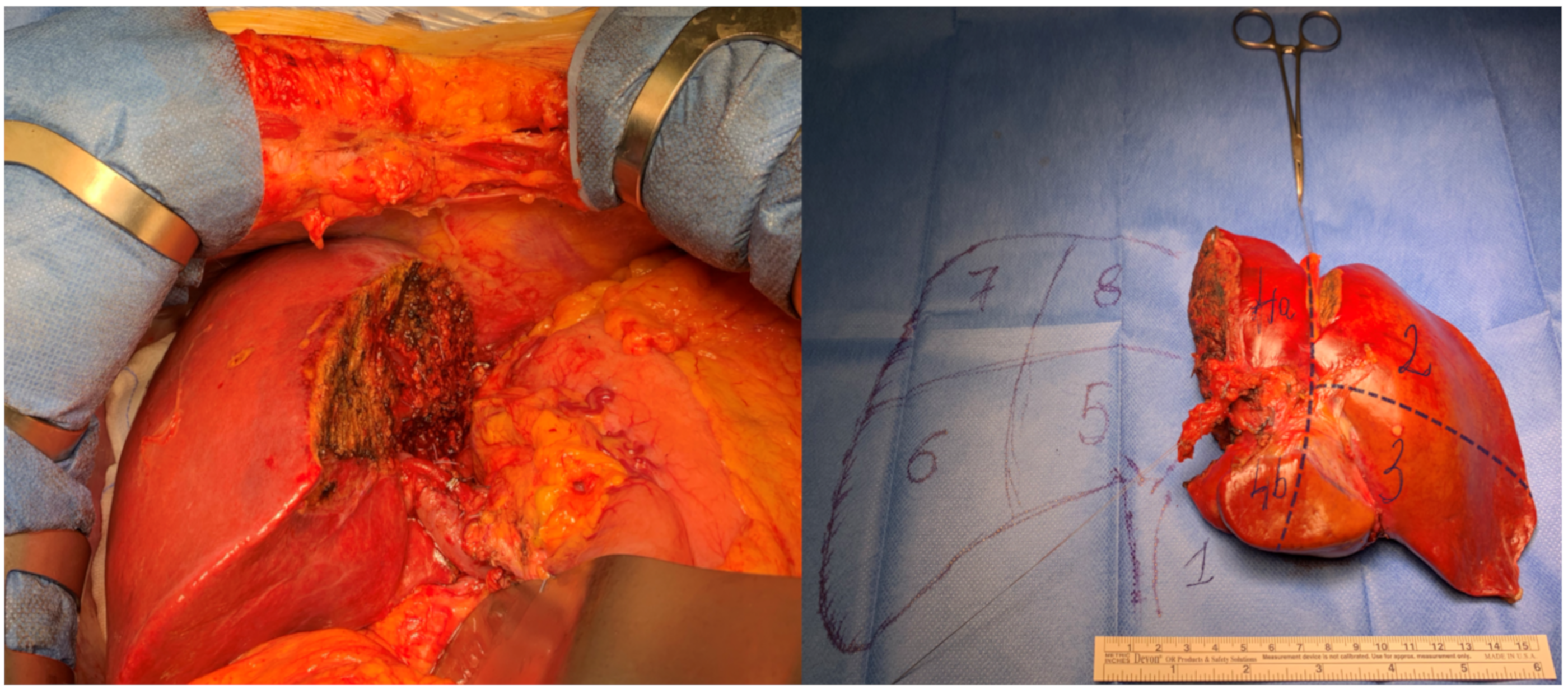
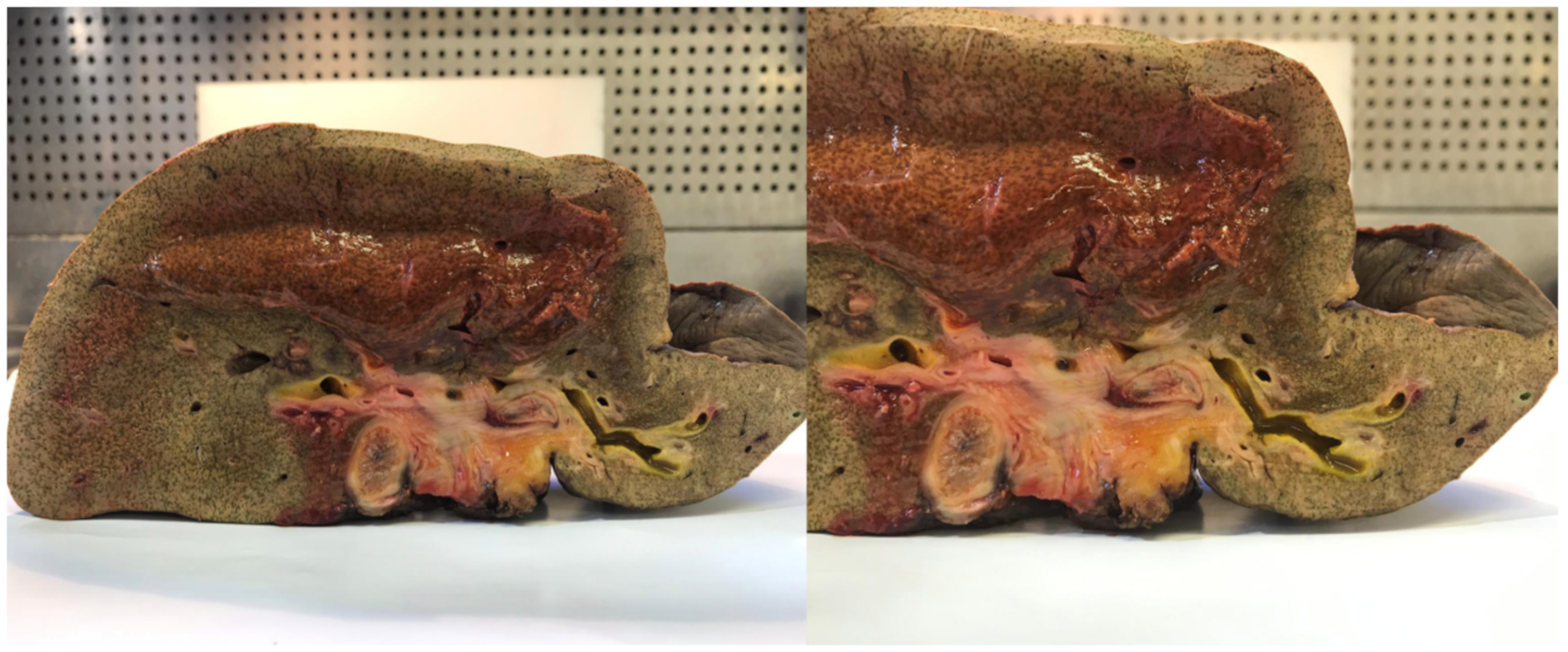

| Mayo Clinic Protocol | External beam radiation therapy (45 Gy in 30 fractions, 1.5 Gy twice daily) |
| Brachytherapy (20 Gy at 1 cm in approximately 20–25 h)—administered 2 weeks following completion of external beam radiation therapy | |
| Capecitabine—administered until the time of transplantation, held during perioperative period for staging | |
| Abdominal exploration for staging—as time nears for deceased donor transplantation or day prior to living donor transplantation | |
| Liver transplantation | |
| Inclusion Criteria | Diagnosis of pCCA (transcatheter biopsy or brush cytology, CA 19–9 > 100 mg/mL and/or a mass on cross-sectional imaging with a malignant appearing stricture on cholangiography) |
| Unresectable tumor above cystic duct (pancreatoduodenectomy for microscopic involvement of CBD, resectable pCCA arising in PSC) | |
| Radial tumor diameter 3 cm | |
| Absence of intrahepatic and extrahepatic metastases | |
| Candidate for liver transplantation | |
| Exclusion Criteria | Intrahepatic cholangiocarcinoma |
| Uncontrolled infection | |
| Prior radiation or chemotherapy | |
| Prior biliary resection or attempt resection | |
| Intrahepatic metastases | |
| Evidence of extrahepatic disease | |
| History of other malignancy within 5 years | |
| Transperitoneal biopsy (including percutaneous and EUS-guided FNA) |
© 2020 by the authors. Licensee MDPI, Basel, Switzerland. This article is an open access article distributed under the terms and conditions of the Creative Commons Attribution (CC BY) license (http://creativecommons.org/licenses/by/4.0/).
Share and Cite
Gringeri, E.; Gambato, M.; Sapisochin, G.; Ivanics, T.; Lynch, E.N.; Mescoli, C.; Burra, P.; Cillo, U.; Russo, F.P. Cholangiocarcinoma as an Indication for Liver Transplantation in the Era of Transplant Oncology. J. Clin. Med. 2020, 9, 1353. https://doi.org/10.3390/jcm9051353
Gringeri E, Gambato M, Sapisochin G, Ivanics T, Lynch EN, Mescoli C, Burra P, Cillo U, Russo FP. Cholangiocarcinoma as an Indication for Liver Transplantation in the Era of Transplant Oncology. Journal of Clinical Medicine. 2020; 9(5):1353. https://doi.org/10.3390/jcm9051353
Chicago/Turabian StyleGringeri, Enrico, Martina Gambato, Gonzalo Sapisochin, Tommy Ivanics, Erica Nicola Lynch, Claudia Mescoli, Patrizia Burra, Umberto Cillo, and Francesco Paolo Russo. 2020. "Cholangiocarcinoma as an Indication for Liver Transplantation in the Era of Transplant Oncology" Journal of Clinical Medicine 9, no. 5: 1353. https://doi.org/10.3390/jcm9051353
APA StyleGringeri, E., Gambato, M., Sapisochin, G., Ivanics, T., Lynch, E. N., Mescoli, C., Burra, P., Cillo, U., & Russo, F. P. (2020). Cholangiocarcinoma as an Indication for Liver Transplantation in the Era of Transplant Oncology. Journal of Clinical Medicine, 9(5), 1353. https://doi.org/10.3390/jcm9051353

