Review

Systematic Echocardiographic Assessment of the Univentricular Heart Across the Stages of Fontan Palliation: A Practical Guide with Focus on Emerging 3D and 4D Imaging Modalities and Thromboembolic Complications from AEPC Imaging Working Group


1
Fondazione CNR-Regione Toscana G. Monasterio (FTGM), 54100 Massa, Italy
2
Paediatric Cardiology and Congenital Heart Disease, Woman and Children’s Health Department, University of Padua, Experimental Cardiology, Paediatric Research Institute (IRP), 35122 Padua, Italy
3
Department for Congenital Cardiology and Pediatric Cardiology, University Hospital Schleswig-Holstein, Campus Kiel, 24105 Kiel, Germany
4
Division of Pediatric Cardiology, Ospedali Riuniti, ASST Azienda Ospedaliera Papa Giovanni XXIII, 24127 Bergamo, Italy
5
Section of Pediatric Cardiology, Hospital Materno Infantil of Malaga, 29011 Málaga, Andalucia, Spain
6
Royal Brompton and Harefield NHS Foundation Trust, London SW3 6NP, UK
7
Pediatric Cardiology and Adult Congenital Disease Heart Centre, IRCCS Policlinico San Donato, San Donato Milanese, 20097 Milan, Italy
8
Department Pediatric Cardiology, University Medical Center Groningen, 9713 GZ Groningen, The Netherlands
9
Department of Pediatrics, Division of Pediatric Cardiology, Medical University Gratz, 8036 Graz, Austria
10
Great Ormond Street Hospital for Children, London WC1N 3JH, UK
11
Department Pediatric Cardiology, Evelina London Children’s Hospital, London SE1 7EH, UK
12
Department Paediatric Cardiology, Children’s Health Ireland at Crumlin, D12 N512 Dublin, Ireland
*
Author to whom correspondence should be addressed.
J. Clin. Med. 2026, 15(9), 3520; https://doi.org/10.3390/jcm15093520
Submission received: 24 March 2026 / Revised: 23 April 2026 / Accepted: 26 April 2026 / Published: 5 May 2026
(This article belongs to the Special Issue Thrombotic Risk and Its Management Across Diverse Clinical Settings)

Abstract

Although echocardiography remains the primary imaging modality for assessing Fontan palliation, a standardized systematic approach for evaluating the univentricular heart throughout the different stages of palliation has yet to be established. This document aims to provide a narrative review and practical guide for the echocardiographic assessment of the univentricular heart at various phases of Fontan palliation. Additional objectives include highlighting the potential of advanced three-dimensional (3D) and four-dimensional (4D) imaging modalities, as well as outlining a systematic strategy for detecting thromboembolic complications. We propose a sequential framework for echocardiographic evaluation, encompassing key anatomical and functional components of the univentricular heart. This includes the atrial septum and pulmonary veins, ventricular function, atrioventricular valve, aorta and neo-aorta, sub-aortic region, aortic arch, and pulmonary arteries. Furthermore, we detail the assessment of pulmonary blood supply at different stages of palliation, including the modified Blalock–Taussig–Thomas (mBTT) shunt, Sano conduit, Glenn procedure, and total cavo-pulmonary connection (TCPC). A comprehensive analysis of potential thrombus formation sites is provided, along with diagnostic pitfalls. Additionally, we outline methods for screening for extracardiac clots following Glenn and TCPC procedures. This document serves as a practical guide for the systematic echocardiographic evaluation of the univentricular heart across all stages of Fontan palliation, offering guidance for clinical practice. It also explores the capabilities of emerging 3D and 4D echocardiographic techniques in univentricular heart assessment and provides an in-depth review of thromboembolic complications, emphasizing key diagnostic challenges.

1. Background

Echocardiography is the primary modality for the assessment of the univentricular heart across different stages of univentricular palliation. Despite the presence of robust literature [1,2,3,4,5,6,7,8,9,10,11,12,13,14,15,16], the standards and recommendations for a systematic approach for the evaluation of univentricular heart in the different phases of univentricular palliation has not yet been established. Furthermore, the additional diagnostic and prognostic values of newer echo modalities, e.g., speckle tracking echocardiography (STE) [17,18,19,20,21,22,23,24,25,26,27,28,29,30,31,32,33,34,35,36,37,38,39,40,41,42,43,44,45] and three-dimensional (3D) echocardiography [9,10,11,25,31] in the assessment of univentricular heart, which is further supported by multiple studies. Despite this, the application of new echo modalities into clinical practice remains limited. Thromboembolic complications are a well-known complication across all the stages of univentricular palliation [46,47,48,49,50,51,52,53,54]. A systematic assessment of all potential sites of thrombus formation has not yet been standardized. Extracardiac clots are also common after superior cavo-pulmonary connection (Glenn or HemiFontan) and total cavo-pulmonary connection (TCPC) surgery, though their routine assessment is still limited [55,56].
The aim of the present document is to provide a narrative review and practical guide for the systematic echocardiographic assessment of the univentricular heart at different stages of Fontan palliation. The other aims are (i) to focus on the potentiality of newer 3D and 4D modalities in the evaluation and follow-up of univentricular heart through different phases of Fontan palliation; and (ii) to provide a systematic approach for the search of thromboembolic complications.

2. Methods

A comprehensive literature review was conducted in January 2026 using three major medical databases: the National Library of Medicine (PubMed/MEDLINE), ScienceDirect, and the Cochrane Library. The search strategy included both Medical Subject Headings (MeSH) terms and free-text keywords, including “echocardiography,” “univentricular heart,” and “Fontan.”
To further refine the search, additional terms were incorporated, including “hypoplastic left heart syndrome (HLHS),” “Glenn,” “total cavo-pulmonary connection -TCPC- ”, “3D echocardiography,” “4D echocardiography,” “speckle-tracking echocardiography (STE),” “AV valves”, “diastolic function”, “ventricular function”, “thrombus,” and “clot.”
Potentially relevant studies were also identified through manual screening of the reference lists of all eligible articles and review papers, as well as through citation tracking using the Science Citation Index Expanded (Web of Science).
All titles and abstracts retrieved through the search strategy were independently screened for eligibility. Full-text articles were subsequently reviewed when deemed potentially relevant.
Studies were excluded if they: (a) used imaging modalities other than echocardiography; (b) were not published in English; or (c) were published during the late 1980s and 1990s, a period characterized by substantially different imaging technologies and surgical outcomes compared with contemporary Fontan practice.
This review was conducted in accordance with the current guidelines [57].
All selected articles were independently evaluated by three specialists in pediatric echocardiography (M.C., G.D.S, and C.M.). Final inclusion was based on consensus agreement among all reviewers.
This document has been endorsed by AEPC (Association for European Paediatric and Congenital Cardiology) Imaging Working Group (IMWG) committee, a specialist working group, which focuses on cardiac imaging.
The use of anonymized videos and images was approved by the local ethics committee, FTGM CE (approval code: Study “Bet” No. 390). Parents or legal guardians were duly informed, and they provided written informed consent.

3. Search Results

A total of 120 publications were initially identified through the search strategy. After title, abstract, and full-text screening, 50 studies met the predefined inclusion criteria and were included in the final analysis.
A total of 70 articles were excluded, including: 15 studies using imaging modalities other than echocardiography, two studies published in languages other than English, and 53 studies published in the late 1980s or 1990s.

4. General Aspects

Key elements of the evaluation of univentricular heart across different stages of Fontan palliation include assessments of (Table 1):
(1)
Atrial septal and pulmonary venous obstruction;
(2)
Ventricular function;
(3)
AV valve function;
(4)
Aorta and neo-aorta function, subaortic region, and aortic arch;
(5)
Pulmonary arteries;
(6)
Shunt, Glenn and TCPC conduit (flow velocity, obstruction, thromboembolism);
(7)
Assessment of thrombi and clots.
(1)
Pulmonary venous obstruction
In the univentricular heart (UH), pulmonary venous obstruction may occur either at the level of pulmonary vein to atrial connections or at the level of interatrial septum [1,2,3,4,5]. Pulmonary venous return should be systematically assessed, and obstruction needs to be ruled out, especially in the setting of heterotaxic syndrome where it is more common [1,2,3,4,5].
Obstruction at the level of the interatrial septum is common before the first stage of univentricular palliation and in the interstage period, but it may also occur later [1,2,3,4,5].
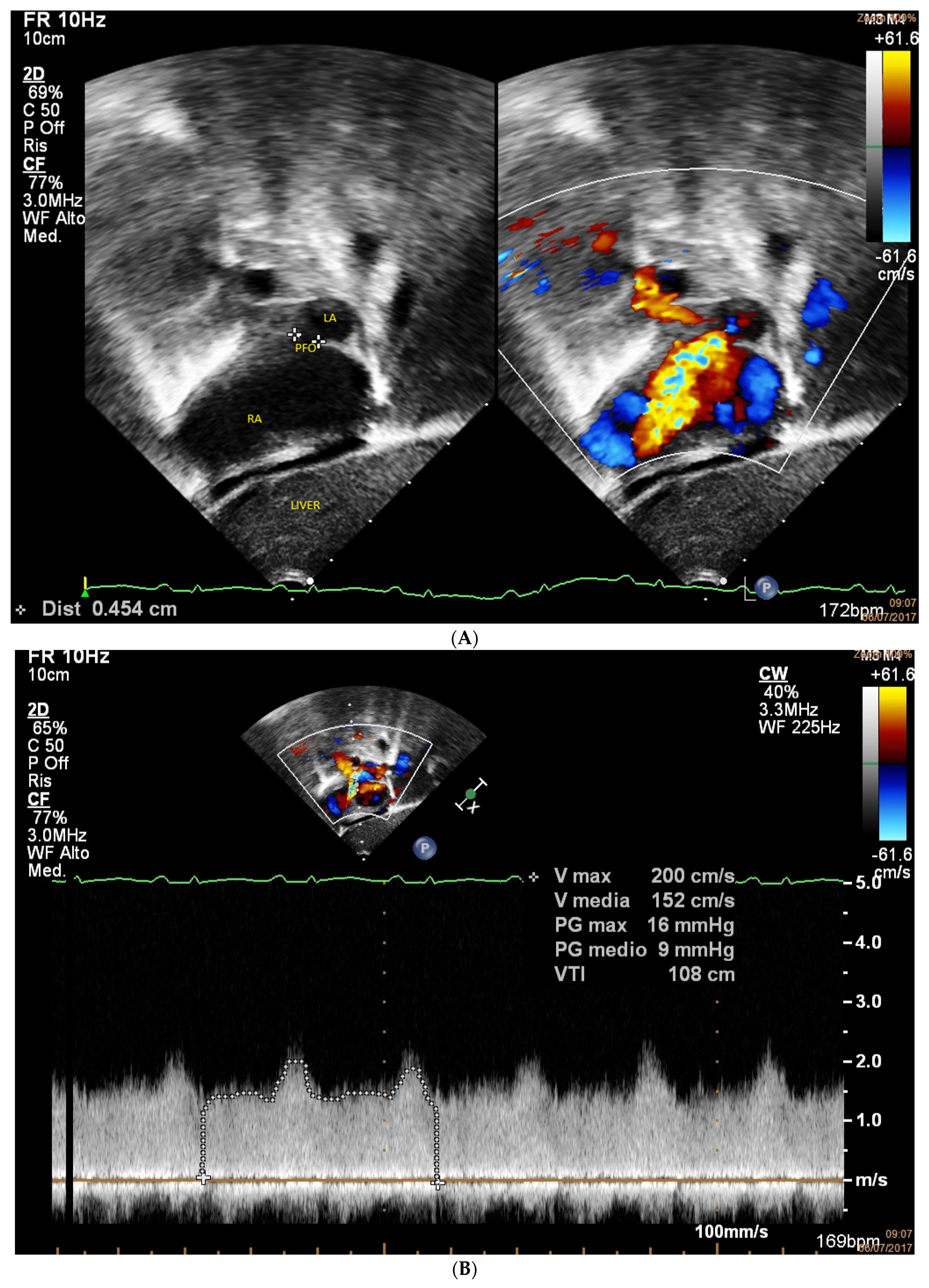
The presence of a restrictive patent foramen ovale (PFO) [58,59,60,61,62,63,64] is a well-known risk factor for early and late death after the Norwood procedure [1,2,3,4,5]. Thus, the patency and adequacy in interatrial communication should always be assessed [1,2,3,4,5]. The characteristics of blood flow, blood flow velocity (and derived estimated pressure gradient), septal bulging, and the presence of dilated pulmonary veins are all features which can define a restrictive patent foramen ovale [57,58,59,60,61,62,63]. Various definitions of a restrictive PFO have been described by different authors, including the maximal PFO diameter or the mean Doppler-derived pressure gradient [57,58,59,60,61,62,63].
  • Practical advice:
The presence of pulmonary venous abnormalities should always be systematically assessed, particularly before and after the first stage of UH palliation. Flow turbulence across the foramen ovale should be interpreted with caution and in the context of the overall clinical picture, including oxygen saturation and gas exchange, signs of pulmonary congestion in left-sided obstruction, and hepatomegaly in right-sided disease, in order to avoid misleading qualitative interpretations of echocardiographic findings.
(2)
Evaluation of Systemic Ventricular Function in Univentricular Heart Physiology during Fontan Palliation
(a)
Systolic Function
The assessment of systemic ventricular function is a critical component in the evaluation of univentricular heart patients throughout all phases of Fontan palliation [1,2,3,4,5,17,18,19,20,21,22,23,24,25,26,27,28,29,30,31,32,33,34,35,36,37,38,39,40]. The diverse and complex ventricular morphologies in these patients pose challenges for standardizing the evaluation of ventricular function [1,2,3,4,5,17,18,19,20,21,22,23,24,25,26,27,28,29,30,31,32,33,34,35,36,37,38,39,40]. Despite the inherent limitations [27], subjective qualitative assessment, typically categorized as mild, moderate, or severe impairment, remains a commonly used approach [1].
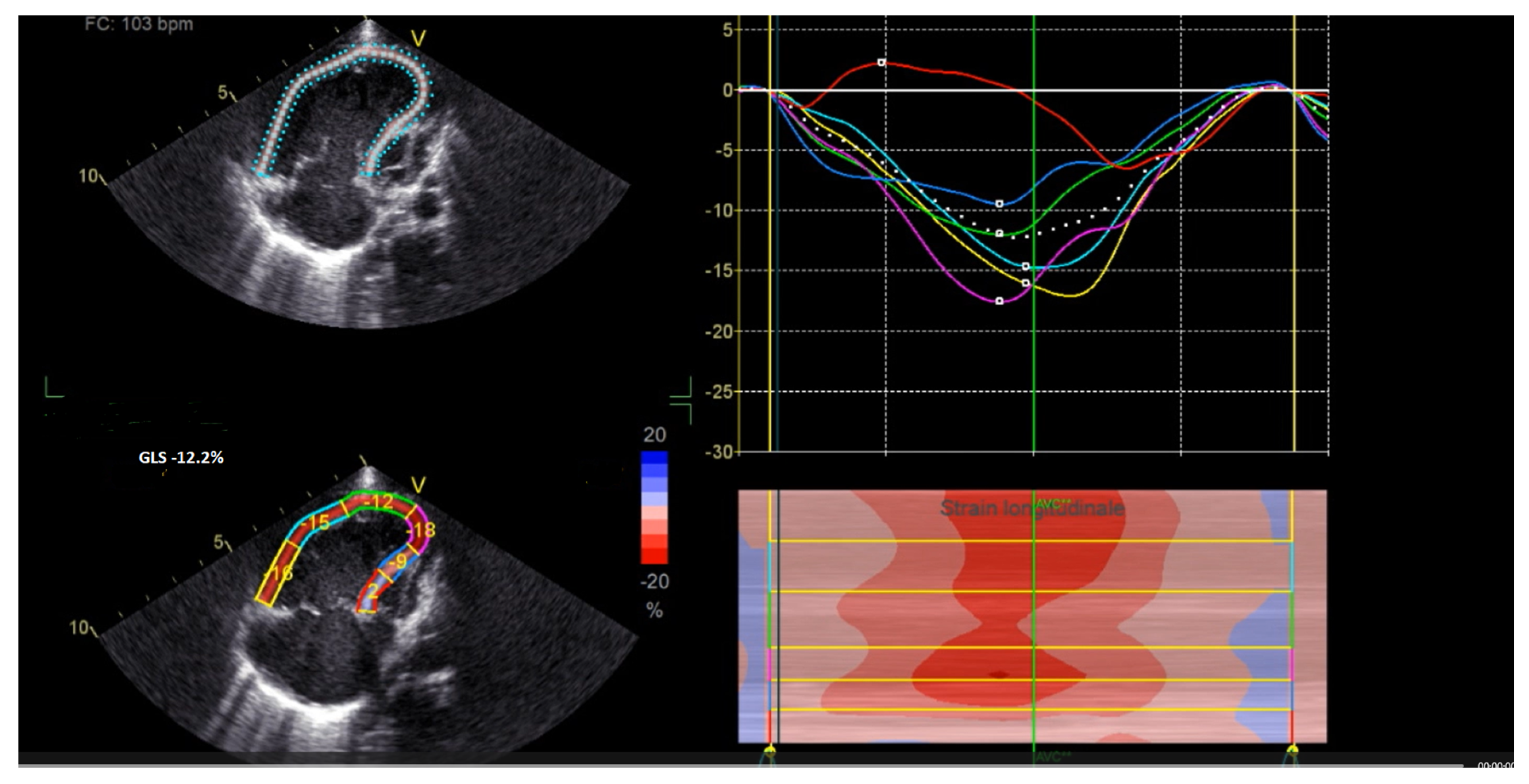
For the systemic right ventricle (RV), a multiparametric echo approach [17,18,19,20,21,22,23,24,25,26,27,28,29,30,31,32,33,34,35,36,37,38,39,40] has been shown to correlate well with cardiac magnetic resonance (CMR) data [20]. These echo parameters include global longitudinal strain (GLS) of the free wall, tissue Doppler velocity of the basal lateral wall (S’), tricuspid annular plane systolic excursion (TAPSE), volumetric function assessed by 3D echocardiography, fractional area change (FAC), and monoplane Simpson ejection fraction (EF) [20].

4.1. 2D STE

Excellent correlation between speckle tracking echocardiography (STE) and MRI measurements for both global longitudinal strain (GLS) and regional strain in children with single ventricle physiology has been reported [21]. A significant reduction in both EF and GLS by STE (p < 0.01) has been observed in children and adolescents both before and after Fontan surgery, indicating a progressive decline in myocardial function [22,23,30]. Furthermore, STE studies on rotational mechanics have shown statistically significant impairment in both single left ventricle and other forms of single ventricle anatomy.
A progressive decrease in systemic ventricular torsion by STE has correlated with a reduction in apical rotation, which is more pronounced in single right ventricles. This decrease in torsion by STE has been linked to increased markers of myocardial fibrosis, as assessed by T1 mapping in CMR [22,23,24].

4.2. 2D STE and 3D Volume

Recent studies utilizing 3D STE have shown that, in HLHS patients post-Fontan, right ventricular GLS is significantly reduced compared to normal controls [34]. Moreover, other authors have highlighted increased ventricular dyssynchrony in children post-Fontan, both by 2D STE [30] and 3D STE [26], with this dyssynchrony being strongly associated with adverse clinical outcomes [26,31].
Additionally, in both children and adults with single ventricle physiology, the ejection fraction and volumes measured by 3D echocardiography have been shown to correlate significantly with cardiopulmonary exercise test variables, such as VO2max (p < 0.01) and VE/VCO2 slope (p = 0.05) [22,26].

4.3. Prognostic Significance of STE GLS

The prognostic significance of GLS measured by STE has been demonstrated in various contexts, including in patients with single left ventricle physiology prior to Fontan [30] and in HLHS patients following the first stage of Fontan palliation [26].

4.4. Limitations and Gaps of Evidence of 3D and STE

Reference values for GSL values and 3D volumes from healthy populations may be inappropriate for patients with UH anatomy and physiology, as disease-specific normative data are currently lacking. In addition, these techniques are not always available and may not always be feasible, particularly in young uncooperative children or in the presence of poor acoustic windows.
  • Practical Advice
Evaluation of systemic ventricular function is essential throughout all stages of Fontan palliation. A multiparametric approach, integrating conventional 2D echocardiographic measures with advanced techniques, such as STE and 3D parameters when available, is recommended in place of subjective qualitative assessment.
(b)
Assessment of Ventricular Diastolic Function
Diastolic dysfunction is considered one of the most significant ventricular complications following Fontan palliation [1,2,3,4,5], with an incidence up to 72% of Fontan patients in a large cohort study [30]. A classification system for diastolic dysfunction (normal, impaired relaxation, pseudo normal, and restrictive) in Fontan patients has been proposed [30].
However, this grading system, derived from adult data, lacks validation against invasive pressure measurements in both pediatric and adult Fontan patients and of correlation with clinical outcomes [30]. Invasive studies attempting to link diastolic echocardiographic parameters with direct pressure measurements have also failed to yield useful clinical associations [2,5,27]. It is important to note that not only have adult parameters for diastolic function not been validated in the pediatric age but also most echocardiographic markers of diastolic function, such as AV valve inflow, pulmonary venous flow, and tissue Doppler imaging which are influenced by variables like heart rate, loading conditions, AV valve size and function, and univentricular heart systolic performance [2,27].
In aging Fontan patients [40], progressive ventricular stiffness and elevated end-diastolic pressures are frequently observed. However, these changes are challenging to detect through noninvasive methods. In the general adult population with biventricular circulation, the E/E′ ratio is commonly used as an indicator of elevated filling pressures [2,27]. However, its applicability in patients with univentricular physiology is limited due to the influence of atrioventricular (AV) valve size on E velocity and the frequent preservation of E′ velocity. While diastolic dysfunction plays a critical role in Fontan failure, current echocardiographic techniques lack reliability in identifying at-risk patients based on existing diagnostic criteria [2,40]. Even invasive assessment in the catheterization lab remains challenging, as filling pressures are highly dependent on intravascular volume status [2,40]. Detecting single ventricle physiology patients with reduced ventricular compliance remains a significant challenge in congenital cardiology. Future advancements, such as MRI-based T1 mapping for diffuse fibrosis assessment and myocardial stiffness evaluation via ultrafast ultrasound, may enhance the understanding of tissue characteristics and improve diagnostic precision [2,40].
  • Atrial strain
Several studies have investigated the potentialities of STE in the evaluation of atrial function in Fontan circulation, particularly its relationship with ventricular filling pressures [41], cardiac output [42], and functional capacity [44]. A progressive decrease in atrial function through different stages of Fontan palliation has been identified [44]. Data on atrial STE data and their correlation with hemodynamic parameters are controversial. Despite atrial strain values in Fontan patients poorly correlating with invasive ventricular filling pressures (R2 = 0.12) [41], atrial reservoir strain value [42] was associated with decreased cardiac index and adverse post-Fontan clinical outcomes (R2 = 0.28). Furthermore, a positive correlation (R2 = 0.34) between atrial strain and exercise performance in Fontan patients [43] has been demonstrated. These studies [41,42,43] collectively underscore the importance of atrial function in Fontan physiology and its potential role in predicting adverse outcomes, functional status, and hemodynamic efficiency. However, further research is needed to establish standardized clinical applications of atrial strain measurements in this population.
Limitations and gaps of evidence of atrial STE strain: Reference values derived from healthy populations may be inappropriate for patients with UH physiology, as disease-specific normative data are currently lacking. In addition, STE is not always available and may not always be feasible, particularly in young uncooperative children or in the presence of poor acoustic windows.
Practical advice: Echocardiographic assessment of diastolic function should always be attempted, despite limitations related to the lack of validated parameters and load dependency. In the absence of standardized reference values for the UH population, longitudinal assessments of trends are preferable to the reliance on single cut-off measurements, and findings should always be interpreted in conjunction with clinical and hemodynamic data. STE atrial strain analysis may provide additional useful information, although larger studies are needed for validation.
(3)
Assessment of Atrioventricular Valve Regurgitation
Atrioventricular (AV) valve regurgitation is a common complication of significant prognostic implications in Fontan patients, particularly tricuspid regurgitation (TR) in HLHS [1,2,3,4,5,7,8,9,10,11]. Severe TR in HLHS can lead to right ventricular dysfunction, poor hemodynamics, and reduced exercise capacity, all of which contribute to a worse clinical outcome [9]. The severity of TR is often correlated with impaired ventricular function, particularly in the systemic right ventricle (RV) in patients with HLHS and Fontan circulation [22]. Echocardiographic assessment is crucial in diagnosing and monitoring the progression of AV valve regurgitation and determining its impact on clinical outcomes [1,2,3,4,5,7,8,9,10,11]. The complexity of AV valve morphology in univentricular heart necessitates a detailed and precise evaluation using advanced imaging techniques [1,2,3,4,5,7,8,9,10,11].

4.5. Echocardiographic Techniques for Assessing AV Valve Regurgitation

Two-Dimensional Echocardiography (2D Echo): Traditional 2D echocardiography has been the cornerstone for assessing AV valve function. In HLHS, it allows visualization of the tricuspid valve (TV) structure and the identification of regurgitant jets. However, 2D echo has limitations in assessing the severity of regurgitation due to the dynamic nature of the valve and regurgitant flow [1,2,3,4,5,7,8].
Doppler Imaging: This plays a key role in assessing the regurgitant jet of the tricuspid valve. Color Doppler allows for the identification of the regurgitant jet direction, while pulsed-wave Doppler measures the velocity and timing of the regurgitant flow [1,2,3,4,5,7,8]. Unfortunately, at present, quantitative and semiquantitative parameters to evaluate AV regurgitation in children are limited, and adult criteria have been often adopted without validation [1,2,3,4,5,7,8,27]. An example of a qualitative TR grading system is as follows: trivial (no regurgitation or a single, narrow jet), mild (multiple narrow jets), moderate (a broad jet extending to the mid-portion of the right atrium), and severe (a broad jet reaching the posterior wall of the right atrium).
3D Echocardiography offers superior visualization of AV valve morphology and provides a more accurate assessment of regurgitation [8,10,11]. In HLHS patients, 3D echo allows for a detailed evaluation of the tricuspid valve annulus, leaflet motion, and the degree of tethering, which is essential in understanding the functional impact of regurgitation [11]. Studies have demonstrated that 3D echocardiography can identify the location and severity of TR, which is critical for preoperative planning and monitoring post-surgical outcomes [8].
In HLHS, moderate or greater TR is often associated with structural abnormalities of the tricuspid valve, including increased leaflet billow volume, an enlarged tricuspid annulus, and altered papillary muscle orientation [7]. These abnormalities can lead to significant leaflet tethering, a key contributor to persistent TR after surgery [8]. 3D echo imaging has been instrumental in identifying these structural changes, providing a more comprehensive understanding of the pathophysiology of TR.
Annular dilation is a hallmark feature of AV valve regurgitation in HLHS, particularly in the context of Fontan physiology. 3D echo has been shown to better assess the extent of annular dilation compared to 2D echo, allowing for more accurate surgical planning [10,11]. Furthermore, leaflet prolapse and tethering are frequently observed in patients with severe TR [10,11]. Anterior leaflet prolapse represents the most common mechanism of TR, followed by septal leaflet prolapse or tethering [11]. Preoperative imaging that identifies these abnormalities can guide the surgical decision-making process, often requiring individualized planning [7,8,9,10,11]. Traditional surgical techniques, such as posterior annuloplasty and commissuroplasty, are commonly used to address annular dilation and posterior leaflet abnormalities [7,8,9,10,11]. However, these techniques may not fully correct septal leaflet tethering, a key factor contributing to persistent regurgitation [8]. As such, image-guided surgical planning based on 3D echo and Doppler studies is becoming increasingly important to optimize outcomes in this high-risk population [7].

4.6. Limitations and Gaps of Evidence of 3D Echocardiography

Reference values for atrioventricular (AV) valve dimensions derived from healthy populations may be inappropriate for patients with UH physiology, as disease-specific normative data are currently lacking. In addition, 3D echocardiography is not always available and may not always be feasible, particularly in young uncooperative children or in the presence of poor acoustic windows.
Practical advice: Assessment of the AV valve represents a fundamental component of the echocardiographic evaluation in UH patients throughout all stages of Fontan palliation. In the absence of standardized quantitative parameters for regurgitation assessment, serial evaluation should rely on qualitative and semi-quantitative descriptors, including the number and intra-atrial extent of regurgitant jets, as well as annular dilatation, leaflet tethering, and prolapse, together with ventricular areas and volumes. Three-dimensional echocardiographic assessment may be particularly useful in the presence of at least moderate regurgitation, when a more detailed understanding of valve anatomy and a more accurate quantification of regurgitation severity are required.
(4)
Aorta, neo-aorta, and aortic arch
In the univentricular heart, the dominant ventricle’s outflow tract connects to the aorta. If an obstruction is present, it leads to chronic pressure overload and secondary concentric hypertrophy, negatively affecting long-term ventricular function [1,2,3,4,5,12]. This can further limit cardiac output and worsen diastolic dysfunction [1,2,3,4,5,12].
Outflow tract: Outflow tract obstruction is typically subvalvular, as seen in conditions like double-inlet left ventricle with transposition of the great arteries, where a restrictive ventricular septal defect (VSD) can cause subaortic obstruction [13,14,15,16]. When a Damus–Kaye–Stansel (DKS) is present, echocardiographic imaging is crucial for detecting any obstruction, particularly in patients who have not undergone a DKS procedure [1,2,3,4,5,13,14,15,16]. Various acoustic windows (subxiphoid, apical, parasternal long-axis) are used, with Doppler techniques employed to measure pressure gradients and identify obstruction mechanisms, such as restrictive VSDs, fibrous rings, or valvular stenosis [1,2,3,4,5,13,14,15,16].
Native aorta: Assessment of native aorta is also important, since it represents the source of flow for coronary arteries [1,2,3,4,5,48,49,50,51]. The patency and adequacy of native aorta–neo-aorta communication are of paramount importance. The DKS connection must also be evaluated, as obstruction at this site can impair coronary perfusion and lead to ischemia and ventricular dysfunction [1,2,3,4,5,48,49,50,51].
Aortic root: Assessment of the aortic root includes measurements of its size and morphology. After extensive aortic reconstruction, progressive dilation of the aortic root and ascending aorta can occur, potentially leading to aneurysm formation and requiring reintervention [1,2,3,4,5,12].
Aortic arch: In patients with a history of aortic arch reconstruction or coarctation surgery, it is essential to assess residual arch obstruction, which can cause hypertension and increased afterload on the single ventricle [1,2,3,4,5]. Even mild gradients across the arch can contribute to ventricular dysfunction and long-term diastolic impairment [1,2,3,4,5]. The suprasternal window is optimal for imaging the aortic arch, with Doppler techniques used to measure gradients [1,2,3,4,5,27]. In cases where arch imaging is challenging, pulsed-wave Doppler of the abdominal aorta from the subxiphoid window can help exclude significant residual obstruction [1,2,3,4,5].
Practical advice: Evaluation of the neo-aortic valve, the native aorta, and the subaortic region is essential throughout all phases of Fontan palliation. In addition, aortic root dilatation should be carefully assessed during long-term follow-up.
(5)
Pulmonary Arteries
Echocardiography plays an essential role for the evaluation of pulmonary artery size assessment and its quantification (through z-score), to identify the presence of narrowing and stenosis, and to evaluate the flow. In patients after different stages of Fontan palliation, it is important to evaluate the redistribution of flow within the pulmonary arteries from different sources including BTM shunt, Glenn, and TCPC conduit [1,2,3,4,5,6]. The presence of competitive flow from a native pulmonary artery left partially patent needs which should also be evaluated [1,2,3,4,5,6].
Practical advice: Evaluation of pulmonary artery size and flow is essential throughout the different stages of UH palliation. The presence of stenosis is of paramount importance, particularly during the first two stages of palliation. In the Glenn stage, competitive flow between antegrade pulmonary blood flow and Glenn flow should be carefully assessed.
(6)
Shunt, RV/Single Ventricle–PA Conduct, Glenn, and TCPC Conduct

5. Blalock–Taussig-Modified (BTM) Shunts

A BTM shunt is a crucial palliative surgical procedure used in infants with single ventricle physiology to provide pulmonary blood flow until definitive staged palliation, such as a bidirectional Glenn or Fontan procedure, can be performed [1,2,3,4,5,65,66,67,68]. This shunt consists of a Gore-Tex® polytetrafluoroethylene (PTFE) conduit connecting the systemic circulation (typically the subclavian or innominate artery) to the pulmonary artery (PA), ensuring pulmonary perfusion in patients with inadequate or absent native pulmonary blood flow [1,2,3,4,5,65,66,67,68].

5.1. Hemodynamics and Flow Characteristics

The flow pattern in a BTM shunt is continuous and non-pulsatile, driven by systemic arterial pressure rather than the right ventricle [1,2,3,4,5,65,66,67,68]. Unlike normal pulmonary circulation, which is pulsatile and dependent on the right ventricular systole, the BTM shunt delivers a steady but pressure-dependent flow into the pulmonary arteries [1,2,3,4,5,65,66,67,68]. This leads to a diastolic flow reversal in the aortic arch, as systemic diastolic pressure is partially reduced due to the run-off into the pulmonary circulation [1,2,3,4,5,65,66,67,68]. This can contribute to coronary and systemic hypoperfusion, particularly in neonates with parallel systemic and pulmonary circulations [1,2,3,4,5,65,66,67,68]. In univentricular heart with BTM, the pulmonary perfusion is shunt-dependent, which may lead (especially in first pre-operative weeks) to an excessive pulmonary flow, pulmonary over-circulation, volume overload, and heart failure, while inadequate flow can result in hypoxemia and cyanosis [1,2,3,4,5,65,66,67,68]. Several factors influence the efficiency and balance of pulmonary blood flow through the BTM shunt. These include shunt size, systemic pulmonary vascular resistance, and patient growth. A larger shunt increases pulmonary flow but raises the risk of steel syndrome, reducing systemic perfusion including coronary and cerebral circulation [1,2,3,4,5,65,66,67,68].
Conversely, a small shunt may lead to inadequate oxygenation and hypoxia [1,2,3,4,5,65,66,67,68]. Changes in PVR and systemic vascular resistance (SVR) significantly alter shunt flow [1,2,3,4,5,65,66,67,68]. High PVR (e.g., due to lung disease or hypoxia) reduces pulmonary perfusion, while low PVR can lead to excessive pulmonary flow and heart failure [1,2,3,4,5,65,66,67,68]. As the infant grows, a fixed-size shunt may become progressively restrictive, necessitating shunt revision or progression to the next surgical stage [1,2,3,4,5,65,66,67,68].
Flow velocity and turbulence of the BTM are typically high, reflecting the pressure difference between systemic (aorta) and pulmonary (pulmonary arteries) circulation. BTM velocities are influenced by shunt size, systemic resistance, and pulmonary vascular resistance (PVR) [1,2,3,4,5,65,66,67,68].
  • RV/Single Ventricle–PA Conduct
The Sano modification of the Norwood procedure is a surgical technique used in single ventricle heart physiology, particularly in HLHS [1,2,3,4,5]. This approach utilizes a right ventricle-to-pulmonary artery (RV-PA) conduit, often made of a non-valved Gore-Tex (W. L. Gore & Associates, Newark, DE, USA)® tube, to provide pulmonary blood flow while reducing diastolic run-off and improving coronary perfusion compared to the traditional BT shunt [1,2,3,4,5,65,66,67,68].

5.2. Hemodynamics and Flow Characteristics in Sano Conduit, Glenn Anastomosis and in Fontan Conduit

The flow pattern in the Sano conduit differs significantly from other systemic-to-pulmonary shunts due to its direct connection between the right ventricle (RV) and pulmonary arteries (PAs) [1,2,3,4,5,65,66,67,68]. Key characteristics of Sano conduit flow include a pulsatile flow to the pulmonary arteries (unlike the continuous, pressure-driven flow in BT shunts) resembling native right ventricular output, which may promote better pulmonary artery growth [1,2,3,4,5].
In the past, non-reinforced RV-PA conduits used for the Sano modification were susceptible to stenosis (Movie S7). Nowadays, reinforced conduits are routinely employed, which are less likely to become stenotic. The flow in the Sano conduit has systolic dominance with diastolic flow reversal (Movie S8). The diastolic regurgitation is a potential problem in Sano palliation since it may lead to an increased RV volume load, reducing systemic cardiac output and potentially contributing to ventricular dysfunction over time [1,2,3,4,5,65,66,67,68].
Several factors influence the efficiency and long-term outcomes of pulmonary blood flow through the Sano conduit, including conduit size and length. A larger conduit allows for increased pulmonary blood flow but may exacerbate diastolic regurgitation and ventricular volume overload [1,2,3,4,5,65,66,67,68]. A smaller conduit instead may restrict pulmonary blood flow, leading to hypoxia and insufficient pulmonary perfusion [1,2,3,4,5,65,66,67,68]. The RV in the Sano circulation must sustain a chronic systolic (sustain both the systemic and pulmonary circulation) and diastolic overload (diastolic regurgitation through the conduit) which can contribute to ventricular dilation and failure, especially in the long term [1,2,3,4,5,65,66,67,68]. The presence of a stenosis at the level conduit may exacerbate the systolic overload leading to acute systolic dysfunction [1,2,3,4,5,65,66,67,68].
The Sano conduit may be appreciated by echocardiography in different projections (subcostal, modified 4 chambers, short axis). At times, echocardiographic assessment of the Sano conduit may be difficult by echocardiography since it lies in the retrosternal area, an area which is difficult to examine, especially in the presence of medication (after surgery) or thoracic deformities [1,2,3,4,5,64,65,66,67]—often just the proximal part of the conduit is visible [55,56]. The use of a linear probe may allow a better assessment of the retrosternal area and visualization of the conduit through all its length [55,56].
  • Glenn
The Glenn anastomosis, a key component of staged palliation for single ventricle physiology, involves the direct connection of the superior vena cava (SVC) to the pulmonary arteries, bypassing the right atrium [1,2,3,4,5,65,66,67,68]. This procedure establishes a passive pulmonary circulation that relies on systemic venous pressure to drive pulmonary blood flow [1,2,3,4,5,65,66,67,68]. The hemodynamic patterns in the Glenn circulation are influenced by multiple factors, including central venous pressure, pulmonary vascular resistance, and the presence of collateral flow [1,2,3,4,5,65,66,67,68].
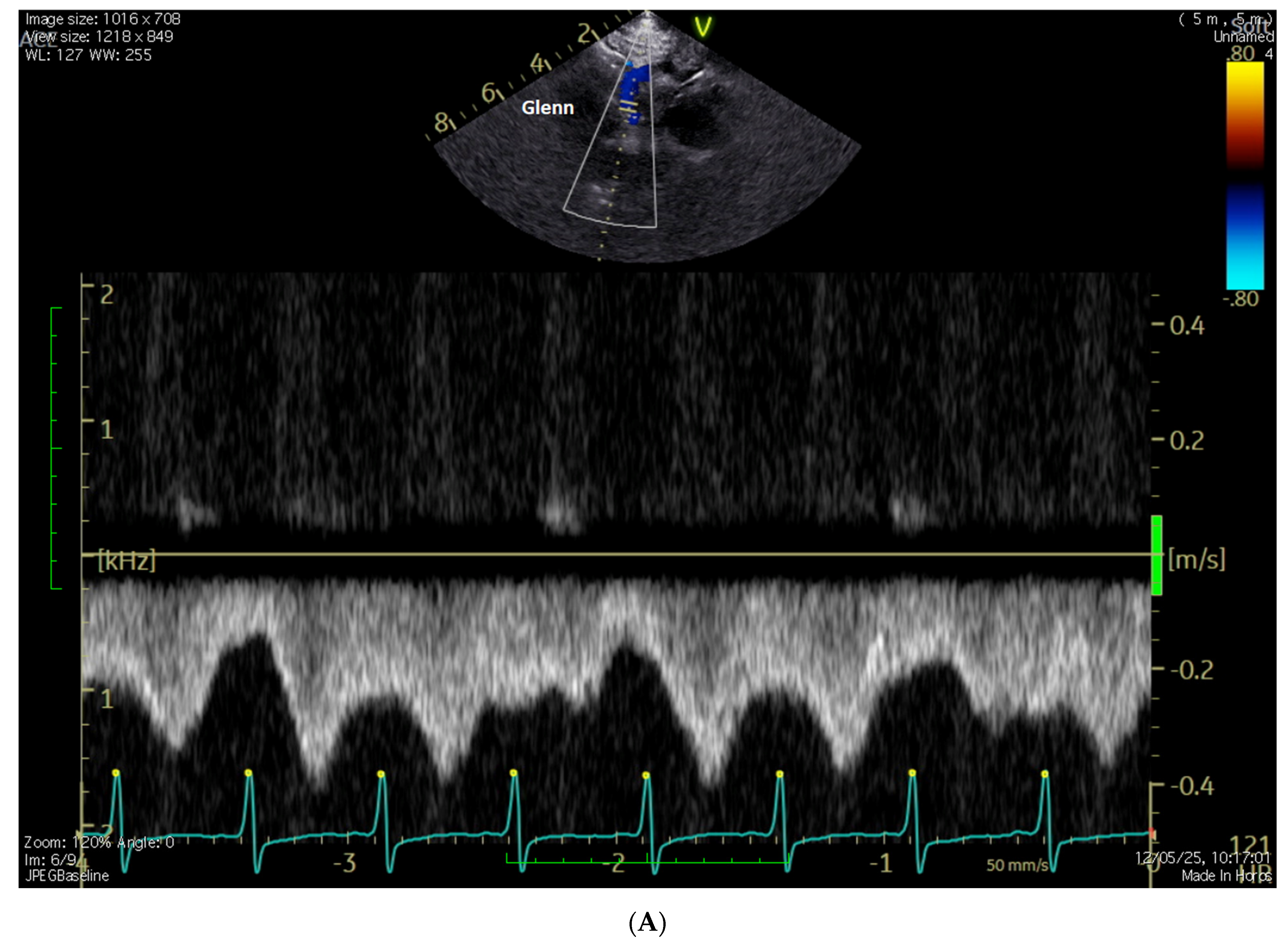
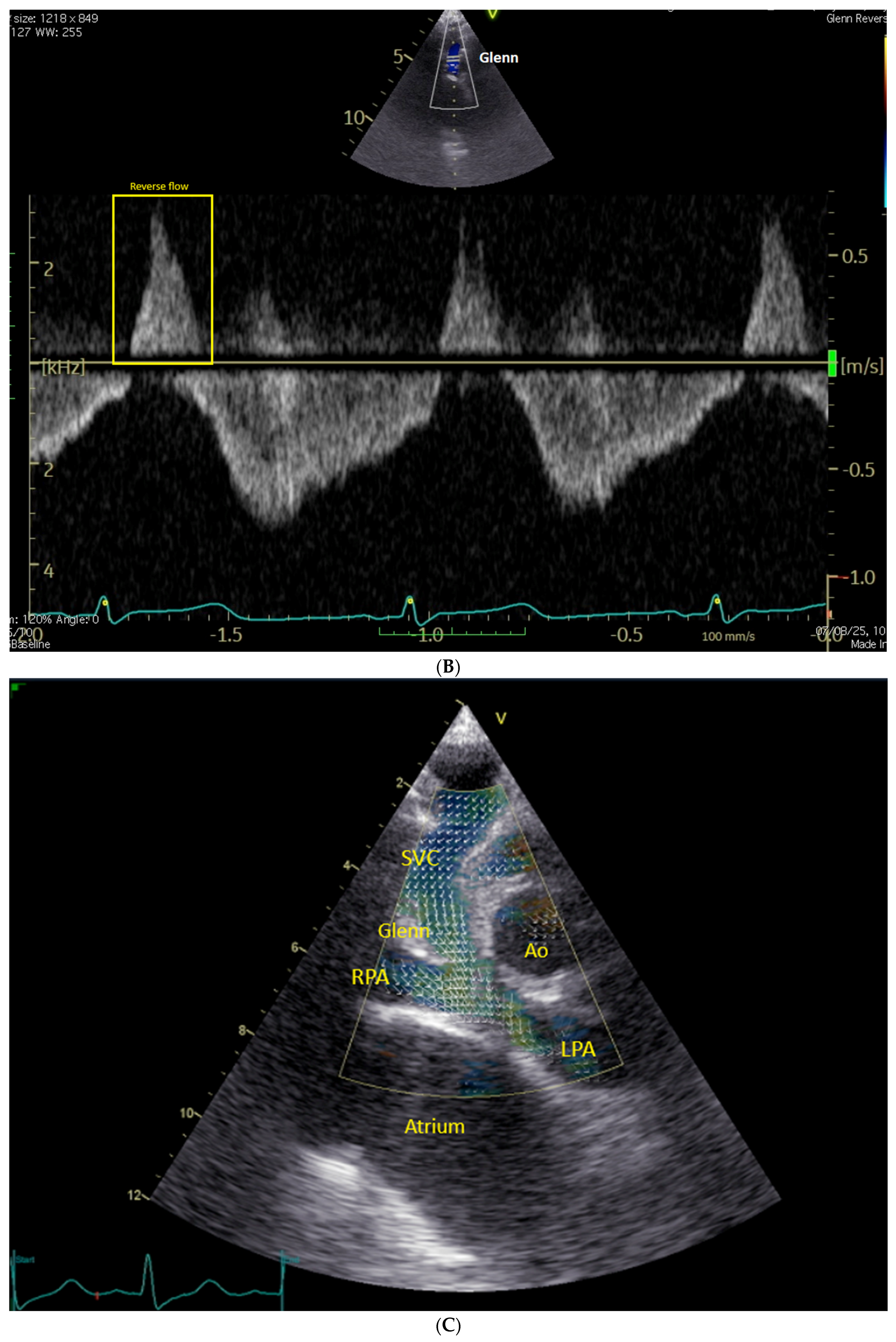
The Glenn shunt creates a non-pulsatile, low-pressure pulmonary blood flow, in contrast to the pulsatile flow present in a normal pulmonary circulation [1,2,3,4,5,65,66,67,68]. The absence of a right ventricular pump means that flow is predominantly dependent on venous return dynamics and respiratory mechanics, with inspiration lowering intrathoracic pressure and promoting forward flow into the pulmonary arteries [1,2,3,4,5,65,66,67,68]. Expiration and elevated intrathoracic pressure may transiently reduce pulmonary blood flow due to increased venous resistance [1,2,3,4,5,65,66,67,68].
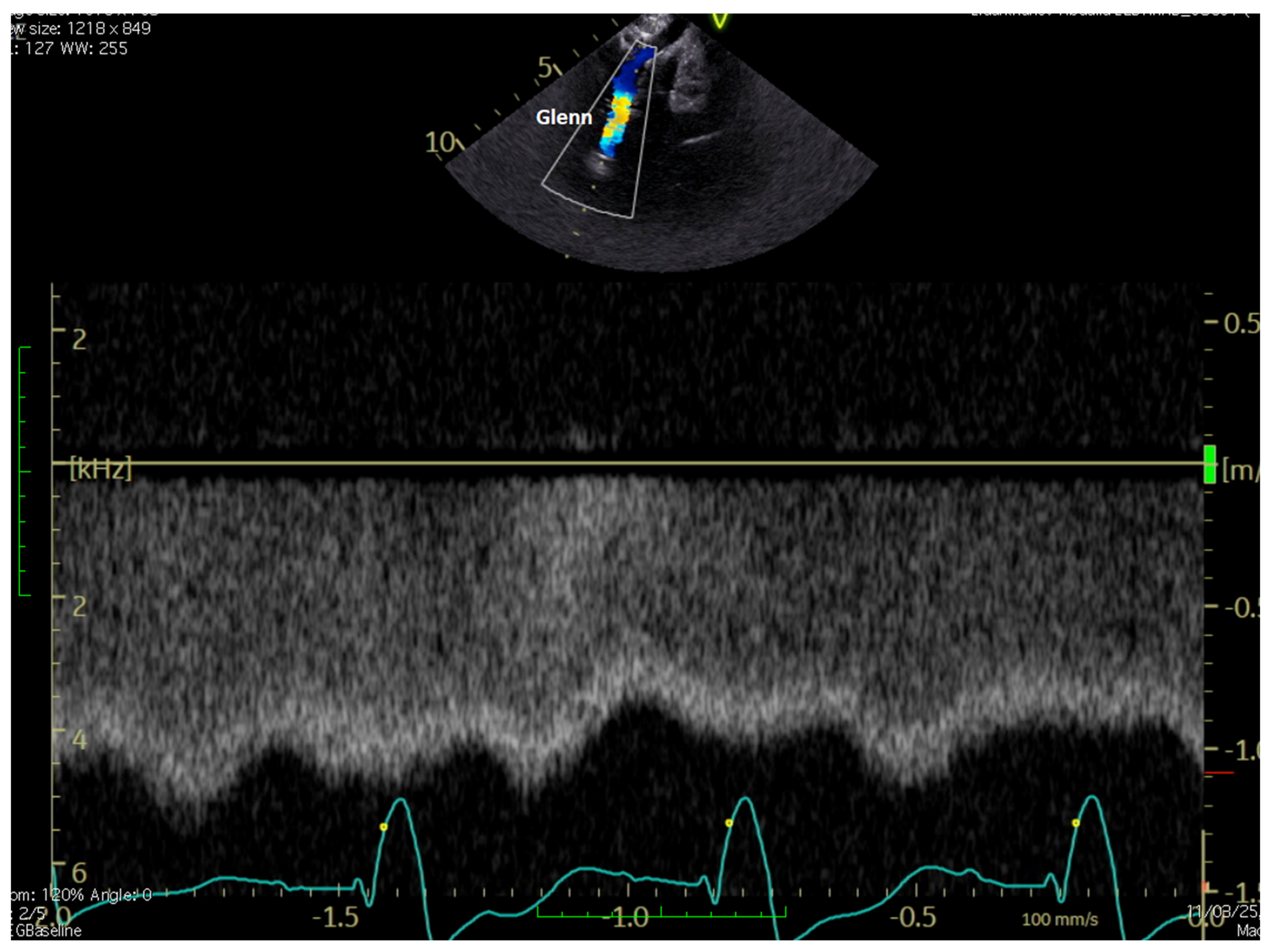
For imaging Glenn connections [1,2,3,4,5], suprasternal views are preferred, and at times apical and short axis views may be employed. Color Doppler with low Nyquist settings should be used to assess surgical anastomoses [1,2,3,4,5]. The flow in the Glenn anastomosis is typically phasic with fluctuations corresponding to both the cardiac cycle and respiratory cycle, where a respiratory-dependent component becomes particularly significant [1,2,3,4,5].
The distribution of blood flow between the right and left pulmonary arteries depends on several anatomical and physiological factors, including the angle of the anastomosis, as well as the size and compliance of the pulmonary arteries [1,2,3,4,5,65,66,67,68]. Although the Glenn anastomosis provides a stable pulmonary circulation, certain flow disturbances can arise including the development of venous collateral formation (leading to inefficient flow patterns and systemic desaturation), flow imbalance between pulmonary arteries (uneven flow distribution can result from pulmonary artery hypoplasia, stenosis, or anastomotic angulation), and increased pulmonary vascular resistance (PVR) that can impair passive blood flow, increasing systemic venous pressures and contributing to venous congestion and Fontan failure in later stages [1,2,3,4,5,64,65,66,67].
TCPC in Fontan circulation directs systemic venous blood from the SVC and inferior vena cava (IVC) directly to the pulmonary arteries, bypassing the ventricle. This configuration optimizes hemodynamics by reducing energy loss and improving pulmonary blood flow distribution, which is critical for long-term Fontan physiology [65,66,67,68]. TCPC in Fontan circulation can be achieved through different surgical techniques. The lateral tunnel approach utilizes an intracardiac baffle to direct IVC blood to the pulmonary arteries, while the extracardiac conduit (or intra-atrial–extracardiac tunnel) employs an external graft to achieve the same goal [65,66,67,68].
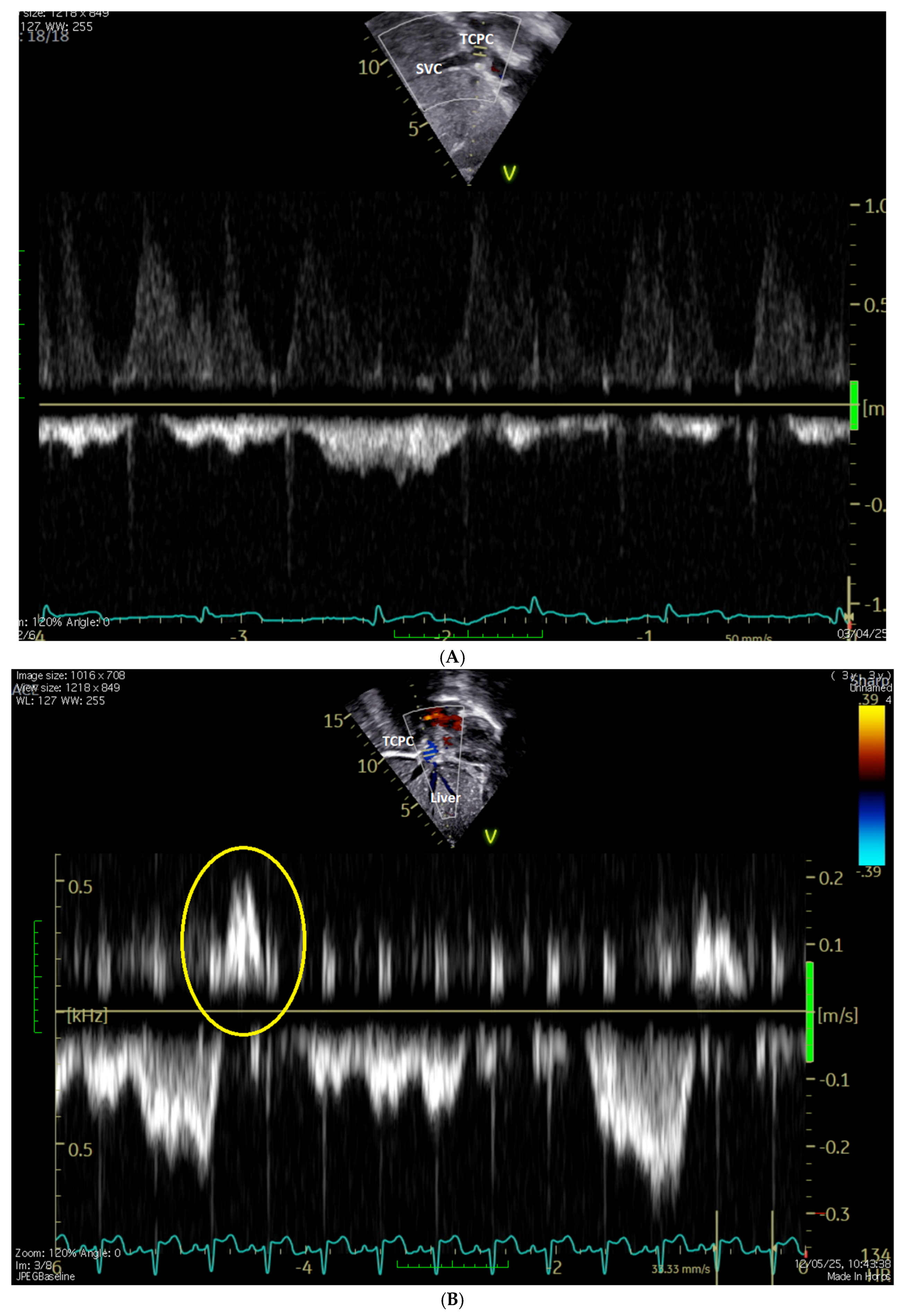
Coronal and subxiphoid sagittal views provide optimal visualization of the IVC and its connection to Fontan baffle. Color flow imaging and pulsed-wave Doppler are used to assess obstructions [1,2,3,4,5,68]. Typically, the IVC and hepatic veins appear dilated with low-velocity flow (<20–30 cm/s) and spontaneous contrast. A normal flow pattern consists of continuous systolic and diastolic flow with respiratory variation, indicating unobstructed Fontan connections [1,2,3,4,5,69] (Table 2).
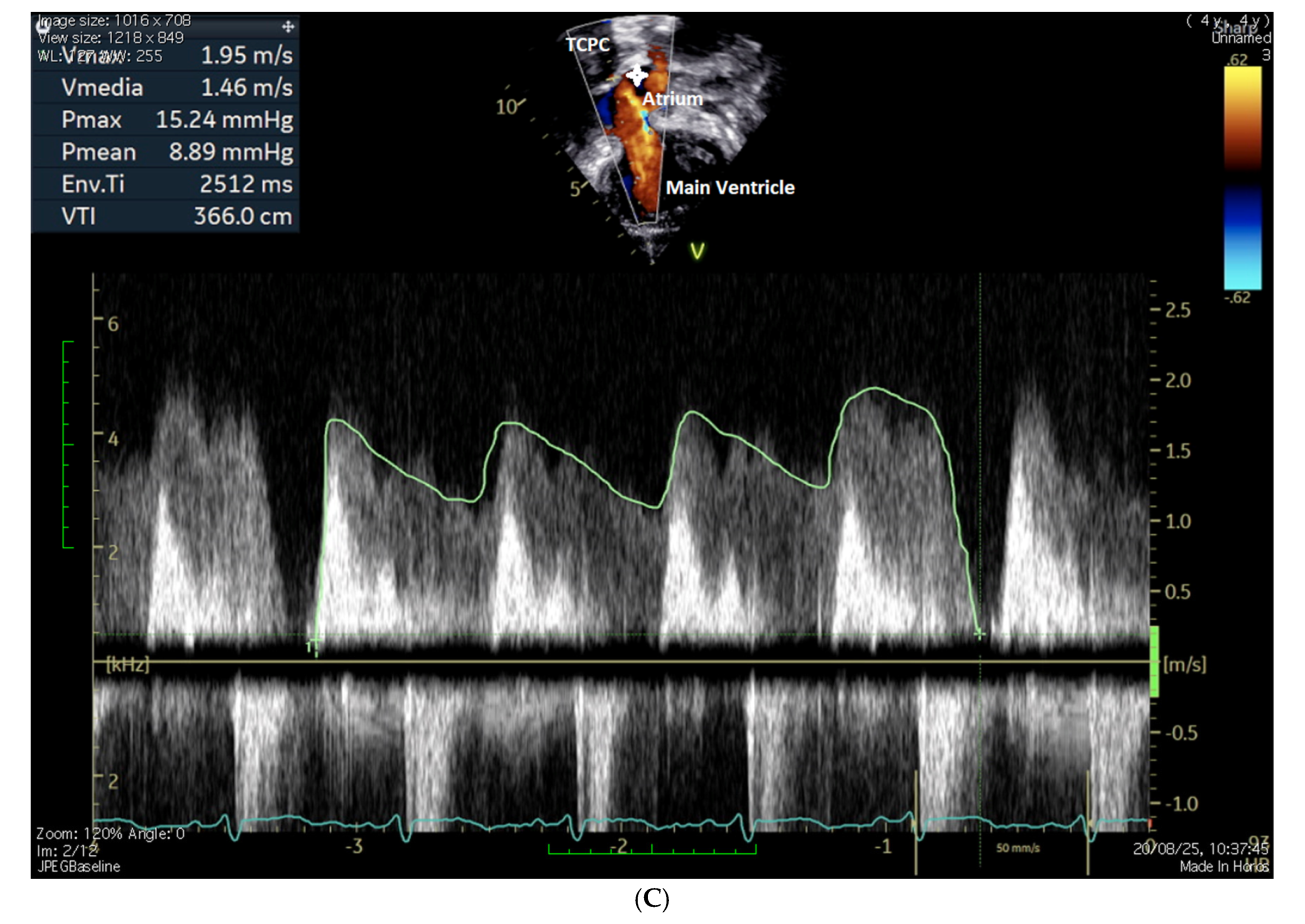
The absence of respiratory variation or the presence of retrograde flow suggests obstruction, AV regurgitation, or competitive collateral circulation [1,2,3,4,5,69]. Flow reversal during diastole may indicate failing Fontan physiology or atrial arrhythmia. The intra-atrial tunnel or extracardiac conduit can be assessed using subxiphoid long- and short-axis sweeps [1,2,3,4,5]. Additional views, including apical and parasternal, aid in evaluating tunnel dilation, thrombi, fenestrations, or leaks. If a fenestration is present, pulsed Doppler can determine the transpulmonary gradient, and for closed fenestrations, device positioning and residual shunting should be assessed [1,2,3,4,5,69].
  • Practical advice:
Assessment of the BT shunt/Sano conduit, Glenn, and TCPC conduit is essential across all stages of Fontan palliation. Echocardiographic evaluation should focus on both anatomical patency and flow characteristics, including flow direction, the presence of turbulence or stasis, and velocities/gradients.
(7)
Risk of Thrombus and Clot Formation in Fontan Physiology: The Role of Echocardiographic Assessment
The Fontan procedure is a complex surgical intervention for patients with univentricular hearts. Although this approach improves survival and quality of life, it also introduces new risks, including thrombus and clot formation [46,47]. It is crucial to distinguish between these two types of abnormalities.
Thrombus is a pathological blood clot that forms within blood vessels or cardiac chambers and may develop at any stage along the Fontan pathway as a consequence of blood stasis. Clot, in contrast, generally refers to extravascular coagulated blood, typically forming postoperatively as a result of bleeding outside the heart, such as in the retrosternal space, and usually (although not invariably) surrounding the cardiac chambers.
Both thrombi and clots may be diagnosed and followed with transthoracic echocardiography [46,47].
(8)
Possible Site of Thrombus Formation in Fontan Circulation
In patients with Fontan physiology, thrombus formation is most observed in several anatomical locations due to hemodynamic alterations that contribute to stasis and hypercoagulability [46,47].
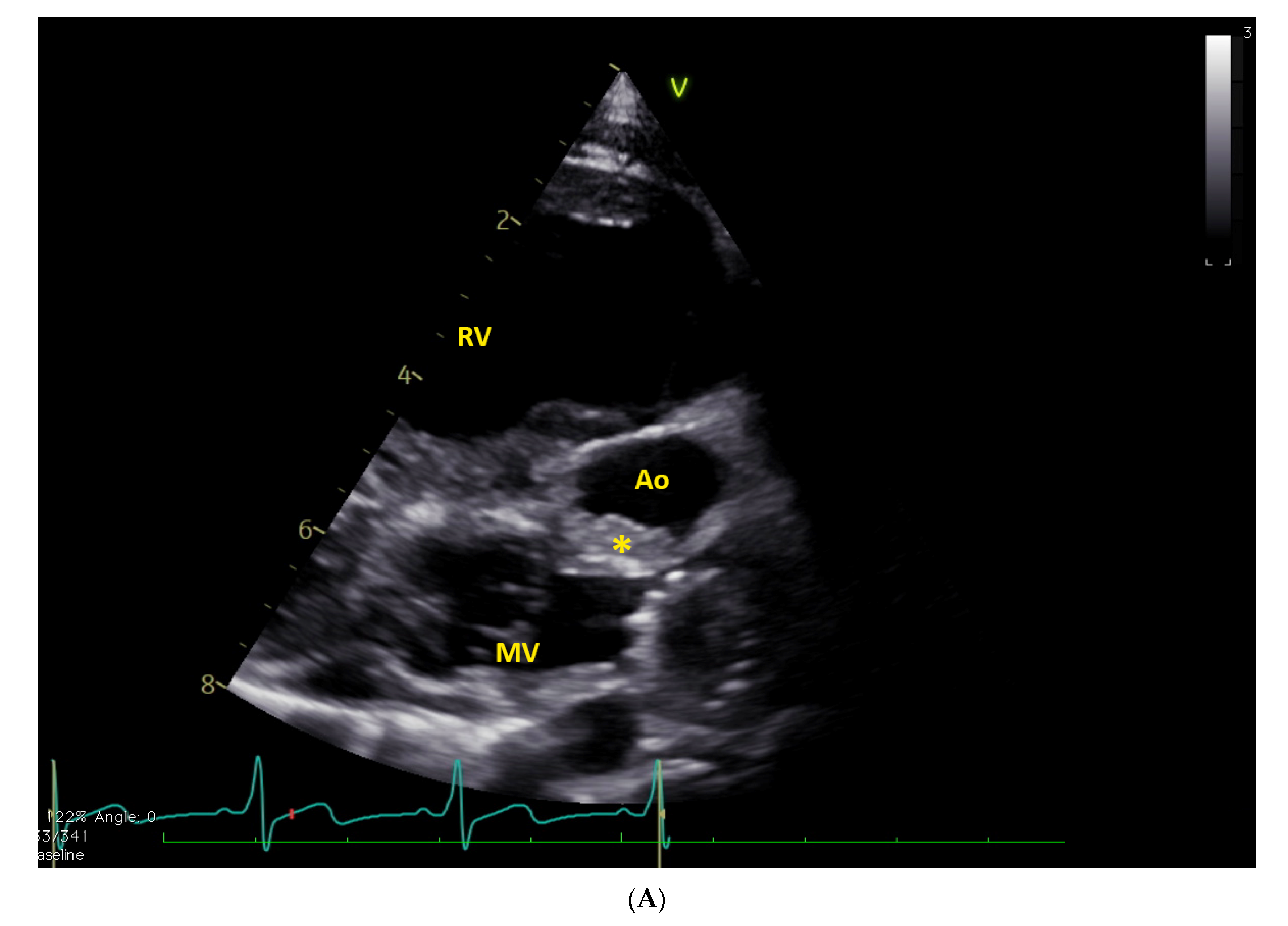
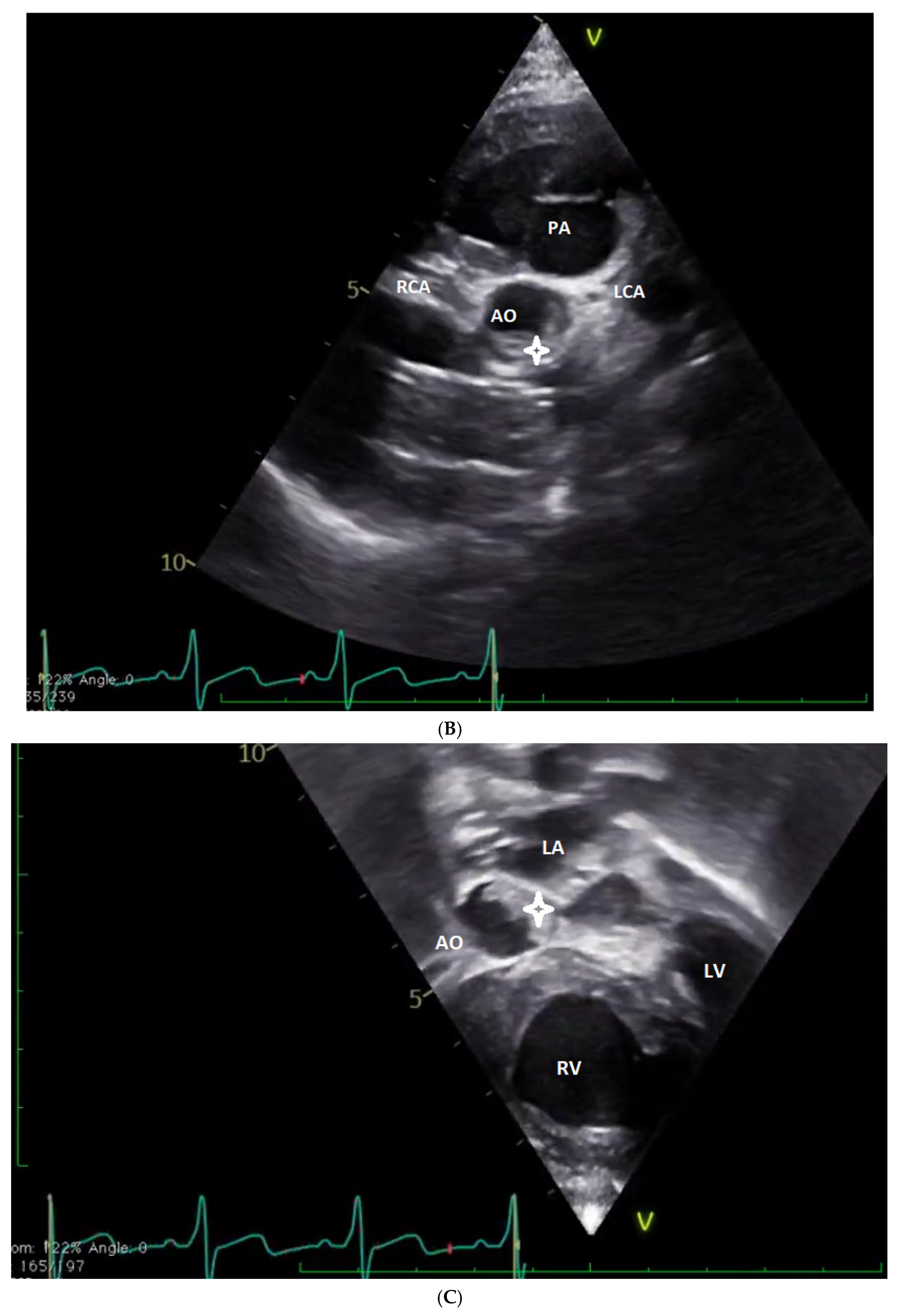
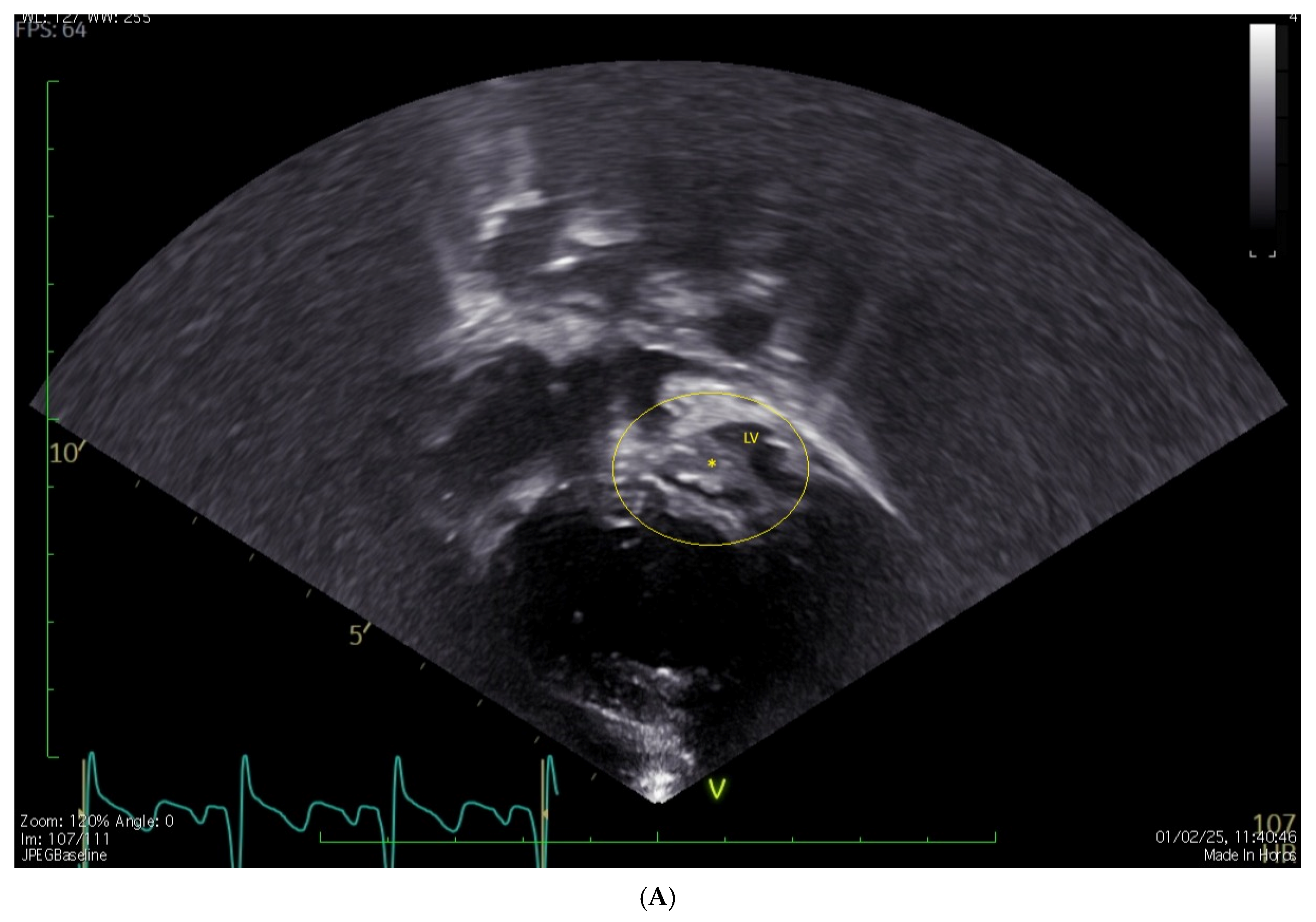
Native aorta: Native aortic thrombosis in HLHS is a rare, serious, and underrecognized complication that may occur at different stages of Fontan palliation [46,47]. The abnormal flow in this vessel, especially post-Fontan, creates an environment conducive to thrombosis, with regions of low or turbulent blood flow being particularly vulnerable [8]. Native aortic thrombosis can lead to left ventricular (LV) failure, arrhythmias, myocardial ischemia, and death [48,49,50,51]. Presentation widely varies from incidental findings [48,49,50,51] in totally asymptomatic children to severe symptoms due to myocardial ischemia up to sudden death [48,49,50,51]. The most common presentation was chest pain (accompanied with ECG abnormalities and troponin increase) or arrhythmic events. Diagnosis is generally feasible with transthoracic echocardiography [48,49,50,51,69], but experience and a careful and systematic assessment of the native aorta are required. The increased awareness of this rare complication has led to an increasing diagnostic rate in the past few years with multiple cases described [48,49,50,51,69].
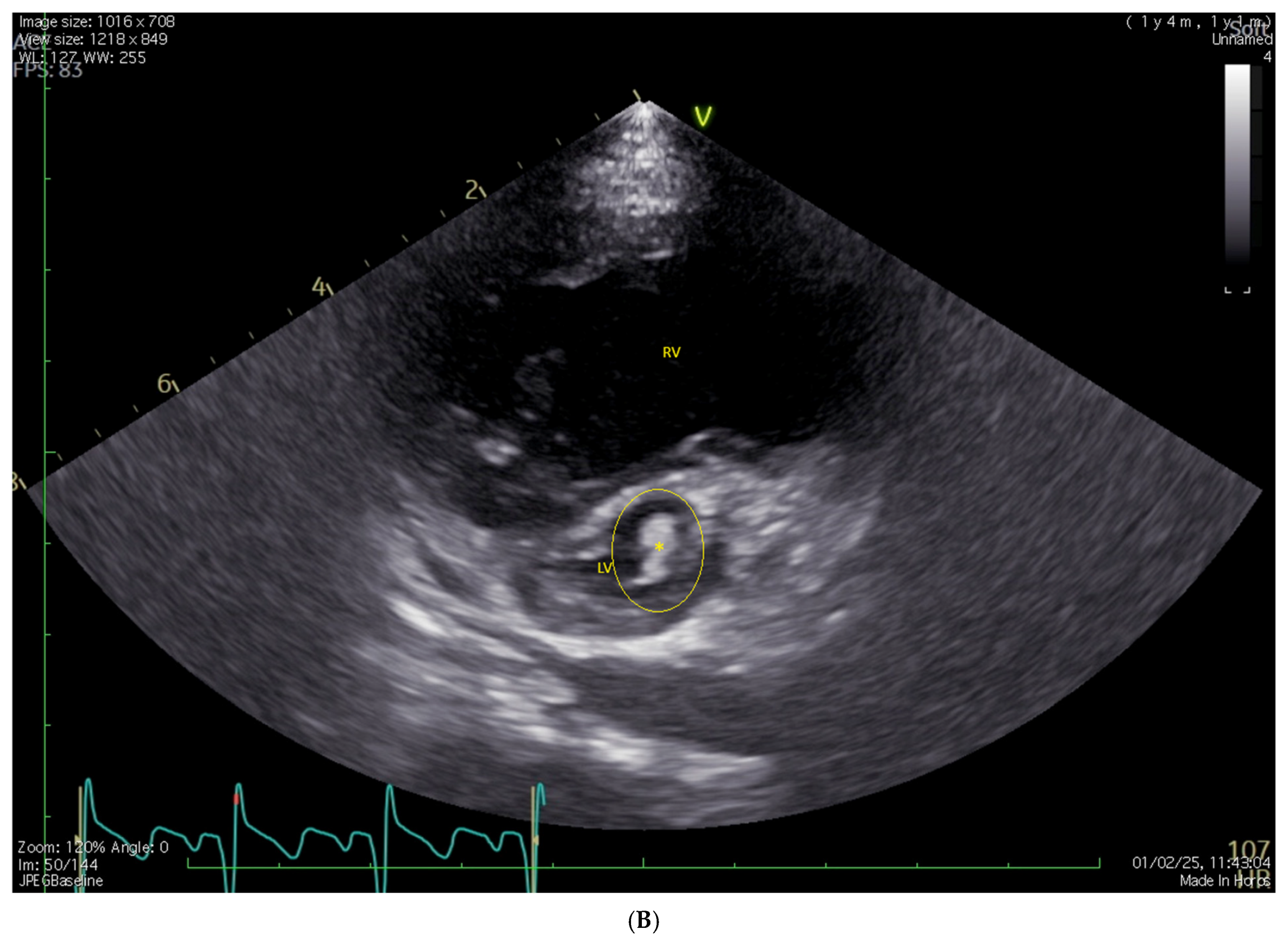
Hypoplastic Left Ventricle: In patients with HLHS who undergo Fontan palliation, the hypoplastic LV is functionally inefficient, resulting in a stagnation of blood flow and a predisposition to thrombus formation [52,53,54]. Despite being rare, thrombus within the HLHS have been described and can be diagnosed by echocardiography [52,53,54].
Inferior Vena Cava (IVC): The IVC is another common location for thrombus formation, particularly in the context of Fontan physiology. The Fontan procedure leads to venous congestion and reduced flow in the IVC, contributing to venous stasis, which is a key risk factor for thrombus formation. Thrombi in the IVC may extend into the Glenn shunt or Fontan circuit, leading to a higher risk of systemic embolism [1,2,3,4,5,46,47]. Transthoracic echocardiography has been used to visualize thrombus formation in the IVC, with Doppler studies providing valuable information about flow dynamics and the presence of thrombi [1,2,3,4,5,46,47].
BTM shunt, Glenn, and TCPC Conduit: Thrombi can also form in the BTM shunt, Glenn, or TCPC conduit, particularly when there is stasis of blood flow or structural abnormalities in these vessels [67,68,69]. These regions are prone to thrombus formation due to the passive flow conditions post-surgery, and echocardiography is pivotal in detecting thrombi in these locations early, preventing further complications [1,5,46,47].
(9)
Post-operative Clot Formation after Glenn and TCPC
A clot refers to extravascular coagulated blood that typically forms in the early postoperative period as a consequence of bleeding outside the heart, most commonly in the retrosternal space and usually, although not invariably, surrounding the cardiac chambers [55,56]. Clots are often detected incidentally during routine echocardiographic examinations and are particularly common after Glenn and Fontan surgeries [55,56].
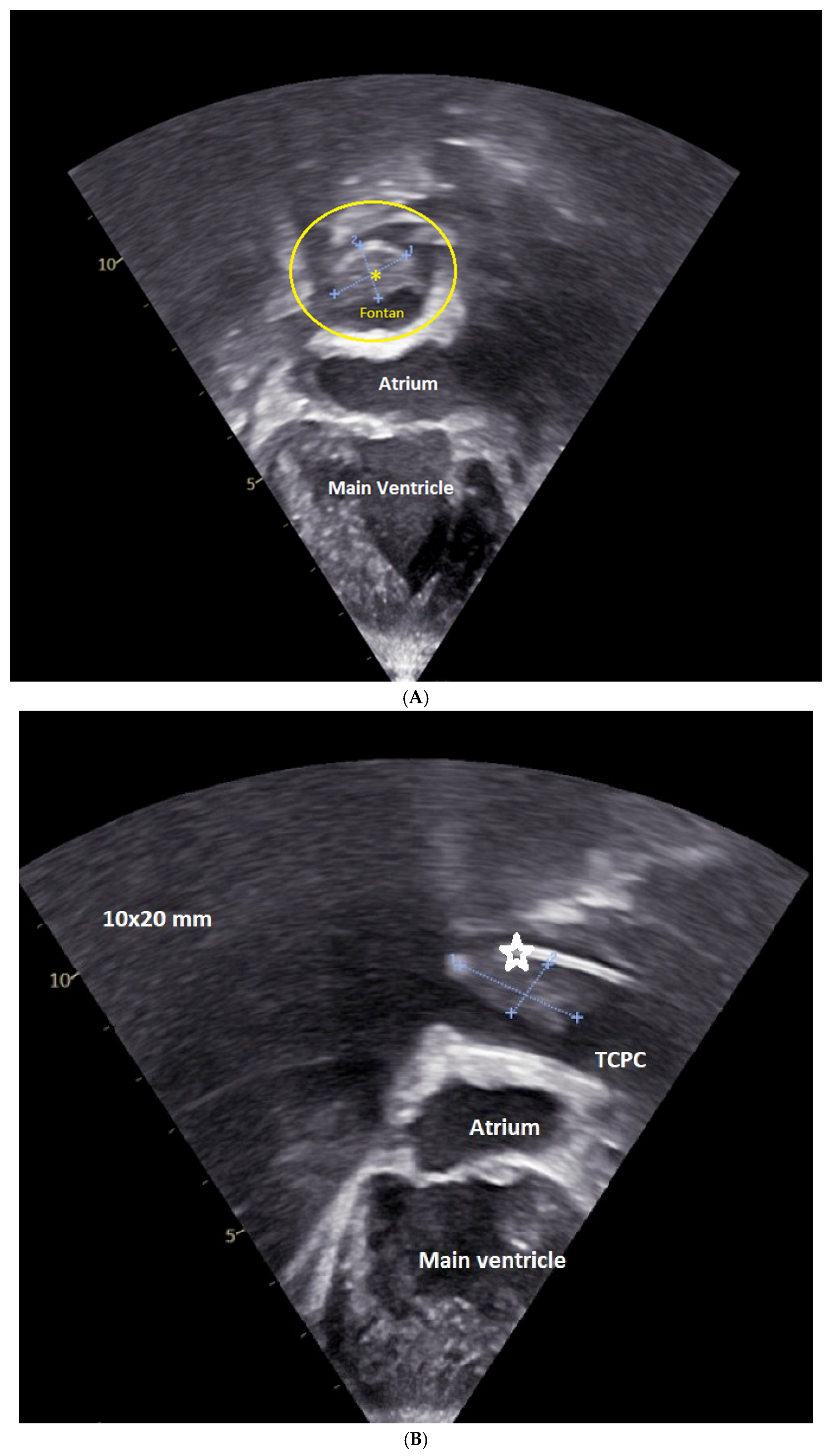
Echocardiography plays a critical role in detection, monitoring, and follow-up of clot after surgery. Clots may be assessed either by phase array probes using conventional subcostal and parasternal projections (Figure 8, Movie S15) or by a linear probe [55,56].
For clot assessments, the retrosternal area must be systematically evaluated by use of a linear probe [55,56]. The probe needs to be placed close to the parasternal line, and the anterior segments scanned up and down. When a clot or hematoma is suspected, the linear probe needs to be placed over the mass and freely tilted in various planes or orientations to obtain its visualization [55,56]. Clot sizes have been arbitrarily defined according to the maximal diameter on an axis perpendicular to the cardiac wall—(1) large clots: >3 cm; (2) moderate-sized clots: >2 to <3 cm; (3) small-to-moderate-sized clots: >1 to <2 cm; and (4) small clots: <1 cm [55,56]. However, this classification represents an oversimplification, since the clot size needs to be related to the patient’s body size [55,56].

5.3. Limitations and Gaps of Evidence in the Evaluation of Clots

The use of a linear probe for the evaluation of retrosternal is advised; however, projections have not yet been standardized. Quantification has also not been standardized according to projections and the patient’s body size. Furthermore, the presence of medication after sternotomy may limit the parasternal acoustic window.
Practical advice: The presence of thrombi should always be actively excluded in UH patients across all stages of Fontan palliation. Common sites of thrombosis include hypoplastic ventricles, the neo-aorta, the inferior vena cava, BT shunts, the Glenn pathway, and the TCPC conduit. Thrombus formation is relatively frequent following Glenn and TCPC procedures and should be systematically ruled out. In this context, the use of a high-frequency linear probe with parasternal views may be helpful for improved visualization.
  • Reporting FAC sheets
Practical examples of how reporting in children at different stages of UH palliation are provided in the Supplemental Tables S1–S5 [27]. These formats may also serve as a guide for a sequential analysis and as a reminder of the essential points to be assessed, helping to avoid omission of important information [27].
  • Conclusive remarks
We present a comprehensive practical guidance for the systematic echocardiographic assessment of the univentricular heart across the various stages of univentricular palliation, with particular emphasis on the role of advanced 3D and 4D imaging techniques and the evaluation of thromboembolic complications. This work serves as a foundational reference for the echocardiographic evaluation of univentricular hearts and paves the way for further research aimed at addressing unresolved challenges, such as the assessment of diastolic function in Fontan patients and the complex flow dynamics within Glenn and TCPC conduits.

Supplementary Materials

The following supporting information can be downloaded at: https://www.mdpi.com/article/10.3390/jcm15093520/s1, Supplemental Movie S1: Focused view on coronary artery showing coronary artery steal (red and blue flow) in HLHS after Norwood stage 1 with BTM shunt. Movie S1A: Subcostal color view of a restrictive (4.5 mm) foramen ovale in a neonate (2 days old, 3 kg of weight) with HLHS. Movie S1B: Subcostal color view of HLHS with restrictive PFO after atrial stenting. Movie S1C: Subcostal color view of HLHS with large ASD. Movie S2: Mildly decreased ventricular function in a 3-month-old, 4 kg female with hypoplastic left heart syndrome after initial Norwood 1 palliation with BTM shunt. Movie S3: Severe tricuspid regurgitation in a 1-month-old, 5 Kg male with HLHS after Norwood 1 palliation. Movie S3A: A 4-chamber view color Doppler showing severe tricuspid regurgitation. Movie S3B: 3D echocardiography showing a prolapse of tricuspid anterior leaflet. Movie S3C: Severe tricuspid regurgitation is imaged by blood speckle tracking echocardiography. Movie S4: A 12-year-old male with congenitally corrected transposition of the great arteries (CCTGA) after TCPC presenting with sub-aortic obstruction visualized in a modified 4-chamber view (Movie S4A); and a modified long-axis view (Movie S4B). Movie S5: Modified 4-chamber view of DKS, viewed with a novel BST imaging technique. Movie S6: Suprasternal view of a BTM shunt, viewed with a novel BST imaging technique. Movie S7: Modified 4-chamber view of a stenotic RV-PA Sano conduit. Movie S8: Parasternal view of a RV-PA Sano conduit visualized by a linear probe. Movie S9: Suprasternal view showing normal flow in Glenn conduit. Movie S10: (A) Subcostal view of normal flow from inferior vena cava to TCPC conduit; and (B) 4-chamber view of TCPC with flow across the fenestration. Movie S11: A 3-year-old with HLHS after Glenn operation with native aorta thrombosis visualized in long-axis view (A); modified 5-chamber view (B); and short-axis view (C). Movie S12: (A) A 4-chamber view, and (B) a short-axis view of a thrombus in LV in HLHS. Movie S13: Subcostal view of a thrombus in IVC in TCPC. Movie S14: Suprasternal view of a 5-year-old, 15 kg male immediately after Fontan operation with clots in the Glenn conduit. Movie S15: A modified 4-chamber view of a thrombus in TCPC conduct visualized in its extension. Movie S16: (A) Subcostal, and (B) 4-chamber view of a big clot external to the right section after TCPC. Table S1: Hypoplastic left heart syndrome (HLHS)/Severe aortic stenosis (AS)/borderline left ventricle/mitral atresia/aortic atresia. Table S2: Univentricular heart. Table S3: Post Norwood 1 (Sano vs BTM shunt). Table S4: Post bidirectional cavo-pulmonary connection (BCPC). Table S5: Post Total cavo-pulmonary connection (TCPC).

Author Contributions

Conceptualization: M.C., G.D.S., H.G., O.M. and C.J.M.; Data curation: M.C., P.M., N.A., G.C., F.R., A.O.G., M.K. and G.P.; Investigation: M.C., P.M., N.A., G.C., I.V., F.R., A.O.G., S.K., G.P. and B.B.; Methodology: M.C., P.M., G.D.S., I.V., H.G., O.M., M.K. and C.J.M.; Supervision: M.C., G.D.S., H.G., O.M., M.K. and C.J.M.; Validation: all authors; Visualization: M.C., P.M., I.V., A.O.G. and G.P.; Writing—original draft: M.C. and P.M.; Writing—review and editing: all authors. All authors have read and agreed to the published version of the manuscript.

Funding

This research received no external funding.

Institutional Review Board Statement

The study was conducted according to the guidelines of the Declaration of Helsinki and approved by the Institutional Review Board (or Ethics Committee) of FTGM (protocol BET No. 390, 12 December 2020).

Informed Consent Statement

Parents, tutors, or legal guardians were informed of the aims and significance of this study, and they all agreed to participate by providing written consent.

Data Availability Statement

The data presented in this study is available on request from the corresponding author. The data is not publicly available due to privacy issues.

Conflicts of Interest

The authors declare no conflicts of interest.

References

  1. Alphonso, N.; Angelini, A.; Barron, D.J.; Bellsham-Revell, H.; Blom, N.A.; Brown, K.; Davis, D.; Duncan, D.; Fedrigo, M.; Galletti, L.; et al. Guidelines for the management of neonates and infants with hypoplastic left heart syndrome: The European Association for Cardio-Thoracic Surgery (EACTS) and the Association for European Paediatric and Congenital Cardiology (AEPC) Hypoplastic Left Heart Syndrome Guidelines Task Force. Eur. J. Cardiothorac. Surg. 2020, 58, 416–499. [Google Scholar] [CrossRef] [PubMed]
  2. Gewillig, M.; Mertens, L.L. Echocardiographic assessment of functional single ventricles after the Fontan operation. In Echocardiography in Pediatric and Congenital Heart Disease: From Fetus to Adult, 3rd ed.; Lai, W.W., Mertens, L.L., Cohen, M.S., Geva, T., Eds.; Elsevier: Philadelphia, PA, USA, 2022. [Google Scholar]
  3. Stern, H.J. Fontan “Ten Commandments” revisited and revised. Pediatr. Cardiol. 2010, 31, 1131–1134. [Google Scholar] [CrossRef]
  4. Ginde, S.; Goot, B.H.; Frommelt, P.C. Imaging adult patients with Fontan circulation. Curr. Opin. Cardiol. 2017, 32, 521–528. [Google Scholar] [CrossRef]
  5. de Lange, C. Imaging of complications following Fontan circulation in children—Diagnosis and surveillance. Pediatr. Radiol. 2020, 50, 1333–1348. [Google Scholar] [CrossRef]
  6. Shabanian, R.; Mirzaaghayan, M.R.; Dadkhah, M.; Hosseini, M.; Rahimzadeh, M.; Asbagh, P.A.; Navabi, M.A. Echocardiographic assessment of pulmonary arteries pulsatility index in Fontan circulation. J. Cardiovasc. Ultrasound 2015, 23, 228–232. [Google Scholar] [CrossRef][Green Version]
  7. Nam, H.H.; Flynn, M.; Lasso, A.; Herz, C.; Sabin, P.; Wang, Y.; Cianciulli, A.; Vigil, C.; Huang, J.; Vicory, J.; et al. Modeling of the tricuspid valve and right ventricle in hypoplastic left heart syndrome with a Fontan circulation. Circ. Cardiovasc. Imaging 2023, 16, 229–240. [Google Scholar] [CrossRef] [PubMed]
  8. Shigemitsu, S.; Mah, K.; Thompson, R.B.; Grenier, J.; Lin, L.Q.; Silmi, A.; Beigh, M.V.R.; Khoo, N.S.; Colen, T. Tricuspid valve tethering is associated with residual regurgitation after valve repair in hypoplastic left heart syndrome: A three-dimensional echocardiographic study. J. Am. Soc. Echocardiogr. 2021, 34, 1199–1210. [Google Scholar] [CrossRef]
  9. Ross, C.J.; Mir, A.; Burkhart, H.M.; Holzapfel, G.A.; Lee, C.-H. Tricuspid valve regurgitation in hypoplastic left heart syndrome: Current insights and future perspectives. J. Cardiovasc. Dev. Dis. 2023, 10, 111. [Google Scholar] [CrossRef]
  10. Mah, K.; Khoo, N.S.; Tham, E.; Yaskina, M.; Maruyama, M.; Martin, B.-J.; Alvarez, S.; Alami, N.; Rebeyka, I.M.; Smallhorn, J.; et al. Tricuspid regurgitation in hypoplastic left heart syndrome: Three-dimensional echocardiography provides additional information in describing jet location. J. Am. Soc. Echocardiogr. 2021, 34, 529–536. [Google Scholar] [CrossRef]
  11. Mah, K.; Khoo, N.S.; Martin, B.-J.; Maruyama, M.; Alvarez, S.; Rebeyka, I.M.; Smallhorn, J.; Colen, T. Insights from 3D echocardiography in hypoplastic left heart syndrome patients undergoing TV repair. Pediatr. Cardiol. 2021, 43, 735–743. [Google Scholar] [CrossRef] [PubMed]
  12. Konstantinov, I.E.; Buratto, E.; D’udekem, Y. Annuloplasty for aortic regurgitation in univentricular heart on ventricular assist support. Ann. Thorac. Surg. 2021, 112, e65–e67. [Google Scholar] [CrossRef]
  13. Jacobs, M.L.; Rychik, J.; Donofrio, M.T.; Steven, J.M.; Nicolson, S.C.; Murphy, J.D.; Norwood, W.I., Jr. Avoidance of subaortic obstruction in staged management of single ventricle. Ann. Thorac. Surg. 1995, 60, S543–S545. [Google Scholar] [CrossRef] [PubMed]
  14. Ozturk, M.; Tongut, A.; Hanabergh, S.; Yerebakan, C.; D’UDekem, Y. Creation of a double-barrel outflow tract for complex subaortic obstruction in single ventricle. JTCVS Tech. 2022, 16, 216–218. [Google Scholar] [CrossRef] [PubMed]
  15. Talwar, S.; Chigurupati, B.S.; Singh, S.; Choudhary, S.K. Bulboventricular foramen enlargement: An alternative surgical approach. Indian J. Thorac. Cardiovasc. Surg. 2018, 35, 211–214. [Google Scholar] [CrossRef] [PubMed]
  16. Lacour-Gayet, F. Management of older single functioning ventricles with outlet obstruction due to a restricted “VSD” in double inlet left ventricle and in complex double outlet right ventricle. Semin. Thorac. Cardiovasc. Surg. Pediatr. Card. Surg. Annu. 2009, 12, 130–132. [Google Scholar] [CrossRef]
  17. Dorobantu, D.M.; Amir, N.H.; Wadey, C.A.; Sharma, C.; Stuart, A.G.; Williams, C.A.; Pieles, G.E. The role of speckle-tracking echocardiography in predicting mortality and morbidity in patients with congenital heart disease: A systematic review and meta-analysis. J. Am. Soc. Echocardiogr. 2023, 37, 216–225. [Google Scholar] [CrossRef]
  18. Madan, N.; Aly, D.; Kathol, M.; Buddhavarapu, A.; Rieth, T.; Sherman, A.; Forsha, D. Relationship between obesity and global longitudinal strain in the pediatric single ventricle Fontan population across ventricular morphologies. J. Am. Heart Assoc. 2024, 13, e028616. [Google Scholar] [CrossRef]
  19. Buddhavarapu, A.; Chauhan, D.; Erickson, L.A.; Elliott, M.D.; Warren, M.; Forsha, D.E. The evolution of longitudinal strain across various univentricular morphologies prior to superior cavopulmonary anastomosis. J. Am. Soc. Echocardiogr. 2023, 36, 1100–1109. [Google Scholar] [CrossRef]
  20. Schneider, M.; Beichl, M.; Nietsche, C.; Beitzke, D.; Porenta, G.; Beran, G.; Vonbank, K.; Hauser, J.; Hengstenberg, C.; Goliasch, G.; et al. Systematic evaluation of systemic right ventricular function. J. Clin. Med. 2019, 9, 107. [Google Scholar] [CrossRef]
  21. Singh, G.K.; Cupps, B.; Pasque, M.; Woodard, P.K.; Holland, M.R.; Ludomirsky, A. Accuracy and reproducibility of strain by speckle tracking in pediatric subjects with normal heart and single ventricular physiology: A two-dimensional speckle-tracking echocardiography and magnetic resonance imaging correlative study. J. Am. Soc. Echocardiogr. 2010, 23, 1143–1152. [Google Scholar] [CrossRef]
  22. Aly, S.; Mertens, L.; Friedberg, M.K.; Dragulescu, A. Longitudinal changes in ventricular mechanics in adolescents after the Fontan operation. J. Am. Soc. Echocardiogr. 2023, 36, 998–1007. [Google Scholar] [CrossRef]
  23. Lopez, C.; Mertens, L.; Dragulescu, A.; Landeck, B.; Younoszai, A.; Friedberg, M.K.; Hunter, K.; Di Maria, M.V. Strain and rotational mechanics in children with single left ventricles after Fontan. J. Am. Soc. Echocardiogr. 2018, 31, 1297–1306. [Google Scholar] [CrossRef]
  24. Grattan, M.; Mertens, L.; Grosse-Wortmann, L.; Friedberg, M.K.; Cifra, B.; Dragulescu, A. Ventricular torsion in young patients with single-ventricle anatomy. J. Am. Soc. Echocardiogr. 2018, 31, 1288–1296. [Google Scholar] [CrossRef]
  25. Zhong, S.; Zhang, Y.; Chen, L.; Wang, S.; Li, W.; Sun, Y. Ventricular twisting and dyssynchrony in children with single left ventricle using three-dimensional speckle tracking imaging after the Fontan operation. Echocardiography 2015, 33, 606–617. [Google Scholar] [CrossRef]
  26. Wang, A.P.; Husain, N.; Penk, J.; Laternser, C.; Magnetta, D.; Watanabe, K.; Hauck, A. Prognostic value of RV function analysis during the interstage period in patients with hypoplastic left heart syndrome. Pediatr. Cardiol. 2024, 45, 1120–1128. [Google Scholar] [CrossRef]
  27. Cantinotti, M.; Di Salvo, G.; Voges, I.; Raimondi, F.; Greil, G.; Garrido, A.O.; Bharucha, T.; Grotenhuis, H.B.; Köstenberger, M.; Bonnello, B.; et al. Standardization in paediatric echocardiographic reporting and critical interpretation of measurements, functional parameters, and prediction scores: A clinical consensus statement of the European Association of Cardiovascular Imaging of the European Society of Cardiology and the Association for European Paediatric and Congenital Cardiology. Eur. Heart J. Cardiovasc. Imaging 2024, 25, 1029–1050. [Google Scholar] [CrossRef] [PubMed]
  28. Pascual, E.; Zurita, M.; Sebastián, J.; Silva, L.-G.; Peinado, A.; Aguado, F.-L. Comparison of myocardial deformation by speckle-tracking echocardiography and cardiac magnetic resonance in patients with Fontan circulation: Diagnostic algorithm. J. Cardiovasc. Echogr. 2021, 31, 144–150. [Google Scholar] [CrossRef]
  29. Del Pasqua, A.; Chinali, M.; D’aNna, C.; Ciliberti, P.; Esposito, C.; Gugliotta, M.; Milewski, P.; Perrone, M.A.; Romeo, F.; Carotti, A.; et al. Evidence of impaired longitudinal strain in pre-Fontan palliation in functional single left ventricle. J. Cardiovasc. Med. 2019, 20, 833–836. [Google Scholar] [CrossRef] [PubMed]
  30. Forsha, D.; Risum, N.; Smith, P.B.; Kanter, R.J.; Samad, Z.; Barker, P.; Kisslo, J. Frequent activation delay–induced mechanical dyssynchrony and dysfunction in the systemic right ventricle. J. Am. Soc. Echocardiogr. 2016, 29, 1074–1083. [Google Scholar] [CrossRef] [PubMed]
  31. DeCarlo, D.M.; Cha, C.; Pierce, K.; Singh, R.K.; Srinivasan, R. Fetal right heart strain in systemic right ventricles and impact on post-surgical outcomes. Pediatr. Cardiol. 2024, 46, 2060–2069. [Google Scholar] [CrossRef]
  32. Kleitsioti, P.; Koulaouzidis, G.; Giannakopoulou, P.; Charisopoulou, D. The role of myocardial strain imaging in the pre- and post-operative assessment of patients with single ventricle. Rev. Cardiovasc. Med. 2023, 24, 145. [Google Scholar] [CrossRef]
  33. Sato, T.; Matsubara, D.; Wang, Y.; Agger, P.; Pedrizzetti, G.; Banerjee, A. Contraction patterns of post-Fontan single right ventricle versus normal left and right ventricles in children: Insights from principal strain analysis. J. Am. Soc. Echocardiogr. 2023, 36, 878–887. [Google Scholar] [CrossRef]
  34. Colquitt, J.L.; Wilkinson, J.C.; Liu, A.M.; Pignatelli, R.H.; Loar, R.W. Single systemic right ventricle longitudinal strain: Intravendor reproducibility and intervendor agreement in children. Echocardiography 2021, 38, 402–409. [Google Scholar] [CrossRef]
  35. Taha, F.A.; Elshedoudy, S.; Adel, M. Quantitative assessment of contractile reserve of systemic right ventricle in post-Senning children. Echocardiography 2020, 37, 2091–2101. [Google Scholar] [CrossRef] [PubMed]
  36. Tham, E.B.; Smallhorn, J.F.; Kaneko, S.; Valiani, S.; Myers, K.A.; Colen, T.M.; Kutty, S.; Khoo, N.S. Insights into the evolution of myocardial dysfunction in the functionally single right ventricle between staged palliations using speckle-tracking echocardiography. J. Am. Soc. Echocardiogr. 2014, 27, 314–322. [Google Scholar] [CrossRef] [PubMed]
  37. Petko, C.; Hansen, J.H.; Scheewe, J.; Rickers, C.; Kramer, H.H. Comparison of longitudinal myocardial deformation and dyssynchrony after Fontan operation. Congenit. Heart Dis. 2012, 7, 16–23. [Google Scholar] [CrossRef]
  38. Anderson, P.A.; Sleeper, L.A.; Mahony, L.; Colan, S.D.; Atz, A.M.; Breitbart, R.E.; Gersony, W.M.; Gallagher, D.; Geva, T.; Margossian, R.; et al. Contemporary outcomes after the Fontan procedure. JACC 2008, 52, 85–98. [Google Scholar] [CrossRef]
  39. Cheung, Y.F.; Penny, D.J.; Redington, A.N. Serial assessment of left ventricular diastolic function after Fontan procedure. Heart 2000, 83, 420–424. [Google Scholar] [CrossRef] [PubMed]
  40. Veldtman, G.; Possner, M.; Mohty, D.; Issa, Z.; Alsaleh, M.; AlMarzoog, A.T.; Emmanual, S.; Salam, Y.; AlHabdan, M.S.; Alsaied, T.; et al. Atrial function in the Fontan circulation: Comparison with invasively assessed systemic ventricular filling pressure. Int. J. Cardiovasc. Imaging 2021, 37, 2651–2660. [Google Scholar] [CrossRef]
  41. Peck, D.; Alsaied, T.; Pradhan, S.; Hill, G. Atrial reservoir strain is associated with decreased cardiac index and adverse outcomes post Fontan operation. Pediatr. Cardiol. 2020, 42, 307–314. [Google Scholar] [CrossRef]
  42. Rato, J.; Mendes, S.C.; Sousa, A.; Lemos, M.; Martins, D.S.; Anjos, R. The influence of atrial strain on functional capacity in patients with the Fontan circulation. Pediatr. Cardiol. 2020, 41, 1730–1738. [Google Scholar] [CrossRef]
  43. Khoo, N.S.; Smallhorn, J.F.; Kaneko, S.; Kutty, S.; Altamirano, L.; Tham, E.B. The Assessment of atrial function in single ventricle hearts from birth to Fontan: A speckle-tracking study by using strain and strain rate. J. Am. Soc. Echocardiogr. 2013, 26, 756–764. [Google Scholar] [CrossRef]
  44. Parthiban, A.; Jani, V.; Zhang, J.; Li, L.; Craft, M.; Barnes, A.; Ballweg, J.A.; Schuster, A.; Danford, D.A.; Kutty, S. Altered biatrial phasic function after heart transplantation in children. J. Am. Soc. Echocardiogr. 2020, 33, 1132–1140.e2. [Google Scholar] [CrossRef] [PubMed]
  45. White, M.H.; Kelleman, M.; SidonioJr, R.F.; Kochilas, L.; Patel, K.N. Incidence and timing of thrombosis after the norwood procedure in the single-ventricle reconstruction trial. J. Am. Heart Assoc. 2020, 9, e015882. [Google Scholar] [CrossRef] [PubMed]
  46. Ono, M.; Kido, T.; Burri, M.; Anderl, L.; Ruf, B.; Cleuziou, J.; Strbad, M.; Hager, A.; Hörer, J.; Lange, R. Risk factors for thrombus formation at stage 2 palliation and its effect on long-term outcome in patients with univentricular heart. Semin. Thorac. Cardiovasc. Surg. 2022, 34, 669–679. [Google Scholar] [CrossRef]
  47. Monagle, P.; Chan, A.K.; Goldenberg, N.A.; Ichord, R.N.; Journeycake, J.M.; Nowak-Göttl, U.; Vesely, S.K. Antithrombotic therapy in neonates and children. Chest 2012, 141, e737S–e801S. [Google Scholar] [CrossRef] [PubMed]
  48. Rajab, T.K.; Mitchell, M.B. Native aortic root thrombosis after norwood palliation for hypoplastic left heart syndrome. Ann. Thorac. Surg. 2021, 112, 147–154. [Google Scholar] [CrossRef]
  49. Watkins, K.J.; Zampi, J.D.; Lowery, R.; Yu, S.; Owens, S.T.; Romano, J.C.; Schumacher, K.R. Native aortic root thrombosis in single-ventricle patients with native-to-neoaortic anastomoses. Pediatr. Cardiol. 2022, 43, 1247–1250. [Google Scholar] [CrossRef]
  50. Segar, D.E.; Amidon, M.; Scott, J.; Frommelt, P.C. Native aortic root thrombus in a 3-year-old Fontan patient with hypoplastic left heart syndrome. CASE 2021, 5, 276–279. [Google Scholar] [CrossRef]
  51. Hausdorf, G.; Grävinghoff, L.; Sieg, K.; Keck, E.W. Left-ventricular thrombosis in hypoplastic left heart syndrome: Echocardiographic diagnosis. Z. Kardiol. 1984, 73, 66–69. [Google Scholar]
  52. Takajo, D.; Sriram, C.S.; Aggarwal, S. Silent in situ thrombus within a hypoplastic left ventricle in a teenager with Fontan palliation. Cardiol. Young 2020, 30, 1175–1177. [Google Scholar] [CrossRef]
  53. Duncan, W.J.; Campbell, A.I.; Human, D.G. Left ventricular thrombosis following a Norwood procedure. Cardiol. Young 2007, 17, 232. [Google Scholar] [CrossRef] [PubMed]
  54. Cantinotti, M.; Giordano, R.; Marchese, P.; Franchi, E.; Viacava, C.; Pak, V.; Murzi, B.; Arcieri, L.; Poli, V.; Federici, D.; et al. Retrosternal clots after Fontan surgery by systematic evaluation with transthoracic ultrasound. J. Cardiothorac. Vasc. Anesth. 2020, 34, 951–955. [Google Scholar] [CrossRef]
  55. Cantinotti, M.; Giordano, R.; Assanta, N.; Murzi, B.; Gargani, L. Chest ultrasound: A new, easy, and radiation-free tool to detect retrosternal clot after pediatric cardiac surgery. J. Cardiothorac. Vasc. Anesth. 2015, 29, e59–e60. [Google Scholar] [CrossRef] [PubMed]
  56. Cantinotti, M.; Assanta, N.; Murzi, B.; Iervasi, G.; Spadoni, I. Echocardiographic definition of restrictive patent foramen ovale (PFO). Heart 2013, 100, 264–265. [Google Scholar] [CrossRef]
  57. Available online: https://www.prisma-statement.org/prisma-2020 (accessed on 23 March 2026).
  58. Photiadis, J.; Urban, A.; Sinzobahamvya, N.; Fink, C.; Schindler, E.; Schneider, M.; Mariebrecher, A.; Asfour, B. Restrictive left atrial outflow adversely affects outcome after the modified Norwood procedure. Eur. J. Cardiothorac. Surg. 2005, 27, 962–967. [Google Scholar] [CrossRef]
  59. Glatz, J.A.; Tabbutt, S.; Gaynor, J.W.; Rome, J.J.; Montenegro, L.; Spray, T.L.; Rychik, J. Hypoplastic left heart syndrome with atrial level restriction in the era of prenatal diagnosis. Ann. Thorac. Surg. 2007, 84, 1633–1638. [Google Scholar] [CrossRef] [PubMed]
  60. Bardo, D.M.; Frankel, D.G.; Applegate, K.E.; Murphy, D.J.; Saneto, R.P. Hypoplastic left heart syndrome. Radiographics 2001, 21, 705–717. [Google Scholar] [CrossRef]
  61. Nevvazhay, T.; Chernogrivov, A.; Biryukov, E.; Biktasheva, L.; Karchevskaya, K.; Sulejmanov, S.; Kalinicheva, J.; Artemiev, N. Arterial switch in the first hours of life: No need for Rashkind septostomy? Eur. J. Cardiothorac. Surg. 2012, 42, 520–523. [Google Scholar] [CrossRef][Green Version]
  62. Lopes, L.M.; Kawano, C.; Cristóvão, S.A.; Nagamatsu, C.T.; Fonseca, L.D.; Furlanetto, B.H.; Furlanetto, G.; Silva, J.P.; Mangione, J.A. Balloon atrial septostomy guided by echocardiography in a neonatal intensive care unit. Arq. Bras. Cardiol. 2010, 95, 153–158. [Google Scholar] [CrossRef]
  63. Gupta, U.; Abdulla, R.I.; Bokowski, J. Benign outcome of pulmonary hypertension in neonates with restrictive patent foramen ovale. Pediatr. Cardiol. 2011, 32, 972–976. [Google Scholar] [CrossRef] [PubMed]
  64. Sano, S.; Ishino, K.; Kawada, M.; Arai, S.; Kasahara, S.; Asai, T.; Masuda, Z.-I.; Takeuchi, M.; Ohtsuki, S.-I. Right ventricle–pulmonary artery shunt in first-stage palliation of hypoplastic left heart syndrome. J. Thorac. Cardiovasc. Surg. 2003, 126, 504–509. [Google Scholar] [CrossRef] [PubMed]
  65. Corno, A.F.; Findley, T.O.; Salazar, J.D. Narrative review of single ventricle: Where are we after 40 years? Transl. Pediatr. 2023, 12, 221–244. [Google Scholar] [CrossRef] [PubMed]
  66. Davies, R.R.; Pizarro, C. Decision-making for surgery in the management of patients with univentricular heart. Front. Pediatr. 2015, 3, 61. [Google Scholar] [CrossRef]
  67. Maher, K.O.; Pizarro, C.; Gidding, S.S.; Januszewska, K.; Malec, E.; Norwood, W.I.; Murphy, J.D. Hemodynamic profile after the norwood procedure with right ventricle to pulmonary artery conduit. Circulation 2003, 108, 782–784. [Google Scholar] [CrossRef]
  68. Kutty, S.; Rathod, R.H.; A Danford, D.; Celermajer, D.S. Role of imaging in the evaluation of single ventricle with the Fontan palliation. Heart 2015, 102, 174–183. [Google Scholar] [CrossRef]
  69. Cantinotti, M.; Marchese, P.; Assanta, N.; Franchi, E.; Pak, V.; Barberi, E.; Pizzuto, A.; Santoro, G.; Giordano, R. Native aortic root thrombosis in hypoplastic left heart syndrome: An unusual presentation (soon after atrial septal stenting) of a relatively unusual complication—Experience and literature review with an outlook to diagnosis and management. J. Clin. Med. 2023, 12, 5357. [Google Scholar] [CrossRef]
Figure 1. (A): subcostal color view of a restrictive (4.5 mm) foramen ovale in a neonate (2 days old, 3 kg of weight) with HLHS; (B): gradient across the patent foramen ovale (PFO) (mean gradient 9 mmHg). LA = left atrium, RA = right atrium, PFO = patent foramen ovale.
Jcm 15 03520 g001
Figure 2. Global longitudinal strain of −12.2%, fractional area change (FAC) 35%, tricuspid annular plane systolic excursion (TAPSE) 8 mm, and tricuspid valve (TV) s’ 8 cm/s.
Jcm 15 03520 g002
Figure 3. (A): normal, phasic, and low-velocity Doppler flow in Glenn; (B): reverse flow in Glenn; (C): blood flow in Glenn and pulmonary arteries are visualized by BST vector flow reconstruction. Ao = aorta, LPA = left pulmonary artery, RPA = right pulmonary artery, SVC = superior vena cava.
Jcm 15 03520 g003aJcm 15 03520 g003b
Figure 4. (A): Doppler of normal, phasic, and low-velocity (max velocity 0.4 m/s, mean velocity 0.2 m/s) TCPC conduct with respiratory variation; (B): Doppler of TCPC conduct with mild reversal; and (C): fenestrated TCPC with the gradient across the fenestration. TCPC = total cavo-pulmonary connection conduct; fenestration is arrowed.
Jcm 15 03520 g004aJcm 15 03520 g004b
Figure 5. A 3-year-old with HLHS after Glenn operation with native aorta thrombosis visualized in long-axis view (asterisk) (A), modified 5-chamber view (star) (B), and short-axis view (star) (C). The clot is indicated with arrow. Ao = aorta, LA = left atrium, LV = left ventricle, RV = right ventricle, PA = pulmonary artery.
Jcm 15 03520 g005aJcm 15 03520 g005b
Figure 6. (A): a 4-chamber view, and (B): a short-axis view of a thrombus (asterisk) in LV in a HLHS. LV = left ventricle, RV = right ventricle.
Jcm 15 03520 g006aJcm 15 03520 g006b
Figure 7. Images showing the non-phasic, continuous but significantly accelerated (v max 1 m/s), flow across the mildly stenotic Glenn conduit.
Jcm 15 03520 g007
Figure 8. Thrombus in TCPC conduct visualized in a 4-chamber view (asterisk) (A); and in a modified 4-chambers view (star) (B) of its extension.
Jcm 15 03520 g008
Table 1. Key elements to be searched at different stages.
Pre-
Norwood
InterstagePre-
Glenn
Pre-
Fontan
Post-
Fontan
Atrial septum and pulmonary venous obstructionxxxxxxxxxx
Ventricular functionxxxxxxxxxxxxxxx
AV valve functionxxxxxxxxxxxx
Aorta and neo-aorta function, subaortic regionxxxxxxxxxxxx
Aortic archxxxxxxxxxx
Shunt/Sano conduit xxx
Glenn xxxxxxx
TCPC conduit xxxxxx
Thrombi and clots xxxxxxxxxxx
x: important; xx very important; xxx essential.
Table 2. Flow characteristics across Glenn and Fontan (TCPC) circuit.
CircuitSiteNormal Peak Velocity (m/s)Flow Dynamic
Bidirectional GlennSVC to PA<0.5 *Non-pulsatile (or mildly phasic with respiration), antegrade
Fontan (TCPC)Extracardiac conduit0.2–0.5 °Respiratory variation
Lateral tunnel0.2–0.5 °Similar to conduit
Hepatic veins<0.5Forward flow phasic with respiration; reversal suggests dysfunction
PA = pulmonary artery, SVC = superior vena cava, TCPC = total cavo-pulmonary conduit. * Higher velocities (>0.8 m/s) may suggest stenosis or elevated downstream resistance (e.g., elevated PVR or branch PA stenosis). ° Values > 0.7–0.8 m/s raise concern for stenosis, obstruction, or collaterals.
Disclaimer/Publisher’s Note: The statements, opinions and data contained in all publications are solely those of the individual author(s) and contributor(s) and not of MDPI and/or the editor(s). MDPI and/or the editor(s) disclaim responsibility for any injury to people or property resulting from any ideas, methods, instructions or products referred to in the content.