Article

New Simplified White Blood Cells Score Improves Mortality Prediction in Severe COVID-19 Patients


1
Department of Anesthesiology and Intensive Care, Military Institute of Medicine—National Research Institute, Szaserów 128 Str., 04-141 Warsaw, Poland
2
Department of Nephrology, Internal Diseases and Dialysis, Military Institute of Medicine—National Research Institute, Szaserów 128 Str., 04-141 Warsaw, Poland
*
Author to whom correspondence should be addressed.
J. Clin. Med. 2026, 15(7), 2590; https://doi.org/10.3390/jcm15072590
Submission received: 14 February 2026 / Revised: 17 March 2026 / Accepted: 24 March 2026 / Published: 28 March 2026
(This article belongs to the Special Issue Update on Acute Severe Respiratory Infections: 2nd Edition)

Abstract

Background: An unfavorable course of SARS-CoV-2 infection can lead to significant morbidity and mortality. The study aimed to develop a simple, accessible, and reliable tool to anticipate the poor results among COVID-19 pneumonia patients. Methods: This retrospective cohort study involves 306 individuals with severe COVID-19 pneumonia enrolled between March 2021 and June 2021. Each patient had confirmed SARS-CoV-2 infection and required oxygen therapy. Differential blood count and serum CRP were taken on admission day. Medical data were collected from the hospital’s information system. Results: Of 306 patients (133 females, 173 males, aged 66.3 ± 15.2 years), 105 (34.3%) died. Counts of neutrophils, lymphocytes, and eosinophils differed significantly between survivors and deceased (p < 0.001; p = 0.002; p = 0.009, respectively) and had substantially differentiating properties in ROC analysis. Built with the counts of neutrophils, lymphocytes, and eosinophils, the White Blood Cell Score (WBCS) was developed. WBCS robustly predicted mortality (OR = 2.821; CI: 2.037–3.906; p < 0.001) in the investigated population. Cumulative risk of death according to WBCS (ranging from 0 to 3 points) was as follows: 0 points—10.9%, 1 point—23.5%, 2 points—33.1%, 3 points—34.1%. Conclusions: Based on differential blood count, the proposed WBCS is easy to use and can be helpful in predicting mortality among severe COVID-19 patients.

1. Introduction

COVID-19 is a viral disease caused by severe acute respiratory syndrome coronavirus 2 (SARS-CoV-2), primarily affecting the respiratory system. Severe course of COVID-19 is accompanied by systemic inflammatory response syndrome (SIRS), which—in many cases—leads to multiple organ dysfunction syndrome (MODS) [1,2,3]. According to the WHO, by January 2026, 779,102,516 COVID-19 cases were reported worldwide, of which 7,110,188 were fatal (0.9%) [4]. Several comorbidity-related risk factors were identified, such as cardiovascular diseases, chronic respiratory system diseases, obesity, chronic kidney disease, diabetes, cerebrovascular diseases, and neoplasm [2,5,6].
In this paper, we use the WHO definitions of disease severity for COVID-19 for adults:
  • Critical COVID-19—Defined by the criteria for acute respiratory distress syndrome (ARDS), sepsis, septic shock, or other conditions that would normally require the provision of life-sustaining therapies such as mechanical ventilation (invasive or non-invasive) or vasopressor therapy;
  • Severe COVID-19—Defined by oxygen saturation <90% on room air; severe pneumonia; signs of severe respiratory distress (in adults, accessory muscle use, inability to complete full sentences, respiratory rate >30 breaths per minute);
  • Non-severe COVID-19—Defined as the absence of any criteria for severe or critical COVID-19 [7].
Several studies have shown a significant correlation between the severity of the COVID-19 course and several selected biomarkers, such as interleukin 6, neutrophil to lymphocyte ratio (NLR), C-reactive protein (CRP), ferritin, LDH, d-dimers, and troponin I [3,5,8,9,10,11,12,13,14]. Coagulopathy is another high-risk factor for morbidity and mortality in the COVID-19 course [15]. CRP and NLR are of most interest during a shortage of staff and high load of severe COVID-19 cases due to their accessibility and low costs.
NLR is calculated with a complete blood count (CBC). It is obtained by dividing the neutrophil count by the lymphocyte count. NLR combines the two immunological responses—innate, non-specific, represented by neutrophil count, and humoral, specific, measured with lymphocyte count. NLR value can be elevated in many clinical scenarios involving tissue damage and generalized inflammation. The most common are infections—typical bacterial or fungal, traumas, myocardial infarction, cerebral ischemic stroke, neoplasm, and post-operative complications [16]. Studies have shown a correlation between elevated NLR and mortality risk in the general population [16,17]. Moreover, higher NLR has been linked with poor prognosis in patients with sepsis, community-acquired pneumonia (CAP), and COVID-19 pneumonia, and also NLR has been considered as a predictor of cardiovascular events and post-operative complications [16]. Despite the evidence that NLR is an independent predictor of mortality in severe diseases, the cut-off values for poor prognosis are still discussed [16]. Several factors can affect NLR values and falsely elevate them, e.g., steroids or granulocyte colony-stimulating factor (G-CSF) administration, hematologic diseases, chemotherapy, HIV infection, age, and obesity [3,5,11,12,16].
C- reactive protein (CRP) is an acute-phase protein, which is a non-specific indicator of inflammatory response. It can be elevated in many situations, such as infection, trauma (including elective surgical procedure), myocardial infarction, pancreatitis, and autoimmune diseases [18]. What is more, obesity, pregnancy, depression, diabetes, and smoking could result in a slight elevation of CRP concentration. Studies have shown that in COVID-19, elevated CRP concentration is associated with a higher risk of developing pneumonia and severe respiratory failure [9,18,19,20].
COVID-19 has a continuum of clinical manifestations, varying from asymptomatic, through respiratory failure, up to multiorgan failure [1,3]. Thus, there is a high demand for developing clinical tools to identify individuals at risk for disease progression.
Taking the above into consideration, we decided to perform this retrospective cohort study, aiming to develop a clinical tool to anticipate the severe course of COVID-19. We decided to focus on using CBC and serum CRP, as they are widely accessible and often used in clinical practice.

2. Materials and Methods

2.1. Patients

This retrospective study enrolled 306 patients with severe COVID-19 admitted to the COVID-19 Hospital of the Military Institute of Medicine in Warsaw, Poland, between March 2021 and June 2021. Only individuals with SARS-CoV-2 infection confirmed with a polymerase chain reaction test (GeneFinder COVID-19 Plus RealAmp Kit; OSANG Healthcare, Anyang, Republic of Korea) and requiring oxygen were enrolled. All patients were managed according to existing guidelines.

2.2. Collected Data

Collected patient data included demographics, comorbidities, laboratory tests, and a dichotomous treatment outcome: hospital discharge or death. Laboratory tests were taken on admission day and included an automatic differential blood count and serum CRP concentration. The laboratory reference ranges for the performed tests were as follows: CRP 0.0–0.8 mg/dL; WBC 4.0–10.0 × 10⁹/L; PLT 150–400 × 109/L; lymphocytes 0.9–4.5 × 10³/µL; neutrophils 1.9–8.0 × 10³/µL; monocytes 0.16–1.00 × 10³/µL; eosinophils 0.05–0.50 × 10³/µL; basophils 0.0–0.2 × 10³/µL. NLR was calculated by dividing the absolute count of neutrophils [1/µL] by an absolute lymphocyte count [1/µL].

2.3. Statistical Analysis

The gathered data was statistically processed. Results are presented as mean with standard deviation (SD) and median with interquartile range (IQR). The Shapiro–Wilk test was used to check the compliance with normal distribution. Differences between normally distributed data were checked with a t-test; otherwise, with the Mann–Whitney test. Univariable and multivariable logistic regression analyses were used to investigate the association with the mortality risk. Odds ratios were normalized by rounding to the nearest decimal place and multiplying the calculated values by 10. The ROC analysis was performed to determine the best predictive cut-off values using the Youden index. Based on the achieved results, a mortality prediction tool was built. A two-sided p < 0.05 was considered statistically significant.

2.4. Ethics

The study was approved by the Bioethics Committee of the Military Institute of Medicine (24/WIM/2021) on 21 May 2021 and conducted in accordance with the Declaration of Helsinki. All variables that could possibly jeopardize patients’ anonymity were permanently deleted from the dataset.

3. Results

The studied population comprised 306 patients (133 female gender, 173 male gender), aged 66.3 ± 15.2 years, of whom 105 (34.3%) died. The analysis of medical records showed that the study group included 175 (57.2%) patients with hypertension, 72 (25.3%) with diabetes, 65 (21.2%) patients with obesity, 42 (13.7%) with a history of cancer, 45 (14.7%) with chronic atrial fibrillation, 39 (12.7%) with chronic kidney disease, 32 (10.5%) with heart failure and 15 (4.9%) with chronic obstructive pulmonary disease. Moreover, 13 (4.2%) patients had a history of COVID-19 vaccination, and 24 (7.8%) were hospitalized in the ICU from the very beginning. In all patients, measurements of CBC and serum CRP concentration were performed. The results of the comparative analysis between survivors and deceased are presented in Table 1. In comparison to survivors, in the deceased group, lymphocyte and eosinophile counts were significantly lower—lymphocyte mean 0.83 × 10³/µL vs. 1.36 × 10³/µL, p = 0.002; eosinophile mean 0.03 × 10³/µL vs. 0.09 × 10³/µL, p = 0.009. In contrast, total white blood cells, neutrophils, serum CRP, and calculated NLR were substantially higher in those who died: 8.71 × 10⁹/L vs. 12.01 × 10⁹/L, p < 0.001; 6.62 × 10³/µL vs. 10.49 × 10³/µL, p < 0.001; 9.33 mg/dL vs. 14.59 mg/dL, p < 0.001; 9.19 vs. 33.62, p < 0.001, respectively.
The ROC analysis included different subpopulations of white blood cells that significantly differed between the considered groups, as well as calculated NLR and serum CRP. All parameters significantly distinguished survivors from deceased patients. Neutrophil count and NLR had the highest area under the curve (AUC), thus have better differentiating properties, especially in comparison to eosinophils (p = 0.027, p = 0.009; accordingly) and lymphocytes (p = 0.037, p < 0.001, accordingly). Moreover, the AUC of CRP concentration was not substantially different than NLR (p = 0.293) and neutrophils (p = 0.408). The best predictive cut-off values for mortality are presented in Table 2.
As neutrophils, lymphocytes, and eosinophils differed significantly between survivors and deceased, and all these variables substantially confirmed their usefulness for distinguishing survivors from deceased in ROC analysis, we decided to combine them into a single differentiating tool. Variables were converted from continuous to dichotomic—lower or higher than the cutoff value. Based on this, the Simplified White Blood Cell Score (WBCS) was developed. WBCS included neutrophils > 7.39 × 10³/µL, lymphocytes < 0.67 × 10³/µL, and eosinophils < 0.01 × 10³/µL coded as one or 0. Thus, WBCS ranges from 0 to three. In multivariable logistic regression analysis, all dichotomous WBCS parameters were significantly associated with mortality (Table 3).
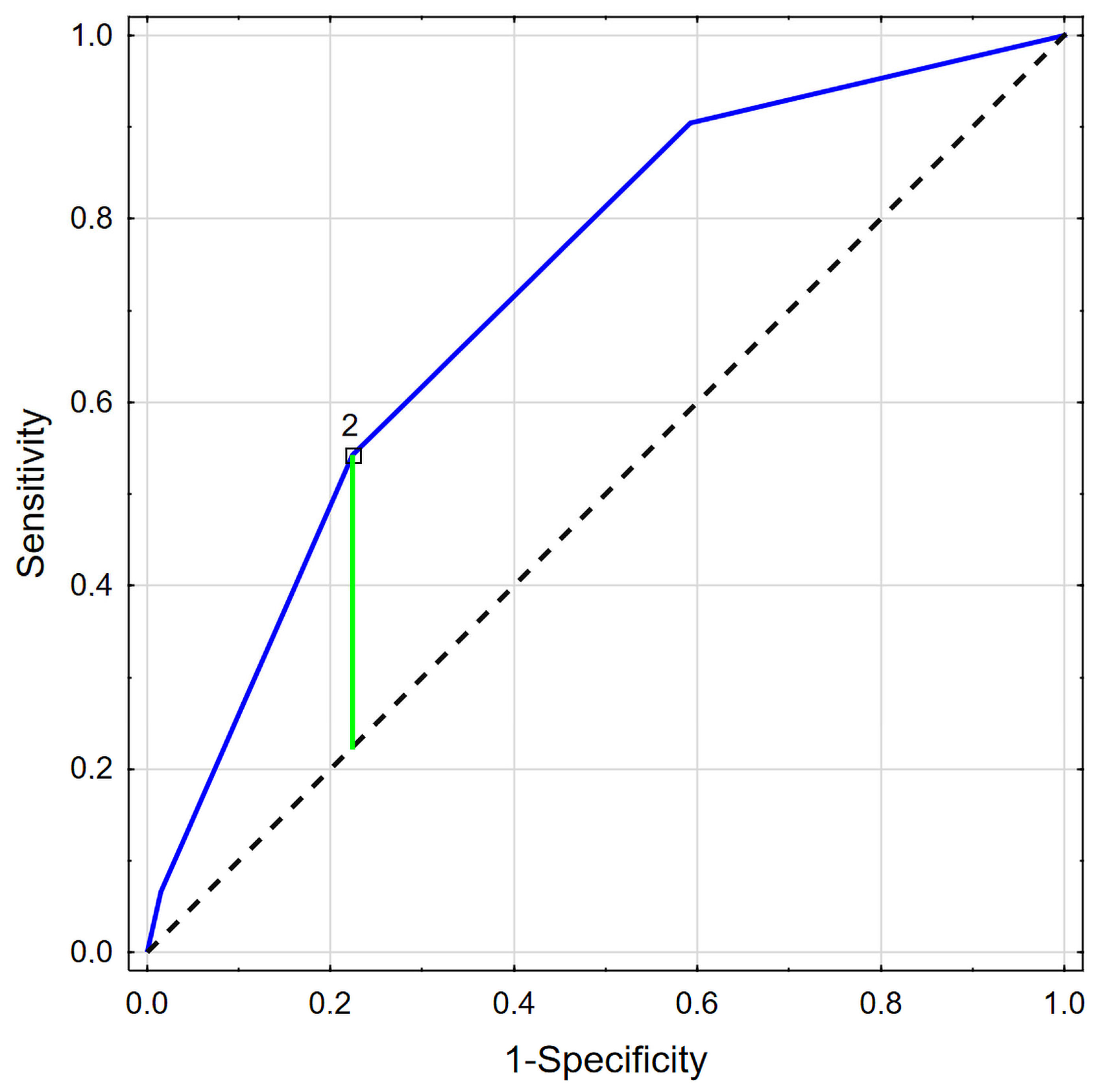
The value of WBCS was significantly related to mortality risk (OR = 2.821; CI: 2.037–3.906; p < 0.001). ROC analysis revealed that the best cut-off value for WBCS and mortality prediction is two (AUC 0.719; p < 0.001), as shown in Table 4 and Figure 1.
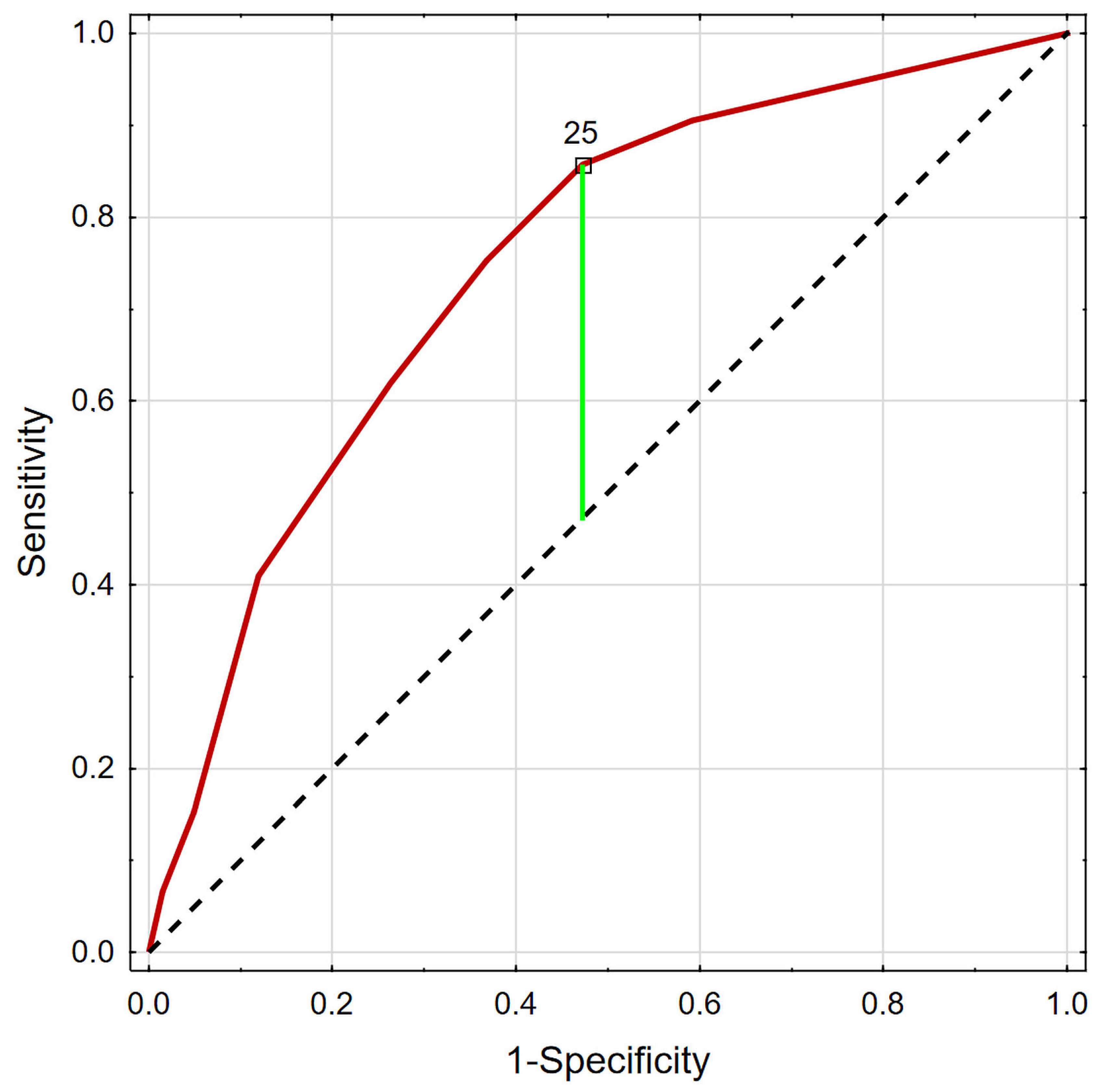
To improve the predictive properties of the WBCS, dichotomous values for each component variable were multiplied by the corresponding normalized odds ratios (25 for eosinophils, 20 for lymphocytes, and 55 for neutrophils) (Table 3). The modified WBCS showed a slight improvement in AUC (0.748; p < 0.001), but this somewhat complicated its use (Table 5). The proposed best cut-off value for mortality prediction was 25 (Figure 2).
In the backward multivariable logistic regression analysis, including variables significantly associated with mortality (demographics, comorbidities, inflammatory markers), WBCS and modified WBCS were independently associated with this outcome (Table 6).

4. Discussion

This study’s findings showed statistically significant differences between survivors and deceased in the population of patients with SARS-CoV-2 pneumonia. CRP concentration and calculated parameters—WBCS, NLR, taken on admission—were significantly associated with mortality. What is more, the neutrophil count and NLR had the largest AUC in ROC analysis, which makes them the best prognostic factors. According to study results, counts of neutrophils, lymphocytes, and eosinophils also significantly differ between populations of survivors and deceased. We evaluated the cut-off values to determine the significant threshold of respective values and then used them to create the WBCS. WBCS is a tool based on the three parameters calculated from the differential blood count. It is helpful in anticipating COVID-19 outcomes when used on admission. Undoubtedly, it is useful in very harsh circumstances—lack of resources, staff, and ICU beds. This study shows that the identification of high-risk patients who will need intensive treatment could be easily and quickly achieved on admission day. What is important, early identification of individuals at risk of death may facilitate early optimization of treatment strategy [11].
In ROC analysis, CRP concentration had the 3rd highest AUC, which makes CRP concentration a beneficial marker for predicting an unfavorable COVID-19 course. Parameters with higher AUC are NLR and neutrophils only. Nevertheless, mortality prediction derived only from serum CRP concentration can be misleading because it can be easily interfered with by steroids and non-steroid anti-inflammatory drugs intake [9,18,19,20].
Evaluating three different types of white blood cells—neutrophils, eosinophils, and lymphocytes—constitutes the usefulness of the WBCS. Different absolute counts of these types of immune cells were observed, depending on the type of infection—whether it was viral, fungal, or bacterial. Moreover, each of these three types of leukocytes was the subject of studies to anticipate a severe or fatal course of SARS-CoV-2 infection [21,22,23,24]
Although eosinophil count was not significantly associated with mortality prediction (OR 0.081; p = 0.177), we found a substantial difference in eosinophil count between survivors and deceased (p = 0.007). Eosinophils are a type of white blood cell that are frequently linked with allergic reactions and parasite infections; they are also a very useful marker to evaluate the course of the infection. Moreover, present studies connect eosinophils with contributions in such areas as modulation of immune response, regulation of homeostasis, tissue regeneration, glucose metabolism in adipocytes, autoimmunity, and defense against cancer and both viral and bacterial infection [25]. Changes in the absolute count of eosinophils correlate with the severity of the infection. In case of SARS-CoV-2 infection, there is evidence that a decrease in absolute eosinophil count is connected with a higher mortality rate [26]. What is more, a higher count of eosinophils is correlated with immune recovery and mild course of the disease, also with a better outcome [25,27]. It is worth mentioning that most of the COVID-19 deceased patients had eosinopenia, which was a significantly less frequent condition in patients who survived, both moderate and severe courses of the disease [28,29,30]. Study showed that patients with COVID-19 with eosinophilia had significantly lower serum CRP concentration and fewer ground-glass opacities in chest radiograms compared to patients without eosinophilia (p < 0.05) [27]. Also, patients with eosinophilia required shorter hospitalization, less often needed ICU admission, mechanical ventilation, and oxygen therapy [27]. Worth mentioning is the relation between viral load and absolute eosinophil count in infections. Studies have shown that the viral load of respiratory syncytial virus [28,31,32,33], parainfluenza virus [28,34], and rhinovirus [28,35] has a strong negative correlation with the level of eosinophils. In the influenza A virus infection, a higher level of eosinophils is connected with a faster removal of the virus [28,36,37,38]. Several studies suggested that allergic asthma coexisting with viral infection may be considered as a protective factor, compared with non-allergic asthma [25,39,40]. In fact, eosinophilia can be protective against SARS-CoV-2, even if resulting from allergic asthma, which corroborates our findings [25]. Other studies also showed that eosinophil count was increased in all patients before discharge, which implies that the growth of eosinophil level is correlated with improvement of clinical status in COVID-19 [23,29,30]. Conversely, another study showed that previous eosinophilia (≥0.15 × 10⁹/L) can cause lower hospital admission risk in patients with COVID-19 [25]. Moreover, in this work, patients with asthma and eosinophilia had lower mortality than patients with an eosinophil count below 0.15 × 10⁹/L. Furthermore, the protective role of eosinophils during SARS-CoV-2 and other viral infections is expressed even if an increase in absolute eosinophil count is caused by exacerbation of asthma [25,28,36,41,42].
Lymphocyte count is, according to this study, an important factor in predicting the mortal course of COVID-19. It is easy to evaluate and, what is more, it is cheap. Although the lymphocyte count has an AUC lower than NLR, neutrophil count, leukocyte count, and CRP concentration, it is still a useful tool. Its reliability is still on a high level, and therefore, it constitutes a beneficial addition to the WBCS. Studies showed that lymphopenia is also common among patients with COVID-19 [43,44,45]. On the other hand, the eosinophil level shows a positive correlation with the lymphocyte level, both in mild and severe courses of the disease. Another study suggests that lymphopenia could be an early accessible prognostic factor to determine the severity of the COVID-19 course in hospitalized patients [22]. Meta-data gathered from 76 studies from 16 countries indicates that lymphocyte count is the strongest factor, amongst 13 common laboratory variables that were investigated, to determine severe course and anticipate mortality [46]. Strong correlation was also found between lymphopenia and inflammatory biomarkers of COVID-19 [47]. Significant correlation was also found between lymphopenia and worsening of the radiological image [47]. Studies also showed that lymphopenia is a prognostic indicator of prolonged hospitalization [48,49]. Changes in absolute lymphocyte count can be a valuable marker not only in the COVID-19 course. For instance, lymphocyte level was significantly lower in patients with measles virus infection than in those without such infection [50]. Moreover, lymphopenia was also observed during Ebola, Marburg, and RSV infection [51,52]. It is suggested that the decrease in the lymphocyte level during these infections is a result of apoptosis [51,52]. Connection between lymphopenia, T lymphocyte subsets depletion, and SARS (Severe Acute Respiratory Syndrome) activity was also proved [53].
Findings of our study showed a significant correlation between a high level of absolute neutrophil count and mortality in a group of COVID-19 patients. What is more, absolute neutrophil count—and also NLR—has the largest AUC in ROC analysis. In that case, we can consider these two markers as strong and reliable factors of poor prognosis in the COVID-19 course. Absolute neutrophil count is significantly higher in patients with a severe course of COVID-19, similar to patients with SARS and Middle East respiratory syndrome (MERS). The shift toward immature neutrophils is a hyperinflammation marker, linked with exacerbation of the COVID-19 course [21]. Neutrophil count in the airway shows a positive correlation with the virulence and dose of the influenza virus. Studies showed that RSV can elongate a lifespan of neutrophils through inhibition or stopping the apoptosis. Additionally, during influenza A virus (IAV) infection in mice, IL-6 and granulocyte-colony stimulating factor (G-CSF) can elongate the lifespan of lung neutrophils. On the other hand, there are studies that imply that some viral infections can induce apoptosis in the neutrophil population, e.g., IAV or HIV. What is more, absolute neutrophil count rises during COVID-19, and it shows a positive correlation with the severity of the course. Worth mentioning is that in exceptionally severe cases and in poor prognosis, both neutrophil count and neutrophil extracellular traps (NET) had significantly increased levels. It was also reported that there is a connection between excessive activation of the anaphylatoxin–NET axis and thrombosis, and progression of the disease course in patients with COVID-19 [54]. It is also suggested that viral infection could inhibit neutrophil response and, because of that, make the system susceptible to bacterial or fungal infection [55]. What is more, bacterial and fungal coinfections involving existing viral respiratory tract infections are not uncommon. Both bacteria and fungi can be part of the usual commensal flora and also cause infections [56,57]. A good example is Candida albicans, which is present in the oral cavity as a part of the natural flora and can cause infections in cases of a weakened or overloaded immune system [58]. Patients with already developed infections (such as COVID-19) are particularly susceptible to this, but it is additionally facilitated by the use of broad-spectrum antibiotics and prolonged corticosteroid therapy [56,59]. The relevant factor is also the connection between some bacterial infections in COVID-19-positive patients and exacerbation of non-infectious diseases. For example, there is a strong correlation between chronic coronary syndrome and the presence of Staphylococcus aureus or a strong direct relationship between Hemophilus influenzae and pulmonary thromboembolism [56].
NLR is not only associated with high mortality risk in the COVID-19 course but also is known as a biomarker of increased severity of the disease; key clinical outcomes include intubation (more days intubated), ICU admission (longer ICU admission), and risk of severe disease in intubated patients [29,43,60,61,62,63,64,65,66,67]. Therefore, there are several fields in which calculating NLR can be very useful in the decision-making process, possibly even during triage procedures. An interesting and noteworthy fact about NLR is that it could be a prediction biomarker of influenza susceptibility, although it is not a prediction marker of a poor influenza course [68]. Amongst SARS-CoV-2, RSV, and influenza virus, only in SARS-CoV-2 infection is NLR a predictive factor of an unfavorable course of disease [69].
The usefulness of NLR in other viral diseases is an unexplored field, and it requires more studies to prove whether there is a proper way to use it.
On the other hand, it is worth mentioning that there were, in fact, many different approaches to anticipate a severe course of COVID-19. These methods include, e.g., assessment of peripheral and organ perfusion (fingertip infrared thermography, capillary refill time, dynamic tissue perfusion measurement, and pulse oximetry among others), diagnostic imaging (high-resolution computed tomography), hemostasis laboratory tests (elevated d-dimers and fibrinogen, prolonged prothrombin time and thrombocytopenia) and indexes derived from respiration parameters (OI—oxygenation index, OSI—oxygen saturation index, AOI—age-adjusted oxygenation index and ROX index—respiratory rate–oxygenation index) [70,71,72,73].
Comparing this work to other studies, there are several conclusions. According to Gajedra’s study, lymphopenia is the most common laboratory finding in patients with COVID-19 [14]. This is consistent with our research, which calculates the cut-off value for lower lymphocyte count to predict unfavorable severe COVID-19 outcomes.
As it was presented in this study, the cut-off value of NLR for mortality prediction in the COVID-19 course was 10.1 (sensitivity 0.629, specificity 0.711, AUC 0.715, p < 0.001), which significantly differs from Rathod’s et al. study, in which cut-off value for NLR was 4.14 (sensitivity 0.963, specificity 0.883, AUC 0.959, p < 0.001) [3]. These differences could be explained by variations in the population sample, duration of the study, or not including the asymptomatic patients in our study. On the other hand, according to Yan et al., NLR above the level of 11.75 was significantly correlated with all-cause in-hospital mortality [60]. Still, in Sejópoles et al.’s study, this cut-off value at admission was set at 6.13 [11]. Therefore, further studies or even meta-analysis would help proceed with the discussion about these cut-off values for NLR.
Similarly to NLR, initial CRP concentration cut-off values anticipating the severe course of COVID-19 and high mortality risk differ in other studies. Stringer et al. set this cut-off value at 4.0 mg/dL, but Smilowitz et al. suggested the CRP concentration threshold of 10.8 mg/dL [19,74]. The findings of our study showed that the cut-off value at 6.9 mg/dL should also be considered.
In another study, Xuan et al. investigated 99 patients with COVID-19 treated in the ICU, 58 of whom survived, and 41 died. Low absolute eosinophil count was a prognostic indicator of fatal course due to COVID-19 with a cut-off eosinophil value of 0.04 × 10⁹/L [75]. Therefore, eosinophils were included in our ROC analysis and WBCS calculation. However, in our study, the calculated eosinophil count cut-off value was 0.01 × 10⁹/L, and WBCS can be stricter than in the Xuan et al. study.
Without a doubt, there are many reasons why some of the findings of our study differ from those of other studies. Gathering data from all around the world can lead to similar but slightly different conclusions. One of the most important factors is time—it can indicate which variant or strain could provoke a new wave of coronavirus disease, and different variants may vary in the characteristics of infected patients. Another important factor is the demography of patients in the collected data. Some of the healthcare units could prioritize a specific group of patients, depending on their specialty. This situation can refer to a population from a specific area, with a specific kind of disease, or to people with a specified profession. Each group of patients has its own attributes, which we should pay attention to.
Nevertheless, depending on the different sample, study inclusion/exclusion criteria, population immunity, geographical localization, or even different diagnostic methods, the optimal cut-off value of specific parameter concentration may vary. These differences prove that there is a need for further studies and validations [19,74].
Despite global efforts, SARS-CoV-2 has not been eliminated. Although the number of cases and deaths of COVID-19 is decreasing, which is caused by, i.e., vaccinations, new variants of concern are being discovered; thus, it is reasonable to maintain useful tools and methods in the future [76,77].
This study has several limitations. It is a single-center retrospective study based on the findings from hospitalizations during the domination of one variant of SARS-CoV-2—the Delta variant. Further validations are advised for the other variants of concern, such as the Omicron variant, which is a dominant variant nowadays. Although the Omicron variant is considered more benign than the Delta variant (less risk of hospitalization, ICU admission, oxygen therapy, mechanical ventilation, and death), it should not be disregarded, as it still can lead to a severe course of COVID-19 [78,79]. One of the significant differences between these variants is a less pronounced loss of smell in the Omicron variant, possibly due to reduced viral load in nasal tissue [78,79]. This could lead to delayed onset of treatment or possible misdiagnosis (without laboratory tests). What is more, this study took place when the vaccination level was not high. This leads to the conclusion that nowadays, the immune response could be different, and we need more data. The next limitation is the fact that this study did not include children and pregnant women, and it narrows the study population to non-pregnant European adults. That means we do not have enough supporting data to easily transfer the usefulness of WBCS to the mentioned groups. Our findings could be applicable; however, strong validation is needed. Another limitation is the lack of a control group and the exclusion of asymptomatic patients.
Authors recommend further studies to assess the usefulness of WBCS in COVID-19 patients and in other viral infections, caused by, e.g., the influenza virus or syncytial respiratory virus. Additionally, validation in non-European centers is needed.

5. Conclusions

Differential blood count-related variables, especially counts of neutrophils, lymphocytes, eosinophils, and NLR, can be helpful in identifying patients with a high risk of death due to the unfavorable course of severe COVID-19 infection. However, the use of all these parameters separately could be cumbersome in clinical practice. The proposed new simplified White Blood Count Score is easy to use and has equal or even better mortality prediction properties compared to common differential blood count-related variables and C-reactive protein. However, further studies are needed to validate this tool in different patient populations.

Author Contributions

K.P. planned the study, created the database, wrote the draft of the manuscript, and corrected the manuscript. A.L. planned the study, performed statistics, provided methodological and expert support, and corrected the manuscript. M.G. was responsible for study design, data curation, creation of the database, and correction of the manuscript. B.R. was responsible for study design, data curation, creation of the database, and correction of the manuscript. A.M. was responsible for study design, data curation, creation of the database, and correction of the manuscript. J.K. was responsible for study design, data curation, creation of the database, and correction of the manuscript. All authors have read and agreed to the published version of the manuscript.

Funding

The publication was funded by the subvention of the Polish Ministry of Education and Science (Project No. 602/WIM).

Institutional Review Board Statement

The study was approved by the Bioethics Committee of the Military Institute of Medicine (24/WIM/2021) on 21 May 2021 and conducted in accordance with the Declaration of Helsinki. All variables that could possibly jeopardize patients’ anonymity were permanently deleted from the dataset.

Informed Consent Statement

Not applicable due to the retrospective nature of the study and lack of consent approved by the Ethics Committee.

Data Availability Statement

The datasets used and analyzed in this study are available from the corresponding author upon reasonable request.

Conflicts of Interest

The authors declare no conflicts of interest.

Abbreviations

The following abbreviations are used in this manuscript:
SARS-CoV-2severe acute respiratory syndrome coronavirus 2
WBCSWhite Blood Cell Score
SIRSsystemic inflammatory response syndrome
WHOWorld Health Organization
MODSmultiple organ dysfunction syndrome
NLRneutrophil to lymphocyte ratio
CRPC-reactive protein
LDHlactate dehydrogenase
CBCcomplete blood count
CAPcommunity-acquired pneumonia
G-CSFgranulocyte colony-stimulating factor
HIVhuman immunodeficiency virus
WBCwhite blood cell concentration
RBCred blood cell concentration
HGBhemoglobin concentration
PLTplatelet concentration
AUCarea under the curve
ORodds ratio
CIconfidence interval
ICUintensive care unit
RSVrespiratory syncytial virus
SARSsevere acute respiratory syndrome
MERSMiddle East respiratory syndrome
IAVinfluenza A virus
IL-6interleukin 6
NETneutrophil extracellular traps

References

  1. COVID-19 Treatment Guidelines Panel. Coronavirus Disease 2019 (COVID-19) Treatment Guidelines. National Institutes of Health. Available online: https://www.ncbi.nlm.nih.gov/books/NBK570371/pdf/Bookshelf_NBK570371.pdf (accessed on 18 July 2024).
  2. Abate, S.M.; Checkol, Y.A.; Mantefardo, B. Global prevalence and determinants of mortality among patients with COVID-19: A systematic review and meta-analysis. Ann. Med. Surg. 2021, 64, 102204. [Google Scholar] [CrossRef]
  3. Rathod, B.D.; Amle, D.; Khot, R.S.; Prathipati, K.K.; Joshi, P.P. Neutrophil-to-Lymphocyte Ratio as a Predictor of Disease Severity and Mortality in Coronavirus Disease 2019: Prospective Study From Central India. Cureus 2022, 14, e23696. [Google Scholar] [CrossRef] [PubMed]
  4. World Health Organization. 2023 Data.Who.Int, WHO Coronavirus (COVID-19) Dashboard > Cases [Dashboard]. Available online: https://data.who.int/dashboards/covid19/cases (accessed on 10 February 2026).
  5. Katzenschlager, S.; Zimmer, A.J.; Gottschalk, C.; Grafeneder, J.; Seitel, A.; Maier-Hein, L.; Benedetti, A.; Larmann, J.; Weigand, M.A.; McGrath, S.; et al. Can we predict the severe course of COVID-19—A systematic review and meta-analysis of indicators of clinical outcome? PLoS ONE 2021, 16, e0255154. [Google Scholar] [CrossRef] [PubMed]
  6. Williamson, E.J.; Walker, A.J.; Bhaskaran, K.; Bacon, S.; Bates, C.; Morton, C.E.; Curtis, H.J.; Mehrkar, A.; Evans, D.; Inglesby, P.; et al. Factors associated with COVID-19-related death using OpenSAFELY. Nature 2020, 584, 430–436. [Google Scholar] [CrossRef]
  7. Clinical Management of COVID-19: Living Guideline, 18 August 2023; World Health Organization: Geneva, Switzerland, 2023; Available online: https://iris.who.int/handle/10665/372288 (accessed on 6 December 2025).
  8. Zhou, F.; Yu, T.; Du, R.; Fan, G.; Liu, Y.; Liu, Z.; Xiang, J.; Wang, Y.; Song, B.; Gu, X.; et al. Clinical course and risk factors for mortality of adult inpatients with COVID-19 in Wuhan, China: A retrospective cohort study. Lancet 2020, 395, 1054–1062. [Google Scholar] [CrossRef]
  9. Symonets, Y.; Tuboltseva, O.; Al-Jeabory, M.; Doan, S. C-reactive protein in COVID-19 patients. Disaster Emerg. Med. J. 2023, 8, 124–125. [Google Scholar] [CrossRef]
  10. Cheng, L.; Li, H.; Li, L.; Liu, C.; Yan, S.; Chen, H.; Li, Y. Ferritin in the coronavirus disease 2019 (COVID-19): A systematic review and meta-analysis. J. Clin. Lab. Anal. 2020, 34, e23618. [Google Scholar] [CrossRef] [PubMed] [PubMed Central]
  11. Sejópoles, M.D.; Souza-Silva, J.P.; Silva-Santos, C.; Paula-Duarte, M.M.; Fontes, C.J.; Gomes, L.T. Prognostic value of neutrophil and lymphocyte counts and neutrophil/lymphocyte ratio for predicting death in patients hospitalized for COVID-19. Heliyon 2023, 9, e16964. [Google Scholar] [CrossRef]
  12. Yang, A.-P.; Liu, J.-P.; Tao, W.-Q.; Li, H.-M. The diagnostic and predictive role of NLR, d-NLR and PLR in COVID-19 patients. Int. Immunopharmacol. 2020, 84, 106504. [Google Scholar] [CrossRef] [PubMed]
  13. Coomes, E.A.; Haghbayan, H. Interleukin-6 in COVID-19: A systematic review and meta-analysis. Rev. Med. Virol. 2020, 30, e2141. [Google Scholar] [CrossRef] [PubMed] [PubMed Central]
  14. Ruan, Q.; Yang, K.; Wang, W.; Jiang, L.; Song, J. Clinical predictors of mortality due to COVID-19 based on an analysis of data of 150 patients from Wuhan, China. Intensive Care Med. 2020, 46, 846–848. [Google Scholar] [CrossRef] [PubMed]
  15. Gajendra, S. Spectrum of hematological changes in COVID-19. Am. J. Blood Res. 2022, 12, 43–53. [Google Scholar] [PubMed] [PubMed Central]
  16. Buonacera, A.; Stancanelli, B.; Colaci, M.; Malatino, L. Neutrophil to Lymphocyte Ratio: An Emerging Marker of the Relationships between the Immune System and Diseases. Int. J. Mol. Sci. 2022, 23, 3636. [Google Scholar] [CrossRef] [PubMed] [PubMed Central]
  17. Song, M.; Graubard, B.I.; Rabkin, C.S.; Engels, E.A. Neutrophil-to-lymphocyte ratio and mortality in the United States general population. Sci. Rep. 2021, 11, 464. [Google Scholar] [CrossRef] [PubMed]
  18. Nehring, S.M.; Goyal, A.; Patel, B.C. C-Reactive Protein: Clinical Relevance and Interpretation. In StatPearls [Internet]; StatPearls Publishing: Treasure Island, FL, USA, 2024. Available online: https://www.ncbi.nlm.nih.gov/books/NBK441843/ (accessed on 6 December 2025).
  19. Stringer, D.; Braude, P.; Myint, P.K.; Evans, L.; Collins, J.T.; Verduri, A.; Quinn, T.J.; Vilches-Moraga, A.; Stechman, M.J.; Pearce, L.; et al. The role of C-reactive protein as a prognostic marker in COVID-19. Int. J. Epidemiol. 2021, 50, 420–429. [Google Scholar] [CrossRef]
  20. Ali, N. Elevated level of C-reactive protein may be an early marker to predict risk for severity of COVID-19. J. Med. Virol. 2020, 92, 2409–2411. [Google Scholar] [CrossRef] [PubMed] [PubMed Central]
  21. McKenna, E.; Wubben, R.; Isaza-Correa, J.M.; Melo, A.M.; Mhaonaigh, A.U.; Conlon, N.; O’Donnell, J.S.; Ní Cheallaigh, C.; Hurley, T.; Stevenson, N.J.; et al. Neutrophils in COVID-19: Not Innocent Bystanders. Front. Immunol. 2022, 13, 864387. [Google Scholar] [CrossRef] [PubMed] [PubMed Central]
  22. Wagner, J.; DuPont, A.; Larson, S.; Cash, B.; Farooq, A. Absolute lymphocyte count is a prognostic marker in COVID-19: A retrospective cohort review. Int. J. Lab. Hematol. 2020, 42, 761–765. [Google Scholar] [CrossRef] [PubMed] [PubMed Central]
  23. Lindsley, A.W.; Schwartz, J.T.; Rothenberg, M.E. Eosinophil responses during COVID-19 infections and coronavirus vaccination. J. Allergy Clin. Immunol. 2020, 146, 1–7. [Google Scholar] [CrossRef] [PubMed] [PubMed Central]
  24. Tordjman, M.; Mekki, A.; Mali, R.D.; Saab, I.; Chassagnon, G.; Guillo, E.; Burns, R.; Eshagh, D.; Beaune, S.; Madelin, G.; et al. Pre-test probability for SARS-Cov-2-related infection score: The PARIS score. PLoS ONE 2020, 15, e0243342. [Google Scholar] [CrossRef]
  25. Macchia, I.; La Sorsa, V.; Urbani, F.; Moretti, S.; Antonucci, C.; Afferni, C.; Schiavoni, G. Eosinophils as potential biomarkers in respiratory viral infections. Front. Immunol. 2023, 14, 1170035. [Google Scholar] [CrossRef] [PubMed] [PubMed Central]
  26. Asmara, I.G.Y.; Agustriadi, I.G.N.O.; Sujaya, I.M.; Thalib, S.S.; Lestari, R.; Fatrullah, S.P.; Widiasari, K.S.R.; Ajmala, I.E. Eosinopenia as a prognostic factor of mortality for COVID-19 in end-stage kidney disease patients. Casp. J. Intern. Med. 2024, 15, 273–279. [Google Scholar] [CrossRef] [PubMed] [PubMed Central]
  27. Nair, A.P.; Soliman, A.; Al Masalamani, M.A.; De Sanctis, V.; Nashwan, A.J.; Sasi, S.; Ali, E.A.; Hassan, O.A.; Iqbal, F.M.; Yassin, M.A. Clinical Outcome of Eosinophilia in Patients with COVID-19: A Controlled Study. Acta Biomed. 2020, 91, e2020165. [Google Scholar] [CrossRef] [PubMed] [PubMed Central]
  28. Rataj, J.; Chałubiński, M.; Gawrysiak, M. Potencjalnie ochronna rola eozynofilów w zakażeniach wirusami oddechowymi. Alerg. Astma Immunol. 2024, 29, 148–160. [Google Scholar]
  29. Zhang, J.J.; Dong, X.; Cao, Y.Y.; Yuan, Y.D.; Yang, Y.B.; Yan, Y.Q.; Akdis, C.A.; Gao, Y.D. Clinical characteristics of 140 patients infected with SARS-CoV-2 in Wuhan, China. Allergy 2020, 75, 1730–1741. [Google Scholar] [CrossRef] [PubMed]
  30. Du, Y.; Tu, L.; Zhu, P.; Mu, M.; Wang, R.; Yang, P.; Wang, X.; Hu, C.; Ping, R.; Hu, P.; et al. Clinical Features of 85 Fatal Cases of COVID-19 from Wuhan. A Retrospective Observational Study. Am. J. Respir. Crit. Care Med. 2020, 201, 1372–1379. [Google Scholar] [CrossRef]
  31. Sur, S.; Glitz, D.G.; Kita, H.; Kujawa, S.M.; Peterson, E.A.; Weiler, D.A.; Kephart, G.M.; Wagner, J.M.; George, T.J.; Gleich, G.J.; et al. Localization of eosinophil-derived neurotoxin and eosinophil cationic protein in neutrophilic leukocytes. J. Leukoc. Biol. 1998, 63, 715–722. [Google Scholar] [CrossRef]
  32. Pennings, J.L.A.; Schuurhof, A.; Hodemaekers, H.M.; Buisman, A.; De Rond, L.C.G.H.; Widjojoatmodjo, M.N.; Luytjes, W.; Kimpen, J.L.L.; Bont, L.; Janssen, R. Systemic Signature of the Lung Response to Respiratory Syncytial Virus Infection. PLoS ONE 2011, 6, e21461. [Google Scholar] [CrossRef]
  33. Sabogal Piñeros, Y.S.; Bal, S.M.; van de Pol, M.A.; Dierdorp, B.S.; Dekker, T.; Dijkhuis, A.; Brinkman, P.; van der Sluijs, K.F.; Zwinderman, A.H.; Majoor, C.J.; et al. Anti-IL-5 in Mild Asthma Alters Rhinovirus-induced Macrophage, B-Cell, and Neutrophil Responses (MATERIAL). A Placebo-controlled, Double-Blind Study. Am. J. Respir. Crit. Care Med. 2019, 199, 508–517. [Google Scholar] [CrossRef] [PubMed]
  34. Adamko, D.J.; Yost, B.L.; Gleich, G.J.; Fryer, A.D.; Jacoby, D.B. Ovalbumin Sensitization Changes the Inflammatory Response to Subsequent Parainfluenza Infection: Eosinophils Mediate Airway Hyperresponsiveness, M2 Muscarinic Receptor Dysfunction, and Antiviral Effects. J. Exp. Med. 1999, 190, 1465–1478. [Google Scholar] [CrossRef] [PubMed]
  35. Piñeros, Y.S.S.; Bal, S.M.; Dijkhuis, A.; Majoor, C.J.; Dierdorp, B.S.; Dekker, T.; Hoefsmit, E.P.; Bonta, P.I.; Picavet, D.; van der Wel, N.N.; et al. Eosinophils capture viruses, a capacity that is defective in asthma. Allergy 2019, 74, 1898–1909. [Google Scholar] [CrossRef]
  36. Samarasinghe, A.E.; Woolard, S.N.; Boyd, K.L.; Hoselton, S.A.; Schuh, J.M.; McCullers, J.A. The immune profile associated with acute allergic asthma accelerates clearance of influenza virus. Immunol. Cell Biol. 2014, 92, 449–459. [Google Scholar] [CrossRef]
  37. Ishikawa, H.; Sasaki, H.; Fukui, T.; Fujita, K.; Kutsukake, E.; Matsumoto, T. Mice with Asthma Are More Resistant to Influenza Virus Infection and NK Cells Activated by the Induction of Asthma Have Potentially Protective Effects. J. Clin. Immunol. 2012, 32, 256–267. [Google Scholar] [CrossRef]
  38. Taubenberger, J.K.; Kash, J.C. Influenza Virus Evolution, Host Adaptation and Pandemic Formation. Cell Host Microbe 2010, 7, 440–451. [Google Scholar] [CrossRef] [PubMed]
  39. Adir, Y.; Saliba, W.; Beurnier, A.; Humbert, M. Asthma and COVID-19: An update. Eur. Respir. Rev. 2021, 30, 210152. [Google Scholar] [CrossRef]
  40. Eggert, L.E.; He, Z.; Collins, W.; Lee, A.S.; Dhondalay, G.; Jiang, S.Y.; Fitzpatrick, J.; Snow, T.T.; Pinsky, B.A.; Artandi, M.; et al. Asthma phenotypes, associated comorbidities, and long-term symptoms in COVID-19. Allergy 2022, 77, 173. [Google Scholar] [CrossRef]
  41. Drake, M.G.; Fryer, A.D.; Jacoby, D.B. Protective effects of eosinophils against COVID-19: More than an ACE(2) in the hole? J. Allergy Clin. Immunol. Pract. 2021, 9, 2539–2540. [Google Scholar] [CrossRef]
  42. Gao, Y.-D.; Agache, I.; Akdis, M.; Nadeau, K.; Klimek, L.; Jutel, M.; Akdis, C.A. The effect of allergy and asthma as a comorbidity on the susceptibility and outcomes of COVID-19. Int. Immunol. 2022, 34, 177–188. [Google Scholar] [CrossRef] [PubMed]
  43. Zhang, J.; Cao, Y.; Tan, G.; Dong, X.; Wang, B.; Lin, J.; Yan, Y.; Liu, G.; Akdis, M.; Akdis, C.A.; et al. Clinical, radiological, and laboratory characteristics and risk factors for severity and mortality of 289 hospitalized COVID-19 patients. Allergy 2021, 76, 533–550. [Google Scholar] [CrossRef] [PubMed]
  44. Wang, D.; Hu, B.; Hu, C.; Zhu, F.; Liu, X.; Zhang, J.; Wang, B.; Xiang, H.; Cheng, Z.; Xiong, Y.; et al. Clinical Characteristics of 138 Hospitalized Patients With 2019 Novel Coronavirus–Infected Pneumonia in Wuhan, China. JAMA 2020, 323, 1061–1069. [Google Scholar] [CrossRef]
  45. Guan, W.-J.; Ni, Z.-Y.; Hu, Y.; Liang, W.; Ou, C.-Q.; He, J.-X.; Liu, L.; Shan, H.; Lei, C.-L.; Hui, D.S.; et al. Clinical characteristics of 2019 novel coronavirus infection in China. medRxiv 2020. [Google Scholar] [CrossRef]
  46. Lai, K.L.; Hu, F.C.; Wen, F.Y.; Chen, J.J. Lymphocyte count is a universal predictor of health outcomes in COVID-19 patients before mass vaccination: A meta-analytical study. J. Glob. Health 2022, 12, 05041. [Google Scholar] [CrossRef] [PubMed] [PubMed Central]
  47. Ghizlane, E.A.; Manal, M.; Abderrahim, E.K.; Abdelilah, E.; Mohammed, M.; Rajae, A.; Amine, B.M.; Houssam, B.; Naima, A.; Brahim, H. Lymphopenia in COVID-19: A single center retrospective study of 589 cases. Ann. Med. Surg. 2021, 69, 102816. [Google Scholar] [CrossRef] [PubMed] [PubMed Central]
  48. Lee, J.; Park, S.S.; Kim, T.Y.; Lee, D.G.; Kim, D.W. Lymphopenia as a Biological Predictor of Outcomes in COVID-19 Patients: A Nationwide Cohort Study. Cancers 2021, 13, 471. [Google Scholar] [CrossRef] [PubMed] [PubMed Central]
  49. Liu, J.; Li, H.; Luo, M.; Liu, J.; Wu, L.; Lin, X.; Li, R.; Wang, Z.; Zhong, H.; Zheng, W.; et al. Lymphopenia predicted illness severity and recovery in patients with COVID-19: A single-center, retrospective study. PLoS ONE 2020, 15, e0241659. [Google Scholar] [CrossRef]
  50. Coovadia, H.M.; Wesley, A.; Brain, P.; Henderson, L.G.; Hallett, A.F.; Vos, G.H. Immunoparesis and outcome in measles. Lancet 1977, 1, 619–621. [Google Scholar] [CrossRef] [PubMed]
  51. Geisbert, T.W.; Hensley, L.E.; Gibb, T.R.; Steele, K.E.; Jaax, N.K.; Jahrling, P.B. Apoptosis induced in vitro and in vivo during infection by Ebola and Marburg viruses. Lab. Investig. 2000, 80, 171–186. [Google Scholar] [CrossRef] [PubMed]
  52. Roe, M.F.; Bloxham, D.M.; White, D.K.; Ross-Russell, R.I.; Tasker, R.T.; O’Donnell, D.R. Lymphocyte apoptosis in acute respiratory syncytial virus bronchiolitis. Clin. Exp. Immunol. 2004, 137, 139–145. [Google Scholar] [CrossRef] [PubMed] [PubMed Central]
  53. Wong, R.S.M.; Wu, A.; To, K.F.; Lee, N.; Lam, C.W.K.; Wong, C.K.; Chan, P.K.S.; Ng, M.H.L.; Yu, L.M.; Hui, D.S.; et al. Haematological manifestations in patients with severe acute respiratory syndrome: Retrospective analysis. Br. Med. J. 2003, 326, 1358–1362. [Google Scholar] [CrossRef]
  54. Ma, Y.; Zhang, Y.; Zhu, L. Role of neutrophils in acute viral infection. Immun. Inflamm. Dis. 2021, 9, 1186–1196. [Google Scholar] [CrossRef] [PubMed] [PubMed Central]
  55. Johansson, C.; Kirsebom, F.C.M. Neutrophils in respiratory viral infections. Mucosal Immunol. 2021, 14, 815–827. [Google Scholar] [CrossRef]
  56. Boia, E.R.; Huț, A.R.; Roi, A.; Luca, R.E.; Munteanu, I.R.; Roi, C.I.; Riviș, M.; Boia, S.; Duse, A.O.; Vulcănescu, D.D.; et al. Associated Bacterial Coinfections in COVID-19-Positive Patients. Medicina 2023, 59, 1858. [Google Scholar] [CrossRef]
  57. Westblade, L.F.; Simon, M.S.; Satlin, M.J. Bacterial Coinfections in Coronavirus Disease 2019. Trends Microbiol. 2021, 29, 930–941. [Google Scholar] [CrossRef]
  58. Katz, J. Prevalence of candidiasis and oral candidiasis in COVID-19 patients: A cross-sectional pilot study from the patients’ registry in a large health center. Quintessence Int. 2021, 52, 714–718. [Google Scholar]
  59. Babamahmoodi, F.; Rezai, M.S.; Ahangarkani, F.; Mohammadi Kali, A.; Alizadeh-Navaei, R.; Alishahi, A.; Najafi, N.; Haddadi, A.; Davoudi, A.; Azargon, L.; et al. Multiple Candida strains causing oral infection in COVID-19 patients under corticosteroids and antibiotic therapy: An observational study. Front. Cell. Infect. Microbiol. 2022, 12, 1103226. [Google Scholar] [CrossRef] [PubMed]
  60. Yan, X.; Li, F.; Wang, X.; Yan, J.; Zhu, F.; Tang, S.; Deng, Y.; Wang, H.; Chen, R.; Yu, Z.; et al. Neutrophil to lymphocyte ratio as prognostic and predictive factor in patients with coronavirus disease 2019: A retrospective cross-sectional study. J. Med. Virol. 2020, 92, 2573–2581. [Google Scholar] [CrossRef]
  61. Ma, A.; Cheng, J.; Yang, J.; Dong, M.; Liao, X.; Kang, Y. Neutrophil-to-lymphocyte ratio as a predictive biomarker for moderate-severe ARDS in severe COVID-19 patients. Crit. Care 2020, 24, 288. [Google Scholar] [CrossRef]
  62. Lian, J.; Jin, C.; Hao, S.; Zhang, X.; Yang, M.; Jin, X.; Lu, Y.; Hu, J.; Zhang, S.; Zheng, L.; et al. High neutrophil-to-lymphocyte ratio associated with progression to critical illness in older patients with COVID-19: A multicenter retrospective study. Aging 2020, 12, 13849–13859. [Google Scholar] [CrossRef] [PubMed]
  63. Fu, J.; Kong, J.; Wang, W.; Wu, M.; Yao, L.; Wang, Z.; Jin, J.; Wu, D.; Yu, X. The clinical implication of dynamic neutrophil to lymphocyte ratio and D-dimer in COVID-19: A retrospective study in Suzhou China. Thromb. Res. 2020, 192, 3–8. [Google Scholar] [CrossRef]
  64. Liao, D.; Zhou, F.; Luo, L.; Xu, M.; Wang, H.; Xia, J.; Gao, Y.; Cai, L.; Wang, Z.; Yin, P.; et al. Haematological characteristics and risk factors in the classification and prognosis evaluation of COVID-19: A retrospective cohort study. Lancet Haematol. 2020, 7, e671–e678. [Google Scholar] [CrossRef] [PubMed]
  65. Liu, Y.-P.; Li, G.-M.; He, J.; Liu, Y.; Li, M.; Zhang, R.; Li, Y.-L.; Wu, Y.-Z.; Diao, B. Combined use of the neutrophil-to-lymphocyte ratio and CRP to predict 7-day disease severity in 84 hospitalized patients with COVID-19 pneumonia: A retrospective cohort study. Ann. Transl. Med. 2020, 8, 635. [Google Scholar] [CrossRef]
  66. Liu, J.; Liu, Y.; Xiang, P.; Pu, L.; Xiong, H.; Li, C.; Zhang, M.; Tan, J.; Xu, Y.; Song, R.; et al. Neutrophil-to-lymphocyte ratio predicts critical illness patients with 2019 coronavirus disease in the early stage. J. Transl. Med. 2020, 18, 206. [Google Scholar] [CrossRef]
  67. Zeng, Z.Y.; Feng, S.D.; Chen, G.P.; Wu, J.N. Predictive value of the neutrophil to lymphocyte ratio for disease deterioration and serious adverse outcomes in patients with COVID-19: A prospective cohort study. BMC Infect. Dis. 2021, 21, 80. [Google Scholar] [CrossRef] [PubMed]
  68. Wang, G.; Lv, C.; Liu, C.; Shen, W. Neutrophil-to-lymphocyte ratio as a potential biomarker in predicting influenza susceptibility. Front. Microbiol. 2022, 13, 1003380. [Google Scholar] [CrossRef] [PubMed] [PubMed Central]
  69. Prozan, L.; Shusterman, E.; Ablin, J.; Mitelpunkt, A.; Weiss-Meilik, A.; Adler, A.; Choshen, G.; Kehat, O. Prognostic value of neutrophil-to-lymphocyte ratio in COVID-19 compared with Influenza and respiratory syncytial virus infection. Sci. Rep. 2021, 11, 21519. [Google Scholar] [CrossRef]
  70. Gutowski, M.; Klimkiewicz, J.; Rustecki, B.; Michałowski, A.; Paryż, K.; Lubas, A. Effect of Respiratory Failure on Peripheral and Organ Perfusion Markers in Severe COVID-19: A Prospective Cohort Study. J. Clin. Med. 2024, 13, 469. [Google Scholar] [CrossRef] [PubMed]
  71. Pereira, A.B.; Pizzol, F.D.; Veiga, V.C.; Taniguchi, L.U.; Misquita, A.F.; Carvalho, G.A.C.; Silva, L.M.C.J.; Dadam, M.M.; Fernandes, R.P.; Maia, I.S.; et al. The respiratory oxygenation index for identifying the risk of orotracheal intubation in COVID-19 patients receiving high-flow nasal cannula oxygen. Crit. Care Sci. 2024, 36, e20240203en. [Google Scholar] [CrossRef]
  72. Poopipatpab, S.; Nuchpramool, P.; Phairatwet, P.; Lertwattanachai, T.; Trongtrakul, K. The use of respiratory rate-oxygenation index to predict failure of high-flow nasal cannula in patients with coronavirus disease 2019-associated acute respiratory distress syndrome: A retrospective study. PLoS ONE 2023, 18, e0287432. [Google Scholar] [CrossRef] [PubMed] [PubMed Central]
  73. Ramirez, C.M.; Ziad-M. Said, M.; Comas-Garcia, A.; Almaguer, A.; Vazquez-Suarez, A.A.; Gomez, V.A.; Valencia, I.Y.; Mian, A.R.; Villarreal-Carrillo, C.; Gonzalez-Lopez, J.S.; et al. Oxygenation Index, Adjusted Oxygenation Index and Saturation Index in Coronavirus Disease 2019 (COVID-19) Patients. Am. J. Respir. Crit. Care Med. 2023, 207, A5111. [Google Scholar]
  74. Smilowitz, N.R.; Kunichoff, D.; Garshick, M.; Shah, B.; Pillinger, M.; Hochman, J.S.; Berger, J.S. C-reactive protein and clinical outcomes in patients with COVID-19. Eur. Heart J. 2021, 42, 2270–2279. [Google Scholar] [CrossRef] [PubMed]
  75. Xuan, W.; Jiang, X.; Huang, L.; Pan, S.; Chen, C.; Zhang, X.; Zhu, H.; Zhang, S.; Yu, W.; Peng, Z.; et al. Predictive Value of Eosinophil Count on COVID-19 Disease Progression and Outcomes, a Retrospective Study of Leishenshan Hospital in Wuhan, China. J. Intensive Care Med. 2022, 37, 359–365. [Google Scholar] [CrossRef] [PubMed] [PubMed Central]
  76. World Health Organization. 2023 Data.Who.Int, WHO Coronavirus (COVID-19) Dashboard > Variants [Dashboard]. Available online: https://data.who.int/dashboards/covid19/variants (accessed on 10 February 2026).
  77. “COVID-19 Vaccinations Have Saved More than 1.4 Million Lives in the WHO European Region, a New Study Finds”, World Health Organization, 16 January 2024. Available online: https://www.who.int/azerbaijan/news/item/16-01-2024-covid-19-vaccinations-have-saved-more-than-1.4-million-lives-in-the-who-european-region--a-new-study-finds (accessed on 12 October 2024).
  78. Bentley, E.G.; Kirby, A.; Sharma, P.; Kipar, A.; Mega, D.F.; Bramwell, C.; Penrice-Randal, R.; Prince, T.; Brown, J.C.; Zhou, J.; et al. SARS-CoV-2 Omicron-B.1.1.529 variant leads to less severe disease than Pango B and Delta variants strains in a mouse model of severe COVID-19. bioRxiv 2021. [Google Scholar] [CrossRef]
  79. Ekroth, A.K.E.; Patrzylas, P.; Turner, C.; Hughes, G.J.; Anderson, C. Comparative symptomatology of infection with SARS-CoV-2 variants Omicron (B.1.1.529) and Delta (B.1.617.2) from routine contact tracing data in England. Epidemiol. Infect. 2022, 150, e162. [Google Scholar] [CrossRef] [PubMed]
Figure 1. ROC analysis for WBCS and risk of death.
Jcm 15 02590 g001
Figure 2. ROC analysis for modified WBCS and risk of death.
Jcm 15 02590 g002
Table 1. Comparison of CBC and serum CRP between survivors and deceased.
All Patients
(n = 306)
Survivors
(n = 201)
Deceased
(n = 105)
Significance
Median
(Mean)
IQR
(±SD)
Median
(Mean)
IQR
(±SD)
Median
(Mean)
IQR
(±SD)
p-Value
RBC
(×1012/L)
4.32
(4.24)
1.03
(0.71)
4.37
(4.27)
1.05
(0.71)
4.26
(4.17)
0.90
(0.69)
0.007
HGB
(g/dL)
12.90
(12.71)
3.20
(2.21)
13.10
(12.75)
3.10
(2.24)
12.70
(12.63)
3.30
(2.17)
0.001
PLT
(×109/L)
207
(223.79)
118
(109.29)
210
(224.68)
115
(109.92)
203
(222.10)
116
(108.58)
0.611
WBC
(×109/L)
7.79
(9.84)
5.23
(8.60)
6.97
(8.71)
4.08
(8.38)
9.29
(12.01)
6.25
(8.65)
<0.001
Lymphocytes
(×103/µL)
0.78
(1.18)
0.58
(4.27)
0.82
(1.36)
0.58
(5.25)
0.66
(0.83)
0.55
(0.62)
0.002
Neutrophils
(×103/µL)
6.40
(7.95)
5.36
(6.23)
5.35
(6.62)
3.92
(5.02)
8.67
(10.49)
6.23
(7.44)
<0.001
Monocytes
(×103/µL)
0.36
(0.43)
0.28
(0.39)
0.36
(0.42)
0.28
(0.41)
0.36
(0.45)
0.32
(0.35)
0.445
Basophils
(×103/µL)
0.03
(0.06)
0.04
(0.12)
0.03
(0.05)
0.04
(0.10)
0.03
(0.08)
0.04
(0.16)
0.233
Eosinophils
(×103/µL)
0.01
(0.07)
0.03
(0.40)
0.01
(0.09)
0.03
(0.49)
0.01
(0.03)
0.02
(0.06)
0.009
NLR8.14
(17.57)
10.11
(74.61)
6.05
(9.19)
7.23
(10.40)
12.73
(33.62)
15.25
(125.39)
<0.001
CRP
(mg/dL)
9.65
(11.12)
12.25
(8.40)
7.75
(9.33)
10.80
(7.37)
12.50
(14.59)
11.50
(9.19)
<0.001
RBC, red blood cell concentration; HGB, hemoglobin concentration; PLT, platelet concentration; WBC, white blood cell concentration.
Table 2. Results of ROC analysis of the considered variables.
Cut-OffSensitivitySpecificityAUCSignificance—p
WBC (×109/L)7.940.6670.6320.668<0.001
RBC (×1012/L)4.510.7050. 4280.5540.114
HGB (g/dL)13.40.6570.4330.5300.379
Lymphocytes (×103/µL)0.670.5140.6870.6080.002
Neutrophils (×103/µL)7.390.6290.7360.707<0.001
Eosinophils (×103/µL)0.010.6860.4680.5910.008
NLR10.10.6290.7110.715<0.001
CRP (mg/dL)6.90.8430.4440.681<0.001
Table 3. Results of multivariable regression analysis of investigated variables for the prediction of mortality risk.
ORCI (−95%; +95%)Significance—p
Lymphocytes1.9731.165; 3.3410.011
Neutrophils5.4773.163; 9.484<0.001
Eosinophils2.5241.415; 4.5030.002
CI—confidence interval; OR—odds ratio.
Table 4. Results of ROC analysis of WBCS compared to deceased patients.
WBCSSensitivity (%)Specificity (%)Cumulative Deaths N (%)
0100.00.010/92 (10.9)
190.540.848/204 (23.5)
254.377.698/296 (33.1)
36.798.5105/306 (34.1)
Table 5. Results of ROC analysis of modified WBCS compared to deceased patients.
Modified WBCSSensitivity (%)Specificity (%)Cumulative Deaths N(%)
0100.00.010/92 (10.9)
2090.540.815/121 (12.4)
2585.752.726/153 (17.0)
4575.263.240/188 (21.3)
5561.973.662/239 (25.9)
7541.088.189/280 (31.8)
8015.291.098/296 (33.1)
1006.798.5105/306 (34.3)
Table 6. Results of logistic regression analysis.
VariableORCI (−95%; +95%)Significance—p
Univariable analysis
Age1.0451.026; 1.065<0.001
Gender M0.8400.541;1.3990.566
ICU first2.0660.893; 4.7780.090
Obesity1.2580.713; 2.2180.428
Neoplasm history1.3600.698; 2.6500.366
Hypertension1.9481.189; 3.1910.008
CKD3.2431.628; 6.460<0.001
Heart failure1.3540.640; 2.8620.428
CAF1.1940.620; 2.2980.596
Diabetes mellitus3.0081.746; 5.183<0.001
COPD2.2860.805; 6.4880.120
Vaccination status1.7190.502; 5.8860.388
CRP1.0801.047; 1.114<0.001
NLR1.0541.028; 1.080<0.001
WBCS2.8212.037; 3.906<0.001
WBCS modified1.0321.023; 1.042<0.001
Backward multivariable analysis (WBCS model)
Age1.0451.022; 1.068<0.001
Diabetes mellitus3.1371.664; 5.916<0.001
CRP1.0771.039; 1.117<0.001
WBCS2.3191.623; 3.312<0.001
Backward multivariable analysis (modified WBCS model)
Age1.0441.022; 1.068<0.001
Diabetes mellitus2.7951.476; 5.2930.002
CRP1.0731.035; 1.113<0.001
WBCS modified1.0251.015; 1.035<0.001
CAF—chronic atrial fibrillation; CKD—chronic kidney disease; CRP—C-reactive protein; COPD—chronic obstructive pulmonary disease; ICU—intensive care unit; NLR—neutrophil to lymphocyte ratio; WBCS—White Blood Cell Score.
Disclaimer/Publisher’s Note: The statements, opinions and data contained in all publications are solely those of the individual author(s) and contributor(s) and not of MDPI and/or the editor(s). MDPI and/or the editor(s) disclaim responsibility for any injury to people or property resulting from any ideas, methods, instructions or products referred to in the content.