Elevated Red Blood Cell Distribution Width Predicts Mortality and Major Adverse Cardiovascular Events After Acute Myocardial Infarction: A Large Propensity Score-Matched Cohort Study

Abstract
1. Introduction
2. Methods
2.1. Study Design and Data Source
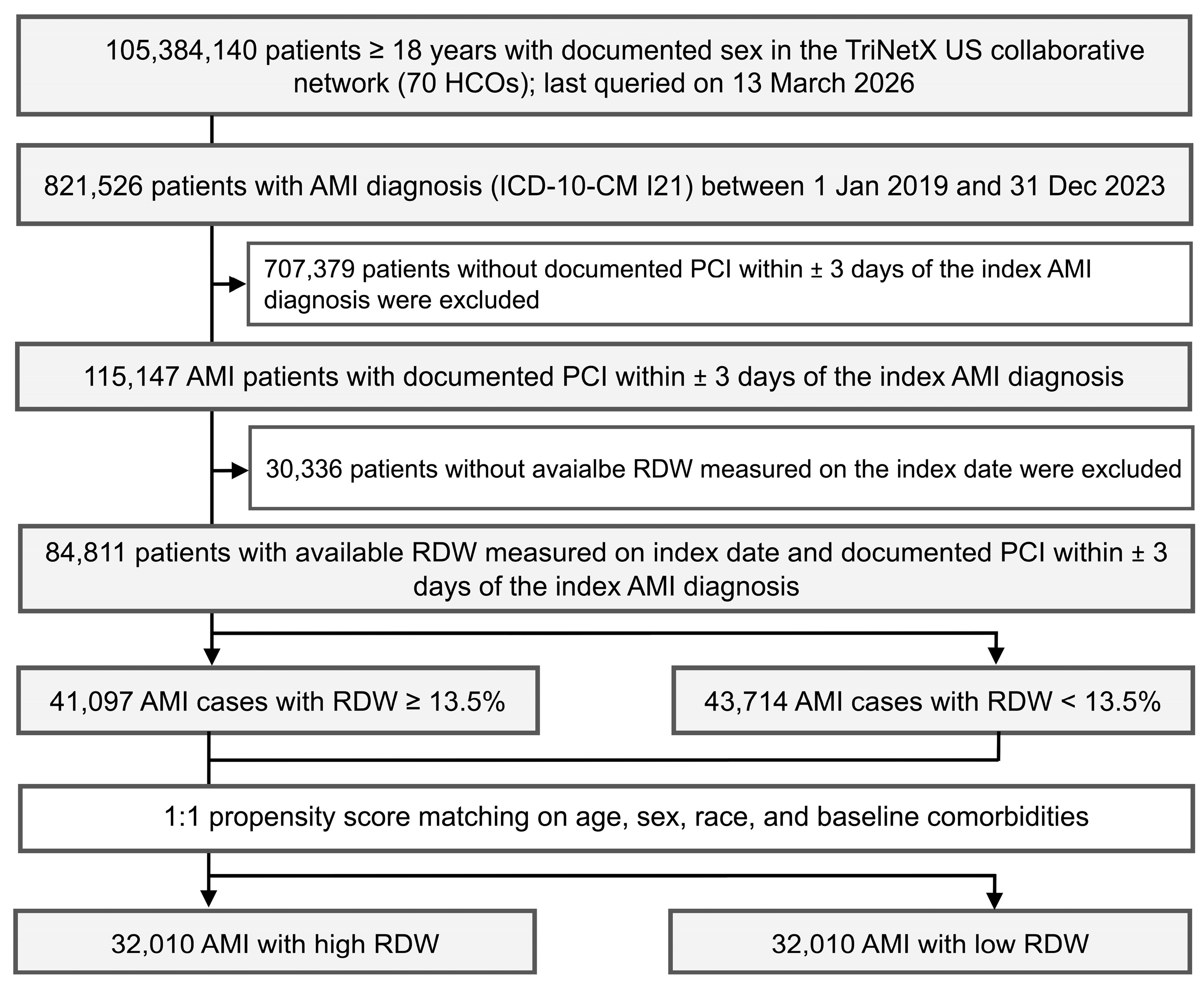
2.2. Study Population
2.3. Exposure Definition (RDW Measurement)
2.4. Outcome Definitions
2.5. Covariates and Baseline Characteristics
2.6. Statistical Analysis
2.7. Propensity Score Matching
2.8. Primary Analysis
2.9. Sensitivity and Subgroup Analyses
3. Results
3.1. Study Population and Baseline Characteristics
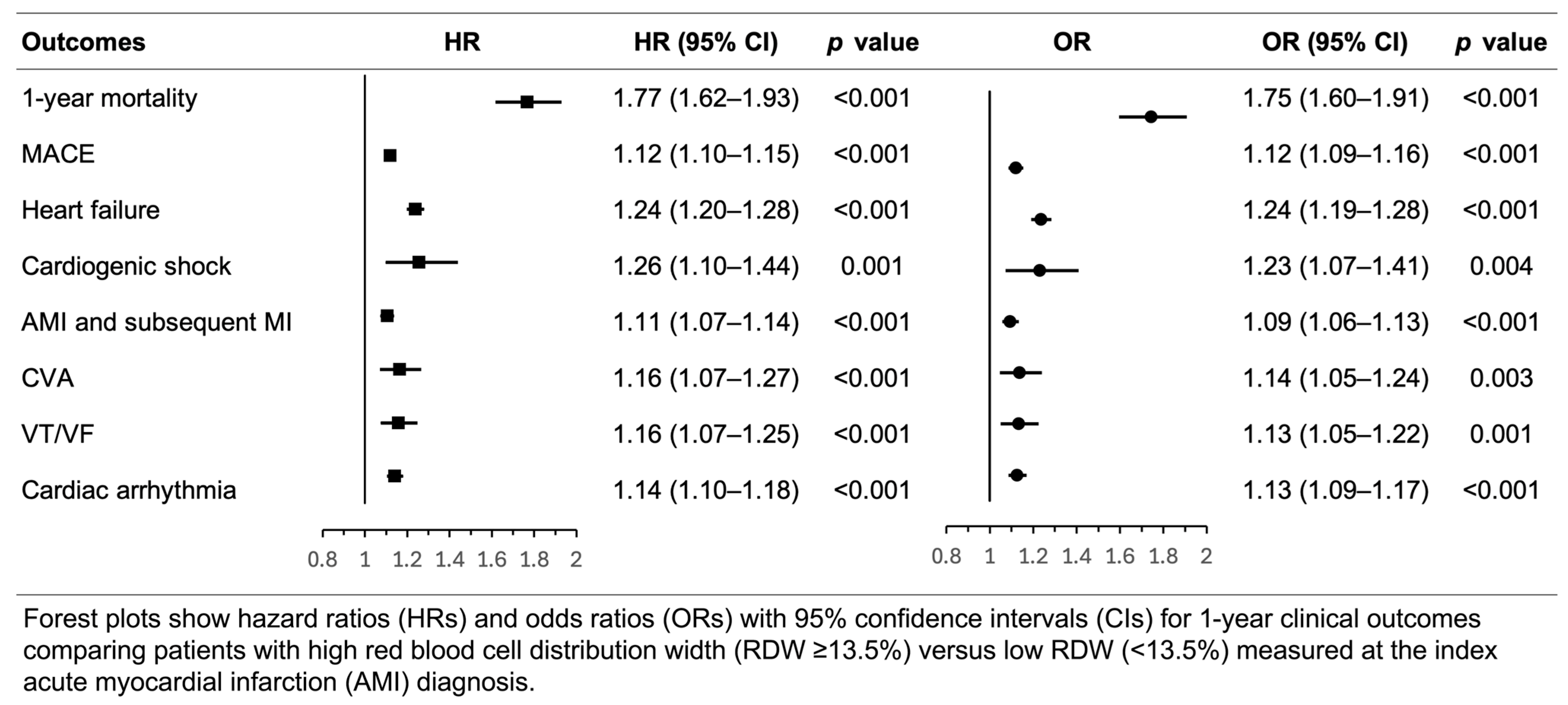
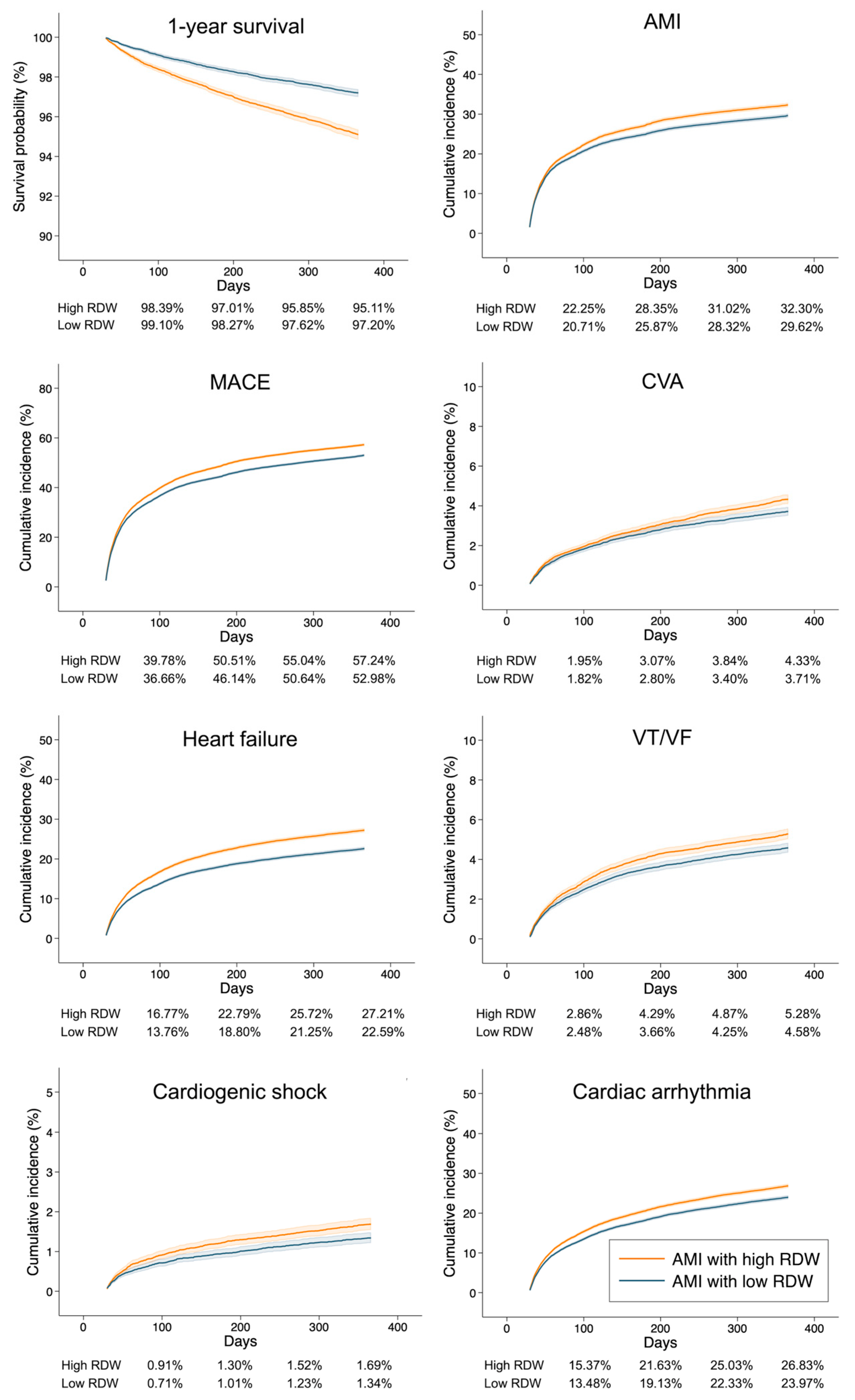
3.2. Primary Outcomes: 30-Day Landmark Analysis
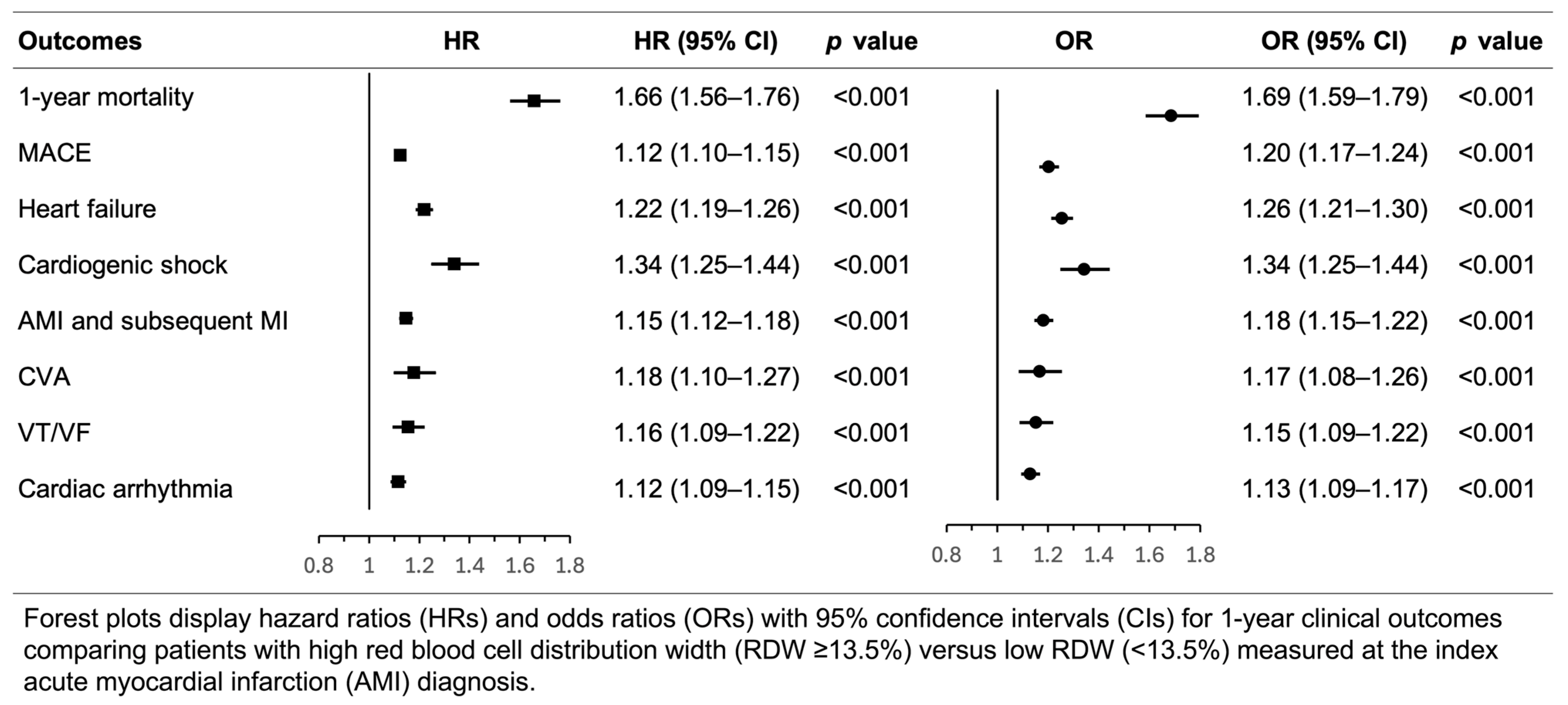
3.3. Sensitivity Analyses
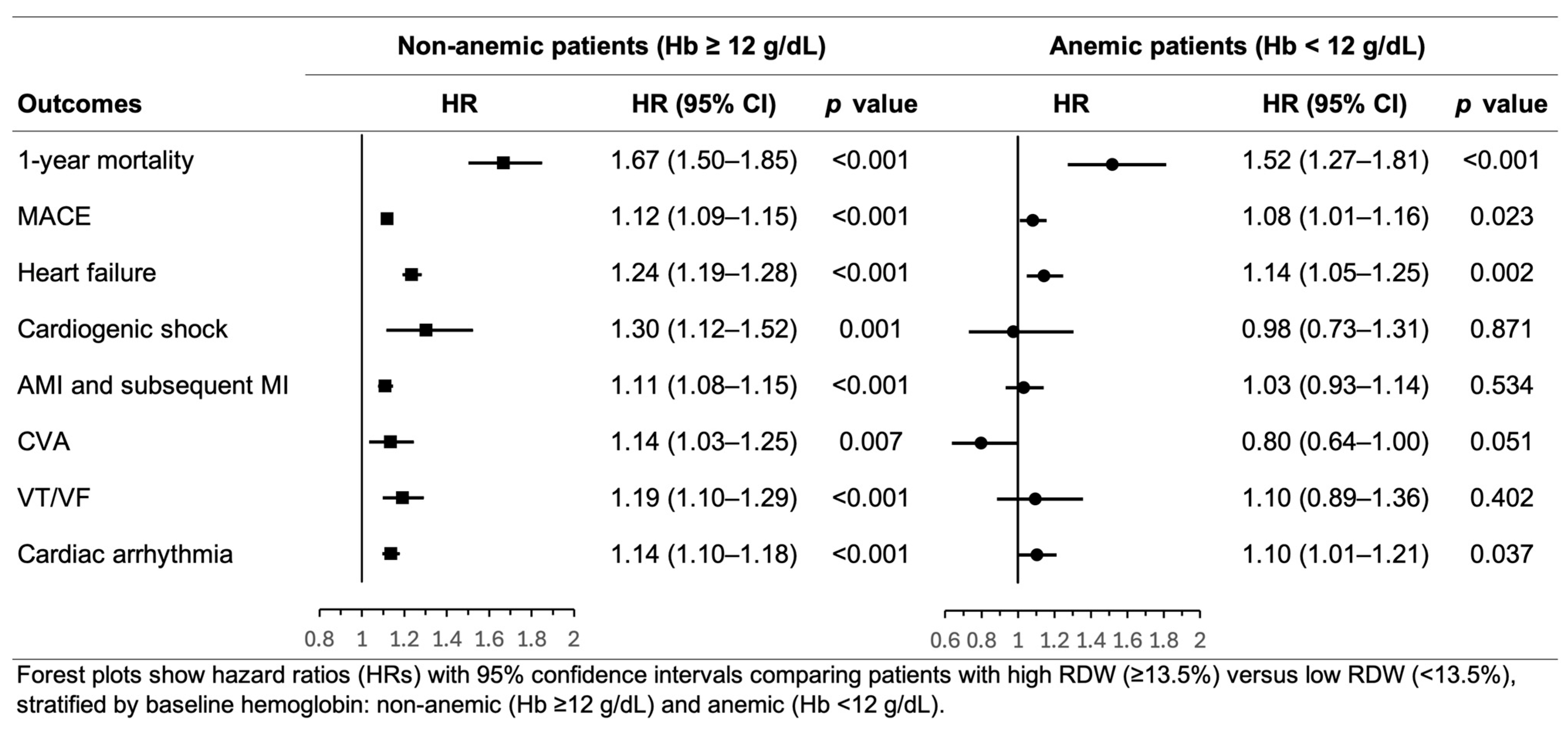
3.4. Subgroup Analysis by Hemoglobin Status
3.5. Subgroup Analysis by Acute Myocardial Infarction Types
4. Discussion
5. Conclusions
Supplementary Materials
Author Contributions
Funding
Institutional Review Board Statement
Informed Consent Statement
Data Availability Statement
Acknowledgments
Conflicts of Interest
Abbreviations
| AMI | Acute myocardial infarction |
| CI | Confidence interval |
| HCO | Healthcare organizations |
| HR | Hazard ratio |
| OR | Odds ratio |
| PSM | Propensity score matching |
| PCI | Percutaneous coronary intervention |
| MACE | Major adverse cardiovascular events |
| RDW | Red blood cell distribution width |
| SMD | Standardized mean differences |
References
- Bhatt, D.L.; Lopes, R.D.; Harrington, R.A. Diagnosis and Treatment of Acute Coronary Syndromes: A Review. JAMA 2022, 327, 662–675. [Google Scholar] [CrossRef] [PubMed]
- Faridi, K.F.; Wang, Y.; Minges, K.E.; Smilowitz, N.R.; McNamara, R.L.; Kontos, M.C.; Wang, T.Y.; Connors, A.C.; Clary, J.M.; Osborne, A.D.; et al. Predicting Mortality in Patients Hospitalized With Acute Myocardial Infarction: From the National Cardiovascular Data Registry. Circ. Cardiovasc. Qual. Outcomes 2025, 18, e011259. [Google Scholar] [CrossRef] [PubMed]
- Morrow, D.A.; Antman, E.M.; Charlesworth, A.; Cairns, R.; Murphy, S.A.; de Lemos, J.A.; Giugliano, R.P.; McCabe, C.H.; Braunwald, E. TIMI risk score for ST-elevation myocardial infarction: A convenient, bedside, clinical score for risk assessment at presentation: An intravenous nPA for treatment of infarcting myocardium early II trial substudy. Circulation 2000, 102, 2031–2037. [Google Scholar] [CrossRef]
- Fox, K.A.; Dabbous, O.H.; Goldberg, R.J.; Pieper, K.S.; Eagle, K.A.; Van de Werf, F.; Avezum, A.; Goodman, S.G.; Flather, M.D.; Anderson, F.A., Jr.; et al. Prediction of risk of death and myocardial infarction in the six months after presentation with acute coronary syndrome: Prospective multinational observational study (GRACE). BMJ 2006, 333, 1091. [Google Scholar] [CrossRef]
- van Toorenburg, M.; van den Berg, V.J.; van der Ploeg, T.; Heestermans, A.A.; Dirksen, M.T.; Hautvast, R.W.; Drexhage, O.; Boersma, E.; Kardys, I.; Umans, V. Addition of routinely measured blood biomarkers significantly improves GRACE risk stratification in patients with myocardial infarction. Int. J. Cardiol. 2018, 273, 237–242. [Google Scholar] [CrossRef]
- Yao, Y.; Shao, C.; Li, X.; Wang, Z.; Zuo, C.; Yan, Y.; Lv, Q. A Novel Biomarker Scoring System Alone or in Combination with the GRACE Score for the Prognostic Assessment in Non-ST-Elevation Myocardial Infarction. Clin. Epidemiol. 2022, 14, 911–923. [Google Scholar] [CrossRef]
- Danese, E.; Lippi, G.; Montagnana, M. Red blood cell distribution width and cardiovascular diseases. J. Thorac. Dis. 2015, 7, E402–E411. [Google Scholar] [CrossRef]
- Li, H.; Xu, Y. Association between red blood cell distribution width-to-albumin ratio and prognosis of patients with acute myocardial infarction. BMC Cardiovasc. Disord. 2023, 23, 66. [Google Scholar] [CrossRef]
- Namazi, G.; Heidar Beygi, S.; Vahidi, M.H.; Asa, P.; Bahmani, F.; Mafi, A.; Raygan, F. Relationship Between Red Cell Distribution Width and Oxidative Stress Indexes in Patients with Coronary Artery Disease. Rep. Biochem. Mol. Biol. 2023, 12, 241–250. [Google Scholar] [CrossRef]
- Tonelli, M.; Sacks, F.; Arnold, M.; Moye, L.; Davis, B.; Pfeffer, M. Relation Between Red Blood Cell Distribution Width and Cardiovascular Event Rate in People With Coronary Disease. Circulation 2008, 117, 163–168. [Google Scholar] [CrossRef] [PubMed]
- Salvagno, G.L.; Sanchis-Gomar, F.; Picanza, A.; Lippi, G. Red blood cell distribution width: A simple parameter with multiple clinical applications. Crit. Rev. Clin. Lab. Sci. 2015, 52, 86–105. [Google Scholar] [CrossRef]
- Huang, S.; Zhou, Q.; Guo, N.; Zhang, Z.; Luo, L.; Luo, Y.; Qin, Z.; Ge, L. Association between red blood cell distribution width and in-hospital mortality in acute myocardial infarction. Medicine 2021, 100, e25404. [Google Scholar] [CrossRef]
- Dabbah, S.; Hammerman, H.; Markiewicz, W.; Aronson, D. Relation between red cell distribution width and clinical outcomes after acute myocardial infarction. Am. J. Cardiol. 2010, 105, 312–317. [Google Scholar] [CrossRef] [PubMed]
- Abrahan, L.L.t.; Ramos, J.D.A.; Cunanan, E.L.; Tiongson, M.D.A.; Punzalan, F.E.R. Red Cell Distribution Width and Mortality in Patients With Acute Coronary Syndrome: A Meta-Analysis on Prognosis. Cardiol. Res. 2018, 9, 144–152. [Google Scholar] [CrossRef] [PubMed]
- Melchio, R.; Rinaldi, G.; Testa, E.; Giraudo, A.; Serraino, C.; Bracco, C.; Spadafora, L.; Falcetta, A.; Leccardi, S.; Silvestri, A.; et al. Red cell distribution width predicts mid-term prognosis in patients hospitalized with acute heart failure: The RDW in Acute Heart Failure (RE-AHF) study. Intern. Emerg. Med. 2019, 14, 239–247. [Google Scholar] [CrossRef] [PubMed]
- Austin, P.C. A comparison of 12 algorithms for matching on the propensity score. Stat. Med. 2014, 33, 1057–1069. [Google Scholar] [CrossRef]
- Brookhart, M.A.; Wyss, R.; Layton, J.B.; Sturmer, T. Propensity score methods for confounding control in nonexperimental research. Circ. Cardiovasc. Qual. Outcomes 2013, 6, 604–611. [Google Scholar] [CrossRef]
- Nikolsky, E.; Aymong, E.D.; Halkin, A.; Grines, C.L.; Cox, D.A.; Garcia, E.; Mehran, R.; Tcheng, J.E.; Griffin, J.J.; Guagliumi, G.; et al. Impact of anemia in patients with acute myocardial infarction undergoing primary percutaneous coronary intervention: Analysis from the Controlled Abciximab and Device Investigation to Lower Late Angioplasty Complications (CADILLAC) Trial. J. Am. Coll. Cardiol. 2004, 44, 547–553. [Google Scholar] [CrossRef]
- Mamas, M.A.; Kwok, C.S.; Kontopantelis, E.; Fryer, A.A.; Buchan, I.; Bachmann, M.O.; Zaman, M.J.; Myint, P.K. Relationship Between Anemia and Mortality Outcomes in a National Acute Coronary Syndrome Cohort: Insights From the UK Myocardial Ischemia National Audit Project Registry. J. Am. Heart Assoc. 2016, 5, e003348. [Google Scholar] [CrossRef]
- Stein, E.; Huser, M.; Amirian, E.S.; Palchuk, M.B.; Brown, J.S. TriNetX Dataworks-USA: Overview of a Multi-Purpose, De-Identified, Federated Electronic Health Record Real-World Data and Analytics Network and Comparison to the US Census. Pharmacoepidemiol. Drug Saf. 2025, 34, e70198. [Google Scholar] [CrossRef]
- Geng, N.; Su, G.; Wang, S.; Zou, D.; Pang, W.; Sun, Y. High red blood cell distribution width is closely associated with in-stent restenosis in patients with unstable angina pectoris. BMC Cardiovasc. Disord. 2019, 19, 175. [Google Scholar] [CrossRef]
- Oba, K.; Tamura, Y.; Ishikawa, J.; Murao, Y.; Yorikawa, F.; Kodera, R.; Toba, A.; Toyoshima, K.; Chiba, Y.; Iizuka, A.; et al. High red blood cell distribution width associated with incident frailty in patients with cardiometabolic diseases: A longitudinal study. Sci. Rep. 2025, 15, 30907. [Google Scholar] [CrossRef] [PubMed]
- Gleiss, A.; Oberbauer, R.; Heinze, G. An unjustified benefit: Immortal time bias in the analysis of time-dependent events. Transpl. Int. 2018, 31, 125–130. [Google Scholar] [CrossRef] [PubMed]
- Morgan, C.J. Landmark analysis: A primer. J. Nucl. Cardiol. 2019, 26, 391–393. [Google Scholar] [CrossRef]
- Joosse, H.J.; van Oirschot, B.A.; Kooijmans, S.A.A.; Hoefer, I.E.; van Wijk, R.A.H.; Huisman, A.; van Solinge, W.W.; Haitjema, S. In-vitro and in-silico evidence for oxidative stress as drivers for RDW. Sci. Rep. 2023, 13, 9223. [Google Scholar] [CrossRef] [PubMed]
- Matter, M.A.; Paneni, F.; Libby, P.; Frantz, S.; Stahli, B.E.; Templin, C.; Mengozzi, A.; Wang, Y.J.; Kundig, T.M.; Raber, L.; et al. Inflammation in acute myocardial infarction: The good, the bad and the ugly. Eur. Heart J. 2024, 45, 89–103. [Google Scholar] [CrossRef]
- Li, N.; Zhou, H.; Tang, Q. Red Blood Cell Distribution Width: A Novel Predictive Indicator for Cardiovascular and Cerebrovascular Diseases. Dis. Markers 2017, 2017, 7089493. [Google Scholar] [CrossRef]
- Ananthaseshan, S.; Bojakowski, K.; Sacharczuk, M.; Poznanski, P.; Skiba, D.S.; Prahl Wittberg, L.; McKenzie, J.; Szkulmowska, A.; Berg, N.; Andziak, P.; et al. Red blood cell distribution width is associated with increased interactions of blood cells with vascular wall. Sci. Rep. 2022, 12, 13676. [Google Scholar] [CrossRef]
- Chen, M.; Liao, L.; Yan, J.; Lin, F.Q. Predictive Value of Red Blood Cell Distribution Width for 1-Year All-Cause Mortality in Critically Ill Patients with Acute Myocardial Infarction. Int. J. Gen. Med. 2022, 15, 465–471. [Google Scholar] [CrossRef]
- Turcato, G.; Serafini, V.; Dilda, A.; Bovo, C.; Caruso, B.; Ricci, G.; Lippi, G. Red blood cell distribution width independently predicts medium-term mortality and major adverse cardiac events after an acute coronary syndrome. Ann. Transl. Med. 2016, 4, 254. [Google Scholar] [CrossRef][Green Version]
- Markovic Boras, M.; Brizic, I.; Mikulic, I. The significance of red cell distribution width and homocysteine values in STEMI patients undergoing PCI in the population of Bosnia and Herzegovina. Eur. Rev. Med. Pharmacol. Sci. 2021, 25, 3791–3797. [Google Scholar] [CrossRef]
- Su, C.; Liao, L.Z.; Song, Y.; Xu, Z.W.; Mei, W.Y. The role of red blood cell distribution width in mortality and cardiovascular risk among patients with coronary artery diseases: A systematic review and meta-analysis. J. Thorac. Dis. 2014, 6, 1429–1440. [Google Scholar] [CrossRef] [PubMed]
- Xanthopoulos, A.; Giamouzis, G.; Dimos, A.; Skoularigki, E.; Starling, R.C.; Skoularigis, J.; Triposkiadis, F. Red Blood Cell Distribution Width in Heart Failure: Pathophysiology, Prognostic Role, Controversies and Dilemmas. J. Clin. Med. 2022, 11, 1951. [Google Scholar] [CrossRef]
- Soderholm, M.; Borne, Y.; Hedblad, B.; Persson, M.; Engstrom, G. Red cell distribution width in relation to incidence of stroke and carotid atherosclerosis: A population-based cohort study. PLoS ONE 2015, 10, e0124957. [Google Scholar] [CrossRef]
- Xiao, Q.; Yan, D.; Qin, J.; Chen, W.; Jiang, K.; Zhao, J.; Zhang, C.; Li, Y. Dynamic Changes in Red Cell Distribution Width Can Predict Major Adverse Cardiovascular Events after PCI in Patients with Unstable Angina Pectoris: A Retrospective Cohort Study. Dis. Markers 2022, 2022, 2735717. [Google Scholar] [CrossRef]
- Rao, S.V.; O’Donoghue, M.L.; Ruel, M.; Rab, T.; Tamis-Holland, J.E.; Alexander, J.H.; Baber, U.; Baker, H.; Cohen, M.G.; Cruz-Ruiz, M.; et al. 2025 ACC/AHA/ACEP/NAEMSP/SCAI Guideline for the Management of Patients With Acute Coronary Syndromes: A Report of the American College of Cardiology/American Heart Association Joint Committee on Clinical Practice Guidelines. Circulation 2025, 151, e771–e862. [Google Scholar] [CrossRef]
- Liang, Y.; Li, T.; Li, J.; Han, H.; Cheng, Y. Integrated risk factors for premature acute coronary syndrome: Residual cholesterol, RDW, and BMI. Front. Cardiovasc. Med. 2025, 12, 1574620. [Google Scholar] [CrossRef] [PubMed]
- Canton, L.; Suma, N.; Amicone, S.; Impellizzeri, A.; Bodega, F.; Marinelli, V.; Ciarlantini, M.; Casuso, M.; Bavuso, L.; Bela, R.; et al. Clinical impact of multimodality assessment of myocardial viability. Echocardiography 2024, 41, e15854. [Google Scholar] [CrossRef] [PubMed]




| Before PSM | After PSM | |||||
|---|---|---|---|---|---|---|
| Participants, No. (%) | Participants, No. (%) | |||||
| Characteristic | AMI with high RDW (n = 41,097) | AMI with low RDW (n = 43,714) | SMD | AMI with high RDW (n = 32,010) | AMI with low RDW (n = 32,010) | SMD |
| Age at index, mean (SD), y | 66.3 (12.4) | 63.0 (12.3) | 0.266 | 65.1 (12.3) | 65.2 (12.1) | 0.013 |
| Sex | ||||||
| Male | 26,388 (64.2%) | 32,270 (73.8%) | 0.209 | 21,933 (68.5%) | 21,681 (67.7%) | 0.017 |
| Female | 14,709 (35.8%) | 11,444 (26.2%) | 0.209 | 10,077 (31.5%) | 10,329 (32.3%) | 0.017 |
| Ethnicity | ||||||
| Hispanic or Latino | 1956 (4.8%) | 2264 (5.2%) | 0.019 | 1619 (5.1%) | 1588 (5.0%) | 0.004 |
| Not Hispanic or Latino | 35,684 (86.8%) | 37,085 (84.8%) | 0.057 | 27,538 (86.0%) | 27,602 (86.2%) | 0.006 |
| Unknown Ethnicity | 3457 (8.4%) | 4365 (10.0%) | 0.054 | 2853 (8.9%) | 2820 (8.8%) | 0.004 |
| Race | ||||||
| White | 30,916 (75.2%) | 35,348 (80.9%) | 0.136 | 25,512 (79.7%) | 25,565 (79.9%) | 0.004 |
| Black or African American | 5824 (14.2%) | 2771 (6.3%) | 0.260 | 2789 (8.7%) | 2760 (8.6%) | 0.003 |
| Asian | 1179 (2.9%) | 2014 (4.6%) | 0.092 | 1067 (3.3%) | 1048 (3.3%) | 0.003 |
| Native Hawaiian or Other Pacific Islander | 304 (0.7%) | 417 (1.0%) | 0.023 | 260 (0.8%) | 248 (0.8%) | 0.004 |
| American Indian or Alaska Native | 164 (0.4%) | 147 (0.3%) | 0.010 | 129 (0.4%) | 125 (0.4%) | 0.002 |
| Other a | 1334 (3.2%) | 1538 (3.5%) | 0.015 | 1113 (3.5%) | 1082 (3.4%) | 0.005 |
| Unknown Race | 1376 (3.3%) | 1479 (3.4%) | 0.002 | 1140 (3.6%) | 1182 (3.7%) | 0.007 |
| Comorbidities | ||||||
| Ischemic heart diseases | 23,471 (57.1%) | 21,567 (49.3%) | 0.156 | 16,469 (51.5%) | 16,403 (51.2%) | 0.004 |
| Hypertension | 23,368 (56.9%) | 20,252 (46.3%) | 0.212 | 16,055 (50.2%) | 15,995 (50.0%) | 0.004 |
| Dyslipidemia | 20,703 (50.4%) | 19,129 (43.8%) | 0.133 | 14,541 (45.4%) | 14,421 (45.1%) | 0.008 |
| Diabetes mellitus | 12,298 (29.9%) | 9181 (21.0%) | 0.206 | 7710 (24.1%) | 7695 (24.0%) | 0.001 |
| Heart failure | 9221 (22.4%) | 4771 (10.9%) | 0.313 | 4538 (14.2%) | 4527 (14.1%) | 0.001 |
| Mental and behavioral disorders due to psychoactive substance use | 7779 (18.9%) | 6578 (15.0%) | 0.103 | 5284 (16.5%) | 5275 (16.5%) | 0.001 |
| Gastro-esophageal reflux disease | 8099 (19.7%) | 6352 (14.5%) | 0.138 | 5263 (16.4%) | 5057 (15.8%) | 0.018 |
| Overweight, obesity and other hyper alimentation | 7049 (17.2%) | 5348 (12.2%) | 0.139 | 4396 (13.7%) | 4342 (13.6%) | 0.005 |
| Chronic lower respiratory diseases | 7137 (17.4%) | 4317 (9.9%) | 0.220 | 4072 (12.7%) | 3964 (12.4%) | 0.010 |
| Chronic kidney disease | 7072 (17.2%) | 3448 (7.9%) | 0.284 | 3381 (10.6%) | 3290 (10.3%) | 0.009 |
| Neoplasms | 5647 (13.7%) | 4392 (10.0%) | 0.114 | 3657 (11.4%) | 3619 (11.3%) | 0.004 |
| Mood [affective] disorders | 4829 (11.8%) | 3550 (8.1%) | 0.122 | 3045 (9.5%) | 2965 (9.3%) | 0.009 |
| Aplastic and other anemias and other bone marrow failure syndromes | 5988 (14.6%) | 2350 (5.4%) | 0.311 | 2418 (7.6%) | 2309 (7.2%) | 0.013 |
| Cerebrovascular diseases | 3716 (9.0%) | 2330 (5.3%) | 0.144 | 2122 (6.6%) | 2095 (6.5%) | 0.003 |
| Atrioventricular and left bundle-branch block | 3408 (8.3%) | 2199 (5.0%) | 0.131 | 1921 (6.0%) | 1922 (6.0%) | 0.000 |
| Other conduction disorders | 2881 (7.0%) | 2003 (4.6%) | 0.104 | 1711 (5.3%) | 1662 (5.2%) | 0.007 |
| Chronic liver disease | 2040 (5.0%) | 1336 (3.1%) | 0.097 | 1179 (3.7%) | 1123 (3.5%) | 0.009 |
| Syncope and collapse | 1690 (4.1%) | 1263 (2.9%) | 0.067 | 1028 (3.2%) | 1018 (3.2%) | 0.002 |
| Nutritional anemias | 2606 (6.3%) | 754 (1.7%) | 0.236 | 845 (2.6%) | 748 (2.3%) | 0.019 |
| Unspecified dementia | 593 (1.4%) | 316 (0.7%) | 0.070 | 305 (1.0%) | 294 (0.9%) | 0.004 |
| Epilepsy and recurrent seizures | 482 (1.2%) | 383 (0.9%) | 0.029 | 307 (1.0%) | 299 (0.9%) | 0.003 |
| Parkinson’s disease | 259 (0.6%) | 193 (0.4%) | 0.026 | 174 (0.5%) | 159 (0.5%) | 0.007 |
| Schizophrenia, schizotypal, delusional, and other non-mood psychotic disorders | 274 (0.7%) | 161 (0.4%) | 0.042 | 152 (0.5%) | 143 (0.4%) | 0.004 |
| Alzheimer’s disease | 172 (0.4%) | 124 (0.3%) | 0.023 | 106 (0.3%) | 104 (0.3%) | 0.001 |
| Hemolytic anemias | 196 (0.5%) | 69 (0.2%) | 0.057 | 85 (0.3%) | 67 (0.2%) | 0.012 |
| Vascular dementia | 158 (0.4%) | 83 (0.2%) | 0.036 | 72 (0.2%) | 75 (0.2%) | 0.002 |
Disclaimer/Publisher’s Note: The statements, opinions and data contained in all publications are solely those of the individual author(s) and contributor(s) and not of MDPI and/or the editor(s). MDPI and/or the editor(s) disclaim responsibility for any injury to people or property resulting from any ideas, methods, instructions or products referred to in the content. |
© 2026 by the authors. Licensee MDPI, Basel, Switzerland. This article is an open access article distributed under the terms and conditions of the Creative Commons Attribution (CC BY) license.
Share and Cite
Ting, K.-C.; Liao, C.-J.; Lee, C.; Tsai, M.-J. Elevated Red Blood Cell Distribution Width Predicts Mortality and Major Adverse Cardiovascular Events After Acute Myocardial Infarction: A Large Propensity Score-Matched Cohort Study. J. Clin. Med. 2026, 15, 2432. https://doi.org/10.3390/jcm15062432
Ting K-C, Liao C-J, Lee C, Tsai M-J. Elevated Red Blood Cell Distribution Width Predicts Mortality and Major Adverse Cardiovascular Events After Acute Myocardial Infarction: A Large Propensity Score-Matched Cohort Study. Journal of Clinical Medicine. 2026; 15(6):2432. https://doi.org/10.3390/jcm15062432
Chicago/Turabian StyleTing, Kuan-Chung, Chi-Jiang Liao, Chun Lee, and Ming-Jen Tsai. 2026. "Elevated Red Blood Cell Distribution Width Predicts Mortality and Major Adverse Cardiovascular Events After Acute Myocardial Infarction: A Large Propensity Score-Matched Cohort Study" Journal of Clinical Medicine 15, no. 6: 2432. https://doi.org/10.3390/jcm15062432
APA StyleTing, K.-C., Liao, C.-J., Lee, C., & Tsai, M.-J. (2026). Elevated Red Blood Cell Distribution Width Predicts Mortality and Major Adverse Cardiovascular Events After Acute Myocardial Infarction: A Large Propensity Score-Matched Cohort Study. Journal of Clinical Medicine, 15(6), 2432. https://doi.org/10.3390/jcm15062432