Low fT3 Syndrome, Dialysis Inadequacy, and Death Occurrence in Hemodialysis Patients: Evidence of a Vicious Circle from a Prospective Bi-Center Observational Study
 , , , , and
Abstract
1. Introduction
2. Materials and Methods
2.1. Study Design
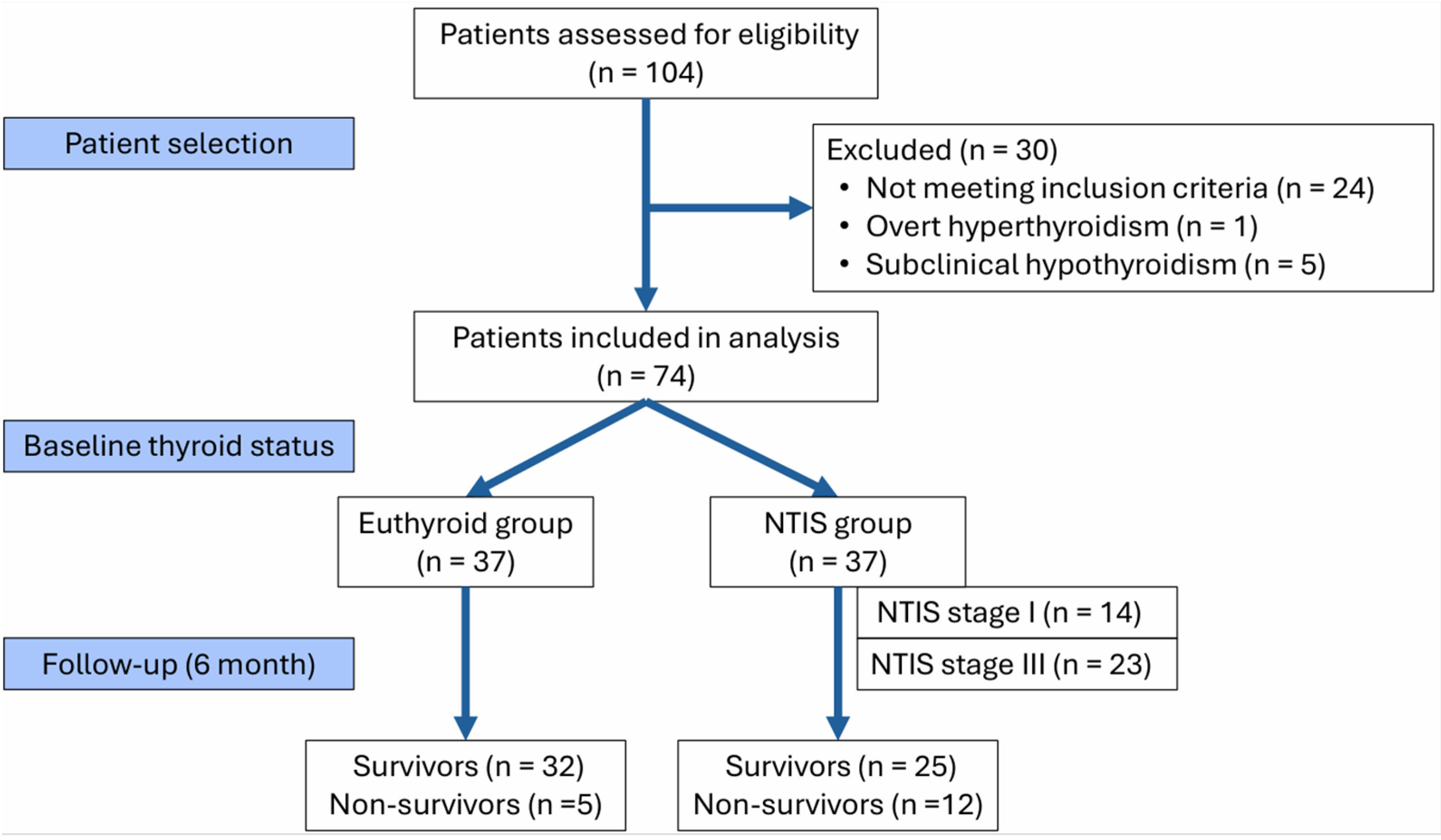
2.2. Study Population
2.2.1. Clinical and Laboratory Assessments
2.2.2. Assessment of Dialysis Adequacy
2.2.3. Classification of Thyroid Status
- Euthyroid group: Patients with serum TSH, fT3, and fT4 concentrations within the reference ranges;
- NTIS group: Patients with reduced fT3 levels, further subclassified according to NTIS severity:
- Stage I NTIS: Reduced fT3 (fT3 < 2.3 pg/mL);
- Stage II NTIS: Reduced fT3 levels accompanied by reduced TSH levels (TSH < 0.55 μIU/mL);
- Stage III NTIS: Reduced fT3 and fT4 (fT4 < 0.89 ng/dL) with either normal or reduced TSH levels.
2.3. Statistical Analysis
2.4. Ethics Approval
3. Results
4. Discussion
4.1. Summary of Key Findings
4.2. NTIS and Dialysis Adequacy—Clinical and Methodological Implications
4.3. NTIS Severity and Dose–Response Relationship with Kt/V
4.4. Mineral and Bone Metabolism Markers and NTIS
4.5. Thyroid Hormones and Risk of Deaths
4.6. Clinical Implications and Conceptual Framework
4.7. Limitations
5. Conclusions
Author Contributions
Funding
Institutional Review Board Statement
Informed Consent Statement
Data Availability Statement
Acknowledgments
Conflicts of Interest
Abbreviations
| AUC | Area under the curve |
| NTIS | Non-thyroidal illness syndrome |
| fT3 | Free triiodothyronine |
| fT4 | Free thyroxine |
| BMI | Body mass index |
| DA | Dopamine |
| ESA | Erythropoiesis-stimulating agent |
| ESRD | End-stage renal disease |
| HD | Hemodialysis |
| PTH | Parathyroid hormone |
| ROC | Receiver operating characteristic |
| HPT | Hypothalamic–pituitary–thyroid |
| TSH | Thyroid-stimulating hormone |
| TH | Thyroid hormone |
Appendix A
Appendix A.1. Supplementary Methods
Appendix A.1.1. Sample Size Considerations and Statistical Power
- differences in dialysis adequacy (spKt/V) between euthyroid and NTIS patients,
- the discriminatory ability of thyroid hormone parameters for mortality status during follow-up (ROC analysis),
- associations between NTIS severity and pulmonary comorbidities.
Appendix A.1.2. ROC Analysis for the Risk of Death
| Marker | AUC | Cases/Controls | Approx. z | Approx. Power |
| fT4 | 0.71 | 17/57 | 2.73 | ~78% |
| fT3 | 0.67 | 17/57 | 2.15 | ~58% |
Appendix A.1.3. Differences in Dialysis Adequacy (spKt/V)
Appendix A.1.4. NTIS Severity and Pulmonary Comorbidities
Appendix A.1.5. Summary
References
- Fliers, E.; Bianco, A.C.; Langouche, L.; Boelen, A. Thyroid function in critically ill patients. Lancet Diabetes Endocrinol. 2015, 3, 816–825. [Google Scholar] [CrossRef] [PubMed]
- Fliers, E.; Boelen, A. An update on non-thyroidal illness syndrome. J. Endocrinol. Investig. 2021, 44, 1597–1607. [Google Scholar] [CrossRef] [PubMed]
- Song, S.H.; Kwak, I.S.; Lee, D.W.; Kang, Y.H.; Seong, E.Y.; Park, J.S. The prevalence of low triiodothyronine according to the stage of chronic kidney disease in subjects with a normal thyroid-stimulating hormone. Nephrol. Dial. Transplant. 2009, 24, 1534–1538. [Google Scholar] [CrossRef]
- Sciacchitano, S.; Capalbo, C.; Napoli, C.; Anibaldi, P.; Salvati, V.; De Vitis, C.; Mancini, R.; Coluzzi, F.; Rocco, M. Nonthyroidal Illness Syndrome: To Treat or Not to Treat? Have We Answered the Question? A Review of Metanalyses. Front. Endocrinol. 2022, 13, 850328. [Google Scholar] [CrossRef]
- Ortiga-Carvalho, T.M.; Chiamolera, M.I.; Pazos-Moura, C.C.; Wondisford, F.E. Hypothalamus-Pituitary-Thyroid Axis. Compr. Physiol. 2016, 6, 1387–1428. [Google Scholar] [CrossRef]
- de Vries, E.M.; Fliers, E.; Boelen, A. The molecular basis of the non-thyroidal illness syndrome. J. Endocrinol. 2015, 225, R67–R81. [Google Scholar] [CrossRef]
- Boelen, A.; van der Spek, A.H.; Bloise, F.; de Vries, E.M.; Surovtseva, O.V.; van Beeren, M.; Ackermans, M.T.; Kwakkel, J.; Fliers, E. Tissue thyroid hormone metabolism is differentially regulated during illness in mice. J. Endocrinol. 2017, 233, 25–36. [Google Scholar] [CrossRef]
- Iglesias, P.; Díez, J.J. Thyroid dysfunction and kidney disease. Eur. J. Endocrinol. 2009, 160, 503–515. [Google Scholar] [CrossRef]
- Segarra, A.B.; Ramírez, M.; Banegas, I.; Hermoso, F.; Vargas, F.; Vives, F.; Alba, F.; de Gasparo, M.; Prieto, I. Influence of thyroid disorders on kidney angiotensinase activity. Horm. Metab. Res. 2006, 38, 48–52. [Google Scholar] [CrossRef]
- Del Compare, J.A.; Aguirre, J.A.; Ibarra, F.R.; Barontini, M.; Armando, I. Effects of thyroid hormone on the renal dopaminergic system. Endocrine 2001, 15, 297–303. [Google Scholar] [CrossRef] [PubMed]
- Michael, U.F.; Barenberg, R.L.; Chavez, R.; Vaamonde, C.A.; Papper, S. Renal handling of sodium and water in the hypothyroid rat. Clearance and micropuncture studies. J. Clin. Investig. 1972, 51, 1405–1412. [Google Scholar] [CrossRef] [PubMed]
- Lin, H.H.; Tang, M.J. Thyroid hormone upregulates Na, K-ATPase alpha and beta mRNA in primary cultures of proximal tubule cells. Life Sci. 1997, 60, 375–382. [Google Scholar] [CrossRef]
- Lossow, K.; Renko, K.; Schwarz, M.; Schomburg, L.; Schwerdtle, T.; Kipp, A.P. The Nutritional Supply of Iodine and Selenium Affects Thyroid Hormone Axis Related Endpoints in Mice. Nutrients 2021, 13, 3773. [Google Scholar] [CrossRef]
- Peeters, R.P.; Kester, M.H.; Wouters, P.J.; Kaptein, E.; van Toor, H.; Visser, T.J.; Van den Berghe, G. Increased thyroxine sulfate levels in critically ill patients are a result of decreased hepatic type I deiodinase activity. J. Clin. Endocrinol. Metab. 2005, 90, 6460–6465. [Google Scholar] [CrossRef]
- Cotoi, L.; Borcan, F.; Sporea, I.; Amzar, D.; Schiller, O.; Schiller, A.; Dehelean, C.A.; Pop, G.N.; Borlea, A.; Stoian, D. Thyroid Pathology in End-Stage Renal Disease Patients on Hemodialysis. Diagnostics 2020, 10, 245. [Google Scholar] [CrossRef]
- Lo, J.C.; Chertow, G.M.; Go, A.S.; Hsu, C.Y. Increased prevalence of subclinical and clinical hypothyroidism in persons with chronic kidney disease. Kidney Int. 2005, 67, 1047–1052. [Google Scholar] [CrossRef]
- Lim, V.S. Thyroid function in patients with chronic renal failure. Am. J. Kidney Dis. 2001, 38, S80–S84. [Google Scholar] [CrossRef]
- Chonchol, M.; Lippi, G.; Salvagno, G.; Zoppini, G.; Muggeo, M.; Targher, G. Prevalence of subclinical hypothyroidism in patients with chronic kidney disease. Clin. J. Am. Soc. Nephrol. 2008, 3, 1296–1300. [Google Scholar] [CrossRef] [PubMed]
- Naseem, F.; Mannan, A.; Dhrolia, M.F.; Imtiaz, S.; Qureshi, R.; Ahmed, A. Prevalence of subclinical hypothyroidism in patients with chronic kidney disease on maintenance hemodialysis. Saudi J. Kidney Dis. Transplant. 2018, 29, 846–851. [Google Scholar] [CrossRef] [PubMed]
- Kim, E.O.; Lee, I.S.; Choi, Y.A.; Lee, S.J.; Chang, Y.K.; Yoon, H.E.; Jang, Y.S.; Lee, J.M.; Kim, H.S.; Yang, C.W.; et al. Unresolved subclinical hypothyroidism is independently associated with progression of chronic kidney disease. Int. J. Med. Sci. 2013, 11, 52–59. [Google Scholar] [CrossRef]
- Tsuda, S.; Nakayama, M.; Matsukuma, Y.; Yoshitomi, R.; Haruyama, N.; Fukui, A.; Nakano, T.; Tsuruya, K.; Kitazono, T. Subclinical hypothyroidism is independently associated with poor renal outcomes in patients with chronic kidney disease. Endocrine 2021, 73, 141–150. [Google Scholar] [CrossRef]
- Brough, R.; Jones, C. Iatrogenic iodine as a cause of hypothyroidism in infants with end-stage renal failure. Pediatr. Nephrol. 2006, 21, 400–402. [Google Scholar]
- Meuwese, C.L.; Dekker, F.W.; Lindholm, B.; Qureshi, A.R.; Heimburger, O.; Barany, P.; Stenvinkel, P.; Carrero, J.J. Baseline Levels and Trimestral Variation of Triiodothyronine and Thyroxine and Their Association with Mortality in Maintenance Hemodialysis Patients. Clin. J. Am. Soc. Nephrol. 2012, 7, 131–138. [Google Scholar] [CrossRef]
- Wartofsky, L.; Burman, K.D. Alterations in thyroid function in patients with systemic illness: The ‘euthyroid sick syndrome’. Endocr. Rev. 1982, 3, 164–217. [Google Scholar] [CrossRef]
- Chávez Valencia, V.; Mejía Rodríguez, O.; Viveros Sandoval, M.E.; Bermúdez, J.A.; Castellanos, S.G.; de la Cruz, C.O.; Córdova, M.A.R. Prevalence of malnutrition-inflammation complex syndrome and its correlation with thyroid hormones in chronic haemodialysis patients. Nefrologia (Engl. Ed.) 2018, 38, 57–63. [Google Scholar] [PubMed]
- Rhee, C.M. Abnormalities of Thyroid Function in Chronic Dialysis Patients. In Handbook of Dialysis Therapy; Nissenson, A.R., Fine, R., Mehrotra, R., Zaritsky, J., Eds.; Elsevier: Philadelphia, PA, USA, 2016; pp. 466–480. [Google Scholar]
- Gotch, F.A.; Sargent, J.A. A mechanistic analysis of the National Cooperative Dialysis Study (NCDS). Kidney Int. 1985, 28, 526–534. [Google Scholar] [CrossRef] [PubMed]
- Zoccali, C.; Tripepi, G.; Cutrupi, S.; Pizzini, P.; Mallamaci, F. Low triiodothyronine: A new facet of inflammation in end-stage renal disease. J. Am. Soc. Nephrol. 2005, 16, 2789–2795. [Google Scholar]
- Fernández-Reyes, M.J.; Sánchez, R.; Heras, M.; Tajada, P.; García, L.; Iglesias, P.; García Arévalo, M.C.; Molina, A.; Rodríguez, A.; Alvarez-Ude, F. Can FT3 levels facilitate the detection of inflammation or catabolism and malnutrition in dialysis patients? Nefrologia 2009, 29, 304–310. [Google Scholar]
- Yavuz, D.; Sezer, S.; Yavuz, R.; Canoz, M.B.; Altinoglu, A.; Elsurer, R.; Arat, Z.; Ozdemir, F.N. Free triiodothyronine in hemodialysis patients: Link with malnutrition and inflammation. Iran. J. Kidney Dis. 2014, 8, 212–217, Erratum in Iran. J. Kidney Dis. 2014, 8, 350. [Google Scholar]
- Kaptein, E.M.; Feinstein, E.I.; Nicoloff, J.T.; Massry, S.G. Serum reverse triiodothyronine and thyroxine kinetics in patients with chronic renal failure. J. Clin. Endocrinol. Metab. 1983, 57, 181–189. [Google Scholar] [CrossRef] [PubMed]
- Narasaki, Y.; Sohn, P.; Rhee, C.M. The Interplay Between Thyroid Dysfunction and Kidney Disease. Semin. Nephrol. 2021, 41, 133–143. [Google Scholar] [CrossRef]
- Rhee, C.M. Thyroid disease in end-stage renal disease. Curr. Opin. Nephrol. Hypertens. 2019, 28, 621–630. [Google Scholar] [CrossRef]
- Bello, G.; Ceaichisciuc, I.; Silva, S.; Antonelli, M. The role of thyroid dysfunction in the critically ill: A review of the literature. Minerva Anestesiol. 2010, 76, 919–928. [Google Scholar] [PubMed]
- Zoccali, C.; Mallamaci, F.; Tripepi, G.; Cutrupi, S.; Pizzini, P. Low triiodothyronine and survival in end-stage renal disease. Kidney Int. 2006, 70, 523–528. [Google Scholar] [CrossRef]
- Xu, H.; Brusselaers, N.; Lindholm, B.; Zoccali, C.; Carrero, J.J. Thyroid Function Test Derangements and Mortality in Dialysis Patients: A Systematic Review and Meta-analysis. Am. J. Kidney Dis. 2016, 68, 923–932. [Google Scholar] [CrossRef]
- Molfino, A.; Beck, G.J.; Li, M.; Lo, J.C.; Kaysen, G.A.; FHN Investigators. Association between change in serum bicarbonate and change in thyroid hormone levels in patients receiving conventional or more frequent maintenance haemodialysis. Nephrology 2019, 24, 81–87. [Google Scholar] [CrossRef]
- Yan, W.; Wang, L.; Huang, T.; Xu, G. Treatment for non-thyroidal illness syndrome in advanced chronic kidney disease: A single-blind controlled study. J. Nephrol. 2017, 30, 557–565. [Google Scholar] [CrossRef]
- National Kidney Foundation. KDOQI clinical practice guideline for hemodialysis adequacy: 2015 update. Am. J. Kidney Dis. 2015, 66, 884–930. [Google Scholar] [CrossRef]
- Daugirdas, J.T. Kt/V (and especially its modifications) remains a useful measure of hemodialysis dose. Kidney Int. 2015, 88, 466–473. [Google Scholar] [CrossRef] [PubMed]
- Held, P.J.; Port, F.K.; Wolfe, R.A.; Stannard, D.C.; Carroll, C.E.; Daugirdas, J.T.; Bloembergen, W.E.; Greer, J.W.; Hakim, R.M. The dose of hemodialysis and patient mortality. Kidney Int. 1996, 50, 550–556. [Google Scholar] [CrossRef] [PubMed]
- Foley, R.N.; Parfrey, P.S.; Harnett, J.D.; Kent, G.M.; Murray, D.C.; Barre, P.E. The impact of anemia on cardiomyopathy, morbidity, and and mortality in end-stage renal disease. Am. J. Kidney Dis. 1996, 28, 53–61. [Google Scholar] [CrossRef]
- Regidor, D.L.; Kopple, J.D.; Kovesdy, C.P.; Kilpatrick, R.D.; McAllister, C.J.; Aronovitz, J.; Greenland, S.; Kalantar-Zadeh, K. Associations between changes in hemoglobin and administered erythropoiesis-stimulating agent and survival in hemodialysis patients. J. Am. Soc. Nephrol. 2006, 17, 1181–1191. [Google Scholar] [CrossRef]
- Inaba, M.; Mori, K.; Tsujimoto, Y.; Yamada, S.; Yamazaki, Y.; Emoto, M.; Shoji, T. Association of Reduced Free T3 to Free T4 Ratio with Lower Serum Creatinine in Japanese Hemodialysis Patients. Nutrients 2021, 13, 4537. [Google Scholar] [CrossRef]
- Yang, L.; Wang, M.; Mo, L.; Yang, Y.; Cui, Y.; Wu, Y. The relationship between sarcopenia and related bioindicators and changes after intensive lifestyle intervention in elderly East-China populations. BMC Musculoskelet. Disord. 2024, 25, 704. [Google Scholar] [CrossRef] [PubMed]
- Carrero, J.J.; Qureshi, A.R.; Axelsson, J.; Yilmaz, M.I.; Rehnmark, S.; Witt, M.R.; Bárány, P.; Heimbürger, O.; Suliman, M.E.; Alvestrand, A.; et al. Clinical and biochemical implications of low thyroid hormone levels (total and free forms) in euthyroid patients with chronic kidney disease. J. Intern. Med. 2007, 262, 690–701. [Google Scholar] [CrossRef] [PubMed]
- Block, G.A.; Klassen, P.S.; Lazarus, J.M.; Ofsthun, N.; Lowrie, E.G.; Chertow, G.M. Mineral Metabolism, Mortality, and Morbidity in Maintenance Hemodialysis. J. Am. Soc. Nephrol. 2004, 15, 2208–2218. [Google Scholar] [CrossRef] [PubMed]
- Rodzoń-Norwicz, M.; Norwicz, S.; Sowa-Kućma, M.; Gala-Błądzińska, A. Secondary hyperparathyroidism in chronic kidney disease: Pathomechanism and current treatment possibilities. Endokrynol. Pol. 2023, 74, 490–498. [Google Scholar] [CrossRef]
- Fernández-Reyes, M.J.; Diez, J.J.; Collado, A.; Iglesias, P.; Bajo, M.A.; Estrada, P.; Del Peso, G.; Heras, M.; Molina, A.; Selgas, R. Are low concentrations of serum triiodothyronine a good marker for long-term mortality in hemodialysis patients? Clin. Nephrol. 2010, 73, 238–240. [Google Scholar] [CrossRef]
- Ozen, K.P.; Asci, G.; Gungor, O.; Carrero, J.J.; Kircelli, F.; Tatar, E.; Sevinc Ok, E.; Ozkahya, M.; Toz, H.; Cirit, M.; et al. Nutritional State Alters the Association between Free Triiodothyronine Levels and Mortality in Hemodialysis Patients. Am. J. Nephrol. 2011, 33, 305–312. [Google Scholar] [CrossRef]
- Leśniak, K.; Rymarz, A.; Sobol, M.; Niemczyk, S. Low Free Triiodothyronine as a More Sensitive Predictor of Survival Than Total Testosterone among Dialysis Men. Nutrients 2023, 15, 595. [Google Scholar] [CrossRef]
- Carrero, J.J.; Stenvinkel, P. Persistent Inflammation as a Catalyst for Other Risk Factors in Chronic Kidney Disease: A Hypothesis Proposal. Clin. J. Am. Soc. Nephrol. 2009, 4, S49–S55. [Google Scholar] [CrossRef] [PubMed]



| Laboratory Parameters | Reference Range | Assessment Method |
|---|---|---|
| TSH [uIU/mL] | 0.55–4.78 | chemiluminescent immunoassay CLIA |
| FT4 [ng/dL] | 0.89–1.76 | |
| FT3 [pg/mL] | 2.30–4.20 | |
| Ca [mmol/L] | 2.25–2.75 | spectrophotometry |
| P [mmol/L] | 0.8–1.6 | |
| PTH [pg/mL] | 10–60 | chemiluminescent immunoassay CLIA |
| Anti-TPO [IU/mL] | <40 | |
| Anti-TG [IU/mL] | <110 | |
| sCr [µmol/L] | M: 53–97 | |
| W: 44–71 | ||
| Urea [mmol/L] | 2–6.7 | |
| Hemoglobin [g/dL] | M: 13–17.5 | absorption photometry |
| W: 12–16 |
| Patients with ESRD, n = 74 | |||
|---|---|---|---|
| Variable | Euthyroid n = 37 | NTIS n = 37 | p-Value |
| Demographics, n (%) or median (min–max) | |||
| Age, years | 68 (18–89) | 65 (18–88) | 0.5 * |
| Body weight, kg | 77 (38–116) | 75 (29–108) | 0.8 * |
| BMI | 27 (17–35) | 26.5 (13–37) | 0.8 * |
| Sex, female | 14 (37.8%) | 15 (40.5%) | 0.8 # |
| Heart disease | |||
| Yes | 31 (83.8%) | 33 (89.2%) | 0.7 ^ |
| MD | 2 (5.4%) | 0 | |
| T2DM, | |||
| Yes | 7 (18.9%) | 11 (29.7%) | 0.3 # |
| MD | 1 (2.7%) | 0 | |
| Pulmonary comorbidities | |||
| Yes | 4 (10.8%) | 5 (13.5%) | 0.9 ^ |
| MD | 1 (2.7%) | 0 | |
| Dialysis duration, months | 28 (3–208) | 39 (3–288) | 0.3 * |
| Use of ESA (%) | 32 (86.5%) | 31 (83.8%) | 0.7 # |
| ESA dose (IU/week) a | 7500 (3000–21,000) | 9000 (3000–18,000) | 0.9 * |
| ESA dose (IU/week) b | 9000 (3000–18,000) | 10,500 (3000–12,000) | 0.9 * |
| ESA dose (ug/week) c | 30 (10–60) | 30 (10–50) | 0.8 * |
| Laboratory parameters, median (min–max) | |||
| Ca | 2.2 (1.6–2.6) | 2.1 (1.7–3.1) | 0.3 * |
| P | 1.7 (0.8–3.7) | 2.0 (0.8–5.6) | 0.4 * |
| PTH | 314.5 (23.7–1606) | 359 (35–1773) | 0.6 * |
| Anti-TPO | 35 (9–102) | 31.5 (10–1271) | 0.7 * |
| Anti-TG | 24 (1.3–348) | 101 (1.3–1000) | 0.6 * |
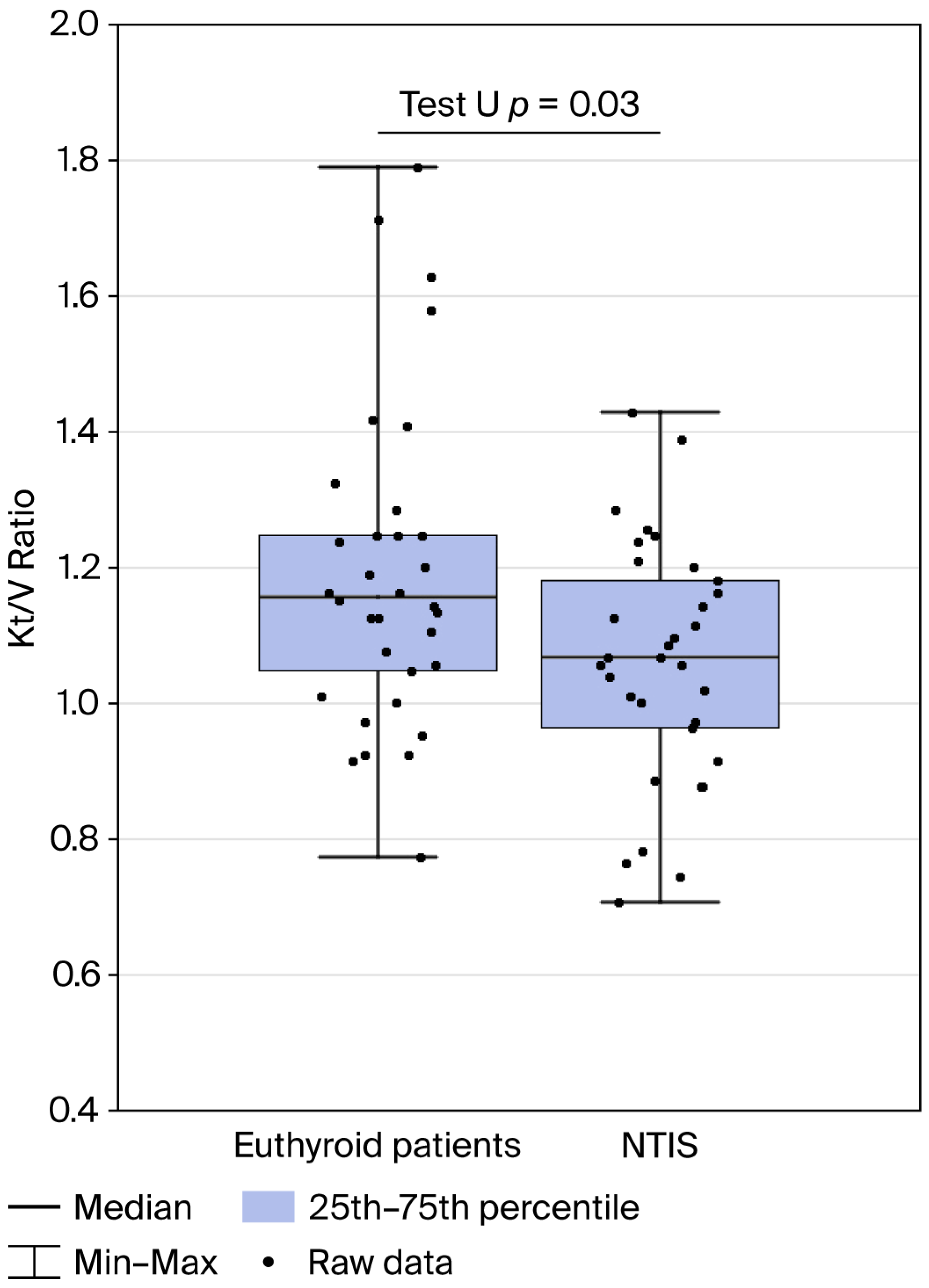
| spKt/V ratio | 1.1 (0.7–1.8) | 1.0 (0.6–1.4) | 0.03 * |
| sCr, [µmol/L] before HD | 765.5 (180.3–1219.9) | 808.9 (283.8–1502.8) | 0.3 * |
| Urea [mmol/L] before HD | 19.8 (4.7–34.3) | 22 (10.2–41.5) | 0.2 * |
| sCr, [µmol/L] after HD | 308.5 (84.9–598.5) | 351.8 (146.7–1064.3) | 0.1 * |
| Urea [mmol/L] after HD | 7.2 (3.2–15.0) | 8.0 (4.1–21.5) | 0.1 * |
| Hemoglobin [g/dL] | 10.7 (8.5–14.1) | 10.5 (8.0–14.2) | 0.2 * |
| Patients with ESRD | |||
|---|---|---|---|
| Variables | NTIS Stage I n = 14 | NTIS Stage III n = 23 | p-Value |
| Demographics, n (%) or median (min–max) | |||
| Age, years | 71 (60–85) | 58 (18–88) | 0.01 * |
| Body weight (kg) | 74.5 (63–108) | 75 (29–106) | 0.9 * |
| BMI | 27 (21–37) | 26.5 (13–32) | 0.3 * |
| Sex, female | 7 (50%) | 8 (34.8%) | 0.4 # |
| Heart disease, yes | 14 (100%) | 19 (82.6%) | 0.3 ^ |
| T2DM, yes | 3 (21.4%) | 8 (34.8%) | 0.6 ^ |
| Pulmonary comorbidities, yes | 5 (35.7%) | 0 | 0.01 ^ |
| Dialysis duration, months | 29.5 (3–288) | 48 (7–146) | 0.7 * |
| Use of ESA (%) | 13 (41.9%) | 18 (58.1%) | 0.5 ^ |
| ESA dose (IU/week) a | 3000 (3000–3000) | 12,000 (3000–18,000) | - |
| ESA dose (IU/week) b | 10,500 (3000–12,000) | - | - |
| ESA dose (ug/week) c | 20 (10–40) | 30 (20–50) | 0.4 * |
| Laboratory parameters, median (min–max) | |||
| Ca | 2.1 (1.8–2.5) | 2.1 (1.7–3.1) | 0.4 * |
| P | 1.8 (0.8–5.7) | 2.2 (0.9–3.1) | 0.4 * |
| PTH | 257.5 (35–929) | 402.8 (113–1773) | 0.1 * |
| spKt/V ratio | 1.1 (0.6–1.4) | 0.9 (0.7–1.3) | 0.008 * |
| sCr, [µmol/L] before HD | 821.7 (388.9–1061.7) | 792.9 (283.8–1502.8) | 0.6 * |
| Urea [mmol/L] before HD | 17.9 (10.2–30.5) | 24.2 (13.0–41.5) | 0.03 * |
| sCr, [µmol/L] after HD | 302.8 (146.7–452.6) | 368.6 (146.7–1064.3) | 0.2 * |
| Urea [mmol/L] after HD | 6.8 (4.1–11.0) | 9.5 (4.2–21.5) | 0.02 * |
| Hemoglobin [g/dL] | 10.1 (8.8–12.1) | 10.6 (8–14.2) | 0.5 * |
| Patients with ESRD | |||
|---|---|---|---|
| Variable | Survivors n = 57 | Non-Survivors n = 17 | p-Value |
| Demographics, n (%) or median (min–max) | |||
| Age (years) | 66 (18–89) | 69 (25–89) | 0.7 * |
| Body weight (kg) | 78 (38–116) | 74 (29–92) | 0.9 * |
| Body mass index | 27 (17–37) | 24 (13–31) | 0.3 * |
| Sex, female | 21 (36.8%) | 8 (47.1%) | 0.4 # |
| Heart disease, yes | 49 (87.5%) | 15 (93.7%) | 0.8 ^ |
| T2DM, yes | 12 (21.1%) | 6 (37.5%) | 0.2 # |
| Pulmonary comorbidities, yes | 8 (14.1%) | 1 (6.25%) | 0.7 ^ |
| Dialysis duration, months | 28 (3–288) | 57 (5–187) | 0.2 * |
| Use of ESA (%) | 51 (89.5%) | 12 (70.6%) | 0.06 # |
| ESA dose (IU/week) a | 6000 (3000–18,000) | 15,000 (9000–21,000) | 0.3 * |
| ESA dose (IU/week) b | 9000 (3000–18,000) | 6000 (3000–12,000) | 0.4 * |
| ESA dose (ug/week) c | 30 (10–60) | 30 (10–40) | 0.9 * |
| Laboratory parameters, median (min–max) | |||
| Ca | 2.1 (1.6–2.6) | 2.1 (1.7–3.1) | 0.7 * |
| P | 1.9 (0.8–5.7) | 1.7 (0.8–2.9) | 0.3 * |
| PTH | 350 (35–1773) | 234 (23.7–1087) | 0.2 * |
| Kt/V ratio | 1.06 (0.68–1.7) | 1.08 (0.64–1.38) | 0.1 * |
| sCr [µmol/L] before HD | 819.5 (180.3–1502.8) | 558.7 (186.5–1177.5) | 0. 05 * |
| Urea [mmol/L] before HD | 21.8 (4.7–41.5) | 18.8 (14.9–28.2) | 0.5 * |
| sCr [µmol/L] after HD | 338.6 (84.8–1064.3) | 269.6 (111.4–465.9) | 0.6 * |
| Urea [mmol/L] after HD | 7.3 (3.2–21.5) | 8.0 (5.0–16.2) | 0.7 * |
| TSH | 1.5 (0.35–4.86) | 1.4 (0.29–2.67) | 0.9 * |
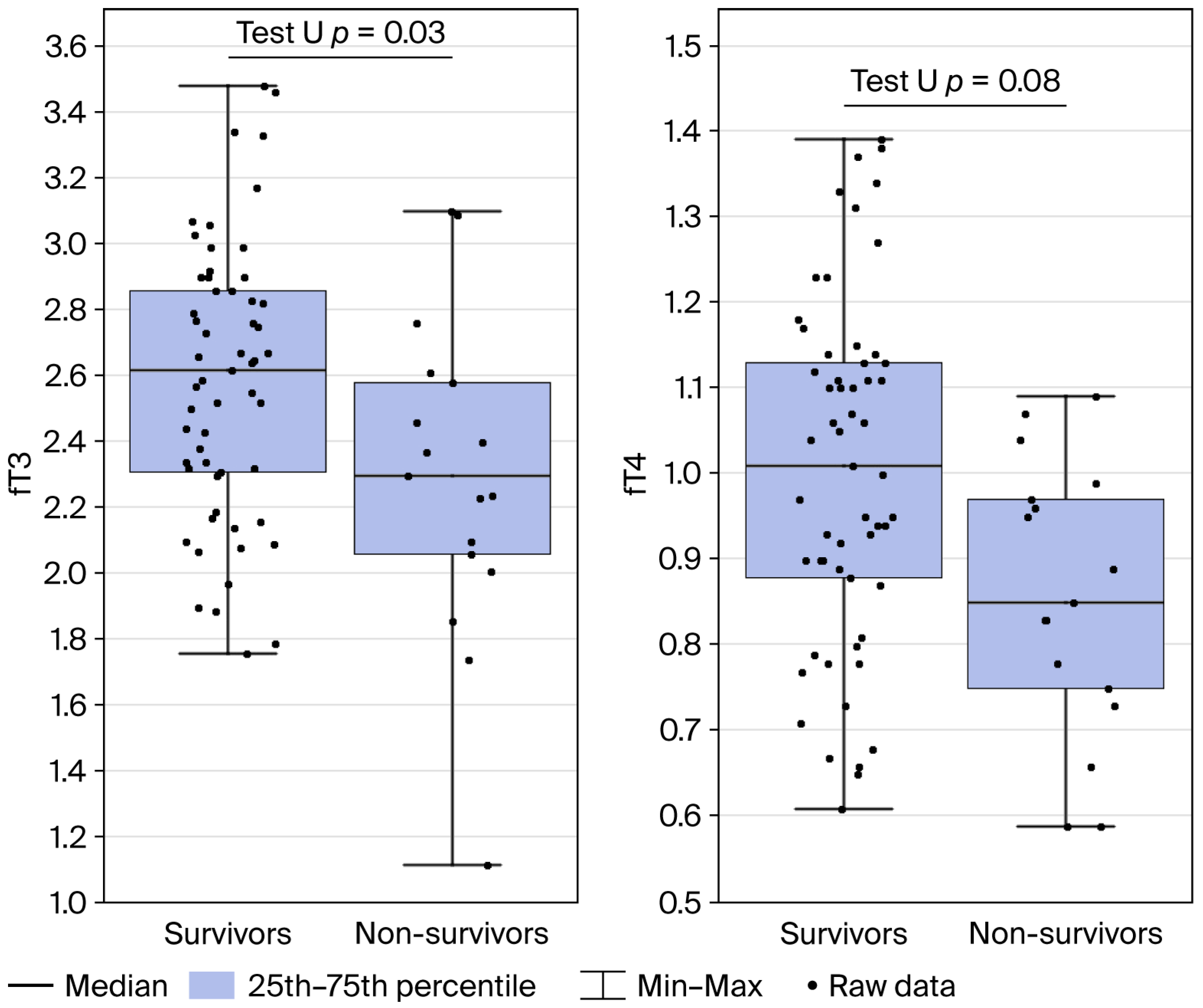
| fT3 | 2.62 (1.76–3.48) | 2.30 (1.12–3.1) | 0.03 * |
| fT4 | 1.01 (0.61–1.39) | 0.85 (0.59–1.09) | 0.008 * |
| Hemoglobin [g/dL] | 10.6 (8.1–14.2) | 10.5 (8.0–14.1) | 0.5 * |
| Parameter | Cut-Off Value | Sensitivity | Specificity | AUC | p-Value |
|---|---|---|---|---|---|
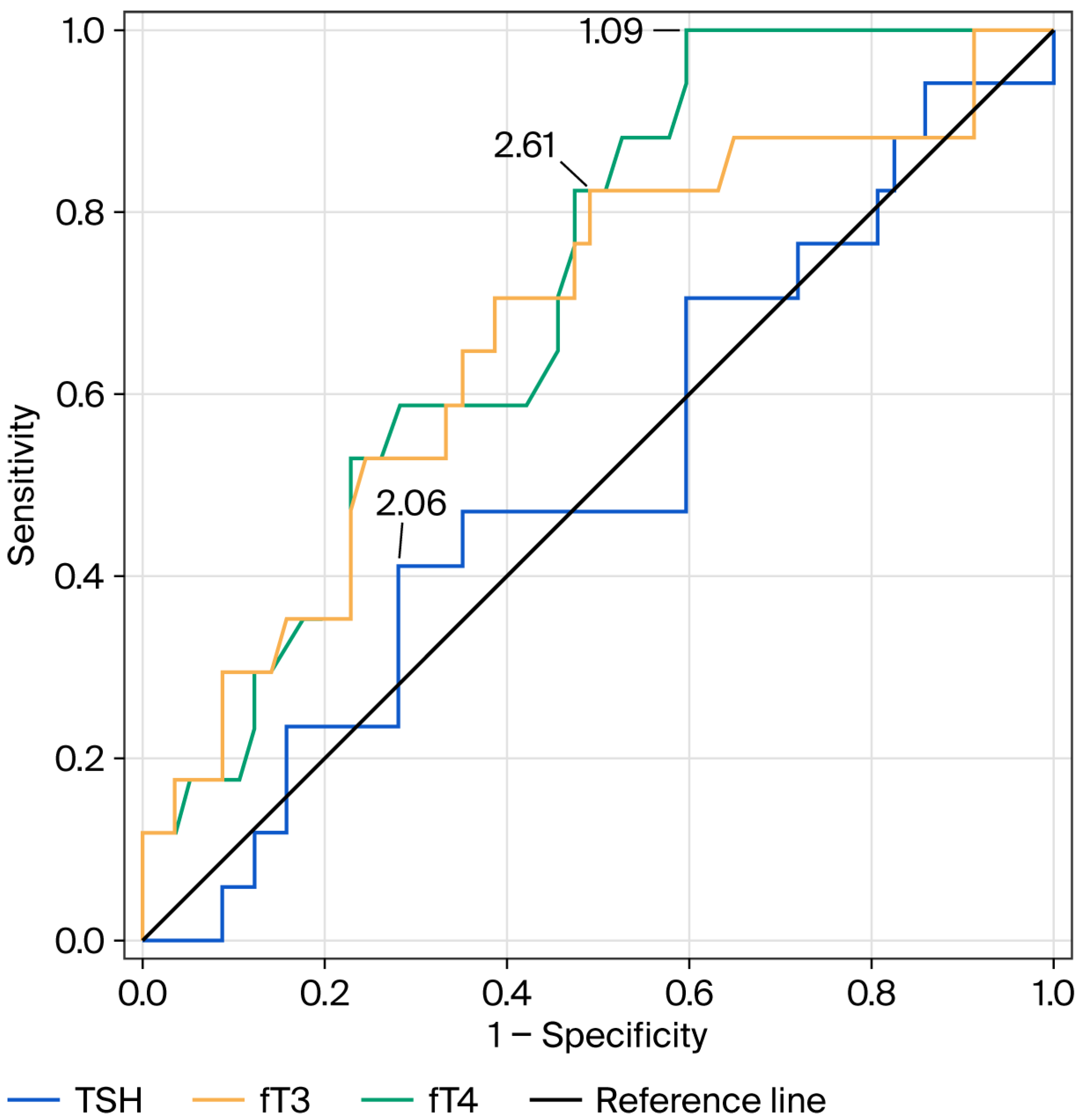
| TSH (uIU/mL) | 2.06 | 0.41 | 0.72 | 0.51 | 0.9 |
| fT3 (pg/mL) | 2.61 | 0.82 | 0.51 | 0.67 | 0.03 |
| fT4 (ng/dL) | 1.09 | 1 | 0.40 | 0.71 | 0.0009 |
Disclaimer/Publisher’s Note: The statements, opinions and data contained in all publications are solely those of the individual author(s) and contributor(s) and not of MDPI and/or the editor(s). MDPI and/or the editor(s) disclaim responsibility for any injury to people or property resulting from any ideas, methods, instructions or products referred to in the content. |
© 2026 by the authors. Licensee MDPI, Basel, Switzerland. This article is an open access article distributed under the terms and conditions of the Creative Commons Attribution (CC BY) license.
Share and Cite
Młodożeniec, A.; Rodzoń-Norwicz, M.; Orłowska-Florek, R.; Tęcza, K.; Młodożeniec, P.; Gargasz, K.; Gala-Błądzińska, A. Low fT3 Syndrome, Dialysis Inadequacy, and Death Occurrence in Hemodialysis Patients: Evidence of a Vicious Circle from a Prospective Bi-Center Observational Study. J. Clin. Med. 2026, 15, 2400. https://doi.org/10.3390/jcm15062400
Młodożeniec A, Rodzoń-Norwicz M, Orłowska-Florek R, Tęcza K, Młodożeniec P, Gargasz K, Gala-Błądzińska A. Low fT3 Syndrome, Dialysis Inadequacy, and Death Occurrence in Hemodialysis Patients: Evidence of a Vicious Circle from a Prospective Bi-Center Observational Study. Journal of Clinical Medicine. 2026; 15(6):2400. https://doi.org/10.3390/jcm15062400
Chicago/Turabian StyleMłodożeniec, Aleksandra, Małgorzata Rodzoń-Norwicz, Renata Orłowska-Florek, Krystyna Tęcza, Piotr Młodożeniec, Krzysztof Gargasz, and Agnieszka Gala-Błądzińska. 2026. "Low fT3 Syndrome, Dialysis Inadequacy, and Death Occurrence in Hemodialysis Patients: Evidence of a Vicious Circle from a Prospective Bi-Center Observational Study" Journal of Clinical Medicine 15, no. 6: 2400. https://doi.org/10.3390/jcm15062400
APA StyleMłodożeniec, A., Rodzoń-Norwicz, M., Orłowska-Florek, R., Tęcza, K., Młodożeniec, P., Gargasz, K., & Gala-Błądzińska, A. (2026). Low fT3 Syndrome, Dialysis Inadequacy, and Death Occurrence in Hemodialysis Patients: Evidence of a Vicious Circle from a Prospective Bi-Center Observational Study. Journal of Clinical Medicine, 15(6), 2400. https://doi.org/10.3390/jcm15062400