Modifier-Sensitive Phenotypic Divergence in XMEN Disease (MAGT1 Deficiency): Neurodegenerative and Immuno-Hematologic Trajectories
 , , , ,
Abstract
1. Introduction
2. Materials and Methods
2.1. Study Design and Ethical Considerations
2.2. Whole-Exome Sequencing and Variant Validation
2.3. In Silico Variant Analysis
2.4. PBMC Isolation and Comprehensive Flow Cytometric Immunophenotyping
2.4.1. Comprehensive Lymphocyte Subpopulation Analysis
2.4.2. Targeted NKG2D Surface Evaluation
2.4.3. Quality Control and Quantitative Flow Cytometric Analysis
2.5. Humoral Immunity
2.6. Virological and Laboratory Studies
2.7. Neuroimaging and Clinical Review
- Grade 0: Normal cortical volume and no ventricular enlargement;
- Grade 1: Mild sulcal widening and/or mild ventricular enlargement;
- Grade 2: Moderate cortical volume loss and/or moderate ventricular enlargement;
- Grade 3: Severe “knife-blade” cortical atrophy and/or severe ventricular enlargement.
2.8. Literature Analysis and Development of the Clinical Framework
2.9. Data Presentation and Statistical Approach
3. Results
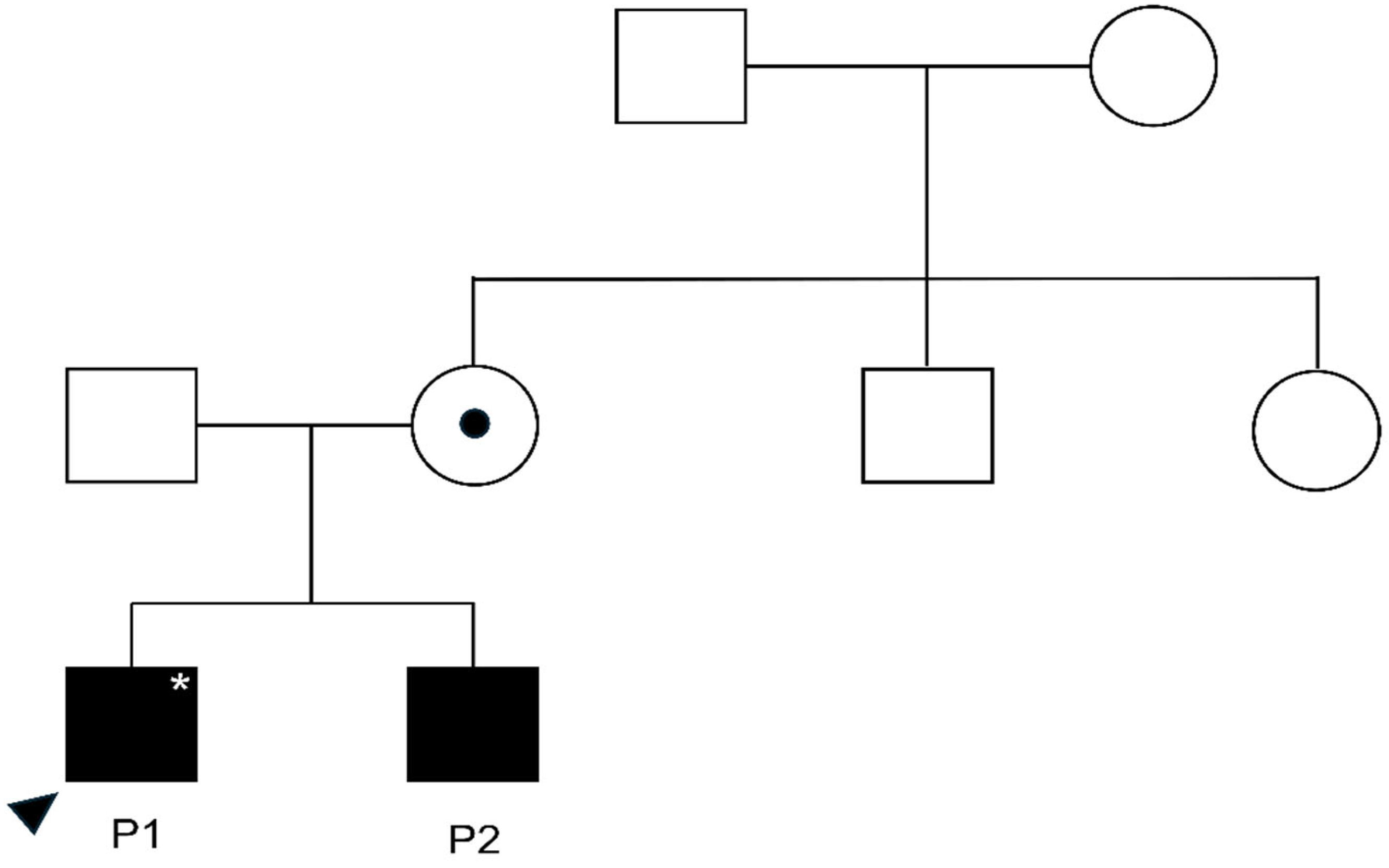
3.1. Clinical Phenotypes and Intrafamilial Heterogeneity
3.2. Type II (Neurodegenerative) Phenotype: Patient 1
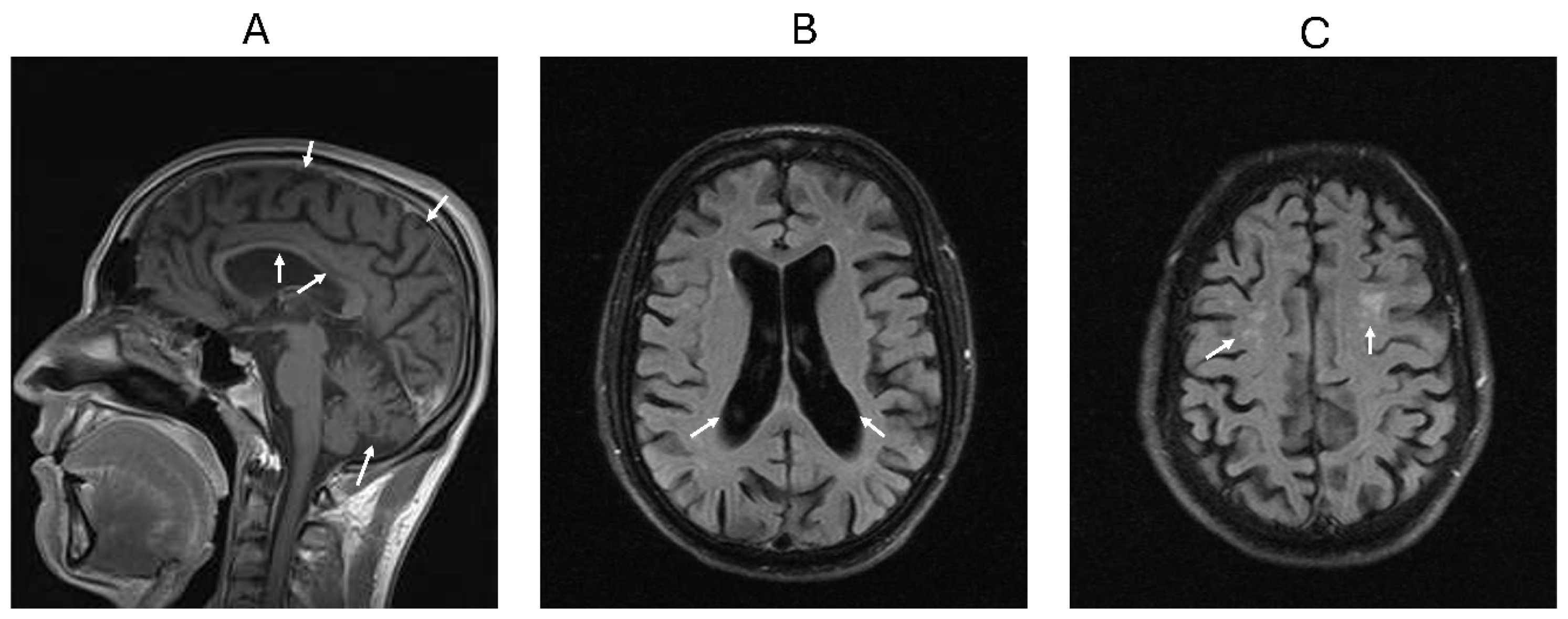
3.2.1. Initial Presentation and Neuroimaging
3.2.2. Genetic Findings
3.2.3. Neurological and Radiological Progression
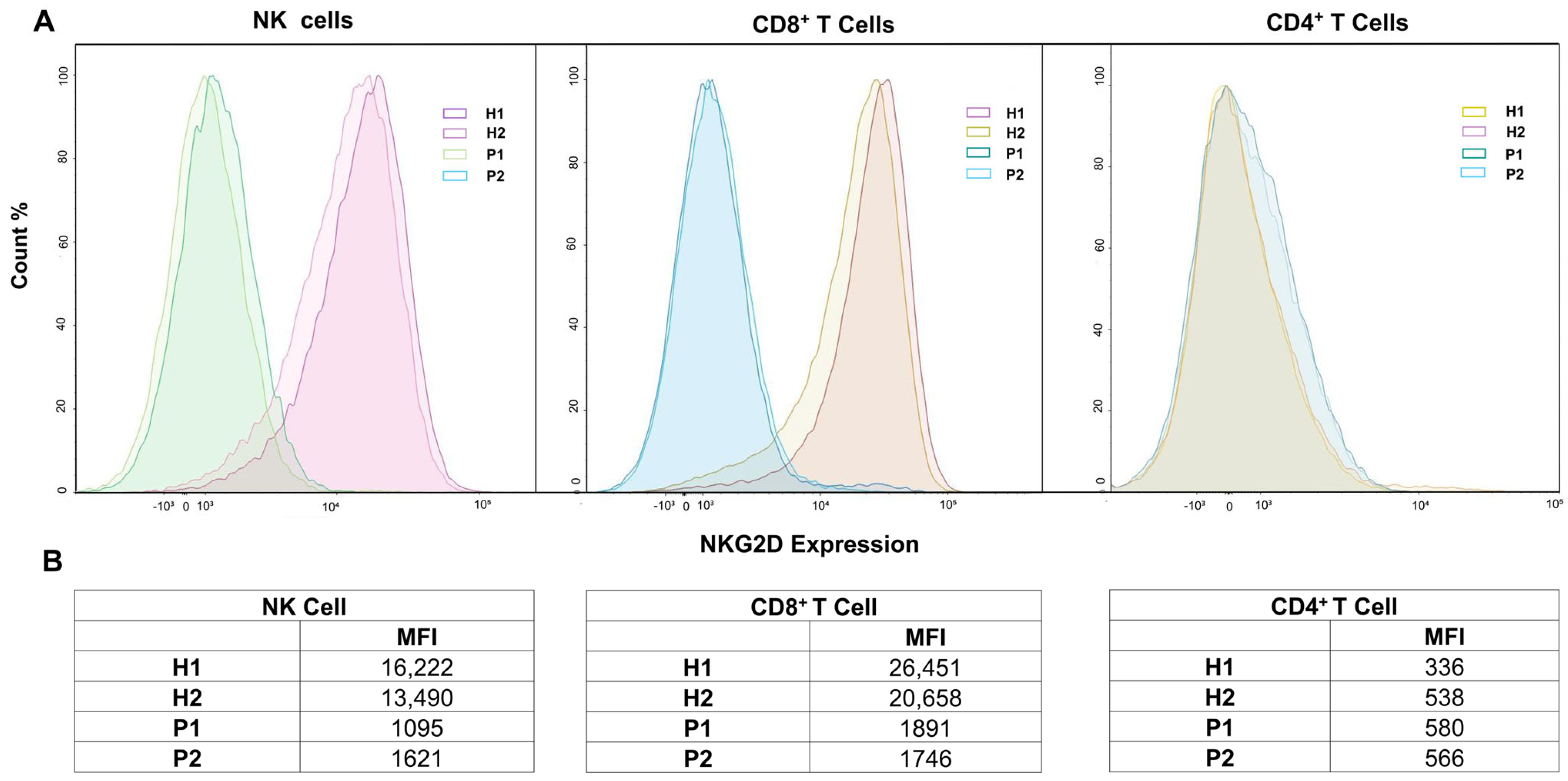
3.2.4. Immunological Profile and Management
3.3. Immuno-Hematologic Phenotype: Patient 2
3.3.1. Initial Presentation and Malignancy
3.3.2. Recurrent Immune Dysregulation
3.3.3. Genetic Confirmation and Immunological Profile
3.3.4. Current Clinical Status
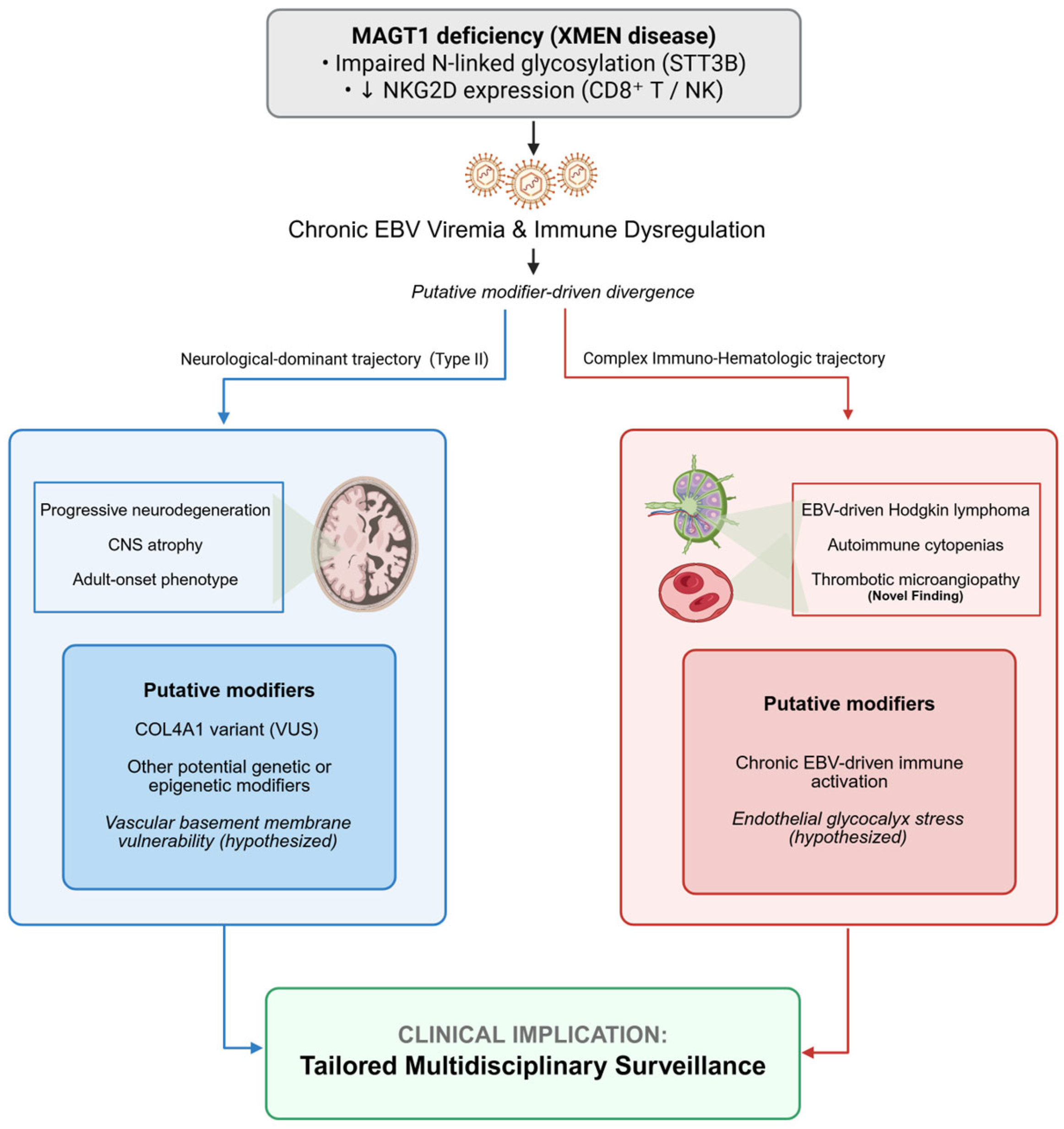
4. Discussion
5. Conclusions
Supplementary Materials
Author Contributions
Funding
Institutional Review Board Statement
Informed Consent Statement
Data Availability Statement
Conflicts of Interest
Correction Statement
Abbreviations
| ACMG | American College of Medical Genetics and Genomics |
| AIHA | Autoimmune Hemolytic Anemia |
| ALT | Alanine Aminotransferase |
| Anti-TT | Anti-Tetanus Toxoid |
| AST | Aspartate Aminotransferase |
| CADD | Combined Annotation Dependent Depletion |
| CDG | Congenital Disorders of Glycosylation |
| CDT | Carbohydrate-Deficient Transferrin |
| CM | Central Memory (T cells) |
| CMV | Cytomegalovirus |
| CNS | Central Nervous System |
| COL4A1 | Collagen Type IV Alpha 1 chain |
| CSF | Cerebrospinal Fluid |
| DNT | Double-Negative T cells (TCRαβ+ CD4− CD8−) |
| EBER | EBV-encoded small RNAs (in situ hybridization) |
| EBV | Epstein–Barr Virus |
| EEG | Electroencephalography |
| ELISA | Enzyme-Linked Immunosorbent Assay |
| EM | Effector Memory (T cells) |
| EMG/NCS | Electromyography/Nerve Conduction Studies |
| FLAIR | Fluid-Attenuated Inversion Recovery |
| GCA | Global Cortical Atrophy |
| gnomAD | Genome Aggregation Database |
| HSCT | Hematopoietic Stem Cell Transplantation |
| HSV | Herpes Simplex Virus |
| HUS/aHUS | Hemolytic Uremic Syndrome/Atypical HUS |
| ID | Intellectual Disability |
| ITP | Immune Thrombocytopenia |
| IVIG | Intravenous Immunoglobulin |
| MAGT1 | Magnesium Transporter 1 |
| MFI | Median Fluorescence Intensity |
| MRA/MRV | Magnetic Resonance Angiography/Venography |
| MRI | Magnetic Resonance Imaging |
| NK | Natural Killer (cells) |
| NKG2D | Natural Killer Group 2, member D |
| NLPHL | Nodular lymphocyte-predominant Hodgkin lymphoma |
| OST | Oligosaccharyltransferase complex |
| PBMC | Peripheral Blood Mononuclear Cells |
| PBS | Phosphate-Buffered Saline |
| PCR | Polymerase Chain Reaction |
| PET-CT | Positron Emission Tomography–Computed Tomography |
| PFA | Platelet Function Assay |
| PML | Progressive Multifocal Leukoencephalopathy |
| PnPS | Pneumococcal Polysaccharide |
| PRES | Posterior Reversible Encephalopathy Syndrome |
| R-CHOP | Rituximab, Cyclophosphamide, Doxorubicin, Vincristine, Prednisone |
| STT3B | Staurosporine-and-temperature-sensitive 3B |
| TCR | T-Cell Receptor |
| TEMRA | Terminally Differentiated Effector Memory re-expressing CD45RA |
| TMA | Thrombotic Microangiopathy |
| TUSC3 | Tumor Suppressor Candidate 3 |
| VUS | Variant of Uncertain Significance |
| vWF | von Willebrand factor |
| VZV | Varicella Zoster Virus |
| WES | Whole-Exome Sequencing |
| XMEN | X-linked immunodeficiency with magnesium defect, EBV infection, and neoplasia |
References
- Li, F.Y.; Chaigne-Delalande, B.; Kanellopoulou, C.; Davis, J.C.; Matthews, H.F.; Douek, D.C.; Cohen, J.I.; Uzel, G.; Su, H.C.; Lenardo, M.J. Second messenger role for Mg2+ revealed by human T-cell immunodeficiency. Nature 2011, 475, 471–476. [Google Scholar]
- Li, F.Y.; Chaigne-Delalande, B.; Su, H.; Uzel, G.; Matthews, H.; Lenardo, M.J. XMEN disease: A new primary immunodeficiency affecting Mg2+ regulation of immunity against Epstein-Barr virus. Blood 2014, 123, 2148–2152. [Google Scholar]
- Chaigne-Delalande, B.; Li, F.Y.; O’Connor, G.M.; Lukacs, M.J.; Jiang, P.; Zheng, L.; Shatzer, A.; Biancalana, M.; Pittaluga, S.; Matthews, H.F.; et al. Mg2+ regulates cytotoxic functions of NK and CD8 T cells in chronic EBV infection through NKG2D. Science 2013, 341, 186–191. [Google Scholar]
- Ravell, J.C.; Matsuda-Lennikov, M.; Chauvin, S.D.; Zou, J.; Biancalana, M.; Deeb, S.J.; Price, S.; Su, H.C.; Notarangelo, G.; Jiang, P.; et al. Defective glycosylation and multisystem abnormalities characterize the primary immunodeficiency XMEN disease. J. Clin. Investig. 2020, 130, 507–522. [Google Scholar] [PubMed]
- Matsuda-Lennikov, M.; Biancalana, M.; Zou, J.; Ravell, J.C.; Zheng, L.; Kanellopoulou, C.; Jiang, P.; Notarangelo, G.; Jing, H.; Masutani, E.; et al. Magnesium transporter 1 (MAGT1) deficiency causes selective defects in N-linked glycosylation and expression of immune-response genes. J. Biol. Chem. 2019, 294, 13638–13656. [Google Scholar]
- Blommaert, E.; Péanne, R.; Cherepanova, N.A.; Rymen, D.; Staels, F.; Jaeken, J.; Race, V.; Keldermans, L.; Souche, E.; Corveleyn, A.; et al. Mutations in MAGT1 lead to a glycosylation disorder with a variable phenotype. Proc. Natl. Acad. Sci. USA 2019, 116, 9865–9870. [Google Scholar]
- Goytain, A.; Quamme, G.A. Identification and characterization of a novel mammalian Mg2+ transporter with channel-like properties. BMC Genom. 2005, 6, 48. [Google Scholar]
- Ravell, J.C.; Chauvin, S.D.; He, T.; Lenardo, M. An Update on XMEN Disease. J. Clin. Immunol. 2020, 40, 671–681. [Google Scholar] [CrossRef] [PubMed]
- Golloshi, K.; Mitchell, W.; Kumar, D.; Malik, S.; Parikh, S.; Aljudi, A.A.; Castellino, S.M.; Chandrakasan, S. HLH and Recurrent EBV Lymphoma as the presenting manifestation of MAGT1 Deficiency: A Systematic Review of the Expanding Disease Spectrum. J. Clin. Immunol. 2024, 44, 153. [Google Scholar] [CrossRef]
- Klinken, E.M.; Gray, P.E.; Pillay, B.; Worley, L.; Edwards, E.S.J.; Payne, K.; Bennetts, B.; Hung, D.; Wood, B.A.; Chan, J.J.; et al. Diversity of XMEN Disease: Description of 2 Novel Variants and Analysis of the Lymphocyte Phenotype. J. Clin. Immunol. 2020, 40, 299–309. [Google Scholar]
- Chen, S.; Wang, X.; Sun, C.; Zhao, C.-B.; Lin, J. MAGT1 Gene Mutation is Associated with Myositis and CD127 Expression Downregulation. J. Clin. Immunol. 2023, 43, 940–943. [Google Scholar] [CrossRef]
- Patiroglu, T.; Haluk Akar, H.; Gilmour, K.; Unal, E.; Ozdemir, M.A.; Bibi, S.; Burns, S.; Chiang, S.C.; Schlums, H.; Bryceson, Y.T.; et al. A case of XMEN syndrome presented with severe auto-immune disorders mimicking autoimmune lymphoproliferative disease. Clin. Immunol. 2015, 158, 152–155. [Google Scholar] [CrossRef]
- Benavides, D.; Ebrahim, A.; Ravell, J.C.; Lenardo, M.; Gahl, W.A.; Toro, C. Adult-onset neurodegeneration in XMEN disease. J. Neuroimmunol. 2024, 386, 578253. [Google Scholar] [CrossRef]
- Villenheimo, H.; Glumoff, V.; Räsänen, S.; Jartti, A.; Rusanen, H.; Åström, P.; Kuismin, O.; Hautala, T. XMEN disease caused by the novel MAGT1 p.(Trp136*) mutation may present with neuropsychiatric symptoms. J. Neuroimmunol. 2024, 393, 578386. [Google Scholar] [CrossRef] [PubMed]
- Rehder, C.; Bean, L.J.H.; Bick, D.; Chao, E.; Chung, W.; Das, S.; O’dAniel, J.; Rehm, H.; Shashi, V.; Vincent, L.M. Next-generation sequencing for constitutional variants in the clinical laboratory, 2021 revision: A technical standard of the American College of Medical Genetics and Genomics (ACMG). Genet. Med. 2021, 23, 1399–1415. [Google Scholar] [CrossRef]
- Rentzsch, P.; Witten, D.; Cooper, G.M.; Shendure, J.; Kircher, M. CADD: Predicting the deleteriousness of variants throughout the human genome. Nucleic Acids Res. 2019, 47, D886–D894. [Google Scholar] [CrossRef] [PubMed]
- Besci, Ö.; Başer, D.; Öğülür, İ.; Berberoğlu, A.C.; Kiykim, A.; Besci, T.; Leblebici, A.; Ellidokuz, H.; Boran, P.; Özek, E.; et al. Reference values for t and b lymphocyte subpopulations in turkish children and adults. Turk. J. Med. Sci. 2021, 51, 1814–1824. [Google Scholar] [CrossRef] [PubMed]
- Zhang, Y.; Wu, J.; Zhang, H.; Wu, C. The Regulation between CD4+CXCR5+Follicular Helper T (Tfh) Cells and CD19+CD24hiCD38hiRegulatory B (Breg) Cells in Gastric Cancer. J. Immunol. Res. 2022, 2022, 9003902. [Google Scholar] [CrossRef] [PubMed]
- Pasquier, F.; Leys, D.; Weerts, J.G.E.; Mounier-Vehier, F.; Barkhof, F.; Scheltens, P. Inter-and intraobserver reproducibility of cerebral atrophy assessment on mri scans with hemispheric infarcts. Eur. Neurol. 1996, 36, 268–272. [Google Scholar] [CrossRef]
- Rhodius-Meester, H.F.M.; Benedictus, M.R.; Wattjes, M.P.; Barkhof, F.; Scheltens, P.; Muller, M.; van der Flier, W.M. MRI visual ratings of brain atrophy and white matter hyperintensities across the spectrum of cognitive decline are differently affected by age and diagnosis. Front. Aging Neurosci. 2017, 9, 117. [Google Scholar] [CrossRef]
- Akşit Bozkına, Z.; Soyer, N. XMEN Disease Associated with Recurrent Autoimmune Cytopenias and EBV-Positive Hodgkin Lymphoma: A Case Report. Turk. J. Haematol. 2025, 42, 205–207. [Google Scholar] [CrossRef]
- Dhalla, F.; Murray, S.; Sadler, R.; Chaigne-Delalande, B.; Sadaoka, T.; Soilleux, E.; Uzel, G.; Miller, J.; Collins, G.P.; Hatton, C.S.R.; et al. Identification of a novel mutation in MAGT1 and progressive multifocal leukoencephalopathy in a 58-year-old man with XMEN disease. J. Clin. Immunol. 2015, 35, 163–168. [Google Scholar] [CrossRef]
- Fleming, M.F.; Anton, R.F.; Spies, C.D. A review of genetic, biological, pharmacological, and clinical factors that affect carbohydrate-deficient transferrin levels. Alcohol. Clin. Exp. Res. 2004, 28, 1347–1355. [Google Scholar] [CrossRef]
- Bean, P. Carbohydrate-deficient transferrin in the assessment of harmful alcohol consumption: Diagnostic performance and clinical significance. Addict. Biol. 1999, 4, 151–161. [Google Scholar] [CrossRef] [PubMed]
- Zhu, D.; You, J.; Zhao, N.; Xu, H. Magnesium Regulates Endothelial Barrier Functions through TRPM7, MagT1, and S1P1. Adv. Sci. 2019, 6, 1901166. [Google Scholar] [CrossRef] [PubMed]
- Zhao, Y.; Qiao, D.; Skibba, M.; Brasier, A.R. The IRE1α–XBP1s Arm of the Unfolded Protein Response Activates N-Glycosylation to Remodel the Subepithelial Basement Membrane in Paramyxovirus Infection. Int. J. Mol. Sci. 2022, 23, 9000. [Google Scholar] [CrossRef]
- Tarbell, J.M.; Cancel, L.M. The glycocalyx and its significance in human medicine. J. Intern. Med. 2016, 280, 97–113. [Google Scholar] [CrossRef]
- Meuwissen, M.E.C.; Halley, D.J.J.; Smit, L.S.; Lequin, M.H.; Cobben, J.M.; de Coo, R.; van Harssel, J.; Sallevelt, S.; Woldringh, G.; van der Knaap, M.S.; et al. The expanding phenotype of COL4A1 and COL4A2 mutations: Clinical data on 13 newly identified families and a review of the literature. Genet. Med. 2015, 17, 843–853. [Google Scholar] [CrossRef] [PubMed]
- Huppmann, A.R.; Nicolae, A.; Slack, G.W.; Pittaluga, S.; Davies-Hill, T.; Ferry, J.A.; Harris, N.L.; Jaffe, E.S.; Hasserjian, R.P. EBV may be expressed in the LP cells of nodular lymphocyte predominant Hodgkin lymphoma (NLPHL) in both children and adults. Am. J. Surg. Pathol. 2014, 38, 316–324. [Google Scholar] [CrossRef]
- Lechner, K.; Obermeier, H.L. Cancer-related microangiopathic hemolytic anemia: Clinical and laboratory features in 168 reported cases. Medicine 2012, 91, 195–205. [Google Scholar] [CrossRef]
- Kauskot, A.; Mallebranche, C.; Bruneel, A.; Fenaille, F.; Solarz, J.; Viellard, T.; Feng, M.; Repérant, C.; Bordet, J.-C.; Cholet, S.; et al. MAGT1 deficiency in XMEN disease is associated with severe platelet dysfunction and impaired platelet glycoprotein N-glycosylation. J. Thromb. Haemost. 2023, 21, 3164–3177. [Google Scholar] [CrossRef]
- Gotru, S.K.; Mammadova-Bach, E.; Sogkas, G.; Schuhmann, M.K.; Schmitt, K.; Kraft, P.; Herterich, S.; Mamtimin, M.; Pinarci, A.; Beck, S.; et al. MAGT1 Deficiency Dysregulates Platelet Cation Homeostasis and Accelerates Arterial Thrombosis and Ischemic Stroke in Mice. Arterioscler. Thromb. Vasc. Biol. 2023, 43, 1494–1509. [Google Scholar] [CrossRef]
- Dimitrova, D.; Rose, J.J.; Uzel, G.; Cohen, J.I.; Rao, K.V.; Bleesing, J.H.; Kanakry, C.G.; Kanakry, J.A. Successful Bone Marrow Transplantation for XMEN: Hemorrhagic Risk Uncovered. J. Clin. Immunol. 2019, 39, 561–566. [Google Scholar] [CrossRef] [PubMed]
- Ding, H.; Li, Y.; Fang, M.; Chen, J.; Liu, L.; Lu, Z.; Hou, J.; Luo, M. Epigenetic activation of the TUSC3 gene as a potential therapy for XMEN disease. J. Allergy Clin. Immunol. 2023, 151, 1631–1643. [Google Scholar] [CrossRef] [PubMed]
- Brault, J.; Liu, T.; Bello, E.; Liu, S.; Sweeney, C.L.; Meis, R.J.; Koontz, S.; Corsino, C.; Choi, U.; Vayssiere, G.; et al. CRISPR-targeted MAGT1 insertion restores XMEN patient hematopoietic stem cells and lymphocytes. Blood 2021, 138, 2780–2784. [Google Scholar] [CrossRef] [PubMed]




| Neurological Findings | Patient 1 | Patient 2 |
| Cognitive Decline | ✓ | – |
| Dysarthria | ✓ | – |
| Dysmetria | ✓ | – |
| Ataxia (gait and balance impairment) | ✓ | – |
| CNS atrophy | ✓ | – |
| Corpus callosum thinning | ✓ | – |
| Cerebral white matter lesions | ✓ | – |
| Cavum septum pellucidum | – | – |
| Intracranial calcifications | – | – |
| Hematologic Findings | ||
| Lymphadenopathy | – | ✓ |
| Splenomegaly | – | ✓ |
| EBV-driven lymphoma | – | ✓ |
| Autoimmune Cytopenias (AIHA/ITP) | – | ✓ |
| Impaired platelet function assays | ✓ | ✓ |
| Infectious susceptibility and complications | ||
| Recurrent Sinopulmonary Infections | – | ✓ |
| Chronic Sinusitis | – | ✓ |
| Bronchiectasis | – | ✓ |
| Other organ involvement | ||
| Elevated Transaminase (ALT) | ✓ | – |
| Treatment | ||
| IVIG replacement therapy | ✓ | ✓ |
| Parameter | Patient 1 | Patient 2 | Normal Range |
|---|---|---|---|
| CD3+ (cells/µL) | 1690 | 1153 | 998–5625 |
| CD19+ (cells/µL) | 1212 | 223 | 87–541 |
| CD4/CD8 | 1.4 | 1 | 1.3–2.6 |
| CD3+CD4+ (cells/µL) | 893 | 502 | 673–3110 |
| CD3+CD8+ (cells/µL) | 606 | 502 | 238–1570 |
| CD16+56+ (cells/µL) | 255 | 465 | 91–766 |
| TCRαβ+ CD4− CD8− (DNT), % | 1.2 | 1.2 | 0.5–3.9% |
| TCRγδ+ T cells, % | 7 | 13.8 | 0.6–12.3% |
| Percentage of TCRαβ+ CD4+ T cells | |||
| CD4+CD45RA+CCR7+ (Naive), % | 42.9 | 6.1 | 13.9–66.4% |
| CD4+CD45RA−CCR7+ (CM), % | 27.1 | 48.4 | 21.7–67% |
| CD4+CD45RA−CCR7− (EM), % | 29 | 44.9 | 2.9–24.6% |
| CD4+CD45RA+CCR7− (TEMRA), % | 0.8 | 0.4 | 0.3–44.6% |
| CD4+CXCR5+ (Tfh), % | 8.4 | 10.2 | 1.8–8.9% |
| Percentage of TCRαβ+ CD8+ T cells | |||
| CD8+CD45RA+CCR7+ (Naive CD8+), % | 46 | 23.4 | 4.1–67.5% |
| CD8+CD45RA−CCR7+ (CM), % | 8.9 | 6.7 | 1.4–27.9% |
| CD8+CD45RA−CCR7− (EM), % | 16.9 | 40.1 | 0.7–39.9% |
| CD8+CD45RA+CCR7− (TEMRA), % | 7.9 | 29.7 | 3.6–66% |
| Percentage of B cells | |||
| CD19+IgD+CD27− (Naive B), % | 92.5 | 95.7 | 33.7–79.2% |
| IgD+CD27+ (IgM memory), % | 1.9 | 1 | 5.3–31.6% |
| CD19+IgD−CD27+ (Switched memory B), % | 3.2 | 1.4 | 5.9–34.5% |
| CD21low B Cells, % | 0.8 | 0.8 | 1.2–14.2% |
| IgM++IgD++CD24++CD38++ (transitional B cells), % | 0.6 | 3 | 0.6–3.5% |
| CD20− CD38++ CD27+ (plasmablasts), % | 0.7 | 0.4 | 0.4–3.6% |
| Parameter | Patient 1 | Patient 2 | Normal Range |
|---|---|---|---|
| White blood cell count | 6.32 | 7.23 | 4.5–11.0 × 10⁹/L |
| Absolute lymphocyte count | 3.78 | 3.83 | 0.65–2.80 × 10⁹/L |
| Platelet count | 175 | 171 | 150–450 × 109/L |
| PFA Collagen/ADP | 218 | 141 | 68–121 s |
| PFA Collagen/Epinephrine | >260 | >300 | 84–160 s |
| ALT (U/L) | 74 | 17 | 0–40 |
| AST (U/L) | 34 | 19 | 0–40 |
| IgG (g/L) | 8.19 | 5.06 | 7–16 |
| IgA (g/L) | 0.85 | 0.84 | 0.7–4 |
| IgM (g/L) | 0.52 | 0.35 | 0.40–2.3 |
| IgE (kU/L) | 13 | 6.4 | <100 |
| Baseline Anti-TT (IU/mL) | 1.3 | 3 | >0.1 |
| Anti-PnPS (U/mL, post-vaccination) | 2 (non-protective) | NA | |
| Isohemagglutinin titers | Anti-A 1/32 Anti-B 1/64 | Anti-A 1/64 Anti-B 1/32 | ≥1/8 |
| CMV DNA PCR (copies/mL) | Negative | 1506 | Negative |
| EBV DNA PCR (copies/mL) | 810 | 1390 | Negative |
| EBV IgG | Positive | Positive | Positive after infection |
| Abnormal CDT Pattern | Not detected | Not detected |
| Classification | Age at Onset | Neurological Features | Radiological Findings | Suggested Surveillance Focus |
|---|---|---|---|---|
| TYPE I: Neuro- developmental (Childhood-onset) (Synthesized from [4,6,8,9,11]) | Pediatric | Core (CDG-like) features
|
|
|
| TYPE II: Neurodegenerative and Neuropsychiatric (Adult-onset/Progressive) (Synthesized from [4,9,13,14] and the Current Study [P1]) | Adult | Neurodegenerative features
|
|
|
| TYPE III: Secondary CNS and Peripheral (Infectious/ Vascular/Immune) (Synthesized from [4,8,9,10,12,22]) | Variable | Secondary CNS events:
|
|
|
Disclaimer/Publisher’s Note: The statements, opinions and data contained in all publications are solely those of the individual author(s) and contributor(s) and not of MDPI and/or the editor(s). MDPI and/or the editor(s) disclaim responsibility for any injury to people or property resulting from any ideas, methods, instructions or products referred to in the content. |
© 2026 by the authors. Licensee MDPI, Basel, Switzerland. This article is an open access article distributed under the terms and conditions of the Creative Commons Attribution (CC BY) license.
Share and Cite
Kural, R.F.; Galata, Z.; Gumusburun, R.; Tunakan Dalgic, C.; Soyer, N.; Yazıcı, H.; Yuceyar, A.N.; Subasıoglu, A.; Evcili, I.; Gungor, B.; et al. Modifier-Sensitive Phenotypic Divergence in XMEN Disease (MAGT1 Deficiency): Neurodegenerative and Immuno-Hematologic Trajectories. J. Clin. Med. 2026, 15, 2395. https://doi.org/10.3390/jcm15062395
Kural RF, Galata Z, Gumusburun R, Tunakan Dalgic C, Soyer N, Yazıcı H, Yuceyar AN, Subasıoglu A, Evcili I, Gungor B, et al. Modifier-Sensitive Phenotypic Divergence in XMEN Disease (MAGT1 Deficiency): Neurodegenerative and Immuno-Hematologic Trajectories. Journal of Clinical Medicine. 2026; 15(6):2395. https://doi.org/10.3390/jcm15062395
Chicago/Turabian StyleKural, Ragip Fatih, Zuleyha Galata, Reyhan Gumusburun, Ceyda Tunakan Dalgic, Nur Soyer, Havva Yazıcı, Ayse Nur Yuceyar, Aslı Subasıoglu, Irem Evcili, Bilgi Gungor, and et al. 2026. "Modifier-Sensitive Phenotypic Divergence in XMEN Disease (MAGT1 Deficiency): Neurodegenerative and Immuno-Hematologic Trajectories" Journal of Clinical Medicine 15, no. 6: 2395. https://doi.org/10.3390/jcm15062395
APA StyleKural, R. F., Galata, Z., Gumusburun, R., Tunakan Dalgic, C., Soyer, N., Yazıcı, H., Yuceyar, A. N., Subasıoglu, A., Evcili, I., Gungor, B., Okan, K., Soylu, M., Uzunkopru, C., & Ardeniz, O. (2026). Modifier-Sensitive Phenotypic Divergence in XMEN Disease (MAGT1 Deficiency): Neurodegenerative and Immuno-Hematologic Trajectories. Journal of Clinical Medicine, 15(6), 2395. https://doi.org/10.3390/jcm15062395