Long-Term Metabolic Remission and Predictive Factors After Sleeve Gastrectomy and Roux-en-Y Gastric Bypass in an Asian Population

 , , , , ,
Abstract
1. Introduction
2. Materials and Methods
2.1. Study Design and Patient Selection
2.2. Definition of Diagnostic Criteria for Comorbidities
2.3. Data Collection
2.4. Surgical Procedures
2.5. Postoperative Follow-Up
2.6. Definition of Remission or Resolution Criteria for the Comorbidities
2.7. Statistical Analysis
3. Results
3.1. Overall Baseline Characteristics
3.2. Outcomes of Bariatric Surgery
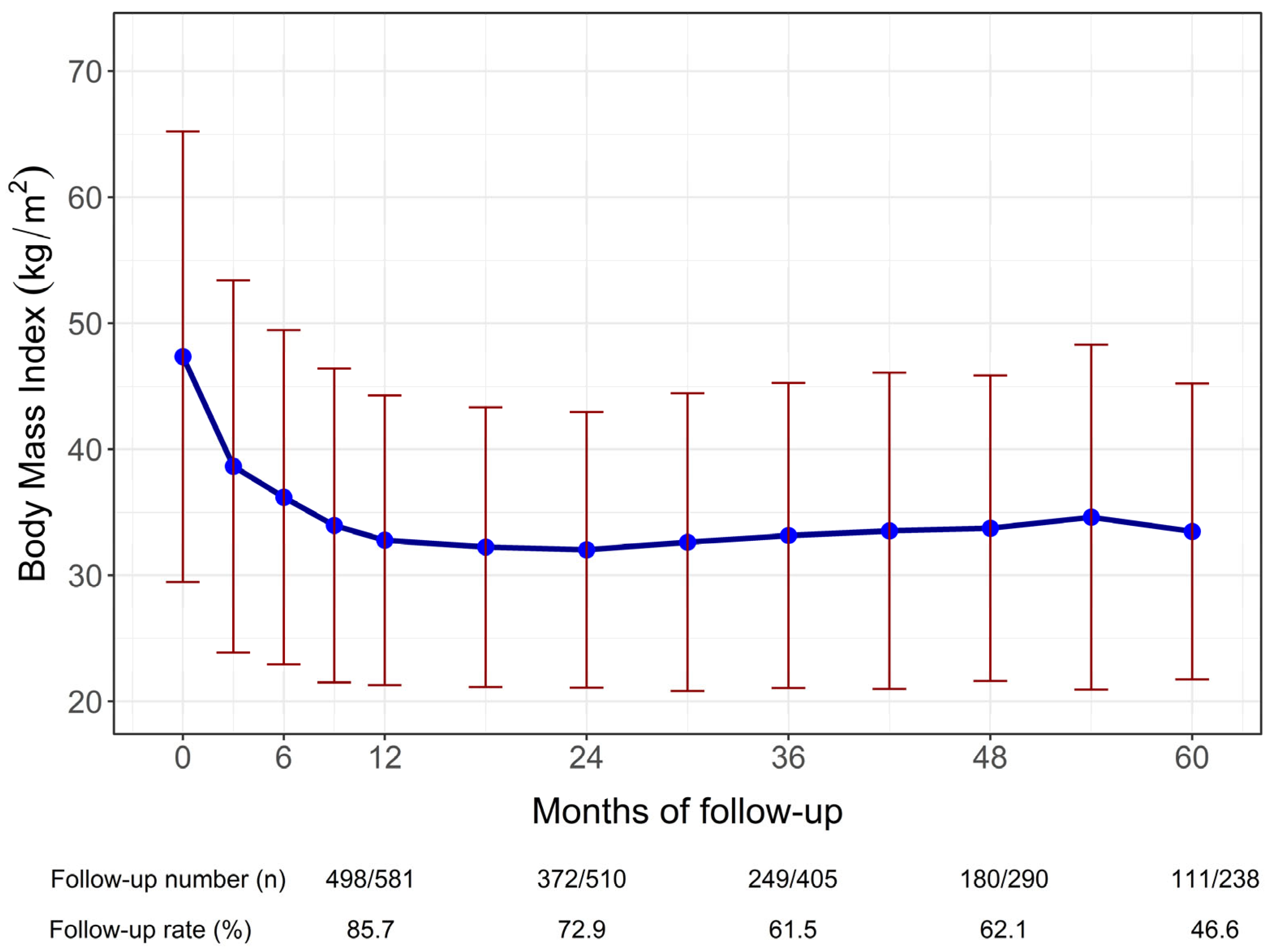
3.2.1. Weight Loss
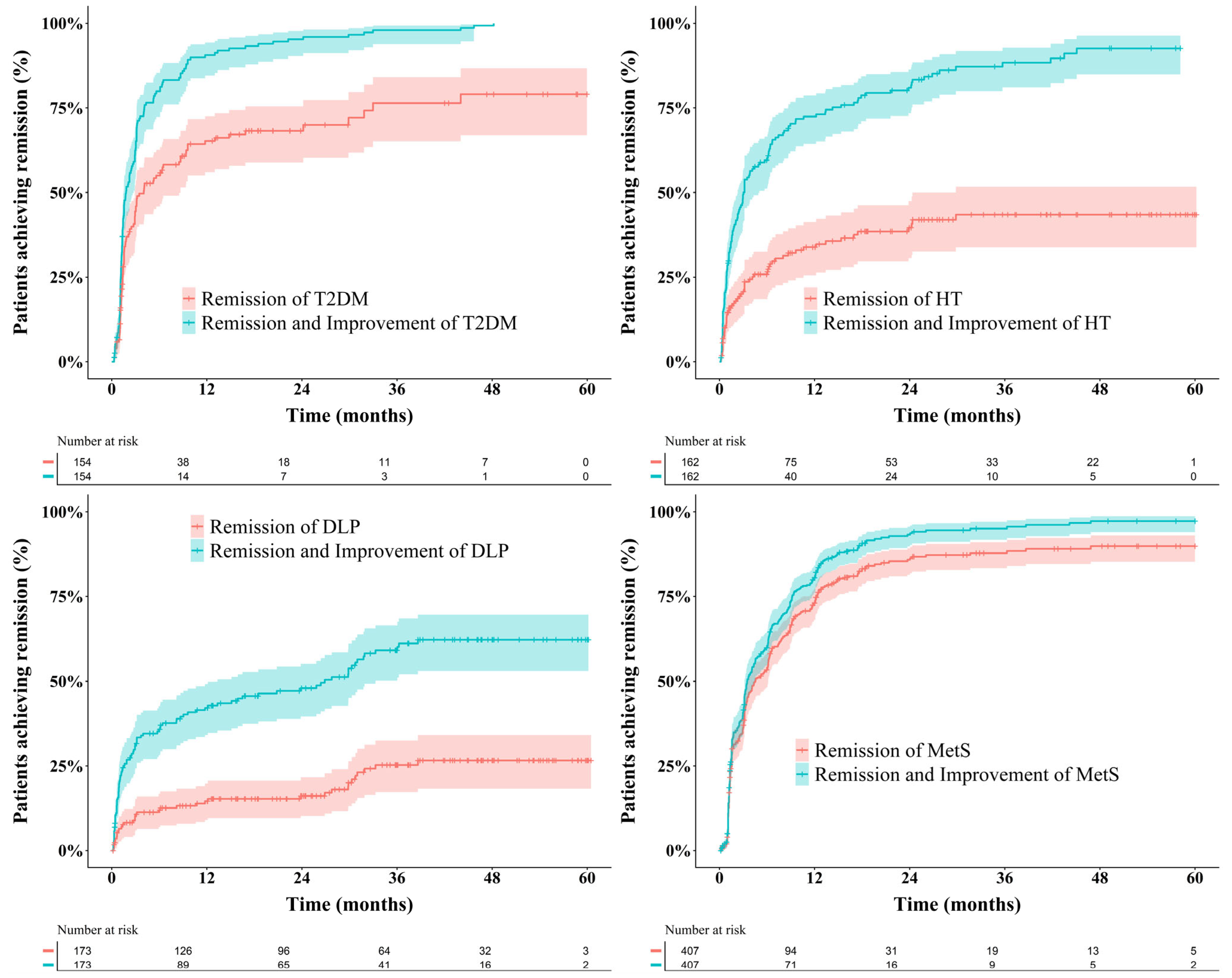
3.2.2. Cumulative Probability of Remission
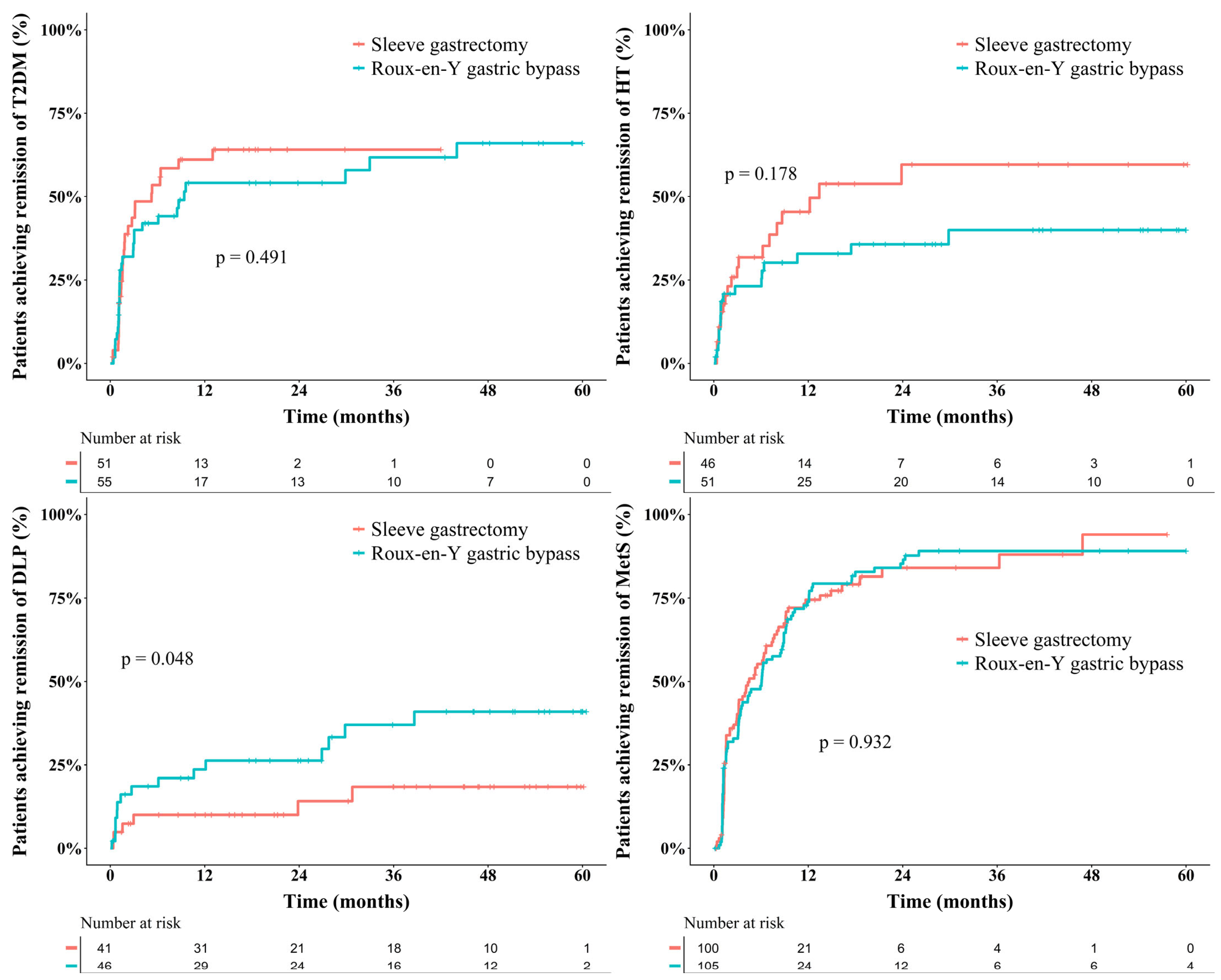
3.3. Comparison of SG and RYGB After Propensity Score Matching
3.4. Factors Predicting Metabolic Remission
3.4.1. T2DM
3.4.2. HT
3.4.3. DLP
3.4.4. MetS
4. Discussion
4.1. Baseline Characteristics
4.2. Outcomes of Bariatric Surgery
4.2.1. Weight Loss and Metabolic Resolution
4.2.2. T2DM
4.2.3. HT
4.2.4. DLP
4.2.5. MetS
4.3. Strengths and Limitations
5. Conclusions
Supplementary Materials
Author Contributions
Funding
Institutional Review Board Statement
Informed Consent Statement
Data Availability Statement
Acknowledgments
Conflicts of Interest
Abbreviations
| BMI | Body mass index |
| CI | Confidence interval |
| CVD | Cardiovascular disease |
| DLP | Dyslipidemia |
| FBG | Fasting blood glucose |
| HbA1c | Hemoglobin A1c |
| HOMA-IR | Homeostasis Model Assessment of Insulin Resistance |
| HR | Hazard ratio |
| HT | Hypertension |
| IQR | Interquartile range |
| MetS | Metabolic syndrome |
| OSA | Obstructive sleep apnea |
| RYGB | Roux-en-Y gastric bypass |
| SG | Sleeve gastrectomy |
| T2DM | Type 2 diabetes mellitus |
| TWL | Total weight loss |
References
- Tiwari, A.; Balasundaram, P. Public Health Considerations Regarding Obesity; StatPearls: Treasure Island, FL, USA, 2023. [Google Scholar]
- Golomb, I.; Ben David, M.; Glass, A.; Kolitz, T.; Keidar, A. Long-term metabolic effects of laparoscopic sleeve gastrectomy. JAMA Surg. 2015, 150, 1051–1057. [Google Scholar] [CrossRef]
- Neagoe, R.; Muresan, M.; Timofte, D.; Darie, R.; Razvan, I.; Voidazan, S.; Muresan, S.; Sala, D. Long-term outcomes of laparoscopic sleeve gastrectomy—A single-center prospective observational study. Videosurgery Other Miniinvasive Tech. 2019, 14, 242–248. [Google Scholar] [CrossRef]
- Gadiot, R.P.M.; Biter, L.U.; van Mil, S.; Zengerink, H.F.; Apers, J.; Mannaerts, G.H.H. Long-term results of laparoscopic sleeve gastrectomy for morbid obesity: 5 to 8-year results. Obes. Surg. 2017, 27, 59–63. [Google Scholar] [CrossRef] [PubMed]
- Zhu, L.; Spence, C.; Yang, J.W.; Ma, G.X. The IDF definition is better suited for screening metabolic syndrome and estimating risks of diabetes in Asian American adults: Evidence from NHANES 2011–2016. J. Clin. Med. 2020, 9, 3871. [Google Scholar] [CrossRef] [PubMed]
- Guerreiro, V.; Neves, J.S.; Salazar, D.; Ferreira, M.J.; Oliveira, S.C.; Souteiro, P.; Pedro, J.; Magalhães, D.; Varela, A.; Belo, S.; et al. Long-term weight loss and metabolic syndrome remission after bariatric surgery: The effect of sex, age, metabolic parameters and surgical technique—A 4-year follow-up study. Obes. Facts 2019, 12, 639–652. [Google Scholar] [CrossRef] [PubMed]
- AbdAlla Salman, M.; Rabiee, A.; Salman, A.; Elewa, A.; Tourky, M.; Mahmoud, A.A.; Moustafa, A.; Shaaban, H.E.-D.; Ismail, A.A.; Noureldin, K.; et al. Predictors of type-2 diabetes remission following bariatric surgery after a two-year follow-up. Asian J. Surg. 2022, 45, 2645–2650. [Google Scholar] [CrossRef]
- Ahuja, A.; Tantia, O.; Chaudhuri, T.; Khanna, S.; Seetharamaiah, S.; Majumdar, K.; Goyal, G. Predicting remission of diabetes post metabolic surgery: A comparison of ABCD, diarem, and DRS scores. Obes. Surg. 2018, 28, 2025–2031. [Google Scholar] [CrossRef]
- Blume, C.A.; Brust-Renck, P.G.; Rocha, M.K.; Leivas, G.; Neyeloff, J.L.; Anzanello, M.J.; Fogliatto, F.S.; Bahia, L.R.; Telo, G.H.; Schaan, B.D. Development and validation of a predictive model of success in bariatric surgery. Obes. Surg. 2021, 31, 1030–1037. [Google Scholar] [CrossRef]
- Tan, K.C.B. Appropriate body-mass index for Asian populations and its implications for policy and intervention strategies. Lancet 2004, 363, 157–163. [Google Scholar] [CrossRef]
- Lee, W.J.; Almulaifi, A. Recent advances in bariatric/metabolic surgery: Appraisal of clinical evidence. J. Biomed. Res. 2015, 29, 98–104. [Google Scholar] [CrossRef][Green Version]
- ElSayed, N.A.; Aleppo, G.; Aroda, V.R.; Bannuru, R.R.; Brown, F.M.; Bruemmer, D.; Collins, B.S.; Hilliard, M.E.; Isaacs, D.; Johnson, E.L.; et al. 2. Classification and diagnosis of diabetes: Standards of care in Diabetes-2023. Diabetes Care 2023, 46, S19–S40. [Google Scholar] [CrossRef]
- Williams, B.; Mancia, G.; Spiering, W.; Agabiti Rosei, E.; Azizi, M.; Burnier, M.; Clement, D.L.; Coca, A.; de Simone, G.; Dominiczak, A.; et al. 2018 ESC/ESH Guidelines for the management of arterial hypertension. Eur. Heart J. 2018, 39, 3021–3104. [Google Scholar] [CrossRef] [PubMed]
- Brethauer, S.A.; Kim, J.; el Chaar, M.; Papasavas, P.; Eisenberg, D.; Rogers, A.; Ballem, N.; Kligman, M.; Kothari, S. Standardized outcomes reporting in metabolic and bariatric surgery. Surg. Obes. Relat. Dis. 2015, 11, 489–506. [Google Scholar] [CrossRef]
- Tsilingiris, D.; Koliaki, C.; Kokkinos, A. Remission of type 2 diabetes mellitus after bariatric surgery: Fact or fiction? Int. J. Environ. Res. Public Health 2019, 16, 3171. [Google Scholar] [CrossRef]
- Rodríguez-Ortiz, D.; Reyes-Pérez, A.; León Cabral, P.; Sanchez, H.; Mosti, M.; Aguilar-Salinas, C.; Velázquez, D. Assessment of two different diagnostic guidelines criteria (National Cholesterol Education Adult Treatment Panel III [ATP III] and International Diabetes Federation [IDF]) for the evaluation of metabolic syndrome remission in a longitudinal cohort of patients undergoing Roux-en-Y gastric bypass. Surgery 2016, 159, 1121–1128. [Google Scholar]
- Toh, B.C.; Chan, W.H.; Eng, A.K.H.; Lim, E.K.W.; Lim, C.H.; Tham, K.W.; Fook-Chong, S.; Tan, J.T.H. Five-year long-term clinical outcome after bariatric metabolic surgery: A multi-ethnic Asian population in Singapore. Diabetes Obes. Metab. 2018, 20, 1762–1765. [Google Scholar] [CrossRef]
- Hoyuela, C. Five-year outcomes of laparoscopic sleeve gastrectomy as a primary procedure for morbid obesity: A prospective study. World J. Gastrointest. Surg. 2017, 9, 109–117. [Google Scholar] [CrossRef] [PubMed]
- Pok, E.-H.; Lee, W.-J.; Ser, K.-H.; Chen, J.-C.; Chen, S.-C.; Tsou, J.-J.; Chin, K.-F. Laparoscopic sleeve gastrectomy in Asia: Long term outcome and revisional surgery. Asian J. Surg. 2016, 39, 21–28. [Google Scholar] [CrossRef][Green Version]
- Ohta, M.; Seki, Y.; Wong, S.K.; Wang, C.; Huang, C.K.; Aly, A.; Baijal, M.; Al-Sabah, S.; Udomsawaengsup, S.; Heo, Y.S.; et al. Bariatric/metabolic surgery in the Asia-Pacific region: APMBSS 2018 survey. Obes. Surg. 2019, 29, 534–541. [Google Scholar] [CrossRef] [PubMed]
- Haruta, H.; Kasama, K.; Ohta, M.; Sasaki, A.; Yamamoto, H.; Miyazaki, Y.; Oshiro, T.; Naitoh, T.; Hosoya, Y.; Togawa, T.; et al. Long-term outcomes of bariatric and metabolic surgery in Japan: Results of a multi-institutional survey. Obes. Surg. 2017, 27, 754–762. [Google Scholar] [CrossRef]
- Seki, Y.; Kasama, K.; Hashimoto, K. Long-term outcome of laparoscopic sleeve gastrectomy in morbidly obese Japanese patients. Obes. Surg. 2016, 26, 138–145. [Google Scholar] [CrossRef]
- Zachariah, S.K.; Chang, P.C.; Ooi, A.S.E.; Hsin, M.C.; Kin Wat, J.Y.; Huang, C.K. Laparoscopic sleeve gastrectomy for morbid obesity: 5 years experience from an Asian center of excellence. Obes. Surg. 2013, 23, 939–946. [Google Scholar] [CrossRef]
- Sjöström, L.; Narbro, K.; Sjöström, C.D.; Karason, K.; Larsson, B.; Wedel, H.; Lystig, T.; Sullivan, M.; Bouchard, C.; Carlsson, B.; et al. Effects of bariatric surgery on mortality in Swedish obese subjects. N. Engl. J. Med. 2007, 357, 741–752. [Google Scholar] [CrossRef]
- Huang, Y.M.; Lin, Y.K.; Lee, W.J.; Hur, K.Y.; Kasama, K.; Cheng, A.K.S.; Lee, M.H.; Wong, S.K.; Soong, T.C.; Lee, K.T.; et al. Long-term outcomes of metabolic surgery in overweight and obese patients with type 2 diabetes in Asia. Diabetes Obes. Metab. 2021, 23, 742–753. [Google Scholar] [CrossRef] [PubMed]
- Wei, X.; Yuan, H.; Wang, D.; Zhao, J.; Fang, F. Effect of bariatric surgery on glycemic and metabolic outcomes in people with obesity and type 2 diabetes mellitus: A systematic review, meta-analysis, and meta-evidence of 39 studies. Front. Nutr. 2025, 12, 1603670. [Google Scholar] [CrossRef] [PubMed]
- Salazar, J.; Duran, P.; Garrido, B.; Parra, H.; Hernández, M.; Cano, C.; Añez, R.; García-Pacheco, H.; Cubillos, G.; Vasquez, N.; et al. Weight Regain after Metabolic Surgery: Beyond the Surgical Failure. J. Clin. Med. 2024, 13, 1143. [Google Scholar] [CrossRef] [PubMed]
- Ohta, M.; Seki, Y.; Ohyama, T.; Bai, R.; Kim, S.H.; Oshiro, T.; Jiang, T.; Sasaki, A.; Naitoh, T.; Yamaguchi, T.; et al. Prediction of long-term diabetes remission after metabolic surgery in obese East Asian patients: A comparison between ABCD and IMS scores. Obes. Surg. 2021, 31, 1485–1495. [Google Scholar] [CrossRef]
- Tu, Y.; Pan, Y.; Han, J.; Pan, J.; Zhang, P.; Jia, W.; Bao, Y.; Yu, H. A total weight loss of 25% shows better predictivity in evaluating the efficiency of bariatric surgery. Int. J. Obes. 2021, 45, 396–403. [Google Scholar] [CrossRef]
- Gu, L.; Huang, X.; Li, S.; Mao, D.; Shen, Z.; Khadaroo, P.A.; Ng, D.M.; Chen, P. A meta-analysis of the medium- and long-term effects of laparoscopic sleeve gastrectomy and laparoscopic Roux-en-Y gastric bypass. BMC Surg. 2020, 20, 30. [Google Scholar] [CrossRef]
- Coleman, K.J.; Basu, A.; Barton, L.J.; Fischer, H.; Arterburn, D.E.; Barthold, D.; Courcoulas, A.; Crawford, C.L.; Kim, B.B.; Fedorka, P.N.; et al. Remission and Relapse of Dyslipidemia After Vertical Sleeve Gastrectomy vs Roux-en-Y Gastric Bypass in a Racially and Ethnically Diverse Population. JAMA Netw. Open 2022, 5, e2233843. [Google Scholar] [CrossRef]
- Lei, Y.; Lei, X.; Chen, G.; Wang, Z.; Song, H.; Feng, X.; Wu, Y.; Jia, V.; Hu, J.; Tian, Y. Update on comparison of laparoscopic sleeve gastrectomy and laparoscopic Roux-en-Y gastric bypass: A systematic review and meta-analysis of weight loss, comorbidities, and quality of life at 5 years. BMC Surg. 2024, 24, 219. [Google Scholar] [CrossRef]
- Ashrafian, H.; Athanasiou, T.; Li, J.V.; Bueter, M.; Ahmed, K.; Nagpal, K.; Holmes, E.; Darzi, A.; Bloom, S.R. Diabetes resolution and hyperinsulinaemia after metabolic Roux-en-Y gastric bypass. Obes. Rev. 2011, 12, e257–e272. [Google Scholar] [CrossRef] [PubMed]
- Graham, C.; Switzer, N.; Reso, A.; Armstrong, C.; Church, N.; Mitchell, P.; Debru, E.; Gill, R. Sleeve gastrectomy and hypertension: A systematic review of long-term outcomes. Surg. Endosc. 2019, 33, 3001–3007. [Google Scholar] [CrossRef] [PubMed]
- Yeo, D.; Yeo, C.; Low, T.Y.; Ahmed, S.; Phua, S.; Oo, A.M.; Rao, J.; Koura, A.; Venkataraman, K.; Kaushal, S. Outcomes After Metabolic Surgery in Asians-a Meta-analysis. Obes. Surg. 2019, 29, 114–126. [Google Scholar] [CrossRef]
- Nocca, D.; Loureiro, M.; Skalli, E.M.; Nedelcu, M.; Jaussent, A.; Deloze, M.; Lefebvre, P.; Fabre, J.M. Five-year results of laparoscopic sleeve gastrectomy for the treatment of severe obesity. Surg. Endosc. 2017, 31, 3251–3257. [Google Scholar] [CrossRef]
- Huber, H.; Schieren, A.; Holst, J.J.; Simon, M.C. Dietary impact on fasting and stimulated GLP-1 secretion in different metabolic conditions—A narrative review. Am. J. Clin. Nutr. 2024, 119, 599–627. [Google Scholar] [CrossRef]
- Janssen, J.A.M.J.L. Overnutrition, hyperinsulinemia and ectopic fat: It is time for A paradigm shift in the management of type 2 diabetes. Int. J. Mol. Sci. 2024, 25, 5488. [Google Scholar] [CrossRef] [PubMed]
- Oh, T.J.; Lee, H.-J.; Cho, Y.M. East Asian perspectives in metabolic and bariatric surgery. J. Diabetes Investig. 2022, 13, 756–761. [Google Scholar] [CrossRef]
- Casajoana, A.; Guerrero-Pérez, F.; García Ruiz de Gordejuela, A.; Admella, V.; Sorribas, M.; Vidal-Alabró, A.; Virgili, N.; Urdiales, R.L.; Montserrat, M.; Pérez-Maraver, M.; et al. Role of gastrointestinal hormones as a predictive factor for long-term diabetes remission: Randomized trial comparing metabolic gastric bypass, sleeve gastrectomy, and greater curvature plication. Obes. Surg. 2021, 31, 1733–1744. [Google Scholar] [CrossRef]
- Salman, A.A.; Salman, M.A.; Marie, M.A.; Rabiee, A.; Helmy, M.Y.; Tourky, M.S.; Qassem, M.G.; Shaaban, H.E.-D.; Sarhan, M.D. Factors associated with resolution of type-2 diabetes mellitus after sleeve gastrectomy in obese adults. Sci. Rep. 2021, 11, 6002. [Google Scholar] [CrossRef]
- Park, J.Y. Prediction of Type 2 Diabetes Remission after Bariatric or Metabolic Surgery. J. Obes. Metab. Syndr. 2018, 27, 213–222. [Google Scholar] [CrossRef]
- Lee, W.-J.; Hur, K.Y.; Lakadawala, M.; Kasama, K.; Wong, S.K.H.; Chen, S.-C.; Lee, Y.-C.; Ser, K.-H. Predicting success of metabolic surgery: Age, body mass index, C-peptide, and duration score. Surg. Obes. Relat. Dis. 2013, 9, 379–384. [Google Scholar] [CrossRef]
- Wazir, N.; Arshad, M.F.; Finney, J.; Kirk, K.; Dewan, S. Two years remission of type 2 diabetes mellitus after bariatric surgery. J. Coll. Physicians Surg. Pak. 2019, 29, 967–971. [Google Scholar] [CrossRef]
- Jindal, R.; Gupta, M.; Ahuja, A.; Nain, P.S.; Sharma, P.; Aggarwal, A. Factors determining diabetic remission after sleeve gastrectomy: A prospective study. Niger. J. Surg. 2020, 26, 66–71. [Google Scholar] [CrossRef]
- Hage, K.; Abi Mosleh, K.; Sample, J.W.; Vierkant, R.A.; Mundi, M.S.; Spaniolas, K.; Abu Dayyeh, B.K.; Ghanem, O.M. Preoperative duration of type 2 diabetes mellitus and remission after Roux-en-Y gastric bypass: A single center long-term cohort study. Int. J. Surg. 2024, 110, 6214–6221. [Google Scholar] [CrossRef]
- Pang, W.S.; Loo, G.H.; Tan, G.J.; Mardan, M.; Rajan, R.; Kosai, N.R. Comparative evaluation of early diabetic outcomes in southeast asian patients with type 2 diabetes mellitus undergoing Roux-en-Y gastric bypass (RYGB) versus sleeve gastrectomy (LSG). Sci. Rep. 2024, 14, 614. [Google Scholar] [CrossRef]
- Fisher, D.P.; Liu, L.; Arterburn, D.; Coleman, K.J.; Courcoulas, A.; Haneuse, S.; Johnson, E.; Li, R.A.; Theis, M.K.; Taylor, B.; et al. Remission and relapse of hypertension after bariatric surgery: A retrospective study on long-term outcomes. Ann. Surg. Open. 2022, 3, e158. [Google Scholar] [CrossRef]
- Reynolds, K.; Barton, L.J.; Basu, A.; Fischer, H.; Arterburn, D.E.; Barthold, D.; Courcoulas, A.; Crawford, C.L.; Kim, B.B.; Fedorka, P.N.; et al. Comparative effectiveness of gastric bypass and vertical sleeve gastrectomy for hypertension remission and relapse: The ENGAGE CVD study. Hypertension 2021, 78, 1116–1125. [Google Scholar] [CrossRef] [PubMed]
- Abd Ellatif, M.E.; Abdallah, E.; Askar, W.; Thabet, W.; Aboushady, M.; Abbas, A.E.; El Hadidi, A.; Elezaby, A.F.; Salama, A.F.; Dawoud, I.E.; et al. Long term predictors of success after laparoscopic sleeve gastrectomy. Int. J. Surg. 2014, 12, 504–508. [Google Scholar] [CrossRef] [PubMed]
- Panunzi, S.; Carlsson, L.; De Gaetano, A.; Peltonen, M.; Rice, T.; Sjöström, L.; Mingrone, G.; Dixon, J.B. Determinants of Diabetes Remission and Glycemic Control After Bariatric Surgery. Diabetes Care 2016, 39, 166–174. [Google Scholar] [CrossRef] [PubMed]
- Hall, J.E.; do Carmo, J.M.; da Silva, A.A.; Wang, Z.; Hall, M.E. Obesity-Induced Hypertension. Circ. Res. 2015, 116, 991–1006. [Google Scholar] [CrossRef]
- Schiffrin, E.L. Vascular remodeling in hypertension: Mechanisms and treatment. Hypertension 2012, 59, 367–374. [Google Scholar] [CrossRef]
- Payne, R.A.; Webb, D.J. Arterial Blood Pressure and Stiffness in Hypertension. Hypertension 2006, 48, 366–367. [Google Scholar] [CrossRef][Green Version]
- Nuredini, G.; Saunders, A.; Rajkumar, C.; Okorie, M. Current status of white coat hypertension: Where are we? Ther. Adv. Cardiovasc. Dis. 2020, 14, 1753944720931637. [Google Scholar] [CrossRef]
- Nudotor, R.D.; Canner, J.K.; Haut, E.R.; Prokopowicz, G.P.; Steele, K.E. Comparing remission and recurrence of hypertension after bariatric surgery: Vertical sleeve gastrectomy versus Roux-en-Y gastric bypass. Surg. Obes. Relat. Dis. 2021, 17, 308–318. [Google Scholar] [CrossRef] [PubMed]
- Moriconi, D.; Nannipieri, M.; Rebelos, E. Bariatric surgery to treat hypertension. Hypertens. Res. 2023, 46, 1341–1343. [Google Scholar] [CrossRef]
- Climent, E.; Oliveras, A.; Pedro-Botet, J.; Goday, A.; Benaiges, D. Bariatric Surgery and Hypertension. J. Clin. Med. 2021, 10, 4049. [Google Scholar] [CrossRef] [PubMed]
- Oliveras, A.; Molina, L.; Goday, A.; Sans, L.; Riera, M.; Vazquez, S.; Benaiges, D.; Granados, A.M.; Ramon, J.M.; Pascual, J. Effect of bariatric surgery on cardiac structure and function in obese patients: Role of the renin-angiotensin system. J. Clin. Hypertens. 2021, 23, 181–192. [Google Scholar] [CrossRef] [PubMed]
- Martinez-Quinones, P.; McCarthy, C.G.; Watts, S.W.; Klee, N.S.; Komic, A.; Calmasini, F.B.; Priviero, F.; Warner, A.; Chenghao, Y.; Wenceslau, C.F. Hypertension Induced Morphological and Physiological Changes in Cells of the Arterial Wall. Am. J. Hypertens. 2018, 31, 1067–1078. [Google Scholar] [CrossRef]
- Deitel, M.; Kular, K.S.; Chevallier, J.-M. Discussion of Review Article by Lee and Lin on Mini Gastric Bypass (One-Anastomosis Gastric Bypass)—OBES SURG. Obes. Surg. 2014, 24, 2172. [Google Scholar] [CrossRef]
- Wang, S.; Li, P.; Sun, X.F.; Ye, N.Y.; Xu, Z.K.; Wang, D. Comparison between laparoscopic sleeve gastrectomy and laparoscopic adjustable gastric banding for morbid obesity: A meta-analysis. Obes. Surg. 2013, 23, 980–986. [Google Scholar] [CrossRef]
- Elijovich, F.; Weinberger, M.H.; Anderson, C.A.M.; Appel, L.J.; Bursztyn, M.; Cook, N.R.; Dart, R.A.; Newton-Cheh, C.H.; Sacks, F.M.; Laffer, C.L. vSalt Sensitivity of Blood Pressure. Hypertension 2016, 68, e7–e46. [Google Scholar]
- Courcoulas, A.; Coley, R.Y.; Clark, J.M.; McBride, C.L.; Cirelli, E.; McTigue, K.; Arterburn, D.; Coleman, K.J.; Wellman, R.; Anau, J.; et al. Interventions and Operations 5 Years After Bariatric Surgery in a Cohort From the US National Patient-Centered Clinical Research Network Bariatric Study. JAMA Surg. 2020, 155, 194–204. [Google Scholar] [CrossRef]
- Shah, K.; Johnny Nergard, B.; Stray Frazier, K.; Geir Leifsson, B.; Aghajani, E.; Gislason, H. Long-term effects of laparoscopic Roux-en-Y gastric bypass on metabolic syndrome in patients with morbid obesity. Surg. Obes. Relat. Dis. 2016, 12, 1449–1456. [Google Scholar] [CrossRef]
- Jamal, M.; Wegner, R.; Heitshusen, D.; Liao, J.; Samuel, I. Resolution of hyperlipidemia follows surgical weight loss in patients undergoing Roux-en-Y gastric bypass surgery: A 6-year analysis of data. Surg. Obes. Relat. Dis. 2011, 7, 473–479. [Google Scholar] [CrossRef] [PubMed]
- Zaki, M.K.S.; Al-Jefri, O.H.; Kordi, R.E.; Aljohani, A.H.; Rizq, M.A.; Kasem, G.H.; Abuasidah, S.B. Correlation of bariatric surgery effect on lipid profile among obese patients. Cureus 2021, 13, e18118. [Google Scholar] [CrossRef]
- Al Khalifa, K.; Al Ansari, A.; Alsayed, A.R.; Violato, C. The impact of sleeve gastrectomy on hyperlipidemia: A systematic review. J. Obes. 2013, 2013, 643530. [Google Scholar] [CrossRef] [PubMed]
- Lira, N.S.; Macedo, C.E.S.; Belo, G.M.; Santa-Cruz, F.; Siqueira, L.T.; Ferraz, Á.A.B. Analysis of the lipid profile of patients submitted to sleeve gastrectomy and Roux-en-Y gastric bypass. Rev. Col. Bras. Cir. 2018, 45, e1967. [Google Scholar]
- Buchwald, H.; Varco Richard, L.; Matts John, P.; Long John, M.; Fitch Laurie, L.; Campbell Gilbert, S.; Pearce Malcolm, B.; Yellin Albert, E.; Edmiston, W.A.; Smink Robert, D.; et al. Effect of partial ileal bypass surgery on mortality and morbidity from coronary heart disease in patients with hypercholesterolemia. Report of the Program on the Surgical Control of the Hyperlipidemias (POSCH). N. Engl. J. Med. 1990, 323, 946–955. [Google Scholar] [CrossRef]
- Basurto, L.; Basurto-Acevedo, N.; Oviedo, N.; Santa Cruz-Galicia, E.; Rodríguez-Martínez, A.I.; Tesoro-Cruz, E.; Martínez-Murillo, C.; García-Estrada, A.G.; Nájera Meneses, A.C.; Manuel-Apolinar, L. Effect of Metabolic and Bariatric Surgery Associated with Changes in Weight Loss, Free Leptin Index, and Soluble Leptin Receptor. Metabolites 2025, 15, 764. [Google Scholar] [CrossRef] [PubMed]
- Song, G.; Xie, Y.; Yi, L.; Cheng, W.; Jia, H.; Shi, W.; Liu, Q.; Fang, L.; Xue, S.; Liu, D.; et al. Bile acids affect intestinal barrier function through FXR and TGR5. Front. Med. 2025, 12, 1607899. [Google Scholar] [CrossRef]
- Ding, L.; Sousa, K.M.; Jin, L.; Dong, B.; Kim, B.W.; Ramirez, R.; Xiao, Z.; Gu, Y.; Yang, Q.; Wang, J.; et al. Vertical sleeve gastrectomy activates GPBAR-1/TGR5 to sustain weight loss, improve fatty liver, and remit insulin resistance in mice. Hepatology 2016, 64, 760–773. [Google Scholar] [CrossRef]
- Kotsis, V.; Jordan, J.; Micic, D.; Finer, N.; Leitner, D.R.; Toplak, H.; Tokgozoglu, L.; Athyros, V.; Elisaf, M.; Filippatos, T.D.; et al. Obesity and cardiovascular risk: A call for action from the European Society of Hypertension Working Group of Obesity, Diabetes and the High-risk Patient and European Association for the Study of Obesity: Part A: Mechanisms of obesity induced hypertension, diabetes and dyslipidemia and practice guidelines for treatment. J. Hypertens. 2018, 36, 1427–1440. [Google Scholar]
- Alomar, A.O.; Shaheen, M.F.; Almaneea, A.S.; Althaqeb, E.K.; Alshahrani, Z.M.; Jarman, Y.A.; Alhabdan, S. The effect of bariatric surgery on metabolic syndrome: A three-center experience in Saudi Arabia. Obes. Surg. 2021, 31, 3630–3636. [Google Scholar] [CrossRef]
- Yi, X.; Li, W.; Wang, G.; Li, P.; Sun, X.; Tang, H.; Cui, B.; Ling, J.; Luo, P.; Fu, Z.; et al. Sex-specific changes in body composition following metabolic and bariatric surgery are associated with the remission of metabolic syndrome. Obes. Surg. 2023, 33, 2780–2788. [Google Scholar] [CrossRef]
- Perrone, F.; Bianciardi, E.; Benavoli, D.; Tognoni, V.; Niolu, C.; Siracusano, A.; Gaspari, A.L.; Gentileschi, P. Gender Influence on Long-Term Weight Loss and Comorbidities After Laparoscopic Sleeve Gastrectomy and Roux-en-Y Gastric Bypass: A Prospective Study With a 5-Year Follow-up. Obes. Surg. 2016, 26, 276–281. [Google Scholar] [CrossRef] [PubMed]
- Ragavan, S.; Elhelw, O.; Majeed, W.; Alkhaffaf, B.; Senapati, S.; Ammori, B.J.; Mudaliar, R.N.; Syed, A.A. Weight Loss Following Bariatric Surgery in People with or without Metabolic Syndrome: A 5-Year Observational Comparative Study. J. Clin. Med. 2024, 13, 256. [Google Scholar] [CrossRef]
- Bekheit, M.; Katri, K.; Ashour, M.H.; Sgromo, B.; Abou-ElNagah, G.; Abdel-Salam, W.N.; Catheline, J.M.; El Kayal el, S. Gender influence on long-term weight loss after three bariatric procedures: Gastric banding is less effective in males in a retrospective analysis. Surg. Endosc. 2014, 28, 2406–2411. [Google Scholar] [CrossRef] [PubMed]
- Thoppil, J.J.; Stewart, L.K.; Pung, L.; Nordenholz, K.E.; Camargo, C.A.; Courtney, D.M.; Kline, J.A. Increased Body Mass Index and Metabolic Syndrome Are Associated with Poor Outcomes in SARS-CoV-2-Positive Emergency Department Patients. J. Obes. Metab. Syndr. 2022, 31, 245–253. [Google Scholar] [CrossRef]
- Alberti, K.G.; Eckel, R.H.; Grundy, S.M.; Zimmet, P.Z.; Cleeman, J.I.; Donato, K.A.; Fruchart, J.C.; James, W.P.; Loria, C.M.; Smith, S.C., Jr. Harmonizing the metabolic syndrome: A joint interim statement of the International Diabetes Federation Task Force on Epidemiology and Prevention; National Heart, Lung, and Blood Institute; American Heart Association; World Heart Federation; International Atherosclerosis Society; and International Association for the Study of Obesity. Circulation 2009, 120, 1640–1645. [Google Scholar] [PubMed]
- Grundy, S.M.; Cleeman, J.I.; Daniels, S.R.; Donato, K.A.; Eckel, R.H.; Franklin, B.A.; Gordon, D.J.; Krauss, R.M.; Savage, P.J.; Smith, S.C.; et al. Diagnosis and Management of the Metabolic Syndrome. Circulation 2005, 112, e285–e290. [Google Scholar] [PubMed]
- Sjöström, L.; Peltonen, M.; Jacobson, P.; Sjöström, C.D.; Karason, K.; Wedel, H.; Ahlin, S.; Anveden, Å.; Bengtsson, C.; Bergmark, G.; et al. Bariatric Surgery and Long-term Cardiovascular Events. J. Am. Med. Assoc. 2012, 307, 56–65. [Google Scholar] [CrossRef] [PubMed]
- Sasaki, A.; Wakabayashi, G.; Yonei, Y. Current status of bariatric surgery in Japan and effectiveness in obesity and diabetes. J. Gastroenterol. 2014, 49, 57–63. [Google Scholar] [CrossRef]
- Auge, M.; Menahem, B.; Savey, V.; Lee Bion, A.; Alves, A. Long-term complications after gastric bypass and sleeve gastrectomy: What information to give to patients and practitioners, and why? J. Visc. Surg. 2022, 159, 298–308. [Google Scholar] [CrossRef] [PubMed]



| Characteristic | Total (n = 581) |
|---|---|
| Age (years), median (IQR) <30 30–39 40–49 50–59 ≥60 | 34.4 (27.3, 42.8) 201 (34.6) 199 (34.3) 102 (17.6) 63 (10.8) 16 (2.8) |
| Female sex, n (%) | 377 (64.9) |
| Body weight (kg), median (IQR) | 122.5 (107.0, 144.0) |
| BMI (kg/m2), median (IQR) | 45.5 (41.1, 52.1) |
| <40 | 123 (21.2) |
| 40–50 | 287 (49.4) |
| >50 | 171 (29.4) |
| Comorbidity, n (%): Type 2 diabetes mellitus | 191 (32.9) |
| Insulin dependent Duration of type 2 diabetes mellitus (months), median (IQR) | 30 (5.2) 12.0 (2.1, 48.6) |
| Hypertension | 264 (45.4) |
| Dyslipidemia | 428 (73.7) |
| Metabolic syndrome | 458 (78.8) |
| Fatty liver, n (%) | 527 (90.7) |
| Obstructive sleep apnea, n (%) Mild Moderate Severe Primary snoring | 112 (19.5) 106 (18.4) 289 (50.3) 68 (11.8) |
| Gastroesophageal reflux disease, n (%) | 71 (12.2) |
| Number of drugs, n (%) | |
| Oral antidiabetic medication 0 1 2 3 | 56 (29.5) 79 (41.6) 37 (19.5) 18 (9.5) |
| Anti-hypertensive medication 0 1 2 ≥3 | 57 (21.8) 88 (33.7) 63 (24.1) 53 (20.3) |
| Lipid-lowering medication 0 1 2 | 261 (61.1) 163 (38.2) 3 (0.7) |
| Relevant biochemical study and parameter | |
| Type 2 diabetes mellitus (n = 191) | |
| Fasting blood glucose (mg/dL), median (IQR) HOMA-IR a, median (IQR) HOMA-B b, median (IQR) Hemoglobin A1c (%), median (IQR) <6.5 6.5–7.9 ≥8.0 | 124.5 (109.8, 153.0) 10.3 (6.3, 15.1) 4.8 (3.1, 7.4) 6.9 (6.4, 8.1) 48 (25.3) 90 (47.4) 52 (27.4) |
| Blood pressure (n = 264) | |
| Systolic blood pressure (mmHg), mean (SD) Diastolic blood pressure (mmHg), mean (SD) | 143.4 (17.3) 85.4 (12.0) |
| Dyslipidemia (n = 428) | |
| LDL-C, (mg/dL), median (IQR) HDL-C (mg/dL), median (IQR) Triglycerides (mg/dL), median (IQR) Cholesterol, median (IQR) | 133.2 (108.1, 165.6) 40.7 (35.6, 48.3) 135.0 (103.0, 181.2) 188.5 (160.0, 223.0) |
| Operation Sleeve gastrectomy Roux-en-Y gastric bypass | 454 (78.1%) 127 (21.9%) |
| Characteristic | Sleeve Gastrectomy (n = 127) | Roux-en-Y Gastric Bypass (n = 127) | p-Value |
|---|---|---|---|
| Age (years), median (IQR) <30 30–39 40–49 50–59 ≥60 | 35.8 (30.4, 41.5) 29 (22.8) 58 (45.7) 28 (22.0) 10 (7.9) 2 (1.6) | 36.2 (30.3, 43.0) 30 (23.6) 54 (42.5) 28 (22.0) 13 (10.2) 2 (1.6) | 0.613 0.968 |
| Female sex, n (%) | 90 (70.9) | 89 (70.1) | 1.000 |
| Body weight (kg), median (IQR) | 125.6 (108.0, 144.0) | 123.0 (107.3, 145.6) | 0.813 |
| BMI (kg/m2), median (IQR) | 45.5 (41.0, 55.0) | 46.6 (41.8, 54.8) | 0.782 |
| <40 | 25 (19.7) | 23 (18.1) | 0.917 |
| 40–50 | 56 (44.1) | 59 (46.5) | |
| >50 | 46 (36.2) | 45 (35.4) | |
| Comorbidity, n (%) Type 2 diabetes mellitus | 66 (52.0) | 67 (52.8) | 1.000 |
| Insulin dependence | 13 (10.2) | 17 (13.4) | 0.730 |
| Hypertension | 76 (59.8) | 72 (56.7) | 0.703 |
| Dyslipidemia | 94 (74.0) | 92 (72.4) | 0.887 |
| Metabolic syndrome | 111 (87.4) | 112 (88.2) | 1.000 |
| Variable | Remission Group | No Remission Group | a Crude HR (95% CI) | p-Value | b Adjusted HR (95% CI) | p-Value |
|---|---|---|---|---|---|---|
| Remission of type 2 diabetes mellitus (n = 154) | 97 (63.0) | 57 (37.0) | ||||
| Age (years): <35 | 35 (36.1) | 22 (38.6) | 1.19 (0.77–1.84) | 0.424 | ||
| Sex: male vs. female | 35 (36.1) | 21 (36.8) | 1.16 (0.75–1.81) | 0.498 | ||
| Duration of diabetes mellitus (years): <3 years | 69 (75.8) | 25 (46.3) | 2.88 (1.75–4.74) | <0.001 | 2.40 (1.41–4.07) | 0.001 |
| Operation: RYGB vs. SG | 30 (30.9) | 25 (43.9) | 0.59 (0.37–0.95) | 0.030 | ||
| Preoperative BMI (kg/m2): <45 | 46 (47.4) | 32 (56.1) | 0.86 (0.56–1.3) | 0.468 | ||
| Preoperative HbA1c (mg%): <7 | 55 (57.3) | 23 (40.4) | 1.64 (1.07–2.51) | 0.023 | ||
| Drug: insulin users vs. nonusers | 10 (10.3) | 15 (26.3) | 0.46 (0.24–0.89) | 0.021 | ||
| FBG (mg/dL): <126 | 53 (54.6) | 24 (42.1) | 1.60 (1.05–2.44) | 0.030 | ||
| Preoperative insulin use (cont.): median (IQR) | 33.9 (20.8, 50.4) | 29 (20.7, 45.2) | 0.99 (0.99–1.00) | 0.951 |
| Variable | Remission Group | No Remission Group | a Crude HR (95% CI) | p-Value | b Adjusted HR (95% CI) | p-Value |
|---|---|---|---|---|---|---|
| Hypertension remission (n = 162) | 58 (35.8) | 104 (64.2) | ||||
| Age (year): <40 | 34 (58.6) | 43 (41.3) | 2.09 (1.23–3.53) | 0.006 | 1.80 (1.04–3.12) | 0.034 |
| Sex: male vs. Female | 20 (34.5) | 38 (36.5) | 1.13 (0.66–1.94) | 0.664 | ||
| Operative procedure: RYGB vs. SG | 17 (29.3) | 34 (32.7) | 0.89 (0.51–1.57) | 0.693 | ||
| Preoperative BMI (kg/m2): <35 | 2 (3.4) | 3 (2.9) | 1.05 (0.26–4.31) | 0.945 | ||
| Preoperative number of anti-hypertensive medications, median (IQR) | 1 (1, 2) | 2 (1, 3) | 0.61 (0.45–0.81) | <0.001 | 0.62 (0.47–0.83) | <0.001 |
| Obstructive sleep apnea: ref. = snoring | 6 (10.3) | 5 (4.8) | ref. | |||
| Mild | 5 (8.6) | 14 (13.5) | 0.43 (0.13–1.41) | 0.164 | ||
| Moderate | 13 (22.4) | 16 (15.4) | 0.62 (0.23–1.63) | 0.330 | ||
| Severe | 34 (58.6) | 69 (66.3) | 0.46 (0.19–1.10) | 0.080 | ||
| Cardiovascular disease | 4 (6.9) | 19 (18.3) | 0.43 (0.16–1.19) | 0.105 | ||
| Type 2 diabetes mellitus | 30 (51.7) | 58 (55.8) | 1.02 (0.61–1.71) | 0.946 | ||
| Dyslipidemia | 44 (75.9) | 93 (89.4) | 0.50 (0.27–0.91) | 0.023 |
| Variable | Remission Group | No Remission Group | a Crude HR (95% CI) | p-Value | b Adjusted HR (95% CI) | p-Value |
|---|---|---|---|---|---|---|
| Dyslipidemia remission (n = 173) | 36 (20.8) | 137 (79.2) | ||||
| Age (year): <44 | 26 (72.2) | 82 (59.9) | 2.28 (1.10–4.75) | 0.027 | 2.16 (1.03–4.50) | 0.032 |
| Sex: male vs. female | 13 (36.1) | 49 (35.8) | 1.12 (0.57–2.21) | 0.745 | ||
| Operative procedure: RYGB vs. SG | 15 (41.7) | 31 (22.6) | 2.26 (1.16–4.38) | 0.016 | 2.12 (1.09–4.12) | 0.032 |
| Preoperative BMI (kg/m2): <43 | 17 (47.2) | 60 (43.8) | 1.08 (0.56–2.08) | 0.820 | ||
| Preoperative lipid-lowering agent use, median (IQR) | 1 (1, 1) | 1 (0, 1) | 1.91 (0.92–3.96) | 0.084 | ||
| Obstructive sleep apnea: ref. = snoring | 1 (2.8) | 12 (8.8) | ref. | |||
| Mild | 7 (19.4) | 26 (19.0) | 3.42 (0.42–27.80) | 0.251 | ||
| Moderate | 8 (22.2) | 15 (10.9) | 6.40 (0.80–51.32) | 0.081 | ||
| Severe | 20 (55.6) | 84 (61.3) | 2.99 (0.40–22.31) | 0.285 | ||
| Cardiovascular disease | 2 (5.6) | 16 (11.7) | 0.49 (0.12–2.04) | 0.326 | ||
| Type 2 diabetes mellitus | 21 (58.3) | 78 (56.9) | 1.03 (0.53–2.00) | 0.931 | ||
| Hypertension | 27 (75.0) | 88 (64.2) | 1.47 (0.69–3.12) | 0.321 | ||
| Chronic kidney disease | 1 (2.8) | 4 (2.9) | 1.06 (0.14–7.73) | 0.957 |
| Variable | Remission Group | No Remission Group | a Crude HR (95% CI) | p-Value | b Adjusted HR (95% CI) | p-Value |
|---|---|---|---|---|---|---|
| Metabolic syndrome remission (n = 407) | 327 (80.3) | 80 (19.7) | ||||
| Age (year): <40 | 222 (67.9) | 53 (66.2) | 1.02 (0.80–1.28) | 0.896 | ||
| Sex: male vs. female | 102 (31.2) | 35 (43.8) | 0.78 (0.62–0.99) | 0.037 | 0.78 (0.61–0.98) | 0.034 |
| Operative procedure: RYGB vs. SG | 88 (26.9) | 17 (21.2) | 0.98 (0.77–1.25) | 0.862 | ||
| Preoperative BMI (kg/m2): <43 | 124 (37.9) | 20 (25.0) | 1.34 (1.07–1.67) | 0.012 | 1.34 (1.07–1.68) | 0.013 |
| Obstructive sleep apnea: ref. = snoring | 31 (9.5) | 7 (8.8) | ref. | |||
| Mild | 63 (19.3) | 16 (20.0) | 1.01 (0.66–1.55) | 0.970 | ||
| Moderate | 68 (20.8) | 12 (15.0) | 1.1 (0.72–1.69) | 0.650 | ||
| Severe | 165 (50.5) | 45 (56.2) | 0.87 (0.59–1.28) | 0.479 | ||
| Cardiovascular disease | 24 (7.3) | 6 (7.5) | 1.01 (0.67–1.53) | 0.968 | ||
| Type 2 diabetes mellitus | 135 (41.3) | 37 (46.2) | 0.94 (0.75–1.17) | 0.555 | ||
| Hypertension | 162 (49.5) | 40 (50.0) | 0.99 (0.80–1.23) | 0.921 | ||
| Dyslipidemia | 252 (77.1) | 68 (85.0) | 0.87 (0.67–1.12) | 0.285 | ||
| Chronic kidney disease | 4 (1.2) | 3 (3.8) | 0.64 (0.24–1.70) | 0.368 | ||
| Baseline level of TG (mg/dL): ≥150 | 127 (38.8) | 36 (45.0) | 0.88 (0.71–1.10) | 0.270 | ||
| Fasting blood glucose (mg/dL): <126 | 263 (80.4) | 57 (71.2) | 1.36 (1.04–1.79) | 0.027 | 1.43 (1.08–1.88) | 0.009 |
| Preoperative HbA1c (mg%): <7.0 | 264 (80.7) | 54 (67.5) | 1.34 (1.02–1.77) | 0.036 | ||
| HOMA-IR: ≥8.0 | 147 (45.0) | 49 (61.3) | 0.86 (0.69–1.06) | 0.160 |
Disclaimer/Publisher’s Note: The statements, opinions and data contained in all publications are solely those of the individual author(s) and contributor(s) and not of MDPI and/or the editor(s). MDPI and/or the editor(s) disclaim responsibility for any injury to people or property resulting from any ideas, methods, instructions or products referred to in the content. |
© 2026 by the authors. Licensee MDPI, Basel, Switzerland. This article is an open access article distributed under the terms and conditions of the Creative Commons Attribution (CC BY) license.
Share and Cite
Sakolprakaikit, K.; Yolsuriyanwong, K.; Cheewatanakornkul, S.; Wangkulangkul, P.; Leelawattana, R.; Saelue, P.; Promchan, D.; Bualoy, P. Long-Term Metabolic Remission and Predictive Factors After Sleeve Gastrectomy and Roux-en-Y Gastric Bypass in an Asian Population. J. Clin. Med. 2026, 15, 1539. https://doi.org/10.3390/jcm15041539
Sakolprakaikit K, Yolsuriyanwong K, Cheewatanakornkul S, Wangkulangkul P, Leelawattana R, Saelue P, Promchan D, Bualoy P. Long-Term Metabolic Remission and Predictive Factors After Sleeve Gastrectomy and Roux-en-Y Gastric Bypass in an Asian Population. Journal of Clinical Medicine. 2026; 15(4):1539. https://doi.org/10.3390/jcm15041539
Chicago/Turabian StyleSakolprakaikit, Kanittha, Kamthorn Yolsuriyanwong, Siripong Cheewatanakornkul, Piyanun Wangkulangkul, Rattana Leelawattana, Pirun Saelue, Darawan Promchan, and Praisuda Bualoy. 2026. "Long-Term Metabolic Remission and Predictive Factors After Sleeve Gastrectomy and Roux-en-Y Gastric Bypass in an Asian Population" Journal of Clinical Medicine 15, no. 4: 1539. https://doi.org/10.3390/jcm15041539
APA StyleSakolprakaikit, K., Yolsuriyanwong, K., Cheewatanakornkul, S., Wangkulangkul, P., Leelawattana, R., Saelue, P., Promchan, D., & Bualoy, P. (2026). Long-Term Metabolic Remission and Predictive Factors After Sleeve Gastrectomy and Roux-en-Y Gastric Bypass in an Asian Population. Journal of Clinical Medicine, 15(4), 1539. https://doi.org/10.3390/jcm15041539