Clinical Impact of Ultrafast Cranial MRI Implementation in Children Under Six Years of Age
 , , , , , , and
Abstract
1. Introduction
2. Materials and Methods
2.1. Ethics Approval
2.2. Study Population
2.3. UF-MRI Acquisition Workflow
2.4. MRI Technique and Sequence Parameters
- Slice thickness (SD): 5.00 mm;
- Slice spacing (SA): 6.50 mm;
- Field of view (FOV): 150.0 mm;
- Repetition time (TR): 1000 ms;
- Echo time (TE): 78 ms;
- Number of signal averages (NSA): 1;
- Turbo spin echo factor (TSE): 82.
2.5. Data Collection and Analysis
3. Results
3.1. Characteristics of the Study Cohort, Indications and Clinical Context
3.2. Examination Metrics and Motion Artifacts
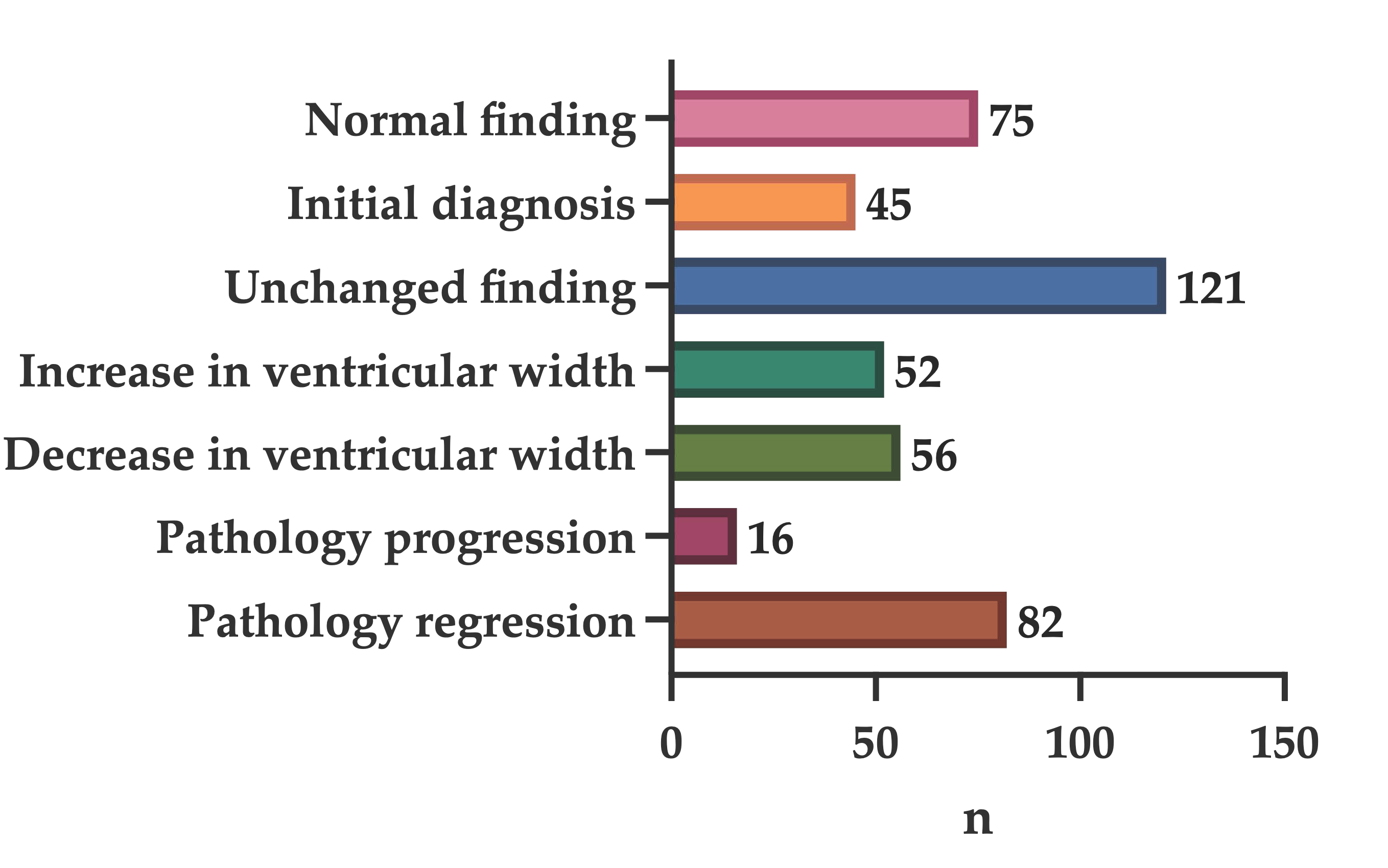
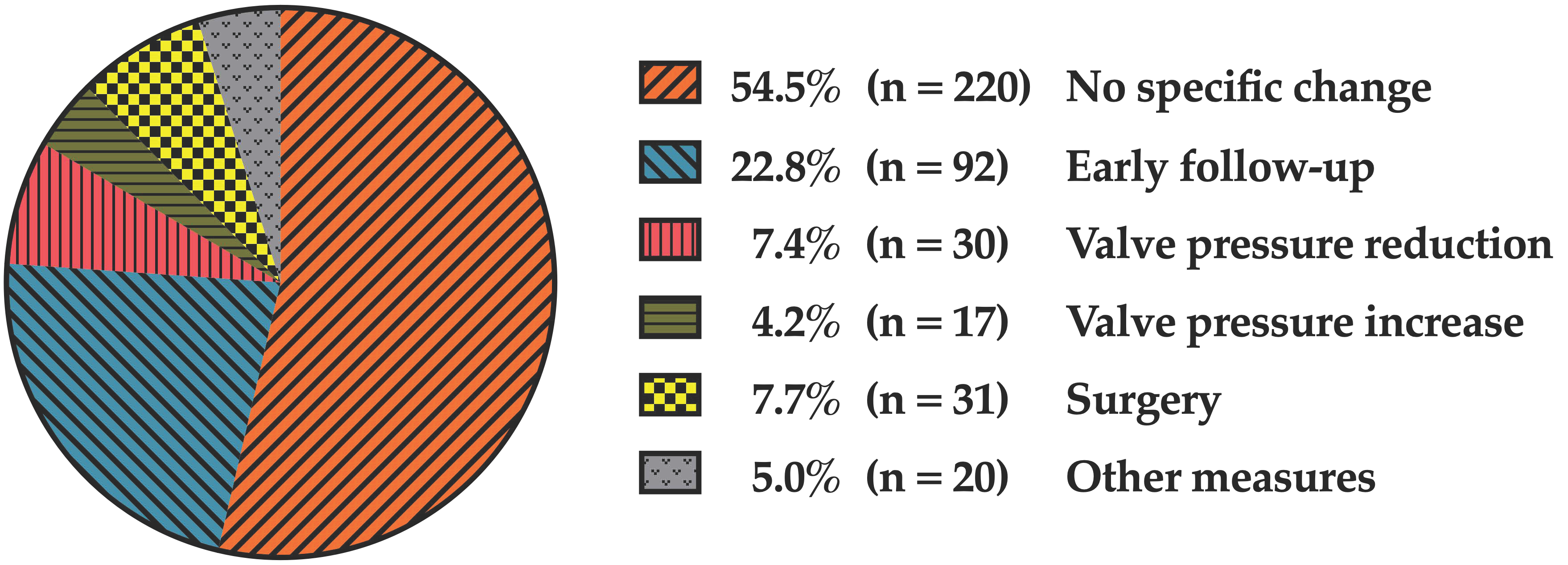
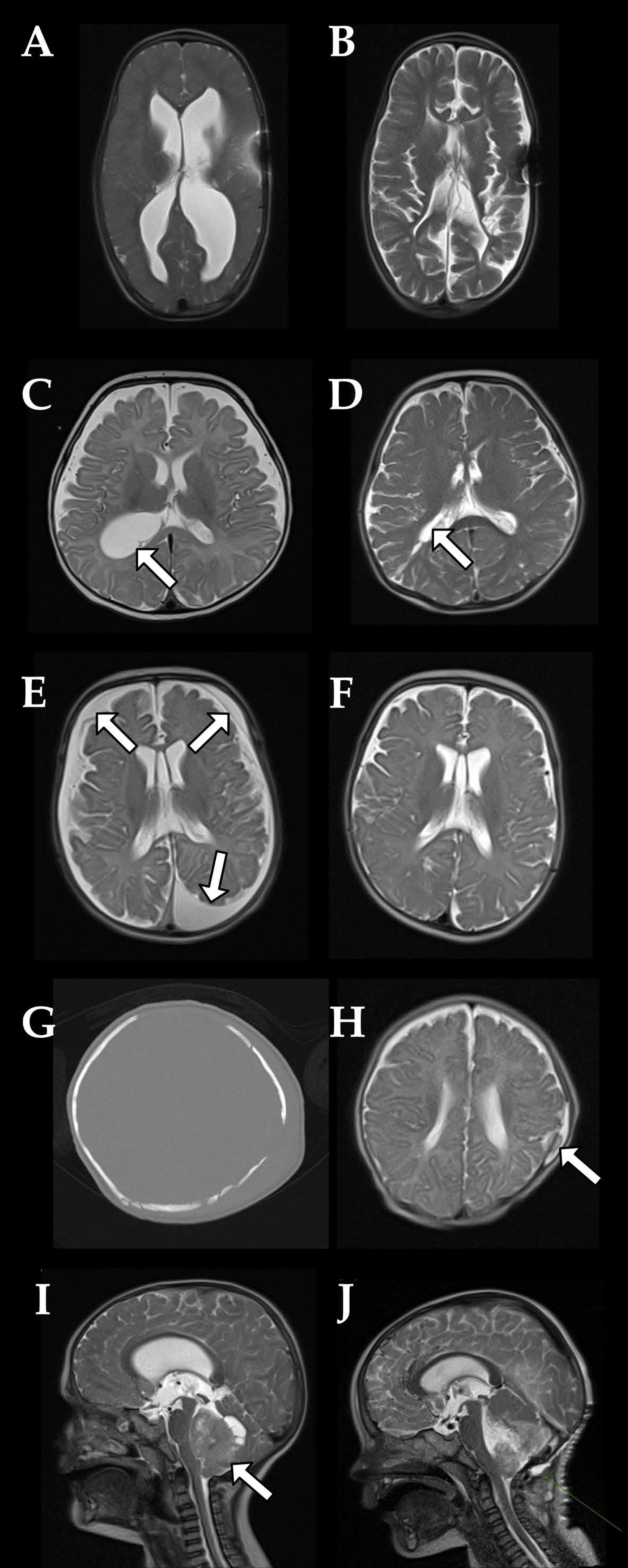
3.3. Findings and Immediate Clinical Consequences
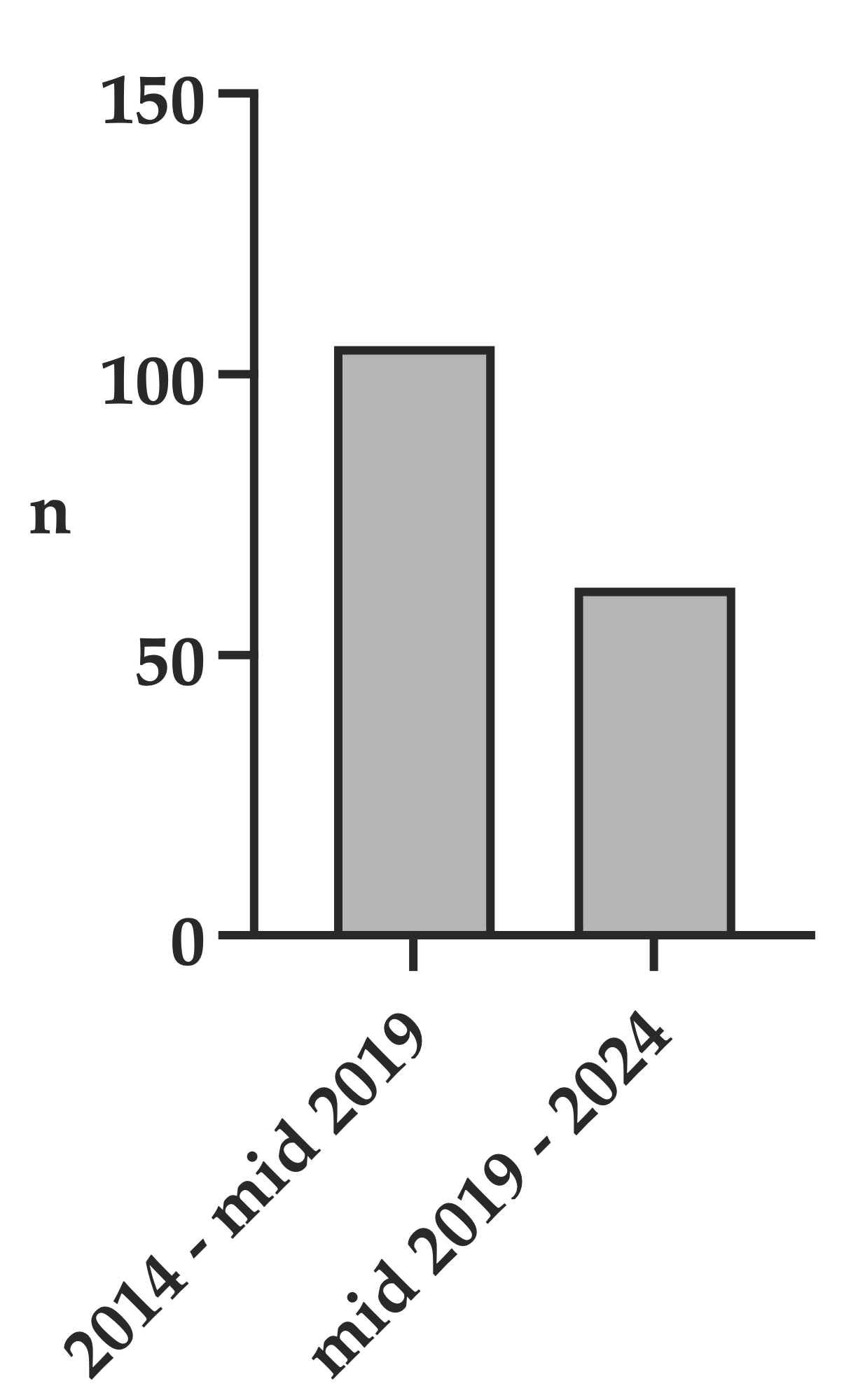
3.4. UF-MRI in the Context of Cross-Sectional Imaging in Children up to Six Years of Age
4. Discussion
4.1. Adoption and Expansion of UF-MRI in Clinical Practice
4.2. Workflow and Practical Considerations
4.3. Motion Artifacts and Diagnostic Adequacy
4.4. Impact on Imaging Utilization and CT Reduction
4.5. Limitations
5. Conclusions
Supplementary Materials
Author Contributions
Funding
Institutional Review Board Statement
Informed Consent Statement
Data Availability Statement
Conflicts of Interest
Abbreviations
| UF-MRI | ultrafast cranial magnetic resonance tomography |
| cCT | cranial computed tomography |
| cMRI | cranial magnetic resonance tomography |
| CSF | cerebrospinal fluid |
| TBI | traumatic brain injury |
References
- Vanderby, S.A.; Babyn, P.S.; Carter, M.W.; Jewell, S.M.; McKeever, P.D. Effect of Anesthesia and Sedation on Pediatric MR Imaging Patient Flow. Radiology 2010, 256, 229–237. [Google Scholar] [CrossRef] [PubMed]
- Sandhu, P.K.; Banker, H.; Cohen, H.L. Neurosonography Assessment, Protocols, and Interpretation. In StatPearls; StatPearls Publishing: Treasure Island, FL, USA, 2025. Available online: http://www.ncbi.nlm.nih.gov/books/NBK573073/ (accessed on 21 August 2025).
- Bosch De Basea, M.; Thierry-Chef, I.; Harbron, R.; Hauptmann, M.; Byrnes, G.; Bernier, M.-O.; Le Cornet, L.; Dabin, J.; Ferro, G.; Istad, T.S.; et al. Risk of hematological malignancies from CT radiation exposure in children, adolescents and young adults. Nat. Med. 2023, 29, 3111–3119. [Google Scholar] [CrossRef] [PubMed]
- Huang, R.; Liu, X.; He, L.; Zhou, P.-K. Radiation Exposure Associated with Computed Tomography in Childhood and the Subsequent Risk of Cancer: A Meta-Analysis of Cohort Studies. Dose-Response 2020, 18, 155932582092382. [Google Scholar] [CrossRef] [PubMed]
- Meulepas, J.M.; Ronckers, C.M.; Smets, A.M.J.B.; Nievelstein, R.A.J.; Gradowska, P.; Lee, C.; Jahnen, A.; Van Straten, M.; De Wit, M.-C.Y.; Zonnenberg, B.; et al. Radiation Exposure From Pediatric CT Scans and Subsequent Cancer Risk in the Netherlands. JNCI J. Natl. Cancer Inst. 2019, 111, 256–263. [Google Scholar] [CrossRef]
- Krille, L.; Dreger, S.; Schindel, R.; Albrecht, T.; Asmussen, M.; Barkhausen, J.; Berthold, J.D.; Chavan, A.; Claussen, C.; Forsting, M.; et al. Risk of cancer incidence before the age of 15 years after exposure to ionising radiation from computed tomography: Results from a German cohort study. Radiat. Environ. Biophys. 2015, 54, 1–12. [Google Scholar] [CrossRef]
- Miglioretti, D.L.; Johnson, E.; Williams, A.; Greenlee, R.T.; Weinmann, S.; Solberg, L.I.; Feigelson, H.S.; Roblin, D.; Flynn, M.J.; Vanneman, N.; et al. The Use of Computed Tomography in Pediatrics and the Associated Radiation Exposure and Estimated Cancer Risk. JAMA Pediatr. 2013, 167, 700. [Google Scholar] [CrossRef]
- Koral, K.; Blackburn, T.; Bailey, A.A.; Koral, K.M.; Anderson, J. Strengthening the Argument for Rapid Brain MR Imaging: Estimation of Reduction in Lifetime Attributable Risk of Developing Fatal Cancer in Children with Shunted Hydrocephalus by Instituting a Rapid Brain MR Imaging Protocol in Lieu of Head CT. Am. J. Neuroradiol. 2012, 33, 1851–1854. [Google Scholar] [CrossRef]
- Iskandar, B.J.; Sansone, J.M.; Medow, J.; Rowley, H.A. The use of quick-brain magnetic resonance imaging in the evaluation of shunt-treated hydrocephalus. J. Neurosurg. Pediatr. 2004, 101, 147–151. [Google Scholar] [CrossRef]
- Sorge, I.; Hirsch, F.W.; Voit, D.; Frahm, J.; Krause, M.; Roth, C.; Zimmermann, P.; Gräfe, D. Decreased Need for Anesthesia during Ultra-Fast Cranial MRI in Young Children: One-Year Summary. RöFo-Fortschritte Auf Dem Geb. Röntgenstrahlen Bildgeb. Verfahr. 2022, 194, 192–198. [Google Scholar] [CrossRef]
- Ashley, W.W.; McKinstry, R.C.; Leonard, J.R.; Smyth, M.D.; Lee, B.C.; Park, T.S. Use of rapid-sequence magnetic resonance imaging for evaluation of hydrocephalus in children. J. Neurosurg. Pediatr. 2005, 103, 124–130. [Google Scholar] [CrossRef]
- O’Neill, B.R.; Pruthi, S.; Bains, H.; Robison, R.; Weir, K.; Ojemann, J.; Ellenbogen, R.; Avellino, A.; Browd, S.R. Rapid Sequence Magnetic Resonance Imaging in the Assessment of Children with Hydrocephalus. World Neurosurg. 2013, 80, e307–e312. [Google Scholar] [CrossRef] [PubMed]
- Robson, C.D.; MacDougall, R.D.; Madsen, J.R.; Warf, B.C.; Robertson, R.L. Neuroimaging of Children with Surgically Treated Hydrocephalus: A Practical Approach. Am. J. Roentgenol. 2017, 208, 413–419. [Google Scholar] [CrossRef] [PubMed]
- Thompson, E.M.; Baird, L.C.; Selden, N.R. Results of a North American survey of rapid-sequence MRI utilization to evaluate cerebral ventricles in children: Clinical article. J. Neurosurg. Pediatr. 2014, 13, 636–640. [Google Scholar] [CrossRef] [PubMed]
- Tekes, A.; Senglaub, S.S.; Ahn, E.S.; Huisman, T.A.G.M.; Jackson, E.M. Ultrafast Brain MRI Can Be Used for Indications beyond Shunted Hydrocephalus in Pediatric Patients. Am. J. Neuroradiol. 2018, 39, 1515–1518. [Google Scholar] [CrossRef]
- Berger, R.P.; Furtado, A.D.; Flom, L.L.; Fromkin, J.B.; Panigrahy, A. Implementation of a brain injury screen MRI for infants at risk for abusive head trauma. Pediatr. Radiol. 2020, 50, 75–82. [Google Scholar] [CrossRef]
- Kralik, S.F.; Yasrebi, M.; Supakul, N.; Lin, C.; Netter, L.G.; Hicks, R.A.; Hibbard, R.A.; Ackerman, L.L.; Harris, M.L.; Ho, C.Y. Diagnostic Performance of Ultrafast Brain MRI for Evaluation of Abusive Head Trauma. Am. J. Neuroradiol. 2017, 38, 807–813. [Google Scholar] [CrossRef]
- Luque, M.; Stambo, G.W. The Use of Rapid Sequence Magnetic Resonance Imaging of the Brain as a Screening Tool for the Detection of Gross Intracranial Pathology in Children Presenting to the Emergency Department with a Chief Complaint of Persistent or Recurrent Headaches. Pediatr. Emerg. Care 2021, 37, e660–e663. [Google Scholar]
- Burns, B.S.; Nouboussi, N.; DeVane, K.; Andrews, W.; Selden, N.R.; Lin, A.; Pettersson, D.; Jafri, M.; Sheridan, D. Increasing Use of Rapid Magnetic Resonance Imaging for Children with Blunt Head Injury. J. Pediatr. 2024, 272, 114099. [Google Scholar] [CrossRef]
- Kabakus, I.M.; Spampinato, M.V.; Knipfing, M.; Cervantes, G.; Patel, A.; Eskandari, R.; Yazdani, M. Fast Brain Magnetic Resonance Imaging with Half-Fourier Acquisition with Single-Shot Turbo Spin Echo Sequence in Detection of Intracranial Hemorrhage and Skull Fracture in General Pediatric Patients: Preliminary Results. Pediatr. Emerg. Care 2021, 37, e1168–e1172. [Google Scholar] [CrossRef]
- Lindberg, D.M.; Stence, N.V.; Grubenhoff, J.A.; Lewis, T.; Mirsky, D.M.; Miller, A.L.; O’Neill, B.R.; Grice, K.; Mourani, P.M.; Runyan, D.K. Feasibility and Accuracy of Fast MRI Versus CT for Traumatic Brain Injury in Young Children. Pediatrics 2019, 144, e20190419. [Google Scholar] [CrossRef]
- Mehta, H.; Acharya, J.; Mohan, A.L.; Tobias, M.E.; LeCompte, L.; Jeevan, D. Minimizing Radiation Exposure in Evaluation of Pediatric Head Trauma: Use of Rapid MR Imaging. Am. J. Neuroradiol. 2016, 37, 11–18. [Google Scholar] [CrossRef]
- Ryan, M.E.; Jaju, A.; Ciolino, J.D.; Alden, T. Rapid MRI evaluation of acute intracranial hemorrhage in pediatric head trauma. Neuroradiology 2016, 58, 793–799. [Google Scholar] [CrossRef]
- Sheridan, D.C.; Pettersson, D.; Newgard, C.D.; Selden, N.R.; Jafri, M.A.; Lin, A.; Rowell, S.; Hansen, M.L. Can QuickBrain MRI replace CT as first-line imaging for select pediatric head trauma? JACEP Open 2020, 1, 965–973. [Google Scholar] [CrossRef] [PubMed]
- Shope, C.; Alshareef, M.; Larrew, T.; Bolling, C.; Reagan, J.; Yazdani, M.; Spampinato, M.; Eskandari, R. Utility of a pediatric fast magnetic resonance imaging protocol as surveillance scanning for traumatic brain injury. J. Neurosurg. Pediatr. 2021, 27, 475–481. [Google Scholar] [CrossRef] [PubMed]
- Moon, H.E.; Ha, J.Y.; Choi, J.W.; Lee, S.H.; Hwang, J.-Y.; Choi, Y.H.; Cheon, J.-E.; Cho, Y.J. Ultrafast MRI for Pediatric Brain Assessment in Routine Clinical Practice. Korean J. Radiol. 2025, 26, 75. [Google Scholar] [CrossRef] [PubMed]
- Hayatghaibi, S.E.; Cazaban, C.G.; Chan, S.S.; Dillman, J.R.; Du, X.L.; Huang, Y.-T.; Mikhail, O.I.; Swint, J.M. Pediatric Outpatient Noncontrast Brain MRI: A Time-Driven Activity-Based Costing Analysis at Three U.S. Hospitals. Am. J. Roentgenol. 2023, 220, 747–756. [Google Scholar] [CrossRef]
- Niederhauser, B.D.; McDonald, R.J.; Eckel, L.J.; Keating, G.F.; Broomall, E.M.; Wetjen, N.M.; Diehn, F.E.; Schwartz, K.M.; Hunt, C.H.; Welker, K.M.; et al. Retrospective Review of Rapid Pediatric Brain MR Imaging at an Academic Institution Including Practice Trends and Factors Affecting Scan Times. Am. J. Neuroradiol. 2013, 34, 1836–1840. [Google Scholar] [CrossRef]
- Patel, D.M.; Tubbs, R.S.; Pate, G.; Johnston, J.M.; Blount, J.P. Fast-sequence MRI studies for surveillance imaging in pediatric hydrocephalus. J. Neurosurg. Pediatr. 2014, 13, 440–447. [Google Scholar] [CrossRef]
- Cohen, A.R.; Caruso, P.; Duhaime, A.-C.; Klig, J.E. Feasibility of “rapid” magnetic resonance imaging in pediatric acute head injury. Am. J. Emerg. Med. 2015, 33, 887–890. [Google Scholar] [CrossRef]
- Franklin, D.; Tiwari, C.; Zamora, C.; Barnett, R.; Woolard, A.; Hung, S.-C.; Berkoff, M.; Quinsey, C. Combined rapid sequence MRI protocol and skull radiography as an alternative to head CT in the evaluation of abusive head trauma in children: A pilot study. Neurosurg. Rev. 2023, 46, 175. [Google Scholar] [CrossRef]
- Ramgopal, S.; Karim, S.A.; Subramanian, S.; Furtado, A.D.; Marin, J.R. Rapid brain MRI protocols reduce head computerized tomography use in the pediatric emergency department. BMC Pediatr. 2020, 20, 14. [Google Scholar] [CrossRef]
- Ha, J.Y.; Baek, H.J.; Ryu, K.H.; Choi, B.H.; Moon, J.I.; Park, S.E.; Kim, T.B. One-Minute Ultrafast Brain MRI with Full Basic Sequences: Can It Be a Promising Way Forward for Pediatric Neuroimaging? Am. J. Roentgenol. 2020, 215, 198–205. [Google Scholar] [CrossRef]
- Gräfe, D.; Roth, C.; Weißer, M.; Krause, M.; Frahm, J.; Voit, D.; Hirsch, W. Outpacing Movement—Ultrafast Volume Coverage in Neuropediatric Magnetic Resonance Imaging. Pediatr. Radiol. 2020, 50, 1751–1756. [Google Scholar] [CrossRef]
- Lai, G.Y.; Powers, A.; Chung, T.; Sun, P.P. Rapid brain MRI for image-guided ventricular catheter placement in pediatric patients: Protocol and preliminary clinical outcomes. J. Neurosurg. Pediatr. 2024, 33, 343–348. [Google Scholar]



| Sex | N | ||
|---|---|---|---|
| Female | 85 | (42.9%) | |
| Male | 113 | (57.1%) | |
| Age at the time of MRI | |||
| Neonates and infants (0–1 year) | 109 | (27.0%) | |
| Toddlers (1–3 years) | 186 | (46.0%) | |
| Preschoolers (4–6 years) | 109 | (27.0%) | |
| Clinical setting | |||
| Inpatients | 215 | (53.2%) | |
| Outpatients | 189 | (46.8%) | |
| Clinical context | |||
| Acutely symptomatic | 175 | (43.3%) | |
| Scheduled follow-up | 209 | (51.7%) | |
| Elective baseline MRI | 20 | (5.0%) | |
| Underlying diagnosis | |||
| Posthemorrhagic hydrocephalus | 91 | (22.5%) | |
| Hydrocephalus of other origin | 119 | (29.5%) | |
| Traumatic brain injury | 59 | (14.6%) | |
| Subdural hematoma/hygroma | 49 | (12.1%) | |
| Intracranial cysts | 14 | (3.5%) | |
| Other diagnoses | 72 | (17.8%) | |
| Imaging indication | (multiple choices possible) | ||
| Ventricular width | 228 | (56.4%) | |
| Dynamics of subdural hematoma/hygroma | 92 | (22.8%) | |
| Trauma sequelae | 47 | (11.6%) | |
| Work-up for epileptic seizures | 32 | (7.9%) | |
| Dynamics of cysts | 20 | (5.0%) | |
| Work-up for headache/vomiting | 15 | (3.7%) | |
| Others | 50 | (12.4%) |
Disclaimer/Publisher’s Note: The statements, opinions and data contained in all publications are solely those of the individual author(s) and contributor(s) and not of MDPI and/or the editor(s). MDPI and/or the editor(s) disclaim responsibility for any injury to people or property resulting from any ideas, methods, instructions or products referred to in the content. |
© 2026 by the authors. Licensee MDPI, Basel, Switzerland. This article is an open access article distributed under the terms and conditions of the Creative Commons Attribution (CC BY) license.
Share and Cite
Pjontek, R.; Ridwan, H.; Kremer, B.; Veldeman, M.; Hasan, D.; Häusler, M.; Wiesmann, M.; Clusmann, H.; Hamou, H. Clinical Impact of Ultrafast Cranial MRI Implementation in Children Under Six Years of Age. J. Clin. Med. 2026, 15, 1242. https://doi.org/10.3390/jcm15031242
Pjontek R, Ridwan H, Kremer B, Veldeman M, Hasan D, Häusler M, Wiesmann M, Clusmann H, Hamou H. Clinical Impact of Ultrafast Cranial MRI Implementation in Children Under Six Years of Age. Journal of Clinical Medicine. 2026; 15(3):1242. https://doi.org/10.3390/jcm15031242
Chicago/Turabian StylePjontek, Rastislav, Hani Ridwan, Benedikt Kremer, Michael Veldeman, Dimah Hasan, Martin Häusler, Martin Wiesmann, Hans Clusmann, and Hussam Hamou. 2026. "Clinical Impact of Ultrafast Cranial MRI Implementation in Children Under Six Years of Age" Journal of Clinical Medicine 15, no. 3: 1242. https://doi.org/10.3390/jcm15031242
APA StylePjontek, R., Ridwan, H., Kremer, B., Veldeman, M., Hasan, D., Häusler, M., Wiesmann, M., Clusmann, H., & Hamou, H. (2026). Clinical Impact of Ultrafast Cranial MRI Implementation in Children Under Six Years of Age. Journal of Clinical Medicine, 15(3), 1242. https://doi.org/10.3390/jcm15031242