The Relationship Between Malocclusion and Periodontal Health in Children and Adolescents: A Systematic Review and Meta-Analysis

 , , , , ,
  ,
,  ,
,  , and
, and
Abstract
1. Introduction
2. Materials and Methods
2.1. Search Strategy
2.2. Eligibility Criteria
2.3. Data Extraction
2.4. Quality Assessment
2.5. Data Analysis
2.6. Certainty of Evidence
3. Results
3.1. Search Strategy
3.2. Study Characteristics

| Study, Year | Country | Study Design | Participants | Age | Gender | Malocclusion/Indices | Periodontal Indices/Parameters |
|---|---|---|---|---|---|---|---|
| Abu Alhaija & Al.-Wahadni, 2006 [34] | Jordan | CS | n = 80 students included and analyzed | Mean age of 12.38 ± 0.75 | n = 39 F and n = 41 M | Irregularity of the lower incisor teeth (amount of spacing, mesiodistal overlap and labiolingual displacement for each of the 5 contact areas) | PI, GI, PD |
| Addy et al., 1988 [31] | UK | CS | n = 1015 schoolchildren analyzed (n = 3420 screened, n = 1018 included) | 11.5–12.5 | NR | STRAIT Index (irregularity of teeth) | GB, PI |
| Ashley et al., 1998 [30] | UK | CS | n = 201 schoolchildren included and analyzed (n = 213 screened, n = 12 excluded for reasons: n = 5 were absent from school and n = 7 were under orthodontic treatment) | 11–14 | n = 86 F and n = 115 M | Irregularity of the incisor teeth (spacing, mesiodistal overlap, labiolingual displacement) | Gingival redness and BOP, PI |
| Buczkowska-Radlińska et al., 2012 [19] | Poland | CS | n = 225 preschoolers and schoolchildren included and analyzed (n = 300 screened, n = 75 excluded for reasons: lack of consent or orthodontic treatment prior to exam) | 3–19 | NR | Anterior crowded teeth | API |
| Cortelazzi et al., 2008 [14] | Brazil | CS | n = 728 preschoolers included (n = 814 screened, n = 86 excluded for reasons: n = 31 lack of consent, n = 55 absent on the examination day) | 5 | n = 366 (50.3%) M and n = 362 (49.7%) F | DAI (crowding and spacing) (Cons et al., 1986) [36] | GB |
| Feldens et al., 2006 [29] | Brazil | CS | n = 490 included and analyzed | 3–5 | n = 230 (47%) F and n = 260 (53%) M | Spacing in anterior teeth, anterior open bite, posterior crossbite | VPI, GBI |
| Fernandez-Riveiro et al., 2021 [4] | Turkey | CS | n = 1453 schoolchildren included (n = 1843 screened, n = 15 excluded due to absence on the day of exam and n= 374 due to the presence of orthodontic treatment) | 12–15 | n = 689 M and n = 764 F | DAI (Cons et al., 1986) [36] | VPI |
| Gabris et al., 2006 [18] | Hungary | CS | n = 483 adolescents from secondary schools included | 16–18 | n = 289 F and n = 194 M | Crowding and spacing | VPI |
| Goel et al., 2018 [22] | India | CS | n = 400 included | 11–14 | n = 230 M and n = 170 F | TPI (Grainger, 1967) [37] | CPITN |
| Jafari et al., 2024 [10] | Iran | CS | n = 306 schoolchildren included | 10–16 | NR | IOTN-DHC (Brook and Shaw, 1989) [35] | GI, OHI-S |
| Kolawole & Folayan, 2019 [6] | Nigeria | CS | n = 495 included and analyzed (n = 503 recruited, n = 8 excluded due to the incomplete data) | 6–12 | n = 242 (48.9%) M and n = 253 (51.1%) F | DAI (Cons et al., 1986) [36] | GI, OHI-S |
| Kukletova et al., 2012 [12] | Czech Republic | CS | n = 780 participants who were referred to the clinics included (n = 900 invited, n = 120 excluded for reason: lack of consent) | 13–15 | NR | IOTN (Brook, 1989) [35] | GI, PI |
| Medina -Vega et al., 2024 [7] | Ecuador | CS | n = 998 schoolchildren included and analyzed (n = 1100 recruited, n = 102 excluded for reasons: n = 96 lack of consent, n = 6 absent on the examination day and refusal to be examined) | 12 | NR | DAI (Cons et al., 1986) [36] | BOP, CPI |
| Nalcaci et al. 2012 [23] | Turkey | CS | n = 836 students included | 11–14 | n = 384 M and n = 452 F | TPI (Grainger, 1967) [37] | CPITN |
| Öz & Küçükeşmen, 2019 [20] | Turkey | CS | n = 534 children who applied to the clinic included | 12–14 | n = 233 M and n = 301 F | Angle classification, crowding | CPITN |
| Pineda et al., 2020 [32] | Mexico | CS | n = 424 schoolchildren included (n = 442 screened, n = 439 consent, n = 15 excluded because they had orthodontic appliances or had received orthodontic treatment prior to the study) | 13–15 | 53.1% F | NNOT (IOTN-DHC grade 4) | OHI-S |
| Salim et al., 2021 [13] | Syria | CS | n = 606 participants registered as refugees in Jordan and residing in Zaatari camp included | 7–19 | n = 280 (46.2%) M and n = 326 (53.8%) F | IOTN-DHC (Brook and Shaw, 1989) [35] | OHI-S |
| Sharma et al. 2021 [15] | India | CS | n = 1400 included | 6–19 | 52.3% (n = 732) F and 47.7% (n = 668) M | Normal occlusion: Properly aligned teeth (absence of crowding /spacing) with Angle’s Class 1 relationship; Malocclusion: Misaligned teeth and Angle’s Class 2 and 3 occlusion | GBI |
| Tariq et al., 2024 [33] | Pakistan | CS | n = 500 schoolchildren included | 13–15 | 44% F and 56% M | Angle classification, overjet, overbite, crossbite, open bite, diastema, crowding, and spacing | CPITN |
| Study, Year | Outcomes |
|---|---|
| Abu Alhaija & Al-Wahadni, 2006 [34] | All subjects were examined by one examiner for oral hygiene status and periodontal condition. Each subject had alginate impressions for the lower jaw, periapical X-ray for the lower incisor teeth and clinical examination for periodontal health. The mesio-buccal, mid-buccal and disto-buccal sites together with the corresponding lingual sites on each of the 4 lower incisor teeth were assessed in each subject. Oral hygiene was evaluated by examining the dental plaque present on the lingual and labial surfaces of the lower incisor teeth, using the criteria of the plaque index (PI) of Silness and Löe. Gingival condition was evaluated for the lower incisor teeth using the criteria of the gingival index (GI) of Löe and Silness. Periodontal conditions were examined using probing pocket depth (PD) to measure the distance between the bottom of the pocket and the margin of the gingiva. Bone loss was measured from the periapical radiograph. |
| Addy et al., 1988 [31] | The plaque present at the gingival margin of the buccal and lingual aspects of all permanent teeth was recorded by a single examiner using the criteria of the PI of Silness and Löe. A mean plaque score was obtained for each child by summing the respective tooth scores and dividing by the number of teeth present. The maximum score was 6. The presence or absence of bleeding (Muhlemann and Son) from the buccal, mesial and lingual gingiva was noted after the gentle probing of the gingival margin for plaque. The scoring employed a simple negative or positive scheme with 0—no bleeding and 1—bleeding. |
| Ashley et al., 1998 [30] | Each subject was assessed by two examiners. The mesio-buccal, mid-buccal, and disto-buccal sites together with the corresponding palatal sites on each of the 8 upper and lower incisor teeth were assessed in each subject, yielding 48 sites per subject. The gingival assessment included the recording of the presence or absence of gingival redness and bleeding on probing (Sidi and Ashley). Plaque accumulation was assessed initially using modified Silness and Löe criteria where code 2 (plaque visible without probing) was the maximum score used. Subsequently, all the available plaque was collected from these sites and dry weight estimated (Ashley et al.). |
| Buczkowska- Radlińska et al., 2012 [19] | The dental examinations were carried out by two experienced clinicians who assessed caries, oral hygiene and tooth crowding. Oral hygiene practice was determined from the above questionnaires on tooth brushing frequency and by measuring dental plaque, using the Approximal Plaque Index (API, Lange). |
| Cortelazzi et al., 2008 [14] | Clinical examination was performed outdoors by a calibrated examiner. Gingivitis was evaluated by the use of the gingival alteration index for 5-year-olds according to the national survey carried out in 2002 in Brazil in which any sign of bleeding that occurred in three or more teeth during clinical examination was regarded as a positive finding. The presence of gingival bleeding was examined by carefully passing a Community Periodontal Index (CPI) probe throughout the gingival sulcus margin, following the sequence: distal, buccal, mesial, lingual. |
| Feldens et al., 2006 [29] | Clinical examination was performed by a single trained examiner. The visible plaque index (VPI) was calculated according to a simplified version of the Silness and Löe procedure, which recorded only the presence or absence of visible plaque. The examination consisted of assessment of 4 surfaces on each tooth: mesial, buccal, distal, and lingual. The plaque to be scored had to be visible beyond doubt. The mean plaque index values for each subject were calculated, representing the percentage of surfaces with visible plaque. The gingiva’s condition was assessed using the Ainamo and Bay gingival bleeding index (GBI), which evaluates bleeding on probing. The mean gingival index values for each subject were calculated as the percentage of surfaces with gingival bleeding. Gingivitis was defined when a child had at least one surface with bleeding on probing. |
| Fernandez-Riveiro et al., 2021 [4] | The oral examination was performed by the dentist, the dental hygienist filled out the clinical examination form at the same time. Oral hygiene was assessed by the variable dental plaque accumulation, with the absence/presence of dental plaque being evaluated visually by a periodontal World Health Organization (WHO) probe on the buccal surface of six teeth: first molars in both arches (16, 26, 36, 46) and upper and lower central incisors of one side (21, 41). The following four categories were listed: absence of dental plaque; plaque in the gingival border; plaque in 1/3 of the gingival border; and plaque in more than 1/3 of the gingival border. |
| Gabris et al., 2006 [18] | The patients were examined by two orthodontist. The visible plaque index (VPI) was defined after Ainamo and Bay but with some modification: the presence of plaque was examined only on the buccal surface. |
| Goel et al., 2018 [22] | One trained examiner conducted all the clinical examinations under the supervision of two experienced orthodontists, one experienced pedodontist and two experienced periodontists with an assistant recording the observations. The periodontal status was recorded using the Community Periodontal Index of Treatment Need (CPITN) scores as described by the WHO. Usually, two indicators, that is, gingival bleeding and periodontal pockets are used for the assessment of periodontal status. The periodontal pockets are not recorded in individuals below 15 years of age. Since the study population comprised only of children up to 14 years, the CPITN scores were set so that 0 = no sign of disease, 1 = gingival bleeding after gentle probing, 2 = presence of supra or subgingival calculus, and X = tooth not present. Only six-index teeth were examined. |
| Jafari et al., 2024 [10] | GI (Loe and Silness)—It was calculated to assess the gingival health status of the adolescents in mixed and permanent dentition periods. The pocket depth was measured at the mesial, distal, buccal, and lingual surfaces of 6 teeth (16, 12, 24, 32, 36, and 44). In case of no eruption of first premolar, primary first molar was examined instead. Sound gingiva was scored 0, slight edema and gingival discoloration was scored 1, red discoloration along with bleeding on probing was scored 2, and red discoloration, edema, ulceration, or spontaneous bleeding was scored 3. The mean of the four areas was calculated for each tooth, and the mean score was reported as GI for the respective adolescent. OHI-S (Simplified Oral Hygiene Index)—Six teeth were selected such that in the mandible, the first completely erupted molar tooth behind the second premolar at both sides was considered (which is often the first molar), and its lingual surface was examined. The same was done for the maxilla, and two bilateral molar teeth were selected, and their buccal surface was examined. Also, the labial surface of the two anterior teeth was examined, which often included maxillary right and mandibular left central incisors (if missing, the contralateral incisor would be selected). OHI-S includes two components of Debris Index (DI) and Calculus Index (CI). In DI, absence of debris was scored zero, presence of debris in less than one-third of the surface was scored 1, presence of debris covering one-third to two-thirds of the surface was scored 2, and debris covering over two-thirds of the surface was scored 3. In CI, absence of calculus was scored zero, presence of supragingival calculus covering less than one-third of the tooth surface was scored 1, supragingival calculus covering one-third to two-thirds of the surface or presence of subgingival calculus at some points was scored 2, and presence of supragingival calculus covering over two-thirds of the surface or linear subgingival calculus along the cervical margin was scored. Finally, the mean DI and CI values were summed to obtain the OHI-S score. |
| Kolawole & Folayan, 2019 [6] | The data were collected in the months of August and September 2013. Oral hygiene status of participants was evaluated with the OHI-S described by Greene and Vermillion. The amount of debris or calculus present on the facial or lingual surfaces of six index teeth in the primary (A, E, F, K, O, and P) in the primary and 8, 3, 14, 19, 24, and 30 in the permanent dentition was used to determine the debris and calculus index scores, from which the OHI-S score was calculated. The presence and severity of gingivitis was evaluated with the GI, as described by Löe and Silness. Changes in the gingiva in relation to the appropriate six index teeth in the primary (D, G, N, Q, K and T) in the primary and 7, 3, 12, 19, 23 and 28 in the permanent dentition were assessed. Four areas of each index tooth were scored, and the scores were summed and divided by four to give the gingival index for each tooth. The gingival index of each participant was obtained by adding the values of all index teeth and dividing by six. Gingivitis was classified as mild, moderate, or severe, with values of 0.1–1, 1.1–2, and 2.1–3, respectively. Gingivitis was dichotomized into mild gingivitis and moderate-to severe gingivitis. |
| Kukletova et al., 2012 [12] | The clinical assessment was carried out by one experienced dentist. Gingivitis was measured using the modified GI on teeth 16, 12, 24, 32, 36, 44. The index’s 0–3 scale evaluates gingivitis on or adjacent to 6 sides of the individual teeth. The presence of plaque and calculus was recorded according to Silness and Loe (PI) and Calculus Surface Index (CSI). |
| Medina-Vega et al., 2024 [7] | The data collection period was from March to May 2017. Six investigators were divided into three groups, each consisting of two examiners, two individuals responsible for taking notes, one interviewer, and one assistant. The presence and extent of periodontal conditions were assessed using Community Periodontal Index (CPI). Examiners gently inserted a periodontal probe in the sulcus of six sites per tooth (mesio-buccal, buccal, disto-buccal, disto-lingual, lingual, and mesio-lingual) of teeth 2, 8, 14, 19, 24, and 30. Regarding bleeding, each sextant was assigned a code: 0—no bleeding, 1—bleeding, X—tooth not presented, 9—tooth excluded. The same codes were used to record the presence of calculus. The examiners evaluated the sites for BOP (yes or no) and calculus (yes or no). Gingivitis was defined as the presence of BOP in at least one site. |
| Nalcaci et al., 2012 [23] | To assess periodontal status, the CPITN was used. Four experienced orthodontists and two experienced periodontists performed the clinical examinations. The CPITN scores were set so that 0 = healthy, 1 = bleeding on gentle probing, 2 = calculus or other plaque-retentive factors, 3 = shallow pocketing of 4–5 mm, and 4 = deep pockets of 6 mm or more. |
| Öz & Küçükeşmen, 2019 [20] | Data collection was done for a period from June to December, 2014. To determine periodontal status and treatment needs, the CPITN, which is recommended by the WHO, was used. The highest score was recorded for each tooth according to the CPITN criteria. The highest score was selected as the CPITN score of each individual, and periodontal treatment needs were determined. |
| Pineda et al., 2020 [32] | The measurements were done by an calibrated examiner. Debris and calculus were examined and assessed, with vestibular and palatal/lingual surfaces clinically rated using the OHI-S. |
| Salim et al., 2021 [13] | Oral hygiene status was registered using the OHI-S (a combination of the debris index and the dental calculus index to determine the status of oral hygiene). For those participants aged 5 to 6 years, labial surfaces of the 54, 64, 61, 82 and the lingual surface of 75 and 85 were assessed. For mixed dentitions the labial surface of 26 and the lingual surface of 46 were also considered. For participants with most of their permanent teeth the labial surfaces of 11, 26, 16, 31 and the lingual surfaces of 36 and 46 were examined. Examination was carried out by a prosthodontist, assisted by 2 junior dentists. A cross-sectional clinical survey was conducted from October 2019 to December 2019. |
| Sharma et al., 2021 [15] | Data collection was done for a period of 12 months from March 2019 to February 2020. Clinical examination of children (oral and anthropometric) was done by a single examiner in the presence of parents/guardians and oral health status was assessed through the WHO Oral Health Assessment Questionnaire (2013). Upon oral examination of children, gingival health status was recorded through Gingival Bleeding Index (GBI). To evaluate the severity of gingivitis, it was further categorized as: 1. No gingivitis: Absence of bleeding gums 2. Moderate gingivitis: Bleeding present in gums around ≤ 6 teeth. 3. Severe gingivitis: Bleeding present in gums around > 7 teeth. |
| Tariq et al., 2024 [33] | The examination was performed by two dental examiners. The data collection was completed between the periods from April 2021 to July 2021. For periodontal assessment CPITN probe was used. Scores of 0 to 4 were recorded for six indexed teeth. Score = X was recorded in the presence of missing indexed teeth. 0 = healthy gingiva, 1 = bleeding on probing, 2 = calculus present, 3 = shallow periodontal pockets of 4–5 mm, and 4 = deep periodontal pockets 6 mm were scored. Periodontal pockets were not recorded in under 15 years old young adolescents. |
3.3. Relationship Between Malocclusion and Periodontal Health Results—Narrative Synthesis
3.3.1. Gingivitis (GI, GBI, BOP, GB)
3.3.2. CPITN/CPI
3.3.3. Dental Plaque (API, OHI-S, PI, VPI)
3.4. Results of the Meta-Analysis
3.5. Quality Assessment Results
3.6. Certainty of Evidence
4. Discussion
4.1. Clinical Implications
4.2. Strengths and Limitations
5. Conclusions
Supplementary Materials
Author Contributions
Funding
Institutional Review Board Statement
Informed Consent Statement
Data Availability Statement
Conflicts of Interest
Abbreviations
| API | Approximal Plaque Index |
| BOP | Bleeding on Probing |
| CI | Confidence Interval |
| CPITN | Community Periodontal Index of Treatment Needs |
| DAI | Dental Aesthetic Index |
| DL | DerSimonian–Laird random-effects model |
| GB | Gingival Bleeding |
| GBI | Gingival Bleeding Index |
| GI | Gingival Index |
| GRADE | Grading Recommendations Assessment, Development and Evaluation |
| IOTN | Index of Orthodontic Treatment Need |
| NNOT | Normative Need for Orthodontic Treatment |
| NOS | Newcastle–Ottawa Scale |
| OR | Odds Ratio |
| OHI-S | Simplified Oral Hygiene Index |
| PD | Pocket depth |
| PI | Plaque Index |
| PRISMA | Preferred Reporting Items for Systematic Reviews and Meta-Analyses |
| PROSPERO | International Prospective Register of Systematic Reviews |
| STRAIT | Standardized Technique for Recording Alignment of Individual Teeth |
| TMD | Temporomandibular disorders |
| TPI | Treatment Priority Index |
| VPI | Visible Plaque Index |
References
- Szyszka-Sommerfeld, L.; Sycińska-Dziarnowska, M.; Gerreth, K.; Spagnuolo, G.; Woźniak, K.; Czajka-Jakubowska, A. The impact of malocclusion on the prevalence of pain-related temporomandibular disorders in children and adolescents: A systematic review. Front. Neurol. 2025, 16, 1550110. [Google Scholar] [CrossRef]
- Lombardo, G.; Vena, F.; Negri, P.; Pagano, S.; Barilotti, C.; Paglia, L.; Colombo, S.; Orso, M.; Cianetti, S. Worldwide prevalence of malocclusion in the different stages of dentition: A systematic review and meta-analysis. Eur. J. Paediatr. Dent. 2020, 21, 115–122. [Google Scholar] [CrossRef]
- Mtaya, M.; Brudvik, P.; Astrøm, A.N. Prevalence of malocclusion and its relationship with socio-demographic factors, dental caries, and oral hygiene in12-to14-year-old Tanzanian schoolchildren. Eur. J. Orthod. 2009, 31, 467–476. [Google Scholar] [CrossRef]
- Fernández-Riveiro, P.; Obregón-Rodríguez, N.; Piñeiro-Lamas, M.; Rodríguez-Fernández, A.; Smyth-Chamosa, E.; Suárez-Cunqueiro, M.M. The Dental Aesthetic Index and Its Association with Dental Caries, Dental Plaque and Socio-Demographic Variables in Schoolchildren Aged 12 and 15 Years. Int. J. Environ. Res. Public Health 2021, 18, 9741. [Google Scholar] [CrossRef]
- Sun, L.; Wong, H.M.; McGrath, C.P. Relationship between the severity of malocclusion and Oral health related quality of life: A systematic review and meta-analysis. Oral Health Prev. Dent. 2017, 15, 503–517. [Google Scholar] [CrossRef] [PubMed]
- Kolawole, K.A.; Folayan, M.O. Association between malocclusion, caries and oral hygiene in children 6 to 12 years old resident in suburban Nigeria. BMC Oral Health 2019, 19, 262. [Google Scholar] [CrossRef] [PubMed]
- Medina-Vega, M.; Ibarra, M.C.B.; Quezada-Conde, M.D.C.; Reis, I.N.R.D.; Frias, A.C.; Raggio, D.P.; Michel-Crosato, E.; Mendes, F.M.; Pannuti, C.M.; Romito, G.A. Periodontal status among 12-year-old schoolchildren: A population-based cross-sectional study in Quito, Ecuador. Braz. Oral Res. 2024, 38, e002. [Google Scholar] [CrossRef]
- Petersen, P.E.; Ogawa, H. The global burden of periodontal disease: Towards integration with chronic disease prevention and control. Periodontol 2000 2012, 60, 15–39. [Google Scholar] [CrossRef]
- Nazir, M.; Al-Ansari, A.; Al-Khalifa, K.; Alhareky, M.; Gaffar, B.; Almas, K. Global Prevalence of Periodontal Disease and Lack of Its Surveillance. Sci. World J. 2020, 2020, 2146160. [Google Scholar] [CrossRef]
- Jafari, A.K.; Baniasad, N.; Asadi, E.; Nadafpour, N. Effect of malocclusion severity on oral health and its correlation with socioeconomical status in Iranian adolescents. BMC Oral Health 2024, 24, 1301. [Google Scholar] [CrossRef] [PubMed]
- Feldens, C.A.; Dos Santos Dullius, A.I.; Kramer, P.F.; Scapini, A.; Busato, A.L.; Vargas-Ferreira, F. Impact of malocclusion and dentofacial anomalies on the prevalence and severity of dental caries among adolescents. Angle Orthod. 2015, 85, 1027–1034. [Google Scholar] [CrossRef]
- Kukletova, M.; Izakovicova Holla, L.; Musilova, K.; Broukal, Z.; Kukla, L. Relationship between gingivitis severity, caries experience and orthodontic anomalies in 13-15-year-old adolescents in Brno, Czech Republic. Community Dent. Health 2012, 29, 179–183. [Google Scholar]
- Salim, N.A.; Alamoush, R.A.; Al-Abdallah, M.M.; Al-Asmar, A.A.; Satterthwaite, J.D. Relationship between dental caries, oral hygiene and malocclusion among Syrian refugee children and adolescents: A cross-sectional study. BMC Oral Health 2021, 21, 629. [Google Scholar] [CrossRef] [PubMed]
- Cortellazzi, K.L.; Pereira, S.M.; Tagliaferro, E.P.; Ambrosano, G.M.; Zanin, L.; Meneghim Mde, C.; Hebling, E.; Pereira, A.C. Risk indicators of gingivitis in 5-year-old Brazilian children. Oral Health Prev. Dent. 2008, 6, 131–137. [Google Scholar]
- Sharma, N.; Saxena, V.; Naithani, M. Prevalence of gingivitis and associated factors in 619-year-old children in Rudraprayag District, Uttarakhand. J. Indian Assoc. Public Health Dent. 2021, 19, 277–282. [Google Scholar] [CrossRef]
- Helm, S.; Petersen, P.E. Causal relation between malocclusion and periodontal health. Acta Odontol. Scand. 1989, 47, 223–228. [Google Scholar] [CrossRef] [PubMed]
- Ngom, P.I.; Diagne, F.; Benoist, H.M.; Thiam, F. Intraarch and interarch relationships of the anterior teeth and periodontal conditions. Angle Orthod. 2006, 2, 236–242. [Google Scholar] [CrossRef]
- Gabris, K.; Marton, S.; Madlena, M. Prevalence of malocclusions in Hungarian adolescents. Eur. J. Orthod. 2006, 28, 467–470. [Google Scholar] [CrossRef]
- Buczkowska-Radlinska, J.; Szyszka-Sommerfeld, L.; Wozniak, K. Anterior tooth crowding and prevalence of dental caries in children in Szczecin, Poland. Community Dent. Health 2012, 29, 168–172. [Google Scholar] [PubMed]
- Öz, E.; Küçükeşmen, Ç. Evaluation of the Relationship between Malocclusion and the Periodontal Health, Caries, Socio-economic status of children. Meandros Med. Dent. J. 2019, 20, 20–27. [Google Scholar] [CrossRef]
- Kolawole, K.A.; Otuyemi, O.D.; Oziegbe, E.O. The relationship between malocclusion, lip competence and gingival health in a group of schoolchildren. Rev. Clín. Pesq. Odontol. 2010, 6, 239–247. [Google Scholar]
- Goel, S.; Singh, A.; Chaudhary, G.; Kalsi, D.; Sood, A.; Marria, G. The relationship of malocclusion with periodontal status, dental caries, and sociodemographic factors in school children of Ludhiana. Indian J. Dent. Sci. 2018, 10, 87–91. [Google Scholar] [CrossRef]
- Nalcaci, R.; Demirer, S.; Ozturk, F.; Altan, B.A.; Sokucu, O.; Bostanci, V. The relationship of orthodontic treatment need with periodontal status, dental caries, and sociodemographic factors. Sci. World J. 2012, 2012, 498012. [Google Scholar] [CrossRef]
- Macey, R.; Thiruvenkatachari, B.; O’Brien, K.; Batista, K.B.S.L. Do malocclusion and orthodontic treatment impact oral health? A systematic review and meta-analysis. Am. J. Orthod. Dentofac. Orthop. 2020, 157, 738–744.e10. [Google Scholar] [CrossRef]
- Page, M.J.; McKenzie, J.E.; Bossuyt, P.M.; Boutron, I.; Hoffmann, T.C.; Mulrow, C.D.; Shamseer, L.; Tetzlaff, J.M.; Akl, E.A.; Brennan, S.E.; et al. The PRISMA 2020 statement: An updated guideline for reporting systematic reviews. BMJ 2021, 372, n71. [Google Scholar] [CrossRef] [PubMed]
- Stang, A. Critical evaluation of the Newcastle-Ottawa scale for the assessment of the quality of nonrandomized studies in metaanalyses. Eur. J. Epidemiol. 2010, 25, 603–605. [Google Scholar] [CrossRef]
- Modesti, P.A.; Reboldi, G.; Cappuccio, F.P.; Agyemang, C.; Remuzzi, G.; Rapi, S.; Perruolo, E.; Parati, G. ESH Working Group on CV Risk in Low Resource Settings. Panethnic differences in blood pressure in Europe: A systematic review and meta-analysis. PLoS ONE 2016, 11, e0147601. [Google Scholar] [CrossRef] [PubMed]
- Guyatt, G.; Oxman, A.D.; Akl, E.A.; Kunz, R.; Vist, G.; Brozek, J.; Norris, S.; Falck-Ytter, Y.; Glasziou, P.; DeBeer, H.; et al. GRADE guidelines: 1. Introduction-GRADE evidence profiles and summary of findings tables. J. Clin. Epidemiol. 2011, 64, 383–394. [Google Scholar] [CrossRef]
- Feldens, E.G.; Kramer, P.F.; Feldens, C.A.; Ferreira, S.H. Distribution of plaque and gingivitis and associated factors in 3- to 5-year-old Brazilian children. J. Dent. Child 2006, 73, 4–10. [Google Scholar]
- Ashley, F.P.; Usiskin, L.A.; Wilson, R.F.; Wagaiyu, E. The relationship between irregularity of the incisor teeth, plaque, and gingivitis: A study in a group of schoolchildren aged 11–14 years. Eur. J. Orthod. 1998, 20, 65–72. [Google Scholar] [CrossRef]
- Addy, M.; Griffiths, G.S.; Dummer, P.M.; Kingdon, A.; Hicks, R.; Hunter, M.L.; Newcombe, R.G.; Shaw, W.C. The association between tooth irregularity and plaque accumulation, gingivitis, and caries in 11–12-year-old children. Eur. J. Orthod. 1988, 10, 76–83. [Google Scholar] [CrossRef]
- González-Aragón Pineda, Á.E.; García Pérez, A.; Rosales-Ibáñez, R.; Stein-Gemora, E. Relationship between the Normative Need for Orthodontic Treatment and Oral Health in Mexican Adolescents Aged 13–15 Years Old. Int. J. Environ. Res. Public Health 2020, 17, 8107. [Google Scholar] [CrossRef]
- Tariq, R.; Khan, M.T.; Afaq, A.; Tariq, S.; Tariq, Y.; Khan, S.S. Malocclusion: Prevalence and Determinants among Adolescents of Karachi, Pakistan. Eur. J. Dent. 2024, 18, 143–153. [Google Scholar] [CrossRef]
- Abu Alhaija, E.S.; Al-Wahadni, A.M. Relationship between tooth irregularity and periodontal disease in children with regular dental visits. J. Clin. Pediatr. Dent. 2006, 30, 296–298. [Google Scholar] [CrossRef]
- Brook, P.H.; Shaw, W.C. The development of an index of orthodontic treatment priority. Eur. J. Orthod. 1989, 11, 309–320. [Google Scholar] [CrossRef] [PubMed]
- Cons, N.C.; Jenny, J.; Kohout, F.J. DAI: The Dental Aesthetic Index; College of Dentistry, University of Iowa: Iowa City, IA, USA, 1986. [Google Scholar]
- Grainger, R.M. Orthodontic Treatment Priority Index; US Government Printing Office: Washington, DC, USA, 1967. [Google Scholar]
- Wagaiyu, E.G.; Ashley, F.P. Mouthbreathing, lip seal and upper lip coverage and their relationship with gingival inflammation in 11-14 year-old school children. J. Clin. Periodontol. 1991, 18, 698–702. [Google Scholar] [CrossRef] [PubMed]
- Davies, T.M.; Shaw, W.C.; Addy, M.; Dummer, P.M. The relationship of anterior overjet to plaque and gingivitis in children. Am. J. Orthod. Dentofac. Orthop. 1988, 93, 303–309. [Google Scholar] [CrossRef] [PubMed]
- Jacobson, L. Mouthbreathing and gingivitis. 1. Gingival conditions in children with epipharyngeal adenoids. J. Periodontal. Res. 1973, 8, 269–277. [Google Scholar] [CrossRef]
- Jones, M.L.; Oliver, R.G. Walther and Houston’s Orthodontic Notes, 6th ed.; Wright: Bristol, UK, 2000. [Google Scholar]
- Parthasarathy, P.; Babu, H.; Dharman, S. Prevalence of gingivitis in patients with open bite. J. Contemp. Issues Bus. Governmen 2021, 27, 2664–2671. [Google Scholar]
- Laganà, G.; Abazi, Y.; Beshiri Nastasi, E.; Vinjolli, F.; Fabi, F.; Divizia, M.; Cozza, P. Oral health conditions in an Albanian adolescent population: An epidemiological study. BMC Oral Health 2015, 15, 67. [Google Scholar] [CrossRef]
- Souza Schroeder, M.D.; Ulema Rıbeıro, G.L. Evaluation of periodontal index of gingival and plaque with dental crowding in development of gingivits in children and adolescents. Rev. Sul Bras. Odontol. 2004, 1, 17–21. [Google Scholar]
- Staufer, K.; Landmesser, H. Effects of crowding in the lower anterior segment a risk evaluation depending upon the degree of crowding. J. Orofac. Orthop. 2004, 65, 13–25. [Google Scholar] [CrossRef] [PubMed]


| Databases | Search Strategy |
|---|---|
| PubMed | (“Periodontal status” OR “Periodontal health” OR “Periodontal indices” OR “Dental plaque”) AND (“Malocclusion”) AND (“Children” OR “Adolescents”) |
| Scopus | TITLE-ABS-KEY (“Periodontal health” OR “Periodontal status” OR “Periodontal indices” OR “Dental plaque”) AND TITLE-ABS-KEY (“Malocclusion”) AND TITLE-ABS-KEY (“Children” OR “Adolescents”) |
| Embase | (“Periodontal health” OR “Periodontal status” OR “Periodontal indices” OR “Dental plaque/exp”) AND (“Malocclusion/exp”) AND (“Children” OR “Adolescents/exp”) |
| Web of Science | [All fields] (“Periodontal status” OR “Periodontal health” OR “Periodontal indices” OR “Dental plaque”) AND (“Malocclusion”) AND (“Children” OR “Adolescents”) |
| Study, Year | Main Findings |
|---|---|
| Abu Alhaija & Al-Wahadni, 2006 [34] | No association was found between the number and type of displacement and plaque accumulation, gingivitis, attachment loss and alveolar bone level. |
| Addy et al., 1988 [31] | Irregular teeth retained more plaque than straight teeth. No association was found between irregular teeth and gingivitis. |
| Ashley et al., 1998 [30] | There was evidence for a direct relationship between the number of contact areas with tooth displacement combined with overlap and the number of sites with gingival erythema, bleeding, and profuse bleeding. There was no evidence for a relationship between labio-lingual displacement alone and gingivitis. There was an inverse relationship between the number of sites with spacing and the number of sites with bleeding, but not with the number of sites with gingival redness. There was no evidence of a relationship between incisor overlap and amount of plaque. |
| Buczkowska- Radlińska et al., 2012 [19] | The accumulation of dental plaque measured by API was higher in patients with anterior crowded teeth across all age groups. |
| Cortelazzi et al., 2008 [14] | Crowding and spacing were associated with gingival bleeding. |
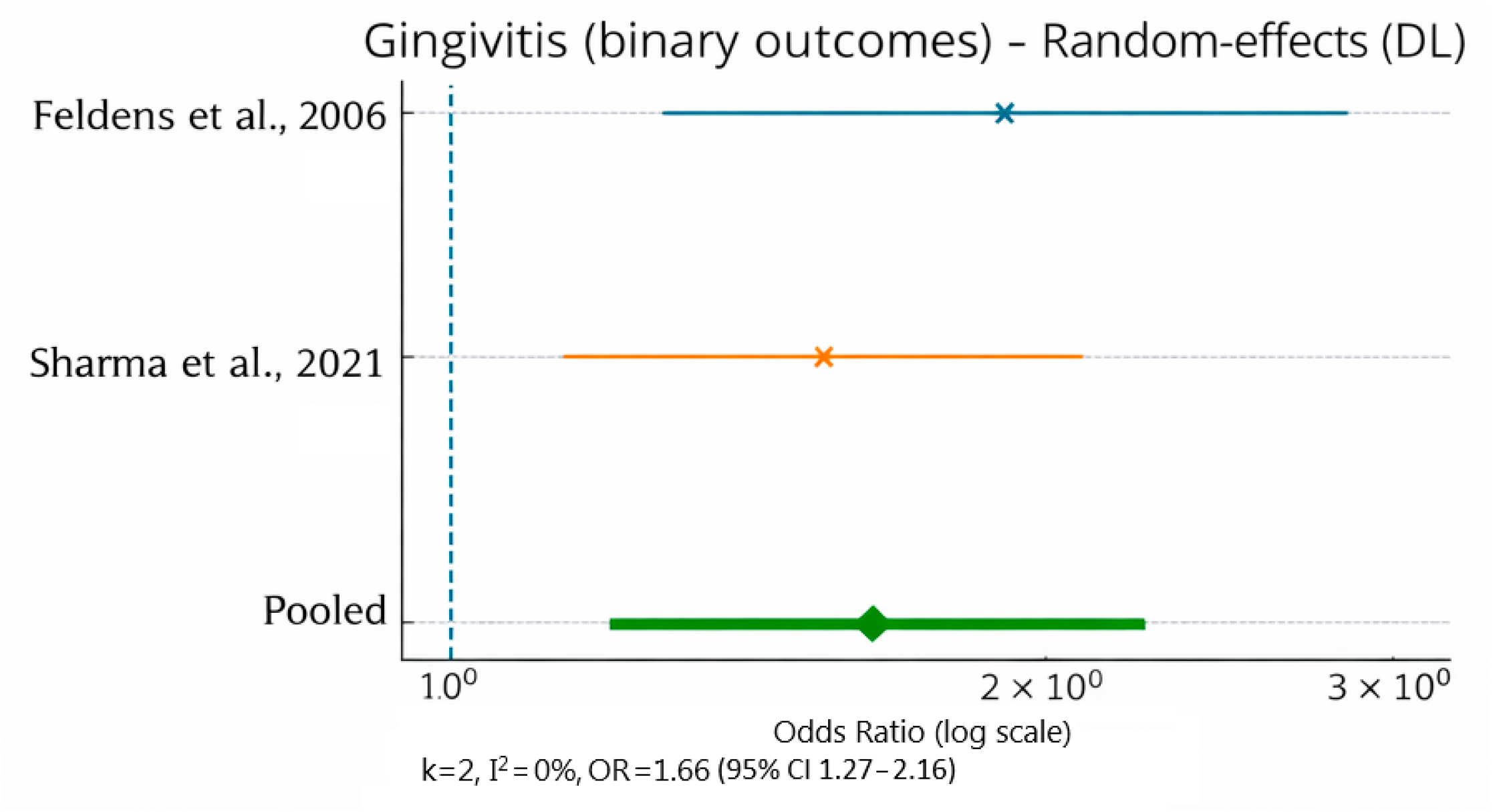
| Feldens et al., 2006 [29] | Children without spacing in maxillary anterior teeth had a 90% higher probability of having gingivitis. The variables, such as spacing in mandibular anterior teeth, open bite, and crossbite were not associated with gingivitis. |
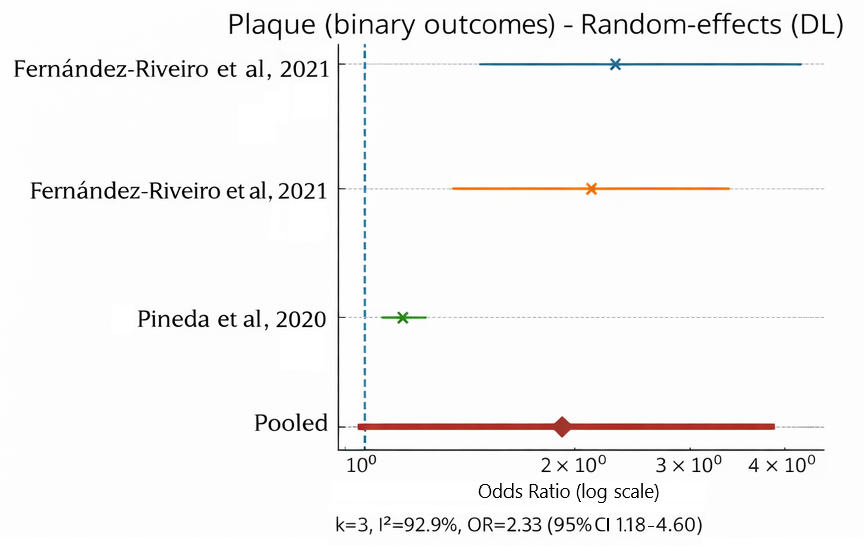
| Fernandez-Riveiro et al., 2021 [4] | Dental plaque accumulation was the most strongly associated with malocclusion (DAI > 25) in both age groups. |
| Gabris et al., 2006 [18] | The VPI scores for adolescents with malocclusion were higher than those of the adolescents who displayed no anomalies. A significant difference in VPI was found between subjects without crowding or with crowding in either one or two crowded segments. |
| Goel et al., 2018 [22] | No correlation was found between the orthodontic treatment need (TPI), and periodontal status (CPITN) scores. |
| Jafari et al., 2024 [10] | No correlation between malocclusion (IOTN-DHC) and GI was found. The results showed that by an increase in OHI-S score, the odds of having IOTN grade 4 compared to grade 1 increased. |
| Kolawole & Folayan, 2019 [6] | The mean DAI scores of participants with mild gingivitis compared with moderate/severe gingivitis differed significantly. Significantly more children with increased overjet and anterior open bite had moderate to severe gingivitis. There were no differences in the oral hygiene status (OHI-S) of participants with and without malocclusion traits. |
| Kukletova et al., 2012 [12] | An association was observed between GI and severity of orthodontic anomaly. |
| Medina-Vega et al., 2024 [7] | An association was observed between BOP and malocclusion. Children with severe or handicapping malocclusion according to DAI had a 10% higher prevalence of gingival bleeding compared to those with normal occlusion. |
| Nalcaci et al., 2012 [23] | No relationship was found between TPI-CPITN scores. |
| Öz & Küçükeşmen, 2019 [20] | The relationship between CPITN scores and malocclusion classification was not significant. The relationship between CPITN scores and crowding was significant in the anterior segment. |
| Pineda et al., 2020 [32] | An association was found between the presence of NNOT and poor oral hygiene (OHI-S ≥ 3). It was found that the subjects with crowding (>4 mm) were 99% more likely to present poor hygiene, which itself was 74% more likely to present in subjects with increased overjet (>6 mm). |
| Salim et al., 2021 [13] | Subjects with malocclusion, specifically crowding, contact point deflection and IOTN grades 3, 4 and 5 had higher scores in both arches for OHI-S than subjects without malocclusion traits. Patients with generalized spacing had lower OHI-S score than those without spacing. OHI-S was positively correlated to the severity of crowding and contact point deflection in both arches, and negatively correlated to the severity of spacing in the upper arch and in the lower arch. OHI-S was not significantly different based on the severity of lower arch spacing although those with no upper arch spacing had higher mean OHI-S than those with generalized spacing. |
| Sharma et al., 2021 [15] | Children with maligned teeth (crowding or spacing), and Angle’s Class 2 and 3 occlusions had a high prevalence of gingivitis. Children with properly aligned teeth in Angle’s Class 1 occlusion were 34% less affected by gingivitis than children with maligned teeth (crowded, spacing, etc.). |
| Tariq et al., 2024 [33] | Presence of periodontal disease was associated with malocclusion. Young adolescents with periodontal diseases were 1.57 times more likely to have malocclusion compared to young adolescents without periodontal diseases, and it was significant. |
| The Quality Assessment of the Non-Randomized Studies (NOS) | ||||
|---|---|---|---|---|
| Authors, Year | Selection | Comparability | Outcome | Total Score |
| Abu Alhaija & Al-Wahadni, 2006 [34] | - | - | *** | 3 |
| Addy et al., 1988 [31] | **** | - | *** | 7 |
| Ashley et al., 1998 [30] | * | - | *** | 4 |
| Buczkowska-Radlińska et al., 2012 [19] | ** | * | *** | 6 |
| Cortelazzi et al., 2008 [14] | *** | * | *** | 7 |
| Feldens et al., 2006 [29] | ** | * | *** | 6 |
| Fernandez-Riveiro et al., 2021 [4] | *** | * | *** | 7 |
| Gabris et al., 2006 [18] | ** | - | ** | 4 |
| Goel et al., 2018 [22] | ** | - | ** | 4 |
| Jafari et al., 2024 [10] | * | * | *** | 5 |
| Kolawole & Folayan, 2019 [6] | **** | * | *** | 8 |
| Kukletova et al., 2012 [12] | ** | - | ** | 4 |
| Medina -Vega et al., 2024 [7] | *** | * | *** | 7 |
| Nalcaci et al., 2012 [23] | * | - | *** | 4 |
| Öz & Küçükeşmen, 2019 [20] | * | - | *** | 4 |
| Pineda et al., 2020 [32] | *** | * | *** | 7 |
| Salim et al., 2021 [13] | *** | - | *** | 6 |
| Sharma et al., 2021 [15] | **** | * | *** | 8 |
| Tariq et al., 2024 [33] | *** | * | *** | 7 |
| Outcome | Impact | Participants (Studies) | Risk of Bias | Inconsistency | Indirectness | Imprecision | Publication Bias | Overall Certainty of Evidence * |
|---|---|---|---|---|---|---|---|---|
| Gingivitis (GI, GBI, BOP, GB) | Significant impact reported in 7 studies | 8957 (10) | Serious a | Not Serious b | Not Serious c | Not Serious d | None e | ⨁◯◯◯ Very low |
| CPITN/CPI | Significant impact reported in 1 study | 934 (4) | Serious a | Not Serious b | Not Serious c | Not Serious d | None e | ⨁◯◯◯ Very low |
| Dental plaque (API, OHI-S, PI, VPI) | Significant impact reported in 7 studies | 580 (10) | Serious a | Serious b | Not Serious c | Serious d | None e | ⨁◯◯◯ Very low |
Disclaimer/Publisher’s Note: The statements, opinions and data contained in all publications are solely those of the individual author(s) and contributor(s) and not of MDPI and/or the editor(s). MDPI and/or the editor(s) disclaim responsibility for any injury to people or property resulting from any ideas, methods, instructions or products referred to in the content. |
© 2026 by the authors. Licensee MDPI, Basel, Switzerland. This article is an open access article distributed under the terms and conditions of the Creative Commons Attribution (CC BY) license.
Share and Cite
Szyszka-Sommerfeld, L.; Machoy-Rakoczy, M.; Belova, A.; Lipski, M.; Schuster, L.; Dammaschke, T.; Budzyńska, A.; Świtała, J.; Warcholak-Grzeszewska, A.; Woźniak, K.; et al. The Relationship Between Malocclusion and Periodontal Health in Children and Adolescents: A Systematic Review and Meta-Analysis. J. Clin. Med. 2026, 15, 1155. https://doi.org/10.3390/jcm15031155
Szyszka-Sommerfeld L, Machoy-Rakoczy M, Belova A, Lipski M, Schuster L, Dammaschke T, Budzyńska A, Świtała J, Warcholak-Grzeszewska A, Woźniak K, et al. The Relationship Between Malocclusion and Periodontal Health in Children and Adolescents: A Systematic Review and Meta-Analysis. Journal of Clinical Medicine. 2026; 15(3):1155. https://doi.org/10.3390/jcm15031155
Chicago/Turabian StyleSzyszka-Sommerfeld, Liliana, Monika Machoy-Rakoczy, Alla Belova, Mariusz Lipski, Laurentia Schuster, Till Dammaschke, Agata Budzyńska, Jacek Świtała, Andżelika Warcholak-Grzeszewska, Krzysztof Woźniak, and et al. 2026. "The Relationship Between Malocclusion and Periodontal Health in Children and Adolescents: A Systematic Review and Meta-Analysis" Journal of Clinical Medicine 15, no. 3: 1155. https://doi.org/10.3390/jcm15031155
APA StyleSzyszka-Sommerfeld, L., Machoy-Rakoczy, M., Belova, A., Lipski, M., Schuster, L., Dammaschke, T., Budzyńska, A., Świtała, J., Warcholak-Grzeszewska, A., Woźniak, K., Armogida, N. G., Spagnuolo, G., Stratul, S.-I., & Boariu, M. (2026). The Relationship Between Malocclusion and Periodontal Health in Children and Adolescents: A Systematic Review and Meta-Analysis. Journal of Clinical Medicine, 15(3), 1155. https://doi.org/10.3390/jcm15031155