A Multicomponent Communication Intervention to Reduce the Psycho-Emotional Effects of Critical Illness in ICU Patients Related to Their Level of Consciousness: CONECTEM

 , , , , , , , , , and
Abstract
1. Introduction
2. Materials and Methods
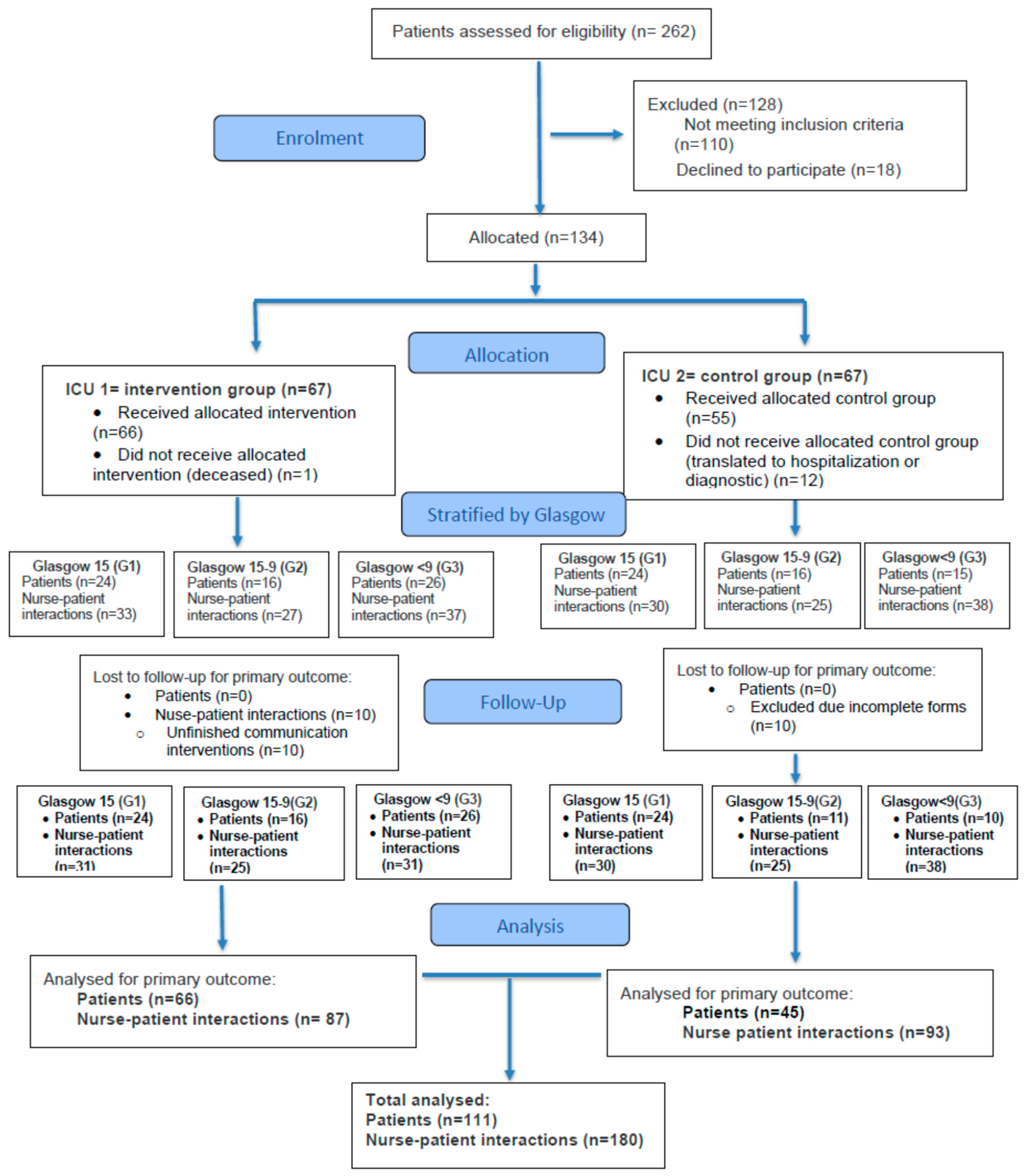
2.1. Setting and Sample
2.2. Data Collection Tools and Methods
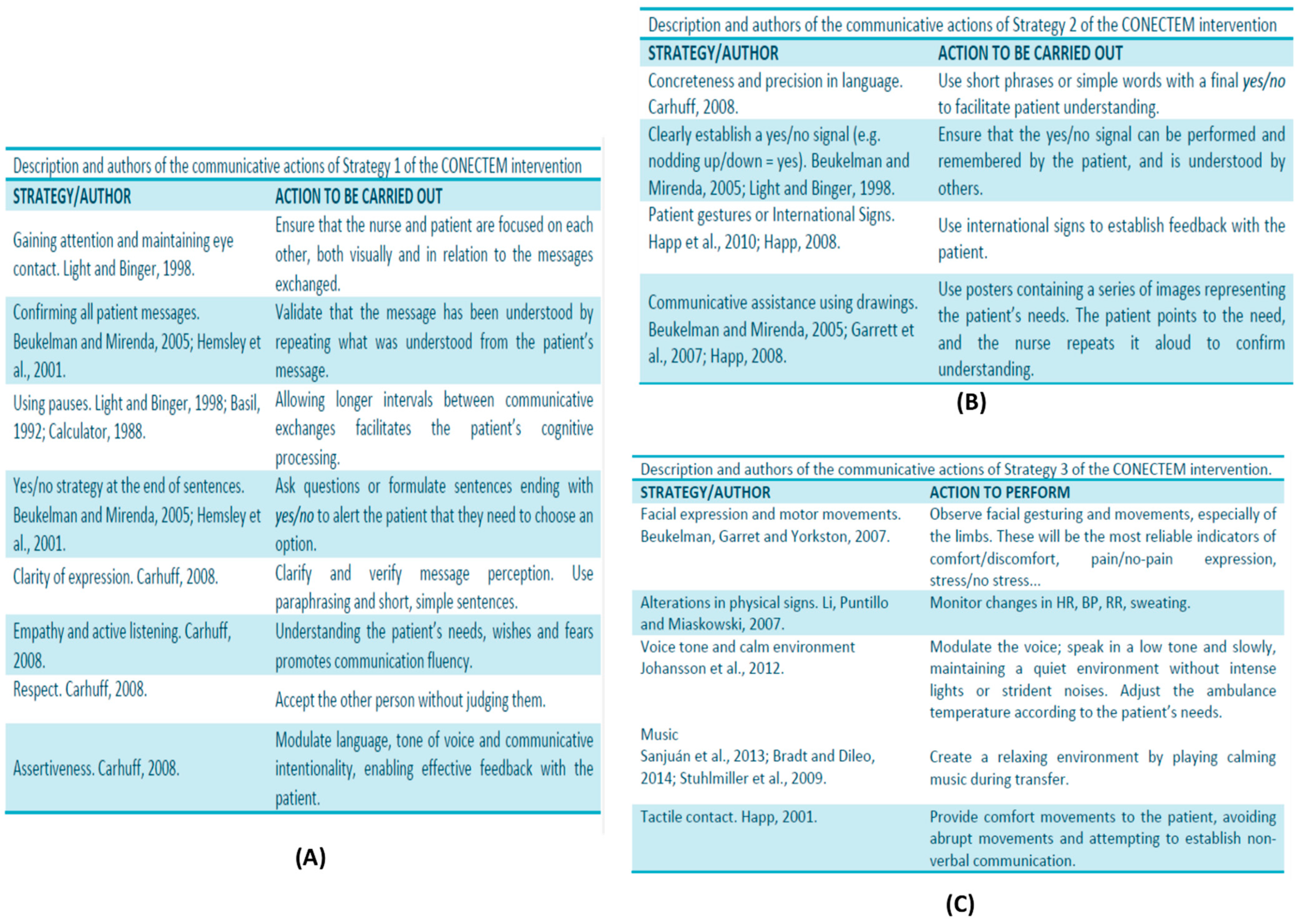
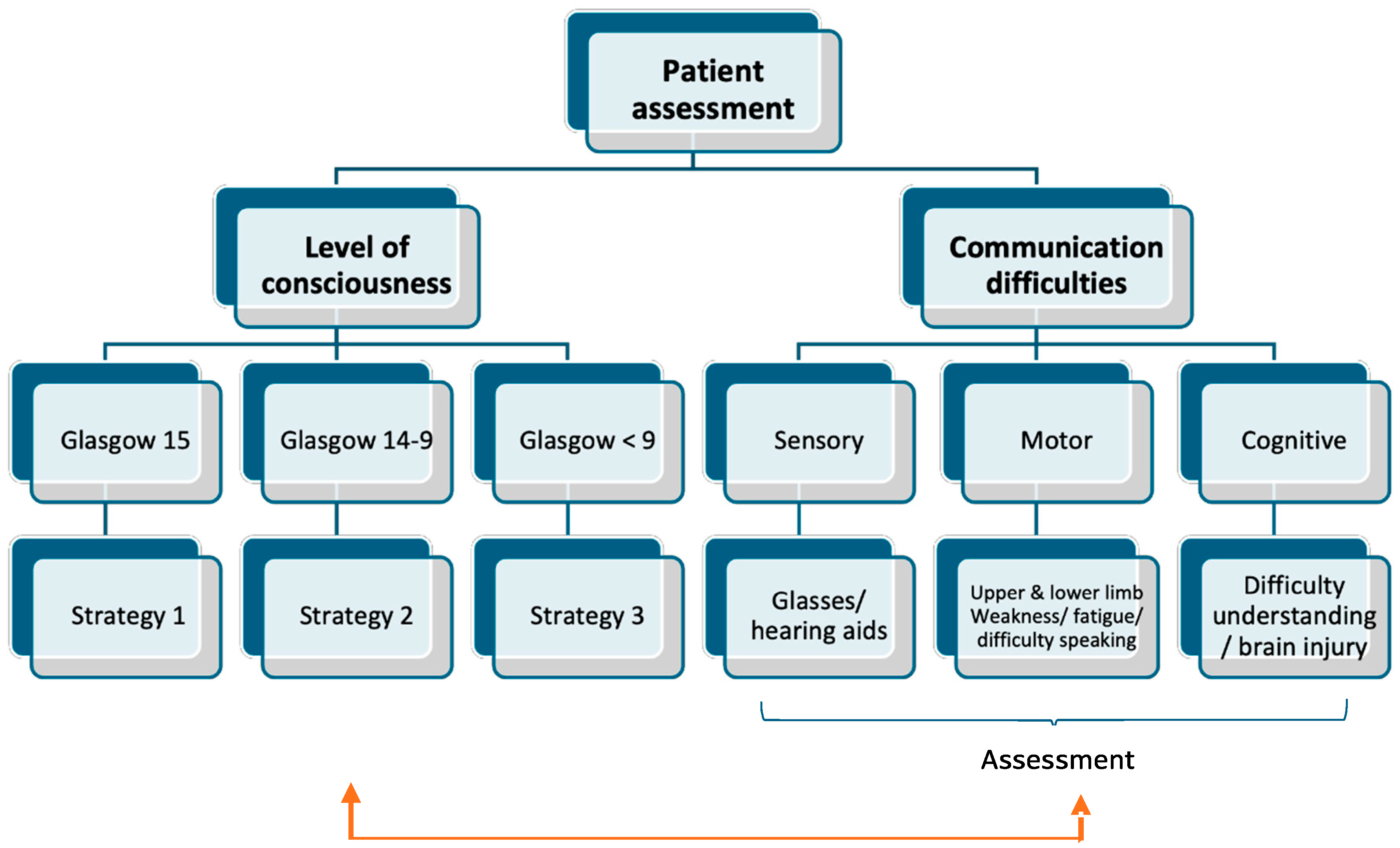
2.2.1. Intervention
2.2.2. Procedure
2.3. Data Analysis
3. Results
3.1. Descriptive Characteristics of Critically Ill Patients
3.2. Baseline Levels of Pain, Anxiety, and Post-Traumatic Stress Symptoms in CG and IG According to Glasgow Score (Group 1 = Glasgow 15; Group 2 = Glasgow 14–9; and Group 3 = Glasgow < 9)
3.3. Pre–Post-Test Comparison Between CG and IG Nurse–Patient Interactions for the Three Analyzed Variables According to Glasgow Score
3.4. Analysis of Pre–Post-Test Differences in the Studied Variables by Glasgow Group in Relation to Sex and Age
4. Discussion
4.1. Effective Communication and Psycho-Emotional Effects
4.2. Study Strengths and Limitations
5. Conclusions
Author Contributions
Funding
Institutional Review Board Statement
Informed Consent Statement
Data Availability Statement
Acknowledgments
Conflicts of Interest
Abbreviations
| ICU | Intensive Care Unit |
| AAC | Augmentative and Alternative Communication |
| VAS | Visual Analogic Scale |
| BPS | Behavioral Pain Scale |
| IES-R | Impact Event Scale Revised |
| RASS | Richmon Agitation Sedation Scale |
| BCS | Basic Communication Skills |
| STAI | State-Trait Anxiety Inventory |
| CG | Control Group |
| IG | Intervention Group |
References
- Gómez-Fedor, S.J. La Comunicación. Salus 2016, 20, 5–6. [Google Scholar]
- Carroll, S.M. Silent, slow lifeworld: The communication experience of nonvocal ventilated patients. Qual. Health Res. 2007, 17, 1165–1177. [Google Scholar] [CrossRef]
- Freman-Sanderson, A.; Morris, K.; Elkins, M. Characteristics of patient communication and prevalence of communication difficulty in the intensive care unit: An observational study. Aust. Crit. Care 2019, 32, 373–377. [Google Scholar] [CrossRef]
- Happ, M.B. Giving Voice: Nurse-Patient Communication in the Intensive Care Unit. Am. J. Crit. Care 2021, 30, 256–265. [Google Scholar] [CrossRef]
- Holm, A.; Viftrup, A.; Karlsson, V.; Nikolajsen, L.; Dreyer, P. Nurses’ communication with mechanically ventilated patients in the intensive care unit: Umbrella review. J. Adv. Nurs. 2020, 76, 2909–2920. [Google Scholar] [CrossRef] [PubMed]
- Karlsen, M.W.; Ølnes, M.A.; Heyn, L.G. Communication with patients in intensive care units: A scoping review. Nurs. Crit. Care 2019, 24, 115–131. [Google Scholar] [CrossRef] [PubMed]
- Happ, M.B.; Garrett, K.L.; Tate, J.A.; DiVirgilio, D.; Houze, M.P.; Demirci, J.R.; George, E.; Sereika, S.M. Effect of a multi-level intervention on nurse-patient communication in the intensive care unit: Results of the SPEACS trial. Heart Lung J. Acute Crit. Care 2014, 43, 89–98. [Google Scholar] [CrossRef] [PubMed]
- Koszalinski, R.S.; Tappen, R.M.; Viggiano, D. Evaluation of Speak for Myself with Patients Who Are Voiceless. Rehabil. Nurs. 2015, 40, 235–242. [Google Scholar] [CrossRef]
- Patak, L.; Wilson-Stronks, A.; Costello, J.; Kleinpell, R.M.; Henneman, E.A.; Person, C.; Galante, D. Improving patient-provider communication: A call to action. J. Nurs. Adm. 2009, 39, 372–376. [Google Scholar] [CrossRef]
- Alodan, H.A.; Sutt, A.L.; Hill, R.; Alsadhan, J.; Cross, J.L. Effectiveness, experience, and usability of low-technology augmentative and alternative communication in intensive care: A mixed-methods systematic review. Aust. Crit. Care 2025, 38, 101061. [Google Scholar] [CrossRef]
- Li, Y.; Chou, W. A Study of Communication Needs in Medical Interventions Using AAC for Critical Care Recovery Patients. In Proceedings of the Asian Conference on Arts & Humanities, Tokyo, Japan, 24–26 May 2024; The International Academic Forum (IAFOR): Nagoya, Japan, 2024; pp. 21–26, ISSN 2186-229X. [Google Scholar] [CrossRef]
- Nilsen, M.L.; Happ, M.B.; Donovan, H.; Barnato, A.; Hoffman, L.; Sereika, S.M. Adaptation of a communication interaction behavior instrument for use in mechanically ventilated, nonvocal older adults. Nurs. Res. 2014, 63, 3–13. [Google Scholar] [CrossRef][Green Version]
- Wahl, M.; Weiland, K. Augmentative and Alternative Communication and digital participation. Front. Commun. 2023, 8, 1180257. [Google Scholar] [CrossRef]
- Zeadnih, R.F.; Al-Qaaneh, A.M.; Hudhud, H.N.; Bani-Mohammad, I. Communication with Mechanically Ventilated Patients: Nurses’ Perspectives and Practice. Nurs. Rep. 2025, 15, 404. [Google Scholar] [CrossRef]
- Baptista, G.; Magalhães, B.; Rodrigues, V.; Galvão, A. Nurse communication strategies with the critical patient in intensive care units: Scoping review. Millenium J. Educ. Technol. Health 2024, 2, e35355. [Google Scholar] [CrossRef]
- Shdaifat, S.A.; Al-Qadire, M. Anxiety and depression among patients admitted to intensive care. Nurs. Crit. Care 2022, 27, 106–112. [Google Scholar] [CrossRef]
- Varndel, L.W.; Fry, M.; Elliott, D. A systematic review of observational pain assessment instruments for use with nonverbal intubated critically ill adult patients in the emergency department: An assessment of their suitability and psychometric properties. J. Clin. Nurs. 2017, 26, 7–32. [Google Scholar] [CrossRef]
- Righy, C.; Rosa, R.G.; da Silva, R.T.A.; Kochhann, R.; Migliavaca, C.B.; Robinson, C.C.; Teche, S.P.; Teixeira, C.; Bozza, F.A.; Falavigna, M. Prevalence of post-traumatic stress disorder symptoms in adult critical care survivors: A systematic review and meta-analysis. Crit. Care 2019, 23, 213. [Google Scholar] [CrossRef] [PubMed] [PubMed Central]
- Dell’Oste, V.; Martelli, M.; Fantasia, S.; Andreoli, D.; Rimoldi, B.; Bordacchini, A.; Navalesi, P. Post-Traumatic Stress Disorder in ICU Survivors: Correlations with Long-Term Psychiatric and Physical Outcomes. Int. J. Environ. Res. Public Health 2025, 22, 405. [Google Scholar] [CrossRef] [PubMed]
- Treede, R.D. The International Association for the Study of Pain definition of pain: As valid in 2018 as in 1979, but in need of regularly updated footnotes. Pain Rep. 2018, 3, e643. [Google Scholar] [CrossRef]
- Berntzen, H.; Bjørk, I.T.; Wøien, H. “Pain relieved, but still struggling”—Critically ill patients experiences of pain and other discomforts during analgosedation. J. Clin. Nurs. 2018, 27, e223–e234. [Google Scholar] [CrossRef]
- Tate, J.A.; Seaman, J.B.; Happ, M.B. Overcoming Barriers to Pain Assessment: Communicating Pain Information with Intubated Older Adults. Geriatr. Nurs. 2012, 33, 310. [Google Scholar] [CrossRef]
- Battle, C.E.; James, K.; Bromfield, T.; Temblett, P. Predictors of post-traumatic stress disorder following critical illness: A mixed methods study. J. Intensive Care Soc. 2017, 18, 289–293. [Google Scholar] [CrossRef]
- Ull, C.; Uwe-Hamsen, U.; Weckwerth, C.; Schildhauer, T.A.; Gaschler, R.; Waydhas, C.; Jansen, O. Approach to the basic needs in patients on invasive ventilation using eye-tracking devices for non-verbal communication. Artif. Organs 2022, 46, 439–450. [Google Scholar] [CrossRef]
- Duffy, E.I.; Garry, J.; Talbot, L.; Pasternak, D.; Flinn, A.; Minardi, C.; Luban, N.; Rashed, A.; Nasr, I. A pilot study assessing the spiritual, emotional, physical/environmental, and physiological needs of mechanically ventilated surgical intensive care unit patients via eye tracking devices, head nodding, and communication boards. Trauma Surg. Acute Care Open 2018, 3, e000180. [Google Scholar] [CrossRef] [PubMed]
- Kleinpell, R.M. Improving communication in the ICU. Heart Lung Acute Crit. Care 2014, 43, 87. [Google Scholar] [CrossRef]
- Higginson, I.J.; Koffman, J.; Hopkins, P.; Prentice, W.; Burman, R.; Leonard, S.; Bear, H.; Foley, K.; Evans, C. Development and evaluation of the feasibility and effects on staff, patients, and families of a new tool, the Psychosocial Assessment and Communication Evaluation (PACE), to improve communication and palliative care in intensive care and during clinical u. BMC Med. 2013, 11, 213. [Google Scholar] [CrossRef] [PubMed]
- Joint Commission International. Communicating Clearly and Effectively to Patients: How to Overcome Common Communication Challenges in Health Care; Joint Commission International: Oak Brook, IL, USA, 2018; Available online: https://www.jointcommissioninternational.org (accessed on 13 January 2026).
- Kwame, A.; Petrucka, P.M. A literature-based study of patient-centered care and communication in nurse-patient interactions: Barriers, facilitators, and the way forward. BMC Nurs. 2021, 20, 158. [Google Scholar] [CrossRef] [PubMed]
- Lund, S.K.; Light, J. Long-term outcomes for individuals who use augmentative and alternative communication: Part II—Communicative interaction. AAC Augment. Altern. Commun. 2007, 23, 323–335. [Google Scholar] [CrossRef]
- Arimon, M.P.; Llobet, M.P.; Roldán-Merino, J.; Moreno-Arroyo, C.; Hidalgo-Blanco, M.A.; Lluch-Canut, T. A Communicative Intervention to Improve the Psychoemotional State of Critical Care Patients Transported by Ambulance. Am. J. Crit. Care 2021, 30, 45–54. [Google Scholar] [CrossRef] [PubMed]
- Happ, M.B.; Sereika, S.; Garrett, K.; Tate, J. Use of the quasi-experimental sequential cohort design in the Study of Patient-Nurse Effectiveness with Assisted Communication Strategies (SPEACS). Contemp. Clin. Trials 2008, 29, 801–808. [Google Scholar] [CrossRef]
- Prats-Arimon, M. Comunicació Bàsica i Assistida pel malalt Crític a L’ambulància. La Comunicació Efectiva i els efectes Psicoemocionals del Malalt Crític. Ph.D. Thesis, Universitat Internacional de Catalunya, Barcelona, Spain, 2017. [Google Scholar]
- Bermejo, F.; Porta, J.; Díaz, J. Más de Cien Escalas en Neurología, 2nd ed.; Aula Médica: Toledo, Spain, 2008; pp. 1–361. [Google Scholar]
- Latorre-Marco, I.; Solís-Muñoz, M.; Falero-Ruiz, T.; Larrasquitu-Sánchez, A.; Romay Pérez, A.B.; Millán-Santos, I. Validación de la Escala de Conductas Indicadoras de Dolor para valorar el dolor en pacientes críticos, no comunicativos y sometidos a ventilación mecánica: Resultados del proyecto ESCID. Enferm. Intensiv. 2011, 22, 3–12. [Google Scholar] [CrossRef] [PubMed]
- Perpiñá-Galvañ, J.; Richart-Martínez, M.; Cabañero-Martínez, M.J.; Martínez-Durá, I. Content validity of the short version of the subscale of the State- Trait Anxiety Inventory (STAI)1. Rev. Lat.-Am. Enferm. 2011, 19, 882–887. [Google Scholar] [CrossRef] [PubMed]
- Rojas-Gambasica, J.A.; Valencia-Moreno, A.; Nieto-Estrada, V.H.; Méndez-Osorio, P.; Molano-Franco, D.; Jiménez-Quimbaya, Á.T.; Escobar-Modesto, R.; Cortés-Rodríguez, N.; Correa, L.P. Validación transcultural y lingüística de la escala de sedación y agitación Richmond al español. Rev. Colomb. Anestesiol. 2016, 44, 218–223. [Google Scholar] [CrossRef]
- Badia-Castelló, M.; Trujillano-Cabello, J.; Serviá-Goixart, L.; March-Llanes, J.; Rodríguez-Pozo, Á. Recuerdos y memoria del paciente crítico a largo plazo. Desarrollo de estrés postraumático. Med. Clin. 2006, 126, 561–566. [Google Scholar] [CrossRef]
- Iglesias-Franco, J.; Martín-Torres, J.; Salmerón-Mayoral, R.; Vega-González, G. Psychological Distress and Post-Traumatic Stress in Critically Ill Patients and Relatives. Rev. Iberoam. Diagn. Eval. Psicol. 2024, 4, 165–181. [Google Scholar] [CrossRef]
- Nikayin, S.; Rabiee, A.; Hashem, M.D.; Huang, M.; Bienvenu, O.J.; Turnbull, A.E.; Needham, D.M. Anxiety symptoms in survivors of critical illness: A systematic review and meta-analysis. Gen. Hosp. Psychiatry 2016, 43, 23–29. [Google Scholar] [CrossRef]
- Ringdal, M.; Plos, K.; Lundberg, D.; Johansson, L.; Bergbom, I. Outcome after injury: Memories, health-related quality of life, anxiety, and symptoms of depression after intensive care. J. Trauma 2009, 66, 1226–1233. [Google Scholar] [CrossRef]
- Castillejos, D.G.; Rubio, M.L.; Ferre, C.; Ángeles-Gracia, M.; Bodí, M.; Sandiumenge, A. Psychological symptoms in difficult-to-sedate critical care survivors. Nurs. Crit. Care 2023, 28, 679–688. [Google Scholar] [CrossRef]
- Parker, A.M.; Sricharoenchai, T.; Raparla, S.; Schneck, K.W.; Bienvenu, O.J. Posttraumatic stress disorder in critical illness survivors: A metaanalysis. Crit. Care Med. 2015, 43, 1121–1129. [Google Scholar] [CrossRef] [PubMed]
- Myhren, H.; Ekeberg, Ø.; Tøien, K.; Karlsson, S.; Stokland, O.; Rattray, J.; Jones, C.; Moen, H.; Enehaug, B.; Malt, U.F. Posttraumatic stress, anxiety and depression symptoms in patients during the first year post intensive care unit discharge. Crit. Care 2010, 14, R-14. [Google Scholar] [CrossRef]
- Castillo, M.I.; Cooke, M.L.; Macfarlane, B.; Aitken, L.M. Trait anxiety but not state anxiety during critical Illness was associated with anxiety and depression over 6 months after ICU. Crit. Care Med. 2016, 44, 100–110. [Google Scholar] [CrossRef]
- Fumis, R.R.; Ranzani, O.T.; Martins, P.S.; Schettino, G. Emotional disorders in pairs of patients and their family members during and after ICU stay. PLoS ONE 2015, 10, e0115332. [Google Scholar] [CrossRef]
- Shin, J.W.; Tan, A.; Tate, J.; Balas, M.; Dabelko-Schoeny, H.; Happ, M.B. Preliminary efficacy of the vidatalkTM communication application on family psychological symptoms in the intensive care unit: A pilot study. Heart Lung 2025, 70, 14–22. [Google Scholar] [CrossRef]
- Wallen, K.; Chaboyer, W.; Thalib, L.; Creedy, D.K. Symptoms of acute posttraumatic stress disorder after intensive care. Am. J. Crit. Care 2008, 17, 534–543. [Google Scholar] [CrossRef] [PubMed]
- Ayasrah, S. Care-related pain in critically ill mechanically ventilated patients. Anaesth. Intensive Care 2016, 44, 458–465. [Google Scholar] [CrossRef]
- Hinajeros-Navarro, P. Manejo del dolor en el paciente crítico. NPunto 2023, 6, 99–125. [Google Scholar]
- Campbell, G.B.; Happ, M.B. Symptom identification in the chronically critically ill. AACN Adv. Crit. Care 2010, 21, 64–79. [Google Scholar] [CrossRef] [PubMed][Green Version]
- Karlsen, M.W.; Holm, A.; Kvande, M.E.; Dreyer, P.; Tate, J.A.; Heyn, L.G.; Sutt, A. Communication with mechanically ventilated patients in intensive care units: A concept analysis. J. Adv. Nurs. 2023, 79, 563–580. [Google Scholar] [CrossRef] [PubMed]
- Kuruppu, N.R.; Chaboyer, W.; Abayadeera, A.; Ranse, K. Augmentative and alternative communication tools for mechanically ventilated patients in intensive care units: A scoping review. Aust. Crit. Care 2023, 36, 1095–1109. [Google Scholar] [CrossRef] [PubMed]
- Koszalinski, R.S.; Heidel, R.E.; Hutson, S.P.; Li, X.; Palmer, T.G.; McCarthy, J.; Piras, S.E. The use of communication technology to affect patient outcomes in the intensive care unit. CIN—Comput. Inform. Nurs. 2020, 38, 183–189. [Google Scholar] [CrossRef]
- Holm, A.; Dreyer, P. Nurse-patient communication within the context of non-sedated mechanical ventilation: A hermeneutic-phenomenological study. Nurs. Crit. Care 2018, 23, 88–94. [Google Scholar] [CrossRef]
- Handberg, C.; Voss, A.K. Implementing augmentative and alternative communication in critical care settings: Perspectives of healthcare professionals. J. Clin. Nurs. 2018, 27, 102–114. [Google Scholar] [CrossRef] [PubMed]
- Parsons, L.C.; Walters, M.A. Management Strategies in the Intensive Care Unit to Improve Psychosocial Outcomes. Crit. Care Nurs. Clin. N. Am. 2019, 31, 537–545. [Google Scholar] [CrossRef] [PubMed]
- Karadag, E.; Samancioglu, S.; Ozden, D.; Bakir, E. Effects of aromatherapy on sleep quality and anxiety of patients. Nurs. Crit. Care 2017, 22, 105–112. [Google Scholar] [CrossRef]
- Lee, C.H.; Lai, C.L.; Sung, Y.H.; Lai, M.Y.; Lin, C.Y.; Lin, L.Y. Comparing effects between music intervention and aromatherapy on anxiety of patients undergoing mechanical ventilation in the intensive care unit: A randomized controlled trial. Qual. Life Res. 2017, 26, 1819–1829. [Google Scholar] [CrossRef] [PubMed]
- Sanjuán-Naváis, M.; Via-Clavero, G.; Vázquez-Guillamet, B.; Moreno-Duran, A.M.; Martínez-Estalella, G. Effect of music on anxiety and pain in patients with mechanical ventilation. Enferm. Intensiv. 2013, 24, 63–71. [Google Scholar] [CrossRef]
- Tsuruta, R.; Fujita, M. Comparison of clinical practice guidelines for the management of pain, agitation, and delirium in critically ill adult patients. Acute Med. Surg. 2018, 5, 207–212. [Google Scholar] [CrossRef]
- Celis-Rodríguez, E.; Díaz Cortés, J.C.; Cárdenas Bolívar, Y.R.; Carrizosa González, J.A.; Pinilla, D.I.; Ferrer Záccaro, L.E.; Birchenall, C.; Caballero López, J.; Argüello, B.M.; Castillo Abrego, G.; et al. Evidence-based clinical practice guidelines for the management of sedoanalgesia and delirium in critically ill adult patients. Med. Intensiv. 2020, 44, 171–184. [Google Scholar] [CrossRef]
- Feng, F.; Kang, H.; Yang, Z.; Ma, L.; Chen, Y. Safety and effectiveness of inhaled sedation in critically ill patients: A systematic review and meta-analysis. Syst. Rev. 2025, 14, 44. [Google Scholar] [CrossRef]
- Griffiths, J.; Fortune, G.; Barber, V.; Young, J.D. The prevalence of post traumatic stress disorder in survivors of ICU treatment: A systematic review. Intensive Care Med. 2007, 33, 1506–1518. [Google Scholar] [CrossRef]
- Williamson, D.R.; Cherifa, S.I.; Frenette, A.J.; Saavedra Mitjans, M.; Charbonney, E.; Cataford, G.; Williams, V.; Lainer Palacios, J.; Burry, L.; Mehta, S.; et al. Agitation, confusion, and aggression in critically ill traumatic brain injury-a pilot cohort study (ACACIA-PILOT). Pilot Feasibility Stud. 2020, 6, 193. [Google Scholar] [CrossRef] [PubMed]
- Istanboulian, L.; Rose, L.; Gorospe, F.; Yunusova, Y.; Dale, C.M. Barriers to and facilitators for the use of augmentative and alternative communication and voice restorative strategies for adults with an advanced airway in the intensive care unit: A scoping review. J. Crit. Care 2020, 57, 168–176. [Google Scholar] [CrossRef] [PubMed]
- Palacio-Juménez, M. El estrés en el paciente crítico: Realidad y cuidados de enfermería. Una revisión sistemática. Conoc. Enferm. 2020, 3, 49–61. [Google Scholar] [CrossRef]



| Variable | IG (n = 66) | CG (n = 45) | Total (111) | p-Value | |
|---|---|---|---|---|---|
| Gender | Female | 25 (38.5%) [26.7; 51.4] | 19 (40.9%) [26.3; 56.8] | 44 (39.4%) [30.2; 49.3] | 0.797 2 |
| Male | 40 (61.5%) [48.6; 73.3] | 27 (59.1%) [43.2; 73.7] | 67 (60.6%) [50.7; 69.8] | ||
| Age groups | 18–30 | 2 (3.1%) [0.4; 10.7] | 0 (0%) [0.0; 8.0] | 2 (1.8%) [0.2; 6.5] | 0.560 2 |
| 31–50 | 11 (16.9%) [8.8; 28.3] | 9 (18.2%) [8.2; 32.7] | 19 (17.4%) [10.8; 25.9] | ||
| 51–70 | 44 (67.7%) [54.9; 78.8] | 29 (63.6%) [47.8; 77.6] | 73 (66.1%) [56.4; 74.9] | ||
| 71–90 | 9 (12.3%) [5.5; 22.8] | 8 (18.2%) [8.2; 32.7] | 17 (15.3%) [8.6; 22.7] | ||
| Studies level | Primary studies | 27 (41.6%) [26.7; 51.4] | 22 (49.1%) [30.4; 61.2] | 49 (44.1%) [31.9; 51.1] | 0.662 5 |
| Secondary studies | 30 (46.1%) [31.6; 54.3] | 19 (36.3%) [18.2; 44.4] | 49 (44.1%) [43.8; 57.8] | ||
| University studies | 7 (10.8%) [4.4; 20.9] | 4 (9.1%) [2.5; 21.7] | 11 (10.1%) [5.1; 17.3] | ||
| Postgraduate studies | 0 (0%) [0.0; 5.5] | 2 (4.5%) [0.6; 15.5] | 2 (1.8%) [0.2; 6.5] | ||
| Marital status | Single | 12 (18.5%) [9.9; 30.0] | 3 (6.8%) [1.4; 18.7] | 15 (13.8%) [7.9; 21.7] | 0.319 5 |
| Married | 43 (66.5%) [53.6; 70.6] | 29 (66.0%) [41.0; 71.7] | 72 (65.0%) [48.0; 67.2] | ||
| Divorced | 6 (9.2%) [3.5; 19.0] | 8 (18.2%) [8.2; 32.7] | 14 (12.8%) [7.2; 20.6] | ||
| Widower | 4 (6.2%) [1.7; 15.0] | 4 (9.1%) [2.5; 21.7] | 8 (7.3%) [3.2; 14.0] | ||
| Nationality | Spain | 55 (84.6%) [73.5; 92.4] | 38 (86.4%) [72.6; 94.8] | 93 (85.3%) [77.3; 91.4] | 0.928 5 |
| Europe | 3 (1.5%) [0.0; 8.3] | 3 (0%) [0.0; 8.0] | 6 (0.9%) [0.0; 5.0] | ||
| South America | 3 (1.5%) [0.0; 8.3] | 2 (0%) [0.0; 8.0] | 5 (0.9%) [0.0; 5.0] | ||
| Argentine | 0 (0%) [0.0; 5.5] | 1 (2.3%) [0.1; 12.0] | 1 (0.9%) [0.0; 5.0] | ||
| Asia | 1 (0%) [0.0; 5.5] | 1 (2.3%) [0.1; 12.0] | 2(.9%) [0.0; 5.0] | ||
| Africa | 1 (1.5%) [0.0; 8.3] | 1 (2.3%) [0.1; 12.0] | 2 (1.8%) [0.2; 6.5] | ||
| Types of pathology | Cardiac | 16 (24.6%) [14.8; 36.9] | 11 (25%) [13.2; 40.3] | 27 (24.8%) [17.0; 34.0] | 0.089 5 |
| Respiratory | 43 (66.2%) [53.4; 77.4] | 22 (47.7%) [32.5; 63.3] | 65 (58.7%) [48.9; 68.1] | ||
| Neurologic | 5 (6.2%) [1.7; 15.0] | 6 (13.6%) [5.2; 27.4] | 11 (9.9%) [4.5; 16.2] | ||
| Shock | 0 (0%) [0.0; 5.5] | 2 (4.5%) [0.6; 15.5] | 2 (1.8%) [0.2; 6.5] | ||
| Psychiatric | 2 (3.1%) [0.4; 10.7] | 4 (9.1%) [2.5; 21.7] | 6 (5.5%) [2.0; 11.6] | ||
| Auditive limitations | No | 57 (87.7%) [77.2; 94.5] | 38 (86.4%) [72.6; 94.8] | 95 (87.2%) [79.4; 92.8] | 0.525 5 |
| Yes | 6 (9.2%) [3.5; 19.0] | 6 (13.6%) [5.2; 27.4] | 12 (11%) [5.8; 18.4] | ||
| Wears hearing aids | 2 (3.1%) [0.4; 10.7] | 0 (0%) [0.0; 8.0] | 2 (1.8%) [0.2; 6.5] | ||
| Visual limitations | No | 26 (40%) [28.0; 52.9] | 18 (40.9%) [26.3; 56.8] | 44 (40.4%) [31.1; 50.2] | 0.778 2 |
| Yes | 5 (7.7%) [2.5; 17.0] | 5 (11.4%) [3.8; 24.6] | 10 (9.2%) [4.5; 16.2] | ||
| Wears glasses | 34 (52.3%) [39.5; 64.9] | 21 (47.7%) [32.5; 63.3] | 55 (50.5%) [40.7; 60.2] | ||
| Cognitive limitations | No | 38 (58.5%) [45.6; 70.6] | 32 (72.7%) [57.2; 85.0] | 70 (64.2%) [54.5; 73.2] | 0.098 5 |
| Attention deficit | 0 (0%) [0.0; 5.5] | 1 (2.3%) [0.1; 12.0] | 1 (0.9%) [0.0; 5.0] | ||
| Memory loss | 1 (1.5%) [0.0; 8.3] | 0 (0%) [0.0; 8.0] | 1 (0.9%) [0.0; 5.0] | ||
| Others | 2 (3.1%) [0.4; 10.7] | 0 (0%) [0.0; 8.0] | 2 (1.8%) [0.2; 6.5] | ||
| Motor limitations | No | 29 (44.6%) [32.3; 57.5] | 18 (40.9%) [26.3; 56.8] | 47 (43.1%) [33.7; 53.0] | 0.188 5 |
| Generalized fatigue | 9 (13.8%) [6.5; 24.7] | 12 (27.3%) [15.0; 42.8] | 21 (19.3%) [12.3; 27.9] | ||
| Others | 2 (3.1%) [0.4; 10.7] | 4 (9.1%) [2.5; 21.7] | 6 (5.5%) [2.0; 11.6] | ||
| Sedation | 19 (29.2%) [18.6; 41.8] | 5 (11.4%) [2.5; 21.7] | 23 (21.1%) [13.9; 30.0] | 0.111 5 | |
| Sedation and relaxtion | 6 (9.2%) [3.5; 19.0] | 6 (13.6%) [5.2; 27.4] | 12 (11%) [5.8; 18.4] | ||
| GROUP 1 (Glasgow 15) | GROUP 2 (Glasgow 14–9) | GROUP 3 (Glasgow < 9) | |||||||
|---|---|---|---|---|---|---|---|---|---|
| CG (n = 30) | IG (n = 31) | p-Value | CG (n = 25) | IG (n = 25) | p-Value | CG (n = 38) | IG (n = 31) | p-Value | |
| VAS-pre | 1.97 (2.06) [1.20; 2.74] 1.50 (0.00; 3.00) 0.00/7.00 | 1.54 (1.78) [1.09; 2.00] 1.00 (0.00; 2.0) 0.00/7.00 | 0.180 2 | 1.65 (1.90) [0.67; 2.62] 1.00 (0.00; 3.00) 0.00/6.00 | 2.24 (2.06) [1.60; 2.88] 2.00 (0.00; 4.00) 0.00/7.00 | 0.117 2 | |||
| IES-R-pre | 20.00 (16.76) [13.74; 26.26] 15.50 (7.00; 32.00) 0.00/62.00 | 22.39 (15.24) [18.49; 26.0] 20.00 (11.00; 32.0) 0.00/62.0 | 0.088 2 | 28.82 (14.62) [21.31; 36.3] 31.00 (15.00; 40.0) 10.00/64.00 | 29.64 (14.80) [25.03; 34.2] 31.00 (19.00; 40.0) 0.00/64.00 | 0.626 2 | |||
| STAI-pre PA AA | 43.6% (n13) 56.4% (n17) | 50% (n30) 50% (n30) | 0.830 1 | 43.6% (n7) 56.4% (n9) | 50% (n21) 50% (n21) | 0.830 1 | |||
| BPS-pre | 0.00 (0.00) [0.00] 0.00 (0.00; 0.00) 0.00/0.00 | 0.07 (0.60) [−0.07; 0.22] 0.00 (0.00; 0.00) 0.00/5.00 | 0.268 2 | ||||||
| RASS-pre | −4.00 (1.21) [−4.40; −3.6] −4.00 (−5.00; −3.0) −5.00/−1.00 | −4.14 (1.18) [−4.43; −3.8] −4.00 (−5.00; −4.0) −5.00/1.00 | 0.230 2 | ||||||
| VAS | |||||||
|---|---|---|---|---|---|---|---|
| Pre-Test | Post-Test | p-Value | Pre-Test | Post-Test | p-Value | ||
| GROUP 1 (Glasgow 15) | IG (n = 31) | 1.13 (1.36) 1.00 (0.00; 1.00) | 0.71 (1.07) 0.00 (0.00; 1.00) | 0.008 2* | 24.71 (13.49) 25.00 (16.00; 35.00) | 22.81 (12.13) 22.00 (15.00; 30.00) | 0.207 2 |
| CG (n = 30) | 1.97 (2.06) 1.50 (0.00; 3.00) | 1.80 (1.92) 1.50 (0.00; 3.00) | 0.614 2 | 20.00 (16.76) 15.50 (7.00; 32.00) | 20.00 (16.19) 16.00 (7.00; 27.00) | 0.859 2 | |
| GROUP 2 (Glasgow 14–9) | IG (n = 25) | 2.64 (2.10) 3.00 (1.00; 4.00) | 1.68 (2.04) 1.00 (0.00; 3.00) | 0.008 2* | 30.20 (15.20) 31.00 (21.00; 38.00) | 27.92 (14.11) 30.00 (19.00; 36.00) | 0.358 2 |
| CG (n = 25) | 1.64 (1.82) 1.00 (0.00; 3.00) | 1.40 (1.58) 1.00 (0.00; 2.00) | 0.670 2 | 29.48 (13.56) 30.00 (16.00; 40.00) | 29.12 (11.14) 29.00 (19.00; 40.00) | 0.966 2 | |
| STAI | Presence of Anxiety | Absence of Anxiety | p-Value (Within Group, McNemar) | p-Value (Between Groups, χ2) | ||
|---|---|---|---|---|---|---|
| Glasgow (15–9) G1/G2 | Pre-Test | Post-Test | Pre-Test | Post-Test | ||
| IG (n = 56 nurse–patient interactions) | 50% (n = 28) | 27.7% (n = 14) | 50% (n = 28) | 73.3% (n = 42) | 0.007 * | 0.000 * |
| CG (n = 55 nurse–patient interactions) | 56.4% (n = 31) | 55% (n = 30) | 43.6% (n = 24) | 45% (n = 25) | 1.000 | |
Disclaimer/Publisher’s Note: The statements, opinions and data contained in all publications are solely those of the individual author(s) and contributor(s) and not of MDPI and/or the editor(s). MDPI and/or the editor(s) disclaim responsibility for any injury to people or property resulting from any ideas, methods, instructions or products referred to in the content. |
© 2026 by the authors. Licensee MDPI, Basel, Switzerland. This article is an open access article distributed under the terms and conditions of the Creative Commons Attribution (CC BY) license.
Share and Cite
Prats-Arimon, M.; Puig-Llobet, M.; Eseverri-Rovira, M.; Gallart, E.; Téllez-Velasco, D.; Shanchez-Balcells, S.; Agüera, Z.; El Abidi-El Ghazouani, K.; Lluch-Canut, T.; Hidalgo-Blanco, M.A.; et al. A Multicomponent Communication Intervention to Reduce the Psycho-Emotional Effects of Critical Illness in ICU Patients Related to Their Level of Consciousness: CONECTEM. J. Clin. Med. 2026, 15, 1154. https://doi.org/10.3390/jcm15031154
Prats-Arimon M, Puig-Llobet M, Eseverri-Rovira M, Gallart E, Téllez-Velasco D, Shanchez-Balcells S, Agüera Z, El Abidi-El Ghazouani K, Lluch-Canut T, Hidalgo-Blanco MA, et al. A Multicomponent Communication Intervention to Reduce the Psycho-Emotional Effects of Critical Illness in ICU Patients Related to Their Level of Consciousness: CONECTEM. Journal of Clinical Medicine. 2026; 15(3):1154. https://doi.org/10.3390/jcm15031154
Chicago/Turabian StylePrats-Arimon, Marta, Montserrat Puig-Llobet, Mar Eseverri-Rovira, Elisabet Gallart, David Téllez-Velasco, Sara Shanchez-Balcells, Zaida Agüera, Khadija El Abidi-El Ghazouani, Teresa Lluch-Canut, Miguel Angel Hidalgo-Blanco, and et al. 2026. "A Multicomponent Communication Intervention to Reduce the Psycho-Emotional Effects of Critical Illness in ICU Patients Related to Their Level of Consciousness: CONECTEM" Journal of Clinical Medicine 15, no. 3: 1154. https://doi.org/10.3390/jcm15031154
APA StylePrats-Arimon, M., Puig-Llobet, M., Eseverri-Rovira, M., Gallart, E., Téllez-Velasco, D., Shanchez-Balcells, S., Agüera, Z., El Abidi-El Ghazouani, K., Lluch-Canut, T., Hidalgo-Blanco, M. A., & Moreno-Arroyo, M. C. (2026). A Multicomponent Communication Intervention to Reduce the Psycho-Emotional Effects of Critical Illness in ICU Patients Related to Their Level of Consciousness: CONECTEM. Journal of Clinical Medicine, 15(3), 1154. https://doi.org/10.3390/jcm15031154