Review

Comprehensive Approaches to Endometriosis Management and Targeted Strategies for Bowel Endometriosis


1
Department of Gynecology and Obstetrics, University Hospital of Fribourg, 1708 Fribourg, Switzerland
2
Department of Gynecology and Obstetrics and Reproductive Medicine, Hôpital Foch, 75017 Paris, France
3
Department of General Surgery, University Hospital of Fribourg, 1708 Fribourg, Switzerland
4
Department of Gynecology and Obstetrics, University Hospital of Berne, 3010 Bern, Switzerland
*
Author to whom correspondence should be addressed.
J. Clin. Med. 2026, 15(3), 1040; https://doi.org/10.3390/jcm15031040
Submission received: 15 December 2025 / Revised: 19 January 2026 / Accepted: 25 January 2026 / Published: 28 January 2026
(This article belongs to the Special Issue Advances in Diagnosis and Treatment of Endometriosis)

Abstract

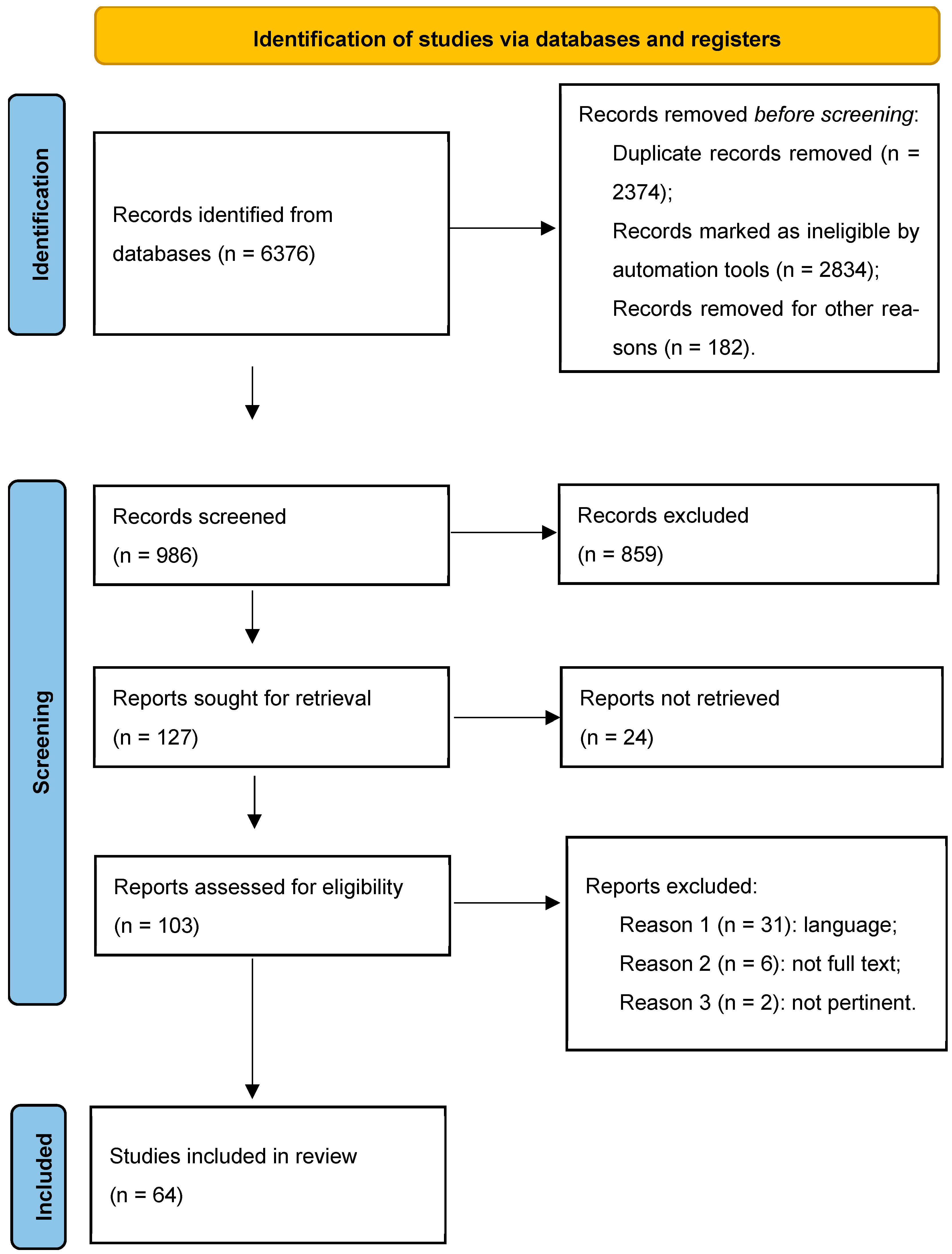
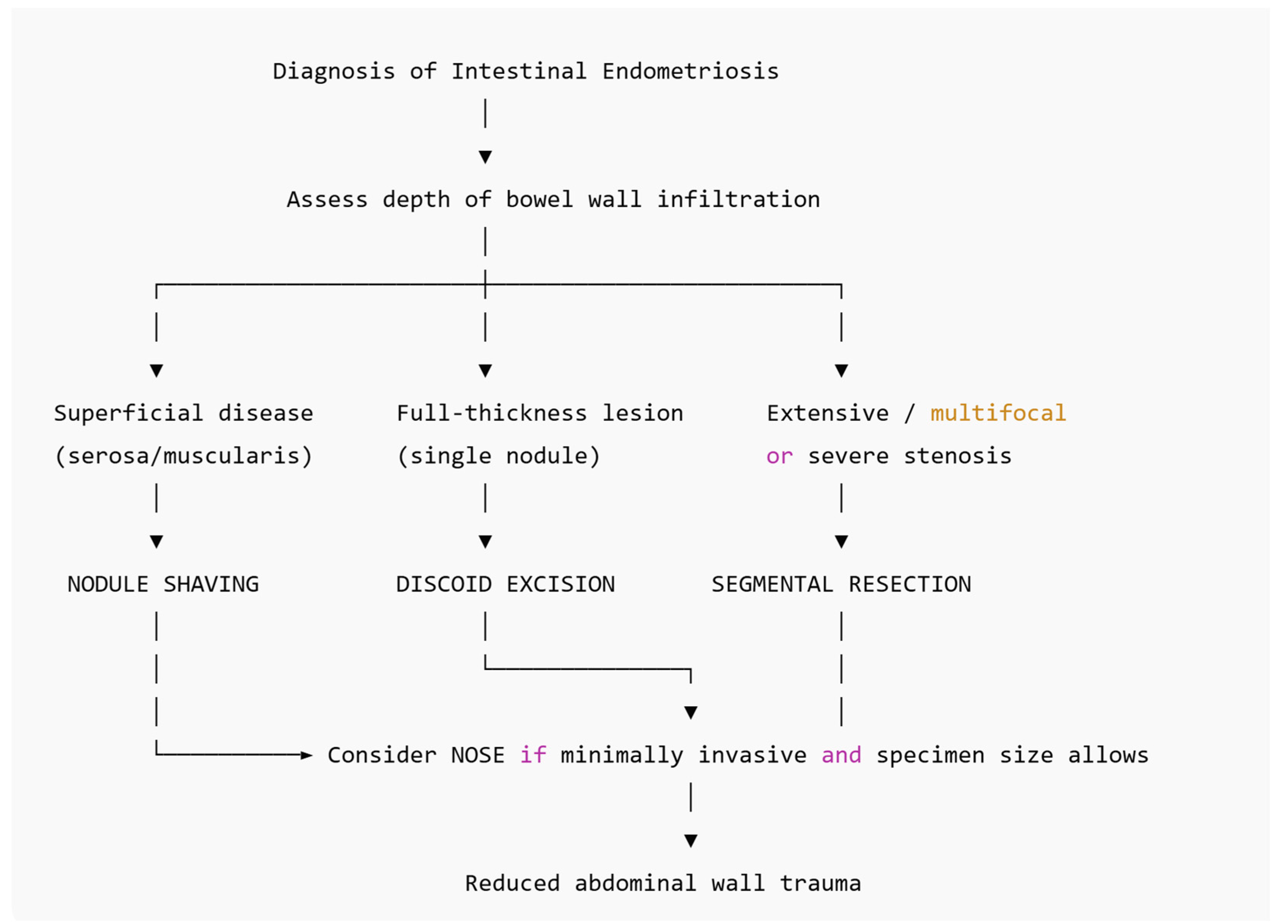
Background: Deep infiltrating endometriosis (DIE) and, in particular, bowel endometriosis stand out for their complexity. While surgery for bowel endometriosis has proven to be effective, there is a lack of standardization concerning the technique used and the reported outcomes. Objectives: The objective is to perform a review aiming to summarize the state of the art of bowel endometriosis and to point out the gaps to be addressed by future research. We also propose a novel classification of surgical procedures to fill these gaps and improve management. Methods: A literature search was performed on PubMed from inception to October 2025. Results: The following three major procedures for the excision of bowel endometriosis have been proposed: the nodule shaving, the discoid excision, and the segmental intestinal resection. One further technique, NOSE (natural orifice specimen extraction), can be applied for the removal of the specimen in cases of discoid or segmental resection. To reduce surgical morbidity, current data support the choice of most conservative surgical options, namely nodule dissection and discoid resection, as well as the use of nerve-sparing techniques in case of segmental resection. Nonetheless, there is little evidence concerning the indication and the most appropriate technique to be used, including their relative risks and benefits in terms of pain control, urinary and gastrointestinal function, risk of future relapse, and fertility outcomes. Conclusions: Significant barriers in comparing surgical outcomes due to unclear definitions, lack of standardization, and incomplete reporting are some of the most relevant issues frequently encountered. To fill these gaps, we propose a new classification system for bowel surgery that describes the dimension and the number of the lesions, as well as the type of surgical technique used, supplemented by the information if vaginal opening was necessary for complete lesion resection. This proposition aims to open a discussion on this topic and boost focused research to evaluate the utility of a new classification in clinical practice.
Keywords: bowel endometriosis; intestinal endometriosis; surgical morbidity; classification; nodule shaving; discoid excision; segmental intestinal resection; NOSE (natural orifice specimen extraction) bowel endometriosis; intestinal endometriosis; surgical morbidity; classification; nodule shaving; discoid excision; segmental intestinal resection; NOSE (natural orifice specimen extraction)