Sodium and Water Homeostasis in Children: Pathogenesis, Diagnosis, and Treatment

Abstract
1. Introduction
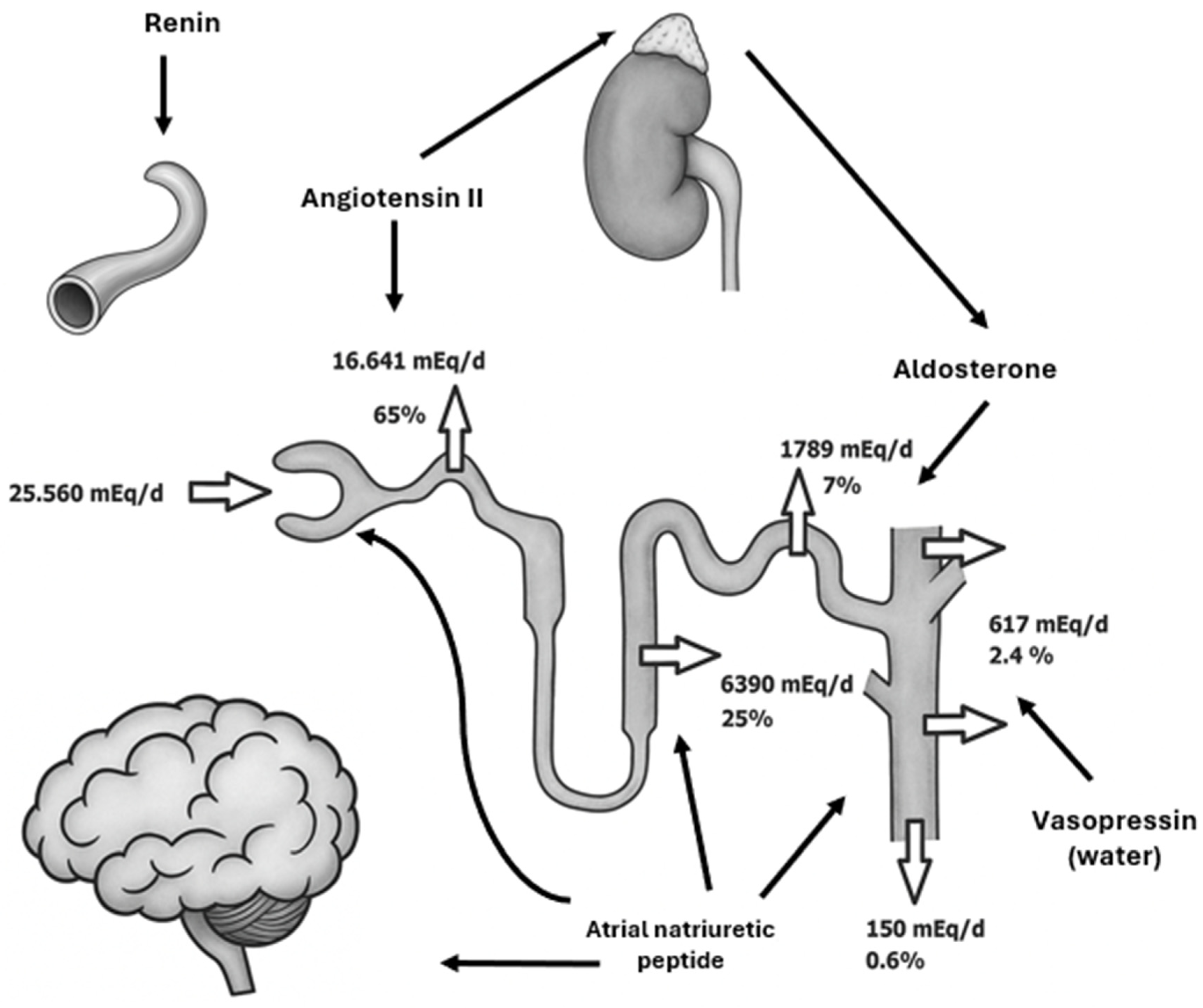
1.1. Sodium and Water Crosstalk in the Human Body
1.2. Assessment of Hydration Status as a Clinical Challenge

| Clinical Feature | Slightly Dehydrated | Moderate Dehydration | Severe Dehydration | |
|---|---|---|---|---|
| Body weight loss | Infants | 5% | 10% | 15% |
| Children | 3% | 6% | >9% | |
| Pulse | Normal | tachycardia | tachycardia | |
| Capillary return | <2 s | 2–4 s | >4 s | |
| Frontal fontanelles | Normal | normal | sunken | |
| Oral mucus | Moistened | dry | dried out, chapped | |
| Thirst | Normal | drinks eagerly, thirsty | drink poorly or be unable to drink | |
| Blood pressure | Normal | normal | lowered | |
| Urine Specific Gravity | <1020 | >1020 | Anuria | |
| Diuresis | Oliguria | anuria | ||
| General condition | Calm, conscious | Restlessness, agitated | Unconscious, sleepy, flaccid | |
| Tears | Normal | absence | absence | |
| Eyes | Normal | sunken | Sunken | |
| Skin fold | Goes back quickly | Goes back slowly | Goes back very slowly |
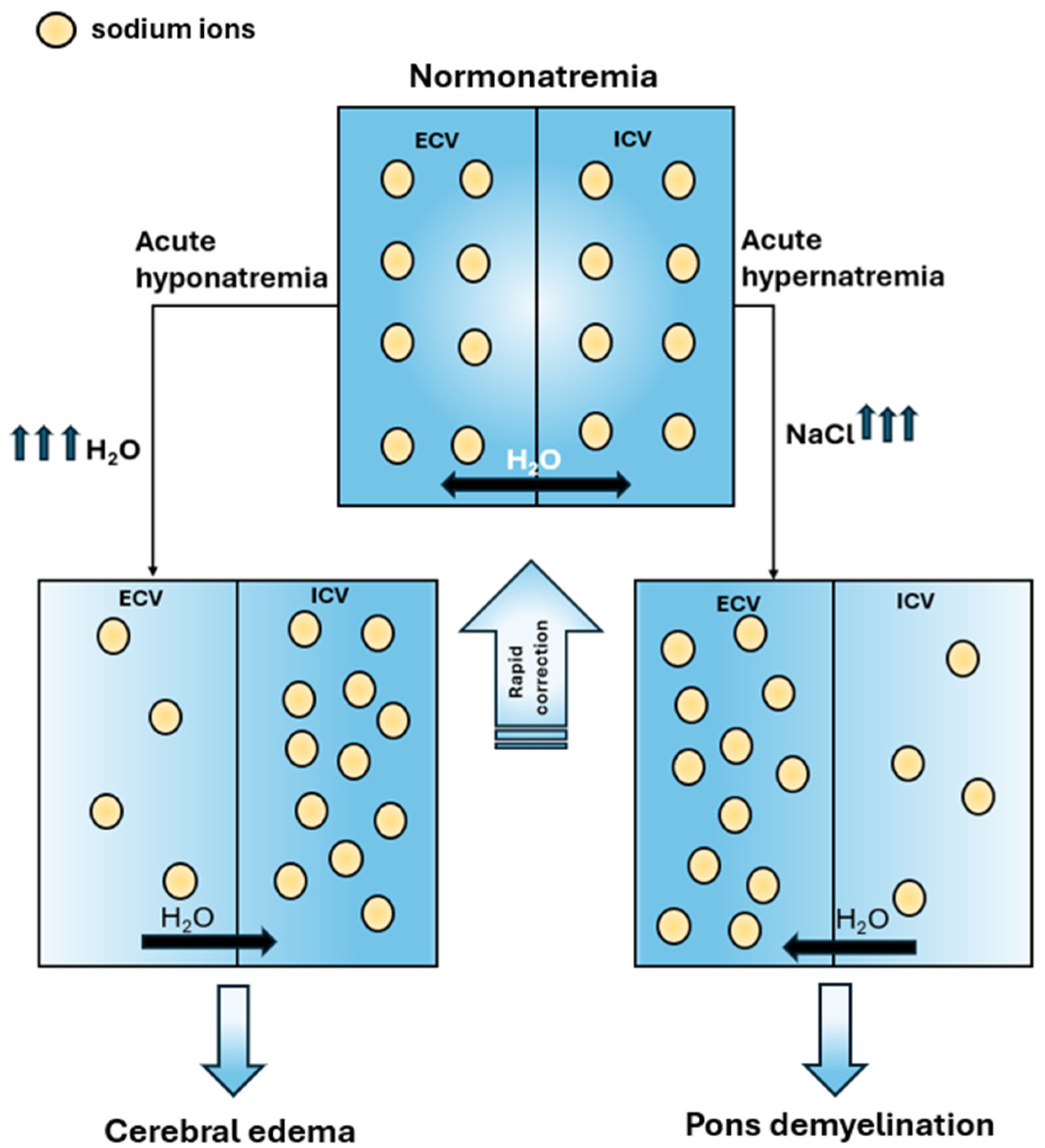
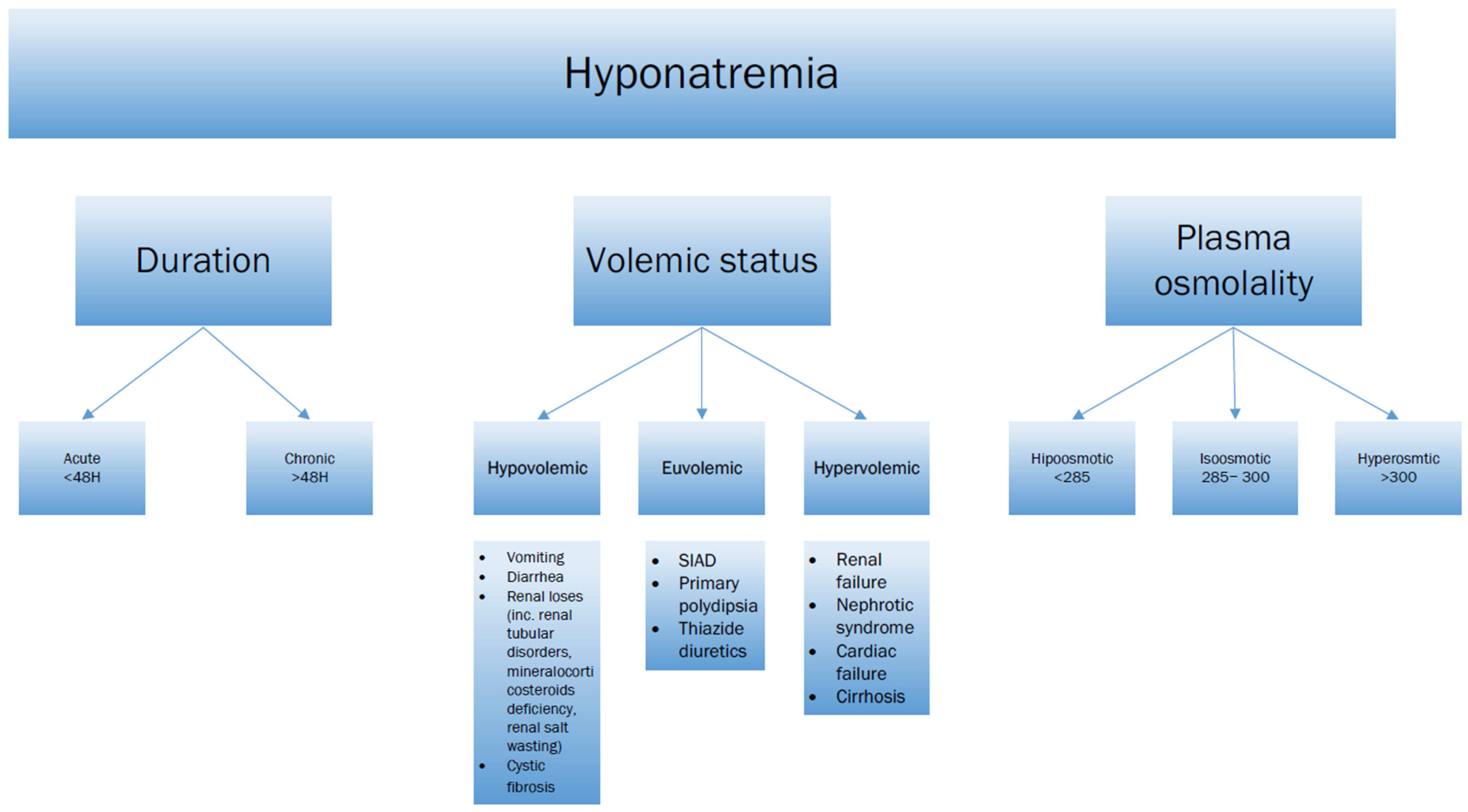
2. Hyponatremia

| Symptom Severity | Type of Fluid Used in Therapy | Sodium Correction |
|---|---|---|
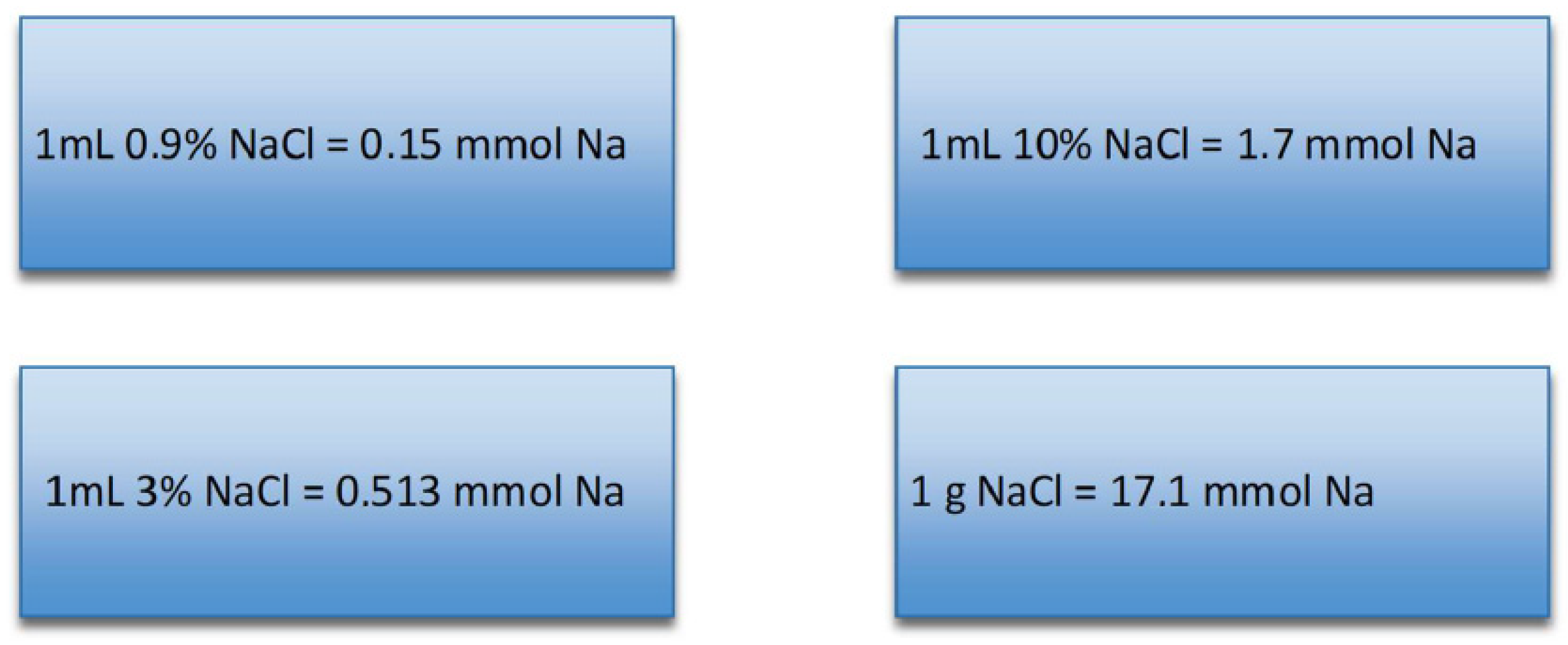
| Symptomatic | 3% NaCL | 3 to 5 mL/kg in 10–15 min in the initial phase, with a rise in serum sodium concentration of about 2.5 to 4 mmol/L |
| Asymptomatic | 0/9% NaCl (no need to use hypertonic solution) | 6 to 8 mmol/L over 24 h [45] |
2.1. SIAD
2.2. Cerebral Salt Wasting Syndrome
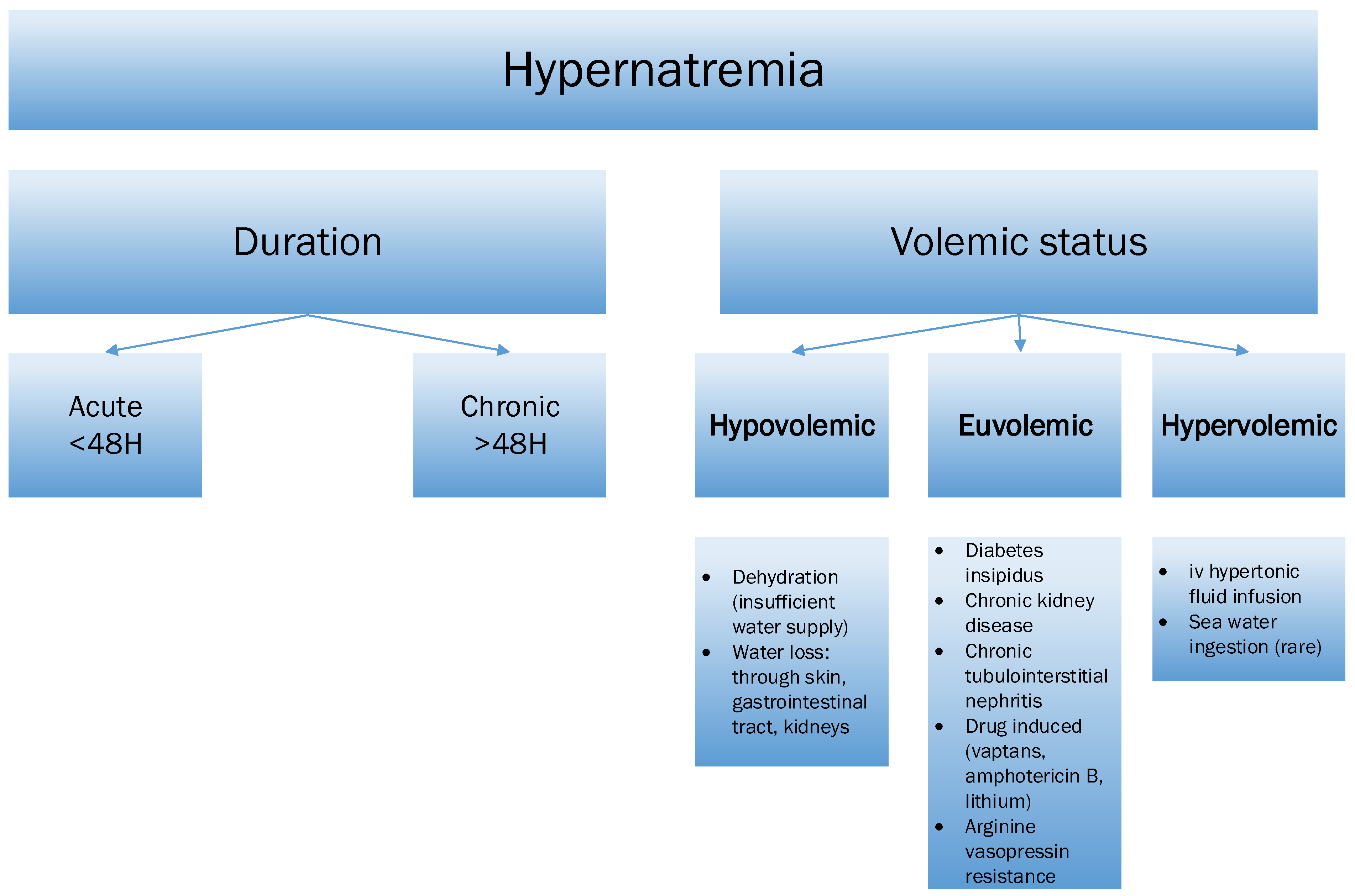
3. Hypernatremia
3.1. Central Diabetes Insipidus
3.2. Arginine Vasopressin Resistance
4. Conclusions
Author Contributions
Funding
Data Availability Statement
Conflicts of Interest
References
- Bie, P. Mechanisms of sodium balance: Total body sodium, surrogate variables, and renal sodium excretion. Am. J. Physiol.-Regul. Integr. Comp. Physiol. 2018, 315, R945–R962. [Google Scholar] [CrossRef]
- Bernal, A.; Zafra, M.A.; Simón, M.J.; Mahía, J. Sodium Homeostasis, a Balance Necessary for Life. Nutrients 2023, 15, 395. [Google Scholar] [CrossRef] [PubMed]
- Büyükkaragöz, B.; A Bakkaloğlu, S. Serum osmolality and hyperosmolar states. Pediatr. Nephrol. 2022, 38, 1013–1025. [Google Scholar] [CrossRef] [PubMed]
- Triebel, H.; Castrop, H. The renin angiotensin aldosterone system. Pflüg. Arch.—Eur. J. Physiol. 2024, 476, 705–713. [Google Scholar] [CrossRef] [PubMed]
- Jangid, M.K.; Doshi, G.M. Cross talk on therapeutic strategies: Natriuretic peptides and inhibiting neprilysin in hypertension management. Hypertens. Res. 2024, 48, 284–300. [Google Scholar] [CrossRef]
- Adrogué, H.J.; Tucker, B.M.; Madias, N.E. Diagnosis and Management of Hyponatremia: A Review. JAMA 2022, 328, 280–291. [Google Scholar] [CrossRef]
- Titze, J.; Maillet, A.; Lang, R.; Gunga, H.C.; Johannes, B.; Gauquelin-Koch, G.; Kihm, E.; Larina, I.; Gharib, C.; Kirsch, K.A. Long-term sodium balance in humans in a terrestrial space station simulation study. Am. J. Kidney Dis. 2002, 40, 508–516. [Google Scholar] [CrossRef]
- Guideline: Sodium Intake for Adults and Children. w WHO Guidelines Approved by the Guidelines Review Committee. Geneva: World Health Organization. 2012. Available online: http://www.ncbi.nlm.nih.gov/books/NBK133309/ (accessed on 12 January 2026).
- Committee to Review the Dietary Reference Intakes for Sodium and Potassium, Food and Nutrition Board, Health and Medicine Division, i National Academies of Sciences, Engineering, and Medicine. Dietary Reference Intakes for Sodium and Potassium; National Academies Press: Washington, DC, USA, 2019; p. 25353. [Google Scholar] [CrossRef]
- Jachimowicz-Rogowska, K.; Winiarska-Mieczan, A. Initiatives to Reduce the Content of Sodium in Food Products and Meals and Improve the Population’s Health. Nutrients 2023, 15, 2393. [Google Scholar] [CrossRef]
- Steiner, R.W. Interpreting the fractional excretion of sodium. Am. J. Med. 1984, 77, 699–702. [Google Scholar] [CrossRef]
- Seethapathy, H.; Fenves, A.Z. Fractional Excretion of Sodium (FENa): An Imperfect Tool for a Flawed Question. Clin. J. Am. Soc. Nephrol. 2022, 17, 777–778. [Google Scholar] [CrossRef]
- Hiyama, T.Y. Brain sodium sensing for regulation of thirst, salt appetite, and blood pressure. Physiol. Rep. 2024, 12, e15970. [Google Scholar] [CrossRef] [PubMed]
- Gasparini, S.; Peltekian, L.; McDonough, M.C.; Mitchell, C.J.; Hefti, M.; Resch, J.M.; Geerling, J.C. Aldosterone-induced salt appetite requires HSD2 neurons. J. Clin. Investig. 2024, 9, e175087. [Google Scholar] [CrossRef] [PubMed]
- Van Beusecum, J.P.; Rianto, F.; Teakell, J.; Kon, V.; Sparks, M.A.; Hoorn, E.J.; Kirabo, A.; Ramkumar, N. Novel Concepts in Nephron Sodium Transport: A Physiological and Clinical Perspective. Adv. Kidney Dis. Health 2023, 30, 124–136. [Google Scholar] [CrossRef] [PubMed]
- Osborn, J.W.; Tyshynsky, R.; Vulchanova, L. Function of Renal Nerves in Kidney Physiology and Pathophysiology. Annu. Rev. Physiol. 2021, 83, 429–450. [Google Scholar] [CrossRef]
- Rump, L.C.; Bohmann, C.; Schaible, U.; Schultze-Seemann, W.; Schollmeyer, P.J. β-Adrenergic, Angiotensin II, and Bradykinin Receptors Enhance Neurotransmission in Human Kidney. Hypertension 1995, 26, 445–451. [Google Scholar] [CrossRef]
- Choi, M.R.; Mikusic, N.L.R.; Kouyoumdzian, N.M.; Kravetz, M.C.; Fernández, B.E. Atrial Natriuretic Peptide and Renal Dopaminergic System: A Positive Friendly Relationship? BioMed Res. Int. 2014, 2014, 710781. [Google Scholar] [CrossRef]
- Drexel, T.; Bertog, S.C.; Vaskelyte, L.; Sievert, H. Renal denervation. Anadolu Kardiyol. Derg. Anatol. J. Cardiol. 2014, 14, 186–191. [Google Scholar] [CrossRef]
- Díaz-Morales, N.; Baranda-Alonso, E.M.; Martínez-Salgado, C.; López-Hernández, F.J. Renal sympathetic activity: A key modulator of pressure natriuresis in hypertension. Biochem. Pharmacol. 2022, 208, 115386. [Google Scholar] [CrossRef]
- Rosner, M.H.; Rondon-Berrios, H.; Sterns, R.H. Syndrome of Inappropriate Antidiuresis. J. Am. Soc. Nephrol. 2024, 36, 713–722. [Google Scholar] [CrossRef]
- Cuzzo, B.; Padala, S.A.; Lappin, S.L. Physiology, Vasopressin. In StatPearls, Treasure Island (FL); StatPearls Publishing: Treasure Island, FL, USA, 2025. Available online: http://www.ncbi.nlm.nih.gov/books/NBK526069/ (accessed on 29 June 2025).
- D’Acierno, M.; A Fenton, R.; Hoorn, E.J. The biology of water homeostasis. Nephrol. Dial. Transplant. 2024, 40, 632–640. [Google Scholar] [CrossRef]
- Kardiologia po Dyplomie—Dieta Ubogosolna—Korzyści i Zagrożenia. Available online: https://podyplomie.pl/kardiologia/15656,dieta-ubogosolna-korzysci-i-zagrozenia?srsltid=AfmBOooMth_ZlKAnkTXmXM28Cr7-yyulhF-d65nZ7zunsVWnjPl0N64i (accessed on 28 May 2025).
- Ikeda, M.; Matsuzaki, T. Regulation of Aquaporins by Vasopressin in the Kidney. Vitam. Horm. 2015, 98, 307–337. [Google Scholar] [CrossRef]
- Bankir, L.; Bichet, D.G.; Bouby, N. Vasopressin V2 receptors, ENaC, and sodium reabsorption: A risk factor for hypertension? Am. J. Physiol. Physiol. 2010, 299, F917–F928. [Google Scholar] [CrossRef] [PubMed]
- Della Corte, V.; Pacinella, G.; Todaro, F.; Pecoraro, R.; Tuttolomondo, A. The Natriuretic Peptide System: A Single Entity, Pleiotropic Effects. Int. J. Mol. Sci. 2023, 24, 9642. [Google Scholar] [CrossRef] [PubMed]
- Wong, P.C.Y.; Guo, J.; Zhang, A. The renal and cardiovascular effects of natriuretic peptides. Adv. Physiol. Educ. 2017, 41, 179–185. [Google Scholar] [CrossRef] [PubMed]
- Tsegaye, A.T.; Pavlinac, P.B.; Walson, J.L.; Tickell, K.D. The diagnosis and management of dehydration in children with wasting or nutritional edema: A systematic review. PLoS Glob. Public Health 2023, 3, e0002520. [Google Scholar] [CrossRef]
- Coffey, M.; Terris, M. Fluid and electrolyte balance in children and young people. Paediatr. Child Health 2024, 34, 332–339. [Google Scholar] [CrossRef]
- Raone, B.; Raboni, R.; Rizzo, N.; Simonazzi, G.; Patrizi, A. Transepidermal Water Loss in Newborns Within the First 24 Hours of Life: Baseline Values and Comparison with Adults. Pediatr. Dermatol. 2014, 31, 191–195. [Google Scholar] [CrossRef]
- Ghosh, S. Fluid Management in Paediatric Patients. In Rational Use of Intravenous Fluids in Critically Ill Patients; Malbrain, M.L., Wong, A., Nasa, P., Ghosh, S., Eds.; Springer International Publishing: Cham, Switzerland, 2024; pp. 395–410. [Google Scholar] [CrossRef]
- Zieg, J.; Narla, D.; Gonsorcikova, L.; Raina, R. Fluid management in children with volume depletion. Pediatr. Nephrol. 2023, 39, 423–434. [Google Scholar] [CrossRef]
- Springer, B.L.; Gabler, M.; LoVecchio, F. Hyponatremia in the Emergency Department. Available online: https://www.clinician.com/articles/137027-hyponatremia-in-the-emergency-department (accessed on 28 May 2025).
- Mathew, A.; Rai, E. Pediatric perioperative fluid management. Saudi J. Anaesth. 2021, 15, 435–440. [Google Scholar] [CrossRef]
- Santillanes, G.; Rose, E. Evaluation and Management of Dehydration in Children. Emerg. Med. Clin. N. Am. 2018, 36, 259–273. [Google Scholar] [CrossRef]
- Boskabadi, H.; Zakerihamidi, M.; Moradi, A. Predictability of prognosis of infantile hypernatremic dehydration: A prospective cohort study. J. Matern. Neonatal Med. 2020, 35, 66–74. [Google Scholar] [CrossRef]
- Mazzolai, M.; Apicella, A.; Marzuillo, P.; Rabach, I.; Taddio, A.; Barbi, E.; Cozzi, G. Severe hyponatremia in children: A review of the literature through instructive cases. Minerva Pediatr. 2022, 74, 61–69. [Google Scholar] [CrossRef] [PubMed]
- Corsello, A.; Malandrini, S.; Bianchetti, M.G.; Agostoni, C.; Cantoni, B.; Meani, F.; Faré, P.B.; Milani, G.P. Sodium assessment in neonates, infants, and children: A systematic review. Eur. J. Pediatr. 2022, 181, 3413–3419. [Google Scholar] [CrossRef] [PubMed]
- Saba, L.; Hanna, C.; Creo, A.L. Updates in hyponatremia and hypernatremia. Curr. Opin. Pediatr. 2024, 36, 219–227. [Google Scholar] [CrossRef] [PubMed]
- Plasma Osmolarity—An Overview|ScienceDirect Topics. Available online: https://www.sciencedirect.com/topics/medicine-and-dentistry/plasma-osmolarity (accessed on 14 June 2025).
- Kengne, F.G. Adaptation of the Brain to Hyponatremia and Its Clinical Implications. J. Clin. Med. 2023, 12, 1714. [Google Scholar] [CrossRef]
- Kheetan, M.; Ogu, I.; Shapiro, J.I.; Khitan, Z.J. Acute and Chronic Hyponatremia. Front. Med. 2021, 8, 693738. [Google Scholar] [CrossRef]
- Akram, A.; Muhammad, U.S.; Ali, A.M.; Rizvi, F.M. Osmotic Demyelination Syndrome Following Rapid Correction of Hyponatremia in a Young Woman: A Case Report and Review of Literature. Cureus 2025, 17, e86452. [Google Scholar] [CrossRef]
- Giuliani, C.; Peri, A. Effects of Hyponatremia on the Brain. J. Clin. Med. 2014, 3, 1163–1177. [Google Scholar] [CrossRef]
- Sterns, R.H.; Hix, J.K.; Silver, S. Treatment of hyponatremia. Curr. Opin. Nephrol. Hypertens. 2010, 19, 493–498. [Google Scholar] [CrossRef]
- Sterns, R.H.; Nigwekar, S.U.; Hix, J.K. The Treatment of Hyponatremia. Semin. Nephrol. 2009, 29, 282–299. [Google Scholar] [CrossRef]
- Oh, J.Y.; Shin, J.I. Syndrome of Inappropriate Antidiuretic Hormone Secretion and Cerebral/Renal Salt Wasting Syndrome: Similarities and Differences. Front. Pediatr. 2015, 2, 146. [Google Scholar] [CrossRef]
- Yasir, M.; Mechanic, O.J. Syndrome of Inappropriate Antidiuretic Hormone Secretion. In StatPearls, Treasure Island (FL); StatPearls Publishing: Orlando, FL, USA, 2025. Available online: http://www.ncbi.nlm.nih.gov/books/NBK507777/ (accessed on 16 June 2025).
- Driano, J.E.; Lteif, A.N.; Creo, A.L. Vasopressin-Dependent Disorders: What Is New in Children? Pediatrics 2021, 147, e2020022848. [Google Scholar] [CrossRef]
- Bardanzellu, F.; Marcialis, M.A.; Frassetto, R.; Melis, A.; Fanos, V. Differential diagnosis between syndrome of inappropriate antidiuretic hormone secretion and cerebral/renal salt wasting syndrome in children over 1 year: Proposal for a simple algorithm. Pediatr. Nephrol. 2021, 37, 1469–1478. [Google Scholar] [CrossRef] [PubMed]
- Hall, W.A.; Thorell, W. Cerebral Salt Wasting Syndrome. In StatPearls, Treasure Island (FL); StatPearls Publishing: Orlando, FL, USA, 2025. Available online: http://www.ncbi.nlm.nih.gov/books/NBK534855/ (accessed on 14 July 2025).
- Spasovski, G.; Vanholder, R.; Allolio, B.; Annane, D.; Ball, S.; Bichet, D.; Decaux, G.; Fenske, W.; Hoorn, E.J.; Ichai, C.; et al. Clinical practice guideline on diagnosis and treatment of hyponatraemia. Eur. J. Endocrinol. 2014, 170, G1–G47. [Google Scholar] [CrossRef] [PubMed]
- Cui, H.; He, G.; Yang, S.; Lv, Y.; Jiang, Z.; Gang, X.; Wang, G. Inappropriate Antidiuretic Hormone Secretion and Cerebral Salt-Wasting Syndromes in Neurological Patients. Front. Neurosci. 2019, 13, 1170. [Google Scholar] [CrossRef] [PubMed]
- Zieg, J. Diagnosis and management of hypernatraemia in children. Acta Paediatr. 2021, 111, 505–510. [Google Scholar] [CrossRef]
- Danziger, J.; Zeidel, M.L. Osmotic Homeostasis. Clin. J. Am. Soc. Nephrol. 2015, 10, 852–862. [Google Scholar] [CrossRef]
- Metheny, N.A.; Krieger, M.M. Salt Toxicity: A Systematic Review and Case Reports. J. Emerg. Nurs. 2020, 46, 428–439. [Google Scholar] [CrossRef]
- Pace, M.; van Sas, S.; Salaets, T.; Laenen, A.; Raaijmakers, A.; Allegaert, K. Hypo- and Hypernatremia in Extremely Low Birth Weight Infants in the First 10 Days of Life: A Review. Children 2025, 12, 231. [Google Scholar] [CrossRef]
- Didsbury, M.; See, E.J.; Cheng, D.R.; Kausman, J.; Quinlan, C. Correcting Hypernatremia in Children. Clin. J. Am. Soc. Nephrol. 2023, 18, 306–314. [Google Scholar] [CrossRef]
- Zieg, J.; Ghose, S.; Raina, R. Electrolyte disorders related emergencies in children. BMC Nephrol. 2024, 25, 1–16. [Google Scholar] [CrossRef]
- Patti, G.; Ibba, A.; Morana, G.; Napoli, F.; Fava, D.; di Iorgi, N.; Maghnie, M. Central diabetes insipidus in children: Diagnosis and management. Best Pr. Res. Clin. Endocrinol. Metab. 2020, 34, 101440. [Google Scholar] [CrossRef] [PubMed]
- Mutter, C.M.; Smith, T.; Menze, O.; Zakharia, M.; Nguyen, H. Diabetes Insipidus: Pathogenesis, Diagnosis, and Clinical Management. Cureus 2021, 13, e13523. [Google Scholar] [CrossRef] [PubMed]
- Christ-Crain, M.; Gaisl, O. Diabetes insipidus. Presse Médicale 2021, 50, 104093. [Google Scholar] [CrossRef] [PubMed]
- Flynn, K.; Hatfield, J.; Brown, K.; Vietor, N.; Hoang, T. Central and nephrogenic diabetes insipidus: Updates on diagnosis and management. Front. Endocrinol. 2025, 15, 1479764. [Google Scholar] [CrossRef]
- Di Iorgi, N.; Napoli, F.; Allegri, A.E.M.; Olivieri, I.; Bertelli, E.; Gallizia, A.; Rossi, A.; Maghnie, M. Diabetes Insipidus—Diagnosis and Management. Horm. Res. Paediatr. 2012, 77, 69–84. [Google Scholar] [CrossRef]
- Bockenhauer, D.; Bichet, D.G. Pathophysiology, diagnosis and management of nephrogenic diabetes insipidus. Nat. Rev. Nephrol. 2015, 11, 576–588. [Google Scholar] [CrossRef]
- Balla, A.; Hunyady, L. Nephrogenic Diabetes Insipidus. In Genetics of Endocrine Diseases and Syndromes; Experientia Supplementum; Igaz, P., Patócs, A., Eds.; Springer International Publishing: Cham, Switzerland, 2019; Volume 111, pp. 317–339. [Google Scholar] [CrossRef]
- Szmigielska, A.; Skrzypczyk, P.; Czapczak, D.; Dux, M.; Lipka, A.; Pyrżak, B.; Kucharska, A.M. A Novel Pathogenic Variant of the AVPR2 Gene Leading to Arginine Vasopressin Resistance Since the Neonatal Period. Genes 2025, 16, 989. [Google Scholar] [CrossRef]
- Petrillo, F.; Trepiccione, F. Role of microRNAs in aquaporin 2 regulation. Curr. Opin. Nephrol. Hypertens. 2022, 31, 502–507. [Google Scholar] [CrossRef]


| Hormone | The Place of Hormone Production | Receptors | Hormone-Releasing Factors | Hormone Action | Influence on Sodium Concentration in Plasma |
|---|---|---|---|---|---|
| Renin | Kidneys (juxtaglomerular apparatus) | Prorenin receptors | Drop in sodium concentration in plasma A decrease in urinary sodium Drop in blood pressure Decreased renal perfusion pressure Reduction in extracellular fluid volume | RAA system activation | Na ↑ |
| Angiotensin | Prohormone converted in the lungs by renin | AT1 (angiotensin), AT2 | Drop in blood pressure Drop in sodium concentration in plasma A decrease in urinary sodium Decreased blood volume Increased renin concentration, increased sympathetic activation | Vasoconstriction (via its receptors in the arteriole bed) | Na ↑ |
| Aldosterone | Cells of the adrenal glomerular layer | MR (mineralocorticoid) receptors | RAA system activation High potassium concentration ACTH increased level Stress Drugs (e.g., ACE inhibitors) | Increases the absorption of sodium and water in the renal tubules | Na ↑ |
| ANP and BNP | Muscle cells of the atria of the heart (ANP), muscle cells of the ventricles of the heart (BNP) | NPR1 (natriuretic receptor peptide) | Stretching of the heart’s atria/ventricles by blood High levels of angiotensin and aldosterone | Constriction of the efferent vessels and widening of the vessels supplying blood to the glomeruli Increasing blood flow in the kidneys | Na ↓ |
| Vasopressin | Hypothalamus | V1 (in arteries), V2 (in kidneys), V3 | Low blood pressure Low plasma osmolality Low blood volume Naturally secreted during sleep | Increasing passive water transport in renal tubules | Na ↓ (indirectly by water retention in the body) |
| Type of Chronic Hyponatremia | Type of Fluid Used in Therapy | Sodium Correction per Day |
|---|---|---|
| Asymptomatic | 0.9% NaCl | 6 to 8 mmol/L |
| Mild to moderate | 0.9% NaCl | 6 to 8 mmol/L |
| Severe (<120 mmol/L) | 3% NaCl | 6 to 8 mmol/L (3–5 mL/kg in the initial phase to increase serum sodium rapidly by 2.5 to 4 mmol/L) |
| Psychogenic Polydipsia | Arginine Vasopressin Deficiency | Arginine Vasopressin Resistance | Syndrome of Inappropriate Antidiuresis | Cerebro-Renal Salt Wasting Syndrome | |
|---|---|---|---|---|---|
| Mechanisms | Excess water intake | Lack of endogenous vasopressin (good response to exogenous hormone) | Vasopressin insensitivity | Change in osmotic set point to start the release of ADH | Excess amount of natriuretic peptides, excess loss of sodium and water |
| Sodium serum level | ↓ | ↑/= | ↑/= | ↓ | ↓ |
| Serum osmolality | ↓ | ↑ (>300) | ↑ (>300) | ↓ (<280) | ↓ (<280) |
| Blood pressure | = | =/↓ | =/↓ | =/↑ | =/↓ |
| Heart rate | = | =/↑ | =/↑ | = | =/↑ |
| Urine output | ↑ | ↑ | ↑ | =/↓ | ↑ |
| Urine sodium concentration | ↓ | ↓ | ↓ | ↑ | ↑↑↑ |
| Urine osmolality | ↓ | ↓ | ↓ | ↑ | ↑ |
| Urine specific gravity | ↓ | ↓ | ↓ | ↑ | ↑ |
| Water deprivation test | Urine osmolality >750 (800) | Urine osmolality <750 (800) | Urine osmolality <750 (800) | No diagnostic value | No diagnostic value |
| Vasopressin test | No diagnostic value | Urine osmolality >750 (800) | Urine osmolality <750 (800) | No diagnostic value | No diagnostic value |
Disclaimer/Publisher’s Note: The statements, opinions and data contained in all publications are solely those of the individual author(s) and contributor(s) and not of MDPI and/or the editor(s). MDPI and/or the editor(s) disclaim responsibility for any injury to people or property resulting from any ideas, methods, instructions or products referred to in the content. |
© 2026 by the authors. Licensee MDPI, Basel, Switzerland. This article is an open access article distributed under the terms and conditions of the Creative Commons Attribution (CC BY) license.
Share and Cite
Dąbek, M.; Szyszka, M.; Skrzypczyk, P. Sodium and Water Homeostasis in Children: Pathogenesis, Diagnosis, and Treatment. J. Clin. Med. 2026, 15, 852. https://doi.org/10.3390/jcm15020852
Dąbek M, Szyszka M, Skrzypczyk P. Sodium and Water Homeostasis in Children: Pathogenesis, Diagnosis, and Treatment. Journal of Clinical Medicine. 2026; 15(2):852. https://doi.org/10.3390/jcm15020852
Chicago/Turabian StyleDąbek, Monika, Michał Szyszka, and Piotr Skrzypczyk. 2026. "Sodium and Water Homeostasis in Children: Pathogenesis, Diagnosis, and Treatment" Journal of Clinical Medicine 15, no. 2: 852. https://doi.org/10.3390/jcm15020852
APA StyleDąbek, M., Szyszka, M., & Skrzypczyk, P. (2026). Sodium and Water Homeostasis in Children: Pathogenesis, Diagnosis, and Treatment. Journal of Clinical Medicine, 15(2), 852. https://doi.org/10.3390/jcm15020852