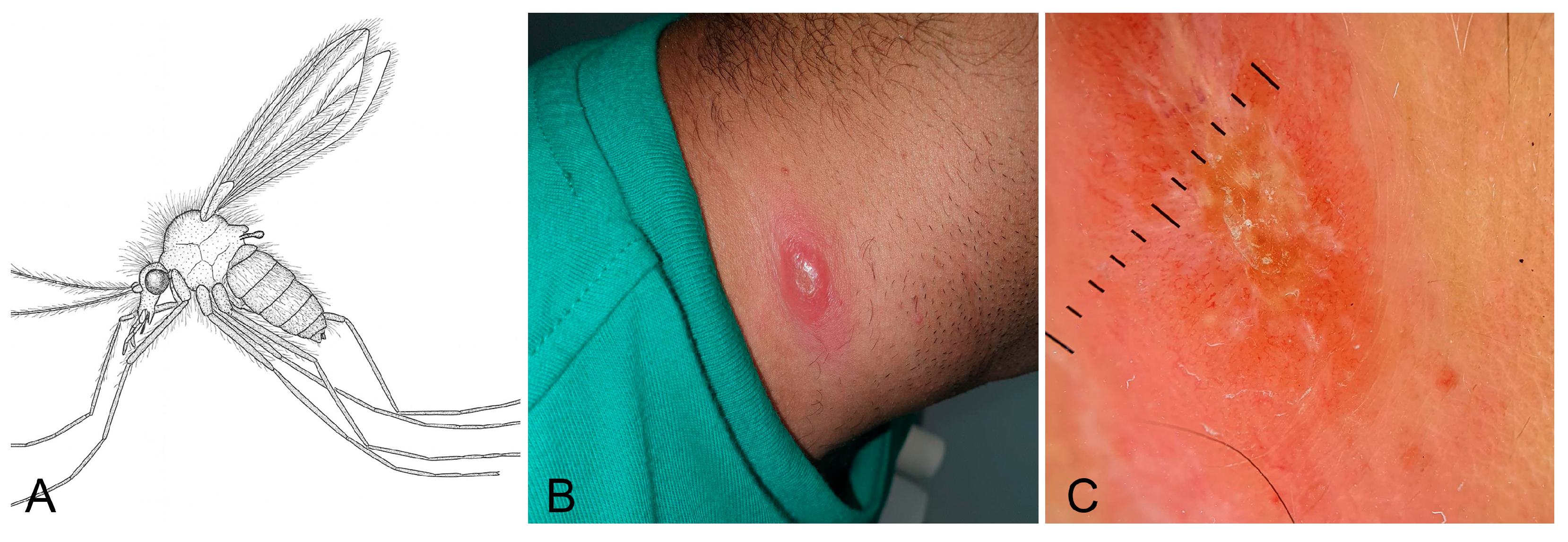
Ectoparasite- and Vector-Borne-Related Dermatoses: A Single-Centre Study with Practical Diagnostic and Management Insights in a One Health Perspective


 ,
,  , ,
, ,  ,
,  ,
,  ,
,  ,
,  ,
,  ,
,
Abstract
1. Introduction
2. Materials and Methods
3. Results
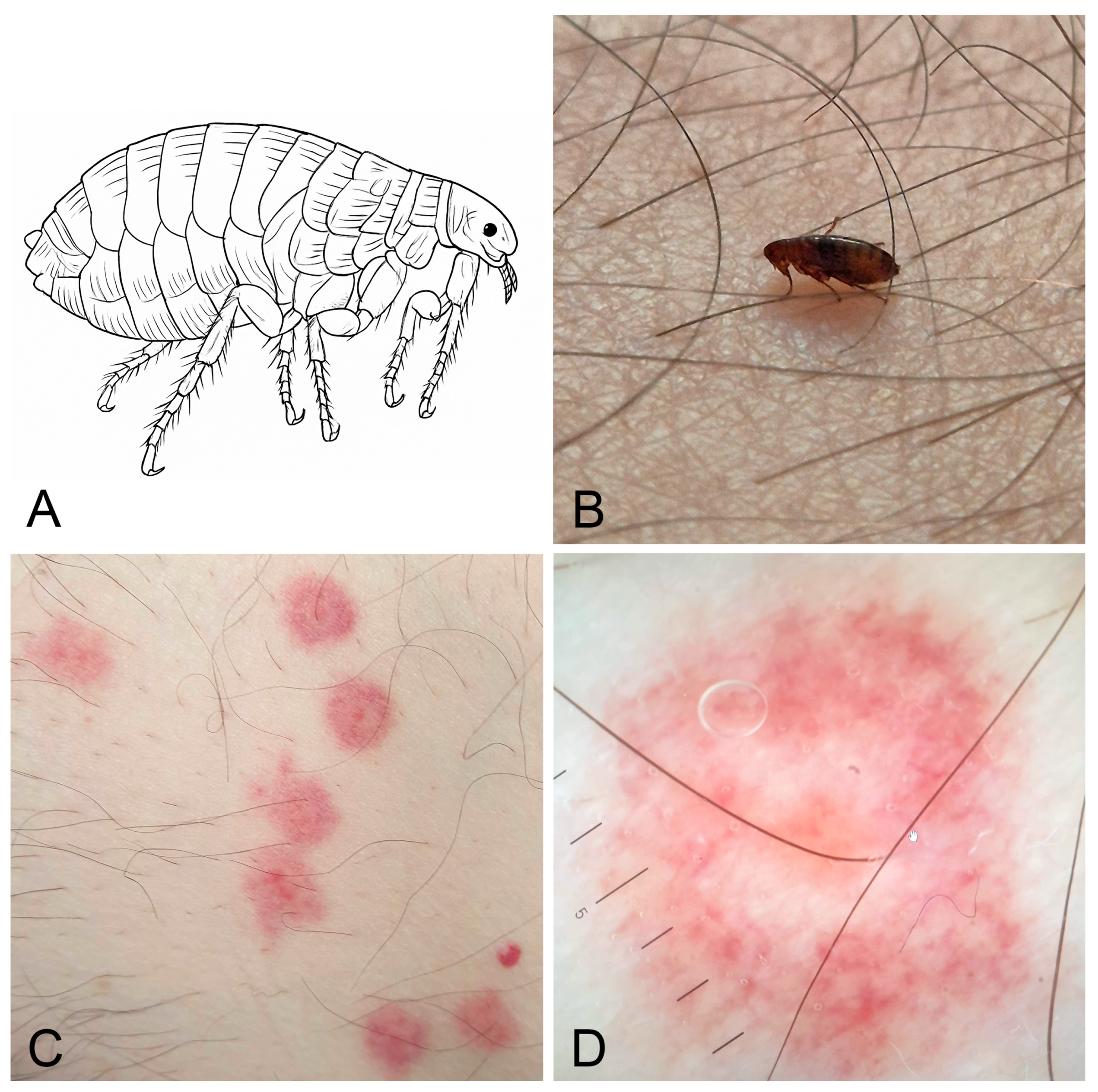
3.1. Flea Bites
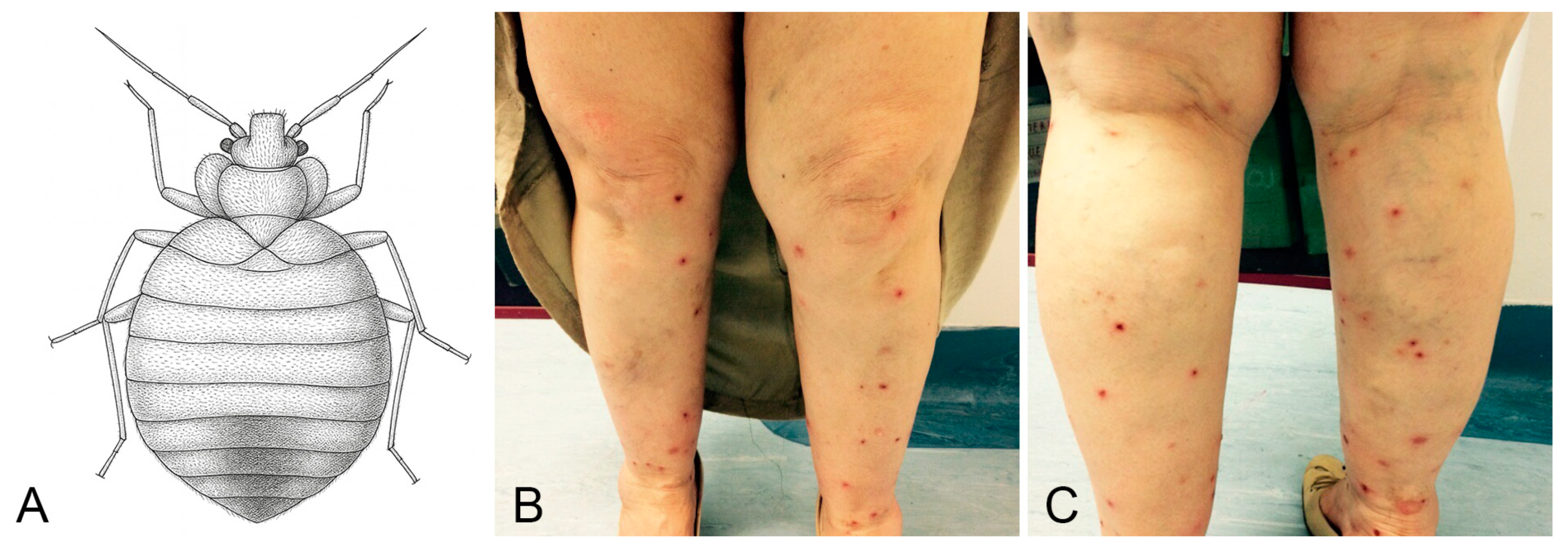
3.2. Bed Bug Bites
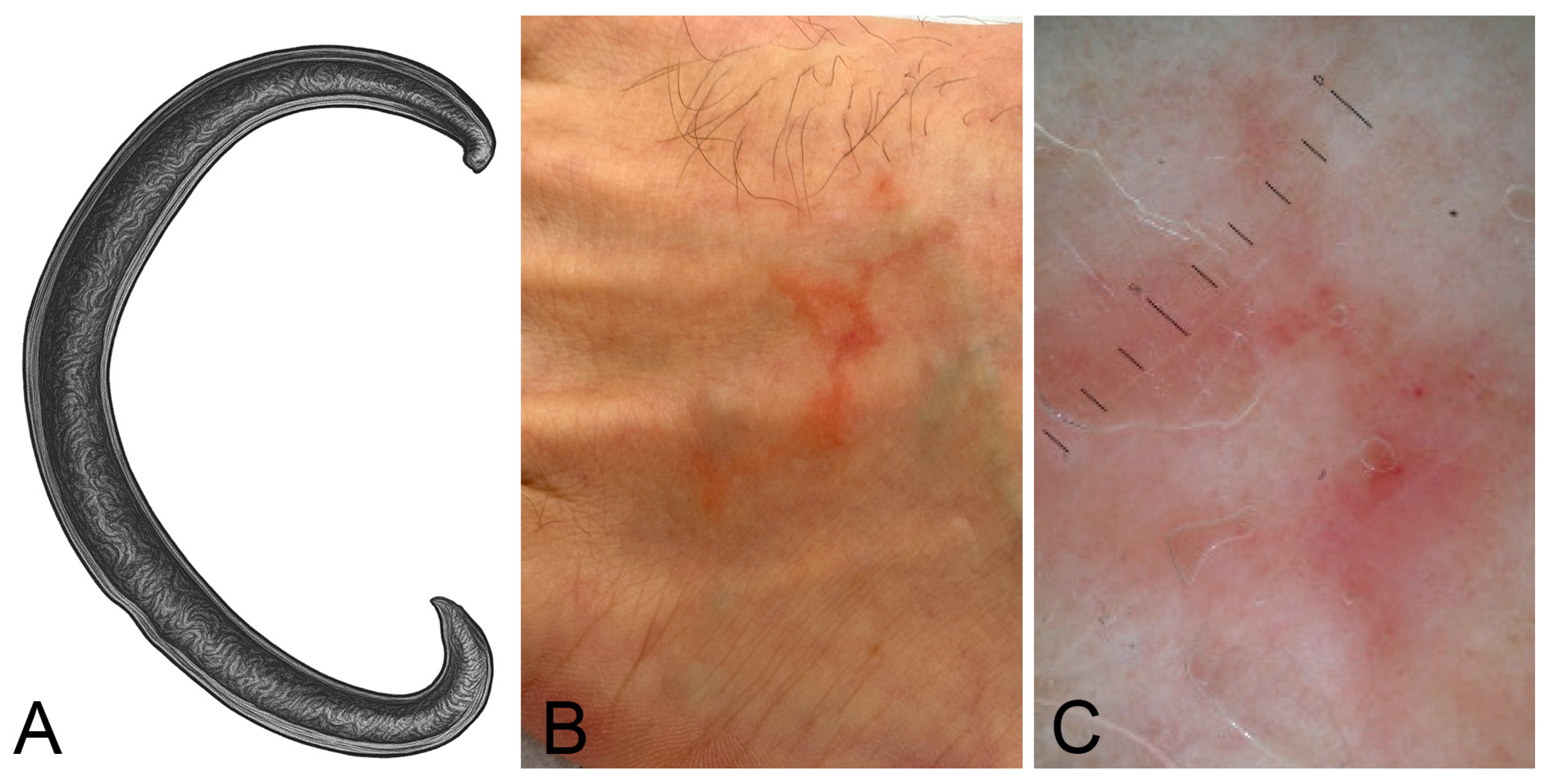
3.3. Cutaneous Larva Migrans
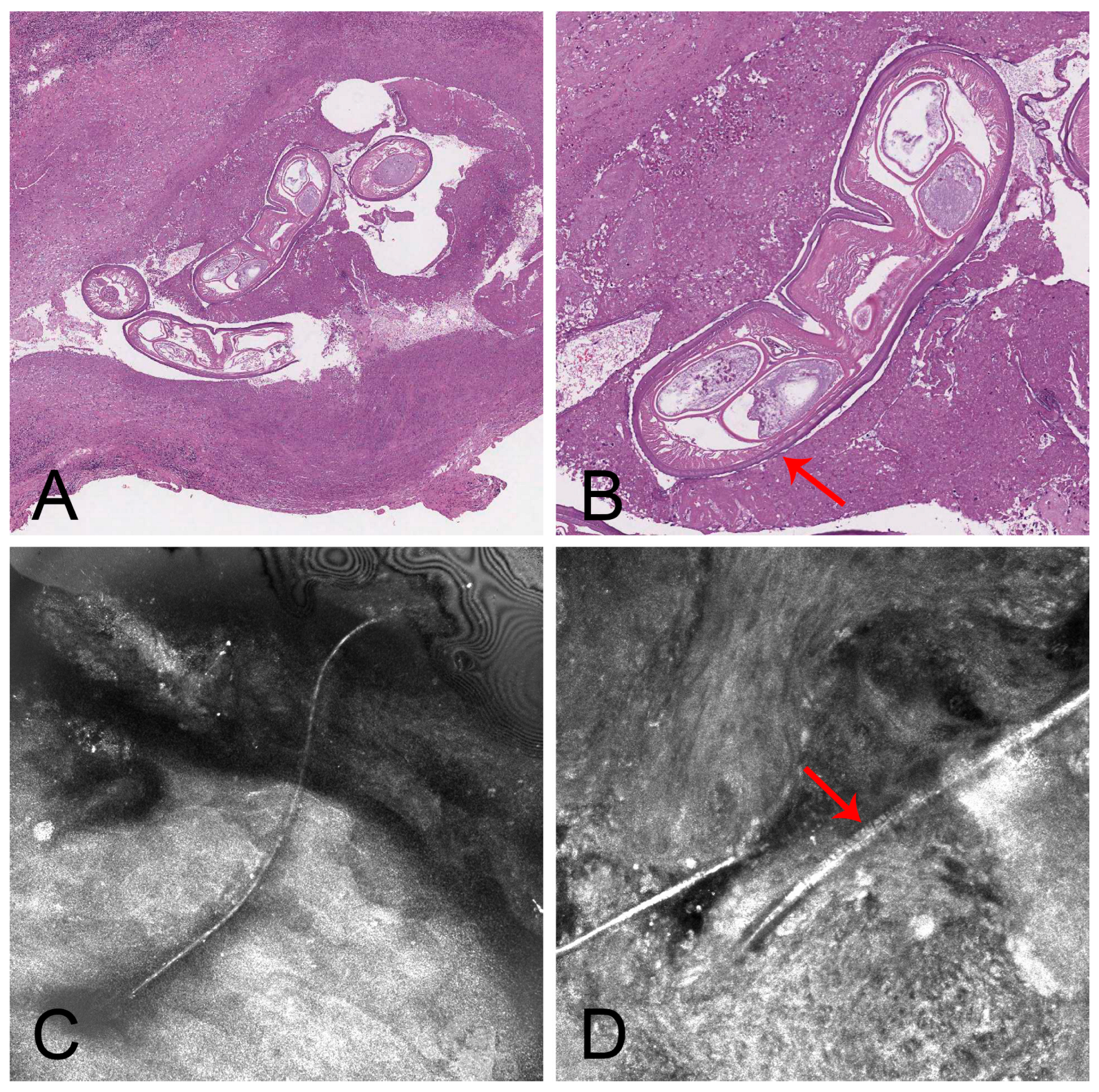
3.4. Subcutaneous Dirofilariasis
3.5. Dermanyssus gallinae Dermatitis
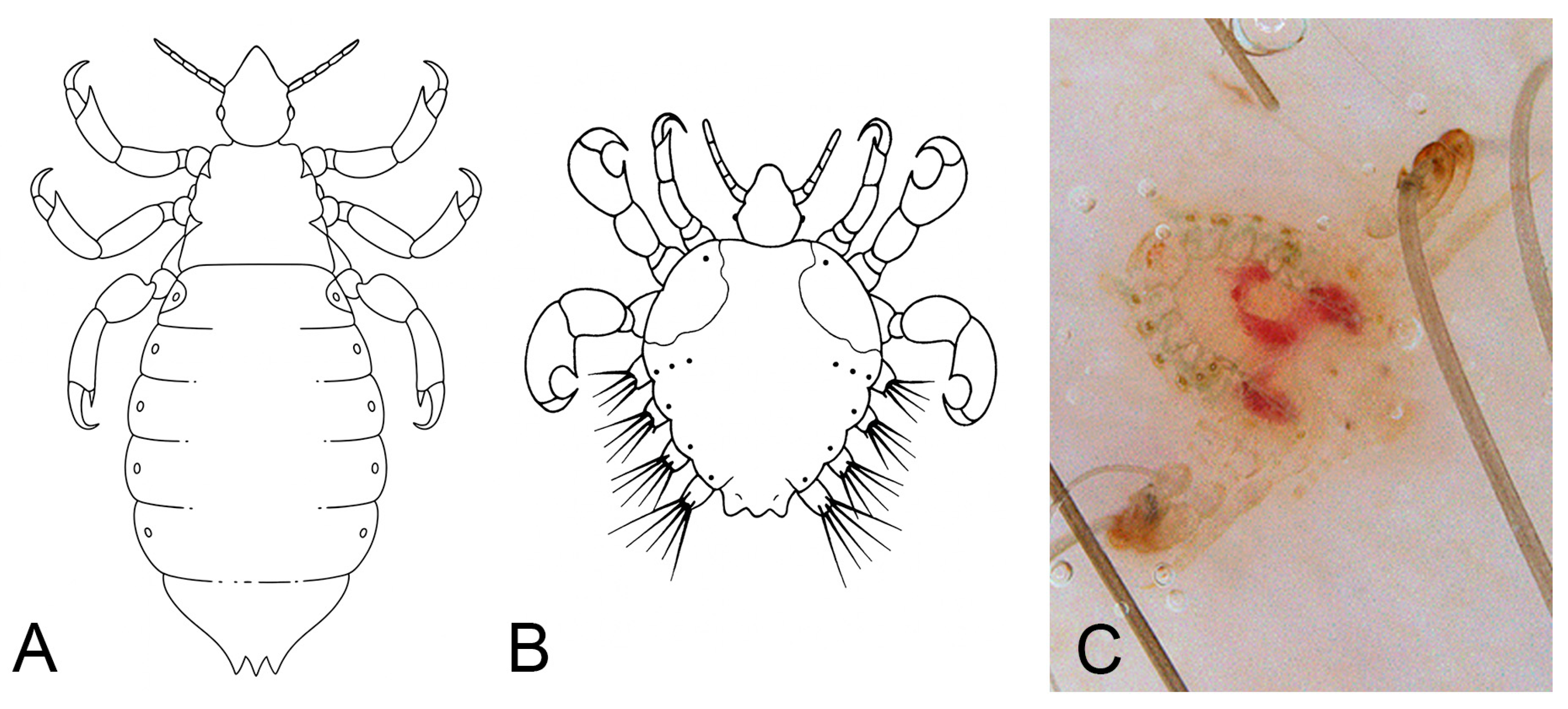
3.6. Pediculosis
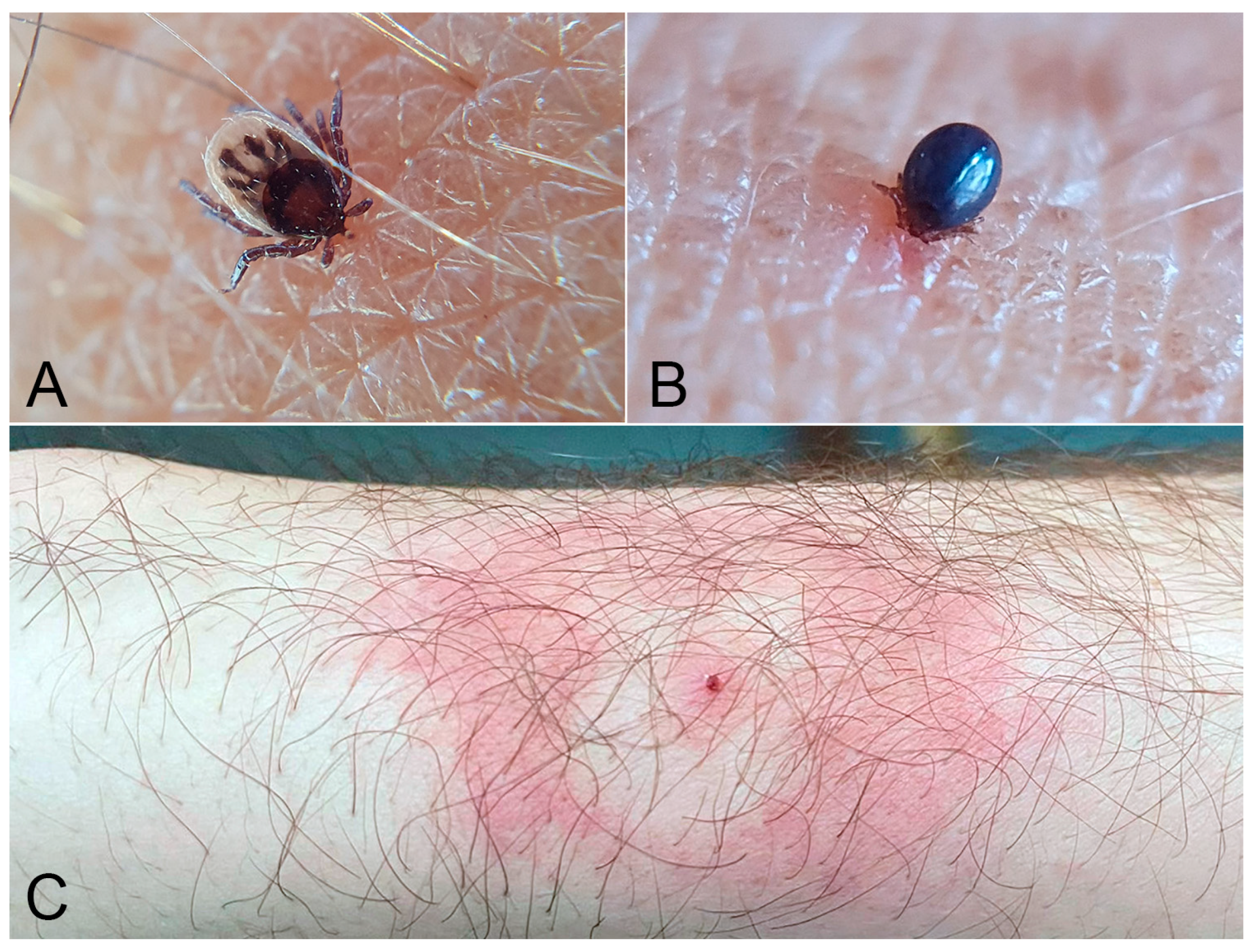
3.7. Tick Bites and Lyme Disease
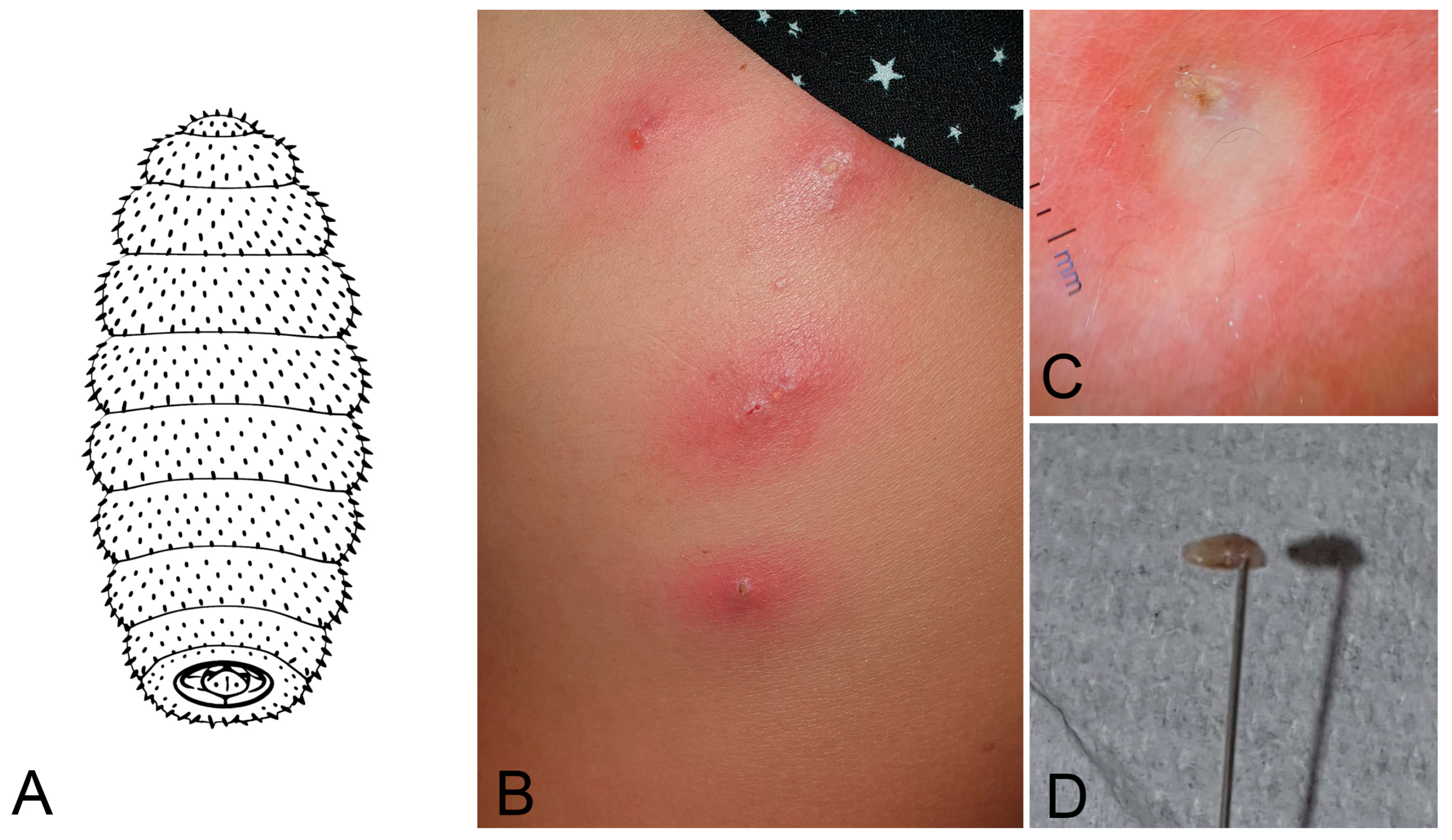
3.8. Cutaneous Myiasis
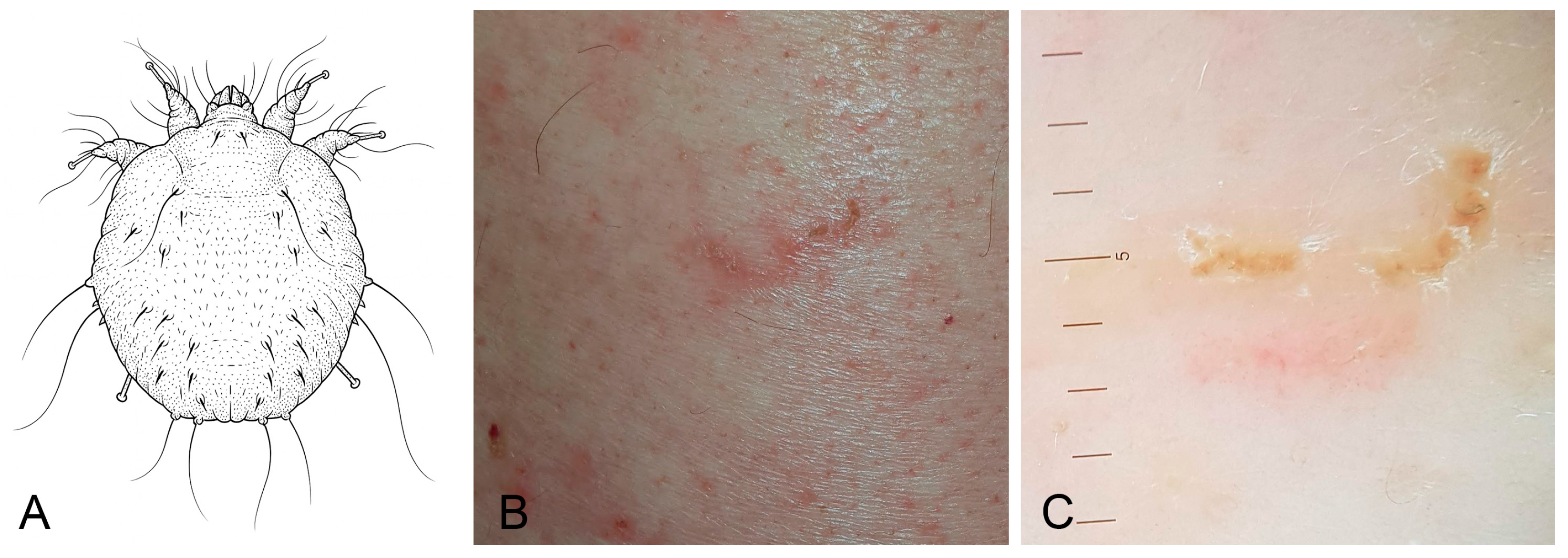
3.9. Scabies
3.10. Cutaneous Leishmaniasis
3.11. Eosinophilic Dermatosis of Haematologic Malignancy: The Role of Insect Bites
4. Discussion
5. Conclusions
Supplementary Materials
Author Contributions
Funding
Institutional Review Board Statement
Informed Consent Statement
Data Availability Statement
Conflicts of Interest
References
- Heukelbach, J.; Feldmeier, H. Ectoparasites—The Underestimated Realm. Lancet 2004, 363, 889–891. [Google Scholar] [CrossRef]
- Lipozenčić, J.; Skerlev, M.; Pašić, A. An Overview: The Changing Face of Cutaneous Infections and Infestations. Clin. Dermatol. 2002, 20, 104–108. [Google Scholar] [CrossRef] [PubMed]
- Kwak, R.; Kamal, K.; Charrow, A.; Khalifian, S. Mass Migration and Climate Change: Dermatologic Manifestations. Int. J. Womens Dermatol. 2021, 7, 98–106. [Google Scholar] [CrossRef]
- Chosidow, O. Scabies. N. Engl. J. Med. 2006, 354, 1718–1727. [Google Scholar] [CrossRef] [PubMed]
- Haddad, V., Jr.; Haddad, M.R.; Santos, M.; Cardoso, J.L.C. Skin Manifestations of Tick Bites in Humans. An. Bras. Dermatol. 2018, 93, 251–255. [Google Scholar] [CrossRef]
- Sonthalia, S.; Agrawal, M.; Bhatia, J.; Zeeshan, M.; Elsamanoudy, S.; Tiwary, P.; Bhat, Y.J.; Jha, A.; Bosseila, M. Entodermoscopy Update: A Contemporary Review on Dermoscopy of Cutaneous Infections and Infestations. Indian Dermatol. Online J. 2021, 12, 220–236. [Google Scholar] [CrossRef]
- Korzeniewski, K.; Juszczak, D.; Jerzemowski, J. Skin Lesions in Returning Travellers. Int. Marit. Health 2015, 66, 173–180. [Google Scholar] [CrossRef] [PubMed]
- Ceccarelli, G.; Branda, F.; Scarpa, F.; Albanese, M.; d’Ettorre, G.; Giovanetti, M.; Ciccozzi, M. Rethinking Scabies in Europe: An ECDC Prevention Framework Approach. Travel Med. Infect. Dis. 2025, 63, 102786. [Google Scholar] [CrossRef]
- Bari, O.; Cohen, P.R. Eosinophilic Dermatosis of Hematologic Malignancy Mimicking Varicella Zoster Infection: Report in a Woman with Chronic Lymphocytic Leukemia and Review of the Literature. Dermatol. Pract. Concept. 2017, 7, 6–15. [Google Scholar] [CrossRef]
- Michelerio, A.; Rubatto, M.; Roccuzzo, G.; Coscia, M.; Quaglino, P.; Tomasini, C. Eosinophilic Dermatosis of Hematologic Malignancy: Emerging Evidence for the Role of Insect Bites—A Retrospective Clinico-Pathological Study of 35 Cases. J. Clin. Med. 2024, 13, 2935. [Google Scholar] [CrossRef]
- Michelerio, A.; Tomasini, C.; Fiandrino, G.; De Amici, M.; Varettoni, M.; Defrancesco, I.; Cavalloni, C.; Brazzelli, V.; Derlino, F.; Paulli, M.; et al. Eosinophilic Dermatosis of Hematologic Malignancy in Patients with Chronic Lymphocytic Leukemia/Non-Hodgkin’s B Lymphoma: A Single Center Prospective Clinico-Pathological Study. Front. Med. 2023, 10, 1231003. [Google Scholar] [CrossRef] [PubMed]
- Di Palma, A.; Giangaspero, A.; Cafiero, M.A.; Germinara, G.S. A Gallery of the Key Characters to Ease Identification of Dermanyssus gallinae (Acari: Gamasida: Dermanyssidae) and Allow Differentiation from Ornithonyssus sylviarum (Acari: Gamasida: Macronyssidae). Parasit. Vectors 2012, 5, 104. [Google Scholar] [CrossRef] [PubMed]
- Campbell, J.D.; Bennett, S.; Krueger, L.; Morgan, T.; Nguyen, K.; Penicks, A.; Sun, S.; Cummings, R.; Martinez, D.; Quinn, N. Flea ‘in around: A Look at the Identification, Preservation, Clearing, and Mounting of Siphonaptera. Proc. Vertebr. Pest Conf. 2018, 28, 329–333. [Google Scholar]
- Estrada-Peña, A.; Mihalca, A.D.; Petney, T.N. (Eds.) Ticks of Europe and North Africa; Springer International Publishing: Cham, Switzerland, 2017; ISBN 978-3-319-63759-4. [Google Scholar]
- Miarinjara, A.; Raveloson, A.O.; Mugel, S.G.; An, N.; Andriamiadanarivo, A.; Rajerison, M.E.; Randremanana, R.V.; Girod, R.; Gillespie, T.R. Socio-Ecological Risk Factors Associated with Human Flea Infestations of Rural Household in Plague-Endemic Areas of Madagascar. PLoS Negl. Trop. Dis. 2024, 18, e0012036. [Google Scholar] [CrossRef]
- Anderson, J.; Saleh, H.M.; Paterek, E. Flea Bites; StatPearls Publishing: Treasure Island, FL, USA, 2025. [Google Scholar]
- Lam, A.; Yu, A. Overview of Flea Allergy Dermatitis. Compend. Contin. Educ. Vet. 2009, 31, E1–10. [Google Scholar]
- Halpert, E.; Borrero, E.; Ibañez-Pinilla, M.; Chaparro, P.; Molina, J.; Torres, M.; García, E. Prevalence of Papular Urticaria Caused by Flea Bites and Associated Factors in Children 1–6 Years of Age in Bogotá, D.C. World Allergy Organ. J. 2017, 10, 36. [Google Scholar] [CrossRef]
- Ghavami, M.B.; Haghi, F.P.; Alibabaei, Z.; Enayati, A.A.; Vatandoost, H. First Report of Target Site Insensitivity to Pyrethroids in Human Flea, Pulex irritans (Siphonaptera: Pulicidae). Pestic. Biochem. Physiol. 2018, 146, 97–105. [Google Scholar] [CrossRef]
- Davies, T.G.E.; Field, L.M.; Williamson, M.S. The Re-emergence of the Bed Bug as a Nuisance Pest: Implications of Resistance to the Pyrethroid Insecticides. Med. Vet. Entomol. 2012, 26, 241–254. [Google Scholar] [CrossRef]
- Shipman, K.E.; Weaving, G.; Shipman, A.R. Bedbugs: How to Diagnose and Manage Cases of Infestations. Clin. Exp. Dermatol. 2023, 48, 453–461. [Google Scholar] [CrossRef]
- Romero, A. Moving from the Old to the New: Insecticide Research on Bed Bugs since the Resurgence. Insects 2011, 2, 210–217. [Google Scholar] [CrossRef]
- Sałamatin, R.; Knysz, B.; Paszta, W.; Lelonek, E.; Matos, O.; Wesołowska, M. Cutaneous Larva Migrans: A One Health Perspective on Familial Infection Among Tourists Returning from Southeast Asia. Clin. Cosmet. Investig. Dermatol. 2023, 16, 3375–3382. [Google Scholar] [CrossRef] [PubMed]
- Maxfield, L.; Crane, J.S. Cutaneous Larva Migrans; StatPearls Publishing: Treasure Island, FL, USA, 2025. [Google Scholar]
- Shrestha, A.; Kusha, K.C.; Baral, A.; Shrestha, R.; Shrestha, R. Cutaneous Larva Migrans in a Child: A Case Report and Review of Literature. Ann. Med. Surg. 2024, 86, 530–534. [Google Scholar] [CrossRef]
- Genchi, C.; Rinaldi, L.; Mortarino, M.; Genchi, M.; Cringoli, G. Climate and Dirofilaria Infection in Europe. Vet. Parasitol. 2009, 163, 286–292. [Google Scholar] [CrossRef] [PubMed]
- Mendoza-Roldan, J.A.; Gabrielli, S.; Cascio, A.; Manoj, R.R.S.; Bezerra-Santos, M.A.; Benelli, G.; Brianti, E.; Latrofa, M.S.; Otranto, D. Zoonotic Dirofilaria immitis and Dirofilaria repens Infection in Humans and an Integrative Approach to the Diagnosis. Acta Trop. 2021, 223, 106083. [Google Scholar] [CrossRef]
- Momčilović, S.; Jovanović, A.; Gasser, R.B. Human Dirofilariasis—A Potentially Significant Nematode Zoonosis in an Era of Climate Change. J. Infect. 2025, 90, 106460. [Google Scholar] [CrossRef]
- Tzanetou, K.; Gasteratos, S.; Pantazopoulou, A.; Gogou, C.; Konidaris, D.; Fragia, K. Subcutaneous Dirofilariasis Caused by Dirofilaria repens in Greece: A Case Report. J. Cutan. Pathol. 2009, 36, 892–895. [Google Scholar] [CrossRef] [PubMed]
- Simón, F.; Siles-Lucas, M.; Morchón, R.; González-Miguel, J.; Mellado, I.; Carretón, E.; Montoya-Alonso, J.A. Human and Animal Dirofilariasis: The Emergence of a Zoonotic Mosaic. Clin. Microbiol. Rev. 2012, 25, 507–544. [Google Scholar] [CrossRef]
- Little, S.; Saleh, M.; Wohltjen, M.; Nagamori, Y. Prime Detection of Dirofilaria immitis: Understanding the Influence of Blocked Antigen on Heartworm Test Performance. Parasit. Vectors 2018, 11, 186. [Google Scholar] [CrossRef]
- Capelli, G.; Genchi, C.; Baneth, G.; Bourdeau, P.; Brianti, E.; Cardoso, L.; Danesi, P.; Fuehrer, H.-P.; Giannelli, A.; Ionică, A.M.; et al. Recent Advances on Dirofilaria repens in Dogs and Humans in Europe. Parasit. Vectors 2018, 11, 663. [Google Scholar] [CrossRef]
- Traversa, D.; Diakou, A.; Colombo, M.; Kumar, S.; Long, T.; Chaintoutis, S.C.; Venco, L.; Betti Miller, G.; Prichard, R. First Case of Macrocyclic Lactone-Resistant Dirofilaria immitis in Europe—Cause for Concern. Int. J. Parasitol. Drugs Drug Resist. 2024, 25, 100549. [Google Scholar] [CrossRef]
- Prichard, R.K. Macrocyclic Lactone Resistance in Dirofilaria immitis: Risks for Prevention of Heartworm Disease. Int. J. Parasitol. 2021, 51, 1121–1132. [Google Scholar] [CrossRef]
- Moroni, B.; Barlaam, A.; Misia, A.L.; Peano, A.; Rossi, L.; Giangaspero, A. Dermanyssus gallinae in Non-Avian Hosts: A Case Report in a Dog and Review of the Literature. Parasitol. Int. 2021, 84, 102378. [Google Scholar] [CrossRef] [PubMed]
- Barlaam, A.; Puccini, A.; Caiaffa, M.F.; Di Bona, D.; Macchia, L.; Giangaspero, A. Dermanyssosis in the Urban Context: When the One Health Paradigm Is Put into Practice. Pathogens 2022, 11, 1396. [Google Scholar] [CrossRef]
- George, D.R.; Finn, R.D.; Graham, K.M.; Mul, M.F.; Maurer, V.; Moro, C.V.; Sparagano, O.A. Should the Poultry Red Mite Dermanyssus gallinae Be of Wider Concern for Veterinary and Medical Science? Parasit. Vectors 2015, 8, 178. [Google Scholar] [CrossRef] [PubMed]
- Collgros, H.; Iglesias-Sancho, M.; Aldunce, M.J.; Expósito-Serrano, V.; Fischer, C.; Lamas, N.; Umbert-Millet, P. Dermanyssus gallinae (Chicken Mite): An Underdiagnosed Environmental Infestation. Clin. Exp. Dermatol. 2013, 38, 374–377. [Google Scholar] [CrossRef]
- Dogramaci, A.C.; Culha, G.; Özçelik, S. Dermanyssus gallinae Infestation: An Unusual Cause of Scalp Pruritus Treated with Permethrin Shampoo. J. Dermatol. Treat. 2010, 21, 319–321. [Google Scholar] [CrossRef]
- Bragg, B.N.; Wills, C. Pediculosis; StatPearls Publishing: Treasure Island, FL, USA, 2025. [Google Scholar]
- Powers, J.; Badri, T.; Syed, H.A. Pediculosis Corporis; StatPearls Publishing: Treasure Island, FL, USA, 2025. [Google Scholar]
- Roberts, R.; Casey, D.; Morgan, D.; Petrovic, M. Comparison of Wet Combing with Malathion for Treatment of Head Lice in the UK: A Pragmatic Randomised Controlled Trial. Lancet 2000, 356, 540–544. [Google Scholar] [CrossRef]
- Abbasi, E.; Daliri, S.; Yazdani, Z.; Mohseni, S.; Mohammadyan, G.; Seyed Hosseini, S.N.; Haghighi, R.N. Evaluation of Resistance of Human Head Lice to Pyrethroid Insecticides: A Meta-Analysis Study. Heliyon 2023, 9, e17219. [Google Scholar] [CrossRef] [PubMed]
- Sugiura, M.; Kimoto, F.; Itokawa, K.; Kasai, S. Novel CONCOMITANT Mutations L932F and I936V in the Voltage-Gated Sodium Channel and Its Association with Pyrethroid Resistance in Culex quinquefasciatus (Diptera: Culicidae). J. Med. Entomol. 2021, 58, 798–806. [Google Scholar] [CrossRef]
- Feldmeier, H. Treatment of Pediculosis Capitis: A Critical Appraisal of the Current Literature. Am. J. Clin. Dermatol. 2014, 15, 401–412. [Google Scholar] [CrossRef]
- Burn, L.; Vyse, A.; Pilz, A.; Tran, T.M.P.; Fletcher, M.A.; Angulo, F.J.; Gessner, B.D.; Moïsi, J.C.; Stark, J.H. Incidence of Lyme Borreliosis in Europe: A Systematic Review (2005–2020). Vector-Borne Zoonotic Dis. 2023, 23, 172–194. [Google Scholar] [CrossRef] [PubMed]
- Skar, G.L.; Blum, M.A.; Simonsen, K.A. Lyme Disease; StatPearls Publishing: Treasure Island, FL, USA, 2025. [Google Scholar]
- National Guideline Centre (UK). Evidence Review for the Management of Neuroborreliosis, Lyme Disease: Diagnosis and Management, Evidence Review F.; NICE Evidence Reviews Collection; National Institute for Health and Care Excellence (NICE): London, UK, 2018; ISBN 978-1-4731-2919-1. [Google Scholar]
- Giangaspero, A.; Traversa, D.; Trentini, R.; Scala, A.; Otranto, D. Traumatic Myiasis by Wohlfahrtia magnifica in Italy. Vet. Parasitol. 2011, 175, 109–112. [Google Scholar] [CrossRef]
- Francesconi, F.; Lupi, O. Myiasis. Clin. Microbiol. Rev. 2012, 25, 79–105. [Google Scholar] [CrossRef]
- Logar, J.; Šoba, B.; Parač, Z. Cutaneous Myiasis Caused by Cordylobia anthropophaga. Wien. Klin. Wochenschr. 2006, 118, 180–182. [Google Scholar] [CrossRef]
- De Rosa, C.; Podo Brunetti, A.; Guida, S.; Bigotto, G.D.; Stabile, G.; Rongioletti, F. A Case of Widespread Furuncular Cutaneous Myiasis in a Man Returning from Senegal. Ital. J. Dermatol. Venereol. 2024, 159, 592–593. [Google Scholar] [CrossRef]
- Nassar, A.; Abualiat, A.; El-Attar, Y.A.; Alkahtani, A.M.; Alshahrani, M.S.; Aljubran, A.; Shaker, E.S.E. A Dermoscopic Study of Cutaneous Myiasis: Other Findings. Int. J. Dermatol. 2021, 60, 840–843. [Google Scholar] [CrossRef] [PubMed]
- Gontijo, J.R.V.; Bittencourt, F.V. Wound Myiasis: The Role of Entodermoscopy. An. Bras. Dermatol. 2018, 93, 746–748. [Google Scholar] [CrossRef]
- Moroni, B.; Rossi, L.; Bernigaud, C.; Guillot, J. Zoonotic Episodes of Scabies: A Global Overview. Pathogens 2022, 11, 213. [Google Scholar] [CrossRef]
- Sunderkötter, C.; Wohlrab, J.; Hamm, H. Scabies: Epidemiology, Diagnosis, and Treatment. Dtsch. Ärztebl. Int. 2021, 118, 695–704. [Google Scholar] [CrossRef] [PubMed]
- El-Moamly, A.A. Scabies as a Part of the World Health Organization Roadmap for Neglected Tropical Diseases 2021–2030: What We Know and What We Need to Do for Global Control. Trop. Med. Health 2021, 49, 64. [Google Scholar] [CrossRef]
- Van Der Linden, N.; Van Gool, K.; Gardner, K.; Dickinson, H.; Agostino, J.; Regan, D.G.; Dowden, M.; Viney, R. A Systematic Review of Scabies Transmission Models and Data to Evaluate the Cost-Effectiveness of Scabies Interventions. PLoS Negl. Trop. Dis. 2019, 13, e0007182. [Google Scholar] [CrossRef] [PubMed]
- Mbuagbaw, L.; Sadeghirad, B.; Morgan, R.L.; Mertz, D.; Motaghi, S.; Ghadimi, M.; Babatunde, I.; Zani, B.; Pasumarthi, T.; Derby, M.; et al. Failure of Scabies Treatment: A Systematic Review and Meta-Analysis. Br. J. Dermatol. 2024, 190, 163–173. [Google Scholar] [CrossRef] [PubMed]
- Mounsey, K.E.; Harvey, R.J.; Currie, B.J. Drug Resistance. In Scabies; Fischer, K., Chosidow, O., Eds.; Springer International Publishing: Cham, Switzerland, 2023; pp. 397–418. ISBN 978-3-031-26069-8. [Google Scholar]
- Maia, C.; Conceição, C.; Pereira, A.; Rocha, R.; Ortuño, M.; Muñoz, C.; Jumakanova, Z.; Pérez-Cutillas, P.; Özbel, Y.; Töz, S.; et al. The Estimated Distribution of Autochthonous Leishmaniasis by Leishmania infantum in Europe in 2005–2020. PLoS Negl. Trop. Dis. 2023, 17, e0011497. [Google Scholar] [CrossRef]
- Burza, S.; Croft, S.L.; Boelaert, M. Leishmaniasis. Lancet 2018, 392, 951–970. [Google Scholar] [CrossRef]
- Aronson, N.; Herwaldt, B.L.; Libman, M.; Pearson, R.; Lopez-Velez, R.; Weina, P.; Carvalho, E.M.; Ephros, M.; Jeronimo, S.; Magill, A. Diagnosis and Treatment of Leishmaniasis: Clinical Practice Guidelines by the Infectious Diseases Society of America (IDSA) and the American Society of Tropical Medicine and Hygiene (ASTMH). Clin. Infect. Dis. 2016, 63, e202–e264. [Google Scholar] [CrossRef]
- Aronson, N.E.; Joya, C.A. Cutaneous Leishmaniasis. Infect. Dis. Clin. North Am. 2019, 33, 101–117. [Google Scholar] [CrossRef]
- De Vries, H.J.C.; Schallig, H.D. Cutaneous Leishmaniasis: A 2022 Updated Narrative Review into Diagnosis and Management Developments. Am. J. Clin. Dermatol. 2022, 23, 823–840. [Google Scholar] [CrossRef] [PubMed]
- Georgiadou, S.P.; Makaritsis, K.P.; Dalekos, G.N. Leishmaniasis Revisited: Currentaspects on Epidemiology, Diagnosisand Treatment. J. Transl. Intern. Med. 2015, 3, 43–50. [Google Scholar] [CrossRef]
- Reithinger, R.; Dujardin, J.-C.; Louzir, H.; Pirmez, C.; Alexander, B.; Brooker, S. Cutaneous Leishmaniasis. Lancet Infect. Dis. 2007, 7, 581–596. [Google Scholar] [CrossRef]
- Mann, S.; Frasca, K.; Scherrer, S.; Henao-Martínez, A.F.; Newman, S.; Ramanan, P.; Suarez, J.A. A Review of Leishmaniasis: Current Knowledge and Future Directions. Curr. Trop. Med. Rep. 2021, 8, 121–132. [Google Scholar] [CrossRef]
- Rahbari, S.; Nabian, S.; Nourolahi, F.; Arabkhazaeli, F.; Ebrahimzadeh, E. Flea Infestation in Farm Animals and Its Health Implication. Iran. J. Parasitol. 2008, 3, 43–47. [Google Scholar]
- Deak, G.; Ionică, A.M.; Péter, Á.; Sándor, A.D.; Matei, I.A.; D’Amico, G.; Liénard, E.; Gherman, C.M.; Mihalca, A.D.; Bouhsira, E. Fleas of Wild Carnivores in Romania: Diversity, Distribution, and Host-Associations. Parasit. Vectors 2024, 17, 148. [Google Scholar] [CrossRef]
- Moroni, B.; Rossi, L.; Meneguz, P.G.; Orusa, R.; Zoppi, S.; Robetto, S.; Marucco, F.; Tizzani, P. Dirofilaria immitis in Wolves Recolonizing Northern Italy: Are Wolves Competent Hosts? Parasit. Vectors 2020, 13, 482. [Google Scholar] [CrossRef]
- Cafiero, M.A.; Barlaam, A.; Camarda, A.; Radeski, M.; Mul, M.; Sparagano, O.; Giangaspero, A. Dermanysuss gallinae Attacks Humans. Mind the Gap! Avian Pathol. 2019, 48, S22–S34. [Google Scholar] [CrossRef] [PubMed]
- Tao, R.E.; Prajapati, S.; Pixley, J.N.; Grada, A.; Feldman, S.R. Oral Tetracycline-Class Drugs in Dermatology: Impact of Food Intake on Absorption and Efficacy. Antibiotics 2023, 12, 1152. [Google Scholar] [CrossRef]
- Meyer, F.P.; Specht, H.; Quednow, B.; Walther, H. Influence of Milk on the Bioavailability of Doxycycline—New Aspects. Infection 1989, 17, 245–246. [Google Scholar] [CrossRef]
- Dehecq, É.; Nzungu, P.N.; Cailliez, J.-C.; Guevart, É.; Delhaes, L.; Dei-Cas, E.; Bourel, B. Cordylobia anthropophaga (Diptera: Calliphoridae) Outside Africa: A Case of Furuncular Myiasis in a Child Returning from Congo. J. Med. Entomol. 2005, 42, 187–192. [Google Scholar] [CrossRef] [PubMed]
- Kuria, S.K.; Oyedeji, A.O. Human Myiasis Cases Originating and Reported in Africa for the Last Two Decades (1998–2018): A Review. Acta Trop. 2020, 210, 105590. [Google Scholar] [CrossRef] [PubMed]
- Grandi, V.; Maglie, R.; Antiga, E.; Vannucchi, M.; Delfino, C.; Lastrucci, I.; Gunnella, S.; Ciolli, S.; Quintarelli, L.; Massi, D.; et al. Eosinophilic Dermatosis of Hematologic Malignancy: A Retrospective Cohort of 37 Patients from an Italian Center. J. Am. Acad. Dermatol. 2019, 81, 246–249. [Google Scholar] [CrossRef]
- Jencks, A.; Kiavash, K.; Daveluy, S.; Thompson, A.D. Eosinophilic Dermatosis of Myeloproliferative Disease in a Young Adult with Diffuse Large B-Cell Lymphoma. Am. J. Dermatopathol. 2019, 41, 303–308. [Google Scholar] [CrossRef]
- Kar, B.R.; Agarwal, A. Haematologic-Related Malignancy-Induced Eosinophilic Dermatoses (He Remained): A Narrative Review. Indian J. Dermatol. 2022, 67, 206. [Google Scholar] [CrossRef]
- Lugović-Mihić, L. Scabies Cases Misdiagnosed and Treated as Allergic Diseases: Itch as Alarm. Acta Clin. Croat. 2022, 61, 349–353. [Google Scholar] [CrossRef]
- Linn, C.; O’Malley, A.; Khatri, K.; Wright, E.M.; Sebagh, D.; Grbić, M.; Kowal, K.; Chruszcz, M. Microscopic Menaces: The Impact of Mites on Human Health. Int. J. Mol. Sci. 2024, 25, 3675. [Google Scholar] [CrossRef]
- Spaziante, M.; Agresta, A.; D’Amato, M.; De Carli, G.; Tonziello, G.; Vantaggio, V.; Malatesta, G.N.; Girardi, E.; Barca, A.; Scognamiglio, P.; et al. Post-COVID-19 Resurgence of Scabies’ Cases in the Lazio Region, Italy: A New Emerging Public Health Threat? Infect. Dis. Poverty 2025, 14, 6. [Google Scholar] [CrossRef]
- Tavoletti, G.; Avallone, G.; Sechi, A.; Cinotti, E.; Veraldi, S.; Micali, G.; Lacarrubba, F.; Marzano, A.V.; Nazzaro, G. Scabies: An Updated Review from Epidemiology to Current Controversies and Future Perspectives. Travel Med. Infect. Dis. 2025, 67, 102878. [Google Scholar] [CrossRef] [PubMed]
- Facciolà, A.; Visalli, G.; D’Andrea, G.; Laganà, A.; Varvarà, M.; Spataro, P.; Di Pietro, A. The Italian Mandatory Notification System: An Important Public Health Tool for Continuous Monitoring of Infectious Diseases. New Microbiol. 2022, 45, 115–123. [Google Scholar]
- Palaniappan, V.; Gopinath, H.; Karthikeyan, K. Cutaneous Larva Migrans. Clin. Exp. Dermatol. 2025, llaf375. [Google Scholar] [CrossRef]
- Delaš Aždajić, M.; Bešlić, I.; Gašić, A.; Ferara, N.; Pedić, L.; Lugović-Mihić, L. Increased Scabies Incidence at the Beginning of the 21st Century: What Do Reports from Europe and the World Show? Life 2022, 12, 1598. [Google Scholar] [CrossRef] [PubMed]
- Yang, L.; Norris, E.J.; Jiang, S.; Bernier, U.R.; Linthicum, K.J.; Bloomquist, J.R. Reduced Effectiveness of Repellents in a Pyrethroid-resistant Strain of Aedes aegypti (Diptera: Culicidae) and Its Correlation with Olfactory Sensitivity. Pest Manag. Sci. 2020, 76, 118–124. [Google Scholar] [CrossRef] [PubMed]
- Vassena, C.V.; Cáceres, M.; Santo-Orihuela, P.L. Pyrethroid Resistance Associated with a Decreased DEET Repellency in the Common Bed Bug (Hemiptera: Cimicidae). J. Econ. Entomol. 2019, 112, 997–1000. [Google Scholar] [CrossRef]
- Norris, E.; Coats, J. Current and Future Repellent Technologies: The Potential of Spatial Repellents and Their Place in Mosquito-Borne Disease Control. Int. J. Environ. Res. Public Health 2017, 14, 124. [Google Scholar] [CrossRef]
- Perles, L.; Dantas-Torres, F.; Krücken, J.; Morchón, R.; Walochnik, J.; Otranto, D. Zoonotic Dirofilariases: One, No One, or More than One Parasite. Trends Parasitol. 2024, 40, 257–270. [Google Scholar] [CrossRef]
- Campbell, S.; Soman-Faulkner, K. Antiparasitic Drugs; StatPearls Publishing: Treasure Island, FL, USA, 2025. [Google Scholar]
- Bikowski, J. Secondarily Infected Wounds and Dermatoses: A Diagnosis and Treatment Guide. J. Emerg. Med. 1999, 17, 197–206. [Google Scholar] [CrossRef] [PubMed]
- Taddei, R.; Bregoli, A.; Galletti, G.; Carra, E.; Fiorentini, L.; Fontana, M.C.; Frasnelli, M.; Musto, C.; Pupillo, G.; Reggiani, A.; et al. Wildlife Hosts of Leishmania infantum in a Re-Emerging Focus of Human Leishmaniasis, in Emilia-Romagna, Northeast Italy. Pathogens 2022, 11, 1308. [Google Scholar] [CrossRef] [PubMed]





| Infestation Type | No. of Patients | Mean Age (Years) | Gender (M/F) | Treatment(s) | Suspected Resistance |
|---|---|---|---|---|---|
| Flea bites | 4 | 32 | 3 M/1 F | Repellents, topical corticosteroids, antihistamines, pest control | No |
| Bed bug bites | 18 | 32 | 8 M/10 F | Repellents, topical corticosteroids, antihistamines, pest control | No |
| Cutaneous larva migrans | 1 | 52 | M | Albendazole 400 mg daily × 7 days | No |
| Subcutaneous dirofilariasis | 1 | 72 | F | Surgical excision + albendazole 800 mg daily × 28 days | No |
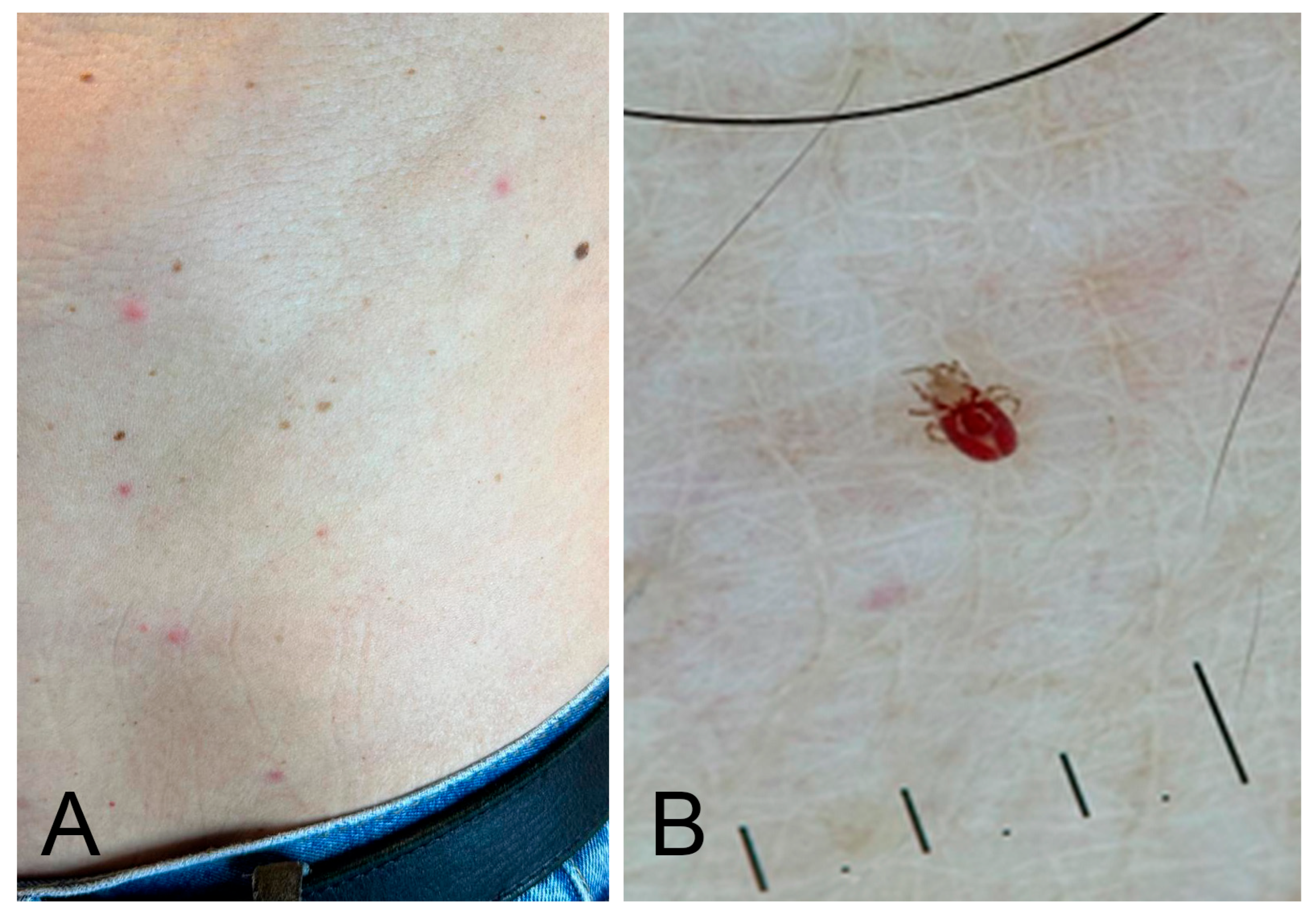
| Dermanyssus gallinae dermatitis | 1 | 70 | M | Topical treatment, pest control, management of farm and companion animals | No |
| Pediculosis | 32 | 9 | 28 F/4 M | Mechanical removal; permethrin, pyrethrins, lindane; resistant case treated with topical permethrin + oral ivermectin | Yes (n = 1, 3.1%) |
| Tick bites (incl. Lyme disease) | 25 | 46 | 18 M/7 F | Systemic antibiotics in Lyme cases (n = 7, 28% of tick bites) | No |
| Myiasis | 1 | 41 | F | Larval extraction; disinfection; systemic antibiotic prophylaxis | No |
| Scabies | 3 | 24 | 3 M | Benzyl benzoate failure → topical permethrin + oral ivermectin | Yes (100% of scabies cases, n = 3) |
| Cutaneous leishmaniasis | 1 | 30 | M | Antimonial therapy (weekly × 4 weeks) | No |
| Eosinophilic dermatosis of haematologic malignancy (EDHM) | 1 | 51 | M | Supportive/symptomatic management | N/A |
| Skin Condition (Aetiological Agent) | Epidemiology & Risk Factors | Clinical/Diagnostic Features | Suspected Resistance/Failure Reports | Standard Therapy |
|---|---|---|---|---|
| Flea bites (order Siphonaptera, different genera involved). | Common worldwide, esp. warm/humid areas; zoonotic, frequent with domestic animals/rodents/livestock [15,16,17,18]. | Grouped erythematous papules with central punctum; dermoscopy: annular ecchymotic macules. Typical distribution on lower limbs or other exposed areas. In sensitised individuals, lesions may evolve into papular urticaria or flea allergy dermatitis; scratching may lead to secondary bacterial infection [15,16,17,18]. | Documented resistance against pyrethroids in humans and animals [19]. | Symptomatic: corticosteroids, antihistamines; treat animals + environment disinfestation. Topical or systemic antibiotics may be required if superinfection occurs [17,18]. |
| Bed bug dermatitis (Cimex lectularius and C. hemipterus). | Resurgence since 1990s; linked to travel + insecticide resistance. Infestations affect hotels, dormitories and hospitals, regardless of hygiene [20,21,22]. | Linear papules (breakfast–lunch–dinner sign); clinical diagnosis + environmental inspection. Reactions may be associated with anaemia, sleep disturbances and psychological distress [21,22]. | Increasing pyrethroid resistance worldwide [20,21,22]. | Symptomatic therapy + integrated pest control. Integrated strategies include laundering, vacuuming, extreme temperatures and insecticides [21,22]. |
| Cutaneous larva migrans (CLM; Ancylostoma braziliense). | Frequent in tropics; imported in Europe. Most commonly caused by Ancylostoma braziliense; transmitted through contact with contaminated soil or sand [23,24]. | Serpiginous, pruritic erythematous tracks; dermoscopy: whitish tracks. Lesions usually self-limited but intensely pruritic [24]. | No resistance reported. | Albendazole, ivermectin; mebendazole [24,25]. |
| Dirofilariasis (Dirofilaria repens, D. immitis). | Endemic in Europe; zoonotic, climate-related. Human infection typically caused by Dirofilaria repens, rarely D. immitis. Transmission via mosquito bites [26,27,28,29,30]. | Subcutaneous nodules; histology confirms. Occasional involvement of ocular, pulmonary or CNS sites has been reported [28,29,30,31,32]. | Resistance to macrocyclic lactones has been described in dogs [33,34]. | Surgical excision; albendazole in selected cases. Antiparasitic therapy may be considered in cases of incomplete excision or suspected persistence [28,29,30]. |
| Dermanyssus gallinae dermatitis. | Avian mite also known as the red poultry mite; zoonotic, linked to pigeons/bird nests and poultry; underdiagnosed. Infestations may spread indoors when birds are absent, or in housing close to backyard poultry farms [35,36,37,38,39]. | Pruritic maculo-papular/vesicular lesions, often misdiagnosed as scabies. Lesions often involve trunk and nuchal region; mites can be identified microscopically [36,37]. | Not relevant (no systemic drugs). | Source eradication with removal of bird nests from the building to prevent mite migration indoors; cleaning, targeted acaricide treatment applied to cracks, crevices of the walls; hot water washing of bedding; antihistamines, corticosteroids [37,38]. |
| Human pediculosis (Pediculus humanus capitis, Pediculus humanus corporis, Pthirus pubis). | Head lice (Pediculus humanus capitis) are common in children; body lice (Pediculus humanus corporis) are more frequent in people living in crowded conditions or with poor hygiene; pubic lice (Pthirus pubis) are sexually transmitted. Body lice are known vectors of epidemic typhus and trench fever [40,41]. | Scalp pruritus, excoriations, lymphadenopathy; dermoscopy aids species ID. Pubic lice infestation of eyelashes may be diagnosed dermoscopically [40,42]. | Global pyrethroid resistance ~60%, up to 82% post-2015 [43,44]. | Combing; permethrin, pyrethrins, malathion; ivermectin/dimethicone in resistant cases. Occlusive agents such as petroleum jelly may be used for eyelashes [42,45]. |
| Lyme disease (Borrelia burgdorferi). | Endemic in Europe, N. America, Asia. Ixodes spp. ticks transmit Borrelia burgdorferi sensu lato complex. Zoonotic [46,47]. | Erythema migrans hallmark; clinical + serology. Disease may progress to neurologic, cardiac and arthritic involvement [47]. | Antibiotic-refractory arthritis possible [48]. | Doxycycline or Amoxicillin; ceftriaxone for severe neuro/cardiac cases. Prolonged antibiotics not recommended in refractory arthritis; immunomodulatory strategies may be considered [47,48]. |
| Myiasis (main agents: Dermatobia hominis, Cordylobia anthropophaga, Lucilia spp., Wohlfahrtia magnifica). | Associated with international travel; autochthonous cases are rare in Europe, except for Wohlfahrtia, which causes common myiasis in animals [49]. Caused by larvae of various Diptera species (Dermatobia hominis, Cordylobia, Lucilia, Wohlfahrtia). Zoonotic [50,51,52,53,54]. | Furuncular nodules with central pore; dermoscopy shows larvae. Other forms include migratory or wound-associated lesions [52,53,54]. | No resistance data. | Larval removal (occlusion/extraction); ivermectin if extensive. Manual extraction should avoid larval rupture to prevent granuloma formation [53,54]. |
| Scabies (Sarcoptes scabiei var. hominis). | Affects > 130 M globally; WHO neglected tropical disease. Transmission occurs primarily through close skin-to-skin contact; fomite transmission possible. Rarely zoonotic [55,56,57]. | Pruritus, burrows, papules; dermoscopy shows mites/burrows. Secondary bacterial infection is common, particularly in children, immunocompromised and elderly patients [56,58]. | Treatment failure 15.2% overall; benzyl benzoate 25.3%, crotamiton 27.7%; rising permethrin/ivermectin failures. Resistance remains difficult to quantify due to lack of standardised susceptibility testing [59]. | Permethrin, ivermectin; alternatives: benzyl benzoate, crotamiton; combos in resistant cases. Two doses of ivermectin reduce failure rate compared to a single dose [59,60]. |
| Cutaneous leishmaniasis (Leishmania infantum). | 600 k–1 M new cases/year; endemic in dogs in Southern Europe. Transmission via female sandflies (Phlebotomus in Old World, Lutzomyia in New World); zoonotic [61,62,63,64,65,66,67]. | Papules, nodules, ulcers; dermoscopy: yellow tears, vascular structures. Lesions may be ulcerative, verrucous, eczematous or nodular depending on species and host response [62,64]. | Antimonial resistance rising in India/Middle East [68]. | Antimonials, amphotericin B, miltefosine, cryotherapy. Cryotherapy is an alternative for selected cases [61,62,63,68]. |
Disclaimer/Publisher’s Note: The statements, opinions and data contained in all publications are solely those of the individual author(s) and contributor(s) and not of MDPI and/or the editor(s). MDPI and/or the editor(s) disclaim responsibility for any injury to people or property resulting from any ideas, methods, instructions or products referred to in the content. |
© 2026 by the authors. Licensee MDPI, Basel, Switzerland. This article is an open access article distributed under the terms and conditions of the Creative Commons Attribution (CC BY) license.
Share and Cite
Paolino, G.; Moroni, B.; Podo Brunetti, A.; Cerullo, A.; Mattozzi, C.; Gaiera, G.; Cirami, M.; Zilio, D.; Valenti, M.; Carugno, A.; et al. Ectoparasite- and Vector-Borne-Related Dermatoses: A Single-Centre Study with Practical Diagnostic and Management Insights in a One Health Perspective. J. Clin. Med. 2026, 15, 851. https://doi.org/10.3390/jcm15020851
Paolino G, Moroni B, Podo Brunetti A, Cerullo A, Mattozzi C, Gaiera G, Cirami M, Zilio D, Valenti M, Carugno A, et al. Ectoparasite- and Vector-Borne-Related Dermatoses: A Single-Centre Study with Practical Diagnostic and Management Insights in a One Health Perspective. Journal of Clinical Medicine. 2026; 15(2):851. https://doi.org/10.3390/jcm15020851
Chicago/Turabian StylePaolino, Giovanni, Barbara Moroni, Antonio Podo Brunetti, Anna Cerullo, Carlo Mattozzi, Giovanni Gaiera, Manuela Cirami, Dino Zilio, Mario Valenti, Andrea Carugno, and et al. 2026. "Ectoparasite- and Vector-Borne-Related Dermatoses: A Single-Centre Study with Practical Diagnostic and Management Insights in a One Health Perspective" Journal of Clinical Medicine 15, no. 2: 851. https://doi.org/10.3390/jcm15020851
APA StylePaolino, G., Moroni, B., Podo Brunetti, A., Cerullo, A., Mattozzi, C., Gaiera, G., Cirami, M., Zilio, D., Valenti, M., Carugno, A., Esposito, G., Zerbinati, N., Cantisani, C., Rongioletti, F., Mercuri, S. R., & Di Nicola, M. R. (2026). Ectoparasite- and Vector-Borne-Related Dermatoses: A Single-Centre Study with Practical Diagnostic and Management Insights in a One Health Perspective. Journal of Clinical Medicine, 15(2), 851. https://doi.org/10.3390/jcm15020851