1. Introduction
Inflammatory bowel disease (IBD) is a group of chronic gastrointestinal disorders characterized by periods of exacerbation and remission that include Crohn’s disease (CD), ulcerative colitis (UC), and IBD-unclassified (IBD-U) [
1]. The incidence of IBD, particularly CD and UC, is steadily increasing in both children and adults worldwide [
2,
3,
4,
5,
6].
IBD is often diagnosed at a young age, and in pediatric patients four subgroups are distinguished based on age at onset: adolescent-onset (10–18 years), early-onset (6–9 years), very early-onset (VEO-IBD, <6 years), and infantile-onset (<2 years) [
7,
8,
9]. Pediatric IBD (pIBD) generally exhibits faster progression, greater extent of intestinal involvement, and more complex phenotypes compared to adult-onset IBD [
1,
10,
11,
12]. The disease is driven by genetic, microbial, immunological, and environmental factors, along with their interactions [
2,
13,
14,
15]. A positive family history is also a major risk factor in pIBD [
8].
The clinical presentation of IBD depends on the location and extent of lesions [
2,
13]. In CD, inflammation most often affects the ileocolonic region, though it may occur throughout the gastrointestinal tract [
8,
16]. Transmural inflammation leads to destruction of the intestinal wall, fibrosis, and formation of strictures and fistulas [
6,
17,
18]. UC, in contrast, involves continuous superficial inflammation spreading proximally from the rectum [
8,
19]. Three forms are distinguished—proctitis, left-sided colitis, and pancolitis—depending on disease extent. Clinically, UC patients experience rectal bleeding, tenesmus, and urgency [
8,
19]. Disease activity is typically assessed using fecal calprotectin and pediatric scoring systems: the Pediatric Crohn’s Disease Activity Index (PCDAI) and the Pediatric Ulcerative Colitis Activity Index (PUCAI) [
20,
21]. Calprotectin, a calcium-binding protein constituting nearly 45% of neutrophil cytoplasmic content, reflects the severity of mucosal inflammation [
22].
Fibrosis is a frequent consequence of chronic intestinal inflammation [
7,
23,
24]. Approximately 30–50% of CD and 1–12% of UC patients develop fibrosis-related complications [
25,
26,
27,
28], which negatively affect disease course and quality of life [
29,
30]. Strictures are classified as inflammatory (potentially reversible, responsive to anti-TNF-α therapy) or fibrotic (requiring endoscopic or surgical intervention) [
31,
32]. In CD, fibrotic strictures are often irreversible and recur even after resection [
24,
33]. Disease progression can follow non-stricturing (B1), penetrating (B2), or stricturing (B3) behavior [
34,
35], with most patients eventually developing structural complications [
36,
37,
38,
39]. In UC, fibrosis is typically limited to the mucosa and submucosa, although severe cases may exhibit deeper wall involvement and impaired motility [
25,
40,
41,
42].
A key mechanism underlying tissue remodeling in chronic inflammation is epithelial–mesenchymal transition (EMT), during which epithelial cells lose polarity and adhesion and acquire mesenchymal characteristics such as motility, invasiveness, and extracellular matrix (ECM) production [
43,
44]. EMT is regulated by transcription factors including SNAIL, SLUG, TWIST, ZEB1, and ZEB2, which repress epithelial markers (e.g., E-cadherin) while promoting mesenchymal proteins (e.g., vimentin, N-cadherin). This process is modulated by TGF-β, Wnt, Notch, and Hedgehog signaling and can be induced by hypoxia and inflammatory cytokines [
45,
46].
In IBD, overexpression of EMT-related transcription factors such as SNAIL and SLUG has been observed in damaged intestinal crypts, extending to mesothelial and subserosal fibroblasts, particularly in fibrotic areas [
47]. Increased TGF-β1 expression and nuclear accumulation of SLUG in fibrotic regions have been reported, accompanied by β-catenin activation and fibroblast proliferation [
48], while TGF-β1 was shown to induce SLUG-dependent L1CAM upregulation and epithelial motility [
49]. In Crohn’s disease-associated fistulae, SLUG expression is predominantly localized to peripheral fibrotic regions, suggesting its involvement in stromal remodeling [
50].
Periostin, an extracellular matrix protein encoded by the
POSTN gene, regulates cell–matrix adhesion, proliferation, and differentiation through interactions with integrins [
51,
52,
53]. Initially identified in bone tissue [
54,
55], periostin is now known to participate in diverse physiological and pathological processes including skin and cardiac remodeling [
51,
56,
57,
58,
59], bronchial fibrosis in asthma [
60], and bone marrow fibrosis [
61]. Recent studies suggest that periostin may also contribute to intestinal fibrosis in IBD [
62,
63].
Periostin expression is often linked with EMT-related transcription factors, particularly SLUG, in fibrotic and neoplastic tissues. For example, periostin enhances EMT through the ILK–Akt–SLUG pathway in endometrial epithelial cells [
64], while co-expression of periostin and SLUG has been observed in nasopharyngeal carcinoma [
65] and in epicardium-derived cells during cardiac fibrosis [
66]. Importantly, periostin is recognized as a key mediator of inflammatory and fibrotic remodeling across various organs [
53], suggesting it may play a similar role in IBD.
Considering these findings, our study aimed to analyze the expression of periostin, SLUG, and TGF-β in the intestinal tissues of pediatric IBD patients and to assess potential correlations between these molecular markers and clinical disease activity.
2. Materials and Methods
2.1. Materials
The material for the experiments consisted of collected and archived tissue biopsy fragments from the mucosa of the ileum and colon, obtained during colonoscopy, fixed in formalin, and then preserved in paraffin blocks. Additionally, the biopsy specimens were preserved in RNAlater solution for later molecular analyses.
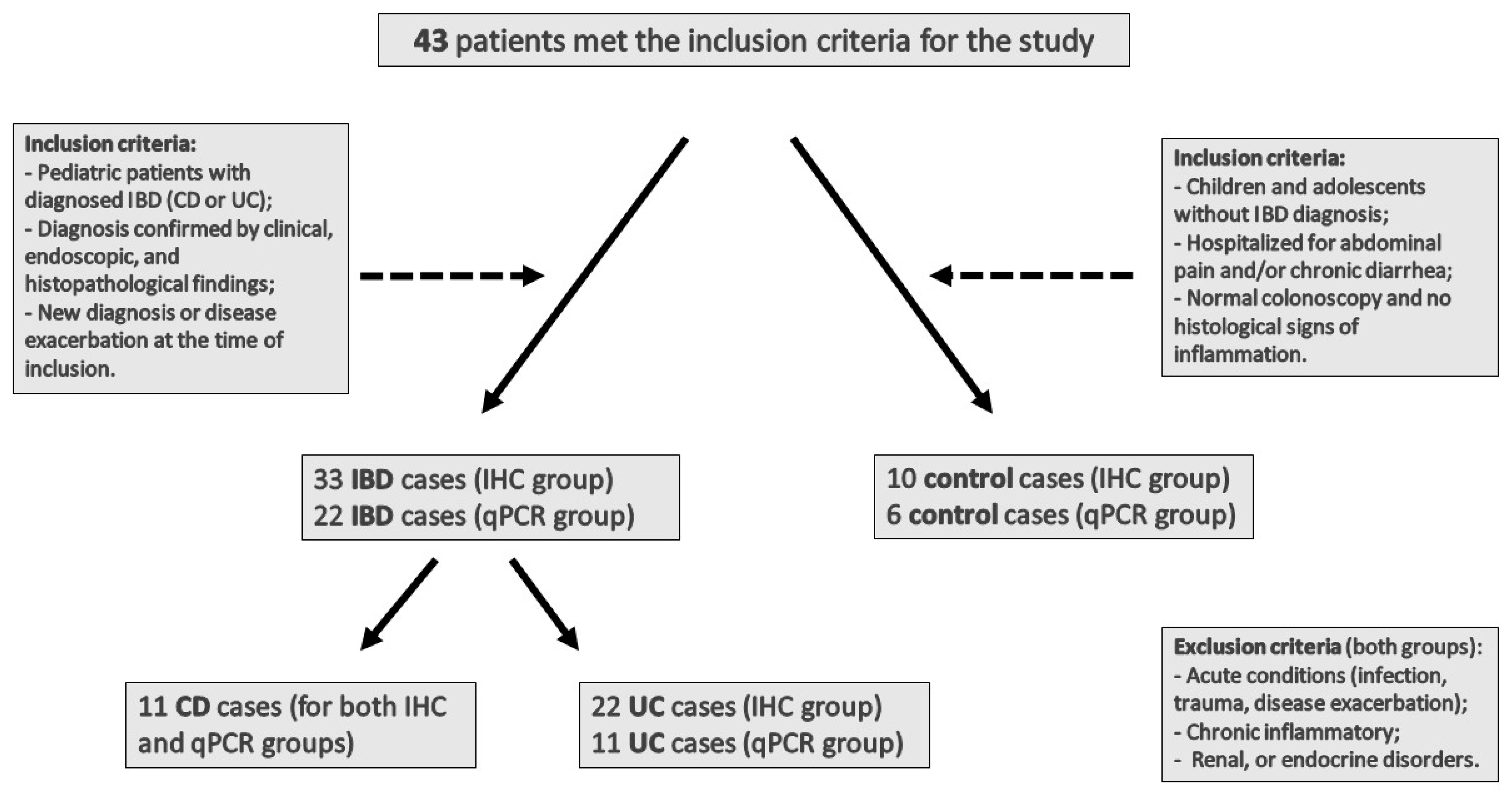
In our study, we analyzed the immunohistochemical expression of periostin, TGF-β, and SLUG in 33 pediatric patients hospitalized at the Department of Gastroenterology, Allergology, and Pediatrics at the Polish Mother’s Health Center Institute in Łódź with diagnosed IBD, including 11 Crohn’s disease (CD) and 22 ulcerative colitis (UC) cases. Diagnosis of IBD, CD, or UC was based on clinical, endoscopic, and histopathological criteria, and disease activity was assessed using the PCDAI (for CD) and PUCAI (for UC) scales. All biopsies were collected during active disease. The control group consisted of 10 children without IBD in whom organic gastrointestinal disease was excluded. These children were hospitalized for abdominal pain and/or chronic diarrhea, but during colonoscopy no macroscopic abnormalities were observed, and histological evaluation of biopsies from the cecum, transverse colon, sigmoid colon, or rectum showed no features of IBD. Inclusion criteria for patients with IBD included newly diagnosed disease or clinical features of exacerbation, while exclusion criteria for all participants included: acute conditions (trauma, infection, exacerbation of chronic disease), chronic inflammatory diseases, chronic kidney diseases, and endocrine disorders. Biopsies from representative sites (terminal ileum, cecum, transverse colon, and sigmoid colon or rectum) were collected for immunohistochemical and molecular analyses. In some cases, biopsies from sections showing the most severe macroscopic changes were used. For molecular testing by real-time PCR, biopsies from 22 pIBD patients and 6 controls were used.
Demographic and clinical data of participants, including age, sex, and relevant clinical parameters, are summarized in
Table 1 and
Table 2. No demographic or other clinical factors were used to determine eligibility for participation in the study. The study was approved by the Ethics Committee at the Polish Mother’s Health Center Institute, No. 79/2019, dated 18 June 2019. All parents and children ≥ 16 years old provided written informed consent prior to participation. Detailed information regarding patient numbers, group composition, and inclusion/exclusion criteria is presented in
Figure 1.
2.2. Immunohistochemistry (IHC)
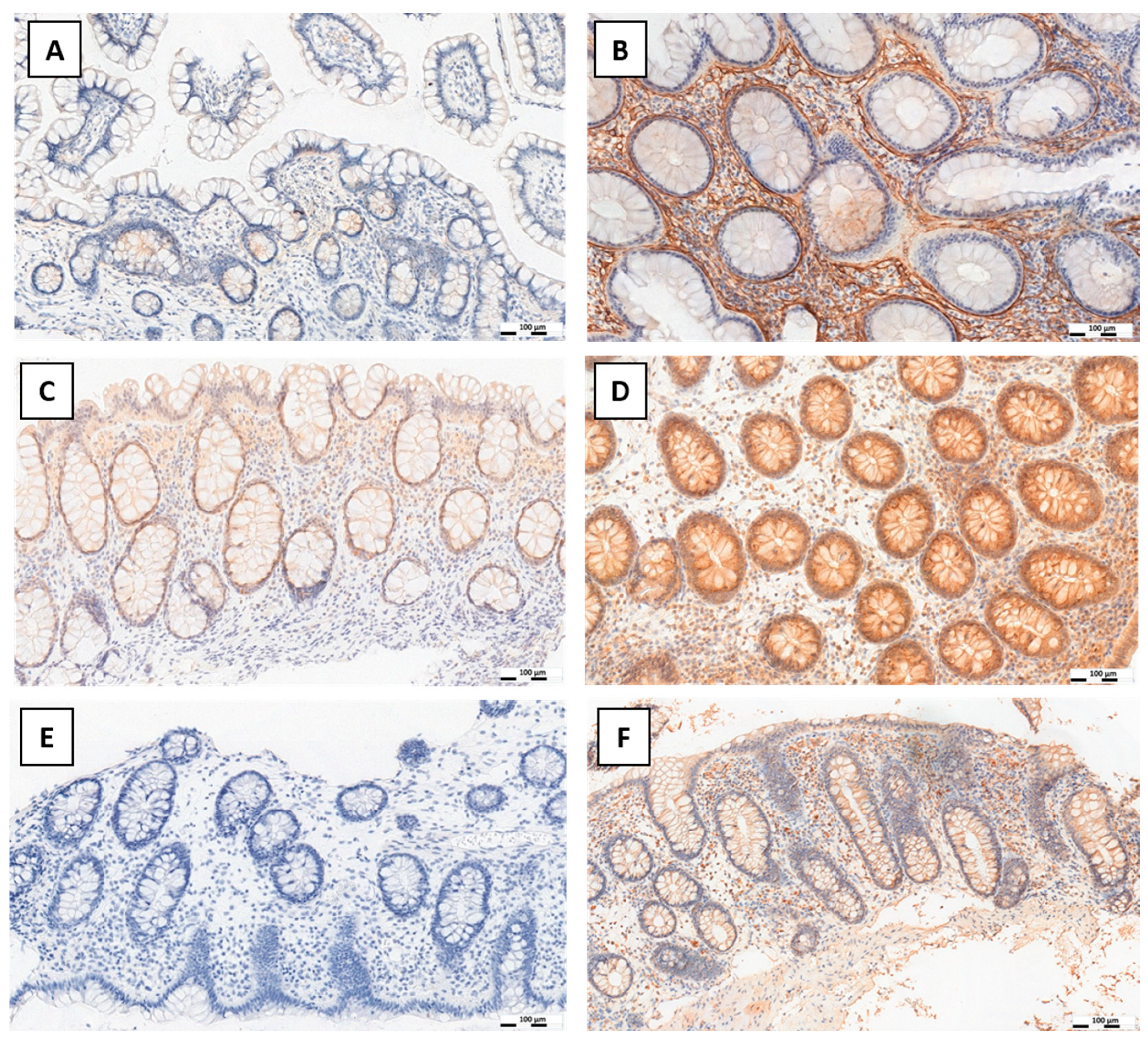
IHC were performed on 4 µm thick paraffin sections using Autostainer Link48 (Agilent, Santa Clara, CA, USA). Deparaffinization, rehydration, and epitope retrieval procedures were performed in EnVision FLEX Target Retrieval Solution (Agilent) (97 °C, 20 min; pH 9) using PTLink (Agilent). Activity of endogenous peroxidase was blocked using EnVision FLEX Peroxidase-Blocking Reagent (5 min; RT, Agilent). The following primary antibodies were applied for 20 min at RT: periostin (1:100, NBP1–82472, Novus Biologicals, Littleton, CO, USA), TGF-β1 (1:100, NBP2–22114, Novus Biologicals), and SLUG (1:50, sc-166476, Santa Cruz Biotechnology, Dallas, TX, USA). Next, the sections were incubated with secondary antibodies conjugated with horseradish peroxidase (EnVision FLEX/HRP, 20 min at RT) (Agilent). The reactions were visualized using freshly prepared DAB (diaminobenzidine), with incubation for 10 min at RT. Additionally, all the slides were counterstained with FLEX Hematoxylin (Agilent) for 5 min at RT and dehydrated in graded ethanol concentrations (70%, 96%, 99.8%) and then xylene. Finally, the slides were mounted in Mounting Medium (Agilent). All antibodies were diluted in Antibody Diluent (Agilent). Positive controls for the antibodies were performed using tissues recommended by the manufacturers, according to the provided protocols: breast carcinoma for anti-periostin and anti-SLUG antibodies, and lymph node for the anti-TGF-β antibody. The negative control consisted of reactions performed without primary antibodies.
2.3. RNA Isolation, cDNA Synthesis, and qPCR
Total RNA was extracted using the RNeasy Mini Kit (Qiagen, Hilden, Germany), following the manufacturer’s instructions. RNA was reverse-transcribed into cDNA using the High Capacity cDNA Reverse Transcription Kit (Applied Biosystems, Foster City, CA, USA). Quantitative real-time PCR (RT-qPCR) reactions were performed in 20 µL volumes using the TaqMan Universal PCR Master Mix (Applied Biosystems) and run on a 7900HT Fast Real-Time PCR System (Applied Biosystems). The following TaqMan Gene Expression Assays were used: TGF-β1–Hs07289533_m1, POSTN–Hs01566750_m1, SNAI2 (SLUG)–Hs00161904_m1, and ACTB–Hs99999903_m1 as a reference gene. Thermal cycling conditions were 50 °C for 2 min (polymerase activation), 94 °C for 10 min (initial denaturation), followed by 40 cycles of 94 °C for 15 s (denaturation) and 60 °C for 1 min (annealing/extension). Each reaction was performed in triplicate. Relative gene expression was calculated using the 2−ΔΔCT method, normalized to ACTB expression. Water was used as a no-template control (NTC) for the selected primers in the RT-PCR reactions to confirm the absence of contamination and non-specific amplification.
2.4. Histological Analysis
Positive cytoplasmic IHC reactions for periostin, SLUG, and TGF-β antigens were evaluated using the immunoreactive score (IRS) proposed by Remmele and Stegner [
67]. This method takes into account two parameters: the percentage of positively stained cells (A) and the staining intensity (B). The final score was calculated as the product of these two values (A × B). Detailed criteria are presented in
Table 3. According to the IRS scale, a reaction was considered positive when at least 1% of the cells in the specimen exhibited weak staining. In addition, the nuclear expression of the SLUG protein was assessed using a semi-quantitative scoring system based on the proportion of tumor cells showing positive nuclear staining: 0%—0 points; 1–10%—1 point; 11–25%—2 points; 26–50%—3 points; and 51–100%—4 points. All specimens were examined with an OLYMPUS BX-41 light microscope (Olympus, Tokyo, Japan) by two independent pathologists. In cases of discrepant results, the slides were re-evaluated jointly until a consensus was achieved. Inter-observer agreement prior to consultation was evaluated using the intraclass correlation coefficient (ICC) with a two-way random-effects model, absolute agreement, and single measurements. The obtained ICC value was 0.95, indicating excellent agreement between observers. In accordance with the antibody manufacturers’ recommendations, positive and negative control reactions were performed prior to the main IHC analyses.
2.5. Statistical Analysis
The collected results were subjected to statistical analysis using GraphPad Prism 5.0 (La Jolla, CA, USA) and STATISTICA 13.3 (StatSoft Inc., Tulsa, OK, USA).
The Kolmogorov–Smirnov test was used to assess the normality of the data distribution. Depending on the data characteristics, parametric tests (Student’s t-test or one-way ANOVA) were used for normally distributed variables, whereas nonparametric tests (Mann–Whitney U or Kruskal–Wallis with Dunn’s post hoc test) were applied for non-normally distributed data or unequal group distributions. Following a significant Kruskal–Wallis test, multiple pairwise comparisons were performed using Dunn’s post hoc test with Bonferroni–Dunn correction for multiple testing. Correlations between variables were evaluated using Pearson’s or Spearman’s correlation coefficients, depending on data distribution.
In addition, an a priori power analysis was performed using STATISTICA 13 to determine the minimum sample size required to detect effects of large magnitude (as reported in previous studies). For the planned comparisons (two-tailed t-test), power analysis was conducted assuming α = 0.05, power (1–β) = 0.80, and an expected strong effect size (Cohen’s d = 0.8). The analysis indicated that a minimum of N = 58 participants would be required to achieve sufficient statistical power (39 vs. 19). Due to recruitment limitations, the final sample included 43 participants (33 vs. 10).
A post hoc power analysis was conducted in Statistica 13 using the classical analytical method based on the statistical distributions of the applied tests (t, F, or χ2). The analysis assumed α = 0.05 and a moderate effect size (Cohen’s d = 0.6). The actual sample sizes for each comparison were used in the calculations. This approach was chosen to estimate the achieved statistical power and to assess whether the study had sufficient sensitivity to detect effects of moderate magnitude.
All results were considered statistically significant at p < 0.05.
4. Discussion
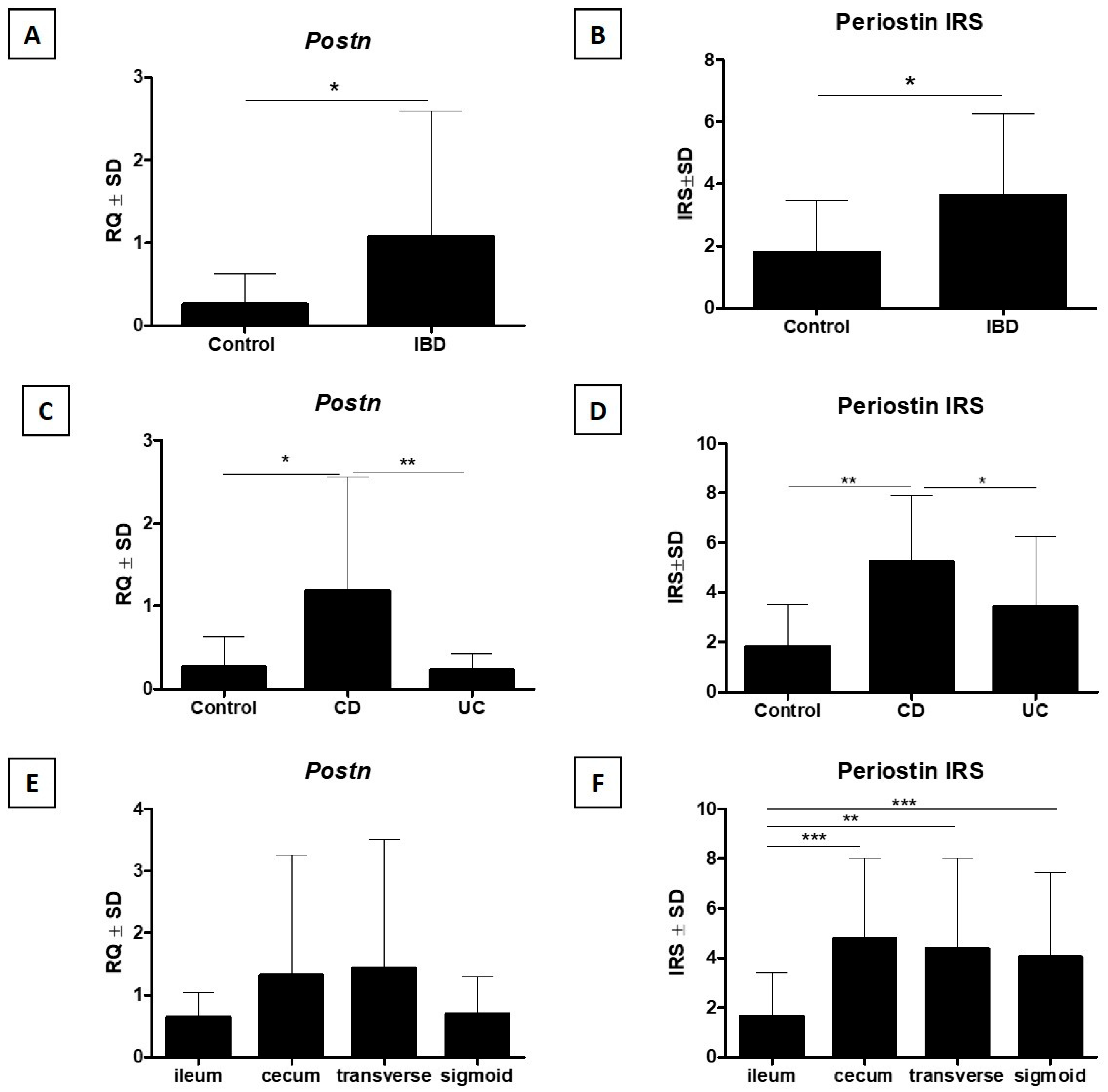
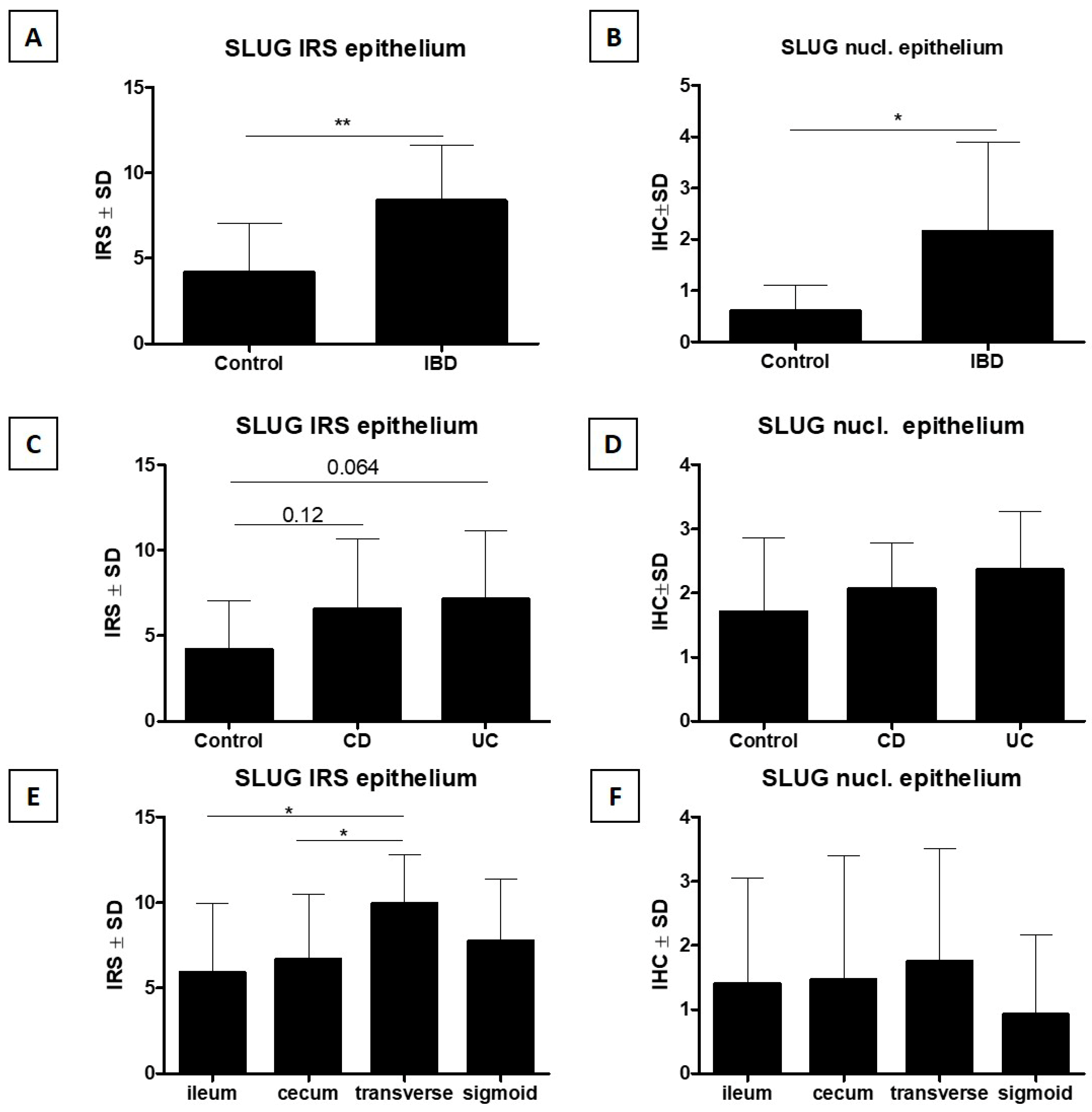
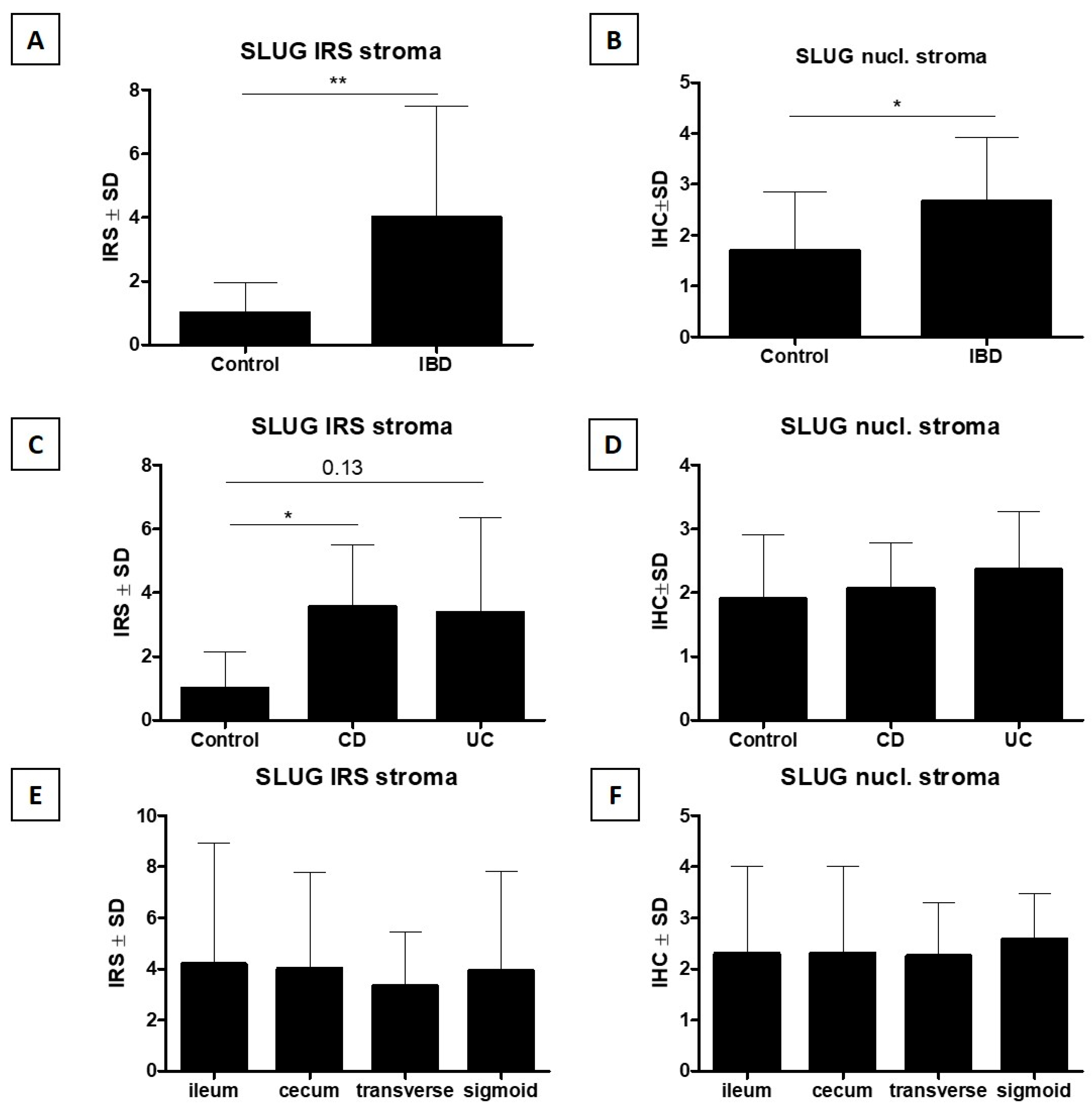
In this study, we demonstrated that periostin and SLUG are significantly upregulated in intestinal tissue from pediatric patients with IBD, including both Crohn’s disease (CD) and ulcerative colitis (UC), compared to controls. Importantly, the expression of both markers showed a positive correlation with TGF-β and overlapping localization in the connective tissue, suggesting a coordinated role in epithelial–mesenchymal transition (EMT) and fibrosis of the chronically inflamed intestinal wall. To our knowledge, this is among the first studies to quantitatively and semi-quantitatively assess periostin at both the gene (RT-PCR) and protein (IHC) levels in pediatric IBD, addressing a critical gap in knowledge regarding the molecular mechanisms of intestinal fibrosis in this population [
62,
68,
69,
70]. These results confirm the involvement of periostin in IBD pathogenesis and indicate that periostin may actively contribute to tissue remodeling and EMT-associated processes in children.
Fibrosis represents one of the most clinically relevant consequences of chronic intestinal inflammation. In Crohn’s disease, persistent transmural inflammation promotes irreversible fibrotic remodeling, leading to strictures, obstruction, and penetrating complications, whereas in ulcerative colitis, fibrotic remodeling is usually limited to superficial mucosal layers [
25,
36,
37,
38,
39,
40,
41,
42]. More than half of CD patients eventually develop a stricturing or penetrating phenotype within two decades of diagnosis, and 70–80% require intestinal surgery [
36,
37]. Postoperative recurrence of fibrosis, particularly at the ileocecal anastomosis, is common and poses a major therapeutic challenge [
38,
39].
On a cellular level, chronic inflammation triggers EMT—a process in which epithelial cells lose polarity and intercellular adhesion and acquire mesenchymal properties such as motility and extracellular matrix production [
43,
44]. This process is regulated by transcription factors including SNAIL, SLUG, TWIST, ZEB1, and ZEB2, which downregulate epithelial markers like E-cadherin and induce mesenchymal proteins such as vimentin and N-cadherin [
45]. EMT activation is driven by signaling pathways such as TGF-β, Wnt, and Notch and is strongly modulated by inflammatory cytokines and hypoxia [
46].
Previous studies have shown marked overexpression of SNAIL and SLUG in damaged intestinal crypts of IBD patients, extending into mesothelial and subserosal fibroblasts, especially in fibrotic regions [
47]. Scharl et al. demonstrated increased TGF-β1 expression and nuclear accumulation of SLUG in fibrotic intestinal areas, accompanied by β-catenin activation and fibroblast proliferation [
48], while Schäfer et al. reported that TGF-β1 induces SLUG-dependent L1CAM upregulation, enhancing motility and apoptosis resistance [
49]. These findings collectively underscore the role of inflammatory signaling in EMT-driven intestinal fibrosis, consistent with our observation of periostin–SLUG–TGF-β co-expression in pediatric IBD.
Although data on periostin expression in IBD are limited, previous studies provide important context. Kikuchi et al. reported high periostin expression in the lamina propria and pericryptal connective tissue of UC patients [
69]. In experimental mouse models of colitis,
POSTN knockout mice (
POSTN −/−) exhibited reduced disease severity and fewer inflammatory cell infiltrates compared to wild-type controls after induction with DSS or TNBS, whereas administration of recombinant periostin restored severe inflammation, and neutralizing antibodies against periostin alleviated it [
63,
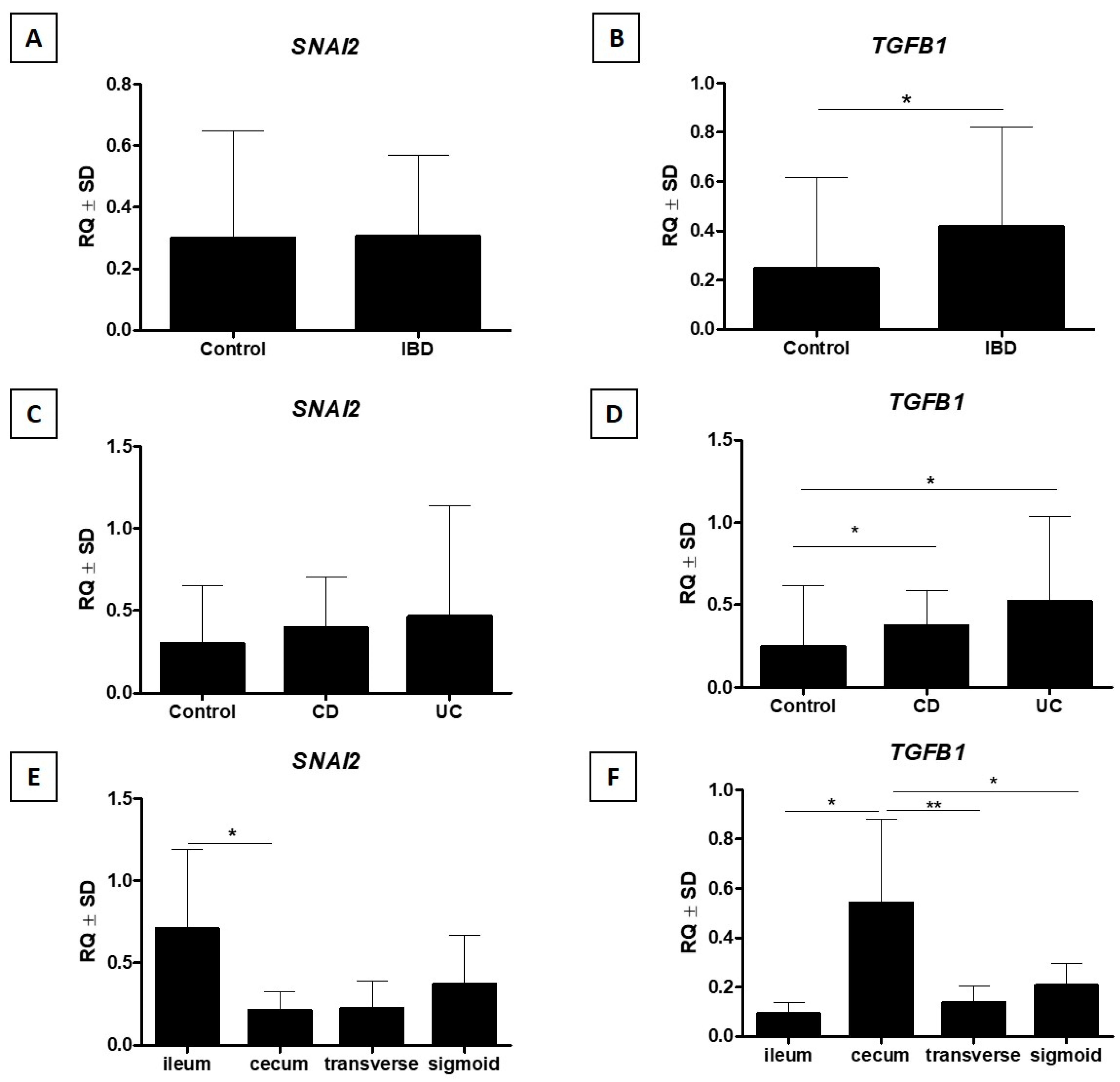
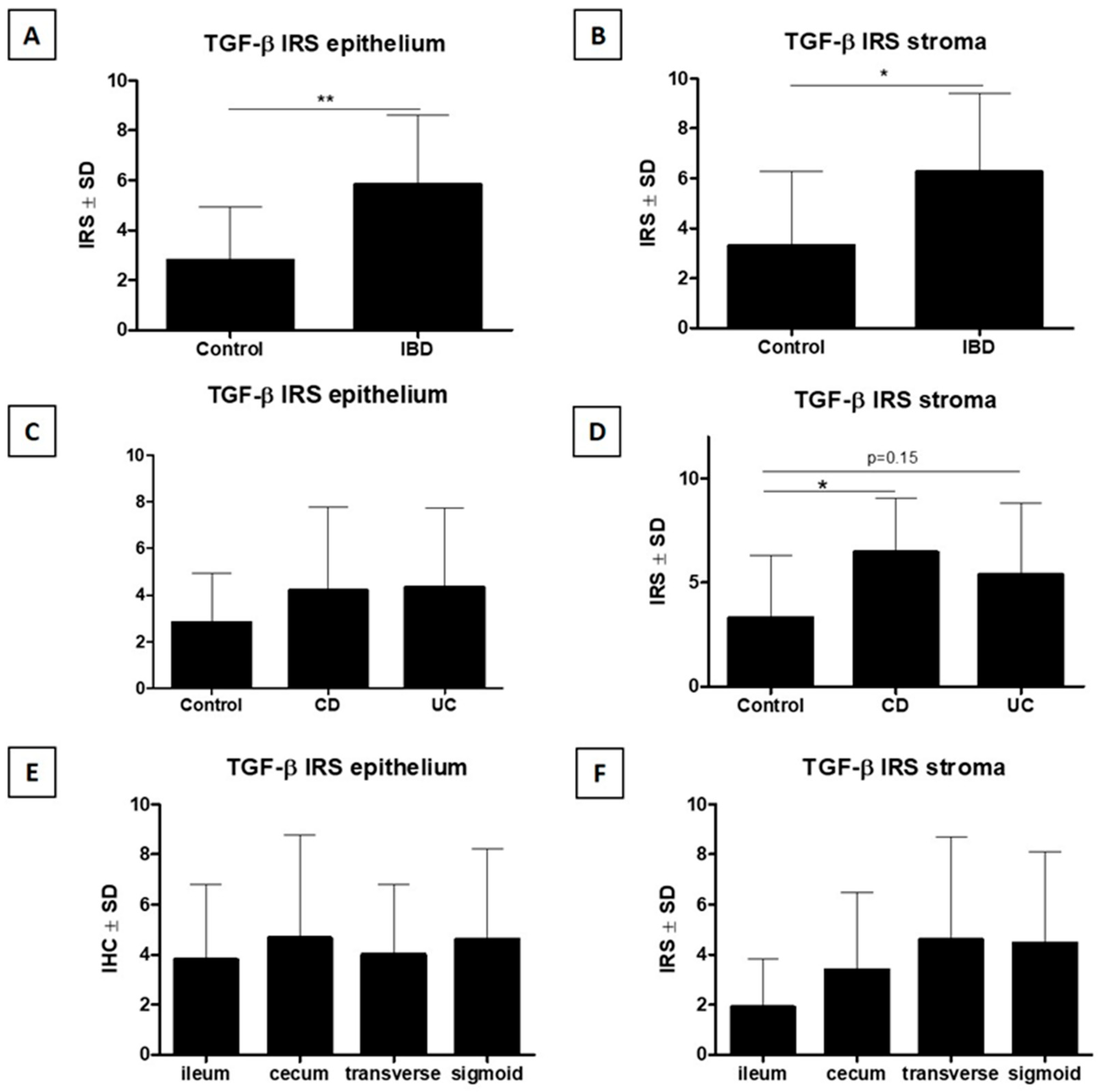
70]. These findings support the immunomodulatory role of periostin in regulating the recruitment and activity of inflammatory cells, including T lymphocytes, macrophages, and dendritic cells, in the intestinal mucosa. Consistent with these observations, we found higher expression of periostin and TGF-β in pediatric IBD tissues compared to controls, with a positive correlation between their mRNA and protein levels, suggesting that periostin may act in concert with TGF-β to promote chronic inflammatory and fibrotic processes [
71].
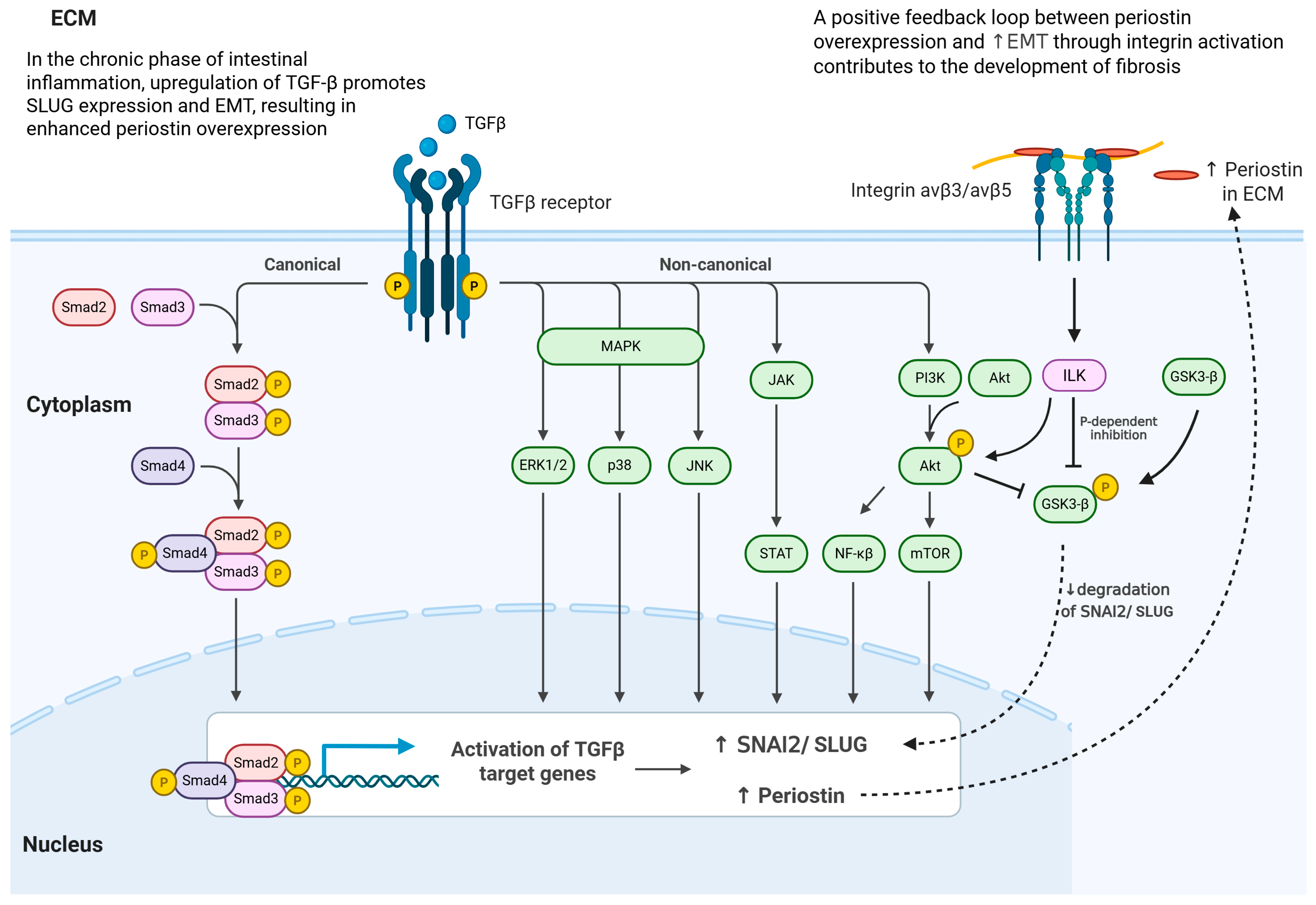
A plausible mechanism is that TGF-β signaling induces periostin production, while periostin, through αvβ3/αvβ5 integrin and ILK activation, enhances TGF-β signaling and reinforces ECM deposition and EMT, forming a positive feedback loop that perpetuates fibrosis (as illustrated in
Figure 8). This molecular interaction is well-documented in other tissues, further emphasizing periostin’s cross-organ profibrotic role [
53,
64,
65,
66].
A key strength of our study is the analysis of periostin directly in intestinal tissue rather than serum, which avoids potential confounding factors in the pediatric population. Notably, circulating periostin levels are highly influenced by age-dependent growth and bone metabolism, resulting in substantially higher plasma concentrations in children compared to adults, as well as by circadian variation, BMI, and smoking status [
72,
73,
74,
75,
76,
77,
78]. This tissue-based approach allowed a more precise assessment of the local role of periostin in the intestinal wall, independent of systemic fluctuations. Our results also highlight the potential importance of periostin in the chronic phase of inflammation, when fibrotic remodeling predominates, suggesting that periostin may serve as a tissue biomarker for early fibrotic changes in pediatric IBD.
The relevance of periostin to fibrotic processes is further supported by its established role in fibrosis of multiple organs, including subepithelial bronchial fibrosis in asthma, idiopathic pulmonary fibrosis, myelofibrosis, systemic sclerosis, and post-ischemic myocardial fibrosis [
60,
61,
68,
79,
80,
81,
82,
83,
84,
85,
86,
87,
88,
89,
90,
91,
92]. In these contexts, periostin not only reflects ongoing fibrogenesis but actively contributes to extracellular matrix (ECM) remodeling and EMT, processes that are mirrored in our observations of the intestinal wall in pediatric IBD. Furthermore, due to the specific role of the subepithelial connective tissue of the bronchial wall, circulating periostin concentrations in blood serum have been used as markers of asthma progression [
73,
77,
93,
94,
95] or the advancement of idiopathic pulmonary fibrosis (particularly the monomeric form) [
84,
96], and pilot studies suggest its potential utility as a biomarker for airway epithelial inflammation, including allergic rhinitis [
97].
SLUG, a transcription factor and recognized marker of EMT [
98], was also significantly upregulated in our IBD cohort, with localization overlapping periostin and TGF-β. This supports the notion that chronic intestinal inflammation induces EMT in epithelial and connective tissue cells, with periostin potentially facilitating this process, as seen in other fibrotic and cancerous tissues [
99,
100]. A molecular mechanism potentially driving excessive fibrosis is presented in
Figure 8.
Our study also examined correlations between markers and clinical parameters. We observed a significant negative correlation between periostin expression and fecal calprotectin, as well as a moderate negative correlation between of TGF-β expression and fecal calprotectin, suggesting that periostin may be particularly elevated during phases of intestinal repair and regeneration when active neutrophilic inflammation is reduced. In addition in CD patients, periostin expression correlated negatively with PCDAI scores, further supporting its association with chronic, profibrotic stages rather than acute inflammation [
22,
62]. In experimental acute kidney injury models, periostin has been shown to modulate macrophage behavior, promoting proliferation and polarization toward an M2 phenotype [
101]. We propose that a similar mechanism could explain the observed reduction of mononuclear cell infiltrates, the main source of calprotectin overproduction in the intestinal wall.
Interestingly, no correlation was observed between periostin expression and PUCAI in UC, indicating potential differences in fibrotic processes and marker expression between IBD subtypes [
102,
103]. These findings, along with the higher periostin levels in CD compared to UC, underscore the molecular and clinical heterogeneity of pediatric IBD.
Beyond its diagnostic potential, periostin may have therapeutic relevance. Elevated tissue and serum periostin levels have been linked to type 2 inflammatory responses mediated by IL-4 and IL-13 [
104], and interventions targeting periostin modulate inflammation in experimental models. Consequently, periostin may serve as a biomarker for fibrotic progression, a predictor of response to anti-inflammatory therapy, and a potential target for novel therapeutics in pediatric IBD [
105]. Environmental and lifestyle factors may further influence periostin, TGF-β, and SLUG expression, highlighting the need for future studies to explore these modulatory effects. For instance, periostin is upregulated by Th2 cytokines (IL-4, IL-13), which can be affected by allergen exposure, physical activity, smoking, and diet [
68,
106,
107]. These findings suggest that environmental and lifestyle exposures could contribute to interindividual variability in marker expression and the progression of chronic inflammation and fibrosis in IBD.
Chronic inflammatory conditions such as IBD are well-established risk factors for colitis-associated colorectal cancer, as persistent inflammation and repeated cycles of injury and repair can promote epithelial DNA damage, dysplasia, and eventual neoplastic transformation over time. Periostin may contribute to tumorigenesis by interacting with integrins and promoting a microenvironment that supports cell proliferation and survival, while SLUG and TGF-β are known to facilitate EMT and invasiveness, processes associated with cancer development [
108,
109,
110,
111].
Despite these promising results, our study has limitations. The primary drawback is the relatively small, single-center cohort, which may limit generalizability. Although the final sample size was slightly smaller than planned, statistically significant differences were observed for the main comparisons. Post hoc power analysis indicated limited sensitivity for periostin and nuclear SLUG expression, suggesting caution in interpreting these results. Nevertheless, large effect sizes support the biological relevance of the findings, and other significant analyses had adequate power (0.70–0.99). Replication in larger, multicenter cohorts with longitudinal follow-up is warranted to confirm these observations and further elucidate periostin’s role in chronic inflammation, EMT, and fibrogenesis in IBD.
In conclusion, our study suggests that periostin, in association with SLUG and TGF-β, is upregulated in pediatric IBD and may play a role in EMT and intestinal fibrosis. These findings contribute to the limited understanding of fibrotic mechanisms in children with IBD, highlight potential pathways linking chronic inflammation to tissue remodeling, and support further investigation of periostin as a possible biomarker or therapeutic target.



 ,
,