


Abstract
Background/Objectives: Geometric morphometric analysis (GMA) is a statistical method that captures and quantifies shape variation. This study aimed to assess hard and soft tissue shape variations and changes following orthodontic treatment in Class III skeletal malocclusion using GMA. Methods: A retrospective study was conducted on 84 lateral cephalometric radiographs (pre-treatment and near-end treatment) of Class III patients aged 16–40 years (ANB < 2°). Thirty-five landmarks were digitized in Cartesian coordinates using MorphoJ software for shape analysis. Results: The sample included 62% females and 38% males, with a mean age of 24.7 ± 5.2 years. Vertical dimension variations (hypodivergent to hyperdivergent) contributed most to shape changes PC1 (23.35%), followed by anteroposterior variations PC2 (13.51%). Gender significantly influenced hard and soft tissue variation with 30.91%SS (F = 56.99, p < 0.0001). Males had significantly larger and longer ramus, body of the mandible, alveolar height, LAFH, TAFH and upper lip length. (PD: 0.026, p < 0.05). Significant shape changes were seen in the mandible (PD = 0.018, p < 0.05). SNB increased by 0.41° (from 81.73° ± 3.67°), and ANB improved by 0.46° but remained Class III (−0.33° ± 1.82°). Lower anterior facial height increased by 1.78 mm (p < 0.05). The lower incisors retroclined significantly (from 92° ± 8.56° to 87° ± 6.96°, p < 0.05), while the interincisal angle increased by 5.9°. Upper incisors remained procline (118° ± 11°, p > 0.05). Upper lip length increased by 0.4 mm (p < 0.05). Conclusions: Vertical and anteroposterior shape variations are notable within Class III malocclusion. Post-treatment changes in both hard and soft tissues indicate that orthodontic camouflage can enhance facial esthetics and skeletal balance. GMA provides objective quantification and visualization of these treatment-related craniofacial changes.
1. Introduction
Class III malocclusion is defined as the lower incisor edge lying anterior to the cingulum plateau of the upper incisors. The prevalence of Class III malocclusion varies significantly among and within populations, from 1% to more than 10%. The greatest incidence is found among Asian people [1], especially in the Chinese (15.69%) and Malaysian (16.59%) populations [2]. Nevertheless, the Indian population shows a relatively lower prevalence as compared to other races [2]. The etiology of Class III malocclusion is multifactorial, involving complex interactions between genetic and environmental factors. Skeletal presentations may include mandibular prognathism, maxillary retrognathism, or a combination of both [1], and functional or “pseudo” Class III malocclusion may occur due to centric relation–centric occlusion discrepancies [3]. The facial profile is concave and this significantly impacts facial esthetics [4]. The upper incisors are usually proclined and the lower incisors can either be retroclined, upright or proclined, depending on the amount of dentoalveolar compensation. The lower lips are usually full or pendulous [5], while the upper lips may be short, retruded or flat resulting in an acute nasolabial angle [6]. Variations in hard and soft tissue craniofacial characteristics within Class III malocclusion were observed due to factors such as patients’ growth patterns [7], gender [8], age [9] and race [10].
The diagnosis and management of Class III malocclusion remain clinically challenging due to this morphological heterogeneity and the frequent coexistence of vertical skeletal discrepancies, which further complicate treatment planning [11]. The available treatment options include growth modification through orthopedic appliances, camouflage treatment using orthodontic dentoalveolar compensation and orthognathic surgery. For non-growing adults with mild to moderate skeletal Class III discrepancies and satisfactory facial esthetics, orthodontic camouflage is an effective option [12], whereas severe skeletal discrepancies generally require surgical correction [13]. Therefore, a thorough understanding of the anteroposterior and vertical skeletal relationships, along with dentoalveolar adaptations, is crucial when planning treatment for Class III malocclusion.
Orthodontic intervention can produce notable alterations in soft tissue that affect facial esthetics and function. In orthodontic camouflage, the lower incisors are retroclined, while the upper incisors are proclined to achieve a positive overjet, which results in improvements in lower lip protrusion and upper lip length [4,14]. Failure to adequately anticipate these changes may lead to an inaccurate prognosis or misjudgment of case complexity. Consequently, objective methods that allow visualization and quantification of craniofacial changes may enhance individualized treatment planning and clinician–patient communication [15].
Cephalometric radiography is the most common skull imaging in orthodontics. It is used for examination and diagnosis to formulate treatment plans as well as to monitor growth and progress of treatment. Facial forms can be quantitatively analyzed using linear, angular and ratio-based measurements [15]. However, it is unable to adequately describe the craniofacial morphology, such as size, shape, growth and changes in curvature [15,16,17]. Graphical shape analysis, as well as its illustration, is challenging because multiple superimpositions are impossible [18].
Geometric morphometric analysis (GMA) has gained prominence recently for its capacity to quantify the shapes of objects and offer a visual representation through statistical interpretation. This tool utilizes Cartesian landmark coordinates to investigate the variation in the shape of an object. It is centered on shape coordinates, effectively separating shape from overall size, position and orientation of landmark configurations, so the size of a structure does not introduce confounding factors in statistical analysis [19]. GMA enables the exploration of morphological variations, craniofacial growth, connections between morphology and various conditions and treatment outcomes. Within orthodontics, GMA can be applied in the shape and size analyses of the face. This analytical technique has been proven to be valuable for measuring facial and cranial structures, assessing facial proportions and understanding relationships between anatomical components [17]. GMA has been utilized in studies of growth patterns of hard tissue shapes across various facial types [17], variations in skeletal shape [19], soft tissue distinctions among different sagittal skeletal patterns [19], mandibular symphysis [20], arch forms [21] and palatal rugae [22].
Despite these applications, the use of GMA to evaluate hard and soft tissue shape changes, particularly in Class III malocclusion, remains limited. Although GMA is a cost-effective and powerful method for quantitative shape analysis, its adoption in orthodontic research has been constrained by several factors, including the need for specialized training to understand its theoretical concepts, the technical and technique-sensitive nature of landmark digitization and data interpretation and the higher cost and limited accessibility of three-dimensional imaging systems. Consequently, previous orthodontic studies have relied on simplified visualization methods such as lollipop and wireframe graphs, which may not fully or accurately represent complex shape differences. Therefore, this study aims to investigate the shape variations and changes in both hard and soft tissue in a Class III malocclusion before and after orthodontic treatment using GMA. This study may offer insights into the shape variations seen in Class III malocclusion and visually demonstrate the effects of orthodontic treatment on the maxilla, mandible and soft tissues, along with their interrelationships. The null hypothesis was that there are no significant hard or soft tissue shape variations in Class III malocclusion and there are no shape changes pre-treatment and post-treatment following orthodontic camouflage.
2. Materials and Methods
2.1. Samples
This retrospective study evaluated lateral cephalometric radiographs (LCRs) to examine the shapes and dimensions of hard and soft tissues in patients with Class III malocclusion before and near the completion of orthodontic treatment. Ethical approval was obtained from the Universiti Kebangsaan Malaysia (UKM) Research Ethics Committee (Reference: JEP-2024-534), dated 20 September 2024.
LCRs were collected from patients’ folders who had completed orthodontic treatment at the Department of Family Oral Health, UKM. Inclusion criteria were as follows: age 16–40 years; medically healthy; presence of all incisors; high-quality LCRs with clearly identifiable hard and soft tissue landmarks; and a skeletal Class III pattern (ANB < 2°) undergoing camouflage orthodontic treatment. Exclusion criteria were as follows: poor-quality LCRs; craniofacial or dental anomalies; cleft conditions; history of mandibular trauma or surgery; periodontitis; previous orthodontic treatment; or missing incisors.
There are currently no established guidelines or straightforward mathematical formulas for determining sample size in geometric morphometric analysis [20]. Therefore, a sample size calculation was made for linear measurement. To achieve 80% power at a 5% significance level to detect a mean paired difference of 5.47 with a standard deviation of 7.39, a minimum of 58 samples is required [23]. To account for potential exclusions due to poor-quality LCRs, 84 samples were ultimately included.
2.2. Lateral Cephalometric Radiograph Analysis
Pre-treatment (T1) and near-end treatment (T2) lateral cephalometric radiographs (LCR) were obtained from the Department of Radiology at Universiti Kebangsaan Malaysia. “Near-end treatment” was defined as radiographs obtained during the final phase of active orthodontic treatment, after active major tooth movement, mainly space closure and achievement of treatment objectives, but prior to appliance removal. A total of 168 LCRs were retrieved for both pre- and near-end treatment using Planmeca Romexis software (version 4.2, Planmeca ProMax 3D Classic; Planmeca Romexis, Helsinki, Finland). The exposure settings included 60–90 kV, 1–14 mA, an exposure time of 9 to 37 s and a 1.5 m distance between the source and the midsagittal plane. All lateral cephalometric radiographs were acquired using the same radiographic unit with a fixed source-to-mid-sagittal plane distance, resulting in a constant magnification factor across all images. All radiographs were obtained with patients in natural head position, teeth in maximum intercuspation and lips at rest. Standardized exposure parameters and head positioning protocols were used in accordance with institutional guidelines. Each patient’s radiographs were evaluated as paired observations for statistical analysis.
The LCRs were digitally traced using iOrtho (version 11.2.6, ©2025 Angelalign Technology, Shanghai, China). To ensure accuracy and consistency in tracing, all radiographs were adjusted so that the Frankfort horizontal plane served as the true horizontal reference for locating landmarks precisely.
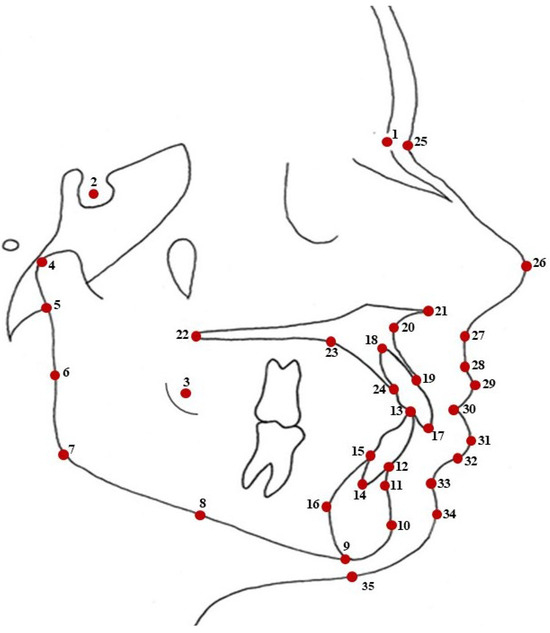
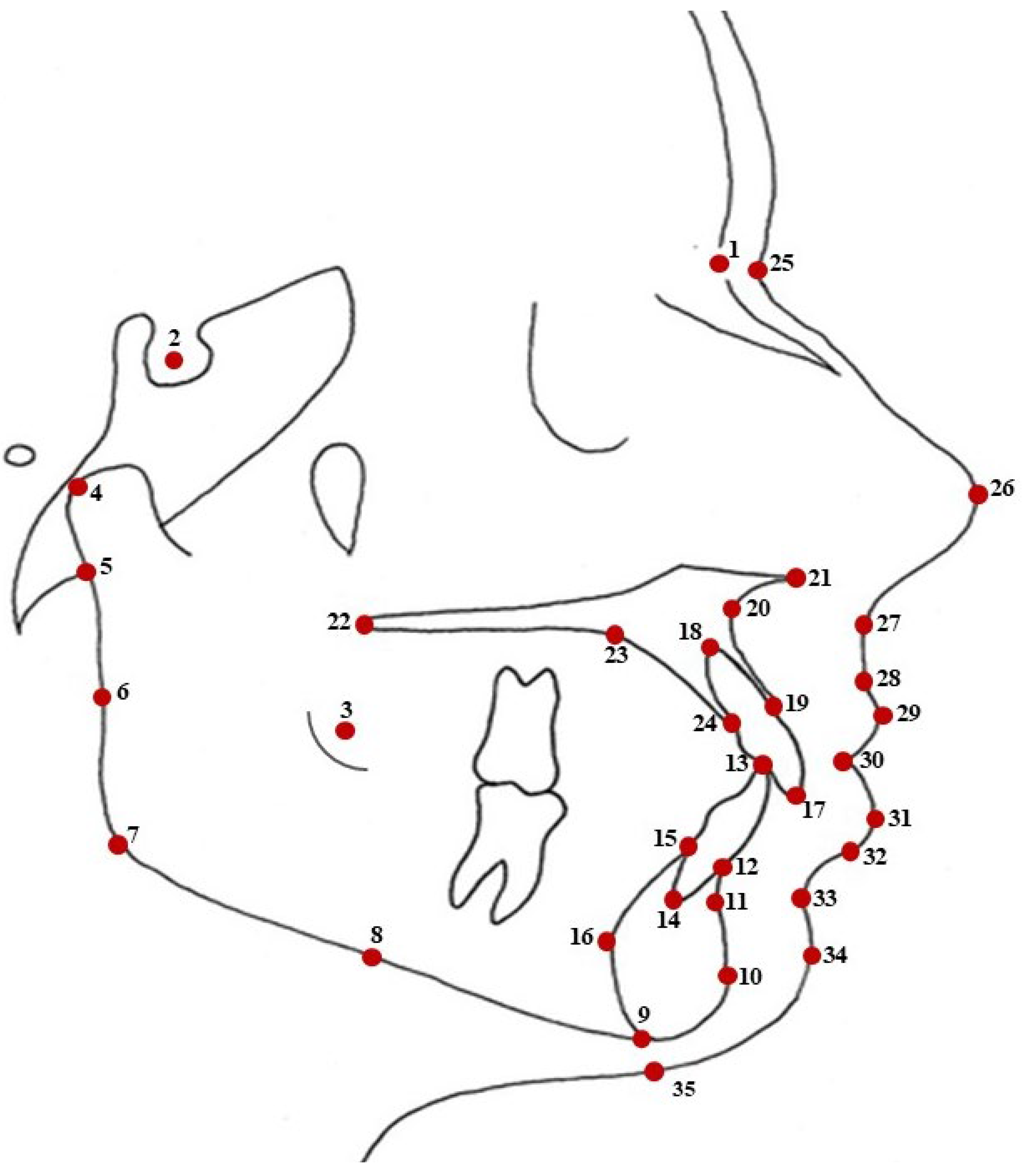
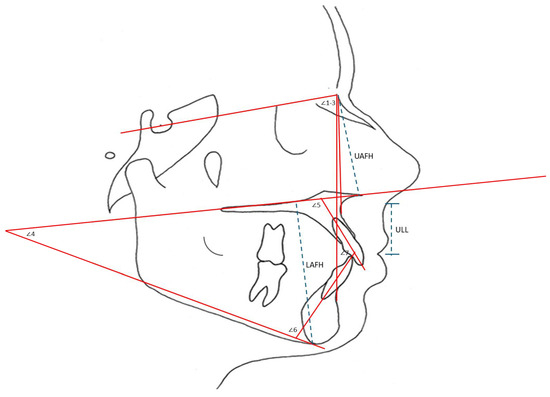
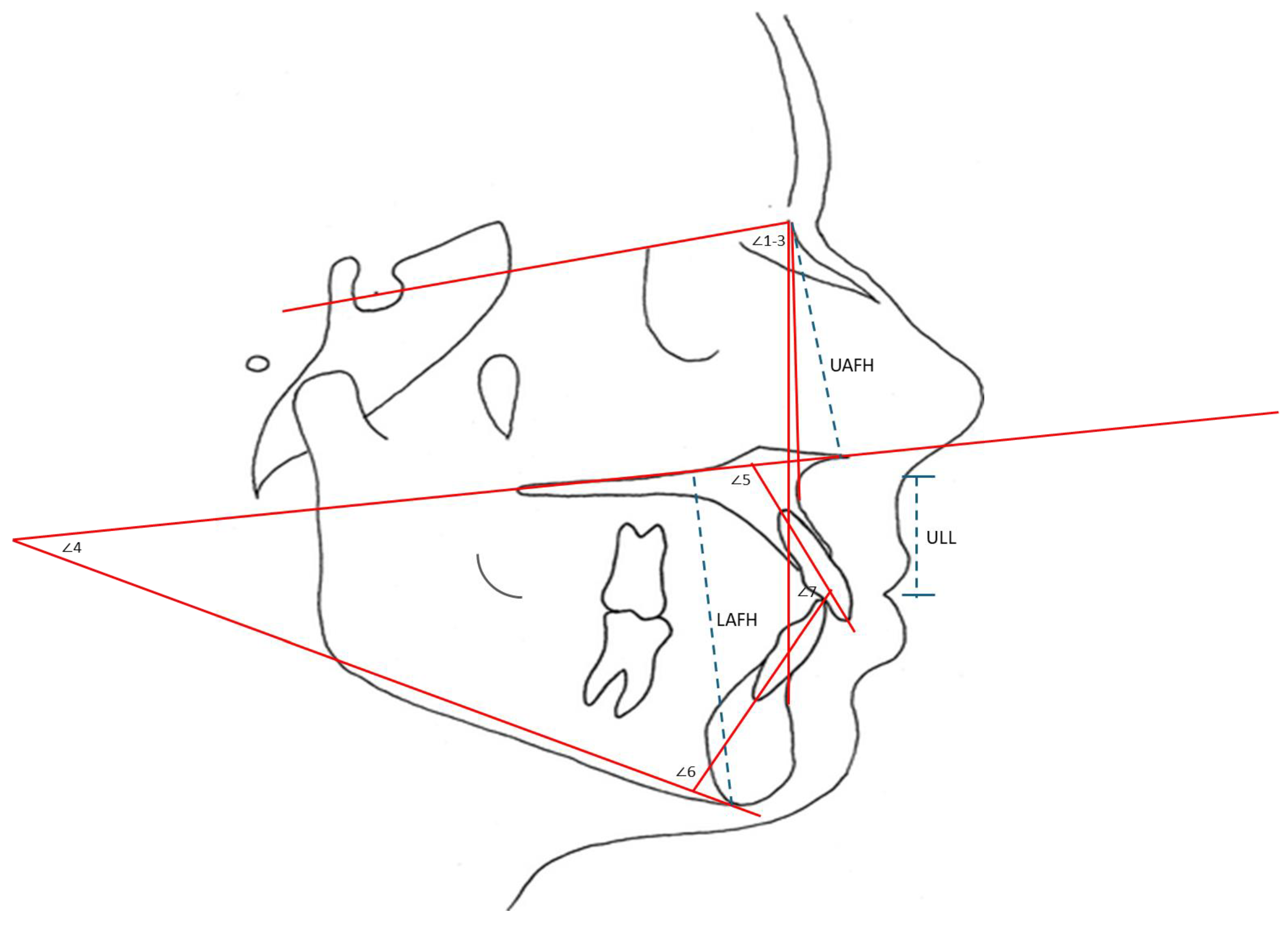
A total of 35 two-dimensional landmarks were identified, selected based on their relevance in traditional metrical and geometric morphometric analyses. These landmarks, commonly used in orthodontic assessments, provide significant biological reference points (Figure 1; Table 1). This is due to their anatomical stability, reproducibility and clinical relevance in evaluating Class III malocclusion. The landmark set was designed to comprehensively represent key skeletal anatomy of the cranial base, maxilla, mandible and dentoalveolar structures, as well as the corresponding soft tissue profiles, thereby allowing integrated assessment of hard–soft tissue relationships. Skeletal landmarks (Nasion, Sella, A-point, B-point, Gonion, Menton, Pogonion, ANS and PNS) capture sagittal and vertical discrepancies, while dentoalveolar landmarks (incisal and infradentale points) reflect orthodontic tooth movement. Soft tissue landmarks (Pronasale, Subnasale, Labrale superius and inferius, soft tissue Pogonion and Menton) were included to evaluate treatment-related facial profile changes. They were used to obtain linear and angular measurements (Figure 2) to evaluate hard and soft tissue changes after orthodontic treatment. During landmark digitization, all radiographs were anonymized and assessed in a randomized order, instead of in a chronological before-and-after sequence, to reduce examiner fatigue and minimize potential sequencing, recognition and recall bias inherent in retrospective longitudinal assessments.
Figure 1.
Landmarks for geometric morphometric analysis.
Table 1.
Landmarks used for geometric morphometric analysis, data from ([15]).
Figure 2.
Angular (o) and linear (mm) measurements used in this study: SNA (∠1), SNB (∠2), ANB (∠3). Maxillary Mandibular Plane Angle (∠4), Upper Incisor Inclination (∠5), Lower Incisor Inclination (∠6), Interincisal Angle (∠7), Lower Anterior Face Height (LAFH), Upper Anterior Face Height (UAFH) and Upper Lip Length (ULL).
LCR digital copies in JPG format were converted into TPS files using TPSUtil software (version 1.83, Rohlf) [24]. The landmark coordinate dataset (x, y) was generated with TPSDig2 software and subsequently imported into MorphoJ (version 2.0; Apache license, Klingenberg Lab, Manchester, UK) for shape analysis.
2.3. Shape and Statistical Analysis
For geometric morphometric analysis (GMA), all the shape and statistical analyses were conducted using MorphoJ software. Generalized Procrustes Analysis (GPA) was used to assess shape variations in the hard and soft tissues. Lateral cephalometric radiographs (LCRs) were superimposed, translated, scaled and rotated. This minimizes the total squared distances between corresponding landmarks and, as a result, establishes the general shape of the hard and soft tissues in the Class III malocclusion samples.
The primary objective of the study was to determine the presence of shape variations in hard and soft tissues at the pre-treatment stage (T1). This was performed using Principal Component Analysis (PCA). PCA reduced the dimensionality of the shape data and identified key variation patterns. The covariance matrix was then computed from the shape data, and its eigenvector, which is known as the principal component (PC), was extracted. The directions of the maximum shape variance in descending order were represented by each principal component.
A comparison of shape changes before (T1) and after (T2) orthodontic treatment was also carried out. Discriminant analysis (DA) was performed using a permutation test (1000 random permutations) to evaluate significant shape differences between repeated measurements of hard and soft tissues. This was crucial for minimizing digitization errors and subsequently introducing variance in the subsequent analysis. In addition, DA was also performed separately for the maxilla and mandible to enhance visualization. Procrustes distance was used to assess statistical differences at T2.
In addition to GMA, angular and linear measurements were taken to validate the changes detected in DA. Statistical Package for the Social Sciences (SPSS, version 25; SPSS, Chicago, IL, USA) was used to conduct dependent t-tests with a significance level of p < 0.05 and a 95% confidence level to compare the mean changes before and after orthodontic treatment. Descriptive statistics were calculated for each measurement at T1 and T2 and significant differences between them were tested using the dependent t-test if the data followed a normal distribution.
2.4. Reliability
Due to the retrospective study design, blinding of the examiner during landmark digitization and analysis was not feasible, as post-treatment radiographs were distinguishable by the presence of fixed orthodontic appliances. However, standardized landmark definitions and repeated digitization were employed to minimize potential observer bias. Therefore, intra-examiner and inter-examiner reliability tests were carried out on 10 randomly selected cases 1 month apart. The tests were performed using the Interclass correlation coefficient test (ICC) on tracing measurements. The correlation coefficients for intra-examiner were above 0.9996 and 0.998 for inter-examiner reliability. Both results were more than 0.85, indicating excellent agreement between measurements. For GMA, measurement error from landmarking was checked with Procrustes ANOVA using MorphoJ software. The F-ratio for this effect showed that individual ANOVA variation was 1587 times larger than the measurement error due to digitizing for centroid size and 13 times for shape. This indicates that the individual variation exceeded the measurement error due to digitizing (F > 1). In addition, the discriminant analysis indicated no significant difference in shape distance between repeated measurements of specimens (p > 0.05).
3. Results
There were 84 samples comprising 52 females (62%) and 32 males (38%) with a mean age of 24.7 ± 5.2. The majority of the patients were Malay (64%), followed by Chinese (33%) and Indian (3%). Furthermore, 9 (11%) were adolescents, 32 (38%) were emerging adults and 43 (51%) were adults. The majority of the samples, 43 (51%), had an average MMPA, whereas 24 (29%) and 17 (20%) had low angle and high angle, respectively.
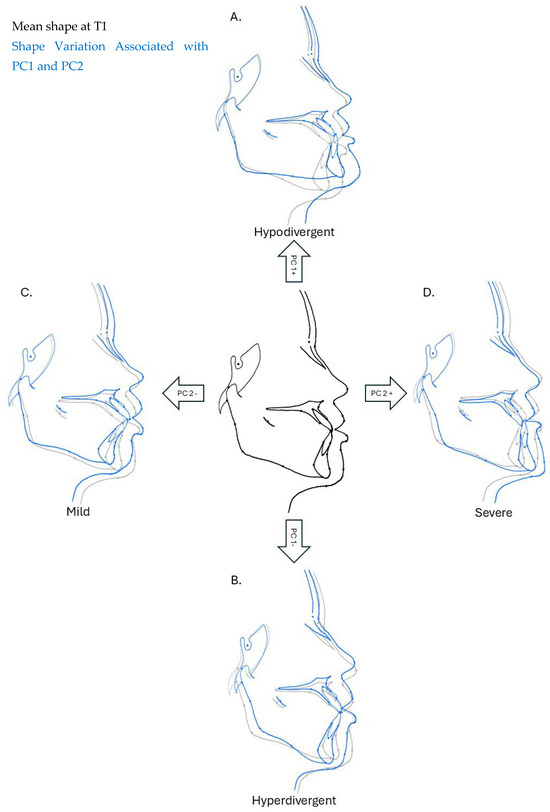
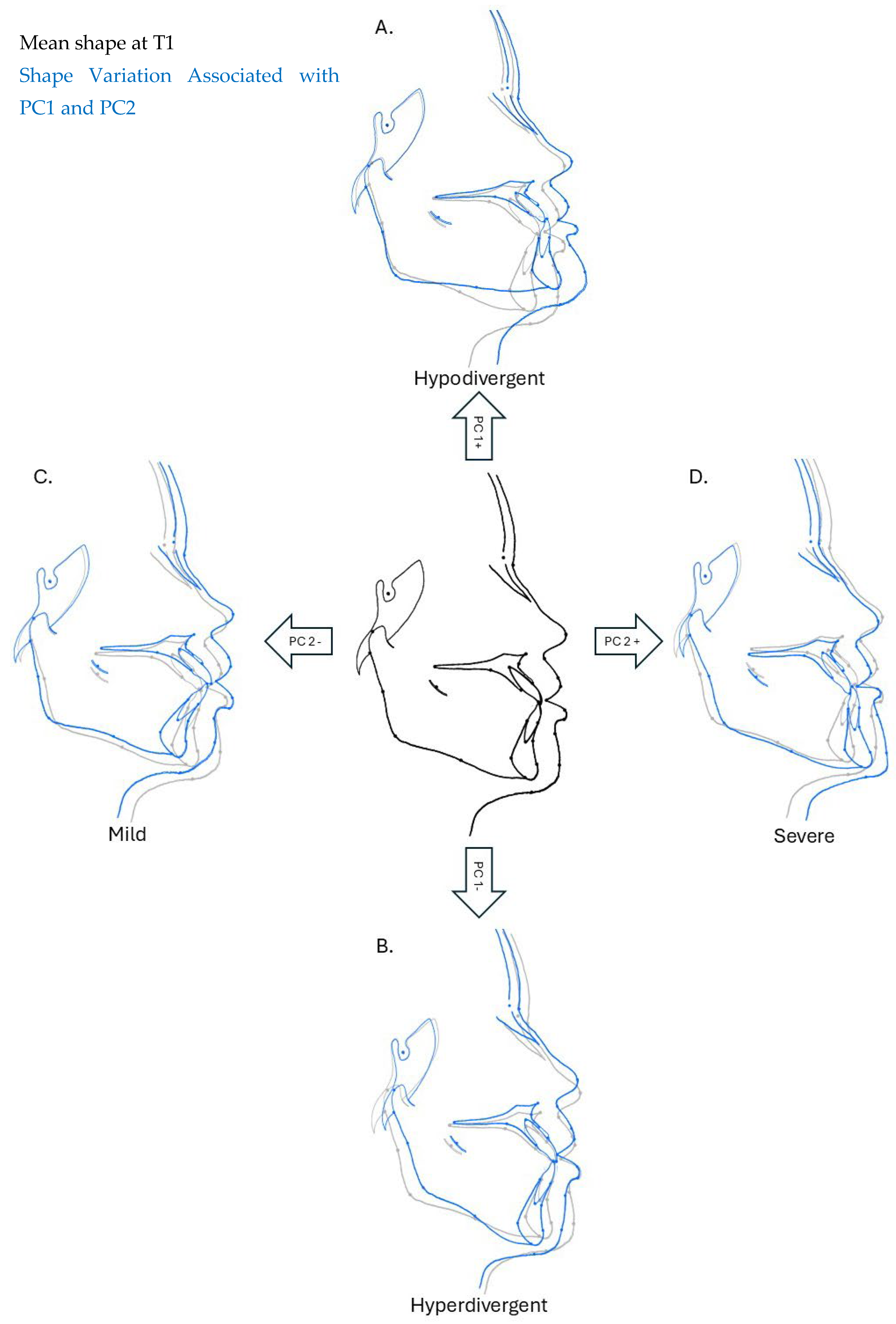
Principal Component Analysis (PCA) revealed that facial skeletal morphology in Class III patients varies mainly in the vertical (PC1) and anteroposterior (PC2) dimensions. In this study, PCA yielded 66 dimensions of hard and soft tissue shape variations, represented by PC1 to PC66. PC1 and PC2 represented the two highest variations within the whole data. PC1 (23.35%) showed the highest variations and described them in the vertical dimension; the facial profile varied from hypodivergent to hyperdivergent. The maxilla mandibular plane angles and gonion angle varied from acute to obtuse. The upper lip lengths varied from short to long. PC2 (13.51%), on the other hand, described variations in the anteroposterior dimension, where the severity of the Class III skeletal pattern varied from mild to severe. The facial profile varied from straight to concave, while the labio-mental fold varied from increased to reduced. The lower incisors differed from retroclined to proclined, while the overjet was either positive or negative (Figure 3).
Figure 3.
Hard and soft tissue shape variations in vertical and anteroposterior dimensions. Black and gray outline: Overall mean shape at pre-treatment. Blue outline PC1 (A,B): Vertical shape variation. Blue outline PC2 (C,D): Anteroposterior shape variation.
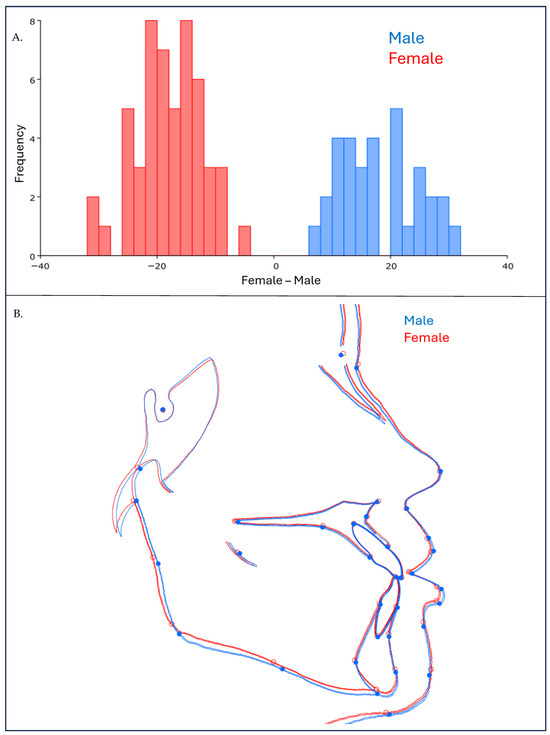
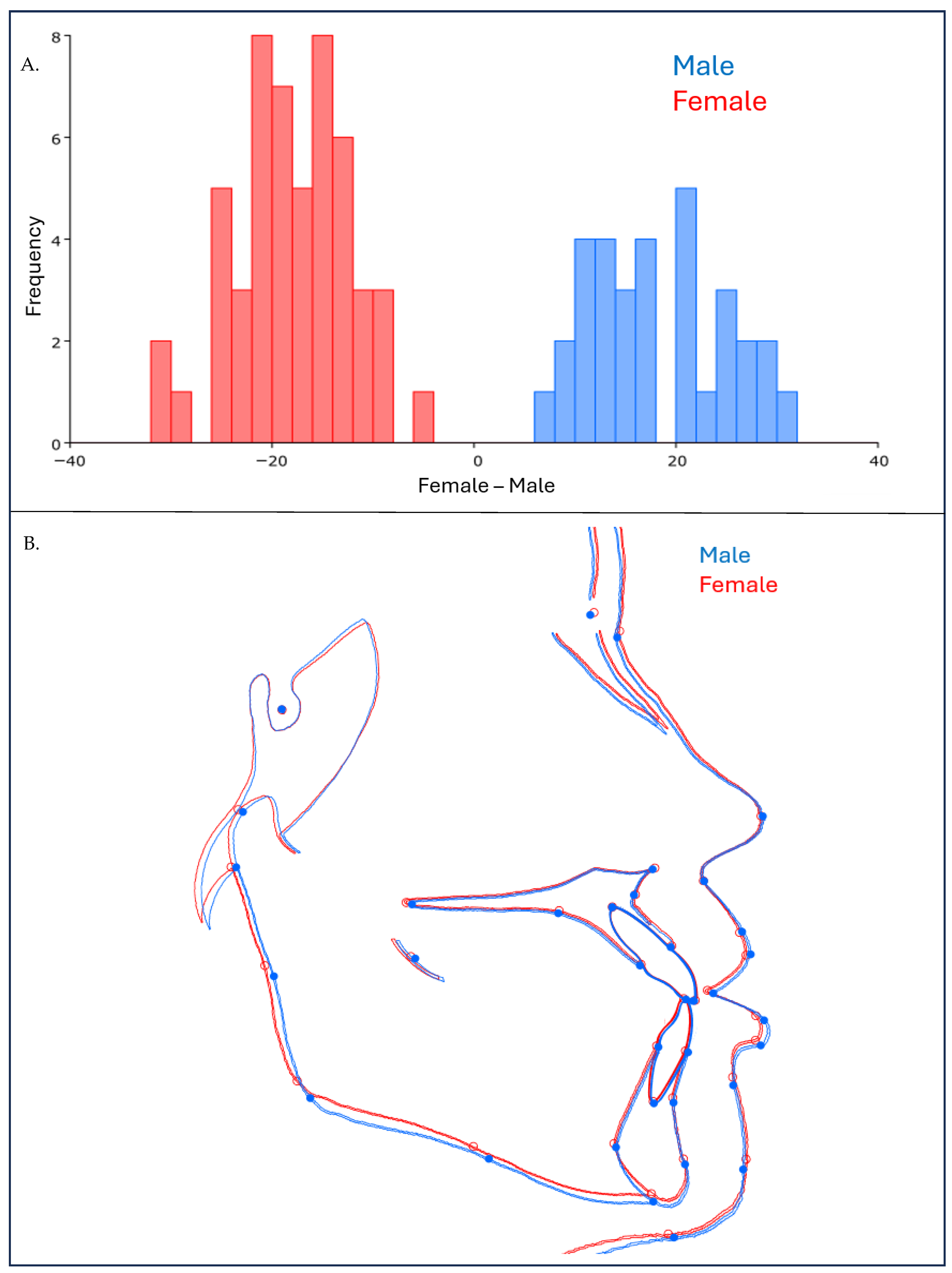
Table 2 shows that, among the tested explanatory factors, gender accounted for the largest proportion of explained shape variance (%SS = 30.91%) with a strong effect and significant p-value (F = 56.99, p < 0.0001), followed by race (%SS = 9.24%, F = 8.52, p = 0.0008) and age group (%SS = 6.51%, F = 6, p = 0.0051). Meanwhile, individual variation accounted for the greatest overall proportion of shape variance (%SS = 51.90%). In contrast, MMPA explained only a small proportion of shape variance (%SS = 1.44%) and did not reach statistical significance (p = 0.3536). Figure 4 shows the analysis graph and warped outline drawing of the hard and soft tissues, comparing males and females before orthodontic treatment. The Procrustes distance (PD) between the mean shapes of males and females was 0.026 and the permutation test showed significant shape variations between males and females (p < 0.05) (Figure 4). Overall, the males had larger and longer faces. The ramus, body of the mandible and alveolar height in males were significantly longer than in females (p < 0.05) (Figure 5). Males’ LAFH was significantly longer (66.41 ± 4.99 mm) than in females (60.42 ± 4.56 mm, p < 0.05). The TAFH in males was significantly longer (119.04 ± 6.26 mm) compared to females (109.55 ± 5.62 mm, p < 0.05). Males have longer upper lip length (22.92 ± 1.92 mm) compared to females (20.31 ± 2.20 mm, p < 0.05) (Table 3).
Table 2.
Effects of gender, age, race and MMPA on the size of hard and soft tissues.
Figure 4.
Discriminant analysis (DA) of hard and soft tissue comparing males and females before orthodontic treatment. (A) Analysis graph of male (blue) and female (red) (B) warped outline drawing of male (blue) and female (red). Overlapping regions indicate minimal morphological differences, while deviations highlight significant morphological differences.
Figure 5.
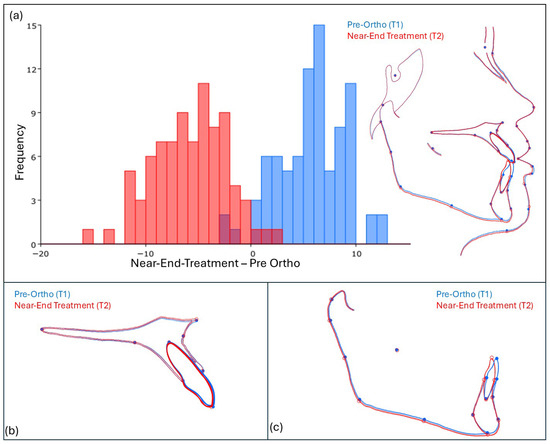
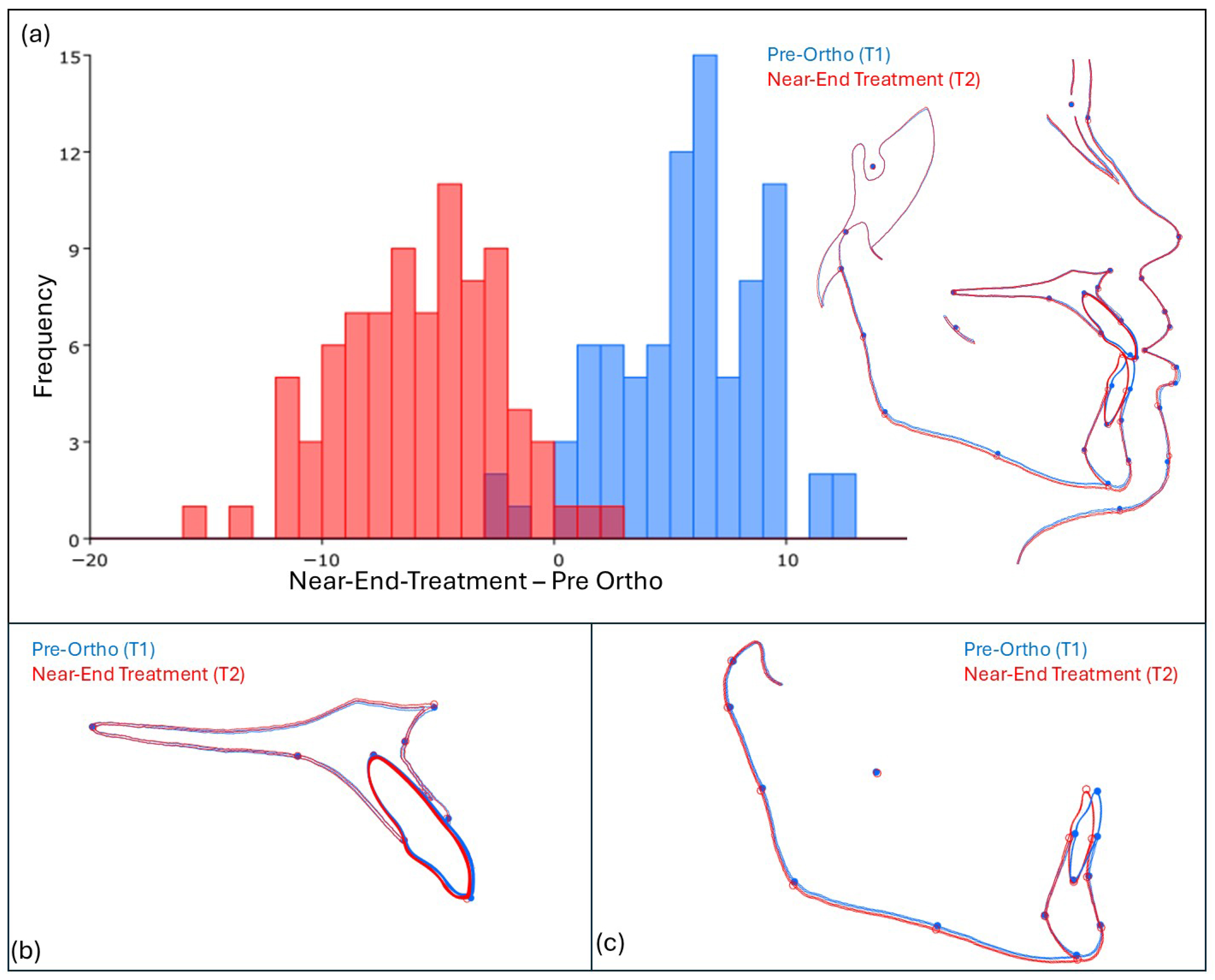
Discriminant analysis (DA) of hard and soft tissue before (T1—blue) and near-end orthodontic treatment (T2—red). Overlapping regions indicate minimal morphological change, while deviations highlight significant morphological shifts near-end treatment. (a) Overall analysis graph and warped outline drawing comparing pre-treatment (T1—blue) and near-end treatment (T2—red) shapes. (b) DA focused on the maxilla, showing stability or changes between T1 (blue) and T2 (red). (c) DA of the mandible, demonstrating significant shape changes post-treatment (T2—red) compared to pre-treatment (T1—blue).
Table 3.
Lateral cephalometric measurements in males and females.
Figure 5 shows Discriminant analysis (DA) of hard and soft tissue before (T1) and near-end orthodontic treatment (T2). The Procrustes distance between the overall mean shapes of T1 and T2 was 0.019, and permutation test showed significant shape differences (p < 0.05). In the mandible, the red outline (T2) deviates noticeably from the blue outline (T1), indicating significant morphological changes. This is supported by statistical analysis, where the Procrustes distance between T1 and T2 was 0.018 (p < 0.05). In the maxilla, blue and red outlines closely overlap, suggesting minimal change at near-end treatment.
There was a significant reduction in the SNB by 0.41° and ANB by 0.46° (p < 0.05) and in the retroclination of lower incisors by 4.97° (p < 0.05), and there was an increase in inter-incisal angle by 5.9° (p < 0.05). The lower anterior facial height (LAFH) increased by 1.78 mm (p < 0.05), while the total anterior facial height (TAFH) also increased by 2.63 mm (p < 0.05). There was an increased upper lip length after treatment by 0.40 mm (p < 0.05) (Table 4).
Table 4.
Lateral cephalometric pre-treatment and near-end treatment.
4. Discussion
4.1. General Shape Variation in Hard and Soft Tissue of Class III Malocclusion
PCA revealed that the most significant variation was in the vertical dimension, followed by anteroposterior dimensions, which explains the heterogenicity in Class III malocclusion [3,25]. It also aligns with a study stating that there is a range from mild to severe of skeletal patterns within this class of malocclusion [25]. Vertical assessment must be emphasized as it influences the treatment plan and mechanics. Clinically, the vertical growth pattern and severity of skeletal discrepancy play an important role in determining the complexity and planning of orthodontic treatment. Anteroposteriorly recognizing the severity of the skeletal Class III is important as it directly influences the selection of appropriate orthodontic or surgical interventions.
Mild–moderate skeletal discrepancies may be addressed with orthodontic camouflage or growth modification techniques, whereas moderate to severe cases often require orthognathic surgery to achieve optimal functional and esthetic results [26]. A hyperdivergent profile is associated with increased anchorage demands, and the loss of anchorage during treatment can adversely affect outcomes. In addition, Class III is often associated with an open bite and this further complicates treatment as it often focuses on reducing vertical height through posterior teeth intrusion to encourage counterclockwise mandibular rotation, which can be very challenging and unpredictable [11]. Nonetheless, this approach not only improves facial esthetics but also enhances occlusal function. Therefore, meticulous planning, especially concerning extractions, anchorage requirements and mechanics, is essential [27].
4.2. Effect of Gender on Size and Shape of Hard and Soft Tissue of Class III Malocclusion
Males demonstrated significantly larger craniofacial dimensions compared to females (p < 0.05), including greater TAFH, LAFH, mandibular ramus, body, alveolar height and upper lip length. These differences align with established anthropological findings [28,29,30,31].
Gender-based morphological differences must be considered during treatment planning, particularly regarding anchorage requirements and biomechanical responses, especially in the vertical dimension. Males’ larger skeletal dimensions may require modified force systems and anchorage strategies. Additionally, esthetic treatment goals may differ between genders, necessitating individualized soft tissue targets that account for these inherent dimorphic characteristics [8,32].
4.3. Effect of Treatment on Pre- and Near-End Treatment of Hard and Soft Tissue Size and Shape
Significant hard and soft tissue changes were observed post-treatment. SNB reduced while ANB improved slightly (p < 0.05), indicating an elimination of mandibular displacement rather than a true skeletal change. Hence, patients usually remain in a Class III skeletal pattern. Crossbite correction and mandibular displacement elimination caused the mandible to position slightly posteriorly, resulting in an increase in TAFH and LAFH (p < 0.05) [33]. The maxilla remained stable as expected in camouflage treatment of non-growing patients (p > 0.05) [33]. Lower incisors were retroclined by 4.97° (p < 0.05), while upper incisors maintained their proclination (p > 0.05) to achieve a positive overjet and average overbite, thus causing an increase in interincisal angle (p < 0.05). This is consistent with orthodontic camouflage principles and usually associated with the extraction of the lower first premolars to achieve Class I malocclusion [34,35,36]. These findings reinforce the fact that camouflage therapy primarily induces dentoalveolar changes rather than substantial skeletal correction [4].
In general, the greater the degree of proclination or retroclination of a tooth, the higher the risk of relapse. Mills (1968) reported that retroclination of 7° or more may result in up to 50% relapse [37]. In the present study, the observed relapse potential was less than 50%, indicating favorable post-treatment stability. Nevertheless, compliance with retainer wear remains essential, and bonded retainers are warranted in cases involving severe rotations or spacing [38]. In addition, forces from the tongue may contribute to the proclination of the lower incisors, thereby increasing the risk of relapse [39]. Esthetically, lower lip retrusion may follow incisor movement at a 1.3:1 ratio [36], improving the facial profile. However, excessive lower incisor retroclination can create an aged appearance through loss of lower lip support and increased mentolabial fold depth. Clinicians must balance skeletal correction with maintenance of adequate lip support to optimize both dental and facial esthetics [40,41].
4.4. Geometric Morphometric Analysis (GMA)
The present study demonstrates that GMA serves as a robust analytical tool with significant potential in clinical applications such as orthognathic surgery planning as well as facial asymmetry and airway assessment. Moreover, GMA can be incorporated with digital and three-dimensional imaging. This will significantly benefit the management of complex cases as it provides detailed analysis and insights into such conditions.
In this context, GMA has been demonstrated to be more effective than conventional two-dimensional techniques in capturing detailed variations in hard and soft tissue morphology. This study has shown that GMA enables a more comprehensive evaluation of soft tissue structures by maximizing the information obtained from lateral cephalometric radiographs routinely used in orthodontic practice. Although certain soft tissue regions reflect underlying skeletal changes, it is well recognized that not all soft tissue components correspond directly to the skeletal profile [42].
Beyond analytical advantages, GMA also facilitates patient communication by providing visual illustrations of skeletal and facial shape variation, enabling patients, particularly those with severe Class III malocclusion, to better understand their underlying facial morphology. Furthermore, the success of orthognathic surgery can be evaluated by analyzing skeletal and soft-tissue shape changes relative to pre-treatment morphology.
From a technical perspective, the majority of cephalometric software only enables up to three LCR superimpositions. GMA allows multiple LCR superimpositions of landmark configurations, which allow assessment of treatment outcomes by creating an average shape. This is a good tool for orthodontists or oral maxillofacial surgeons to assess immediate post-orthodontic treatment changes and orthognathic surgery within a population.
Finally, GMA facilitates the evaluation of long-term stability and relapse following orthodontic treatment and orthognathic surgery. By offering an objective framework for outcome evaluation, GMA supports continuous refinement of both surgical and orthodontic techniques. Such an approach is increasingly important in meeting the expectations of esthetically driven and highly demanding patients [43].
4.5. Limitations
One of the limitations of this study is the retrospective nature of the study and the lack of a surgical control group limits control over data acquisition, which may introduce selection bias. Future studies using a randomized clinical trial design that includes an orthognathic surgery group may better elucidate dentoalveolar and skeletal changes. Furthermore, the two-dimensional nature of the lateral cephalometric analysis precluded assessment of transverse and volumetric craniofacial changes, potentially overlooking clinically relevant asymmetries and lateral discrepancies. Three-dimensional imaging, such as cone-beam computed tomography (CBCT), would provide more comprehensive insights into three-dimensional craniofacial variation and treatment modalities. The sample exhibited limited ethnic diversity and an unbalanced ethnic distribution, which may limit the generalizability of the findings to other populations. The results should therefore be interpreted primarily within the context of Asian populations. Therefore, future studies should incorporate three-dimensional morphometric approaches, balanced multi-ethnic samples, surgical comparison groups and longitudinal follow-up to evaluate long-term treatment stability.
5. Conclusions
The null hypothesis was rejected, as orthodontic camouflage treatment resulted in statistically and morphologically significant hard and soft tissue shape changes. This study demonstrates that geometric morphometric analysis (GMA) is a cheap and clinically valuable supportive tool for evaluating hard and soft tissue shape variation and treatment-related changes in Class III malocclusion. The findings indicate that orthodontic camouflage produces acceptable skeletal and dental compensation. While soft tissue adaptations remain modest and relatively stable, improvements in facial profile were observed despite persistence of underlying skeletal discrepancy. Clinically, GMA enables objective visualization and quantification of craniofacial changes. A combination of GMA and LCRs analyses facilitates more informed treatment planning and decision-making, particularly in borderline cases. Therefore, incorporating both hard and soft tissue analysis, such as GMA, will enable clinicians to diagnose and formulate a customized orthodontic and surgical treatment plan, monitor its changes and reflect on treatment modalities. Furthermore, clinician–patient communication can be improved, enabling a more holistic approach to care while avoiding the overestimation of treatment outcomes or the underestimation of procedural complexity.
Author Contributions
Conceptualization: M.M.N. Data acquisition: A.K.Q.H., N.J., M.M.N. and R.K.R. Formal analysis: M.M.N., A.K.Q.H., N.J. and H.M.H.P. Writing of original draft: A.K.Q.H., N.J. and M.M.N. Writing—review and editing: A.K.Q.H., N.J., M.M.N. and K.A.M.K. All authors have read and agreed to the published version of the manuscript.
Funding
This research received no external funding.
Institutional Review Board Statement
Ethical approval was obtained from the Universiti Kebangsaan Malaysia (UKM) Research Ethics Committee (Reference: JEP-2024-534), dated 20 September 2024.
Informed Consent Statement
Patient consent was waived due to the retrospective nature of the study.
Data Availability Statement
The raw data supporting the conclusions of this article will be made available by the authors on request.
Acknowledgments
We would like to express our appreciation to all the staff at the Radiology Department for their technical assistance in shaping this research.
Conflicts of Interest
The authors declare no conflicts of interest.
References
- Jaradat, M. An Overview of Class III Malocclusion (Prevalence, Etiology and Management). J. Adv. Med. Med. Res. 2018, 25, 1–13. [Google Scholar] [CrossRef] [Scilit]
- Soh, J.; Sandham, A.; Chan, Y.H. Occlusal status in Asian male adults: Prevalence and ethnic variation. Angle Orthod. 2005, 75, 814–820. [Google Scholar] [CrossRef] [Scilit] [PubMed]
- Zere, E.; Chaudhari, P.K.; Sharan, J.; Dhingra, K.; Tiwari, N. Developing Class III malocclusions: Challenges and solutions. Clin. Cosmet. Investig. Dent. 2018, 10, 99–116. [Google Scholar] [CrossRef] [Scilit] [PubMed]
- Liu, L.; Liu, Y.; Guo, K.; Ma, H.; Yang, F. Soft and hard tissue changes after compensatory treatment in skeletal class III malocclusion. PLoS ONE 2025, 20, e0322551. [Google Scholar] [CrossRef] [Scilit]
- Liu, H.; Zhang, Y.; Lu, W.; Yang, Y.; Liu, X.; Chen, S.; Li, W.; Han, B. Lower incisor position in skeletal Class III malocclusion patients: A comparative study of orthodontic camouflage and orthognathic surgery. Angle Orthod. 2024, 94, 504–511. [Google Scholar] [CrossRef] [Scilit]
- Kale, B.; Buyukcavus, M.H. Comparison of Three-Dimensional Soft-Tissue Evaluations between Skeletal and Pseudo-Class III Malocclusions. Sci. Rep. 2020, 10, 14717. [Google Scholar] [CrossRef] [Scilit]
- Proffit, W.R.; Fields, H.W.; Sarver, D.M. Contemporary Orthodontics, 6th ed.; Elsevier: St. Louis, MO, USA, 2019; pp. 117–170. [Google Scholar]
- Alhumadi, A.; Al-Khafaji, T.J.; Hussein Alyassiri, A.M.; Alhamadi, W.W. Gender differences in lower facial soft tissue thickness among different skeletal patterns, based on soft tissue cephalometric analysis. J. Orthod. Sci. 2022, 11, 54. [Google Scholar] [CrossRef] [Scilit]
- Dager, M.M.; McNamara, J.A.; Baccetti, T.; Franchi, L. Aging in the craniofacial complex. Angle Orthod. 2008, 78, 440–444. [Google Scholar] [CrossRef] [Scilit]
- Durtschi, R.B.; Chung, D.; Gentry, L.R.; Chung, M.K.; Vorperian, H.K. Developmental craniofacial anthropometry: Assessment of race effects. Clin. Anat. 2009, 22, 800–808. [Google Scholar] [CrossRef] [Scilit]
- Sevillano, C.A.; Jorge, P.K.; Capelli Júnior, J. Management of the Vertical Dimension in the Camouflage Treatment of an Adult Skeletal Class III Malocclusion. Case Rep. Dent. 2020, 2020, 8854588. [Google Scholar] [CrossRef] [Scilit]
- Burns, N.R.; Musich, D.R.; Martin, C.; Razmus, T.; Gunel, E.; Ngan, P. Class III Camouflage Treatment: What Are the Limits? Am. J. Orthod. Dentofac. Orthop. 2010, 137, 9.e1–9.e13, discussion 9–11. [Google Scholar] [CrossRef] [Scilit] [PubMed]
- Jawaid, M.; Qadeer, T.A.; Fahim, M.F. Reasons for Refusing Orthognathic Surgery by Orthodontic Patients: A Cross-Sectional Survey. J. Pak. Med. Assoc. 2022, 72, 1954–1963. [Google Scholar] [CrossRef] [Scilit]
- Alhamwi, A.M.; Burhan, A.S.; Nawaya, F.R.; Sultan, K. Soft tissue changes associated with Class III orthopaedic treatment in growing patients: A systematic review and meta-analysis. Prog. Orthod. 2025, 26, 10. [Google Scholar] [CrossRef] [Scilit] [PubMed]
- Chu, C.S.; Marizan Nor, M.; Mohamed, A.M.; Mohd Hadi Pritam, H. Hard and soft tissue shape variation and changes in Class II division 1 malocclusion during orthodontic treatment: A geometric morphometric analysis. BMC Oral Health 2023, 23, 931. [Google Scholar] [CrossRef] [Scilit] [PubMed]
- Mitteroecker, P.; Gunz, P. Advances in Geometric Morphometrics. Evol. Biol. 2009, 36, 235–247. [Google Scholar] [CrossRef] [Scilit]
- Knigge, R.P.; McNulty, K.P.; Oh, H.; Hardin, A.M.; Leary, E.V.; Duren, D.L.; Valiathan, M.; Sherwood, R.J. Geometric morphometric analysis of growth patterns among facial types. Am. J. Orthod. Dentofac. Orthop. 2021, 160, 430–441. [Google Scholar] [CrossRef] [Scilit]
- Woon, C.K.; Jamal, N.A.A.; Noor, M.; Abdullah, S.M.; Mohamed Ibrahim, N.; Norman, N.H.; Alias, A. Geometric morphometric analysis of malocclusion on lateral cephalograms in Malaysian population. Anat. Cell Biol. 2019, 52, 397–405. [Google Scholar] [CrossRef] [Scilit]
- Sazgar, T.; Al-Jaf, N.M.; Norman, N.H.; Alias, A. Soft-Tissue Analysis of Different Sagittal Skeletal Patterns Using the Geometric Morphometric Method. Eur. J. Dent. 2023, 17, 97–106. [Google Scholar] [CrossRef] [Scilit]
- Teo, K.F.; Nor, M.M.; Mohamed, A.M.; Pritam, H.M.H. Geometric morphometric analysis of mandibular symphysis in Class III skeletal base. Anat. Cell Biol. 2022, 55, 433–440. [Google Scholar] [CrossRef] [Scilit]
- Bednar, K.A.; Briss, D.S.; Bamashmous, M.S.; Grayson, B.H.; Shetye, P.R. Palatal and alveolar tissue deficiency in infants with complete unilateral cleft lip and palate. Cleft Palate Craniofac. J. 2018, 55, 64–69. [Google Scholar] [CrossRef] [Scilit]
- Tey, S.N.; Syed Mohamed, A.M.F.; Marizan Nor, M. A morphometric approach to morphology analysis of palatal rugae in sibling groups. J. Forensic Sci. 2024, 69, 189–198. [Google Scholar] [CrossRef] [Scilit]
- Li, X.; Tian, Y.; Guo, R.; Li, W.; He, D.; Sun, Y. Evaluation of the facial profile of skeletal Class III patients undergoing camouflage orthodontic treatment: A retrospective study. PeerJ 2024, 12, e17733. [Google Scholar] [CrossRef] [Scilit] [PubMed]
- Rohlf, F.J. TpsUtil, File Utility Program, version 1.83; Department of Ecology & Evolution, State University of New York at Stony Brook: New York, NY, USA, 2011. [Google Scholar]
- Li, C.; Cai, Y.; Chen, S.; Chen, F. Classification and characterization of class III malocclusion in Chinese individuals. Head Face Med. 2016, 12, 31. [Google Scholar] [CrossRef] [Scilit] [PubMed]
- M-Noor Al-Obaidli, N. Class III Malocclusion—Systematic Review of Current Trends, Practices and Challenges. Int. J. Adv. Res. 2020, 8, 1200–1212. [Google Scholar] [CrossRef] [Scilit] [PubMed]
- Poletti, L.; Silvera, A.A.; Ghislanzoni, L.T. Dentoalveolar class III treatment using retromolar miniscrew anchorage. Prog. Orthod. 2013, 14, 7. [Google Scholar] [CrossRef] [Scilit]
- Milella, M.; Franklin, D.; Belcastro, M.G.; Cardini, A. Sexual differences in human cranial morphology: Is one sex more variable or one region more dimorphic? Anat. Rec. 2021, 304, 2789–2810. [Google Scholar] [CrossRef]
- Baccetti, T.; McNamara, J.; Reyes, B. Gender differences in class III malocclusion. Angle Orthod. 2005, 75, 510–520. [Google Scholar] [CrossRef] [Scilit]
- Taner, L.; Gursoy, G.M.; Uzuner, F.D. Does Gender Have an Effect on Craniofacial Measurements? Turk. J. Orthod. 2019, 32, 59–64. [Google Scholar] [CrossRef] [Scilit]
- Sharma, K. Sex differences in genetic determinants of craniofacial variations--a study based on twin kinships. Acta Genet. Med. Gemellol. 1998, 47, 31–41. [Google Scholar] [CrossRef] [Scilit]
- Jacobs, C.; Jacobs-Muller, C.; Hoffmann, V.; Meila, D.; Erbe, C.; Krieger, E.; Wehrbein, H. Dental compensation for moderate Class III with vertical growth pattern by extraction of the lower second molars. J. Orofac. Orthop. 2012, 73, 41–48. [Google Scholar] [CrossRef] [Scilit]
- Wu, T.Y.; Chang, T.F.; Wu, C.H. True vertical changes in patients with skeletal class III malocclusion after nonsurgical orthodontic treatment–a retrospective study comparing different vertical facial patterns. J. Dent. Sci. 2022, 17, 1096–1101. [Google Scholar] [CrossRef] [Scilit]
- Le, T.; Tran, P.; Tran, V. Factors that affect lip changes following incisor retraction in Vietnamese adults with a convex facial profile. J. Orthod. Sci. 2022, 11, 40. [Google Scholar] [CrossRef] [Scilit]
- McIntyre, G.T. Treatment planning in class III malocclusion. Dent. Update 2004, 31, 13–20. [Google Scholar] [CrossRef] [Scilit]
- Khan, S.; Sharma, N.; Kaur, D.; Khalid, A. Interdisciplinary Diagnosis and Treatment Planning for Class III Malocclusion and Determining the Appropriate Anterior Tooth Positions for Individual Patients. Clin. Case Rep. 2022, 10, e6468. [Google Scholar] [CrossRef] [Scilit] [PubMed]
- Mills, J.R. The stability of the lower labial segment: A cephalometric survey. Dent. Pract. Dent. Rec. 1968, 18, 293–306. [Google Scholar] [PubMed]
- Jedliński, M.; Grocholewicz, K.; Mazur, M.; Janiszewska-Olszowska, J. What causes failure of fixed orthodontic retention? A systematic review and meta-analysis of clinical studies. Head Face Med. 2021, 17, 32. [Google Scholar] [CrossRef] [Scilit] [PubMed]
- Long, M.; Lee, K. Understanding orthodontic relapse: The impact of oral musculature on treatment outcomes—A literature review. J. Oral Med. Dent. Res. 2021, 6, 1–6. [Google Scholar]
- Sangalli, L.; Dalessandri, D.; Bonetti, S.; Mandelli, G.; Visconti, L.; Savoldi, F. Proposed parameters of optimal central incisor positioning in orthodontic treatment planning: A systematic review. Korean J. Orthod. 2022, 52, 53–65. [Google Scholar] [CrossRef] [Scilit]
- Younus, A.A.; Chundawat, M.S.; Sambhwani, J.; Anjum, S.; Felazin, M. Changes in the curvature of upper and lower lips following the first premolar extraction in Class I bimaxillary protrusion—A cephalometric study. IP Indian J. Orthod. Dentofac. Res. 2024, 10, 199–207. [Google Scholar] [CrossRef] [Scilit]
- Kolokitha, O.E.; Chatzistavrou, E. Factors influencing the accuracy of cephalometric prediction of soft tissue profile changes following orthognathic surgery. J. Oral Maxillofac. Surg. 2012, 70, 82–90. [Google Scholar] [CrossRef] [Scilit]
- Ackerman, J.L.; Proffit, W.R.; Sarver, D.M. The emerging soft tissue paradigm in orthodontic diagnosis and treatment planning. Clin. Orthod. Res. 1999, 2, 49–52. [Google Scholar] [CrossRef] [Scilit]

Disclaimer/Publisher’s Note: The statements, opinions and data contained in all publications are solely those of the individual author(s) and contributor(s) and not of MDPI and/or the editor(s). MDPI and/or the editor(s) disclaim responsibility for any injury to people or property resulting from any ideas, methods, instructions or products referred to in the content. |
© 2026 by the authors. Licensee MDPI, Basel, Switzerland. This article is an open access article distributed under the terms and conditions of the Creative Commons Attribution (CC BY) license.