GnRH Analogues for the Treatment of Endometriosis-Related Pain: A Narrative Review

 , ,
, ,  ,
, 
Abstract
1. Introduction
2. Pathophysiology of Pain in Endometriosis
2.1. Inflammation
2.2. Peripheral Sensitization
2.3. Central Sensitization and Cross Sensitization
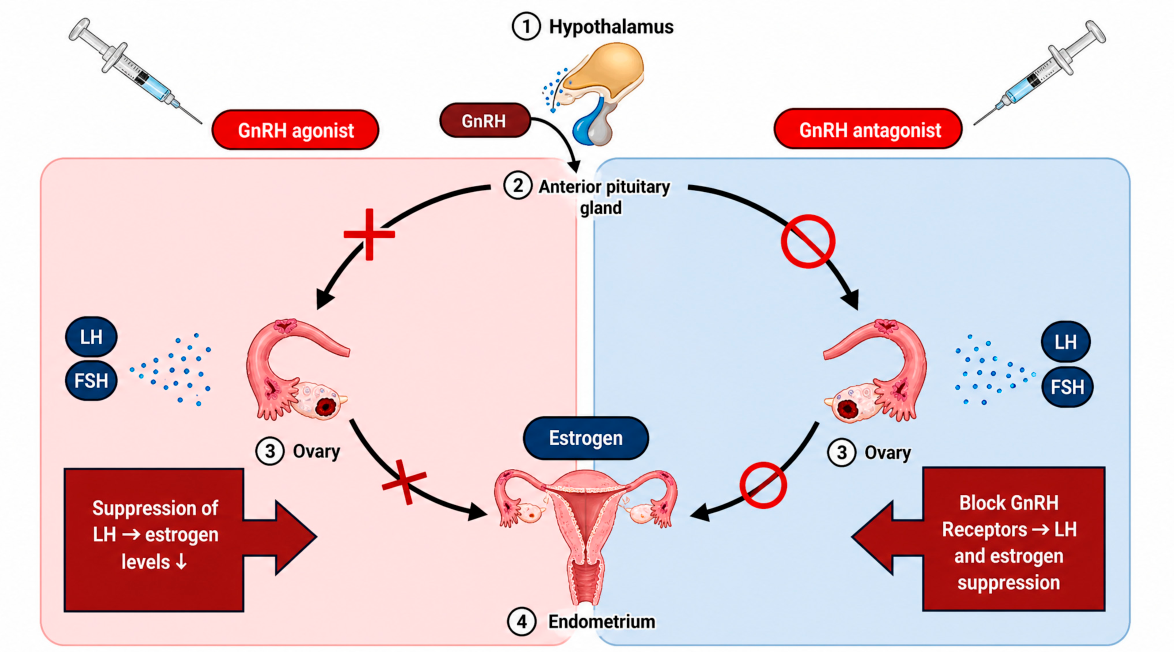
3. GnRH Analogues
3.1. GnRH Agonists
3.2. GnRH Antagonists
3.2.1. Elagolix
3.2.2. Relugolix
3.2.3. Linzagolix
4. Conclusions
Author Contributions
Funding
Institutional Review Board Statement
Informed Consent Statement
Data Availability Statement
Acknowledgments
Conflicts of Interest
Abbreviations
| AFS | American Fertility Society |
| BID | Twice daily |
| BMD | Bone mineral density |
| CCL2 | C-C motif chemokine ligand 2 |
| COX-2 | Cyclooxygenase-2 |
| CXCL8 | C-X-C motif chemokine ligand 8 |
| EHP-30 | Endometriosis Health Profile-30 |
| GnRH | Gonadotropin-releasing hormone |
| IL-1 | Interleukin-1 |
| IL-1β | Interleukin-1 beta |
| IL-6 | Interleukin-6 |
| IL-8 | Interleukin-8 |
| IL-17 | Interleukin-17 |
| IM | Intramuscular |
| JAK/STAT | Janus kinase/signal transducer and activator of transcription |
| MCP-1 | Monocyte chemoattractant protein-1 |
| NGF | Nerve growth factor |
| NR | Not reported |
| OCPs | Oral contraceptives |
| PGE2 | Prostaglandin E2 |
| QoL | Quality of life |
| SC | Subcutaneous |
| TGF-β1 | Transforming growth factor beta 1 |
| Th17 | T helper 17 |
| TID | Three times daily |
| TNF-α | Tumor necrosis factor alpha |
| TRPV1 | Transient receptor potential vanilloid 1 |
| VAS | Visual analogue scale |
| VEGF | Vascular endothelial growth factor |
| VEGF-A | Vascular endothelial growth factor A |
References
- de Ziegler, D.; Borghese, B.; Chapron, C. Endometriosis and infertility: Pathophysiology and management. Lancet 2010, 376, 730–738. [Google Scholar] [CrossRef] [Scilit] [PubMed]
- Butrick, C.W. Patients with chronic pelvic pain: Endometriosis or interstitial cystitis/painful bladder syndrome? JSLS 2007, 11, 182–189. [Google Scholar] [PubMed]
- Agarwal, S.K.; Chapron, C.; Giudice, L.C.; Laufer, M.R.; Leyland, N.; Missmer, S.A.; Singh, S.S.; Taylor, H.S. Clinical diagnosis of endometriosis: A call to action. Am. J. Obstet. Gynecol. 2019, 220, 354.e1–354.e12. [Google Scholar] [CrossRef] [Scilit] [PubMed]
- Matorras, R.; Rodriguez, F.; Pijoan, J.I.; Soto, E.; Perez, C.; Ramon, O.; Rodriguez-Escudero, F. Are there any clinical signs and symptoms that are related to endometriosis in infertile women? Am. J. Obstet. Gynecol. 1996, 174, 620–623. [Google Scholar] [CrossRef] [Scilit] [PubMed]
- Vercellini, P.; Vigano, P.; Somigliana, E.; Fedele, L. Endometriosis: Pathogenesis and treatment. Nat. Rev. Endocrinol. 2014, 10, 261–275. [Google Scholar] [CrossRef] [Scilit] [PubMed]
- Christodoulakos, G.; Augoulea, A.; Lambrinoudaki, I.; Sioulas, V.; Creatsas, G. Pathogenesis of endometriosis: The role of defective immunosurveillance. Eur. J. Contracept. Reprod. Health Care 2007, 12, 194–202. [Google Scholar] [CrossRef] [Scilit] [PubMed]
- Oală, I.E.; Mitranovici, M.I.; Chiorean, D.M.; Irimia, T.; Crișan, A.I.; Melinte, I.M.; Cotruș, T.; Tudorache, V.; Moraru, L.; Moraru, R.; et al. Endometriosis and the role of pro-inflammatory and anti-inflammatory cytokines in pathophysiology: A narrative review of the literature. Diagnostics 2024, 14, 312. [Google Scholar] [CrossRef] [Scilit] [PubMed]
- Moazen, S.; Arjmand, M.H. The role of local angiotensin II/angiotensin type 1 receptor in endometriosis: A potential target for new treatment approaches. Curr. Mol. Pharmacol. 2024, 17, e18761429315431. [Google Scholar] [CrossRef] [Scilit] [PubMed]
- Kupker, W.; Felberbaum, R.E.; Krapp, M.; Schill, T.; Malik, E.; Diedrich, K. Use of GnRH antagonists in the treatment of endometriosis. Reprod. Biomed. Online 2002, 5, 12–16. [Google Scholar] [CrossRef] [Scilit] [PubMed]
- Resta, C.; Moustogiannis, A.; Chatzinikita, E.; Ntalianis, D.M.; Ntalianis, K.M.; Philippou, A.; Koutsilieris, M.; Vlahos, N. Gonadotropin-releasing hormone GnRH receptors and their role in the treatment of endometriosis. Cureus 2023, 15, e38136. [Google Scholar] [CrossRef] [Scilit] [PubMed]
- Leyland, N.; Casper, R.; Laberge, P.; Singh, S.S. Endometriosis: Diagnosis and management. J. Obstet. Gynaecol. Can. 2010, 32, S1–S32. [Google Scholar] [CrossRef] [Scilit] [PubMed]
- Anaf, V.; Chapron, C.; El Nakadi, I.; De Moor, V.; Simonart, T.; Noel, J.-C. Pain, mast cells, and nerves in peritoneal, ovarian, and deep infiltrating endometriosis. Fertil. Steril. 2006, 86, 1336–1343. [Google Scholar] [CrossRef] [Scilit] [PubMed]
- McNamara, H.C.; Frawley, H.C.; Donoghue, J.F.; Readman, E.; Healey, M.; Ellett, L.; Reddington, C.; Hicks, L.J.; Harlow, K.; Rogers, P.A.W.; et al. Peripheral, central, and cross sensitization in endometriosis-associated pain and comorbid pain syndromes. Front. Reprod. Health 2021, 3, 729642. [Google Scholar] [CrossRef] [Scilit] [PubMed]
- Schliep, K.C.; Mumford, S.L.; Peterson, C.M.; Chen, Z.; Johnstone, E.B.; Sharp, H.T.; Stanford, J.B.; Hammoud, A.O.; Sun, L.; Buck Louis, G.M. Pain typology and incident endometriosis. Hum. Reprod. 2015, 30, 2427–2438. [Google Scholar] [CrossRef] [Scilit] [PubMed]
- Morotti, M.; Vincent, K.; Brawn, J.; Zondervan, K.T.; Becker, C.M. Peripheral changes in endometriosis-associated pain. Hum. Reprod. Update 2014, 20, 717–736. [Google Scholar] [CrossRef] [Scilit] [PubMed]
- Liang, Y.; Liu, D.; Yang, F.; Pan, W.; Zeng, F.; Wu, J. Perineural invasion in endometriotic lesions contributes to endometriosis-associated pain. J. Pain. Res. 2018, 11, 1999–2009. [Google Scholar] [CrossRef] [Scilit] [PubMed]
- Fauconnier, A.; Chapron, C.; Dubuisson, J.B.; Vieira, M.; Dousset, B.; Breart, G. Relation between pain symptoms and the anatomic location of deep infiltrating endometriosis. Fertil. Steril. 2002, 78, 719–726. [Google Scholar] [CrossRef] [Scilit] [PubMed]
- McKinnon, B.D.; Bertschi, D.; Bersinger, N.A.; Mueller, M.D. Inflammation and nerve fiber interaction in endometriotic pain. Trends Endocrinol. Metab. 2015, 26, 1–10. [Google Scholar] [CrossRef] [Scilit] [PubMed]
- Chen, Y.; Li, T. Unveiling the mechanisms of pain in endometriosis: Comprehensive analysis of inflammatory sensitization and therapeutic potential. Int. J. Mol. Sci. 2025, 26, 1770. [Google Scholar] [CrossRef] [Scilit] [PubMed]
- Laux-Biehlmann, A.; d’Hooghe, T.; Zollner, T.M. Menstruation pulls the trigger for inflammation and pain in endometriosis. Trends Pharmacol. Sci. 2015, 36, 270–276. [Google Scholar] [CrossRef] [Scilit] [PubMed]
- Wu, J.; Xie, H.; Yao, S.; Liang, Y. Macrophage and nerve interaction in endometriosis. J. Neuroinflamm. 2017, 14, 53. [Google Scholar] [CrossRef] [Scilit] [PubMed]
- Burns, K.A.; Thomas, S.Y.; Hamilton, K.J.; Young, S.L.; Cook, D.N.; Korach, K.S. Early endometriosis in females is directed by immune-mediated estrogen receptor alpha and IL-6 cross-talk. Endocrinology 2018, 159, 103–118. [Google Scholar] [CrossRef] [Scilit] [PubMed]
- Aich, A.; Afrin, L.B.; Gupta, K. Mast cell-mediated mechanisms of nociception. Int. J. Mol. Sci. 2015, 16, 29069–29092. [Google Scholar] [CrossRef] [Scilit] [PubMed]
- Na, Y.J.; Yang, S.H.; Baek, D.W.; Lee, D.H.; Kim, K.H.; Choi, Y.M.; Oh, S.T.; Hong, Y.S.; Kwak, J.Y.; Lee, K.S. Effects of peritoneal fluid from endometriosis patients on the release of vascular endothelial growth factor by neutrophils and monocytes. Hum. Reprod. 2006, 21, 1846–1855. [Google Scholar] [CrossRef] [Scilit] [PubMed]
- Banu, S.K.; Lee, J.; Speights, V.O., Jr.; Starzinski-Powitz, A.; Arosh, J.A. Selective inhibition of prostaglandin E2 receptors EP2 and EP4 induces apoptosis of human endometriotic cells through suppression of ERK1/2, AKT, NF-kappaB, and beta-catenin pathways and activation of intrinsic apoptotic mechanisms. Mol. Endocrinol. 2009, 23, 1291–1305. [Google Scholar] [CrossRef] [Scilit] [PubMed]
- Malutan, A.M.; Drugan, T.; Costin, N.; Ciortea, R.; Bucuri, C.; Rada, M.P.; Mihu, D. Pro-inflammatory cytokines for evaluation of inflammatory status in endometriosis. Cent. Eur. J. Immunol. 2015, 40, 96–102. [Google Scholar] [CrossRef] [Scilit] [PubMed]
- Bo, C.; Wang, Y. Angiogenesis signaling in endometriosis: Molecules, diagnosis and treatment (review). Mol. Med. Rep. 2024, 29, 43. [Google Scholar] [CrossRef] [Scilit] [PubMed]
- Kyama, C.M.; Mihalyi, A.; Simsa, P.; Falconer, H.; Fulop, V.; Mwenda, J.M.; Peeraer, K.; Tomassetti, C.; Meuleman, C.; D’Hooghe, T.M. Role of cytokines in the endometrial-peritoneal cross-talk and development of endometriosis. Front. Biosci. (Elite Ed.) 2009, 1, 444–454. [Google Scholar] [CrossRef] [Scilit] [PubMed]
- Banu, S.K.; Lee, J.; Speights, V.O., Jr.; Starzinski-Powitz, A.; Arosh, J.A. Cyclooxygenase-2 regulates survival, migration, and invasion of human endometriotic cells through multiple mechanisms. Endocrinology 2008, 149, 1180–1189. [Google Scholar] [CrossRef] [Scilit] [PubMed]
- Brawn, J.; Morotti, M.; Zondervan, K.T.; Becker, C.M.; Vincent, K. Central changes associated with chronic pelvic pain and endometriosis. Hum. Reprod. Update 2014, 20, 737–747. [Google Scholar] [CrossRef] [Scilit] [PubMed]
- Golinska, M.; Wołyniak, M.; Kulesza, P.; Fendler, W. Neuroinflammation is responsible for pain in endometriosis-targeting the JAK-STAT pathway and mast cell activation. Front. Immunol. 2025, 16, 1621178. [Google Scholar] [CrossRef] [Scilit] [PubMed]
- Malykhina, A.P. Neural mechanisms of pelvic organ cross-sensitization. Neuroscience 2007, 149, 660–672. [Google Scholar] [CrossRef] [Scilit] [PubMed]
- Velho, R.V.; Freitag, J.H.; Brueckner, A.M.; Thalmeier, L.; Pohl, J.; Mechsner, S. The histamine-associated inflammatory landscape of endometriosis: Molecular profiling of HDC, HRH1-HRH4, and cytokines across lesion subtypes. Int. J. Mol. Sci. 2026, 27, 212. [Google Scholar] [CrossRef] [Scilit] [PubMed]
- Rocha, M.G.; e Silva, J.C.; Ribeiro da Silva, A.; Candido dos Reis, F.J.; Nogueira, A.A.; Poli-Neto, O.B. TRPV1 expression on peritoneal endometriosis foci is associated with chronic pelvic pain. Reprod. Sci. 2011, 18, 511–515. [Google Scholar] [CrossRef] [Scilit] [PubMed]
- Tokushige, N.; Markham, R.; Russell, P.; Fraser, I.S. Nerve fibres in peritoneal endometriosis. Hum. Reprod. 2006, 21, 3001–3007. [Google Scholar] [CrossRef] [Scilit] [PubMed]
- Anaf, V.; Simon, P.; El Nakadi, I.; Fayt, I.; Simonart, T.; Buxant, F.; Noel, J.-C. Hyperalgesia, nerve infiltration and nerve growth factor expression in deep adenomyotic nodules, peritoneal and ovarian endometriosis. Hum. Reprod. 2002, 17, 1895–1900. [Google Scholar] [CrossRef] [Scilit] [PubMed]
- Asante, A.A.; Taylor, R.N. Endometriosis: The role of neuroangiogenesis. Annu. Rev. Physiol. 2011, 73, 163–182. [Google Scholar] [CrossRef] [Scilit] [PubMed]
- Issa, B.; Onon, T.S.; Agrawal, A.; Shekhar, C.; Morris, J.; Hamdy, S.; Whorwell, P.J. Visceral hypersensitivity in endometriosis: A new target for treatment? Gut 2012, 61, 367–372. [Google Scholar] [CrossRef] [Scilit] [PubMed]
- Wang, X.; Wu, N.; Xue, Q. Macrophages in endometriosis: Key roles and emerging therapeutic opportunities-A narrative review. Reprod. Biol. Endocrinol. 2025, 23, 134. [Google Scholar] [CrossRef] [Scilit] [PubMed]
- Porpora, M.G.; Koninckx, P.R.; Piazze, J.; Natili, M.; Colagrande, S.; Cosmi, E.V. Correlation between endometriosis and pelvic pain. J. Am. Assoc. Gynecol. Laparosc. 1999, 6, 429–434. [Google Scholar] [CrossRef] [Scilit] [PubMed]
- Terry, K.L.; Shafrir, A.; Laliberte, A.; Vitonis, A.F.; Garbutt, K.; DePari, M.; Becker, C.; Sasamoto, N.; Zondervan, K.T.; Missmer, S.A. Circulating inflammatory biomarkers and endometriosis lesion characteristics in the WisE Consortium. npj Womens Health 2025, 3, 62. [Google Scholar] [CrossRef] [Scilit] [PubMed]
- Vercellini, P.; Trespidi, L.; Colombo, A.; Vendola, N.; Marchini, M.; Crosignani, P.G. A gonadotropin-releasing hormone agonist versus a low-dose oral contraceptive for pelvic pain associated with endometriosis. Fertil. Steril. 1993, 60, 75–79. [Google Scholar] [CrossRef] [Scilit] [PubMed]
- Magon, N. Gonadotropin releasing hormone agonists: Expanding vistas. Indian. J. Endocrinol. Metab. 2011, 15, 261–267. [Google Scholar] [CrossRef] [Scilit] [PubMed]
- Brown, J.; Pan, A.; Hart, R.J. Gonadotrophin-releasing hormone analogues for pain associated with endometriosis. Cochrane Database Syst. Rev. 2010, 2023, CD008475. [Google Scholar] [CrossRef] [Scilit] [PubMed]
- Kumar, P.; Sharma, A. Gonadotropin-releasing hormone analogs: Understanding advantages and limitations. J. Hum. Reprod. Sci. 2014, 7, 170–174. [Google Scholar] [CrossRef] [Scilit] [PubMed]
- Marik, J.J. Leuprolide acetate depot and hormonal add-back in endometriosis: A 12-month study. Obstet. Gynecol. 1998, 91, 793. [Google Scholar] [CrossRef] [Scilit] [PubMed]
- Shaw, R.W. An open randomized comparative study of the effect of goserelin depot and danazol in the treatment of endometriosis. Fertil. Steril. 1992, 58, 265–272. [Google Scholar] [CrossRef] [Scilit] [PubMed]
- Shaw, R.W. Nafarelin in the treatment of pelvic pain caused by endometriosis. Am. J. Obstet. Gynecol. 1990, 162, 574–576. [Google Scholar] [CrossRef] [Scilit] [PubMed]
- Surrey, E.S. Gonadotropin-releasing hormone agonist and add-back therapy: What do the data show? Curr. Opin. Obstet. Gynecol. 2010, 22, 283–288. [Google Scholar] [CrossRef] [Scilit] [PubMed]
- Donnez, J.; Dolmans, M.-M. GnRH antagonists with or without add-back therapy: A new alternative in the management of endometriosis? Int. J. Mol. Sci. 2021, 22, 11342. [Google Scholar] [CrossRef] [Scilit] [PubMed]
- Henzl, M.R.; Corson, S.L.; Moghissi, K.; Buttram, V.C.; Berqvist, C.; Jacobson, J. Administration of nasal nafarelin as compared with oral danazol for endometriosis. A multicenter double-blind comparative clinical trial. N. Engl. J. Med. 1988, 318, 485–489. [Google Scholar] [CrossRef] [Scilit] [PubMed]
- Kennedy, S.H.; Williams, I.A.; Brodribb, J.; Barlow, D.H.; Shaw, R.W. A comparison of nafarelin acetate and danazol in the treatment of endometriosis. Fertil. Steril. 1990, 53, 998–1003. [Google Scholar] [CrossRef] [Scilit] [PubMed]
- Rolland, R.; van der Heijden, P.F.M. Nafarelin versus danazol in the treatment of endometriosis. Am. J. Obstet. Gynecol. 1990, 162, 586–588. [Google Scholar] [CrossRef] [Scilit] [PubMed]
- Tahara, M.; Matsuoka, T.; Yokoi, T.; Tasaka, K.; Kurachi, H.; Murata, Y. Treatment of endometriosis with a decreasing dosage of a gonadotropin-releasing hormone agonist (nafarelin): A pilot study with low-dose agonist therapy (“draw-back” therapy). Fertil. Steril. 2000, 73, 799–804. [Google Scholar] [CrossRef] [Scilit] [PubMed]
- The Nafarelin European Endometriosis Trial Group (NEET). Nafarelin for endometriosis: A large-scale, danazol-controlled trial of efficacy and safety, with 1-year follow-up. Fertil. Steril. 1992, 57, 514–522. [Google Scholar] [CrossRef] [Scilit]
- Cheng, M.-H.; Yu, B.K.-J.; Chang, S.-P.; Wang, P.-H. A randomized, parallel, comparative study of the efficacy and safety of nafarelin versus danazol in the treatment of endometriosis in Taiwan. J. Chin. Med. Assoc. 2005, 68, 307–314. [Google Scholar] [CrossRef] [Scilit] [PubMed]
- Dlugi, A.M.; Miller, J.D.; Knittle, J.; Lupron Study Group. Lupron depot (leuprolide acetate for depot suspension) in the treatment of endometriosis: A randomized, placebo-controlled, double-blind study. Fertil. Steril. 1990, 54, 419–427. [Google Scholar] [CrossRef] [Scilit] [PubMed]
- Wheeler, J.M.; Knittle, J.D.; Miller, J.D. Depot leuprolide versus danazol in treatment of women with symptomatic endometriosis. I. Effic. Results. Am. J. Obstet. Gynecol. 1992, 167, 1367–1371. [Google Scholar] [CrossRef] [Scilit] [PubMed]
- Wheeler, J.M.; Knittle, J.D.; Miller, J.D.; Lupron Endometriosis Study Group. Depot leuprolide acetate versus danazol in the treatment of women with symptomatic endometriosis: A multicenter double-blind randomized clinical trial. Am. J. Obstet. Gynecol. 1993, 169, 26–33. [Google Scholar] [CrossRef] [Scilit] [PubMed]
- Chang, S.P.; Ng, H.T. A randomized comparative study of the effect of Leuprolide acetate depot and danazol in the treatment of endometriosis. Zhonghua YI Xue ZA Zhi (Free China Ed.) 1996, 57, 431–437. [Google Scholar] [PubMed]
- Ling, F.W. Randomized controlled trial of depot leuprolide in patients with chronic pelvic pain and clinically suspected endometriosis. Obstet. Gynecol. 1999, 93, 51–58. [Google Scholar] [CrossRef] [Scilit] [PubMed]
- Hornstein, M.D.; Surrey, E.S.; Weisberg, G.W.; Casino, L.A. Leuprolide acetate depot and hormonal add-back in endometriosis: A 12-month study. Obstet. Gynecol. 1998, 91, 16–24. [Google Scholar] [CrossRef] [Scilit] [PubMed]
- Surrey, E.S.; Hornstein, M.D. Prolonged GnRH agonist and add-back therapy for symptomatic endometriosis: Long-term follow-up. Obstet. Gynecol. 2002, 99, 709–719. [Google Scholar] [CrossRef] [Scilit] [PubMed]
- Reichel, R.P.; Schweppe, K.W. Goserelin (Zoladex) depot in the treatment of endometriosis. Fertil. Steril. 1992, 57, 1197–1202. [Google Scholar] [CrossRef] [Scilit] [PubMed]
- Rock, J.A.; Truglia, J.A.; Caplan, R.J. Zoladex (goserelin acetate implant) in the treatment of endometriosis: A randomized comparison with danazol. Obstet. Gynecol. 1993, 82, 198–205. [Google Scholar] [PubMed]
- Australian New Zealand ZOLADEX Study Group. Goserelin depot versus danazol in the treatment of endometriosis: The Australian/New Zealand experience. Aust. N. Z. J. Obstet. Gynaecol. 1996, 36, 55–60. [Google Scholar] [CrossRef] [Scilit] [PubMed]
- Soysal, S.; Soysal, M.E.; Ozer, S.; Gul, N.; Gezgin, T. The effects of post-surgical administration of goserelin plus anastrozole compared to goserelin alone in patients with severe endometriosis: A prospective randomized trial. Hum. Reprod. 2004, 19, 160–167. [Google Scholar] [CrossRef] [Scilit] [PubMed]
- Taylor, H.S.; Giudice, L.C.; Lessey, B.A.; Abrao, M.S.; Kotarski, J.; Archer, D.F.; Diamond, M.P.; Surrey, E.; Johnson, N.P.; Watts, N.B.; et al. Treatment of endometriosis-associated pain with elagolix, an oral GnRH antagonist. N. Engl. J. Med. 2017, 377, 28–40. [Google Scholar] [CrossRef] [Scilit] [PubMed]
- Leyland, N.; Estes, S.J.; Lessey, B.A.; Advincula, A.P.; Taylor, H.S. A clinician’s guide to the treatment of endometriosis with elagolix. J. Womens Health 2021, 30, 569–578. [Google Scholar] [CrossRef] [Scilit] [PubMed]
- Surrey, E.; Taylor, H.S.; Giudice, L.; Lessey, B.A.; Abrao, M.S.; Archer, D.F.; Diamond, M.P.; Johnson, N.P.; Watts, N.B.; Gallagher, J.C.; et al. Long-term outcomes of elagolix in women with endometriosis: Results from two extension studies. Obstet. Gynecol. 2018, 132, 147–160. [Google Scholar] [CrossRef] [Scilit] [PubMed]
- Diamond, M.P.; Carr, B.; Dmowski, W.P.; Koltun, W.; O’Brien, C.; Jiang, P.; Burke, J.; Jimenez, R.; Garner, E.; Chwalisz, K. Elagolix treatment for endometriosis-associated pain: Results from a phase 2, randomized, double-blind, placebo-controlled study. Reprod. Sci. 2014, 21, 363–371. [Google Scholar] [CrossRef] [Scilit] [PubMed]
- Miller, C.E.; Kim, J.H.; Kroll, R.; Simon, J.A.; Soliman, A.M.; Thomas, J.W.; Xu, Y.; Ng, J.; Snabes, M.C. Efficacy, tolerability, and bone density outcomes of elagolix with add-back therapy for endometriosis-associated pain: Twelve months of an ongoing randomized phase 3 trial. Am. J. Obstet. Gynecol. 2024, 231, 630.e1–630.e13. [Google Scholar] [CrossRef] [Scilit] [PubMed]
- As-Sanie, S.; Abrao, M.S.; Reznichenko, G.; Wilk, K.; Zhong, Y.; Perry, J.; Hunsche, E.; Soulban, G.; Becker, C.M. Impact of relugolix combination therapy on functioning and quality of life in women with endometriosis-associated pain. Fertil. Steril. 2024, 122, 687–695. [Google Scholar] [CrossRef] [Scilit] [PubMed]
- Becker, C.M.; Johnson, N.P.; As-Sanie, S.; Arjona Ferreira, J.C.; Abrao, M.S.; Wilk, K.; Imm, S.J.; Mathur, V.; Perry, J.S.; Wagman, R.B.; et al. Two-year efficacy and safety of relugolix combination therapy in women with endometriosis-associated pain: SPIRIT open-label extension study. Hum. Reprod. 2024, 39, 526–537. [Google Scholar] [CrossRef] [Scilit] [PubMed]
- Osuga, Y.; Seki, Y.; Tanimoto, M.; Kusumoto, T.; Kudou, K.; Terakawa, N. Relugolix, an oral gonadotropin-releasing hormone (GnRH) receptor antagonist, in women with endometriosis-associated pain: Phase 2 safety and efficacy 24-week results. BMC Womens Health 2021, 21, 250. [Google Scholar] [CrossRef] [Scilit] [PubMed]
- As-Sanie, S. Once daily oral relugolix combination therapy versus placebo in patients with endometriosis-associated pain: Two replicate phase 3, randomised, double-blind, studies (SPIRIT 1 and 2). Lancet 2022, 399, 2267–2279. [Google Scholar] [CrossRef] [Scilit] [PubMed]
- Osuga, Y.; Seki, Y.; Tanimoto, M.; Kusumoto, T.; Kudou, K.; Terakawa, N. Relugolix, an oral gonadotropin-releasing hormone receptor antagonist, reduces endometriosis-associated pain in a dose-response manner: A randomized, double-blind, placebo-controlled study. Fertil. Steril. 2021, 115, 397–405. [Google Scholar] [CrossRef] [Scilit] [PubMed]
- Harada, T. Relugolix, an oral gonadotropin-releasing hormone receptor antagonist, reduces endometriosis-associated pain compared with Leuprolide in Japanese women: A phase 3, randomized, double-blind, noninferiority study. Fertil. Steril. 2022, 117, 583–592. [Google Scholar] [CrossRef] [Scilit] [PubMed]
- Donnez, J.; Taylor, H.S.; Taylor, R.N.; Akin, M.D.; Tatarchuk, T.F.; Wilk, K.; Gotteland, J.-P.; Lecomte, V.; Bestel, E. Treatment of endometriosis-associated pain with linzagolix, an oral gonadotropin-releasing hormone-antagonist: A randomized clinical trial. Fertil. Steril. 2020, 114, 44–55. [Google Scholar] [CrossRef] [Scilit] [PubMed]
- Donnez, J.; Becker, C.; Taylor, H.; Carmona Herrera, F.; Donnez, O.; Horne, A.; Paszkowski, M.; Petraglia, F.; Renner, S.P.; Patel, A.; et al. Linzagolix therapy versus a placebo in patients with endometriosis-associated pain: A prospective, randomized, double-blind, phase 3 study (EDELWEISS 3). Hum. Reprod. 2024, 39, 1208–1221. [Google Scholar] [CrossRef] [Scilit] [PubMed]
- Surrey, E.S. GnRH agonists in the treatment of symptomatic endometriosis: A review. F S Rep. 2023, 4, 40–45. [Google Scholar] [CrossRef] [Scilit] [PubMed]
- Vercellini, P.; Crosignani, P.G.; Fadini, R.; Radici, E.; Belloni, C.; Sismondi, P. A gonadotrophin-releasing hormone agonist compared with expectant management after conservative surgery for symptomatic endometriosis. BJOG 1999, 106, 672–677. [Google Scholar] [CrossRef] [Scilit] [PubMed]
- Kaveh, M.; Chaichian, S.; Kashi, A.M.; Mohsenikia, M.; Afrouzeh, M.; Sadegi, K. Comparison of quality of life in patients with endometriosis undergoing treatment with progestins, oral contraceptives pills (OCP), and GnRH agonists. BMC Womens Health 2025, 25, 397. [Google Scholar] [CrossRef] [Scilit] [PubMed]
- Lemay, A.; Maheux, R.; Huot, C.; Blanchet, J.; Faure, N. Efficacy of intranasal or subcutaneous luteinizing hormone-releasing hormone agonist inhibition of ovarian function in the treatment of endometriosis. Am. J. Obstet. Gynecol. 1988, 158, 233–236. [Google Scholar] [CrossRef] [Scilit] [PubMed]
- Wang, J.; Mao, X.; Zhu, L.; Zhang, X. Unravelling the intricate link: Mast cells and estrogen-induced pain sensitization in endometriosis. Int. J. Biol. Sci. 2025, 21, 5891. [Google Scholar] [CrossRef] [Scilit] [PubMed]
- Becker, C.M.; Bokor, A.; Heikinheimo, O.; Horne, A.; Jansen, F.; Kiesel, L.; King, K.; Kvaskoff, M.; Nap, A.; Petersen, K.; et al. ESHRE guideline: Endometriosis. Hum. Reprod. Open 2022, 2022, hoac009. [Google Scholar] [CrossRef] [Scilit] [PubMed]


| Biomarker | Pathophysiologic Role in Endometriosis | Association with Pain |
|---|---|---|
| IL-1 β [27] |
| Contributes to nociceptor sensitization and sustains the inflammatory microenvironment associated with dysmenorrhea and chronic pelvic pain. |
| IL-6 [28] |
| Elevated in inflammatory disease states and linked to chronic pelvic pain biology, although direct clinical discrimination by pain phenotype remains inconsistent across sample types. |
| TNF-α [27,29] |
| Involved in peripheral sensitization and in pathways that enhance NGF synthesis and pain transmission. |
| IL-8 (CXCL8) [23] |
| Linked to hyperalgesia and neuroimmune activation; mast-cell and macrophage–rich lesions may enhance its nociceptive relevance. |
| IL-17 [24] |
| Supports a pro-nociceptive microenvironment through inflammatory amplification rather than being a standalone pain marker. |
| CCL2/MCP-1 [14,15] |
| Supports neuroimmune crosstalk by facilitating macrophage accumulation near nerve fibers, thereby contributing to sensitization. |
| COX-2/PGE2 axis [29,30] |
| PGE2 lowers nociceptive thresholds, promotes dysmenorrhea, and is one of the clearest mediators linking inflammation to pain. |
| VEGF/VEGF-A [28] |
| Supports lesion innervation/vascularization and correlates with biologically active disease, thereby facilitating pain persistence. |
| TGF-β1 [31] |
| Particularly relevant for chronic pain and deep disease phenotypes where fibrosis and persistent inflammation coexist. |
| NGF [32,33] |
| One of the most important mediators linking inflammation to peripheral sensitization and endometriosis-associated pain. |
| Histamine [34] |
| Contributes to nociceptor sensitization and mast-cell–driven pain amplification, especially in neuroinflammatory models of endometriosis. |
| Therapeutic Subgroup | Ref | GnRH Agonist Regimen | Comparator | Efficacy Findings | Safety Outcomes | Clinical Comments |
|---|---|---|---|---|---|---|
| Nafarelin | [51] | Nafarelin 400 or 800 μg/day, intranasal | Danazol 800 mg/day, oral | Mean laparoscopic scores declined in all groups; >80% of patients in each arm had reduced disease extent. | Hypoestrogenic adverse effects were more typical of nafarelin treatment. | Overall efficacy was comparable across groups. |
| [52] | Nafarelin 400 μg/day, intranasal | Danazol 600 mg/day, oral | Complete regression in 30% and partial regression in 57%; both treatments reduced active disease without a significant difference in efficacy. | Hot flushes and headaches were more frequent with nafarelin, whereas weight gain was more common with danazol. | Head-to-head comparative trial. | |
| [53] | Nafarelin 200 μg BID, intranasal | Danazol 200 mg BID, oral | AFS endometriosis scores and symptom severity scores decreased in both groups, indicating similar efficacy. | No major between-group differences in overall efficacy; tolerability profile differed according to mechanism of action. | Concise head-to-head efficacy comparison. | |
| [55] | Nafarelin 200 μg BID, intranasal | Danazol | Clinical improvement occurred in 94% of the nafarelin group and 91% of the danazol group; resolution of physical findings was comparable. | Hypoestrogenic symptoms were associated with nafarelin, whereas androgenic effects were more typical of danazol. | Symptom-oriented companion study. | |
| [56] | Nafarelin 200 μg BID, intranasal | Danazol 200 mg TID, oral | Disease extent and symptoms improved in both groups; symptoms remained less severe than baseline after discontinuation. | Overall tolerability was acceptable in both groups, with adverse effects reflecting the endocrine mechanism of each drug. | Comparable effectiveness during treatment and follow-up. | |
| Leuprolide | [57] | Leuprolide acetate depot 3.75 mg monthly, IM | Placebo | Greater improvement in dysmenorrhea, pelvic pain, and pelvic tenderness than placebo. | Menstrual suppression and menopausal-range estradiol levels were achieved; vasomotor symptoms were reported more frequently. | Placebo-controlled efficacy study. |
| [58] | Leuprolide acetate depot 3.75 mg monthly | Danazol 800 mg/day | Both drugs were associated with frequent but largely reversible adverse effects. | Bone density loss was more pronounced with leuprolide; danazol had a less favorable lipid/metabolic profile. | Safety comparison is clinically important. | |
| [59] | Leuprolide acetate depot 3.75 mg SC every 28 days | Danazol 800 mg/day | Severity scores decreased in both groups; no significant efficacy difference. | Hot flushes were more common with leuprorelin; danazol produced more androgenic/metabolic adverse effects. | ||
| [60] | Depot leuprolide 3.75 mg monthly | Danazol | Similar efficacy in reducing disease extent and pain/tenderness. | Both regimens were clinically effective, with differing adverse-effect profiles. | Key direct comparison between leuprolide and danazol. | |
| [61] | Depot leuprolide 3.75 mg/month, IM | Placebo | Physician-rated scores improved for dysmenorrhea, pelvic pain, and pelvic tenderness. | Supports empiric treatment in women with clinically suspected endometriosis; hypoestrogenic symptoms require clinical monitoring. | Clinically relevant empiric-treatment study. | |
| Leuprolide with add-back therapy | [62] | Leuprolide acetate depot 3.75 mg IM every 4 weeks, alone or with add-back | Placebo add-back vs. norethindrone acetate 5 mg/day ± conjugated equine estrogens | Pelvic pain improved significantly in all groups by week 8. | Bone mineral density decreased by 6.3% in the leuprolide-alone arm but was maintained in the add-back groups. | Landmark add-back therapy study. |
| [63] | Prior leuprolide ± add-back regimens | Previous randomized arms | Symptoms and examination scores remained improved for at least 8 months after treatment. | Better bone recovery and sustained tolerability were observed in patients who had received add-back therapy. | Long-term follow-up of add-back strategy. | |
| Goserelin | [64] | Goserelin depot 3.6 mg SC every 4 weeks | None | Subjective scores decreased by 86%; 31.5% showed complete disappearance of visible deposits. | Hypoestrogenic adverse effects were observed as expected with ovarian suppression. | Because of its single-arm design, this study is more informative as an early efficacy and safety report than as a comparative trial. |
| [65] | Goserelin 3.6 mg every 28 days, SC | Danazol 400 mg/day | Revised AFS scores declined by 53% with goserelin vs. 33% with danazol; symptoms improved in both groups. | Hypoestrogenic effects were more common with goserelin; androgenic effects predominated with danazol. | Comparative efficacy and tolerability study. | |
| [66] | Depot goserelin acetate 3.6 mg SC every 4 weeks | Danazol 600 mg/day | Similar reductions in endometriosis scores and pain outcomes were reported. | Treatment intolerance was noteworthy, particularly in the danazol group. | Additional comparative clinical trial. | |
| Goserelin versus oral contraceptive/post-surgical strategy | [42] | Goserelin 3.6 mg monthly, SC | Low-dose cyclic oral contraceptive | Pelvic pain and dyspareunia improved in both groups; dysmenorrhea improved significantly in the oral contraceptive group. | Symptoms recurred in most participants after treatment withdrawal. | Illustrates recurrence after treatment cessation. |
| [67] | Goserelin + anastrozole | Goserelin alone | Recurrence occurred in 7.5% of the combined-treatment group vs. 35% of the goserelin-alone group; median time to recurrence was longer in the combined group. | Combined blockade prolonged the pain-free interval but was associated with greater short-term bone loss. | Relevant for recurrence-risk discussion. |
| Ref | Intervention | Comparator | Duration/Follow-Up | Main Findings | Safety Outcomes | Comments |
|---|---|---|---|---|---|---|
| [77] | Relugolix 10, 20, or 40 mg orally once daily | Placebo; Leuprolide 3.75 mg monthly SC | 12 weeks | Relugolix produced a dose-dependent reduction in endometriosis-associated pain. Mean changes in pelvic pain VAS were −3.8 mm with placebo, −6.2 mm, −8.1 mm, and −10.4 mm with relugolix 10, 20, and 40 mg, respectively, compared with −10.6 mm with leuprorelin | Safety findings were consistent with dose-dependent ovarian suppression. | The 40 mg regimen achieved efficacy similar to that observed with leuprorelin. |
| [75] | Relugolix 10, 20, or 40 mg orally once daily | Placebo; Leuprolide 3.75 mg SC every 4 weeks | 24 weeks | Dose-dependent pain reduction with relugolix was maintained through 24 weeks. At the end of treatment, mean pelvic pain VAS changes were −3.2 mm with placebo, −6.8 mm, −9.0 mm, and −11.9 mm with relugolix 10, 20, and 40 mg, respectively, versus −12.7 mm with leuprorelin. | Bone mineral density decline was dose-dependent and, at the 40 mg dose, was comparable to that seen with leuprorelin. | Supports dose–response interpretation. |
| [78] | Relugolix 40 mg orally once daily | Leuprolide 3.75 or 1.88 mg SC every 4 weeks | 24 weeks | Relugolix demonstrated non-inferiority to leuprorelin for reduction in endometriosis-associated pelvic pain. The change in maximum pelvic pain VAS score was −52.6 ± 1.3 with relugolix and −57.5 ± 1.4 with leuprorelin (reported on the original study scale). | Menstruation resumed earlier after treatment discontinuation in patients receiving relugolix. | |
| [76] | Relugolix 40 mg + estradiol 1 mg + norethindrone acetate 0.5 mg once daily | Placebo | 24 weeks | The dysmenorrhea responder rate was 75% (158/212) with relugolix combination therapy compared with 27% (57/212) with placebo. The responder rate for non-menstrual pelvic pain was 58% (124/212) versus 40% (84/212). | Combination therapy was designed to improve tolerability while limiting hypoestrogenic toxicity. | Phase 3 pivotal trial. |
| [73] | Relugolix 40 mg + estradiol 1 mg + norethindrone acetate 0.5 mg once daily | Placebo | 24 weeks | The dysmenorrhea responder rate reached 75% (155/206) with relugolix combination therapy, compared with 30% (62/204) with placebo. For non-menstrual pelvic pain, the corresponding responder rates were 66% (136/206) and 43% (87/204). | Safety profile was consistent with fixed-dose combination treatment. | Phase 3 pivotal trial. |
| [74] | Relugolix combination therapy | ½- | Up to 104 weeks | Improvement in dysmenorrhea, non-menstrual pelvic pain, dyspareunia, and function was maintained through Week 104. At Week 104, responder rates were 84.8% for dysmenorrhea and 75.8% for non-menstrual pelvic pain. | Bone mineral density decreased by less than 1% initially and subsequently remained stable | Long-term extension data. |
| [72] | Elagolix 200 mg BID + estradiol 1 mg/norethindrone acetate 0.5 mg once daily | Placebo | 12 months | At Month 6, the dysmenorrhea response rate was 62.8% versus 23.7%, while the response rate for non-menstrual pelvic pain was 51.3% versus 36.8% compared with placebo. These benefits remained significant through Month 12. | With add-back therapy, bone mineral density change remained below 1% from baseline. | Clinically important for longer-term tolerability. |
| [68] | Elagolix 150 mg once daily or 200 mg BID | Placebo | 6 months | Both elagolix doses improved dysmenorrhea and non-menstrual pelvic pain compared with placebo. Dysmenorrhea response rates at Month 3 ranged from 46.4% to 75.8% for elagolix, versus 19.6% to 22.7% for placebo. | Higher doses were associated with greater hypoestrogenic burden. | |
| [70] | Elagolix 150 mg once daily or 200 mg BID | - | 12 continuous months | Long-term treatment with elagolix was associated with sustained reductions in dysmenorrhea, non-menstrual pelvic pain, and dyspareunia. | After 12 months, dysmenorrhea responder rates reached up to 78.2% with the 200 mg BID regimen. | Long-term extension study. |
| [79] | Linzagolix 75 mg daily | Placebo | Up to 6 months | Linzagolix 75 mg improved dysmenorrhea (44.0% vs. 23.5%) but did not significantly improve non-menstrual pelvic pain. | Bone loss remained below 1% in the regimen as reported. | Separate lower-dose regimen without conflating outcomes from higher-dose/add-back study. |
| [80] | Linzagolix 75 mg daily or 200 mg daily + add-back therapy | Placebo | Up to 6 months | At Month 3, linzagolix 200 mg + add-back significantly improved dysmenorrhea (72.9% vs. 23.5%) and non-menstrual pelvic pain (47.3% vs. 30.9%). | Bone loss remained below 1% with the regimen reported. | Separate higher-dose/add-back regimen. |
Disclaimer/Publisher’s Note: The statements, opinions and data contained in all publications are solely those of the individual author(s) and contributor(s) and not of MDPI and/or the editor(s). MDPI and/or the editor(s) disclaim responsibility for any injury to people or property resulting from any ideas, methods, instructions or products referred to in the content. |
© 2026 by the authors. Licensee MDPI, Basel, Switzerland. This article is an open access article distributed under the terms and conditions of the Creative Commons Attribution (CC BY) license.
Share and Cite
Anastasiu, C.V.; Dimienescu, O.G.; Dull, A.-M.; Grigorescu, O.D.; Canditu, I.; Moga, M.A. GnRH Analogues for the Treatment of Endometriosis-Related Pain: A Narrative Review. J. Clin. Med. 2026, 15, 5440. https://doi.org/10.3390/jcm15145440
Anastasiu CV, Dimienescu OG, Dull A-M, Grigorescu OD, Canditu I, Moga MA. GnRH Analogues for the Treatment of Endometriosis-Related Pain: A Narrative Review. Journal of Clinical Medicine. 2026; 15(14):5440. https://doi.org/10.3390/jcm15145440
Chicago/Turabian StyleAnastasiu, Costin Vlad, Oana Gabriela Dimienescu, Ana-Maria Dull, Ovidiu Dan Grigorescu, Iulia Canditu, and Marius Alexandru Moga. 2026. "GnRH Analogues for the Treatment of Endometriosis-Related Pain: A Narrative Review" Journal of Clinical Medicine 15, no. 14: 5440. https://doi.org/10.3390/jcm15145440
APA StyleAnastasiu, C. V., Dimienescu, O. G., Dull, A.-M., Grigorescu, O. D., Canditu, I., & Moga, M. A. (2026). GnRH Analogues for the Treatment of Endometriosis-Related Pain: A Narrative Review. Journal of Clinical Medicine, 15(14), 5440. https://doi.org/10.3390/jcm15145440