Article

Incidence and Independent Risk Factors for Obstetric Anal Sphincter Injuries: A Four-Year Retrospective Cohort Study from a UK Tertiary Maternity Unit


Epsom and St Helier University Hospitals NHS Trust, Wrythe Lane, Carshalton, Surrey SM5 1AA, UK
*
Author to whom correspondence should be addressed.
J. Clin. Med. 2026, 15(11), 4396; https://doi.org/10.3390/jcm15114396
Submission received: 11 April 2026 / Revised: 21 May 2026 / Accepted: 26 May 2026 / Published: 5 June 2026

Abstract

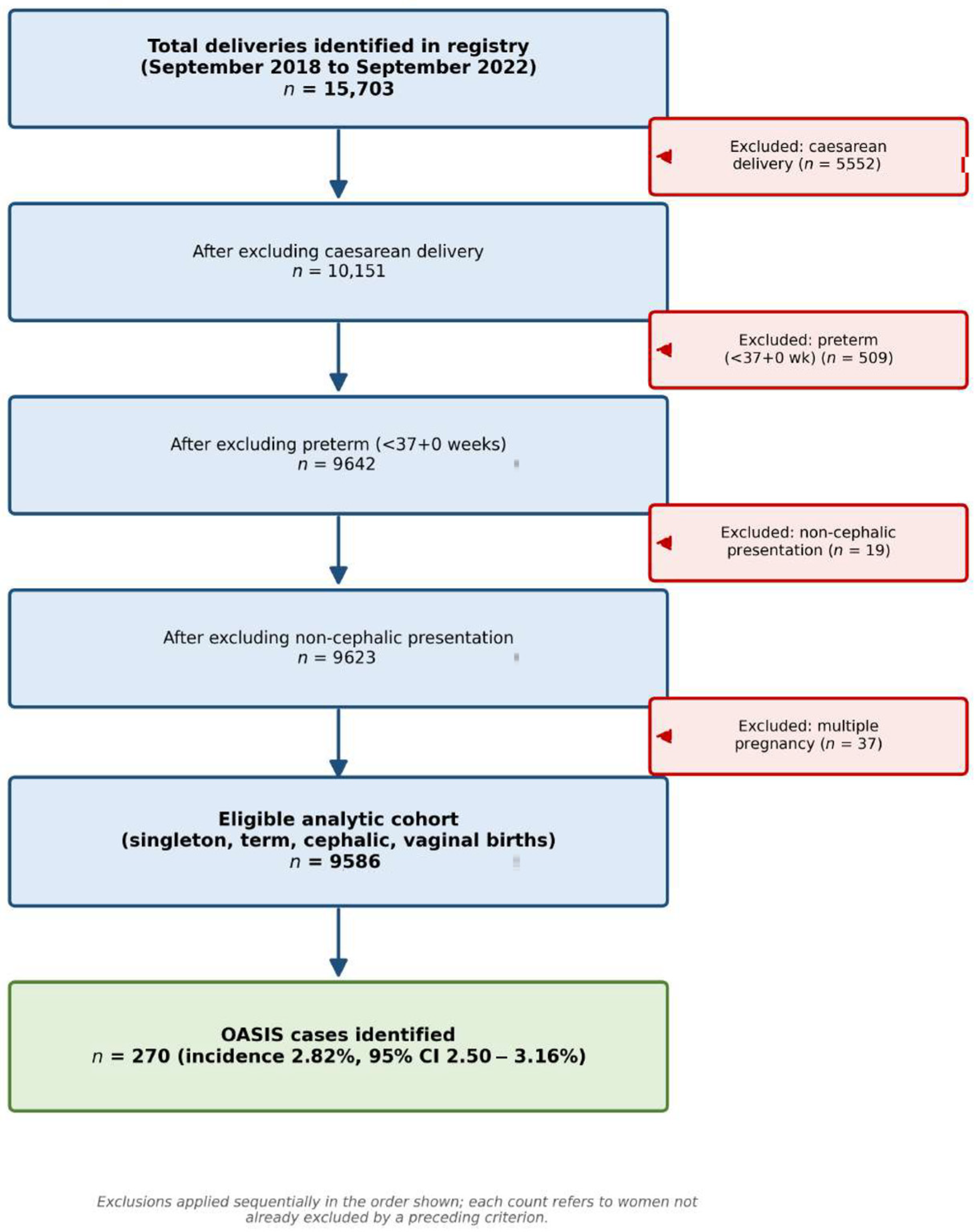
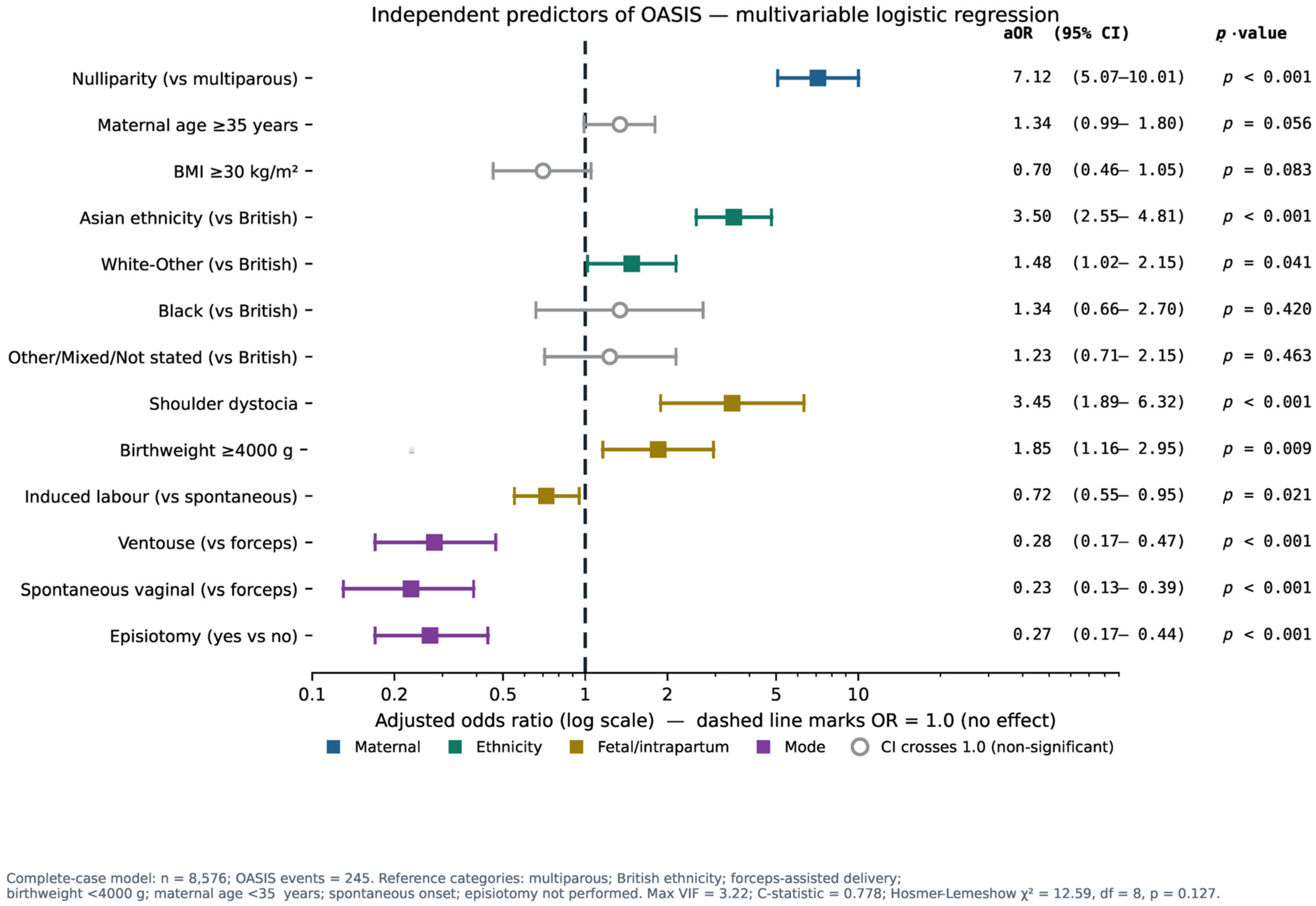
Background: Obstetric anal sphincter injuries (OASIS) are a major cause of long-term maternal morbidity. Identification of risk factors is central to prevention strategies. Methods: A retrospective cohort study was conducted including all singleton, term, cephalic vaginal births over a four-year period (September 2018 to September 2022) at a UK tertiary maternity unit. OASIS was defined as third- or fourth-degree perineal tears according to RCOG criteria. Multivariable logistic regression analysis was used to identify independent predictors. A pre-specified sensitivity analysis restricted to nulliparous women was performed. Secondary outcomes included postpartum haemorrhage (PPH), defined as blood loss >1 L. Reporting follows the STROBE statement for cohort studies. Results: Among 9586 vaginal births, 270 OASIS cases were identified, corresponding to an incidence of 2.82%. Independent predictors included nulliparity (aOR 7.12, 95% CI 5.07–10.01), Asian ethnicity (aOR 3.50, 95% CI 2.55–4.81), shoulder dystocia (aOR 3.45, 95% CI 1.89–6.32), and birthweight ≥4000 g (aOR 1.85, 95% CI 1.16–2.95). Maternal age ≥35 years showed a borderline association (aOR 1.34, 95% CI 0.99–1.80, p = 0.056). Using forceps as the reference, ventouse (aOR 0.28, 95% CI 0.17–0.47) and spontaneous vaginal delivery (aOR 0.23, 95% CI 0.13–0.39) were associated with lower OASIS odds. Episiotomy (recorded as a binary variable) was associated with lower adjusted odds of OASIS (aOR 0.27, 95% CI 0.17–0.44). PPH occurred in 21.5% of women with OASIS versus 6.5% without (p < 0.001). Conclusions: OASIS risk is driven by a combination of maternal, fetal, and intrapartum factors. Selective mediolateral episiotomy was associated with lower adjusted odds of OASIS in this cohort, but this is an observational finding and does not constitute proof of a causal protective effect. It should be interpreted cautiously given the retrospective design, the recording of episiotomy as a binary variable without procedural detail, and the substantial potential for residual confounding by indication. The findings support targeted perineal protection strategies and selective rather than routine episiotomy use.
Keywords: obstetric anal sphincter injury; OASIS; episiotomy; forceps-assisted delivery; perineal trauma; risk factors obstetric anal sphincter injury; OASIS; episiotomy; forceps-assisted delivery; perineal trauma; risk factors