Role of Perineal Urethrostomy in Reconstructive Urology



Abstract
1. Introduction
2. Indications
2.1. Non-Oncologic
2.1.1. Urethral Stricture
- Panurethral stricture: in patients with extensive urethral involvement due to lichen sclerosus or inflammatory/infectious etiologies, severe compromise of the urethral mucosa and corpus spongiosum may develop, often requiring staged reconstruction. These patients typically have undergone multiple prior treatments, such as repeated dilatations or endoscopic urethrotomies. In this setting, and after shared decision-making with the patient, PU represents an excellent alternative, even as a first-line option, since it provides a continent, non-obstructive urinary diversion in a single procedure [10,11,12].
- Recurrent stricture after multiple urethroplasty attempts: when no suitable tissue remains for adequate urethral reconstruction—after prior use of buccal mucosa grafts (cheek, lower lip, tongue), preputial grafts, and/or skin flaps—PU is an effective alternative. This group also includes patients with hypospadias who have undergone multiple surgeries without achieving satisfactory voiding, whether due to recurrence or persistent fistulous tracts. Some of these patients seek a definitive functional solution, prioritizing effective voiding through the perineal meatus over attempting to void through a diseased urethra [13].
2.1.2. Comorbidities Contraindicating Extensive Urethral Reconstruction
2.1.3. Obesity and Buried Penis
2.1.4. Traumatic Penile Amputation
2.1.5. Others
2.2. Oncologic
2.2.1. Penile Cancer: Its Incidence Varies Worldwide
2.2.2. Urethral Cancer
2.2.3. Bladder Cancer
3. Types
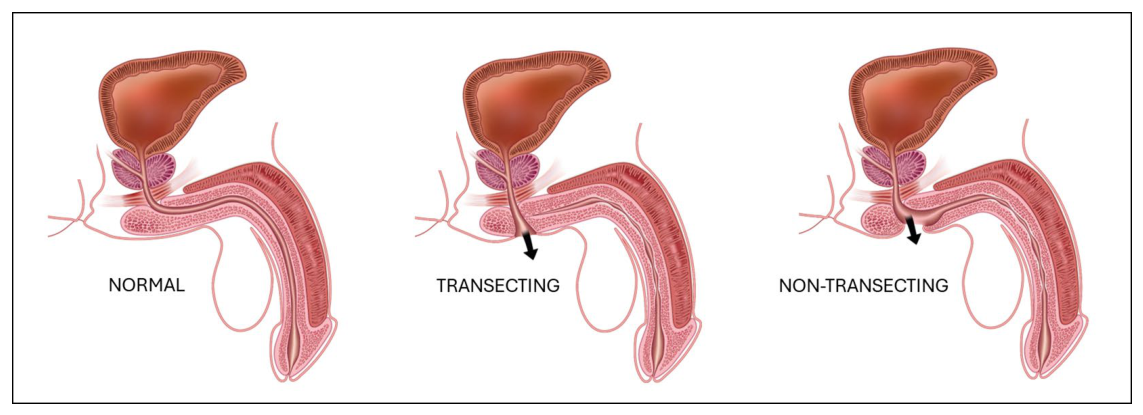
3.1. Transecting or Non-Transecting PU
3.2. Techniques Using Cutaneous Flaps
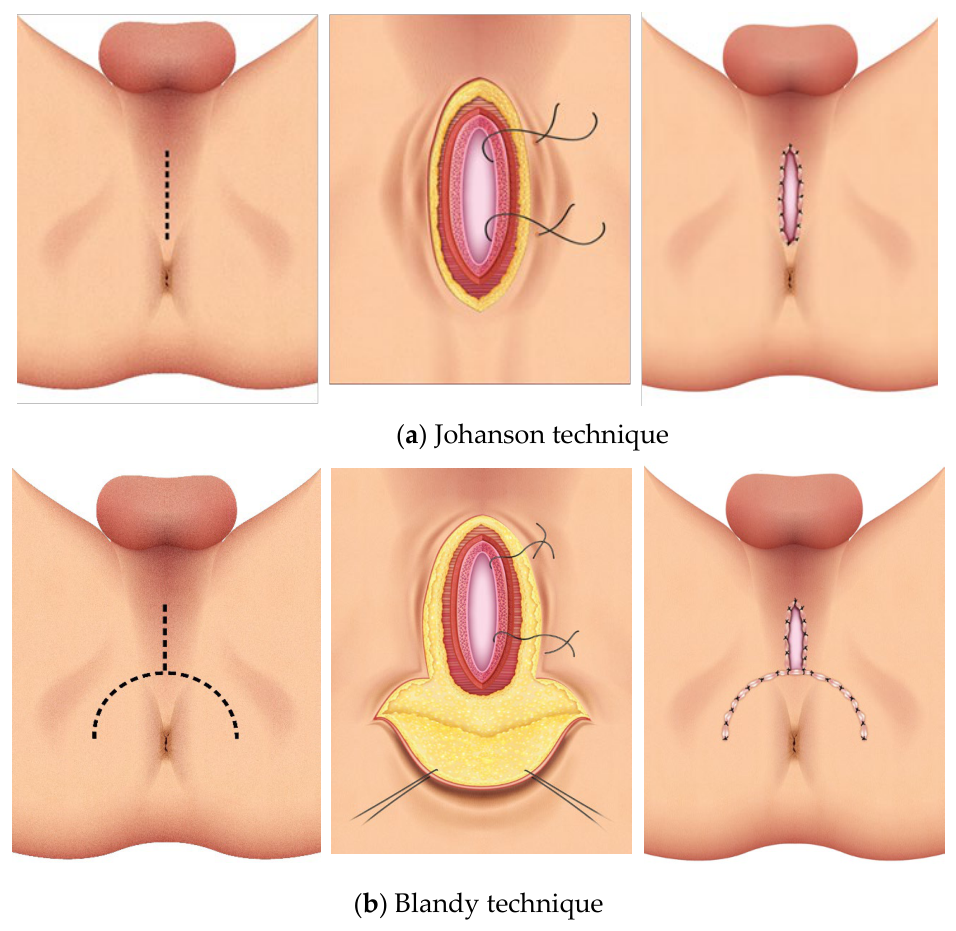
- Blandy [26]: This technique was originally described as transecting, characterized by the creation of a perineal meatus through mobilization of a cutaneous flap in an inverted “U” shape. Modifications were then made based on the original technique, including the lambda incision and non-transection of the urethra.
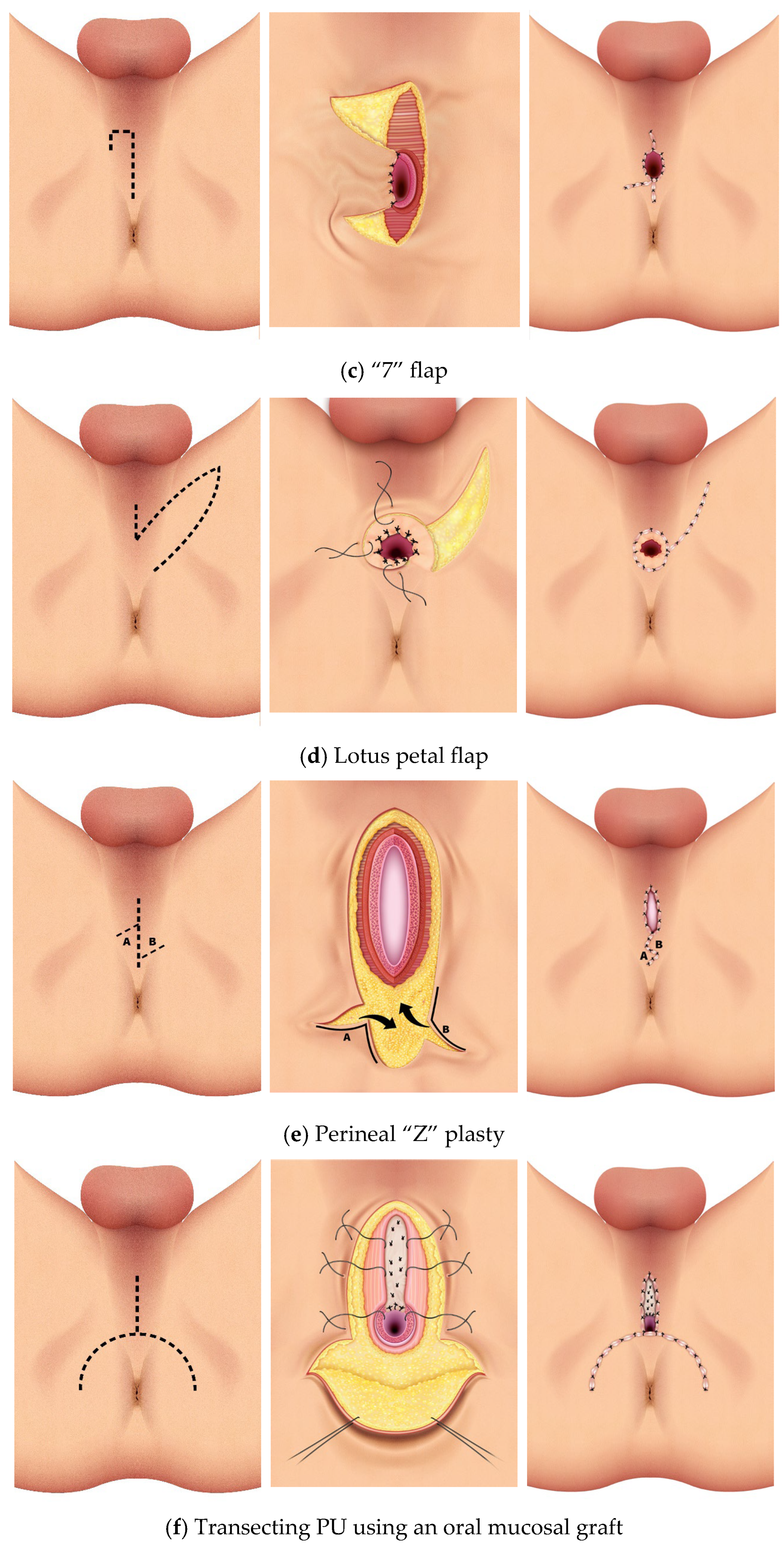
- “7” Flap [27]: This technique was described in 2011 by French et al. It describes the creation of a perineal meatus by mobilizing a cutaneous flap shaped like a “7.” This technique is particularly useful in obese patients and in those cases indicated for urethral reconstruction via a median perineal incision. However, during surgery, it was determined not to progress with the reconstruction and to perform a PU instead. This technique allows for the widening of the incision in the shape of a “7” and the mobilization of the cutaneous flap to achieve a wide, tension-free meatus. The reported success rate of this technique is greater than 95%.
- Lotus Petal Flap [28]: This technique was initially described for the reconstruction of vulvovaginal defects, with very good results. This concept was extrapolated to the creation of a male perineal meatus in complex cases. It was originally described by French and later modified by Reilly et al. in 2018, using mobilization of regional myocutaneous or adipose flaps with a perforator-based blood supply from its base. It is indicated in complex cases with scarred perineum, stenosis of the perineal meatus, and in obese patients. Surgically, this technique is more challenging than the others as it requires experience in identifying the vascular pedicle of the flap, but it allows for the flap to be brought to the urethrotomy and creates a wide meatus with minimal tension. A disadvantage of this technique is the potential presence of hairs in the meatal pathway.
- Perineal Z-plasty [29]: This non-transecting technique involves creating a median perineal incision, with incisions on both sides at a 45° angle, creating a “Z” shape that allows for the mobilization and rotation of the flaps, achieving a tension-free stoma.
3.3. Techniques Using Grafts
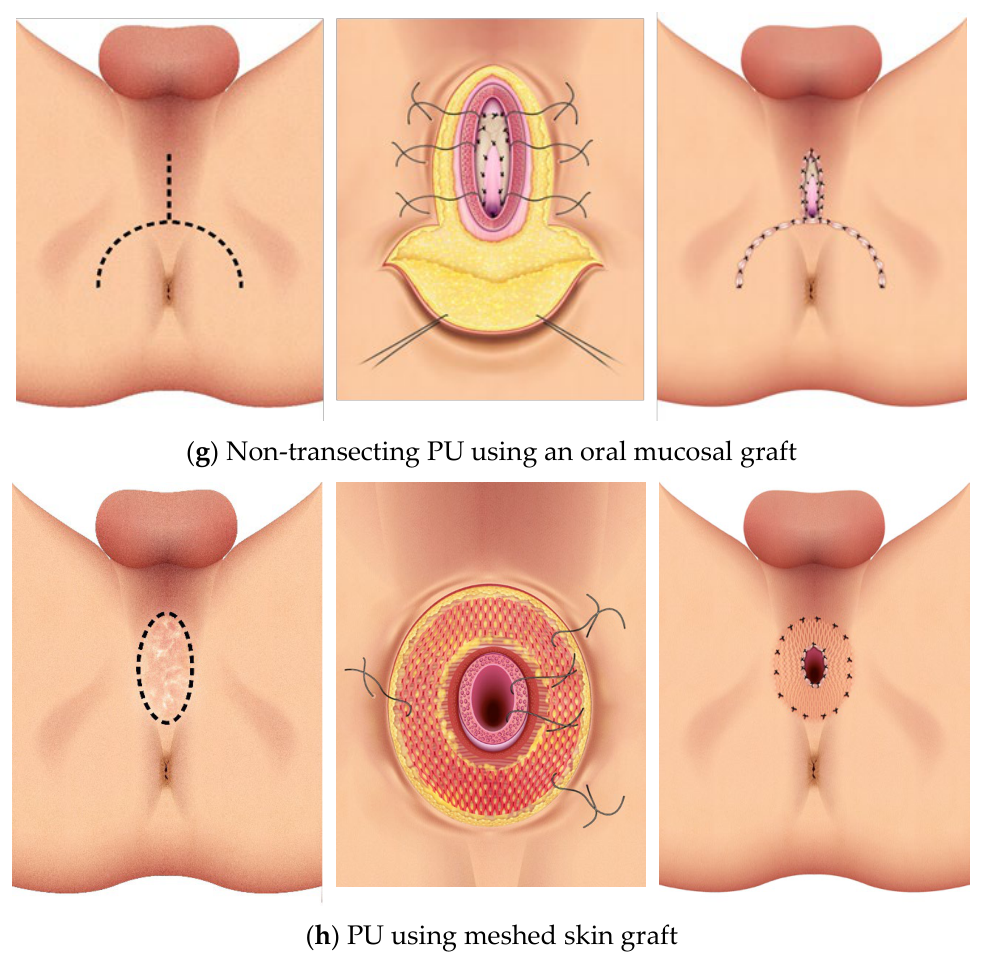
- Oral Mucosa Graft [30,31]: The use of oral mucosal grafting in perineal urethrostomy was described in 2008 by Kamat and modified by DeLong et al. in 2017. Unlike techniques involving the mobilization of cutaneous flaps towards the urethra, in this technique the urethrotomy is superficialized and complemented with a graft to create a wide meatus. The use of an oral mucosa graft is highly versatile, as it can be applied in transecting techniques by placing the graft distally, or in non-transecting techniques, where grafts are used to enlarge the meatus along its lateral aspects and/or its superior or inferior surface. The reported success rate of this technique is over 80%.
- Mesh Skin Graft [32]: Described by Lumen in 2014 for patients in whom a PU is considered, but the skin of the perineum is pathological or scarred. This skin is not suitable for tissue mobilization; hence, it is proposed for removal and replacement with a graft of healthy skin that will surround the perineal meatus.
4. Preoperative Preparation
4.1. Clinical Evaluation
4.2. Additional Diagnostic Studies
4.3. Medical-Patient Counseling
4.4. Psychological Support
4.5. Informed Consent
5. Surgical Technique
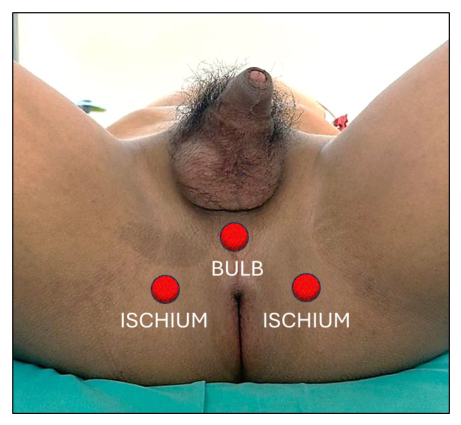
5.1. Anatomical Landmarks
5.2. Description of Techniques
- Johanson technique [23]: the least complex technique, consisting of urethral marsupialization without the need for cutaneous flap mobilization, unlike the other approaches. It involves a midline perineal incision, division of the bulbospongiosus muscle, proximal bulbar ventral urethrotomy, watertight closure of the corpus spongiosum, and urethral mucosa anastomosis to the perineal skin to create the neomeatus.
- Blandy technique [26]: characterized by the creation of the meatus through mobilization of a posterior perineal flap in an inverted “U” shape, whose vascularization depends on the superficial perineal artery. These principles may be applied either with or without urethral transection.
- “7”-shaped flap [27,36]: This procedure is performed through a midline perineal incision extended superiorly with a “7”-shaped marking. After exposure of the urethra, it may be transected or left in continuity. A laterally based full-thickness skin flap is created according to the “7”-shaped design and advanced toward the lateral aspect of the urethrotomy. The remaining skin is used to complete the mucocutaneous anastomosis.
- Lotus petal flap [28]: It involves urethral transection with the aim of bringing the proximal urethral end closer to the perineum through flap interposition. To this end, perforating vessels from the internal pudendal artery are identified using Doppler ultrasonography. The urethra is debrided until healthy tissue is reached at the proximal end, which is then spatulated. The distance from the perineal skin to the urethra is measured, and a lotus petal–shaped flap is designed incorporating the previously identified perforators. The flap is mobilized in a suprafascial plane from distal to proximal, preserving the cutaneous bridge at its base. It is then inset in a semicircumferential or fully circumferential fashion between the urethral edge and the perineal skin, and the donor site is closed.
- Perineal Z-plasty [29]: used to relieve tension on perimeatal tissues. Two angled incisions are made over the midline perineal incision, forming a “Z” and creating two flaps, labeled A and B, which are rotated in opposite directions: flap A downward and flap B upward.
- Augmented PU with oral mucosa graft [31]: The perimeatal graft creates a continuity effect with the urethral mucosa, which is particularly useful in cases where the proximal end cannot be spatulated, resulting in a small meatus. The dorsal aspect of the urethra is extended with a graft anchored to the corpora cavernosa and sutured to the skin, giving the meatus a teardrop-shaped configuration. In some cases, it is necessary to complement this with additional grafts on the lateral aspects of the meatus, or even circumferentially, in order to achieve a wide meatus.
- Augmented PU with meshed skin graft [32]: In this technique, pathological perineal skin is replaced with healthy skin, creating a meatus whose edges are sutured to the graft. A split-thickness skin graft is harvested using a dermatome, placed on a surface, and meshed using a dedicated device to produce microincisions that allow stretching of the graft and coverage of a larger area. A meshed skin graft facilitates adaptation and may accelerate the healing process compared with a non-meshed graft. One characteristic of these grafts is that they leave a finely textured surface at the graft site; however, in the context of a PU, this feature does not represent a disadvantage.
6. Complications
7. Discussion
8. Conclusions
Author Contributions
Funding
Institutional Review Board Statement
Informed Consent Statement
Data Availability Statement
Acknowledgments
Conflicts of Interest
References
- Lumen, N.; Campos-Juanatey, F.; Dimitropoulos, K.; Greenwell, T.; Martins, F.E.; Osman, N.I.; Riechardt, S.; Waterloos, M.; Summerton, D.J.; Serafetinidis, E.; et al. EAU Guidelines on Urethral Strictures. In EAU Annual Congress Madrid 2025; EAU Guidelines Office: Arnhem, The Netherlands, 2025; ISBN 978-94-92671-29-5. Available online: https://uroweb.org/guidelines/ (accessed on 27 February 2026).
- Shinchi, M.; Horiguch, A.; Ojima, K.; Kawamura, K.; Hirano, Y.; Takahashi, E.; Kimura, F.; Azuma, R.; Ito, K. Evaluation of the efficacy of perineal urethrostomy for patients with anterior urethral stricture: Insights from surgical and patient-reported outcomes. World J. Urol. 2021, 39, 4443–4448. [Google Scholar] [CrossRef] [PubMed]
- Falcone, M.; Preto, M.; Plamadeala, N.; Scavone, M.; Ferro, I.; Cirigliano, L.; Peretti, F.; Gontero, P. Total penectomy and perineal urethrostomy configuration in locally advanced penile cancer: Oncological, surgical and functional outcomes. Am. J. Transl. Res. 2024, 16, 6636–6645. [Google Scholar] [CrossRef] [PubMed]
- de Vries, H.M.; Chipollini, J.; Slongo, J.; Boyd, F.; Korkes, F.; Albersen, M.; Roussel, E.; Zhu, Y.; Ye, D.-W.; Master, V.; et al. Outcomes of perineal urethrostomy for penile cancer: A 20-year international multicenter experience. Urol. Oncol. Semin. Orig. Investig. 2021, 39, 500.e9–500.e13. [Google Scholar] [CrossRef]
- Fuchs, J.S.; Shakir, N.; McKibben, M.J.; Scott, J.M.; Viers, B.; Pagliara, T.; Morey, A.F. Changing Trends in Reconstruction of Complex Anterior Urethral Strictures: From Skin Flap to Perineal Urethrostomy. Urology 2018, 122, 169–173. [Google Scholar] [CrossRef]
- Sharma, G.; Desai, S.; Priyadarshi, S.; Negi, S. Comparison of perineal urethrostomy versus augmentation urethroplasty in anterior urethral stricture disease. Urol. J. 2023, 90, 689–692. [Google Scholar] [CrossRef]
- Singhal, A.; Arya, M.C.; Vasudeo, V.; Shyoran, Y.; Gandhi, A.; Maan, R.; Sonwal, M. Perineal urethrostomy: A single-stage viable option for complex anterior urethral strictures. Urol. Ann. 2021, 13, 142–149. [Google Scholar] [CrossRef]
- Barbagli, G.; De Angelis, M.; Romano, G.; Lazzeri, M. Clinical Outcome and Quality of Life Assessment in Patients Treated with Perineal Urethrostomy for Anterior Urethral Stricture Disease. J. Urol. 2009, 182, 548–557. [Google Scholar] [CrossRef]
- Klemm, J.; Dahlem, R.; Schulz, R.J.; Stelzl, D.R.; Filipas, D.K.; Brömmer, C.; Shariat, S.F.; Fisch, M.; Vetterlein, M.W. Perineal Urethrostomy for Complex Urethral Strictures: Long-Term Patient-Reported Outcomes From a Reconstructive Referral Center and a Scoping Literature Review. J. Urol. 2024, 212, 738–748. [Google Scholar] [CrossRef]
- Peterson, A.C.; Palminteri, E.; Lazzeri, M.; Guanzoni, G.; Barbagli, G.; Webster, G.D. Heroic measures may not always be justified in extensive urethral stricture due to lichen sclerosus (balanitis xerotica obliterans). Urology 2004, 64, 565–568. [Google Scholar] [CrossRef]
- Kulkarni, S.; Barbagli, G.; Kirpekar, D.; Mirri, F.; Lazzeri, M. Lichen sclerosus of the male genitalia and urethra: Surgical options and results in a multicenter international experience with 215 patients. Eur. Urol. 2009, 55, 945–954. [Google Scholar] [CrossRef] [PubMed]
- Patel, C.K.; Buckley, J.C.; Zinman, L.N.; Vanni, A.J. Outcomes for Management of Lichen Sclerosus Urethral Strictures by 3 Different Techniques. Urology 2015, 91, 215–221. [Google Scholar] [CrossRef]
- Rynja, S.P.; de Jong, T.P.; Bosch, J.L.; de Kort, L.M. Functional, cosmetic and psychosexual results in adult men who underwent hypospadias correction in childhood. J. Pediatr. Urol. 2011, 7, 504–515. [Google Scholar] [CrossRef]
- Viers, B.R.; Pagliara, T.J.; Rew, C.A.; Folgosa-Cooley, L.; Shiang, C.Y.; Scott, J.M.; Morey, A.F. Urethral Reconstruction in Aging Male Patients. Urology 2018, 113, 209–214. [Google Scholar] [CrossRef] [PubMed]
- López, J.C.; Gómez, E.G.; Carrillo, A.A.; Castineira, R.C.; Tapia, M.J. Perineostomy: The last oportunity. Int. Braz. J. Urol. 2015, 41, 91–98; discussion 99-100. [Google Scholar] [CrossRef]
- Starke, N.R.; Simhan, J.; Clinton, T.N.; Tausch, T.J.; Scott, J.F.; Klein, A.K.; Morey, A.F. ‘7-flap’ perineal urethrostomy: An effective option for obese men with devastated urethras. Can. J. Urol. 2015, 22, 7902–7906. [Google Scholar] [PubMed]
- Liarto, J.; Adi, K. Traumatic penile partial amputation caused by rubber band a case report. Int. J. Surg. Case Rep. 2021, 86, 106358. [Google Scholar] [CrossRef] [PubMed]
- EAU Guidelines. Guidelines on Penile Cancer. Edn. In EAU Annual Congress Paris; EAU: Arnhem, The Netherlands, 2024; ISBN 978-94-92671-23-3. Available online: https://uroweb.org/guidelines (accessed on 27 February 2026).
- Gakis, G.; Bruins, H.M.; Cathomas, R.; Compérat, E.M.; Cowan, N.C.; van der Heijden, A.G.; Hernández, V.; Espinós, E.E.L.; Lorch, A.; Neuzillet, Y.; et al. European Association of Urology Guidelines on Primary Urethral Carcinoma—2020 Update. Eur. Urol. Oncol. 2020, 3, 424–432. [Google Scholar] [CrossRef]
- Papagiannopoulos, D.; Deane, L.A. Perineal urethrostomy: Still Essential in the Armamentarium for Transurethral Surgery. Rev. Urol. 2017, 19, 72–75. [Google Scholar] [CrossRef] [PubMed] [PubMed Central]
- El Abidi, H.; Ouskri, S.; Ziani, I.; Tariqi, R.; Boualaoui, I.; Ibrahimi, A.; El Sayegh, H.; Nouini, Y. Managing bladder tumor with long-segment anterior urethral stricture: Perineal urethrostomy as a critical surgical solution. Radiol. Case Rep. 2025, 20, 5382–5386. [Google Scholar] [CrossRef]
- Russell, R.H. The treatment of urethral stricture by excision. Br. J. Surg. 1914, 2, 375–383. [Google Scholar] [CrossRef]
- Johanson, B. Reconstruction of the male urethra in strictures: Application of the buried intact epithelium technique. Acta Chir. Scand. 1953, 176, 3–103. [Google Scholar]
- Turner-Warwick, R.T. A technique for posterior urethroplasty. J. Urol. 1960, 83, 416–419. [Google Scholar] [CrossRef] [PubMed]
- Myers, J.B.; Porten, S.P.; McAninch, J.W. The outcomes of perineal urethrostomy with preservation of the dorsal urethral plate and urethral blood supply. Urology 2011, 77, 1223–1227. [Google Scholar] [CrossRef]
- Blandy, J.P.; Singh, M.; Tresidder, G.C. Urethroplasty by scrotal flap for long urethral strictures. Br. J. Urol. 1968, 40, 261–267. [Google Scholar] [CrossRef]
- French, D.; Hudak, S.J.; Morey, A.F. The “7-flap” perineal urethrostomy. Urology 2011, 77, 1487–1489. [Google Scholar] [CrossRef]
- Reilly, D.J.; Sham, E.K.; Chee, J.B.L.; Chauhan, A. A novel application of the Lotus petal flap in high-risk perineal urethrostomy: Principles and outcomes. Australas. J. Plast. Surg. 2018, 1, 134–138. [Google Scholar] [CrossRef]
- McKibben, M.J.; Rozanski, A.T.; Fuchs, J.S.; Sundaram, V.; Morey, A.F. Versatile algorithmic midline approach to perineal urethrostomy for complex urethral strictures. World J. Urol. 2019, 37, 1403–1408. [Google Scholar] [CrossRef] [PubMed]
- Kamat, N. Perineal urethrostomy stenosis repair with buccal mucosa: Description of technique and report of four cases. Urology 2008, 72, 1153–1155. [Google Scholar] [CrossRef]
- DeLong, J.; McCammon, K.; Capiel, L.; Rovegno, A.; Tonkin, J.B.; Jordan, G.; Virasoro, R. Augmented perineal urethrostomy using a dorsal buccal mucosal graft, bi-institutional study. World J. Urol. 2017, 35, 1285–1290. [Google Scholar] [CrossRef]
- Lumen, N.; Houtmeyers, P.; Monstrey, S.; Spinoit, A.-F.; Oosterlinck, W.; Hoebeke, P. Revision of perineal urethrostomy using a meshed split-thickness skin graft. Case Rep. Nephrol. Urol. 2014, 4, 12–17. [Google Scholar] [CrossRef]
- Murphy, G.P.; Fergus, K.B.; Gaither, T.W.; Baradaran, N.; Voelzke, B.B.; Myers, J.B.; Erickson, B.A.; Elliott, S.P.; Alsikafi, N.F.; Vanni, A.J.; et al. Urinary and Sexual Function after Perineal Urethrostomy for Urethral Stricture Disease: An Analysis from the TURNS. J. Urol. 2019, 201, 956–961. [Google Scholar] [CrossRef]
- Yadav, P.; Danish, N.; Sureka, S.S. Permanent perineal urethrostomy for anterior urethral strictures: A critical appraisal of long-term outcomes and erectile function. Turk. J. Urol. 2021, 47, 158–163. [Google Scholar] [CrossRef] [PubMed]
- Schober, J.P.; Stensland, K.D.; Breyer, B.N.; Erickson, B.A.; Myers, J.B.; Voelzke, B.B.; Elliott, S.P.; Buckley, J.C.; Vanni, A.J.; TURNS. Effect of urethroplasty on anxiety and depression. J. Urol. 2018, 199, 1552–1556. [Google Scholar] [CrossRef]
- Parker, D.C.; Morey, A.F.; Simhan, J. 7-flap perineal urethrostomy. Transl. Androl. Urol. 2015, 4, 51–55. [Google Scholar]
- Blandy, J.P.; Singh, M.; Notley, R.G.; Tresidder, G.C. The results and complications of scrotal-flap urethroplasty for stricture. Br. J. Urol. 1971, 43, 52–57. [Google Scholar] [CrossRef]
- Glukhov, V.P.; Ilyash, A.V.; Mitusov, V.V.; Sizyakin, D.V.; Kogan, M.I. Treatment of patients with anterior urethral strictures: The role of perineal urethrostomy. Urol. Her. 2022, 10, 87–98. [Google Scholar] [CrossRef]
- Lumen, N.; Beysens, M.; Van Praet, C.; Decaestecker, K.; Spinoit, A.-F.; Hoebeke, P.; Oosterlinck, W. Perineal urethrostomy: Surgical and functional evaluation of two techniques. Biomed. Res. Int. 2015, 2015, 365715. [Google Scholar] [CrossRef]
- Yura, E.; Hofer, M.D.; Yao, H.H.; Barbagli, G.; Chee, J. Perineal Urethrostomy: A Pearl in Failed Urethral Reconstruction. In Textbook of Male Genitourethral Reconstruction; Springer: Cham, Switzerland, 2019; pp. 375–390. [Google Scholar] [CrossRef]
- Verla, W.; Oosterlinck, W.; Waterloos, M.; Spinoit, A.F.; Lumen, N. Perineal Urethrostomy for Complicated Anterior Urethral Strictures: Indications and Patient’s Choice. An Analysis at a Single Institution. Urology 2020, 138, 160–165. [Google Scholar] [CrossRef] [PubMed]
- Myers, J.B.; McAninch, J.W. Perineal urethrostomy. BJU Int. 2011, 107, 856–865. [Google Scholar] [CrossRef]
- de León, J.P.; Salas, D.; Calderón, J.; Montlleó, M.; Palou, J. Analysis of prognostic factors of failure in perineal urethrostomy. World J. Urol. 2023, 41, 1109–1115. [Google Scholar] [CrossRef] [PubMed]
- Lin, Y.; Luo, D.; Liao, B.; Yang, T.; Tian, Y.; Jin, T.; Wang, G.; Zhou, H.; Li, H.; Wang, K. Perineal midline vertical incision verses inverted U incision in the urethroplasty: Which is better? World J. Urol. 2018, 36, 1267–1274. [Google Scholar] [CrossRef]
- Peterson, A.C. Perineal Urethrostomy. In Advanced Male Urethral and Genital Reconstructive Surgery; Current Clinical Urology; Humana Press: New York, NY, USA, 2013; pp. 457–468. [Google Scholar] [CrossRef]
- Wessells, H.; Angermeier, K.W.; Elliott, S.; Gonzalez, C.M.; Kodama, R.; Peterson, A.C.; Reston, J.; Rourke, K.; Stoffel, J.T.; Vanni, A.J.; et al. Male Urethral Stricture: American Urological Association Guideline. J. Urol. 2017, 197, 182–190. [Google Scholar] [CrossRef] [PubMed]
- Wessells, H.; Morey, A.; Vanni, A.; Rahimi, L.; Souter, L. Urethral stricture disease guideline amendment. J. Urol. 2023, 210, 64–71. [Google Scholar] [CrossRef] [PubMed]



| Advantages | Disadvantages | |
|---|---|---|
| Johanson | Easy technique, without flap mobilization or graft use. | PU stenosis |
| Blandy | High success rate | More complex technique due to flap mobilization |
| “7” Flap |
| More complex technique due to flap mobilization |
| Lotus Petal Flap | Connection of the urethral meatus to the perineal skin |
|
| “Z” Plasty | Tension-free wound | |
| Oral Mucosal Graft |
| Possible graft retraction |
| Meshed Skin Graft |
|
|
Disclaimer/Publisher’s Note: The statements, opinions and data contained in all publications are solely those of the individual author(s) and contributor(s) and not of MDPI and/or the editor(s). MDPI and/or the editor(s) disclaim responsibility for any injury to people or property resulting from any ideas, methods, instructions or products referred to in the content. |
© 2026 by the authors. Licensee MDPI, Basel, Switzerland. This article is an open access article distributed under the terms and conditions of the Creative Commons Attribution (CC BY) license.
Share and Cite
Velarde Ramos, L.; Martins, F. Role of Perineal Urethrostomy in Reconstructive Urology. J. Clin. Med. 2026, 15, 4133. https://doi.org/10.3390/jcm15114133
Velarde Ramos L, Martins F. Role of Perineal Urethrostomy in Reconstructive Urology. Journal of Clinical Medicine. 2026; 15(11):4133. https://doi.org/10.3390/jcm15114133
Chicago/Turabian StyleVelarde Ramos, Laura, and Francisco Martins. 2026. "Role of Perineal Urethrostomy in Reconstructive Urology" Journal of Clinical Medicine 15, no. 11: 4133. https://doi.org/10.3390/jcm15114133
APA StyleVelarde Ramos, L., & Martins, F. (2026). Role of Perineal Urethrostomy in Reconstructive Urology. Journal of Clinical Medicine, 15(11), 4133. https://doi.org/10.3390/jcm15114133