

Article

Racial and Ethnic Disparities in the Management and Outcomes of Acute Myocardial Infarction Complicated by Ventricular Arrhythmias

1
Department of Internal Medicine, Western Michigan University Homer Stryker M.D. School of Medicine, Kalamazoo, MI 49007, USA
2
Department of Biomedical Informatics, Western Michigan University Homer Stryker M.D. School of Medicine, Kalamazoo, MI 49007, USA
3
Department of Cardiology, Beacon Kalamazoo Hospital, Kalamazoo, MI 49048, USA
*
Author to whom correspondence should be addressed.
J. Clin. Med. 2026, 15(11), 4132; https://doi.org/10.3390/jcm15114132
Submission received: 17 April 2026 / Revised: 23 May 2026 / Accepted: 25 May 2026 / Published: 27 May 2026
(This article belongs to the Section Cardiology)

Abstract

Background: Ventricular arrhythmias (VAs) represent a high-risk complication of acute myocardial infarction (AMI) and are associated with high morbidity and mortality. Racial and ethnic disparities in the management and in-hospital outcomes of AMI with VAs remain incompletely understood. Methods: Using the National Inpatient Sample, we conducted a retrospective analysis of hospitalizations in which AMI was complicated by VAs from 2002 to 2022. Hospitalizations were stratified by race/ethnicity including White, Black, Hispanic, and other racial/ethnic groups. Baseline characteristics and in-hospital outcomes were compared across groups. Results: We identified 902,398 hospitalizations in which AMI was complicated by VAs, of which 78.2% occurred among White, 9.6% among Black, 6.3% among Hispanic, and 5.9% among patients of other racial/ethnic groups. Compared with White patients, Hispanic (aOR 1.21; CI 1.14–1.28) and patients in other racial/ethnic groups (aOR 1.31; CI 1.24–1.39) had higher odds of in-hospital mortality while Black patients had similar odds. In terms of procedural utilization, Black (aOR 0.65; CI 0.62–0.68), Hispanic (aOR 0.82; CI 0.77–0.86), and other racial/ethnic groups (aOR 0.89; CI 0.85–0.94) all had lower odds of percutaneous coronary intervention (PCI) relative to White patients. Black patients also had lower odds of coronary artery bypass grafting (CABG) (aOR 0.69; CI 0.64–0.74) and implantable cardioverter-defibrillator (ICD) insertion (aOR 0.84; CI 0.74–0.96) compared with White patients during admission. Conclusions: Racial and ethnic disparities exist in the prevalence, management, and in-hospital outcomes of AMI complicated by VAs. Further efforts are needed to address differences in care in this high-risk population.

1. Introduction

Ventricular arrhythmias (VAs), including ventricular tachycardia (VT) and ventricular fibrillation (VF), are among the most severe complications of acute myocardial infarction (AMI) and are associated with high short-term mortality [1]. Although occurring in a subset of patients, the presence of VAs with AMI identifies a distinct high-risk subgroup characterized by electrical instability and increased risk of sudden cardiac death [2,3,4,5]. In an analysis using data from the Global Registry of Acute Coronary Events (GRACE) registry, researchers found a substantially higher in-hospital mortality rate in patients who develop VAs with AMI compared to those who do not (52% vs. 1.6%) [6]. Although racial and ethnic disparities in the management of AMI are well documented, most studies have evaluated the AMI population more broadly and have not focused on the subset of patients who develop VAs, in which clinical course and in-hospital management differ [7,8,9,10,11,12,13]. To address this gap, we examined racial and ethnic disparities in this high-risk population using a nationally representative sample in the United States.

2. Materials and Methods

2.1. Study Data

Data was obtained from 1 January 2002 to 31 December 2022 using the National Inpatient Sample (NIS), which is part of the Agency for Healthcare Research and Quality’s Healthcare Cost and Utilization Project [14]. The NIS is the largest deidentified all-payer inpatient database in the U.S., representing a 20% stratified sample of all hospital discharges and enabling nationally representative estimates from over 35 million annual hospitalizations. Institutional Review Board approval was not obtained due to the deidentified nature of the database.

2.2. Study Design

We conducted a retrospective observational analysis to study baseline characteristics and in-hospital outcomes of AMI hospitalizations complicated by VAs across different racial/ethnic groups. For our analysis, race/ethnicity was classified as White, Black, Hispanic, and others (Asian or Pacific Islander, Native American, Others). Patient hospitalizations with International Classification of Diseases (ICD) 9 and 10 codes for AMI, STEMI, and NSTEMI as primary diagnoses and VAs, including VT and VF, as secondary diagnosis in any field were included in the study (Supplementary Materials). Patient demographics, insurance type, income quartile, hospital characteristics/region, comorbidities, and in-hospital outcomes were extracted.
Multiple subgroup analyses were additionally performed. The “Others” racial/ethnic category was disaggregated into Asian Pacific Islander, Native American, and all other races to evaluate heterogeneity in outcomes within this group. Additional stratified analyses were conducted by AMI subtype, VA subtype, and exclusion of cardiac arrest to assess whether racial and ethnic differences in outcomes varied in these populations.

2.3. Study Outcomes

The primary outcome was in-hospital mortality. Secondary outcomes included length of stay, cost of hospitalization, cardiogenic shock, cardiac arrest, mechanical circulatory support use, renal replacement therapy, acute kidney injury, revascularization with percutaneous coronary intervention (PCI) and coronary artery bypass grafting (CABG), and implantable cardioverter-defibrillator (ICD) insertion. Lastly, year-to-year data in AMI hospitalizations with VAs and in-hospital mortality were extracted from the years 2002 to 2022 across all racial/ethnic groups where sample sizes permitted.

2.4. Statistical Analysis

Descriptive statistics were recorded for all variables of interest from the years 2002 to 2022. The year 2015 was excluded due to nationwide transition from ICD-9-CM to ICD-10-CM coding. Hospitalizations with missing race/ethnicity data were excluded from the analysis. All analyses were performed using SAS Studio version 3.82 or SAS 9.4 (SAS Institute, Cary, NC, USA), incorporating the NIS survey design and applying updated trend weights to generate nationally representative estimates.
Baseline characteristics were compared using the Chi-squared test for categorical variables and ANOVA or Kruskal–Wallis test for continuous variables. Multivariable regression models were constructed to minimize confounding when assessing outcomes. Multivariable logistic regression was applied for categorical variables whereas multivariable linear regression was applied for numerical variables, with removal of parameters demonstrating multicollinearity. All variables listed in Table 1 were considered for use in the multivariable regression models. The final list of variables used in the multivariable regression models can be found in the Supplementary Materials. p values and adjusted odds ratios for all outcomes were derived from these models. p-values < 0.05 were considered statistically significant and all tests were 2-sided with a 95% confidence interval (CI).
Hospitalization costs were adjusted to 2022 U.S. dollars using the Consumer Price Index. National hospitalization rates for each racial/ethnic group were calculated per 100,000 adults using population estimates from the U.S. Census Bureau for each study year [15]. Throughout the analysis, all methodological standards recommended for the use of the NIS were followed.

3. Results

3.1. Clinical Characteristics of AMI Hospitalizations with VAs

From 2002 to 2022, a total of 902,398 weighted AMI hospitalizations with VAs were identified. Of these hospitalizations, White, Black, Hispanic, and other racial/ethnic groups represented 78.2%, 9.6%, 6.3%, and 5.9% of the study population, respectively. White patients on average were older (median age 66 years), predominately male, and were more likely to belong to middle household incomes. White patients had higher prevalence of atrial fibrillation, dyslipidemia, and prior cardiac procedures when compared to Black, Hispanic, and patients in other racial/ethnic groups.
Black patients on average were younger (median age 62), had the highest proportion of female hospitalizations, and had the highest proportion of patients who belonged to the lowest household income quartile. Black patients had the highest number of comorbidities compared to all other groups including congestive heart failure, valvular disease, obesity, dementia, hypertension, neurological disorders, renal failure, malnutrition, substance abuse, deficiency anemia, prior myocardial infarction, and cerebrovascular disease.
Hispanic patients and patients in other racial/ethnic groups both had a median age of 63 years and were predominately male. Hispanic patients were more likely to belong in the lowest household income quartile while patients in other racial/ethnic groups had the highest proportion of patients in the highest household income quartile. Across all races and ethnicities, most patients were Medicare beneficiaries hospitalized at urban teaching hospitals.
In terms of AMI subtype, patients in other racial/ethnic groups had the highest proportion of presentations with ST-elevation myocardial infarction (STEMI) and lowest presentations with non-ST-elevation myocardial infarction (NSTEMI). Black patients had the lowest proportion of STEMI presentations and highest proportions of NSTEMI presentations when admitted for AMI with VAs (Table 1).

3.2. In-Hospital Outcomes of AMI Hospitalizations with VAs

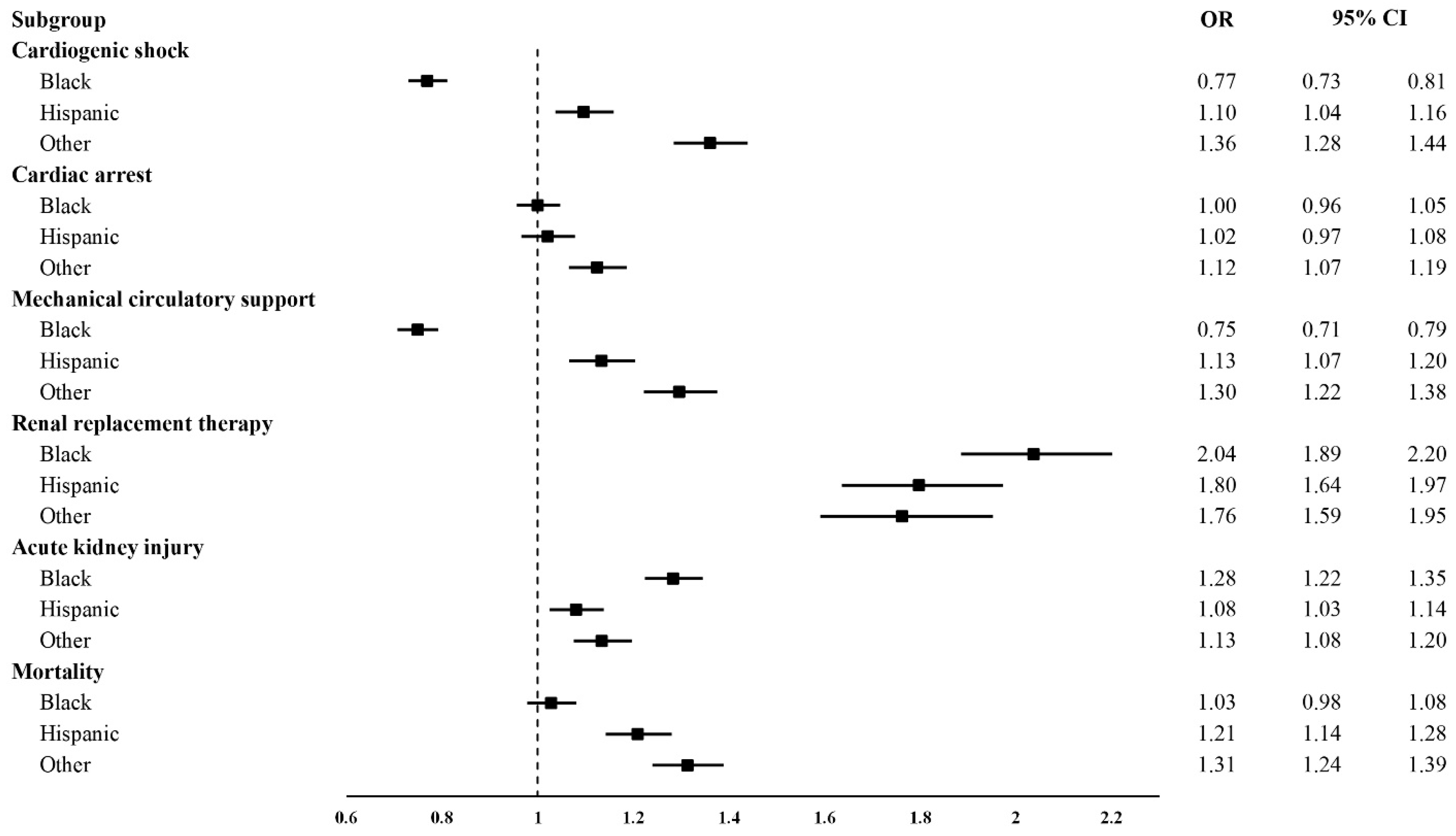
In-hospital mortality differed significantly across all races/ethnicities (p < 0.001). Hispanic patients (20.2%) and patients in other racial/ethnic groups (20.1%) had the highest in-hospital mortality, while White patients had the lowest (15.4%). In adjusted analysis with White patients as the reference, Hispanic patients (aOR 1.21; 95% CI 1.14–1.28) and patients in other racial/ethnic groups (aOR 1.31; 95% CI 1.24–1.39) had higher odds of in-hospital mortality, whereas Black patients had similar odds (aOR 1.03; 95% CI 0.98–1.08) compared to White patients.
In terms of other in-hospital outcomes, Hispanic patients (aOR 1.10; 95% CI 1.04–1.16) and patients in other racial/ethnic groups (aOR 1.36; 95% CI 1.28–1.44) had higher odds of cardiogenic shock when compared to White patients, while Black patients had lower odds (aOR 0.77; 95% CI 0.73–0.81). Patients in other racial/ethnic groups additionally had higher odds of cardiac arrest (aOR 1.12; 95% CI 1.07–1.19). Black patients (aOR 0.75; 95% CI 0.71–0.79) had lower odds of mechanical circulatory support use while Hispanic patients (aOR 1.13; 95% CI 1.07–1.20) and patients in other racial/ethnic groups (aOR 1.30; 95% CI 1.22–1.38) had higher odds when compared to White patients.
Black patients (aOR 1.28; 95% CI 1.22–1.35), Hispanic patients (aOR 1.08; 95% CI 1.03–1.14), and patients in other racial/ethnic groups (aOR 1.13; 95% CI 1.08–1.20) had higher odds of acute kidney injury when compared to White patients. Similarly, Black patients (aOR 2.04; 95% CI 1.89–2.20), Hispanic patients (aOR 1.80; 95% CI 1.64–1.97), and patients in other racial/ethnic groups (aOR 1.76; 95% CI 1.59–1.95) had higher odds of renal replacement therapy.
Length of hospital stay was similar between all cohorts with White patients having the lowest median length of stay at 3.6 days. Patients in other racial/ethnic groups had the highest total cost of hospitalization when compared to White patients, Black patients, and Hispanic patients (p < 0.001) (Table 2, Figure 1).

3.3. In-Hospital Procedural Utilization

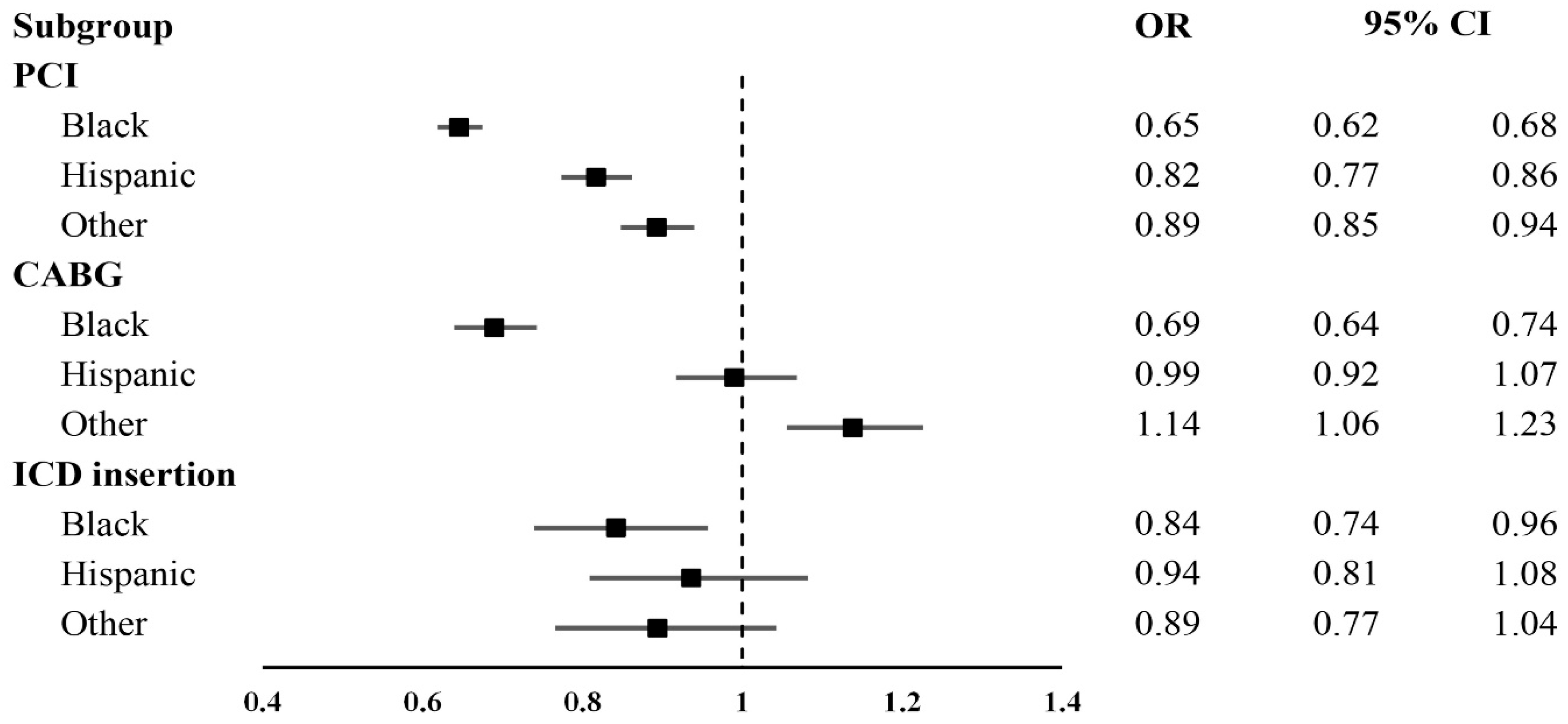
Significant differences in PCI utilization were observed in our analysis (p < 0.001). Patients in other racial/ethnic groups had the greatest proportion of PCI (54.8%), followed by White patients (54.4%), Hispanic patients (51.0%), and Black patients (43.7%) (Table 3). After adjusted analysis, Black patients (aOR 0.65; 95% CI 0.62–0.68), Hispanic patients (aOR 0.82; 95% CI 0.77–0.86), and patients in other racial/ethnic groups (aOR 0.89; 95% CI 0.85–0.94) all had lower odds of undergoing PCI compared to White patients.
Similarly, there were significant differences in utilization of CABG across all groups (p < 0.001). Patients in other racial/ethnic groups had the greatest proportion of CABG (11.8%), followed by Hispanic patients (11.2%), White patients (10.2%), and Black patients (8.5%). After adjusted analysis with White patients as the reference, Black patients (aOR 0.69; 95% CI 0.64–0.74) had lower odds of undergoing CABG, while Hispanic patients (aOR 0.99; 95% CI 0.92–1.07) had similar odds. Patients in other racial/ethnic groups (aOR 1.14; 95% CI 1.06–1.23) had higher odds compared to White patients to undergo CABG.
In-hospital ICD insertion was low but differed across all races/ethnicities (p = 0.038), with Hispanic patients having the highest proportion (2.0%) and White patients with the lowest (1.7%). After adjusted analysis, Black patients (aOR 0.84; 95% CI 0.74–0.96) had lower odds of ICD insertion while Hispanic patients (aOR 0.94; 95% CI 0.81–1.08) and patients in all other racial/ethnic groups (aOR 0.89; 95% CI 0.77–1.04) had similar odds compared to White patients. (Table 3, Figure 2).

3.4. Subgroup Analysis of In-Hospital Outcomes and Procedural Utilization in Other Racial/Ethnic Groups

A subgroup analysis disaggregating other racial/ethnic groups into Asian Pacific Islanders, Native Americans, and all other races was performed. Baseline characteristics for each of these groups can be found in the Supplementary Materials. In adjusted analysis with White patients as the reference, Asian Pacific Islanders (aOR 1.45; 95% CI 1.33–1.58) and all other races (aOR 1.23; 95% CI 1.14–1.33) had higher odds of in-hospital mortality while Native Americans (aOR 1.22; 95% CI 1.00–1.49) had similar odds.
In terms of other in-hospital outcomes, Asian Pacific Islanders (aOR 1.44; 95% CI 1.32–1.57), Native Americans (aOR 1.33; 95% CI 1.10–1.61), and all other races (aOR 1.31; 95% CI 1.21–1.42) had higher odds of cardiogenic shock, while Asian Pacific Islanders (aOR 1.15; 95% CI 1.06–1.25) and all other races (aOR 1.12; 95% CI 1.04–1.20) additionally had higher odds of cardiac arrest. Asian Pacific Islanders (aOR 1.26; 95% CI 1.24–1.49) and all other races (aOR 1.27; 95% CI 1.18–1.37) also had higher odds of mechanical circulatory support use while Native Americans had similar odds (aOR 1.17; 95% CI 0.96–1.41) compared to White patients.
Asian Pacific Islanders (aOR 1.15; 95% CI 1.06–1.25) and all other races (aOR 1.12; 95% CI 1.05–1.21) were also found to have higher odds of acute kidney injury while Native Americans (aOR 1.14; 95% CI 0.94–1.38) had similar odds compared to White patients. Likewise, Asian Pacific Islanders (aOR 2.14; 95% CI 1.86–2.46) and all other races (aOR 1.53; 95% CI 1.32–1.78) had higher odds of renal replacement therapy while Native Americans had similar odds (aOR 1.31; 95% CI 0.91–1.89).
In terms of procedural utilization, Asian Pacific Islanders (aOR 0.80; 95% CI 0.73–0.87) had lower odds of undergoing PCI compared to White patients, while Native Americans (aOR 0.94; 95% CI 0.80–1.11) and all other races (aOR 0.96; 95% CI 0.90–1.02) had similar odds. When analyzing utilization of CABG, Asian Pacific Islanders (aOR 1.18; 95% CI 1.06–1.31) had higher odds compared to White patients while Native Americans (aOR 1.25; 95% CI 0.99–1.57) and all other races (aOR 1.10; 95% CI 0.98–1.22) had similar odds. No significant differences were found in utilization of in-hospital ICD among Asian Pacific Islanders (aOR 0.94; 95% CI 0.75–1.18), Native Americans (aOR 1.08; 95% CI 0.67–1.77), and all other races (aOR 0.83; 95% CI 0.67–1.03) compared to White patients (Table 4).

3.5. Subgroup Analysis of Hospitalizations Stratified by AMI Subtype, VA Subtype, and Cardiac Arrest

When analyzing STEMI hospitalizations with VAs, Black patients (aOR 1.17; 95% CI 1.09–1.26), Hispanic patients (aOR 1.22; 95% CI 1.14–1.32), Asian Pacific Islanders (aOR 1.31; 95% CI 1.17–1.46), and all other races (aOR 1.22; 95% CI 1.11–1.34) had higher odds of in-hospital mortality compared to White patients. Native Americans (aOR 1.14; 95% CI 0.88–1.48) had similar odds after adjusted analysis. In terms of coronary revascularization, Black patients (aOR 0.70; 95% CI 0.66–0.75), Hispanic patients (aOR 0.85; 95% CI 0.79–0.91), Asian Pacific Islanders (aOR 0.76; 95% CI 0.69–0.85), and all other races (aOR 0.91; 95% CI 0.83–0.99) had lower odds of undergoing PCI compared to White patients while Native Americans (aOR 0.94; 95% CI 0.74–1.19) had similar odds. Black patients (aOR 0.71; 95% CI 0.63–0.79) also had lower odds of undergoing CABG while all other groups had similar odds to White patients.
For NSTEMI hospitalizations with VAs, Hispanic patients (aOR 1.17; 95% CI 1.07–1.28), Asian Pacific Islanders (aOR 1.66; 95% CI 1.46–1.90), Native Americans (aOR 1.35; 95% CI 1.01–1.80), and all other races (aOR 1.24; 95% CI 1.10–1.40) had higher odds of in-hospital mortality compared to White patients, while Black patients (aOR 0.86; 95% CI 0.80–0.93) had lower odds. In terms of coronary revascularization, Black patients (aOR 0.60; 95% CI 0.56–0.63), Hispanic patients (aOR 0.77; 95% CI 0.71–0.83), and Asian Pacific Islanders (aOR 0.82; 95% CI 0.72–0.93) had lower odds of undergoing PCI compared to White patients. Black patients also had lower odds of undergoing CABG (aOR 0.68; 95% CI 0.62–0.74) and in-hospital ICD insertion (aOR 0.81; 95% CI 0.69–0.94) compared to White patients.
When analyzing VT hospitalizations alone, Hispanic patients (aOR 1.22; 95% CI 1.12–1.33), Asian Pacific Islanders (aOR 1.71; 95% CI 1.51–1.94), Native Americans (aOR 1.40; 95% CI 1.04–1.88), and all other races (aOR 1.28; 95% CI 1.14–1.44) had higher odds of in-hospital mortality while Black patients (aOR 0.95; 95% CI 0.89–1.03) had similar odds compared to White patients. For VF hospitalizations, Black patients (aOR 1.20; 95% CI 1.10–1.31), Hispanic patients (aOR 1.26; 95% CI 1.15–1.38), and all other races (aOR 1.18; 95% CI 1.04–1.34) had higher odds of in-hospital mortality compared to White patients while Asian Pacific Islanders and Native Americans had similar odds (Table 5).
In an analysis excluding patients with cardiac arrest, Hispanic patients (aOR 1.19; 95% CI 1.10–1.28), Asian Pacific Islanders (aOR 1.51; 95% CI 1.35–1.69), and all other races (aOR 1.19; 95% CI 1.07–1.31) had higher odds of in-hospital mortality while Black patients (aOR 0.94; 95% CI 0.88–1.00) and Native Americans (aOR 1.26; 95% CI 0.97–1.63) had similar odds compared to White patients (Table 6).

3.6. Temporal Changes in AMI Hospitalizations with VAs and In-Hospital Mortality

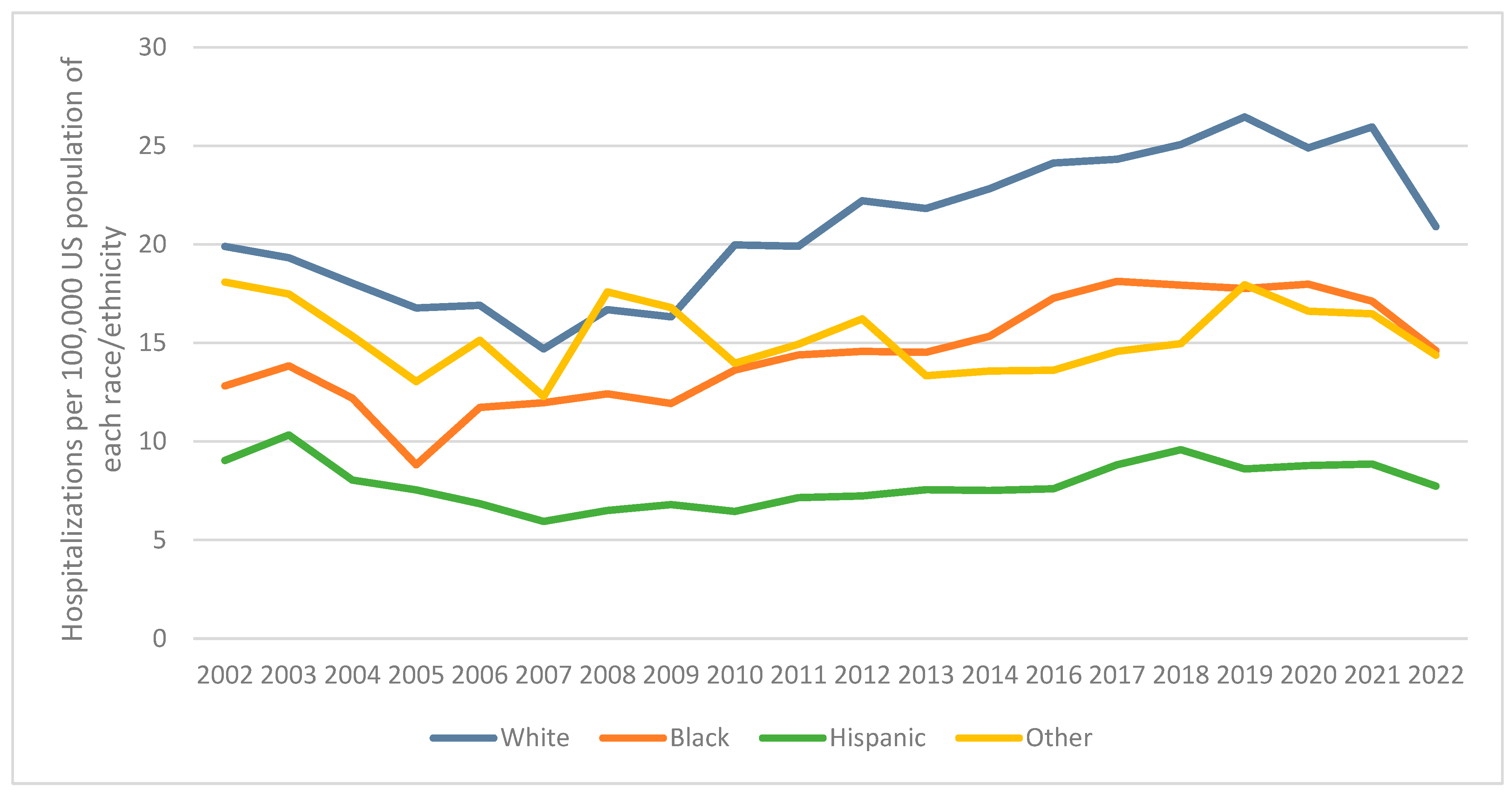
Among AMI hospitalizations with VAs per 100,000 of the U.S. population of each race/ethnicity, White patients had the highest number of hospitalizations for the majority of the study period, followed by patients in other racial/ethnic groups, Black patients, and Hispanic patients. White patients (20 to 21 per 100,000), Black patients (13 to 15 per 100,000), and Hispanic patients (9 to 8 per 100,000) had relatively stable hospitalization rates during the study period with slight decline in early study years followed by a gradual increase. Patients in other racial/ethnic groups overall had a slight decrease in hospitalization rates during the study period with year-to-year fluctuations observed (18 to 14 per 100,000) (Figure 3).
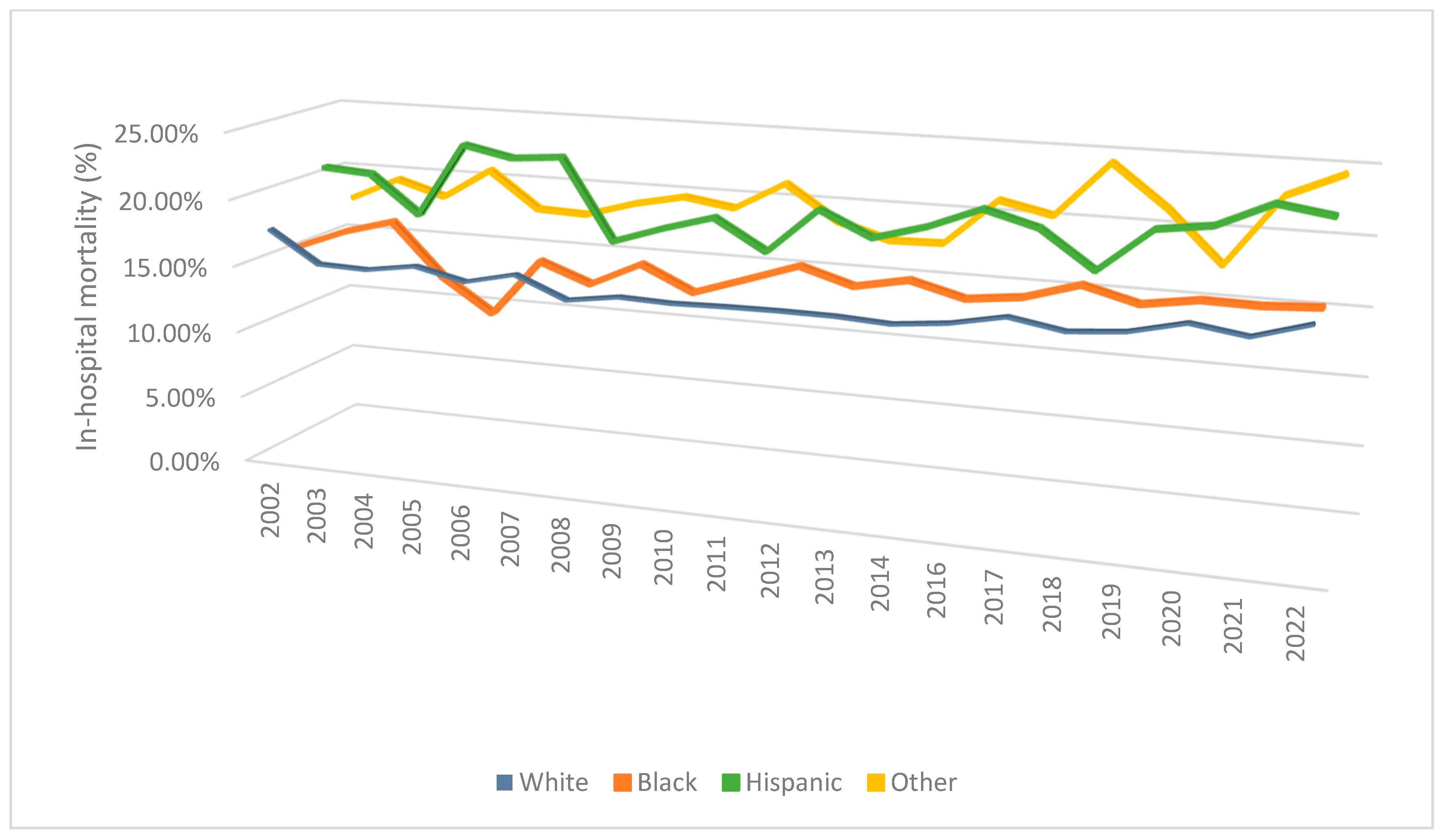
Over the same period, in-hospital mortality remained relatively stable in White patients, from 17.6% in 2002 to 17.0% in 2022. In contrast, in-hospital mortality slightly increased in Black patients (15.5% to 17.1%), Hispanic patients (20.8% to 22.4%), and substantially increased in patients of other racial/ethnic groups (17.8% to 24.5%) during the study period (Figure 4). Due to sample size limitations, year-to-year subgroup analysis of patients in other racial/ethnic groups could not be performed.

4. Discussion

To our knowledge, this is the first nationally representative study to specifically examine racial and ethnic disparities in patients hospitalized with AMI complicated by VAs. While prior studies have analyzed disparities in AMI broadly, there remains a critical gap in understanding outcomes in the high-risk subgroup where ischemic injury and electrical instability coexist. Several findings emerge from our study. First, Hispanic patients, Asian Pacific Islanders, and patients in all other races experienced higher in-hospital mortality compared to White patients, while Black patients and Native Americans had similar odds after adjusted analysis. Second, disparities in the use of invasive cardiac procedures were observed, with lower utilization of PCI across nearly all non-White patients and lower odds of CABG and ICD insertion among Black patients. Third, Hispanic patients, Asian Pacific Islanders, and all other races had higher odds of cardiogenic shock and mechanical circulatory support use, while most non-White patients had higher odds of acute kidney injury and renal replacement therapy during admission. Finally, in-hospital mortality has slightly increased in Black and Hispanic patients with a more substantial increase observed for patients in other racial/ethnic groups over the past two decades.
Most prior studies analyzing AMI hospitalizations more broadly have not found significant differences in short-term or in-hospital mortality across racial and ethnic groups after adjustment for comorbidities and socioeconomic factors [7,8,9,10,11,12]. In a one-year multi-state analysis, however, Kim et al. reported higher in-hospital mortality among Hispanic and Asian patients compared with non-Hispanic Whites, which aligns with our findings [13]. When focusing specifically on VAs, data regarding racial disparities is limited. In an analysis of two-year hospitalization data for VAs in California, Alexander et al. did not identify significant differences in in-hospital mortality across different racial groups [16]. This suggests that mortality differences may become more apparent when analyzing nationwide data and when specifically focusing on ischemic VAs.
In our study, the higher in-hospital mortality observed among Hispanic patients and those in other racial/ethnic groups is likely due to multiple factors. First, both groups had higher odds of cardiogenic shock, and patients in other racial/ethnic groups additionally had higher odds of cardiac arrest, both of which are strong predictors of in-hospital mortality. Furthermore, both groups had a higher proportion of STEMI presentations, which are associated with greater hemodynamic instability and propagation of malignant VAs [17]. Notably, racial/ethnic disparities in mortality persisted across multiple sensitivity analyses in our study. When stratified by AMI subtype, Hispanic patients and nearly all patients in other racial/ethnic groups continued to experience higher in-hospital mortality compared with White patients. Similar findings were observed in analyses limited to patients with VT alone and excluding cardiac arrest presentations, suggesting that differences in AMI and VA subtype do not fully account for the observed differences in mortality across racial/ethnic groups. Prior literature has suggested limited healthcare access, language barriers, suboptimal control of chronic comorbidities, and delayed presentations as contributors to poor cardiovascular outcomes among Hispanic, Asian Pacific Islanders, and Native Hawaiian populations in the United States [18,19,20,21,22,23]. Thus, these broader structural factors may additionally explain the in-hospital mortality disparities observed in these groups in our analysis.
Interestingly, Black patients had similar adjusted in-hospital mortality as White patients despite having a higher comorbidity burden. This may be explained in part by the higher proportion of NSTEMI presentations in Black patients, which are often observed in patients with greater cardiovascular comorbidities [24,25,26]. Compared with STEMI, NSTEMI presentations are typically associated with smaller infarct size and less hemodynamic compromise with lower short-term mortality [27,28,29,30]. However, this pattern was not consistent across more severe clinical presentations in this population. When stratified by AMI subtype, Black patients presenting with STEMI had higher in-hospital mortality compared with White patients. A similar finding was observed when stratified by VA subtype, where Black patients with VF also experienced higher in-hospital mortality. This finding suggests that although overall mortality is similar in the full AMI and VA cohort, disparities are more apparent among Black patients with higher-risk presentations characterized by greater hemodynamic instability and greater reliance on time-sensitive interventions [31].
In terms of procedural utilization, ICD insertion was low during index admission across all racial/ethnic groups, consistent with current guidelines in management of VAs following AMI and a prior analysis of sex-related disparities in this population [32,33,34]. Although ICD insertion is indicated for secondary prevention in appropriately selected patients, Black patients in our analysis had lower adjusted odds of in-hospital insertion compared with White patients. Although statistically significant, this finding should be interpreted with reservation as the NIS does not capture key determinants of ICD eligibility after AMI including arrhythmia timing and left ventricular function. Further studies with more granular clinical data are needed to better characterize this finding and whether this reflects appropriate clinical management.
Black patients also had lower odds of undergoing CABG, and nearly all non-White patients had lower odds of undergoing PCI in our analysis regardless of AMI subtype. In the setting of AMI complicated by VAs, coronary revascularization is particularly important as it reduces ongoing ischemia and may limit further arrhythmogenic scar formation [35,36]. These findings are consistent with prior literature demonstrating persistent underuse of coronary revascularization among racial and ethnic minority populations [37,38,39]. Multiple factors cited in the literature may have led to these findings, including proximity to PCI-capable facilities, implicit bias among healthcare workers, and patient distrust of the medical system [40,41,42]. Additionally, the higher prevalence of renal dysfunction among non-White patients in our study may have further contributed to the lower use of contrast-based procedures. Ultimately, targeted strategies are needed to address these gaps in care and ensure equitable delivery of guideline-directed therapies in this high-risk population.
Finally, temporal trends revealed a slight increase in in-hospital mortality among Black and Hispanic patients with a more substantial increase in other racial/ethnic groups over the past two decades. These findings may reflect the increasing burden of cardiovascular disease among Black, Hispanic, Asian, and multiracial patients as well as persistent underutilization of guideline-directed therapies over time [43,44,45]. Broader structural and societal factors, including socioeconomic barriers and differences in health literacy, should also be considered in influencing outcome disparities [46,47]. Particular attention is warranted for patients in other racial/ethnic groups, as the factors contributing to their markedly higher increase in in-hospital mortality remain unclear relative to Black and Hispanic populations.

Limitations

This study has several important limitations. First, the NIS is an administrative database, and coding errors or misclassifications related to ICD-9 and ICD-10 codes may affect the accuracy of identifying AMI and VAs. Second, the transition from ICD-9 to ICD-10 in 2015 may have introduced inconsistencies in coding, and STEMI versus NSTEMI differentiation was limited prior to October 2005. Additionally, NSTEMI presentations may include type 2 AMI presentations due to ambiguity of coding. Third, the NIS captures hospitalizations rather than unique patients, preventing longitudinal patient-level analyses. Fourth, the database lacks data including laboratory values, infarct size, left ventricular function, coronary anatomy, and medication use, which could influence risk adjustment and outcomes. Fifth, differentiation between sustained and non-sustained VAs could not be made due to limitations of ICD-9 and ICD-10 coding, which may introduce important differences in outcomes given that these entities differ in clinical severity, management, and prognosis. Sixth, long-term outcomes beyond hospital discharge, including recurrent arrhythmias, ICD insertion post-discharge, and mortality, could not be assessed. Seventh, the NIS does not capture variables such as door-to-balloon time or angiographic data which may have influenced the in-hospital outcomes seen in our study. Eighth, race and ethnicity are reported at the hospital level and may be subject to misclassification, and the other racial/ethnic group represents a heterogeneous population which could not fully be stratified in trend analysis due to sample size limitation and data reporting guidelines suggested by HCUP. Ninth, although AMI was listed as the primary diagnosis and VAs as secondary diagnoses in our analysis, the NIS does not fully allow determination of the temporal relationship between these events, which may have occurred prior to admission, during resuscitation, or following coronary revascularization, and remains prone to coding errors inherent to administrative databases. Finally, the large sample size may have resulted in statistically significant outcomes which may not be clinically significant. Despite these limitations, this study provides valuable insight into disparities and in-hospital outcomes in this high-risk population.

5. Conclusions

In summary, we identified persistent racial and ethnic disparities in the in-hospital management and outcomes in patients hospitalized for AMI complicated by VAs. Hispanic patients, Asian Pacific Islanders, and all other races experienced higher in-hospital mortality and greater prevalence of cardiogenic shock along with other complications, while nearly all non-White patients had lower use of guideline-directed therapies during admission. Over the past two decades, all non-White patients have had an increase in-hospital mortality which was most pronounced in patients belonging in other racial/ethnic groups. These findings highlight important gaps in the equitable delivery of advanced cardiovascular care within a high-risk population and underscore the need for targeted, system-level interventions to improve outcomes across all patients regardless of race and ethnicity.

Supplementary Materials

The following supporting information can be downloaded at: https://www.mdpi.com/article/10.3390/jcm15114132/s1.

Author Contributions

Conceptualization, M.R. and S.K.G.K.; methodology, M.R. and S.K.G.K.; software, A.B.; validation, M.R. and S.K.G.K.; formal analysis, A.B.; investigation, M.R. and S.K.G.K.; data curation, A.B.; writing—original draft preparation, M.R., D.Y. and A.R.; writing—review and editing, M.R., O.A., T.G., C.S., S.E., A.S., J.K.K. and S.K.G.K.; visualization, M.R. and S.K.G.K.; supervision, S.K.G.K. All authors have read and agreed to the published version of the manuscript.

Funding

This research received no external funding.

Institutional Review Board Statement

Ethics approval was waived because the study does not involve identifiable human subjects and is exempt from Institutional Review Board approval.

Informed Consent Statement

Informed consent was waived due to the research using de-identified administrative databases.

Data Availability Statement

Data used in the study was obtained using the National Inpatient Sample. Please see Supplementary Materials for all data used in the study.

Acknowledgments

Western Michigan University Homer Stryker M.D. School of Medicine Departments of Internal Medicine and Biomedical Informatics.

Conflicts of Interest

The authors declare no conflicts of interest.

Abbreviations

The following abbreviations are used in this manuscript:
AMIAcute myocardial infarction
MIMyocardial infarction
STEMIST-elevation myocardial infarction
NSTEMINon-ST-elevation myocardial infarction
VAVentricular arrhythmia
VTVentricular tachycardia
VFVentricular fibrillation
PCIPercutaneous coronary intervention
CABGCoronary artery bypass grafting
ICDImplantable cardioverter-defibrillator
aORAdjusted odds ratio

References

  1. Henkel, D.M.; Witt, B.J.; Gersh, B.J.; Jacobsen, S.J.; Weston, S.A.; Meverden, R.A.; Roger, V.L. Ventricular arrhythmias after acute myocardial infarction: A 20-year community study. Am. Heart J. 2006, 151, 806–812. [Google Scholar] [CrossRef]
  2. Frampton, J.; Ortengren, A.R.; Zeitler, E.P. Arrhythmias after acute myocardial infarction. Yale J. Biol. Med. 2023, 96, 83. [Google Scholar] [CrossRef] [PubMed]
  3. Piccini, J.P.; Berger, J.S.; Brown, D.L. Early sustained ventricular arrhythmias complicating acute myocardial infarction. Am. J. Med. 2008, 121, 797–804. [Google Scholar] [CrossRef] [PubMed]
  4. Garcia, R.; Marijon, E.; Karam, N.; Narayanan, K.; Anselme, F.; Césari, O.; Champ-Rigot, L.; Manenti, V.; Martins, R.; Puymirat, E.; et al. Ventricular fibrillation in acute myocardial infarction: 20-year trends in the FAST-MI study. Eur. Heart J. 2022, 43, 4887–4896. [Google Scholar] [CrossRef]
  5. Zaman, S.; Kovoor, P. Sudden cardiac death early after myocardial infarction: Pathogenesis, risk stratification, and primary prevention. Circulation 2014, 129, 2426–2435. [Google Scholar] [CrossRef] [PubMed]
  6. Avezum, Á.; Piegas, L.S.; Goldberg, R.J.; Brieger, D.; Stiles, M.K.; Paolini, R.; Huang, W.; Gore, J.M. Magnitude and prognosis associated with ventricular arrhythmias in patients hospitalized with acute coronary syndromes (from the GRACE Registry). Am. J. Cardiol. 2008, 102, 1577–1582. [Google Scholar] [CrossRef]
  7. Sonel, A.F.; Good, C.B.; Mulgund, J.; Roe, M.T.; Gibler, W.B.; Smith, S.C., Jr.; Cohen, M.G.; Pollack, C.V., Jr.; Ohman, E.M.; Peterson, E.D.; et al. Racial variations in treatment and outcomes of black and white patients with high-risk non–ST-elevation acute coronary syndromes: Insights from CRUSADE (Can Rapid Risk Stratification of Unstable Angina Patients Suppress Adverse Outcomes With Early Implementation of the ACC/AHA Guidelines?). Circulation 2005, 111, 1225–1232. [Google Scholar]
  8. Kaul, P.; Lytle, B.L.; Spertus, J.A.; DeLong, E.R.; Peterson, E.D. Influence of racial disparities in procedure use on functional status outcomes among patients with coronary artery disease. Circulation 2005, 111, 1284–1290. [Google Scholar] [CrossRef]
  9. Cavender, M.A.; Rassi, A.N.; Fonarow, G.C.; Cannon, C.P.; Peacock, W.F.; Laskey, W.K.; Hernandez, A.F.; Peterson, E.D.; Cox, M.; Grau-Sepulveda, M.; et al. Relationship of race/ethnicity with door-to-balloon time and mortality in patients undergoing primary percutaneous coronary intervention for ST-elevation myocardial infarction: Findings from Get With the Guidelines–Coronary Artery Disease. Clin. Cardiol. 2013, 36, 749–756. [Google Scholar] [CrossRef]
  10. Khambatta, S.; Seth, M.; Rosman, H.S.; Share, D.; Aronow, H.D.; Moscucci, M.; LaLonde, T.; Dixon, S.R.; Gurm, H.S. The association between patient race, treatment, and outcomes of patients undergoing contemporary percutaneous coronary intervention: Insights from the Blue Cross Blue Shield of Michigan Cardiovascular Consortium (BMC2). Am. Heart J. 2013, 165, 893–901. [Google Scholar] [CrossRef]
  11. Spertus, J.A.; Jones, P.G.; Masoudi, F.A.; Rumsfeld, J.S.; Krumholz, H.M. Factors associated with racial differences in myocardial infarction outcomes. Ann. Intern. Med. 2009, 150, 314–324. [Google Scholar] [CrossRef] [PubMed]
  12. Simon, S.; Ho, P.M. Ethnic and racial disparities in acute myocardial infarction. Curr. Cardiol. Rep. 2020, 22, 88. [Google Scholar] [CrossRef]
  13. Kim, E.J.; Kressin, N.R.; Paasche-Orlow, M.K.; Lopez, L.; Rosen, J.E.; Lin, M.; Hanchate, A.D. Racial/ethnic disparities among Asian Americans in inpatient acute myocardial infarction mortality in the United States. BMC Health Serv. Res. 2018, 18, 370. [Google Scholar] [CrossRef]
  14. HCUP-US NIS Overview. Available online: https://hcup-us.ahrq.gov/nisoverview.jsp (accessed on 1 March 2026).
  15. Anon: Census Bureau Data. Available online: https://data.census.gov/ (accessed on 2 April 2026).
  16. Alexander, M.; Baker, L.; Clark, C.; McDonald, K.M.; Rowell, R.; Saynina, O.; Hlatky, M.A. Management of ventricular arrhythmias in diverse populations in California. Am. Heart J. 2002, 144, 431–439. [Google Scholar] [CrossRef]
  17. Wang, X.; Wei, L.; Wu, Y.; Yan, J.; Zhao, L.; Yue, X.; Gao, C. ST-segment elevation predicts the occurrence of malignant ventricular arrhythmia events in patients with acute ST-segment elevation myocardial infarction. BMC Cardiovasc. Disord. 2023, 23, 61. [Google Scholar] [CrossRef]
  18. Sentell, T.; Braun, K.L. Low health literacy, limited English proficiency, and health status in Asians, Latinos, and other racial/ethnic groups in California. J. Health Commun. 2012, 17, 82–99. [Google Scholar] [CrossRef]
  19. Vargas Bustamante, A.; Fang, H.; Rizzo, J.A.; Ortega, A.N. Understanding observed and unobserved health care access and utilization disparities among US Latino adults. Med. Care Res. Rev. 2009, 66, 561–577. [Google Scholar] [CrossRef]
  20. Kianoush, S.; Al-Rifai, M.; Kalra, A.; Bk, A.; Mehta, A.; Sadaf, M.I.; Misra, A.; Khalid, U.; Lavie, C.J.; Kayani, W.T.; et al. Use of preventive cardiovascular health care among Asian American individuals: A national health interview survey study. Curr. Probl. Cardiol. 2023, 48, 101241. [Google Scholar] [CrossRef]
  21. Kaholokula, J.K.A.; Ing, C.T.; Look, M.A.; Delafield, R.; Sinclair, K.I. Culturally responsive approaches to health promotion for Native Hawaiians and Pacific Islanders. Ann. Hum. Biol. 2018, 45, 249–263. [Google Scholar] [CrossRef] [PubMed]
  22. Hu, D.; Taira, D.; Yeboah, M.; Castillo, T. Issues affecting medication use among Asian Americans, native Hawaiians, and Pacific islanders: A qualitative study. Calif. J. Health Promot. 2016, 14, 45–55. [Google Scholar] [CrossRef]
  23. Đoàn, L.N.; Takata, Y.; Hooker, K.; Mendez-Luck, C.; Irvin, V.L. Trends in cardiovascular disease by Asian American, Native Hawaiian, and Pacific Islander ethnicity, medicare health outcomes survey 2011–2015. J. Gerontol. Ser. A 2022, 77, 299–309. [Google Scholar] [CrossRef] [PubMed]
  24. Cohen, M. Long-term outcomes in high-risk patients with non-ST-segment elevation myocardial infarction. J. Thromb. Thrombolysis 2016, 41, 464–474. [Google Scholar] [CrossRef]
  25. Darling, C.E.; Fisher, K.A.; McManus, D.D.; Coles, A.H.; Spencer, F.A.; Gore, J.M.; Goldberg, R.J. Survival after hospital discharge for ST-segment elevation and non-ST-segment elevation acute myocardial infarction: A population-based study. Clin. Epidemiol. 2013, 5, 229–236. [Google Scholar][Green Version]
  26. McManus, D.D.; Gore, J.; Yarzebski, J.; Spencer, F.; Lessard, D.; Goldberg, R.J. Recent trends in the incidence, treatment, and outcomes of patients with STEMI and NSTEMI. Am. J. Med. 2011, 124, 40–47. [Google Scholar] [CrossRef] [PubMed]
  27. Sarafoff, N.; Schuster, T.; Vochem, R.; Fichtner, S.; Martinoff, S.; Schwaiger, M.; Schömig, A.; Ibrahim, T. Association of ST-elevation and non-ST-elevation presentation on ECG with transmurality and size of myocardial infarction as assessed by contrast-enhanced magnetic resonance imaging. J. Electrocardiol. 2013, 46, 100–106. [Google Scholar] [CrossRef] [PubMed]
  28. Anderson, M.L.; Peterson, E.D.; Peng, S.A.; Wang, T.Y.; Ohman, E.M.; Bhatt, D.L.; Saucedo, J.F.; Roe, M.T. Differences in the profile, treatment, and prognosis of patients with cardiogenic shock by myocardial infarction classification: A report from NCDR. Circ. Cardiovasc. Qual. Outcomes 2013, 6, 708–715. [Google Scholar] [CrossRef]
  29. Rodríguez-Padial, L.; Fernández-Pérez, C.; Bernal, J.L.; Anguita, M.; Sambola, A.; Fernández-Ortiz, A.; Elola, F.J. Differences in in-hospital mortality after STEMI versus NSTEMI by sex. Eleven-year trend in the Spanish National Health Service. Rev. Española Cardiol. 2021, 74, 510–517. [Google Scholar] [CrossRef]
  30. Spadafora, L.; Pastena, P.; Cacciatore, S.; Betti, M.; Biondi-Zoccai, G.; D’aScenzo, F.; De Ferrari, G.M.; De Filippo, O.; Versaci, F.; Sciarretta, S.; et al. One-Year Prognostic Differences and Management Strategies between ST-Elevation and Non-ST-Elevation Myocardial Infarction: Insights from the PRAISE Registry: L. Spadafora et al. Am. J. Cardiovasc. Drugs 2025, 25, 681–691. [Google Scholar] [CrossRef]
  31. Bolorunduro, O.; Smith, B.; Chumpia, M.; Valasareddy, P.; Heckle, M.R.; Khouzam, R.N.; Reed, G.L.; Ibebuogu, U.N. Racial difference in symptom onset to door time in ST elevation myocardial infarction. J. Am. Heart Assoc. 2016, 5, E003804. [Google Scholar] [CrossRef]
  32. Markson, F.E.; Allihien, S.M.; Antia, A.; Kesiena, O.; Kwaku, K.F. Sex differences in ventricular arrhythmias and adverse outcomes following acute myocardial infarction. JACC Adv. 2024, 3, 101042. [Google Scholar] [CrossRef]
  33. Russo, A.M.; Desai, M.Y.; Do, M.M.; Butler, J.; Chung, M.K.; Epstein, A.E.; Guglin, M.E.; Levy, W.C.; Piccini, J.P.; Bhave, N.M.; et al. ACC/AHA/ASE/HFSA/HRS/SCAI/SCCT/SCMR 2025 appropriate use criteria for implantable cardioverter-defibrillators, cardiac resynchronization therapy, and pacing. J. Am. Coll. Cardiol. 2025, 85, 1213–1285. [Google Scholar] [CrossRef]
  34. Ezekowitz, J.A.; Armstrong, P.W.; McAlister, F.A. Implantable cardioverter defibrillators in primary and secondary prevention: A systematic review of randomized, controlled trials. Ann. Intern. Med. 2003, 138, 445–452. [Google Scholar] [CrossRef]
  35. Nalliah, C.J.; Zaman, S.; Narayan, A.; Sullivan, J.; Kovoor, P. Coronary artery reperfusion for ST elevation myocardial infarction is associated with shorter cycle length ventricular tachycardia and fewer spontaneous arrhythmias. Europace 2014, 16, 1053–1060. [Google Scholar] [CrossRef] [PubMed][Green Version]
  36. Alkharaza, A.; Al-Harbi, M.; El-Sokkari, I.; Doucette, S.; MacIntyre, C.; Gray, C.; Abdelwahab, A.; Sapp, J.L.; Gardner, M.; Parkash, R. The effect of revascularization on mortality and risk of ventricular arrhythmia in patients with ischemic cardiomyopathy. BMC Cardiovasc. Disord. 2020, 20, 455. [Google Scholar] [CrossRef] [PubMed]
  37. Cram, P.; Bayman, L.; Popescu, I.; Vaughan-Sarrazin, M.S. Racial disparities in revascularization rates among patients with similar insurance coverage. J. Natl. Med. Assoc. 2009, 101, 1132–1139. [Google Scholar] [CrossRef]
  38. Peterson, E.D.; Shaw, L.K.; DeLong, E.R.; Pryor, D.B.; Califf, R.M.; Mark, D.B. Racial variation in the use of coronary-revascularization procedures—Are the differences real? Do they matter? N. Engl. J. Med. 1997, 336, 480–486. [Google Scholar] [CrossRef]
  39. Hsuan, C.; Lin, M.P.; Zebrowski, A.; Hsia, R.Y.; Carr, B.G.; Vanness, D.J.; Wei, E.K.; Buckler, D.G.; Bi, H.; Rogowski, J.A. Disparities by race and ethnicity in percutaneous coronary intervention. JAMA Netw. Open 2025, 8, e2532660. [Google Scholar] [CrossRef]
  40. Kalbaugh, C.A.; Beidelman, E.T.; Howard, K.A.; Witrick, B.; Clark, A.; McGinigle, K.L.; Minc, S.; Alabi, O.; Hicks, C.W.; Gonzalez, A.A.; et al. Implicit racial bias and unintentional harm in vascular care. JAMA Surg. 2025, 160, 536–543. [Google Scholar] [CrossRef] [PubMed]
  41. Graham, G. Racial and ethnic differences in acute coronary syndrome and myocardial infarction within the United States: From demographics to outcomes. Clin. Cardiol. 2016, 39, 299–306. [Google Scholar] [CrossRef]
  42. Yoder, M.; Dils, A.; Chakrabarti, A.; Driesenga, S.; Alaka, A.; Ghannam, M.; Bogun, F.; Liang, J.J. Gender and race-related disparities in the management of ventricular arrhythmias. Trends Cardiovasc. Med. 2024, 34, 381–386. [Google Scholar] [CrossRef]
  43. Nguyen, K.T.; Li, J.; Peng, A.W.; Azar, K.; Heidenreich, P.; Palaniappan, L.; Yong, C.M. Temporal trends in cardiovascular disease prevalence among Asian American subgroups. J. Am. Heart Assoc. 2024, 13, e031444. [Google Scholar] [CrossRef]
  44. Pérez-Escamilla, R.; Putnik, P. The role of acculturation in nutrition, lifestyle, and incidence of type 2 diabetes among Latinos. J. Nutr. 2007, 137, 860–870. [Google Scholar] [CrossRef]
  45. Vyas, A.; Desai, R.; Went, T.R.; Wiltshire, D.; Priyadarshni, S.; Shalaby, M.; Khalife, W. Cardiovascular disease burden and major adverse cardiac events in young black patients: A national analysis of 2 cohorts 10 years apart (2017 versus 2007). J. Am. Heart Assoc. 2023, 12, e029895. [Google Scholar] [CrossRef] [PubMed]
  46. Kainat, A.; Natique, A.R.; Saeed, A. Population-Level Gaps in Coronary Artery Disease Care: A Focused Review. Methodist DeBakey Cardiovasc. J. 2025, 21, 76. [Google Scholar] [CrossRef] [PubMed]
  47. Magnani, J.W.; Mujahid, M.S.; Aronow, H.D.; Cené, C.W.; Dickson, V.V.; Havranek, E.; Morgenstern, L.B.; Paasche-Orlow, M.K.; Pollak, A.; Willey, J.Z.; et al. Health literacy and cardiovascular disease: Fundamental relevance to primary and secondary prevention: A scientific statement from the American Heart Association. Circulation 2018, 138, e48–e74. [Google Scholar] [CrossRef] [PubMed]
Figure 1. Forest plot depicting adjusted odds ratio and 95% confidence intervals for in-hospital outcomes among all racial/ethnic groups with White patients as the referent. OR = odds ratio; CI = confidence interval.
Jcm 15 04132 g001
Figure 2. Forest plot depicting adjusted odds ratio and 95% confidence intervals for in-hospital procedural utilization among all racial/ethnic groups with White patients as the referent. PCI = percutaneous coronary intervention; CABG = coronary artery bypass grafting; ICD = implantable cardioverter-defibrillator; OR = odds ratio; CI = confidence interval.
Jcm 15 04132 g002
Figure 3. Trends in racial/ethnic differences of hospitalizations with a primary diagnosis of acute myocardial infarction and secondary diagnoses of ventricular tachycardia/fibrillation per 100,000 of the US population of each racial/ethnic group > 18 years old. p-value < 0.001.
Jcm 15 04132 g003
Figure 4. Trends in in-hospital mortality among all races/ethnicities with a primary diagnosis of acute myocardial infarction and secondary diagnoses of ventricular tachycardia/fibrillation >18 years old. p-value < 0.001.
Jcm 15 04132 g004
Table 1. Baseline characteristics for patients admitted for acute myocardial infarction with ventricular arrhythmias stratified by race and ethnicity.
WhiteBlackHispanicOtherTotalp-Value
Demographics
Sample Size706,090
(78.2%)
86,494
(9.6%)
56,983
(6.3%)
52,830
(5.9%)
902,398
(100.0%)
Age
(Median, IQR)
66
(56.3–76.1)
62
(52.6–71.6)
63
(53.7–72.7)
63
(53.6–72.9)
65
(55.7–75.4)
<0.001
Gender <0.001
Male513,714
(72.8%)
55,311
(64.0%)
42,665
(74.9%)
40,199
(76.1%)
651,889
(72.2%)
Female192,317
(27.2%)
31,178
(36.0%)
14,318
(25.1%)
12,626
(23.9%)
250,439
(27.8%)
Insurance type <0.001
Medicare381,712
(54.1%)
41,668
(48.3%)
25,087
(44.1%)
21,921
(41.5%)
470,388
(52.2%)
Medicaid40,919
(5.8%)
11,935
(13.8%)
8597
(15.1%)
7201
(13.6%)
68,652
(7.6%)
Private Insurance221,611
(31.4%)
21,849
(25.3%)
14,701
(25.8%)
17,552
(33.3%)
275,714
(30.6%)
Self-Pay36,590
(5.2%)
7382
(8.6%)
6050
(10.6%)
4199
(8.0%)
54,221
(6.0%)
No Charge/Other24,141
(3.4%)
3501
(4.1%)
2497
(4.4%)
1902
(3.6%)
32,041
(3.6%)
Income quartile <0.001
0–25th156,012
(23.7%)
40,820
(50.0%)
19,601
(36.7%)
10,088
(20.4%)
226,521
(26.9%)
26–50th180,408
(27.4%)
18,214
(22.3%)
12,793
(24.0%)
10,446
(21.1%)
221,861
(26.4%)
51–75th168,055
(25.6%)
13,124
(16.1%)
12,504
(23.4%)
12,595
(25.5%)
206,278
(24.5%)
76–100th152,824
(23.3%)
9429
(11.6%)
8467
(15.9%)
16,325
(33.0%)
187,045
(22.2%)
Hospital location <0.001
Rural49,415
(7.0%)
3086
(3.6%)
1458
(2.6%)
1611
(3.1%)
55,570
(6.2%)
Urban Nonteaching236,504
(33.6%)
21,250
(24.6%)
19,398
(34.1%)
15,701
(29.9%)
292,854
(32.5%)
Urban Teaching418,549
(59.4%)
61,902
(71.8%)
36,064
(63.4%)
35,184
(67.0%)
551,700
(61.3%)
Region of hospital <0.001
Northeast153,055
(21.7%)
13,378
(15.5%)
9404
(16.5%)
11,532
(21.8%)
187,369
(20.8%)
Midwest155,108
(22.0%)
16,070
(18.6%)
3055
(5.4%)
7046
(13.3%)
181,280
(20.1%)
South278,329
(39.4%)
48,612
(56.2%)
24,040
(42.2%)
15,871
(30.0%)
366,852
(40.7%)
West119,599
(16.9%)
8433
(9.7%)
20,484
(35.9%)
18,380
(34.8%)
166,896
(18.5%)
Comorbidities
Congestive
heart failure
160,756
(22.8%)
25,832
(29.9%)
16,953
(29.8%)
15,137
(28.7%)
218,677
(24.2%)
<0.001
Valvular disease43,461
(6.2%)
6295
(7.3%)
3872
(6.8%)
3296
(6.2%)
56,924
(6.3%)
<0.001
Chronic
pulmonary disease
139,177
(19.7%)
15,310
(17.7%)
8048
(14.1%)
6849
(13.0%)
169,383
(18.8%)
<0.001
Obesity96,556
(13.7%)
13,478
(15.6%)
8507
(14.9%)
5473
(10.4%)
124,014
(13.7%)
<0.001
Dementia15,115
(2.1%)
2466
(2.9%)
1415
(2.5%)
961.9
(1.8%)
19,959
(2.2%)
<0.001
Dyslipidemia377,470
(53.5%)
42,633
(49.3%)
29,446
(51.7%)
27,616
(52.3%)
477,165
(52.9%)
<0.001
Diabetes mellitus179,066
(25.4%)
30,072
(34.8%)
23,218
(40.7%)
18,139
(34.3%)
250,495
(27.8%)
<0.001
Hypertension420,987
(59.6%)
62,179
(71.9%)
36,966
(64.9%)
32,457
(61.4%)
552,590
(61.2%)
<0.001
Liver disease14,008
(2.0%)
2648
(3.1%)
1817
(3.2%)
1494
(2.8%)
19,966
(2.2%)
<0.001
Neurological disorders59,876
(8.5%)
9322
(10.8%)
6056
(10.6%)
5313
(10.1%)
80,568
(8.9%)
<0.001
Peripheral
vascular disease
72,082
(10.2%)
8755
(10.1%)
5040
(8.8%)
4436
(8.4%)
90,312
(10.0%)
<0.001
Renal failure99,319
(14.1%)
21,507
(24.9%)
10,871
(19.1%)
8824
(16.7%)
140,519
(15.6%)
<0.001
Malnutrition20,084
(2.8%)
3609
(4.2%)
1918
(3.4%)
1948
(3.7%)
27,559
(3.1%)
<0.001
Atrial fibrillation160,477
(22.7%)
14,545
(16.8%)
10,662
(18.7%)
10,196
(19.3%)
195,880
(21.7%)
<0.001
History of malignancy21,043
(3.0%)
2388
(2.8%)
1128
(2.0%)
1107
(2.1%)
25,666
(2.8%)
<0.001
Coagulopathy52,383
(7.4%)
7183
(8.3%)
5694
(10.0%)
5851
(11.1%)
71,110
(7.9%)
<0.001
Drug abuse14,354
(2.0%)
5966
(6.9%)
1614
(2.8%)
1040
(2.0%)
22,974
(2.5%)
<0.001
Alcohol abuse25,831
(3.7%)
4451
(5.1%)
2279
(4.0%)
1537
(2.9%)
34,098
(3.8%)
<0.001
Nicotine dependence182,881
(25.9%)
23,446
(27.1%)
11,530
(20.2%)
11,273
(21.3%)
229,131
(25.4%)
<0.001
Deficiency anemia84,459
(12.0%)
16,738
(19.4%)
9711
(17.0%)
8209
(15.5%)
119,117
(13.2%)
<0.001
Hypothyroidism56,726
(8.0%)
3429
(4.0%)
3182
(5.6%)
2771
(5.2%)
66,107
(7.3%)
<0.001
Previous PCI82,643
(11.7%)
10,081
(11.7%)
6431
(11.3%)
5600
(10.6%)
104,755
(11.6%)
0.012
Previous CABG78,854
(11.2%)
6473
(7.5%)
4962
(8.7%)
4369
(8.3%)
94,658
(10.5%)
<0.001
Previous MI87,796
(12.4%)
11,190
(12.9%)
6614
(11.6%)
5809
(11.0%)
111,408
(12.3%)
<0.001
Cerebrovascular
disease
49,955
(7.1%)
10,379
(12.0%)
4914
(8.6%)
4354
(8.2%)
69,602
(7.7%)
<0.001
Presence of heart valve replacement7941
(1.1%)
782.5
(0.9%)
499.4
(0.9%)
408.1
(0.8%)
9631
(1.1%)
<0.001
Presence
of cardiac pacemaker
14,180
(2.0%)
1492
(1.7%)
937.2
(1.6%)
807.1
(1.5%)
17,417
(1.9%)
<0.001
Clinical presentation <0.001
STEMI400,796
(56.8%)
40,042
(46.3%)
32,517
(57.1%)
31,561
(59.7%)
504,915
(56.0%)
NSTEMI306,285
(43.4%)
46,444
(53.7%)
24,467
(42.9%)
21,317
(40.3%)
398,513
(44.2%)
Values are n (%) unless otherwise indicated. MI = Myocardial infarction; STEMI = ST-elevation myocardial infarction; NSTEMI = Non-ST-elevation myocardial infarction; PCI = Percutaneous coronary intervention; CABG = Coronary artery bypass grafting.
Table 2. In-hospital outcomes for patients admitted for acute myocardial infarction with ventricular arrhythmias stratified by race and ethnicity.
WhiteBlackHispanicOtherp-Value
Cardiogenic Shock134,487
(19.0%)
14,607
(16.9%)
13,870
(24.3%)
14,613
(27.7%)
<0.001
Cardiac Arrest138,305
(19.6%)
17,293
(20.0%)
12,489
(21.9%)
12,216
(23.1%)
<0.001
Mechanical circulatory support108,864
(15.4%)
11,071
(12.8%)
11,139
(19.5%)
11,840
(22.4%)
<0.001
Renal
replacement therapy
19,772
(2.8%)
6377
(7.4%)
3793
(6.7%)
3222
(6.1%)
<0.001
Acute kidney injury151,827
(21.5%)
25,006
(28.9%)
15,418
(27.1%)
14,063
(26.6%)
<0.001
Mortality108,414
(15.4%)
13,935
(16.1%)
11,516
(20.2%)
10,621
(20.1%)
<0.001
Length of stay3.6
(1.8–7.6)
4.1
(2.0–8.7)
4.0
(1.9–8.8)
3.7
(1.8–8.7)
<0.001
Cost of hospitalization (USD 2022)27,509
(17,506–47,924)
25,890
(15,526–47,655)
31,145
(19,008–57,538)
32,721
(19,868–61,311)
<0.001
Values are n (%) unless otherwise indicated.
Table 3. Utilization of in-hospital procedures for patients admitted for acute myocardial infarction with ventricular arrhythmias stratified by race and ethnicity.
WhiteBlackHispanicOtherp-Value
PCI384,357
(54.4%)
37,805
(43.7%)
29,074
(51.0%)
28,970
(54.8%)
<0.001
CABG72,037
(10.2%)
7312
(8.5%)
6360
(11.2%)
6259
(11.8%)
<0.001
ICD insertion11,659
(1.7%)
1667
(1.9%)
1119
(2.0%)
939.3
(1.8%)
0.038
Values are n (%) unless otherwise indicated. PCI = Percutaneous coronary intervention; CABG = Coronary artery bypass grafting; ICD = Implantable cardioverter-defibrillator.
Table 4. In-hospital outcomes and procedural utilization among Asian Pacific Islanders, Native Americans, and all other races when hospitalized for acute myocardial infarction complicated by ventricular arrhythmias.
Asian Pacific IslanderNative AmericanAll Other Races
Cardiogenic shock1.44
(1.32–1.57)
1.33
(1.10–1.61)
1.31
(1.21–1.42)
Cardiac arrest1.15
(1.06–1.25)
1.02
(0.84–1.25)
1.12
(1.04–1.20)
Mechanical
circulatory support
1.36
(1.24–1.49)
1.17
(0.96–1.41)
1.27
(1.18–1.37)
Renal replacement
therapy
2.14
(1.86–2.46)
1.31
(0.91–1.89)
1.53
(1.32–1.78)
Acute kidney injury1.15
(1.06–1.25)
1.14
(0.94–1.38)
1.12
(1.05–1.21)
Mortality1.45
(1.33–1.58)
1.22
(1.00–1.49)
1.23
(1.14–1.33)
PCI0.80
(0.73–0.87)
0.94
(0.80–1.12)
0.96
(0.90–1.02)
CABG1.18
(1.06–1.31)
1.25
(0.99–1.57)
1.10
(0.98–1.22)
ICD insertion0.94
(0.75–1.18)
1.08
(0.67–1.77)
0.83
(0.67–1.03)
Values are aOR (95% CI) with White patients as the reference. PCI = Percutaneous coronary intervention; CABG = Coronary artery bypass grafting; ICD = Implantable cardioverter-defibrillator; aOR = adjusted odds ratio; CI = confidence interval.
Table 5. In-hospital outcomes of acute myocardial infarction complicated by ventricular arrhythmias stratified by acute myocardial infarction subtype.
STEMI BlackHispanicAsian
Pacific
Islander
Native
American
All Other Racesp-Value
PCI0.70
(0.66–0.75)
0.85
(0.79–0.91)
0.76
(0.69–0.85)
0.94
(0.74–1.19)
0.91
(0.83–0.99)
<0.001
CABG0.71
(0.63–0.79)
0.94
(0.83–1.06)
1.12
(0.94–1.33)
1.40
(1.00–1.97)
1.12
(0.96–1.31)
<0.001
ICD insertion0.90
(0.72–1.13)
0.87
(0.68–1.10)
0.96
(0.67–1.37)
NR aNR aNR a
Mortality1.17
(1.09–1.26)
1.22
(1.14–1.32)
1.31
(1.17–1.46)
1.14
(0.88–1.48)
1.22
(1.11–1.34)
<0.001
NSTEMIPCI0.60
(0.56–0.63)
0.77
(0.72–0.83)
0.82
(0.72–0.93)
0.94
(0.75–1.18)
1.02
(0.93–1.12)
<0.001
CABG0.68
(0.62–0.74)
1.03
(0.94–1.13)
1.24
(1.07–1.44)
1.18
(0.88–1.57)
1.10
(0.97–1.24)
<0.001
ICD insertion0.81
(0.69–0.94)
0.96
(0.80–1.15)
0.92
(0.68–1.24)
NR aNR aNR a
Mortality0.86
(0.80–0.93)
1.17
(1.07–1.28)
1.66
(1.46–1.90)
1.35
(1.01–1.80)
1.24
(1.10–1.40)
<0.001
Values are aOR (95% CI) with White patients as the reference. STEMI = ST-elevation myocardial infarction; NSTEMI = Non-ST-elevation myocardial infarction; PCI = Percutaneous coronary intervention; CABG = Coronary artery bypass grafting; ICD = Implantable cardioverter-defibrillator; aOR = adjusted odds ratio; CI = confidence interval. a n < 11 data are not reported (NR) according to HCUP recommendations.
Table 6. In-hospital outcomes of acute myocardial infarction complicated by ventricular arrhythmias stratified by ventricular arrhythmia subtype and exclusion of cardiac arrest.
BlackHispanicAsian Pac. Native
American
All Other Races
VT0.95
(0.89–1.03)
1.22
(1.12–1.33)
1.71
(1.51–1.94)
1.40
(1.04–1.88)
1.28
(1.14–1.44)
VF1.20
(1.10–1.31)
1.26
(1.15–1.38)
1.11
(0.96–1.28)
0.92
(0.67–1.28)
1.18
(1.04–1.34)
Excluding cardiac arrest0.94
(0.88–1.00)
1.19
(1.10–1.28)
1.51
(1.35–1.69)
1.26
(0.97–1.63)
1.19
(1.07–1.31)
Values are aOR (95% CI) with White patients as the reference. VT = Ventricular tachycardia; VF = Ventricular fibrillation; aOR = adjusted odds ratio; CI = confidence interval.
Disclaimer/Publisher’s Note: The statements, opinions and data contained in all publications are solely those of the individual author(s) and contributor(s) and not of MDPI and/or the editor(s). MDPI and/or the editor(s) disclaim responsibility for any injury to people or property resulting from any ideas, methods, instructions or products referred to in the content.