Article

Red Blood Cell Aggregation, Angiogenesis and Hypoxia Biomarkers in Pancreatic Cancer

1
Department of General Surgery, Vascular Surgery, Angiology and Phlebology, Faculty of Medical Sciences in Katowice, Medical University of Silesia, 40-055 Katowice, Poland
2
Department of General, Visceral and Transplantation Surgery, Ludwig-Maximilians-University (LMU), 80539 Munich, Germany
*
Author to whom correspondence should be addressed.
J. Clin. Med. 2026, 15(11), 4109; https://doi.org/10.3390/jcm15114109
Submission received: 20 April 2026 / Revised: 20 May 2026 / Accepted: 21 May 2026 / Published: 26 May 2026

Abstract

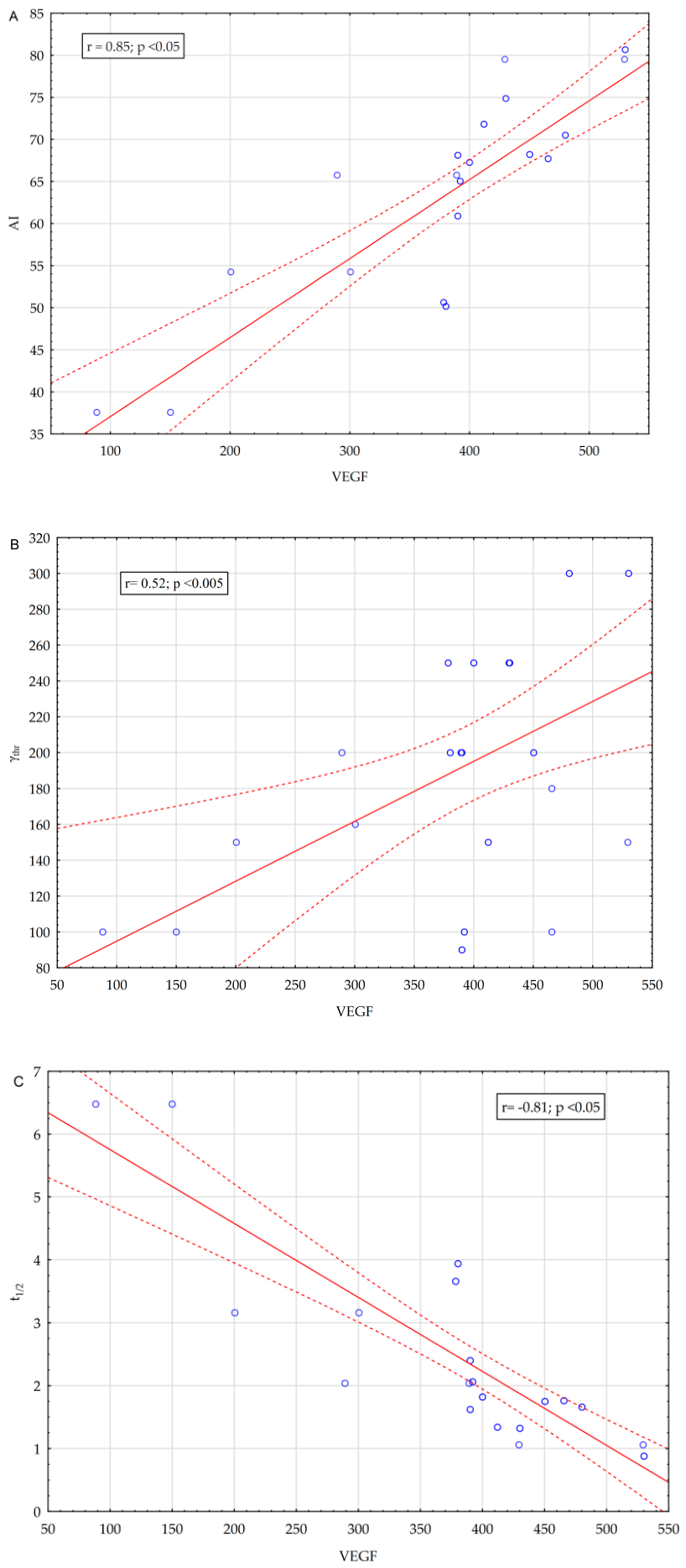
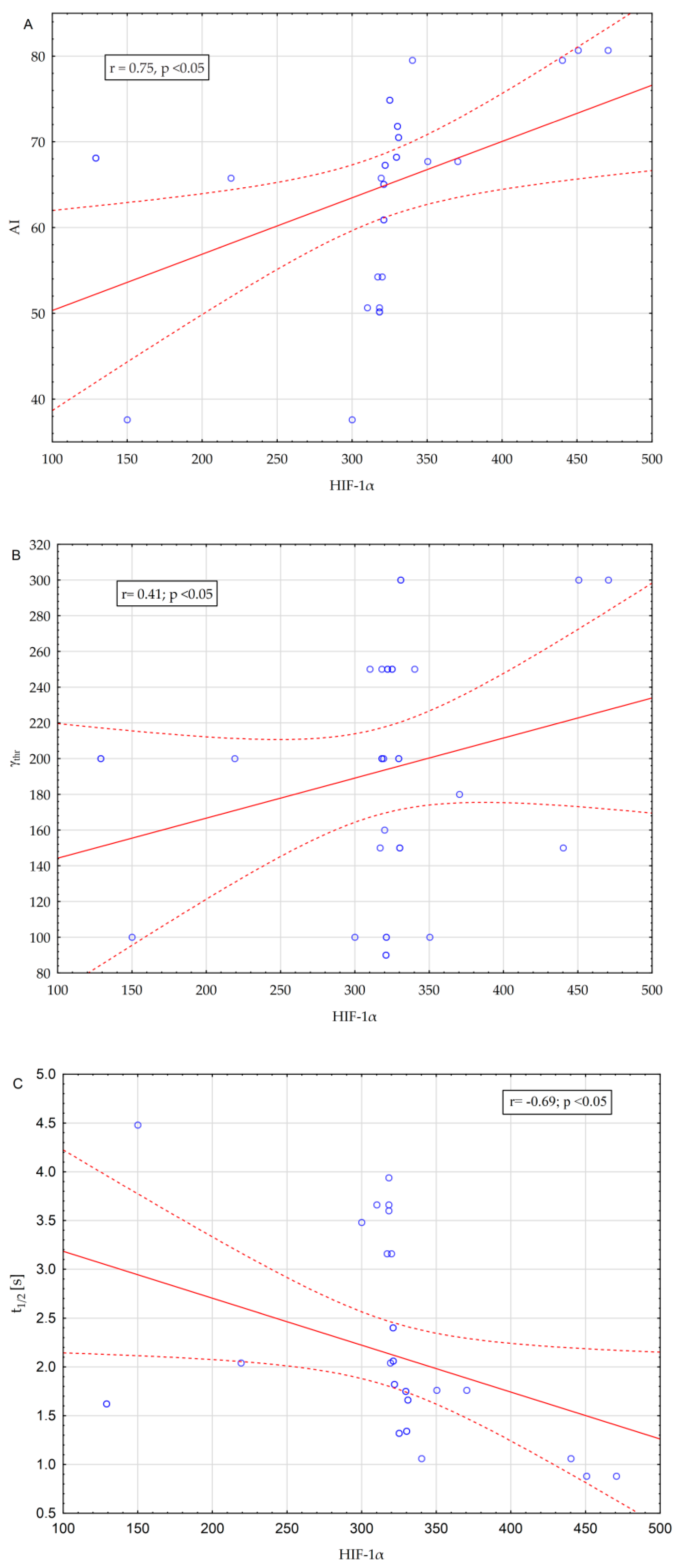
Background/Objectives: This study aimed to investigate the effect of pancreatic ductal adenocarcinoma (PDAC) on the alterations in red blood cell aggregation related to angiogenesis and hypoxia markers. Methods: We studied 31 patients with confirmed PDAC. The aggregation of red blood cells (RBCs) was evaluated using a Laser-assisted Optical Rotational Cell Analyzer (LORCA). Serum vascular endothelial growth factor (VEGF) and hypoxia-inducible factor 1α (HIF-1α) levels were measured using ELISA. We estimated the following parameters specific to the aggregation process: the aggregation index (AI), the aggregation half-time (t1/2), and the threshold shear rate (γthr). Results: All measured RBC aggregation parameters among PDAC subjects differed from those in the controls. The AI (p < 0.05) and γthr (p < 0.005) were significantly higher in the PDAC group, whereas t1/2 (p < 0.01) and AMP (p < 0.001) were significantly lower compared to the control group. The levels of VEGF (p < 0.0001) and HIF-1α (p < 0.0001) were significantly higher in the PDAC group than in the control group. There were significant correlations between RBC aggregation parameters and VEGF and HIF-1α. Multivariate analyses further identified t1/2 (p < 0.01) and γthr (p < 0.05) as independent predictors for VEGF. For HIF-1α, t1/2 (p < 0.05) was confirmed as an independent predictor. Conclusions: The results suggest, but do not demonstrate, a direct pathophysiological link between PDAC-associated hypoxia/angiogenesis and erythrocyte aggregation. Further studies are needed because the relationship linking PDAC to these aggregation indices is unclear.
Keywords: red blood cell; aggregation; angiogenesis; hypoxia; pancreatic cancer red blood cell; aggregation; angiogenesis; hypoxia; pancreatic cancer