Release of Titanium Particles After Implantoplasty in the Treatment of Peri-Implantitis: Local and Systemic Implications—An Integrative Systematic Review
 , ,
, , 
Abstract
1. Introduction
2. Materials and Methods
3. Results
Summary of Evidence Synthesis

| Author, Year | Study Type | Detection Technique | Main Finding |
|---|---|---|---|
| Louropaulou et al., 2015 [11] | Systematic Review | SEM | Particles < 5 µm after implantoplasty; inconclusive inflammation |
| Petterson et al., 2017 [12] | In vitro study | Cytokine analysis | Ti ions form particles that act as secondary stimuli for a proinflammatory reaction |
| Suárez-López del Amo et al., 2018 [13] | Systematic Review | SEM, ICP-MS | Tissue particles; no clinically relevant effects |
| Pajarinen et al., 2018 [14] | In vitro experimental study | SEM, cytokine analysis | Release of proinflammatory mediators such as TNF-α, IL-1β, and IL-6 |
| Pettersson et al., 2019 [15] | Cross Sectional Study | SEM,TEM,ICP-MS | Titanium was detected in the peri-implant mucosa, which could aggravate inflammation, but there is no clear clinical correlation |
| Berryman et al., 2019 [16] | Experimental pilot study | SEM-EDS | Over-expression of IL-33 and TGF-B1 in areas with titanium |
| Barrak et al., 2020 [17] | In vitro experimental study | SEM, EDX, ICP-OES | Phagocytosed particles released vanadium with cytotoxicity in fibroblasts, systemic effect not fully understood |
| Asa’ad F et al., 2022 [18] | Observational and In vitro study | SEM, EDX, cytokine análisis, Immunohistochemistry | Titanium particles and ions released at different stages may contribute to peri-implantitis. |
| Rakic et al., 2022 [19] | Case–control study | SEM | No evidence of any body reaction suggestive of direct pathological effects |
| Toledano-Serranoba J et al., 2022 [7] | In vitro experimental study | SEM, cytokine analysis | Increase in TNF-α and IL-1β; decrease in osteogenesis |
| Chen and Li, 2023 [6] | Observational study | SEM, µ-PIXE | More particles in diseased tissues; no clinically significant difference |
| Kheder et al., 2023 [20] | In vitro experimental study | SEM, cytokine analysis | Inflammatory polarization of macrophages |
| Platt, A et al., 2023 [21] | In vitro experimental study | SEM, EDX | Detection of fine particles < 1 µm; no solid clinical data available |
| Dionigi et al., 2025 [22] | Observational study | SEM, ICP-MS | No association was found with clinical peri-implantitis. |
- 1.
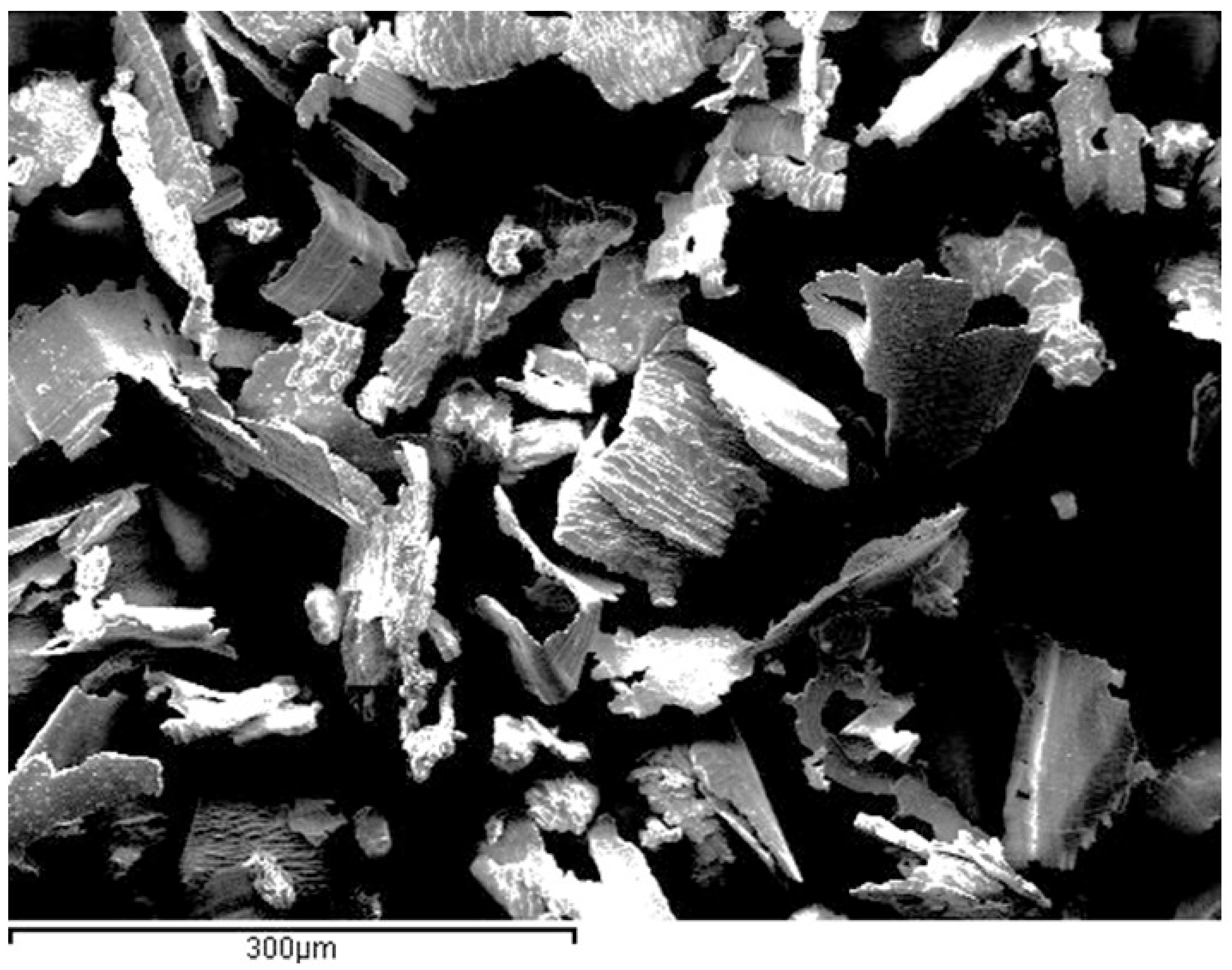
- Titanium Particles detected: All studies reported the presence of titanium particles in peri-implant tissue or cell cultures. Most agreed-on ranges from 100 nm to 54 µm, with the most frequent being 1 to 5 µm confirmed by different techniques. Furthermore, particles were identified in both cases with peri-implantitis and in clinically healthy tissues, with no significant intra-individual differences.
- 2.
- Sites analyzed: Several studies reported higher concentrations of titanium particles in tissue samples with peri-implantitis after implantoplasty, although without demonstrating a direct causal relationship with bone loss or inflammatory progression.
- 3.
- Clinical or experimental evidence: In vivo studies in which particles have been identified report side effects associated with immune responses, local inflammation, gene expression changes driven by methylation, and alterations in the microbiome; however, these findings have not been directly linked to the development of peri-implantitis. In vitro studies demonstrate a pro-inflammatory reaction characterized by increased levels of pro-inflammatory cytokines and reduced expression of osteogenic markers. Nevertheless, when particles smaller than 1 µm are present, no correlation has been found with compromised peri-implant tissue health or with the progression of peri-implantitis. Moreover, these particles may exert cytotoxic effects.
- 4.
- Biological effects:TNF-α, IL-1β, IL-6Macrophage M1 activationROS generationOsteoclastogenesisAltered fibroblast adhesionEpigenetic changes (DNA methylation, miRNA modulation)
- 5.
- Lack of consistent clinical correlation: despite experimental findings, the clinical studies reviewed found no clinically relevant inflammatory signs in patients with confirmed presence of particles after implantoplasty, especially when adequate plaque control and implant stability were maintained.
- 6.
- Systematic findings: No strong evidence of systematic toxicity; no study has confirmed systemic dissemination related to implantoplasty.
4. Discussion
4.1. Other Routes of Exposure to Titanium Dioxide (TiO2)
4.2. Limitations
- Limitations of in vitro studies: Many mechanistic findings regarding inflammation, cytotoxicity, or epigenetic modulation are derived from cell cultures. These controlled conditions do not fully replicate the peri-implant microenvironment, limiting extrapolation to clinical scenarios.
- Limitations of observational studies: Most human studies are cross-sectional or of small sample size, restricting causal inference. Variability in implant designs, surgical techniques, and patient factors introduces potential confounding.
- Heterogeneity of particle detection techniques: Techniques such as SEM, TEM, EDX, ICP-MS, and µ-PIXE differ greatly in sensitivity and resolution. Differences in sampling protocols, tissue processing, and reporting thresholds contribute to inconsistent particle quantification.
- Indirectness of evidence: Very few studies assess implantoplasty-generated particles specifically; many examine titanium debris of mixed or unknown origin. Long-term biological behavior of retained nanoparticles remains insufficiently documented, including potential systemic distribution.
4.3. Clinical Recommendations
5. Conclusions
6. Suggestions for Future Research
- (a)
- Long-term controlled clinical trials to evaluate peri-implant tissue outcomes in patients treated with implantoplasty, as most available studies are cross-sectional, in vitro, or animal-based, limiting causal inference.
- (b)
- Synergistic interactions with bacterial biofilm, given that titanium particles may amplify inflammatory responses in contaminated environments. Fretwurst et al. (2018) [53] proposed that particles act as immunomodulatory cofactors rather than primary aetiological agents. New in vitro and in vivo studies combining microbial and particle exposure could clarify this interaction.
- (c)
- Multicenter studies with harmonized methodologies, ensuring standardization in particle detection techniques (SEM, EDX, ICP-MS) as well as clinical criteria for inflammation and bone loss.
- (d)
- Integration of immunological and genetic factors, since some patients may exhibit a heightened susceptibility to exaggerated responses triggered by metallic nanoparticles.
- (e)
- Balanced risk–benefit analyses, addressing both potential systemic risks of titanium exposure and its therapeutic advantages, while considering alternative routes of TiO2 intake.
- (f)
- Long-term systematic evaluations, aimed at clarifying the real consequences of unintentional exposure to titanium dioxide at the systemic level.
Supplementary Materials
Author Contributions
Funding
Institutional Review Board Statement
Informed Consent Statement
Data Availability Statement
Acknowledgments
Conflicts of Interest
References
- Koldsland, O.C.; Scheie, A.A.; Aass, A.M. Prevalence of peri-implantitis related to severity of the disease with different degrees of bone loss. J. Periodontol. 2010, 81, 231–238. [Google Scholar] [CrossRef]
- Apaza-Bedoya, K.; Tarce, M.; Benfatti, C.A.M.; Henriques, B.; Mathew, M.T.; Souza, J.C.M. Synergistic interactions between corrosion and wear at titanium-based dental implant connections: A scoping review. J. Periodontal Res. 2017, 52, 946–954. [Google Scholar] [CrossRef] [PubMed]
- Kotsakis, G.A.; Xie, L.; Siddiqui, D.A.; Daubert, D.; Graham, D.J.; Gil, F.J. Dynamic assessment of titanium surface oxides following mechanical damage reveals only partial passivation under inflammatory conditions. npj Mater. Degrad. 2024, 8, 98. [Google Scholar] [CrossRef] [PubMed]
- Berketa, J.; James, H.; Marino, V. Dental implant changes following incineration. Forensic Sci. Int. 2011, 207, 50–54. [Google Scholar] [CrossRef]
- Berglundh, T.; Armitage, G.; Araujo, M.G.; Avila-Ortiz, G.; Blanco, J.; Camargo, P.M.; Chen, S.; Cochran, D.; Derks, J.; Figuero, E.; et al. Peri-implant diseases and conditions: Consensus report of workgroup 4 of the 2017 World Workshop on the Classification of Periodontal and Peri-Implant Diseases and Conditions. J. Clin. Periodontol. 2018, 45, S286–S291. [Google Scholar] [CrossRef]
- Chen, X.; Li, J. Titanium particles in peri-implantitis: Distribution, pathogenesis and prevention strategies. Int. J. Oral Sci. 2023, 15, 34–45. [Google Scholar] [CrossRef]
- Toledano-Serrabona, J.; Bosch, B.M.; Díez-Tercero, L.; Gil, F.J.; Camps-Font, O.; Valmaseda-Castellón, E.; Gay-Escoda, C.; Sánchez-Garcés, M.Á. Evaluation of the inflammatory and osteogenic response induced by titanium particles released during implantoplasty of dental implants. Sci. Rep. 2022, 12, 15790. [Google Scholar] [CrossRef]
- Heringa, M.B.; Peters, R.J.B.; Bleys, R.L.A.W.; Van Der Lee, M.K.; Tromp, P.C.; Van Kesteren, P.C.E.; Van Eijkeren, J.C.H.; Undas, A.; Oomen, A.G.; Bouwmeester, H. Detection of titanium particles in human liver and spleen and possible health implications. Part. Fibre Toxicol. 2018, 15, 15. [Google Scholar] [CrossRef] [PubMed]
- EFSA FAF Panel (EFSA Panel on Food Additives and Flavourings); Younes, M.; Aquilina, G.; Castle, L.; Engel, K.-H.; Fowler, P.; Frutos Fernandez, M.J.; Fürst, P.; Gundert-Remy, U.; Gürtler, R.; et al. Scientific Opinion on the safety assessment of titanium dioxide (E171) as a food additive. EFSA J. 2021, 19, 6585. [Google Scholar]
- Page, M.J.; McKenzie, J.E.; Bossuyt, P.M.; Boutron, I.; Hoffmann, T.C.; Mulrow, C.D.; Shamseer, L.; Tetzlaff, J.M.; Akl, E.A.; Brennan, S.E.; et al. The PRISMA 2020 statement: An updated guideline for reporting systematic reviews. BMJ 2021, 372, n71. [Google Scholar] [CrossRef]
- Louropoulou, A.; Slot, D.E.; van der Weijden, F.A. Influence of mechanical instruments on the biocompatibility of titanium dental implants surfaces: A systematic review. Clin. Oral Implant. Res. 2015, 26, 841–850. [Google Scholar] [CrossRef] [PubMed]
- Pettersson, M.; Kelk, P.; Belibasakis, G.N.; Bylund, D.; Molin Thorén, M.; Johansson, A. Titanium ions form particles that activate and execute interleukin-1β release from lipopolysaccharide-primed macrophages. J. Periodontal Res. 2017, 52, 21–32. [Google Scholar] [CrossRef] [PubMed]
- Suárez-López del Amo, F.; Garaicoa-Pazmiño, C.; Fretwurst, T.; Wang, H. Dental implants-associated release of titanium particles: A systematic review. Clin. Oral Implant. Res. 2018, 29, 1085–1100. [Google Scholar] [CrossRef]
- Pajarinen, J.; Lin, T.H.; Gibon, E. The impact of implant debris on the immune system and bone. J. Mech. Behav. Biomed. Mater. 2018, 77, 53–63. [Google Scholar]
- Pettersson, M.; Pettersson, J.; Johansson, A.; Molin Thorén, M. Titanium release in peri-implantitis. J. Oral Rehabil. 2019, 46, 179–188. [Google Scholar] [CrossRef]
- Berryman, Z.; Bridger, L.; Hussaini, H.M.; Rich, A.M.; Atieh, M.; Tawse-Smith, A. Titanium particles: An emerging risk factor for peri-implant bone loss. Saudi Dent. J. 2019, 32, 283–292. [Google Scholar] [CrossRef]
- Barrak, F.N.; Li, S.; Muntane, A.M.; Jones, J.R. Particle release from implantoplasty of dental implants and impact on cells. Int. J. Implant. Dent. 2020, 6, 50. [Google Scholar] [CrossRef]
- Asa’ad, F.; Thomsen, P.; Kunrath, M.F. The Role of Titanium Particles and Ions in the Pathogenesis of Peri-Implantitis. J. Bone Metab. 2022, 29, 145–154. [Google Scholar] [CrossRef]
- Rakic, M.; Radunovic, M.; Petkovic-Curcin, A.; Tatic, Z.; Basta-Jovanovic, G.; Sanz, M. Study on the immunopathological effect of titanium particles in peri-implantitis granulation tissue: A case-control study. Clin. Oral Implant. Res. 2022, 33, 656–666. [Google Scholar] [CrossRef]
- Kheder, W.; Bouzid, A.; Venkatachalam, T.; Talaat, I.M.; Elemam, N.M.; Raju, T.K.; Hamoudi, R. Titanium particles modulate lymphocyte and macrophage polarization in peri-implant gingival tissues. Int. J. Mol. Sci. 2023, 24, 11644. [Google Scholar] [CrossRef]
- Platt, A.; Liu, C.C.; Gubler, A.; Naenni, N.; Thoma, D.; Schmidlin, P.R. In vitro evaluation of different protective techniques to reduce titanium particle contamination during implantoplasty. Clin. Oral Investig. 2023, 27, 4205–4213. [Google Scholar] [CrossRef]
- Dionigi, R.; Maestri, R.; Pera, F.; Marenzi, G. Titanium micro-particles are commonly found in soft tissues surrounding dental implants and are not associated with the occurrence of peri-implantitis. J. Clin. Periodontol. 2025, 5, 78. [Google Scholar]
- Lee, J.; Pyo, S.W.; Cho, H.J.; An, J.S.; Lee, J.H.; Koo, K.T.; Lee, Y.M. Comparison of implant stability measurements between a resonance frequency analysis device and a modified damping capacity analysis device: An in vitro study. J. Periodontal Implant. Sci. 2020, 50, 56–66. [Google Scholar] [CrossRef]
- Vara, J.C.; Delgado, J.; Estrada-Martínez, A.; Pérez-Pevida, E.; Brizuela, A.; Bosch, B.; Pérez, R.; Gil, J. Effect of the Nature of the Particles Released from Bone Level Dental Implants: Physicochemical and Biological Characterization. Coatings 2022, 12, 219. [Google Scholar] [CrossRef]
- Toma, S.; Behets, C.; Brecx, M.C.; Lasserre, J.F. In Vitro Comparison of the Efficacy of Peri-Implantitis Treatments on the Removal and Recolonization of Streptococcus gordonii Biofilm on Titanium Disks. Materials 2018, 11, 2484. [Google Scholar] [CrossRef]
- Herrera, D.; Berglundh, T.; Schwarz, F.; Chapple, I.; Jepsen, S.; Sculean, A.; Kebschull, M.; Papapanou, P.N.; Tonetti, M.S.; Sanz, M.; et al. Prevention and Treatment of Peri-Implant Diseases-The EFP S3 Level Clinical Practice Guideline. J. Clin. Periodontol. 2023, 50 (Suppl. S26), 4–76. [Google Scholar] [CrossRef] [PubMed]
- Souza, J.C.M.; Apaza-Bedoya, K.; Benfatti, C.A.M.; Silva, F.S.; Henriques, B. A Comprehensive Review on the Corrosion Pathways of Titanium Dental Implants and Their Biological Adverse Effects. Metals 2020, 10, 1272. [Google Scholar] [CrossRef]
- Padulles-Gaspar, E.; Padulles-Roig, E.; Cabanes, G.; Pérez, R.A.; Gil, J.; Bosch, B.M. Effects of Hypochlorous Acid and Hydrogen Peroxide Treatment on Bacterial Disinfection Treatments in Implantoplasty Procedures. Materials 2023, 16, 2953. [Google Scholar] [CrossRef]
- Lozano, P.; Peña, M.; Herrero-Climent, M.; Rios-Santos, J.V.; Rios-Carrasco, B.; Brizuela, A.; Gil, J. Corrosion Behavior of Titanium Dental Implants with Implantoplasty. Materials 2022, 15, 1563. [Google Scholar] [CrossRef]
- Safioti, L.; Faggion, C.M.; y Cortelli, S.C. Respuestas biológicas a los residuos de desgaste de titanio en implantes dentales: Una revisión sistemática. Clin. Oral Investig. 2023, 27, 15–25. [Google Scholar]
- Larsson, L.; Kavanagh, N.M.; Nguyen, T.V.N.; Castilho, R.M.; Berglundh, T.; Giannobile, W.V. Influence of epigenetics on periodontitis and peri-implantitis pathogenesis. Periodontology 2000 2022, 90, 125–137. [Google Scholar] [CrossRef]
- Fernandes, G.V.O.; Fernandes, J.C.H.; Castilho, R.M. Epigenetic modifications as a biomarker for periodontitis and peri-implantitis: A review. Oral Implantol. 2025, 17, 5–8. [Google Scholar] [CrossRef]
- Delgado-Ruiz, R.; Romanos, G. Potential causes of titanium particle and ion release in implant dentistry: A systematic review. Int. J. Mol. Sci. 2018, 19, 3585. [Google Scholar] [CrossRef] [PubMed]
- Sekar, P.; Rizvi, Z.; Abdullah, N.; Samsudin, A.R.; Kheder, W. Oral microbiota interactions with titanium implants: A pilot in-vivo and in-vitro study on the impact of peri-implantitis. PLoS ONE 2025, 20, e0321428. [Google Scholar] [CrossRef]
- Hanawa, T. Titanium and its oxide film: A substrate for biomedical applications. Biointerphases 2019, 14, 060801. [Google Scholar]
- Soler, R. Corrosión bacteriana de implantes dentales de titanio. Av. Periodoncia Implantol. Oral 2019, 31, 67–74. [Google Scholar]
- Besinis, A.; Hadi Sd Le, H.R.; Tredwin, C.; Handly, R.D. Antibacterial activity and biofilm inhibition by surface modified titanium alloy medical implants following application of silver, titanium dioxide and hydroxyapatite nanocoating. Nanotoxicology 2017, 11, 327–338. [Google Scholar] [CrossRef]
- Kwon, Y.D.; Lee DWy Kim, H.Y. Nanopartículas de implantoplastia y sus efectos en la viabilidad y función de los osteoblastos. J. Periodontal Res. 2017, 52, 1054–1061. [Google Scholar]
- Shi, X.; Von Dem Bussche, A.; Hurt, R.H.; Kane, A.B.; Gao, H. Cell entry of one-dimensional nanomaterials occurs by tip recognition and rotation. Nat. Nanotechnol. 2013, 6, 714–719. [Google Scholar] [CrossRef]
- Teasdale, A.; Hughes, K. Regulatory Highlights. Org. Process Res. Dev. 2023, 27, 394398. [Google Scholar] [CrossRef]
- Vegas-Bustamante, E.; Sanmartí-García, G.; Gil, J.; Delgado-Garoña, L.; Figueiredo, R.; Camps-Font, O.; Sánchez-Garcés, M.Á.; Toledano-Serrabona, J. Effect of Tribocorrosion on Mechanical Behavior of Titanium Dental Implants: An In Vitro Study. Materials 2025, 18, 1136. [Google Scholar] [CrossRef]
- Barrak, F.N.; Li, S.; Muntane, A.M.; JBarrak, F.; Li, S.; Muntane, A.; Bhatia, M.; Crossthwaite, K.; Jones, J. Particle release from dental implants immediately after placement—An ex vivo comparison of different implant systems. Dent. Mater. 2022, 38, 1004–1014. [Google Scholar] [CrossRef]
- Toledano-Serrabona, J.; Gil, F.J.; Camps-Font, O.; Valmaseda-Castellón, E.; Gay-Escoda, C.; Sánchez-Garcés, M.Á.; Verdaguer, P.; Molmeneu, M. Physicochemical and Biological Characterization of Ti6Al4V Particles Obtained by Implantoplasty: An In Vitro Study. Part I. Materials 2021, 14, 6507. [Google Scholar] [CrossRef] [PubMed]
- Camps-Font, O.; Toledano-Serrabona, J.; Juiz-Camps, A.; Gil, J.; Sánchez-Garcés, M.A.; Figueiredo, R.; Gay-Escoda, C.; Valmaseda-Castellón, E. Effect of Implantoplasty on Roughness, Fatigue and Corrosion Behavior of Narrow Diameter Dental Implants. J. Funct. Biomater. 2023, 14, 61. [Google Scholar] [CrossRef] [PubMed]
- Fabbro, M.D.; Taschieri, S.; Canciani, E.; Addis, A.; Musto, F.; Weinstein, R.; Dellavia, C. Osseointegration of Titanium Implants with Different Rough Surfaces: A Histologic and Histomorphometric Study in an Adult Minipig Model. Implant. Dent. 2017, 26, 357–366. [Google Scholar] [CrossRef]
- Sun, Y.; Shukla, A.; Ramachandran, R.A.; Kanniyappan, H.; Yang, B.; Harlow, R.; Campbell, S.D.; Thalji, G.; Mathew, M. Fretting-corrosion at the Implant-Abutment Interface Simulating Clinically Relevant Conditions. Dent. Mater. 2024, 40, 1823–1831. [Google Scholar] [CrossRef]
- Pascual, B.; Gurruchaga, M.; Ginebra, M.P.; Gil, F.J.; Planell, J.A.; Goñi, I. Influence of the modification of P/L ratio on a new formulation of acrylic bone cement. Biomaterials 1999, 20, 465–474. [Google Scholar] [CrossRef] [PubMed]
- Vallet-Regí, M.; Román, J.; Padilla, S.; Doadrio, J.C.; Gil, F.J. Bioactivity and mechanical properties of SiO2-CaO-P2O5 glass-ceramics. J. Mater. Chem. 2005, 15, 1353–1359. [Google Scholar] [CrossRef]
- Bischoff, N.S.; de Kok, T.M.; Sijm, D.T.H.M.; van Breda, S.G.; Briedé, J.J.; Castenmiller, J.J.M.; Opperhuizen, A.; Chirino, Y.I.; Dirven, H.; Gott, D.; et al. Possible Adverse Effects of Food Additive E171 (Titanium Dioxide) Related to Particle Specific Human Toxicity, Including the Immune System. Int. J. Mol. Sci. 2020, 22, 207. [Google Scholar] [CrossRef]
- Cornu, R.; Béduneau, A.; Martin, H. Ingestion of titanium dioxide nanoparticles: A definite health risk for consumers and their progeny. Arch. Toxicol. 2022, 96, 26552686. [Google Scholar] [CrossRef]
- Rompelberg, C.; Heringa, M.B.; van Donkersgoed, G.; Drijvers, J.; Roos, A.; Westenbrink, S.; Peters, R.; van Bemmel, G.; Brand, W.; Oomen, A.G. Oral intake of added titanium dioxide and its nanofraction from food products, food supplements and toothpaste by the Dutch population. Nanotoxicology 2016, 10, 1404–1414. [Google Scholar] [CrossRef]
- Rocamundi, M.; Lagoner, A.; Juncal, A.L.; Pollo, C.; Fradejas, M.R.; Chiadeh, S.; Cerioni, G.; Castro, D.L.; Daher, M.; Di Genaro, S. Ventajas y riesgos del uso de pastas dentales con nanotecnologías. Methodo Investig. Las. Cienc. Biológicas. 2018, 3, 67–72. [Google Scholar] [CrossRef]
- Fretwurst, T.; Nelsom, K.; Tarnow, D.P.; Wang, H.L.; Giannobile, W.V. Is metal particle release associated with peri-implant bone destruction? An emerging concept. J. Dent. Res. 2018, 97, 259–265. [Google Scholar] [CrossRef]
- Kim, K.T.; Eo, M.Y.; Nguyen, T.T.H.; Kim, S.M. General review of titanium toxicity. Int. J. Implant. Dent. 2019, 5, 10. [Google Scholar] [CrossRef]
- Rashid, M.M.; Forte Tavčer, P.; Tomšič, B. Influence of Titanium Dioxide Nanoparticles on Human Health and the Environment. Nanomaterials 2021, 11, 2354. [Google Scholar] [CrossRef] [PubMed]
- Siddiqi, A.; Payne, A.G.T.; De Silva, R.K.; Duncan, W.J. Titanium allergy: Could it affect dental implant integration? Clin. Oral Implant. Res. 2011, 22, 673–680. [Google Scholar] [CrossRef] [PubMed]
- Noumbissi, S.; Scarano, A.; Gupta, S. A Literature Review Study on Atomic Ions Dissolution of Titanium and Its Alloys in Implant Dentistry. Materials 2019, 12, 368. [Google Scholar] [CrossRef]
- Sikora, C.L.; Alfaro, M.F.; Yuan, J.C.; Barao, V.A.; Sukotjo, C.; Mathew, M.T. Wear and Corrosion Interactions at the Titanium/Zirconia Interface: Dental Implant Application. J. Prosthodont. 2018, 27, 842–852. [Google Scholar] [CrossRef]
- Müller-Heupt, L.K.; Schiegnitz, E.; Kaya, S.; Jacobi-Gresser, E.; Kämmerer, P.W.; Al-Nawas, B. Diagnostic tests for titanium hypersensitivity in implant dentistry: A systematic review of the literature. Int. J. Implant. Dent. 2022, 8, 29. [Google Scholar] [CrossRef]


| Population | Patients undergoing implantoplasty with titanium particles in peri-implant soft tissue |
| Intervention | Implantoplasty |
| Comparison | Pre-treatment or other mechanical procedures vs. implantoplasty in reference tissue |
| Outcome | Absence or presence of clinical inflammation, peri-implantitis or systemic effects |
| Author/Year | Study Type | Design Constraints | Main Finding | RB | Inc | Ind | Imp | PB | Other Factors | Q |
|---|---|---|---|---|---|---|---|---|---|---|
| Louropoulou et al., 2015 [11] | Systematic Review | Implantoplasty Studies | Particles < 5 µm; inconclusive inflammation | M | H | L | H | P | Solid structure and comprehensive search, but lacking information on risk assessment and full transparency. | M |
| Petterson et al., 2017 [12] | In vitro study | Study based on cell culture | Ti ions form particles that act as secondary stimuli for a proinflammatory reaction | M | L | M | M | U | Low number of human samples | M |
| Suárez et al., 2018 [13] | Systematic Review | Clinical and in vivo studies | Evidence of frequent release, biological effects still unclear | M | H | L | H | P | High heterogeneity and inconclusive clinical data | L |
| Pajarinen et al., 2018 [14] | Experimental in vitro | Human cells | ↑ TNF-α, IL-1β, IL-6 | M | L | H | M | U | Indirect clinical relevance, limited extrapolation. | M/L |
| Pettersson et al., 2019 [15] | Cross Sectional Study | Patients, without healthy controls, only periodontitis as a comparison | Ti detected in tissue; no clear clinical correlation | L | ND | L | L | P | Limited evidence due to small sample size, possible publication bias. | L |
| Berryman et al., 2019 [16] | Experimental pilot study | Without control group | Over-expression of IL-33 and TGF-B1 in areas with titanium | M | L | L | M | U | Small sample size | L/M |
| Barrak et al., 2020 [17] | In vitro experimental study | Only cells and culture media, no animal/human model | Implantoplasty releases micro- and nanoparticles; Ti-6Al-4V released V with cytotoxicity in fibroblasts | L | ND | L | L | ND | None | L |
| Asa’ad F et al., 2022 [18] | Observational and In vitro Study | Animals and humans | Released titanium particles/ions may play a pathogenic role in peri-implantitis | M/H | H | M | H | P | Variability in methodology, types of implant surfaces, cleaning techniques, or peri-implantitis treatments, which may alter the risk | L/M |
| Rakic et al., 2022 [19] | Case–control study | Small sample size | No evidence of any body reaction suggestive of direct pathological effects | M | L | L | M | U | Subjective IHC analysis | L/M |
| Toledano J et al., 2022 [7] | In vitro experimental study | Cell cultures | ↑ TNF-α, IL-1β; ↓ osteogenesis | L | ND | L | L | ND | Findings that are biologically relevant but not clinically relevant | L |
| Chen and Li, 2023 [6] | Observational study | Patients with peri-implantitis and healthy patients | More particles in diseased tissues; no clinical difference | M | H | L | H | P | Limited sample, useful review but without robust formal methodology | M |
| Kheder et al., 2023 [20] | In vitro experimental study | Human macrophages | Inflammatory polarization | L | L | H | M | U | Indirect clinical relevance | M |
| Platt et al., 2023 [21] | In vitro experimental study | Screening tests | Barriers reduce the release of particles. | L | L | H | M | U | No clinical correlation available | M |
| Dionigi et al., 2025 [22] | Observational study | Patients with multiple implants | Particles present, not associated with peri-implantitis | M | M | L | H | P | Solid design, although limited in size and without adjustments for confusers. | L |
| Author, Year | Summary of Evidence Quality (GRADE) |
|---|---|
| Louropoulou et al., 2015 [11] | The review showed a moderate risk of bias due to a lack of methodological detail and transparency. There was marked heterogeneity between studies, combined with imprecise results due to small sample sizes. Although the evidence was applicable, the possible presence of publication bias reduced overall confidence. |
| Petterson et al., 2017 [12] | The in vitro study presented a moderate risk of bias and limited applicability to the clinical setting. There were no relevant inconsistencies, but the small sample size contributed to imprecision. Publication bias was considered unlikely. |
| Suárez et al., 2018 [13] | The systematic review combined clinical and in vivo studies with high heterogeneity. Methodological limitations and imprecise data reduced confidence, along with possible publication bias. |
| Pajarinen et al., 2018 [14] | The cellular model showed moderate risk of bias and high indirectness with respect to clinical practice. Precision was limited by small experimental sizes, although no inconsistencies were detected and publication bias was unlikely. |
| Pettersson et al., 2019 [15] | The cross-sectional study, although with low risk of bias, was limited by a small sample size and the absence of healthy controls. The evidence was direct and consistent, but limited precision and possible publication bias reduced certainty. |
| Berryman et al., 2019 [16] | The pilot study design without a control group generated a moderate risk of bias and reduced precision. The evidence was applicable and without major inconsistencies, with a low probability of publication bias. |
| Barrak et al., 2020 [17] | The in vitro study had a low risk of bias and adequate precision but limited applicability due to the lack of animal or human models. No inconsistencies or signs of publication bias were detected. |
| Asa’ad et al., 2022 [18] | The combination of observational and experimental studies generated a moderate-to-high risk of bias and high heterogeneity. The evidence was partially indirect and the precision was low, with possible publication bias. |
| Rakic et al., 2022 [19] | The case–control design showed moderate risk of bias, mainly due to the small sample size and the subjective nature of the analysis. The evidence was consistent and applicable, although precision was limited. Publication bias was considered unlikely. |
| Toledano et al., 2022 [7] | The in vitro study had a low risk of bias and good consistency, with acceptable precision. Although indirect with respect to clinical practice, it showed no signs of publication bias. |
| Chen and Li, 2023 [6] | The clinical study presented moderate risk of bias, high inconsistency between patients, and low precision due to limited size. The evidence was direct, but possible publication bias reduced overall certainty. |
| Kheder et al., 2023 [20] | The macrophage model showed low risk of bias and consistent results, but high indirectness limits its applicability. Precision was moderate and publication bias was unlikely. |
| Platt et al., 2023 [21] | The in vitro design showed good experimental control but lacked clinical correlation, which increased indirectness. Consistency was adequate and precision moderate, with no signs of publication bias. |
| Dionigi et al., 2025 [22] | The observational study showed moderate risk of bias due to lack of adjustment for confounders and limited sample size. Although the evidence was direct, moderate inconsistency and imprecision reduced confidence, along with possible publication bias. |
Disclaimer/Publisher’s Note: The statements, opinions and data contained in all publications are solely those of the individual author(s) and contributor(s) and not of MDPI and/or the editor(s). MDPI and/or the editor(s) disclaim responsibility for any injury to people or property resulting from any ideas, methods, instructions or products referred to in the content. |
© 2025 by the authors. Licensee MDPI, Basel, Switzerland. This article is an open access article distributed under the terms and conditions of the Creative Commons Attribution (CC BY) license (https://creativecommons.org/licenses/by/4.0/).
Share and Cite
Rodríguez Alvarez, M.B.; Padullés-Roig, E.; Cabanes-Gumbau, G.; Callejas-Cano, J.A.; Gil, J. Release of Titanium Particles After Implantoplasty in the Treatment of Peri-Implantitis: Local and Systemic Implications—An Integrative Systematic Review. J. Clin. Med. 2025, 14, 8661. https://doi.org/10.3390/jcm14248661
Rodríguez Alvarez MB, Padullés-Roig E, Cabanes-Gumbau G, Callejas-Cano JA, Gil J. Release of Titanium Particles After Implantoplasty in the Treatment of Peri-Implantitis: Local and Systemic Implications—An Integrative Systematic Review. Journal of Clinical Medicine. 2025; 14(24):8661. https://doi.org/10.3390/jcm14248661
Chicago/Turabian StyleRodríguez Alvarez, Maria Belén, Esteban Padullés-Roig, Guillermo Cabanes-Gumbau, J. A. Callejas-Cano, and Javier Gil. 2025. "Release of Titanium Particles After Implantoplasty in the Treatment of Peri-Implantitis: Local and Systemic Implications—An Integrative Systematic Review" Journal of Clinical Medicine 14, no. 24: 8661. https://doi.org/10.3390/jcm14248661
APA StyleRodríguez Alvarez, M. B., Padullés-Roig, E., Cabanes-Gumbau, G., Callejas-Cano, J. A., & Gil, J. (2025). Release of Titanium Particles After Implantoplasty in the Treatment of Peri-Implantitis: Local and Systemic Implications—An Integrative Systematic Review. Journal of Clinical Medicine, 14(24), 8661. https://doi.org/10.3390/jcm14248661