The Efficiency of Platelet-Rich Plasma (PRP) in Treating Post-Burn and Surgical Scars: A Meta-Analysis Study
Abstract
1. Introduction
2. Materials and Methods
2.1. Search Strategy
2.2. Inclusion and Exclusion Criteria
2.3. Study Selection
2.4. Data Extraction
2.5. Outcome of Interest and Definition
2.6. Quality Assessment
2.7. Statistical Analysis
3. Results
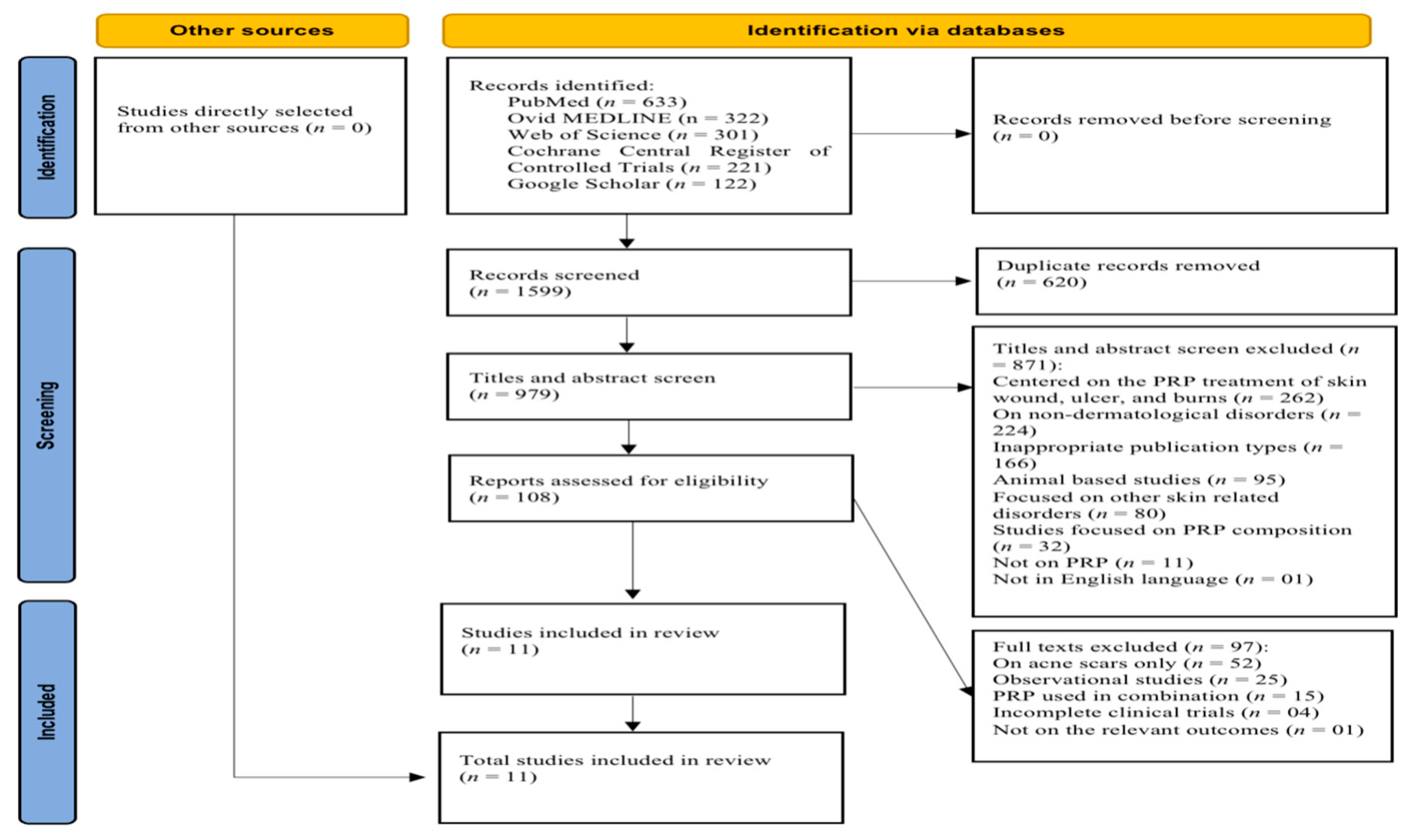
3.1. Literature Search
3.2. Quality Assessment of Included Studies
3.3. Baseline Characteristics of Included Studies
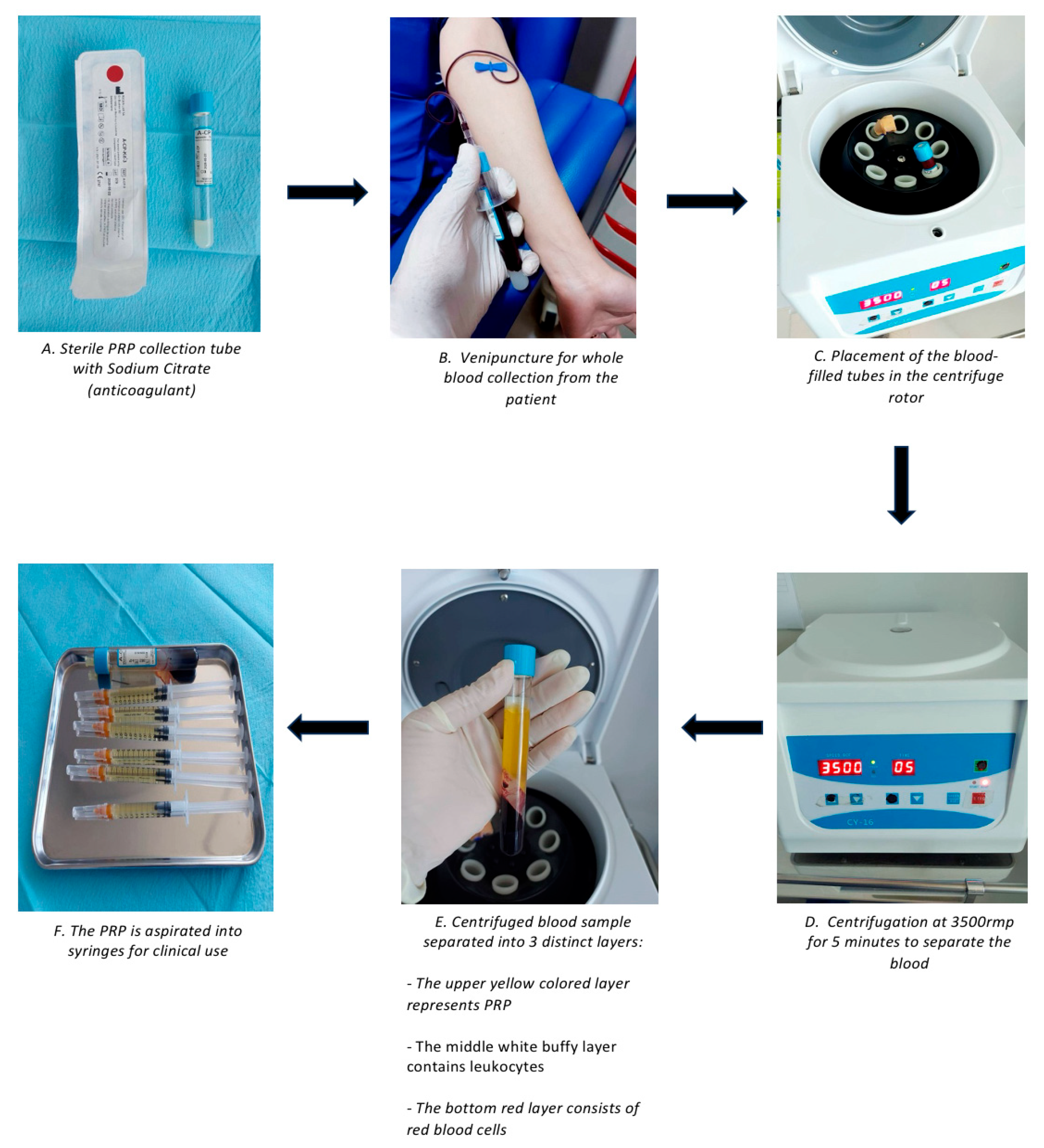
3.4. PRP Preparation and Administration
3.5. Interventional Characteristics of Included Studies
3.5.1. Postoperative Scars
3.5.2. Burn Scars
3.5.3. Keloids
3.6. Meta-Analysis
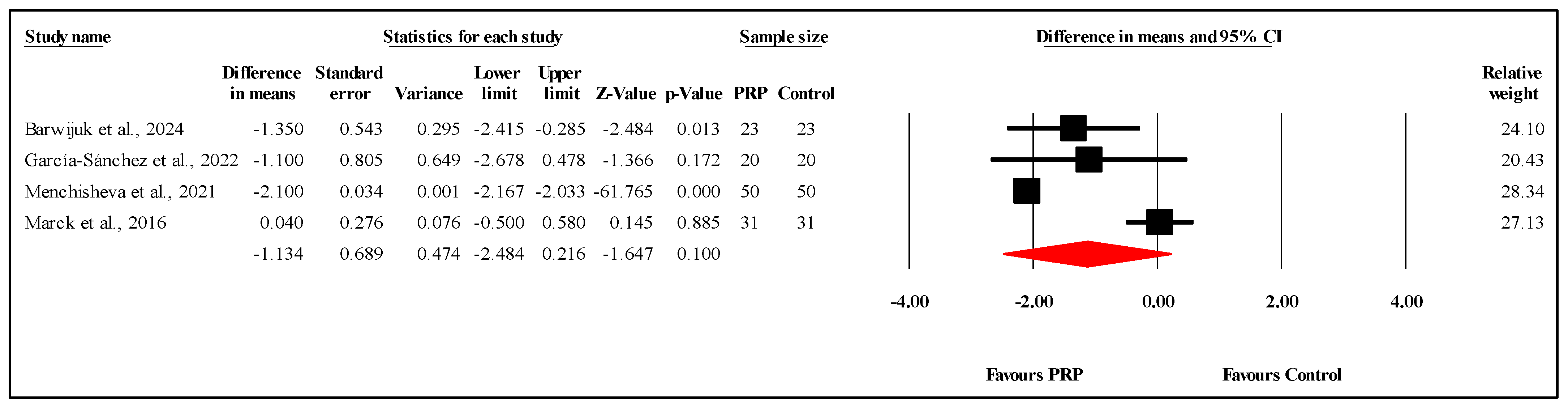
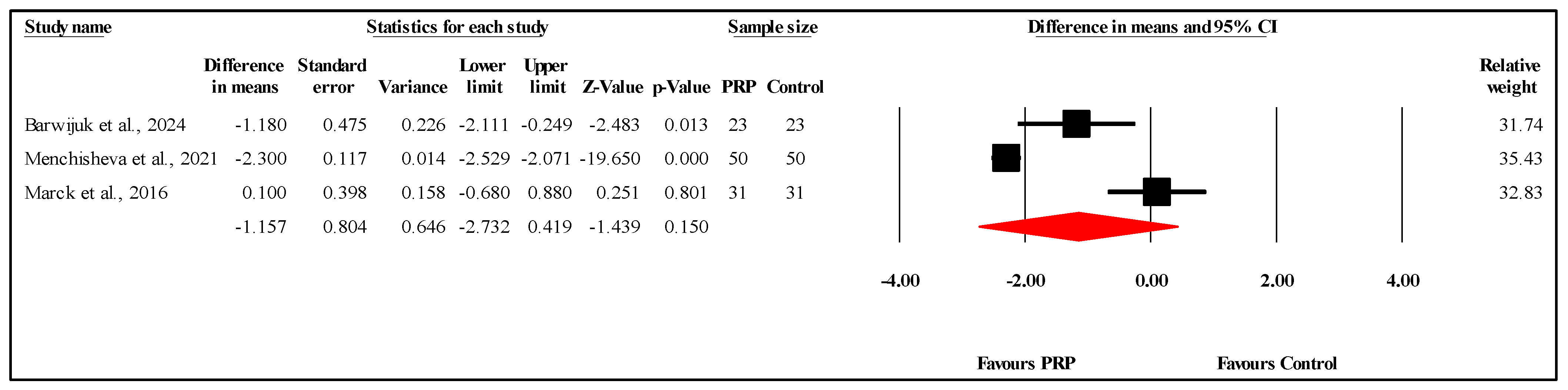
3.6.1. Comparison of OSAS Scores at Three-Month Follow-Up
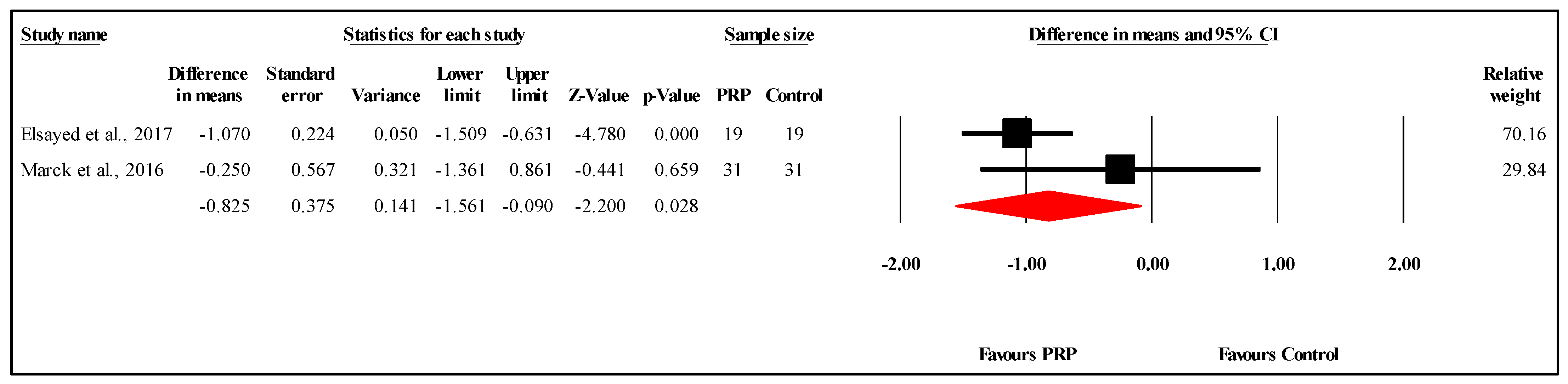
3.6.2. Comparison of OSAS Scores at Six-Month Follow-Up
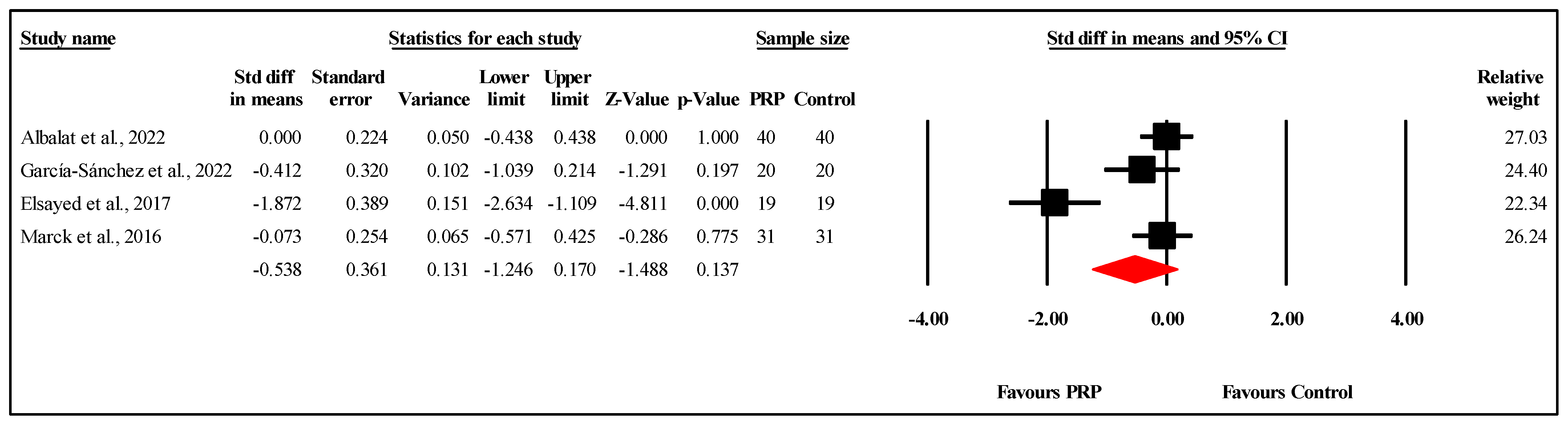
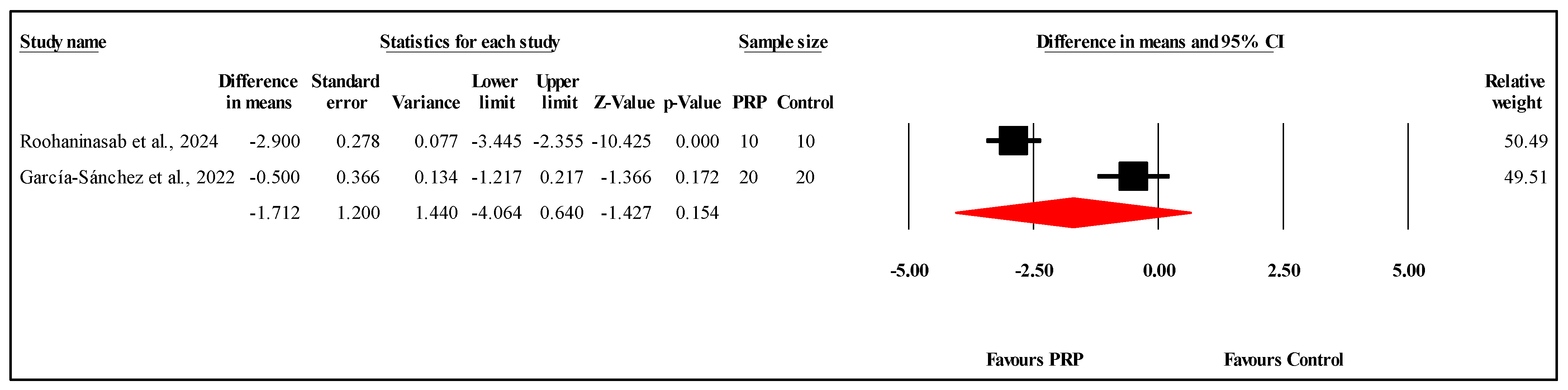
3.6.3. Comparison of PSAS Scores at Three-Month Follow-Up
3.6.4. Comparison of PSAS Scores at Six-Month Follow-Up
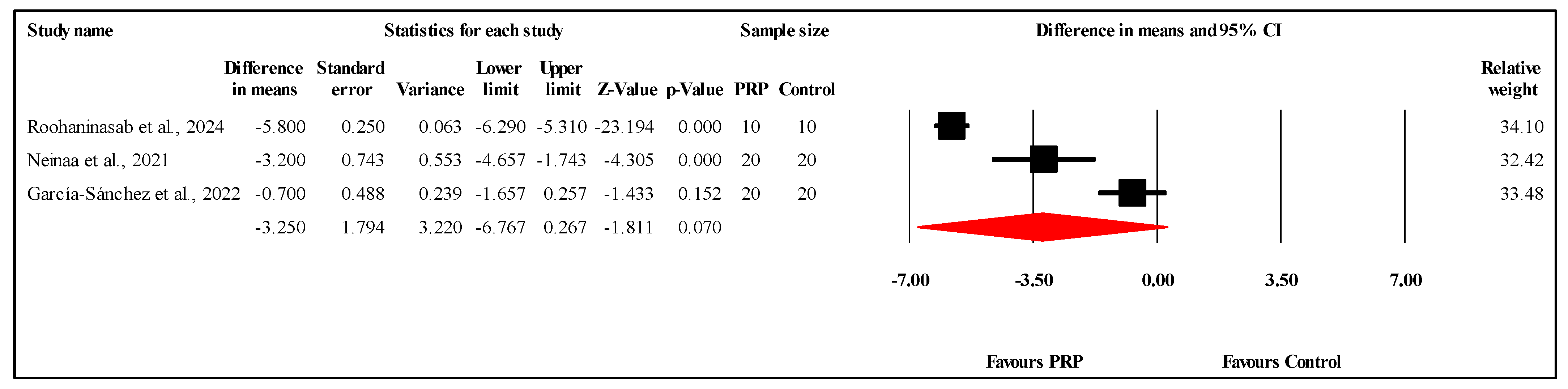
3.6.5. Comparison of VSS Scores at One-Month Follow-Up
3.6.6. Comparison of VSS Scores at Three-Month Follow-Up
4. Discussion
5. Conclusions
Supplementary Materials
Author Contributions
Funding
Institutional Review Board Statement
Informed Consent Statement
Data Availability Statement
Conflicts of Interest
Abbreviations
| PRP | Platelet-Rich Plasma |
| RCT | Randomized Controlled Trial |
| VSS | Vancouver Scar Scale |
| OSAS | Observer Scar Assessment Scale |
| PSAS | Patient Scar Assessment Scale |
| PDGF | Platelet-Derived Growth Factor |
| VEGF | Vascular Endothelial Growth Factor |
| EGF | Epidermal Growth Factor |
| FGF | Fibroblast Growth Factor |
| IGF-1 | Insulin-Like Growth Factor |
| TGF- | Transforming Growth Factor-Beta |
| βHGF | Hepatocyte Growth Factor |
| KGF | Keratinocyte Growth Factor |
| BTX-A | Botulinum Toxin A |
| TAC | Triamcinolone Acetonide |
| CS | Cesarean Section |
| NR | Not Reported |
References
- Jeschke, M.G. Burn injury. Nat. Rev. Dis. Primers 2020, 6, 11. [Google Scholar] [CrossRef]
- Ziabari, S.M.Z.; Mobayen, M.R.; Rimaz, S.; Nejat, D.R.; Rimaz, S. Evaluation of patterns, cause and risk factors of burns in patients with seizure. Int. J. Burn. Trauma 2022, 12, 23–27. [Google Scholar]
- World Health Organization. Burns; World Health Organization: Geneva, Switzerland, 2023; Volume 1, p. 1. [Google Scholar]
- Greenhalgh, D.G. Management of Burns. N. Engl. J. Med. 2019, 380, 2349–2359. [Google Scholar] [CrossRef]
- Fabbrocini, G.; Annunziata, M.C.; D′ Arco, V.; De Vita, V.; Lodi, G.; Mauriello, M.C.; Pastore, F.; Monfrecola, G. Acne scars: Pathogenesis, classification and treatment. Dermatol. Res. Pract. 2010, 2010, 893080. [Google Scholar] [CrossRef]
- Lee, H.J.; Jang, Y.J. Recent Understandings of Biology, Prophylaxis and Treatment Strategies for Hypertrophic Scars and Keloids. Int. J. Mol. Sci. 2018, 19, 711. [Google Scholar] [CrossRef]
- Limmer, E.E.; Glass, D.A. A Review of Current Keloid Management: Mainstay Monotherapies and Emerging Approaches. Dermatol. Ther. 2020, 10, 931–948. [Google Scholar] [CrossRef]
- Gruber, R. How to explain the beneficial effects of platelet-rich plasma. Periodontology 2000, 97, 95–103. [Google Scholar] [CrossRef]
- Chicharro-Alcántara, D.; Rubio-Zaragoza, M.; Damiá-Giménez, E.; Carrillo-Poveda, J.M.; Cuervo-Serrato, B.; Peláez-Gorrea, P.; Sopena-Juncosa, J.J. Platelet rich plasma: New insights for cutaneous wound healing management. J. Funct. Biomater. 2018, 9, 10. [Google Scholar] [CrossRef]
- Hirase, T.; Ruff, E.; Surani, S.; Ratnani, I. Topical application of platelet-rich plasma for diabetic foot ulcers: A systematic review. World J. Diabetes 2018, 9, 172–179. [Google Scholar] [CrossRef] [PubMed]
- Foster, T.E.; Puskas, B.L.; Mandelbaum, B.R.; Gerhardt, M.B.; Rodeo, S.A. Platelet-Rich Plasma: From Basic Science to Clinical Applications. Am. J. Sports Med. 2009, 37, 2259–2272. [Google Scholar] [CrossRef] [PubMed]
- Page, M.J.; McKenzie, J.E.; Bossuyt, P.M.; Boutron, I.; Hoffmann, T.C.; Mulrow, C.D.; Shamseer, L.; Tetzlaff, J.M.; Akl, E.A.; Brennan, S.E.; et al. The PRISMA 2020 statement: An updated guideline for reporting systematic reviews. BMJ 2021, 372, n71. [Google Scholar] [CrossRef]
- Sullivan, T.A.; Smith, J.; Kermode, J.; Mclver, E.; Courtemanche, D.J. Rating the Burn Scar. J. Burn Care Rehabil. 1990, 11, 256–260. [Google Scholar] [CrossRef] [PubMed]
- Draaijers, L.J.; Tempelman, F.R.H.; Botman, Y.A.M.; Tuinebreijer, W.E.; Middelkoop, E.; Kreis, R.W.; van Zuijlen, P.P.M. The patient and observer scar assessment scale: A reliable and feasible tool for scar evaluation. Plast. Reconstr. Surg. 2004, 113, 1960–1965; discussion 1966–1967. [Google Scholar] [CrossRef]
- Higgins, J.P.T.; Thompson, S.G.; Deeks, J.J.; Altman, D.G. Measuring inconsistency in meta-analyses. BMJ 2003, 327, 557–560. [Google Scholar] [CrossRef]
- Sterne, J.A.C.; Savović, J.; Page, M.J.; Elbers, R.G.; Blencowe, N.S.; Boutron, I.; Cates, C.J.; Cheng, H.Y.; Corbett, M.S.; Eldridge, S.M.; et al. RoB 2: A revised tool for assessing risk of bias in randomised trials. BMJ 2019, 366, 4898. [Google Scholar] [CrossRef]
- Roohaninasab, M.; Jafarzadeh, A.; Sadeghzadeh-Bazargan, A.; Zare, S.; Nouri, M.; Nilforoushzadeh, M.A.; Behrangi, E. Evaluation of the efficacy, safety and satisfaction rates of platelet-rich plasma, non-cross-linked hyaluronic acid and the combination of platelet-rich plasma and non-cross-linked hyaluronic acid in patients with burn scars treated with fractional CO2 laser: A randomized controlled clinical trial. Int. Wound J. 2024, 21, e70065. [Google Scholar] [PubMed]
- Barwijuk, M.; Pankiewicz, K.; Gałaś, A.; Nowakowski, F.; Gumuła, P.; Jakimiuk, A.J.; Issat, T. The Impact of Platelet-Rich Plasma Application during Cesarean Section on Wound Healing and Postoperative Pain: A Single-Blind Placebo-Controlled Intervention Study. Medicina 2024, 60, 628. [Google Scholar] [CrossRef] [PubMed]
- Chaichian, S.; Mirgaloybayat, S.; Tahermanesh, K.; Mohammadi, M.H.; Mostafavi, R.S.; Mehdizadehkashi, A.; Madadian, M.; Allahqoli, L. Effect of Autologous Platelet–Rich Plasma on Cesarean Section Scar; A Randomized, Double-Blinded Pilot Study. Shiraz E Med. J. 2022, 23, e114072. [Google Scholar]
- Albalat, W.; Nabil, S.; Khattab, F. Assessment of various intralesional injections in keloid: Comparative analysis. J. Dermatol. Treat. 2022, 33, 2051–2056. [Google Scholar] [CrossRef]
- García-Sánchez, J.M.; Lis, V.M.; Ruiz-Valls, A.; Pérez-Plaza, A.; Sanchis, P.S.; Pérez-Del-Caz, M.D. Platelet rich plasma and plasma rich in growth factors for split-thickness skin graft donor site treatment in the burn patient setting: A randomized clinical trial. Burns 2022, 48, 1662–1670. [Google Scholar] [CrossRef]
- Menchisheva, Y.; Mirzakulova, U.; Usupova, D.; Yermukhanova, G.; Rysbayeva, Z. Platelet-rich plasma improves esthetic postoperative outcomes of maxillofacial surgical procedures. Acta Chir. Plast. 2021, 63, 118–126. [Google Scholar] [CrossRef]
- Neinaa, Y.M.E.; Elsayed, T.A.; Mohamed, D.A.; Elfar, N.N. Botulinum toxin and platelet rich plasma as innovative therapeutic modalities for keloids. Dermatol. Ther. 2021, 34, e14900. [Google Scholar] [CrossRef]
- Refahee, S.M.; Aboulhassan, M.A.; Aziz, O.A.; Emara, D.; El Dein, H.M.S.; Moussa, B.G.; Abu Sneineh, M. Is PRP Effective in Reducing the Scar Width of Primary Cleft Lip Repair? A Randomized Controlled Clinical Study. Cleft Palate Craniofac. J. 2020, 57, 581–588. [Google Scholar] [CrossRef] [PubMed]
- Elsayed, M. Evaluation of the effect of platelet-rich plasma on post-burn scars. Open Access J. Surg. 2017, 5, 6–10. [Google Scholar] [CrossRef]
- Tehranian, A.; Esfehani-Mehr, B.; Pirjani, R.; Rezaei, N.; Heidary, S.S.; Sepidarkish, M. Application of autologous platelet-rich plasma (PRP) on wound healing after caesarean section in high-risk patients. Iran. Red Crescent Med. J. 2016, 18, e34449. [Google Scholar] [CrossRef]
- Marck, R.E.; Gardien, K.L.; Stekelenburg, C.M.; Vehmeijer, M.; Baas, D.; Tuinebreijer, W.E.; Breederveld, R.S.; Middelkoop, E. The application of platelet-rich plasma in the treatment of deep dermal burns: A randomized, double-blind, intra-patient controlled study. Wound Repair Regen. 2016, 24, 712–720. [Google Scholar] [CrossRef]
- Alser, O.H.; Goutos, I. The evidence behind the use of platelet-rich plasma (PRP) in scar management: A literature review. Scars Burn. Heal. 2018, 4, 2059513118808773. [Google Scholar] [CrossRef]
- Mekeres, G.M.; Buhaș, C.L.; Csep, A.N.; Beiușanu, C.; Andreescu, G.; Marian, P.; Cheregi, C.D.; Fodor, R.; Manole, F. The Importance of Psychometric and Physical Scales for the Evaluation of the Consequences of Scars—A Literature Review. Clin. Pract. 2023, 13, 372–383. [Google Scholar] [CrossRef] [PubMed]
- Hoogewerf, C.J.; van Baar, M.E.; Middelkoop, E.; van Loey, N.E. Impact of facial burns: Relationship between depressive symptoms, self-esteem and scar severity. Gen. Hosp. Psychiatry 2014, 36, 271–276. [Google Scholar] [CrossRef] [PubMed]
- Lee, K.C.; Bamford, A.; Gardiner, F.; Agovino, A.; ter Horst, B.; Bishop, J.; Sitch, A.; Grover, L.; Logan, A.; Moiemen, N.S. Investigating the intra- and inter-rater reliability of a panel of subjective and objective burn scar measurement tools. Burns 2019, 45, 1311–1324. [Google Scholar] [CrossRef]
- Brusselaers, N.; Pirayesh, A.; Hoeksema, H.; Verbelen, J.; Blot, S.; Monstrey, S. Burn scar assessment: A systematic review of objective scar assessment tools. Burns 2010, 36, 1157–1164. [Google Scholar] [CrossRef]
- DeLong, J.M.; Russell, R.P.; Mazzocca, A.D. Platelet-rich plasma: The PAW classification system. Arthrosc. J. Arthrosc. Relat. Surg. 2012, 28, 998–1009. [Google Scholar] [CrossRef]
- Magalon, J.; Chateau, A.L.; Bertrand, B.; Louis, M.L.; Silvestre, A.; Giraudo, L.; Veran, J.; Sabatier, F. DEPA classification: A proposal for standardising PRP use and a retrospective application of available devices. BMJ Open Sport Exerc. Med. 2016, 2, e000060. [Google Scholar] [CrossRef]
- Dhurat, R.; Sukesh, M. Principles and Methods of Preparation of Platelet-Rich Plasma: A Review and Author’s Perspective. J. Cutan. Aesthetic Surg. 2014, 7, 189–197. [Google Scholar] [CrossRef] [PubMed]
- Bhatia, A.; Ramya, B.; Biligi, D.S.; Prasanna, B.P. Comparison of different methods of centrifugation for preparation of platelet-rich plasma (PRP). Indian J. Pathol. Oncol. 2016, 3, 535–539. [Google Scholar] [CrossRef]
- Saqlain, N.; Mazher, N.; Fateen, T.; Siddique, A. Comparison of single and double centrifugation methods for preparation of Platelet-Rich Plasma (PRP). Pak. J. Med. Sci. 2023, 39, 634. [Google Scholar] [CrossRef] [PubMed]
- Kim, S.-A.; Ryu, H.-W.; Lee, K.-S.; Cho, J.-W. Application of platelet-rich plasma accelerates the wound healing process in acute and chronic ulcers through rapid migration and upregulation of cyclin A and CDK4 in HaCaT cells. Mol. Med. Rep. 2013, 7, 476–480. [Google Scholar] [CrossRef] [PubMed]
- Conde-Montero, E.; de la Cueva Dobao, P.; María Martínez González, J. Platelet-rich plasma for the treatment of chronic wounds: Evidence to date. Chronic Wound Care Manag. Res. 2017, 4, 107–120. [Google Scholar] [CrossRef]
- Elmarakby, M.A.; Khattab, R.F.; Dahy, A.A.; Elmesiry, A.M. Comparative Study Between Nanofat and Platelet Rich Plasma Injections in the Treatment of Recent Scars. Al-Azhar Int. Med. J. 2024, 5, 1. [Google Scholar] [CrossRef]
- Ebrahimi, Z.; Alimohamadi, Y.; Janani, M.; Hejazi, P.; Kamali, M.; Goodarzi, A. Platelet-rich plasma in the treatment of scars, to suggest or not to suggest? A systematic review and meta-analysis. J. Tissue Eng. Regen. Med. 2022, 16, 875–899. [Google Scholar] [CrossRef]
- Evans, A.G.; Mwangi, J.M.; Pope, R.W.; Ivanic, M.G.; Botros, M.A.; Glassman, G.E.; Pearce, F.B.; Kassis, S. Platelet-rich plasma as a therapy for androgenic alopecia: A systematic review and meta-analysis. J. Dermatol. Treat. 2022, 33, 498–511. [Google Scholar] [CrossRef]
- Dougherty, E.J. An evidence-based model comparing the cost-effectiveness of platelet-rich plasma gel to alternative therapies for patients with nonhealing diabetic foot ulcers. Adv Ski. Wound Care 2008, 21, 568–575. [Google Scholar] [CrossRef]
- Le, A.D.K.; Enweze, L.; DeBaun, M.R.; Dragoo, J.L. Current Clinical Recommendations for Use of Platelet-Rich Plasma. Curr. Rev. Musculoskelet. Med. 2018, 11, 624–634. [Google Scholar] [CrossRef]
- Theys, T.; Van Hoylandt, A.; Broeckx, C.-E.; Van Gerven, L.; Jonkergouw, J.; Quirynen, M.; van Loon, J. Plasma-rich fibrin in neurosurgery: A feasibility study. Acta Neurochir. 2018, 160, 1497–1503. [Google Scholar] [CrossRef] [PubMed]
- Wu, Y.-T.; Ho, T.-Y.; Chou, Y.-C.; Ke, M.-J.; Li, T.-Y.; Huang, G.-S.; Chen, L.-C. Six-month efficacy of platelet-rich plasma for carpal tunnel syndrome: A prospective randomized, single-blind controlled trial. Sci. Rep. 2017, 7, 94. [Google Scholar] [CrossRef] [PubMed]
- Samuelson, E.M.; Ebel, J.A.; Reynolds, S.B.; Arnold, R.M.; Brown, D.E. The Cost-Effectiveness of Platelet-Rich Plasma Compared with Hyaluronic Acid Injections for the Treatment of Knee Osteoarthritis. Arthroscopy 2020, 36, 3072–3078. [Google Scholar] [CrossRef] [PubMed]
- Macaskill, P.; Walter, S.D.; Irwig, L. A comparison of methods to detect publication bias in meta-analysis. Stat. Med. 2001, 20, 641–654. [Google Scholar] [CrossRef]



| Criterion | [17] | [18] | [19] | [20] | [21] | [22] | [23] | [24] | [25] | [26] | [27] |
|---|---|---|---|---|---|---|---|---|---|---|---|
| D1 | 🟢 | 🟢 | 🟢 | 🟢 | 🟢 | 🟢 | 🟢 | 🟢 | 🟢 | 🟢 | 🟢 |
| D2 | 🟢 | 🟨 | 🟢 | 🟨 | 🟢 | 🟨 | 🟨 | 🟢 | 🟨 | 🟢 | 🟢 |
| D3 | 🟢 | 🟢 | 🟢 | 🟢 | 🟢 | 🟢 | 🟢 | 🟢 | 🟢 | 🟢 | 🟢 |
| D4 | 🟢 |  | 🟢 | | 🟢 | 🟨 | 🟢 | 🟢 | | 🟢 | 🟢 |
| D5 | 🟢 | 🟢 | 🟢 | 🟢 | 🟢 | 🟢 | 🟢 | 🟢 | 🟢 | 🟢 | 🟢 |
| Overall Risk | 🟢 | | 🟢 | | 🟢 | | 🟨 | 🟢 | | 🟢 | 🟢 |
= high. D1: bias arising from the randomization process; D2: bias due to deviations from intended interventions; D3: bias due to missing outcome data; D4: bias in measurement of the outcome; D5: bias in selection of the reported result; D: overall risk of bias.| Study | Design | Country | Sample Size and Demographics | Scar Type(s) Treated | PRP Administration | Outcome Measures |
|---|---|---|---|---|---|---|
| [17] | Double-blind RCT | Iran | n = 10; mean age: 42.2 (8.10) years; 80% female | Burn scars | Administered as 0.1 cc per point, with two sessions conducted at a 1-month interval. | VSS assessment before, 30, and 90 days after the first session |
| [18] | Single-blind placebo-controlled intervention study | Poland | n = 46; mean age: 31.1 (5.2) years; 100% female | Postoperative (CS) scars | A single session of PRP through a series of microinjections targeting the abdominal muscle fascia and the subcutaneous tissue. | POSAS assessment on days 1, 8, 30, and 90 after surgery |
| [19] | Randomized, double-blind pilot study | Iran | n = 30; mean age: 27.79 (6.8) years; 100% female | Postoperative (CS) scars | A single session of PRP delivered to both the upper and lower sides of the hysterotomy, at the junction between the decidua and myometrium. | Scar thickness (height) at 12th week after surgery |
| [20] | RCT | Egypt | n = 160; mean age: 32.3 (11.3) years; 68.1% female | Keloids | NR | POSAS assessment at baseline and 24th week |
| [21] | Single-center blinded RCT | Spain | n = 20; mean age: 40.05 (12.64) years; 25% female | Burn scars | A single PRP session, in which sterile syringes with an atomizer were used to administer 0.5 mL activator and 1.5 mL of PRP. | VS and POSAS assessment at baseline and at 1, 3, and 6 months |
| [22] | RCT | Kazakhstan | n = 100; mean age: 42 (5.5) years; 51% female | Postoperative facial scars | One PRP session (0.1–0.2 mL) were administered, with a spacing of 1.5–2 cm between each injection. | POSAS assessment on days 30 and 90 after surgery |
| [23] | Single-blind, randomized, comparative study | Egypt | n = 60; mean age: 25 (3.9) years; 40% female | Keloids | Three PRP sessions at 4-week intervals, with a 60° angle around the periphery of the keloids. | VSS assessment before, and 12th week after the first session |
| [24] | Randomized controlled clinical study | Egypt | n = 24; mean age: 4.3 (0.78) months; 37.5% female | Cheiloplasty scars | One session of PRP (0.25 mL) after muscle closure, injected on each side along the muscle and dermal suture lines. | Scar width (ultrasound) after 6 months |
| [25] | Prospective randomized clinical controlled trial | Egypt | n = 38; mean age: 19.8 (9.7) years; 63.2% female | Burn scars | Three PRP sessions, each administered monthly | POSAS assessment after 1 week, and 1, 3, and 6 months |
| [26] | RCT | Iran | n = 130; mean age: 28.8 (5.4) years; 100% female | Postoperative (CS) scars | One session of PRP was administered at the wound site, following fascia closure and before skin closure. | VSS assessment on day 1, day 8, and 8th week |
| [27] | Randomized, double-blind, intra patient-controlled study | The Netherlands | n = 52; mean age: 51.2 (18.6) years; 40% female | Burn scars | One PRP session with a two-syringe mechanism to ensure a 10:1 ratio of PRP and autologous clotting factors. | POSAS assessment at 3, 6, and 12 months |
| Study | Blood Collection | Anticoagulant | Centrifugation Method | Centrifugation Speed | Centrifugation Time | Activation | Total Injection Volume |
|---|---|---|---|---|---|---|---|
| [17] | 30 mL | Sodium citrate (4%) | Double spin | 500 rpm | 8 min | Not specified | 3 mL |
| [18] | 24–30 mL | Thixotropic gel (2 mL) | Single spin | 1500× g | 5 min | Thrombin | 8–10 mL |
| [19] | 8.5 mL | Type not specified (1.5 mL) | Double spin | First: 1600 rpm Second: 3500 rpm | First: 10 min Second: 6 min | Not specified | 2–3 mL |
| [20] | Not specified | Sodium citrate (2.4 mL) | Double spin | First: 2000 rpm Second: 5000 rpm | First: 3 min Second: 5 min | Calcium chloride (3%) | Not specified |
| [21] | 54 mL | Acid citrate dextrose solution B | Single spin | 400× g | 7 min | Calcium chloride (10%) | 1.5 mL PRP + 0.5 mL activator per treatment |
| [22] | 9–27 mL (depending on wound) | Not specified | Single spin | 3000 rpm | 5 min | Not specified | 0.1–0.2 mL |
| [23] | 10 mL | Sodium citrate at 1:10 | Double spin | First: 200× g Second: 1550× g | First: 10 min Second: 10 min | Not specified | 0.1 mL per injection |
| [24] | 10 mL | Sodium citrate (3.2%) | Double spin | First: 250× g Second: 1000× g | First: 10 min Second: 10 min | Not specified | 1 mL |
| [25] | Not specified | Sodium citrate | Double spin | First: 400× g Second: 800× g | First: 10 min Second: 10 min | 0.1 mL calcium gluconate per 0.9 mL PRP | 0.2–0.3mL |
| [26] | 55 mL | Citrate | Single spin | 3200 rpm | 15 min | Sodium bicarbonate | Not specified |
| [27] | 54 mL | Citrate (6 mL) | Single spin | 3200 rpm | 15 min | Thrombin 10:1 ratio | Not specified |
| Study | Intervention | Sample Size | OSAS Score | PSAS Score | VSS Score | Scar Thickness | Follow-Up | Conclusions |
|---|---|---|---|---|---|---|---|---|
| [17] | RPP | 10 | 3.2 (0.42) | 1826.1 (371.69) | 3 months | PRP, non-cross-linked hyaluronic acid, and their combination are highly effective for burn scars. | ||
| Control | 10 | 9.0 (0.67) | 1301.5 (189.89) | |||||
| Non-cross-linked hyaluronic acid | 10 | 5.7 (1.06) | 1217.7 (297.3) | |||||
| PRP-non-cross-linked hyaluronic acid | 10 | 2.1 (0.99) | 964.4 (285.91) | |||||
| [18] | PRP | 23 | 13.39 (1.53) | 14.91 (1.54) | 2.65 (0.71) | 3 months | PRP application notably enhanced scar healing in both the short and long term. | |
| Control | 23 | 14.74 (2.11) | 16.09 (1.68) | 3.04 (0.64) | ||||
| [19] | PRP | 15 | 2.1 (0.5) | 3 months | Local PRP injection is an effective and practical approach to reducing scar thickness. | |||
| Control | 15 | 5.5 (0.8) | ||||||
| [20] | Intralesional PRP | 40 | 36 (12.74) | 6 months | Intralesional verapamil is the most effective treatment, with PRP showing similar effectiveness to intralesional TAC. | |||
| Intralesional triamcinolone | 40 | 36 (12.74) | ||||||
| Intralesional verapamil | 40 | 29 (10.91) | ||||||
| Intralesional 5-fluorouracil | 40 | 38 (13.74) | ||||||
| [21] | PRP | 20 | 12 | 3.4 | 12 | 6 months | No statistical differences were found among the included groups. | |
| Control | 20 | 13 | 4.4 | 13 | ||||
| PGRF | 20 | 14 | 3.8 | 13 | ||||
| [22] | PRP | 50 | 1.6 (0.07) | 2.7 (0.35) | 1.7 (0.18) | 3 months | PRP demonstrated a marked therapeutic effect on improving the esthetic outcomes of surgeries. | |
| Control | 50 | 3.7 (0.23) | 5.0 (0.75) | 4.6 (0.15) | ||||
| [23] | Intralesional PRP | 20 | 1.8 (2.3) | 3 months | BTX-A and PRP may provide improved aesthetic results in keloid treatment over traditional TAC injections. | |||
| Intralesional BTX-A | 20 | 2.1 (2.6) | ||||||
| Intralesional TAC | 20 | 5.0 (2.4) | ||||||
| [24] | PRP | 12 | 3.8 (0.886) | 6 months | PRP treatment led to a significant reduction in scar width. | |||
| Control | 12 | 4.96 (0.929) | ||||||
| [25] | PRP | 19 | 3.36 (0.6) | 3.48 (0.40) | 6 months | PRP was found to be both safe and effective for treating scars. | ||
| Silicone-based products | 19 | 4.26 (0.32) | 4.55 (0.89) | |||||
| [26] | PRP | 67 | 1.11 (0.84) | 2 months | PRP showed a significant reduction in keloid and hypertrophic scar formation. | |||
| Control | 71 | 1.7 (0.74) | ||||||
| [27] | PRP | 31 | 2.54 (0.91) | 2.76 (1.44) | 1.92 (0.99) | 12 months | PRP did not result in enhanced scar quality. | |
| Control | 31 | 2.55 (0.91) | 3.05 (1.50) | 2.16 (1.21) |
Disclaimer/Publisher’s Note: The statements, opinions and data contained in all publications are solely those of the individual author(s) and contributor(s) and not of MDPI and/or the editor(s). MDPI and/or the editor(s) disclaim responsibility for any injury to people or property resulting from any ideas, methods, instructions or products referred to in the content. |
© 2025 by the authors. Licensee MDPI, Basel, Switzerland. This article is an open access article distributed under the terms and conditions of the Creative Commons Attribution (CC BY) license (https://creativecommons.org/licenses/by/4.0/).
Share and Cite
Alharbi, Z.; Zafar, T. The Efficiency of Platelet-Rich Plasma (PRP) in Treating Post-Burn and Surgical Scars: A Meta-Analysis Study. J. Clin. Med. 2025, 14, 8490. https://doi.org/10.3390/jcm14238490
Alharbi Z, Zafar T. The Efficiency of Platelet-Rich Plasma (PRP) in Treating Post-Burn and Surgical Scars: A Meta-Analysis Study. Journal of Clinical Medicine. 2025; 14(23):8490. https://doi.org/10.3390/jcm14238490
Chicago/Turabian StyleAlharbi, Ziyad, and Tala Zafar. 2025. "The Efficiency of Platelet-Rich Plasma (PRP) in Treating Post-Burn and Surgical Scars: A Meta-Analysis Study" Journal of Clinical Medicine 14, no. 23: 8490. https://doi.org/10.3390/jcm14238490
APA StyleAlharbi, Z., & Zafar, T. (2025). The Efficiency of Platelet-Rich Plasma (PRP) in Treating Post-Burn and Surgical Scars: A Meta-Analysis Study. Journal of Clinical Medicine, 14(23), 8490. https://doi.org/10.3390/jcm14238490