Article

Atrial Functional Mitral Regurgitation Is a Risk Factor for Permanent Pacemaker Implantation
1
Department of Thoracic and Cardiovascular Surgery, Keimyung University Dongsan Hospital, Keimyung University College of Medicine, Daegu 42601, Republic of Korea
2
Medical Course, School of Medicine, Keimyung University College of Medicine, Daegu 42601, Republic of Korea
3
Department of Cardiology, Keimyung University Dongsan Hospital, Keimyung University College of Medicine, Daegu 42601, Republic of Korea
4
Department of Emergency Medicine, Keimyung University Dongsan Hospital, Keimyung University School of Medicine, Daegu 42601, Republic of Korea
*
Author to whom correspondence should be addressed.
J. Clin. Med. 2025, 14(23), 8291; https://doi.org/10.3390/jcm14238291
Submission received: 4 November 2025 / Revised: 13 November 2025 / Accepted: 19 November 2025 / Published: 21 November 2025

Abstract

Background and Objectives: This study aimed to investigate risk factors for permanent pacemaker (PPM) implantation following the Maze procedure in patients with atrial functional mitral regurgitation (AFMR). Methods: A retrospective cohort of 423 patients who underwent the Maze procedure for persistent or paroxysmal atrial fibrillation from 2010 to 2025 was analyzed. Patients were categorized on the basis of the need for PPM postoperatively. Risk factors and rhythm outcomes were compared using multivariable Cox and logistic regression with backward stepwise selection according to the Akaike Information Criterion. Results: Forty-five patients (10.6%) required PPM implantation following the Maze procedure. The PPM group demonstrated a significantly higher AFMR prevalence than the non-PPM group (28.9% vs. 10.4%, p = 0.001). Preoperative fine P waves and older age were additional significant predictors. The PPM group exhibited lower postoperative sinus rhythm rates and higher junctional rhythm rates. AFMR (hazard ratio [HR], 2.10; p = 0.030), fine P wave (HR, 2.03; p = 0.049), and age (HR, 1.04; p = 0.018) independently predicted PPM implantation. AFMR particularly elevated the late PPM implantation risk. Conclusions: AFMR is an independent risk factor for late nodal dysfunction requiring PPM following Maze procedures. To detect delayed pacemaker requirements postoperatively, extended monitoring is recommended for patients with AFMR.

1. Introduction

Functional mitral regurgitation is characterized by regurgitation in the presence of structurally preserved mitral leaflets [1]. It encompasses two major subtypes distinguished by underlying pathophysiologic mechanisms: ventricular functional mitral regurgitation (VFMR) and atrial functional mitral regurgitation (AFMR). VFMR frequently occurs in patients with impaired left ventricular (LV) function and aligns with the Carpentier type III classification. In contrast, AFMR corresponds to Carpentier type I, reflecting regurgitation secondary to atrial dilation [2].
Considerable research has focused on VFMR and its clinical implications [3]; however, studies investigating AFMR-specific surgical outcomes are scarce. The epidemiologic occurrence of AFMR is closely associated with the increasing prevalence of atrial fibrillation (AF) [1], its principal etiologic factor. Significant AFMR, defined as moderate or greater regurgitation, most frequently develops in individuals with persistent AF exceeding 10 years in duration [4]. Published studies have reported that the AFMR prevalence in populations with long-standing AF is approximately 28%.
Current literature highlights the therapeutic value of rhythm control, particularly ablation, in managing patients with AFMR [5]. Although recent evidence suggests favorable operative outcomes in AFMR cohorts [2,6,7], systematic studies delineating Maze procedure outcomes remain lacking [8,9].
Although the sinus rhythm conversion rate following the Maze procedure is crucial, the incidence of permanent pacemaker (PPM) implantation due to atrioventricular block or sick sinus syndrome is also a significant operative outcome following the Maze procedure. The research team previously analyzed the clinical outcomes of the Maze procedure in patients with AFMR, identifying an increased risk of PPM implantation [5,7,8]. The present study aimed to supplement prior surgical data and systematically evaluate the efficacy of the Maze procedure and the risk of PPM implantation in patients with AFMR.

2. Materials and Methods

2.1. Study Design

This study was a single-center retrospective analysis. It focused on analyzing the risk factors for PPM implantation following the Maze procedure, with particular emphasis on rhythm outcome analysis. Patients were categorized into the following two groups: those who underwent PPM implantation following the Maze procedure and those who did not. A risk factor analysis was performed, with AFMR included as an independent variable in this study.

2.2. Study Cohort

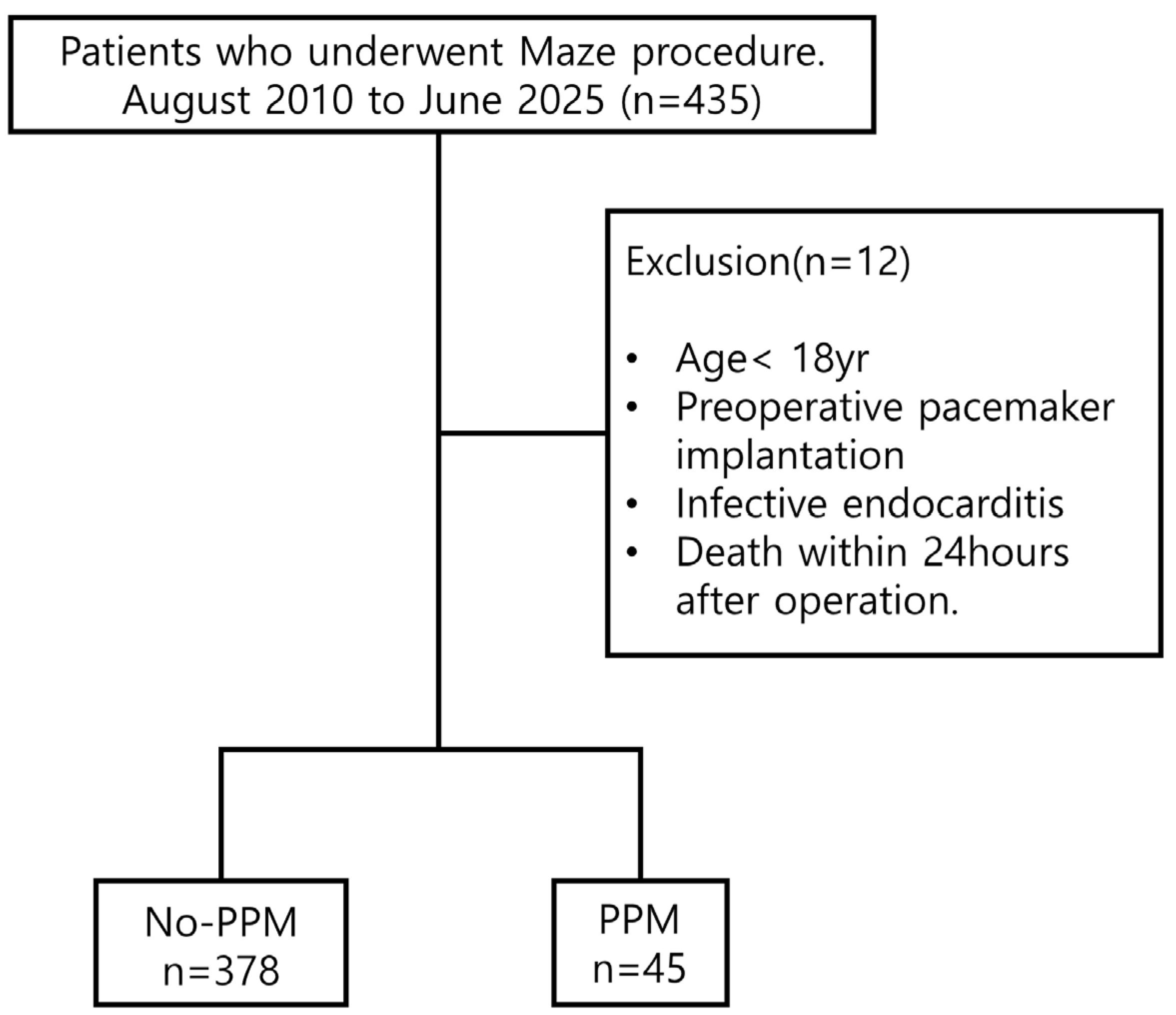
This study comprised patients who underwent the Maze procedure for persistent or paroxysmal AF at a single medical center from August 2010 to June 2025. Patients were excluded when they had a PPM implantation history before the Maze procedure, a diagnosis of infective endocarditis at any point, death within 24 h postoperatively, or aged <18 years. In the final cohort, patients were divided into two groups as follows: those who did not require PPM implantation during follow-up (non-PPM group, n = 378) and those who required PPM implantation following the Maze procedure (PPM group, n = 45).

2.3. Outcomes

The risk analysis of PPM implantation following the Maze procedure represents the primary outcome of this study. The evaluation of mortality and the risk of cerebral infarction between patients who received PPM implantation and the non-PPM group is the secondary outcome.

2.4. AFMR Definition

In this study, the criteria for diagnosing AFMR were established on the basis of recent literature [9]. AFMR was characterized by the presence of structurally normal LV dimensions, including both global and segmental functions, specifically an LV volume index of ≤85 and ≤78 mL/m2 for males and females, respectively, and a preserved LV ejection fraction (EF) of ≥50%. Moreover, a diagnosis of AFMR required evidence of significant left atrial (LA) enlargement, as demonstrated by an LA volume index (LAVI) of at least 40 mL/m2 and a maximal anteroposterior diameter of ≥40 mm measured during end-systole on M-mode imaging. Furthermore, mitral annular dilation and flattening with unrestricted leaflet mobility (Carpentier type I) were crucial diagnostic features.

2.5. Operative Techniques and the Maze Procedure

Here, the surgical protocol encompassed a modified Cox–Maze approach utilizing cryoablation, performed with either antegrade or retrograde cardioplegia per established methodology [10]. Lesion sets for the left atrium were created via three principal ablation lines: two extended from the superior and inferior borders of the left atriotomy toward the LA appendage to facilitate pulmonary vein isolation, and one line was directed from the left atriotomy to the posterior mitral annulus, corresponding to the endocardial mitral isthmus. For the right atrium, ablation lines connected the superior and inferior vena cava, included a T-shaped extension from the intercaval region to the tricuspid annulus, and a separate line ran from the right atriotomy toward the tricuspid annulus through the right atrial appendage. LA appendage exclusion or closure was consistently performed via either internal obliteration or excision based on the attending surgeon’s discretion. The core ablation lesion pattern remained consistent throughout the study, with incremental technical refinements implemented as perioperative experience progressed.

2.6. Data Collection and Follow-Up

Clinical variables and outcome measures for this study were systematically collected from the electronic medical record systems of both participating institutions. Early PPM implantation was defined as PPM implantation within the first 30 days following the Maze procedure, whereas late PPM implantation was defined as PPM implantation after 30 days following the Maze procedure. Chronic kidney dysfunction was identified by evidence of renal injury or an estimated glomerular filtration rate of <60 mL/min/1.73 m2 sustained for at least 3 months before intervention, regardless of etiology. Fine AF was identified on electrocardiography (ECG) by fibrillatory waves of <0.1 mV across all leads. Preoperative transthoracic echocardiography (TTE) corresponded to results most proximate to the time of surgery.
During the longitudinal follow-up, patients underwent outpatient ECG at 1, 3, and 6 months postoperatively, and at 6-month intervals thereafter. Sinus rhythm was considered restored when at least two consecutive ECGs confirmed its presence. Any arrhythmias, including AF, atrial flutter, ectopic or junctional rhythms, and paced rhythms lacking atrioventricular synchrony, were classified as unsuccessful sinus rhythm restoration. The mean follow-up duration was 56.6 ± 40.1 months for the entire cohort.
Cardiologists specializing in electrophysiology discussed the indication for and timing of postoperative PPM implantation following corresponding guidelines [11].

2.7. Statistical Analysis

Continuous variables were compared using the independent t-test and were presented as means ± standard deviations. Categorical variables were expressed as numbers (percentages) and compared using Pearson’s chi-square test or Fisher’s exact test. All tests were two-sided, and a p-value of <0.05 was considered statistically significant.
The rhythm outcome differences between the two groups following the Maze procedure were evaluated using a generalized estimating equation model. The repeated rhythm outcomes analyzed encompassed normal sinus rhythm, junctional rhythm, and freedom from AF. ECG data at three time points were used: postoperatively, 1 year postoperatively, and 3 years postoperatively.
PPM implantation was analyzed from three perspectives: early implantation (within 30 days postoperatively), late implantation (>30 days postoperatively), and overall implantation (regardless of timing). Kaplan–Meier survival curves were constructed for each category, and intergroup differences were evaluated using the log-rank test. For overall and late PPM implantation, risk factor analysis for PPM implantation was performed using a multivariate Cox regression model, whereas for early PPM implantation, a multivariate logistic regression analysis was conducted. To construct the multivariable model, we applied a backward stepwise selection method with the Akaike Information Criterion as the criterion for model optimization. The results were reported with corresponding hazard (HR) or odds ratios, 95% confidence intervals (CIs), and p-values. Statistical analysis was performed using R version 4.5.0 (R Foundation for Statistical Computing).

3. Results

Of the participants, 378 and 45 were included in the non-PPM and PPM groups, respectively (Figure 1). Of the 45 patients who required PPM implantation during follow-up, 9 necessitated early PPM implantation (within 30 days postoperatively) (median, 14 [interquartile range, 7–18] days).

3.1. Patient Characteristics

In the overall cohort (Table 1), the PPM group had a significantly higher proportion of patients with AFMR than the non-PPM group (28.9% vs. 10.4%, p = 0.001). No significant difference in preoperative AF types was noted between the groups (persistent AF: non-PPM 75.4% vs. PPM 80.0%; paroxysmal AF: non-PPM 24.6% vs. PPM 20.0%; p = 0.495). However, the PPM group exhibited a significantly more frequent incidence of AF with fine P waves (73.3% vs. 54.0%, p = 0.013). No significant differences were observed between the groups in terms of preoperative comorbidities. Preoperative TTE revealed that the PPM group had significantly higher LVEF and LAVI than the non-PPM group (EF: 57.9% ± 11.4% vs. 52.1% ± 12.5%, p = 0.002; LAVI: 135.2 ± 94.2 vs. 107.9 ± 54.7 mL/m2, p = 0.005).

3.2. Operative Results

The operative outcomes are summarized in Table 2. Across the entire cohort, the average follow-up duration following the Maze procedure was 56.6 ± 40.1 months. No significant differences were observed between the two groups in terms of concomitant procedures performed alongside the Maze procedure.

3.3. Rhythm Outcomes and Risk Factor Analysis for PPM Implementation Following the Maze Procedure

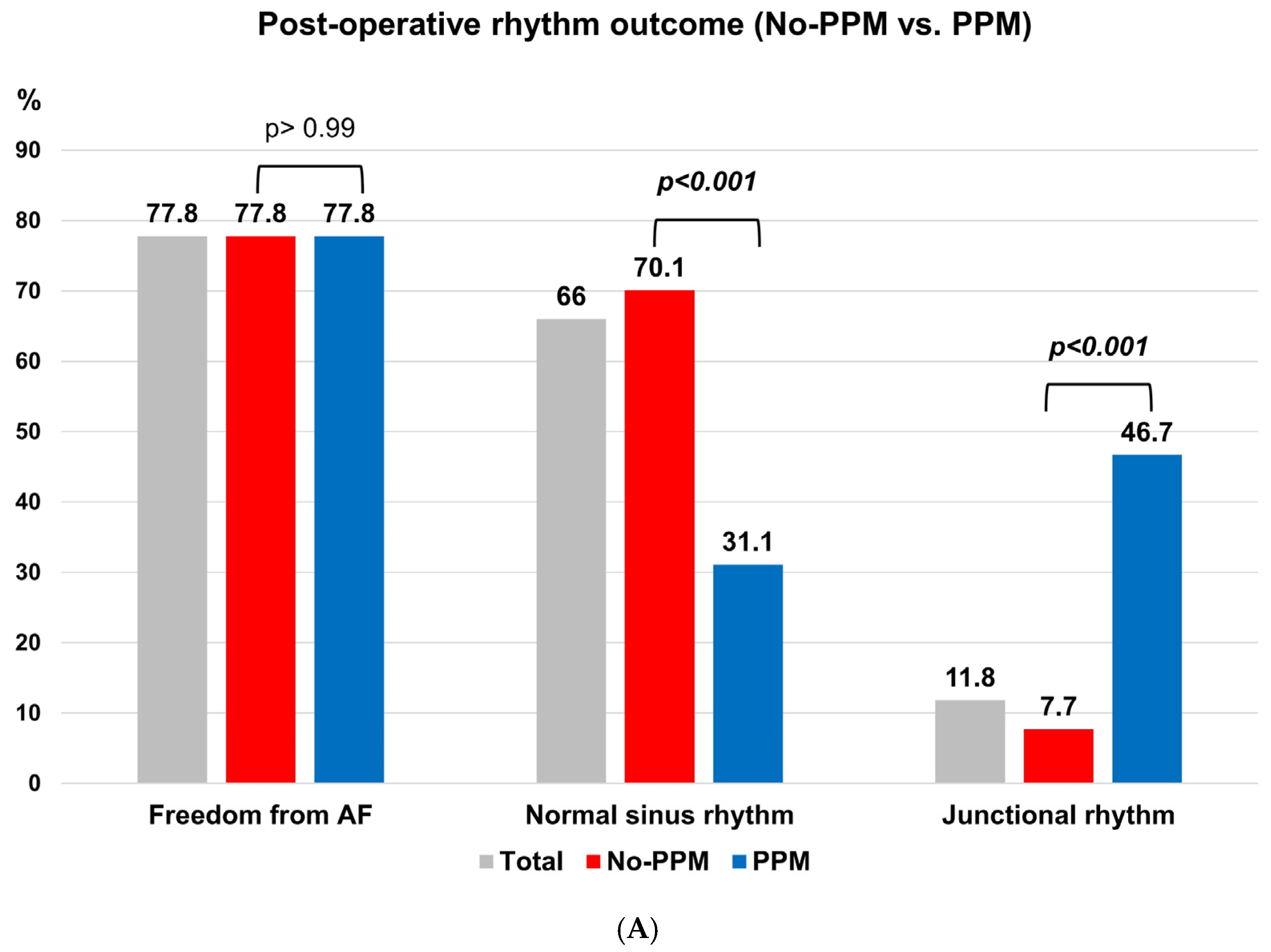
The postoperative rhythm outcomes are summarized in Figure 2. Both groups exhibited a comparable proportion of patients achieving freedom from AF (77.8%, p > 0.99). However, the non-PPM group showed a significantly higher normal sinus rhythm incidence than the PPM group (70.1% vs. 31.1%, p < 0.001), whereas the PPM group exhibited a significantly more frequent junctional rhythm incidence than the non-PPM group (46.7% vs. 7.7%, p < 0.001) (Figure 2A).
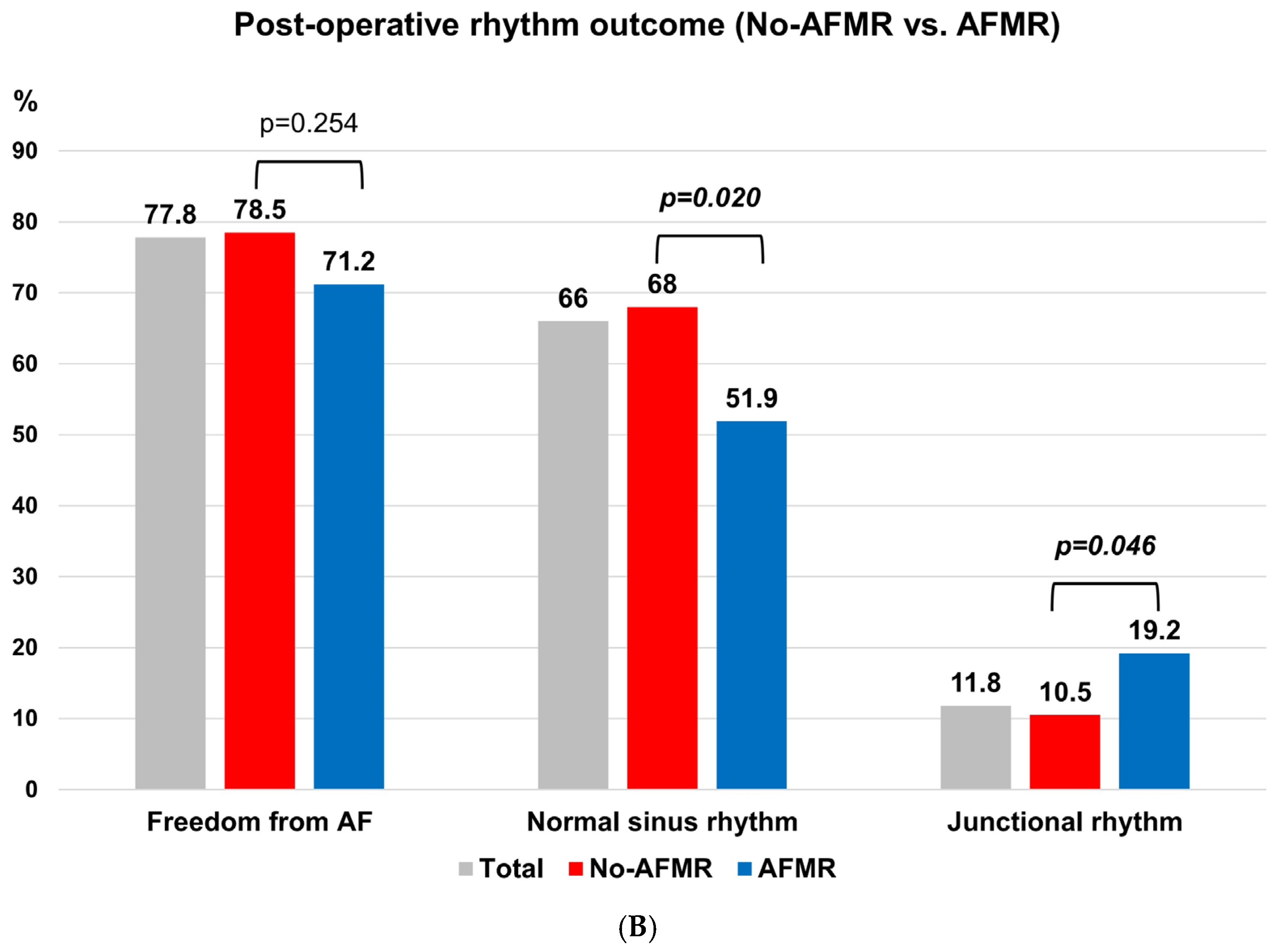
Furthermore, we compared postoperative rhythm outcomes between patients without AFMR (non-AFMR) and those with AFMR. The rate of freedom from AF did not significantly differ between both groups (non-AFMR 78.5% vs. AFMR 71.2%, p = 0.254). However, patients without AFMR demonstrated a significantly higher normal sinus rhythm incidence than those with AFMR (68.0% vs. 51.9%, p = 0.020). In contrast, patients with AFMR exhibited a significantly more frequent junctional rhythm incidence than those without AFMR (19.2% vs. 10.5%, p < 0.046) (Figure 2B).
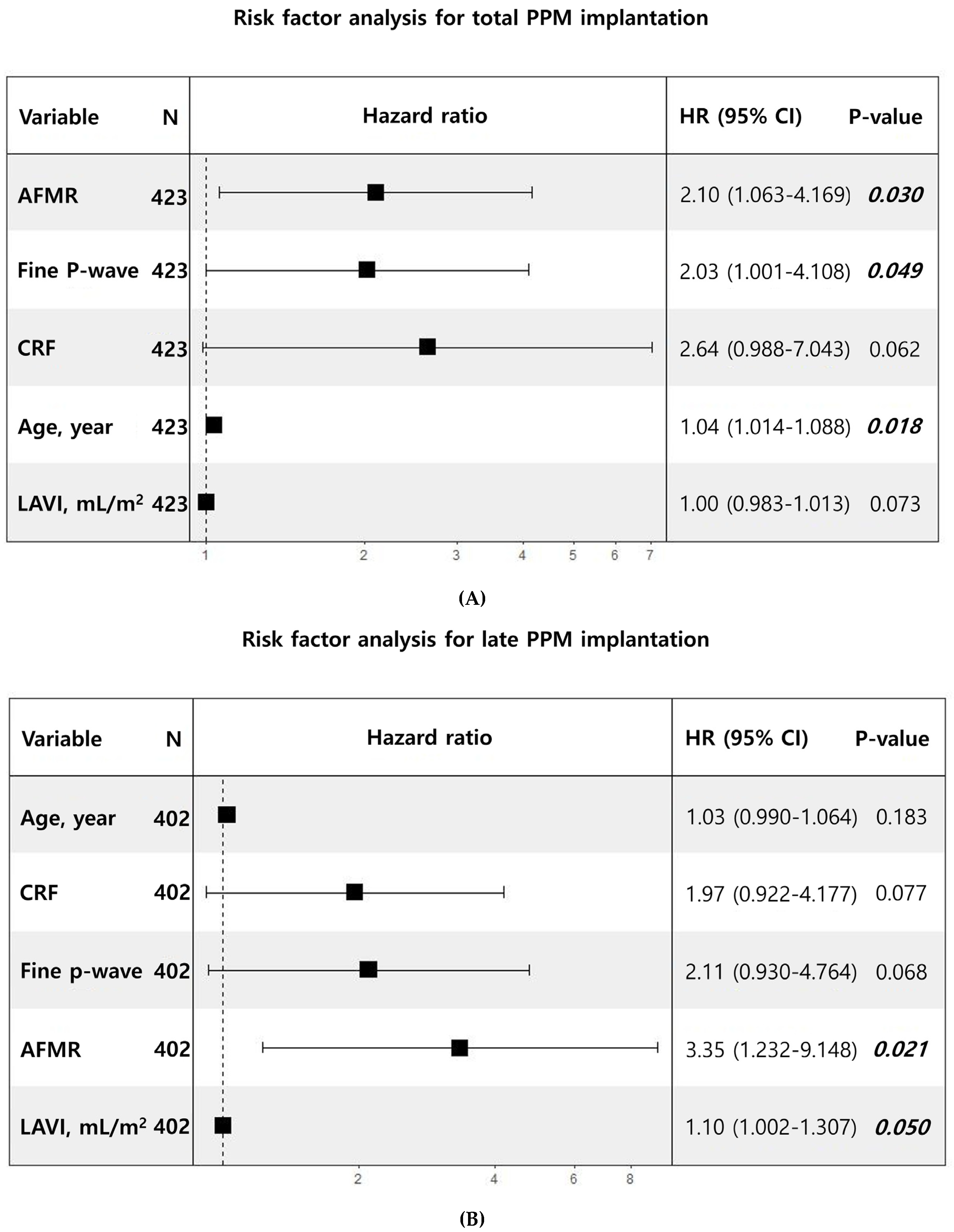
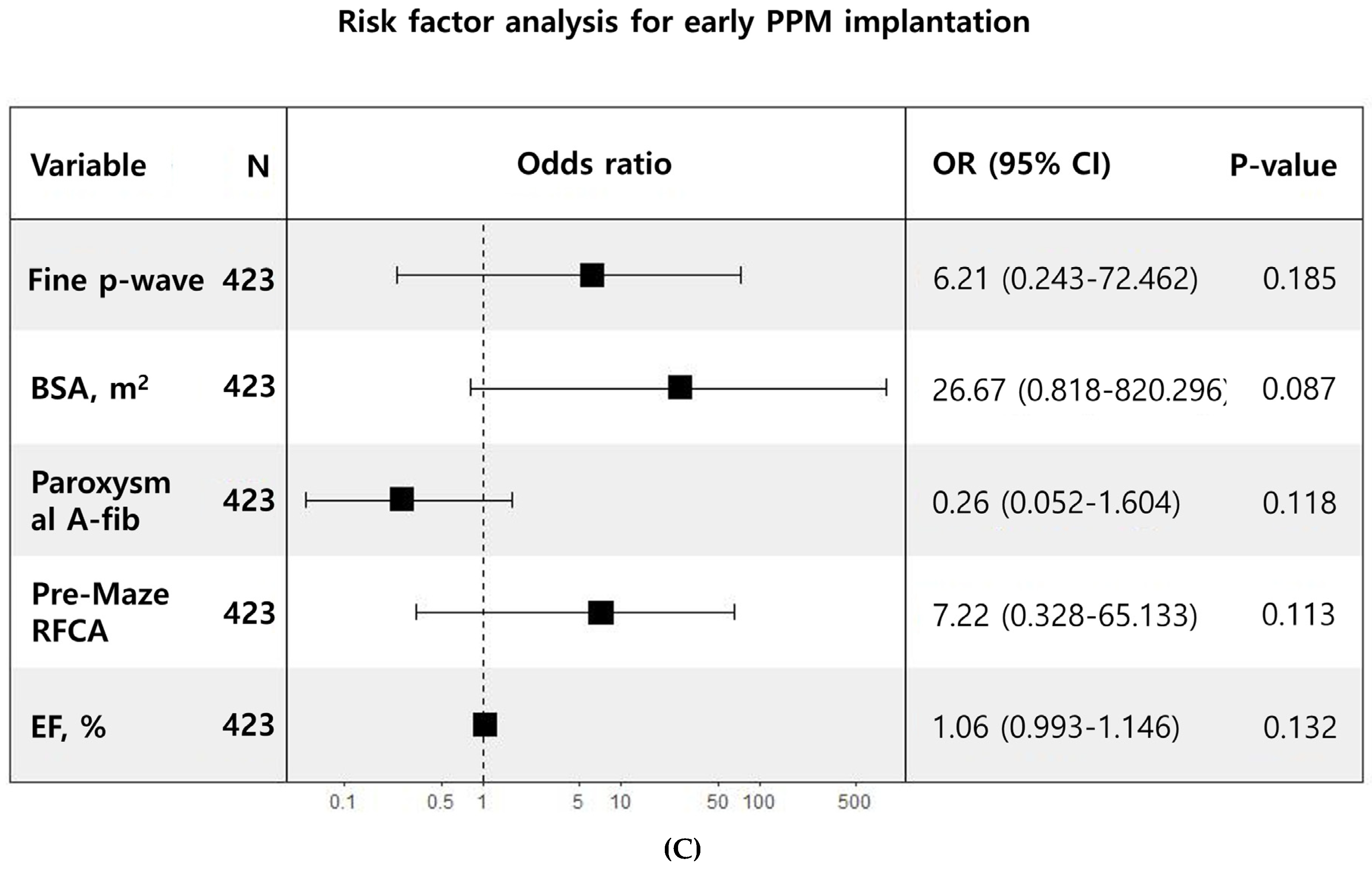
Of the 45 patients in the PPM group, 9 underwent early PPM implantation (within 30 days postoperatively), whereas 36 necessitated late PPM implantation (>30 days following the Maze procedure). Cox multivariate analysis for total PPM implantation (including both early and late cases) identified AFMR (HR, 2.10; 95% CI, 1.063–4.169; p = 0.030), preoperative fine P wave (HR, 2.03; CI, 1.001–4.108; p = 0.049), and age (HR, 1.04; 95% CI, 1.014–1.088; p = 0.018) as significant risk factors (Figure 3A). In the risk factor analysis for late PPM implantation (Figure 3B), AFMR was the only significant predictor (HR, 3.35; 95% CI, 1.232–9.148; p = 0.021). No significant risk factors were identified for early PPM implantation (Figure 3C).
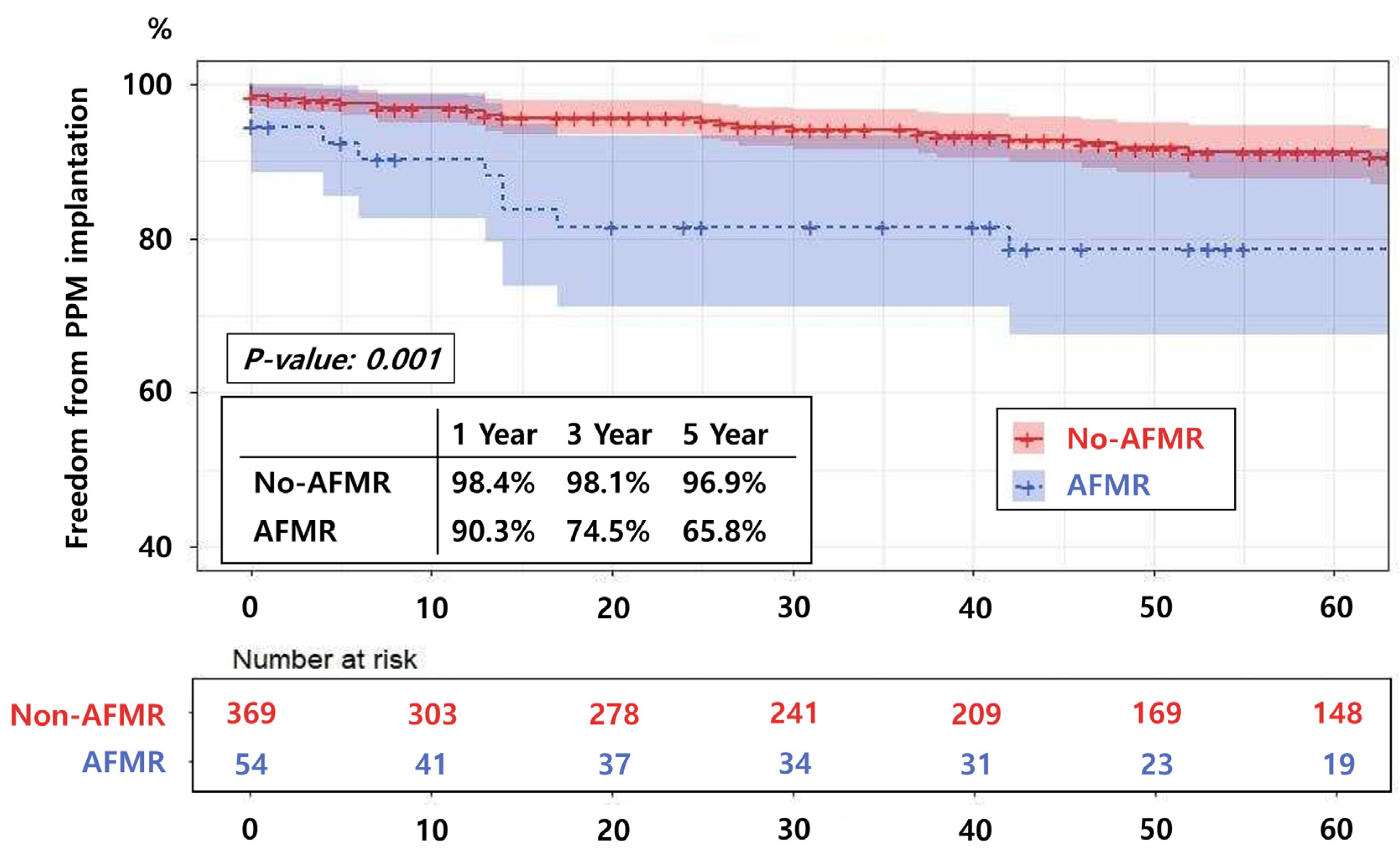
For both overall and long-term PPM implantations, AFMR was identified as a significant risk factor. Subanalysis comparing the AFMR and non-AFMR groups in terms of long-term outcomes of PPM implantation revealed that the rates of freedom from PPM implantation at 1, 3, and 5 years following the Maze procedure were 98.4%, 98.1%, and 96.9% in the non-AFMR group, and 90.3%, 74.5%, and 65.8% in the AFMR group, respectively (Figure 4) (p = 0.001).

3.4. Long-Term Survival Analysis

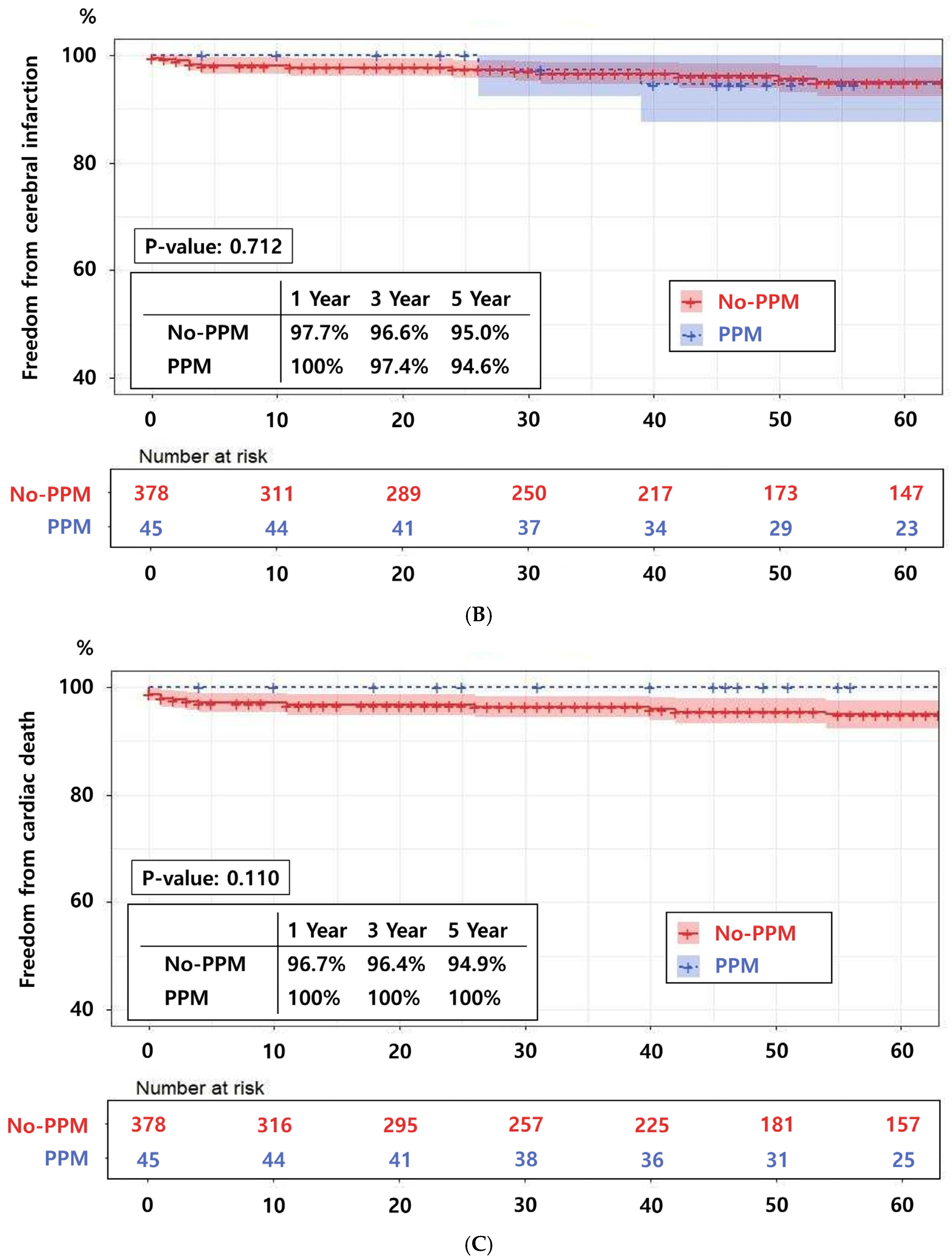
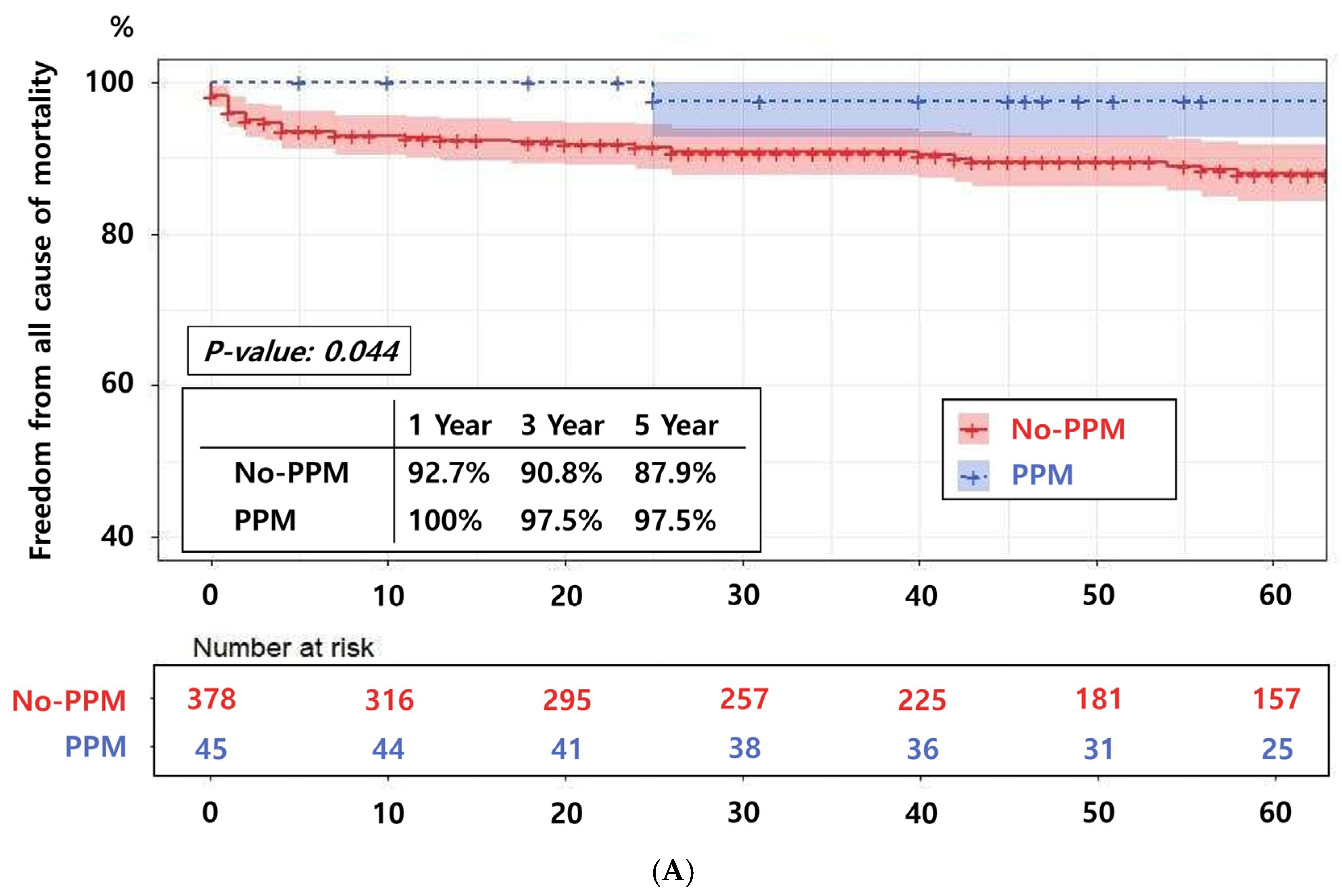
The 1-, 3-, and 5-year survival rates for the non-PPM and PPM groups were 92.7%, 90.8%, and 87.9% versus 100%, 97.5%, and 97.5%, respectively (p = 0.044), indicating a significantly higher survival rate in the PPM group (Figure 5A). However, no significant differences were noted between the non-PPM and PPM groups in terms of freedom from cardiac death and stroke rates at 1, 3, and 5 years: 97.7%, 96.6%, and 95.0% versus 100%, 97.4%, and 94.6% (p = 0.712) for cardiac death, respectively (Figure 5B), and 96.7%, 96.4%, and 94.9% vs. 100%, 100%, and 100% (p = 0.110) for stroke, respectively (Figure 5C).

4. Discussion

AFMR being identified as a significant risk factor for PPM implantation following the Maze procedure, particularly increasing the risk of late PPM implantation, is the main finding of this study. This finding represents a crucial discovery in AFMR, for which data regarding outcomes following the Maze procedure are limited.
Previous studies have focused on the prognosis of AFMR following mitral valve repair [2,6,7], specifically regarding mitral regurgitation-related mortality and recurrence rates. However, despite the significance of the Maze procedure in AFMR, research on the outcomes of the Maze procedure in patients with AFMR is currently scarce. In our previous multicenter and single-center retrospective studies [7,8], we have reported that patients with AFMR demonstrated a higher postoperative junctional rhythm incidence following the Maze procedure than those with other valvular diseases. The reason is that patients with AFMR tend to have a longer AF duration, potentially increasing concomitant sinus nodal dysfunction.
In particular, the occurrence of junctional rhythm following the Maze procedure in patients with AFMR significantly increased the risk of PPM implantation. The high junctional rhythm prevalence and elevated PPM implantation risk in patients with AFMR may be attributed to the extended AF duration and consequent sinus nodal dysfunction [12,13,14,15,16,17,18,19]. Previous studies have revealed that a longer AF duration causes progressive sinus nodal dysfunction; following the Maze procedure, previously masked sinus nodal dysfunction may become unmasked, leading to junctional rhythm. Similarly, in cases of radiofrequency catheter ablation (RFCA), prolonged AF duration, sinus nodal dysfunction, bradycardia, or elevated LAVI have all been reported to increase the risk of junctional rhythm and PPM implantation following RFCA [20,21,22]. These are all distinctive features frequently observed in patients with AFMR.
In this study, AFMR was not identified as a significant risk factor for early PPM implantation; however, it was noted to be a major risk factor for late PPM implantation. Previous studies have indicated that in patients with AF, longer AF duration before RFCA or Maze procedure is associated with ongoing structural and electrical remodeling of the atria as well as progressive atrial fibrosis, even following ablation therapy [23,24,25]. Consequently, this incident results in a higher risk of sinus node dysfunction, elevating the probability of subsequent PPM implantation. Similarly, an increased risk of late rather than early PPM implantation was observed in patients with AFMR, suggesting that nodal dysfunction in this population gradually progresses following the Maze procedure. Therefore, the elevated risk of late PPM implantation highlights the importance of extended monitoring and risk stratification in this subgroup. Recent references also support preoperative counseling regarding the risk of PPM implantation in AFMR patients, and recommend ongoing follow-up to promptly identify delayed nodal dysfunction [26,27].
Additionally, recent developments in cardiac pacing, such as conduction system pacing (CSP) and cardiac resynchronization therapy (CRT), have important implications for Maze patients, particularly those with AFMR [28]. CSP targets the His bundle or left bundle branch, preserving normal electrical activation and reducing dyssynchrony. This approach is especially relevant for AFMR patients, who are prone to conduction abnormalities following the Maze procedure. Conventional right ventricular pacing can worsen ventricular dyssynchrony and increase the risk of heart failure or mitral regurgitation [29,30]. Studies show that CSP improves synchrony, left ventricular function, and may lower the risk of pacing-induced cardiomyopathy. Similarly, CRT enhances ventricular function and can reduce the severity of mitral regurgitation by optimizing timing and activation [31]. These approaches are likely to provide significant benefits for patients with AFMR, who frequently experience atrioventricular block after the Maze procedure. In particular, they may help reduce the recurrence rate of mitral regurgitation following mitral valve repair in patients with AFMR, as CSP and CRT have been shown to more effectively prevent the worsening of mitral regurgitation compared to conventional PPM.
In this study, there was no significant difference in the AF recurrence rate after the Maze procedure between patients with AFMR and those without AFMR (71.2% vs. 78.5%, p = 0.254). This may be because the mechanisms of post-Maze procedure AF recurrence and atrial flutter (AFL) do not differ substantially between AFMR and non-AFMR patients. Generally, a significant proportion of Maze patients experience atrial arrhythmias such as recurrent AF or atrial flutter (AFL) even after surgical ablation. According to Wazni et al. [32], about one-third of patients have recurrent AF due to recovery of conduction pathways between the pulmonary veins and the left atrium. Incisional AFL is another common postoperative arrhythmia, resulting from macro-reentrant circuits created by incomplete ablation lines or scar tissue formation. Persistent or late postoperative arrhythmias are often caused by tissue remodeling, progressive fibrosis, and reconnection of previously isolated zones.
The subanalysis of patients who underwent PPM implantation revealed promising results for mortality and stroke risks. Although the PPM group exhibited a significantly better all-cause mortality rate than the non-PPM group, this finding may be due to the limitations of a small cohort study. Overall, these results suggest an acceptable long-term mortality and stroke risks in patients with PPM implantation.
This study had several limitations. First, this study was not a randomized controlled trial, and the data were retrospectively analyzed in a limited number of cohorts. Second, follow-up screening for AF recurrence was based on serial 12-lead ECG rather than a 24-h Holter monitoring. Therefore, our freedom from AF results may have been overestimated because asymptomatic paroxysmal AF may have been present during the follow-up period without appearing on subsequent ECGs performed in outpatient clinics. Third, this study did not include an analysis of advanced imaging findings. Emerging evidence suggests that speckle-tracking echocardiography derived left atrial reservoir strain (LASr) is a highly sensitive marker of left atrial fibrotic remodeling [33]. Because LASr impairment may independently predict the risk of permanent pacemaker implantation even in the absence of AFMR [34], future studies should investigate whether LASr measurement can further improve risk stratification beyond conventional echocardiographic parameters.
In conclusion, this study identified AFMR as a major risk factor for sinus nodal dysfunction and subsequent PPM implantation following the Maze procedure. Notably, since this nodal dysfunction tends to progress over time even following the Maze procedure, close monitoring is warranted in patients without AF following the Maze procedure.

Author Contributions

Conceptualization, K.S. and Y.B.; methodology and software, K.S. and J.U.W.; validation and formal analysis, J.U.W.; investigation, S.Y. and H.J.L.; writing—original draft preparation, K.S.; writing—review and editing, K.S.; visualization, J.Y.; supervision, W.S.J. and Y.S.K.; funding acquisition, K.S. All authors have read and agreed to the published version of the manuscript.

Funding

This research was supported by the Bisa Research Grant of Keimyung University in 2024 (Project No. 20240648).

Institutional Review Board Statement

All procedures performed in studies involving human participants were in accordance with the ethical standards of the institutional and/or national research committee and with the 1964 Declaration of Helsinki and its later amendments or comparable ethical standards. Institutional Review Board of the Dongsan Medical Center approved the study (IRB File No. 2025-03-041, 25 March 2025). Written informed consent was waved by Institutional Review Board of the Dongsan Medical Center, Keimyung University School of Medicine because this was a retrospective study. All methods were carried out in accordance with relevant guidelines and regulations. The IRB approval for this study is valid only for patients registered retrospectively up to 31 March 2026.

Informed Consent Statement

This report was retrospective analysis, the requirement for informed consent was waived due to the retrospective nature of the study. This study used existing medical records and data without direct patient contact or intervention. All data were anonymized to ensure that individual patients could not be identified. As such, individual informed consent was waived by the institutional review board. These procedures comply with national regulations and established ethical guidelines, including the Declaration of Helsinki.

Data Availability Statement

The data presented in this study are available on request from the corresponding author due to the data are not publicly available due to privacy or ethical restrictions.

Conflicts of Interest

The authors declare that they have no competing interests.

References

  1. Deferm, S.; Bertrand, P.B.; Verbrugge, F.H.; Verhaert, D.; Rega, F.; Thomas, J.D.; Vandervoort, P.M. Atrial Functional Mitral Regurgitation: JACC Review Topic of the Week. J. Am. Coll. Cardiol. 2019, 73, 2465–2476. [Google Scholar] [CrossRef]
  2. Hirji, S.A.; Cote, C.L.; Javadikasgari, H.; Malarczyk, A.; McGurk, S.; Kaneko, T. Atrial functional versus ventricular functional mitral regurgitation: Prognostic implications. J. Thorac. Cardiovasc. Surg. 2022, 164, 1808–1815.e4. [Google Scholar] [CrossRef] [PubMed]
  3. Chae, M.; Yoon, S.; Lee, H.J.; Jang, W.S.; Kim, Y.S.; Cho, J.; Kim, K.; Song, K. Outcomes of ischemic mitral regurgitation after coronary revascularization alone in patients with acute coronary syndrome. J. Thorac. Cardiovasc. Surg. 2025, S0022-5223(25)00336-8. [Google Scholar] [CrossRef] [PubMed]
  4. Abe, Y.; Akamatsu, K.; Ito, K.; Matsumura, Y.; Shimeno, K.; Naruko, T.; Takahashi, Y.; Shibata, T.; Yoshiyama, M. Prevalence and Prognostic Significance of Functional Mitral and Tricuspid Regurgitation Despite Preserved Left Ventricular Ejection Fraction in Atrial Fibrillation Patients. Circ. J. 2018, 82, 1451–1458. [Google Scholar] [CrossRef] [PubMed]
  5. Song, K.; Jang, W.S.; Kim, Y.S.; Yoo, J. Outcomes of maze procedure and mitral valve surgery in atrial functional mitral regurgitation: A retrospective study. J. Cardiothorac. Surg. 2024, 19, 433. [Google Scholar] [CrossRef]
  6. Wagner, C.M.; Brescia, A.A.; Watt, T.M.; Bergquist, C.; Rosenbloom, L.M.; Ceniza, N.N.; Markey, G.E.; Ailawadi, G.; Romano, M.A.; Bolling, S.F.; et al. Surgical strategy and outcomes for atrial functional mitral regurgitation: All functional mitral regurgitation is not the same! J. Thorac. Cardiovasc. Surg. 2022, 167, 647–655. [Google Scholar] [CrossRef]
  7. Song, K.; Lee, J.H.; Woo, H.T.; Kim, Y.S.; Jang, W.S.; Chung, S.; Cho, Y.H.; Kim, W.S.; Sung, K. Surgical outcome of mitral valve surgery in atrial functional mitral regurgitation compared with degenerative etiology. J. Thorac. Cardiovasc. Surg. 2025, 169, 1471–1482.e4. [Google Scholar] [CrossRef]
  8. Song, K. The Clinical Outcome of Maze Procedure in Atrial Functional Mitral Regurgitation. Keimyung Med. J. 2024, 43, 16–25. [Google Scholar] [CrossRef]
  9. Zoghbi, W.A.; Levine, R.A.; Flachskampf, F.; Grayburn, P.; Gillam, L.; Leipsic, J.; Thomas, J.D.; Kwong, R.Y.; Vandervoort, P.; Chandrashekhar, Y. Atrial Functional Mitral Regurgitation: A JACC: Cardiovascular Imaging Expert Panel Viewpoint. JACC Cardiovasc. Imaging 2022, 15, 1870–1882. [Google Scholar] [CrossRef]
  10. Song, K.; Jang, W.S.; Park, N.; Kim, Y.S.; Kim, J.B. Is It Safe to Preserve Left Atrial Appendage During Maze Procedure? Korean Circ. J. 2023, 53, 566–577. [Google Scholar] [CrossRef]
  11. Russo, A.M.; Desai, M.Y.; Do, M.M.; Butler, J.; Chung, M.K.; Epstein, A.E.; Guglin, M.E.; Levy, W.C.; Piccini, J.P.; Bhave, N.M.; et al. ACC/AHA/ASE/HFSA/HRS/SCAI/SCCT/SCMR 2025 Appropriate Use Criteria for Implantable Cardioverter-Defibrillators, Cardiac Resynchronization Therapy, and Pacing. J. Am. Coll. Cardiol. 2025, 85, 1213–1285. [Google Scholar] [CrossRef] [PubMed]
  12. Jensen, P.N.; Gronroos, N.N.; Chen, L.Y.; Folsom, A.R.; deFilippi, C.; Heckbert, S.R.; Alonso, A. Incidence of and risk factors for sick sinus syndrome in the general population. J. Am. Coll. Cardiol. 2014, 64, 531–538. [Google Scholar] [CrossRef] [PubMed]
  13. Lamas, G.A.; Lee, K.; Sweeney, M.; Leon, A.; Yee, R.; Ellenbogen, K.; Greer, S.; Wilber, D.; Silverman, R.; Marinchak, R.; et al. The mode selection trial (MOST) in sinus node dysfunction: Design, rationale, and baseline characteristics of the first 1000 patients. Am. Heart J. 2000, 140, 541–551. [Google Scholar] [CrossRef]
  14. Gillis, A.M.; Morck, M. Atrial fibrillation after DDDR pacemaker implantation. J. Cardiovasc. Electrophysiol. 2002, 13, 542–547. [Google Scholar] [CrossRef]
  15. Nielsen, J.C.; Thomsen, P.E.B.; Højberg, S.; Møller, M.; Vesterlund, T.; Dalsgaard, D.; Mortensen, L.S.; Nielsen, T.; Asklund, M.; Friis, E.V.; et al. A comparison of single-lead atrial pacing with dual-chamber pacing in sick sinus syndrome. Eur. Heart J. 2011, 32, 686–696. [Google Scholar] [CrossRef]
  16. Elvan, A.; Wylie, K.; Zipes, D.P. Pacing-induced chronic atrial fibrillation impairs sinus node function in dogs: Electrophysiological Remodeling. Circulation 1996, 94, 2953–2960. [Google Scholar] [CrossRef]
  17. Sanders, P.; Morton, J.B.; Kistler, P.M.; Davidson, N.C.; Hussin, A.; Spence, S.J.; Lindsay, C.B.; Vohra, J.K.; Sparks, P.B.; Kalman, J.M. Electrophysiological and electroanatomic characterization of the atria in sinus node disease: Evidence of diffuse atrial remodeling. Circulation 2004, 109, 1514–1522. [Google Scholar] [CrossRef]
  18. Sanders, P.; Kistler, P.M.; Morton, J.B.; Spence, S.J.; Kalman, J.M. Remodeling of sinus node function in patients with congestive heart failure: Reduction in sinus node reserve. Circulation 2004, 110, 897–903. [Google Scholar] [CrossRef]
  19. Stevenson, I.H.; Kistler, P.M.; Spence, S.J.; Vohra, J.K.; Sparks, P.B.; Morton, J.B.; Kalman, J.M. Scar-related right atrial macroreentrant tachycardia in patients without prior atrial surgery: Electroanatomic characterization and ablation outcome. Heart Rhythm 2005, 2, 594–601. [Google Scholar] [CrossRef]
  20. Pecha, S.; Schäfer, T.; Yildirim, Y.; Ahmadzade, T.; Willems, S.; Reichenspurner, H.; Wagner, F.M. Predictors for permanent pacemaker implantation after concomitant surgical ablation for atrial fibrillation. J. Thorac. Cardiovasc. Surg. 2014, 147, 984–988. [Google Scholar] [CrossRef]
  21. Kawaji, T.; Shizuta, S.; Yamagami, S.; Aizawa, T.; Yoshizawa, T.; Kato, M.; Yokomatsu, T.; Miki, S.; Ono, K.; Kimura, T. Impact of Pre-Existing Bradycardia on Subsequent Need for Pacemaker Implantation After Radiofrequency Catheter Ablation for Atrial Fibrillation. Circ. J. 2018, 82, 2493–2499. [Google Scholar] [CrossRef]
  22. Raharjo, S.B.; Yonas, E.; Irbah, S.N.; Hanafy, D.A.; Felani, M.R.; Ferly, A.; Chung, F.P. Comparison of clinical outcomes between catheter ablation and permanent pacemaker implantation in Tachycardia-Bradycardia Syndrome patients: A meta-analysis. Int. J. Cardiol. Heart Vasc. 2025, 60, 101767. [Google Scholar] [CrossRef]
  23. Maenosono, R.; Mizukami, N.; Ichiki, H.; Oketani, N.; Namino, F.; Masamoto, I.; Yuasa, T.; Yamakuchi, M.; Ohishi, M.; Hashiguchi, T. Total atrial conduction time as a possible predictor of atrial fibrillation recurrence after catheter ablation for paroxysmal atrial fibrillation: Relationship between electrical atrial remodeling and structural atrial remodeling time courses. J. Med. Ultrason. 2021, 48, 295–306. [Google Scholar] [CrossRef]
  24. Greiser, M.; Schotten, U. Dynamic remodeling of intracellular Ca2+ signaling during atrial fibrillation. J. Mol. Cell. Cardiol. 2013, 58, 134–142. [Google Scholar] [CrossRef] [PubMed]
  25. Chew, D.S.; Black-Maier, E.; Loring, Z.; Noseworthy, P.A.; Packer, D.L.; Exner, D.V.; Mark, D.B.; Piccini, J.P. Diagnosis-to-Ablation Time and Recurrence of Atrial Fibrillation Following Catheter Ablation: A Systematic Review and Meta-Analysis of Observational Studies. Circ. Arrhythm. Electrophysiol. 2020, 13, e008128. [Google Scholar] [CrossRef] [PubMed]
  26. DeRose, J.J., Jr.; Mancini, D.M.; Chang, H.L.; Argenziano, M.; Dagenais, F.; Ailawadi, G.; Perrault, L.P.; Parides, M.K.; Taddei-Peters, W.C.; Mack, M.J.; et al. Pacemaker Implantation After Mitral Valve Surgery with Atrial Fibrillation Ablation. J. Am. Coll. Cardiol. 2019, 73, 2427–2435. [Google Scholar] [CrossRef] [PubMed]
  27. Moskowitz, G.; Hong, K.N.; Giustino, G.; Gillinov, A.M.; Ailawadi, G.; DeRose, J.J., Jr.; Iribarne, A.; Moskowitz, A.J.; Gelijns, A.C.; Egorova, N.N. Incidence and Risk Factors for Permanent Pacemaker Implantation Following Mitral or Aortic Valve Surgery. J. Am. Coll. Cardiol. 2019, 74, 2607–2620. [Google Scholar] [CrossRef]
  28. Herweg, B.; Mumtaz, M.; Vijayaraman, P. Conduction System Pacing for CRT: A Physiological Alternative. Arrhythm. Electrophysiol. Rev. 2025, 14, e04. [Google Scholar] [CrossRef]
  29. Delgado, V.; Tops, L.F.; Trines, S.A.; Zeppenfeld, K.; Marsan, N.A.; Bertini, M.; Holman, E.R.; Schalij, M.J.; Bax, J.J. Acute effects of right ventricular apical pacing on left ventricular synchrony and mechanics. Circ. Arrhythm. Electrophysiol. 2009, 2, 135–145. [Google Scholar] [CrossRef]
  30. Breithardt, O.A.; Sinha, A.M.; Schwammenthal, E.; Bidaoui, N.; Markus, K.U.; Franke, A.; Stellbrink, C. Acute effects of cardiac resynchronization therapy on functional mitral regurgitation in advanced systolic heart failure. J. Am. Coll. Cardiol. 2003, 41, 765–770. [Google Scholar] [CrossRef]
  31. Senes, J.; Mascia, G.; Bottoni, N.; Oddone, D.; Donateo, P.; Grimaldi, T.; Minneci, C.; Bertolozzi, I.; Brignole, M.; Puggioni, E.; et al. Is His-optimized superior to conventional cardiac resynchronization therapy in improving heart failure? Results from a propensity-matched study. Pacing Clin. Electrophysiol. 2021, 44, 1532–1539. [Google Scholar] [CrossRef]
  32. Wazni, O.M.; Saliba, W.; Fahmy, T.; Lakkireddy, D.; Thal, S.; Kanj, M.; Martin, D.O.; Burkhardt, J.D.; Schweikert, R.; Natale, A. Atrial arrhythmias after surgical maze: Findings during catheter ablation. J. Am. Coll. Cardiol. 2006, 48, 1405–1409. [Google Scholar] [CrossRef]
  33. Rusali, C.A.; Lupu, I.C.; Rusali, L.M.; Cojocaru, L. Left Atrial Strain-Current Review of Clinical Applications. Diagnostics 2025, 15, 1347. [Google Scholar] [CrossRef]
  34. Sonaglioni, A.; Lombardo, M.; Nicolosi, G.L.; Gensini, G.F.; Ambrosio, G. Mechanical concordance between left atrium and left atrial appendage in nonvalvular atrial fibrillation: Can it be exploited to avoid transesophageal echocardiography prior to electrical cardioversion during COVID-19 pandemic? Int. J. Cardiovasc. Imaging 2022, 38, 351–362. [Google Scholar] [CrossRef]
Figure 1. Flow diagram. PPM, permanent pacemaker.
Jcm 14 08291 g001
Figure 2. Post-Maze procedure rhythm outcomes. (A) Rhythm outcomes in the non-PPM versus PPM groups. In the PPM group, the rate of freedom from atrial fibrillation (AF) is not significantly different between the two groups. However, significantly more patients with junctional rhythm and fewer patients with normal sinus rhythm are noted. (B) Rhythm outcomes in the non-AFMR versus AFMR groups. In the AFMR group, the rate of freedom from AF is not significantly different between the two groups. However, significantly more patients with junctional rhythm and fewer patients with normal sinus rhythm are noted. AFMR, atrial functional mitral regurgitation; PPM, permanent pacemaker.
Jcm 14 08291 g002aJcm 14 08291 g002b
Figure 3. Multivariate risk factor analysis for permanent pacemaker (PPM) implantation. (A) Multivariate Cox regression for total PPM implantation. Atrial functional mitral regurgitation (AFMR), pre − Maze fine P wave, and age are identified as significant risk factors for overall PPM implantation, including both early and late PPM implantations. (B) Multivariate Cox regression for late PPM implantation. AFMR is the only significant risk factor for late PPM implantation (occurring at >30 days following the Maze procedure). (C) Multivariate logistic regression for early PPM implantation. No significant risk factors are noted for early PPM implantation (occurring at <30 days following the Maze procedure). BSA, body surface area; EF, ejection fraction; RFCA, radiofrequency catheter ablation. The black square represents the odds ratio.
Jcm 14 08291 g003aJcm 14 08291 g003b
Figure 4. Kaplan–Meier analysis of freedom from permanent pacemaker (PPM) implantation in patients without atrial functional mitral regurgitation (non-AFMR) versus those with AFMR. Patients with AFMR demonstrate a significantly higher PPM implantation incidence. AFMR, atrial functional mitral regurgitation.
Jcm 14 08291 g004
Figure 5. Kaplan–Meier analysis of the rates of all-cause mortality, cerebral infarction, and cardiac death in patients who did not require a permanent pacemaker (non-PPM) versus those who required a permanent pacemaker (PPM). No significant differences in all-cause mortality (A), cerebral infarction (B), or cardiac death (C) are observed between the non-PPM and PPM groups.
Jcm 14 08291 g005aJcm 14 08291 g005b
Table 1. Patients’ characteristics.
Total
(n = 423)
Non-PPM
(n = 378)
PPM
(n = 45)
p-Value
Sex, male, (%)211 (49.9)190 (50.3)21 (46.7)0.648
Age, years63.8 ± 9.463.6 ± 9.665.4 ± 7.80.224
Body surface area, m21.7 ± 0.21.7 ± 0.21.7 ± 0.20.656
AFMR, (%)54 (12.8)41 (10.4)13 (28.9)0.001
AF type, (%) 0.495
  Persistent321 (75.9)285 (75.4)36 (80.0)
  Paroxysmal102 (24.1)93 (24.6)9 (20.0)
Fine P wave, (%)237 (56.0)204 (54.0)33 (73.3)0.013
Comorbidity, (%)
  Heart failure144 (34.0)129 (34.1)15 (33.3)0.915
  Previous cardiac surgery21 (5.0)19 (5.0)2 (4.4)1.000
  Coronary artery disease41 (9.7)37 (9.8)4 (8.9)1.000
  Cerebral infarction68 (16.1)59 (15.6)9 (20.0)0.448
  Peripheral artery disease5 (1.2)5 (1.3)01.000
  Rheumatic heart disease28 (6.6)28 (7.4)00.059
  Diabetes mellitus89 (21.0)79 (20.9)10 (22.2)0.837
  Hypertension172 (40.7)156 (41.3)16 (35.6)0.461
  Pre-Maze RFCA11 (2.6)10 (2.6)1 (2.2)1.000
  CRF22 (5.2)17 (4.5)5 (11.1)0.072
  CRF on hemodialysis6 (1.4)6 (1.6)01.000
Preoperative TTE
  Ejection fraction, %52.7 ± 12.152.1 ± 12.557.9 ± 11.40.002
  LVESD, mm3.8 ± 0.73.71 ± 0.83.5 ± 0.80.130
  LVVI, mL/m262.1 ± 25.563.1 ± 26.857.7 ± 18.50.099
  LAVI, mL/m2105.1 ± 48.5107.9 ± 54.7135.2 ± 94.20.005
Data are presented as numbers (%) or means ± standard deviations. Significant p-values are shown in italics and bold. The left atrial volume index is measured using left atrial or ventricular volume obtained using Simpson’s method from a four-chamber apical view, indexed to the body surface area. AF, atrial fibrillation; AFMR, atrial functional mitral regurgitation; CRF, chronic renal failure; LAVI, left atrial volume index; LVESD, left ventricular end-systolic diameter; LVVI, left ventricular volume index; PPM, permanent pacemaker; RFCA, radiofrequency catheter ablation; TTE, transthoracic echocardiography.
Table 2. Operative results.
Total
(n = 423)
Non-PPM
(n = 378)
PPM
(n = 45)
p-Value
Follow-up period, months56.6 ± 40.154.7 ± 39.673.0 ± 41.20.006
Postoperative hospital stay, days12.3 ± 31.412.1 ± 32.913.9 ± 14.50.513
Mechanical valve insertion, (%)98 (23.2)91 (24.1)7 (15.6)0.200
Concomitant operation, (%)
  LAAO, (%)221 (52.2)195 (51.6)26 (57.8)0.432
  Mitral valve replacement154 (36.4)139 (36.8)15 (33.3)0.650
  Mitral valve repair127 (30.0)112 (29.6)15 (33.3)0.608
  Tricuspid annuloplasty214 (50.6)189 (50.0)25 (55.6)0.481
  Aortic valve replacement76 (18.0)71 (18.8)5 (11.1)0.303
  Aortic valve repair6 (1.4)6 (1.6)01.000
  Coronary artery bypass graft39 (9.2)37 (9.8)2 (4.4)0.410
  Aorta replacement18 (4.3)18 (4.8)00.239
  Atrial septal defect43 (10.2)36 (9.5)7 (45.6)0.206
  Myxoma removal3 (0.8)3 (0.8)01.000
Bleeding control, (%)16 (3.8)14 (3.7)2 (4.4)0.683
Data are presented as numbers (%) or means ± standard deviations. Significant p-values are shown in italics and bold. LAAO, left atrial appendage occlusion; PPM, permanent pacemaker.
Disclaimer/Publisher’s Note: The statements, opinions and data contained in all publications are solely those of the individual author(s) and contributor(s) and not of MDPI and/or the editor(s). MDPI and/or the editor(s) disclaim responsibility for any injury to people or property resulting from any ideas, methods, instructions or products referred to in the content.