ECMO in Refractory Septic Shock: Patient Selection, Timing and Hemodynamic Targets



Abstract
1. Introduction
2. Materials and Methods
3. Relevant Sections
3.1. Physiopathological Background
3.1.1. Vasoplegia and Relative Hypovolemia
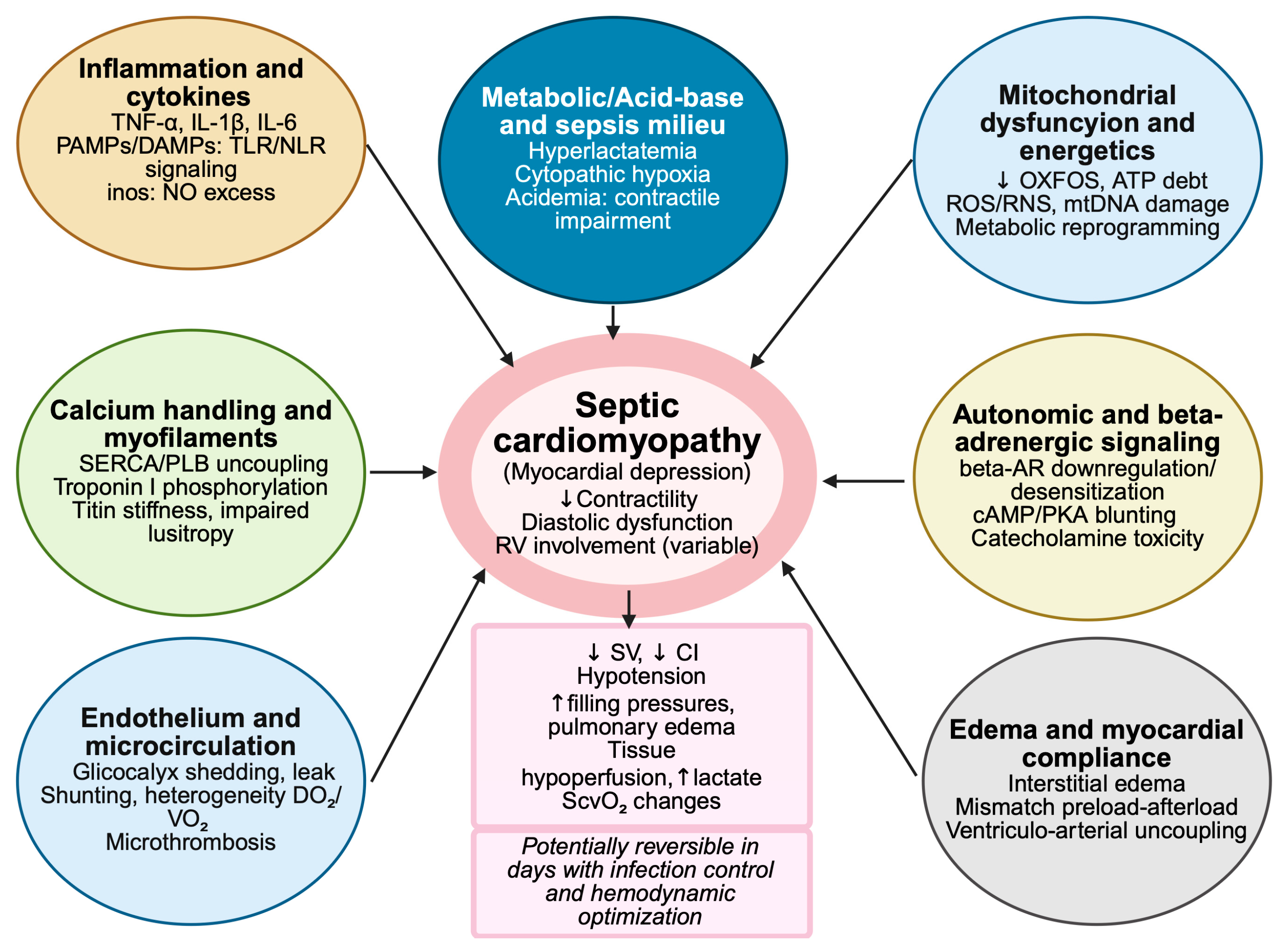
3.1.2. Myocardial Depression in Sepsis
3.1.3. Impaired Oxygen Utilization and Cellular Dysfunction
3.1.4. Microcirculatory Collapse and Endothelial Injury
3.1.5. Mismatch Between Delivery and Demand and Phenotypes
3.2. Rationale for V-A ECMO in Septic Shock
3.3. Practical Consideration: Patient Selection, Timing, and Cannulation Strategy
3.3.1. Patient Selection
3.3.2. Timing of ECMO Initiation
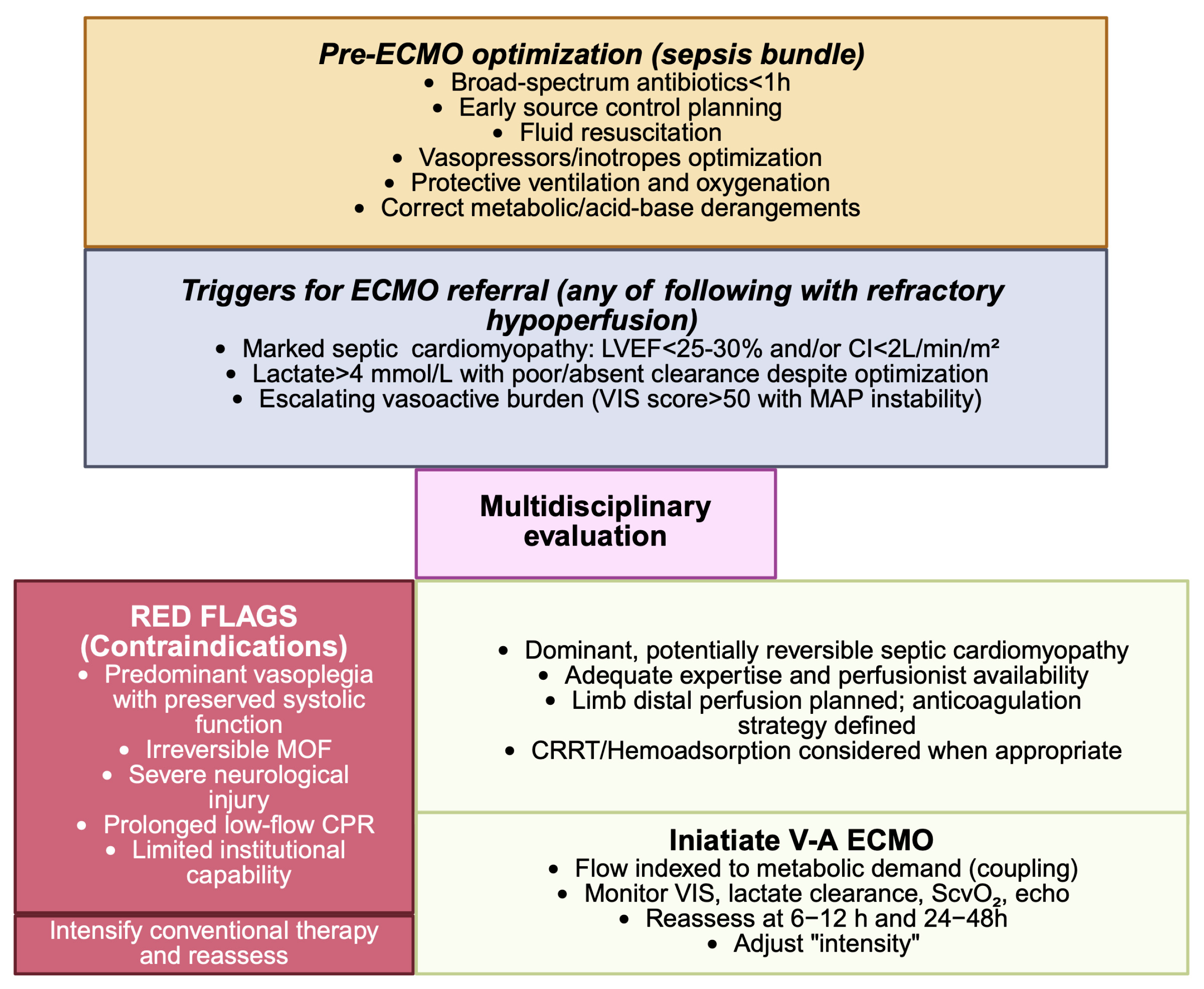
- MAP < 65 mmHg despite norepinephrine ≥0.5–1 μg/kg/min ±vasopressin;
- Serum lactate >4 mmol/L or no clearance over 6 h;
- ScvO2 < 65% or PvaCO2 >6 mmHg;
- Cardiac index < 2.0 L/min/m2 or LVEF < 20–25%;
- Ongoing signs of hypoperfusion (oliguria, mottling, and rising creatinine).
3.3.3. Cannulation Strategy
- Peripheral femoro-femoral V-A ECMO is the most widely adopted approach due to its rapid deployability. However, it is associated with a substantial risk of distal limb ischemia, necessitating careful implementation of distal limb perfusion catheters to maintain antegrade flow to the cannulated leg. Some centers further mitigate ischemic complications by placing thinner arterial lines, such as the ankle, more distally [53,54,55]. Optimal drainage cannula positioning, ideally with the tip in the upper right atrium or lower superior vena cava, reduces the risk of severe differential oxygenation phenomena, especially in cases of lung failure [56].
- Central cannulation, involving drainage from the right atrium and arterial return to ascending aorta via median sternotomy, allows for direct ventricular unloading and higher ECMO flow rates. While rarely applied in septic patients, it remains a cornerstone in post-cardiotomy scenarios, where maximal circulatory support is indicated [41,59,60].
- Hybrid VAV ECMO may be indicated in septic shock complicated by severe ARDS, offering simultaneous circulatory and respiratory support. These composite circuits demand meticulous management to prevent recirculation, coagulopathy risk associated with Y-piece connectors and flow-balancing devices and distal limb ischemia, especially during the weaning phase as circulatory support is withdrawn. The balancing of venous and arterial return flow fractions is critical to optimize efficacy and minimize complications [60,61,62].
3.3.4. Intensity of Support
3.4. Role of Echocardiography and Hemodynamic Monitoring in ECMO Decision-Making
3.5. Clinical Evidence and Guidelines
3.6. Integrated Management: Antimicrobial Therapy, Source Control, and Adjunctive Extracorporeal Support
Pharmacokinetic Implications of ECMO on Antibiotic Therapy
3.7. Complications and Long-Term Outcomes
Long-Term Neurological and Functional Outcomes
3.8. Ethical and Organizational Considerations
Futility and Exclusion Criteria
- Devasting or irreversible neurologic injury (massive intracranial hemorrhage, severe encephalopathy);
- Irreversible or end-stage comorbidities (advanced malignancy, terminal chronic organ failure, or severe frailty);
- Established multi-organ failure with no realistic potential for recovery at the time of evaluation;
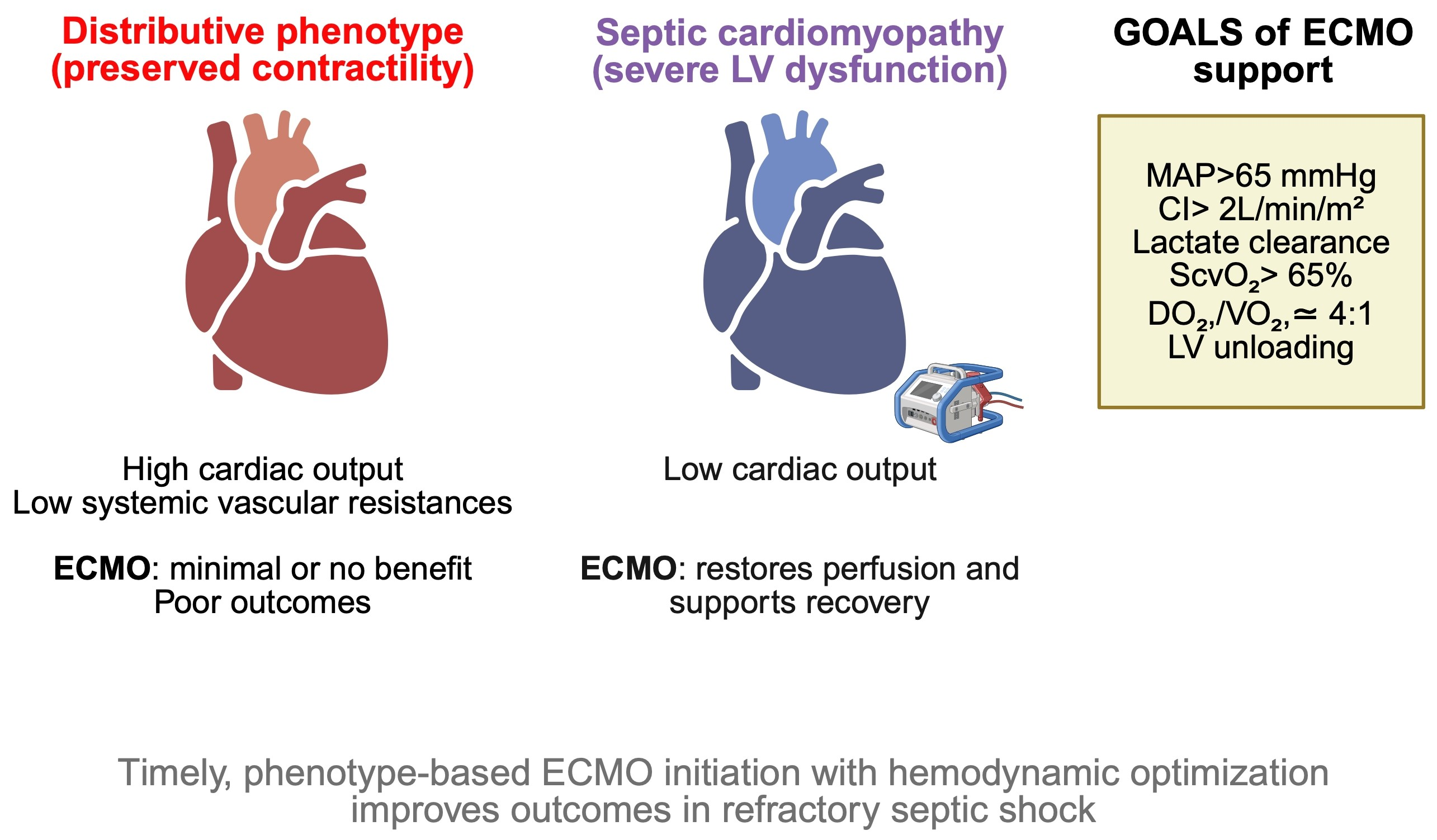
- Extreme vasoplegic shock without demonstrable myocardial depression, in which mechanical circulatory support cannot restore vascular tone;
- Prolonged unresuscitated low-flow or no-flow states preceding ECMO consideration.
4. Discussion
5. Conclusions and Future Directions
Author Contributions
Funding
Data Availability Statement
Conflicts of Interest
Abbreviations
| ECMO | Extracorporeal membrane oxygenation. |
| V-A ECMO | Veno-arterial extracorporeal membrane oxygenation. |
| LVEF | Left ventricular ejection fraction. |
| SCC | Surviving sepsis campaign. |
| CRRT | Continuous renal replacement therapy |
References
- Fleischmann-Struzek, C.; Mellhammar, L.; Rose, N.; Cassini, A.; Rudd, K.E.; Schlattmann, P.; Allegranzi, B.; Reinhart, K. Incidence and mortality of hospital- and ICU-treated sepsis: Results from an updated and expanded systematic review and meta-analysis. Intensive Care Med. 2020, 46, 1552–1562. [Google Scholar] [CrossRef] [PubMed] [PubMed Central]
- Evans, L.; Rhodes, A.; Alhazzani, W.; Antonelli, M.; Coopersmith, C.M.; French, C.; Machado, F.R.; Mcintyre, L.; Ostermann, M.; Prescott, H.C.; et al. Surviving sepsis campaign: International guidelines for management of sepsis and septic shock 2021. Intensive Care Med. 2021, 47, 1181–1247. [Google Scholar] [CrossRef] [PubMed] [PubMed Central]
- Weiss, S.L.; Peters, M.J.; Alhazzani, W.; Agus, M.S.D.; Flori, H.R.; Inwald, D.P.; Nadel, S.; Schlapbach, L.J.; Tasker, R.C.; Argent, A.C.; et al. Surviving sepsis campaign international guidelines for the management of septic shock and sepsis-associated organ dysfunction in children. Intensive Care Med. 2020, 46 (Suppl. S1), 10–67. [Google Scholar] [CrossRef] [PubMed] [PubMed Central]
- Zhang, H.; Xu, Y.; Huang, X.; Yang, S.; Li, R.; Wu, Y.; Zou, X.; Yu, Y.; Shang, Y. Extracorporeal membrane oxygenation in adult patients with sepsis and septic shock: Why, how, when, and for whom. J. Intensive Med. 2023, 4, 62–72. [Google Scholar] [CrossRef] [PubMed] [PubMed Central]
- Lorusso, R.; Shekar, K.; MacLaren, G.; Schmidt, M.; Pellegrino, V.; Meyns, B.; Haft, J.; Vercaemst, L.; Pappalardo, F.; Bermudez, C.; et al. ELSO Interim Guidelines for Venoarterial Extracorporeal Membrane Oxygenation in Adult Cardiac Patients. ASAIO J. 2021, 67, 827–844. [Google Scholar] [CrossRef] [PubMed]
- Tonna, J.E.; Abrams, D.; Brodie, D.; Greenwood, J.C.; Mateo-Sidron, J.A.R.; Usman, A.; Fan, E. Management of Adult Patients Supported with Venovenous Extracorporeal Membrane Oxygenation (VV ECMO): Guideline from the Extracorporeal Life Support Organization (ELSO). ASAIO J. 2021, 67, 601–610. [Google Scholar] [CrossRef] [PubMed] [PubMed Central]
- Lukić, I.; Mihić, D.; Varžić, S.C.; Relatić, K.S.; Zibar, L.; Loinjak, D.; Ćurić, Ž.B.; Klobučar, L.; Maričić, L. Septic Cardiomyopathy. Rev. Cardiovasc. Med. 2024, 25, 23. [Google Scholar] [CrossRef] [PubMed] [PubMed Central]
- Ling, R.R.; Ramanathan, K.; Poon, W.H.; Tan, C.S.; Brechot, N.; Brodie, D.; Combes, A.; MacLaren, G. Venoarterial extracorporeal membrane oxygenation as mechanical circulatory support in adult septic shock: A systematic review and meta-analysis with individual participant data meta-regression analysis. Crit. Care 2021, 25, 246. [Google Scholar] [CrossRef] [PubMed] [PubMed Central]
- Yang, Y.; Xiao, Z.; Huang, J.; Gong, L.; Lu, X. Role of Extracorporeal Membrane Oxygenation in Adults and Children With Refractory Septic Shock: A Systematic Review and Meta-Analysis. Front. Pediatr. 2022, 9, 791781. [Google Scholar] [CrossRef] [PubMed] [PubMed Central]
- Melnikov, G.; Grabowski, S.; Broman, L.M. Extracorporeal Membrane Oxygenation for Septic Shock in Children. ASAIO J. 2022, 68, 262–267. [Google Scholar] [CrossRef] [PubMed] [PubMed Central]
- Sangli, S.S.; Noronha, S.F.; Mourad, B.; Jean, R.; Bohman, J.K.; Seelhammer, T.G. A Systematic Review of Preexisting Sepsis and Extracorporeal Membrane Oxygenation. ASAIO J. 2020, 66, 1–7. [Google Scholar] [CrossRef] [PubMed]
- Lambden, S.; Creagh-Brown, B.C.; Hunt, J.; Summers, C.; Forni, L.G. Definitions and pathophysiology of vasoplegic shock. Crit. Care 2018, 22, 174. [Google Scholar] [CrossRef] [PubMed] [PubMed Central]
- Gamcrlidze, M.M.; Intskirveli, N.A.; Vardosanidze, K.D.; Chikhladze, K.E.; Goliadze, L.S.; Ratiani, L.R. Vasoplegia in septic shock (review). Georgian Med. News. 2015, 239, 56–62. [Google Scholar] [PubMed]
- Levy, B.; Collin, S.; Sennoun, N.; Ducrocq, N.; Kimmoun, A.; Asfar, P.; Perez, P.; Meziani, F. Vascular hyporesponsiveness to vasopressors in septic shock: From bench to bedside. Intensive Care Med. 2010, 36, 2019–2029. [Google Scholar] [CrossRef] [PubMed]
- Sullivan, R.C.; Rockstrom, M.D.; Schmidt, E.P.; Hippensteel, J.A. Endothelial glycocalyx degradation during sepsis: Causes and consequences. Matrix Biol. Plus. 2021, 12, 100094. [Google Scholar] [CrossRef] [PubMed] [PubMed Central]
- Hotchkiss, R.S.; Moldawer, L.L.; Opal, S.M.; Reinhart, K.; Turnbull, I.R.; Vincent, J.L. Sepsis and septic shock. Nat. Rev. Dis. Primers. 2016, 2, 16045. [Google Scholar] [CrossRef] [PubMed] [PubMed Central]
- Malbrain, M.L.N.G.; Van Regenmortel, N.; Saugel, B.; De Tavernier, B.; Van Gaal, P.J.; Joannes-Boyau, O.; Teboul, J.L.; Rice, T.W.; Mythen, M.; Monnet, X. Principles of fluid management and stewardship in septic shock: It is time to consider the four D’s and the four phases of fluid therapy. Ann. Intensive Care 2018, 8, 66. [Google Scholar] [CrossRef] [PubMed] [PubMed Central]
- Carbone, F.; Liberale, L.; Preda, A.; Schindler, T.H.; Montecucco, F. Septic Cardiomyopathy: From Pathophysiology to the Clinical Setting. Cells 2022, 11, 2833. [Google Scholar] [CrossRef] [PubMed] [PubMed Central]
- Hasegawa, D.; Ishisaka, Y.; Maeda, T.; Prasitlumkum, N.; Nishida, K.; Dugar, S.; Sato, R. Prevalence and Prognosis of Sepsis-Induced Cardiomyopathy: A Systematic Review and Meta-Analysis. J. Intensive Care Med. 2023, 38, 797–808. [Google Scholar] [CrossRef] [PubMed]
- Riera, J.; Romay, E.; Ferrer, R. Management of myocardial dysfunction in septic shock. Potential role of extracorporeal membrane oxygenation. Med. Intensiv. 2018, 42, 301–305, (In English, Spanish). [Google Scholar] [CrossRef] [PubMed]
- Kakihana, Y.; Ito, T.; Nakahara, M.; Yamaguchi, K.; Yasuda, T. Sepsis-induced myocardial dysfunction: Pathophysiology and management. J. Intensive Care 2016, 4, 22. [Google Scholar] [CrossRef] [PubMed] [PubMed Central]
- Court, O.; Kumar, A.; Parrillo, J.E.; Kumar, A. Clinical review: Myocardial depression in sepsis and septic shock. Crit. Care 2002, 6, 500–508. [Google Scholar] [CrossRef] [PubMed] [PubMed Central]
- Liu, Y.C.; Yu, M.M.; Shou, S.T.; Chai, Y.F. Sepsis-Induced Cardiomyopathy: Mechanisms and Treatments. Front. Immunol. 2017, 8, 1021. [Google Scholar] [CrossRef] [PubMed] [PubMed Central]
- Rudiger, A.; Singer, M. Mechanisms of sepsis-induced cardiac dysfunction. Crit. Care Med. 2007, 35, 1599–1608. [Google Scholar] [CrossRef] [PubMed]
- Argirò, A.; Olivotto, I. The coronary microcirculation in sepsis: Not of micro-importance. Glob. Cardiol. Sci. Pract. 2020, 2020, e202030. [Google Scholar] [CrossRef] [PubMed] [PubMed Central]
- Habimana, R.; Choi, I.; Cho, H.J.; Kim, D.; Lee, K.; Jeong, I. Sepsis-induced cardiac dysfunction: A review of pathophysiology. Acute Crit. Care 2020, 35, 57–66. [Google Scholar] [CrossRef] [PubMed] [PubMed Central]
- Demailly, Z.; Besnier, E.; Tamion, F.; Lesur, O. Ventriculo-arterial (un)coupling in septic shock: Impact of current and upcoming hemodynamic drugs. Front. Cardiovasc. Med. 2023, 10, 1172703. [Google Scholar] [CrossRef] [PubMed] [PubMed Central]
- Sato, R.; Nasu, M. A review of sepsis-induced cardiomyopathy. J. Intensive Care 2015, 3, 48. [Google Scholar] [CrossRef] [PubMed] [PubMed Central]
- Nedel, W.; Deutschendorf, C.; Portela, L.V.C. Sepsis-induced mitochondrial dysfunction: A narrative review. World J. Crit. Care Med. 2023, 12, 139–152. [Google Scholar] [CrossRef] [PubMed] [PubMed Central]
- Østergaard, L.; Granfeldt, A.; Secher, N.; Tietze, A.; Iversen, N.K.; Jensen, M.S.; Andersen, K.K.; Nagenthiraja, K.; Gutiérrez-Lizardi, P.; Mouridsen, K.; et al. Microcirculatory dysfunction and tissue oxygenation in critical illness. Acta Anaesthesiol. Scand. 2015, 59, 1246–1259. [Google Scholar] [CrossRef] [PubMed] [PubMed Central]
- Raia, L.; Zafrani, L. Endothelial Activation and Microcirculatory Disorders in Sepsis. Front. Med. 2022, 9, 907992. [Google Scholar] [CrossRef] [PubMed] [PubMed Central]
- Colbert, J.F.; Schmidt, E.P. Endothelial and Microcirculatory Function and Dysfunction in Sepsis. Clin. Chest Med. 2016, 37, 263–275. [Google Scholar] [CrossRef] [PubMed] [PubMed Central]
- Massey, M.J.; Hou, P.C.; Filbin, M.; Wang, H.; Ngo, L.; Huang, D.T.; Aird, W.C.; Novack, V.; Trzeciak, S.; Yealy, D.M.; et al. Microcirculatory perfusion disturbances in septic shock: Results from the ProCESS trial. Crit. Care 2018, 22, 308. [Google Scholar] [CrossRef] [PubMed] [PubMed Central]
- Kazune, S.; Piebalga, A.; Strike, E.; Vanags, I. Impaired vascular reactivity in sepsis—A systematic review with meta-analysis. Arch. Med. Sci. Atheroscler. Dis. 2019, 4, e151–e161. [Google Scholar] [CrossRef] [PubMed] [PubMed Central]
- Chang, J.C. Sepsis and septic shock: Endothelial molecular pathogenesis associated with vascular microthrombotic disease. Thromb. J. 2019, 17, 10. [Google Scholar] [CrossRef] [PubMed] [PubMed Central]
- Bateman, R.M.; Sharpe, M.D.; Ellis, C.G. Bench-to-bedside review: Microvascular dysfunction in sepsis--hemodynamics, oxygen transport, and nitric oxide. Crit. Care 2003, 7, 359–373. [Google Scholar] [CrossRef] [PubMed] [PubMed Central]
- Sturm, T.; Leiblein, J.; Clauß, C.; Erles, E.; Thiel, M. Bedside determination of microcirculatory oxygen delivery and uptake: A prospective observational clinical study for proof of principle. Sci. Rep. 2021, 11, 24516. [Google Scholar] [CrossRef] [PubMed] [PubMed Central]
- Cheng, L.; Wang, W.; Hu, X.; Pan, C. Combination of Cv-aCO2/Ca-vO2 and Pv-aCO2 as markers of resuscitation or microcirculation in patients with septic shock: A pilot study. J. Intensive Care 2025, 13, 35. [Google Scholar] [CrossRef] [PubMed] [PubMed Central]
- Sato, R.; Hasegawa, D.; Guo, S.; Nuqali, A.E.; Moreno, J.E.P. Sepsis-induced cardiogenic shock: Controversies and evidence gaps in diagnosis and management. J. Intensive Care 2025, 13, 1. [Google Scholar] [CrossRef] [PubMed] [PubMed Central]
- Messina, A.; Vieillard-Baron, A. How we could use critical care echocardiography in the assessment of and management of cardiovascular phenotypes in septic shock: The good, the bad, and the ugly profiles. Intensive Care Med. 2025, 51, 397–400. [Google Scholar] [CrossRef]
- Broman, L.M.; Dubrovskaja, O.; Balik, M. Extracorporeal Membrane Oxygenation for Septic Shock in Adults and Children: A Narrative Review. J. Clin. Med. 2023, 12, 6661. [Google Scholar] [CrossRef] [PubMed] [PubMed Central]
- Helwani, M.A.; Lim, A. Is venoarterial extracorporeal membrane oxygenation an option for managing septic shock. Curr. Opin. Anaesthesiol. 2023, 36, 45–49. [Google Scholar] [CrossRef] [PubMed]
- Khan, M.F.; Nazir, M.; Khan, M.K.; Rajendram, R.K.; Shamim, F. Extracorporeal Membrane Oxygenation as Circulatory Support in Adult Patients with Septic Shock: A Systematic Review. J. Crit. Care Med. 2024, 10, 119–129. [Google Scholar] [CrossRef] [PubMed] [PubMed Central]
- Volleman, C.; Raasveld, S.J.; Jamaludin, F.S.; Vlaar, A.P.J.; van den Brom, C.E. Microcirculatory Perfusion Disturbances During Veno-Arterial Extracorporeal Membrane Oxygenation: A Systematic Review. Microcirculation 2024, 31, e12891. [Google Scholar] [CrossRef] [PubMed]
- Song, H.; Yuan, Z.; Peng, Y.; Luo, G. Extracorporeal membrane oxygenation combined with continuous renal replacement therapy for the treatment of severe burns: Current status and challenges. Burn. Trauma 2021, 9, tkab017. [Google Scholar] [CrossRef] [PubMed] [PubMed Central]
- Supady, A.; Brodie, D.; Wengenmayer, T. Extracorporeal haemoadsorption: Does the evidence support its routine use in critical care? Lancet Respir. Med. 2022, 10, 307–312. [Google Scholar] [CrossRef] [PubMed]
- Choi, M.J.; Ha, S.O.; Kim, H.S.; Park, S.; Han, S.J.; Lee, S.H. The Simplified Acute Physiology Score II as a Predictor of Mortality in Patients Who Underwent Extracorporeal Membrane Oxygenation for Septic Shock. Ann. Thorac. Surg. 2017, 103, 1246–1253. [Google Scholar] [CrossRef] [PubMed]
- Cheng, A.; Sun, H.Y.; Tsai, M.S.; Ko, W.J.; Tsai, P.R.; Hu, F.C.; Chen, Y.C.; Chang, S.C. Predictors of survival in adults undergoing extracorporeal membrane oxygenation with severe infections. J. Thorac. Cardiovasc. Surg. 2016, 152, 1526–1536.e1. [Google Scholar] [CrossRef] [PubMed]
- Solé, A.; Jordan, I.; Bobillo, S.; Moreno, J.; Balaguer, M.; Hernández-Platero, L.; Segura, S.; Cambra, F.J.; Esteban, E.; Rodríguez-Fanjul, J. Venoarterial extracorporeal membrane oxygenation support for neonatal and pediatric refractory septic shock: More than 15 years of learning. Eur. J. Pediatr. 2018, 177, 1191–1200. [Google Scholar] [CrossRef] [PubMed]
- Ro, S.K.; Kim, W.K.; Lim, J.Y.; Yoo, J.S.; Hong, S.B.; Kim, J.B. Extracorporeal life support for adults with refractory septic shock. J. Thorac. Cardiovasc. Surg. 2018, 156, 1104–1109.e1. [Google Scholar] [CrossRef] [PubMed]
- Park, T.K.; Yang, J.H.; Jeon, K.; Choi, S.H.; Choi, J.H.; Gwon, H.C.; Chung, C.R.; Park, C.M.; Cho, Y.H.; Sung, K.; et al. Extracorporeal membrane oxygenation for refractory septic shock in adults. Eur. J. Cardiothorac. Surg. 2015, 47, e68–e74. [Google Scholar] [CrossRef] [PubMed]
- Antonucci, E.; Polo, T.; Giovini, M.; Girardis, M.; Martin-Loeches, I.; Nielsen, N.D.; Lozsán, F.J.C.; Ferrer, R.; Lakbar, I.; Leone, M. Refractory septic shock and alternative wordings: A systematic review of literature. J. Crit. Care 2023, 75, 154258. [Google Scholar] [CrossRef] [PubMed]
- Marbach, J.A.; Faugno, A.J.; Pacifici, S.; Chweich, H.; Marbach, J.K.; Rabinowitz, J.B.; Thayer, K.L.; Di Santo, P.; Kapur, N.K. Strategies to reduce limb ischemia in peripheral venoarterial extracorporeal membrane oxygenation: A systematic review and Meta-analysis. Int. J. Cardiol. 2022, 361, 77–84. [Google Scholar] [CrossRef] [PubMed]
- Bonicolini, E.; Martucci, G.; Simons, J.; Raffa, G.M.; Spina, C.; Lo Coco, V.; Arcadipane, A.; Pilato, M.; Lorusso, R. Limb ischemia in peripheral veno-arterial extracorporeal membrane oxygenation: A narrative review of incidence, prevention, monitoring, and treatment. Crit. Care 2019, 23, 266. [Google Scholar] [CrossRef] [PubMed] [PubMed Central]
- Ortoleva, J. Limb Ischemia in Femoral Venoarterial ECMO Patients: Cutting to the Chase? J. Cardiothorac. Vasc. Anesth. 2023, 37, 2280–2281. [Google Scholar] [CrossRef] [PubMed]
- Torre, D.E.; Pirri, C. Harlequin Syndrome in Venoarterial ECMO and ECPELLA: When ECMO and Native or Impella Circulations Collide—A Comprehensive Review. Rev. Cardiovasc. Med. 2025, 26, 39992. [Google Scholar] [CrossRef] [PubMed] [PubMed Central]
- Pisani, A.; Braham, W.; Brega, C.; Lajmi, M.; Provenchere, S.; Danial, P.; Alkhoder, S.; Para, M.; Ghodbane, W.; Nataf, P. Right axillary artery cannulation for venoarterial extracorporeal membrane oxygenation: A retrospective single centre observational study. Eur. J. Cardiothorac. Surg. 2021, 59, 601–609. [Google Scholar] [CrossRef] [PubMed]
- Torre, D.E.; Pirri, C. Alternative Arterial Access in Veno-Arterial ECMO: The Role of the Axillary Artery. J. Clin. Med. 2025, 14, 5413. [Google Scholar] [CrossRef] [PubMed] [PubMed Central]
- Mariscalco, G.; Salsano, A.; Fiore, A.; Dalén, M.; Ruggieri, V.G.; Saeed, D.; Jónsson, K.; Gatti, G.; Zipfel, S.; Dell’Aquila, A.M.; et al. Peripheral versus central extracorporeal membrane oxygenation for postcardiotomy shock: Multicenter registry, systematic review, and meta-analysis. J. Thorac. Cardiovasc. Surg. 2020, 160, 1207–1216.e44. [Google Scholar] [CrossRef] [PubMed]
- Pooboni, S.K.; Gulla, K.M. Vascular access in ECMO. Indian J. Thorac. Cardiovasc. Surg. 2021, 37 (Suppl. S2), 221–231. [Google Scholar] [CrossRef] [PubMed] [PubMed Central]
- Mihu, M.R.; Mageka, D.; Swant, L.V.; El Banayosy, A.; Maybauer, M.O.; Harper, M.D.; Koerner, M.M.; El Banayosy, A. Veno-arteriovenous extracorporeal membrane oxygenation-A single center experience. Artif. Organs. 2021, 45, 1554–1561. [Google Scholar] [CrossRef] [PubMed]
- Saxena, A.; Curran, J.; Ahmad, D.; Nasher, N.; Miyamoto, T.; Brailovsky, E.; Shah, M.K.; Rajapreyar, I.N.; Rame, J.E.; Loforte, A.; et al. Utilization and outcomes of V-AV ECMO: A systematic review and meta-analysis. Artif. Organs. 2023, 47, 1559–1566. [Google Scholar] [CrossRef] [PubMed]
- Hussey, P.T.; von Mering, G.; Nanda, N.C.; Ahmed, M.I.; Addis, D.R. Echocardiography for extracorporeal membrane oxygenation. Echocardiography 2022, 39, 339–370. [Google Scholar] [CrossRef] [PubMed] [PubMed Central]
- Labrada, L.; Alarfaj, M.; Tran, L.; Granger, H.; Hernandez, A.; Hu, J.; Baker, J.; Grandin, E.W.; Delgado, A.A.; Katz, J.N.; et al. Optimal ECLS Support in Mixed Cardiogenic and Septic Shock: An ELSO Registry Analysis. JACC Adv. 2025, 4 Pt 1, 101965. [Google Scholar] [CrossRef] [PubMed]
- Gandhi, K.D.; Moras, E.C.; Niroula, S.; Lopez, P.D.; Aggarwal, D.; Bhatia, K.; Balboul, Y.; Daibes, J.; Correa, A.; Dominguez, A.C.; et al. Left Ventricular Unloading With Impella Versus IABP in Patients With VA-ECMO: A Systematic Review and Meta-Analysis. Am. J. Cardiol. 2023, 208, 53–59. [Google Scholar] [CrossRef] [PubMed]
- Sandrio, S.; Krebs, J.; Leonardy, E.; Thiel, M.; Schoettler, J.J. Vasoactive Inotropic Score as a Prognostic Factor during (Cardio-) Respiratory ECMO. J. Clin. Med. 2022, 11, 2390. [Google Scholar] [CrossRef] [PubMed] [PubMed Central]
- Mungan, İ.; Kazancı, D.; Bektaş, Ş.; Ademoglu, D.; Turan, S. Does lactate clearance prognosticates outcomes in ECMO therapy: A retrospective observational study. BMC Anesthesiol. 2018, 18, 152. [Google Scholar] [CrossRef] [PubMed] [PubMed Central]
- Tian, X.; Wang, L.; Li, C.; Shao, J.; Jia, M.; Wang, H.; Hou, X. Combining the vasoactive-inotropic score with lactate levels to predict mortality in post-cardiotomy patients supported with venoarterial extracorporeal membrane oxygenation. Eur. J. Cardiothorac. Surg. 2024, 66, ezae334. [Google Scholar] [CrossRef] [PubMed]
- Vallabhajosyula, S.; Ahmed, A.M.; Sundaragiri, P.R. Role of echocardiography in sepsis and septic shock. Ann. Transl. Med. 2020, 8, 150. [Google Scholar] [CrossRef] [PubMed] [PubMed Central]
- Pérez, C.; Diaz-Caicedo, D.; Almanza Hernández, D.F.; Moreno-Araque, L.; Yepes, A.F.; Carrizosa Gonzalez, J.A. Critical Care Ultrasound in Shock: A Comprehensive Review of Ultrasound Protocol for Hemodynamic Assessment in the Intensive Care Unit. J. Clin. Med. 2024, 13, 5344. [Google Scholar] [CrossRef] [PubMed] [PubMed Central]
- Vieillard-Baron, A.; Prigent, A.; Repessé, X.; Goudelin, M.; Prat, G.; Evrard, B.; Charron, C.; Vignon, P.; Geri, G. Right ventricular failure in septic shock: Characterization, incidence and impact on fluid responsiveness. Crit. Care 2020, 24, 630. [Google Scholar] [CrossRef] [PubMed] [PubMed Central]
- L’Heureux, M.; Sternberg, M.; Brath, L.; Turlington, J.; Kashiouris, M.G. Sepsis-Induced Cardiomyopathy: A Comprehensive Review. Curr. Cardiol. Rep. 2020, 22, 35. [Google Scholar] [CrossRef] [PubMed] [PubMed Central]
- Pinsky, M.R.; Guarracino, F. How to assess ventriculoarterial coupling in sepsis. Curr. Opin. Crit. Care 2020, 26, 313–318. [Google Scholar] [CrossRef] [PubMed] [PubMed Central]
- Monge García, M.I.; Santos, A. Understanding ventriculo-arterial coupling. Ann. Transl. Med. 2020, 8, 795. [Google Scholar] [CrossRef] [PubMed] [PubMed Central]
- Chan, J.C.; Menon, A.P.; Rotta, A.T.; Choo, J.T.L.; Hornik, C.P.; Lee, J.H. Use of Speckle-Tracking Echocardiography in Septic Cardiomyopathy in Critically Ill Children: A Narrative Review. Crit. Care Explor. 2024, 6, e1114. [Google Scholar] [CrossRef] [PubMed] [PubMed Central]
- Yao, Y.; Yang, Q.; Zhong, M.; He, H.; Song, J. Diagnostic and prognostic value of speckle tracking echocardiography for right ventricular dysfunction in sepsis: A retrospective observational study. BMC Cardiovasc. Disord. 2025, 25, 717. [Google Scholar] [CrossRef]
- Monnet, X.; Teboul, J.L. Transpulmonary thermodilution: Advantages and limits. Crit. Care 2017, 21, 147. [Google Scholar] [CrossRef] [PubMed] [PubMed Central]
- Luo, Y.; Zhan, S.; Zhu, L.; Xiong, M.; Liu, G.; Wang, C. The role of pulse indicator continuous cardiac output (PiCCO) and critical care ultrasound in volume status assessment during fluid resuscitation for and prognosis of septic shock patients. Pak. J. Med. Sci. 2023, 39, 214–218. [Google Scholar] [CrossRef] [PubMed] [PubMed Central]
- Persona, P.; Valeri, I.; Saraceni, E.; De Cassai, A.; Calabrese, F.; Navalesi, P. Cardiac Output Evaluation on Septic Shock Patients: Comparison between Calibrated and Uncalibrated Devices during Vasopressor Therapy. J. Clin. Med. 2021, 10, 213. [Google Scholar] [CrossRef] [PubMed] [PubMed Central]
- López-Sobrino, T.; Gázquez Toscano, A.; Soler Selva, M.; Parellada Vendrell, M.; García-Álvarez, A.; Andrea, R. A possible role for the venous-to-arterial CO2 difference in cardiogenic shock: An exploratory study. Emergencias 2023, 35, 345–352, (In English, Spanish). [Google Scholar] [CrossRef] [PubMed]
- Ostadal, P.; Vondrakova, D.; Rokyta, R.; Karasek, J.; Kruger, A.; Janotka, M.; Naar, J.; Smalcova, J.; Hubatova, M.; Hromadka, M.; et al. Cardiac index, SvO2 or pCO2 gap may determine benefit from ECMO in cardiogenic shock: Post-hoc analysis of the multicenter, randomized ECMO-CS trial. Crit. Care 2025, 29, 303. [Google Scholar] [CrossRef] [PubMed] [PubMed Central]
- Bréchot, N.; Luyt, C.E.; Schmidt, M.; Leprince, P.; Trouillet, J.L.; Léger, P.; Pavie, A.; Chastre, J.; Combes, A. Venoarterial extracorporeal membrane oxygenation support for refractory cardiovascular dysfunction during severe bacterial septic shock. Crit. Care Med. 2013, 41, 1616–1626. [Google Scholar] [CrossRef] [PubMed]
- Bréchot, N.; Hajage, D.; Kimmoun, A.; Demiselle, J.; Agerstrand, C.; Montero, S.; Schmidt, M.; Luyt, C.E.; Lebreton, G.; Hékimian, G.; et al. Venoarterial extracorporeal membrane oxygenation to rescue sepsis-induced cardiogenic shock: A retrospective, multicentre, international cohort study. Lancet 2020, 396, 545–552. [Google Scholar] [CrossRef] [PubMed]
- Banjas, N.; Hopf, H.B.; Hanisch, E.; Friedrichson, B.; Fichte, J.; Buia, A. ECMO-treatment in patients with acute lung failure, cardiogenic, and septic shock: Mortality and ECMO-learning curve over a 6-year period. J. Intensive Care 2018, 6, 84. [Google Scholar] [CrossRef] [PubMed] [PubMed Central]
- Falk, L.; Hultman, J.; Broman, L.M. Extracorporeal Membrane Oxygenation for Septic Shock. Crit. Care Med. 2019, 47, 1097–1105. [Google Scholar] [CrossRef] [PubMed]
- Kim, A.R.; Hyun, J.; Lee, S.E.; Hong, J.A.; Kang, P.J.; Jung, S.H.; Kim, M.S. Prognosis of Venoarterial Extracorporeal Membrane Oxygenation in Mixed, Cardiogenic and Septic Shock. ASAIO J. 2023, 69, 658–664. [Google Scholar] [CrossRef] [PubMed]
- Huang, C.T.; Tsai, Y.J.; Tsai, P.R.; Ko, W.J. Extracorporeal membrane oxygenation resuscitation in adult patients with refractory septic shock. J. Thorac. Cardiovasc. Surg. 2013, 146, 1041–1046. [Google Scholar] [CrossRef] [PubMed]
- Vogel, D.J.; Murray, J.; Czapran, A.Z.; Camporota, L.; Ioannou, N.; Meadows, C.I.S.; Sherren, P.B.; Daly, K.; Gooby, N.; Barrett, N. Veno-arterio-venous ECMO for septic cardiomyopathy: A single-centre experience. Perfusion 2018, 33 (Suppl. S1), 57–64. [Google Scholar] [CrossRef] [PubMed]
- Ramanathan, K.; Yeo, N.; Alexander, P.; Raman, L.; Barbaro, R.; Tan, C.S.; Schlapbach, L.J.; MacLaren, G. Role of extracorporeal membrane oxygenation in children with sepsis: A systematic review and meta-analysis. Crit. Care 2020, 24, 684. [Google Scholar] [CrossRef] [PubMed] [PubMed Central]
- MacLaren, G.; Butt, W.; Best, D.; Donath, S. Central extracorporeal membrane oxygenation for refractory pediatric septic shock. Pediatr. Crit. Care Med. 2011, 12, 133–136. [Google Scholar] [CrossRef] [PubMed]
- Maclaren, G.; Butt, W.; Best, D.; Donath, S.; Taylor, A. Extracorporeal membrane oxygenation for refractory septic shock in children: One institution’s experience. Pediatr. Crit. Care Med. 2007, 8, 447–451. [Google Scholar] [CrossRef] [PubMed]
- Beca, J.; Butt, W. Extracorporeal membrane oxygenation for refractory septic shock in children. Pediatrics 1994, 93, 726–729. [Google Scholar] [CrossRef] [PubMed]
- Meyer, D.M.; Jessen, M.E. Results of extracorporeal membrane oxygenation in children with sepsis. The Extracorporeal Life Support Organization. Ann. Thorac. Surg. 1997, 63, 756–761. [Google Scholar] [CrossRef] [PubMed]
- Brown, T.N.; Brogan, T.V. Right ventricular dysfunction in patients with acute respiratory distress syndrome receiving venovenous extracorporeal membrane oxygenation. Front. Cardiovasc. Med. 2023, 10, 1027300. [Google Scholar] [CrossRef] [PubMed] [PubMed Central]
- Kim, M.; Mahmood, M.; Estes, L.L.; Wilson, J.W.; Martin, N.J.; Marcus, J.E.; Mittal, A.; O’Connell, C.R.; Shah, A. A narrative review on antimicrobial dosing in adult critically ill patients on extracorporeal membrane oxygenation. Crit. Care 2024, 28, 326. [Google Scholar] [CrossRef] [PubMed] [PubMed Central]
- Donadello, K.; Antonucci, E.; Cristallini, S.; Roberts, J.A.; Beumier, M.; Scolletta, S.; Jacobs, F.; Rondelet, B.; de Backer, D.; Vincent, J.L.; et al. β-Lactam pharmacokinetics during extracorporeal membrane oxygenation therapy: A case-control study. Int. J. Antimicrob. Agents 2015, 45, 278–282. [Google Scholar] [CrossRef] [PubMed]
- Cheng, V.; Abdul-Aziz, M.H.; Roberts, J.A.; Shekar, K. Optimising drug dosing in patients receiving extracorporeal membrane oxygenation. J. Thorac. Dis. 2018, 10 (Suppl. S5), S629–S641. [Google Scholar] [CrossRef] [PubMed] [PubMed Central]
- Gomez, F.; Veita, J.; Laudanski, K. Antibiotics and ECMO in the Adult Population-Persistent Challenges and Practical Guides. Antibiotics 2022, 11, 338. [Google Scholar] [CrossRef] [PubMed] [PubMed Central]
- Dugar, S.; Choudhary, C.; Duggal, A. Sepsis and septic shock: Guideline-based management. Cleve Clin. J. Med. 2020, 87, 53–64. [Google Scholar] [CrossRef] [PubMed]
- Zhu, C.Y.; Pan, A.J.; Mei, Q.; Chen, T. Successful cure of a patient with urosepsis using a combination of extracorporeal membrane oxygenation and continuous renal replacement therapy: A case report and literature review. Chin. J. Traumatol. 2020, 23, 372–375. [Google Scholar] [CrossRef] [PubMed] [PubMed Central]
- Saldaña-Gastulo, J.J.C.; Llamas-Barbarán, M.D.R.; Coronel-Chucos, L.G.; Hurtado-Roca, Y. Cytokine hemoadsorption with CytoSorb® in patients with sepsis: A systematic review and meta-analysis. Crit. Care Sci. 2023, 35, 217–225. [Google Scholar] [CrossRef] [PubMed] [PubMed Central]
- Lother, A.; Benk, C.; Staudacher, D.L.; Supady, A.; Bode, C.; Wengenmayer, T.; Duerschmied, D. Cytokine Adsorption in Critically Ill Patients Requiring ECMO Support. Front. Cardiovasc. Med. 2019, 6, 71. [Google Scholar] [CrossRef] [PubMed] [PubMed Central]
- Peitz, G.J.; Murry, D.J. The Influence of Extracorporeal Membrane Oxygenation on Antibiotic Pharmacokinetics. Antibiotics 2023, 12, 500. [Google Scholar] [CrossRef] [PubMed] [PubMed Central]
- Olson, S.R.; Murphree, C.R.; Zonies, D.; Meyer, A.D.; Mccarty, O.J.T.; Deloughery, T.G.; Shatzel, J.J. Thrombosis and Bleeding in Extracorporeal Membrane Oxygenation (ECMO) Without Anticoagulation: A Systematic Review. ASAIO J. 2021, 67, 290–296. [Google Scholar] [CrossRef] [PubMed] [PubMed Central]
- Koerner, M.M.; Harper, M.D.; Gordon, C.K.; Horstmanshof, D.; Long, J.W.; Sasevich, M.J.; Neel, J.D.; El Banayosy, A. Adult cardiac veno-arterial extracorporeal life support (VA-ECMO): Prevention and management of acute complications. Ann. Cardiothorac. Surg. 2019, 8, 66–75. [Google Scholar] [CrossRef] [PubMed] [PubMed Central]
- Coelho, R.; Tavares, J.; Marinheiro, C.; Costa, C.; Ferreira, S.; Gregório, T. The effectiveness of NIRS technology to the early diagnosis of lower limb ischemia in patients on peripheral VA ECMO: A systematic review and meta-analysis. Intensive Crit. Care Nurs. 2025, 89, 104039. [Google Scholar] [CrossRef] [PubMed]
- Krasivskyi, I.; Großmann, C.; Dechow, M.; Djordjevic, I.; Ivanov, B.; Gerfer, S.; Bennour, W.; Kuhn, E.; Sabashnikov, A.; Rahmanian, P.B.; et al. Acute Limb Ischaemia during ECMO Support: A 6-Year Experience. Life 2023, 13, 485. [Google Scholar] [CrossRef] [PubMed] [PubMed Central]
- Themas, K.; Zisis, M.; Kourek, C.; Konstantinou, G.; D’Anna, L.; Papanagiotou, P.; Ntaios, G.; Dimopoulos, S.; Korompoki, E. Acute Ischemic Stroke during Extracorporeal Membrane Oxygenation (ECMO): A Narrative Review of the Literature. J. Clin. Med. 2024, 13, 6014. [Google Scholar] [CrossRef] [PubMed] [PubMed Central]
- Cho, S.M.; Canner, J.; Chiarini, G.; Calligy, K.; Caturegli, G.; Rycus, P.; Barbaro, R.P.; Tonna, J.; Lorusso, R.; Kilic, A.; et al. Modifiable Risk Factors and Mortality From Ischemic and Hemorrhagic Strokes in Patients Receiving Venoarterial Extracorporeal Membrane Oxygenation: Results From the Extracorporeal Life Support Organization Registry. Crit. Care Med. 2020, 48, e897–e905. [Google Scholar] [CrossRef] [PubMed] [PubMed Central]
- Mornese Pinna, S.; Sousa Casasnovas, I.; Olmedo, M.; Machado, M.; Juàrez Fernández, M.; Devesa-Cordero, C.; Galar, A.; Alvarez-Uria, A.; Fernández-Avilés, F.; García Carreño, J.; et al. Nosocomial Infections in Adult Patients Supported by Extracorporeal Membrane Oxygenation in a Cardiac Intensive Care Unit. Microorganisms 2023, 11, 1079. [Google Scholar] [CrossRef] [PubMed] [PubMed Central]
- Kalra, A.; Kang, J.K.; Khanduja, S.; Menta, A.K.; Ahmad, S.A.; Liu, O.; Rodriguez, E.; Spann, M.; Hernandez, A.V.; Brodie, D.; et al. Long-Term Neuropsychiatric, Neurocognitive, and Functional Outcomes of Patients Receiving ECMO: A Systematic Review and Meta-Analysis. Neurology 2024, 102, e208081. [Google Scholar] [CrossRef] [PubMed] [PubMed Central]
- Rossong, H.; Debreuil, S.; Yan, W.; Hiebert, B.M.; Singal, R.K.; Arora, R.C.; Yamashita, M.H. Long-term survival and quality of life after extracorporeal membrane oxygenation. J. Thorac. Cardiovasc. Surg. 2023, 166, 555–566.e2. [Google Scholar] [CrossRef] [PubMed]
- Khan, I.R.; Saulle, M.; Oldham, M.A.; Weber, M.T.; Schifitto, G.; Lee, H.B. Cognitive, Psychiatric, and Quality of Life Outcomes in Adult Survivors of Extracorporeal Membrane Oxygenation Therapy: A Scoping Review of the Literature. Crit. Care Med. 2020, 48, e959–e970. [Google Scholar] [CrossRef] [PubMed]
- Serpa Neto, A.; Higgins, A.M.; Bailey, M.J.; Anderson, S.; Bernard, S.; Fulcher, B.J.; Jones, A.; Linke, N.J.; Board, J.V.; Brodie, D.; et al. Long-Term Functional Outcomes in the First 12 Months After VA-ECMO in Adult Patients: A Prospective, Multicenter Study. Circ. Heart Fail. 2025, 18, e012476. [Google Scholar] [CrossRef] [PubMed]
- Boyle, K.; Felling, R.; Yiu, A.; Battarjee, W.; Schwartz, J.M.; Salorio, C.; Bembea, M.M. Neurologic Outcomes After Extracorporeal Membrane Oxygenation: A Systematic Review. Pediatr. Crit. Care Med. 2018, 19, 760–766. [Google Scholar] [CrossRef] [PubMed] [PubMed Central]
- Piscitello, G.M.; Siegler, M.; Parker, W.F. Ethics of Extracorporeal Membrane Oxygenation under Conventional and Crisis Standards of Care. J. Clin. Ethics. 2022, 33, 13–22. [Google Scholar] [CrossRef] [PubMed] [PubMed Central]
- Jaramillo, C.; Braus, N. How Should ECMO Initiation and Withdrawal Decisions Be Shared? AMA J. Ethics. 2019, 21, E387–E393. [Google Scholar] [CrossRef] [PubMed]
- Clark, J.D.; Baden, H.P.; Berkman, E.R.; Bourget, E.; Brogan, T.V.; Di Gennaro, J.L.; Doorenbos, A.Z.; McMullan, D.M.; Roberts, J.S.; Turnbull, J.M.; et al. Ethical Considerations in Ever-Expanding Utilization of ECLS: A Research Agenda. Front. Pediatr. 2022, 10, 896232. [Google Scholar] [CrossRef] [PubMed] [PubMed Central]
- Guglin, M.; Zucker, M.J.; Bazan, V.M.; Bozkurt, B.; El Banayosy, A.; Estep, J.D.; Gurley, J.; Nelson, K.; Malyala, R.; Panjrath, G.S.; et al. Venoarterial ECMO for Adults: JACC Scientific Expert Panel. J. Am. Coll. Cardiol. 2019, 73, 698–716. [Google Scholar] [CrossRef] [PubMed]
- Lautz, A.J.; Zingarelli, B. Age-Dependent Myocardial Dysfunction in Critically Ill Patients: Role of Mitochondrial Dysfunction. Int. J. Mol. Sci. 2019, 20, 3523. [Google Scholar] [CrossRef] [PubMed] [PubMed Central]
- Niederman, M.S.; Baron, R.M.; Bouadma, L.; Calandra, T.; Daneman, N.; DeWaele, J.; Kollef, M.H.; Lipman, J.; Nair, G.B. Initial antimicrobial management of sepsis. Crit. Care 2021, 25, 307. [Google Scholar] [CrossRef] [PubMed] [PubMed Central]
- Vincent, J.L. Current sepsis therapeutics. EbioMedicine 2022, 86, 104318. [Google Scholar] [CrossRef] [PubMed] [PubMed Central]
- Jacquot, C.; Di Mola, M.; Jacob, R.; Mathur, G.; Pacheco, C.; Vivero, A.; Corey, Z.; Lopez-Plaza, I.; Annen, K. Developing a Protocol for Therapeutic Plasma Exchange in Tandem With Continuous Renal Replacement Therapy (CRRT) and ExtraCorporeal Membrane Oxygenation (ECMO) in Pediatric Patients. J. Clin. Apher. 2025, 40, e70051. [Google Scholar] [CrossRef] [PubMed]
- Pisano, D.V.; Ortoleva, J.P.; Wieruszewski, P.M. Short-Term Neurologic Complications in Patients Undergoing Extracorporeal Membrane Oxygenation Support: A Review on Pathophysiology, Incidence, Risk Factors, and Outcomes. Pulm. Ther. 2024, 10, 267–278. [Google Scholar] [CrossRef] [PubMed] [PubMed Central]
- Cho, S.M.; Hwang, J.; Chiarini, G.; Amer, M.; Antonini, M.V.; Barrett, N.; Belohlavek, J.; Brodie, D.; Dalton, H.J.; Diaz, R.; et al. Neurological monitoring and management for adult extracorporeal membrane oxygenation patients: Extracorporeal Life Support Organization consensus guidelines. Crit. Care 2024, 28, 296. [Google Scholar] [CrossRef] [PubMed] [PubMed Central]
- Kon, A.A. POINT: Is It Ethically Justifiable to Withdraw Extracorporeal Membrane Oxygenation Against the Wishes of a Patient With Decision-Making Capacity When Cure Is Not Possible? Yes. Chest 2024, 166, 1281–1283. [Google Scholar] [CrossRef] [PubMed]
- Verma, A.; Hadaya, J.; Williamson, C.; Kronen, E.; Sakowitz, S.; Bakhtiyar, S.S.; Chervu, N.; Benharash, P. A contemporary analysis of the volume-outcome relationship for extracorporeal membrane oxygenation in the United States. Surgery 2023, 173, 1405–1410. [Google Scholar] [CrossRef] [PubMed]
- Ertugrul, A.D.; Neto, A.S.; Fulcher, B.J.; Charles-Nelson, A.; Bailey, M.; Burrell, A.J.C.; Anderson, S.; Bernard, S.; Board, J.V.; Brodie, D.; et al. Hospital-level volume in extracorporeal membrane oxygenation cases and death or disability at 6 months. Crit. Care Resusc. 2024, 26, 262–270. [Google Scholar] [CrossRef] [PubMed] [PubMed Central]



| Mechanism | Pathophysiological Feature | Effect on Systemic Perfusion | Potential ECMO Contribution |
|---|---|---|---|
| Septic cardiomyopathy | Reversible myocardial depression with ↓ contractility and impaired ventriculo-arterial coupling | ↓ CO ↓ DO2 Risk of circulatory collapse | Restores flow and oxygen transport; may allow myocardial recovery |
| Vasoplegia | Excess NO and inflammatory mediators cause vascular hyporesponsiveness and loss of tone | ↓ Systemic vascular resistance, distributive shock | Limited benefit; ECMO does not correct vasoplegia and requires adjunctive vasopressors |
| Microcirculatory failure | Endothelial injury, glycocalyx degradation, capillary shunting | Regional hypoxia despite adequate macrocirculatory flow | ECMO restores oxygen delivery but may not normalize microvascular perfusion heterogeneity |
| Mitochondrial dysfunction | Impaired oxidative phosphorylation (“cytopatic hypoxia) | ↓ cellular ATP despite normal oxygen supply; bioenergetic failure | ECMO provides oxygenation but cannot reverse intrinsic metabolic failure |
| Inflammatory cascade | Cytokine storm, endothelial activation, and coagulation imbalance | Microvascular thrombosis and MOF | Adjunctive extracorporeal therapies (e.g., CRRT, hemoadsorption) may attenuate inflammation |
| Phase | Parameter | Threshold/Target | Clinical Implication |
|---|---|---|---|
| Initiation (consider ECMO) | LVEF | <20–25% | Indicates that a septic cardiomyopathy candidate for V-A ECMO is refractory to fluids, inotropes, vasopressors, and infection control. |
| CI | <2 L/min/m2 | Suggests inadequate forward flow despite optimized therapy. | |
| SBP | <90 mmHg (adult) <50 mmHg (pediatric) | Inadequate perfusion pressure and loss of vascular tone. | |
| Urine output | <30 mL/h (adult) <1 mL/kg/h pediatric) | End-organ hypoperfusion and renal dysfunction. | |
| Lactate | >4 mmol/L and not clearing within 6 h | Persistent tissue hypoperfusion. | |
| VIS | >40–50 | Refractory shock despite maximal pharmacologic support. | |
| ScvO2 | <65% | Global oxygen delivery deficit. | |
| PvaCO2 gap | >6 mmHg | Indicates poor CO2 washout and ongoing hypoperfusion. | |
| Management (on ECMO) | ECMO flow (indexed) | 2.2–2.6 L/min/m2 (adjust to perfusion markers) | Maintain adequate systemic flow while avoiding ventricular overload. |
| MAP | 65–75 mmHg | Support systemic perfusion; titrate vasopressors accordingly. | |
| Lactate trend | Decreasing >10% within 6 h or normalization within 24 h | Surrogate of effective support and metabolic recovery. | |
| VIS | Progressive reduction | Reflects improving native cardiac output and coupling. | |
| DO2/VO2 | ≈4–5 | Indicates adequate oxygen delivery relative to metabolic demand; values <3 suggest insufficient perfusion or excessive O2 consumption and require optimization of flow, Hb or oxygenation. | |
| Ea/Es | ≤1.3 | Indicates restored ventriculo-arterial coupling | |
| Weaning (readiness) | LVEF | >25–30% | Evidence of myocardial recovery. |
| CI | >2.5 L/min/m2 (with low vasoactive support) | Adequate native output. | |
| Lactate | Normalized (<2 mmol/L) | Restored metabolic balance. | |
| ScvO2 | ≥65–70% | Adequate oxygen delivery. | |
| Ea/Es | ≃1 | Physiological ventriculo-arterial coupling restored. | |
| VIS | <10 | Minimal pharmacologic support. |
| Study/Year | Design | n | Main Findings | Reported Survival |
|---|---|---|---|---|
| Ling RR et al., Crit Care 2021 [8] | Systematic review with meta-analysis (14 observational studies) | 468 V-A CPR included | Best outcomes in septic cardiomyopathy; distributive shock associated with poor prognosis | 36.4% (32.1% LVEF > 35%; 62% LVEF < 20%) |
| Choi MJ et al., Ann Thorac Surg. 2017 [47] | Retrospective observational | 28 V-A (21), V-V (4), VAV (3) CPR included | A SAPS II score ≤80 is an indicator of favorable outcome | 35.7% |
| Ro SK et al., J Thorac Cardiovasc Surg. 2018 [50] | Observational retrospective | 71 V-A CPR included | Elevated arterial lactate before and after ECMO is associated with an increased risk of in-hospital mortality | 15.5% |
| Park TK et al., Eur J cardiothorac Surg 2014 [51] | Retrospective single-center observational | 32 V-A CPR included | Post-CPR status is associated with poor outcomes; ECMO is seldom beneficial | 21.9% |
| Bréchot N et al., Crit Care Med 2013 [82] | Retrospective single-center observational | 14 V-A CPR excluded | ECMO restored systemic perfusion in bacterial sepsis; 86% of patients were successfully weaned; benefit in severe myocardial depression | 70% |
| Bréchot N et al., Lancet 2020 [83] | Multicenter retrospective cohort study | 82 V-A CPR excluded | ECMO as a rescue for sepsis-induced cardiogenic shock | 51% |
| Banjas et al., J Intensive Care Med 2018 [84] | Retrospective observational | 131 V-A, V-V, VAV CPR included | Early initiation, patient selection, and center experience are key determinants of outcome | 42% |
| Falk et al., Crit Care Med 2019 [85] | Retrospective observational study | 37 V-A (27), V-V (10) CPR excluded | Rising ECMO use in sepsis; high mortality in vasoplegic shock. Importance of phenotype guided selection | 59.9% (90% for septic shock with LV failure, 64.7% in distributive shock) |
| Kim AK et al., ASAIO J 2023 [86] | Single-center retrospective analysis | 246 mixed cardiogenic–septic shock 100 septic shock 466 cardiogenic shock V-A n.s. | Patients with mixed cardiogenic–septic shock had intermediate mortality between cardiogenic and septic shock | 56.7% mixed cardiogenic–septic shock 49.6% cardiogenic shock 31% septic shock |
| Huang et al., J Thorac Cardiovasc Surg 2012 [87] | Single-center observational analysis | 52 V-A post CPR included | Non-survivors were significantly older than survivors. Age ≥ 60 might be a contraindication | 15% |
| Vogel DJ et al., Perfusion 2018 [88] | Single-center experience; retrospective analysis (VAV ECMO) | 12 VAV n.s. | Hybrid VAV configuration improved oxygenation in septic cardiomyopathy | 75% |
| Study/Year | Design | n | Main Findings | Reported Survival |
|---|---|---|---|---|
| Yang Y et al., Front Pediatr 2022 [9] | Systematic review and meta-analysis | 535 V-A n.s. | Pooled pediatric survival 53% vs. 18% in adults; benefit greatest in early ECMO initiation and cardiac phenotype | 53% |
| Melnikov et al., ASAIO J 2022 [10] | Retrospective single-center cohort study | 31 V-A (21), V-V (10) CPR included | Higher survival in V-V (80%) vs. V-A (62%). Better outcomes in high-volume ECMO centers | 71% |
| Ramanathan K et al., Crit Care 2020 [89] | Systematic review and meta-analysis (13 studies) | 2054 Mainly V-A CPR included | Reversibility of septic cardiomyopathy | 59% |
| MacLaren G et al., Pediatr Crit Care Med 2011 [90] | Retrospective case series (central cannulation) | 23 Central V-A CPR included | Central cannulation for refractory shock; good post-ECMO cardiac recovery. | 78% |
| MacLaren G et al., Pediatr Crit Care Med 2011 [91] | Single-center cohort | 441 V-A (45) CPR included | ECMO improved survival in refractory pediatric sepsis; satisfactory long-term recovery | 47% |
| Modality | Primary Goals/Key Notes Under V-A ECMO | Evidence Summary/Practical Implication |
|---|---|---|
| Antimicrobial therapy | Early targeted killing; altered PK/PD on ECMO (circuit sequestration, expanded Vd) | Strong recommendation (moderate-quality evidence); cornerstone of sepsis management; early administration (<1 h) improves survival |
| Source control | Definitive eradication of infection focus; coordinate with anticoagulation | Strong recommendation (low-quality evidence); early, definitive intervention independently improves outcome |
| CRRT | Fluid, solute and acid–base control; AKI management during ECMO | Weak recommendation (moderate-quality evidence); effective for metabolic and volume control; no proven survival benefit |
| Hemoadsorption/hemoperfusion | Cytokine removal; vasoplegia modulation | No recommendation (very low-quality evidence); investigational, phenotype-dependent |
| Complication | Underlying Mechanism/Risk Factors | Preventive Strategies |
|---|---|---|
| Bleeding | Systemic anticoagulation, thrombocytopenia, sepsis-related coagulopathy | Optimize anticoagulation targets (ACT, anti Xa), correct coagulopathy, monitor hemoglobin and drainage output |
| Thrombosis | Circuit stasis, suboptimal anticoagulation, platelet activation | Regular circuit surveillance; maintain appropriate anticoagulation; replace components early if thrombosis suspected |
| Neurological injury | Hypoxic–ischemic damage, embolic stroke, intracranial hemorrhage | Daily neurological assessment, NIRS monitoring |
| Limb ischemia | Femoral cannulation, vasopressor use, hypotension | Use a distal perfusion cannula; monitor NIRS and peripheral pulses |
| Infection | Prolonged cannulation, indwelling lines, immunosuppression | Strict asepsis, early diagnosis, appropriate antimicrobial coverage and source control |
| Post-ECMO syndrome | ICU-acquired weakness, neurocognitive deficits; psychological sequelae | Structured rehabilitation and long-term follow-up |
| Domain | Key Issues | Practical Implications |
|---|---|---|
| Ethical proportionality | Invasive therapy with uncertain benefit; risk of non-beneficial prolongation of life | Weigh expected recovery against suffering and futility; apply multidisciplinary ethical review where feasible |
| Communication and consent | Prognostic uncertainty and emotional burden for families | Transparent discussion with surrogates about risks, benefits, and possible outcomes |
| Institutional preparedness | ECMO requires highly trained teams, 24/7 availability, and established protocols | Concentrate activity in high-volume centers to improve survival and safety |
| Resource stewardship | High costs and limited availability of circuits and trained staff | Implement equitable allocation policies and prioritize cases with reversible pathology and realistic recovery potential |
| Social equity | Geographic and economic disparities in ECMO access | Promote network collaboration and referral systems to ensure fairness in access to care |
Disclaimer/Publisher’s Note: The statements, opinions and data contained in all publications are solely those of the individual author(s) and contributor(s) and not of MDPI and/or the editor(s). MDPI and/or the editor(s) disclaim responsibility for any injury to people or property resulting from any ideas, methods, instructions or products referred to in the content. |
© 2025 by the authors. Licensee MDPI, Basel, Switzerland. This article is an open access article distributed under the terms and conditions of the Creative Commons Attribution (CC BY) license (https://creativecommons.org/licenses/by/4.0/).
Share and Cite
Torre, D.E.; Pirri, C. ECMO in Refractory Septic Shock: Patient Selection, Timing and Hemodynamic Targets. J. Clin. Med. 2025, 14, 7904. https://doi.org/10.3390/jcm14227904
Torre DE, Pirri C. ECMO in Refractory Septic Shock: Patient Selection, Timing and Hemodynamic Targets. Journal of Clinical Medicine. 2025; 14(22):7904. https://doi.org/10.3390/jcm14227904
Chicago/Turabian StyleTorre, Debora Emanuela, and Carmelo Pirri. 2025. "ECMO in Refractory Septic Shock: Patient Selection, Timing and Hemodynamic Targets" Journal of Clinical Medicine 14, no. 22: 7904. https://doi.org/10.3390/jcm14227904
APA StyleTorre, D. E., & Pirri, C. (2025). ECMO in Refractory Septic Shock: Patient Selection, Timing and Hemodynamic Targets. Journal of Clinical Medicine, 14(22), 7904. https://doi.org/10.3390/jcm14227904