Article

Multi-Stage Cascaded Deep Learning-Based Model for Acute Aortic Syndrome Detection: A Multisite Validation Study


1
Department of Biomedical Engineering, College of Medicine and College of Engineering, National Taiwan University, No. 1, Sec. 1, Jen-Ai Road, Taipei 100, Taiwan
2
EverFortune.AI Co., Ltd., Taichung 403, Taiwan
3
Department of Medicine, China Medical University, Taichung 404, Taiwan
4
Department of Radiation Oncology, China Medical University Hospital, Taichung 404, Taiwan
*
Authors to whom correspondence should be addressed.
J. Clin. Med. 2025, 14(13), 4797; https://doi.org/10.3390/jcm14134797
Submission received: 15 May 2025 / Revised: 26 June 2025 / Accepted: 5 July 2025 / Published: 7 July 2025
(This article belongs to the Section Nuclear Medicine & Radiology)

Abstract

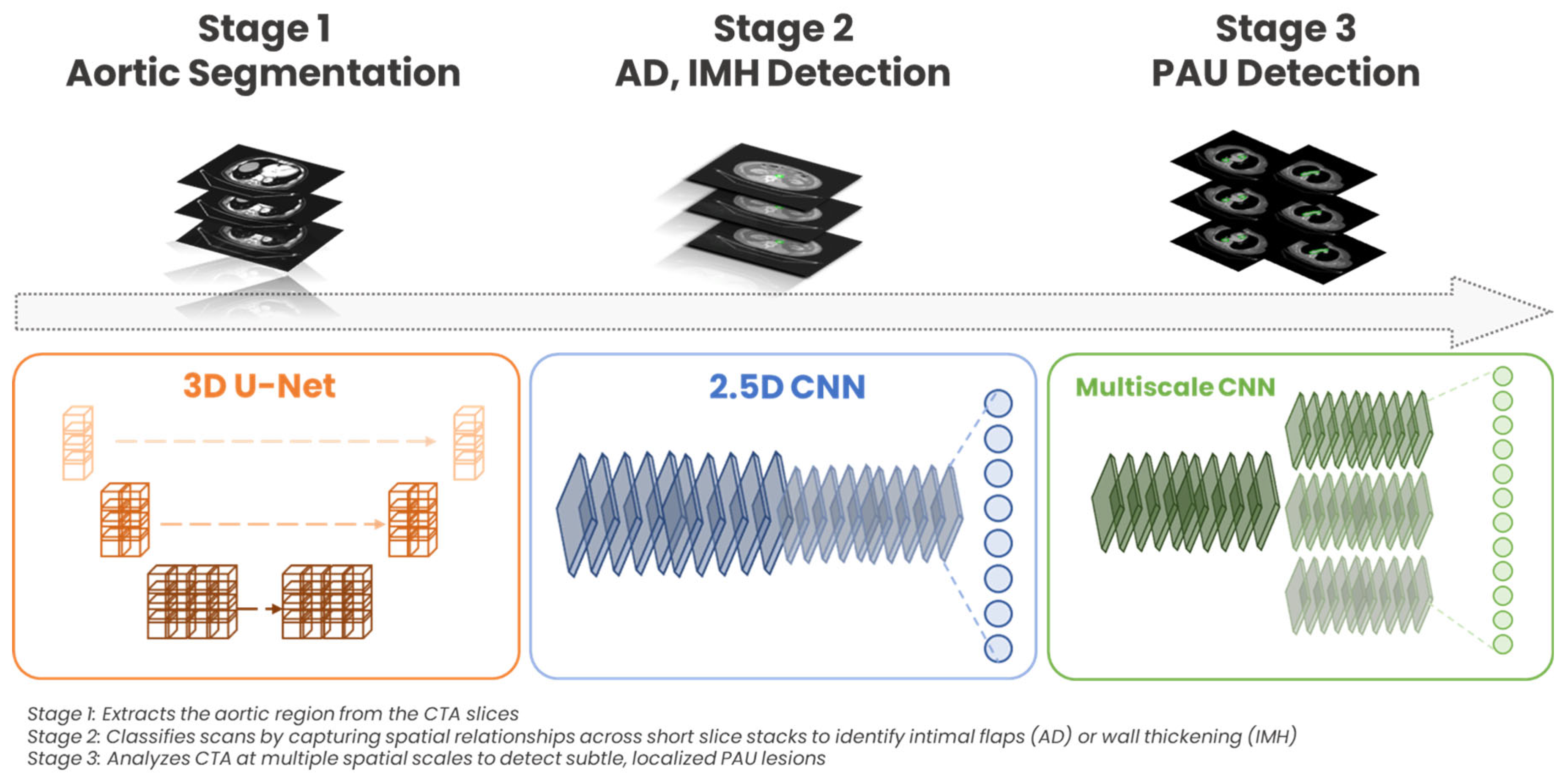
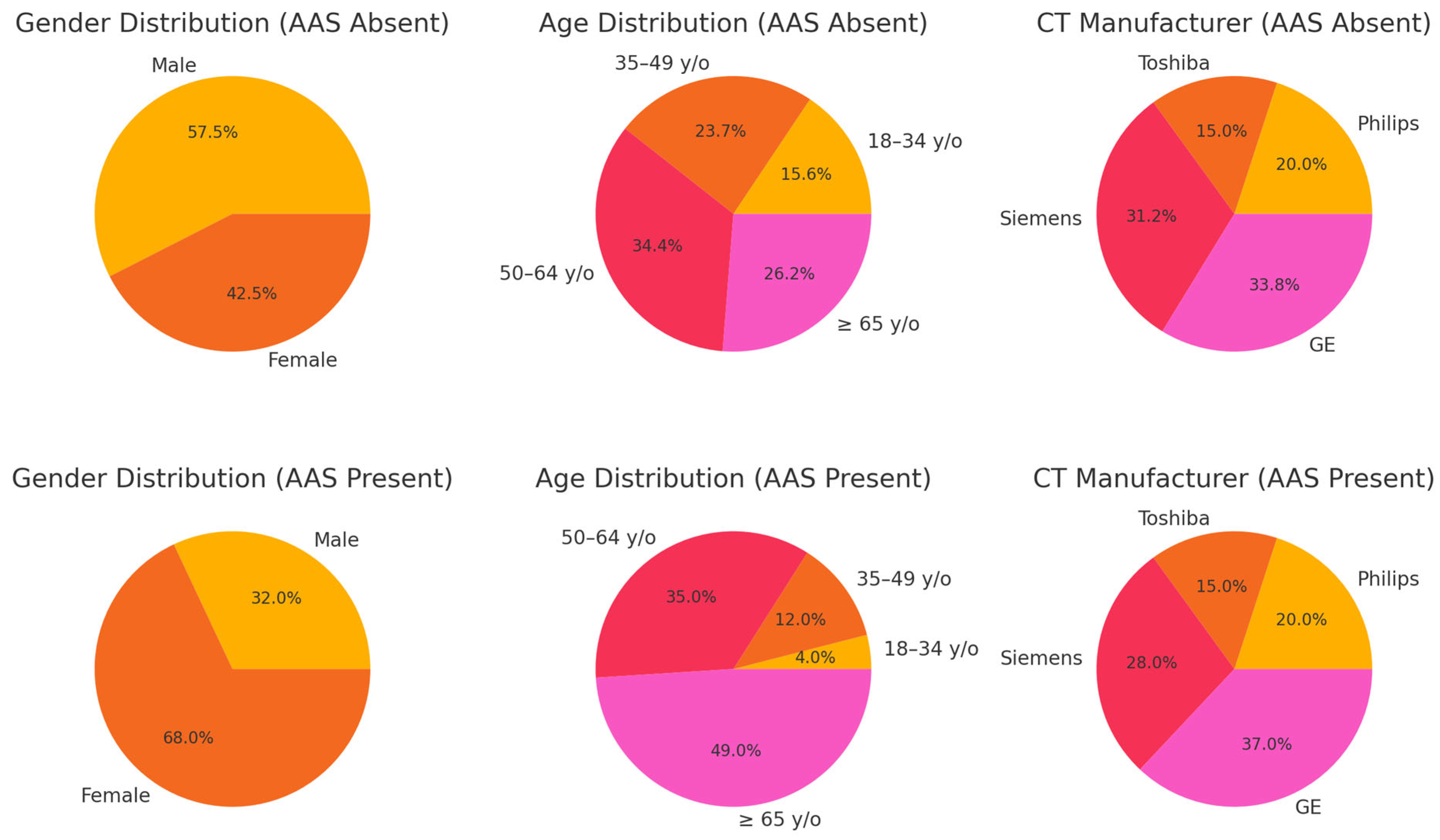
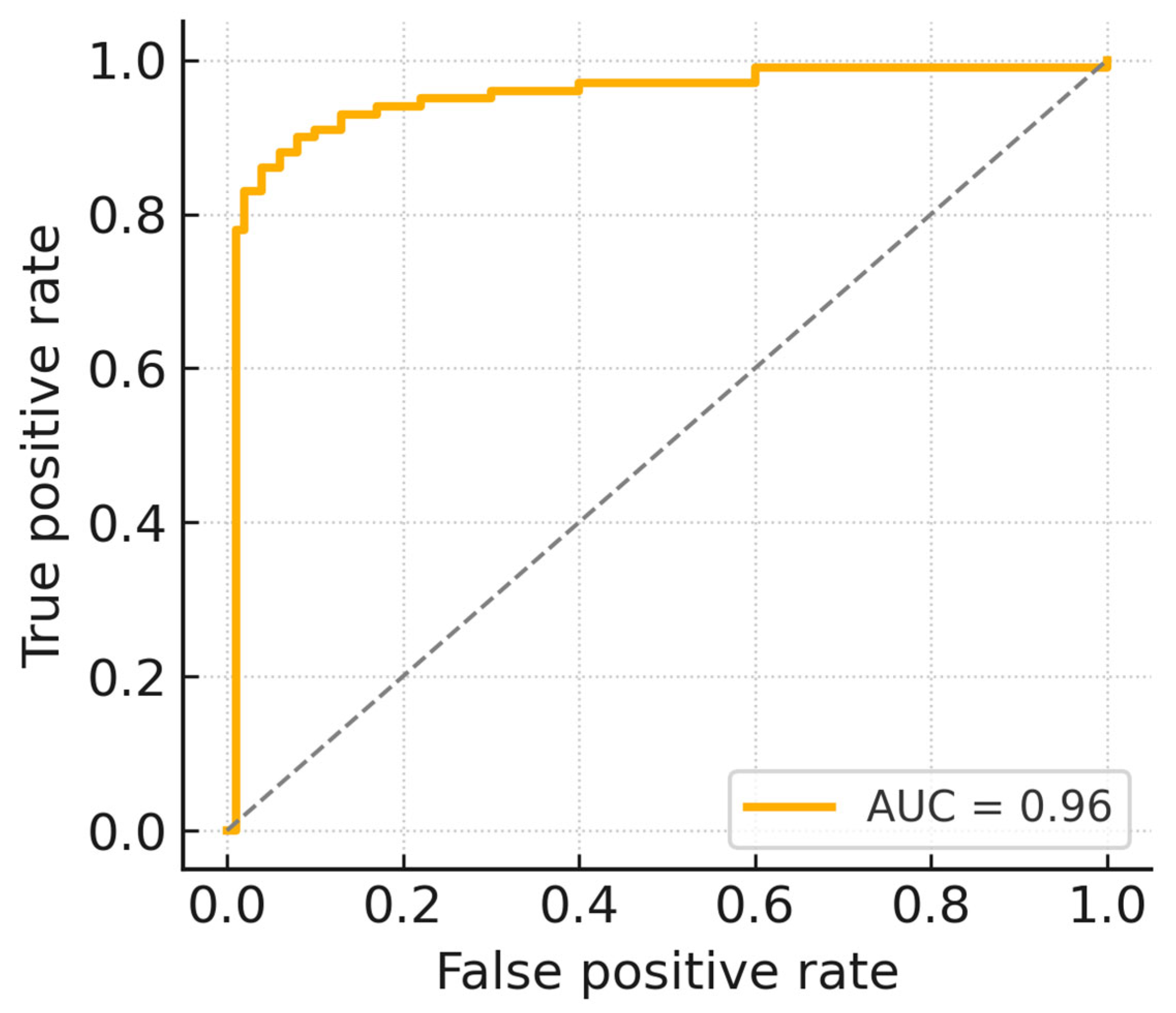
Background: Acute Aortic Syndrome (AAS), encompassing aortic dissection (AD), intramural hematoma (IMH), and penetrating atherosclerotic ulcer (PAU), presents diagnostic challenges due to its varied manifestations and the critical need for rapid assessment. Methods: We developed a multi-stage deep learning model trained on chest computed tomography angiography (CTA) scans. The model utilizes a U-Net architecture for aortic segmentation, followed by a cascaded classification approach for detecting AD and IMH, and a multiscale CNN for identifying PAU. External validation was conducted on 260 anonymized CTA scans from 14 U.S. clinical sites, encompassing data from four different CT manufacturers. Performance metrics, including sensitivity, specificity, and area under the receiver operating characteristic curve (AUC), were calculated with 95% confidence intervals (CIs) using Wilson’s method. Model performance was compared against predefined benchmarks. Results: The model achieved a sensitivity of 0.94 (95% CI: 0.88–0.97), specificity of 0.93 (95% CI: 0.89–0.97), and an AUC of 0.96 (95% CI: 0.94–0.98) for overall AAS detection, with p-values < 0.001 when compared to the 0.80 benchmark. Subgroup analyses demonstrated consistent performance across different patient demographics, CT manufacturers, slice thicknesses, and anatomical locations. Conclusions: This deep learning model effectively detects the full spectrum of AAS across diverse populations and imaging platforms, suggesting its potential utility in clinical settings to enable faster triage and expedite patient management.
Keywords: artificial intelligence; deep learning; AI-based solution for radiology; emergency radiology; machine learning diagnostic performance artificial intelligence; deep learning; AI-based solution for radiology; emergency radiology; machine learning diagnostic performance