Communication

Unraveling the Connection: Pancreatic Cancer Cells and Schwann Cells

by
Ingrid Garajová
1,*,
Francesca Trentini
1,
Francesco Leonardi
1 and
Elisa Giovannetti
2,3,4
1
Medical Oncology Unit, University Hospital of Parma, 43100 Parma, Italy
2
Department of Medical Oncology, Lab of Medical Oncology, Cancer Center Amsterdam, Amsterdam UMC, VU University Medical Center (VUmc), 1007 MB Amsterdam, The Netherlands
3
Cancer Pharmacology Lab, AIRC Start-Up Unit, 56017 Pisa, Italy
4
Fondazione Pisana per la Scienza, 56017 San Giuliano Terme, Italy
*
Author to whom correspondence should be addressed.
J. Clin. Med. 2024, 13(6), 1785; https://doi.org/10.3390/jcm13061785
Submission received: 27 February 2024 / Revised: 16 March 2024 / Accepted: 18 March 2024 / Published: 20 March 2024
(This article belongs to the Special Issue Targeted Treatment of Pancreatic Cancer)

Abstract

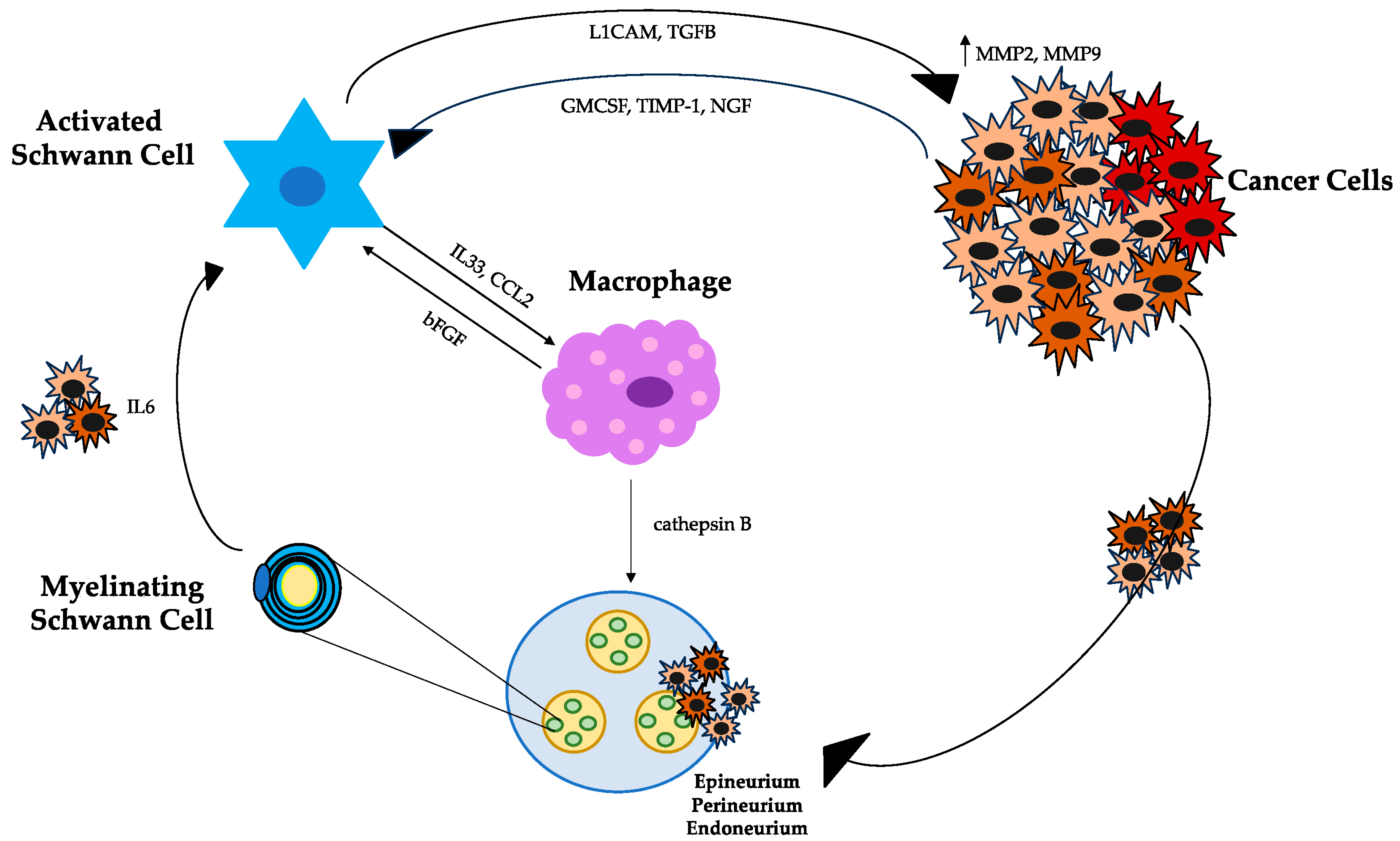
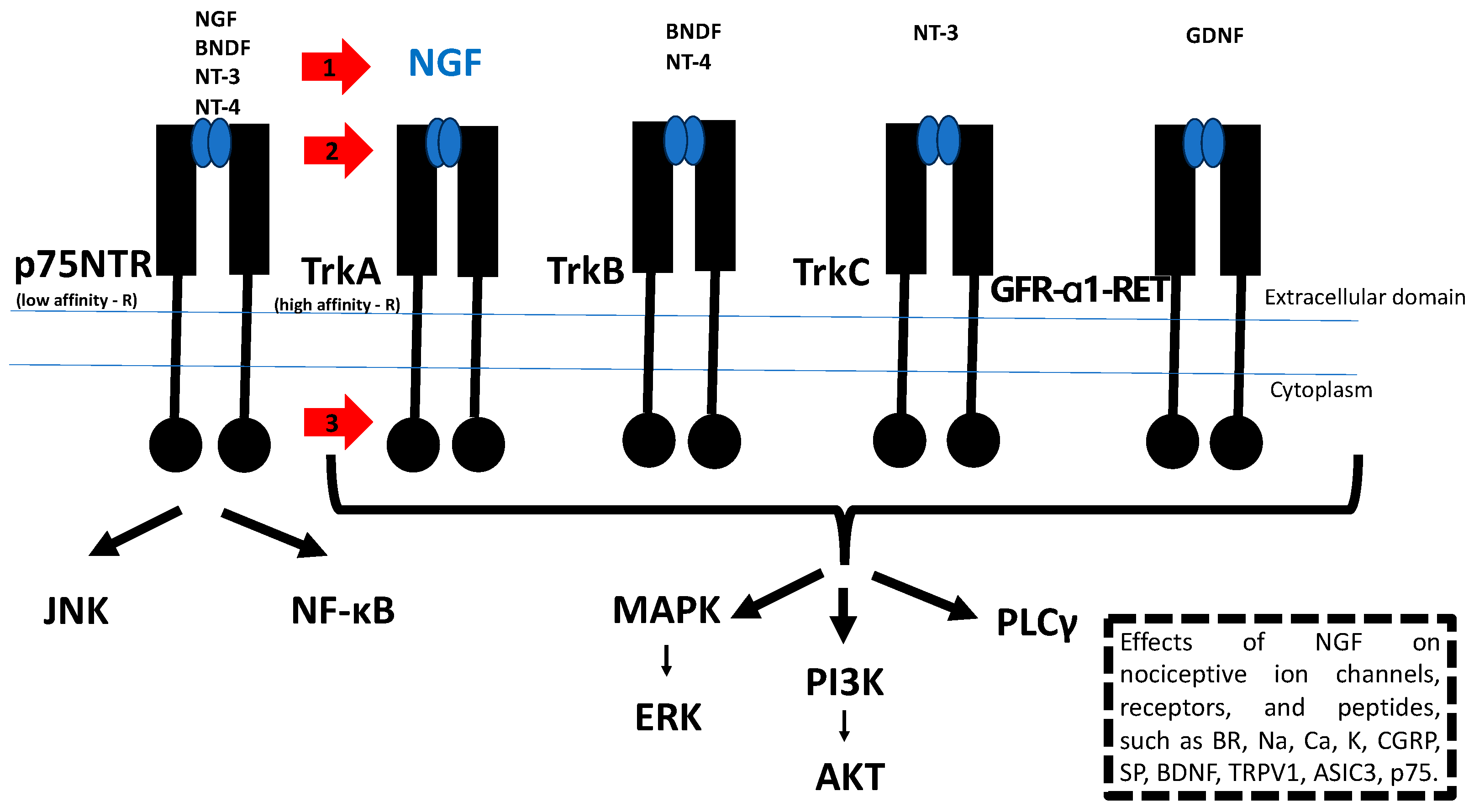
Pancreatic ductal adenocarcinoma is one of the most lethal solid malignancies, characterized by its aggressiveness and metastatic potential, with a 5-year survival rate of only 13%. Progress in the management of metastatic disease has been modest. A robust connection between nervous system and tumor progression exists, with prominent neural alterations having been observed during pancreatic cancer’s progression, including neural hypertrophy, neural density, and neural remodeling. The pancreatic tumor microenvironment includes s set of cells and structures that constantly dialogue with cancer cells, influencing its growth and behavior. The microglia is key cellular components of the tumor microenvironment, and Schwann cells are the principal glial cells in the peripheral neural system. Schwann cells can regulate changes in the tumor microenvironment and immune responses by secreting a variety of factors and can support a tumor’s invasion of nerves and distant metastasis, with further pain exacerbation. Schwann cells secrete various pain-related molecules, such as the neural growth factor, to mediate the activation of primary sensory neurons, leading to pain induction. The binding of the neural growth factor to tropomyosin receptor kinase A is an important signaling mechanism for pain perception in humans. Consequently, directing efforts towards targeting neural invasion may provide an alternative strategy to improve the prognosis of and alleviate pain in patients with pancreatic cancer.
Keywords: pancreatic ductal adenocarcinoma; neural invasion; Schwann cells; tumor microenvironment; cancer pain pancreatic ductal adenocarcinoma; neural invasion; Schwann cells; tumor microenvironment; cancer pain