Article

Relationship Between the Risk of Obstructive Sleep Apnea and Cardiovascular Health in Middle-Aged Korean Men and Women: A Nationwide Study


1
Department of Family Medicine, Uijeongbu Eulji Medical Center, Eulji University School of Medicine, Uijeongbu-si 11759, Republic of Korea
2
Department of Family Medicine, Gangnam Eulji Medical Center, Seoul 06047, Republic of Korea
3
College of Nursing, Eulji University, Seongnam-si 13135, Republic of Korea
*
Author to whom correspondence should be addressed.
J. Clin. Med. 2024, 13(22), 6702; https://doi.org/10.3390/jcm13226702
Submission received: 26 September 2024 / Revised: 23 October 2024 / Accepted: 4 November 2024 / Published: 7 November 2024
(This article belongs to the Section Respiratory Medicine)

Abstract

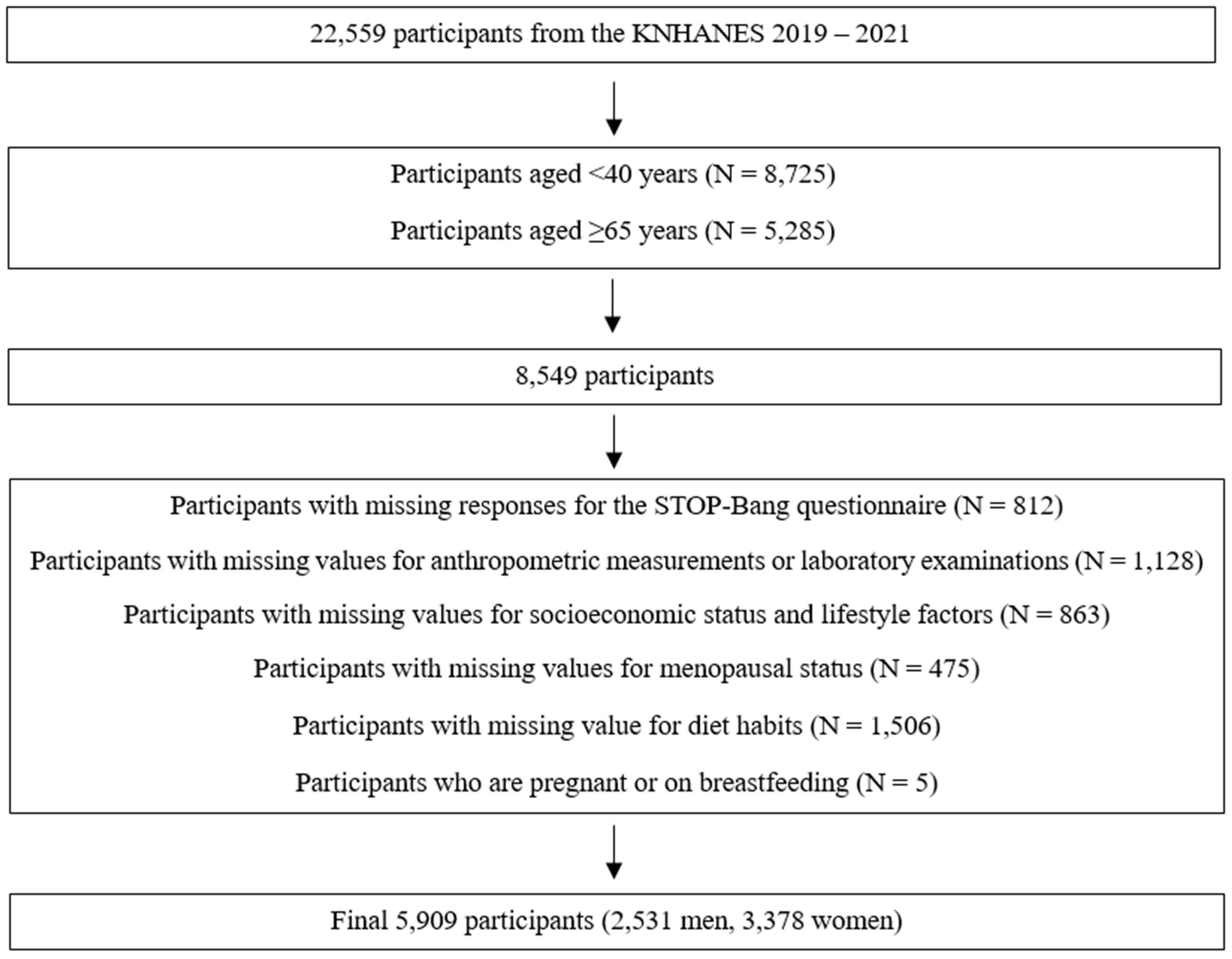
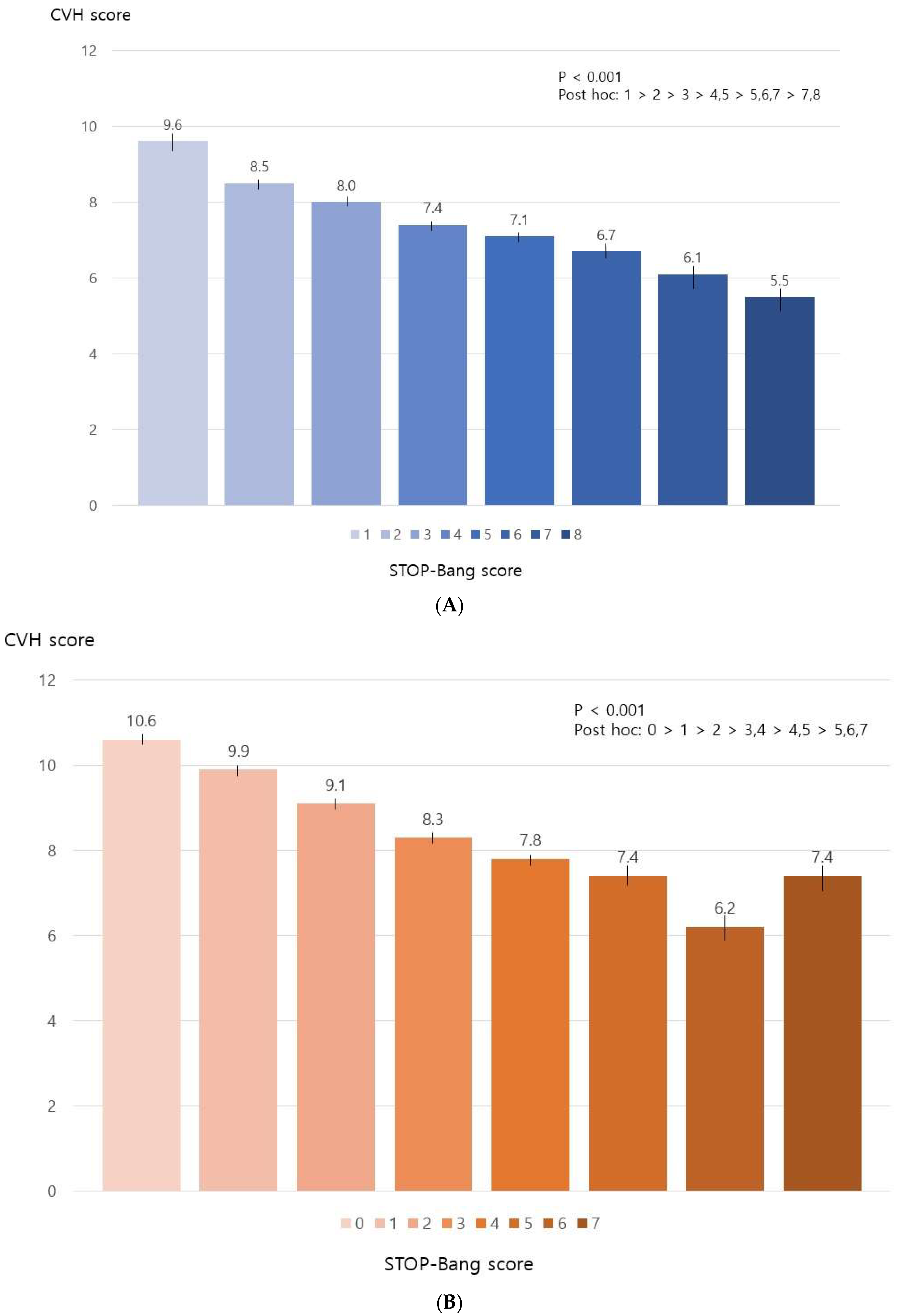
Background/Objectives: Cardiovascular health (CVH) can be conceptualized as encompassing seven health behaviors and metabolic factors that contribute to cardiovascular disease. We explored the relationship between the risk of obstructive sleep apnea (OSA) and CVH among middle-aged Korean adults. Methods: Data from 5909 participants, aged between 40 and 64 years, in the Korea National Health and Nutrition Examination Survey (2019–2021) were analyzed. The risk of OSA was assessed using STOP-Bang questionnaire. CVH metrics, including smoking status, diet, physical activity, body mass index (BMI), blood pressure, total cholesterol level, and fasting glucose concentration, were evaluated using American Heart Association criteria. Multivariate logistic regression analysis was employed to investigate the association between OSA risk and CVH. Results: Among study participants, 78.6% of men and 16.3% of women displayed moderate-to-high risk of OSA, while 45.4% of men and 17.2% of women exhibited poor CVH. The ORs (95% CIs) for poor CVH were 2.69 (2.08–3.49) for men at moderate risk of OSA and 6.54 (4.81–8.90) for those at high risk, compared to men at low risk. For women, the ORs were 3.21 (2.47–4.19) for those with moderate risk and 12.88 (6.29–26.38) for those with high risk of OSA, compared to women at low risk. CVH metrics associated with moderate-to-high OSA risk included high BMI, high blood pressure, elevated fasting glucose, and smoking. Conclusions: The risk of OSA was associated with poor CVH, while various CVH components were linked to moderate-to-high OSA risk. Managing both OSA and components of CVH is essential to minimize poor CVH.
Keywords: obstructive sleep apnea; cardiovascular health; STOP-Bang obstructive sleep apnea; cardiovascular health; STOP-Bang