Review

Analysis of Research Trends in Ultrasound-Guided Acupuncture and Dry-Needling: A Scoping Review

1
Department of Korean Medicine, College of Korean Medicine, Wonkwang University, Iksan 54538, Republic of Korea
2
Department of Korean Medicine Rehabilitation, College of Korean Medicine, Semyung University, Jecheon 27136, Republic of Korea
3
Department of Korean Medicine Rehabilitation, College of Korean Medicine, Wonkwang University, Iksan 54538, Republic of Korea
4
Department of Korean Internal Medicine, College of Korean Medicine, Wonkwang University, Iksan 54538, Republic of Korea
5
Korea Institute of Integrative Medicine, Jangheung 59301, Republic of Korea
6
Research Center of Traditional Korean Medicine, College of Korean Medicine, Wonkwang University, Iksan 54538, Republic of Korea
*
Authors to whom correspondence should be addressed.
J. Clin. Med. 2024, 13(16), 4962; https://doi.org/10.3390/jcm13164962
Submission received: 30 July 2024 / Revised: 16 August 2024 / Accepted: 17 August 2024 / Published: 22 August 2024
(This article belongs to the Section Nuclear Medicine & Radiology)

Abstract

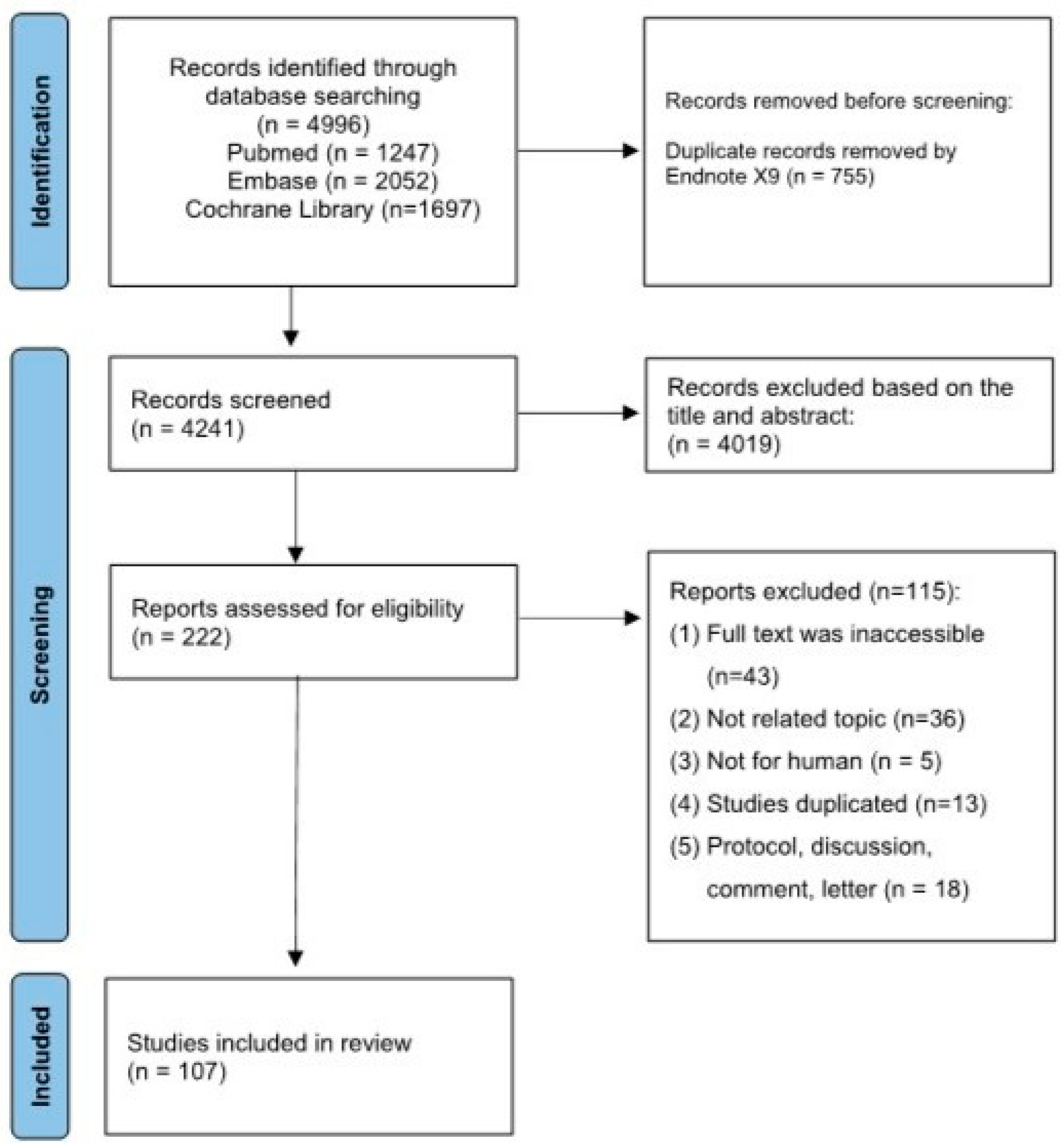
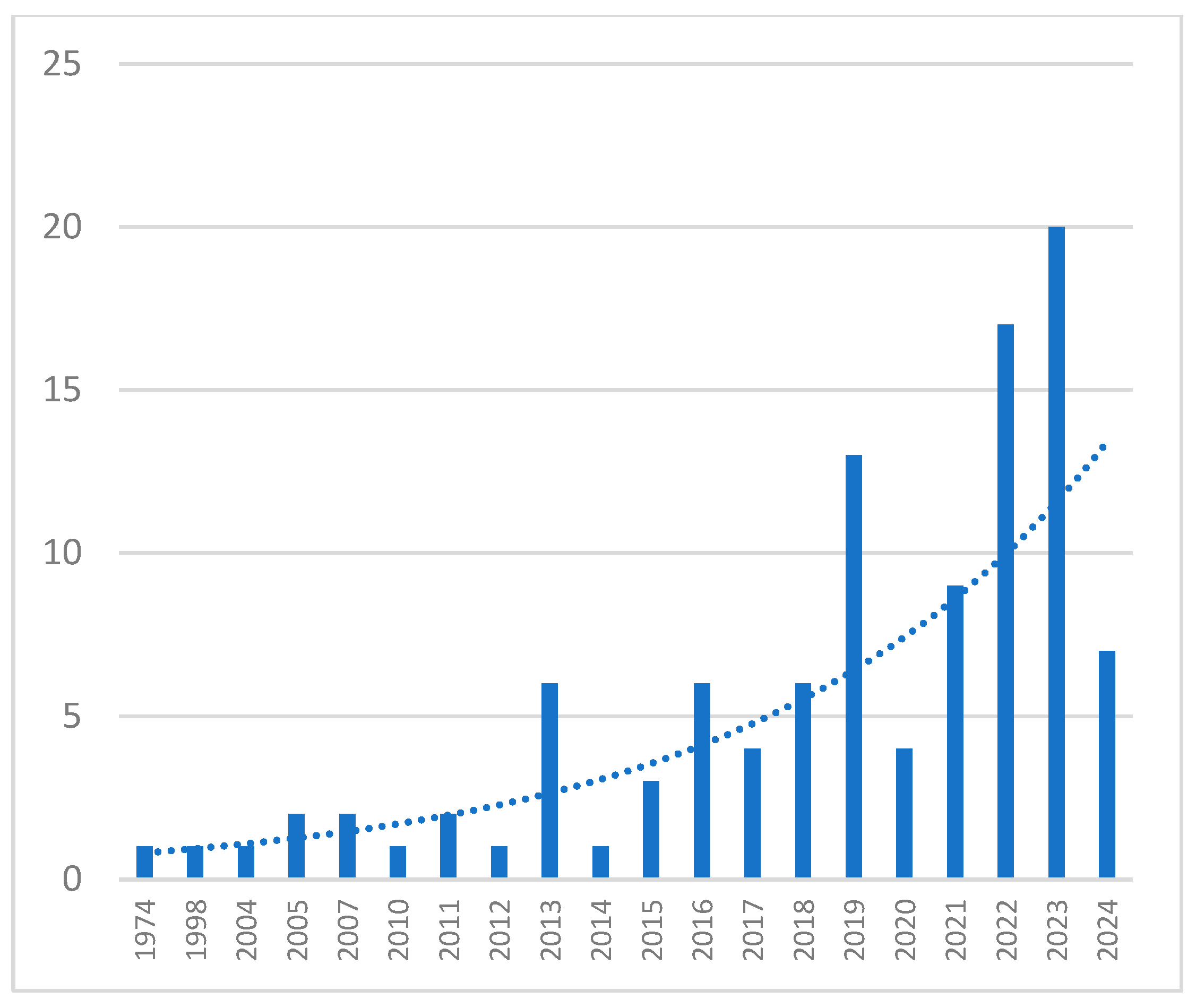
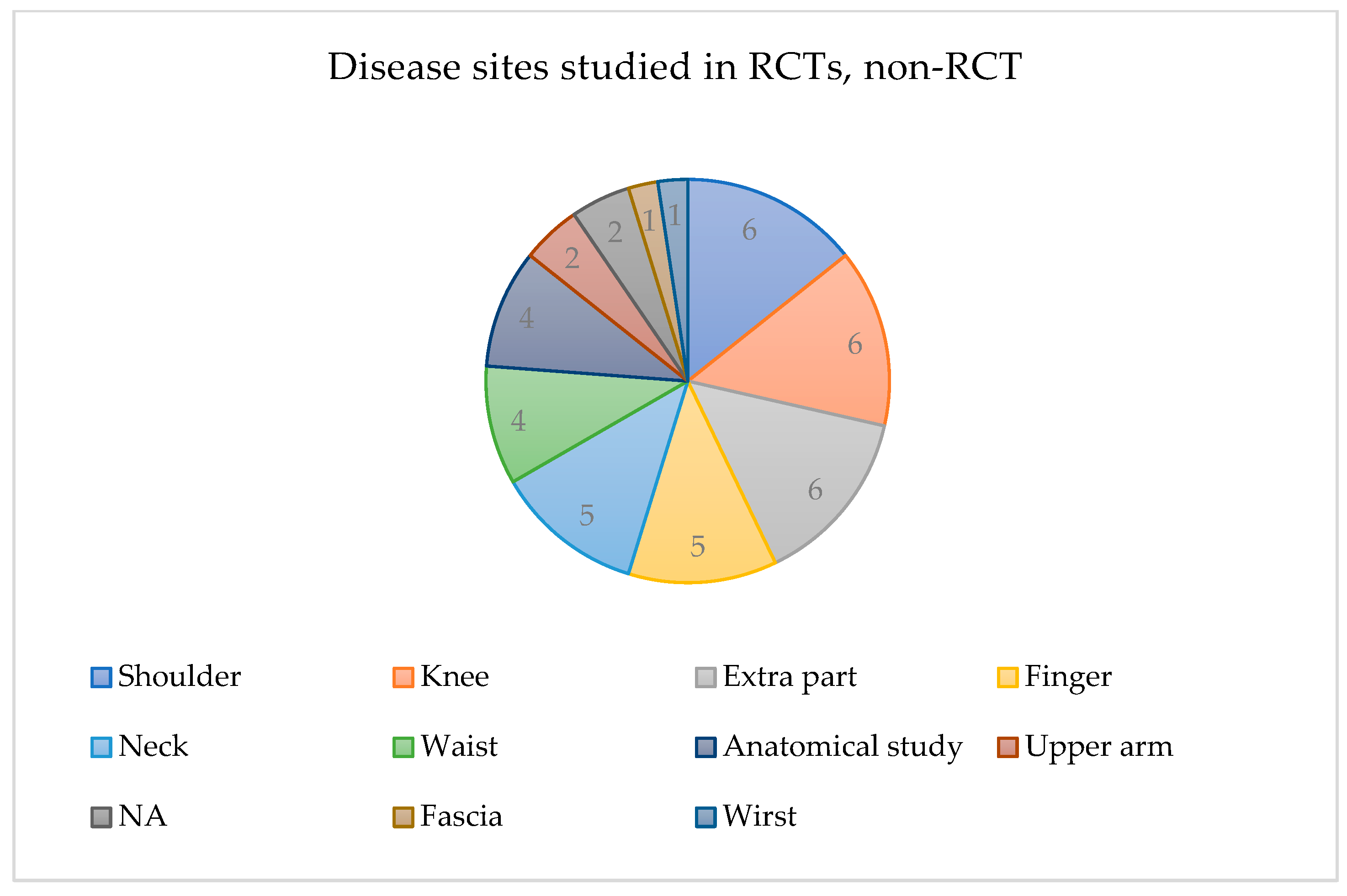
Background: This study aimed to summarize the current status of research on ultrasound-guided acupuncture and dry-needling treatment and the specific treatment methods applied to patients. Methods: A scoping review was conducted, surveying three English databases (PubMed, Embase, and the Cochrane Library) for studies published up to May 2024. All studies related to ultrasound-guided acupuncture and dry-needling treatment were considered. Literature was selected using selection and exclusion criteria, and extracted and organized using EndNote. Results: A total of 107 eligible studies were included. Among the 107 studies, non-comparative studies accounted for the largest proportion (n = 47, 43.9%), followed by randomized controlled trials (RCTs; n = 41, 38.3%). Diseases of the musculoskeletal system or connective tissue (15 diseases of the musculoskeletal system or connective tissue) accounted for most (n = 48, 55.8%) of the 86 diseases studied, followed by symptoms, signs, or clinical conditions not otherwise classified (n = 17, 19.8%). Conclusions: Ultrasound-guided acupuncture and dry-needling have been actively studied and applied for the treatment of various diseases. However, higher-quality studies are needed for further applications in research and clinical practice.
Keywords: acupuncture; dry-needling; needle knife; acupotomy; pharmacopuncture; ultrasound; ultrasound-guided acupuncture; dry-needling; needle knife; acupotomy; pharmacopuncture; ultrasound; ultrasound-guided