Article

Marinobufagenin, Left Ventricular Hypertrophy and Residual Renal Function in Kidney Transplant Recipients


by
Davide Bolignano
1,2,*,
Marta Greco
3,4,
Pierangela Presta
1,
Alfredo Caglioti
1,
Nazareno Carullo
1,
Mariateresa Zicarelli
1,
Daniela Patrizia Foti
3,5,
Francesco Dragone
3,
Michele Andreucci
1,4 and
Giuseppe Coppolino
1,4
1
Nephrology and Dialysis Unit, University “Magna-Graecia” of Catanzaro, 88100 Catanzaro, Italy
2
Department of Medical and Surgical Sciences, University “Magna-Graecia” of Catanzaro, 88100 Catanzaro, Italy
3
Clinical Pathology Lab, University “Magna-Graecia” of Catanzaro, 88100 Catanzaro, Italy
4
Department of Health Sciences, University “Magna-Graecia” of Catanzaro, 88100 Catanzaro, Italy
5
Department of Clinical and Experimental Medicine, University “Magna-Graecia” of Catanzaro, 88100 Catanzaro, Italy
*
Author to whom correspondence should be addressed.
J. Clin. Med. 2023, 12(9), 3072; https://doi.org/10.3390/jcm12093072
Submission received: 3 March 2023 / Revised: 10 April 2023 / Accepted: 20 April 2023 / Published: 23 April 2023
(This article belongs to the Special Issue Novel Clinical Updates in Uremia)

Abstract

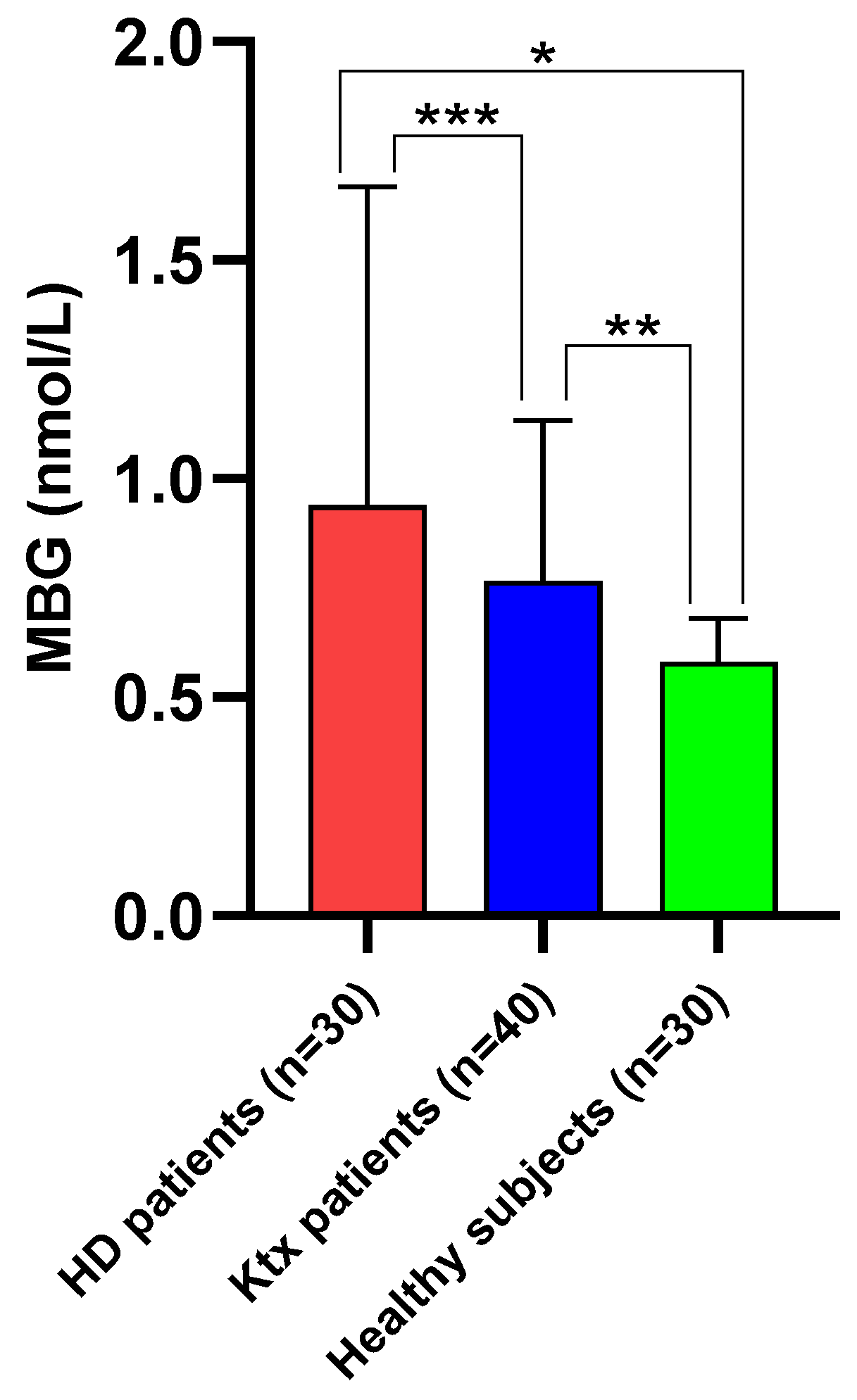
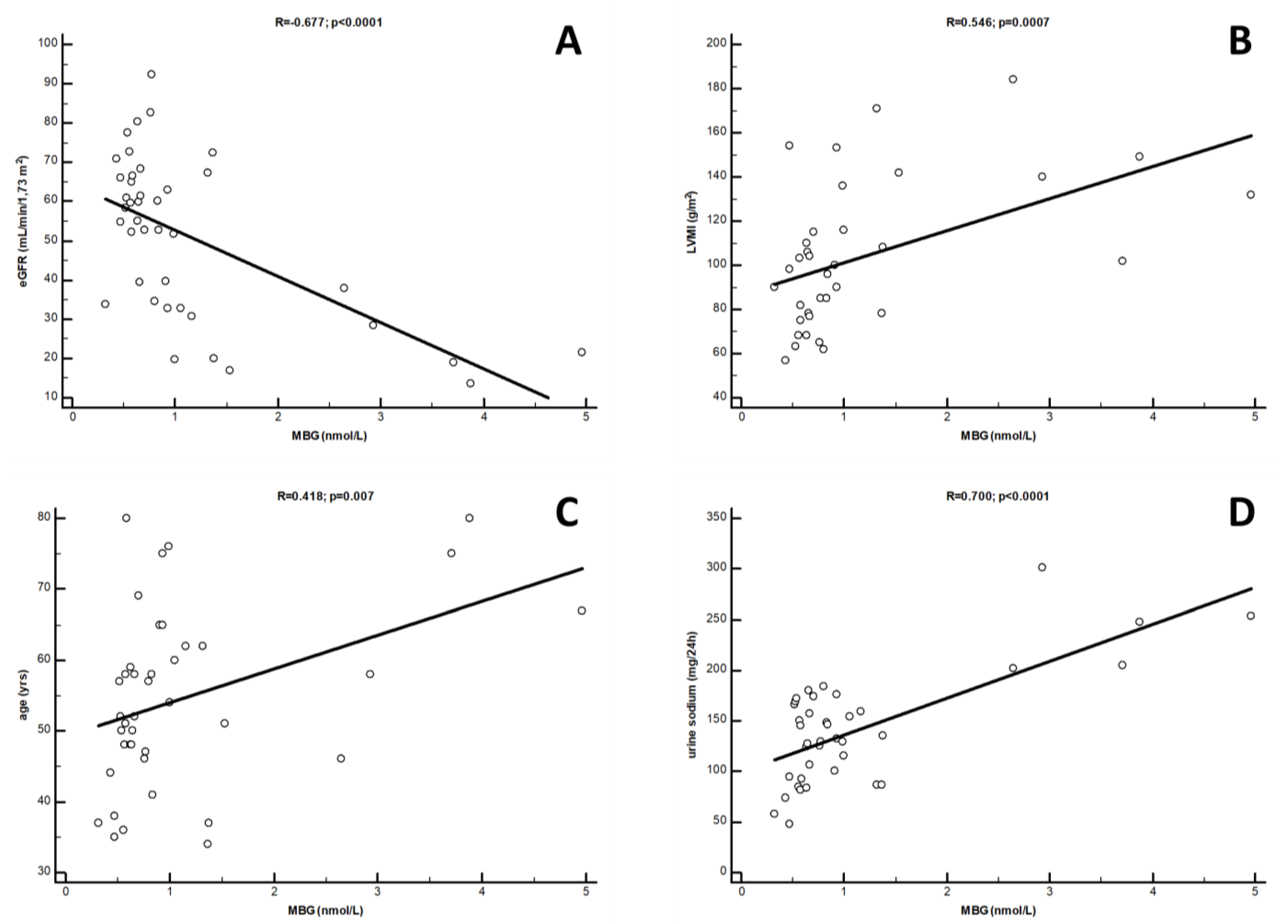
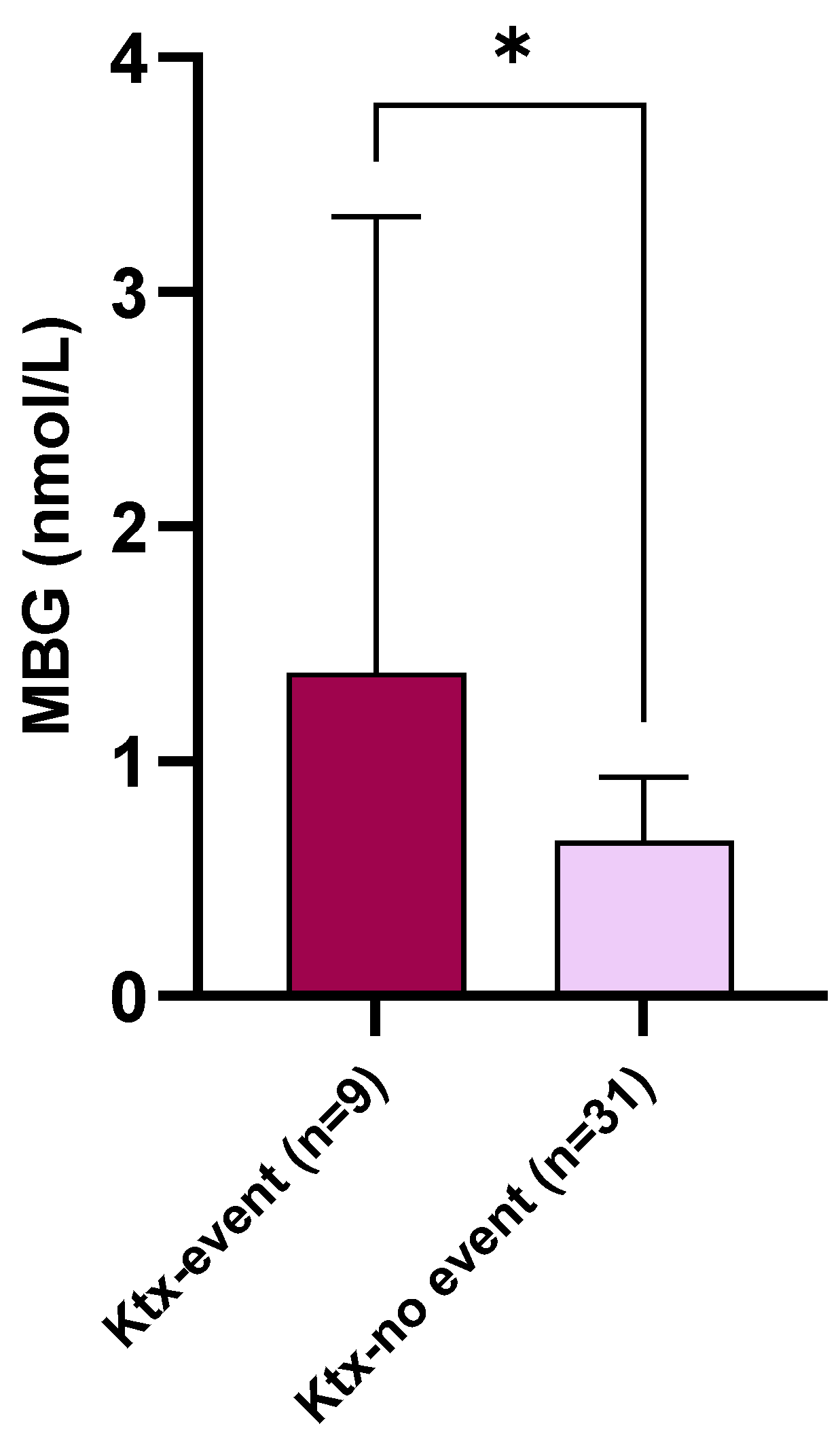
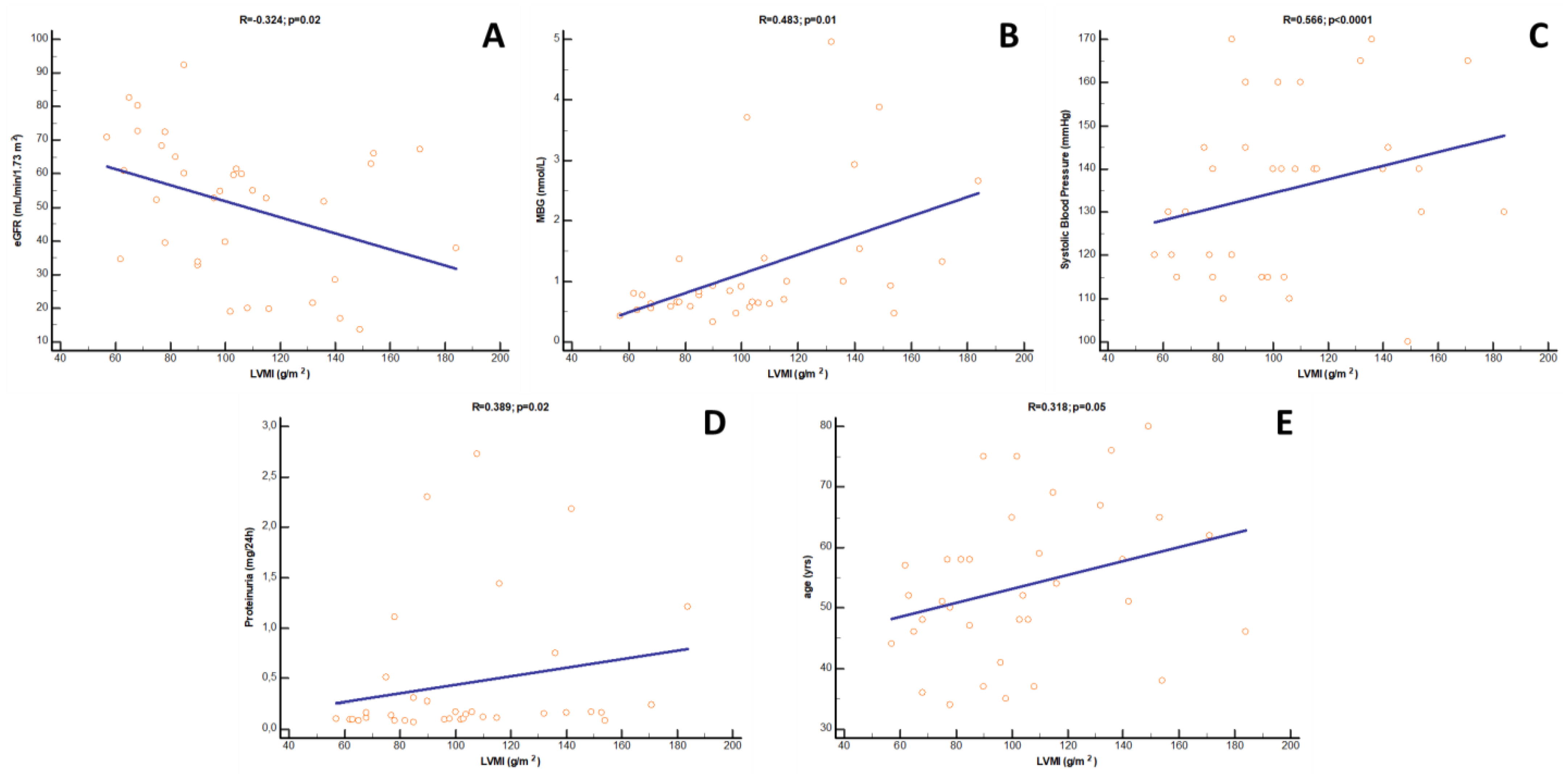
Background: Left ventricular hypertrophy (LVH), which is a pervasive complication of end-stage kidney disease (ESKD), persists in some uremic individuals even after kidney transplantation (Ktx), contributing to worsening CV outcomes. Marinobufagenin (MBG), an endogenous steroid cardiotonic hormone endowed with natriuretic and vasoconstrictive properties, is an acknowledged trigger of uremic cardiomyopathy. However, its clinical significance in the setting of Ktx remains undefined. Methods: In a cohort of chronic Ktx recipients (n = 40), we assessed circulating MBG together with a thorough clinical and echocardiographic examination. Forty matched haemodialysis (HD) patients and thirty healthy subjects served as controls for MBG measurements. Patients were then prospectively followed up to 12 months and the occurrence of an established cardio-renal endpoint (death, CV events, renal events, graft rejection) was recorded. Results: Median MBG plasma levels were lower in Ktx as compared with HD patients (p = 0.02), but higher as compared with healthy controls (p = 0.0005). Urinary sodium (β = 0.423; p = 0.01) and eGFR (β = −0.324; p = 0.02) were the sole independent predictors of MBG in this cohort, while a strong correlation with left ventricular mass index (LVMi), found in univariate analyses (R = 0.543; p = 0.0007), gained significance only in multivariate models not including eGFR. Logistic regression analyses indicated MBG as a significant predictor of the combined endpoint (OR 2.38 [1.10–5.12] per each 1 nmoL/L increase; p = 0.01), as well as eGFR, LVMi, serum phosphate and proteinuria. Conclusions: Ktx recipients display altered MBG levels which are influenced by sodium balance, renal impairment and the severity of LVH. Thus, MBG might represent an important missing link between reduced graft function and pathological cardiac remodelling and may hold important prognostic value for improving cardio-renal risk assessment.
Keywords: marinobufagenin; kidney transplantation; uremia; left ventricular mass index; left ventricular hypertrophy; biomarker marinobufagenin; kidney transplantation; uremia; left ventricular mass index; left ventricular hypertrophy; biomarker