


Abstract
Background: Clinical trials evaluating the effect of probiotics on cardiovascular intermediate outcomes have been scarce in recent years. We systematically evaluated the efficacy of probiotics on intermediate cardiovascular outcomes in patients with overweight or obesity. Methods: We searched for randomized controlled trials (RCTs) in four databases (until August 2021) that evaluated the effects of probiotics versus controls on intermediate cardiovascular outcomes. The outcomes were body mass index (BMI), weight, systolic blood pressure (SBP), diastolic blood pressure (DBP), glucose, low-density lipoprotein (LDL), and high-density lipoprotein (HDL) levels. Inverse variance random effects meta-analyses were used. The effects were reported as mean difference (MD), with their 95% confidence intervals (95% CI). The quality of evidence (QoE) was assessed with GRADE (grading of recommendations, assessment, development and evaluations) methodology. Results: A total of 25 RCTs were included (n = 2170), with a range of follow-up from two to six months. Probiotics likely reduced BMI (MD −0.27 kg/m2, 95%CI: −0.35 to −0.19; 17 RCTs; I2 = 26%, QoE: moderate), as well as likely reduced weight (MD −0.61 kg, 95%CI: −0.89 to −0.34; 15 RCTs; I2 = 0%, QoE: moderate), and may have slightly reduce LDL (MD −4.08 mg/dL; 95%CI: −6.99 to −1.17; 9 RCTs; I2 = 87%, QoE: low) in comparison to the controls. However, probiotics had no effect on SBP (MD −0.40 mmHg; 95%CI: −5.04 to 4.25; 7 RCTs; I2 = 100%, QoE: very low), DBP (MD −1.73 mmHg; 95%CI: −5.29 to 1.82; 5 RCTs; I2 = 98%, QoE: very low), glucose (MD −0.07 mg/dL; 95%CI −0.89 to 0.75; I2 = 96%, QoE: very low), HDL (MD −1.83 mg/dL; 95%CI: −4.14 to 2.47; 14 RCTs; I2 = 98%, QoE: very low), or triglycerides (MD −3.29 mg/dL, 95%CI −17.03 to 10.45; 14 RCTs, I2 = 95%, QoE: very low) compared to control arms, and the evidence was very uncertain. Conclusions: In obese or overweight patients, BMI, weight, and LDL were lower in patients who received probiotics compared to those who received controls. Other lipids, glucose, and blood pressure were not affected by the probiotics.
1. Introduction
Probiotics are microorganisms with beneficial potential for human health. Currently, there is literature supporting the idea that intestinal probiotics may exert effects outside the digestive system, including regulating energy balance, cardiovascular benefits, and mechanisms associated with the absorption and breakdown of intestinal contents [1,2,3,4]. In addition, there are some probiotic strains that decrease the translocation of microorganisms and improve intestinal barrier function by reducing the release of proinflammatory cytokines [5,6].
Obesity has been identified as a critical global problem [7]. In the physiological context, obesity is complex because there are several intrinsic and extrinsic factors to be considered, as well as genetics, diet, and other nutrigenomic factors. Some studies have mentioned that the gut microbiota has potential influence on the development of obesity. This is attributed to several mechanisms involving intestinal permeability and metabolic endotoxemia. In addition, a high-fat diet is closely associated with abdominal fat deposition and altered gut microbiota [8,9]. Furthermore, the intestinal microbiota is associated with the inflammatory process, insulin resistance, and type 2 diabetes mellitus. Intestinal microbiota is therefore considered a target in the treatment of diabetes and in the prevention of other cardiovascular diseases [9,10,11].
Recent literature has associated the development of obesity with an alteration in the intestinal microbiota (dysbiosis), which facilitates the storage of calories ingested in food. It is important to consider that there are certain intrinsic and extrinsic factors that can cause the imbalance of this intestinal ecosystem and which may lead not only to obesity, but also to the development of other alterations, such as insulin resistance. Some intervention studies show that oral administration of certain probiotics has a significant impact on some outcomes especially on body mass index (BMI) and weight control, suggesting a relationship between gut microbiota and body fat regulation [4,5,6,8]. For example, Firmicutes, Actinobacteria, Lactobacilli and Bifidobacterium are often related to these beneficial effects of probiotics [8,9,10,11].
We systematically evaluated the efficacy of probiotics on intermediate cardiovascular outcomes in patients with overweight or obesity.
2. Material and Methods
The PRISMA 2020 guidelines (Preferred Reporting Items for Systematic reviews and Meta-Analysis) were used for the writing and presentation of the present study [12]. In addition, this review was registered in PROSPERO (Prospective Registry of Systematic Reviews) (CRD42021264177).
2.1. Eligibility Criteria
We included studies that met the following inclusion criteria: (a) randomized controlled trials (RCTs) evaluating the effects of any dose and duration of probiotics on pre-defined intermediate cardiovascular outcomes; (b) a control group including milk, yogurt, maltodextrin, or placebo; and (c) evaluations adult patients (≥18 years) who were overweight (BMI 25 to 30 kg/m2) or obese (BMI > 30 kg/m2). Excluded studies were observational studies, case series, and case reports and commentaries, systematic reviews, conference abstracts, and editorials. The population included in this meta-analysis had no systemic history of hypertension or diabetes.
2.2. Search Methods
Electronic searches were conducted on 2 August 2021 in the Scopus, Web of Science, PubMed, and Embase search engines. We elaborated the search strategy using free text words and MeSH terms for PubMed, then adapted them according to the other databases. There were no language or publication date restrictions (Supplementary Table S1).
2.3. Outcomes
Pre-defined intermediate cardiovascular outcomes were weight, BMI, systolic blood pressure (SBP), diastolic blood pressure (DBP), glucose, low-density lipoprotein (LDL), and high-density lipoprotein (HDL).
2.4. Selection and Data Collection of Studies
Study abstracts were downloaded to the Mendeley Reference Manager (Elsevier, Amsterdam, The Netherlands), and duplications were removed. The titles and abstracts were then independently reviewed by two authors (F.M.T. and C.D.A.). Subsequently, full-text articles were independently evaluated according to the selection criteria. All reasons for exclusion were recorded, and possible disagreements were resolved by consensus.
2.5. Data Extraction and Management
Data were extracted independently by two authors (F.M.T. and C.D.A.). An previously piloted extraction sheet was created in Microsoft Excel to record the author, year of publication, type of population (overweight, obese, both), mean age, proportion of diabetics and hypertensives, dose and duration of probiotic intervention, type of control, and outcomes for each intervention arm. Potential discrepancies were resolved by a third author (A.V.H.).
2.6. Assessment of Risk of Bias in Included Studies
To assess the risk of bias (RoB) of RCTs, the Cochrane RoB 2.0 tool was used [13]. Five domains of bias were assessed: randomization process, deviations from intended interventions, missing outcome data, outcome measurement, and selection of the reported outcome. Each bias domain was rated as “low,” “high,” or “some concerns.” Each RCT was then rated as being at low RoB, if all domains were at low RoB, high RoB, if at least one domain was at high RoB, or with some concerns of bias, if at least one domain was identified at some concerns of RoB, and no domain was at high RoB. Two review authors (F.M.T. and J.B.O.) independently conducted the assessments, and disagreements were resolved by consensus.
2.7. Data Synthesis Methods
Inverse variance random-effects meta-analyses were performed for all outcomes. The between-study variance was estimated using the Paule–Mandel method [14]. Effect measures were described as mean differences (MD) and their 95% confidence intervals (CI). The heterogeneity of effects among RCTs was described using the I2 statistic [15], with the following degrees: 0–30% (low), 30–60% (moderate), and >60% (high). Subgroup analyses by type of patient (overweight vs. obese vs. overweight/obese) and type of control (milk, yogurt, maltodextrin, or placebo) were conducted. The interaction test was considered statistically significant if the p-value was <0.10 [16]. The funnel plot and the Egger’s test were used to evaluate publication bias, only if ten or more RCTs were available. The metabin and metacont functions of the meta package of R 4.1.2 (www.r-project.org) (accessed on 7 March 2022) were used for all analyses. A two-tailed p < 0.05 was considered statistically significant.
For the evaluation of the quality of evidence (QoE), the GRADE methodology was used [17], evaluating five domains: inconsistency, risk of bias, imprecision, indirectness, and publication bias. Finally, QoE was presented in summary tables (SoF) using GRADEpro GDT (https://gradepro.org/, accessed on 7 July 2022, McMaster University and Evidence Prime, Inc. 2020) European Union Seventh Framework Programme (FP7—HEALTH.2010.3.1-1—two stage).
3. Results
3.1. Selection of Studies
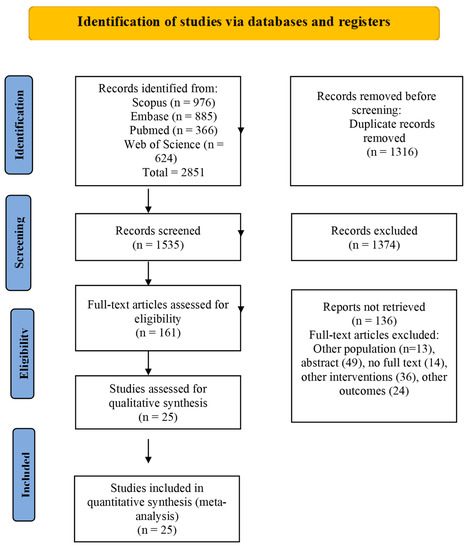
Of a total of 2851 abstracts, 1535 were available for evaluation, after removing duplicates. A total of 1374 records were excluded, and 161 full texts were further evaluated for inclusion. After excluding 136 studies after assessing populations, interventions, and outcomes that were out of the scope of our research question, we included 25 RCTs (n = 2170) in our study (Figure 1).
Figure 1.
PRISMA Flow chart of the study selection process.
3.2. Characteristics of Included Trials
The studies included [18,19,20,21,22,23,24,25,26,27,28,29,30,31,32,33,34,35,36,37,38,39,40,41,42] in this systematic review were conducted in Denmark [18,20], Poland [19,30,40], USA [21], Iran [22,28,32,35,42], New Zealand [23,41], Korea [24,25,26,27], Malaysia [29], Japan [31], Indonesia [33], India [34,39], Canada [36], Russia [37], and Finland [38]. All RCTs had a follow-up period between 2 and 6 months. The study population was distributed across studies as follows: obesity [19,20,21,22,25,26,27,28,30,31,32,36,37,38,40,41,42], (n = 1603 patients), overweight [23,24,29,33,34,35,39], (n = 557 patients), and both overweight/obesity [18] (n = 70) (Table 1). The mean age range was between 28 and 68 years, there was no description of prevalence of diabetes, hypertension, or other cardiovascular diseases in individual RCTs. All included studies used probiotics of the bacterial genus (Lactobacillus, Bifidobacterium, Streptococcus and Enterococcus) [18,19,20,21,22,23,24,25,26,27,28,29,30,31,32,33,34,35,36,37,38,39,40,41,42]; control groups included placebo in 13 studies [19,21,22,24,25,26,27,29,30,34,35,36,37]; milk in four studies [18,23,31,33]; yogurt in two studies [28,42], and maltodextrin in six studies [20,32,38,39,40,41].
Table 1.
Characteristics of included studies.
3.2.1. Risk of Bias and Quality of Evidence
Only three RCTs were scored as high risks of bias [19,31,33]. Two RCTs had a high risk of bias in the measurement of the outcome [31,33]; one RCT had a high risk of bias in the selection of the reported result domain [19]. Moreover, 11 RCTs had some concerns of bias [19,22,23,28,29,30,35,36,37,38,41] (Supplementary Figure S1) [20,21,24,25,26,27,32,34,39,40,42]. The outcomes SBP, HDL, and triglycerides had very low QoE; DBP and LDL had low QoE; and BMI, weight, and glucose had moderate QoE (Table 2).
Table 2.
GRADE summary of findings table.
3.2.2. Effect of Probiotics on Weight and Body Mass Index
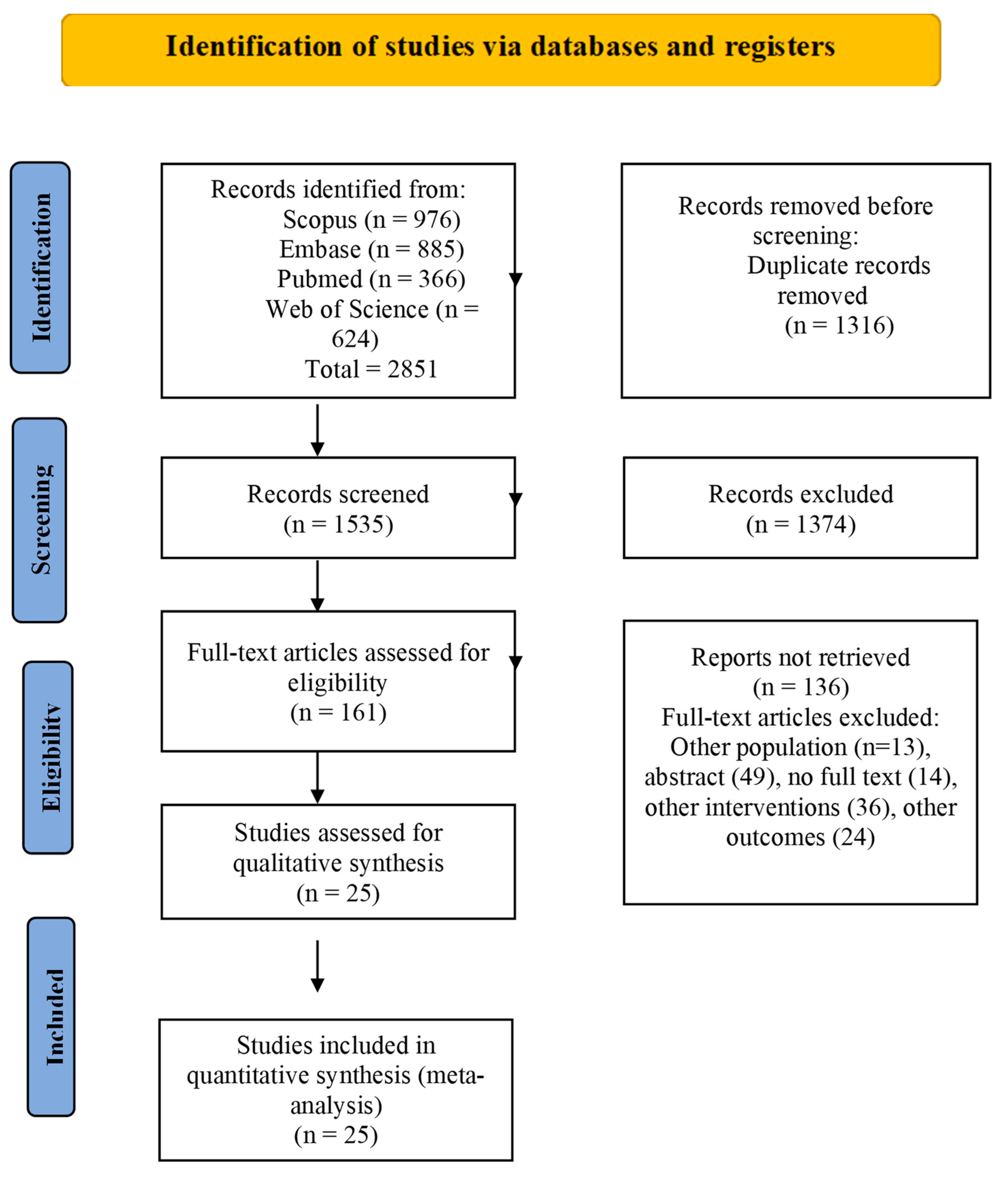
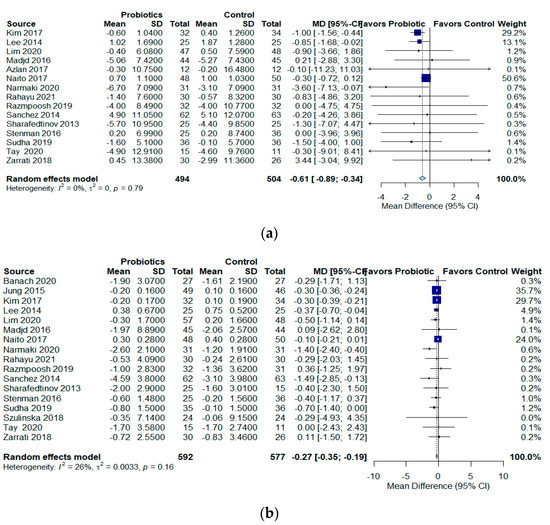
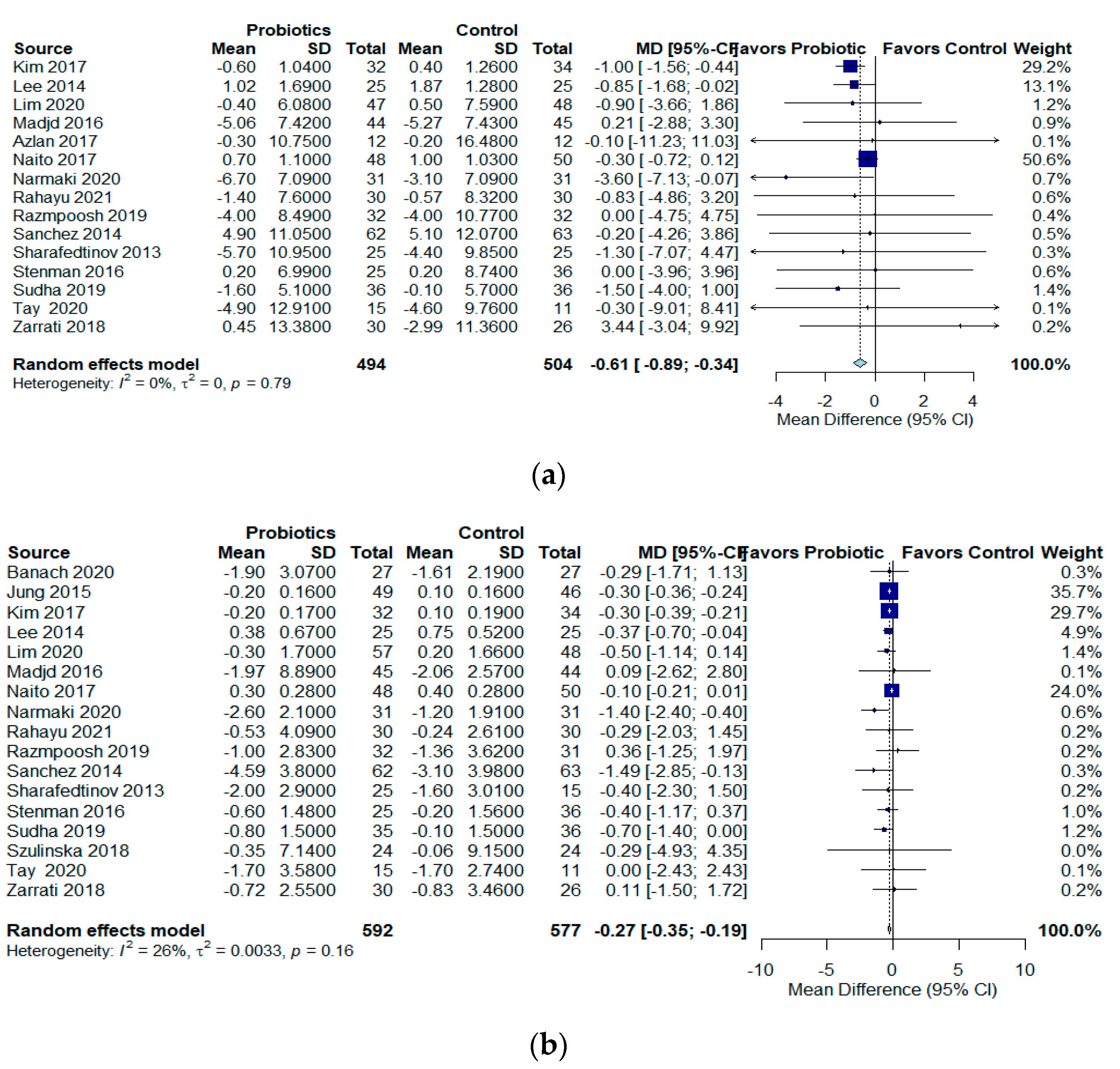
In 15 RCTs (n = 998) [25,26,27,28,29,31,32,33,35,36,37,38,39,41,42], probiotics likely reduces weight compared to the control group (MD −0.61 kg, 95% CI −0.89 to −0.34; I2 = 0%, QoE: moderate) (Figure 2a). In 17 RCTs (n = 1169) [19,24,25,26,28,31,32,33,35,36,37,38,39,40,41,42], probiotics likely reduced BMI compared to the control group (MD −0.27 kg/m2, 95% CI −0.35 to −0.19; I2 = 26%, QoE: moderate) (Figure 2b).
Figure 2.
Effects of probiotics on (a) Weight in kg, and (b) BMI in kg/m2.
3.2.3. Effect of Probiotics on Blood Pressure
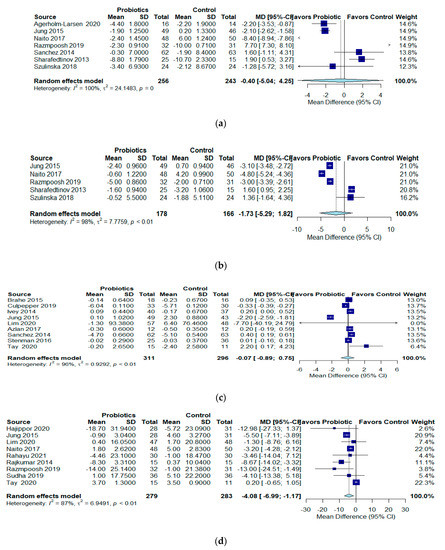
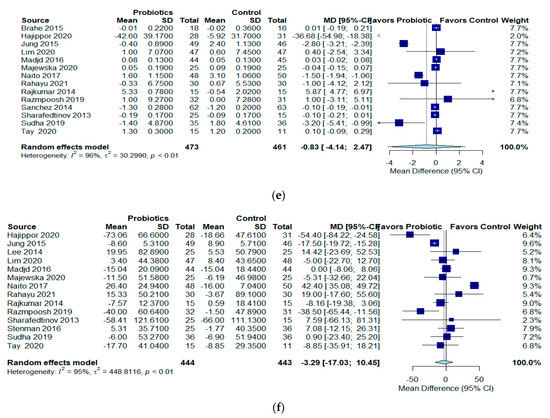
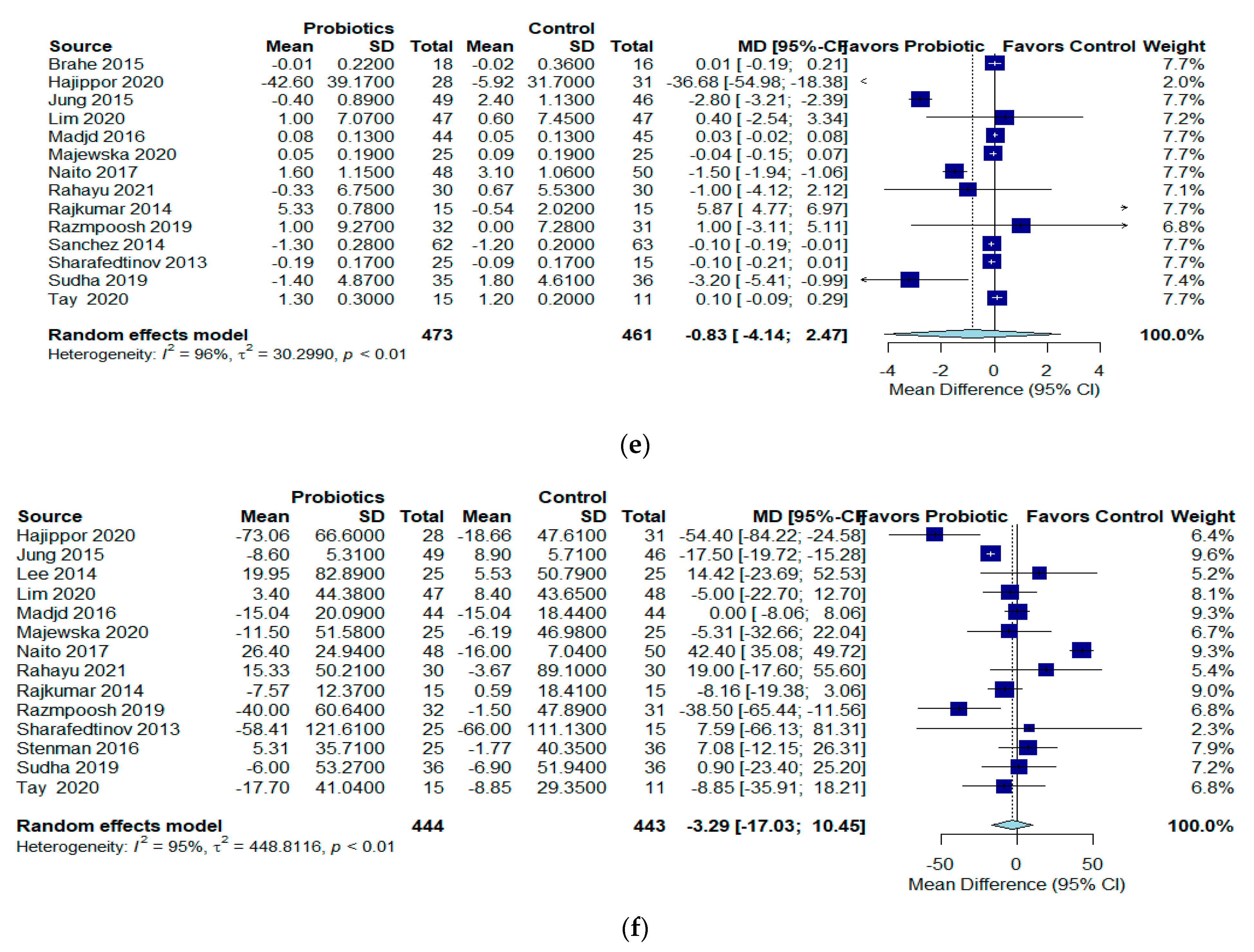
In seven RCTs (n = 499) [18,24,31,35,36,37,40], probiotics had no effect on SBP levels and controls (MD −0.40 mmHg; 95% CI −5.04 to 4.25; I2 = 100%, QoE: very low) (Figure 3a). In five RCTs (n = 344) [24,31,35,37,40], probiotics also had no effect on DBP levels and controls (MD −1.73 mmHg; 95% CI −5.29 to 1.82; I2 = 98%, QoE: very low) (Figure 3b). The evidence for SBP and DBP was very uncertain.
Figure 3.
Effects of probiotics on: (a) SBP in mmHg; (b) DBP in mmHg; (c) glucose (mg/dL); (d) LDL (mg/dL); (e) HDL (mg/dL); and (f) triglycerides (mg/dL).
3.2.4. Effect of Probiotics on Glucose
In nine RCTs (n = 607) [20,21,23,24,27,29,36,38,41] in overweight or obese patients, probiotics had no effect on mean glucose levels and controls (MD −0.07 mg/dL; 95%CI −0.89 to 0.75; I2 = 96%, QoE: very low) (Figure 3c), and the evidence was very uncertain.
3.2.5. Effects of Probiotics on Lipids
In 9 RCTs (n = 562) [22,24,27,31,33,34,35,39,41] in overweight or obese patients, those who received probiotics reduce LDL slightly compared to controls (MD−4.08 mg/dL; 95% CI −6.99 to −1.17; I2 = 87%, QoE: low) (Figure 3d). In 14 RCTs (n = 934) [20,22,24,27,28,30,31,33,34,35,36,37,39,41] in overweight or obese patients, probiotics had no effect on HDL levels and controls (MD −0.83 mg/dL; 95% CI −4.14 to 2.47 mg/dL; I2 = 96%, QoE: very low) (Figure 3e). In 14 RCTs (n = 887) [22,24,26,27,28,30,31,33,34,35,37,38,39,41] in overweight or obese patients, probiotics had no effect on triglyceride levels (mg/dL) and controls (MD −3.29 mg/dL; 95% CI −17.03 to 10.45; I2 = 95%, QoE: very low) (Figure 3f). The evidence was very uncertain for lipids.
3.3. Subgroup Analyses
Subgroup analyses by type of control showed that probiotics significantly reduced BMI when the control group was placebo and maltodextrin (p for interaction <0.01); for DBP, when the control group was milk (p for interaction <0.01); for cholesterol and LDL, when the control group was placebo and milk (p for interaction <0.01 for both); and for HDL only when the control was milk (p for interaction <0.01) (Figures S2–S9). Subgroup analyses according to the type of patient showed that cholesterol and LDL were only reduced in overweight patients (p for interaction <0.01 and 0.03, respectively (Figures S10–S18). When analyzing the I2 by subgroups, it was found that the percentage of heterogeneity remained very high in most of the outcomes analyzed. However, only BMI and weight decreased when analyzed by type of control and type of patient.
4. Discussion
In our systematic review and meta-analysis, we found that overweight and/or obese patients receiving probiotics had lower weight, BMI, and LDL levels in comparison to those receiving controls. Other intermediate outcomes, such as SBP, DBP, glucose, HDL and triglycerides levels, were not significantly different between the probiotic and control arms. QoE for BMI, weight, and glucose was moderate, while other outcomes had low and very low QoE. Finally, our subgroup analysis by type of control showed that probiotics reduced BMI, when the control group was placebo and maltodextrin. For DBP, when the control group was milk; for cholesterol and LDL, when the control group was placebo and milk; and for HDL, only when the control was milk. On the other hand, our subgroup analyses according to patient type showed that cholesterol and LDL were only reduced in overweight patients.
Probiotics are defined as compounds containing certain microorganisms that will improve the “good” microbiota of the human body, especially when administered in adequate doses and frequencies. These probiotics can have beneficial effects on health when consumed on regular basis [43,44,45]. They are usually found naturally, although there are also some foods to which these probiotics are added to generate better accessibility for the population. Probiotics could help reducing unwanted immune responses, thus preventing chronic inflammation [29,46,47]. Among the main benefits of probiotics in obese people, studies described that they could reduce body weight during a follow-up period of 6 to 12 months [48]. In addition, some studies have shown that the consumption of probiotics reduced lipid levels. Some strains of probiotics have also been found to reduce insulin resistance [34,49,50].
A previous meta-analysis by Park et al. [51] in 2015 showed no effect of probiotic intake on body weight (MD −1.77 kg; 95% CI −4.84 to 1.29 kg) and BMI (MD 0.77 kg/m2; 95%CI −0.24 to 1.78 kg/m2). The authors included four placebo-controlled RCTs (n = 9) until 28 December 2014, searched in PubMed, Cochrane Library, and EMBASE search engines, and this study was limited to research in humans, without language restriction, and considered randomized clinical trial type studies with probiotic supplementation intervention without restriction in dose or route of administration, and as a control, placebo or no intervention was used. Additionally, this study used the old 2011 RoB tool for RCTs and did not assess the QoE per GRADE.
In contrast, in 2018, Borgeraas et al. [52], using 15 placebo-controlled RCTs (n = 15), found that probiotic intake had a small important effect on body weight (MD −0.60 kg; 95% CI −1.19 to −0.01 kg) and BMI (MD −0.27 kg/m2; 95%CI −0.45 to −0.08 kg/m2). The authors searched RCTs until September 1, 2016, using Medline and EMBASE engines, and they included randomized controlled trials in adult patients who were overweight (BMI 25–29.9 kg/m2) and obese (BMI ≥ 30 kg/m2). However, they excluded patients with gastrointestinal disorders, as well as studies involving pregnant women. Other limitations included the absence of QoE evaluation and the assessment of a small set of outcomes. The discrepancy in the times established for the evaluation of the effect of probiotics could be an important factor influencing the results reported by these authors. Finally, the 2016 study by Nikbakht et al. [53] in RCTs (n = 18) found that the reduction in blood glucose in the probiotic group was a trivial effect (MD −0.18 mmol/L; 95%CI −0.37 to 0.00 mmol/L). The authors searched information until February 2015 in PubMed (MEDLINE), Scopus, Cochrane Library, and the Cumulative Index to Nursing and Allied Health Literature (CINAHL) search engines, and they evaluated randomized or quasi-experimental (non-randomized controlled trials), full-text, English-language, controlled trials investigating the efficacy of probiotics or synbiotics in adults (age ≥ 18 years); they did not evaluate the certainty of the evidence.
Our meta-analysis had several strengths. First, we conducted a comprehensive search of four engines until August 2021, this being the most recent systematic review in contrast to those in previous studies. Second, we also used the most updated version of the RoB tool, the Cochrane RoB 2.0 tool, which was not used previously. Third, QoE per outcome was performed using GRADE methodology, which improved the understanding the strength of the probiotic effects. Fourth, we performed subgroup analyses in populations that may have differential effects of probiotics, in particular the type of patients and the types of controls. Finally, although we found statistically significant effects of probiotics on weight, BMI, and LDL levels, the absolute reductions are small and probably not clinically meaningful.
The present study had several limitations. First, a high heterogeneity of effects exists in regards to several outcomes, which may be due to methodological heterogeneity across the RCTs. We performed subgroup analyses by type of patient and type of control and found some effect of differences with respect to the main analyses, according to the type of controls. Second, most of the studies are from the Middle East and the East, so our findings may not be extrapolated to other populations, such as those in Latin America, North America, and Europe. Third, according to the GRADE methodology, QoE was very low for some intermediate outcomes due to the imprecision in some effects and the high risk of bias in some RCTs. Nonetheless, small important effects were found on weight and BMI, with moderate QoE. Fourth, clinical outcomes, such as mortality, myocardial infarction, and stroke, among others, were not evaluated in our systematic review, as these are scarce or not reported in the short period of follow-up of the included RCTs. Finally, the follow-up time across RCTs was short since most studies had an average follow-up of 6 months. Therefore, we could not evaluate the long-term effects of probiotics on our included studies.
5. Conclusions
In our systematic review of RCTs in overweight and obese populations, probiotics reduced BMI, weight, and LDL levels compared to placebo or other active controls, with a moderate to low quality of evidence. However, these effects were small in absolute terms and may not translate into clinically significant effects, indicating that the above findings should be taken with caution. Large RCTs with longer follow up are needed to evaluate the long-term effect of the intake of probiotics on intermediate cardiovascular outcomes and preferably, on clinical outcomes.
Supplementary Materials
The following supporting information can be downloaded at: https://www.mdpi.com/article/10.3390/jcm12072554/s1.
Funding
This research received no external funding.
Institutional Review Board Statement
Not applicable.
Informed Consent Statement
Not applicable.
Data Availability Statement
The data supporting this review were taken from previous studies. Data are available upon request to the corresponding author.
Conflicts of Interest
The authors declare that there are no conflict of interest regarding the publication of this paper.
References
- Hill, C.; Guarner, F.; Reid, G.; Gibson, G.R.; Merenstein, D.J.; Pot, B.; Morelli, L.; Canani, R.B.; Flint, H.J.; Salminen, S.; et al. Expert consensus document. The International Scientific Association for Probiotics and Prebiotics consensus statement on the scope and appropriate use of the term probiotic. Nat. Rev. Gastroenterol. Hepatol. 2014, 11, 506–514. [Google Scholar] [CrossRef] [Scilit] [PubMed]
- Marco, M.L.; Pavan, S.; Kleerebezem, M. Towards understanding molecular modes of probiotic action. Curr. Opin. Biotechnol. 2006, 17, 204–210. [Google Scholar] [CrossRef] [Scilit] [PubMed]
- Turnbaugh, P.J.; Ley, R.E.; Mahowald, M.A.; Magrini, V.; Mardis, E.R.; Gordon, J.I. An obesity-associated gut microbiome with increased capacity for energy harvest. Nature 2006, 444, 1027–1031. [Google Scholar] [CrossRef] [Scilit] [PubMed]
- Andreasen, A.S.; Larsen, N.; Pedersen-Skovsgaard, T.; Berg, R.M.; Møller, K.; Svendsen, K.D.; Jakobsen, M.; Pedersen, B.K. Effects of Lactobacillus acidophilus NCFM on insulin sensitivity and the systemic inflammatory response in human subjects. Br. J. Nutr. 2010, 104, 1831–1838. [Google Scholar] [CrossRef] [Scilit]
- Madsen, K.; Cornish, A.; Soper, P.; McKaigney, C.; Jijon, H.; Yachimec, C.; Doyle, J.; Jewell, L.; De Simone, C. Probiotic bacteria enhance murine and human intestinal epithelial barrier function. Gastroenterology 2001, 121, 580–591. [Google Scholar] [CrossRef] [Scilit]
- Cani, P.D.; Neyrinck, A.M.; Fava, F.; Knauf, C.; Burcelin, R.G.; Tuohy, K.M.; Gibson, G.R.; Delzenne, N.M. Selective increases of bifidobacteria in gut microflora improve high-fat-diet-induced diabetes in mice through a mechanism associated with endotoxaemia. Diabetologia 2007, 50, 2374–2383. [Google Scholar] [CrossRef] [Scilit]
- Gibson, G.R.; Hutkins, R.; Sanders, M.E.; Prescott, S.L.; Reimer, R.A.; Salminen, S.J.; Scott, K.; Stanton, C.; Swanson, K.S.; Cani, P.D.; et al. Expert consensus document: The International Scientific Association for Probiotics and Prebiotics (ISAPP) consensus statement on the definition and scope of prebiotics. Nat. Rev. Gastroenterol. Hepatol. 2017, 14, 491–502. [Google Scholar] [CrossRef] [Scilit]
- Santacruz, A.; Collado, M.C.; García-Valdés, L.; Segura, M.T.; Martín-Lagos, J.A.; Anjos, T.; Martí-Romero, M.; Lopez, R.M.; Florido, J.; Campoy, C.; et al. Gut microbiota composition is associated with body weight, weight gain and biochemical parameters in pregnant women. Br. J. Nutr. 2010, 104, 83–92. [Google Scholar] [CrossRef] [Scilit]
- Million, M.; Lagier, J.C.; Yahav, D.; Paul, M. Gut bacterial microbiota and obesity. Clin. Microbiol. Infect. 2013, 19, 305–313. [Google Scholar] [CrossRef] [Scilit]
- Sanz, Y.; Santacruz, A.; Dalmau, J. Influencia del microbiota intestinal em la obesidad y las alteraciones del metabolismo. Acta Pediatr. Esp. 2009, 67, 437–442. [Google Scholar]
- Bernini, L.J.; Simão, A.N.; Alfieri, D.F.; Lozovoy, M.A.; Mari, N.L.; de Souza, C.H.; Dichi, I.; Costa, G.N. Beneficial effects of Bifidobacterium lactis on lipid profile and cytokines in patients with metabolic syndrome: A randomized trial. Effects of probiotics on metabolic syndrome. Nutrition 2016, 32, 716–719. [Google Scholar] [CrossRef] [Scilit] [PubMed]
- Page, M.J.; McKenzie, J.E.; Bossuyt, P.M.; Boutron, I.; Hoffmann, T.C.; Mulrow, C.D.; Shamseer, L.; Tetzlaff, J.M.; Akl, E.A.; Brennan, S.E.; et al. The PRISMA 2020 statement: An updated guideline for reporting systematic reviews. Int. J. Surg. 2021, 88, 105906. [Google Scholar] [CrossRef] [PubMed]
- Sterne, J.A.C.; Savović, J.; Page, M.J.; Elbers, R.G.; Blencowe, N.S.; Boutron, I.; Cates, C.J.; Cheng, H.Y.; Corbett, M.S.; Eldridge, S.M.; et al. RoB 2: A revised tool for assessing risk of bias in randomised trials. BMJ 2019, 366, l4898. [Google Scholar] [CrossRef] [Scilit] [PubMed]
- Veroniki, A.A.; Jackson, D.; Viechtbauer, W.; Bender, R.; Bowden, J.; Knapp, G.; Kuss, O.; Higgins, J.P.; Langan, D.; Salanti, G. Methods to estimate the between-study variance and its uncertainty in meta-analysis. Res. Synth. Methods 2016, 7, 55–79. [Google Scholar] [CrossRef] [Scilit]
- Higgins, J.P.T.; Thomas, J.; Chandler, J.; Cumpston, M.; Li, T.; Page, M.J.; Welch, V.A. Cochrane Handbook for Systematic Reviews of Interventions, 2nd ed.; John Wiley & Sons: Chichester, UK, 2019. [Google Scholar]
- Richardson, M.; Garner, P.; Donegan, S. Interpretation of subgroup analyses in systematic reviews: A tutorial. Clin. Epidemiol. Glob. Health 2019, 7, 192–198. [Google Scholar] [CrossRef] [Scilit]
- Balsbem, H.; Helfand, M.; Schünemann, H.J.; Oxman, A.D.; Kunz, R.; Brozek, J.; Vist, G.E.; Ytter, Y.F.; Meerpohl, J.; Norris, S.; et al. GRADE guidelines: 3. Rating the quality of evidence. J. Clin. Epidemiol. 2011, 64, 401–406. [Google Scholar] [CrossRef] [Scilit]
- Agerholm-Larsen, L.; Raben, A.; Haulrik, N.; Hansen, A.S.; Manders, M.; Astrup, A. Effect of 8 week intake of probiotic milk products on risk factors for cardiovascular diseases. Eur. J. Clin. Nutr. 2000, 54, 288–297. [Google Scholar] [CrossRef] [Scilit]
- Banach, K.; Glibowski, P.; Jedut, P. The Effect of Probiotic Yogurt Containing Lactobacillus Acidophilus LA-5 and Bifidobacterium Lactis BB-12 on Selected Anthropometric Parameters in Obese Individuals on an Energy-Restricted Diet: A Randomized, Controlled Trial. Appl. Sci. 2020, 10, 5830. [Google Scholar] [CrossRef] [Scilit]
- Brahe, L.K.; Le Chatelier, E.; Prifti, E.; Pons, N.; Kennedy, S.; Blædel, T.; Håkansson, J.; Dalsgaard, T.K.; Hansen, T.; Pedersen, O.; et al. Dietary modulation of the gut microbiota—A randomised controlled trial in obese postmenopausal women. Br. J. Nutr. 2015, 114, 406–417. [Google Scholar] [CrossRef] [Scilit]
- Culpepper, T.; Rowe, C.C.; Rusch, C.T.; Burns, A.M.; Federico, A.P.; Girard, S.A.; Tompkins, T.A.; Nieves, C., Jr.; Dennis-Wall, J.C.; Christman, M.C.; et al. Three probiotic strains exert different effects on plasma bile acid profiles in healthy obese adults: Randomised, double-blind placebo-controlled crossover study. Benef. Microbes 2019, 10, 497–509. [Google Scholar] [CrossRef] [Scilit]
- Hajipoor, S.; Hekmatdoost, A.; Rezaei, M.; Nachvak, S.M.; Alipour, M.; Eskandari, S.; Mostafai, R.; Sobhiyeh, M.R.; Mohammadi, R.; Pasdar, Y. The effect of yogurt co-fortified with probiotic and vitamin D on lipid profile, anthropometric indices and serum 25-hydroxi vitamin D in obese adult: A Double-Blind Randomized-Controlled Trial. Food Sci. Nutr. 2020, 9, 303–312. [Google Scholar] [CrossRef] [Scilit] [PubMed]
- Ivey, K.L.; Hodgson, J.M.; Kerr, D.A.; Lewis, J.R.; Thompson, P.L.; Prince, R.L. The effects of probiotic bacteria on glycaemic control in overweight men and women: A randomised controlled trial. Eur. J. Clin. Nutr. 2014, 68, 447–452. [Google Scholar] [CrossRef] [Scilit] [PubMed]
- Jung, S.; Lee, Y.J.; Kim, M.; Kim, M.; Kwak, J.H.; Lee, J.-W.; Ahn, Y.-T.; Sim, J.-H.; Lee, J.H. Supplementation with two probiotic strains, Lactobacillus curvatus HY7601 and Lactobacillus plantarum KY1032, reduced body adiposity and Lp-PLA2 activity in overweight subjects. J. Funct. Foods 2015, 19, 744–752. [Google Scholar] [CrossRef] [Scilit]
- Kim, M.; Kim, M.; Kang, M.; Yoo, H.J.; Kim, M.S.; Ahn, Y.T.; Sim, J.H.; Jee, S.H.; Lee, J.H. Effects of weight loss using supplementation with Lactobacillus strains on body fat and medium-chain acylcarnitines in overweight individuals. Food Funct. 2017, 8, 250–261. [Google Scholar] [CrossRef] [Scilit] [PubMed]
- Lee, S.J.; Bose, S.; Seo, J.G.; Chung, W.S.; Lim, C.Y.; Kim, H. The effects of co-administration of probiotics with herbal medicine on obesity, metabolic endotoxemia and dysbiosis: A randomized double-blind controlled clinical trial. Clin. Nutr. 2014, 33, 973–981. [Google Scholar] [CrossRef] [Scilit]
- Lim, S.; Moon, J.H.; Shin, C.M.; Jeong, D.; Kim, B. Effect of Lactobacillus sakei, a Probiotic Derived from Kimchi, on Body Fat in Koreans with Obesity: A Randomized Controlled Study. Endocrinol. Metab. 2020, 35, 425–434. [Google Scholar] [CrossRef] [Scilit]
- Madjd, A.; Taylor, M.A.; Mousavi, N.; Delavari, A.; Malekzadeh, R.; Macdonald, I.A.; Farshchi, H.R. Comparison of the effect of daily consumption of probiotic compared with low-fat conventional yogurt on weight loss in healthy obese women following an energy-restricted diet: A randomized controlled trial. Am. J. Clin. Nutr. 2016, 103, 323–329. [Google Scholar] [CrossRef] [Scilit]
- Azlan, D.; Shyam, S.; Barua, A.; Krishnappa, P.; Ramamurthy, S. Effect of Probiotic Microbial Cell Preparation (MCP) on Fasting Blood Glucose, Body Weight, Waist Circumference, and Faecal Short Chain Fatty Acids among Overweight Malaysian Adults: A Pilot Randomised Controlled Trial of 4 Weeks. Mal. J. Nutr. 2017, 23, 329–341. [Google Scholar]
- Majewska, K.; Kręgielska-Narożna, M.; Jakubowski, H.; Szulińska, M.; Bogdański, P. The Multispecies Probiotic Effectively Reduces Homocysteine Concentration in Obese Women: A Randomized Double-Blind Placebo-Controlled Study. J. Clin. Med. 2020, 9, 998. [Google Scholar] [CrossRef] [Scilit]
- Naito, E.; Yoshida, Y.; Kunihiro, S.; Makino, K.; Kasahara, K.; Kounoshi, Y.; Aida, M.; Hoshi, R.; Watanabe, O.; Igarashi, T.; et al. Effect of Lactobacillus casei strain Shirota-fermented milk on metabolic abnormalities in obese prediabetic Japanese men: A randomised, double-blind, placebo-controlled trial. Biosci. Microbiota Food Health 2018, 37, 9–18. [Google Scholar] [CrossRef] [Scilit]
- Narmaki, E.; Borazjani, M.; Ataie-Jafari, A.; Hariri, N.; Doost, A.H.; Qorbani, M.; Saidpour, A. The combined effects of probiotics and restricted calorie diet on the anthropometric indices, eating behavior, and hormone levels of obese women with food addiction: A randomized clinical trial. Nutr. Neurosci. 2022, 25, 963–975. [Google Scholar] [CrossRef] [Scilit] [PubMed]
- Rahayu, E.S.; Mariyatun, M.; Manurung, N.E.P.; Hasan, P.N.; Therdtatha, P.; Mishima, R.; Komalasari, H.; Mahfuzah, N.A.; Pamungkaningtyas, F.H.; Yoga, W.K.; et al. Effect of probiotic Lactobacillus plantarum Dad-13 powder consumption on the gut microbiota and intestinal health of overweight adults. World J. Gastroenterol. 2021, 27, 107–128. [Google Scholar] [CrossRef] [Scilit] [PubMed]
- Rajkumar, H.; Mahmood, N.; Kumar, M.; Varikuti, S.R.; Challa, H.R.; Myakala, S.P. Effect of probiotic (VSL#3) and omega-3 on lipid profile, insulin sensitivity, inflammatory markers, and gut colonization in overweight adults: A randomized, controlled trial. Mediat. Inflamm. 2014, 2014, 348959. [Google Scholar]
- Razmpoosh, E.; Zare, S.; Fallahzadeh, H.; Safi, S.; Nadjarzadeh, A. Effect of a low energy diet, containing a high protein, probiotic condensed yogurt, on biochemical and anthropometric measurements among women with overweight/obesity: A randomised controlled trial. Clin. Nutr. 2020, 35, 194–200. [Google Scholar] [CrossRef] [Scilit] [PubMed]
- Sanchez, M.; Darimont, C.; Panahi, S.; Drapeau, V.; Marette, A.; Taylor, V.H.; Doré, J.; Tremblay, A. Effects of a Diet-Based Weight-Reducing Program with Probiotic Supplementation on Satiety Efficiency, Eating Behaviour Traits, and Psychosocial Behaviours in Obese Individuals. Nutrients 2017, 9, 284. [Google Scholar] [CrossRef] [Scilit] [PubMed]
- Sharafedtinov, K.K.; Plotnikova, O.A.; Alexeeva, R.I.; Sentsova, T.B.; Songisepp, E.; Stsepetova, J.; Smidt, I.; Mikelsaar, M. Hypocaloric diet supplemented with probiotic cheese improves body mass index and blood pressure indices of obese hypertensive patients--a randomized double-blind placebo-controlled pilot study. Nutr. J. 2013, 12, 138. [Google Scholar] [CrossRef] [Scilit]
- Stenman, L.K.; Lehtinen, M.J.; Meland, N.; Christensen, J.E.; Yeung, N.; Saarinen, M.T.; Courtney, M.; Burcelin, R.; Lähdeaho, M.L.; Linros, J.; et al. Probiotic With or Without Fiber Controls Body Fat Mass, Associated With Serum Zonulin, in Overweight and Obese Adults-Randomized Controlled Trial. EBioMedicine 2016, 13, 190–200. [Google Scholar] [CrossRef] [Scilit]
- Sudha, M.R.; Ahire, J.J.; Jayanthi, N.; Tripathi, A.; Nanal, S. Effect of multi-strain probiotic (UB0316) in weight management in overweight/obese adults: A 12-week double blind, randomised, placebo-controlled study. Benef. Microbes 2019, 10, 855–866. [Google Scholar] [CrossRef] [Scilit]
- Szulińska, M.; Łoniewski, I.; Skrypnik, K.; Sobieska, M.; Korybalska, K.; Suliburska, J.; Bogdański, P. Multispecies Probiotic Supplementation Favorably Affects Vascular Function and Reduces Arterial Stiffness in Obese Postmenopausal Women-A 12-Week Placebo-Controlled and Randomized Clinical Study. Nutrients 2018, 10, 1672. [Google Scholar] [CrossRef] [Scilit]
- Tay, A.; Pringle, H.; Penning, E.; Plank, L.D.; Murphy, R. PROFAST: A Randomized Trial Assessing the Effects of Intermittent Fasting and Lacticaseibacillus rhamnosus Probiotic among People with Prediabetes. Nutrients 2020, 12, 3530. [Google Scholar] [CrossRef] [Scilit]
- Zarrati, M.; Raji Lahiji, M.; Salehi, E.; Yazdani, B.; Razmpoosh, E.; Shokouhi Shoormasti, R.; Shidfar, F. Effects of Probiotic Yogurt on Serum Omentin-1, Adropin, and Nesfatin-1 Concentrations in Overweight and Obese Participants Under Low-Calorie Diet. Probiotics Antimicrob. Proteins 2019, 11, 1202–1209. [Google Scholar] [CrossRef] [Scilit] [PubMed]
- van Dis, I.; Kromhout, D.; Geleijnse, J.M.; Boer, J.M.; Verschuren, W.M. Body mass index and waist circumference predict both 10-year nonfatal and fatal cardiovascular disease risk: Study conducted in 20,000 Dutch men and women aged 20–65 years. Eur. J. Cardiovasc. Prev. Cardiol. 2009, 16, 729–734. [Google Scholar]
- Jung, S.P.; Lee, K.M.; Kang, J.H.; Yun, S.I.; Park, H.O.; Moon, Y.; Kim, J.Y. Effect of Lactobacillus gasseri BNR17 on Overweight and Obese Adults: A Randomized, Double-Blind Clinical Trial. Korean J. Fam. Med. 2013, 34, 80–89. [Google Scholar] [CrossRef] [Scilit]
- Ghibaudi, L.; Cook, J.; Farley, C.; van Heek, M.; Hwa, J.J. Fat intake affects adiposity, comorbidity factors, and energy metabolism of sprague-dawley rats. Obes. Res. 2002, 10, 956–963. [Google Scholar] [CrossRef] [Scilit] [PubMed]
- Duncan, S.H.; Lobley, G.E.; Holtrop, G.; Ince, J.; Johnstone, A.M.; Louis, P.; Flint, H.J. Human colonic microbiota associated with diet, obesity and weight loss. Int. J. Obes. 2008, 32, 1720–1724. [Google Scholar] [CrossRef] [Scilit]
- Kovatcheva-Datchary, P.; Arora, T. Nutrition, the gut microbiome and the metabolic syndrome. Best Pract. Res. Clin. Gastroenterol. 2013, 27, 59–72. [Google Scholar] [CrossRef] [Scilit]
- Grembi, J.A.; Nguyen, L.H.; Haggerty, T.D.; Gardner, C.D.; Holmes, S.P.; Parsonnet, J. Gut microbiota plasticity is correlated with sustained weight loss on a low-carb or low-fat dietary intervention. Sci. Rep. 2020, 10, 1405. [Google Scholar] [CrossRef] [Scilit]
- Jones, M.L.; Martoni, C.J.; Parent, M.; Prakash, S. Cholesterol-lowering efficacy of a microencapsulated bile salt hydrolase-active Lactobacillus reuteri NCIMB 30242 yoghurt formulation in hypercholesterolaemic adults. Br. J. Nutr. 2012, 107, 1505–1513. [Google Scholar] [CrossRef] [Scilit]
- Kumar, M.; Rakesh, S.; Nagpal, R.; Hemalatha, R.; Ramakrishna, A.; Sudarshan, V.; Ramagoni, R.; Shujauddin, M.; Verma, V.; Kumar, A.; et al. Probiotic Lactobacillus rhamnosus GG and Aloe vera gel improve lipid profiles in hypercholesterolemic rats. Nutrition 2013, 29, 574–579. [Google Scholar] [CrossRef] [Scilit]
- Park, S.; Bae, J.H. Probiotics for weight loss: A systematic review and meta-analysis. Nutr. Res. 2015, 35, 566–575. [Google Scholar] [CrossRef] [Scilit]
- Borgeraas, H.; Johnson, L.K.; Skattebu, J.; Hertel, J.K.; Hjelmesaeth, J. Effects of probiotics on body weight, body mass index, fat mass and fat percentage in subjects with overweight or obesity: A systematic review and meta-analysis of randomized controlled trials. Obes. Rev. 2018, 19, 219–232. [Google Scholar] [CrossRef] [Scilit] [PubMed]
- Nikbakht, E.; Khalesi, S.; Singh, I.; Williams, L.T.; West, N.P.; Colson, N. Effect of probiotics and synbiotics on blood glucose: A systematic review and meta-analysis of controlled trials. Eur. J. Nutr. 2018, 57, 95–106. [Google Scholar] [CrossRef] [Scilit] [PubMed]

Disclaimer/Publisher’s Note: The statements, opinions and data contained in all publications are solely those of the individual author(s) and contributor(s) and not of MDPI and/or the editor(s). MDPI and/or the editor(s) disclaim responsibility for any injury to people or property resulting from any ideas, methods, instructions or products referred to in the content. |
© 2023 by the authors. Licensee MDPI, Basel, Switzerland. This article is an open access article distributed under the terms and conditions of the Creative Commons Attribution (CC BY) license (https://creativecommons.org/licenses/by/4.0/).