


Chemically Modified Hyaluronic Acid for Prevention of Post-Surgical Adhesions: New Aspects of Gel Barriers Physical Profiles
 ,
,  ,
, 
Abstract
1. Introduction
2. Materials and Methods
3. Results
3.1. Chemical Structure
3.2. Formulation and Material Properties
4. Discussion
5. Conclusions
Author Contributions
Funding
Institutional Review Board Statement
Informed Consent Statement
Data Availability Statement
Acknowledgments
Conflicts of Interest
References
- Ahmad, G.; Thompson, M.; Kim, K.; Agarwal, P.; Mackie, F.L.; Dias, S.; Metwally, M.; Watson, A. Fluid and pharmacological agents for adhesion prevention after gynaecological surgery. Cochrane Database Syst. Rev. 2014, 7, CD001298. [Google Scholar] [CrossRef] [Scilit] [PubMed]
- Menzies, D.; Ellis, H. Intestinal obstruction from adhesions—How big is the problem? Ann. R. Coll. Surg. Engl. 1990, 72, 60–63. [Google Scholar] [PubMed]
- Stommel, M.W.; Ten Broek, R.P.; Strik, C.; Slooter, G.D.; Verhoef, C.; Grünhagen, D.J.; van Duijvendijk, P.; Bemelmans, M.H.; den Dulk, M.; Sietses, C.; et al. Multicenter observational study of adhesion formation after open- and laparoscopic surgery for colorectal cancer. Ann. Surg. 2018, 267, 743–748. [Google Scholar] [CrossRef] [Scilit]
- Diamond, M.P.; Freeman, M.L. Clinical implications of postsurgical adhesions. Hum. Reprod Update 2001, 7, 567–576. [Google Scholar] [CrossRef] [Scilit] [PubMed]
- Ten Broek, R.P.G.; Strik, C.; Issa, Y.; Bleichrodt, R.P.; van Goor, H. Adhesiolysis-related morbidity in abdominal surgery. Ann. Surg. 2013, 258, 98–106. [Google Scholar] [CrossRef] [Scilit] [PubMed]
- Ording Olsen, K.; Juul, S.; Berndtsson, I.; Oresland, T.; Laurberg, S. Ulcerative colitis: Female fecundity before diagnosis, during disease, and after surgery compared with a population sample. Gastroenterology 2002, 122, 15–19. [Google Scholar] [CrossRef] [Scilit]
- Parikh, J.A.; Ko, C.Y.; Maggard, M.A.; Zingmond, D.S. What is the rate of small bowel obstruction after colectomy? Am. Surg. 2008, 74, 1001–1005. [Google Scholar] [CrossRef] [Scilit]
- Leung, T.T.; Dixon, E.; Gill, M.; Mador, B.D.; Moulton, K.M.; Kaplan, G.G.; MacLean, A.R. Bowel obstruction following appendectomy: What is the true incidence? Ann. Surg. 2009, 250, 51–53. [Google Scholar] [CrossRef] [Scilit]
- De Wilde, R.L.; Trew, G.; Angioni, S.; Audebert, A.; Barri, P.; Chapron, C.; Cocci, M.E.; Degueldre, M.; DiZerega, G.; García, E.; et al. Postoperative abdominal adhesions and their prevention in gynaecological surgery. Expert consensus position. Gynecol. Surg. 2007, 4, 161–168. [Google Scholar] [CrossRef] [Scilit]
- Ait Menguellet, S.; Collinet, P.; Cosson, M.; Mariette, C.; Triboulet, J.P.; Vinatier, D. Interest in agents for adhesion prevention after gynecologic surgery. Gynecol. Obstet. Fertil. 2007, 35, 290–296. [Google Scholar] [CrossRef] [Scilit]
- Imai, A.; Suzuki, N. Topical non-barrier agents for postoperative adhesion prevention in animal models. Eur. J. Obstet. Gynecol. Reprod. Biol. 2010, 149, 131–135. [Google Scholar] [CrossRef] [Scilit] [PubMed]
- Koninckx, P.R.; Corona, R.; Timmerman, D.; Verguts, J.; Adamyan, L. Peritoneal full-conditioning reduces postoperative adhesions and pain: A randomised controlled trial in deep endometriosis surgery. J. Ovarian Res. 2013, 6, 90. [Google Scholar] [CrossRef] [Scilit] [PubMed]
- Krielen, P.; Stommel, M.W.; Pargmae, P.; Bouvy, N.D.; Bakkum, E.A.; Ellis, H.; Parker, M.C.; Griffiths, E.A.; van Goor, H.; Broek, R.P.G.T. Adhesion-related Readmissions After Open and Laparoscopic Surgery: A Retrospective Cohort Study (SCAR Update). Lancet 2020, 395, 33–41, Erratum in Lancet 2020, 395, 272. [Google Scholar] [CrossRef] [Scilit]
- Ten Broek, R.P.G.; Stommel, M.W.; Strik, C.; van Laarhoven, C.J.M.; Keus, F.; van Goor, H. Benefits and harms of adhesion barriers for abdominal surgery: A systematic review and meta-analysis. Lancet 2014, 383, 48–59. [Google Scholar] [CrossRef] [Scilit]
- van Steensel, S.; van den Hil, L.C.L.; Schreinemacher, M.H.F.; Ten Broek, R.P.G.; van Goor, H.; Bouvy, N.D. Adhesion awareness in 2016: An update of the national survey of surgeons. PLoS ONE 2018, 13, e0202418. [Google Scholar] [CrossRef] [Scilit] [PubMed]
- Park, H.; Baek, S.; Kang, H.; Lee, D. Biomaterials to Prevent Post-Operative Adhesion. Materials 2020, 13, 3056. [Google Scholar] [CrossRef] [Scilit] [PubMed]
- Chandel, A.K.S.; Shimizu, A.; Hasegawa, K.; Ito, T. Advancement of Biomaterial-Based Postoperative Adhesion Barriers. Macromol. Biosci. 2021, 21, e2000395. [Google Scholar] [CrossRef] [Scilit]
- Laurent, T.C.; Fraser, J.R.E. Hyaluronan. FASEB J. 1992, 6, 2397. [Google Scholar] [CrossRef] [Scilit]
- Meaume, S. Hyaluronic acid. Ann. Dermatol. Venereol. 2001, 47 (Suppl. S3–S4), 536–566. [Google Scholar]
- Bonnetblanc, J.M. Propriétés pharmacologiques de l’acide hyaluronique [Pharmacological properties of hyaluronic acid]. Ann. Dermatol. Venereol. 2001, S9–S12. (In French) [Google Scholar]
- Navsaria, H. L’acide hyaluronique, matériel biotechnologique [Pharmacological properties of hyaluronic acid]. Ann. Dermatol. Venereol. 2002, 129, 1227–1230. (In French) [Google Scholar] [PubMed]
- Nappi, C.; Di Spiezio Sardo, A.; Greco, E.; Guida, M.; Bettocchi, S.; Bifulco, G. Prevention of adhesions in gynaecological endoscopy. Hum. Reprod. Update 2007, 13, 379–394. [Google Scholar] [CrossRef] [Scilit] [PubMed]
- Mensitieri, M.; Ambrosio, L.; Nicolais, L.; Bellini, D.; O’Regan, M. Viscoelastic properties modulation of a novel autocrosslinked hyaluronic acid polymer. J. Mater. Sci. Mater. Med. 1996, 7, 695–698. [Google Scholar] [CrossRef] [Scilit]
- De Laco, P.A.; Stefanetti, M.; Pressato, D.; Piana, S.; Donà, M.; Pavesio, A.; Bovicelli, L. A novel hyaluronan-based gel in laparoscopic adhesion prevention: Preclinical evaluation in an animal model. Fertil. Steril. 1998, 69, 318–323. [Google Scholar] [CrossRef] [Scilit]
- Johns, B.D.; Keyport, G.M.; Hoehler, F.; DiZerega, G. Reduction of postsurgical adhesions with Intergel adhesion prevention solution: A multicenter study of safety and efficacy after conservative gynecologic surgery. Fertil. Steril. 2001, 76, 595–604. [Google Scholar] [CrossRef] [Scilit]
- Revaux, A.; Ducarme, G.; Luton, D. Prevention of intrauterine adhesions after hysteroscopic surgery. Gynecol. Obstet. Fertil. 2008, 36, 311–317. [Google Scholar] [CrossRef] [Scilit]
- Farag, S.; Padilla, P.F.; Smith, K.A.; Sprague, M.L.; Zimberg, S.E. Management, Prevention, and Sequelae of Adhesions in Women Undergoing Laparoscopic Gynecologic Surgery: A Systematic Review. Minim. Invasive Gynecol. 2018, 25, 1194–1216. [Google Scholar] [CrossRef] [Scilit]
- Shu, X.Z.; Liu, Y.; Luo, Y.; Roberts, M.C.; Prestwich, G.D. Disulfide cross-linked hyaluronan hydrogels. Biomacromelecules 2002, 3, 1304–1311. [Google Scholar] [CrossRef] [Scilit]
- Liu, Y.; Shu, X.Z.; Gray, S.D.; Prestwich, G.D. Disulfide-crosslinked hyaluronan–gelatin sponge: Growth of fibrous tissue in vivo. J. Biomed. Mater. Res. 2004, 68, 142–149. [Google Scholar] [CrossRef] [Scilit]
- Shu, X.Z.; Liu, Y.; Palumbo, F.S.; Luo, Y.; Prestwich, G.D. In situ crosslinkable hyaluronan hydrogels for tissue engineering. Biomaterials 2004, 25, 1339–1348. [Google Scholar]
- Shu, X.Z.; Liu, Y.; Palumbo, F.; Prestwich, G.D. Disulfide-crosslinked hyaluronan-gelatin hydrogel films: A covalent mimic of the extracellular matrix for in vitro cell growth. Biomaterials 2003, 24, 3825–3834. [Google Scholar] [CrossRef] [Scilit]
- Wallwiener, M.; Koninckx, P.R.; Hackethal, A.; Brölmann, H.; Lundorff, P.; Mara, M.; Wattiez, A.; De Wilde, R.L. A European survey on awareness of post-surgical adhesions among gynecological surgeons. Gynecol. Surg. 2014, 11, 105–112. [Google Scholar] [CrossRef] [Scilit] [PubMed]
- Torres-de la Roche, L.A.; Herrmann, A.; Cezar, C.; Larbig, A.; Leicher, L.; De Wilde, M.S.; De Wilde, R.L. Prophylaxis of peritoneal adhesions: Practical issues to consider when using antiadhesion agents. Int. J. Health Med. Sci 2017, 3, 1–5. [Google Scholar]
- Frenkel, J.S. The role of hyaluronan in wound healing. Int Wound J. 2014, 11, 159–163. [Google Scholar] [CrossRef] [Scilit] [PubMed]
- Neuman, M.G.; Nanau, R.M.; Oruña-Sanchez, L.; Coto, G. Hyaluronic Acid and Wound Healing. J. Pharm. Pharm. Sci 2015, 18, 53–60. [Google Scholar] [CrossRef] [Scilit]
- Guida, M.; Acunzo, G.; Di Spiezio Sardo, A.; Bifulco, G.; Piccoli, R.; Pellicano, M.; Cerrota, G.; Cirillo, D.; Nappi, C. Effectiveness of auto-crosslinked hyaluronic acid gel in the prevention of intrauterine adhesions after hysteroscopic surgery: A prospective, randomized, controlled study. Hum. Reprod. 2004, 19, 1461–1464. [Google Scholar] [CrossRef] [Scilit]
- Hooker, A.B.; de Leeuw, R.; van de Ven, P.M.; Bakkum, E.A.; Thurkow, A.L.; Vogel, N.E.A.; van Vliet, H.A.A.A.M.; Bongers, M.Y.; Emanuel, M.H.; Verdonkschot, A.E.M.; et al. Prevalence of intrauterine adhesions after the application of hyaluronic acid gel after dilatation and curettage in women with at least one previous curettage: Short-term outcomes of a multicenter, prospective randomized controlled trial. Fertil. Steril. 2017, 107, 1223–1231. [Google Scholar] [CrossRef] [Scilit]
- Liu, C.; Lu, Q.; Zhang, Z.; Xue, M.; Zhang, Y.; Zhang, Y.; Wang, H.; Li, H.; Zhou, Y.; Zhang, Z.; et al. A Randomized Controlled Trial on the Efficacy and Safety of a New Crosslinked Hyaluronan Gel in Reducing Adhesions after Gynecologic Laparoscopic Surgeries. J. Minim. Invasive Gynecol. 2015, 22, 853–863. [Google Scholar] [CrossRef] [Scilit]
- Li, X.; Wu, L.; Zhou, Y.; Fan, X.; Huang, J.; Wu, J.; Yu, R.; Lou, J.; Yang, M.; Yao, Z.; et al. New Crosslinked Hyaluronan Gel for the Prevention of Intrauterine Adhesions after Dilation and Curettage in Patients with Delayed Miscarriage: A Prospective, Multicenter, Randomized, Controlled Trial. J. Minim. Invasive Gynecol. 2019, 26, 94–99. [Google Scholar] [CrossRef] [Scilit]
- Zhou, Q.; Shi, X.; Saravelos, S.; Huang, X.; Zhao, Y.; Huang, R.; Xia, E.; Li, T.C. Auto-cross-linked hyaluronic acid gel for prevention of intrauterine adhesions after hysteroscopic adhesiolysis: A randomized controlled trial. J. Minim. Invasive Gynecol. 2021, 28, 307–313. [Google Scholar] [CrossRef] [Scilit]
- U.S. Environmental Protection Agency. Provisional Peer-Reviewed Toxicity Values for Hydrazine. 2009. Available online: https://hhpprtv.ornl.gov/issue_papers/Hydrazine.pdf (accessed on 12 May 2020).
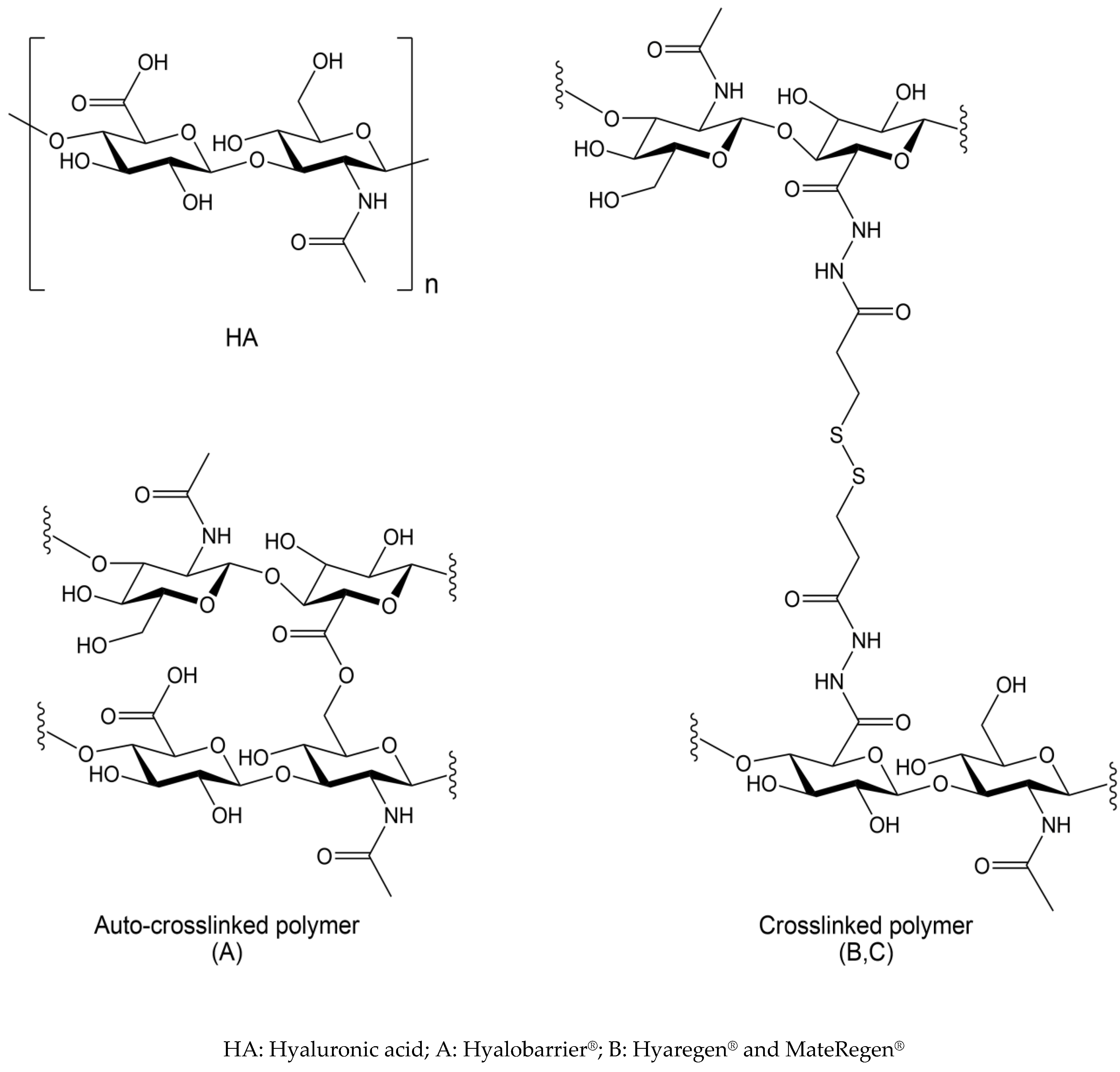
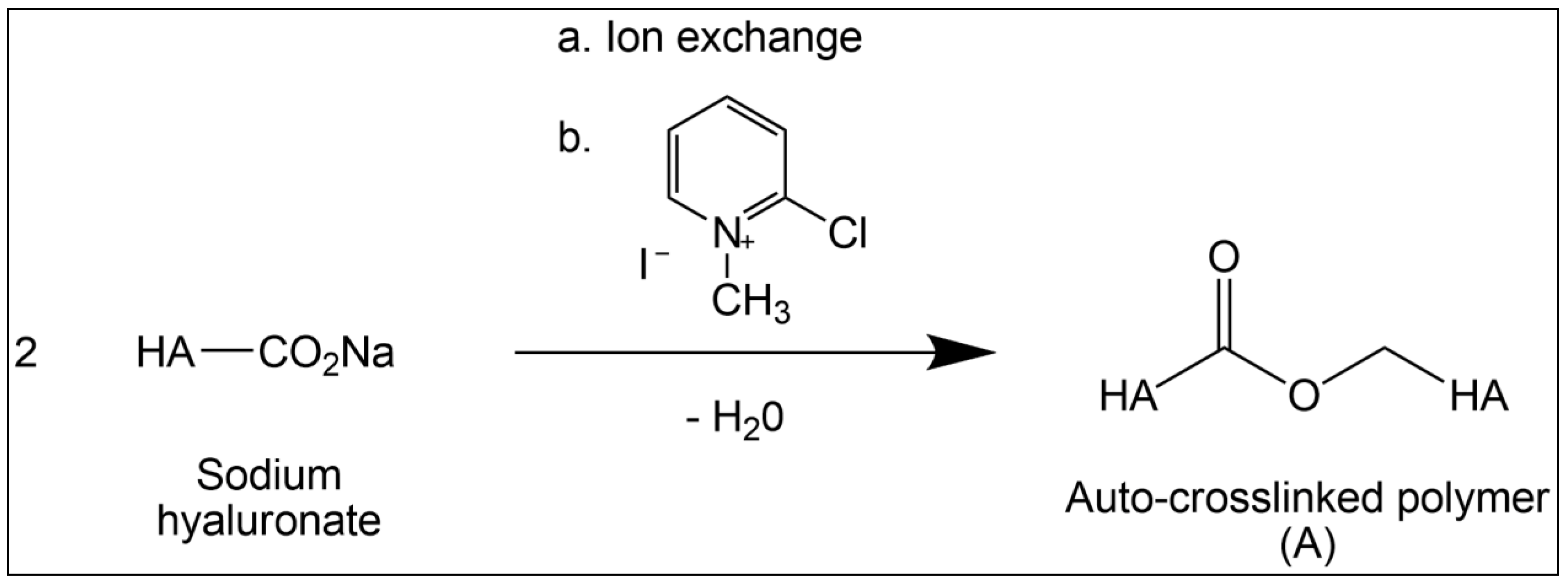
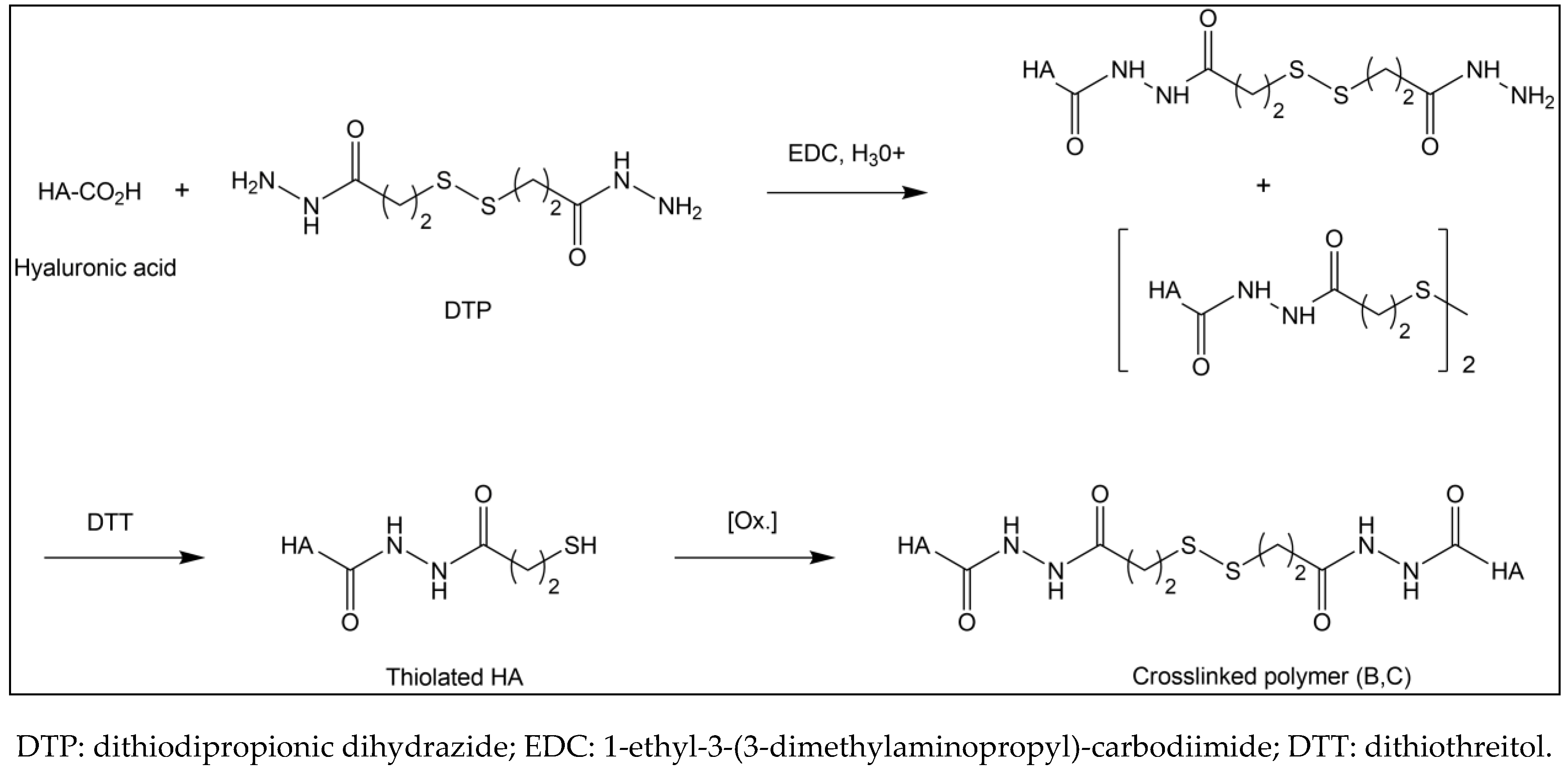

| Auto-Crosslinked Polymer A | Crosslinked Polymers | ||
|---|---|---|---|
| B | C | ||
| Hyalobarrier® | HyaRegen® | MateRegen® | |
| Syringe filling (mL) | 10 | 10/20 | 5 |
| Claimed HA concentration (mg/mL) | 30 | 5 | N/A |
| Shelf life | 3 years | 2 years | 2 years |
| Storage conditions | 2–8 °C | 2–30 °C | 2–30 °C |
| Polymers | |||
|---|---|---|---|
| A | B | C | |
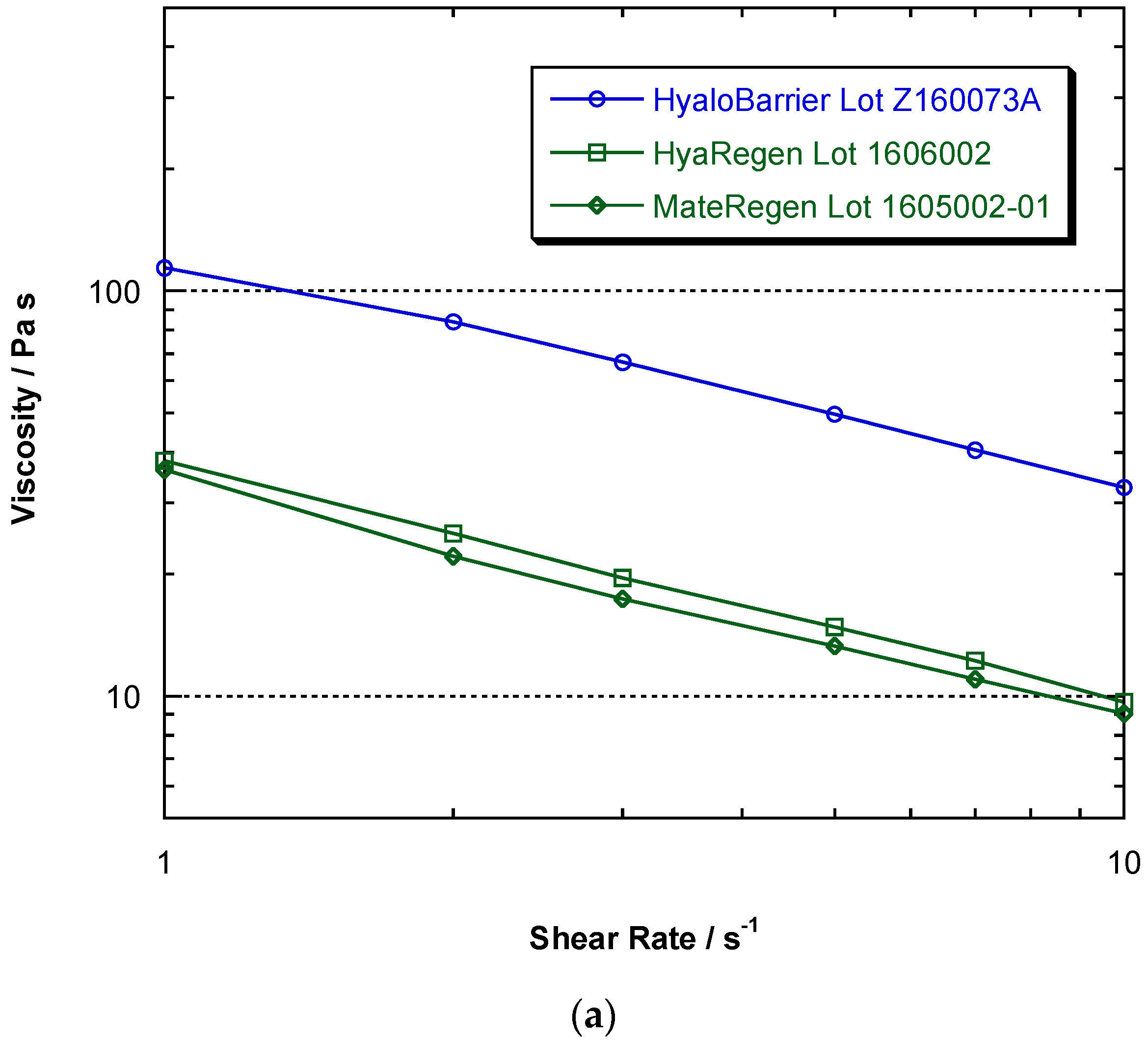
| Shear viscosity (Pa.s−1) | 114 | 38 | 36 |
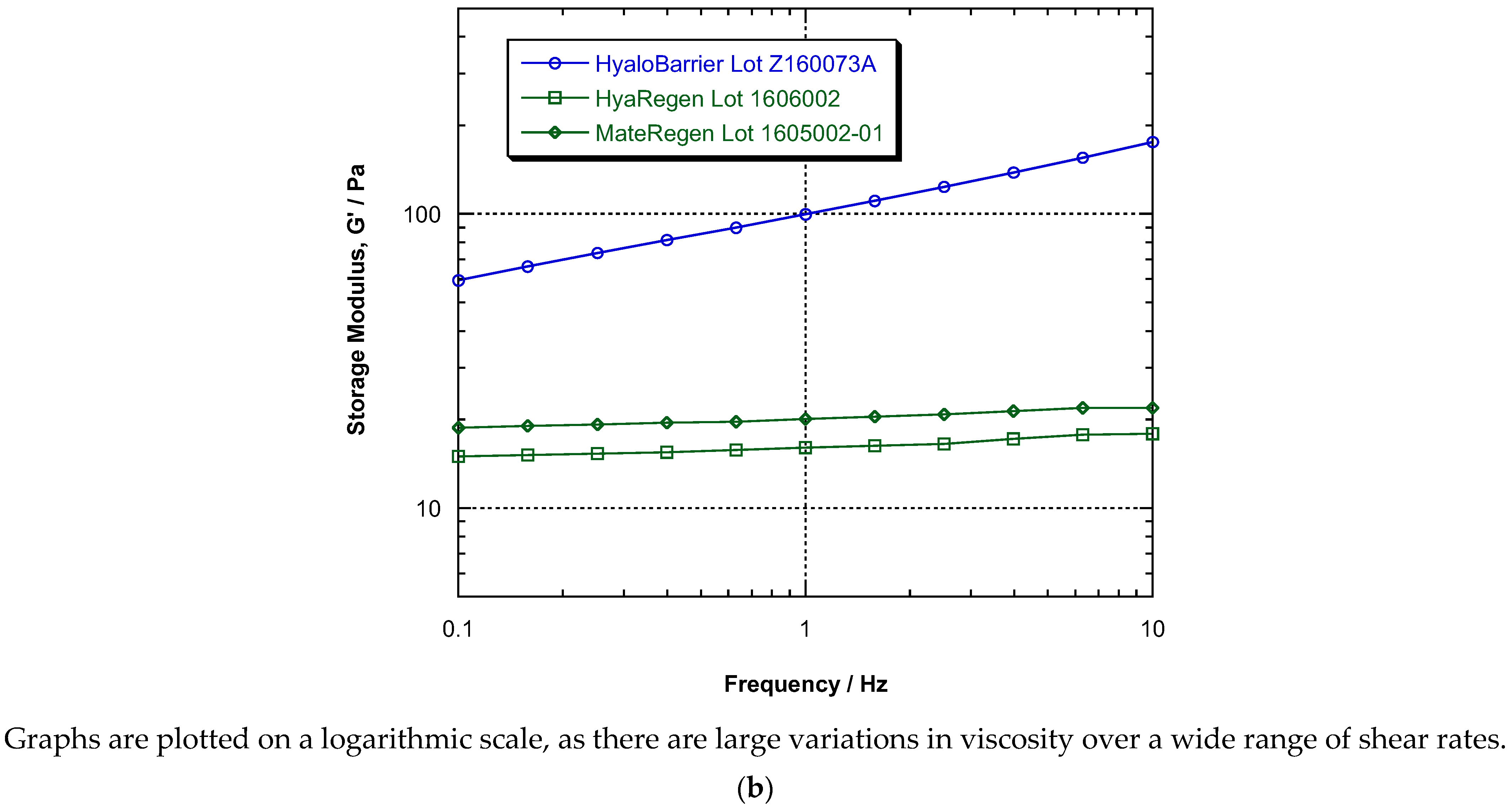
| Storage modulus G’ (Pa) | 100 | 16 | 20 |
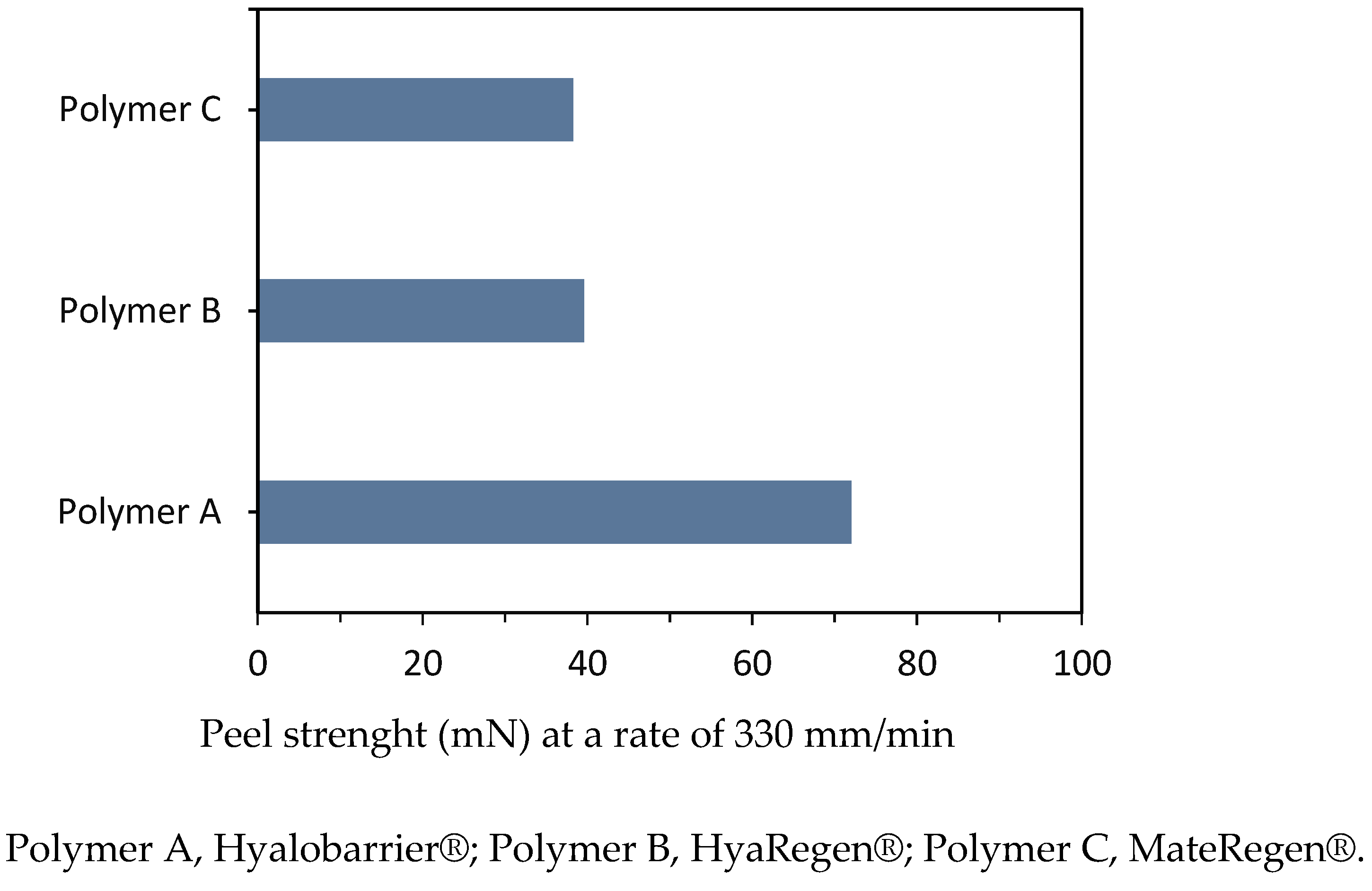
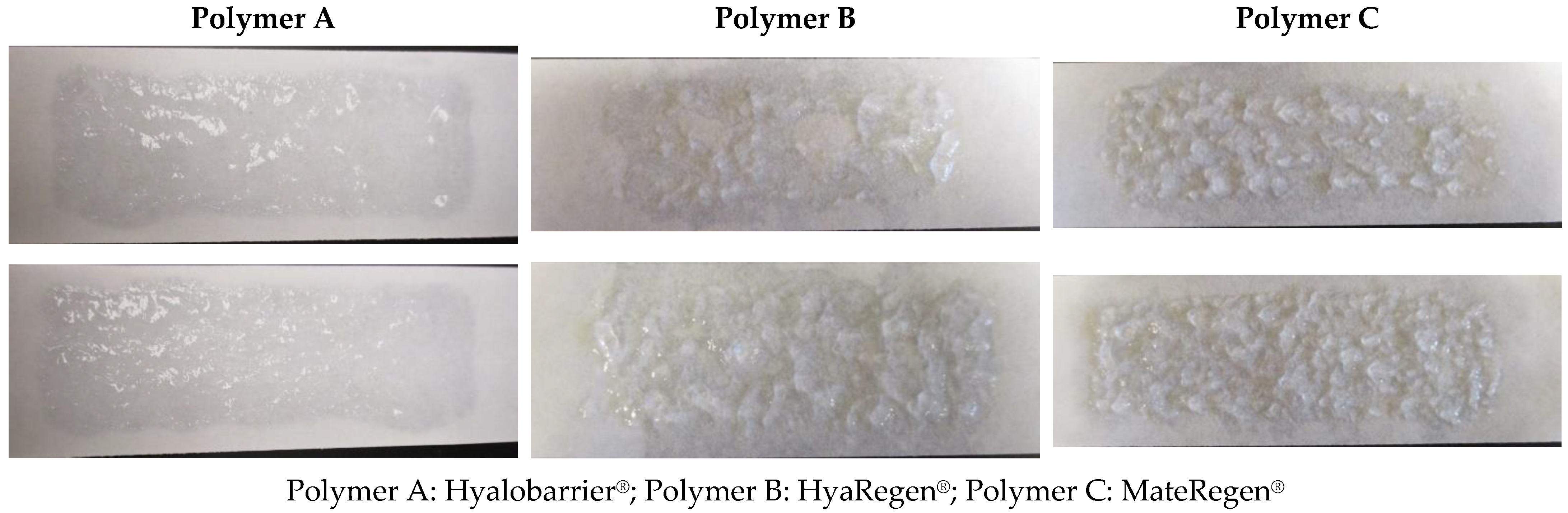
| Peel strength | 0.016 lbf 72 mN | 0.0089 lbf 39.6 mN | 0.0086 lbf 38.3 mN |
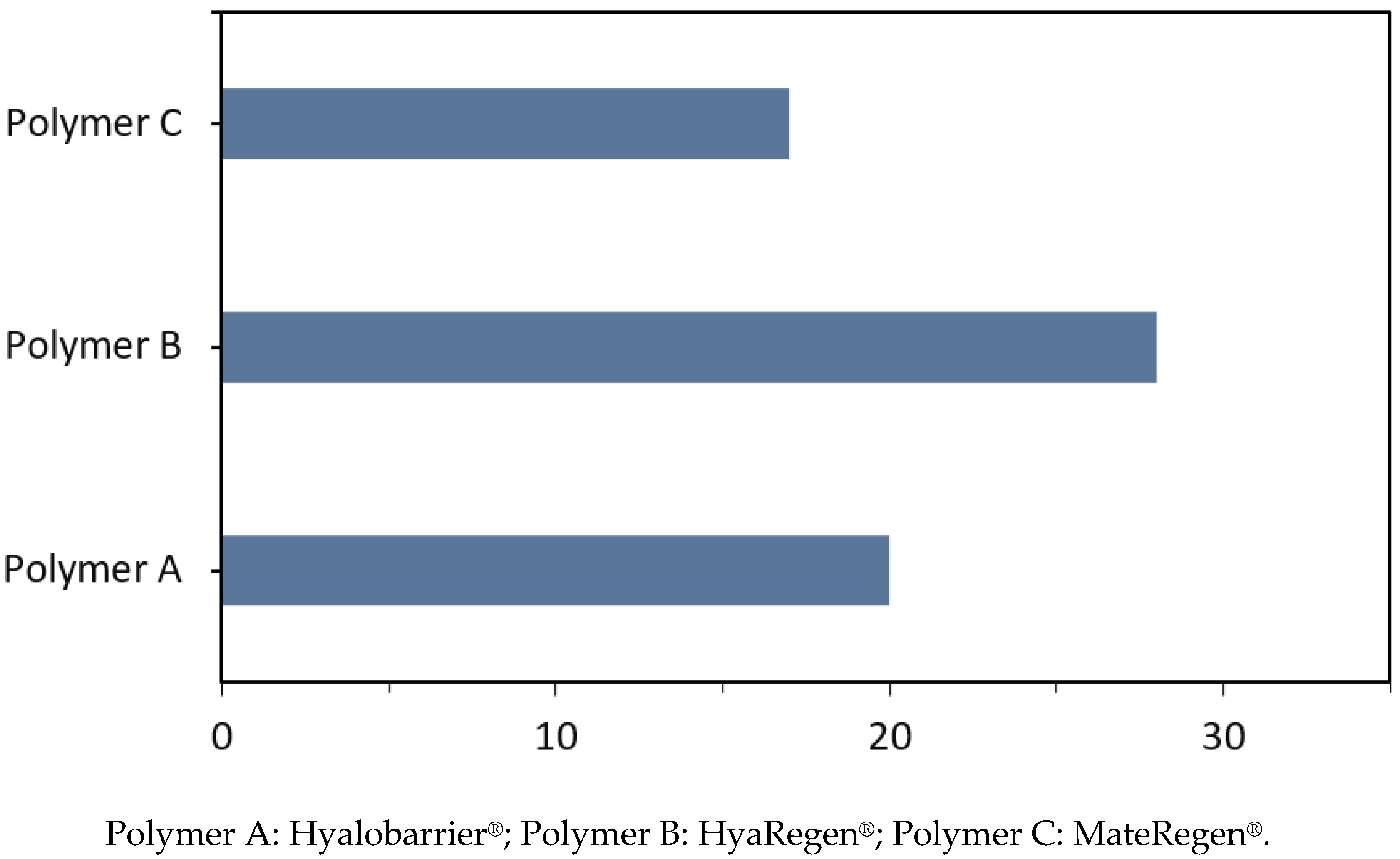
| Extrusion force | 4.5 lbf 20 N | 6.33 lbf 28 N | 3.79 lbf 17 N |
Publisher’s Note: MDPI stays neutral with regard to jurisdictional claims in published maps and institutional affiliations. |
© 2022 by the authors. Licensee MDPI, Basel, Switzerland. This article is an open access article distributed under the terms and conditions of the Creative Commons Attribution (CC BY) license (https://creativecommons.org/licenses/by/4.0/).
Share and Cite
Torres-de la Roche, L.A.; Bérard, V.; de Wilde, M.S.; Devassy, R.; Wallwiener, M.; De Wilde, R.L. Chemically Modified Hyaluronic Acid for Prevention of Post-Surgical Adhesions: New Aspects of Gel Barriers Physical Profiles. J. Clin. Med. 2022, 11, 931. https://doi.org/10.3390/jcm11040931
Torres-de la Roche LA, Bérard V, de Wilde MS, Devassy R, Wallwiener M, De Wilde RL. Chemically Modified Hyaluronic Acid for Prevention of Post-Surgical Adhesions: New Aspects of Gel Barriers Physical Profiles. Journal of Clinical Medicine. 2022; 11(4):931. https://doi.org/10.3390/jcm11040931
Chicago/Turabian StyleTorres-de la Roche, Luz Angela, Véronique Bérard, Maya Sophie de Wilde, Rajesh Devassy, Markus Wallwiener, and Rudy Leon De Wilde. 2022. "Chemically Modified Hyaluronic Acid for Prevention of Post-Surgical Adhesions: New Aspects of Gel Barriers Physical Profiles" Journal of Clinical Medicine 11, no. 4: 931. https://doi.org/10.3390/jcm11040931
APA StyleTorres-de la Roche, L. A., Bérard, V., de Wilde, M. S., Devassy, R., Wallwiener, M., & De Wilde, R. L. (2022). Chemically Modified Hyaluronic Acid for Prevention of Post-Surgical Adhesions: New Aspects of Gel Barriers Physical Profiles. Journal of Clinical Medicine, 11(4), 931. https://doi.org/10.3390/jcm11040931

