Article

Sinus Lift and Implant Insertion on 3D-Printed Polymeric Maxillary Models: Ex Vivo Training for In Vivo Surgical Procedures

by
Diana Florina Nica
1,
Alin Gabriel Gabor
2,
Virgil-Florin Duma
3,4,*,†,
Vlad George Tudericiu
5,
Anca Tudor
2 and
Cosmin Sinescu
2,†
1
School of Dental Medicine, “Victor Babes” University of Medicine and Pharmacy of Timisoara, 2A Eftimie Murgu Place, 300070 Timisoara, Romania
2
Research Center in Dental Medicine Using Conventional and Alternative Technologies, School of Dental Medicine, “Victor Babes” University of Medicine and Pharmacy of Timisoara, 9 Revolutiei 1989 Ave., 300070 Timisoara, Romania
3
3OM Optomechatronics Group, Faculty of Engineering, “Aurel Vlaicu” University of Arad, 2 Elena Dragoi, 310177 Arad, Romania
4
Doctoral School, Polytechnic University of Timisoara, 1 Mihai Viteazu Ave., 300222 Timisoara, Romania
5
Dentavis Timisoara, 20B Popa Sapca Str., 300057 Timisoara, Romania
*
Author to whom correspondence should be addressed.
These two authors have equal contributions.
J. Clin. Med. 2021, 10(20), 4718; https://doi.org/10.3390/jcm10204718
Submission received: 21 August 2021 / Revised: 11 October 2021 / Accepted: 12 October 2021 / Published: 14 October 2021

Abstract

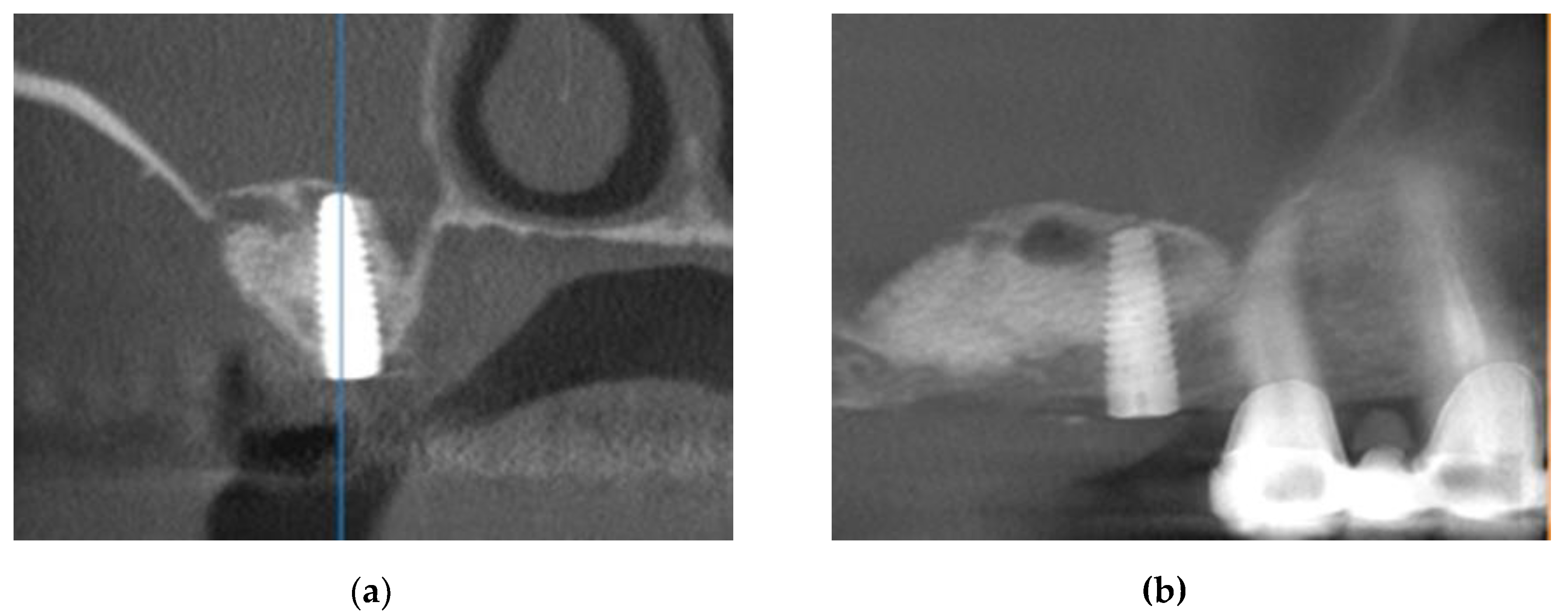
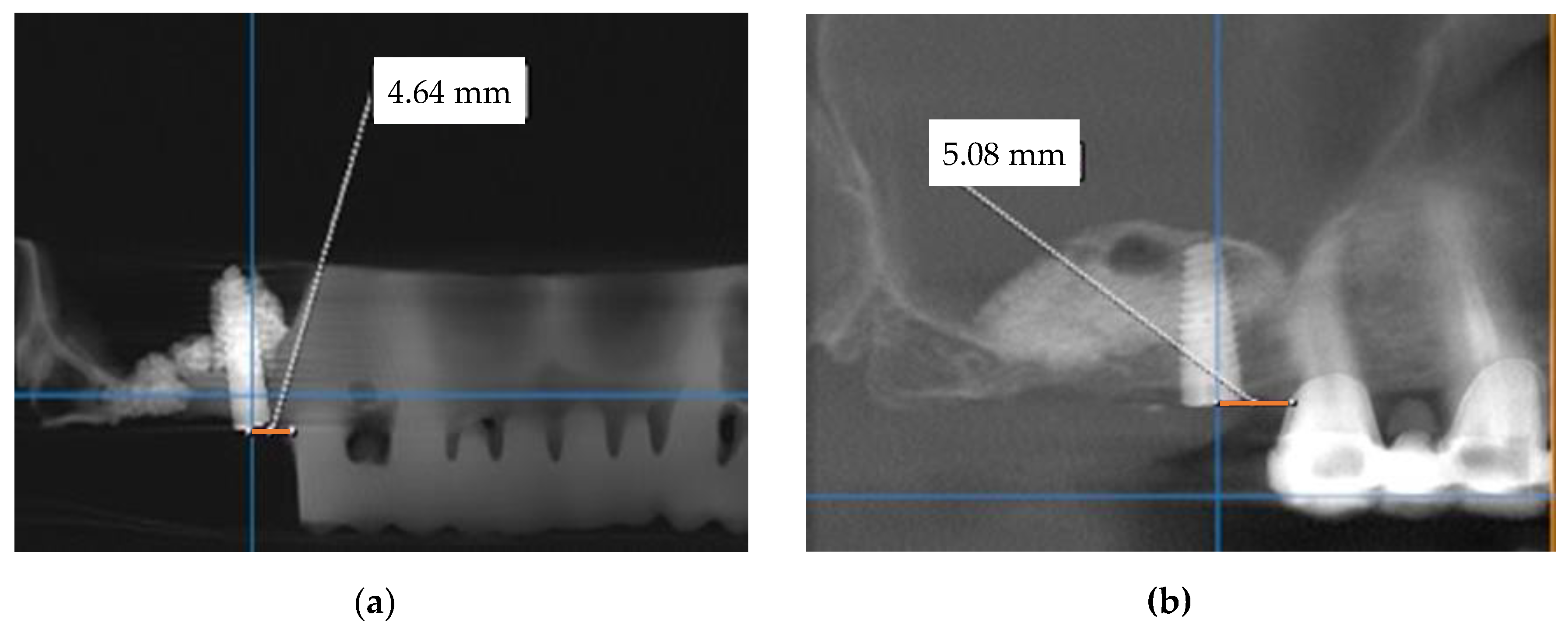
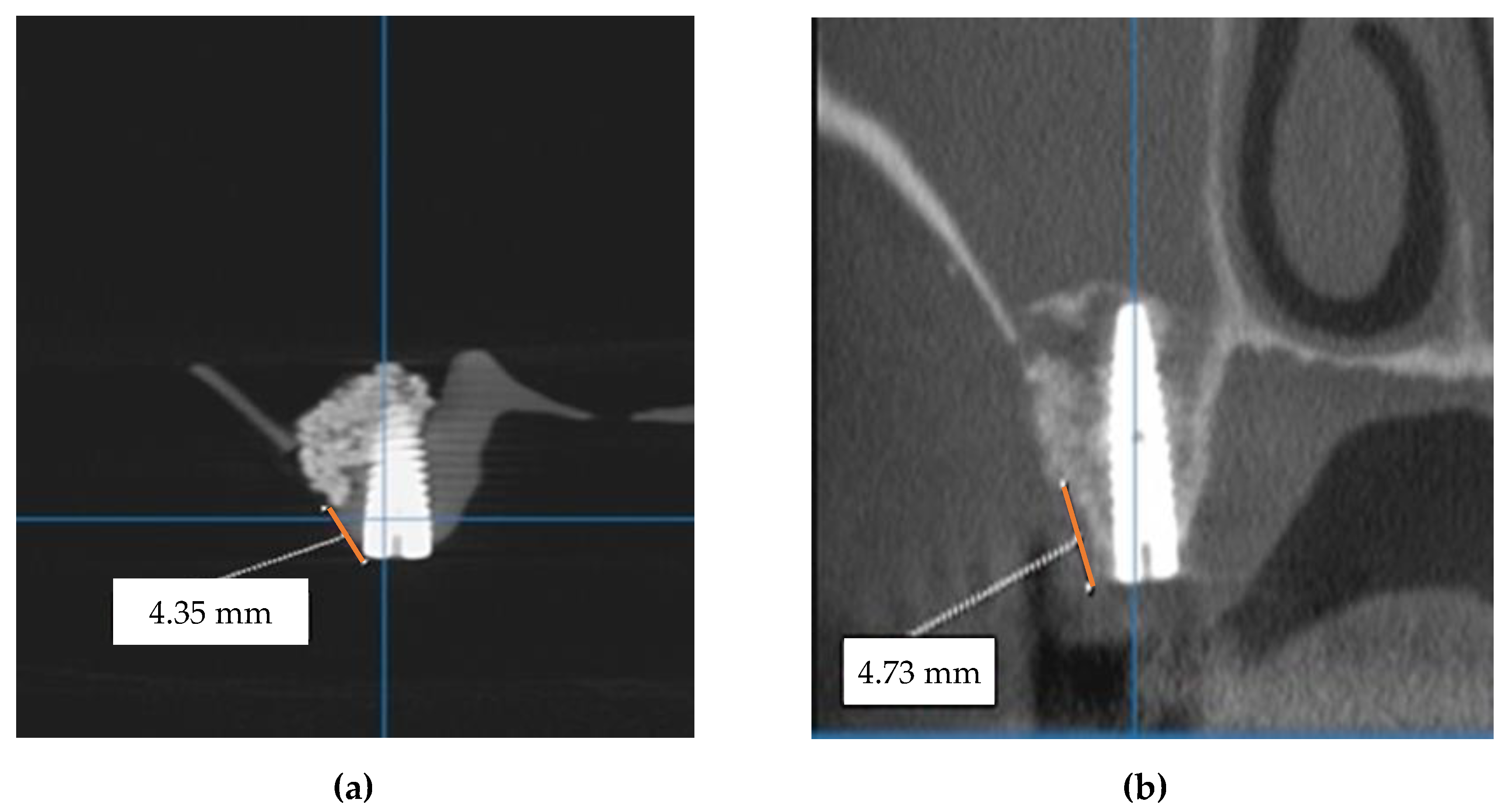
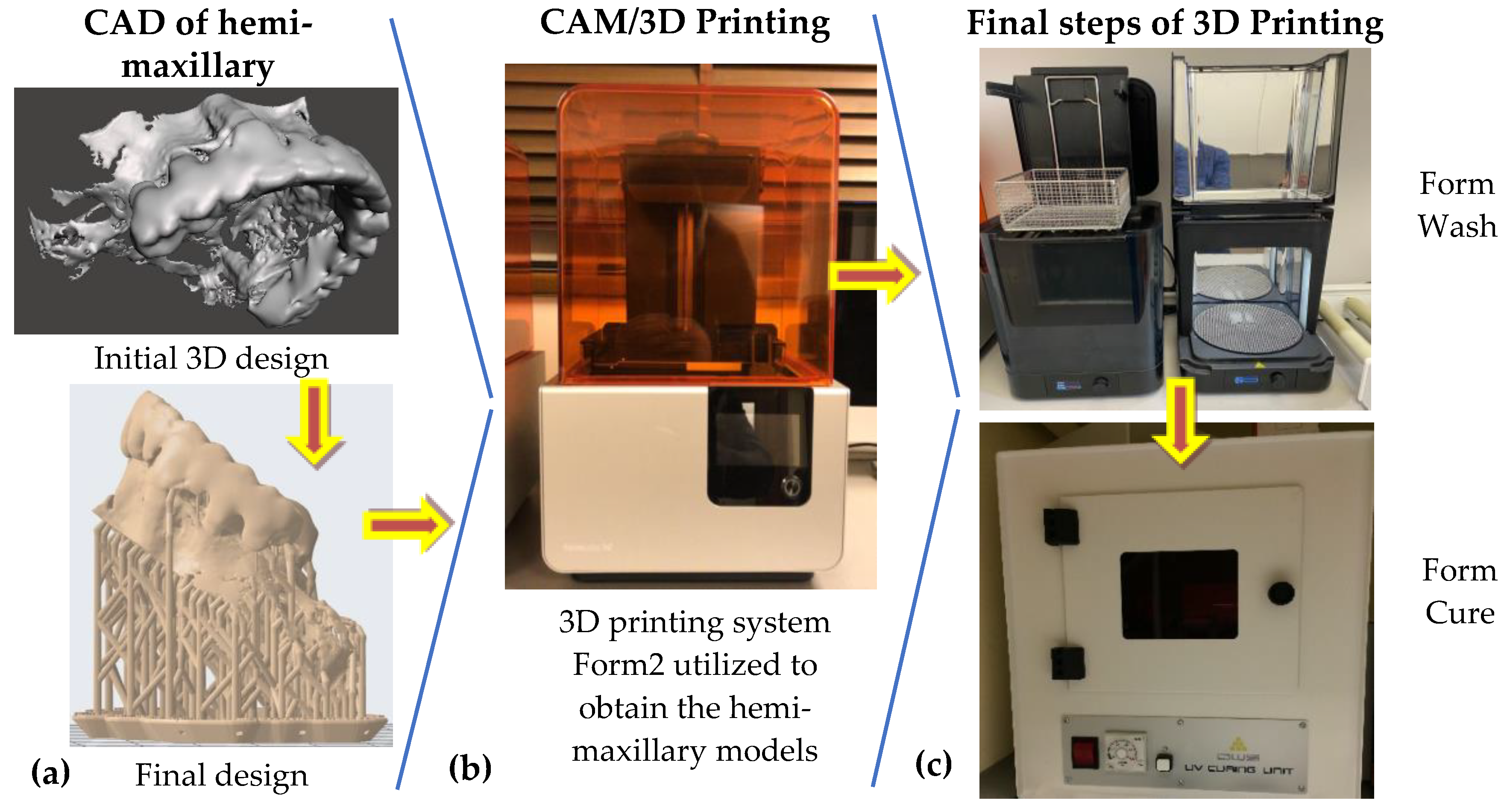
Background and Objectives: The aim of this study is to demonstrate the increased efficiency achieved by dental practitioners when carrying out an ex vivo training process on 3D-printed maxillaries before performing in vivo surgery. Materials and Methods: This developed ex vivo procedure comprises the following phases: (i) scanning the area of interest for surgery; (ii) obtaining a 3D virtual model of this area using Cone Beam Computed Tomography (CBCT); (iii) obtaining a 3D-printed model (based on the virtual one), on which (iv) the dental practitioner simulates/rehearses ex vivo (most of) the surgery protocol; (v) assess with a new CBCT the 3D model after simulation. The technical steps of sinus augmentation and implant insertion could be performed on the corresponding 3D-printed hemi-maxillaries prior to the real in vivo surgery. Two study groups were considered, with forty patients divided as follows: Group 1 comprises twenty patients on which the developed simulation and rehearsal procedure was applied; Group 2 is a control one which comprises twenty patients on which similar surgery was performed without this procedure (considered in order to compare operative times without and with rehearsals). Results: Following the ex vivo training/rehearsal, an optimal surgery protocol was developed for each considered case. The results of the surgery on patients were compared with the results obtained after rehearsals on 3D-printed models. The performed quantitative assessment proved that, using the proposed training procedure, the results of the in vivo surgery are not significantly different (p = 0.089) with regard to the ex vivo simulation for both the mezio-distal position of the implant and the distance from the ridge margin to sinus window. On the contrary, the operative time of Group 1 was reduced significantly (p = 0.001), with an average of 20% with regard to in vivo procedures performed without rehearsals (on the control Group 2). Conclusions: The study demonstrated that the use of 3D-printed models can be beneficial to dental surgeon practitioners, as well as to students who must be trained before performing clinical treatments.
Keywords: dental implants; sinus lift; ex vivo training procedure; in vivo surgery procedure; 3D printing; CAD/CAM techniques; maxillary models; Cone Beam Computed Tomography (CBCT); polymers dental implants; sinus lift; ex vivo training procedure; in vivo surgery procedure; 3D printing; CAD/CAM techniques; maxillary models; Cone Beam Computed Tomography (CBCT); polymers