Review

Treatment of Azo Dye Wastewater by Anaerobic Membrane Bioreactors: A Review on Process Performance and Mitigation Strategies

1
School of Environmental Science and Engineering, Nanjing Tech University, Nanjing 211816, China
2
College of Material Science and Engineering, Nanjing Tech University, Nanjing 211816, China
3
School of Environmental Science and Engineering, Suzhou University of Science and Technology, Suzhou 215009, China
*
Authors to whom correspondence should be addressed.
Membranes 2026, 16(10), 334; https://doi.org/10.3390/membranes16100334
Submission received: 21 August 2026 / Revised: 3 October 2026 / Accepted: 4 October 2026 / Published: 7 October 2026

Abstract

Membrane fouling and biological toxicity are two main bottlenecks in treating azo dye wastewater using anaerobic membrane bioreactors (AnMBRs). This review examines how azo dye molecular structure affects AnMBR performance and membrane fouling. It discusses azo dye reduction, aromatic amine formation, microbial inhibition, and foulant formation. Aromatic amines may inhibit methanogenesis and promote the accumulation of hydrophobic foulants on membrane surfaces. At low dye loadings, stable treatment may be supported under favorable operating conditions, whereas higher loadings may inhibit anaerobic activity and accelerate membrane fouling. The review evaluates membrane modification, biological enhancement and in situ electro-cleaning strategies. No single strategy has yet ensured long-term industrial operation. Reported concentration thresholds are mainly derived from single-dye laboratory studies and may not apply to actual textile wastewater. Future work should use data-driven fouling prediction and pilot trials with real wastewater to define AnMBR operating limits.

1. Introduction

The rapid growth of the global population has driven the rapid expansion of the textile industry [1]. Generally, wastewater produced during textile manufacturing accounts for approximately 54% of global dye wastewater discharge [2,3]. Specifically, textile enterprises utilize various dyes to color different raw materials, such as cellulose, protein, and synthetic fibers, through processes such as dyeing and printing, which can generate wastewater with a complex composition containing dyes, salts, and sizing agents [4,5,6]. The average concentration of dye in textile wastewater is approximately 300 mg/L, and even 50 mg/L is highly undesirable and environmentally hazardous [7,8].
Among various dye categories, azo dyes are the most abundant and are characterized by one or more nitrogen-nitrogen double bonds (-N=N-), known as azo groups. Azo dyes in wastewater can be removed by physical, chemical, or biological methods [9]. Azo groups are typically resistant to aerobic biodegradation, whereas under anaerobic conditions, they undergo a relatively simple reduction process, relying on cofactors and redox mediators to cleave the azo bond for dye decolorization [10]. Azo dye reduction can be mediated by biological processes, representing a combination of biotic and abiotic reactions [11]. Specifically, biotic reduction proceeds via enzyme- or enzyme-cofactor-mediated reactions, while abiotic reduction occurs through purely chemical reactions involving reductants such as sulfides, which can accelerate the overall reduction process. Although both biotic and abiotic reactions can occur under anaerobic conditions, Van der Zee et al. found that biotic reactions dominate the dye decolorization process [11]. In addition, Xu et al. emphasized that anaerobic microorganisms can cleave azo bonds via specific reductases, achieving dye decolorization while simultaneously converting organic matter into methane energy, which can significantly reduce treatment energy consumption [12].
The removal of azo dyes from wastewater can be accomplished with physical, chemical or biological processes. For example, Rapo et al. used untreated eggshell waste as an adsorbent for Remazol Brilliant Violet-5R (RBV-5R), achieving a maximum removal efficiency of approximately 95% under the optimized conditions [13]. Azo dyes themselves are not environmentally benign because of their persistence and potentially toxic transformation products. However, anaerobic biological treatment is a comparatively sustainable option because it avoids aeration and enables methane recovery [9,12]. Ozer Cinar et al. investigated the decolorization performance of RBV-5R by an anaerobic-aerobic sequencing batch reactor (SBR) and observed optimal decolorization performance and aromatic amine degradation at a cycle time of 24 h [14]. Furthermore, Carlos Eduardo Lach et al. employed bio-electro-Fenton technology for the treatment of the azo dye RBV-5R, achieving effective dye removal and decolorization [15]. Similarly, Inaba et al. evaluated the decolorization of 11 reactive dyes using anaerobic granular sludge obtained from an expanded granular sludge bed reactor (EGSB) pilot plant [16]. The EGSB was operated at 35–37 °C with a hydraulic retention time (HRT) of 15 h. Batch tests were conducted in 500 mL flasks containing 250 mL of model textile wastewater and 50 mL of granular sludge. The flasks were incubated under microaerobic conditions at 37 °C and 60 rpm for 7 d. Eight dyes achieved over 94% decolorization [16]. Table 1 compares decolorization reported for different biological reactor configurations. The results should not be interpreted as a direct ranking of reactor types because dye structure, influent composition, HRT, co-substrate availability, salinity, and operating conditions differ among studies. High decolorization alone does not demonstrate stable methanogenesis or low membrane-fouling potential. Although conventional anaerobic reactors can decolorize azo dyes, biomass washout at short HRTs may hinder the retention and acclimation of dye-reducing microorganisms and slow-growing methanogens. Anaerobic membrane bioreactors (AnMBRs) use membrane-based solid–liquid separation to decouple HRT from solids retention time, prevent biomass washout, and retain slow-growing microorganisms [17,18,19,20,21,22]. Yurtsever et al. compared an AnMBR and an aerobic membrane bioreactor (AeMBR) for the treatment of synthetic azo dye-containing textile wastewater [23]. Membrane retention of biomass increased the biomass concentration by approximately two- to three-fold. Both systems achieved COD removal efficiencies above 80%, whereas the AnMBR achieved nearly complete decolorization and the AeMBR achieved only partial color removal. This operational advantage is accompanied by a risk of membrane fouling. The accumulation of sludge particles, colloids, extracellular polymeric substances, and soluble microbial products can promote cake layer formation and pore blocking, thus decreasing permeate flux. Regular physical or chemical cleaning is therefore required to restore flux [21,22]. The addition of an optimized dose of powdered activated carbon can serve as a complementary fouling control strategy by adsorbing dissolved foulants, modifying sludge properties and reducing filtration resistance, thereby retarding transmembrane pressure (TMP) development and helping maintain stable membrane operation [24,25].
A number of reviews have laid the foundation for understanding the anaerobic treatment of textile wastewater and fouling control in AnMBR. Xu et al. summarized the application of anaerobic biological processes in the treatment of textile printing and dyeing wastewater, indicating that anaerobic microorganisms can achieve the decolorization of azo dyes through the redox cleavage mediated by nitrite reductase and convert organic matter into methane [12]. However, Xu et al. also pointed out the problem of aromatic amine accumulation, which may inhibit the methane-producing activity. AnMBRs face issues such as operation and membrane fouling when treating high-concentration wastewater. An et al. systematically reviewed fouling mechanisms in AnMBRs, emphasizing the need for a comprehensive pollution control strategy [21]. Zielińska and Ojo further evaluated the trade-off relationship between nutrient/energy recovery and pollution management in AnMBRs, arguing that physical and chemical cleaning is still indispensable [22]. Min et al. reviewed fouling control strategies including powdered activated carbon addition, membrane surface modification, and proposed that multiple strategies may be required for sustainable long-term operation [24]. Physical fouling control includes flux relaxation, air scouring, and appropriately designed backwashing to remove reversible cake layers. Optical coherence tomography has been used to monitor fouling layer changes during physical cleaning. In a gravity-driven membrane bioreactor, relaxation expanded the fouling layer, whereas air scouring applied at the end of relaxation enhanced biomass removal and flux recovery [37,38].
Xu et al. focused on anaerobic dye transformation, whereas An et al. and Min et al. mainly addressed general AnMBR fouling mechanisms and control strategies, respectively. In contrast, this review links azo dye molecular structure and aromatic amine formation with microbial inhibition, EPS/SMP production, and membrane fouling in AnMBRs. The following sections examine how azo bond number, substituents, and transformation products affect decolorization, methanogenesis, and foulant formation, and then evaluate the corresponding mitigation strategies.

2. Characteristics of Azo Dyes

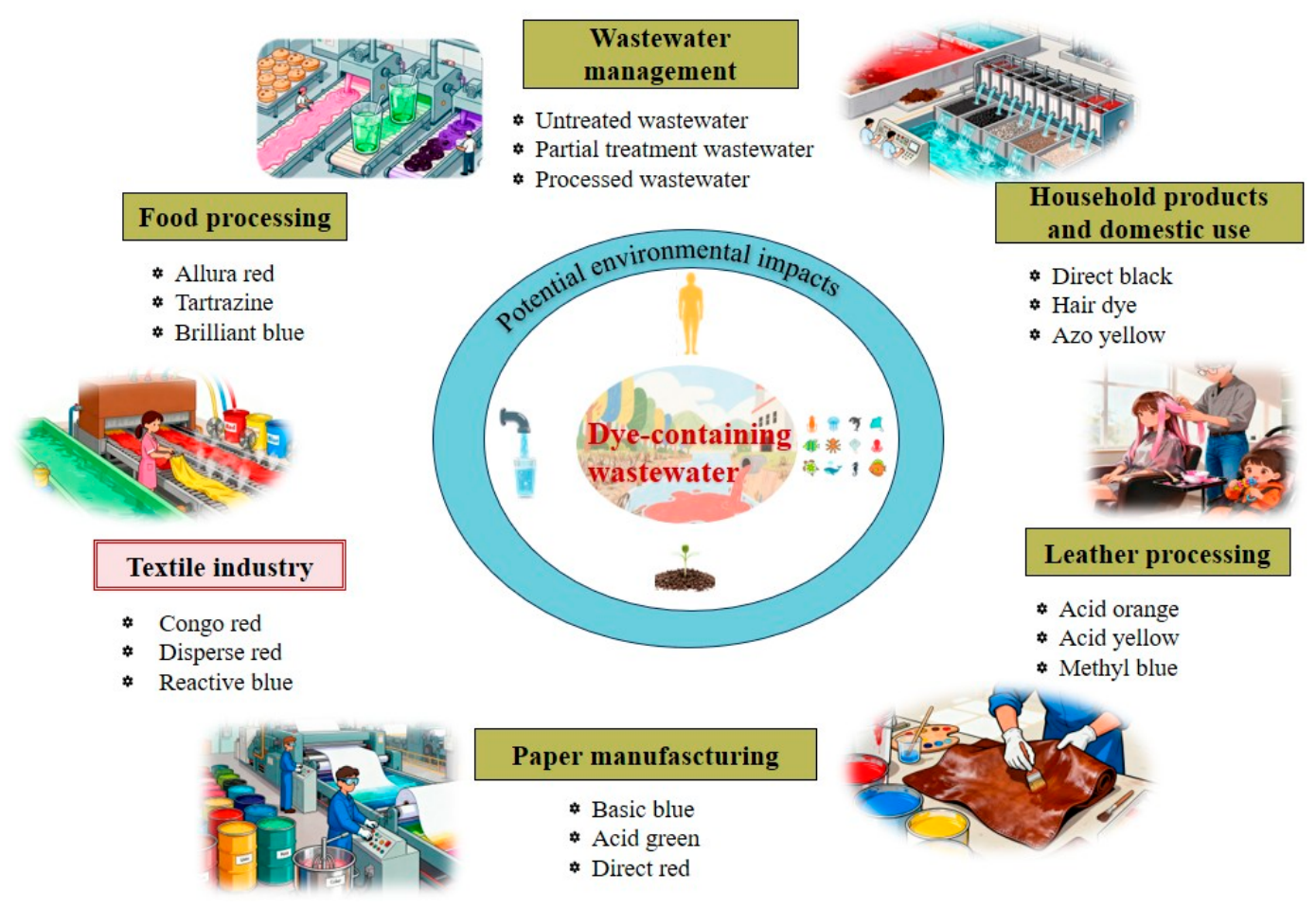
Dyes represent one of the most hazardous pollutants across various industries, including paint, food, textiles, papermaking, rubber, printing, and plastics. Chemically, dyes are organic compounds characterized by the structural integration of chromophores, auxochromes, and matrices [39,40]. Table 2 provides a structural comparison of representative synthetic dye classes. Based on their chromophore structures, dyes include azo, anthraquinone, indigo and sulfur dyes, etc. As illustrated in Figure 1, dye-containing wastewater can originate from textile dyeing, leather processing, paper manufacturing, food processing, and household product use.

2.1. Structures of Azo Dyes

As the primary pollutants in textile printing and dyeing wastewater, azo dyes possess molecular structural characteristics that directly influence their physicochemical properties. Azo dyes contain an azo bond (-N=N-), which serves as the chromophoric core and typically links two aromatic or heterocyclic rings [42].
Based on the number of azo bonds, azo dyes can be classified into monoazo, disazo, and polyazo dyes. An increase in the number of azo bonds generally leads to higher molecular weight and enhanced hydrophobicity, which can increase the difficulty of their biodegradation [52]. Most monoazo dyes feature a common linear conjugated chain of the type “-Ar-N=N-Ar’-”, with a relatively short conjugated system and simple spatial configuration, which makes them the most readily biodegradable dye type [53]. Under anaerobic conditions, the reduction efficiency of azo bonds is negatively correlated with the number of azo bonds, and azoreductases secreted by microorganisms can directly target and cleave the azo bond, achieving efficient reductive cleavage [12]. On the other hand, disazo and polyazo dyes form longer conjugated chain structures through the linkage of aromatic rings, and some even develop branched or cyclic conjugated systems, resulting in more stable molecular structures [54]. The cleavage of azo bonds requires multi-step reduction reactions, and the intermediate products (polycyclic aromatic amines) may exhibit higher toxicity and exert pronounced inhibitory effects on anaerobic microorganisms [55].
The substituents on the aromatic ring differ in polarity and electronegativity and can be broadly classified into hydrophilic and hydrophobic substituents. Hydrophilic substituents, represented by sulfonic acid groups (-SO3H) and hydroxyl groups (-OH), can enhance the water solubility of the dye, thereby facilitating contact with anaerobic microorganisms [56]. Yang et al. showed that the type and position of substituents can regulate bioelectrochemical decolorization kinetics by altering the electron density and steric hindrance around the azo bond. The effect of sulfonic acid substituents depended on their position relative to the azo linkage [57]. In contrast, hydrophobic substituents can enhance the stability of the azo bond, inhibit the activity of anaerobic microorganisms, particularly methane-producing archaea (MPA) and simultaneously lower the reductive reactivity of the azo bond to prolong the degradation cycle [58].
By comparing the treatment performance of dyes with different structures, Turgay et al. confirmed that a methyl (-CH3) or methoxy (-OCH3) group substituted at the ortho position of the benzene ring increased steric hindrance and impeded the action of azoreductase on the azo bond [59]. Furthermore, extending the conjugated chain enhanced the chromophoric strength of the dye but simultaneously increased the electron cloud density, causing a negative shift in the reduction potential and requiring a higher reduction energy barrier for azo bond cleavage [60].

2.2. Anaerobic Biodegradation Pathway of Dyes

The degradation of azo dyes under anaerobic conditions is a nonspecific process dominated by biological reduction, supplemented by abiotic reduction. It begins with the reductive cleavage of the azo bond and relies on cofactors, reducing agents (such as sulfide and cysteine), and redox mediators to achieve efficient electron transfer [61,62,63]. Under anaerobic conditions, the reduction of azo bonds mainly achieves decolorization and does not necessarily result in complete mineralization. The resulting aromatic amines may persist and retain toxicity. Therefore, an aerobic or oxidative post-treatment step is often needed to promote their further transformation, detoxification, and mineralization [64,65].
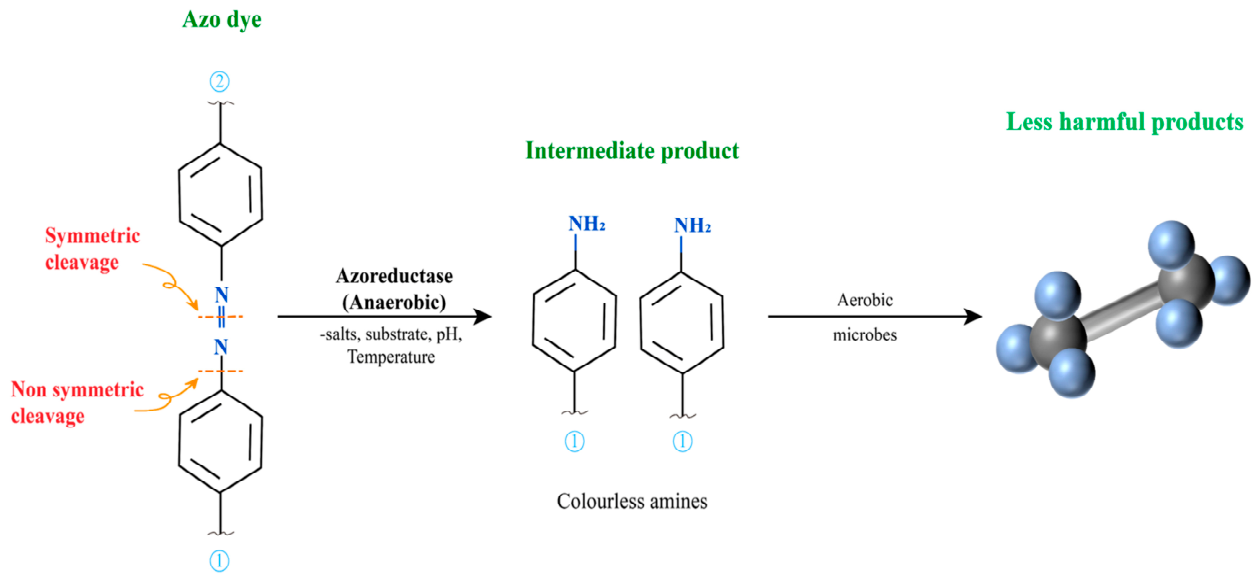
At present, the principal intracellular reducing cofactors involved in azo dye reduction include FADH2 and NAD(P)H [66]. Anaerobic microorganisms can utilize organic compounds such as glucose and acetate in wastewater as electron donors, generating reduced coenzymes like NADH and FADH2 through intracellular metabolism. Azoreductases then transfer electrons from these coenzymes to azo dye molecules, reducing the azo bond to unstable intermediates, and subsequently producing aromatic amines as intermediate products for dye decolorization [67,68]. Degradation of azo dyes by bacteria typically commences with the cleavage of the azo bond by azoreductase. The corresponding amines formed through anaerobic reduction are often poorly biodegraded under anaerobic conditions, causing their degradation rate to lag behind azo-bond reduction [69]. The mineralization of aromatic amines is more common under aerobic conditions, as shown in Figure 2. However, it has been reported that the presence of oxygen generally inhibits the azo bond reduction activity because aerobic respiration may dominate the utilization of NADH, thus impeding the electron transfer from NADH to the azo bond. Previous studies have also indicated that aromatic amines containing -OH and carboxyl (-COOH) groups can be mineralized under anaerobic conditions, and certain aromatic amines prone to autoxidation can also be degraded as well [70].
Anaerobic biodegradation of azo dyes depends on the metabolic activity of specific microbial communities. Dye stress can select microbial populations adapted to toxic conditions. In an AnMBR treating textile wastewater, the relative abundance of Lactobacillus increased under dye and salinity stress [71]. Organic acids produced by Lactobacillus may provide electron donors for other functional microorganisms. Additionally, the abundance of Desulfovibrio was also found to increase significantly for textile wastewater treatment by an AnMBR. By utilizing sulfate as the terminal electron acceptor, Desulfovibrio indirectly promoted the reduction of azo dyes and reduced toxicity accumulation [72]. The above findings can offer key insights into the degradation of azo dyes and the design of more efficient treatment strategies for dye molecules.

3. Factors Influencing the Effect of Azo Dyes on AnMBR Treatment Performance

In recent years, AnMBRs have been extensively studied as a technology for methane recovery from wastewater [17,18]. Specifically, AnMBR combines the advantages of anaerobic digestion (AD) with membrane filtration, achieving efficient organic matter removal and methane production [6,73,74]. The AD process comprises the stages of hydrolysis, acidogenesis, acetogenesis, and methanogenesis [75]. Meanwhile, by-products generated from this process, such as biogas and fertilizer, can enable the sustainable utilization of energy [76].
Under anaerobic biological conditions, azo dyes generally undergo reductive cleavage of the chromophoric -N=N- bond, resulting in decolorization and the formation of aromatic amine intermediates, which may require subsequent aerobic treatment for further degradation [55,77]. Previous research has demonstrated that when treating azo dyes such as Reactive Orange 16 (RO 16) and Acid Crimson GR 64 with AnMBR, the system exhibited excellent decolorization performance (generally exceeding 90%). In particular, Qiu et al. demonstrated that a halophilic/halotolerant microbial consortium achieved 93.3–99.2% decolorization of several azo dyes at 600 mg/L within 24 h under oxygen-limited conditions and retained over 90% decolorization of Direct Black G at a concentration as high as 2.4 g/L [78]. When treating real textile wastewater, the decolorization efficiency of AnMBR ranged from 53% to 77% [72]. In contrast, the decolorization efficiency of conventional aerobic MBR for azo dyes was typically below 60% and often required subsequent advanced oxidation processes for enhanced treatment [79]. For AnMBR systems treating azo dye wastewater, the primary objectives are to achieve high decolorization efficiency and COD removal, as well as stable methane production as an energy source. These treatment indicators are influenced by dye characteristics and are linked to membrane fouling development.

3.1. Concentration of Dyes

Dye concentration affects AnMBR treatment performance, but the response is system-specific. Electron-donor availability, microbial acclimation, dye structure, salinity, and operating conditions determine whether stable decolorization is maintained or anaerobic activity is inhibited [19,80]. For example, Spagni et al. operated a submerged anaerobic membrane bioreactor in which Reactive Orange 16 (RO16) concentrations were progressively increased from 0.060 to 3.2 g/L [9]. The reactor was initially acclimated at 60 mg/L and achieved over 90% decolorization. At 3.2 g/L, decolorization remained above 99%, whereas methane production was inhibited by approximately 80% and volatile fatty acids (VFAs) accumulated [9].
In AnMBRs, microbial activity and environmental stress can alter the production and composition of extracellular polymeric substances (EPSs). EPS mainly comprises proteins (PN) and polysaccharides (PS). Soluble EPS and soluble microbial products (SMPs) can block membrane pores, whereas bound EPS contributes to the formation of a gel and cake layer. The PS/PN ratio indicates EPS composition but cannot independently predict fouling. It should be interpreted together with EPS/SMP concentrations, microbial activity, TMP development, and flux decline [81,82,83]. A similar pattern was observed by Guo et al. when treating Acid Brilliant Scarlet GR, where the SMP concentration was only 23.75 mg/L, the tightly bound EPS (TB-EPS) concentration was 18.12 mg/g-VSS, the fouling layer structure was loose, and the TMP could be rapidly restored after physical cleaning [71].
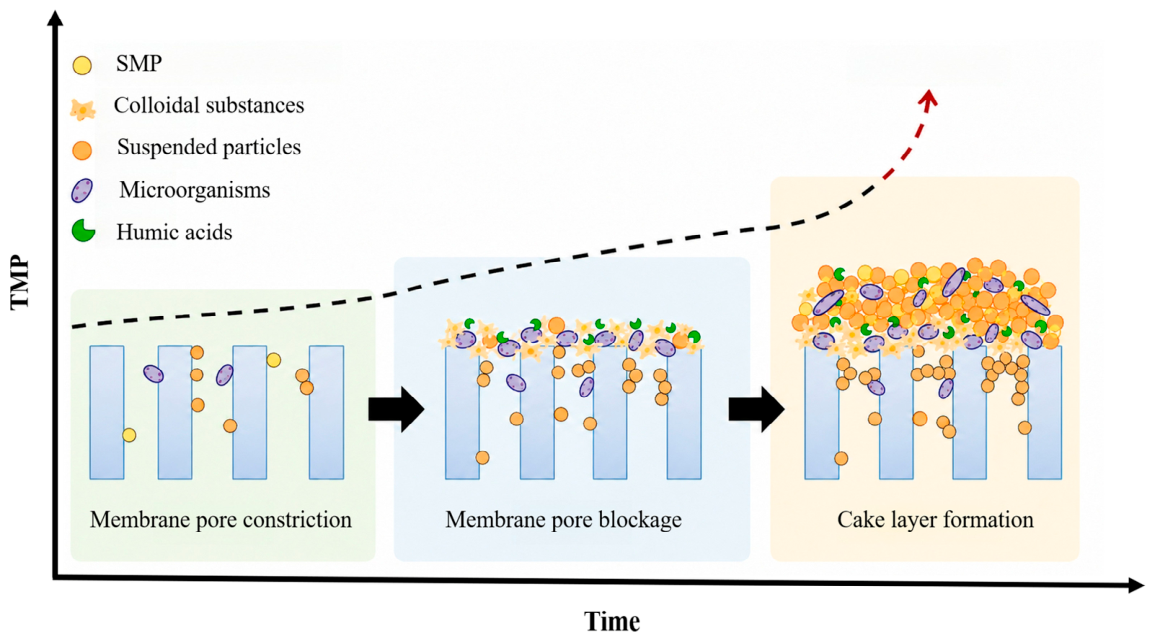
At higher dye loadings, inhibitory effects on anaerobic digestion may become more pronounced. Dye reduction can compete with methanogenesis for reducing equivalents, while dyes and their transformation products may inhibit MPA, leading to volatile fatty acids (VFAs) accumulation and reduced COD removal [9,84]. Dai et al. introduced azo dyes at concentrations of 0–600 mg/L into an AnMBR and operated it continuously for 127 days [84]. As the concentration of dye increased, COD removal and decolorization declined, while VFAs accumulated. Above 450 mg/L, VFAs began to accumulate markedly, and methane production rate decreased synchronously, indicating marked deterioration of system performance. High dye loading may also induce stress-related changes in SMP and EPS production, promoting cake layer development and increasing filtration resistance [81,82,83,85]. These effects may be amplified under saline conditions. In an AnMBR treating azo dye wastewater, salinity stress increased SMPs, EPSs, and the PS/PN ratio, accompanied by more severe membrane fouling [71]. Yurtsever et al. likewise identified foulant accumulation as an important operational limitation during AnMBR treatment of real textile wastewater [72]. Figure 3 shows the evolution of TMP and membrane fouling over time. The reported concentrations should therefore be interpreted as study-specific observations rather than universal thresholds.
Operating parameters can partly mitigate the adverse effects of high dye loadings. Spagni et al. reported that a low flux of approximately 2 L/m2·h slowed cake-layer development in a single-dye laboratory AnMBR study [9]. This result cannot be directly extrapolated to real textile wastewater. Pilot-scale studies are needed to define practical operating ranges under mixed-dye and saline conditions.
Real textile wastewater contains salts, surfactants, starch, dispersants, and other auxiliary chemicals in addition to dyes [86]. Salinity can affect anaerobic microbial activity, SMP/EPSs secretion, and membrane fouling behavior. Guo et al. reported that increasing salinity from 0 to 5% in an AnMBR treating azo dye wastewater decreased decolorization and COD removal, increased VFAs, SMP, and EPS concentrations, and aggravated membrane fouling [71]. Similarly, Wang et al. found that increasing NaCl concentrations from 0 to 20 g/L reduced COD removal from 92% to 73% in a ceramic AnMBR treating textile wastewater. Biogas production was inhibited at NaCl concentrations above 10 g/L, although dye removal was less affected [18]. Surfactants can further modify dye organic-matter aggregation and interactions on the surface of the membrane. In textile wastewater membrane filtration, interactions among surfactants, reactive dyes, and effluent organic matter caused marked flux decline [87]. Therefore, dye loading, salinity, surfactant concentration, and other co-pollutants should be jointly considered when evaluating AnMBR fouling with real textile wastewater.

3.2. Structures and Their Metabolites

Differences in molecular structures of dyes also affect the performance of AnMBR. This section examines how azo-bond number, substituents, and transformation products affect dye reduction, microbial stress, and membrane fouling.

3.2.1. Number of Azo Bonds

The number of azo bonds, as the core structural unit of azo dyes, directly determines the efficiency of biodegradation and the complexity of resulting metabolites. Monoazo dyes such as Methyl Orange and RO 16 possess relatively simple molecular structures, and their azo bonds are readily cleaved by azoreductase under anaerobic conditions [88,89]. The metabolic pathway of this process is relatively simple, with minimal accumulation of intermediate metabolites. Consequently, the microbial metabolic process is stable, the secretion of SMPs and EPSs is relatively low, and the membrane surface is dominated by a loose, reversible cake layer. Wang et al. treated simulated dye wastewater containing Methyl Orange and found that at a salinity of 10 g/L, the SMPs concentration peaked at 178 mg/L, primarily consisting of polysaccharides and proteins [19]. Nonetheless, as the microorganisms gradually adapted to the high-salinity environment of 20 g/L, salt-tolerant bacteria such as Longilinea and Bosea became the dominant microbial populations; the SMPs concentration decreased to 133 mg/L, and the membrane fouling rate dropped from 2.00 to 0.36 kPa/d. The decrease in the fouling rate mentioned in the experiment was observed during a long-term acclimation process. On the other hand, for unacclimated systems or under dye shock loading conditions, even monoazo dyes can still trigger a short-term peak in membrane fouling. Similarly, Amin et al. conducted comparative tests on azo dyes with different structures at various membrane fluxes and concentrations, and they found that simple, low-molecular-weight azo dyes generally exhibited higher decolorization rates, whereas the color removal of complex, high-molecular-weight dye molecules was reduced [90].
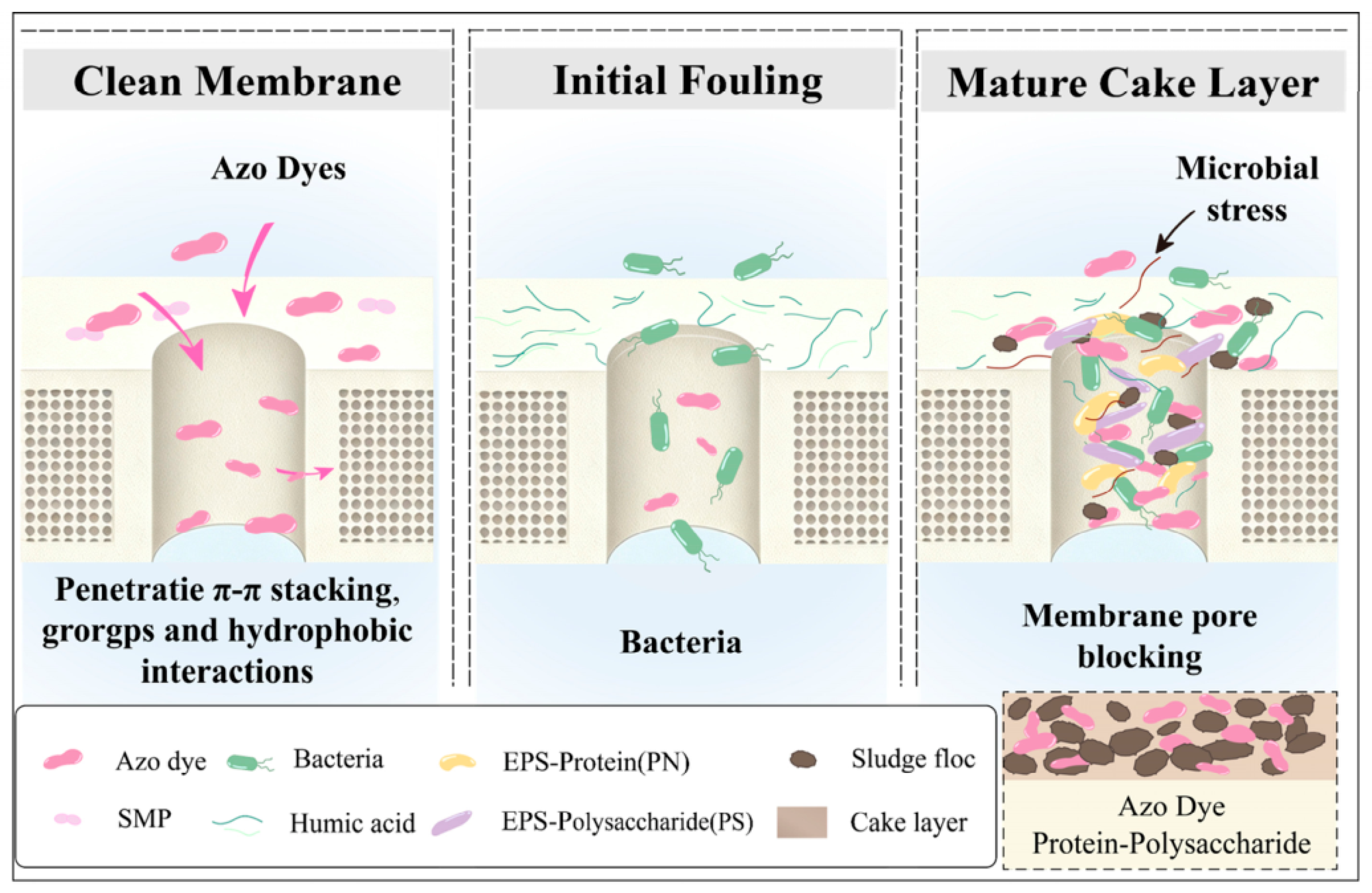
In addition, the degradation rate of polyazo dyes is slow, and the intermediate products can inhibit microbial activity, especially that of MPA, generating cell lysis and the release of intracellular substances such as nucleic acids and proteins. Simultaneously, microorganisms secrete large amounts of EPSs to resist this persistent stress [79]. Long conjugated chains formed by aromatic rings can increase hydrophobicity and promote π-π interaction. During AnMBR treatment, this can readily trigger a surge in SMPs/EPSs secretion and exacerbate membrane fouling. When treating real textile wastewater containing Direct Black 22, it was found that the sulfide generated during the degradation process can form precipitates with metal ions present in the wastewater [79]. These precipitates, combined with EPSs, deposited on the membrane surface, bringing about membrane pore blocking and cake layer densification. The irreversible fouling accounted for 2.03% of the total fouling, and chemical cleaning with 1000 mg/L NaOCl was required to partially restore membrane performance. Figure 4 shows the enrichment process of dyes, EPS, and other substances on the membrane.

3.2.2. Substituent Groups

The type and position of substituents affect the reduction reaction of anaerobic azo dyes by altering the electron distribution and steric environment around the azo bond. Electron-withdrawing substituents may facilitate electron transfer, whereas bulky substituents located near the azo bond may hinder its accessibility and retard decolorization [57]. Azo dyes containing heterocyclic rings or substituent groups exhibit unstable biodegradation performance due to the complex electron cloud distribution in their conjugated systems. Substituents such as hydrophilic sulfonic acid and hydroxyl groups can enhance the water solubility of the dyes and their adsorption affinity to the membrane surface, thereby further exacerbating membrane fouling [71]. At elevated dye concentrations, sulfonate groups may facilitate the cation bridging between EPS components, thus promoting the foulant deposition on the membrane surface. In contrast, nitro and halogen substituents mainly affect reduction kinetics. Their electron-withdrawing effects can lower the electron density at the azo bond and stabilize reduction intermediates, thus facilitating electron transfer and potentially accelerating decolorization [57,91]. Zhao et al. demonstrated that azo dyes bearing electron-withdrawing substituents close to the azo linkage underwent faster chemical and biological reductive decolorization than those containing nearby electron-donating substituents [8]. Yang et al. further demonstrated that electron-withdrawing substituents, such as sulfonate and nitro groups, generally promoted azo-bond cleavage and dye removal in bioelectrochemical systems more effectively than electron-donating groups, although the reaction kinetics were additionally governed by substituent position and steric hindrance [57]. However, substituent effects on microbial toxicity and membrane fouling cannot be inferred from decolorization kinetics alone. Aromatic-amine profiles, methanogenic activity, EPS/SMP production, and filtration resistance should be evaluated together. Rapid decolorization and difficult mineralization represented a key challenge in the treatment of highly toxic azo dyes [59]. The nature of the substituents and their position relative to the azo bond also exerted different effects on the degradation behavior and toxicity of the dyes.

3.2.3. Metabolites

Aromatic amine compounds such as aniline, sulfanilic acid, and polycyclic aromatic amines, which are the products of the anaerobic reduction of azo dyes, possess the ability to intercalate into and disrupt the phospholipid bilayer of microbial cell membranes. Guo et al. further discovered that under a high-salinity (5%) environment, cell membrane damage was exacerbated, accompanied by an abnormal increase in the relative abundance of Lactobacillus to 49.88%, while the abundance of typical MPA sharply declined, resulting in a decrease in COD removal efficiency to 58.6% [71]. Furthermore, Turgay et al. confirmed that the aromatic amines produced during anaerobic biological treatment, after intercalating into the cell membrane, increased membrane permeability, and the mineralization efficiency of aromatic amines was significantly lower than that of azo bond reduction, with the residual fraction of aromatic amines in synthetic dye wastewater reaching 20–30% [59]. In an experiment treating the azo dye RO16 using a submerged AnMBR, Spagni et al. found that when the RO16 concentration was increased to 3.2 g/L, the system could still maintain a decolorization efficiency of over 99%, while the accumulation of VFAs reached a maximum of 1.2 g/L, and the methane yield decreased by 80–85% [9]. This demonstrates both the high efficiency of anaerobic biological reduction in cleaving the azo bond and the toxic inhibition of the methanogenic community by aromatic amines. As recalcitrant organic compounds, the incompletely degraded aromatic amines can directly affect effluent COD, preventing it from meeting discharge standards, thus necessitating their mineralization through subsequent aerobic processes or advanced treatment technologies.
Hydrophobic aromatic amines themselves can also adsorb and deposit on the membrane surface through van der Waals forces and form an irreversible fouling layer [92]. More importantly, the toxic inhibition caused by aromatic amines can lead to the accumulation of acetic and propionic acid among diverse VFAs [93]. VFA accumulation can reduce the pH, thus promoting the protonation of charged groups such as carboxyl and phosphate groups in EPSs [94]. This weakened the hydrophilicity of EPSs and enhanced their adhesion strength to the membrane surface. Simultaneously, the high concentration of VFAs altered the microbial community structure, disrupted the AD balance, and indirectly increased sludge viscosity and cake layer compactness [95].
Overall, rapid decolorization does not necessarily indicate stable AnMBR performance. Dye structure, aromatic-amine toxicity, VFA accumulation, microbial inhibition, and EPS-related fouling should be evaluated together with decolorization efficiency.

3.3. Microbial and Electron-Transfer Factors

Dye structure and transformation products can alter microbial activity and electron-transfer pathways. These changes affect azo-dye reduction, VFA conversion, EPS/SMP production, and the subsequent development of membrane fouling. Sulfate-reducing bacteria (SRB) can play an important role in the engineering of anaerobic azo dye degradation. SRB can produce azoreductases that catalyze azo bond cleavage and can also use SO42− as a terminal electron acceptor to facilitate reduction [96]. Prato-Garcia et al. reported that the addition of anthraquinone-2,6-disulfonate (AQDS) enhanced chemical- and biological-sulfide-assisted azo-dye decolorization. In the absence of AQDS, biological sulfide was more efficient than chemical sulfide in removing azo dyes [61]. In addition, Yurtsever et al. confirmed the decolorization efficiency of Remazol Brilliant Violet 5R dye in the anaerobic stage was close to 100% via a sequential AnMBR-AeMBR system [97]. This process was dominated by SRB, which can utilize dye molecules as electron acceptors and achieve azo bond cleavage in the presence of sulfate. Recent evidence suggests that anaerobic azo-dye decolorization involves both enzyme-associated reduction and extracellular electron transfer rather than the direct action of secreted reductases alone [98]. Conductive materials can enhance electron transfer to the azo bond and regulate VFA conversion [99]. Their benefits should be evaluated together with their effects on microbial selection, membrane fouling, material stability, and cost.

4. Mitigation Strategies

Fouling in AnMBRs treating dye wastewater is influenced by membrane flux, sludge characteristics, related dye foulants and membrane properties [100]. Membrane fouling contributes to an increase in TMP and a decline in membrane flux, while the frequency of membrane cleaning and replacement compromises the economic viability of AnMBR and the growth of microbial communities [101]. In recent years, methods such as dye structure modification, membrane material modification, and chemical cleaning have been progressively applied to the treatment of azo dye wastewater, which can enhance system stability and mitigate membrane fouling.

4.1. Modification of Dye Structure

In response to the issues of slow degradation of polyazo dyes and high toxicity of aromatic amines identified in Section 2.1, researchers have optimized dye structures through molecular design to reduce the difficulty of biodegradation at the source. Yang et al. demonstrated that molecular structure can determine degradation kinetics by influencing the electron density and steric hindrance of the azo bond through experiments and quantitative structure-activity relationship (QSAR) model fitting [57]. Therefore, under the premise of ensuring dyeing performance, molecular modification may enhance dye biodegradability and reduce the adsorption capacity and biotoxicity of microbial metabolites by modulating the steric hindrance and hydrophilicity/hydrophobicity of dye molecules through molecular modification.
The number of azo bonds is positively correlated with the difficulty of degradation. Comparative experiments in a carbon-based AnMBR operated at 37 ± 1 °C showed that the monoazo dye Acid Orange 7 (AO7) was more readily decolorized than the structurally more complex diazo and triazo dyes Reactive Black 5 (RB5) and Direct Blue 71 (DB71). Each dye was tested at 50–100 mg/L with sodium acetate as a co-substrate (dye/acetate mass ratio of 1:3) and a permeate flux of 0.05–0.10 L/m2·h. At 50 mg/L and 0.05 L/m2·h, decolorization reached 98%, 82%, and 72% for AO7, RB5, and DB71, respectively [90]. Furthermore, maintaining a linear conjugated chain structure in molecular design can effectively reduce the chemical stability of the molecule, making the azo bond more susceptible to cleavage by the reductases of anaerobic microorganisms. When introducing heterocycles such as pyrazole and thiazole, it is also necessary to control the conjugation extension between the heterocycle and azo bond to avoid the formation of an excessively long conjugated system.
Atay et al. successfully synthesized new monoazo dyes using a pyrazole heterocyclic skeleton [102]. Elgammal et al. directionally introduced hydrazide-hydrazone (-CONH-N=CH-) groups into dye molecules and evaluated their dyeing, antimicrobial, antibiofilm, and molecular-docking properties [103]. Such structural modifications can redistribute electron density and alter molecular conformation. They can also change the predicted interactions between dyes and defined microbial protein targets. Selected dyes showed antibacterial activity against Staphylococcus aureus and Bacillus subtilis. Selected dyes also inhibited S. aureus biofilm formation [103]. These biological activities do not alone demonstrate reduced membrane biofouling. Such performance should be confirmed by microbial-attachment, EPS, filtration-resistance, flux-recovery, leaching, and ageing tests under relevant wastewater conditions [104,105,106,107]. Dye biodegradability is a separate property. It depends on azo-bond accessibility, redox reactivity, substituent effects, and steric hindrance [57]. Antimicrobial activity may affect the viability or activity of dye-degrading microorganisms. Biodegradation, mineralization, aromatic-amine analysis, and microbial-community tests are therefore required before this strategy can be considered environmentally viable [108].

4.2. Modification of Membrane Modules

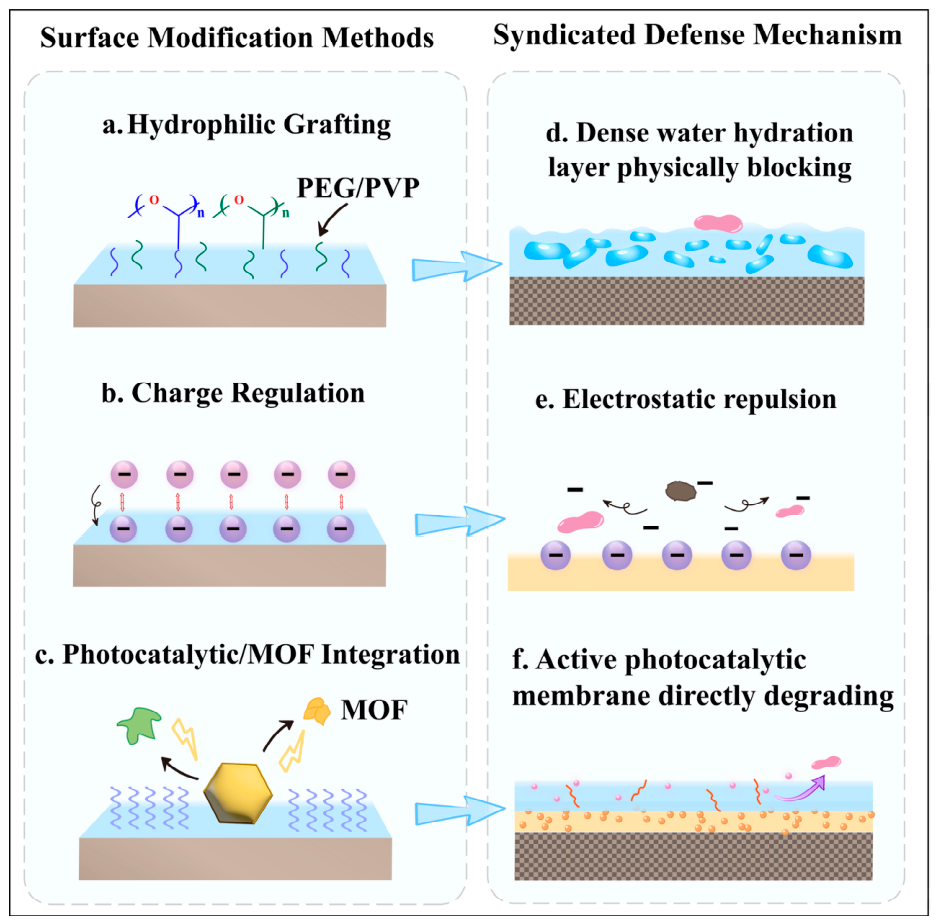
In dye wastewater, adsorption-driven membrane fouling depends on the molecular structure and chemical speciation of the dyes and their transformation products, as well as on pH, ionic strength, and membrane chemistry. Hydrophobic or aromatic dye-related compounds, including some azo dyes and aromatic amine metabolites, may adsorb onto hydrophobic membrane domains [109]. Aromatic moieties on the membrane or coating may promote adsorption through π-π interactions [109,110]. Dye exposure may stimulate EPS-related biosynthesis in certain microorganisms [111]. EPS accumulation and spatial distribution have been associated with compact membrane biofilms, cake layer development, and increased filtration resistance [112,113]. As illustrated in Figure 5, membrane-surface modification may reduce organic-foulant attachment and initial microbial adhesion by reducing surface roughness, increasing hydrophilicity, and tailoring surface charge [114]. A stable antimicrobial function is required when microbial inactivation is the objective.
AnMBRs commonly employ hydrophobic membranes, such as polyvinylidene fluoride (PVDF) and polytetrafluoroethylene (PTFE), for wastewater treatment [115,116,117]. Hydrophobic or aromatic dye-related compounds may adsorb onto hydrophobic membrane domains, whereas many sulfonated azo dyes remain water-soluble. Hydrophilic surface modification can lower the water contact angle and reduce foulant adhesion. Surface charge can also influence the adsorption of ionic dyes. Negatively charged functional groups may repel anionic dyes under suitable solution conditions, thus reducing pore adsorption and delaying the formation of the cake layer.
Zheng et al. modified a PVDF membrane with Cu-MOF-74, improving hydrophilicity and reducing surface roughness [118]. Wang et al. applied a surface-conductive hollow-fiber membrane in an AnMBR. The surface-electric-field AnMBR (S-AnEMBR) enhanced organic matter degradation and enriched alkaliphilic MPA at the cathode by 48%. Meanwhile, the PS/PN ratio of loosely bound EPS (LB-EPS) in the S-AnEMBR was 3.82, which was 21.00% lower than that in the control AnMBR [119]. These results suggest that conductive membrane surfaces can influence microbial activity and EPS production [120].
Xiao et al. reported that poly heptazine imide (PHI) modification increased membrane hydrophilicity and reduced the contact angle of PVDF from 77.86° [121]. The negative surface charge of PHI may increase electrostatic repulsion toward anionic dyes. Fan et al. prepared a TpPa-SO3H/PVDF membrane containing -SO3H and -OH groups, which exhibited high hydrophilicity [122]. The water contact angle decreased substantially from 114° to 50.8°, and the lower surface roughness may alleviate foulant adhesion. The modified membrane achieved photocatalytic degradation efficiencies above 90% for several dyes. An et al. prepared an NH2-MIL-125 modified membrane-distillation system that maintained a flux of 41.29 L/m2·h in dye wastewater containing high salinity [123]. Its photocatalytic activity reduced dye-induced fouling. However, adsorption of Congo Red decreased degradation efficiency and accelerated wetting. Vatanpour et al. prepared a PVDF membrane with a zeolitic imidazolate framework-8 layer, which improved hydrophilicity, membrane flux and the removal rate of azo dyes [124].
Membrane pore size is another important design variable. Microfiltration (MF) membranes generally provide higher permeability, while ultrafiltration (UF) membranes provide greater retention of particulates and macromolecules [21]. Pore size can also influence fouling mechanisms. In MBR studies, small pores were associated with protein-like SMP capture and irreversible internal pore blocking, whereas larger pores favored surface cake-layer formation [125,126]. Because most dissolved azo dyes are smaller than typical MF and UF pores, dye removal in AnMBRs mainly depends on bioreduction, adsorption, and dynamic-cake-layer retention rather than direct size exclusion [21,127]. Therefore, pore size should be selected together with membrane material, flux, wastewater composition, and the fouling control strategy.

4.3. Chemical Cleaning and Bioaugmentation

Although some membrane modification methods have significantly improved the antifouling capability and dye rejection efficiency of AnMBRs when treating wastewater containing azo dyes, membrane pore blockage and irreversible fouling caused by EPSs and intermediate degradation products may still be unavoidable during long-term operation under high loading conditions. Periodic relaxation and air scouring can limit the accumulation of loosely attached EPS-rich cake layers through shear-induced foulant removal [37]. Backwashing can remove reversible foulants, but its effect on fouling-layer structure depends on membrane configuration, backwash flux, duration, and foulant composition. Excessive backwash intensity may redistribute foulants, promote pore intrusion, or compromise membrane integrity and hydraulic performance [128]. Therefore, backwashing should be optimized and evaluated using TMP development, permeability recovery, and membrane-integrity testing rather than flux recovery alone [94].
However, offline chemical cleaning may cause membrane damage, increase operating costs, and generate secondary waste. Park et al. found that osmotic backwashing improved water flux by 10.8% compared to pure chemical cleaning and was capable of removing foulants close to the membrane surface from natural organic matter [129]. Furthermore, Fan et al. achieved in situ membrane cleaning through an indirect high-voltage electric field, which reduced the TMP by 66.7% compared to a conventional AnMBR without affecting AD performance [130]. Meanwhile, with increased cleaning frequency, when Brooklawnia and Propioniciclava were inhibited, fermentative bacteria such as Syntrophomonas, Synergistaceae, and Fermentimonas were enriched as a compensatory metabolic mechanism. This shift in the microbial community improved COD removal efficiency and methane production.
In terms of bioaugmentation, Li et al. demonstrated that dual bioaugmentation extended the time to membrane fouling by up to twofold and increased cumulative methane production by 18% relative to the control [131]. In addition, Patiu et al. developed an ultrasonic atomization membrane system, in which the graphene oxide layer was modified with formaldehyde to enhance hydrophilicity and surface charge, while ultrasound ensured its high pure water flux (129 ± 13 L/m2·h). The experimental results showed that the system achieved 90% rejection for Methyl Orange and 99% rejection for both Congo Red and Disperse Blue 1 [132]. Overall, these experiments demonstrate that chemically enhanced cleaning can mitigate membrane fouling effectively, whereas bioaugmentation with verified quorum-quenching or EPS-modulating strains may improve antifouling performance by altering EPS production and microbial-community composition [128,133]. During membrane operation, verified functional strains may be applied as a preventive measure to reduce EPS production. Maintenance chemical cleaning can then be performed when TMP reaches a site-specific threshold [133,134,135]. In a full-scale municipal MBR, the annual cost of cleaning chemicals was estimated at 14.02 million SEK under a scheduled sodium-hypochlorite/citric-acid cleaning regime and 6.26 million SEK under demand-driven cleaning [136]. Although these strategies have shown promising results under laboratory conditions, their implementation at engineering scale faces technical and economic limitations.
For instance, hydrophilic coatings and MOF-based membrane modifications may have insufficient long-term durability. Their adhesion, chemical stability, and resistance to mechanical wear or material leaching should be verified under continuous operation and cleaning conditions [137]. Electrical cleaning methods such as conductive membrane modules and in situ electric-field cleaning can achieve real-time control of membrane fouling. However, scale-up requires investment in conductive materials, electrodes, power supplies, and maintenance. Reported specific energy consumption for electrochemical membrane technologies ranges from 0.01 to 5 kWh·m−3 depending on the membrane material, feedwater characteristics, and treatment configuration [138,139]. Although bioaugmentation is relatively simple to implement and avoids additional chemical dosing, its antifouling efficacy depends on the persistence and activity of the introduced functional strains under variable operating conditions and interactions with native microbial communities [133,134].
No individual strategy has demonstrated durable and cost-effective fouling control in real textile wastewater. Membrane modification may reduce foulant attachment but requires long-term evaluation of coating durability and leaching. Cleaning can restore permeability but increases chemical use, energy consumption, or membrane-aging risks. Bioaugmentation may reduce EPS production, but its long-term efficacy depends on the persistence of introduced strains.

5. Conclusions and Future Perspectives

5.1. Conclusions

This review systematically elucidates the interplay between azo dye molecular structures and the performance of AnMBRs. Through analysis of molecular structural characteristics, AD pathways, and microbial community responses, primary conclusions are listed below:
  • Monoazo dyes with simpler conjugated systems undergo rapid enzymatic cleavage. In contrast, the degradation of polyazo dyes is hindered by higher reduction energy barriers, yielding recalcitrant polycyclic aromatic amines. Electron-withdrawing substituents (e.g., –SO3H, –NO2) may promote initial decolorization depending on their position relative to the azo bond and the associated steric hindrance.
  • Accumulation of hydrophobic aromatic amines disrupts microbial cell membrane integrity, inducing metabolic stress that stimulates excessive secretion of SMPs and EPSs, particularly increasing the PS/PN ratio. Combined with VFA accumulation, these foulants densify the cake layer and aggravate irreversible fouling on conventional hydrophobic membranes (e.g., PVDF and PTFE).
  • Current research has explored various effective strategies: (i) membrane surface modification by introducing hydrophilic groups and negatively charged functional groups, utilizing steric hindrance and electrostatic repulsion to resist dye adsorption; (ii) the introduction of novel nanomaterials or surface conductive membranes to promote in situ oxidation of organic matter; and (iii) the adoption of physical methods such as osmotic backwashing and in situ electro-cleaning, or the combination of bioaugmentation and chemical cleaning to prolong the replacement cycle of the membrane.

5.2. Future Perspectives

Based on the above analysis, future perspectives are as follows:
  • The biotoxicity, transformation products, and membrane fouling effects of newly designed dyes require further investigation.
  • Membrane fouling control mainly relies on membrane modification and operational optimization. Data-driven models may integrate influent dye concentration, salinity, pH, organic loading rate, flux, TMP, EPS/SMP characteristics, and methane-production indicators to identify early fouling risks. Future studies should validate these models using independent long-term datasets and real textile wastewater before applying them to cleaning decisions.
  • Most studies use synthetic wastewater and may not capture the combined effects of coexisting constituents in real wastewater. Future work should assess the long-term stability and operational boundaries of AnMBRs treating real textile wastewater containing diverse dye structures and co-pollutants.

Author Contributions

Conceptualization, P.L. and H.W.; methodology, X.Z. and J.-N.C.; software, Z.K. and X.L.; validation, H.W. and Z.K.; formal analysis, J.-N.C.; investigation, J.-N.C. and P.L.; resources, P.L. and X.L.; data curation, X.L. and Z.K.; writing—original draft preparation, J.-N.C.; writing—review and editing, X.Z. and Y.H.; visualization, H.W. and P.L.; supervision, X.Z. and Y.H.; project administration, Y.H. All authors have read and agreed to the published version of the manuscript.

Funding

This research received no external funding.

Institutional Review Board Statement

Not applicable.

Informed Consent Statement

Not applicable.

Data Availability Statement

No new data were created or analyzed in this study. Data sharing is not applicable to this article.

Conflicts of Interest

The authors declare no conflicts of interest.

References

  1. Ali, J.; Bakhsh, E.M.; Hussain, N.; Bilal, M.; Akhtar, K.; Fagieh, T.M.; Danish, E.Y.; Asiri, A.M.; Su, X.; Khan, S.B. A new biosource for synthesis of activated carbon and its potential use for removal of methylene blue and eriochrome black T from aqueous solutions. Ind. Crops Prod. 2022, 179, 114676. [Google Scholar] [CrossRef] [Scilit]
  2. Velusamy, S.; Roy, A.; Sundaram, S.; Kumar Mallick, T. A Review on Heavy Metal Ions and Containing Dyes Removal Through Graphene Oxide-Based Adsorption Strategies for Textile Wastewater Treatment. Chem. Rec. 2021, 21, 1570–1610. [Google Scholar] [CrossRef] [Scilit] [PubMed]
  3. Martinez-Lopez, S.; Lucas-Abellan, C.; Serrano-Martinez, A.; Mercader-Ros, M.T.; Cuartero, N.; Navarro, P.; Perez, S.; Gabaldon, J.A.; Gomez-Lopez, V.M. Pulsed light for a cleaner dyeing industry: Azo dye degradation by an advanced oxidation process driven by pulsed light. J. Clean. Prod. 2019, 217, 757–766. [Google Scholar] [CrossRef] [Scilit]
  4. Ewuzie, U.; Saliu, O.D.; Dulta, K.; Ogunniyi, S.; Bajehg, A.O.; Iwuozori, K.O.; Ighaloj, J.O. A review on treatment technologies for printing and dyeing wastewater (PDW). J. Water Process Eng. 2022, 50, 103273. [Google Scholar] [CrossRef] [Scilit]
  5. Chen, Y.; Sun, R.; Yan, W.; Wu, M.; Zhou, Y.; Gao, C. Antibacterial polyvinyl alcohol nanofiltration membrane incorporated with Cu(OH)2 nanowires for dye/salt wastewater treatment. Sci. Total Environ. 2022, 817, 152897. [Google Scholar] [CrossRef] [Scilit] [PubMed]
  6. Kong, Z.; Zhang, T.; Xu, Y.; Hu, Y.; Rong, C.; Li, Y.-Y. Successful establishment of denitrification-enhanced anaerobic digestion with nitrate as an exogenous stimulant for effective hydrolysis and methanogenesis of N, N-dimethylformamide-containing wastewater. Water Res. 2026, 295, 125570. [Google Scholar] [CrossRef] [Scilit] [PubMed]
  7. Slama, H.B.; Chenari Bouket, A.; Pourhassan, Z.; Alenezi, F.N.; Silini, A.; Cherif-Silini, H.; Oszako, T.; Luptakova, L.; Golinska, P.; Belbahri, L. Diversity of Synthetic Dyes from Textile Industries, Discharge Impacts and Treatment Methods. Appl. Sci. 2021, 11, 6255. [Google Scholar] [CrossRef] [Scilit]
  8. Zhao, H.-Q.; Hou, N.; Wang, Y.-R.; Li, W.-Q.; Liu, Q.; Lu, P.; Mu, Y. Carbon nanotubes mediated chemical and biological decolorization of azo dye: Understanding the structure-activity relationship. Environ. Res. 2022, 210, 112897. [Google Scholar] [CrossRef] [Scilit] [PubMed]
  9. Spagni, A.; Casu, S.; Grilli, S. Decolourisation of textile wastewater in a submerged anaerobic membrane bioreactor. Bioresour. Technol. 2012, 117, 180–185. [Google Scholar] [CrossRef] [Scilit] [PubMed]
  10. Gao, B.Y.Y.; Wang, Q. Biodegradation and Decolorization of Dye Wastewater: A Review. IOP Conf. Ser. Earth Environ. Sci. 2018, 178, 012013. [Google Scholar] [CrossRef] [Scilit]
  11. van der Zee, F.P.; Bisschops, I.A.E.; Blanchard, V.; Bouwman, R.H.M.; Lettinga, G.; Field, J.A. The contribution of biotic and abiotic processes during azo dye reduction in anaerobic sludge. Water Res. 2003, 37, 3098–3109. [Google Scholar] [CrossRef] [Scilit] [PubMed]
  12. Xu, H.; Yang, B.; Liu, Y.; Li, F.; Shen, C.; Ma, C.; Tian, Q.; Song, X.; Sand, W. Recent advances in anaerobic biological processes for textile printing and dyeing wastewater treatment: A mini-review. World J. Microbiol. Biotechnol. 2018, 34, 165. [Google Scholar] [CrossRef] [Scilit] [PubMed]
  13. Rapo, E.; Aradi, L.E.; Szabo, A.; Posta, K.; Szep, R.; Tonk, S. Adsorption of Remazol Brilliant Violet-5R Textile Dye from Aqueous Solutions by Using Eggshell Waste Biosorbent. Sci. Rep. 2020, 10, 8385. [Google Scholar] [CrossRef] [Scilit] [PubMed]
  14. Cinar, O.; Yasar, S.; Kertmen, M.; Demiroz, K.; Yigit, N.O.; Kitis, M. Effect of cycle time on biodegradation of azo dye in sequencing batch reactor. Process Saf. Environ. Prot. 2008, 86, 455–460. [Google Scholar] [CrossRef] [Scilit]
  15. Lach, C.E.; Silveira, D.D.; Belli, T.J.; Lapolli, F.R.; Lobo-Recio, M.A. Performance assessment of a bio-electro-Fenton system for azo-dye removal from synthetic wastewater. Process Biochem. 2025, 154, 157–171. [Google Scholar] [CrossRef] [Scilit]
  16. Inaba, T.; Yamaguchi, M.; Taniguchi, A.; Sato, Y.; Aoyagi, T.; Hori, T.; Inoue, H.; Fujita, M.; Iwata, M.; Iwata, Y.; et al. Evaluation of dye decolorization using anaerobic granular sludge from an expanded granular sludge bed based on spectrometric and microbiome analyses. J. Gen. Appl. Microbiol. 2022, 68, 242–247. [Google Scholar] [CrossRef] [Scilit] [PubMed]
  17. Hu, Y.; Wang, X.C.; Ngo, H.H.; Sun, Q.; Yang, Y. Anaerobic dynamic membrane bioreactor (AnDMBR) for wastewater treatment: A review. Bioresour. Technol. 2018, 247, 1107–1118. [Google Scholar] [CrossRef] [Scilit] [PubMed]
  18. Wang, J.; Wang, K.; Li, W.; Wang, H.; Wang, Y. Enhancing bioelectrochemical processes in anaerobic membrane bioreactors for municipal wastewater treatment: A comprehensive review. Chem. Eng. J. 2024, 484, 149420. [Google Scholar] [CrossRef] [Scilit]
  19. Wang, K.; Zhang, H.; Shen, Y.; Li, J.; Zhou, W.; Song, H.; Liu, M.; Wang, H. Impact of salinity on anaerobic ceramic membrane bioreactor for textile wastewater treatment: Process performance, membrane fouling and machine learning models. J. Environ. Manag. 2023, 345, 118717. [Google Scholar] [CrossRef] [Scilit] [PubMed]
  20. Parihar, R.K.; Burnwal, P.K.; Chaurasia, S.P.; Midda, M.O. Unveiling the evolution of anaerobic membrane bioreactors: Applications, fouling issues, and future perspective in wastewater treatment. Rev. Environ. Sci. Bio-Technol. 2024, 23, 949–988. [Google Scholar] [CrossRef] [Scilit]
  21. An, Z.; Zhu, J.; Zhang, M.; Zhou, Y.; Su, X.; Lin, H.; Sun, F. Anaerobic membrane bioreactor for the treatment of high-strength waste/wastewater: A critical review and update. Chem. Eng. J. 2023, 470, 144322. [Google Scholar] [CrossRef] [Scilit]
  22. Zielinska, M.; Ojo, A. Anaerobic Membrane Bioreactors (AnMBRs) for Wastewater Treatment: Recovery of Nutrients and Energy, and Management of Fouling. Energies 2023, 16, 2829. [Google Scholar] [CrossRef] [Scilit]
  23. Yurtsever, A.; Sahinkaya, E.; Aktas, O.; Ucar, D.; Cinar, O.; Wang, Z. Performances of anaerobic and aerobic membrane bioreactors for the treatment of synthetic textile wastewater. Bioresour. Technol. 2015, 192, 564–573. [Google Scholar] [CrossRef] [Scilit] [PubMed]
  24. Min, S.; Lee, H.; Deng, L.; Guo, W.; Xu, B.; Mehmood, C.T.; Zhong, Z.; Zamora, R.; Khan, E.; Dash, S.R.; et al. Advanced strategies for mitigation of membrane fouling in anaerobic membrane bioreactors for sustainable wastewater treatment. Chem. Eng. J. 2024, 485, 149996. [Google Scholar] [CrossRef] [Scilit]
  25. Sun, Y.; Guo, Q.; Rao, W.; Li, N.; Bai, Y.; Zhang, J.; Liang, S. Effect of powder activated carbon (PAC) addition on the performance of anaerobic dynamic membrane bioreactor (AnDMBR): Stratification analysis of dynamic membrane characteristics. Chem. Eng. J. 2024, 499, 155889. [Google Scholar] [CrossRef] [Scilit]
  26. Kong, F.; Fu, Q.; Wang, L.; Ren, H.-Y. Performance optimization and microbial community analysis of integrated anaerobic BES-aerobic MBBR system for azo dye treatment with related wastewater remediation. Chem. Eng. J. 2025, 521, 166589. [Google Scholar] [CrossRef] [Scilit]
  27. Zhu, X.; Song, S.; Wang, Y.; Jia, H.; Wang, J. Unlocking electron transfer potential of blast furnace dust for sustainable anaerobic treatment of azo dye wastewater. Bioresour. Technol. 2026, 444, 134017. [Google Scholar] [CrossRef] [Scilit] [PubMed]
  28. Gu, M.; Yin, Q.; Wu, G. Metagenomic analysis of facilitation mechanism for azo dye reactive red 2 degradation with the dosage of ferroferric oxide. J. Water Process Eng. 2021, 41, 102010. [Google Scholar] [CrossRef] [Scilit]
  29. Nguyen, T.H.; Vo, T.T.; Watari, T.; Hatamoto, M.; Setiadi, T.; Yamaguchi, T. Azo dye anaerobic treatment in anaerobic reactors coupled with PVA/Fe/Starch gel bead. Bioresour. Technol. 2024, 407, 131102. [Google Scholar] [CrossRef] [Scilit] [PubMed]
  30. Xavier, R.D.S.; Barbosa, P.T.; dos Santos, A.B.; da Silva, M.E.R.; Firmino, P.I.M. Evaluation of the decolorization potential of azo dyes by aerobic granular sludge. Chem. Eng. Res. Des. 2023, 195, 207–217. [Google Scholar] [CrossRef]
  31. Xie, X.; Hu, J.; Cao, X.; Zhang, S.; Sakamaki, T.; Li, X. In Situ Utilization of Electron-Enhanced Degradation of Azo Dyes in a Constructed Wetland-Microbial Fuel Cell Coupling System. Sustainability 2024, 16, 3181. [Google Scholar] [CrossRef] [Scilit]
  32. Qin, J.; Qian, L.; Zhang, J.; Zheng, Y.; Shi, J.; Shen, J.; Ou, C. Accelerated anaerobic biodecolorization of sulfonated azo dyes by magnetite nanoparticles as potential electron transfer mediators. Chemosphere 2021, 263, 128048. [Google Scholar] [CrossRef] [Scilit] [PubMed]
  33. Nguyen, T.H.; Watari, T.; Vo, T.T.; Hatamoto, M.; Setiadi, T.; Yamaguchi, T. Enhancement of azo dye anaerobic bio-treatment performance with ferroferric oxide supplement. J. Environ. Chem. Eng. 2022, 10, 108350. [Google Scholar] [CrossRef] [Scilit]
  34. Tony, B.D.; Goyal, D.; Khanna, S. Decolorization of Direct Red 28 by mixed bacterial culture in an up-flow immobilized bioreactor. J. Ind. Microbiol. Biotechnol. 2009, 36, 955–960. [Google Scholar] [CrossRef] [Scilit] [PubMed]
  35. Santos-Pereira, G.C.; Corso, C.R.; Forss, J. Evaluation of two different carriers in the biodegradation process of an azo dye. J. Environ. Health Sci. Eng. 2019, 17, 633–643. [Google Scholar] [CrossRef] [Scilit] [PubMed]
  36. Menezes, O.; Brito, R.; Hallwass, F.; Florencio, L.; Kato, M.T.; Gauazza, S. Coupling intermittent micro-aeration to anaerobic digestion improves tetra-azo dye Direct Black 22 treatment in sequencing batch reactors. Chem. Eng. Res. Des. 2019, 146, 369–378. [Google Scholar] [CrossRef] [Scilit]
  37. Fortunato, L.; Ranieri, L.; Naddeo, V.; Leiknes, T. Fouling control in a gravity-driven membrane (GDM) bioreactor treating primary wastewater by using relaxation and/or air scouring. J. Membr. Sci. 2020, 610, 118261. [Google Scholar] [CrossRef] [Scilit]
  38. Ranieri, L.; Vrouwenvelder, J.S.; Fortunato, L. Periodic fouling control strategies in gravity-driven membrane bioreactors (GD-MBRs): Impact on treatment performance and membrane fouling properties. Sci. Total Environ. 2022, 838, 156340. [Google Scholar] [CrossRef] [Scilit] [PubMed]
  39. Solayman, H.M.; Hossen, M.A.; Abd Aziz, A.; Yahya, N.Y.; Leong, K.H.; Sim, L.C.; Monir, M.U.; Zoh, K.-D. Performance evaluation of dye wastewater treatment technologies: A review. J. Environ. Chem. Eng. 2023, 11, 109610. [Google Scholar] [CrossRef] [Scilit]
  40. Ayed, L.; Mandhi, A.; Cheref, A.; Bakhrouf, A. Decolorization and degradation of azo dye Methyl Red by an isolated Sphingomonas paucimobilis: Biotoxicity and metabolites characterization. Desalination 2011, 274, 272–277. [Google Scholar] [CrossRef] [Scilit]
  41. Haque, M.M.; Haque, M.A.; Mosharaf, M.K.; Islam, M.S.; Islam, M.M.; Hasan, M.; Molla, A.H.; Haque, M.A. Biofilm-mediated decolorization, degradation and detoxification of synthetic effluent by novel biofilm-producing bacteria isolated from textile dyeing effluent. Environ. Pollut. 2022, 314, 120237. [Google Scholar] [CrossRef] [Scilit] [PubMed]
  42. Dong, H.; Guo, T.; Zhang, W.; Ying, H.; Wang, P.; Wang, Y.; Chen, Y. Biochemical characterization of a novel azoreductase from Streptomyces sp.: Application in eco-friendly decolorization of azo dye wastewater. Int. J. Biol. Macromol. 2019, 140, 1037–1046. [Google Scholar] [CrossRef] [Scilit] [PubMed]
  43. Bera, S.P.; Tank, S.K. Bioremedial approach of Pseudomonas stutzeri SPM-1 for textile azo dye degradation. Arch. Microbiol. 2021, 203, 2669–2680. [Google Scholar] [CrossRef] [Scilit] [PubMed]
  44. Mustafa, G.; Zahid, M.T.; Kurade, M.B.; Patil, S.M.; Shakoori, F.R.; Shafiq, Z.; Ihsan, S.; Ahn, Y.; Khan, A.A.; Gacem, A.; et al. Molecular characterization of azoreductase and its potential for the decolorization of Remazol Red R and Acid Blue 29. Environ. Pollut. 2023, 335, 122253. [Google Scholar] [CrossRef] [Scilit] [PubMed]
  45. Patil, P.S.S.; Gupta, P.O.O.; Ingole, G.S.S.; Sekar, N. Anthrone-Based Carbocyclic Azo Dyes: Synthesis, Dyeing, UV Protection, Anti-microbial Activity and Computational Study. Fibers Polym. 2023, 24, 1285–1296. [Google Scholar] [CrossRef] [Scilit]
  46. Rubaida, N.J.; Mosharaf, M.K.; Limon, M.G.S.; Rahman, A.; Islam, R.; Hossain, M.N.; Jahan, T.; Haque, M.A.; Molla, A.H.; Haque, M.M. Bioremediation of anthraquinone dye reactive blue 19 by halo-acido-alkaliphilic bacterial consortia. Biodegradation 2026, 37, 59. [Google Scholar] [CrossRef] [Scilit] [PubMed]
  47. Wang, X.; Cao, Y.; Zhao, C.; Lu, H.; Xie, K.; Gong, Z. Simultaneous anaerobic biotransformation of Reactive Blue 19 and nitrate removal by an enriched microbial consortium: Performance, pathway, and microbial community. J. Water Process Eng. 2026, 89, 110273. [Google Scholar] [CrossRef] [Scilit]
  48. de Farias, N.O.; Pires, M.S.G.; Moreira, B.D.J.; dos Santos, A.; Freeman, H.S.; Toukola, P.; de Albuquerque, A.F.; Raisanen, R.; Umbuzeiro, G.D.A. Natural indigo toxicity for aquatic and terrestrial organisms. Ecotoxicol. Environ. Saf. 2025, 290, 117606. [Google Scholar] [CrossRef] [Scilit] [PubMed]
  49. Castillo-Suarez, L.A.; Sierra-Sanchez, A.G.; Linares-Hernandez, I.; Martinez-Miranda, V.; Teutli-Sequeira, E.A. A critical review of textile industry wastewater: Green technologies for the removal of indigo dyes. Int. J. Environ. Sci. Technol. 2023, 20, 10553–10590. [Google Scholar] [CrossRef] [Scilit] [PubMed]
  50. Mudasir, M.; Rehman, S.U.; Fahad, M.; Raza, I.; Alam, F. Denim dyeing effluent treatment by electrocoagulation for maximum reduction in indigo and sulphur black dye discharge. Color. Technol. 2022, 138, 621–631. [Google Scholar] [CrossRef] [Scilit]
  51. Naveed, M.; Din, M.S.U.; Aziz, T.; Javed, T.; Khan, S.M.; Naveed, R.; Khan, A.A.; Alharbi, M. Comparative analysis among the degradation potential of enzymes obtained from Escherichia coli against the toxicity of sulfur dyes through molecular docking. Z. Naturforsch. C J. Biosci. 2024, 79, 221–234. [Google Scholar] [CrossRef] [Scilit] [PubMed]
  52. Ahangarnokolaei, M.A.; Ayati, B.; Ganjidoust, H. Novel baffled configuration of electro-coagulation–flotation process for treatment and fate of Direct Blue 71: Sludge characteristics and process optimization. Environ. Technol. Innov. 2021, 22, 101459. [Google Scholar] [CrossRef] [Scilit]
  53. Teoh, T.-P.; Ong, S.-A.; Ho, L.-N.; Wong, Y.-S.; Lutpi, N.A.; Oon, Y.-L.; Tan, S.-M.; Ong, Y.-P.; Yap, K.-L. Insights into the decolorization of mono and diazo dyes in single and binary dyes containing wastewater and electricity generation in up-flow constructed wetland coupled microbial fuel cell. Environ. Sci. Pollut. Res. 2023, 30, 17546–17563. [Google Scholar] [CrossRef] [Scilit] [PubMed]
  54. Al-Tohamy, R.; Ali, S.S.; Li, F.; Okasha, K.M.; Mahmoud, Y.A.G.; Elsamahy, T.; Jiao, H.; Fu, Y.; Sun, J. A critical review on the treatment of dye-containing wastewater: Ecotoxicological and health concerns of textile dyes and possible remediation approaches for environmental safety. Ecotoxicol. Environ. Saf. 2022, 231, 113160. [Google Scholar] [CrossRef] [Scilit] [PubMed]
  55. Abd Elnabi, M.K.; Eltarahony, M.; El-Badry, A.M.; Nassrallah, A.; Mahmoud, Y.A.G.; Ghazy, M.A.; Kamal, A.; Ali, S.S. Microbial systems for azo dye biodegradation: Enzymatic mechanisms, microbial consortia, and emerging biotechnological strategies. Microb. Cell Fact. 2026, 25, 147. [Google Scholar] [CrossRef] [Scilit] [PubMed]
  56. Zafar, S.; Bukhari, D.A.; Rehman, A. Azo dyes degradation by microorganisms—An efficient and sustainable approach. Saudi J. Biol. Sci. 2022, 29, 103437. [Google Scholar] [CrossRef] [Scilit] [PubMed]
  57. Yang, H.-Y.; Geng, X.; Quan, Z.-D.; Yu, L.; Huang, X.-H.; Li, W.-H.; Xue, T.-Z.; Mu, Y. Molecular structure-dependent bioelectrochemical decolorization of azo dyes. Bioelectrochemistry 2026, 170, 109229. [Google Scholar] [CrossRef] [Scilit] [PubMed]
  58. Supaka, N.; Juntongjin, K.; Damronglerd, S.; Delia, M.L.; Strehaiano, P. Microbial decolorization of reactive azo dyes in a sequential anaerobic-aerobic system. Chem. Eng. J. 2004, 99, 169–176. [Google Scholar] [CrossRef] [Scilit]
  59. Turgay, O.; Ersoz, G.; Atalay, S.; Forss, J.; Welander, U. The treatment of azo dyes found in textile industry wastewater by anaerobic biological method and chemical oxidation. Sep. Purif. Technol. 2011, 79, 26–33. [Google Scholar] [CrossRef] [Scilit]
  60. Geng, J.; Xu, D.; Chang, F.-F.; Tao, T.; Huang, W. From heterocyclic hydrazone to hydrazone-azomethine dyes: Solvent and pH induced hydrazone and azo-keto transformation for a family of pyrazolone-based heterocyclic dyes. Dyes Pigm. 2017, 137, 101–110. [Google Scholar] [CrossRef] [Scilit]
  61. Prato-Garcia, D.; Cervantes, F.J.; Buitron, G. Azo Dye Decolorization Assisted by Chemical and Biogenic Sulfide. J. Hazard. Mater. 2013, 250, 462–468. [Google Scholar] [CrossRef] [Scilit] [PubMed]
  62. Van der Zee, F.R.; Cervantes, F.J. Impact and application of electron shuttles on the redox (bio)transformation of contaminants: A review. Biotechnol. Adv. 2009, 27, 256–277. [Google Scholar] [CrossRef] [Scilit] [PubMed]
  63. Zeng, Q.; Hao, T.; Mackey, H.R.; Wei, L.; Guo, G.; Chen, G. Alkaline textile wastewater biotreatment: A sulfate-reducing granular sludge based lab-scale study. J. Hazard. Mater. 2017, 332, 104–111. [Google Scholar] [CrossRef] [Scilit] [PubMed]
  64. Isaev, A.B.B.; Shabanov, N.S.S.; Magomedova, A.G.G.; Nidheesh, P.V.; Oturan, M.A.A. Electrochemical oxidation of azo dyes in water: A review. Environ. Chem. Lett. 2023, 21, 2863–2911. [Google Scholar] [CrossRef] [Scilit]
  65. van der Zee, F.P.; Villaverde, S. Combined anaerobic-aerobic treatment of azo dyes—A short review of bioreactor studies. Water Res. 2005, 39, 1425–1440. [Google Scholar] [CrossRef] [Scilit] [PubMed]
  66. Ajaz, M.; Shakeel, S.; Rehman, A. Microbial use for azo dye degradation-a strategy for dye bioremediation. Int. Microbiol. 2020, 23, 149–159. [Google Scholar] [CrossRef] [Scilit] [PubMed]
  67. Singh, R.L.; Singh, P.K.; Singh, R.P. Enzymatic decolorization and degradation of azo dyes—A review. Int. Biodeterior. Biodegrad. 2015, 104, 21–31. [Google Scholar] [CrossRef] [Scilit]
  68. Pandey, A.; Singh, P.; Iyengar, L. Bacterial decolorization and degradation of azo dyes. Int. Biodeterior. Biodegrad. 2007, 59, 73–84. [Google Scholar] [CrossRef] [Scilit]
  69. Goswami, D.; Mukherjee, J.; Mondal, C.; Bhunia, B. Bioremediation of azo dye: A review on strategies, toxicity assessment, mechanisms, bottlenecks and prospects. Sci. Total Environ. 2024, 954, 176426. [Google Scholar] [CrossRef] [Scilit] [PubMed]
  70. Anjali, R.; Shanthakumar, S. Insights on the current status of occurrence and removal of antibiotics in wastewater by advanced oxidation processes. J. Environ. Manag. 2019, 246, 51–62. [Google Scholar] [CrossRef] [Scilit] [PubMed]
  71. Guo, G.; Tian, F.; Ding, K.; Yang, F.; Wang, Y.; Liu, C.; Wang, C. Effect of salinity on removal performance of anaerobic membrane bioreactor treating azo dye wastewater. Appl. Biochem. Biotechnol. 2023, 195, 1589–1602. [Google Scholar] [CrossRef] [Scilit] [PubMed]
  72. Yurtsever, A.; Sahinkaya, E.; Cinar, O. Performance and foulant characteristics of an anaerobic membrane bioreactor treating real textile wastewater. J. Water Process Eng. 2020, 33, 101088. [Google Scholar] [CrossRef] [Scilit]
  73. Ji, J.; Sakuma, S.; Ni, J.; Chen, Y.; Hu, Y.; Ohtsu, A.; Chen, R.; Cheng, H.; Qin, Y.; Hojo, T.; et al. Application of two anaerobic membrane bioreactors with different pore size membranes for municipal wastewater treatment. Sci. Total Environ. 2020, 745, 140903. [Google Scholar] [CrossRef] [Scilit] [PubMed]
  74. Subashini, R.; Geetha, K.; Janasuruthi, A.; Palanisamy, T.; Jeevitha, K.; Vishnu, R.; Samykannu, M. Eco-Friendly Approaches to Azo Dye Removal: The Role of Microbial Azo-Reductases. Appl. Biochem. Biotechnol. 2025, 197, 6358–6376. [Google Scholar] [CrossRef] [Scilit] [PubMed]
  75. Basile, A.; Zampieri, G.; Kovalovszki, A.; Karkaria, B.; Treu, L.; Patil, K.R.; Campanaro, S. Modelling of microbial interactions in anaerobic digestion: From black to glass box. Curr. Opin. Microbiol. 2023, 75, 102363. [Google Scholar] [CrossRef] [Scilit] [PubMed]
  76. Wu, H.-M.; Li, X.; Chen, J.-N.; Yan, Y.-J.; Kobayashi, T.; Hu, Y.; Zhang, X. Food Waste Anaerobic Digestion Under High Organic Loading Rate: Inhibiting Factors, Mechanisms, and Mitigation Strategies. Processes 2025, 13, 2090. [Google Scholar] [CrossRef] [Scilit]
  77. Kong, F.; Ren, H.-Y.; Liu, D.; Wang, Z.; Nan, J.; Ren, N.-Q.; Fu, Q. Improved decolorization and mineralization of azo dye in an integrated system of anaerobic bioelectrochemical modules and aerobic moving bed biofilm reactor. Bioresour. Technol. 2022, 353, 127147. [Google Scholar] [CrossRef] [Scilit] [PubMed]
  78. Qiu, H.; Shen, F.; Yin, A.; Liu, J.; Wu, B.; Li, Y.; Xiao, Y.; Hai, J.; Xu, B. Biodegradation and Detoxification of Azo Dyes by Halophilic/Halotolerant Microflora Isolated From the Salt Fields of Tibet Autonomous Region China. Front. Microbiol. 2022, 13, 877151. [Google Scholar] [CrossRef] [Scilit] [PubMed]
  79. Amaral, F.M.; Kato, M.T.; Florencio, L.; Gavazza, S. Color, organic matter and sulfate removal from textile effluents by anaerobic and aerobic processes. Bioresour. Technol. 2014, 163, 364–369. [Google Scholar] [CrossRef] [Scilit] [PubMed]
  80. Nguyen, T.H.; Anh-Vu, N.; Nguyen, T.T.H.; Hidaka, T.; Fujiwara, T.; Watari, T.; Yamaguchi, T. Cosubstrates in azo dye decolorization: From conventional anaerobic systems to microbial fuel cells. Bioresour. Technol. 2025, 436, 132962. [Google Scholar] [CrossRef] [Scilit] [PubMed]
  81. Lin, H.; Zhang, M.; Wang, F.; Meng, F.; Liao, B.-Q.; Hong, H.; Chen, J.; Gao, W. A critical review of extracellular polymeric substances (EPSs) in membrane bioreactors: Characteristics, roles in membrane fouling and control strategies. J. Membr. Sci. 2014, 460, 110–125. [Google Scholar] [CrossRef] [Scilit]
  82. Wang, T.; Jin, Z.; Yang, Y.; Ma, J.; Aghbashlo, M.; Zhang, H.; Sun, S.; Tabatabaei, M.; Pan, J. In-depth insights into the temporal-based fouling mechanism and its exploration in anaerobic membrane bioreactors: A review. J. Clean. Prod. 2022, 375, 134110. [Google Scholar] [CrossRef] [Scilit]
  83. Gkotsis, P.K.; Zouboulis, A.I. Biomass Characteristics and Their Effect on Membrane Bioreactor Fouling. Molecules 2019, 24, 2867. [Google Scholar] [CrossRef] [Scilit] [PubMed]
  84. Dai, R.; Chen, X.; Luo, Y.; Ma, P.; Ni, S.; Xiang, X.; Li, G. Inhibitory effect and mechanism of azo dyes on anaerobic methanogenic wastewater treatment: Can redox mediator remediate the inhibition? Water Res. 2016, 104, 408–417. [Google Scholar] [CrossRef] [Scilit] [PubMed]
  85. Chen, R.; Nie, Y.; Hu, Y.; Miao, R.; Utashiro, T.; Li, Q.; Xu, M.; Li, Y.-Y. Fouling behaviour of soluble microbial products and extracellular polymeric substances in a submerged anaerobic membrane bioreactor treating low-strength wastewater at room temperature. J. Membr. Sci. 2017, 531, 1–9. [Google Scholar] [CrossRef] [Scilit]
  86. Yurtsever, A.; Calimlioglu, B.; Gorur, M.; Cinar, O.; Sahinkaya, E. Effect of NaCl concentration on the performance of sequential anaerobic and aerobic membrane bioreactors treating textile wastewater. Chem. Eng. J. 2016, 287, 456–465. [Google Scholar] [CrossRef] [Scilit]
  87. Srisukphun, T.; Chiemchaisri, C.; Urase, T.; Yamamoto, K. Experimentation and modeling of foulant interaction and reverse osmosis membrane fouling during textile wastewater reclamation. Sep. Purif. Technol. 2009, 68, 37–49. [Google Scholar] [CrossRef] [Scilit]
  88. Akansha, K.; Yadav, A.N.; Kumar, M.; Chakraborty, D.; Sachan, S.G. Decolorization and degradation of reactive orange 16 by Bacillus stratosphericus SCA1007. Folia Microbiol. 2022, 67, 91–102. [Google Scholar] [CrossRef] [Scilit] [PubMed]
  89. Doloman, A.; Sousa, D.Z. Mechanisms of microbial co-aggregation in mixed anaerobic cultures. Appl. Microbiol. Biotechnol. 2024, 108, 407. [Google Scholar] [CrossRef] [Scilit] [PubMed]
  90. Alam Amin, M.S.; Stuber, F.; Giralt, J.; Fortuny, A.; Fabregat, A.; Font, J. Comparative Anaerobic Decolorization of Azo Dyes by Carbon-Based Membrane Bioreactor. Water 2021, 13, 1060. [Google Scholar] [CrossRef] [Scilit]
  91. Maier, J.; Kandelbauer, A.; Erlacher, A.; Cavaco-Paulo, A.; Gübitz, G.M. A new alkali-thermostable azoreductase from Bacillus sp. strain SF. Appl. Environ. Microbiol. 2004, 70, 837–844. [Google Scholar] [CrossRef] [Scilit] [PubMed]
  92. Xiao, K.; Liang, S.; Wang, X.; Chen, C.; Huang, X. Current state and challenges of full-scale membrane bioreactor applications: A critical review. Bioresour. Technol. 2019, 271, 473–481. [Google Scholar] [CrossRef] [Scilit] [PubMed]
  93. Chen, J.L.; Ortiz, R.; Steele, T.W.J.; Stuckey, D.C. Toxicants inhibiting anaerobic digestion: A review. Biotechnol. Adv. 2014, 32, 1523–1534. [Google Scholar] [CrossRef] [Scilit] [PubMed]
  94. Meng, F.; Zhang, S.; Oh, Y.; Zhou, Z.; Shin, H.-S.; Chae, S.-R. Fouling in membrane bioreactors: An updated review. Water Res. 2017, 114, 151–180. [Google Scholar] [CrossRef] [Scilit] [PubMed]
  95. Capson-Tojo, G.; Moscoviz, R.; Ruiz, D.; Santa-Catalina, G.; Trably, E.; Rouez, M.; Crest, M.; Steyer, J.-P.; Bernet, N.; Delgenes, J.-P.; et al. Addition of granular activated carbon and trace elements to favor volatile fatty acid consumption during anaerobic digestion of food waste. Bioresour. Technol. 2018, 260, 157–168. [Google Scholar] [CrossRef] [Scilit] [PubMed]
  96. Raskin, L.; Rittmann, B.E.; Stahl, D.A. Competition and coexistence of sulfate-reducing and methanogenic populations in anaerobic biofilms. Appl. Environ. Microbiol. 1996, 62, 3847–3857. [Google Scholar] [CrossRef] [Scilit] [PubMed]
  97. Yurtsever, A.; Cinar, O.; Sahinkaya, E. Treatment of textile wastewater using sequential sulfate-reducing anaerobic and sulfide-oxidizing aerobic membrane bioreactors. J. Membr. Sci. 2016, 511, 228–237. [Google Scholar] [CrossRef] [Scilit]
  98. Nguyen, T.H.; Hidaka, T.; Hatamoto, M.; Setoguchi, T.; Tran, M.D.; Watari, T.; Yamaguchi, T. Cosubstrate-dependent modulation of anaerobic azo dye decolorization under conductive and non-conductive conditions. Water Res. X 2026, 31, 100519. [Google Scholar] [CrossRef] [Scilit]
  99. Wang, Z.; Che, L.; Zhang, W.; Lv, L.; Pan, B.; Hua, M. Simultaneous enhancement of anaerobic decontamination and energy recovery in azo dye wastewater by sulfur-modified nanoscale zero-valent iron: Insights from continuous-flow operation and microbial ecology. J. Environ. Chem. Eng. 2025, 13, 120270. [Google Scholar] [CrossRef] [Scilit]
  100. Wang, Z.; Che, L.; Zhou, Y.; Zhang, W.; Lv, L.; Pan, B.; Hua, M. Sulfur-modified nanoscale zero-valent iron promotes efficient start-up of anaerobic treatment for azo dye wastewater: Synergistic bioaugmentation and extracellular electron transfer enhancement. J. Water Process Eng. 2025, 79, 108995. [Google Scholar] [CrossRef] [Scilit]
  101. Lin, H.; Peng, W.; Zhang, M.; Chen, J.; Hong, H.; Zhang, Y. A review on anaerobic membrane bioreactors: Applications, membrane fouling and future perspectives. Desalination 2013, 314, 169–188. [Google Scholar] [CrossRef] [Scilit]
  102. Atay, C.K.; Kart, S.O.; Gokalp, M.; Tugrul, O.; Tilki, T. Characterization and absorption properties of newly synthesized mono azo dyes: Experimental and theoretical approach. J. Mol. Struct. 2019, 1180, 251–259. [Google Scholar] [CrossRef] [Scilit]
  103. Elgammal, W.E.; Ali, A.A.; Elhagali, G.A.M.; Ismail, M.A.; Belal, A.; Albezrah, N.K.A.; Ali, M.A.M.; El-Tabakh, M.A.M.; Alrayyani, M.A.; El-Gaby, M.S.A. Innovative Azo Disperse Dyes Containing a Hydrazide-Hydrazone Moiety: Design, DFT Calculations, Antimicrobial and Antibiofilm Activities, and Dyeing Performance on Polyester Fabrics. ACS Omega 2025, 10, 39567–39579. [Google Scholar] [CrossRef] [Scilit] [PubMed]
  104. AlSawaftah, N.; Abuwatfa, W.; Darwish, N.; Husseini, G.A.A. A Review on Membrane Biofouling: Prediction, Characterization, and Mitigation. Membranes 2022, 12, 1271. [Google Scholar] [CrossRef] [Scilit] [PubMed]
  105. Suresh, D.; Goh, P.S.; Ismail, A.F.; Wong, T.W.; Kang, H.S. Leveraging the potential of antibacterial biomolecules in antibiofouling membrane design: A review. Environ. Res. 2025, 279, 121861. [Google Scholar] [CrossRef] [Scilit] [PubMed]
  106. Seyedpour, F.; Farahbakhsh, J.; Dabaghian, Z.; Suwaileh, W.; Zargar, M.; Rahimpour, A.; Sadrzadeh, M.; Ulbricht, M.; Mansourpanah, Y. Advances and challenges in tailoring antibacterial polyamide thin film composite membranes for water treatment and desalination: A critical review. Desalination 2024, 581, 117614. [Google Scholar] [CrossRef] [Scilit]
  107. Firouzjaei, M.D.; Pejman, M.; Gh, M.S.; Aktij, S.A.; Zolghadr, E.; Rahimpour, A.; Sadrzadeh, M.; Shamsabadi, A.A.; Tiraferri, A.; Elliott, M. Functionalized polyamide membranes yield suppression of biofilm and planktonic bacteria while retaining flux and selectivity. Sep. Purif. Technol. 2022, 282, 119981. [Google Scholar] [CrossRef] [Scilit]
  108. Balachandran, B.; Sabumon, P. A comprehensive review on biodegradation of azo dye mixtures, metabolite profiling with health implications and removal strategies. J. Hazard. Mater. Adv. 2025, 19, 100834. [Google Scholar] [CrossRef] [Scilit]
  109. Nthunya, L.N.; Chong, K.C.; Lai, S.O.; Lau, W.J.; Lopez-Maldonado, E.A.; Camacho, L.M.; Shirazi, M.M.A.; Ali, A.; Mamba, B.B.; Osial, M.; et al. Progress in membrane distillation processes for dye wastewater treatment: A review. Chemosphere 2024, 360, 142347. [Google Scholar] [CrossRef] [Scilit] [PubMed]
  110. Nawaz, H.; Umar, M.; Nawaz, I.; Ullah, A.; Khawar, M.T.; Nikiel, M.; Razzaq, H.; Siddiq, M.; Liu, X. Hybrid PVDF/PANI Membrane for Removal of Dyes from Textile Wastewater. Adv. Eng. Mater. 2022, 24, 2100719. [Google Scholar] [CrossRef] [Scilit]
  111. Oliveira, J.M.S.; Poulsen, J.S.; Foresti, E.; Nielsen, J.L. New insights into the mechanism of azo dye biodegradation by Lactococcus lactis. J. Environ. Chem. Eng. 2024, 12, 113670. [Google Scholar] [CrossRef] [Scilit]
  112. Yun, M.A.; Yeon, K.M.; Park, J.S.; Lee, C.H.; Chun, J.; Lim, D.J. Characterization of biofilm structure and its effect on membrane permeability in MBR for dye wastewater treatment. Water Res. 2006, 40, 45–52. [Google Scholar] [CrossRef] [Scilit] [PubMed]
  113. Zonoozi, M.H.; Moghaddam, M.R.A.; Maknoon, R. Operation of integrated sequencing batch membrane bioreactor treating dye-containing wastewater at different SRTs: Study of overall performance and fouling behavior. Environ. Sci. Pollut. Res. 2015, 22, 5931–5942. [Google Scholar] [CrossRef] [Scilit] [PubMed]
  114. Abdulkareem, S.A.; Rashid, K.T.; AbdulRazak, A.A.; Shehab, M.A.; Nabeel, M.; Salih, M.A.; Mohammed, H.H. Advanced green functional groups for tailoring the membrane features and performance in contaminated wastewater treatment: A comprehensive review. RSC Adv. 2026, 16, 22166–22185. [Google Scholar] [CrossRef] [Scilit] [PubMed]
  115. Zhang, Y.; Gu, K.; Zhao, K.; Deng, H.; Hu, C. Enhancement of struvite generation and anti-fouling in an electro-AnMBR with Mg anode-MF membrane module. Water Res. 2023, 230, 119561. [Google Scholar] [CrossRef] [Scilit] [PubMed]
  116. Xu, R.; Gao, Y.; Yao, Y.; Chen, Z.; Zhou, Z.; Meng, F. Overlooked ecological roles of micro-particle-associated microbiota in sustaining reactor performance in submerged anaerobic membrane bioreactors. Water Res. 2026, 294, 125509. [Google Scholar] [CrossRef] [Scilit] [PubMed]
  117. Tian, Y.; Cheng, H.; He, Y.; Feng, H.; Shi, W.; Sun, J.; Li, Y.; Zhang, Y.; Yang, M.; Tian, Z. Enhanced efficacy of anaerobic membrane bioreactor (AnMBR) for treating pharmaceutical wastewater with abundant protein particles. Chem. Eng. J. 2026, 527, 171889. [Google Scholar] [CrossRef] [Scilit]
  118. Zheng, H.; Wang, D.; Sun, X.; Jiang, S.; Liu, Y.; Zhang, D.; Zhang, L. Surface modified by green synthetic of Cu-MOF-74 to improve the anti-biofouling properties of PVDF membranes. Chem. Eng. J. 2021, 411, 128524. [Google Scholar] [CrossRef] [Scilit]
  119. Wang, L.; Wu, Y.; Fu, Y.; Deng, L.; Wang, Y.; Ren, Y.; Zhang, H. Low electric field assisted surface conductive membrane in AnMBR: Strengthening effect and fouling behavior. Chem. Eng. J. 2022, 431, 133185. [Google Scholar] [CrossRef] [Scilit]
  120. Yang, Y.; Qiao, S.; Zhou, J.; Quan, X. A novel porous-carbon-based hollow fiber membrane with electrochemical reduction mediated by in-situ hydroxyl radical generation for fouling control and water treatment. Appl. Catal. B-Environ. 2019, 255, 117772. [Google Scholar] [CrossRef] [Scilit]
  121. Xiao, L.; Chen, L.; Xu, H.; Huang, Z.; Wang, Z.; Liu, F.; Wang, W.; Du, Q. Fabrication of anti-fouling and self-cleaning PHI modified PVDF membranes for high-flux dye removal. RSC Adv. 2025, 15, 9141–9152. [Google Scholar] [CrossRef] [Scilit] [PubMed]
  122. Fan, Q.; Li, M.; Li, Z.; Shen, S.; Zhang, G.; Liu, D. Stable surface-modified TpPa-SO3H/PVDF membrane for efficient dye separations showing excellent photocatalytic degradation performance. J. Water Process Eng. 2024, 68, 106427. [Google Scholar] [CrossRef] [Scilit]
  123. An, X.; Li, J.; Zhang, J.; Wei, Z. Functional photocatalytic anti-fouling nanofibrous membrane distillation membranes for treating synthetic dye wastewater. Desalination 2026, 627, 120006. [Google Scholar] [CrossRef] [Scilit]
  124. Vatanpour, V.; Khorshidi, S. Surface modification of polyvinylidene fluoride membranes with ZIF-8 nanoparticles layer using interfacial method for BSA separation and dye removal. Mater. Chem. Phys. 2020, 241, 122400. [Google Scholar] [CrossRef] [Scilit]
  125. Mei, Q.; Zheng, P.; Ma, W.; Han, I.; Zhan, M.; Wu, B. New insight into the irreversible membrane fouling in different pore-sized ultrafiltration ceramic membrane bioreactors (UCMBRs) for high-strength textile wastewater treatment. Chemosphere 2023, 331, 138773. [Google Scholar] [CrossRef] [Scilit] [PubMed]
  126. Sano, T.; Kawagoshi, Y.; Kokubo, I.; Ito, H.; Ishida, K.; Sato, A. Direct and indirect effects of membrane pore size on fouling development in a submerged membrane bioreactor with a symmetric chlorinated poly (vinyl chloride) flat-sheet membrane. J. Environ. Chem. Eng. 2022, 10, 107023. [Google Scholar] [CrossRef] [Scilit]
  127. Ma, Z.; Chang, H.; Liang, Y.; Meng, Y.; Ren, L.; Liang, H. Research progress and trends on state-of-the-art membrane technologies in textile wastewater treatment. Sep. Purif. Technol. 2024, 333, 125853. [Google Scholar] [CrossRef] [Scilit]
  128. Wang, Z.; Ma, J.; Tang, C.Y.; Kimura, K.; Wang, Q.; Han, X. Membrane cleaning in membrane bioreactors: A review. J. Membr. Sci. 2014, 468, 276–307. [Google Scholar] [CrossRef] [Scilit]
  129. Park, S.; Son, M.; Shim, J.; Jeong, K.; Cho, K.H. Physically-assisted removal of organic fouling by osmotic backwashing coupled with chemical cleaning. J. Clean. Prod. 2022, 378, 134490. [Google Scholar] [CrossRef] [Scilit]
  130. Fan, J.; Cheng, Y.; Ji, H.; Hu, C.; Qu, J. Anti-fouling and adaptation of an AnMBR with in-situ electro-cleaning using intermittent high-voltage. J. Membr. Sci. 2025, 733, 124324. [Google Scholar] [CrossRef] [Scilit]
  131. Li, Y.; Yu, H.; Yang, H.; Wan, Y.; Pan, Z.; Qu, F. Dual-bioaugmentation strategy to simultaneously mitigate biofouling and promote methanogenesis in AnMBR. Water Res. 2025, 270, 122850. [Google Scholar] [CrossRef] [Scilit] [PubMed]
  132. Patiu, N.A.M.B.; Austria, H.F.M.; Carballo, G.V.; Li, R.; Leron, R.B.; Hung, W.-S.; Vera, F.C.D.; Tsai, M.-L.; Cheng, C.-H.; Don, T.-M. Novel membrane-integrated ultrasonic atomization system for energy-efficient treatment of dye-polluted wastewater. Sep. Purif. Technol. 2025, 374, 133732. [Google Scholar] [CrossRef] [Scilit]
  133. Wei, P.; Li, J.; Zhang, J.; Zhang, Y.; Luo, R.; Xie, C.; Wang, Z. Bioaugmentation with an aerobic denitrifying bacterium with quorum quenching activity for improved nitrogen removal and reduced membrane fouling in anoxic/oxic membrane bioreactor. RSC Adv. 2023, 13, 2345–2354. [Google Scholar] [CrossRef] [Scilit] [PubMed]
  134. Shah, S.S.A.; De Simone, L.; Bruno, G.; Park, H.; Lee, K.; Fabbricino, M.; Angelidaki, I.; Choo, K.-H. Quorum quenching, biological characteristics, and microbial community dynamics as key factors for combating fouling of membrane bioreactors. npj Clean Water 2021, 4, 19. [Google Scholar] [CrossRef] [Scilit]
  135. Waheed, H.; Mehmood, C.T.; Li, Y.; Du, Y.; Xiao, Y. Biofouling control potential of quorum quenching anaerobes in lab-scale anaerobic membrane bioreactors: Foulants profile and microbial dynamics. Chemosphere 2023, 315, 137760. [Google Scholar] [CrossRef] [Scilit] [PubMed]
  136. Andersson, S.L.; Baresel, C.; Andersson, S.; Westling, K.; Eriksson, M.; Munoz, A.C.; Persson, G.; Narongin-Fujikawa, M.; Johansson, K.; Rydberg, T. Chemical-Saving Potential for Membrane Bioreactor (MBR) Processes Based on Long-Term Pilot Trials. Membranes 2024, 14, 126. [Google Scholar] [CrossRef] [Scilit] [PubMed]
  137. Zhao, X.; Long, M.; Huang, X.; Zhang, Z. Metal-organic framework membranes and their advanced oxidation processes in water treatment: From material regulation to stability evaluation. Chem. Eng. J. 2025, 503, 158523. [Google Scholar] [CrossRef] [Scilit]
  138. Kim, J.; Lee, J.; Lee, S.; Tijing, L.; Shon, H.K.; Hong, S. Electrically conductive membrane for fouling control: Its mechanisms and applications. Desalination 2024, 578, 117445. [Google Scholar] [CrossRef] [Scilit]
  139. Balogun, H.A.; Ojelade, O.A.; Kareem, A.A.; Giwa, A.; Amusa, H.K.; Yusuf, A.O.; Amna, R.; Abid, H.A.; Okolie, J. Cost and energy requirement of electrochemical membrane systems: A critical review and data analysis. J. Environ. Chem. Eng. 2024, 12, 113733. [Google Scholar] [CrossRef] [Scilit]
Figure 1. Major industrial and domestic sources of dye wastewater.
Membranes 16 00334 g001
Figure 2. Proposed anaerobic and aerobic transformation pathways of azo dyes.
Membranes 16 00334 g002
Figure 3. Temporal variations in TMP and membrane fouling.
Membranes 16 00334 g003
Figure 4. Variation in the adhesion of azo dyes and EPSs on the membrane surface.
Membranes 16 00334 g004
Figure 5. Surface modification strategies for membrane optimization.
Membranes 16 00334 g005
Table 1. Decolorization efficiencies of selected dyes in biological reactors.
Azo DyeBioreactorInf. COD (mg/L)COD Removal (%)Decolorization (%)HRT (h)Ref.
Acid Orange 7MBBR100020.6 ± 3.636.712[26]
Acid Orange 7UASB200075.279.912[27]
Reactive Red 2SBR40073.5854.0312[28]
Reactive Black 5UASB125387511.5[29]
Reactive Black 5SBR105070.48312[30]
Reactive Red X-3BMicrobial fuel cell50060.185.224[31]
Methyl OrangeUASB192-94.8336[32]
Reactive BlackAnaerobic baffled reactor305424518.6[33]
Direct Red 28Up-flow immobilized packed bed bioreactor1300-9385[34]
Direct Red 75MBBR234767.985.0048[35]
Direct Black 22SBR120076.481.424[36]
Table 2. Structural characteristics and relevant properties of representative synthetic dye classes.
TypesMain Chromophore StructureKey PropertiesTypical DyesRef.
Azo dyesMembranes 16 00334 i001Often water-soluble when sulfonated, undergo reductive azo-bond cleavage under anaerobic conditions; aerobic persistence varies with structureAzo red 2,
Procion red-H3B,
Remazol red R,
Acid blue 29
[41,42,43,44]
Anthraquinone dyesMembranes 16 00334 i002High chemical and photostability, generally resistant to biodegradationReactive blue 19[45,46,47]
Indigo dyesMembranes 16 00334 i003Low water solubility and bioavailability, prone to oxidation and precipitationIndigo blue,
Indigo carmine
[48,49]
Sulfur dyesMembranes 16 00334 i004Typically have high molecular weight, limited water solubility, poorly defined structures, and sulfur-containing groupsSulfur black 1,
Sulfur black 11
[50,51]
Disclaimer/Publisher’s Note: The statements, opinions and data contained in all publications are solely those of the individual author(s) and contributor(s) and not of MDPI and/or the editor(s). MDPI and/or the editor(s) disclaim responsibility for any injury to people or property resulting from any ideas, methods, instructions or products referred to in the content.