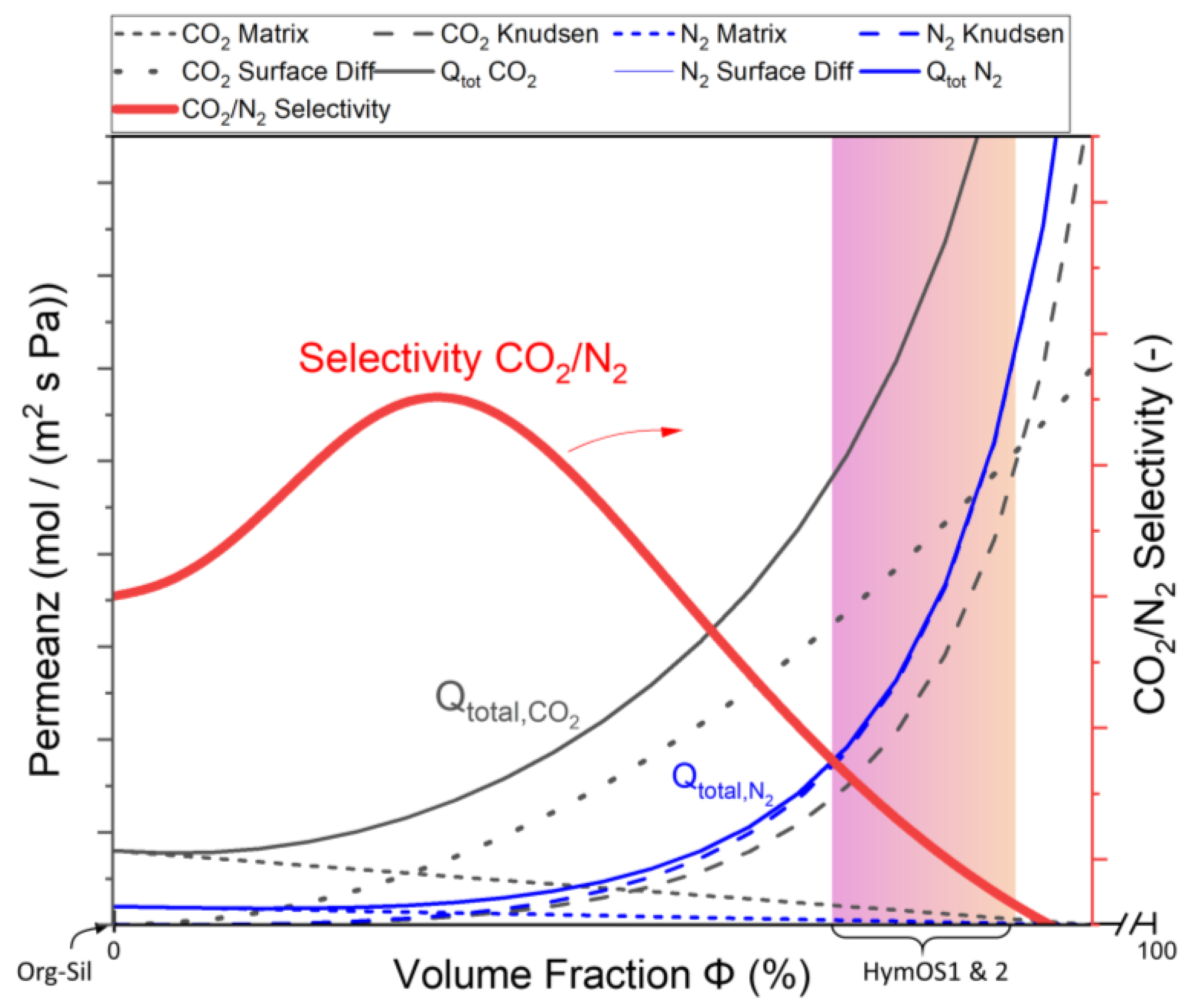


Mixed-Matrix Organo–Silica–Hydrotalcite Membrane for CO2 Separation Part 2: Permeation and Selectivity Study



Abstract
Share and Cite
Bünger, L.; Kurtz, T.; Garbev, K.; Stemmermann, P.; Stapf, D. Mixed-Matrix Organo–Silica–Hydrotalcite Membrane for CO2 Separation Part 2: Permeation and Selectivity Study. Membranes 2024, 14, 156. https://doi.org/10.3390/membranes14070156
Bünger L, Kurtz T, Garbev K, Stemmermann P, Stapf D. Mixed-Matrix Organo–Silica–Hydrotalcite Membrane for CO2 Separation Part 2: Permeation and Selectivity Study. Membranes. 2024; 14(7):156. https://doi.org/10.3390/membranes14070156
Chicago/Turabian StyleBünger, Lucas, Tim Kurtz, Krassimir Garbev, Peter Stemmermann, and Dieter Stapf. 2024. "Mixed-Matrix Organo–Silica–Hydrotalcite Membrane for CO2 Separation Part 2: Permeation and Selectivity Study" Membranes 14, no. 7: 156. https://doi.org/10.3390/membranes14070156
APA StyleBünger, L., Kurtz, T., Garbev, K., Stemmermann, P., & Stapf, D. (2024). Mixed-Matrix Organo–Silica–Hydrotalcite Membrane for CO2 Separation Part 2: Permeation and Selectivity Study. Membranes, 14(7), 156. https://doi.org/10.3390/membranes14070156