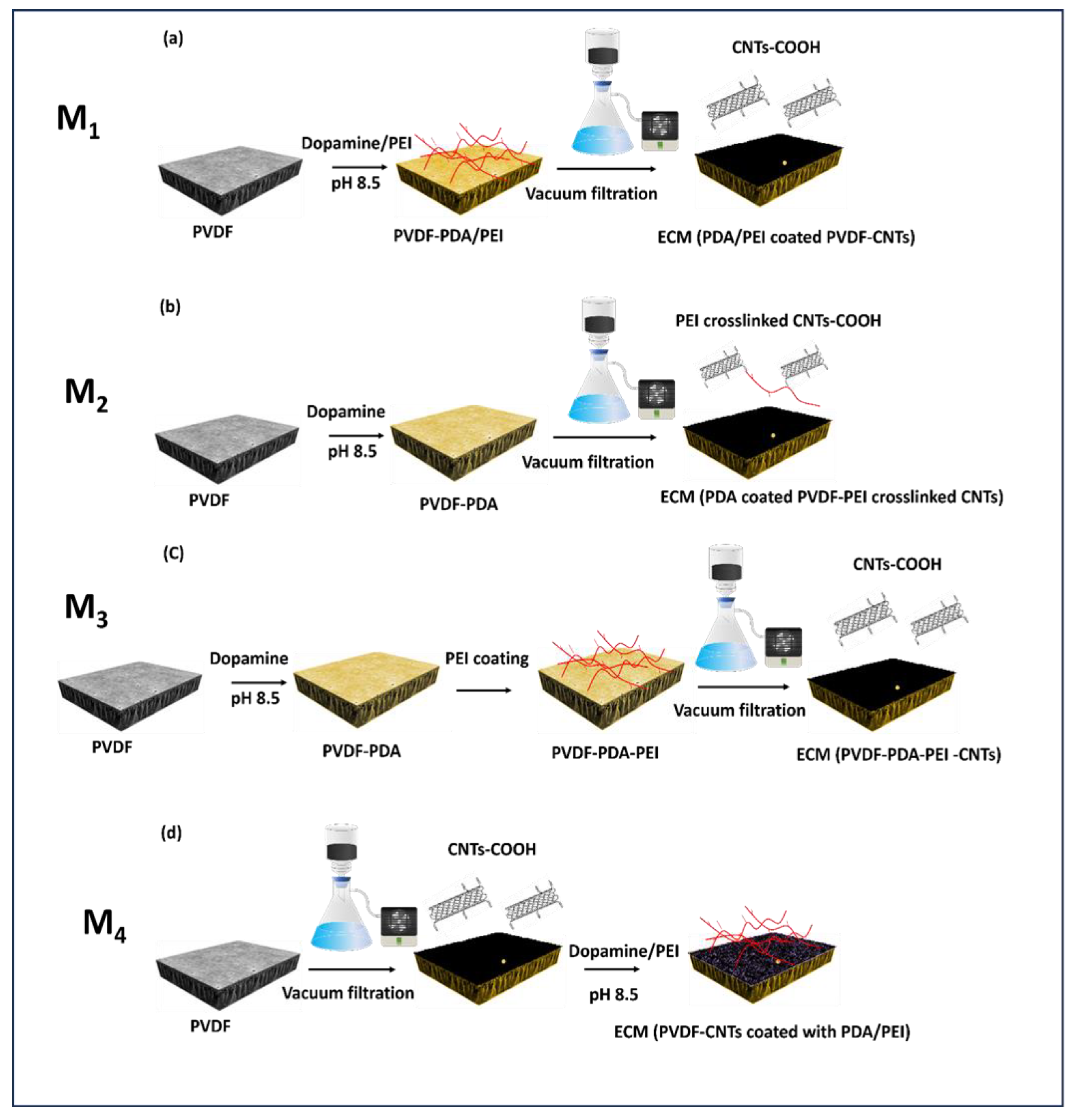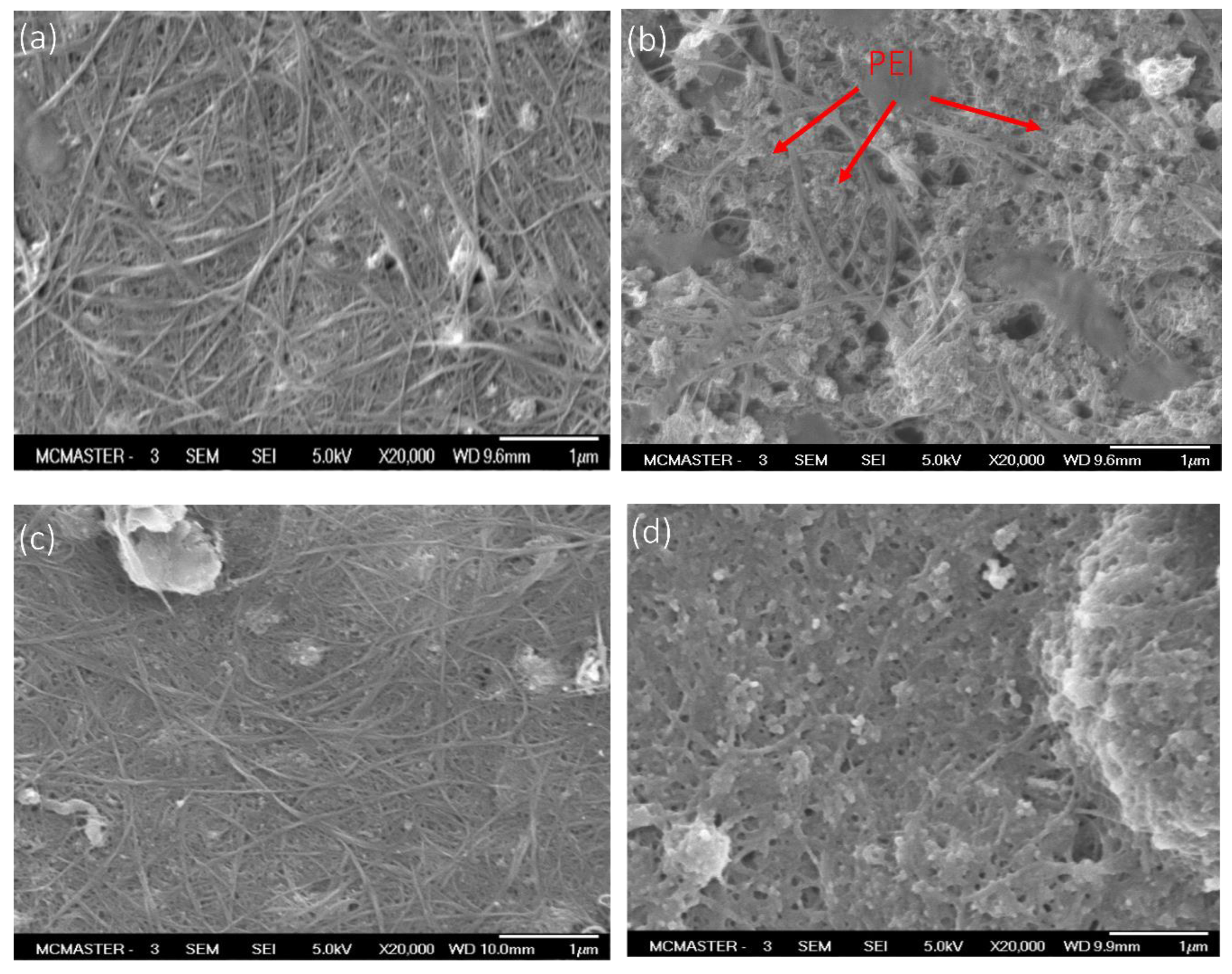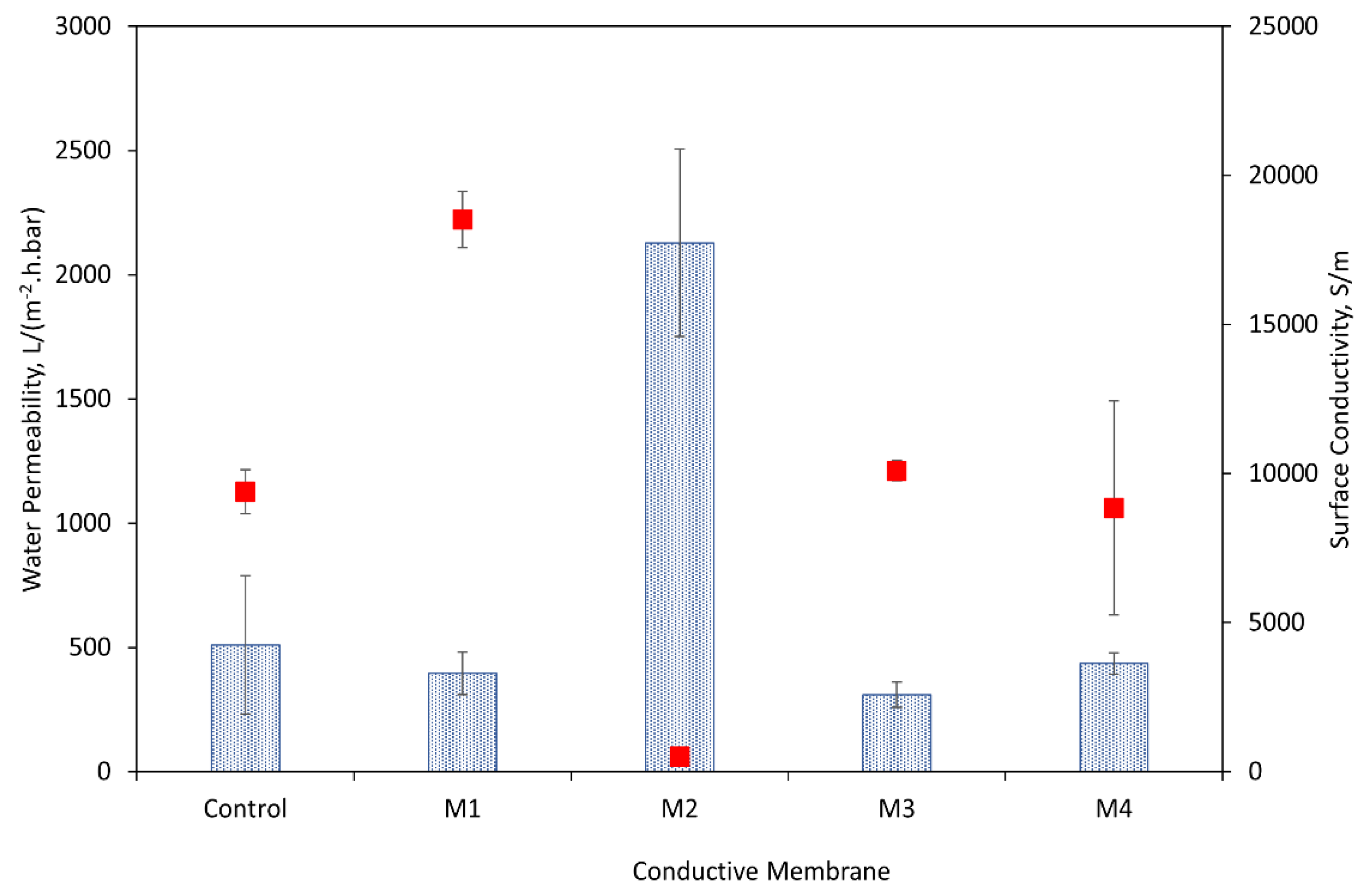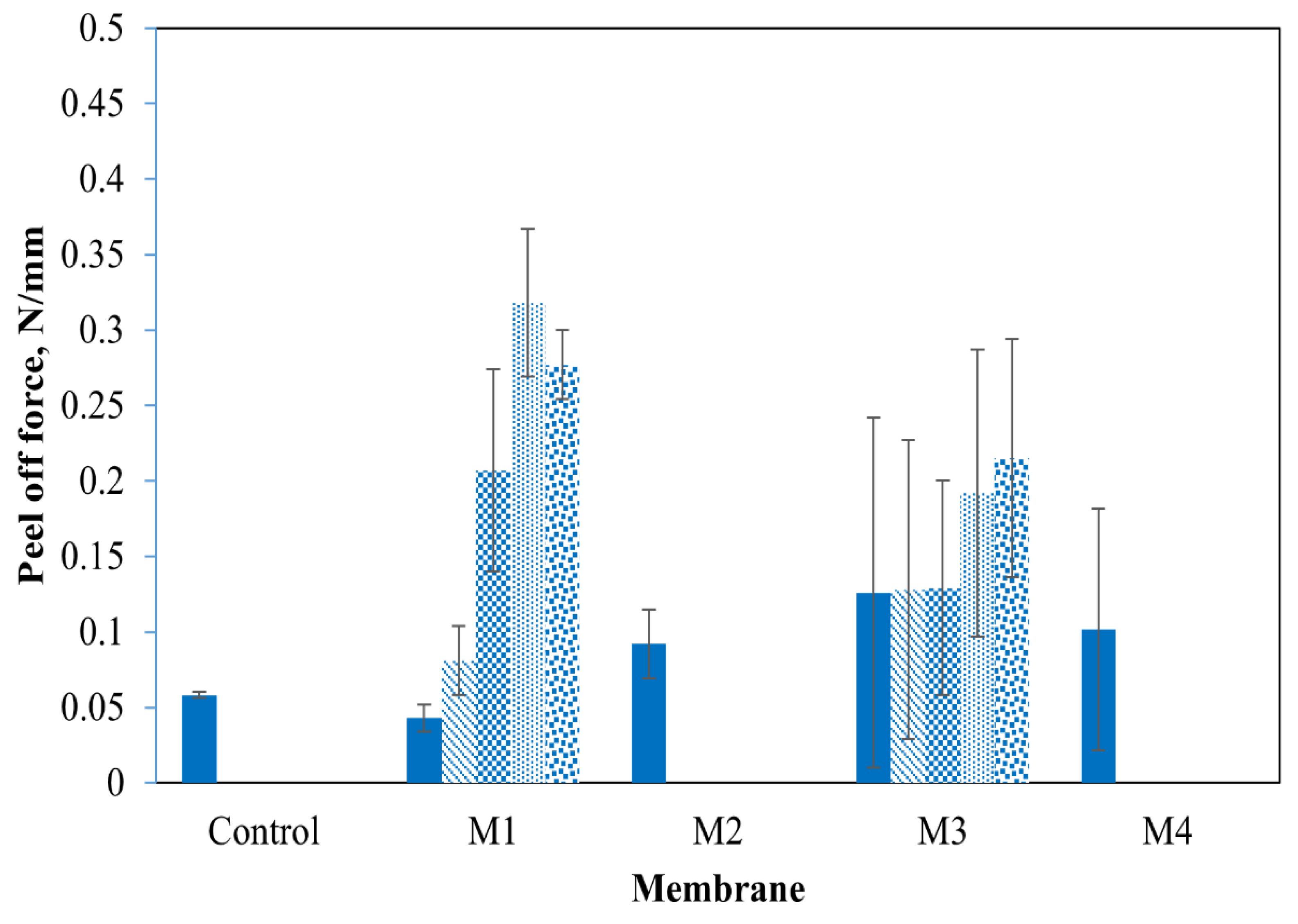


Production of Stable Electrically Conductive PVDF Membranes Based on Polydopamine-Polyethyleneimine—Assisted Deposition of Carbon Nanotubes



Abstract
Share and Cite
Awad, A.M.; de Lannoy, C.-F. Production of Stable Electrically Conductive PVDF Membranes Based on Polydopamine-Polyethyleneimine—Assisted Deposition of Carbon Nanotubes. Membranes 2024, 14, 94. https://doi.org/10.3390/membranes14040094
Awad AM, de Lannoy C-F. Production of Stable Electrically Conductive PVDF Membranes Based on Polydopamine-Polyethyleneimine—Assisted Deposition of Carbon Nanotubes. Membranes. 2024; 14(4):94. https://doi.org/10.3390/membranes14040094
Chicago/Turabian StyleAwad, Abdelrahman M., and Charles-François de Lannoy. 2024. "Production of Stable Electrically Conductive PVDF Membranes Based on Polydopamine-Polyethyleneimine—Assisted Deposition of Carbon Nanotubes" Membranes 14, no. 4: 94. https://doi.org/10.3390/membranes14040094
APA StyleAwad, A. M., & de Lannoy, C.-F. (2024). Production of Stable Electrically Conductive PVDF Membranes Based on Polydopamine-Polyethyleneimine—Assisted Deposition of Carbon Nanotubes. Membranes, 14(4), 94. https://doi.org/10.3390/membranes14040094