
Future Perspectives on the Application of Systems Biology and Generative Artificial Intelligence in the Design of Immunogenic Peptides for Vaccines

 , , and
Abstract
1. Introduction
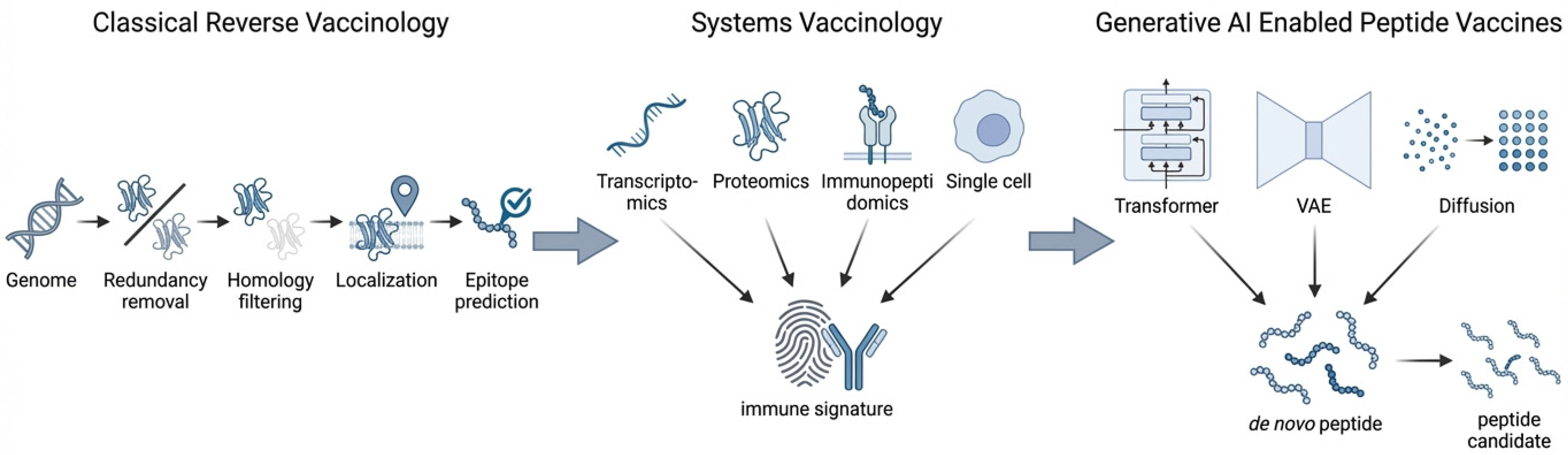
2. From Classical Reverse Vaccinology to Systems-Guided Antigen Selection
3. Antigenicity, Immunogenicity and Protective Efficacy: Moving Beyond Predictive Proxies
4. Generative Artificial Intelligence for Peptide and Multi-Epitope Vaccine Design
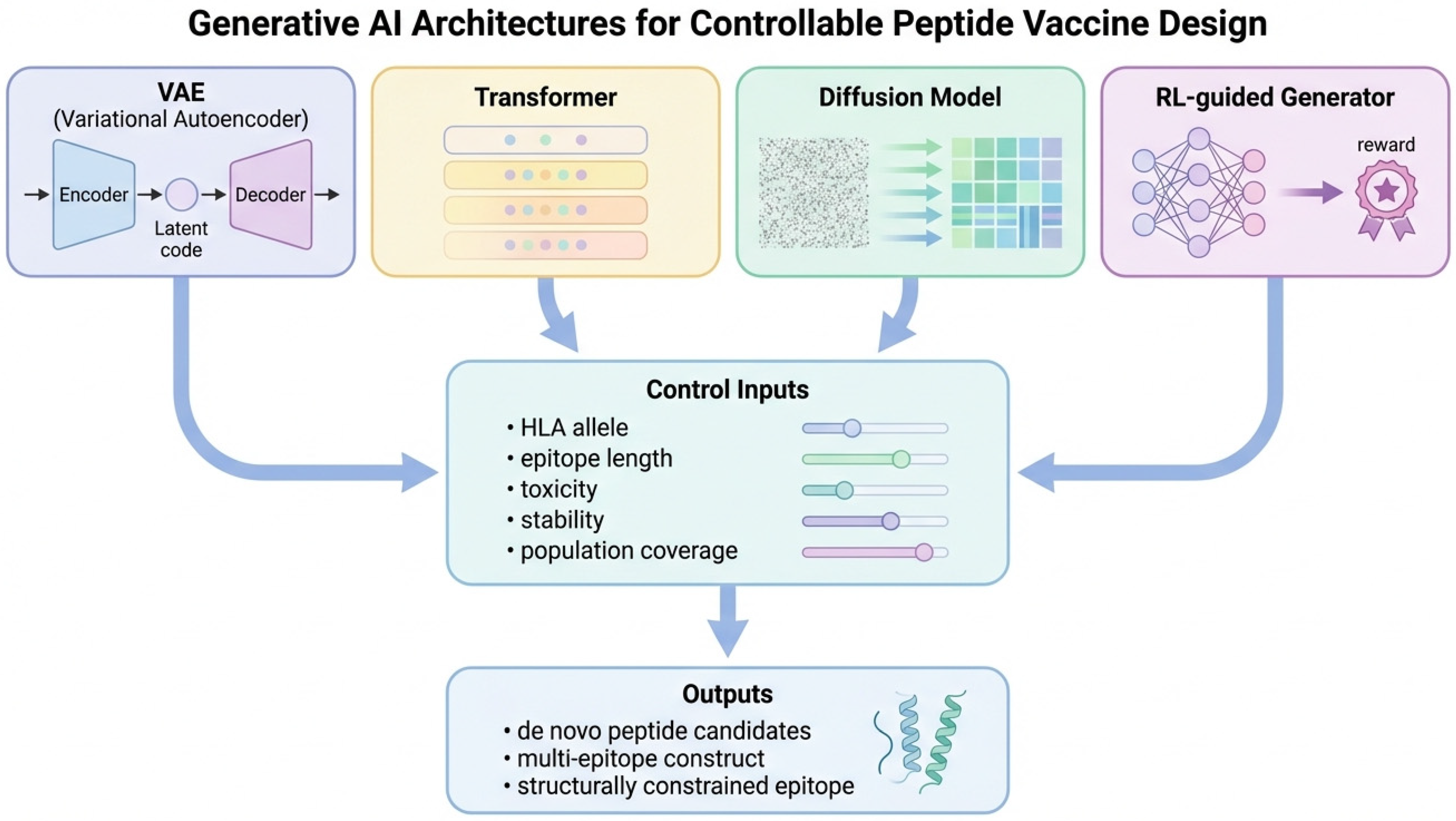
4.1. Generative Architectures for Controlled Peptide Design
4.2. Designing Multi-Epitope Vaccines with Generative AI
4.3. Integrating Immunological Constraints and Vaccine Performance Objectives
4.4. Toward Structurally Programmed Peptide Vaccines
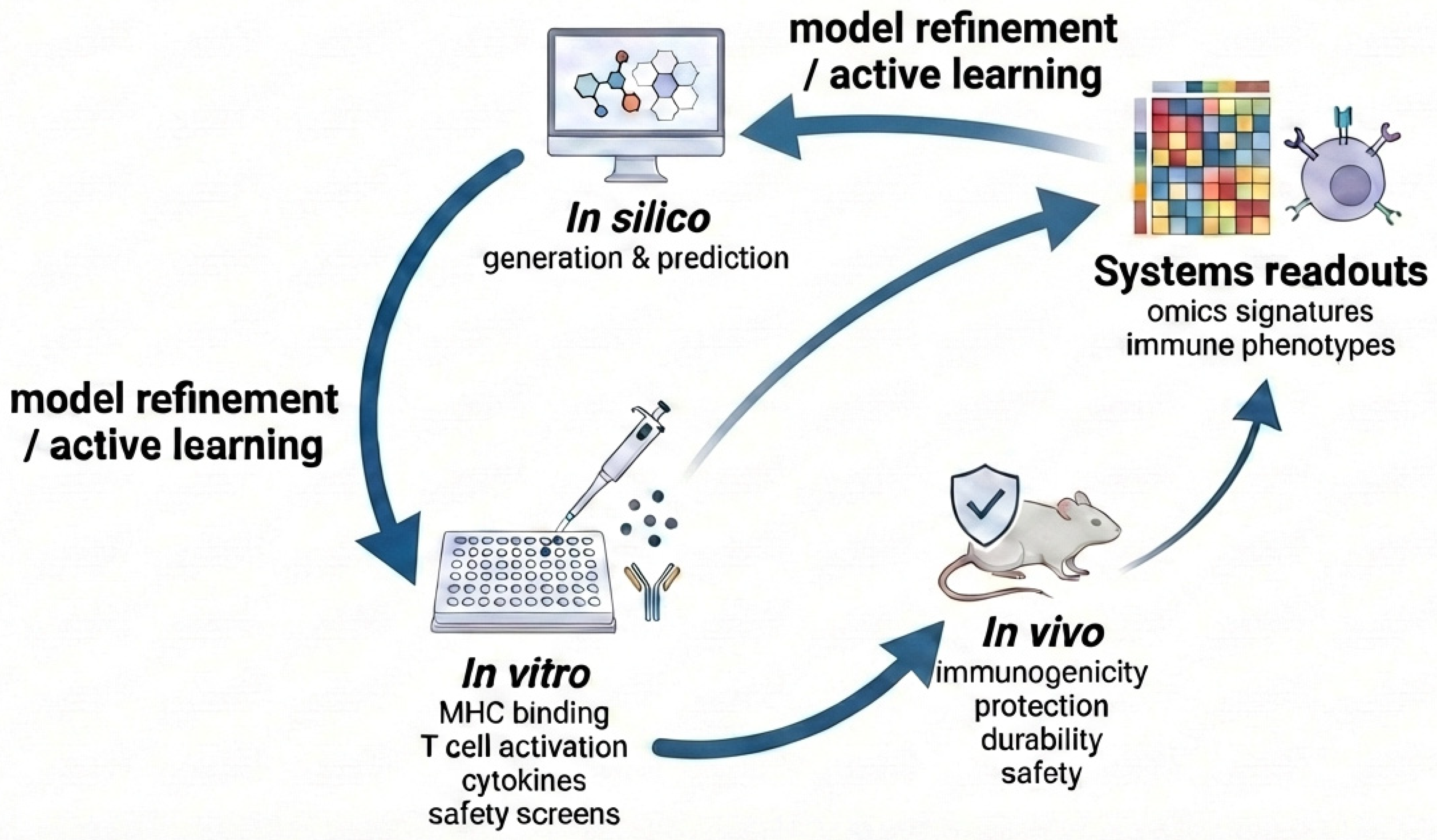
5. Experimental and Computational Integration: Closing the In Silico–In Vitro–In Vivo Loop
5.1. In Silico Design and Prioritization
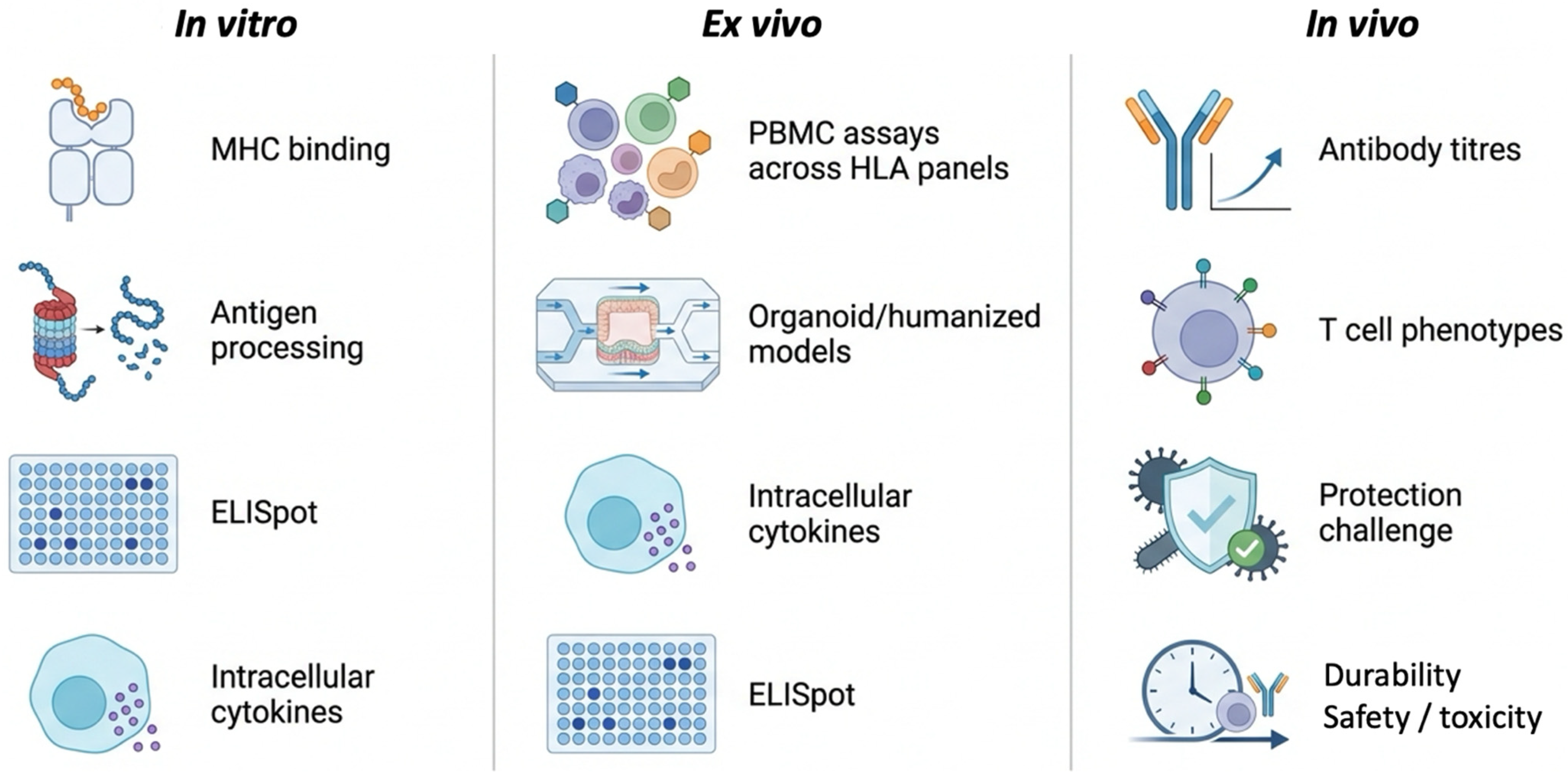
5.2. In Vitro Functional Validation
5.3. In Vivo Immunogenicity and Protective Efficacy
5.4. Systems-Level Feedback and Model Refinement
5.5. Toward Autonomous Vaccine Design Pipelines
6. Case Studies and Applications: From Infectious Disease to Cancer and Vector-Borne Vaccinology
6.1. Infectious Disease Vaccines: Multi-Epitope Design and Translational Validation
6.2. Therapeutic Peptide Vaccines: Cancer Immunotherapy as a Driver of Innovation
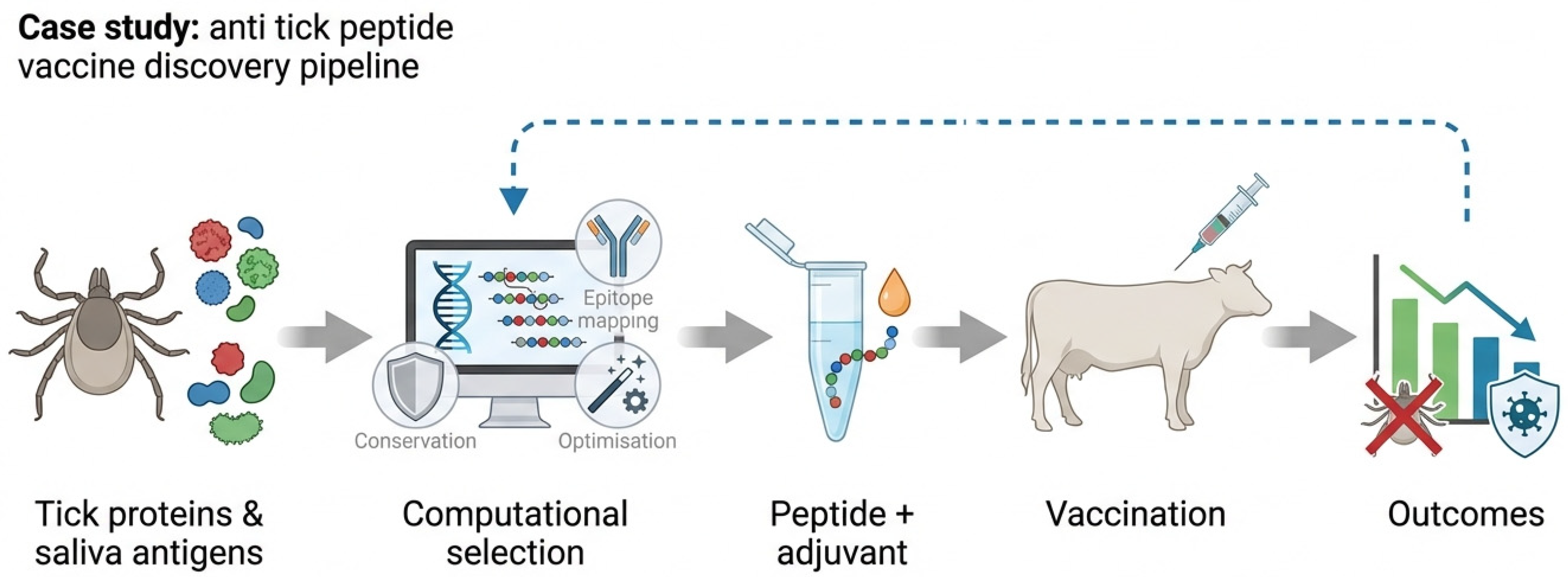
6.3. Tick and Vector-Borne Vaccinology: Opportunities for Peptide Vaccines and Systems-Guided Design
6.4. Lessons Across Case Studies: Common Bottlenecks and Translational Criteria
7. Challenges, Limitations and Future Perspectives
7.1. Data Scarcity, Bias, and the Gap Between Binding and Protection
7.2. Multi-Objective Optimization Remains Difficult in Real Vaccine Constraints
7.3. Experimental Validation Remains the Central Bottleneck
7.4. Closing the Loop: Active Learning and Integrated Experimental Platforms
7.5. Translation and Implementation: Formulation, Delivery, and Real-World Constraints
7.6. Future Perspective: Toward Precision Peptide Vaccinology
8. Conclusions
Author Contributions
Funding
Institutional Review Board Statement
Informed Consent Statement
Data Availability Statement
Acknowledgments
Conflicts of Interest
References
- Bravi, B. Development and use of machine learning algorithms in vaccine target selection. npj Vaccines 2024, 9, 15. [Google Scholar] [CrossRef] [Scilit]
- Rawal, K.; Sinha, R.; Abbasi, B.A.; Chaudhary, A.; Nath, S.K.; Kumari, P.; Preeti, P.; Saraf, D.; Singh, S.; Mishra, K. Identification of vaccine targets in pathogens and design of a vaccine using computational approaches. Sci. Rep. 2021, 11, 17626. [Google Scholar] [CrossRef] [Scilit]
- Osamor, V.C.; Ikeakanam, E.; Bishung, J.U.; Abiodun, T.N.; Ekpo, R.H. COVID-19 vaccines: Computational tools and development. Inform. Med. Unlocked 2023, 37, 101164. [Google Scholar] [CrossRef] [Scilit]
- Ananya; Panchariya, D.C.; Karthic, A.; Singh, S.P.; Mani, A.; Chawade, A.; Kushwaha, S. Vaccine design and development: Exploring the interface with computational biology and AI. Int. Rev. Immunol. 2024, 43, 361–380. [Google Scholar] [CrossRef] [Scilit]
- Bharadwaj, K.K.; Srivastava, A.; Panda, M.K.; Singh, Y.D.; Maharana, R.; Mandal, K.; Manisha Singh, B.; Singh, D.; Das, M.; Murmu, D. Computational intelligence in vaccine design against COVID-19. In Computational Intelligence Methods in COVID-19: Surveillance, Prevention, Prediction and Diagnosis; Springer: Berlin/Heidelberg, Germany, 2020; pp. 311–329. [Google Scholar]
- Buonaguro, L.; Tagliamonte, M. Peptide-based vaccine for cancer therapies. Front. Immunol. 2023, 14, 1210044. [Google Scholar] [CrossRef] [Scilit]
- Hemmati, S.; Saeidikia, Z.; Seradj, H.; Mohagheghzadeh, A. Immunomodulatory peptides as vaccine adjuvants and antimicrobial agents. Pharmaceuticals 2024, 17, 201. [Google Scholar] [CrossRef] [Scilit]
- Bhattacharya, M.; Lo, Y.-H.; Chatterjee, S.; Das, A.; Wen, Z.-H.; Chakraborty, C. Deep learning in next-generation vaccine development for infectious diseases. Mol. Ther. Nucleic Acids 2025, 36, 102586. [Google Scholar] [CrossRef] [Scilit]
- Malonis, R.J.; Lai, J.R.; Vergnolle, O. Peptide-based vaccines: Current progress and future challenges. Chem. Rev. 2019, 120, 3210–3229. [Google Scholar] [CrossRef] [Scilit]
- Nelde, A.; Rammensee, H.-G.; Walz, J.S. The Peptide Vaccine of the Future. Mol. Cell. Proteom. 2021, 20, 100022. [Google Scholar] [CrossRef] [Scilit]
- Garcia-Fogeda, I.; Besbassi, H.; Lariviere, Y.; Ogunjimi, B.; Abrams, S.; Hens, N. Within-host modeling to measure dynamics of antibody responses after natural infection or vaccination: A systematic review. Vaccine 2023, 41, 3701–3709. [Google Scholar] [CrossRef] [Scilit]
- Basmenj, E.R.; Pajhouh, S.R.; Fallah, A.E.; Rahimi, E.; Atighy, H.; Ghiabi, S.; Ghiabi, S. Computational epitope-based vaccine design with bioinformatics approach; A review. Heliyon 2025, 11, e41714. [Google Scholar] [CrossRef] [Scilit]
- Rappuoli, R.; Alter, G.; Pulendran, B. Transforming vaccinology. Cell 2024, 187, 5171–5194. [Google Scholar] [CrossRef] [Scilit]
- Allemailem, K.S. In Silico Development of a Chimeric Multi-Epitope Vaccine Targeting Helcococcus kunzii: Coupling Subtractive Proteomics and Reverse Vaccinology for Vaccine Target Discovery. Pharmaceuticals 2025, 18, 1258. [Google Scholar] [CrossRef] [Scilit] [PubMed]
- Van Regenmortel, M.H. Antigenicity and immunogenicity of synthetic peptides. Biologicals 2001, 29, 209–213. [Google Scholar] [CrossRef] [Scilit]
- Sobrino, I.; Villar, M.; de la Fuente, J. The path to anti-vector vaccines: Current advances and limitations in proteomics and bioinformatics. Expert Rev. Proteom. 2024, 21, 497–500. [Google Scholar] [CrossRef] [Scilit]
- Bian, Y.; Ci, Q.; Luo, X.M.; Zhang, C. Precision Adjuvant Strategies in Vaccine Development for Substance Use Disorders: Variability and Mechanistic Insights. Pharmaceutics 2025, 17, 1223. [Google Scholar] [CrossRef] [Scilit]
- Anderson, L.N.; Hoyt, C.T.; Zucker, J.D.; McNaughton, A.D.; Teuton, J.R.; Karis, K.; Arokium-Christian, N.N.; Warley, J.T.; Stromberg, Z.R.; Gyori, B.M. Computational tools and data integration to accelerate vaccine development: Challenges, opportunities, and future directions. Front. Immunol. 2025, 16, 1502484. [Google Scholar] [CrossRef] [Scilit]
- Russo, G.; Reche, P.; Pennisi, M.; Pappalardo, F. The combination of artificial intelligence and systems biology for intelligent vaccine design. Expert Opin. Drug Discov. 2020, 15, 1267–1281. [Google Scholar] [CrossRef] [Scilit]
- Wang, Y.; Ma, Y.; Chang, Y.; Yan, J.; Zhang, J.; Cai, M.; Wei, K. Diffusion Models at the Drug Discovery Frontier: A Review on Generating Small Molecules Versus Therapeutic Peptides. Biology 2025, 14, 1665. [Google Scholar] [CrossRef] [Scilit]
- Saleem, N.; Kumar, N.; El-Omar, E.; Willcox, M.; Jiang, X.-T. Harnessing Machine Learning Approaches for the Identification, Characterization, and Optimization of Novel Antimicrobial Peptides. Antibiotics 2025, 14, 1263. [Google Scholar] [CrossRef] [Scilit]
- Das, U. Transforming precision medicine through generative AI: Advanced architectures and tailored therapeutic design for patient-specific drug discovery. ChemistrySelect 2025, 10, e02448. [Google Scholar] [CrossRef] [Scilit]
- Robert, P.A.; Akbar, R.; Frank, R.; Pavlović, M.; Widrich, M.; Snapkov, I.; Slabodkin, A.; Chernigovskaya, M.; Scheffer, L.; Smorodina, E. Unconstrained generation of synthetic antibody–antigen structures to guide machine learning methodology for antibody specificity prediction. Nat. Comput. Sci. 2022, 2, 845–865. [Google Scholar] [CrossRef] [Scilit]
- Cao, L.; Coventry, B.; Goreshnik, I.; Huang, B.; Sheffler, W.; Park, J.S.; Jude, K.M.; Marković, I.; Kadam, R.U.; Verschueren, K.H. Design of protein-binding proteins from the target structure alone. Nature 2022, 605, 551–560. [Google Scholar] [CrossRef] [Scilit] [PubMed]
- Sharma, A.; Hsiao, Y.-C.; Dutta, A. System Theoretic Methods in Drug Discovery and Vaccine Formulation: Review and Perspectives. Drugs Drug Candidates 2025, 4, 28. [Google Scholar] [CrossRef] [Scilit]
- Gude, S.; Abburi, S.K.; Gali, P.K.; Gorlagunta, S. Advancing single-shot vaccine design through AI and computational models. Transl. Regul. Sci. 2025, 7, 8–14. [Google Scholar] [CrossRef] [Scilit]
- Soleymani, S.; Tavassoli, A.; Housaindokht, M.R. An overview of progress from empirical to rational design in modern vaccine development, with an emphasis on computational tools and immunoinformatics approaches. Comput. Biol. Med. 2022, 140, 105057. [Google Scholar] [CrossRef] [Scilit] [PubMed]
- Kumar, U.; Singhal, S.; Shende, K.; Khandia, R. Reverse vaccinology and applications as prophylactics. In Pathogenic Viruses and Armamentarium Design; Elsevier: Amsterdam, The Netherlands, 2024; pp. 127–143. [Google Scholar]
- Mulatu, H.; Assefa, S.; Abebe, H.; Ahmed, G. Review on Approaches to Reverse Vaccinology Against Dangerous Pathogens in Animals. J. Biol. Agric. Healthc. 2023, 13. [Google Scholar]
- Yuan, X.; Dong, J.; Xiang, Z.; Zhang, Q.; Tao, P.; Guo, A. A Genome-Wide Screening of Novel Immunogenic TrLSDV103 Protein of Lumpy Skin Disease Virus and Its Application for DIVA. FASEB J. 2025, 39, e70676. [Google Scholar] [CrossRef] [Scilit] [PubMed]
- Goodswen, S.J.; Kennedy, P.J.; Ellis, J.T. A guide to current methodology and usage of reverse vaccinology towards in silico vaccine discovery. FEMS Microbiol. Rev. 2023, 47, fuad004. [Google Scholar] [CrossRef] [Scilit]
- Mitra, A. Reverse vaccinology approaches for rapid vaccine design against emerging infectious diseases. In Frontiers in Anti-Infective Agents; Bentham Science Publishers: Sharjah, United Arab Emirates, 2021; Volume 6, pp. 1–18. [Google Scholar]
- Moxon, R.; Reche, P.A.; Rappuoli, R. Reverse vaccinology. Front. Immunol. 2019, 10, 2776. [Google Scholar] [CrossRef] [Scilit]
- Mayer, R.L.; Mechtler, K. Immunopeptidomics in the era of single-cell proteomics. Biology 2023, 12, 1514. [Google Scholar] [CrossRef] [Scilit] [PubMed]
- Ishino, T.; Watanabe, T.; Tokita, S.; Ueda, Y.; Kawase, K.; Takano, Y.; Thu, Y.M.; Suzuki, Y.; Owa, C.; Inozume, T. Immunopeptidomics combined with full-length transcriptomics uncovers diverse neoantigens. Cell Rep. 2026, 45, 116781. [Google Scholar] [CrossRef] [Scilit]
- Chong, C.; Coukos, G.; Bassani-Sternberg, M. Identification of tumor antigens with immunopeptidomics. Nat. Biotechnol. 2022, 40, 175–188. [Google Scholar] [CrossRef] [Scilit]
- Huang, X.; Gan, Z.; Cui, H.; Lan, T.; Liu, Y.; Caron, E.; Shao, W. The SysteMHC Atlas v2. 0, an updated resource for mass spectrometry-based immunopeptidomics. Nucleic Acids Res. 2024, 52, D1062–D1071. [Google Scholar] [CrossRef] [Scilit]
- Flender, D.; Vilenne, F.; Adams, C.; Boonen, K.; Valkenborg, D.; Baggerman, G. Exploring the dynamic landscape of immunopeptidomics: Unravelling posttranslational modifications and navigating bioinformatics terrain. Mass Spectrom. Rev. 2025, 44, 599–629. [Google Scholar] [CrossRef] [Scilit]
- Vo, T.H.; McNeela, E.; O’Donovan, O.; Rani, S.; Mehta, J.P. Artificial Intelligence and the Evolving Landscape of Immunopeptidomics. Proteom. Clin. Appl. 2025, 19, e70018. [Google Scholar] [CrossRef] [Scilit]
- Gfeller, D.; Bassani-Sternberg, M. Predicting Antigen Presentation—What Could We Learn From a Million Peptides? Front. Immunol. 2018, 9, 1716. [Google Scholar] [CrossRef] [Scilit]
- Abelin, J.G.; Keskin, D.B.; Sarkizova, S.; Hartigan, C.R.; Zhang, W.; Sidney, J.; Stevens, J.; Lane, W.; Zhang, G.L.; Eisenhaure, T.M. Mass spectrometry profiling of HLA-associated peptidomes in mono-allelic cells enables more accurate epitope prediction. Immunity 2017, 46, 315–326. [Google Scholar] [CrossRef] [Scilit]
- Shinde, P.; Soldevila, F.; Reyna, J.; Aoki, M.; Rasmussen, M.; Willemsen, L.; Kojima, M.; Ha, B.; Greenbaum, J.A.; Overton, J.A. A multi-omics systems vaccinology resource to develop and test computational models of immunity. Cell Rep. Methods 2024, 4, 100731. [Google Scholar] [CrossRef] [Scilit] [PubMed]
- Wang, R.; Hu, H.; Chen, Y.; Yang, W.; Li, C.; Chen, M.; Cheng, R.; Zhang, Z. Decoding vaccine-induced immunity: From systems vaccinology to artificial intelligence-driven precision vaccines. hLife, 2025; in press. [CrossRef] [Scilit]
- Montin, D.; Santilli, V.; Beni, A.; Costagliola, G.; Martire, B.; Mastrototaro, M.F.; Ottaviano, G.; Rizzo, C.; Sgrulletti, M.; Miraglia Del Giudice, M. Towards personalized vaccines. Front. Immunol. 2024, 15, 1436108. [Google Scholar] [CrossRef] [Scilit]
- Zameer, S.; Mehdi, A.; Haider, R.; Das, G.K.; Ahmed, Z. System Vaccinology: Applications, Trends, and Perspectives. iManag. J. Life Sci. 2024, 3, 42. [Google Scholar]
- Estrada, E. Virtual identification of essential proteins within the protein interaction network of yeast. Proteomics 2006, 6, 35–40. [Google Scholar] [CrossRef] [Scilit] [PubMed]
- Szklarczyk, D.; Kirsch, R.; Koutrouli, M.; Nastou, K.; Mehryary, F.; Hachilif, R.; Gable, A.L.; Fang, T.; Doncheva, N.T.; Pyysalo, S.; et al. The STRING database in 2023: Protein-protein association networks and functional enrichment analyses for any sequenced genome of interest. Nucleic Acids Res. 2023, 51, D638–D646. [Google Scholar] [CrossRef] [Scilit] [PubMed]
- Beste, D.J.; Hooper, T.; Stewart, G.; Bonde, B.; Avignone-Rossa, C.; Bushell, M.E.; Wheeler, P.; Klamt, S.; Kierzek, A.M.; McFadden, J. GSMN-TB: A web-based genome-scale network model of Mycobacterium tuberculosis metabolism. Genome. Biol. 2007, 8, R89. [Google Scholar] [CrossRef] [Scilit]
- Gomase, V.S.; Dhamane, S.P.; Kemkar, K.R.; Kakade, P.G.; Sakhare, A.D. Immunoproteomics: Approach to diagnostic and vaccine development. Protein Pept. Lett. 2024, 31, 773–795. [Google Scholar] [CrossRef] [Scilit]
- Li, J.P.; Guo, W.; Zou, P.; Chu, C.; Wu, J.; Guo, Z.; Huang, Y.; Yang, J.; Chen, P.R. Molecular tools for decoding multicellular systems: From mechanisms to medicine. Natl. Sci. Rev. 2025, 12, nwaf473. [Google Scholar] [CrossRef] [Scilit]
- Clemente-Suárez, V.J.; Redondo-Flórez, L.; Bustamante-Sánchez, A.; Martín-Rodríguez, A.; Yáñez-Sepúlveda, R.; Tornero-Aguilera, J.F. Biometric Strategies to Improve Vaccine Immunogenicity and Effectiveness. Biomimetics 2025, 10, 439. [Google Scholar] [CrossRef] [Scilit]
- Zhang, Y.; Pei, Y.; Tan, D.; Du, Y.; Cai, T.; Zhang, Y.; He, Q. From Silicon to Serum: The Critical Path of Validating Computational Predictions in Modern Vaccinology. Preprints 2025, 2025110078. [Google Scholar] [CrossRef] [Scilit]
- El Arab, R.A.; Alkhunaizi, M.; Alhashem, Y.N.; Al Khatib, A.; Bubsheet, M.; Hassanein, S. Artificial intelligence in vaccine research and development: An umbrella review. Front. Immunol. 2025, 16, 1567116. [Google Scholar] [CrossRef] [Scilit]
- Bassani-Sternberg, M.; Bräunlein, E.; Klar, R.; Engleitner, T.; Sinitcyn, P.; Audehm, S.; Straub, M.; Weber, J.; Slotta-Huspenina, J.; Specht, K.; et al. Direct identification of clinically relevant neoepitopes presented on native human melanoma tissue by mass spectrometry. Nat. Commun. 2016, 7, 13404. [Google Scholar] [CrossRef] [Scilit]
- Wang, Y.; Wang, X.; Luu, L.D.W.; Li, J.; Cui, X.; Yao, H.; Chen, S.; Fu, J.; Wang, L.; Wang, C.; et al. Single-cell transcriptomic atlas reveals distinct immunological responses between COVID-19 vaccine and natural SARS-CoV-2 infection. J. Med. Virol. 2022, 94, 5304–5324. [Google Scholar] [CrossRef] [Scilit]
- Emerson, R.O.; DeWitt, W.S.; Vignali, M.; Gravley, J.; Hu, J.K.; Osborne, E.J.; Desmarais, C.; Klinger, M.; Carlson, C.S.; Hansen, J.A.; et al. Immunosequencing identifies signatures of cytomegalovirus exposure history and HLA-mediated effects on the T cell repertoire. Nat. Genet. 2017, 49, 659–665. [Google Scholar] [CrossRef] [Scilit]
- Pogorelyy, M.V.; Kirk, A.M.; Adhikari, S.; Minervina, A.A.; Sundararaman, B.; Vegesana, K.; Brice, D.C.; Scott, Z.B.; Thomas, P.G. TIRTL-seq: Deep, quantitative and affordable paired TCR repertoire sequencing. Nat. Methods 2026, 23, 56–64. [Google Scholar] [CrossRef] [Scilit]
- Nakaya, H.I.; Wrammert, J.; Lee, E.K.; Racioppi, L.; Marie-Kunze, S.; Haining, W.N.; Means, A.R.; Kasturi, S.P.; Khan, N.; Li, G.M.; et al. Systems biology of vaccination for seasonal influenza in humans. Nat. Immunol. 2011, 12, 786–795. [Google Scholar] [CrossRef] [Scilit]
- Tsang, J.S. Utilizing population variation, vaccination, and systems biology to study human immunology. Trends Immunol. 2015, 36, 479–493. [Google Scholar] [CrossRef] [Scilit]
- Arunachalam, P.S.; Scott, M.K.D.; Hagan, T.; Li, C.; Feng, Y.; Wimmers, F.; Grigoryan, L.; Trisal, M.; Edara, V.V.; Lai, L.; et al. Systems vaccinology of the BNT162b2 mRNA vaccine in humans. Nature 2021, 596, 410–416. [Google Scholar] [CrossRef] [Scilit]
- Querec, T.D.; Akondy, R.S.; Lee, E.K.; Cao, W.; Nakaya, H.I.; Teuwen, D.; Pirani, A.; Gernert, K.; Deng, J.; Marzolf, B.; et al. Systems biology approach predicts immunogenicity of the yellow fever vaccine in humans. Nat. Immunol. 2009, 10, 116–125. [Google Scholar] [CrossRef] [Scilit]
- Yang, B.; Sayers, S.; Xiang, Z.; He, Y. Protegen: A web-based protective antigen database and analysis system. Nucleic Acids Res. 2010, 39, D1073–D1078. [Google Scholar] [CrossRef] [Scilit]
- De Groot, A.S. Immunomics: Discovering new targets for vaccines and therapeutics. Drug Discov. Today 2006, 11, 203–209. [Google Scholar] [CrossRef] [Scilit]
- Harndahl, M.; Rasmussen, M.; Roder, G.; Dalgaard Pedersen, I.; Sørensen, M.; Nielsen, M.; Buus, S. Peptide-MHC class I stability is a better predictor than peptide affinity of CTL immunogenicity. Eur. J. Immunol. 2012, 42, 1405–1416. [Google Scholar] [CrossRef] [Scilit]
- Jameson, S.C.; Masopust, D. Diversity in T cell memory: An embarrassment of riches. Immunity 2009, 31, 859–871. [Google Scholar] [CrossRef] [Scilit]
- Lam, N.; Lee, Y.; Farber, D.L. A guide to adaptive immune memory. Nat. Rev. Immunol. 2024, 24, 810–829. [Google Scholar] [CrossRef] [Scilit]
- Muruganandah, V.; Sathkumara, H.D.; Navarro, S.; Kupz, A. A systematic review: The role of resident memory T cells in infectious diseases and their relevance for vaccine development. Front. Immunol. 2018, 9, 1574. [Google Scholar] [CrossRef] [Scilit]
- Netea, M.G.; Domínguez-Andrés, J.; Barreiro, L.B.; Chavakis, T.; Divangahi, M.; Fuchs, E.; Joosten, L.A.; van der Meer, J.W.; Mhlanga, M.M.; Mulder, W.J. Defining trained immunity and its role in health and disease. Nat. Rev. Immunol. 2020, 20, 375–388. [Google Scholar] [CrossRef] [Scilit]
- Villanueva-Flores, F.; Sanchez-Villamil, J.I.; Garcia-Atutxa, I. AI-driven epitope prediction: A systematic review, comparative analysis, and practical guide for vaccine development. npj Vaccines 2025, 10, 207. [Google Scholar] [CrossRef] [Scilit]
- Vitiello, A.; Zanetti, M. Neoantigen prediction and the need for validation. Nat. Biotechnol. 2017, 35, 815–817. [Google Scholar] [CrossRef] [Scilit]
- Germain, R.N.; Meier-Schellersheim, M.; Nita-Lazar, A.; Fraser, I.D. Systems biology in immunology: A computational modeling perspective. Annu. Rev. Immunol. 2011, 29, 527–585. [Google Scholar] [CrossRef] [Scilit]
- Ducret, A.; Ackaert, C.; Bessa, J.; Bunce, C.; Hickling, T.; Jawa, V.; Kroenke, M.A.; Lamberth, K.; Manin, A.; Penny, H.L. Assay format diversity in pre-clinical immunogenicity risk assessment: Toward a possible harmonization of antigenicity assays. In Mabs; Taylor & Francis: Oxfordshire, UK, 2022; p. 1993522. [Google Scholar]
- Assarsson, E.; Bui, H.H.; Sidney, J.; Zhang, Q.; Glenn, J.; Oseroff, C.; Mbawuike, I.N.; Alexander, J.; Newman, M.J.; Grey, H.; et al. Immunomic analysis of the repertoire of T-cell specificities for influenza A virus in humans. J. Virol. 2008, 82, 12241–12251. [Google Scholar] [CrossRef] [Scilit]
- Yewdell, J.W. Confronting Complexity: Real-World Immunodominance in Antiviral CD8+ T Cell Responses. Immunity 2006, 25, 533–543. [Google Scholar] [CrossRef] [Scilit]
- Biswas, N.; Chakrabarti, S.; Padul, V.; Jones, L.D.; Ashili, S. Designing neoantigen cancer vaccines, trials, and outcomes. Front. Immunol. 2023, 14, 1105420. [Google Scholar] [CrossRef] [Scilit]
- Katsikis, P.D.; Ishii, K.J.; Schliehe, C. Challenges in developing personalized neoantigen cancer vaccines. Nat. Rev. Immunol. 2024, 24, 213–227. [Google Scholar] [CrossRef] [Scilit]
- Wang, R.; Lan, C.; Benlagha, K.; Camara, N.O.S.; Miller, H.; Kubo, M.; Heegaard, S.; Lee, P.; Yang, L.; Forsman, H.; et al. The interaction of innate immune and adaptive immune system. MedComm 2024, 5, e714. [Google Scholar] [CrossRef] [Scilit]
- Weerarathna, I.N.; Doelakeh, E.S.; Kiwanuka, L.; Kumar, P.; Arora, S. Prophylactic and therapeutic vaccine development: Advancements and challenges. Mol. Biomed. 2024, 5, 57. [Google Scholar] [CrossRef] [Scilit]
- Ferruz, N.; Schmidt, S.; Höcker, B. ProtGPT2 is a deep unsupervised language model for protein design. Nat. Commun. 2022, 13, 4348. [Google Scholar] [CrossRef] [Scilit]
- Watson, J.L.; Juergens, D.; Bennett, N.R.; Trippe, B.L.; Yim, J.; Eisenach, H.E.; Ahern, W.; Borst, A.J.; Ragotte, R.J.; Milles, L.F. De novo design of protein structure and function with RFdiffusion. Nature 2023, 620, 1089–1100. [Google Scholar] [CrossRef] [Scilit]
- Dauparas, J.; Anishchenko, I.; Bennett, N.; Bai, H.; Ragotte, R.J.; Milles, L.F.; Wicky, B.I.M.; Courbet, A.; de Haas, R.J.; Bethel, N.; et al. Robust deep learning–based protein sequence design using ProteinMPNN. Science 2022, 378, 49–56. [Google Scholar] [CrossRef] [Scilit]
- Purcell, A.W.; McCluskey, J.; Rossjohn, J. More than one reason to rethink the use of peptides in vaccine design. Nat. Rev. Drug Discov. 2007, 6, 404–414. [Google Scholar] [CrossRef] [Scilit]
- Negahdaripour, M.; Nezafat, N.; Eslami, M.; Ghoshoon, M.B.; Shoolian, E.; Najafipour, S.; Morowvat, M.H.; Dehshahri, A.; Erfani, N.; Ghasemi, Y. Structural vaccinology considerations for in silico designing of a multi-epitope vaccine. Infect. Genet. Evol. 2018, 58, 96–109. [Google Scholar] [CrossRef] [Scilit]
- Lei, Y.; Tsang, J.S. Systems Human Immunology and AI: Immune Setpoint and Immune Health. Annu. Rev. Immunol. 2025, 43, 693–722. [Google Scholar] [CrossRef] [Scilit]
- Ott, P.A.; Hu, Z.; Keskin, D.B.; Shukla, S.A.; Sun, J.; Bozym, D.J.; Zhang, W.; Luoma, A.; Giobbie-Hurder, A.; Peter, L.; et al. An immunogenic personal neoantigen vaccine for patients with melanoma. Nature 2017, 547, 217–221. [Google Scholar] [CrossRef] [Scilit]
- Sahin, U.; Derhovanessian, E.; Miller, M.; Kloke, B.P.; Simon, P.; Löwer, M.; Bukur, V.; Tadmor, A.D.; Luxemburger, U.; Schrörs, B.; et al. Personalized RNA mutanome vaccines mobilize poly-specific therapeutic immunity against cancer. Nature 2017, 547, 222–226. [Google Scholar] [CrossRef] [Scilit]
- Jiang, F.; Han, Y.; Liu, Y.; Xue, Y.; Cheng, P.; Xiao, L.; Gong, W. A comprehensive approach to developing a multi-epitope vaccine against Mycobacterium tuberculosis: From in silico design to in vitro immunization evaluation. Front. Immunol. 2023, 14, 1280299. [Google Scholar] [CrossRef] [Scilit]
- Memarnejadian, A.; Roohvand, F.; Arashkia, A.; Rafati, S.; Shokrgozar, M.A. Polytope DNA vaccine development against hepatitis C virus: A streamlined approach from in silico design to in vitro and primary in vivo analyses in BALB/c mice. Protein Pept. Lett. 2009, 16, 842–850. [Google Scholar] [CrossRef] [Scilit]
- Lu, J.; du Plessis, L.; Liu, Z.; Hill, V.; Kang, M.; Lin, H.; Sun, J.; François, S.; Kraemer, M.U.G.; Faria, N.R.; et al. Genomic Epidemiology of SARS-CoV-2 in Guangdong Province, China. Cell 2020, 181, 997–1003.e1009. [Google Scholar] [CrossRef] [Scilit]
- Cortese, M.; Hagan, T.; Rouphael, N.; Wu, S.-Y.; Xie, X.; Kazmin, D.; Wimmers, F.; Gupta, S.; van der Most, R.; Coccia, M. System vaccinology analysis of predictors and mechanisms of antibody response durability to multiple vaccines in humans. Nat. Immunol. 2025, 26, 116–130. [Google Scholar] [CrossRef] [Scilit]
- Kaushik, V.; Jain, P.; Akhtar, N.; Joshi, A.; Gupta, L.R.; Grewal, R.K.; Oliva, R.; Shaikh, A.R.; Cavallo, L.; Chawla, M. Immunoinformatics-Aided Design and In Vivo Validation of a Peptide-Based Multiepitope Vaccine Targeting Canine Circovirus. ACS Pharmacol. Transl. Sci. 2022, 5, 679–691. [Google Scholar] [CrossRef] [Scilit]
- Kaushik, V.; Sunil Krishnan, G.; Gupta, L.R.; Kalra, U.; Shaikh, A.R.; Cavallo, L.; Chawla, M. Immunoinformatics Aided Design and In-Vivo Validation of a Cross-Reactive Peptide Based Multi-Epitope Vaccine Targeting Multiple Serotypes of Dengue Virus. Front. Immunol. 2022, 13, 865180. [Google Scholar] [CrossRef] [Scilit]
- Zhou, P.; Shi, X.; Xia, J.; Hu, H. In silico design and in vitro validation of a multi-epitope peptide vaccine targeting triple-negative breast cancer. Front. Oncol. 2025, 15, 1611991. [Google Scholar] [CrossRef] [Scilit]
- Kabi, F.; Contreras, M.; Semakula, J.; Sánchez-Sánchez, M.; Muñoz-Hernández, C.; Mugerwa, S.; Kasaija, P.; Kirunda, H.; de la Fuente, G.; Fernández-Melgar, R. Evaluation of effectiveness and safety of Subolesin anti-tick vaccine in Ugandan multi-site field trial. npj Vaccines 2024, 9, 174. [Google Scholar] [CrossRef] [Scilit]
- Kasaija, P.D.; Contreras, M.; Kirunda, H.; Nanteza, A.; Kabi, F.; Mugerwa, S.; de la Fuente, J. Inspiring Anti-Tick Vaccine Research, Development and Deployment in Tropical Africa for the Control of Cattle Ticks: Review and Insights. Vaccines 2023, 11, 99. [Google Scholar] [CrossRef] [Scilit]
- Lee, W.; Barbosa, A.D.; Irwin, P.J.; Currie, A.; Kollmann, T.R.; Beaman, M.; Lee, A.H.; Oskam, C.L. A systems biology approach to better understand human tick-borne diseases. Trends Parasitol. 2023, 39, 53–69. [Google Scholar] [CrossRef] [Scilit]
- Delaunay, A.; McGibbon, M.; Djermani, B.; Gorbushin, N.; Chaves García-Mascaraque, S.; Rayment, I.; Kizhvatov, I.; Petit, C.; Lang, M.; Beguir, K.; et al. Assessing data size requirements for training generalizable sequence-based TCR specificity models via pan-allelic MHC-I point-mutation ligandome evaluation. Sci. Rep. 2025, 15, 42384. [Google Scholar] [CrossRef] [Scilit] [PubMed]
- Rafi, A.M.; Kiyota, B.; Yachie, N.; de Boer, C. Detecting and avoiding homology-based data leakage in genome-trained sequence models. bioRxiv 2025, 2025-01. [Google Scholar] [CrossRef] [Scilit]
- Ren, J.; Liu, Q.; Ellis, J.; Li, J. Positive-unlabeled learning for the prediction of conformational B-cell epitopes. BMC Bioinform. 2015, 16, S12. [Google Scholar] [CrossRef] [Scilit] [PubMed]
- Xu, S.; Kelkar, N.S.; Ackerman, M.E. Positive-unlabeled learning to infer protection status and identify correlates in vaccine efficacy field trials. iScience 2024, 27, 109086. [Google Scholar] [CrossRef] [Scilit] [PubMed]



| Experimental Platform | Type of Immune Information Obtained | Contribution to Antigen Selection | Representative Original Studies |
|---|---|---|---|
| Immunopeptidomics (LC–MS/MS) | Naturally processed and presented MHC ligands | Direct measurement of true antigenic landscape; validation of epitope processing and presentation | [41,54] |
| Single cell transcriptomics | Cell state resolution and immune activation programs | Identification of immune response signatures and correlates of protection | [55] |
| Immune repertoire sequencing | Clonal expansion and antigen-driven selection | Tracking of adaptive immune dynamics and vaccine induced clonotypes | [56,57] |
| Systems vaccinology | Integrated immune signatures following vaccination | Prediction of vaccine efficacy, durability and reactogenicity | [58,59] |
| Multi-omics immune profiling | Coordinated regulation across molecular layers | Contextualization of antigen selection within immune networks | [60,61] |
| Level | Core Biological Question | Dominant Computational Proxies | Required Experimental Validation |
|---|---|---|---|
| Antigenicity | Can the peptide bind an immune receptor (TCR or BCR)? | MHC binding affinity, epitope prediction, structural docking | MHC binding assays, structural validation |
| Immunogenicity | Can the peptide trigger and sustain an immune response? | Epitope density, predicted processing, population HLA coverage | Antigen processing assays, T-cell activation, cytokine profiling |
| Protective efficacy | Does the induced immune response prevent disease or infection? | Composite scores, surrogate immune correlates | Animal challenge models, protection studies, durability and safety assessments |
| Model Class | Design Capability | Conditioning Objectives | Key Advantages for Vaccines |
|---|---|---|---|
| VAE | Continuous latent design | Immunogenicity, stability | Well suited for smooth optimization and diversity |
| Transformer | Sequence generation | HLA binding, length, composition | Effective modeling of long-range dependencies |
| Reinforcement learning | Multi-objective optimization | MHC affinity, toxicity, solubility | Supports explicit control of design trade-offs |
| Diffusion models | Structure-aware generation | Geometry, epitope display | Enables high structural fidelity under appropriate constraints |
| Hybrid pipelines | End-to-end design | Immunogenic + manufacturability | Facilitates translational readiness when integrated end-to-end |
| Stage | Primary Objectives | Key Methods | Design Decisions Informed |
|---|---|---|---|
| In silico | Candidate generation and prioritization | Generative AI, epitope prediction, population modeling | Sequence selection, construct optimization |
| In vitro | Functional immunological screening | MHC binding, antigen processing, T-cell activation, cytokine assays | Candidate filtering, model retraining |
| In vivo | Protective efficacy and safety | Animal challenge, immune memory analysis, toxicity studies | Final candidate selection, formulation refinement |
| Systems feedback | Model refinement and learning | Multi-omics integration, immune signature analysis | Feature weighting, objective redefinition |
| Application Domain | Target | Computational Strategy | Experimental Validation | Key Outcome |
|---|---|---|---|---|
| Infectious disease | Canine circovirus | Multi-epitope immunoinformatics | In vivo immunogenicity | Measurable immune responses |
| Infectious disease | Dengue virus | Cross-serotype epitope design | In vivo protection | Broad immune activation |
| Cancer immunotherapy | Triple-negative breast cancer | Multi-epitope peptide design | In vitro functional assays | Tumor-directed immune activation |
| Vector-borne disease | Tick Subolesin | Systems-guided antigen selection | Field vaccination studies | Reduced tick infestation |
| Domain | Current Challenge | Emerging Solution | Translational Impact |
|---|---|---|---|
| Data | Scarcity of datasets linking sequences to protection | Shared benchmark datasets with functional immune endpoints | Improved model training and evaluation |
| Modeling | Bias and overfitting to binding proxies | Multi-objective generative optimization | More reliable vaccine candidates |
| Validation | Limited standardization across laboratories | Harmonized in vitro and in vivo benchmarks | Higher reproducibility |
| Design | Weak integration of formulation constraints | Constraint-first generative pipelines | Better real-world performance |
| Deployment | Limited adaptability to evolving pathogens | Active learning and closed loop pipelines | Rapid response vaccination |
Disclaimer/Publisher’s Note: The statements, opinions and data contained in all publications are solely those of the individual author(s) and contributor(s) and not of MDPI and/or the editor(s). MDPI and/or the editor(s) disclaim responsibility for any injury to people or property resulting from any ideas, methods, instructions or products referred to in the content. |
© 2026 by the authors. Licensee MDPI, Basel, Switzerland. This article is an open access article distributed under the terms and conditions of the Creative Commons Attribution (CC BY) license.
Share and Cite
Lastra, J.M.P.d.l.; Sobrino, I.; Rodríguez Borges, V.M.; de la Fuente, J. Future Perspectives on the Application of Systems Biology and Generative Artificial Intelligence in the Design of Immunogenic Peptides for Vaccines. Vaccines 2026, 14, 177. https://doi.org/10.3390/vaccines14020177
Lastra JMPdl, Sobrino I, Rodríguez Borges VM, de la Fuente J. Future Perspectives on the Application of Systems Biology and Generative Artificial Intelligence in the Design of Immunogenic Peptides for Vaccines. Vaccines. 2026; 14(2):177. https://doi.org/10.3390/vaccines14020177
Chicago/Turabian StyleLastra, José M. Pérez de la, Isidro Sobrino, Víctor M. Rodríguez Borges, and José de la Fuente. 2026. "Future Perspectives on the Application of Systems Biology and Generative Artificial Intelligence in the Design of Immunogenic Peptides for Vaccines" Vaccines 14, no. 2: 177. https://doi.org/10.3390/vaccines14020177
APA StyleLastra, J. M. P. d. l., Sobrino, I., Rodríguez Borges, V. M., & de la Fuente, J. (2026). Future Perspectives on the Application of Systems Biology and Generative Artificial Intelligence in the Design of Immunogenic Peptides for Vaccines. Vaccines, 14(2), 177. https://doi.org/10.3390/vaccines14020177