Review

Future Perspectives on the Application of Systems Biology and Generative Artificial Intelligence in the Design of Immunogenic Peptides for Vaccines


by
José M. Pérez de la Lastra
1,*,†,
Isidro Sobrino
2,†,
Víctor M. Rodríguez Borges
1 and
José de la Fuente
2,3,*
1
Biotechnology of Macromolecules, Instituto de Productos Naturales y Agrobiología, Consejo Superior de Investigaciones Científicas (IPNA-CSIC), Avda. Astrofísico Francisco Sánchez, 3, 38206 La Laguna, Spain
2
Health and Biotechnology (SaBio), Instituto de Investigación en Recursos Cinegéticos (IREC), Consejo Superior de Investigaciones Científicas (CSIC), Universidad de Castilla-La Mancha (UCLM)-Junta de Comunidades de Castilla-La Mancha (JCCM), Ronda de Toledo 12, 13005 Ciudad Real, Spain
3
Department of Veterinary Pathobiology, Center for Veterinary Health Sciences, Oklahoma State University, Stillwater, OK 74078, USA
*
Authors to whom correspondence should be addressed.
These authors contributed equally to this work.
Vaccines 2026, 14(2), 177; https://doi.org/10.3390/vaccines14020177

Submission received: 7 January 2026 / Revised: 30 January 2026 / Accepted: 9 February 2026 / Published: 13 February 2026
(This article belongs to the Special Issue The Development of Peptide-Based Vaccines)

Abstract

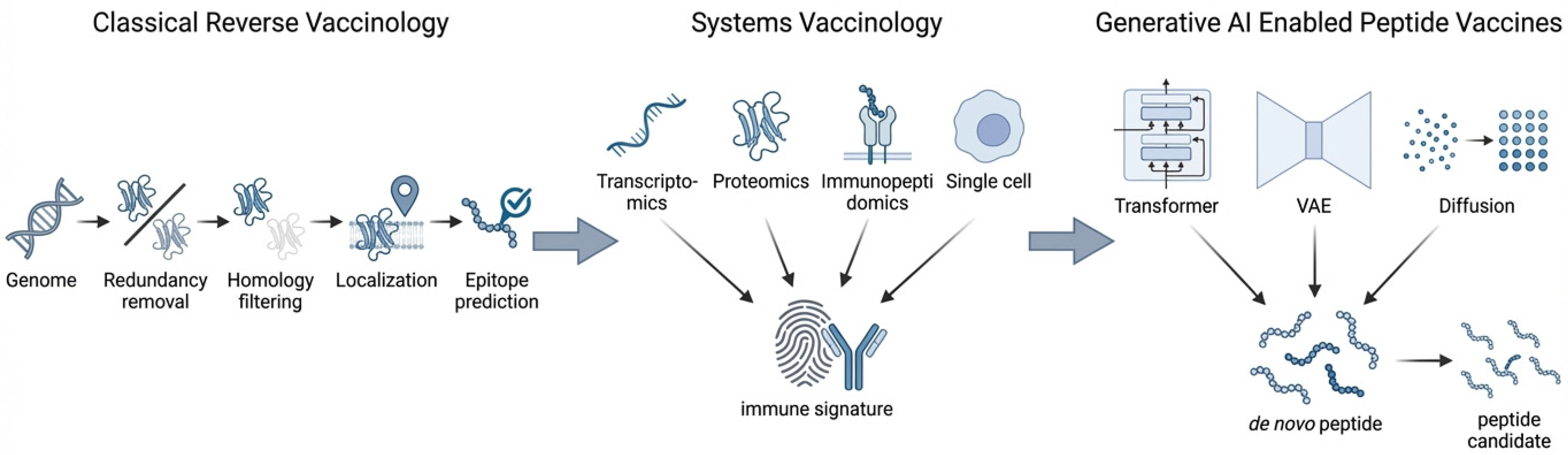
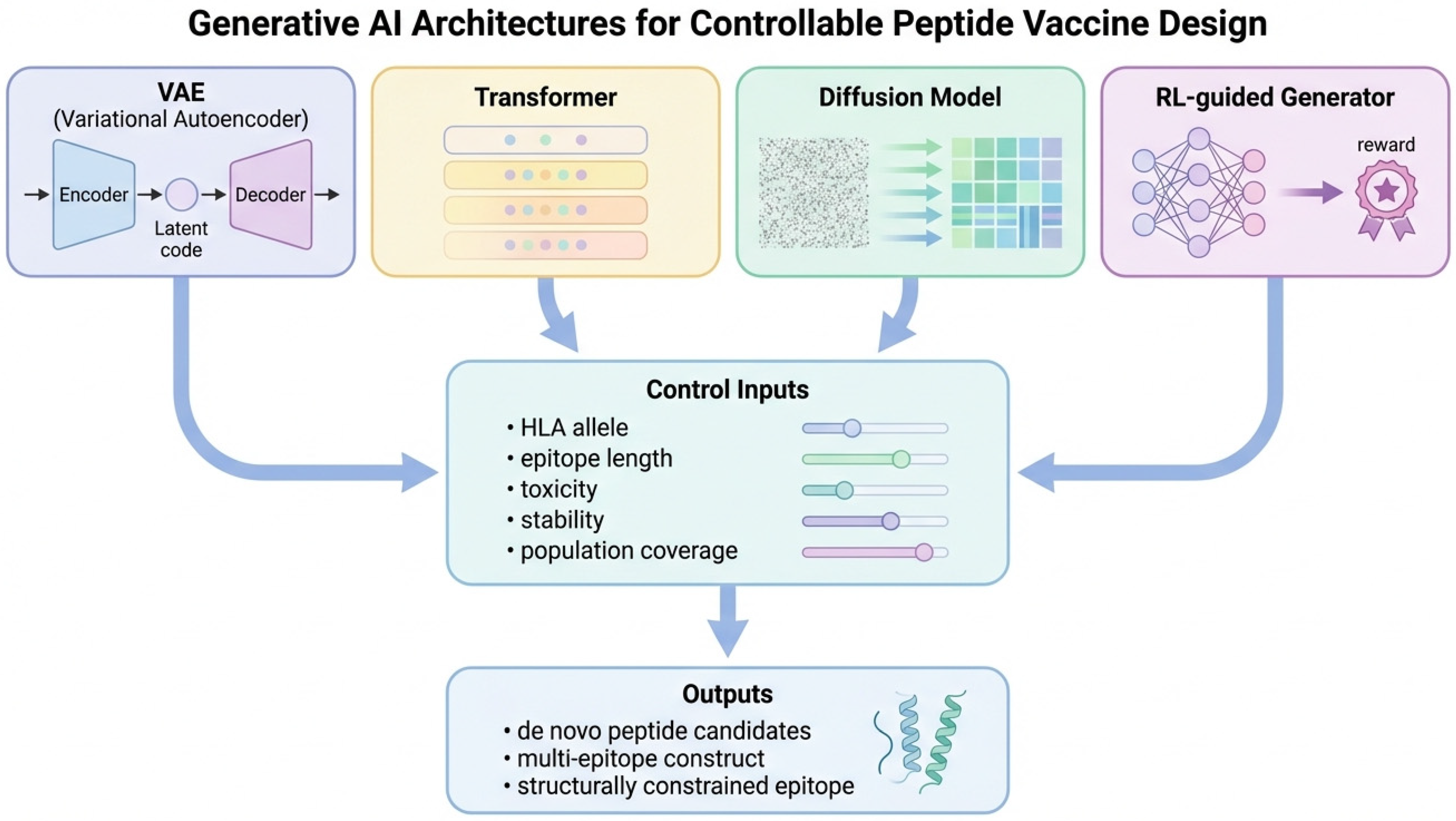
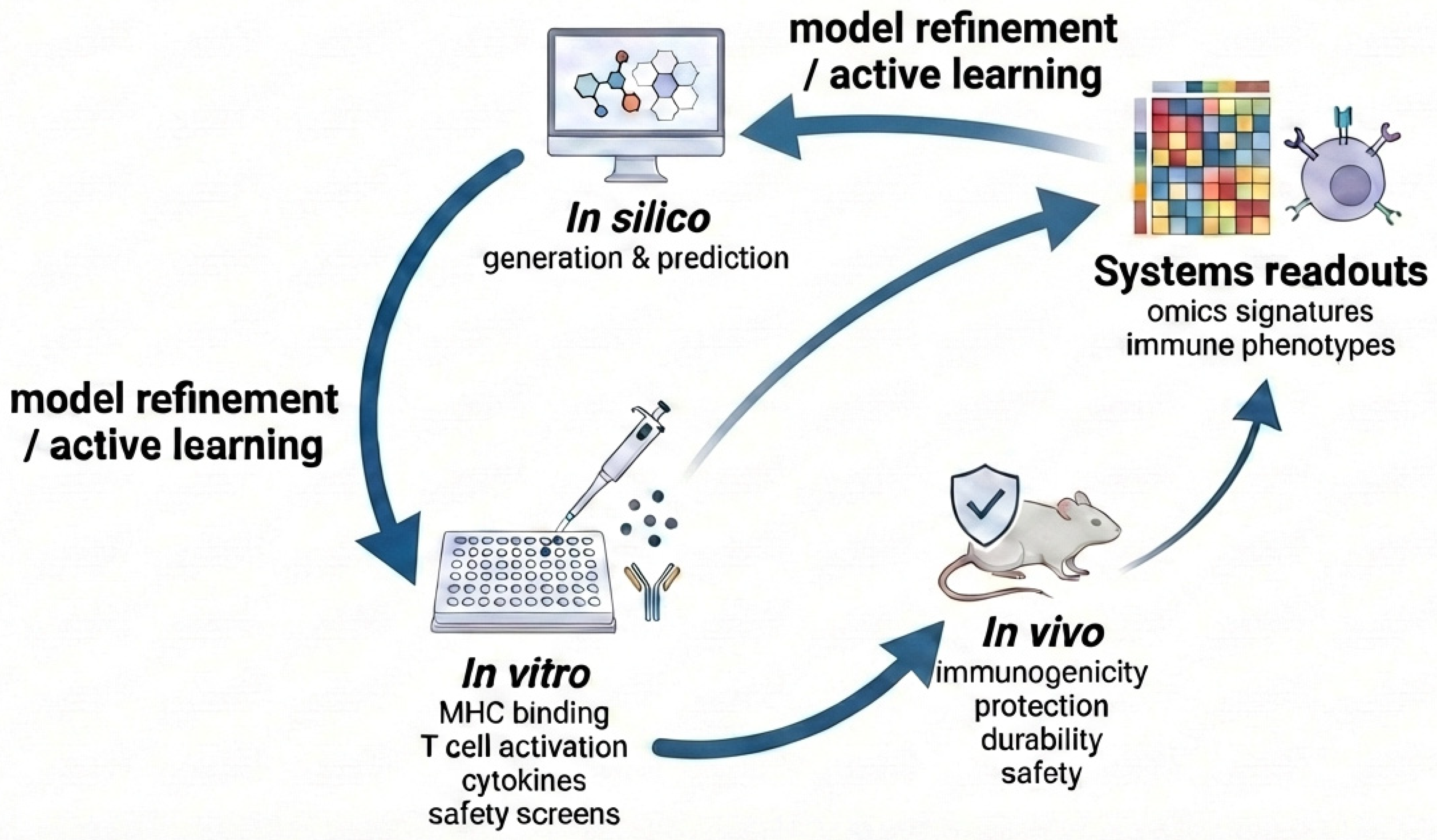
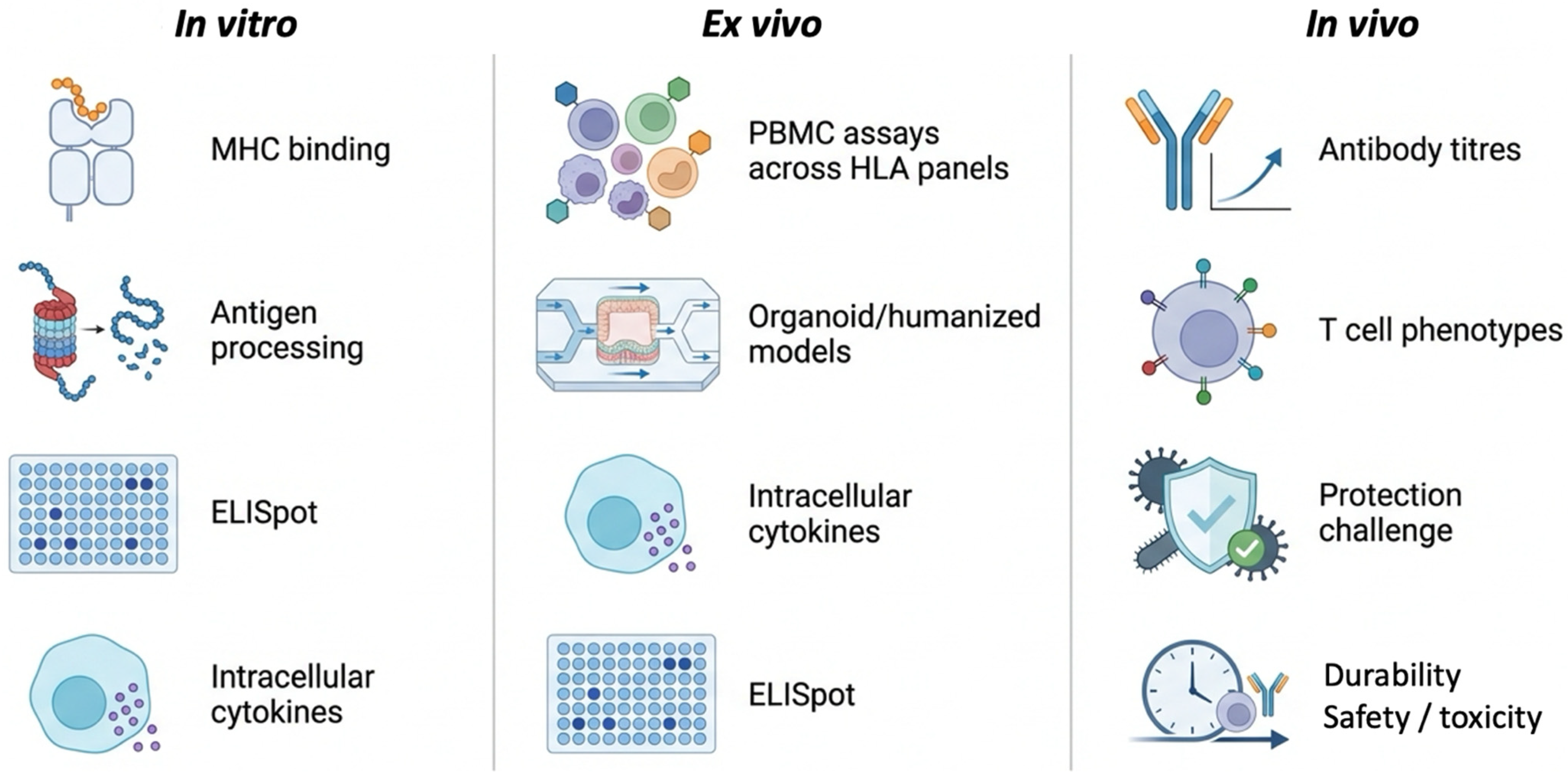
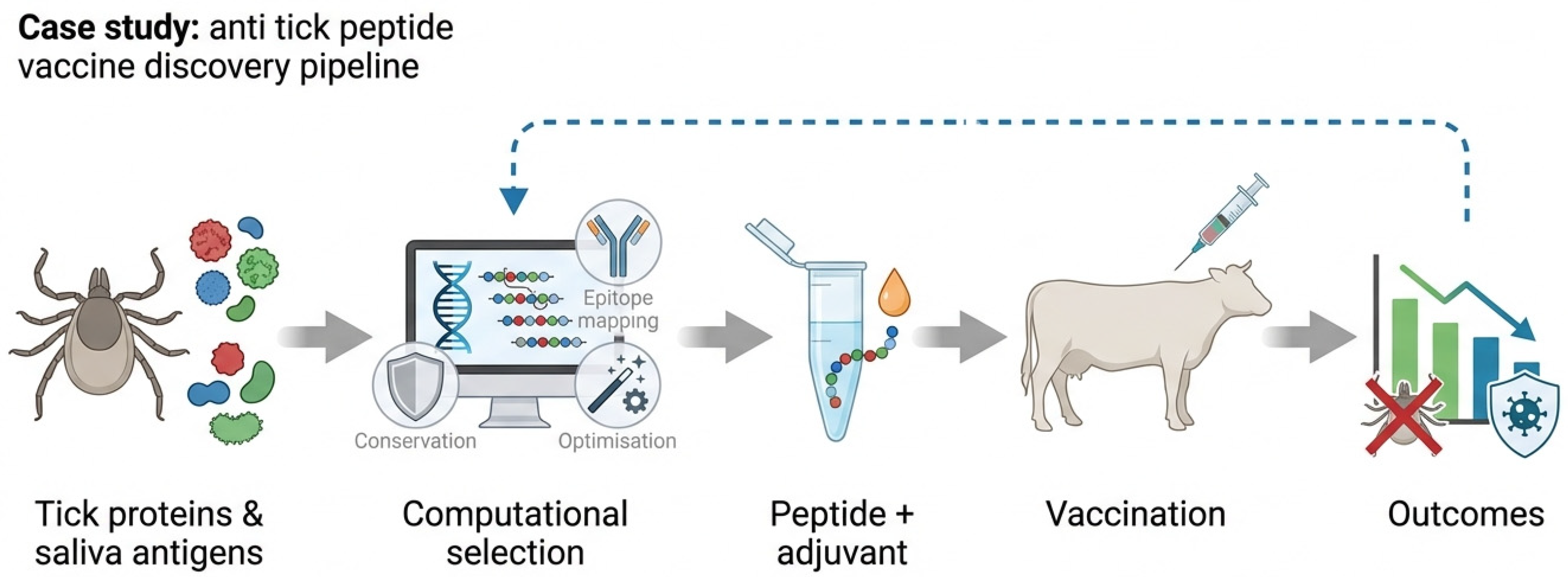
Peptide-based vaccines offer a modular and readily manufacturable platform for both prophylactic and therapeutic immunization. However, their broader translation has been constrained by the limited capacity to predict protective immunity directly from sequence-level features. Recent advances in systems vaccinology and high-throughput immune profiling have substantially expanded the experimental evidence, while generative artificial intelligence now enables de novo design of peptide immunogens and multi-epitope antigens under precisely controlled constraints. This review approaches how these complementary developments are transforming peptide vaccine research, moving beyond classical reverse vaccinology and conventional epitope prediction toward integrated, data-driven design frameworks. We discuss key generative model architectures and conditioning strategies aligned with vaccine objectives, including approaches that account for structural presentation, antigen processing and population-level human leukocyte antigen (HLA) diversity. Central to this perspective is the requirement for rigorous experimental validation and for strengthening the computational–experimental feedback loop through iterative in vitro and in vivo testing informed by systems-level immune readouts. We highlight representative applications spanning infectious diseases, cancer immunotherapy and vector-borne vaccinology, and we outline major technical and translational challenges that must be addressed to enable robust real-world deployment. Finally, we propose future directions for precision peptide vaccinology, emphasizing standardized functional benchmarks, the development of richer curated datasets linking sequence space to immune outcomes, and the early incorporation of formulation and delivery constraints into generative design pipelines.
Keywords: generative artificial intelligence; peptide; vaccine; systems vaccinology; experimental validation; multi-epitope design; in silico–in vitro–in vivo integration generative artificial intelligence; peptide; vaccine; systems vaccinology; experimental validation; multi-epitope design; in silico–in vitro–in vivo integration